
A Swiss car might sound unconventional. Swiss banks, Swiss cheese, Swiss watches — those are familiar. Yet a century ago Switzerland was as much a car nation as many of its neighbours. Manufacturers like Piccard-Pictet in Geneva, Turicum in Zurich, Berna in Bern, Saurer in Arbon and Martini in the provincial Saint Blaise were all bustling. Even the lesser-known Zedel, nestled between Lausanne and French Besançon, produced cars, often quite respectable ones.
How Switzerland Stopped Building Cars
That diversity had vanished by the late 1930s. Only Saurer and Berna survived, and they did it by moving out of passenger cars into trucks, buses and later trolleybuses. The luxurious Piccard-Pictet could not withstand the competition and shut in 1924. Martini, sold to the Steiger brothers the same year, lasted barely a decade. Zedel fell to the French company Donnet and ended its run in 1934. Turicum stopped building cars in 1912 amid financial trouble, though it stayed listed as an automotive company until 1925. Smaller makers — Dufaux, Egg, Ajax, Tribelhorn — had disappeared before the 1920s.
The Swiss motor industry was effectively decimated by World War I, and the Great Depression finished off the few survivors: no passenger car manufacturer made it to the 1940s. After the war Switzerland had other priorities, and importing from the automotive powerhouses next door was simpler than building at home. Hence the rise of the trade agencies, selling foreign cars to suit every taste and budget.
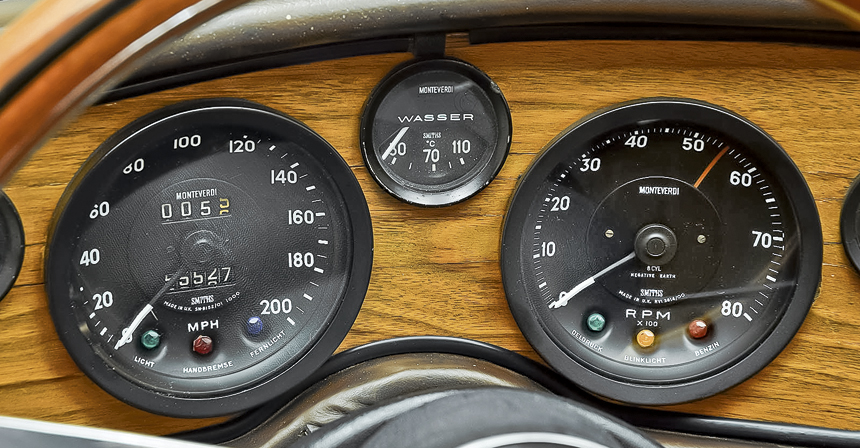
The instrument dials have German lettering, but the speedometer is graduated in miles per hour rather than kilometers per hour
A Dealer’s Son in Basel
Our story begins in one such agency — not in capital Geneva or industrial Bern, but in the cosmopolitan university city of Basel. The agency imported an assortment of high-end brands, and it was there that Mr Monteverdi’s son Peter grew up. Unlike his peers, Peter had no interest in watchmaking or cheesemaking; he was set on following his father.
He began with karts, called “go-carts” at the time and considered only slightly more serious than racing soapboxes downhill. His father’s agency had space enough for warranty work and routine servicing, and there Peter tinkered with his “sports equipment”. By the early sixties he had built something more serious, a racing car to “Formula Junior” technical regulations. Several were made, each carrying the initials MBM — Monteverdi Basel Motoren — under a proud emblem. They competed, with limited success. Peter’s single Grand Prix attempt, in Germany in 1961, ended in an early retirement.
Basel sits where Switzerland meets France and Germany, split by the Rhine. In the 14th century it was divided into Greater and Lesser Basel, and the residents of Lesser Basel, harassed by their wealthier neighbours, still hold end-of-January carnivals at which they turn their backs — or more precisely their rears — to Greater Basel in a defiant show of independence. The festivities run all day, in elaborate costume and under the symbols of the medieval guilds, punctuated by food and drink.
European Chassis, American Engine
In that complicated setting Peter Monteverdi’s agency thrived, in the Binningen area, drawing customers from both Basels and well beyond. It sold BMW, Lancia and Bentley, and under Peter’s influence became Switzerland’s first Ferrari importer. In time he saw what his clientele actually wanted: fast cars suited not only to sport but to crossing Alpine passes and arriving at Mediterranean resorts. That niche had just been vacated by Facel-Vega of France, under unfortunate circumstances.
So Peter took the tried-and-true formula of Jensen, Railton and Facel-Vega: a European chassis with an American engine, a strategy that had worked until Facel-Vega faltered after turning away from American engines. A deal with Chrysler Corporation supplied the power units and other components, the Italian designer Pietro Frua took the bodywork, and final assembly stayed in Binningen. The result, the Monteverdi High Speed 350S, was unveiled at the 1967 Frankfurt Auto Show, and sales began gradually.
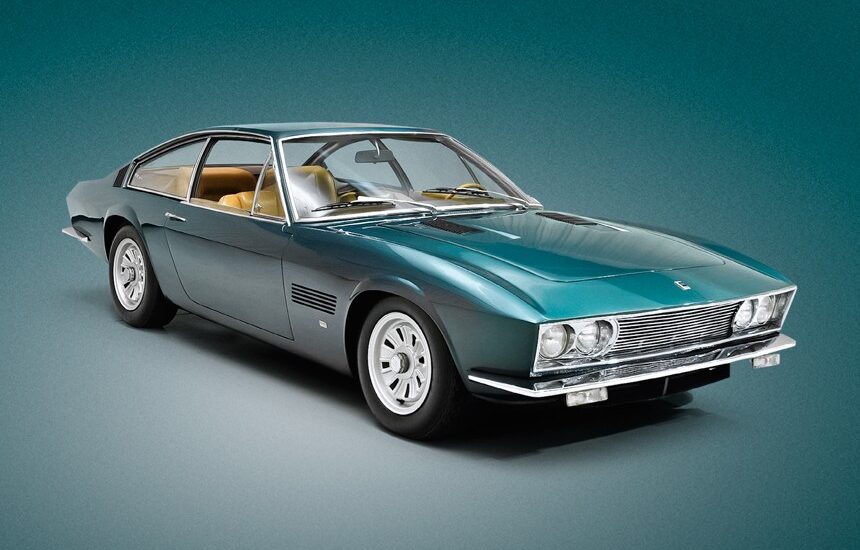
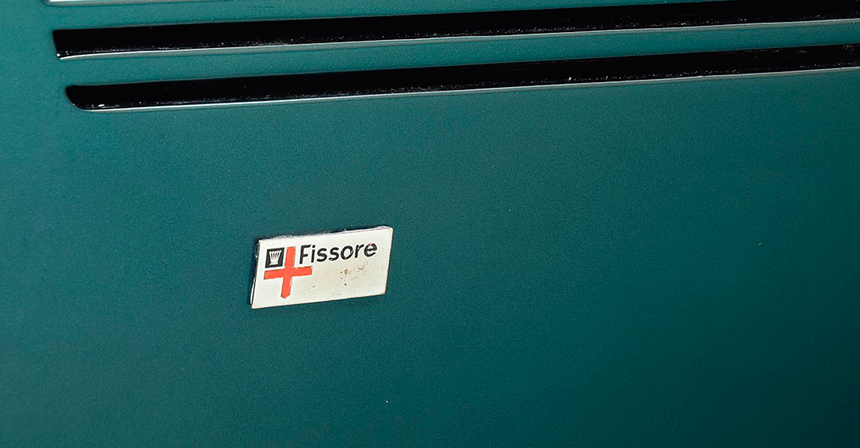
By 1968-1969 Frua’s atelier had delivered eleven finished bodies, all two-seaters. Dissatisfied with the craftsmanship, Peter switched to Fissore, which built a revised “2+2” version called the High Speed 375L — the model in these photographs.
The Car in These Photographs
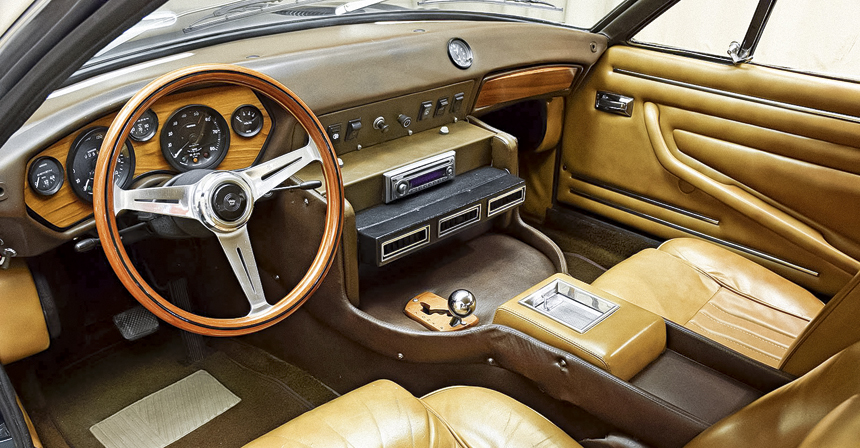
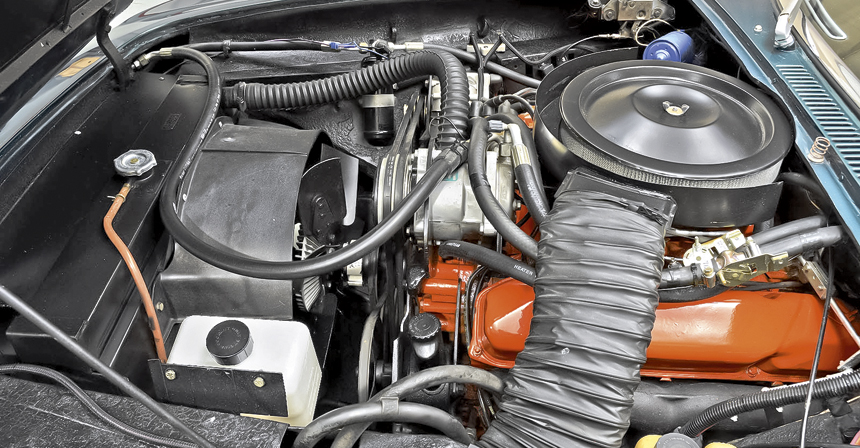
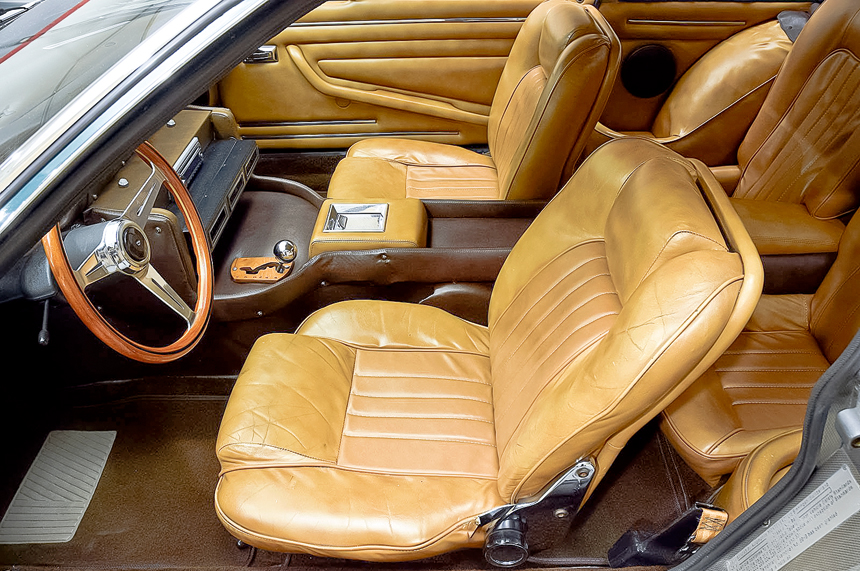
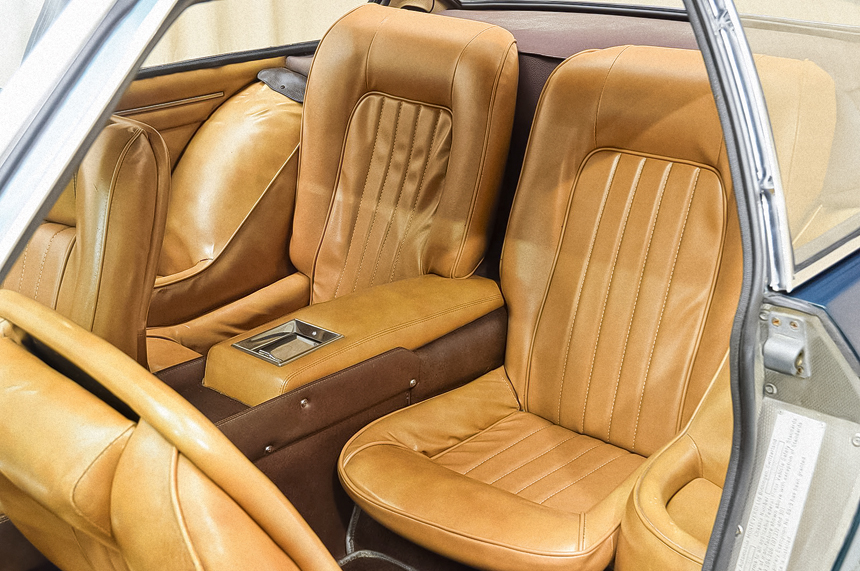
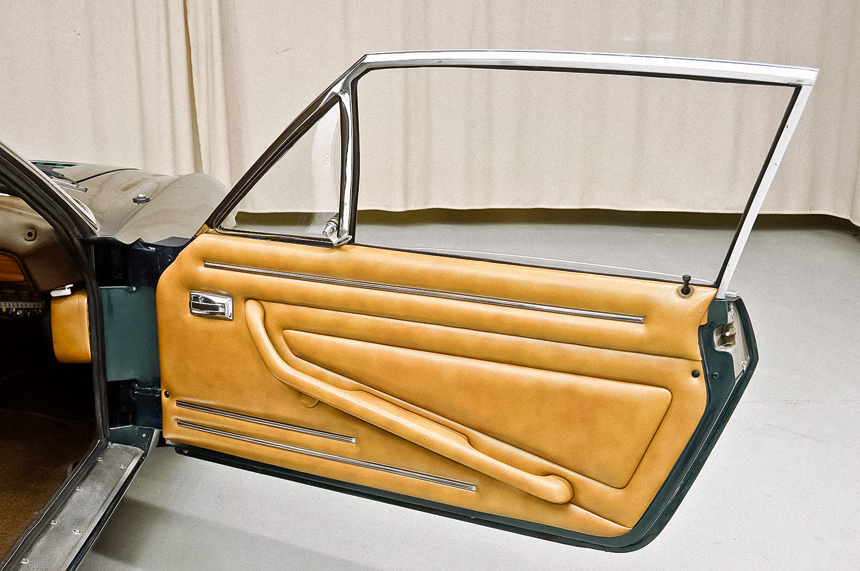
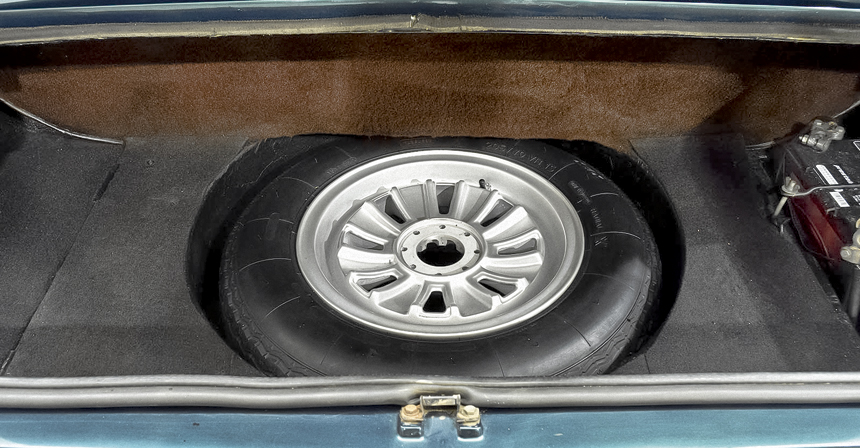
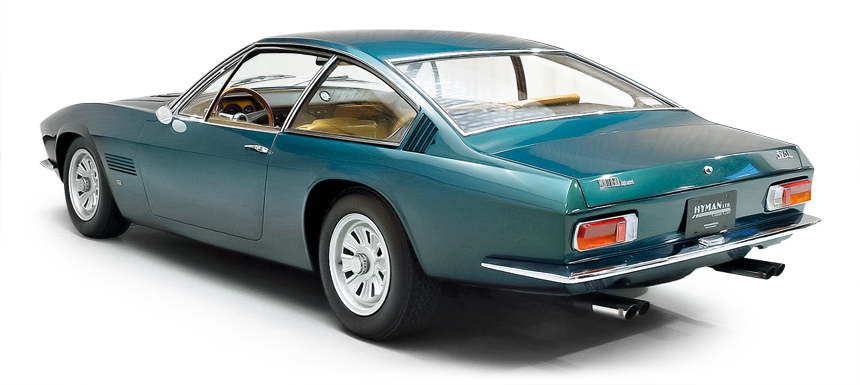
The 375L has a distinct front end with four headlights and a more angular treatment, without losing the elegant proportions. This example, factory number 2020 from 1970, carries the well-known Chrysler Magnum 440 engine — 7.2 litres, 375 horsepower. A 450-horsepower version came later, with the choice of a four-speed manual or a three-range automatic, both from Chrysler; this car has the automatic TorqueFlite.
True to its GT-class luxury, it has electric windows, air conditioning and power steering. The Kenwood stereo with CD player came much later than the car itself.
The End in Binningen
Monteverdi aimed at about fifty cars a year. Demand waned by 1976, and the convertibles and four-door saloons ended sooner — only about thirty were built. The company turned to SUVs on Range Rover units (Monteverdi Sahara), to utility vehicles (Monteverdi Safari), later to saloons and convertibles under the Sierra name, and in 1982 to the Tiara, a lightly modified Mercedes-Benz. After Peter Monteverdi’s death on July 4, 1998, following a long illness, the Binningen works closed for good.
Now it houses a museum.
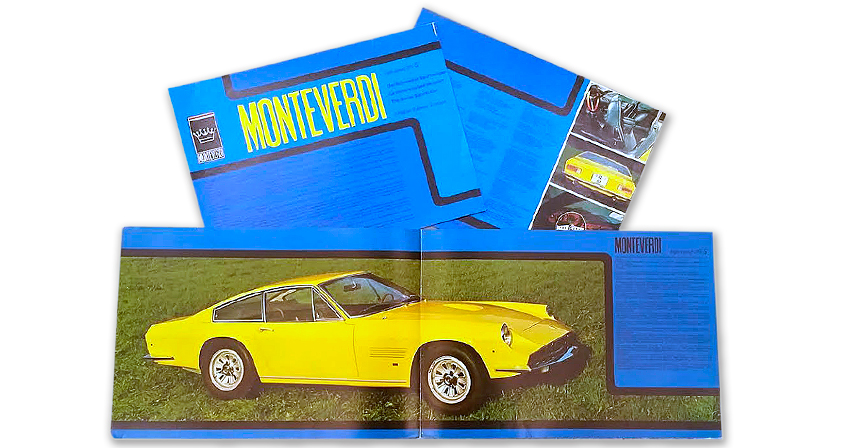
The illustration from the company brochure shows an early version of the car with a fundamentally different frontal solution
Monteverdi High Speed 375L: The Key Facts
- Built in: Binningen, near Basel, Switzerland
- Formula: European chassis, American engine — as Jensen, Railton and Facel-Vega had done
- Bodywork: Pietro Frua for the 350S, then Fissore for the 2+2 375L
- This car: factory number 2020, 1970
- Engine: Chrysler Magnum 440, 7.2 litres, 375 horsepower; a 450-horsepower version followed
- Transmission: Chrysler TorqueFlite automatic; a four-speed manual was also offered
- Debut of the line: the High Speed 350S at the 1967 Frankfurt Auto Show
- The company after cars: Sahara and Safari off-roaders, the Sierra, and the Tiara of 1982
Frequently Asked Questions
Was there really a Swiss car industry? Yes, and a substantial one — Piccard-Pictet, Turicum, Berna, Saurer, Martini, Zedel and others. It did not survive the First World War and the Great Depression; no passenger car maker reached the 1940s.
Who was Peter Monteverdi? The son of a Basel car dealer, a kart and Formula Junior racer under the MBM name, and later Switzerland’s first Ferrari importer, who built his own grand tourers in Binningen.
What is the difference between the 350S and the 375L? The 350S was the Frua-bodied two-seater, eleven of which were finished in 1968-1969. The 375L is the Fissore-bodied 2+2 that replaced it, with four headlights and more angular styling.
How many were built? The target was about fifty a year. Demand fell away by 1976, and of the convertibles and four-door saloons only about thirty were made.
Can the cars be seen today? The Binningen premises closed as a factory after Peter Monteverdi died on July 4, 1998, and now house a museum.
The author extends heartfelt thanks to Elena Lukyanova, a resident of Basel, for the historical and regional information used in this article.
Photo: Sean Dugan, www.hymanltd.com
This is a translation. You can read the original article here: Суперкар из Швейцарии: Monteverdi High Speed 375L 1970 года в рассказе Андрея Хрисанфова
Published October 17, 2024 • 6m to read