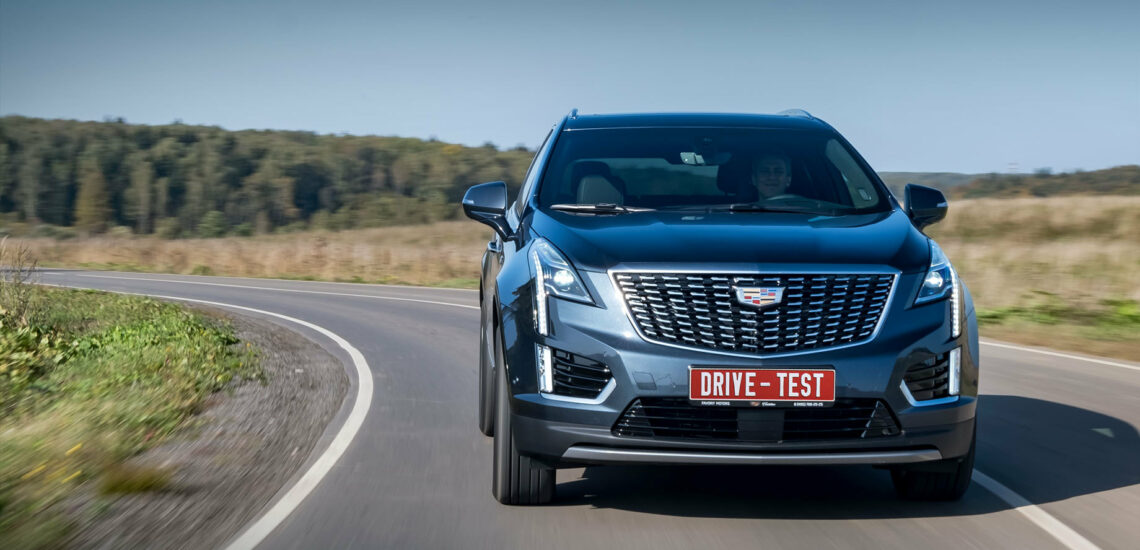

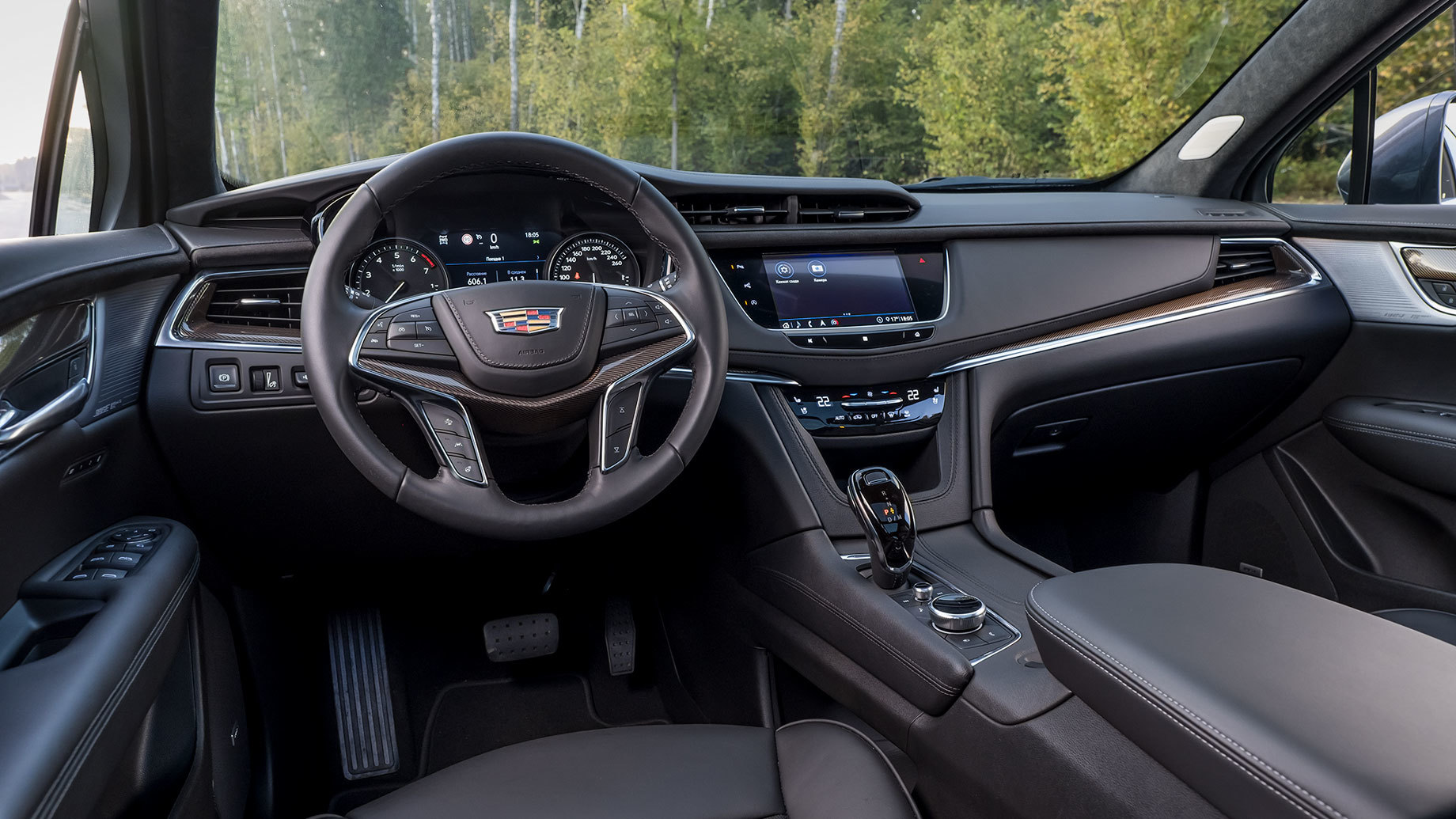
Cadillac replaced the XT5’s naturally aspirated 3.6-liter V6 with a 200-horsepower two-liter turbo engine, and that single change reshaped the car’s identity. What used to be a niche, heavily taxed crossover is now one of the most value-packed options in its class once you factor in standard equipment. A leather interior comes standard, and for a modest upgrade fee you can add a panoramic roof, 360-degree cameras, three-zone climate control, ventilated seats, and a head-up display. There’s a catch most buyers won’t notice day to day: this Cadillac is remarkably soft and undemanding to drive.
Ride Quality and Comfort
Owners consistently describe the XT5 as unusually comfortable, but that wasn’t quite our experience with the Sport trim, which adds adaptive dampers and 20-inch wheels. The car registers every change in road texture, occasionally sending a faint resonance through the pedal assembly, and the body shudders over small to medium bumps. Speed bumps remain noticeable even past 31 mph.
- 20-inch wheels and Continental CrossContact UHP 235/55 R20 tires contribute to a firmer, noisier ride than the base setup
- Adaptive dampers on the Sport trim transmit more road feedback, not less
- Smaller wheel-and-tire packages are likely to ride noticeably smoother
If ride comfort is a priority, it’s worth test-driving a non-Sport trim before committing to the larger wheels.
Turbo Engine Performance: 0-60 and Acceleration
The new turbo engine is genuinely eager off the line, pulling willingly from as low as 2,000 rpm. Our test unit matched the 350 N·m of torque produced by the previous 240-horsepower V6, and over a similar rev range, which explains the otherwise puzzling “350T” badge on the trunk lid. Despite the official 200-horsepower rating, the car feels noticeably stronger than that number suggests, almost as if it were underrated on paper.
Cadillac’s claimed zero-to-60 time of roughly ten seconds is close to accurate, and disabling traction control shaves a bit more off that figure. Car and Driver independently clocked the XT5 at 7.6 seconds to 60 mph, a more realistic real-world number.
Transmission: Nine-Speed Automatic Gearbox
The nine-speed automatic is tuned heavily for fuel economy, and that priority shows. Lift off the accelerator and it either jumps to a higher gear or disengages the transmission entirely rather than using engine braking. The result is a slight hesitation when power is reapplied and a small jerk when the next gear engages. At a steady cruising speed, the tachometer hovers restlessly between 1,250 and 1,500 rpm, a clear sign the transmission is constantly hunting for the most efficient gear.
Kickdown response is also sluggish: after a notable pause, the gearbox drops through three or four gears in sequence with brief hesitations at each step. In stop-and-go traffic, though, it behaves more smoothly than many dual-clutch transmissions, which can be overly aggressive with clutch engagement at low speeds.
- Sport mode sharpens both the powertrain and damper settings
- It doesn’t add much accelerator responsiveness, but it does firm up impact response over seams and expansion joints
- The start/stop system can take close to a full second to restart the engine, which feels slow in real-world driving
Steering Feel and Handling
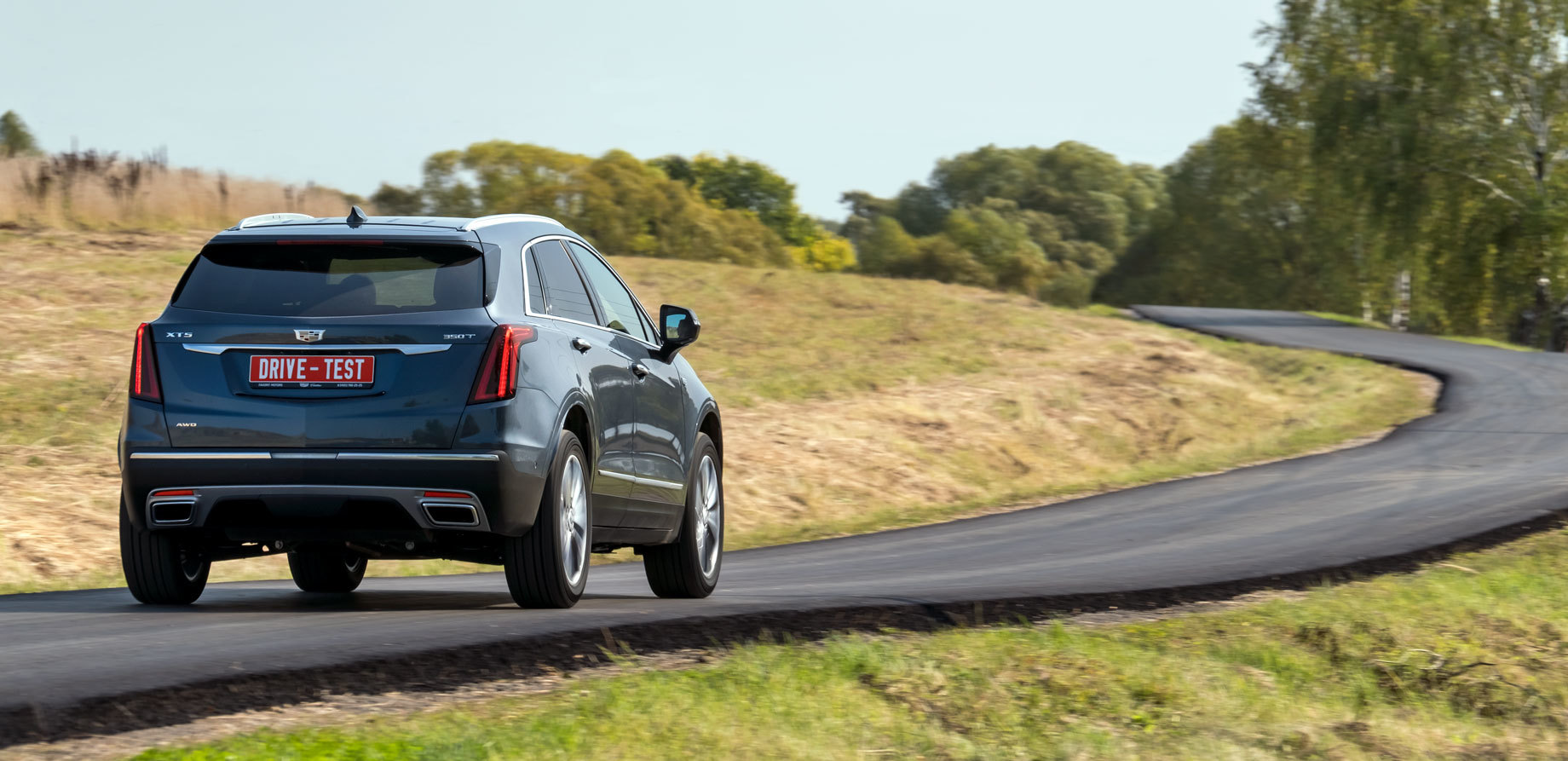
The XT5 tracks straight and stable, and your perceived speed tends to run lower than your actual speed, a safety-friendly trait. Part of that comes from a steering setup that offers little feedback, which leaves the driver somewhat disconnected from what the front wheels are doing. Even with synthetic weighting layered on, the steering feels light and vague near the center.
The wheel turns lock-to-lock in fewer than three full rotations, though it feels like more due to reduced sensitivity to small inputs. Within roughly 20 degrees of input, the car’s directional response is minimal and unhurried. Avoiding a sudden obstacle requires larger steering inputs than you’d expect, and while the resistance builds noticeably at higher angles, it doesn’t translate into more useful feedback. The faster you go, the more disconnected the steering feels — though for many drivers, that hands-off character is exactly the point.
Chassis Balance and Cornering
The chassis itself is well sorted. Body roll under hard cornering is moderate, predictable, and free of unpleasant surprises. Any tendency to hunt for the right line through fast corners comes down to vague steering feedback rather than actual oversteer. As long as the tires have grip in reserve, the balance stays composed: the front wheels lose traction first, and the resulting understeer gives a brief warning before the (non-switchable) stability control intervenes.
In practice, though, the flat, soft seats will have you backing off well before the chassis reaches its limits, making spirited driving more of a theoretical exercise than a practical one.
All-Wheel Drive System
Day to day, the XT5 drives almost entirely as a front-wheel-drive car. Manually locking one of the AWD modes (you’ll hear the transfer case’s dog clutch engage) unlocks a noticeably sharper turn-in, thanks to the rear clutches selectively sending power to the back wheels. The transmission, however, doesn’t always cooperate. Left to its own logic, it can hesitate mid-corner, hunting for the right gear instead of delivering torque to the wheels.
A typical city turn under these conditions is usually completed while coasting, with the transmission caught in a gap between releasing the throttle and downshifting. Full power only returns once the wheels are already pointed straight again.
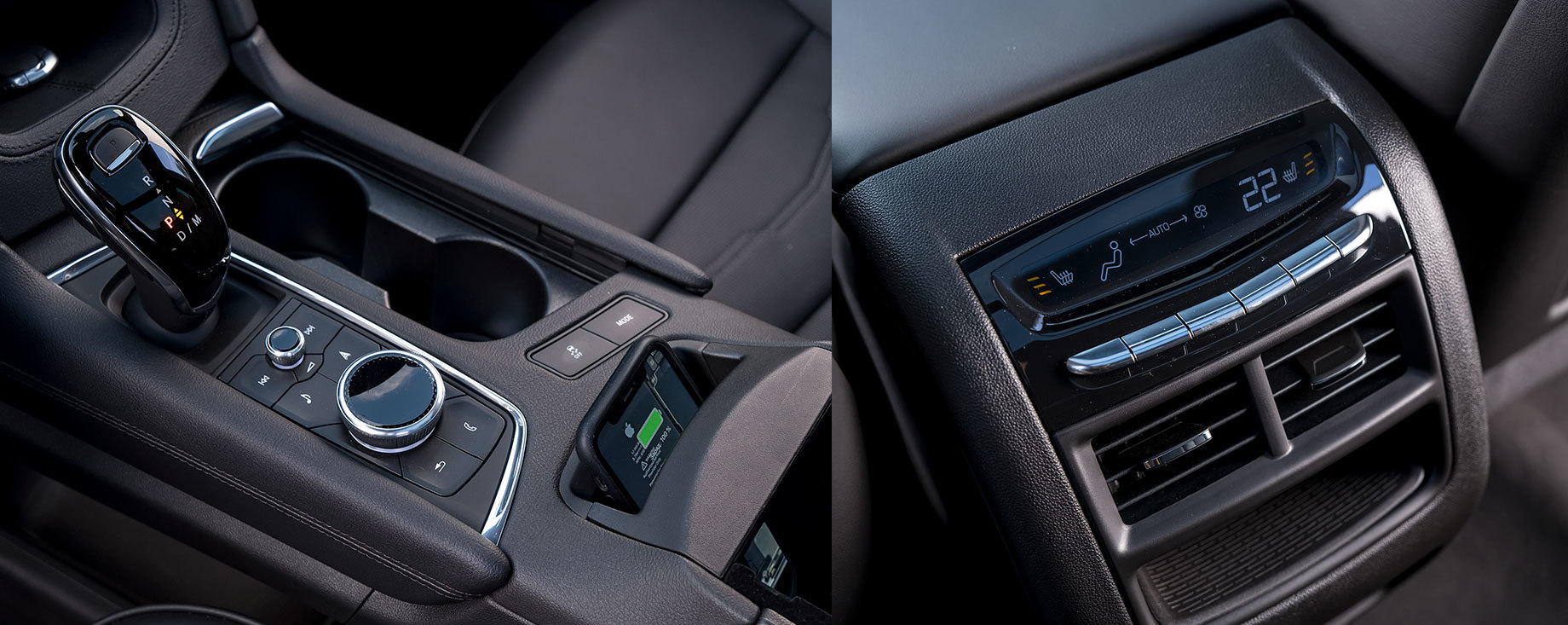
Braking System: Electro-Hydraulic Booster
One of the more meaningful changes for the 2020 model year ties into Cadillac’s broader lineup unification: the XT5 now uses an electro-hydraulic brake booster from Delphi instead of a traditional vacuum-assisted system. Forget any sponginess underfoot. The pedal has a short, sporty travel, and braking force is controlled by how hard you press rather than how the hydraulics happen to respond. Because the pedal isn’t directly tied to the hydraulics, the simulated feedback feels consistent and predictable every time.
At low speeds, this setup makes precise stops easier to judge and execute. At higher speeds, it doesn’t fully mask the sensation of the vehicle’s mass. ABS engagement is hard to feel through the pedal, though most everyday drivers likely won’t notice or mind. Engineers and marketers argue this lack of pedal vibration makes hard braking feel psychologically easier.
In practice, the absence of pedal feedback doesn’t mean the absence of feedback altogether. The body still shudders under the unsprung mass during hard stops, as if its resonant frequency doesn’t quite match the ABS cycling rate, and there’s noticeable nose-dive under braking. Emergency maneuvers, whether a hard stop or an abrupt lane change met by the stability control system, feel more abrupt than reassuring.
Parking Sensors and Low-Speed Driver Aids
The XT5’s collision avoidance system is notably sensitive in tight spaces, like narrow garage entrances, where it’s often necessary to switch off the parking sensors entirely. Otherwise, the system can detect a nearby wall via sonar and bring the car to an abrupt stop, complete with an unpleasant headrest jolt. The experience can also look awkward from outside the car: stop-start, hesitant movements as the system repeatedly intervenes. To make matters more distracting, the parking sensor warnings are echoed by a delayed seat vibration.
Off-Road Capability
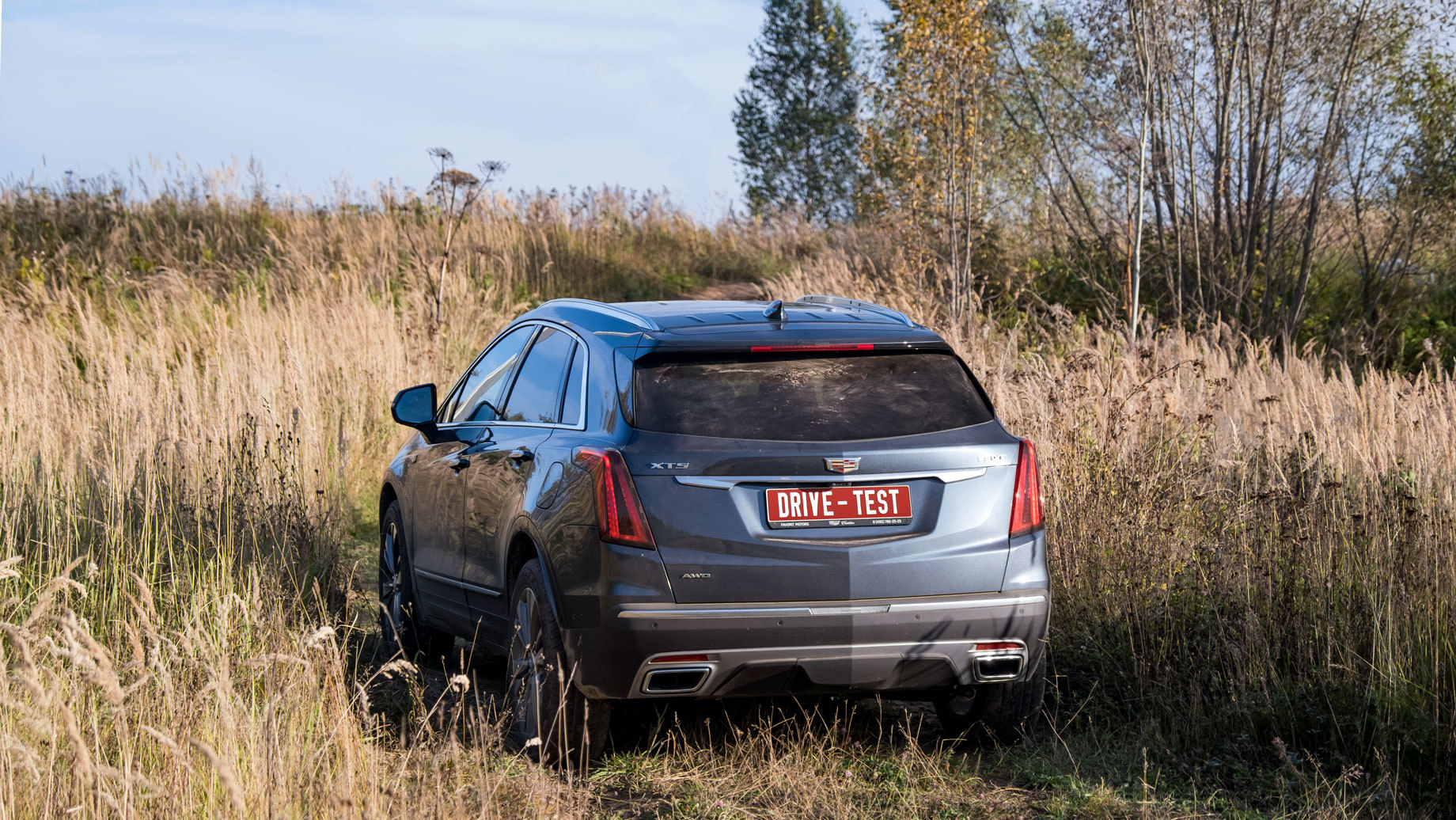
The XT5 was never designed for serious off-roading — its ground clearance and approach angles simply aren’t built for it — but it handles rough, unpaved roads with more composure than expected, thanks to a suspension tuned to absorb punishment. The rougher the surface, the more buyers tend to forgive the suspension’s softer, more energy-absorbing character on smooth pavement.
Final Verdict: Is the Cadillac XT5 Worth It?
Overall, the XT5 feels most at home outside dense urban environments. Its rustic, relaxed character suits open roads and rural settings far better than tight city driving or valet parking in a metropolis, where a more compact luxury sedan might make more practical sense. There’s a strong case for thinking of the XT5 less as a city crossover and more as a comfortable, well-equipped companion for drivers who spend more time outside major metro areas.
- Pros: strong value for the equipment included, punchy turbo acceleration, comfortable in non-Sport trims, well-controlled body roll, predictable handling balance
- Cons: numb steering feedback, hesitant transmission tuning, firm ride on Sport trim’s 20-inch wheels, oversensitive parking sensors in tight spaces
This is a translation. You can read the original here: https://www.drive.ru/test-drive/cadillac/5f6cc615ec05c44a4000001b.html

Published August 25, 2022 • 7m to read