
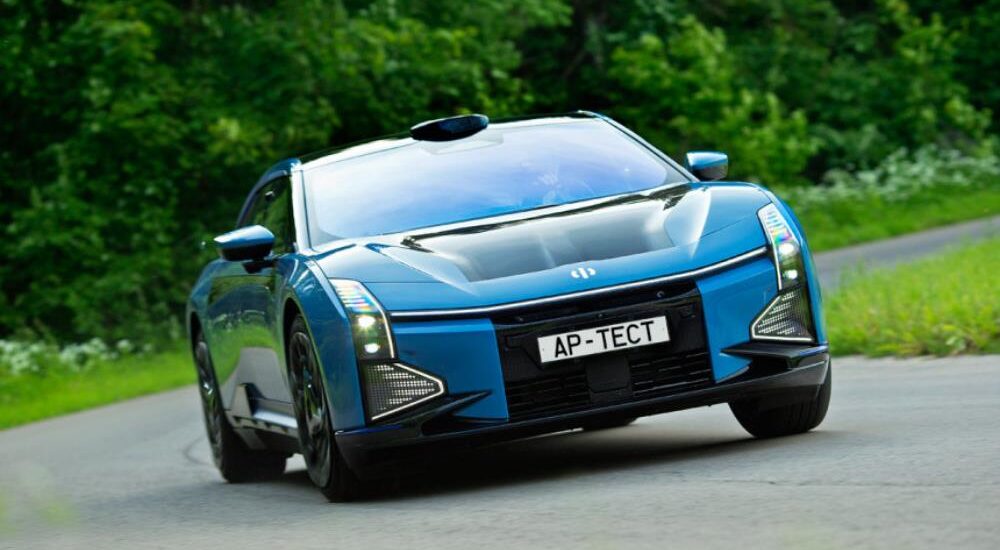

Remember KITT, the talking car from the TV series “Knight Rider”? Its full name was Knight Industries 2000 — a Pontiac Trans Am with a digital interior, artificial intelligence, and an infrared scanner strip above the grille. It was every kid’s dream car. But Pontiac never built anything like it, even by the year 2000. Nearly a quarter century later, a real-life KITT has finally arrived — except it’s an electric super-sedan from China: the HiPhi Z.
Light-Up Doors and Bumpers Instead of a Scanner Eye
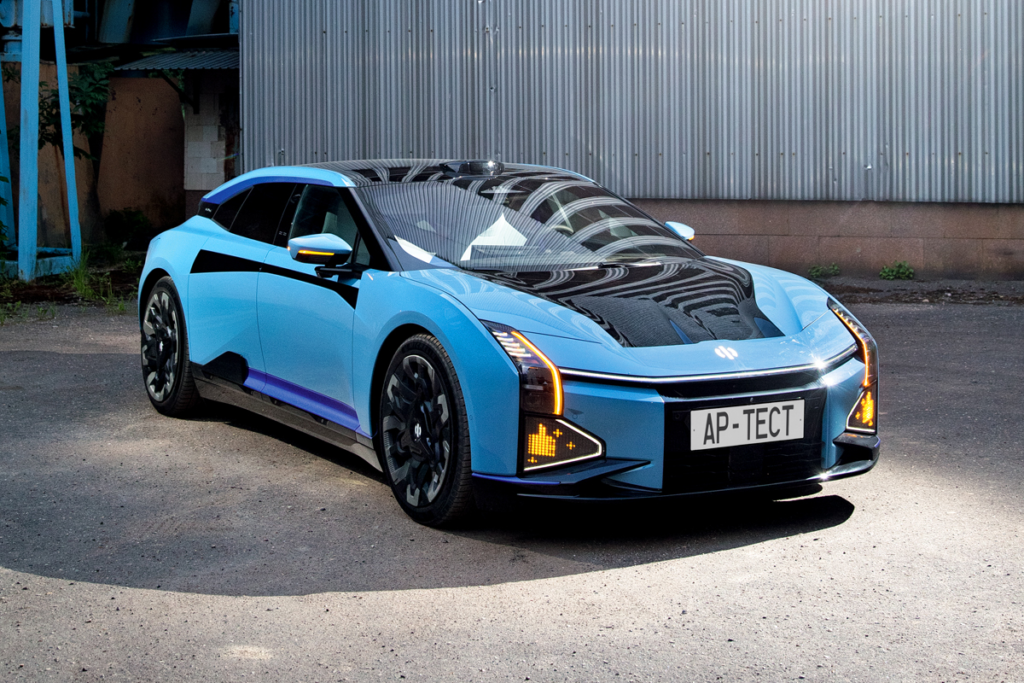
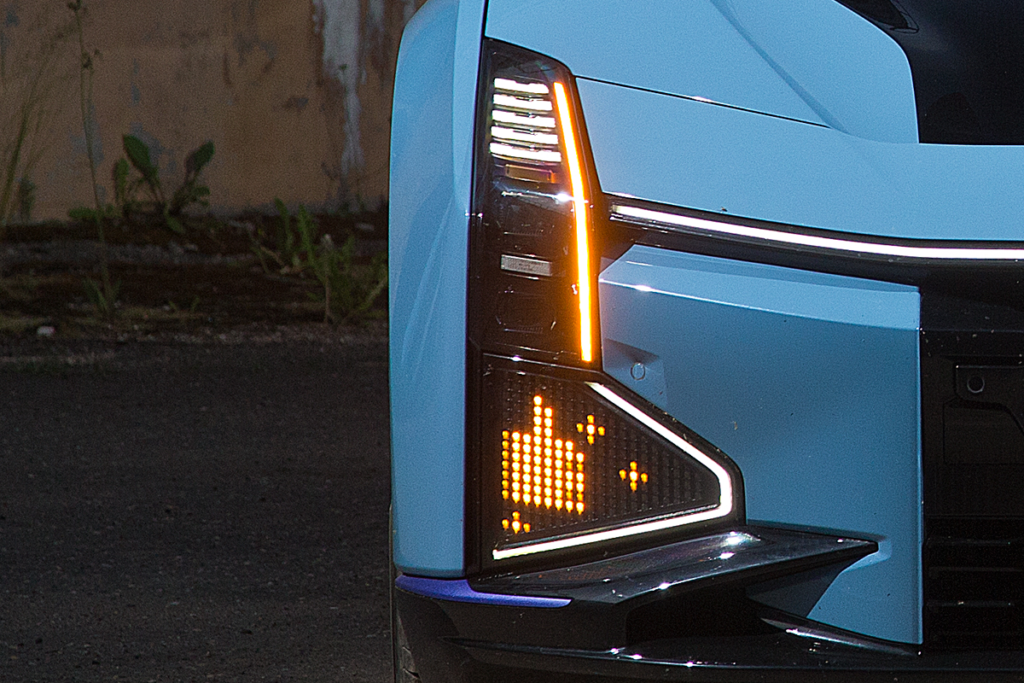
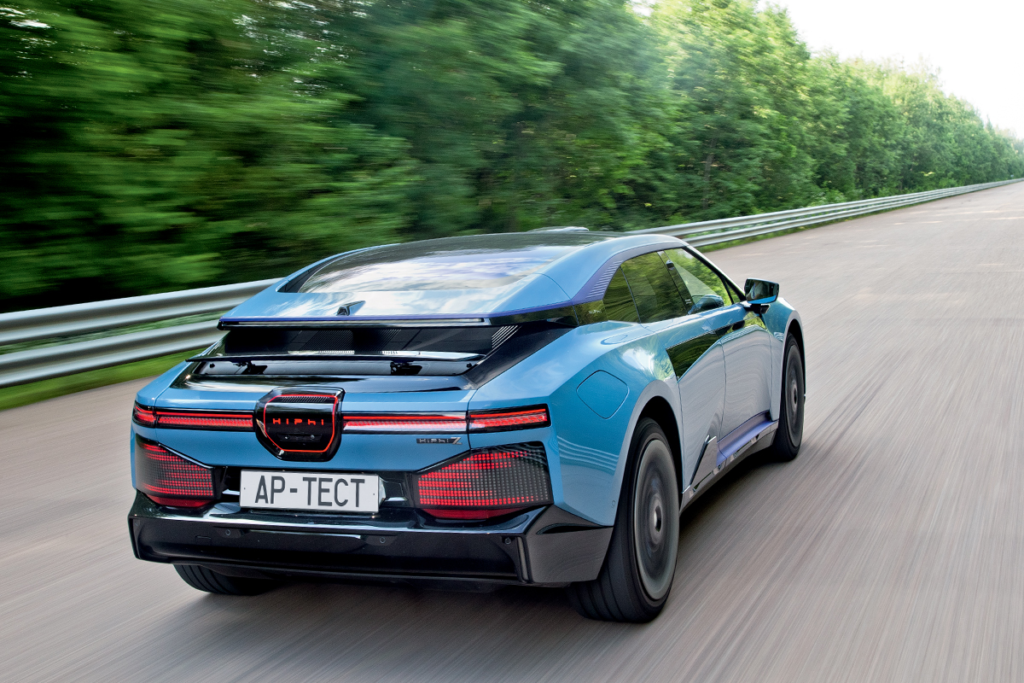
Instead of a red scanning eye, the HiPhi Z uses real light screens built into the doors and bumper corners. Drivers can display custom messages on the side screens, while the bumper runs a set of preset light animations.
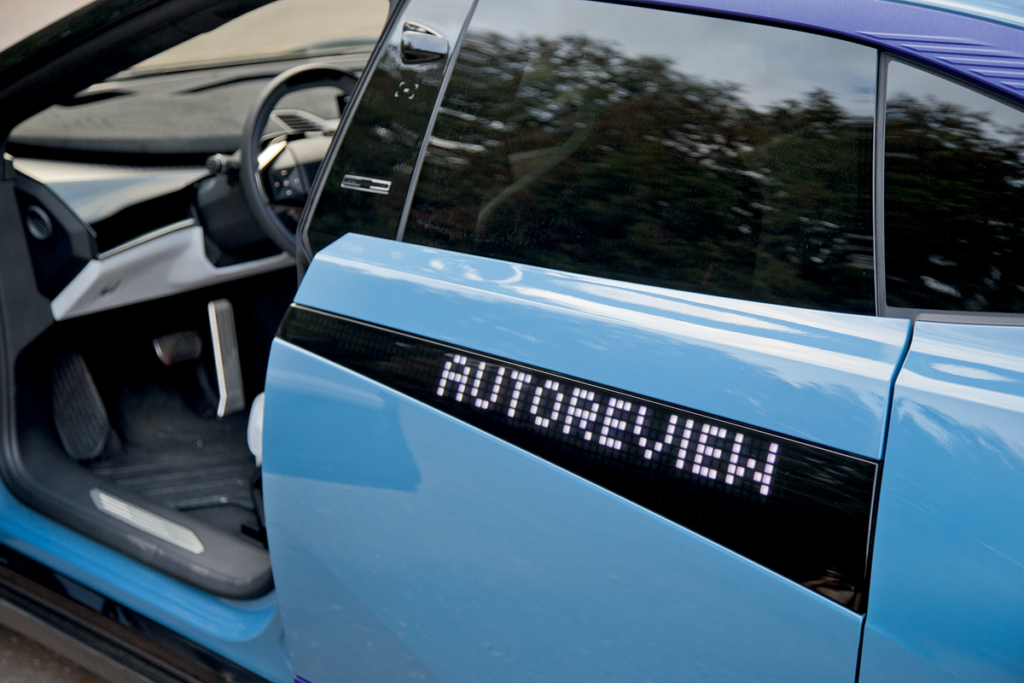
You can display any message on the side screens, but only in Latin characters – there are no Chinese hieroglyphs in the menu.
This isn’t just a novelty feature for showing cartoon cats and dogs — it serves practical purposes too. A few standout examples:
- A walking pedestrian icon that appears on the rear bumper when stopped at a crosswalk, similar to modern trams
- A large animated yellow thumbs-up on the front of the car, letting drivers give a real-life “like” to other road users
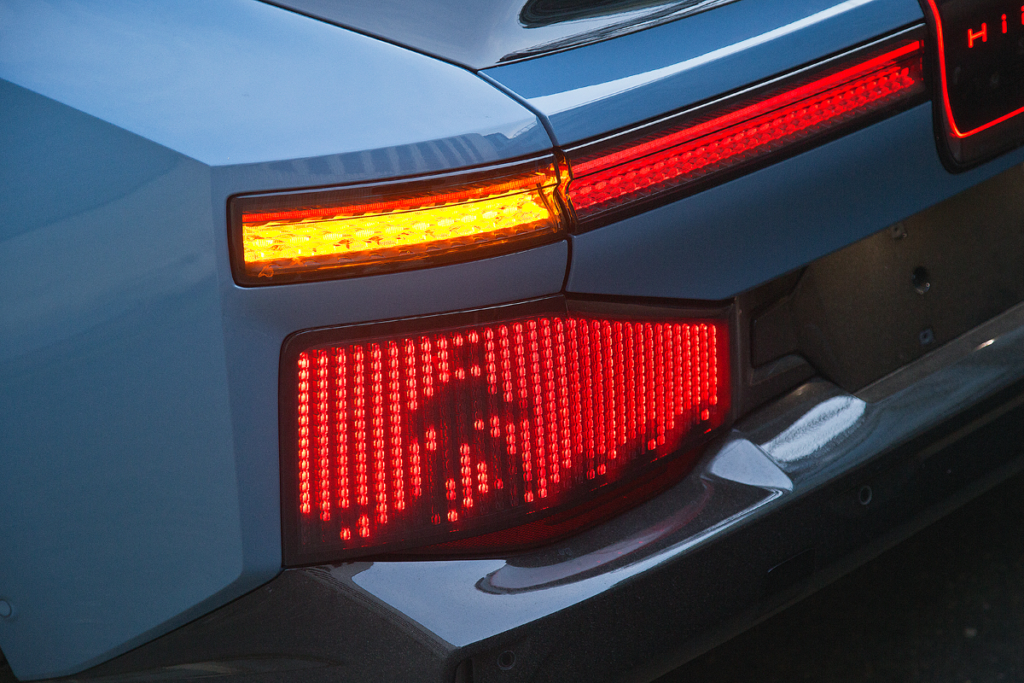
- Custom graphics, text, and animations on the rear light panel, thanks to the Star-Ring ISD matrix LED system
From HiPhi X to HiPhi Z: How Human Horizons Built a Premium EV Lineup
Human Horizons, the company behind HiPhi, launched six years ago with an ambitious mission: smart cars, smart cities, and smart transportation. Rather than starting with affordable mass-market EVs, the brand went straight for full-blown luxury. The HiPhi X crossover quickly captured a quarter of the Chinese premium electric car market, the Z sedan followed soon after, and most recently the HiPhi Y SUV joined the lineup.
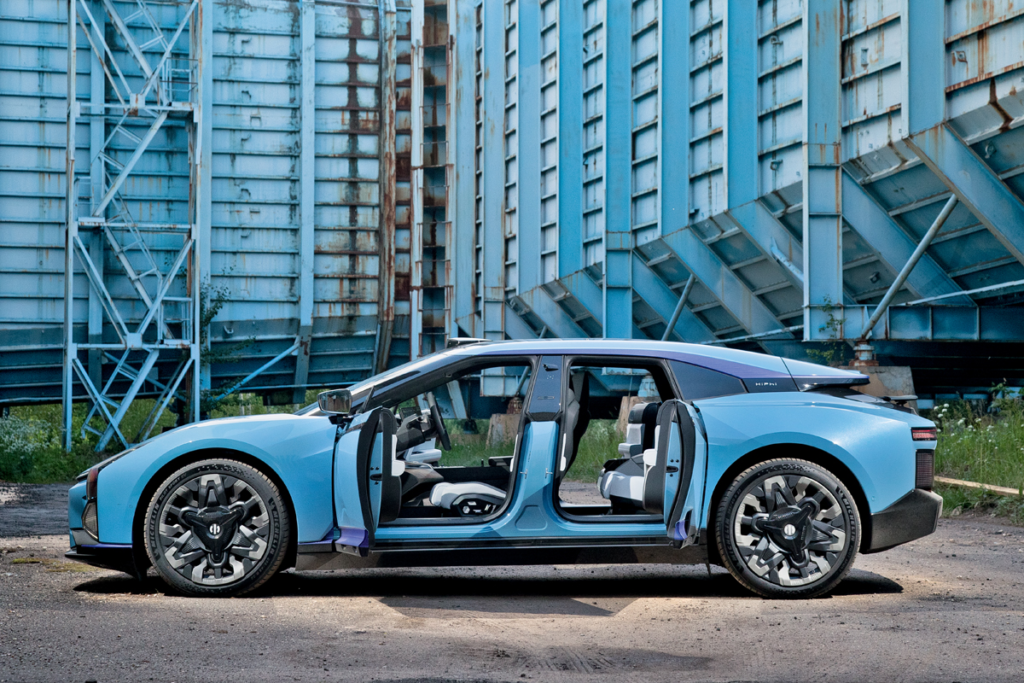
The doors, which open to 90 degrees, hide a very wide central pillar.
Doors Without Handles
What sets the HiPhi Z apart is that it doesn’t try to copy Tesla. It’s a genuinely “hype” car — and among the vibrant new wave of Chinese electric vehicles like BYD Seal or Zeekr 001, it’s easily the most extravagant. After the Zeekr’s servo-driven doors, nothing about power-assisted doors could surprise me — though HiPhi skips handles entirely in favor of an elongated button on the central pillar. The mechanism moves slowly, but the reward is a record-breaking opening angle. The rear doors even open 90 degrees against the direction of travel, Rolls-Royce style. A central pillar remains, which is necessary given how difficult it is to build a sufficiently rigid body around a massive floor-mounted battery. That battery holds 120 kWh — and I drained two-thirds of it within just a hundred kilometers of driving to the test track, because the HiPhi Z practically begs you to drive fast. And that’s not just because this particular test car didn’t have license plates.
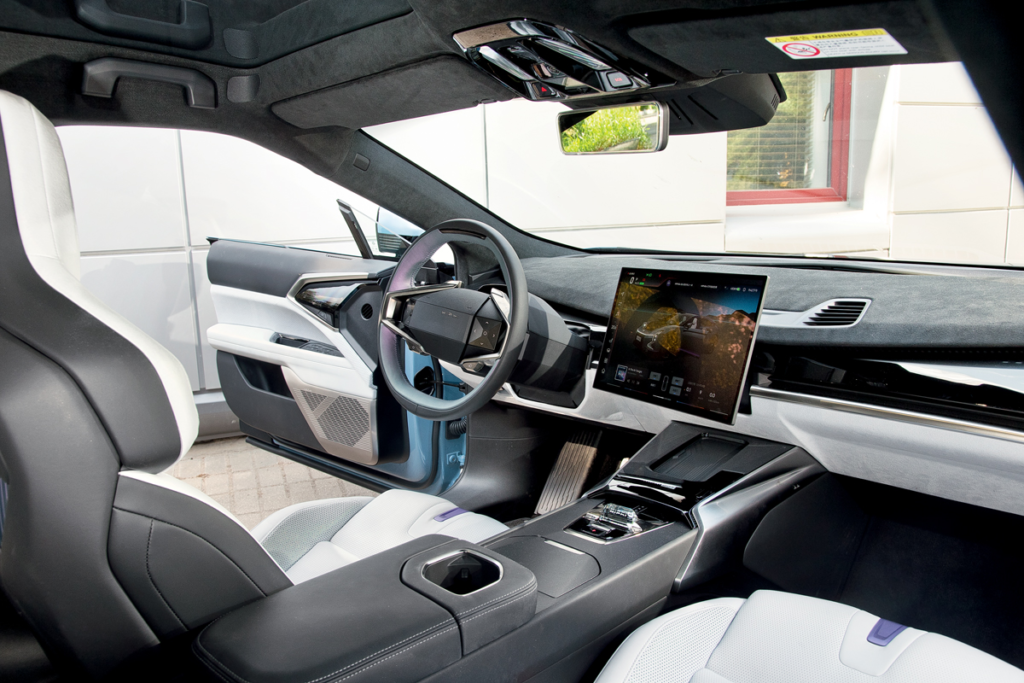
There is no separate instrument screen – the speed figures can be seen in the corner of the main display or with the help of a projection on the windshield.
Inside the Cabin: Rotating Screens and a Tech-Forward Dashboard
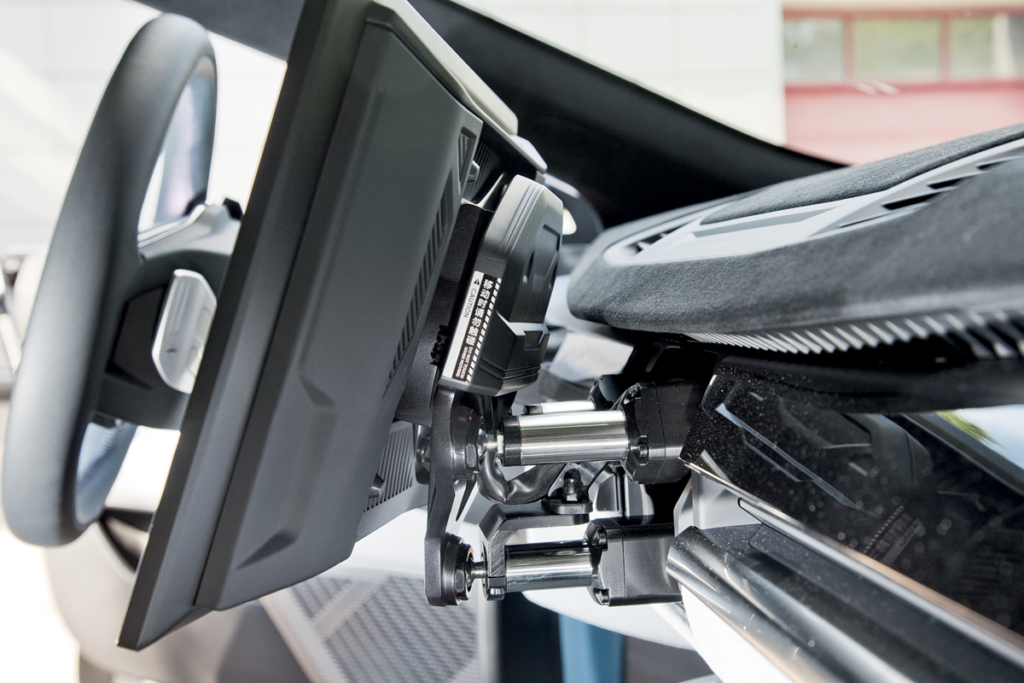
The open mounting and rotation mechanism of the screen evokes associations with the hypercar GMA T.50 by Gordon Murray.
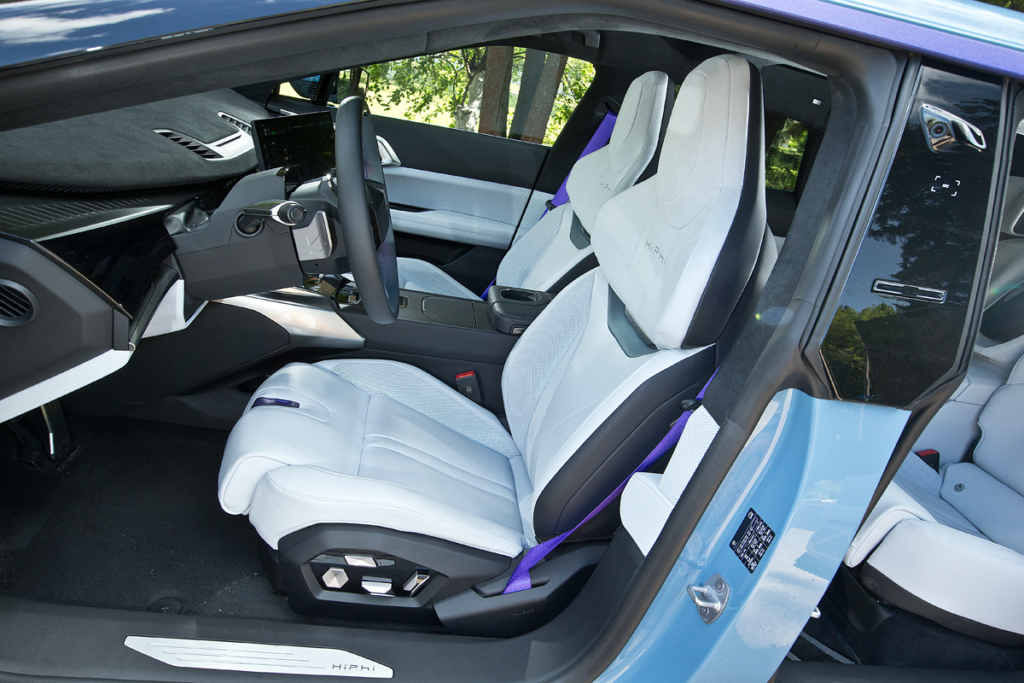
The front seats are of a successful shape, with a mass of adjustments, a massager, heating, and ventilation.
The first thing a driver notices is the technocratic dashboard and the rotating central screen of the HiPhi Bot infotainment system. The servo-drive cylinders holding it look sturdy enough to support a hypercar’s rear wing under hundreds of kilograms of downforce.
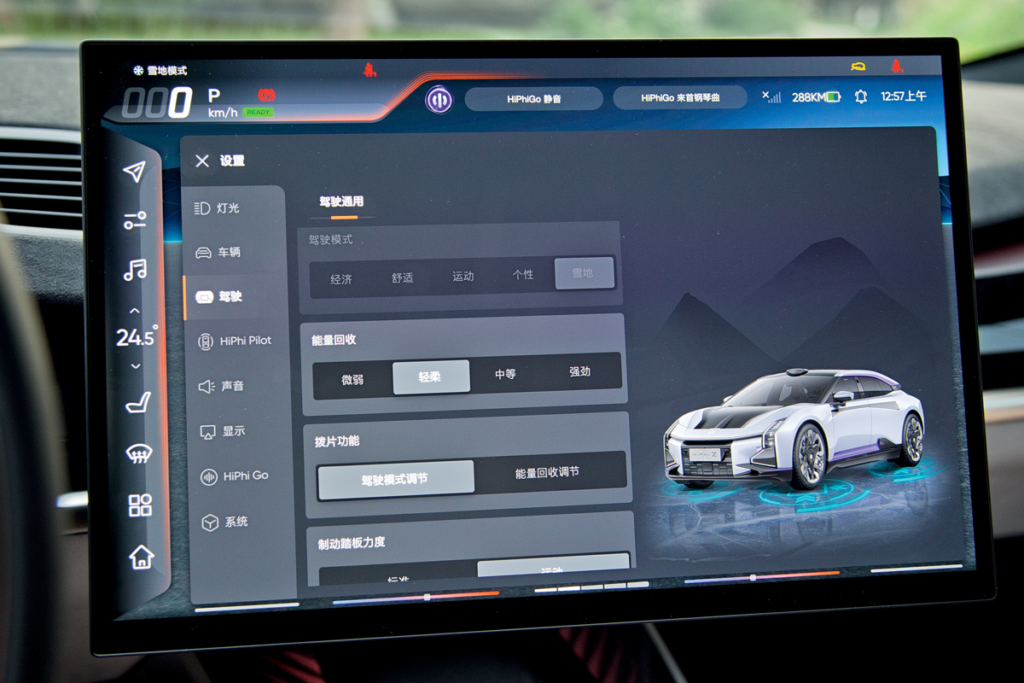
Even without knowing English, it’s easy to manage the chassis settings through the menu, thanks to the very clear graphics.
A Menu You Can Learn in One Sitting
The menu logic follows the same pattern found in most modern Chinese cars, right down to the order of the chassis settings. Once you’ve read through the menu once with an online translator, navigating it afterward is effortless. Highlights of the infotainment experience include:
- Some of the most thoroughly illustrated climate control settings on the market, including a rotatable image of the front panel
- A home screen that lets you control door opening and closing from any angle
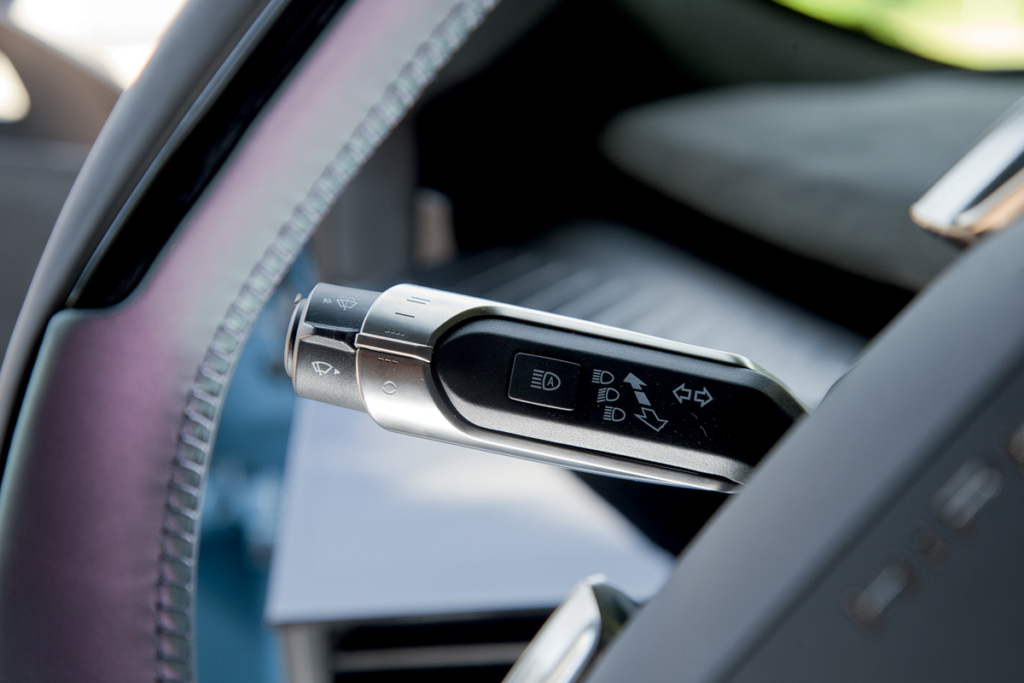
- A quick settings menu for adjusting the steering wheel, controlled via a button on the right spoke, since there’s no traditional adjustment lever
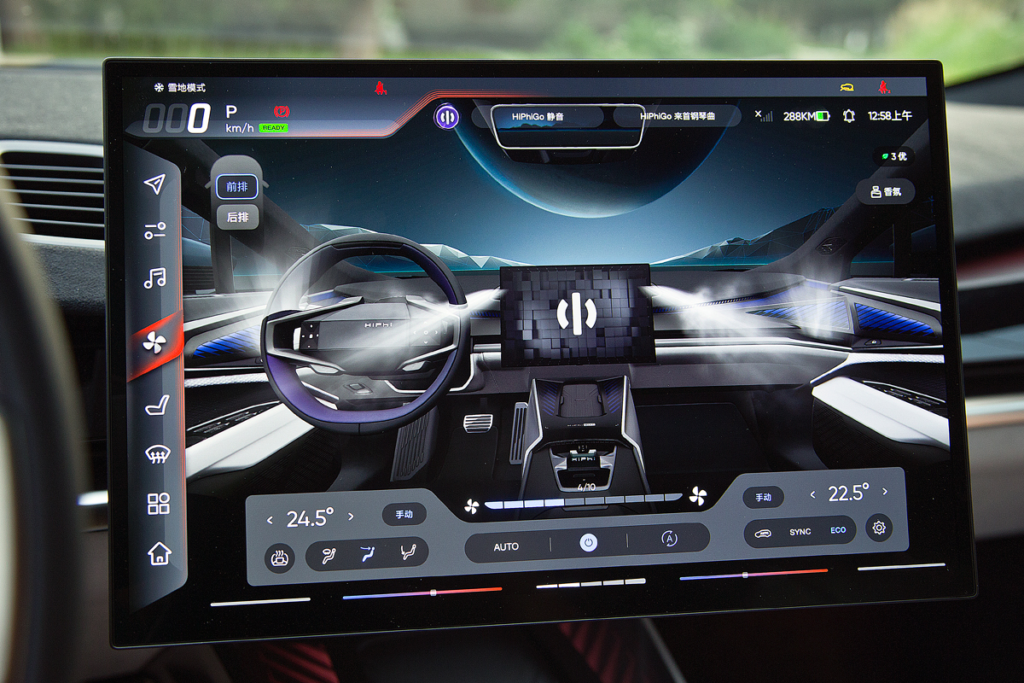
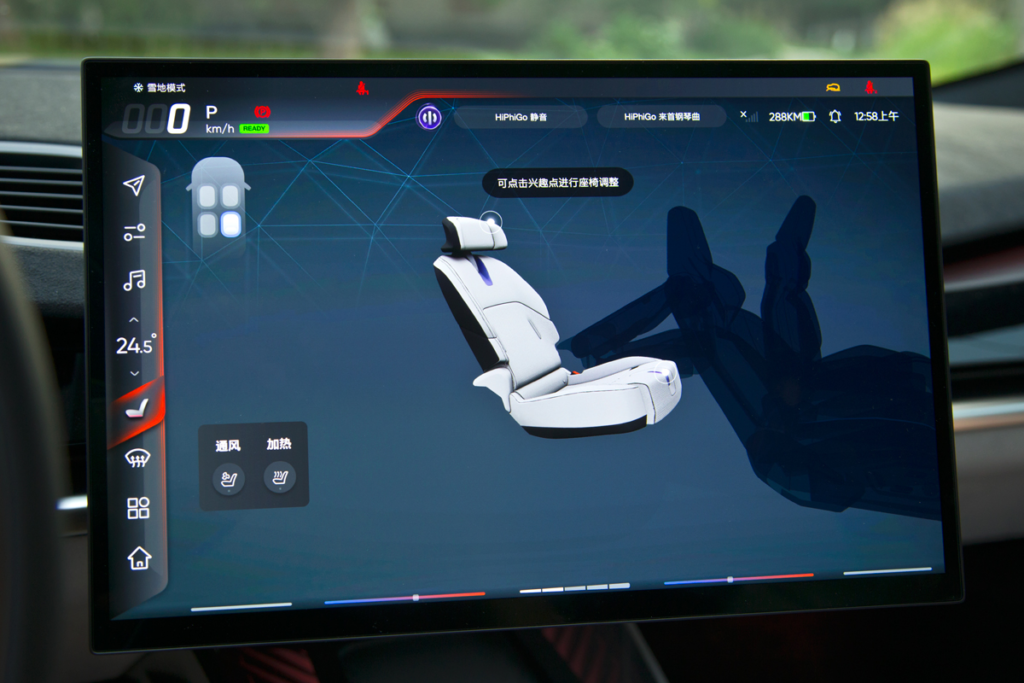
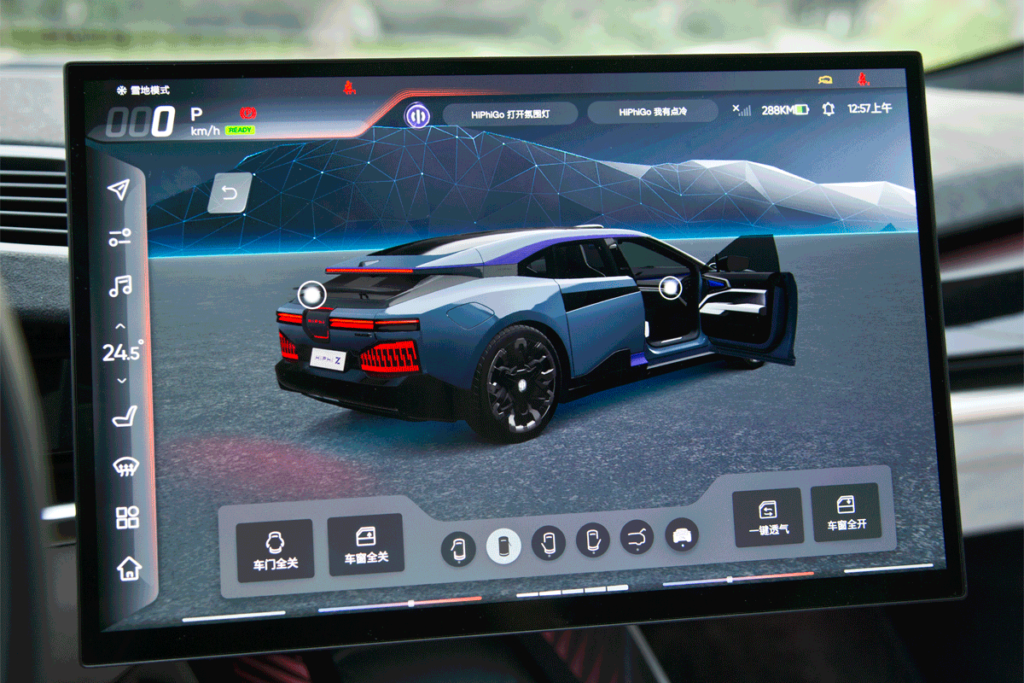
You can rotate the illustrated sedan to select the desired door and open it directly from the screen.
It’s almost surprising to find familiar window controls and basic seat adjustment buttons in such a futuristic interior. The steering wheel itself even echoes the design of the famous Pontiac from the movies.
KITT, let’s go! To complete the resemblance, our photographer played music from the TV series during the shoot — and it turns out HiPhi has nailed the legendary synthesizer acceleration sound as one of its selectable sound options.
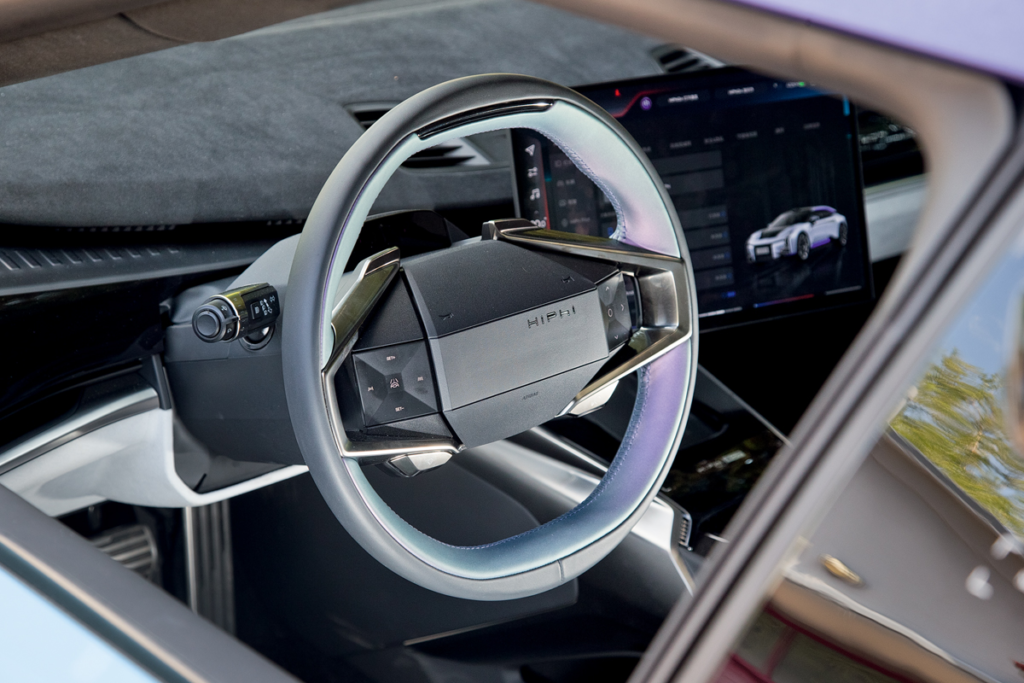
The steering hub looks like something from a future transportation vehicle. Thank you for keeping the wheel itself round.
Bigger Than It Looks
Don’t be fooled by photos — the HiPhi Z looks fairly compact in pictures, almost like an Octavia in a body kit. In reality, it’s as long as a Porsche Panamera and five centimeters wider than the new Land Cruiser. Yet none of that size registers from behind the wheel. Within the first few hundred meters, the HiPhi Z builds a friendly, familiar connection with the driver, as if you’d cruised the same roads together many times before.
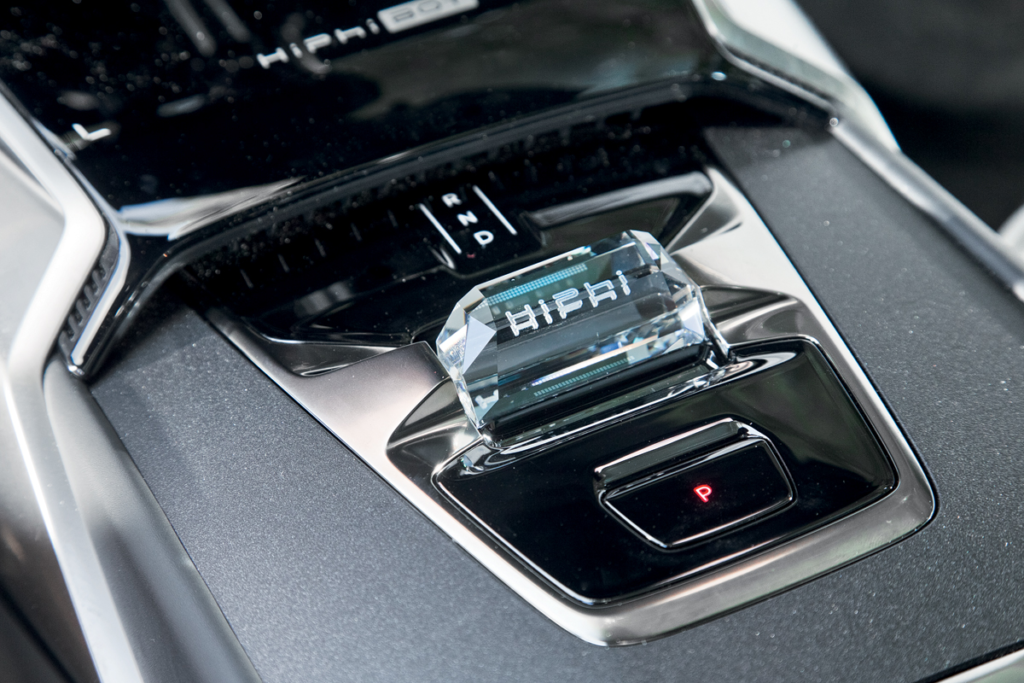
The “crystal” transmission joystick moves with a pleasant effort and is backlit from the inside.
Performance: 672 HP, a 3.8-Second Sprint, and Smooth Power Delivery
Not every electric car handles acceleration the same way. I’ve previously complained about how the acceleration of powerful EVs can produce unpleasant physical sensations. The HiPhi Z proves you can be both fast and polite. Its two electric motors produce a combined 672 hp, with a claimed 3.8-second sprint to 100 km/h. The declared numbers are close to the Zeekr 001, but where the Zeekr left a queasy aftertaste, the HiPhi Z delivers its speed smoothly and almost imperceptibly. Key performance figures from testing:
- 0-100 km/h: 3.9 seconds
- 0-150 km/h: 7.8 seconds
- Top speed: 197 km/h (electronically limited)
- 0-60 km/h: 2.2 seconds
- 60-100 km/h: 2.0 seconds
- 80-120 km/h: 2.4 seconds
- 0-400m: 11.8 seconds
- Braking distance from 100 km/h: 34.5 meters
- Curb weight: 2,565 kg
- Weight distribution: 50.3% front / 49.7% rear
- Ground clearance: 113-158 mm
What It Consumes
Acceleration tops out at 197 km/h, since even a generous 120 kWh battery drains quickly at higher speeds.
Overall, the electric powertrain doesn’t seem especially efficient, and the real-world aerodynamic drag likely exceeds the claimed 0.27 coefficient — possibly due to a large frontal area. Even during calm countryside driving, the HiPhi Z consumes around 25 kWh per 100 km, slightly more than the Zeekr. And that’s before you start driving it the way it wants to be driven.
This is, without question, the best Chinese car I’ve driven to date.
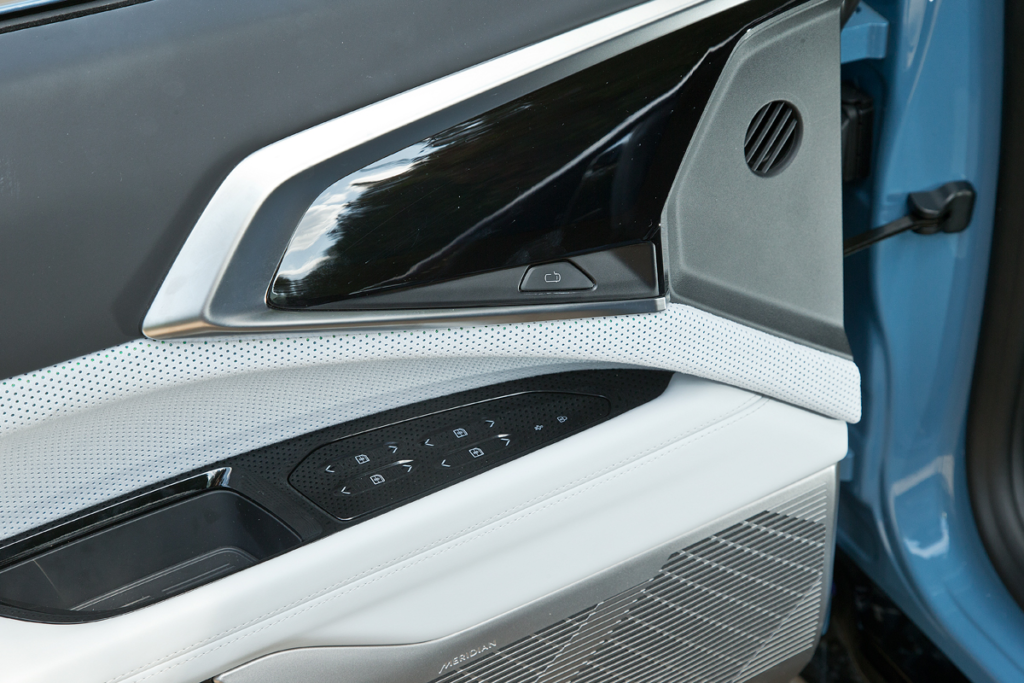
HiPhi Z is adorned with elegant fittings – only the standard window buttons do not match the overall mood.
Throttle, Regeneration and Brakes
Throttle response is a genuine pleasure, to the point where city driving can be handled almost entirely with the right pedal. Four levels of regenerative braking are available, and even the most aggressive setting avoids jarring transitions — the tuning of these transitional phases is excellent.
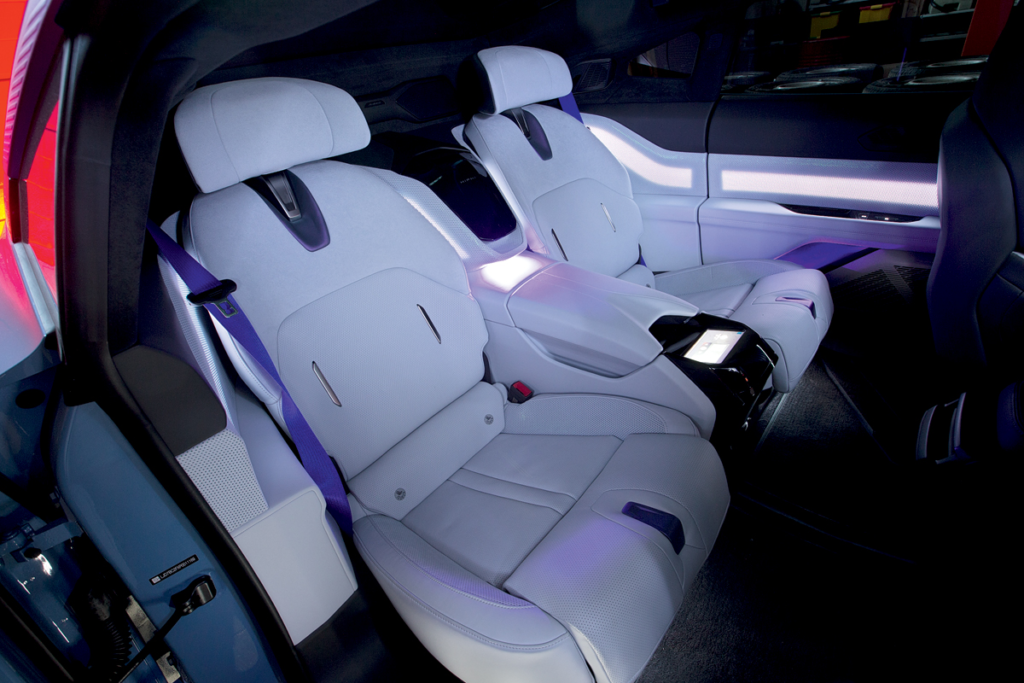
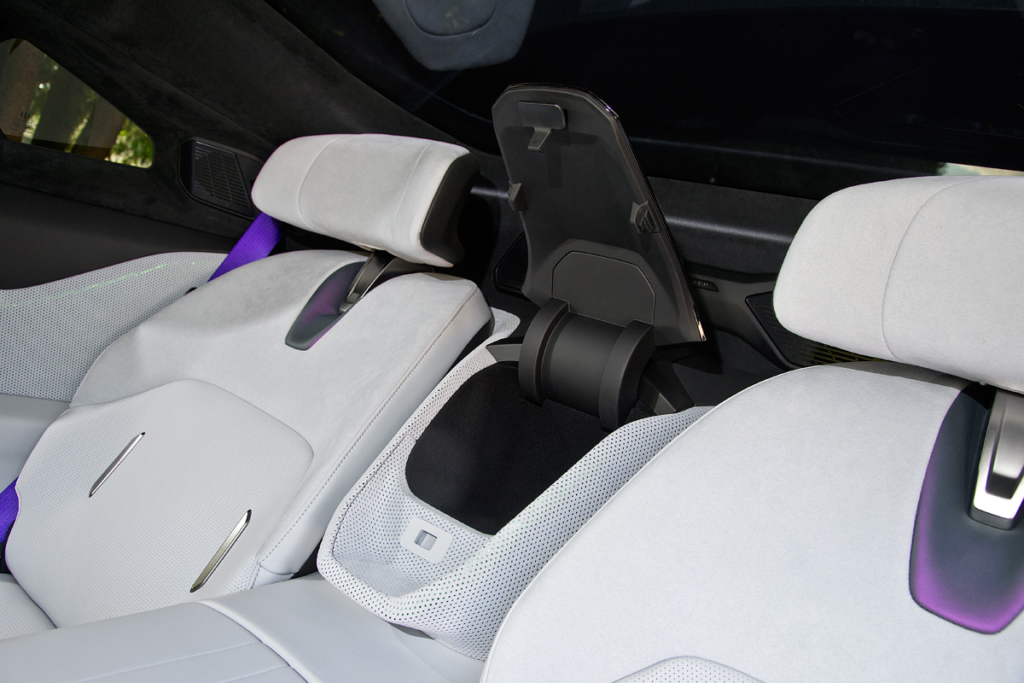
In the dark, the passenger part of the cabin is especially cozy. There is no rear window, but there is a panoramic roof that extends beyond the collar, and there are additional windows on the sides. But tall people in the back won’t like the low cushion and head hits on the roof during bumps.
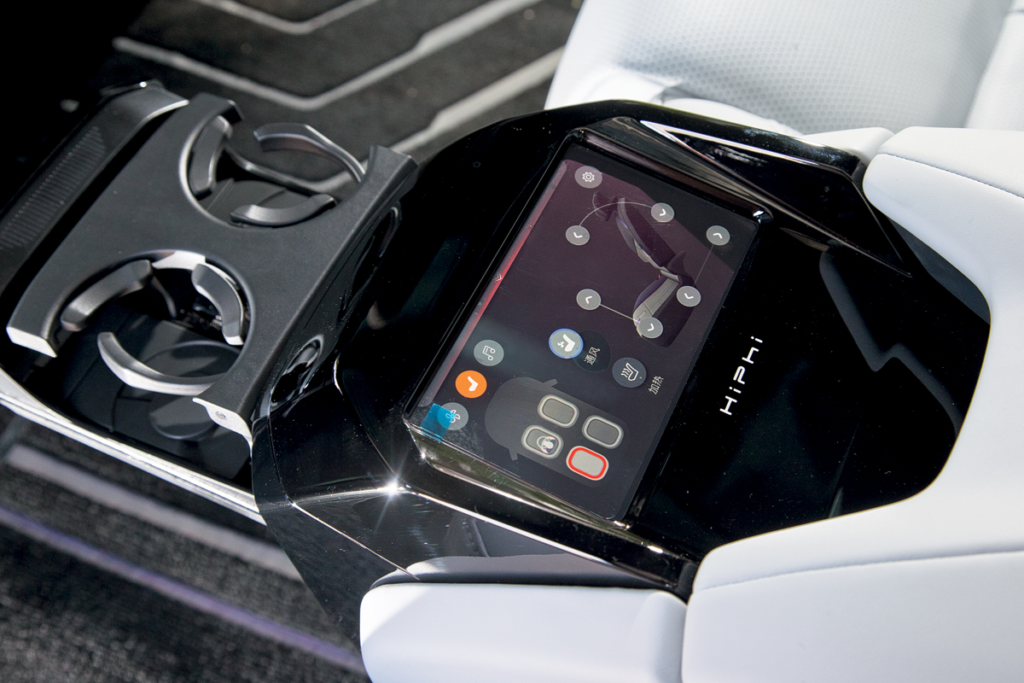
The tablet for rear passengers is unexpectedly modest in size and menu visualization.
The brake pedal is equally impressive. By late evening, after a full day with the HiPhi Z, I realized I’d only consciously noticed the brakes once — during official measurements. That’s a strong sign: in normal driving, braking quality and deceleration feel raise no concerns at all. And the numbers back it up — 34 meters to stop from 100 km/h is an excellent result for a car weighing 2,565 kg on our scales. Much of the credit goes to the 22-inch Michelin Pilot Sport EV tires, which are quiet, grippy, and visually striking, with velvety sidewall inserts that add real character to the car’s driving feel.
Yes, it’s really here — and what a car it is.
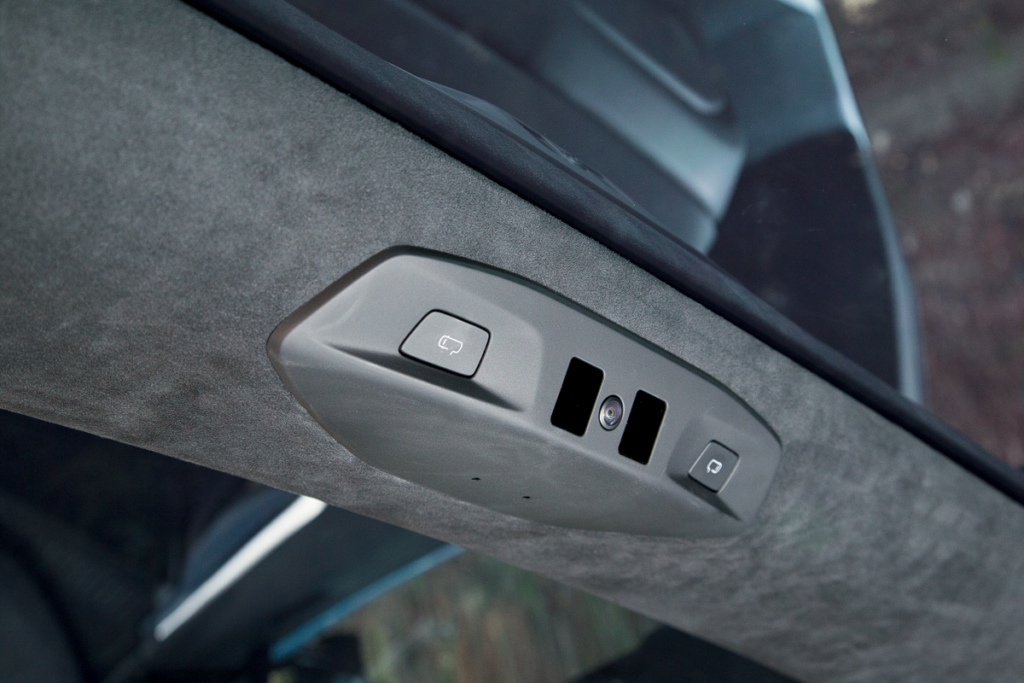
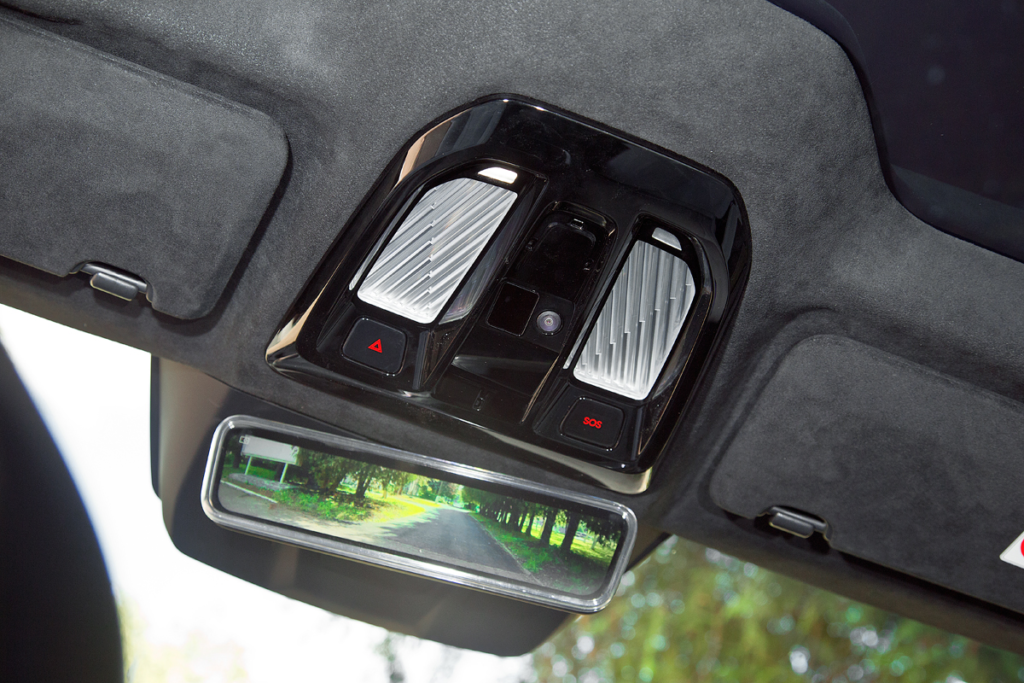
The rear doors need to be closed with buttons on the ceiling – it’s almost impossible to reach the handles from deep recesses.
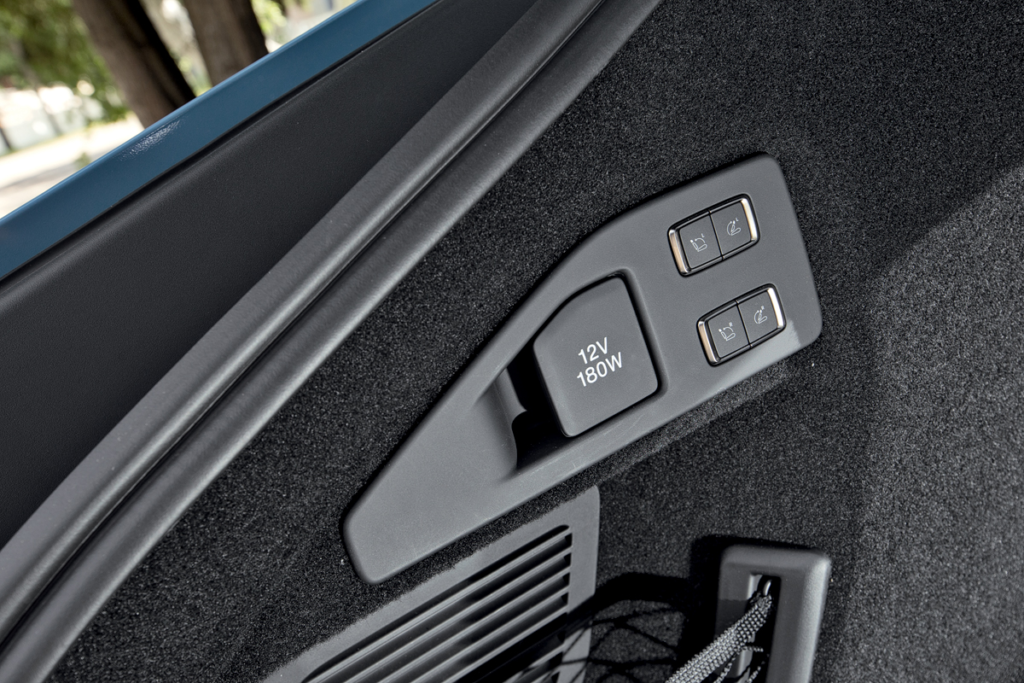
The servo drive for folding the rear seat – in a sedan! However, in the four-seat interior variant, the central section is solid.
Chassis and Handling: A Mercedes-Inspired Suspension That Actually Feels Finished
The HiPhi platform uses a sophisticated all-aluminum air suspension. The front suspension follows a double-wishbone layout with a single upper arm, reminiscent of Mercedes’ setup, while the rear multi-link suspension has become the industry standard among premium manufacturers. The build quality, ball joint sizing, and overall engineering are impressive throughout. Continental supplies the air struts, while every other suspension component carries a HiPhi-exclusive part number. Zeekr uses a similar configuration, but where that setup felt unfinished, the HiPhi Z feels genuinely ready for the road.
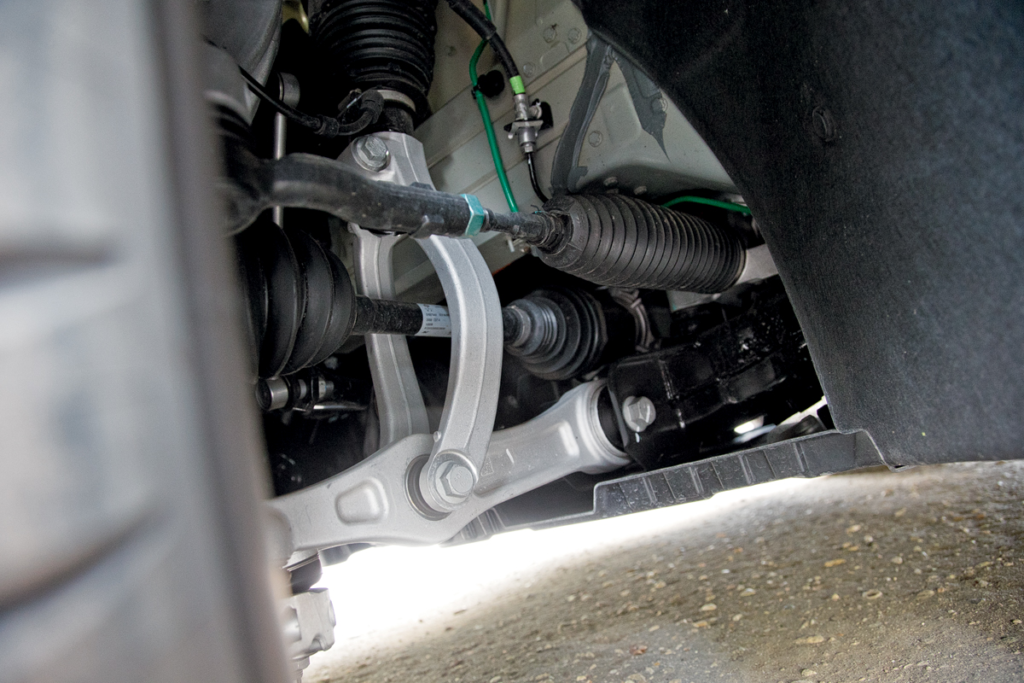
All-round aluminum suspensions – look at how elegantly the front suspension with double transverse arms is executed.
Steering and Stability
Straight-line speed is clearly the HiPhi Z’s natural habitat, and its relatively modest top speed never puts real stress on the chassis. Even over ruts or road irregularities, the car holds its line confidently, and changing direction turns out to be a genuine pleasure. Surprisingly, the “Zetka” offers mature, well-weighted steering without the exaggerated sharpness near center that plagues many Chinese electric performance cars. Responses stay consistent whether you’re on a smooth highway curve or a twisty backroad. Unfortunately, I couldn’t push the reactive steering to its limit — it’s noticeably better than the Zeekr’s, though only the lightest of its three modes feels realistic, and it’s still a step behind the Porsche Taycan. But that’s really beside the point.
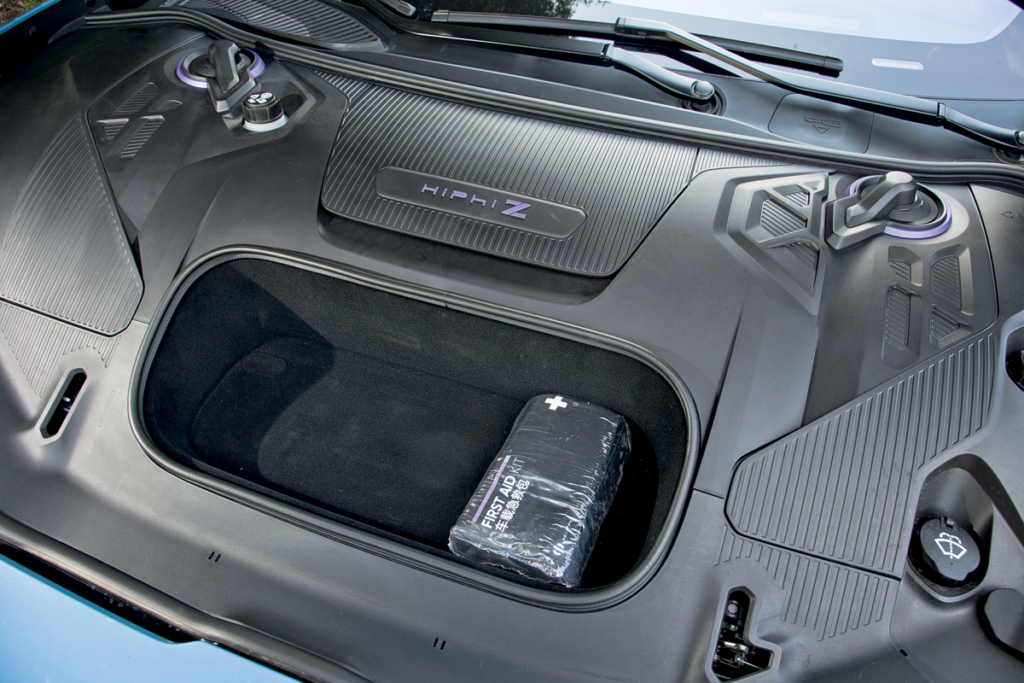
Up front, it’s more like a glove compartment than a trunk – after all, there is no traditional glovebox in the cabin.
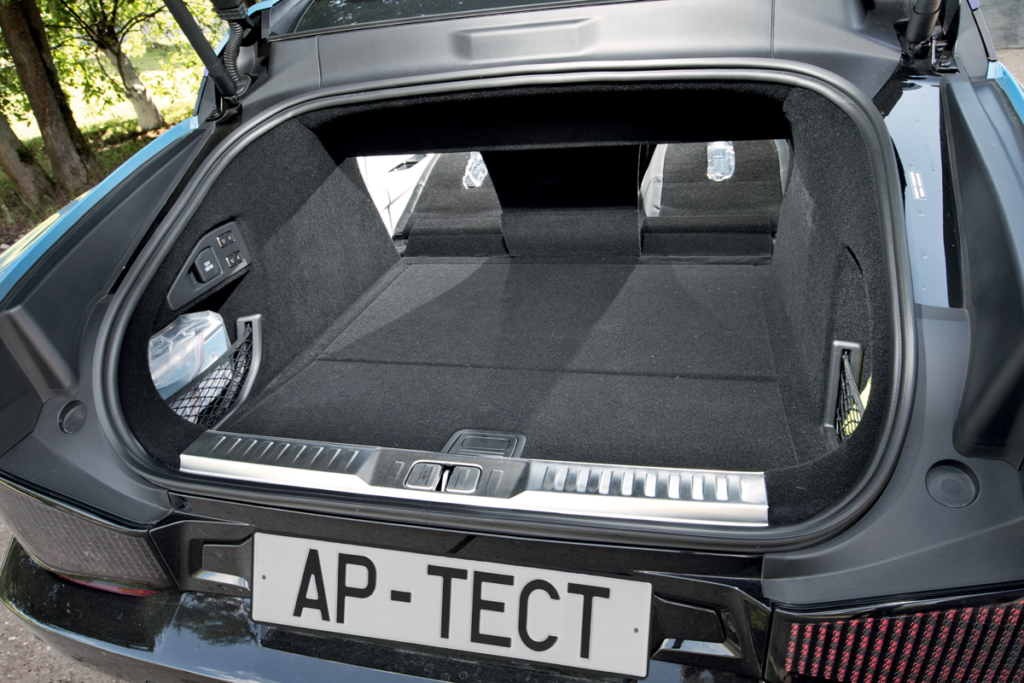
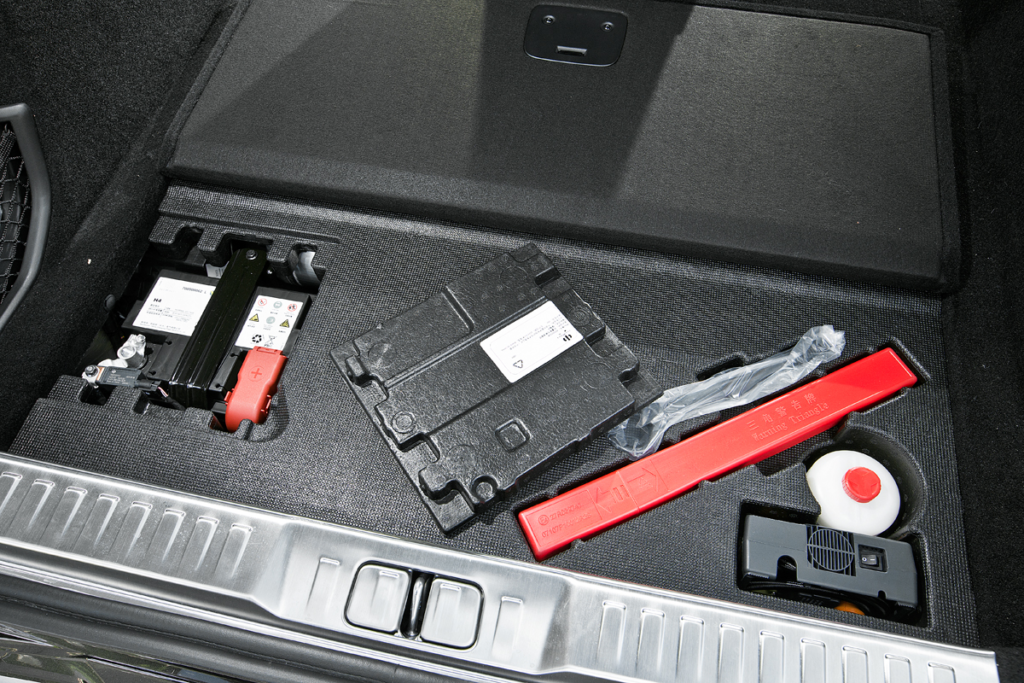
The loading height fell victim to the design, and the trunk volume could have been larger given the external dimensions.
The Damper Modes, and the Limit
These precise, communicative responses — paired with slight resistance off-center and a logical build-up of feel in extreme corners — are the hallmarks of a well-tuned chassis. There are no unpleasant surprises like unexpected deep slides or the awkward two-stage turn-in found in the Zeekr. Even hitting a bump or undulation mid-corner, the HiPhi Z holds its trajectory precisely. The adaptive dampers offer three modes, and even Comfort avoids any looseness or excessive body roll while keeping the large wheels from vibrating over sharp bumps. Normal mode suits consistently good road surfaces, where it starts revealing more road texture. Sport mode, meanwhile, is stiff enough to be useful only on a track — though the HiPhi Z isn’t really built for track duty. It’s heavy and clearly tuned for restraint rather than outright aggression. That makes it excellent and safe for real-world driving, but a track day will leave you wanting more excitement. Some form of torque vectoring would suit those powerful motors well, but with traction control disabled, the HiPhi Z becomes even more conservative, tending to push wide at the limit rather than rotate.
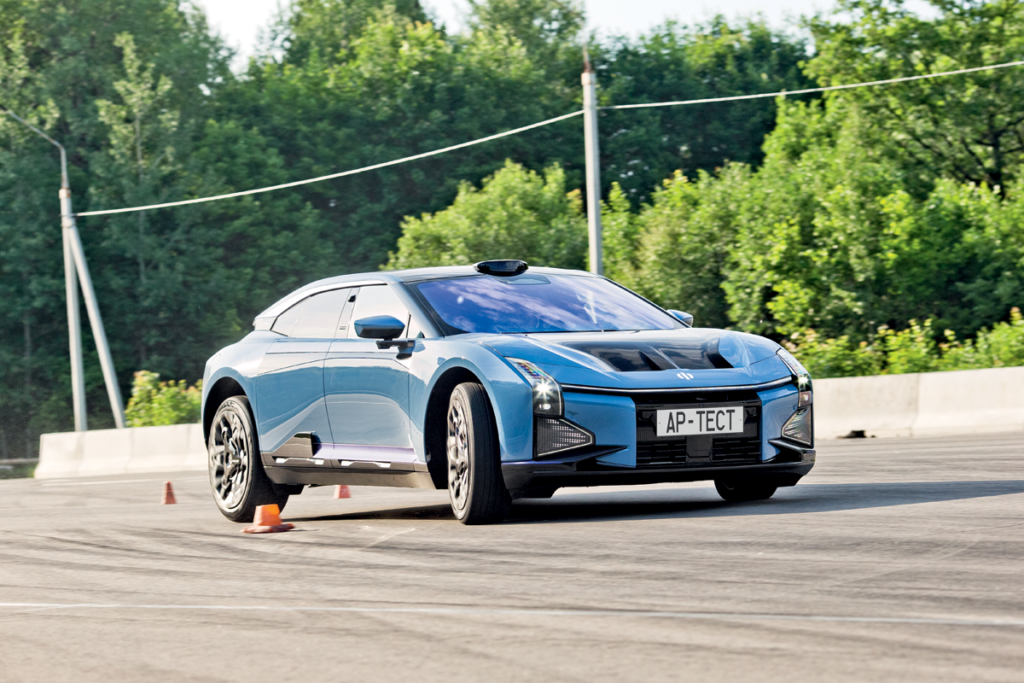
At the intersection, the large and heavy HiPhi was able to reach 81 km/h! The limit was the drift when returning to its lane. Sliding the rear wheels is a taboo for the “Zetka,” the stability control system works gently.
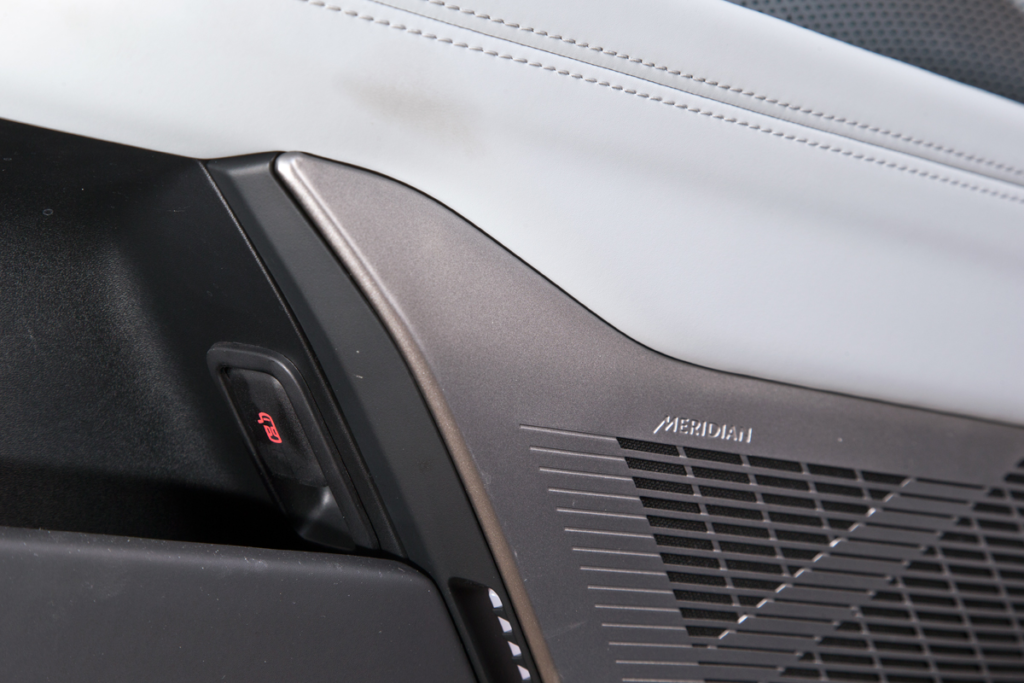
Make no mistake — this isn’t a sports car, but a large, fast Gran Turismo sedan. Ride smoothness comes close to the Mercedes EQE, and acoustic comfort is just as strong: inside the cabin, the only sounds you’ll hear are quiet conversation or music from the 23-speaker Meridian sound system.
Wait — isn’t Meridian the traditional audio supplier for Jaguar and Land Rover?
The Jaguar Connection: Why HiPhi Drives Like a British Sports Sedan
That Meridian detail isn’t a coincidence — HiPhi is, in many ways, the Jaguar of the future, at least in terms of driving character rather than styling. Mark Stanton, a former Ford and JLR engineer who once led Jaguar’s Special Vehicle Operations (SVO) division, has been HiPhi’s head of engineering since 2017. When he joined the startup, it had just 50 employees, but his leadership background stood out among hundreds of similar projects at the time. HiPhi’s CEO, David Ding, previously served as president of General Motors’ Shanghai division and understands the industry deeply — including the fact that LED bumper lights alone don’t make a great car. Stanton was given full authority over chassis tuning and brought in Peter Davis, a 62-year-old Jaguar veteran from the old school of vehicle dynamics, as a driving-dynamics consultant. It’s no surprise that Davis frequently emphasizes the importance of steering feel in interviews.

Frameless rearview mirrors are beautiful and convenient. I wonder how they’ll handle slush?
Pricing: How the HiPhi Z Stacks Up Against the Porsche Taycan and Audi e-tron GT
Perhaps this is the real secret behind the HiPhi Z: progressive Chinese designers focused on the future, working alongside conservative old-world engineers, as the brand prepares to enter Europe. Pricing in Germany and Norway is already confirmed:
- HiPhi X crossover: from €109,000 to €123,000
- HiPhi Z sedan (five-seat layout): starting at €105,000
- HiPhi Z coupe (two separate rear seats): just €2,000 more than the five-seat version
- Porsche Taycan 4S (comparable performance): roughly €5,000 more expensive at base price, with a similarly equipped model costing around a third more
- Audi e-tron GT: similarly priced to the Taycan 4S
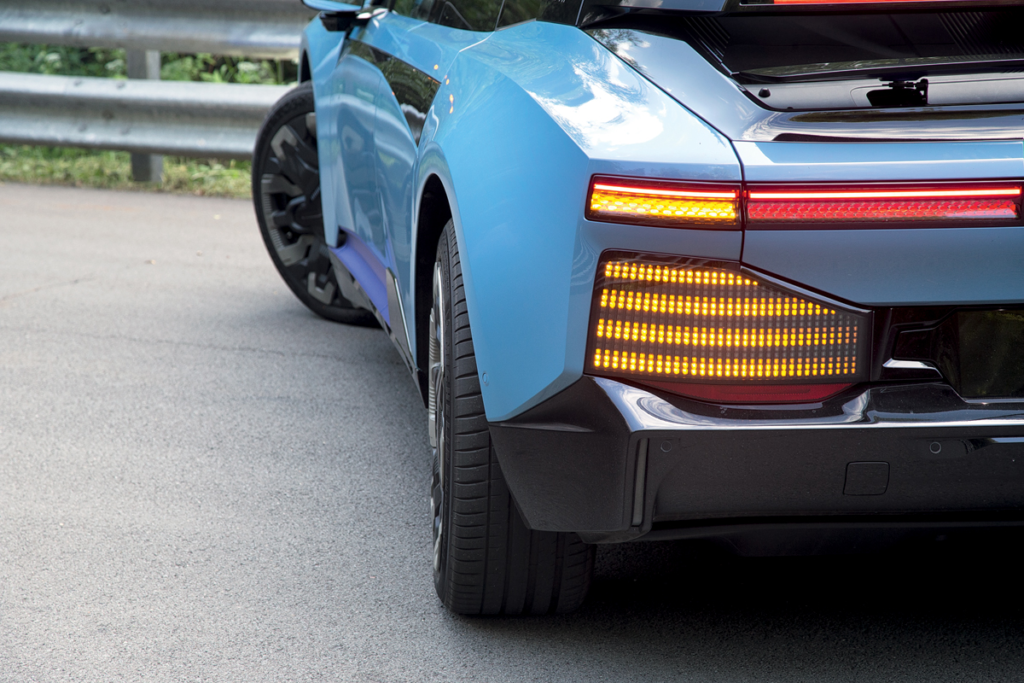
The combined mobility of the rear-wheel steering is as much as 13 degrees – more than the new S-Class!
HiPhi Z Specifications at a Glance
- Length / Width / Height: 5,036 mm / 2,018 mm / 1,439 mm
- Wheelbase: 3,150 mm
- Trunk volume: 316-654 L (rear seats folded down)
- Curb weight: 2,539 kg
- Drag coefficient: 0.27 Cd
- Traction motor type: Synchronous, permanent magnet
- Traction motor location: Transversely mounted over front and rear axles
- Max power: 672 hp / 494 kW
- Max torque: 820 Nm
- Battery: 120 kWh lithium-ion
- Drivetrain: Four-wheel drive with an individual motor on each axle
- Front suspension: Independent, pneumatic, four-lever
- Rear suspension: Independent, pneumatic, multi-link
- Wheels/tires: 255/45 R22 front, 285/40 R22 rear
- Top speed: 200 km/h (electronically limited)
- 0-100 km/h: 3.8 seconds
- WLTP range: 555 km
Frequently Asked Questions
How fast is the HiPhi Z? Its two motors make 672 hp and 820 Nm, and the factory claims 3.8 seconds to 100 km/h. We measured 3.9, with 7.8 seconds to 150 km/h and a stop from 100 km/h in 34.5 metres — impressive for a car that weighed 2,565 kg on our scales.
How far does it go on a charge? The battery holds 120 kWh and the WLTP figure is 555 km, but the car is not especially efficient: around 25 kWh per 100 km even on a calm run through the countryside, slightly more than the Zeekr 001.
What are the light panels for? The doors carry screens that display messages in Latin characters, and the bumpers run animations — including a walking pedestrian icon at a crosswalk and a yellow thumbs-up for other drivers. The rear panel is the Star-Ring ISD matrix LED system.
Why does it drive like a European car? Because Europeans tuned it. Mark Stanton, once head of Jaguar’s SVO division, has run HiPhi’s engineering since 2017 and brought in Jaguar dynamics veteran Peter Davis as a consultant. The 23-speaker sound system is Meridian’s — Jaguar Land Rover’s own supplier.
What does it cost against a Porsche? The five-seat HiPhi Z starts at €105,000 and the coupe layout costs €2,000 more. A Porsche Taycan 4S of comparable performance is about €5,000 more at base price, and roughly a third more when similarly equipped; the Audi e-tron GT sits alongside the Taycan.
Photo: Dmitry Pitersky
This is a translation. You can read the original article here: KITT двадцать первого века: суперседан HiPhi Z на дорогах полигона

Published November 08, 2023 • 13m to read