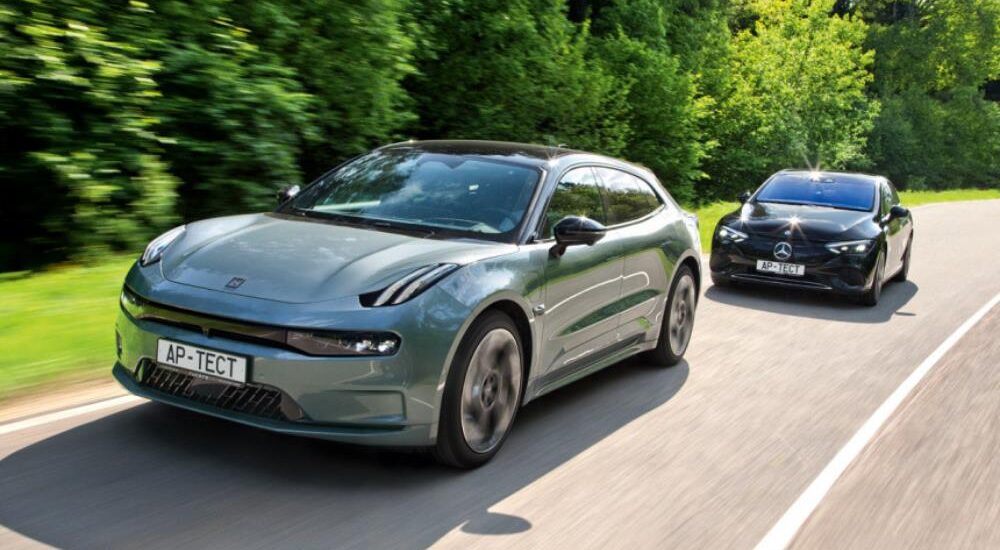

In 2021, Geely’s premium sub-brand Zeekr unveiled the Zeekr 001, an electric liftback built to compete with established players like the Mercedes-Benz EQE. But does this Chinese EV have what it takes to challenge a pedigreed German rival? We put both electric vehicles head-to-head to find out.
Mercedes-Benz’s Late Entry into the Electric Vehicle Market
Remember when the crossover boom started about twenty years ago, and every second auto review began with the same line — this manufacturer has slept through everything, others are already churning out elevated pseudo-off-roaders, and it’s only just introducing an SUV to the market? The same story applies to Mercedes and electric vehicles today. Several Chinese automakers have already delivered on promises that Mercedes only recently began fulfilling. The German brand’s electric program launched in Stuttgart seven years ago, with plans to release ten electric models by 2022, all based on a dedicated modular EV platform.
MEA Against SEA
As of today, there are only four such models — and without a tape measure, you could argue there are really only two, since the EQS and EQE look nearly identical apart from their dimensions. Both ride on Mercedes’ latest Modular Electrical Architecture. So this comparison is really a three-letter battle: MEA versus SEA.
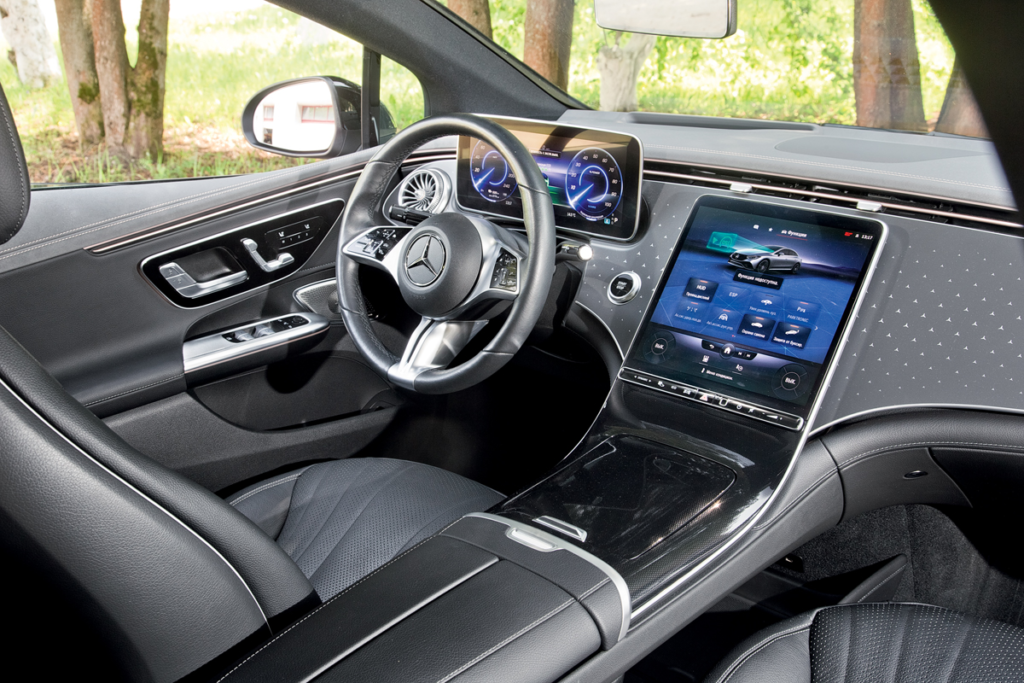
The plastic panel instead of the front panel looks so-so. For a surcharge it can be completely covered
with Hyperscreen.
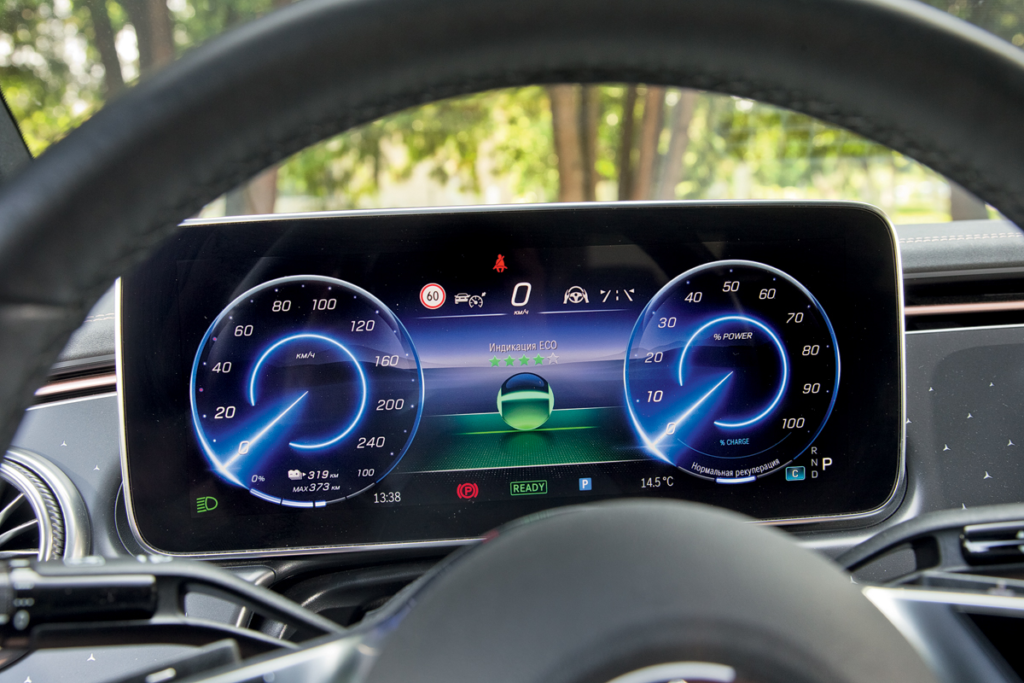
Albeit digital, but still a classic. There are no problems with readability, you can choose a different design option, but in any case it will be more convenient than in Zeekr.
The rest of Mercedes’ electric lineup is based on traditional gasoline platforms, and the new generation of electric Smart cars is even built in partnership with Geely on the SEA platform — a genuine twist of fate.
Exterior Design: Aerodynamics vs Aesthetics
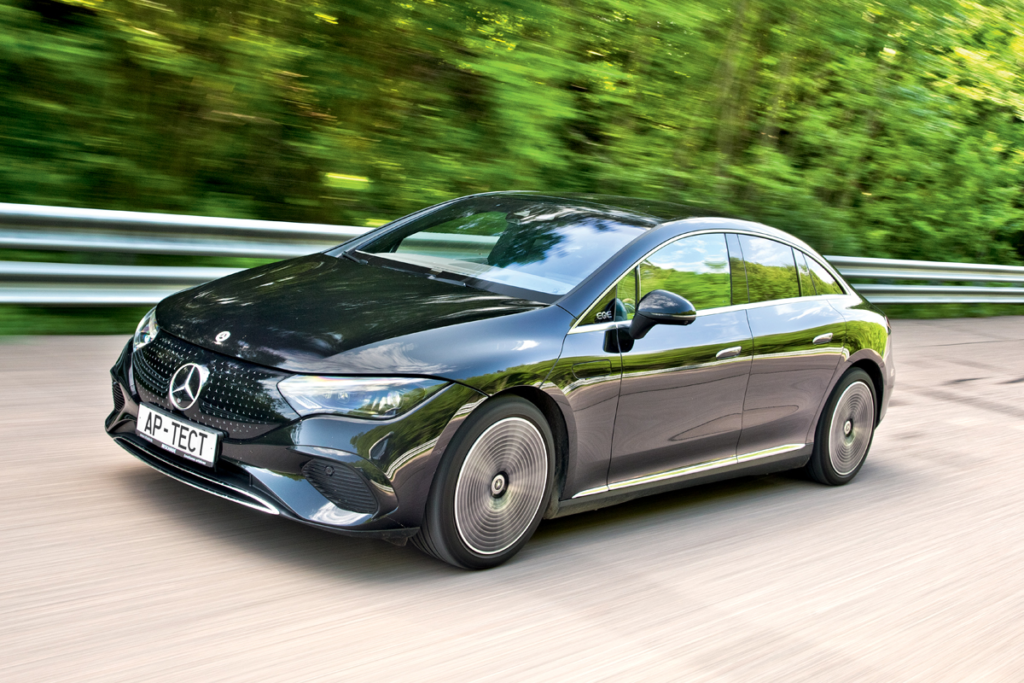
When it comes to design, this battle plays out on the sea bed — Mercedes clearly draws inspiration from a deep-sea dweller, the kind of creature that lives where sunlight never reaches and no one is watching. Several classic car-design conventions get bent along the way:
- The front pillar’s line hits the corner of the bumper instead of passing through its center
- The three-meter wheelbase leaves a gap that fits nearly four and a half wheel diameters, rather than the usual four
- Unusual connectors appear between the hood and front wing
- A lengthy side surface required extra inserts because the doors couldn’t be stretched further
Despite these quirks, the EQE achieves an impressive drag coefficient of just 0.22.
Powertrain, Battery, and Range Comparison
As Enzo Ferrari once said, aerodynamics are for those who can’t build engines. Zeekr certainly isn’t chasing efficiency records — its dual electric motors deliver a combined 544 hp. Key powertrain specs for both EVs:
- Both cars use a 100 kWh battery — LG cells in the Mercedes, CATL cells in the Zeekr
- Zeekr also offers a 140 kWh battery version
- Both liftbacks are tested here in rear-wheel-drive form
- Claimed range under the Chinese CLTC cycle (comparable to NEDC) exceeds 1,000 km
Based on extensive testing of Chinese EVs, real-world range typically comes in a third to half below the official figures — though even discounted, that’s still an impressive number.
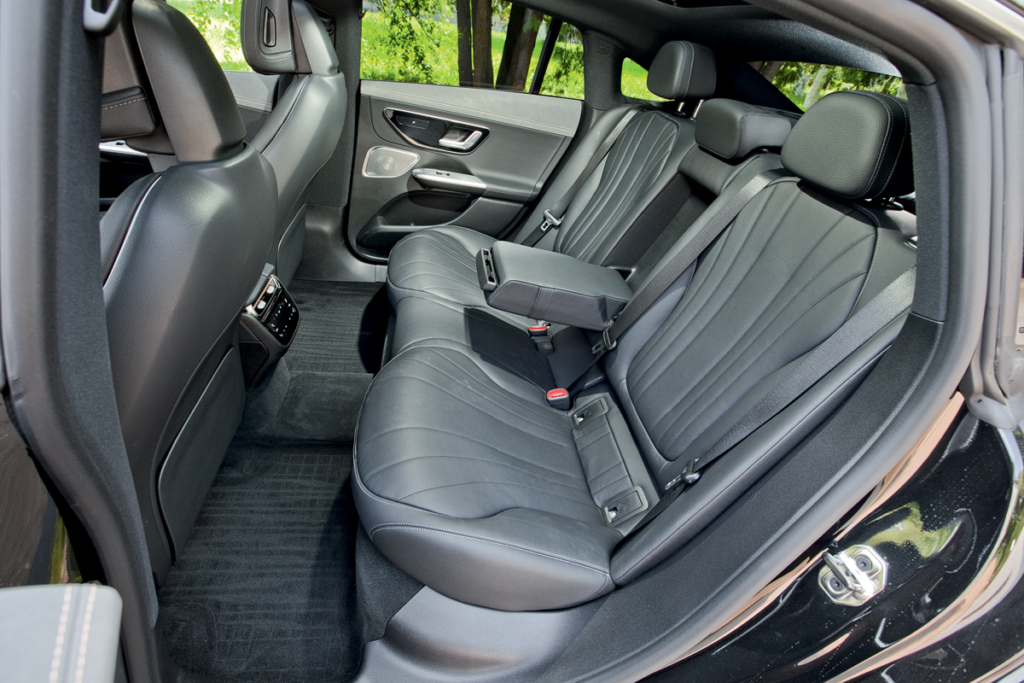
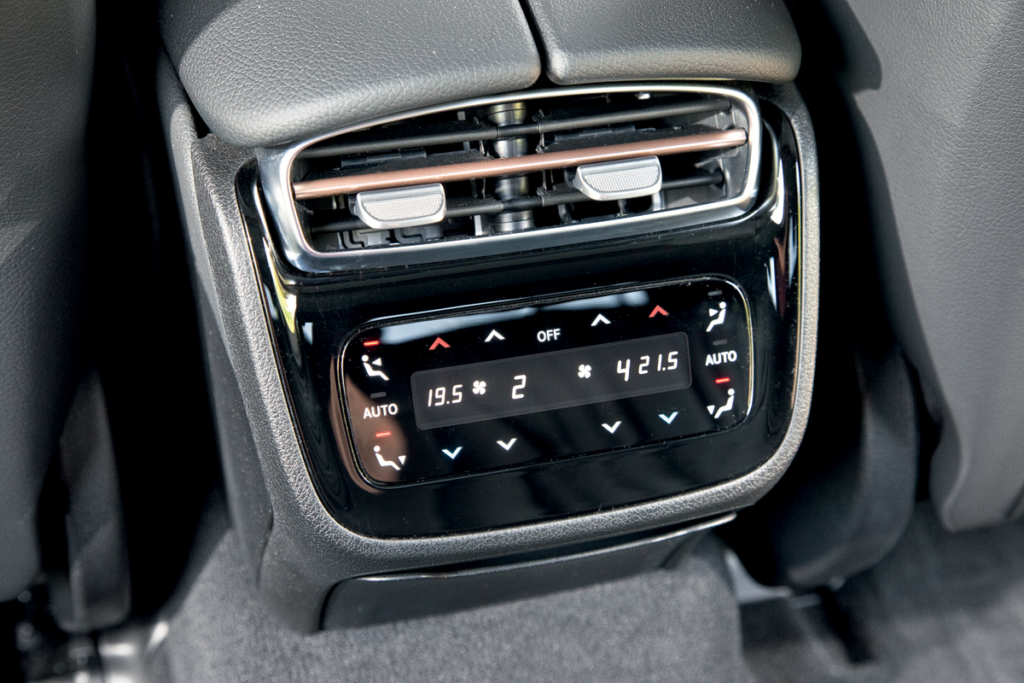
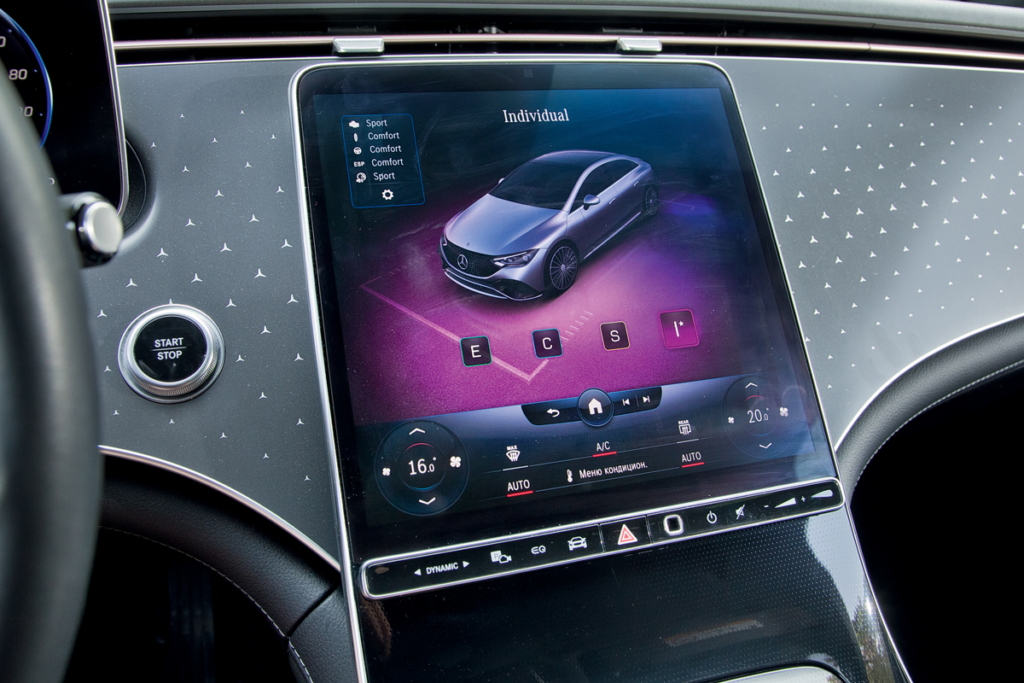
The EQE offers separate climate control for the second row as well.
What They Actually Consume
Our Zeekr test car averaged around 22 kWh/100 km in summer conditions, giving a real-world range of just over 400 km — plenty for most needs, but modest next to the Mercedes. Under normal driving, the EQE covers about 500 km on a charge, stretching to nearly 600 km with careful driving.
The EQE’s owner is a committed long-distance EV enthusiast, and had some memorable charging stories from his time with an electric Smart — including one occasion charging at a sawmill, where the crew unplugged their saw from a three-phase socket so he could charge up. It worked.
On our test track, the Mercedes averaged 17 kWh/100 km — possibly a record for an electric car of this power and weight (2,385 kg on our scales; the dual-motor Zeekr is only 23 kg heavier). It’s a strong sign that a traditional automaker can build a genuinely efficient EV platform from the ground up, rather than simply slotting a battery into an existing sedan or crossover, as Mercedes did with the rest of its electric range.
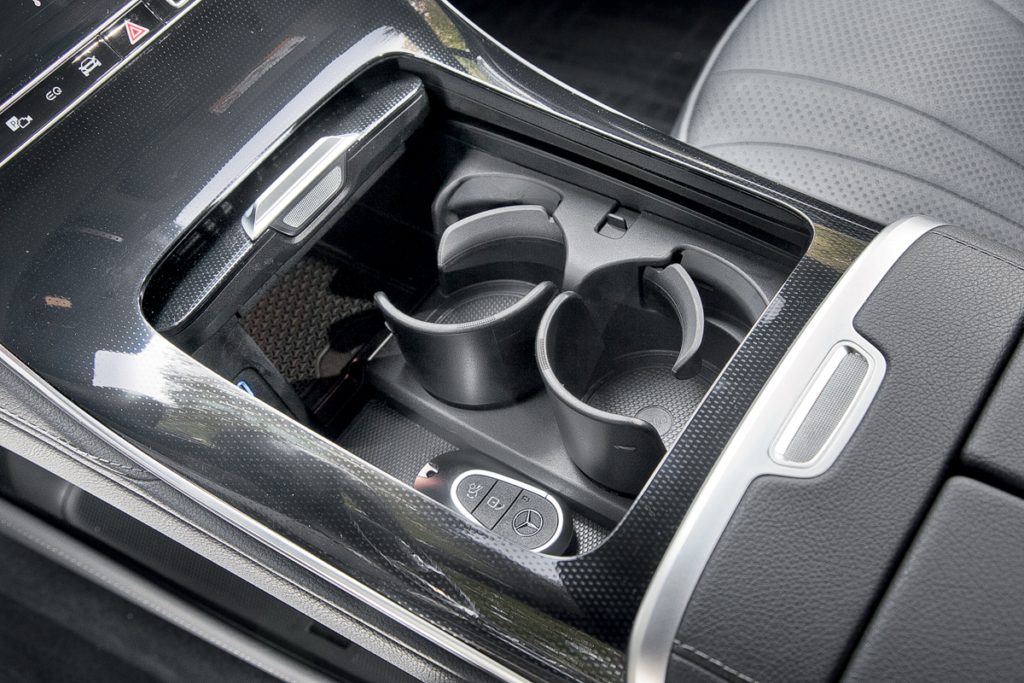
The compartment for small items and cup holders are hidden behind a glossy lid.
Interior and Infotainment: MBUX vs Zeekr’s Multimedia System
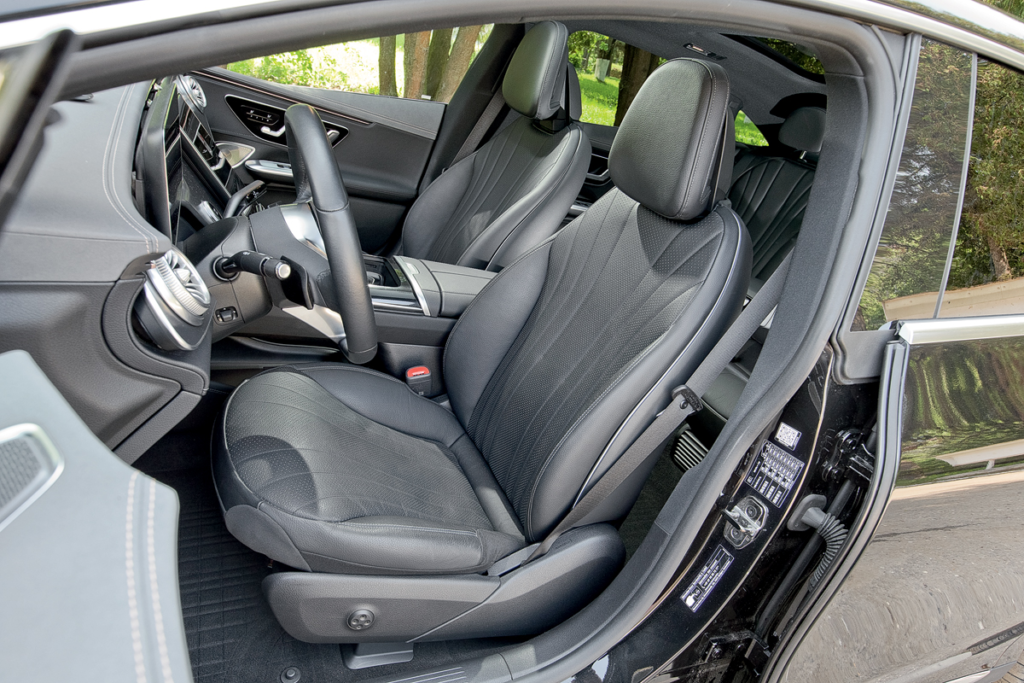
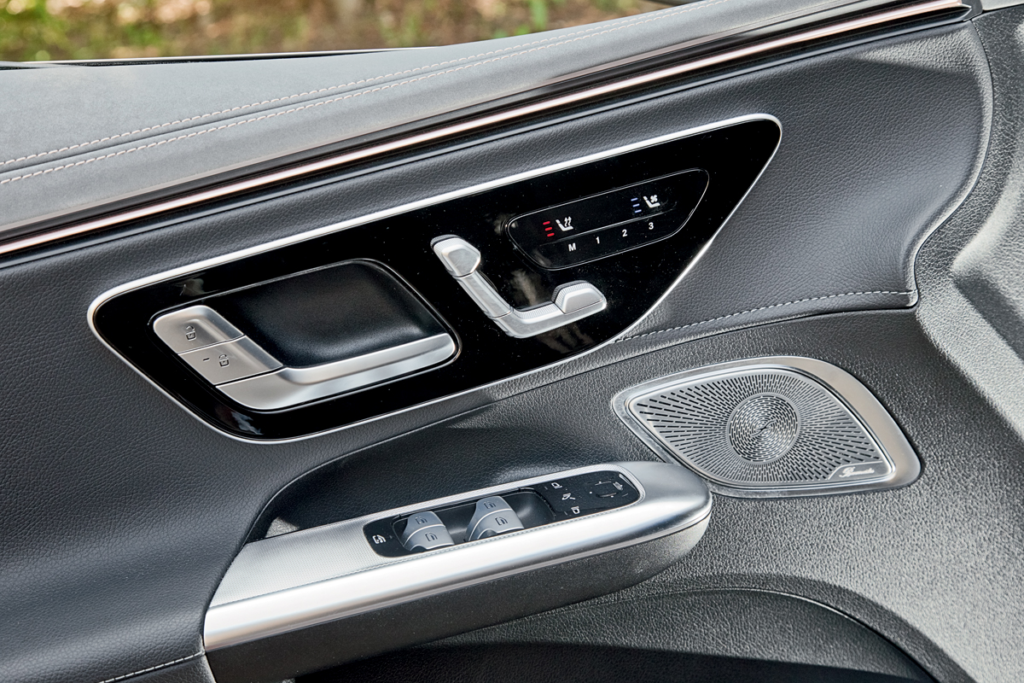
The EQE’s cabin still feels first and foremost like a car — familiar, modern, and easy to use. The seats are excellent, the instruments are clear, and MBUX remains one of the best infotainment systems on the market, even up against current Chinese systems. Third-party features like navigation and music apps work noticeably better in the Mercedes, and the Yamaha audio system in the Zeekr falls short of the EQE’s Burmester speakers in both detail and dynamics.
But the Zeekr won’t fall short on dynamics.
Doors That Open by Themselves
Approach the Zeekr and press the door handle, and the door swings open automatically. The ceremony can run a bit long, though — stand too close, or at the wrong angle, and the process pauses before resuming. Manual opening would sometimes be preferable. On the plus side, automatic closing after lifting the inner handle is a genuinely nice touch.
Materials, Screens and Seats
Inside, the Zeekr impresses with material quality — even in photos, it’s clear the Mercedes has a simpler finish. That said, the EQE can be ordered with a huge Hyperscreen spanning the entire dashboard, though at a significantly higher price.
For the same money, the Zeekr makes a stronger first impression, with Alcantara and soft leather trim plus a glass roof with adjustable transparency — details that easily win over first-time EV buyers. However, the sporty-looking bucket seat is mounted too high with an awkward profile, and the tiny digital instrument screen is hard to read, which drags down the overall impression of the driver’s seat. Whether that’s a cost-cutting choice or a nod toward future autonomous driving is up for debate.
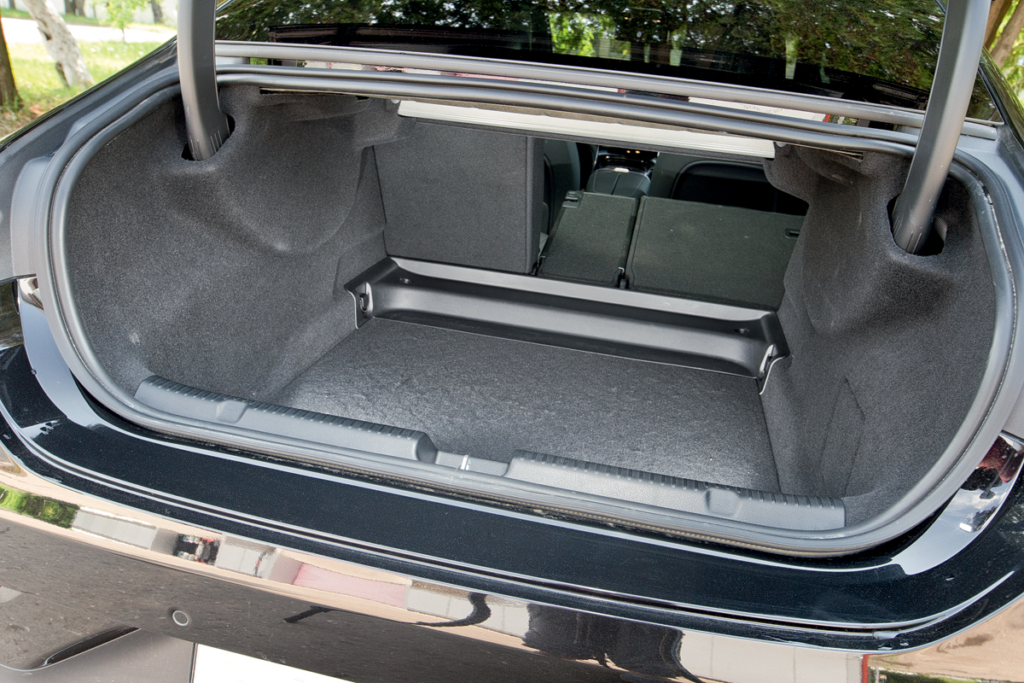
Mercedes is a fastback, so its trunk is of traditional sedan architecture. Spacious, but not with the same opening as Zeekr. Note that the hinges go under the trim.
Driver-Assistance Systems and Autopilot Performance
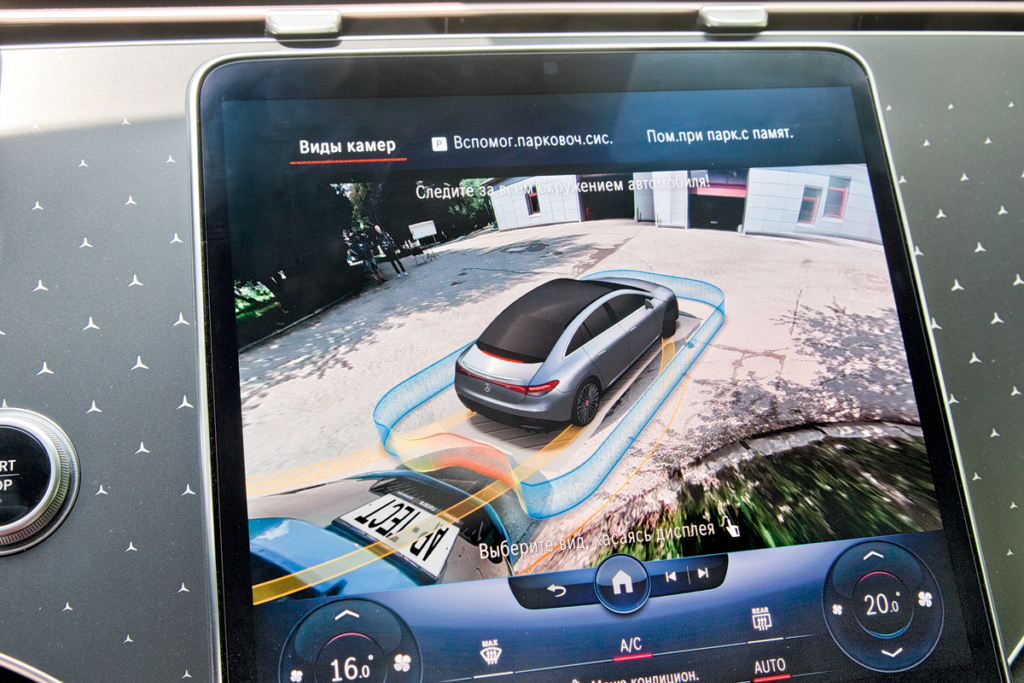
Both EVs come equipped with radar sensors and surround cameras, and both can follow a lead vehicle even on winding roads. The Mercedes EQE stood out as one of the first cars where handing over the wheel and pedals felt genuinely pleasant on real roads.
It manages throttle and braking confidently, holds a steady line through the center of the lane even in sharper corners, and starts gently steering well before the wheel would run over a lane marking. On a busy suburban highway, it was possible to travel a good stretch without holding the wheel at all.
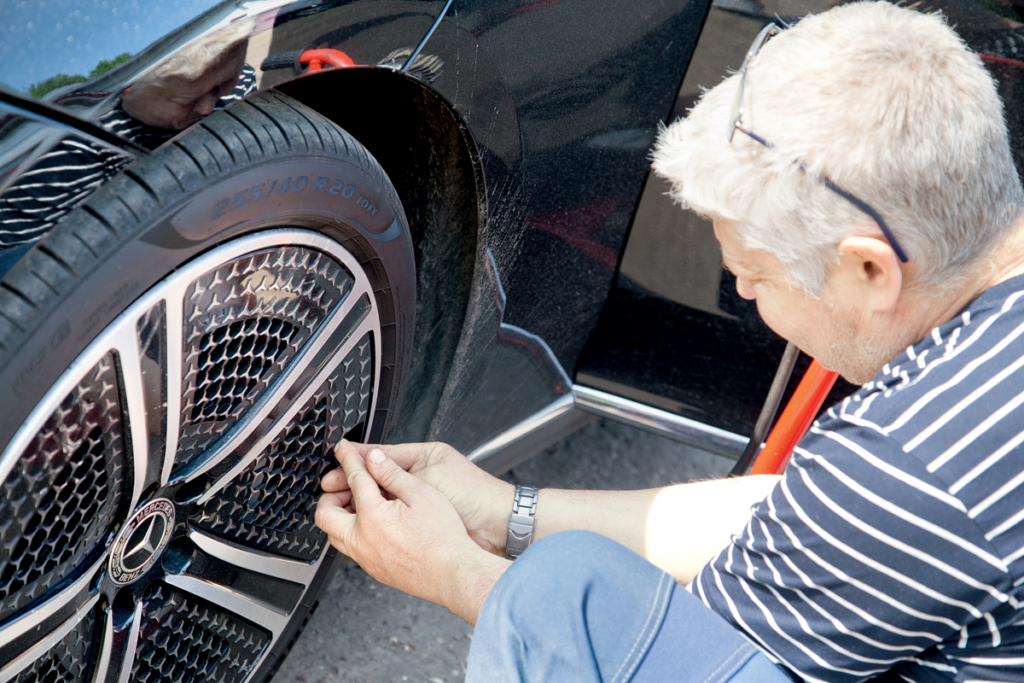
The aerodynamic hubcaps almost completely cover the Mercedes wheel – to unscrew the nipple cap, you have to struggle a bit.
The Zeekr Heads for the Ditch
The Zeekr, by contrast, seems to have skipped its autopilot lessons. Its driver-assist system shows the typical weaknesses of many active-cruise setups — overly sharp, delayed braking even at low speeds, plus a tendency to bounce between lane markings. In one sharper turn, the system drove confidently straight toward the ditch without any warning.
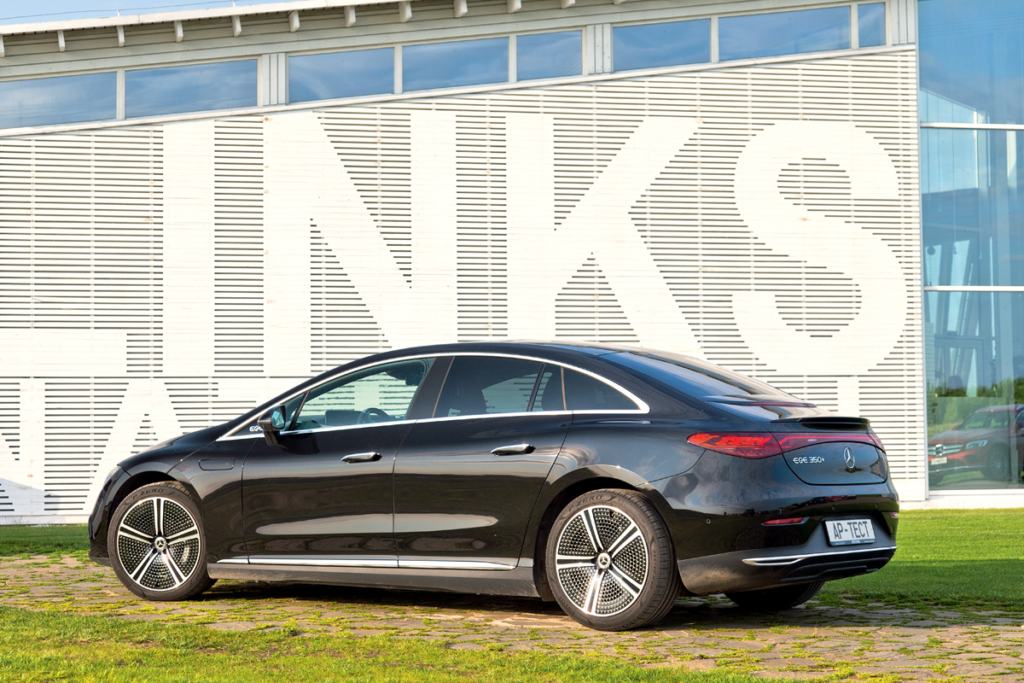
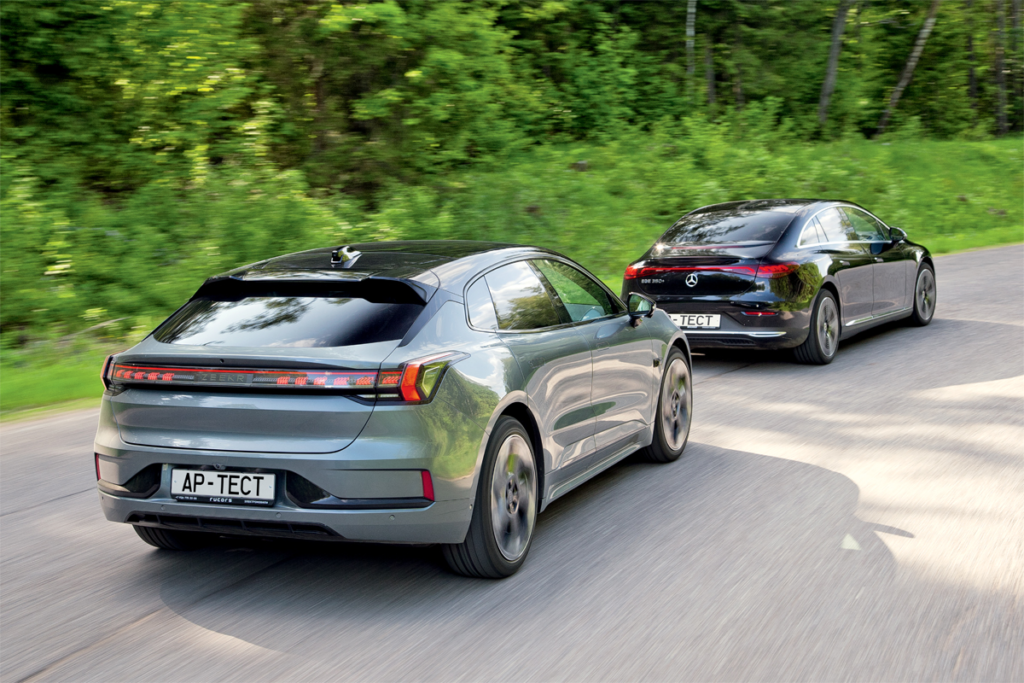
The fish-like design of the EQE is not impressive, but the correctly chosen background helps to improve perception – we thank the LINKS golf club for their assistance in conducting the shooting.
There’s a decent chance software updates will improve this — like Tesla, Zeekr pushes updates over the air, smartphone-style.
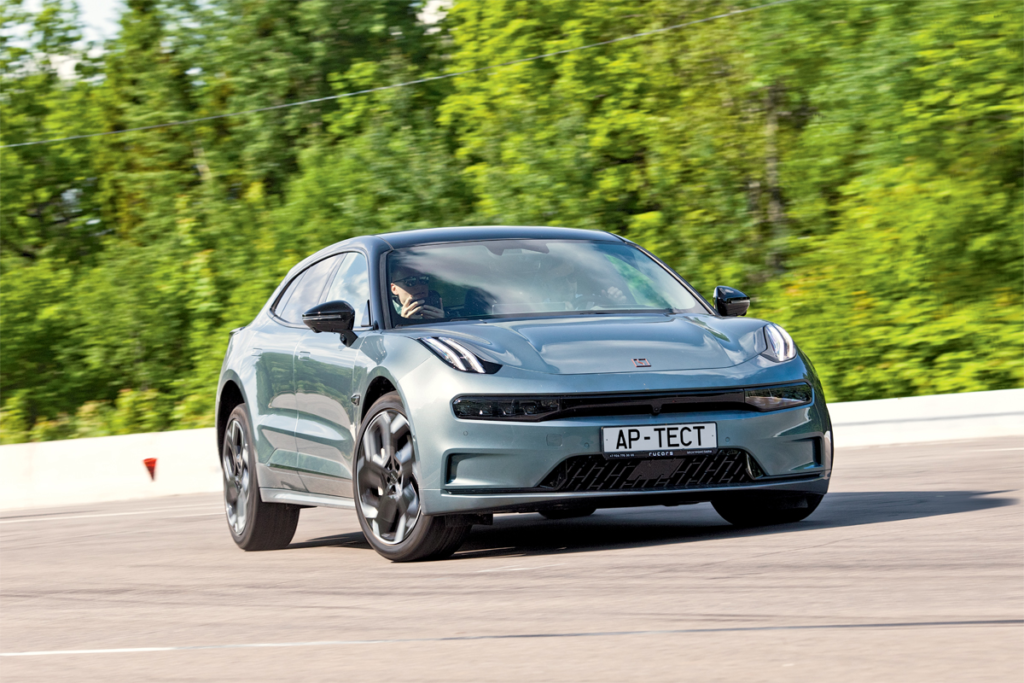
Going in, the expectation was another showcase of Chinese automotive momentum, with the avant-garde Zeekr leaving no stone — or battery cell — unturned against the electric Mercedes. But the results told a different story.
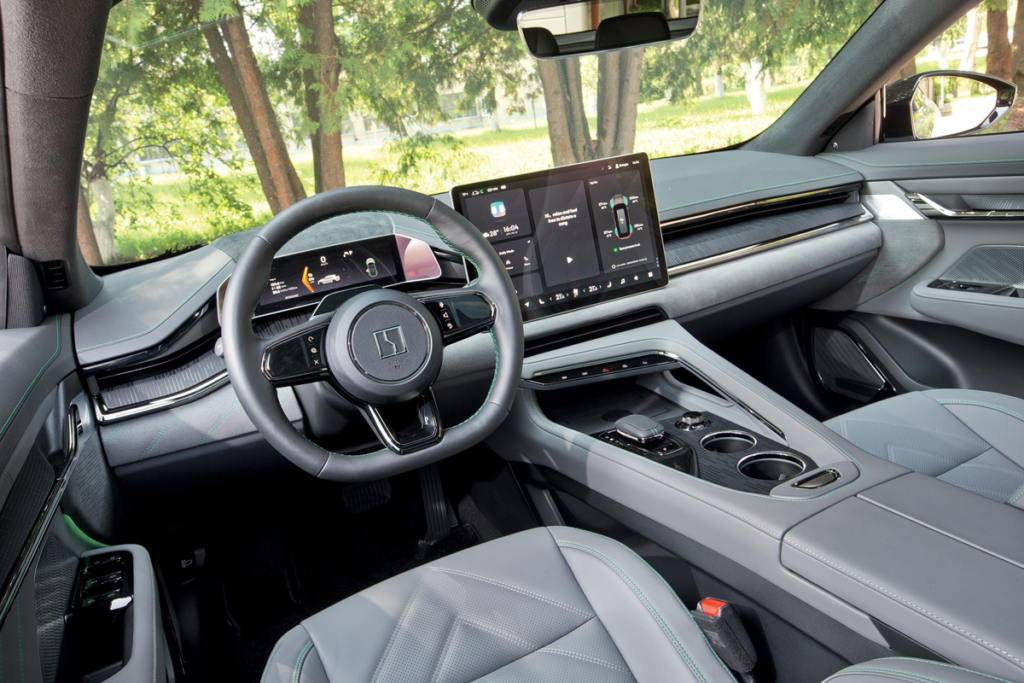
Zeekr delighted with the classic shape and design of the steering wheel. The steering column, by the way, does not have a separate adjustment lever – like in Tesla. You need to go to the menu and operate with a touch remote on the right spoke.
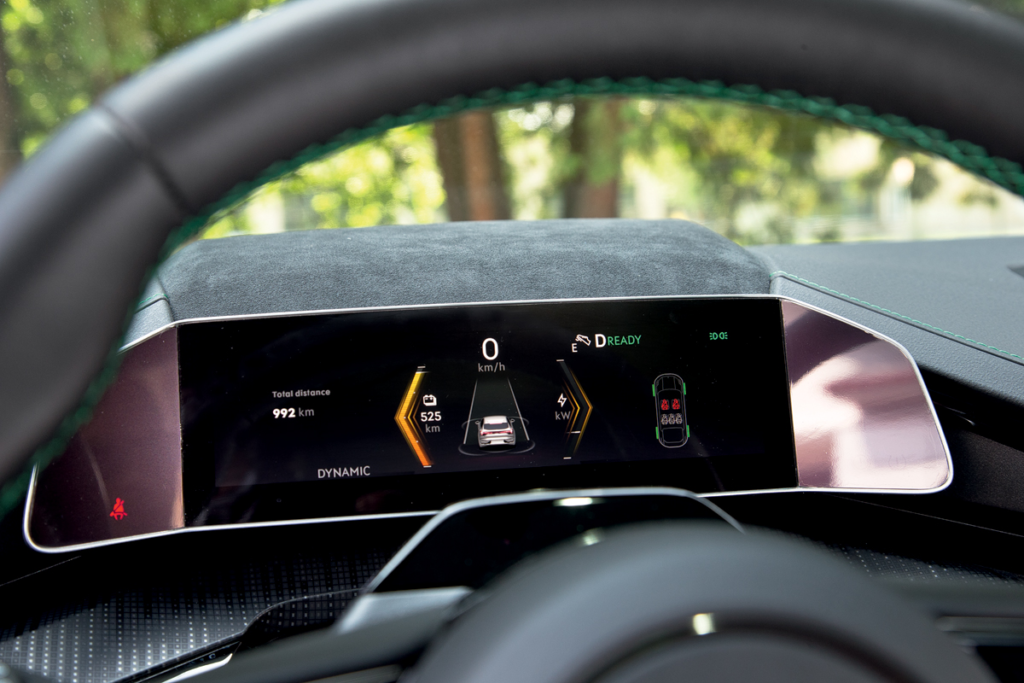
The small instrument screen is like from a modern motorcycle. It’s not very legible – you get the main information through a projector on the windshield.
Ride Comfort and Everyday Drivability
The EQE is the best electric car driven for this comparison. The Polestar 2 may be more dynamic and sporty, but the EQE’s overall balance of qualities ranks higher. It remains to be seen how the larger EQS drives, but this more compact fastback wins on comfort.
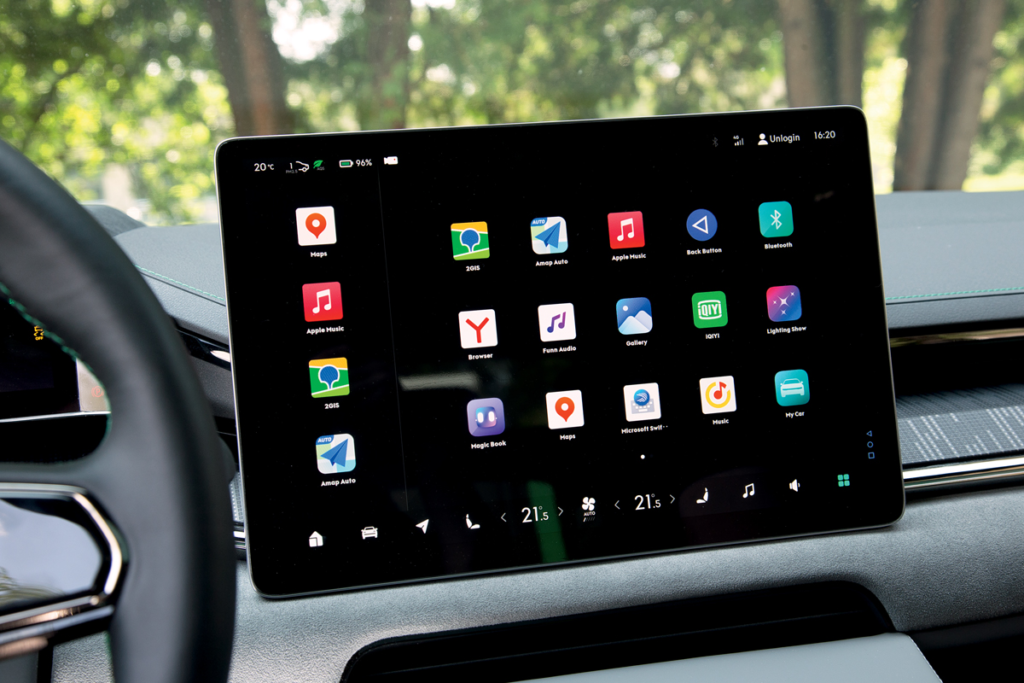
Zeekr’s multimedia system has only been partially translated from Chinese so far, but you quickly memorize all the necessary characters thanks to the logical menu. And the main thing is that there are no problems with installing third-party applications here.
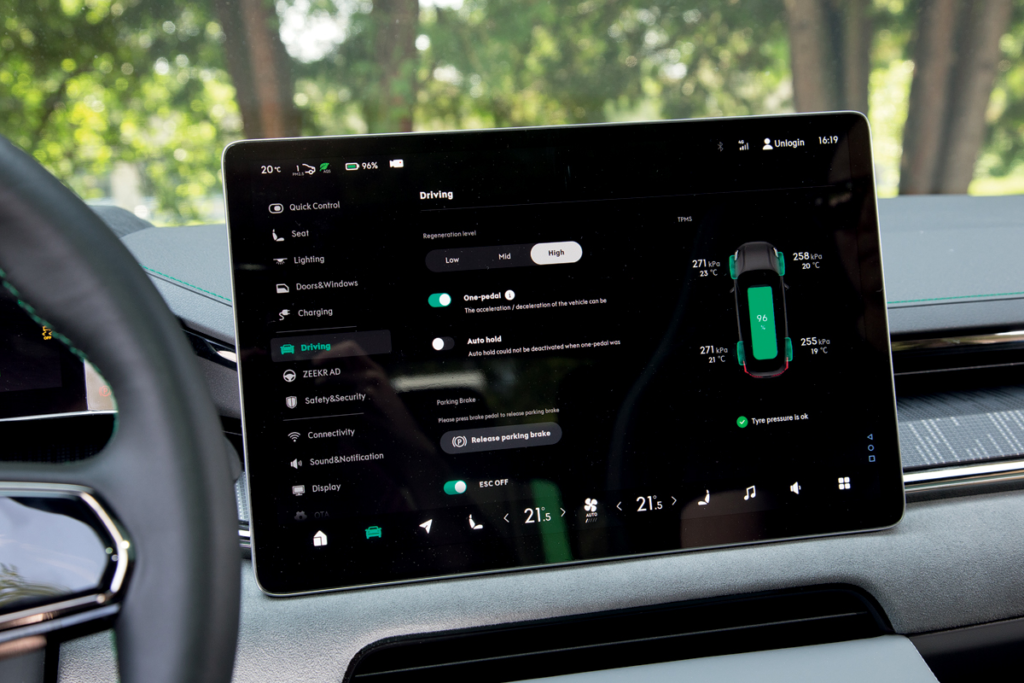
The same menu architecture was in the Li L9 hybrid and some BYD cars: a new Chinese standard. To call up important driving settings, just swipe the screen down, like on a smartphone.
It’s remarkably quiet all the way to top speed, and the air suspension smooths out road imperfections quickly and imperceptibly. A few practical comfort details worth noting:
- Ground clearance on the EQE can be raised from a standard 137 mm to 163 mm for rough terrain
- Zeekr’s standard ground clearance is already higher, and can rise to 206 mm
- Both cars achieve near-zero cabin noise typical of a well-executed EV
The EQE may not be conventionally handsome, but its shape genuinely works — there’s virtually no aerodynamic noise at all.
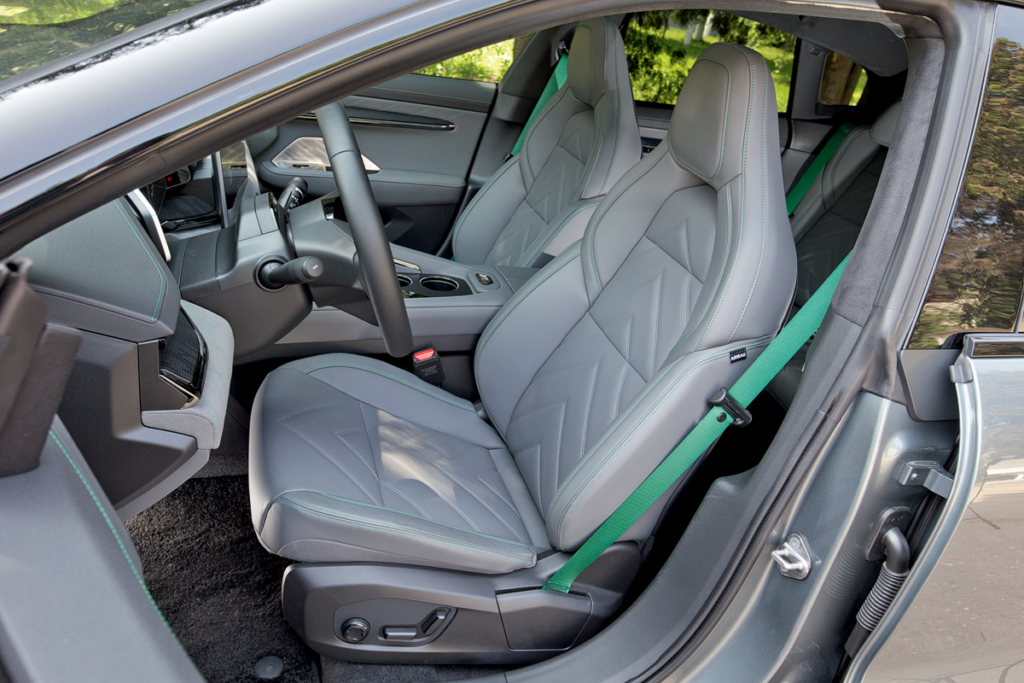
Colored safety belts are a bright element of almost all Zeekrs. The seat looks great, but in reality, the profile of the backrest turned out to be problematic.
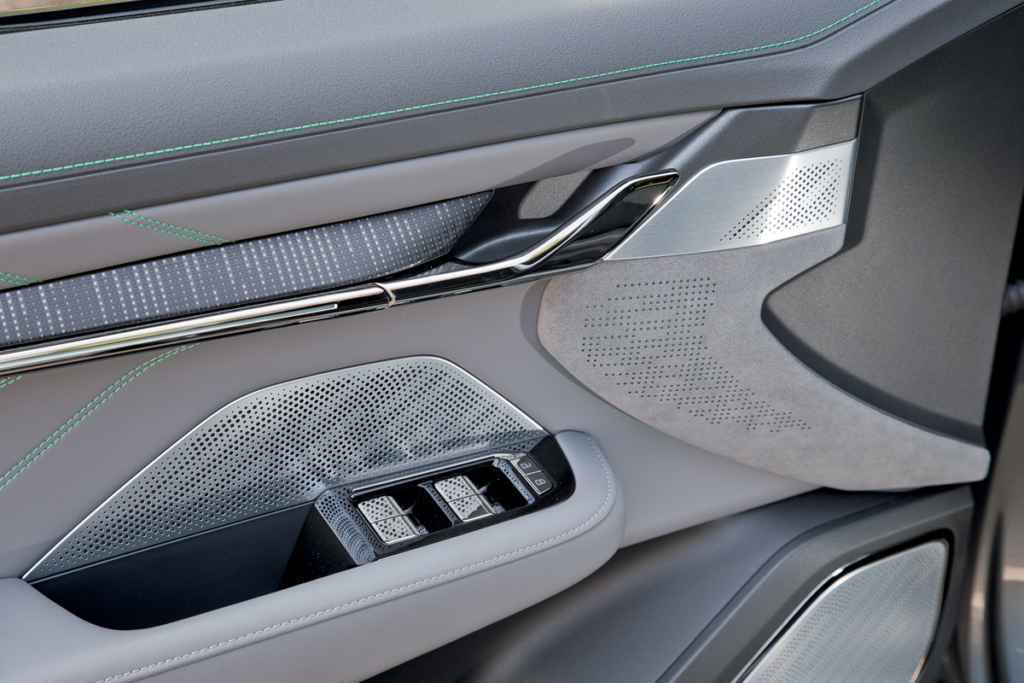
There is almost no individuality in the Zeekr’s cabin, but the quality does not decrease, even in small details – like in a good chain hotel.
This level of comfort has an unintended side effect: with so little sensory feedback reaching the driver, it’s easy to drive faster than intended — a glance at the speedometer can bring a genuine surprise at 120 km/h. It’s an odd irony that high comfort can create extra work for the chassis in corners.
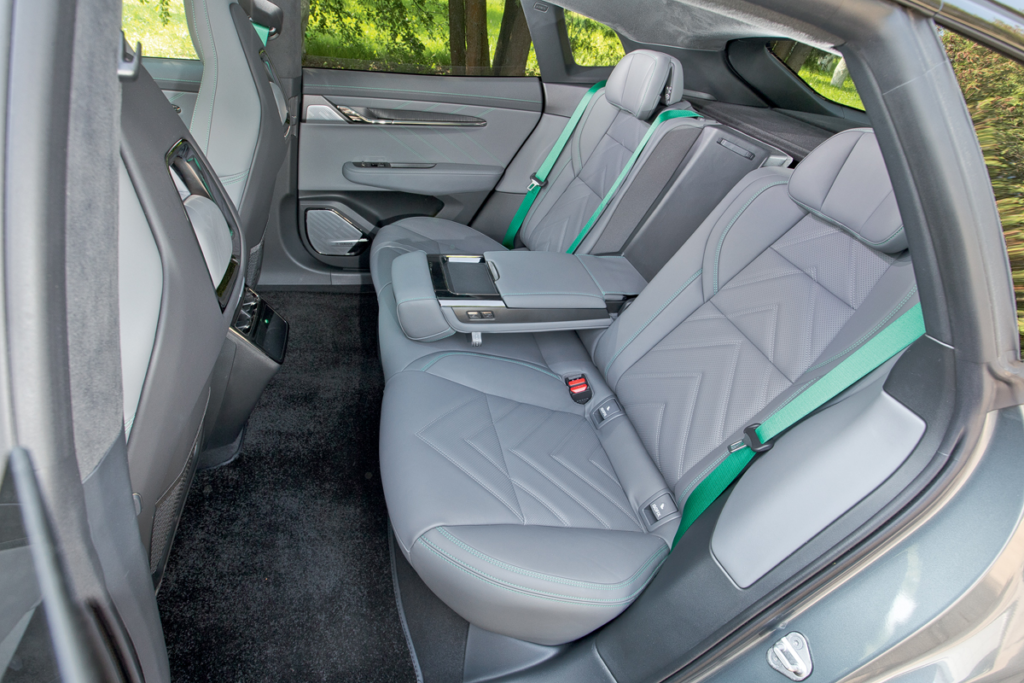
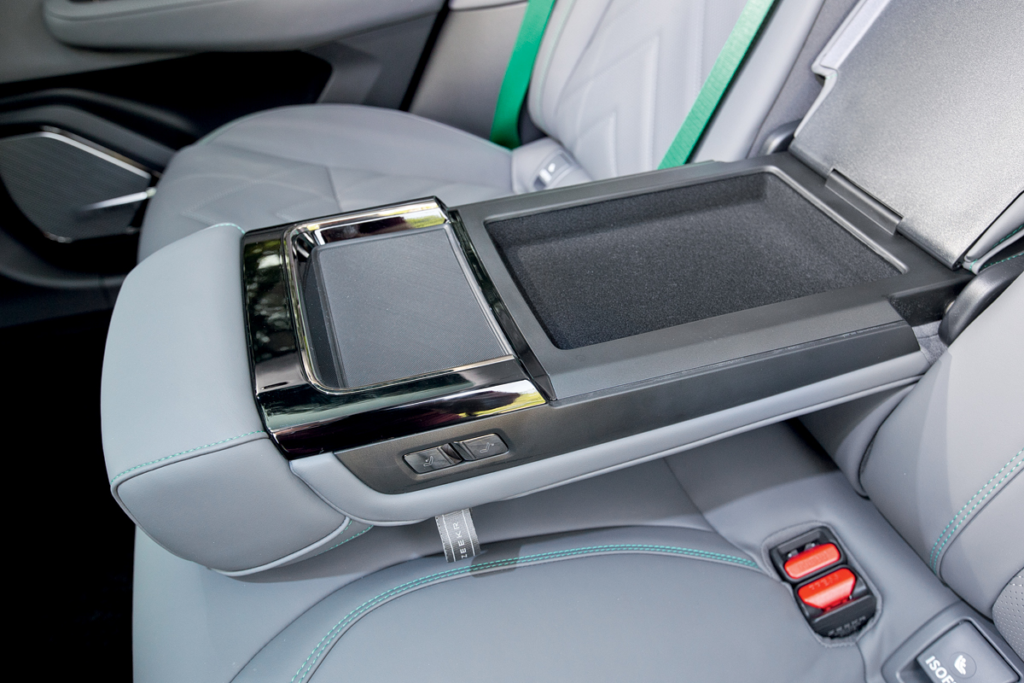
The hospitable Zeekr allows even tall people to sit comfortably. The backrests can be tilted, there is a separate microclimate zone. However, the high front seats almost completely block the front view, and the central armrest is tilted forward.
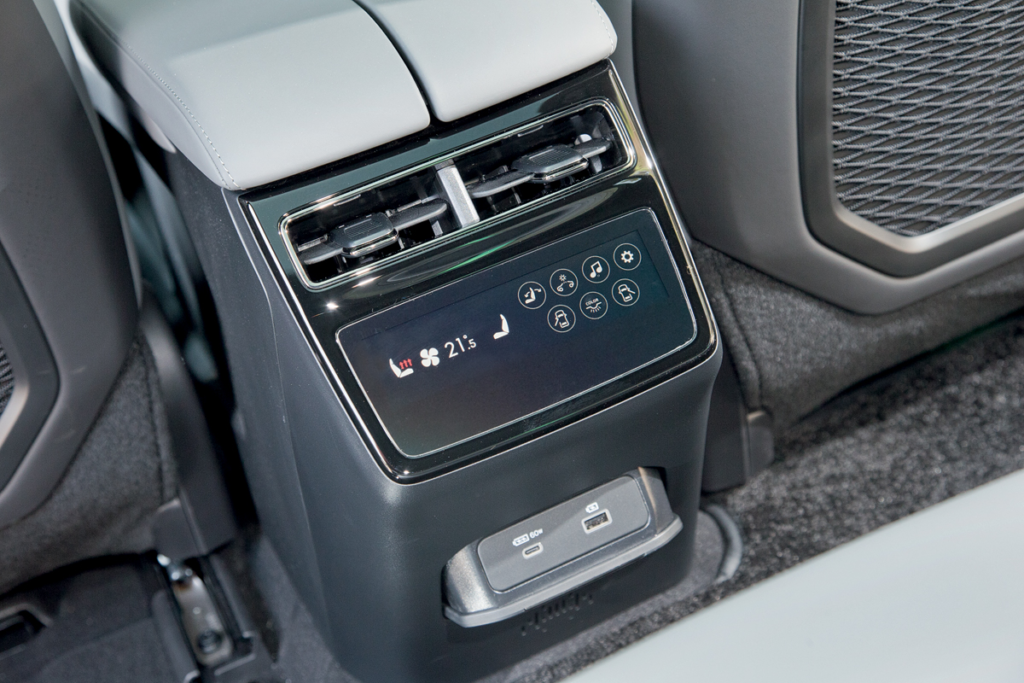
The third climate control zone is only unavailable in the initial We configuration.
Steering and Body Control
The EQE’s steering has a thick, weighty feel reminiscent of Mercedes’ older steering-gear era — minus the sluggish response times of those days. In standard suspension mode, the body moves a bit more than ideal at speed, sighing over waves and settling on the loaded wheel through corners.
Switching to the sports damper setting fixes this without noticeably harming ride quality, and works well as a default for fast driving on country roads. Push into a corner too quickly, and the EQE responds with a gentle front-wheel slide that scrubs off speed and settles back onto the correct line — no drama, no spiked pulse.
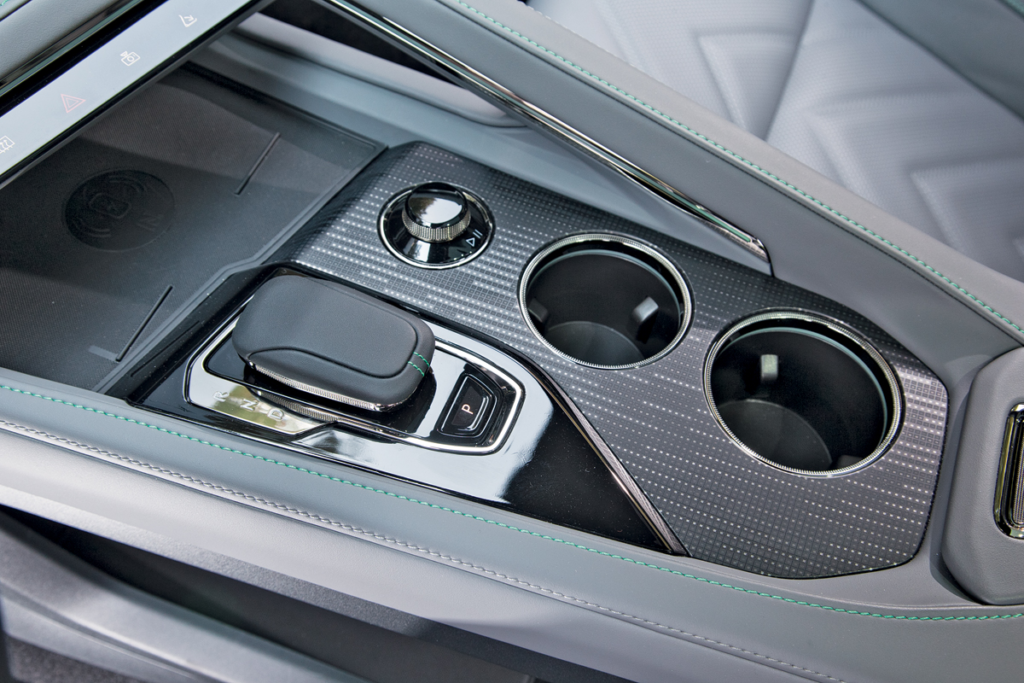
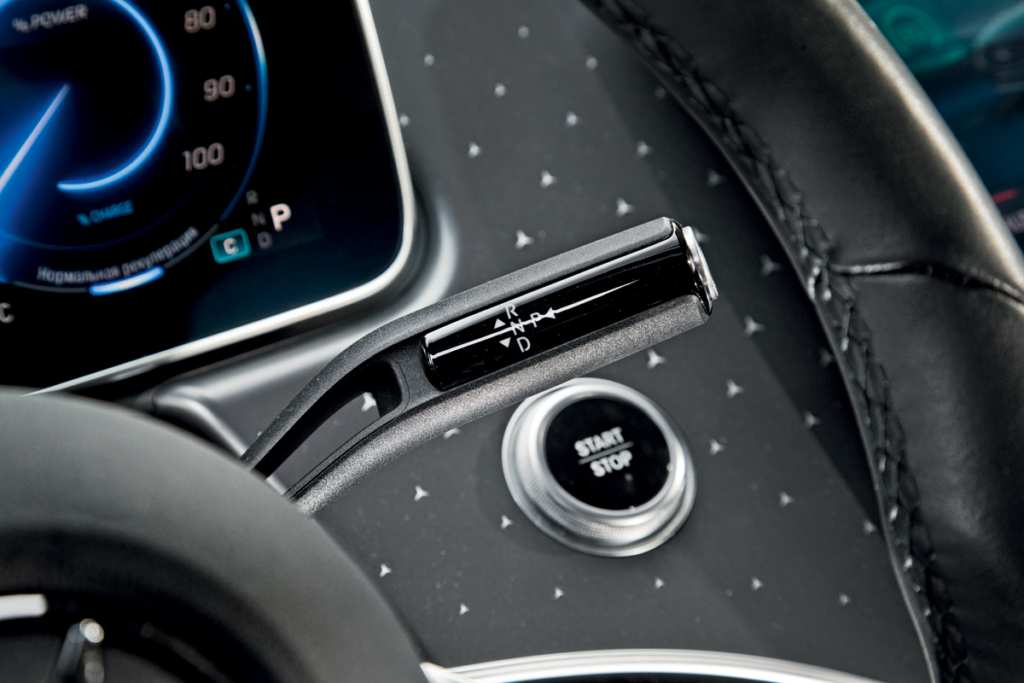
The Zeekr transmission joystick looks like a pebble from the beach – it fits perfectly in the hand and moves with pleasant effort.
There’s little to criticize here, aside from an uncomfortable back row — low, hard cushions and an overly upright backrest feel distinctly un-Mercedes-like given the comfort level up front.
But surely the Zeekr wins on dynamics?
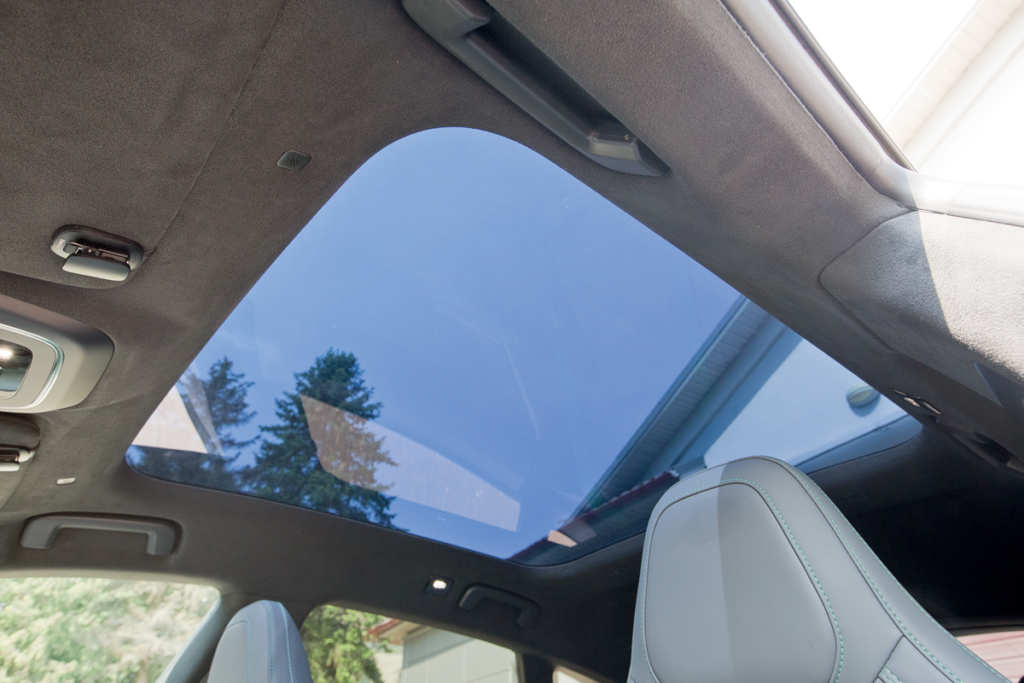
The electrochromic panoramic roof in Zeekr can change light transmission automatically or on command from the menu – from almost transparent to dark blue, as in the photo. In this mode, the glass retains 99.9% of ultraviolet radiation, and the sun protection factor SPF reaches 50. But non-original curtains are already being sold on the Chinese market.
Acceleration, Braking, and Performance Testing
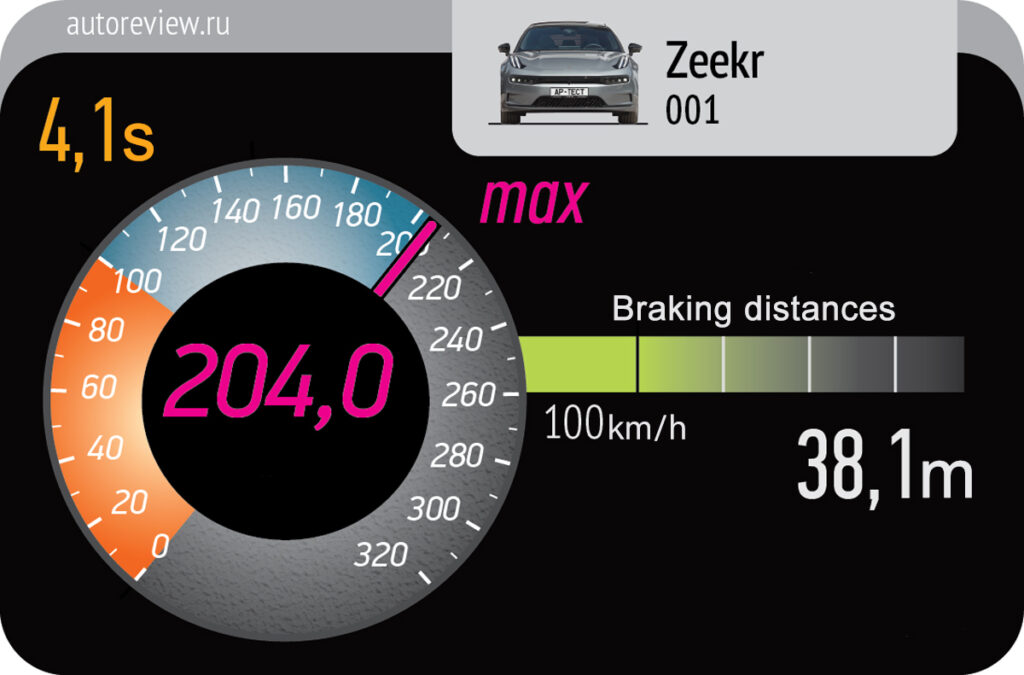
For fans of instant thrills: floor the accelerator, and lunch threatens to reverse course. The Zeekr didn’t quite hit its claimed 3.8-second 0-100 km/h time, but 4.1 seconds is still enough to leave a strong impression. Reaching 200 km/h takes roughly another ten seconds, at which point the “Agent 001” hits its speed limiter.
These acceleration tests highlighted something worth noting about powerful EVs in general: the sensation of being pressed into the seat like a mannequin during launch, without the sound, anticipation, and vibration that make hard acceleration in a combustion car feel more engaging. Here, it’s mostly a sustained shove under the howl of an electric motor.
Two Approaches to Regeneration
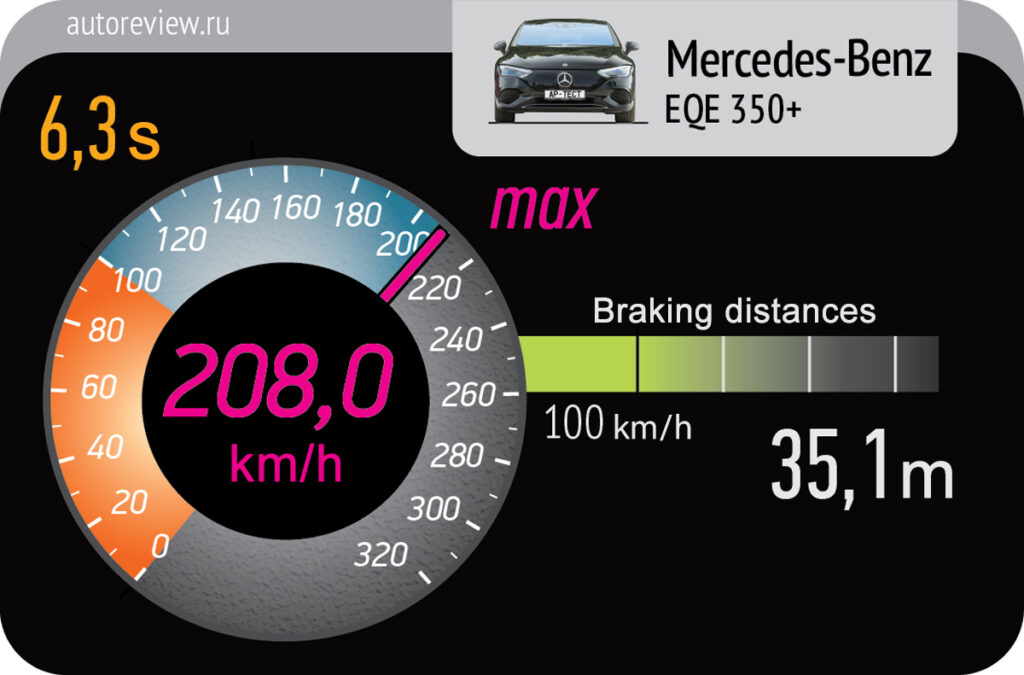
That’s why the EQE’s more modest — but still entirely sufficient — 6.3-second 0-100 km/h time feels subjectively more enjoyable, without that sense of being an unwilling test subject. Even in economy mode, the Zeekr reacts sharply to throttle input, while the Mercedes delivers power more linearly. The EQE also has a clever paddle-shifter system for regenerative braking:
- Right paddle engages free-rolling mode, like shifting up a gear
- Left paddle activates a soft, standard regen level
- A second tap of the left paddle increases regen to a stronger deceleration setting
True one-pedal driving, however, isn’t available on the EQE — a deliberate choice to preserve familiar driving habits for conventional car owners.
The Measured Numbers, Side by Side
Here’s how the two EVs compare on key performance metrics:
- Top speed: Mercedes-Benz EQE 350+ 208 km/h vs Zeekr 001 204 km/h
- 0–60 km/h: 3.0s (EQE) vs 2.3s (Zeekr)
- 0–100 km/h: 6.3s (EQE) vs 4.1s (Zeekr)
- 0–150 km/h: 13.4s (EQE) vs 7.7s (Zeekr)
- 400 m sprint: 14.1s (EQE) vs 11.8s (Zeekr)
- 60–100 km/h in-gear: 3.3s (EQE) vs 2.1s (Zeekr)
- 80–120 km/h in-gear: 4.3s (EQE) vs 2.6s (Zeekr)
- Braking distance from 100 km/h: 35.1 m (EQE) vs 38.1 m (Zeekr)
The Zeekr, on the other hand, is built to feel far removed from a conventional car, and handles one-pedal driving very well. That said, the strength of regenerative braking right after lifting off the accelerator at 60-80 km/h feels excessive and cuts into overall comfort — especially for passengers.
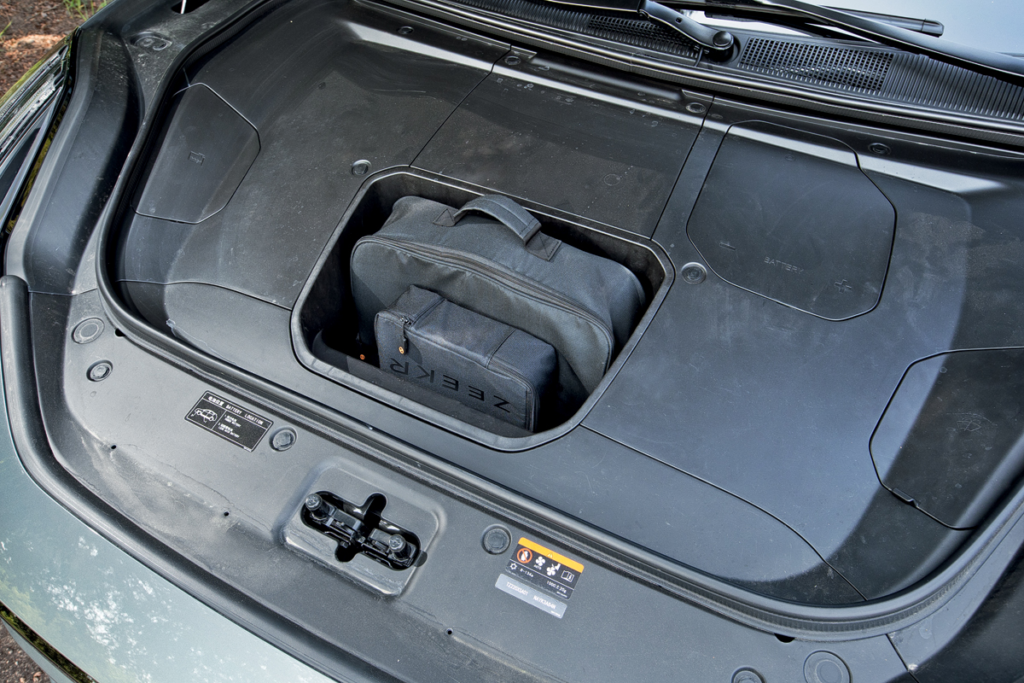
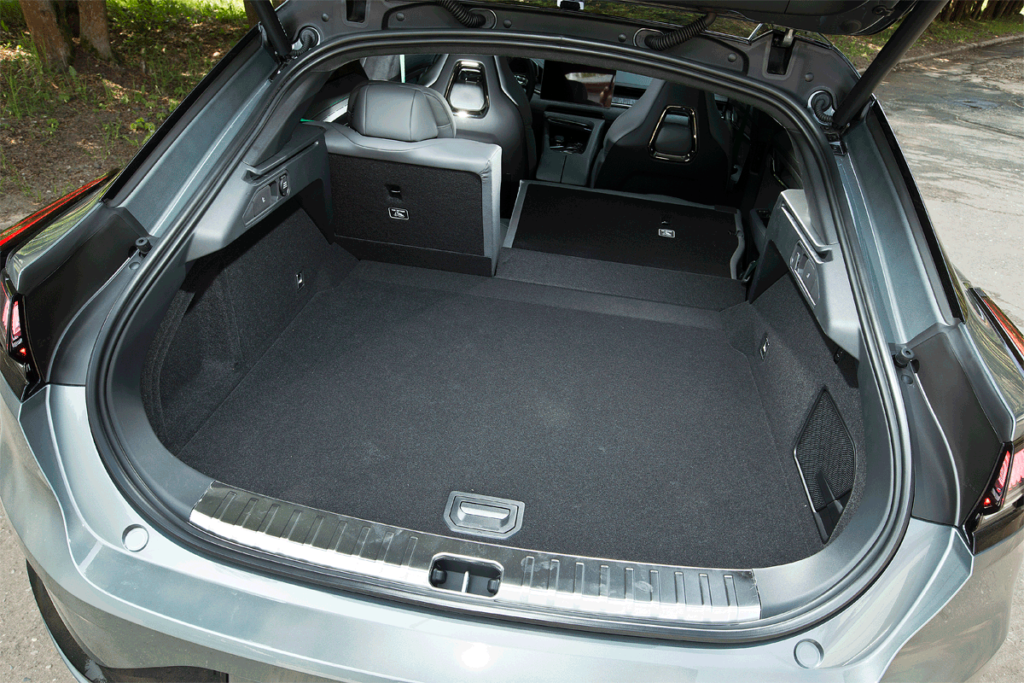
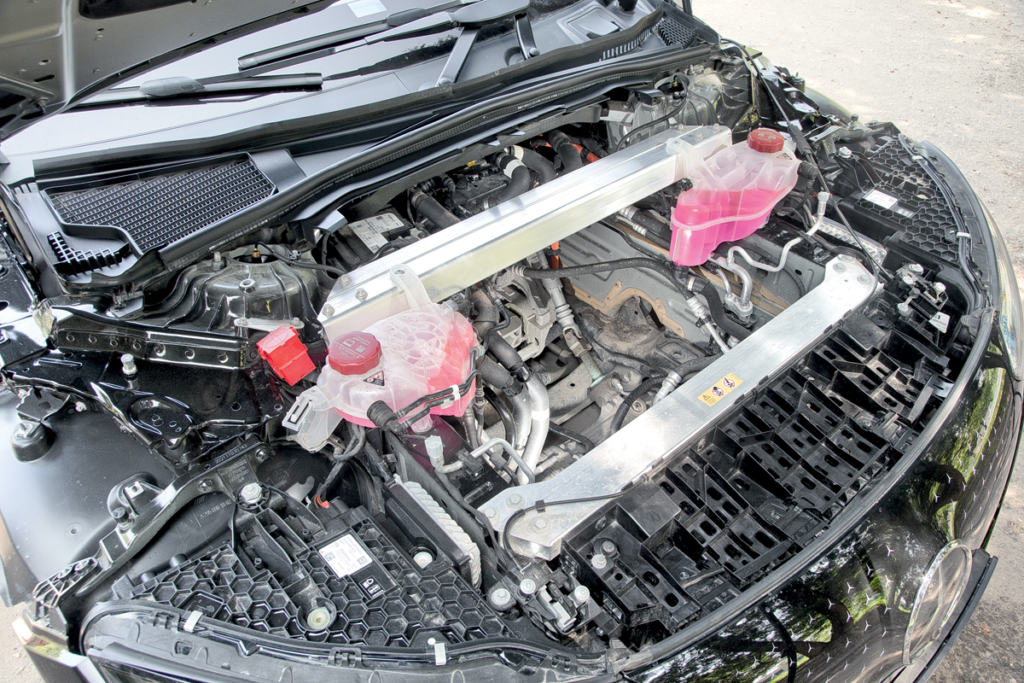
The front trunk, or frunk, so beloved by electric drivers, is nominal in Zeekr, but the main one at the back is very good: you can change the floor level, the finish is excellent.
Handling and Suspension: Where the Zeekr Struggles
Comfort isn’t the Zeekr’s strong suit. The gap in acoustic refinement versus the Mercedes is noticeable but not dramatic — ride smoothness is where this liftback falls furthest behind, at least in this comparison. In the air suspension’s comfort mode, it manages to combine harsh hits on the front axle with a rocking rear end. Handling suffers too:
- Steering feels tight and somewhat unnatural
- Response sharpness doesn’t match the suspension’s angular stiffness
- The Zeekr enters corners in a stepwise fashion and tends to skid when pushed
- The stability control system treats this as normal and rarely intervenes
Switching the dampers to Sport mode reduces body wobble but doesn’t add driving enjoyment — and the steering becomes noticeably heavier. Fortunately, Individual mode lets you keep lighter steering with the firmer suspension setting. In lane-change testing, the Zeekr consistently drifted sideways through the maneuver, with minimal intervention from the electronics — a system that could clearly use recalibration.
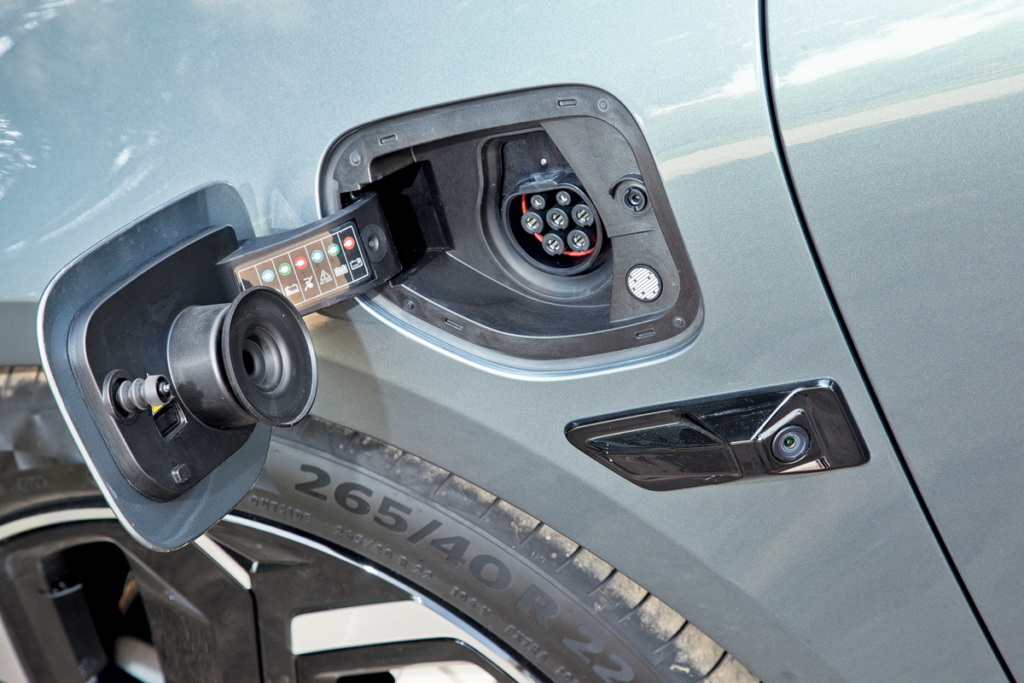
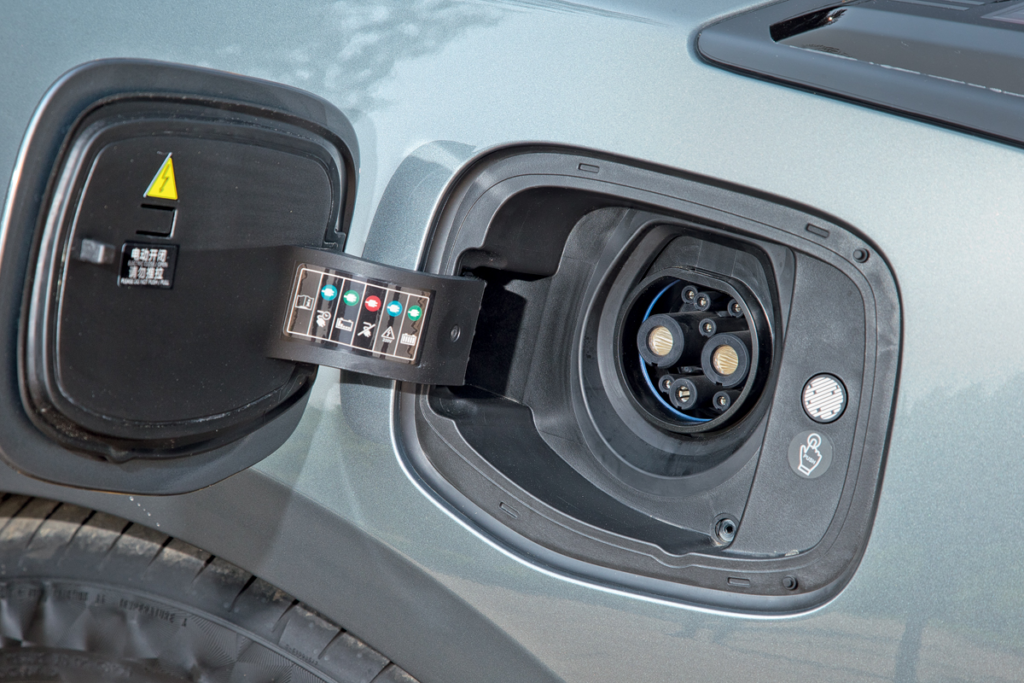
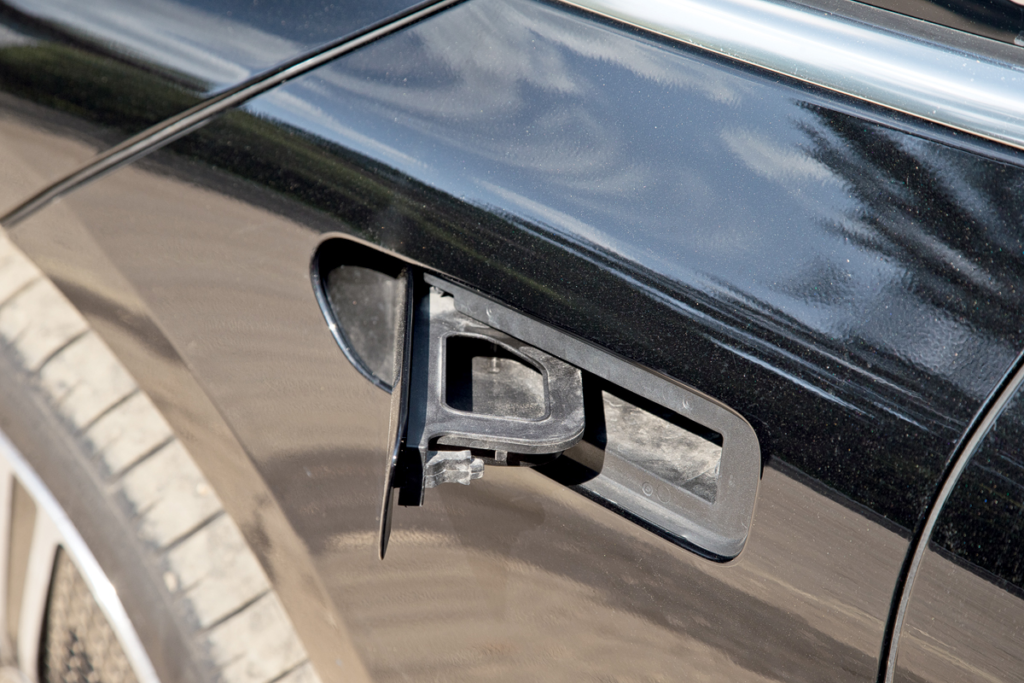
Charging sockets in electric vehicles are usually located in the front wings – like the gas tank neck on Porsche sports cars.
What the Owner Says
For many real-world buyers, handling nuances like these barely register. This Zeekr’s owner traded in a BMW 550d and is thoroughly satisfied with his choice — acknowledging the handling shortfall, but citing the design, build quality, and new sense of mobility as bigger factors. Modern battery capacity also means range anxiety is largely a non-issue; this may have been the first EV test where the team simply drove as much as they wanted, whenever they wanted.
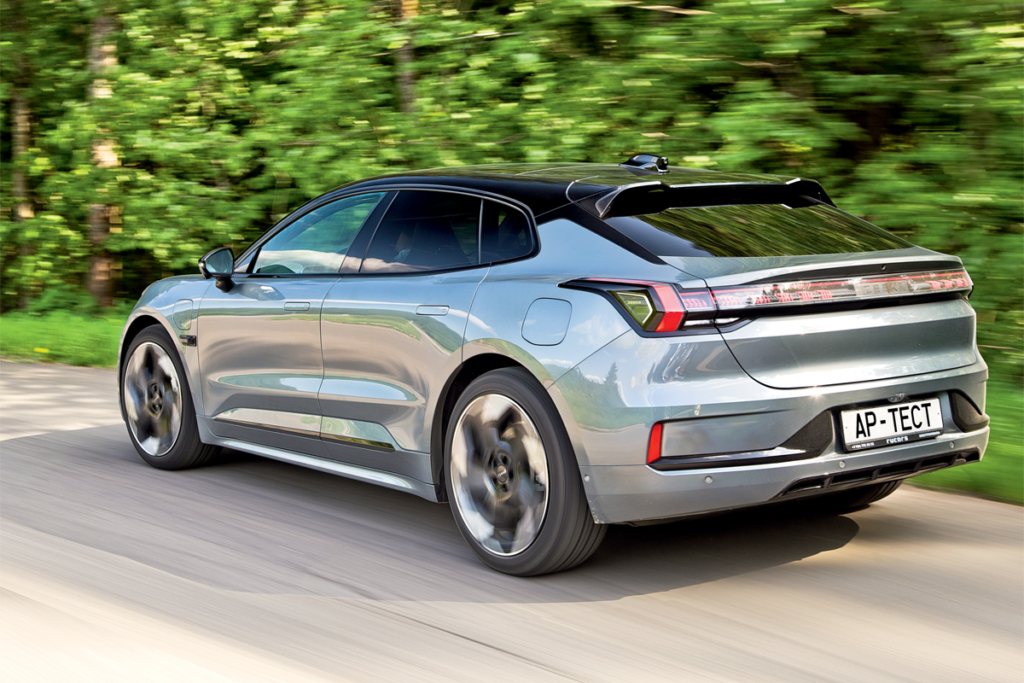
With the exception of a wide gap between the trunk and the rear fenders, the Zeekr’s bodywork is built to a very high standard.
With smart route planning, EV road trips are entirely feasible — and the EQE may well be the first non-ICE car that’s genuinely enjoyable for daily city driving.
Expert Scorecard: Ergonomics, Dynamics, Comfort
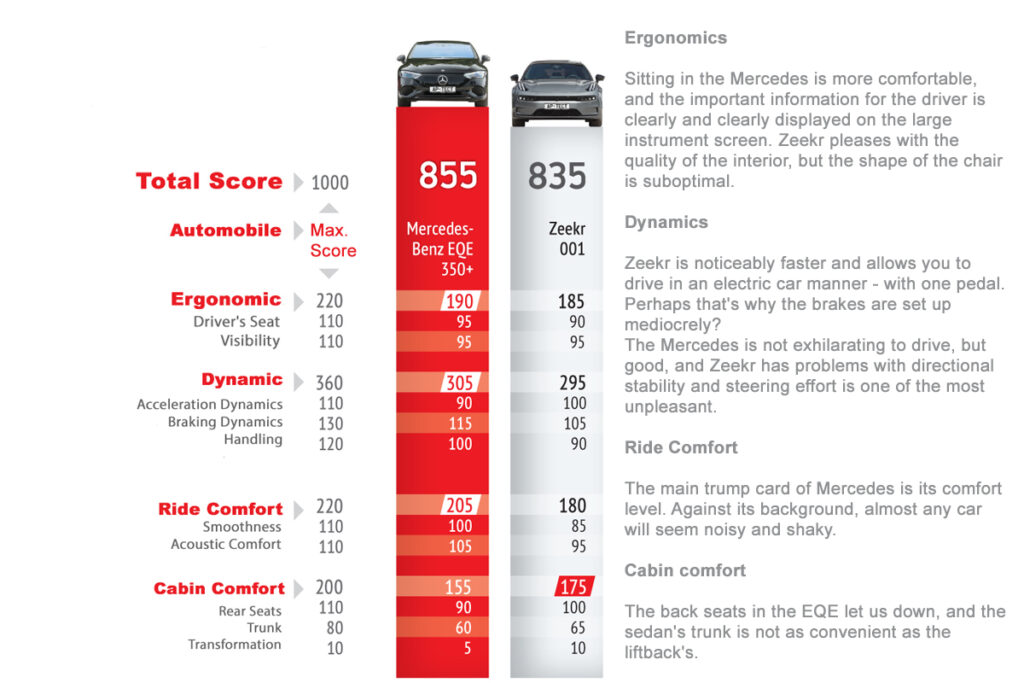
Overall expert score, out of 1,000 points:
- Mercedes-Benz EQE 350+: 855 / 1000
- Zeekr 001: 835 / 1000
Ergonomics — Sitting in the Mercedes is more comfortable, with driver information clearly displayed on the large instrument screen. The Zeekr impresses on interior quality, but its seat shape is suboptimal.
- Total score (220 max): Mercedes-Benz EQE 350+ — 190 (Driver’s Seat 95/110, Visibility 95/110); Zeekr 001 — 185 (Driver’s Seat 90/110, Visibility 95/110)
Dynamics — The Zeekr is noticeably quicker and well-suited to one-pedal driving, though perhaps that’s why its brakes feel underdeveloped. The Mercedes isn’t thrilling to drive but is consistently good, while the Zeekr struggles with directional stability and has some of the least pleasant steering feel in its class.
- Total score (360 max): Mercedes-Benz EQE 350+ — 305 (Acceleration 90/110, Braking 115/130, Handling 100/120); Zeekr 001 — 295 (Acceleration 100/110, Braking 105/130, Handling 90/120)
Ride Comfort — Comfort is the Mercedes’ biggest strength; almost any competitor looks noisy and shaky by comparison.
- Total score (220 max): Mercedes-Benz EQE 350+ — 205 (Smoothness 100/110, Acoustic Comfort 105/110); Zeekr 001 — 180 (Smoothness 85/110, Acoustic Comfort 95/110)
Cabin Comfort — The EQE’s rear seats are a weak point, and its sedan-style trunk isn’t as practical as the Zeekr’s liftback design.
- Total score (200 max): Mercedes-Benz EQE 350+ — 155 (Rear Seats 90/110, Trunk 60/80, Transformation 5/10); Zeekr 001 — 175 (Rear Seats 100/110, Trunk 65/80, Transformation 10/10)
Emergency Handling: Moose Test and Skid Control
The Zeekr makes a stronger impression at a standstill than the Mercedes does — but the gap flips dramatically once emergency maneuvers come into play.
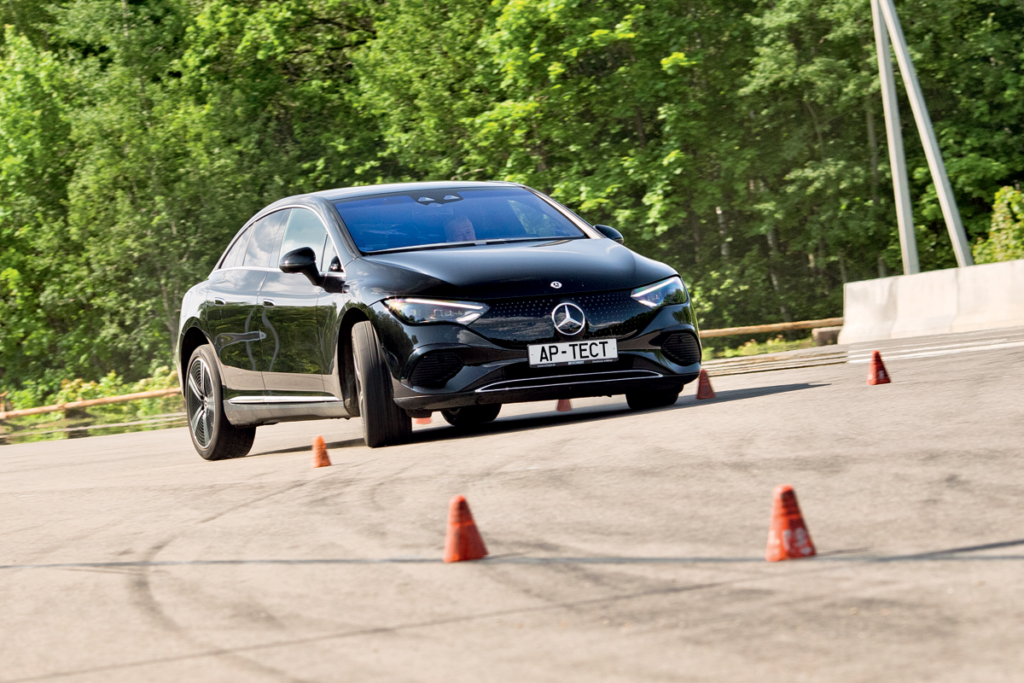
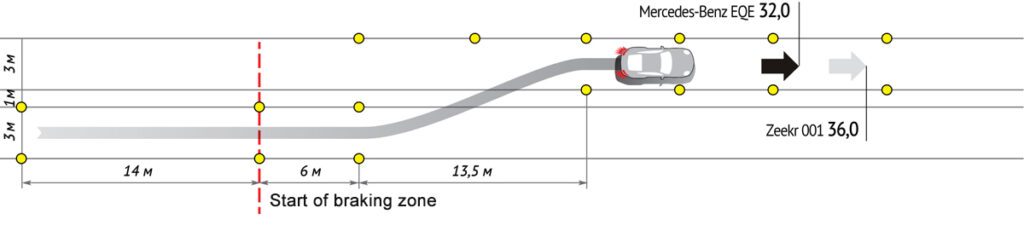
The Mercedes’ evasive maneuver doesn’t feel particularly dramatic. On its Pirelli P Zero tires, the EQE holds its line without skidding up to 72 km/h. Returning to its original lane triggers a small skid, which the stability system anticipates by braking the outer front wheel and inducing a controlled drift. At 79 km/h, recovery from the oncoming lane is no longer possible.
The Zeekr behaves quite differently — sliding sideways toward the ditch in a poorly controlled skid. Unlike the Mercedes, the skid that begins at the same speed isn’t reined in by the electronics at all; no clear stability-system intervention was detected. The car simply slides sideways into the adjacent lane and beyond, ending up angled the opposite way from the original skid direction. Recovery ultimately depends on the driver.
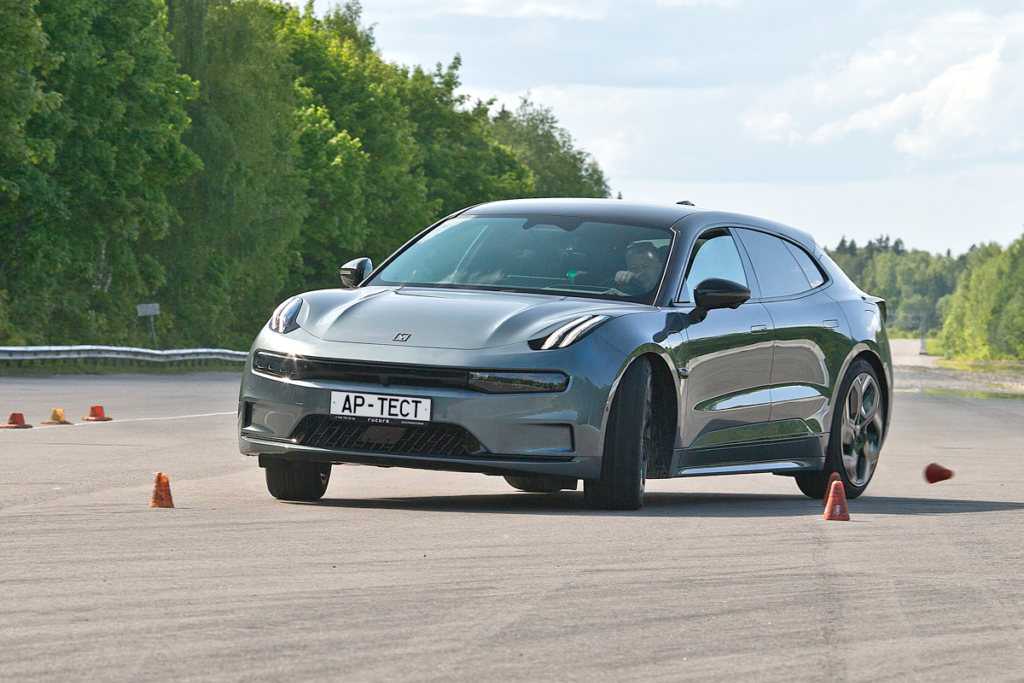
In the Zeekr, it’s safer to brake than to attempt an overtake. Its ABS system isn’t especially modern, delivering average deceleration and a 36-meter braking distance — four meters longer than the Mercedes needed to stop.
Moose test execution speed:
- Mercedes-Benz EQE: 79.0 km/h
- Zeekr 001: 76.1 km/h
Dimensions, Weight, and Specifications
Dimensions, weight, and axle weight distribution (producer data shown where actual measurements were unavailable; actual vehicle weight excludes driver; ground clearance figures vary depending on air suspension mode):
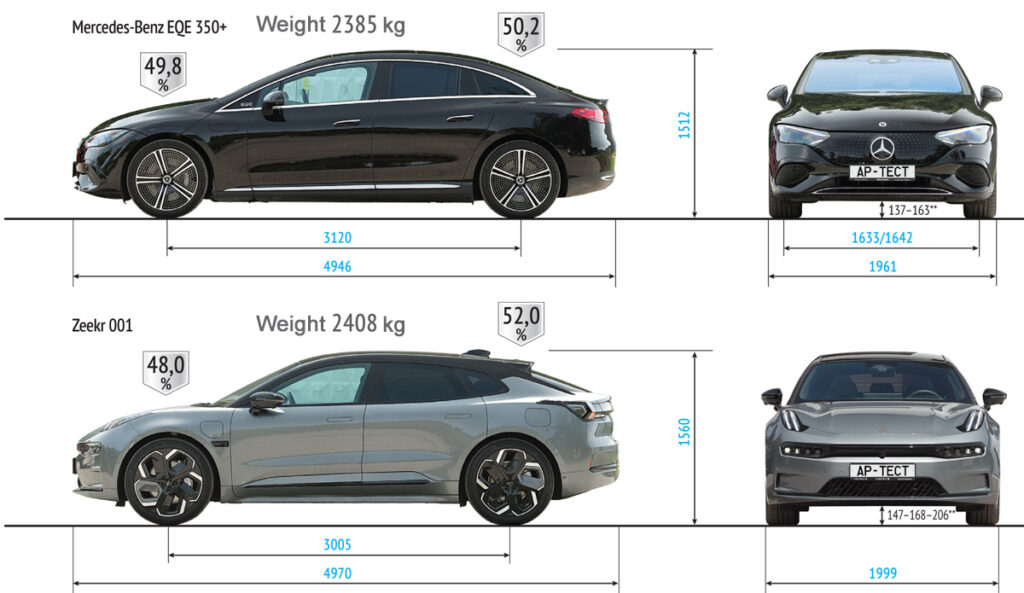
* Actual vehicle weight without driver
** Depending on the air suspension mode
Full Passport Data — Mercedes-Benz EQE 350+ vs Zeekr 001:
- Length / Width / Height (mm): EQE 4946 / 1961 / 1512 — Zeekr 4970 / 1999 / 1560
- Wheelbase (mm): EQE 3120 — Zeekr 3005
- Track front/rear (mm): EQE 1633/1642 — Zeekr n.d.*
- Trunk volume: EQE 430 l — Zeekr 2144 l** (to the ceiling, rear seats folded)
- Curb weight: EQE 2310 kg — Zeekr n.d.
- Drag coefficient (Cd): EQE 0.22 — Zeekr 0.23
- Traction motor type: Both — synchronous, permanent magnet
- Traction motor location: EQE — transversely over the rear axle; Zeekr — over the front and rear axles
- Max power: EQE 292 hp / 215 kW — Zeekr 544 hp / 400 kW
- Max torque: EQE 565 Nm — Zeekr 768 Nm
- Traction battery: Both — lithium-ion, 100 kWh capacity
- Battery voltage: EQE 328 V — Zeekr 407 V
- Drive unit: EQE — rear-wheel drive; Zeekr — all-wheel drive with an individual motor per axle
- Front suspension: EQE — independent, pneumatic, four-lever; Zeekr — independent, pneumatic, double wishbone
- Rear suspension: Both — independent, pneumatic, multi-link
- Max speed (electronically limited): EQE 210 km/h — Zeekr 205 km/h
- 0–100 km/h acceleration: EQE 6.4 s — Zeekr 3.8 s
- WLTP/CLTC range: EQE 624 km (WLTP) — Zeekr 606 km (CLTC)
- Max DC charging power: EQE 173 kW — Zeekr 360 kW
*n.d. — no data
Frequently Asked Questions
Which one is quicker? The Zeekr, clearly: 4.1 seconds to 100 km/h on our timing gear against 6.3 for the EQE. The Mercedes turns that around under braking, stopping from 100 km/h in 35.1 meters to the Zeekr’s 38.1.
Which goes further on a charge? The Mercedes. It averaged 17 kWh/100 km on our test track and covers about 500 km in normal driving, close to 600 km when driven gently. The Zeekr used around 22 kWh/100 km in summer, for a real-world range of just over 400 km.
Do they use the same battery? Both cars carry a 100 kWh pack, with LG cells in the Mercedes and CATL cells in the Zeekr; a 140 kWh version of the Zeekr is also offered. The Zeekr charges at up to 360 kW against the EQE’s 173 kW.
Which won on points? The Mercedes-Benz EQE 350+, with 855 points out of 1,000 against the Zeekr’s 835 — ahead on ergonomics, ride comfort and dynamics, behind on cabin comfort.
How did they do in the moose test? The EQE managed 79.0 km/h and the Zeekr 76.1 km/h. The bigger difference is behavior rather than speed: the Mercedes’ stability system anticipates the skid, while in the Zeekr no clear intervention was detected and recovery is left to the driver.
Photo by Dmitry Pitersky
This is a translation. You can read an original article here: Электромобили Zeekr 001 и Mercedes-Benz EQE: море волнуется

Published August 16, 2023 • 18m to read