
In this follow-up to our Tesla journey, we get into the detail of charging and range management. If you missed Part One, we covered buying and registering a Tesla Model 3 Long Range in Russia, and the substantial saving against local market prices.
First, a Question from Part One: Was a Flooded Car Worth the Risk?
Yes, buying a flooded car sounds risky. But look at the price gap. In late 2021 a European Tesla Model 3 Long Range sedan was going for over five million rubles — nearly two million more than we paid. That made it a calculated risk worth taking.
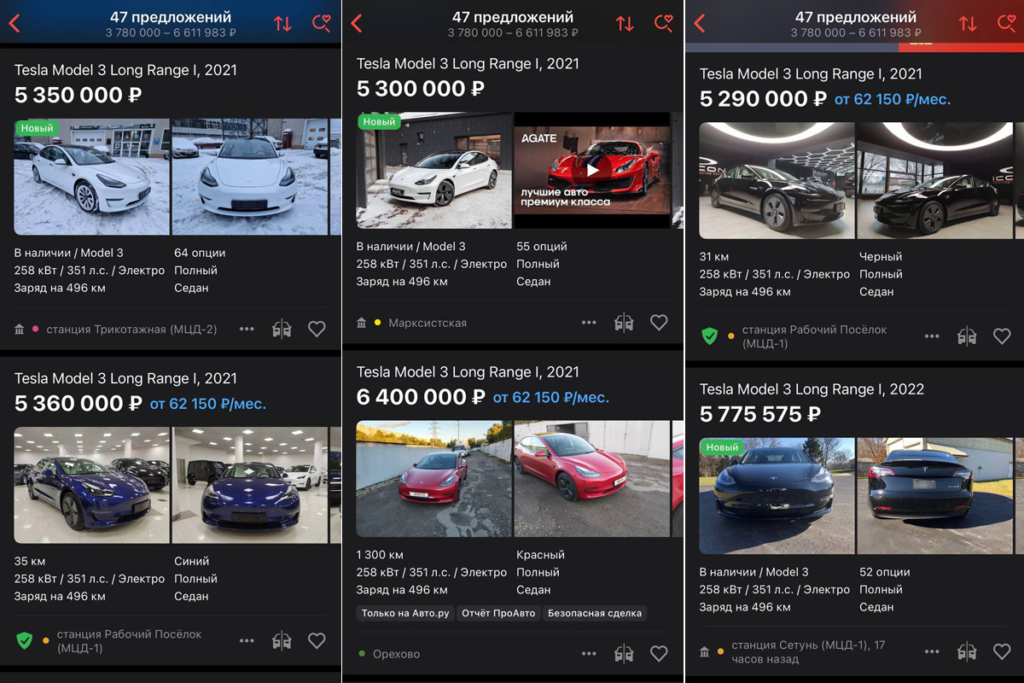
Tesla listings in Russia in 2021
Charging From the Thirteenth Floor of a Panel Block
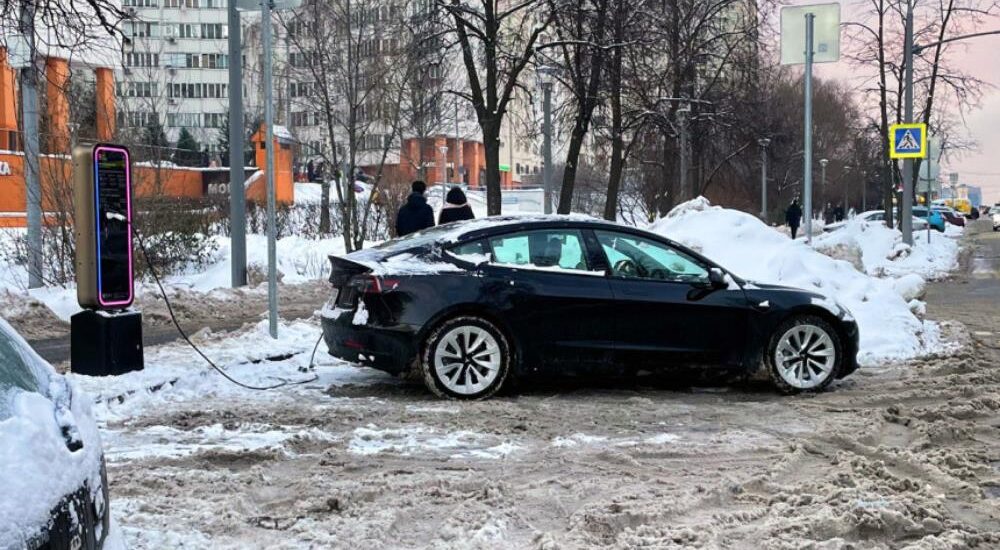
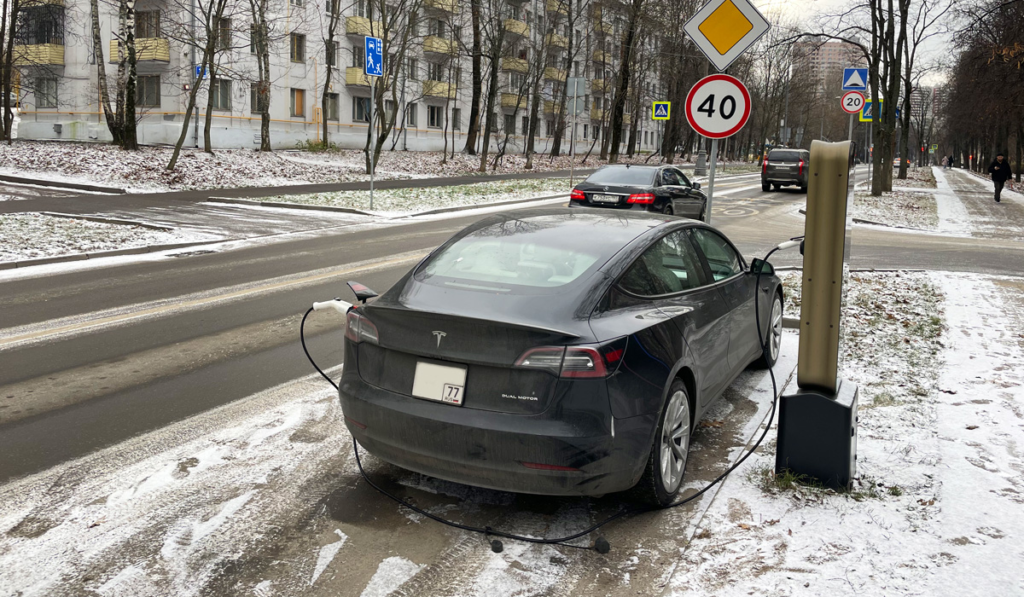
Our testing ground: the thirteenth floor of a Chertanovo panel building, with no country retreat and no parking space with a charger. Moscow’s urban charging infrastructure was growing, though, and it offered several options.
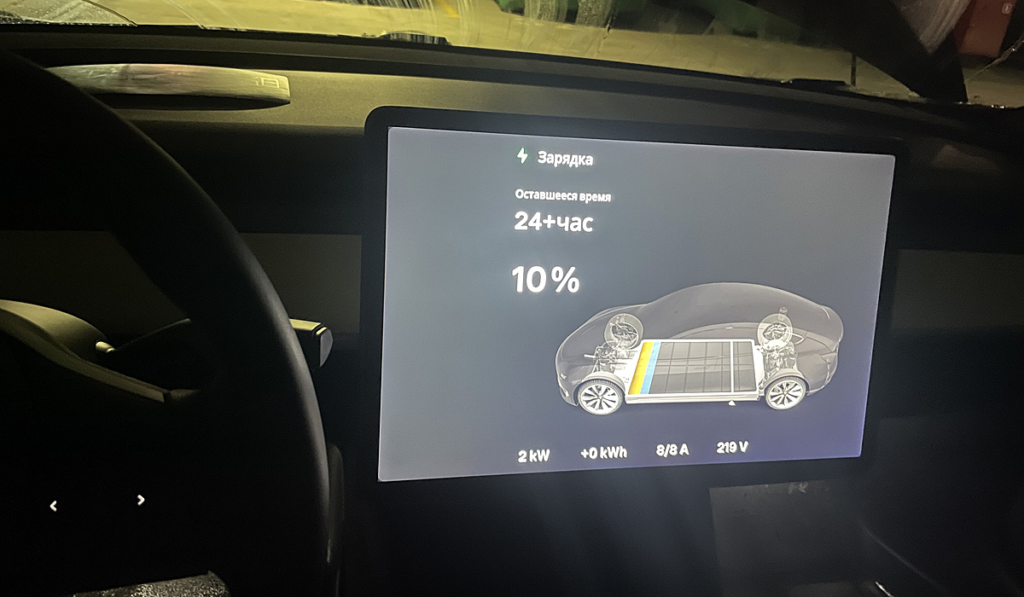
- “Moscow Energy” network stations — free, but slow AC charging, about 10% of the battery per hour
- A standard 220-volt socket — convenient and equally slow, fine for a weekend away
- Commercial DC fast chargers — quick, at 1300 to 1800 rubles for a full charge
The Connector Format War
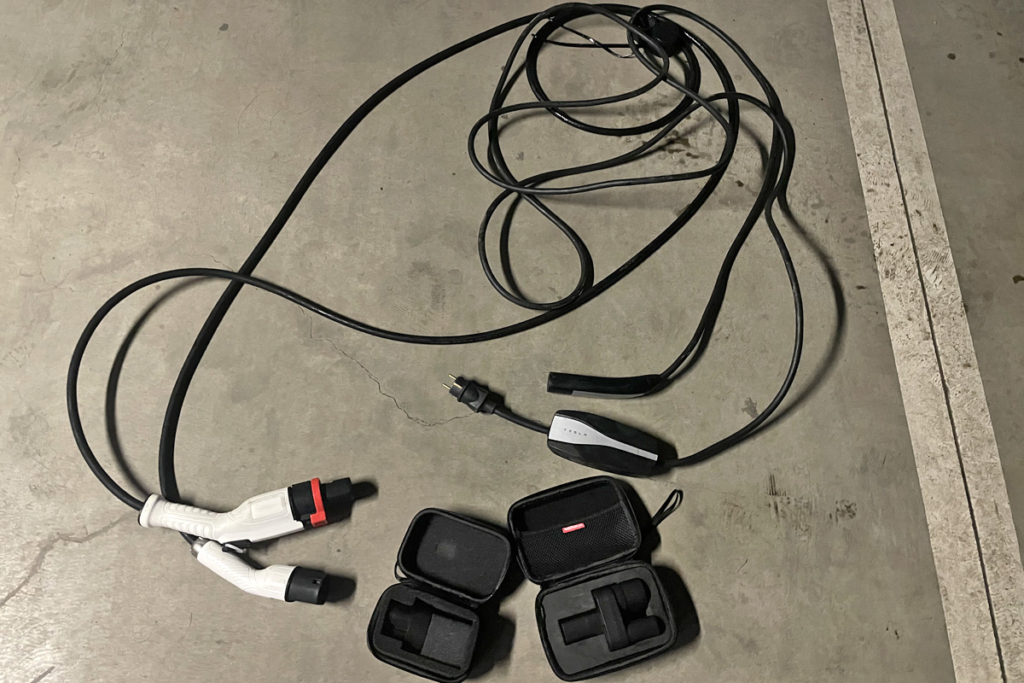
Preparing to charge turned out to be less straightforward than plugging in. The standard Tesla cables from the States were incompatible with Russian charging stations — an echo of the DVD versus Blu-ray format war, only with more connectors. Type 1, Type 2, CCS Combo 1, CCS Combo 2: a formidable spread, and every one of them wanted money.
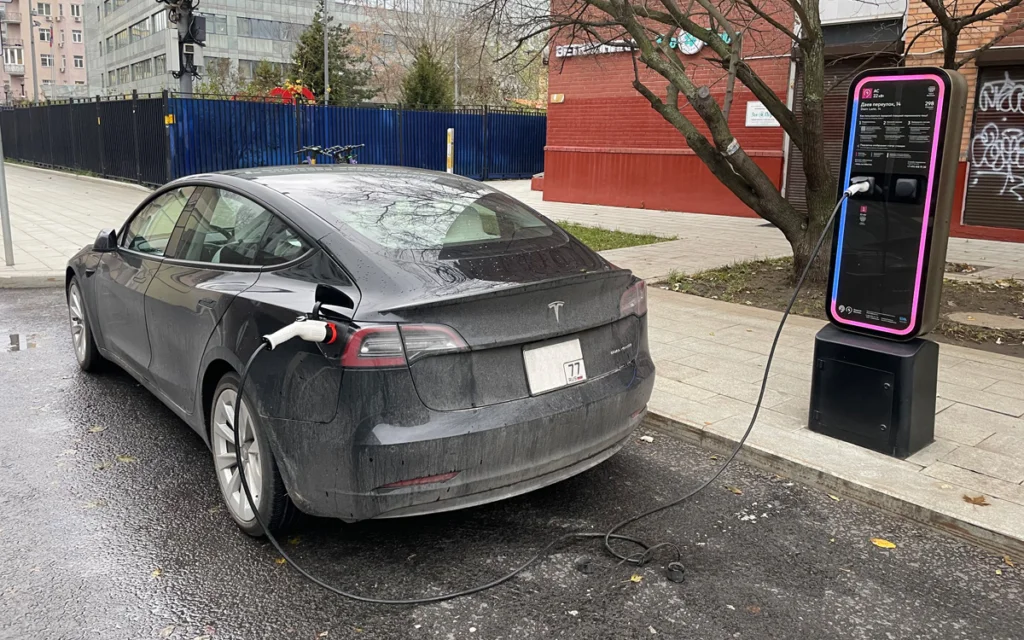
The essential adapters — a European socket adapter, a Type 2 cable for city charging and a CCS Combo 2 adapter — added 50,000 rubles to the bill. That up-front spend bought us smooth charging, most of the time.
530 km on Paper, About 60% of It in Practice
The Model 3 Long Range claims over 530 km on a charge on the American EPA cycle. Real conditions tell a different story. A hard Moscow winter halves it: the battery and cabin need heating, and snow-covered roads cost extra energy. Add driving style, and the need to protect battery health by avoiding extreme states of charge, and the usable capacity comes down to about 60%.
Nikita : Physics — 0 : 1
Our first real test of the Tesla’s range became a nail-biting adventure over the New Year holidays. The plan looked innocent enough:
- January 3: Moscow — Laryushino (60 km)
- January 5: Laryushino — Moscow (60 km)
- January 5: Moscow — Voskresensk (110 km)
- January 7: Voskresensk — Cherusti (150 km)
- January 7: Cherusti — Voskresensk (150 km)
- January 8: Voskresensk — Moscow (110 km)
The first leg went great. I set off fully charged with three passengers and arrived at Nikolino Hill with about 370 km of range left, having made no attempt to conserve — I drove as usual. There I plugged into an ordinary 220-volt socket at 8-12 amperes, and by lunchtime on 5 January the battery was full. The air temperature helped: it never dropped below -8°C. I reached Voskresensk with 230 km showing.
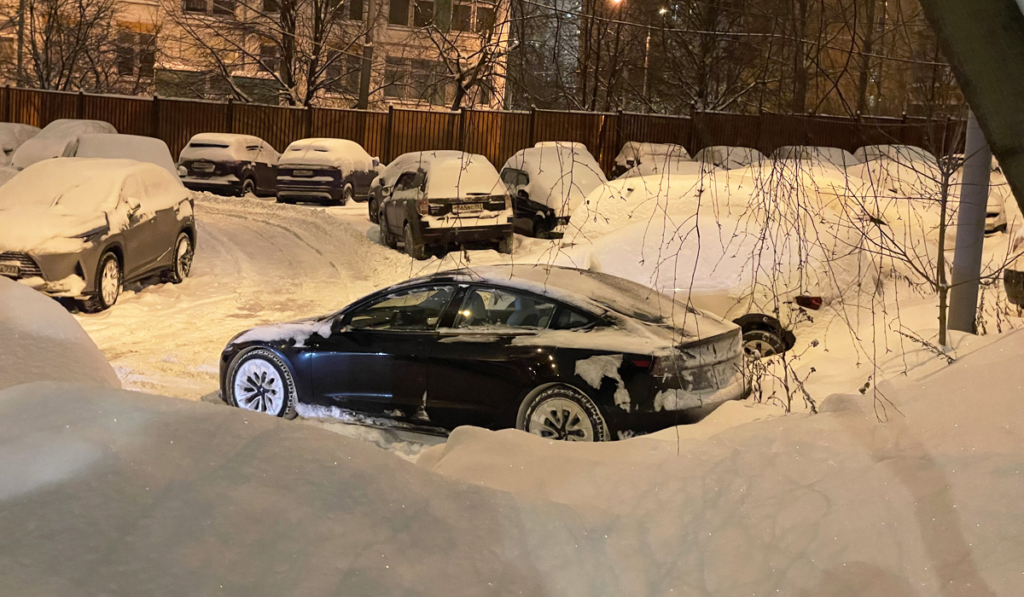
Then the fun began. Overnight it hit -25°C, and when I came out to the car on the morning of 6 January the battery had barely charged. The range indicator still read about 230 km. The current was a measly 5 amperes through two extension cords — but still. And the next day I had 300 km to cover.
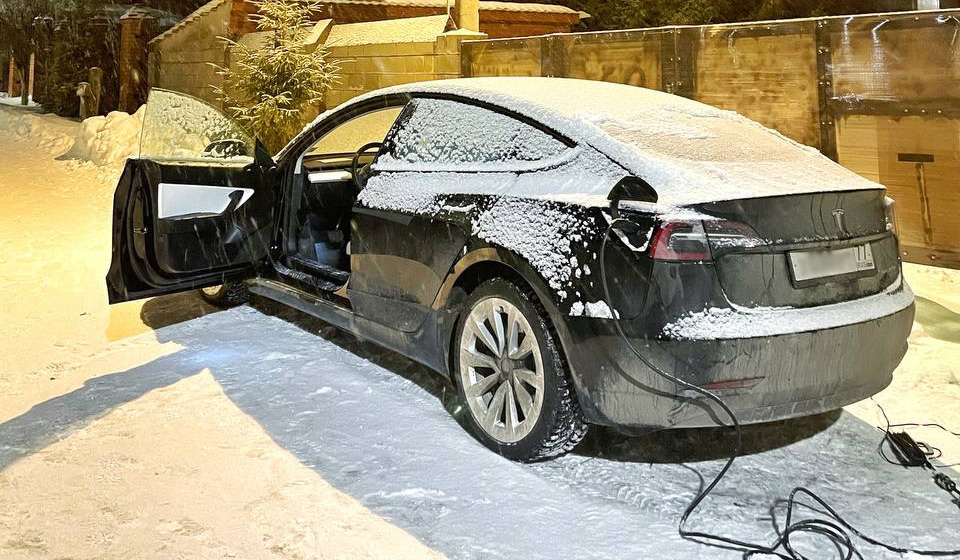
It was obvious the Tesla would not make it and I needed a different car. Autobnb solved that — there is always something on there. So instead of Cherusti I headed for Moscow, and even that looked marginal. Yes, 230 km of remaining range is twice the 110 km from Voskresensk to Moscow. But at -25°C range melts faster than butter in a frying pan. Roughly 30 km went on warming the car up and getting onto the highway.
So I started saving: music off, tablet at minimum brightness, only the windscreen heated, maximum regenerative braking — though that last one turned out to be unnecessary.
Picture it: a frozen car, late at night, an empty highway, and a range figure falling. No more than 60-70 km/h, gentle inputs, steady progress. Quite an experience — but better than stopping on a drained EV somewhere on the MKAD in the small hours of a holiday.
The saving worked. As I drove, the battery warmed and consumption stabilised: I was getting two kilometres of indicated range back for every kilometre covered. On that trend I should have arrived with 8 km left. Moscow made it easier still — warmer city, lower consumption — and despite the traffic lights and the constant stop-start I parked with 15 km in hand.
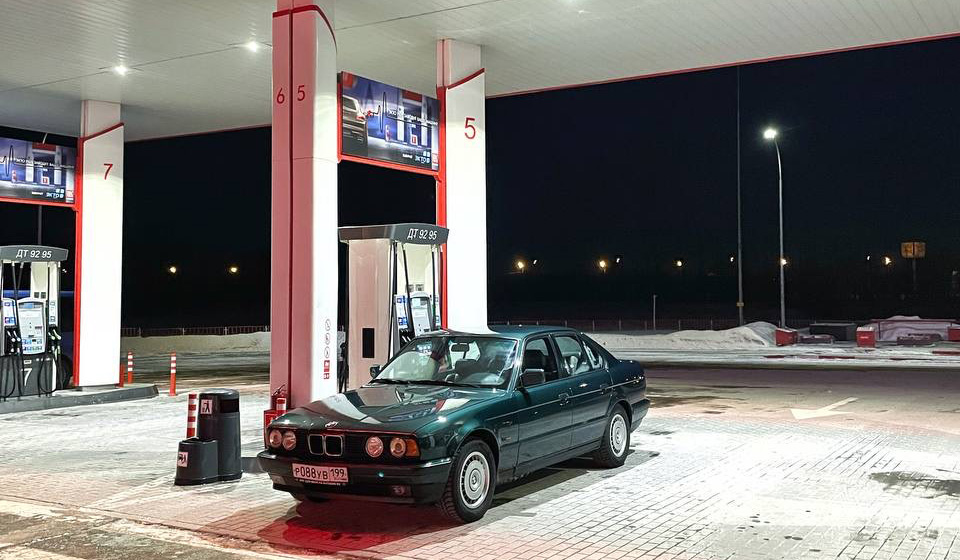
Rescued by a 1991 BMW 520i
Waiting at the parking lot was a 1991 BMW 520i (E34). Full tank, warm seat, and off to Voskresensk. You cannot imagine how calm and comfortable I felt behind the wheel of that youngtimer. In a day the “five” covered 500 km. It started at -27°C. It sprang no surprises. It simply did its job.
A post about the experience in my Telegram channel filled up with sarcastic comments, so the next accessory in the young Tesla owner’s kit was a tenth-grade physics textbook. Laugh if you like — nobody has yet written a better manual for electric cars.
What Actually Eats the Range
Weather, charging power, driving style and passenger count all have an enormous effect on range. The same is true of ICE cars, but to a far smaller degree. Look at the graphs: an out-of-town run in above-zero temperatures takes about 150-170 Wh/km, while crawling through city traffic at -10°C costs more than 400 Wh/km. Quite a spread.
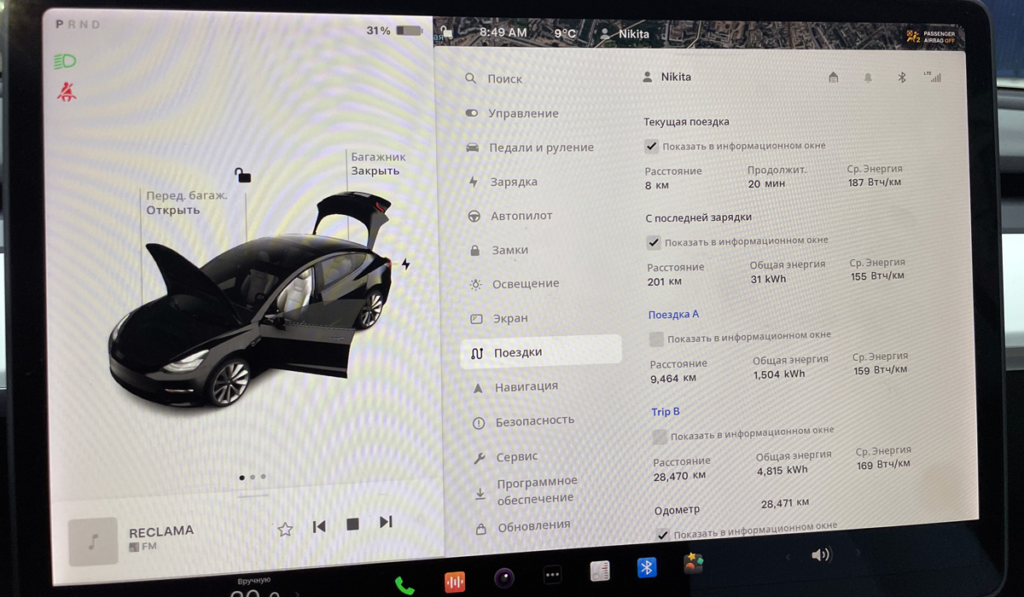
Consumption in the warm season.
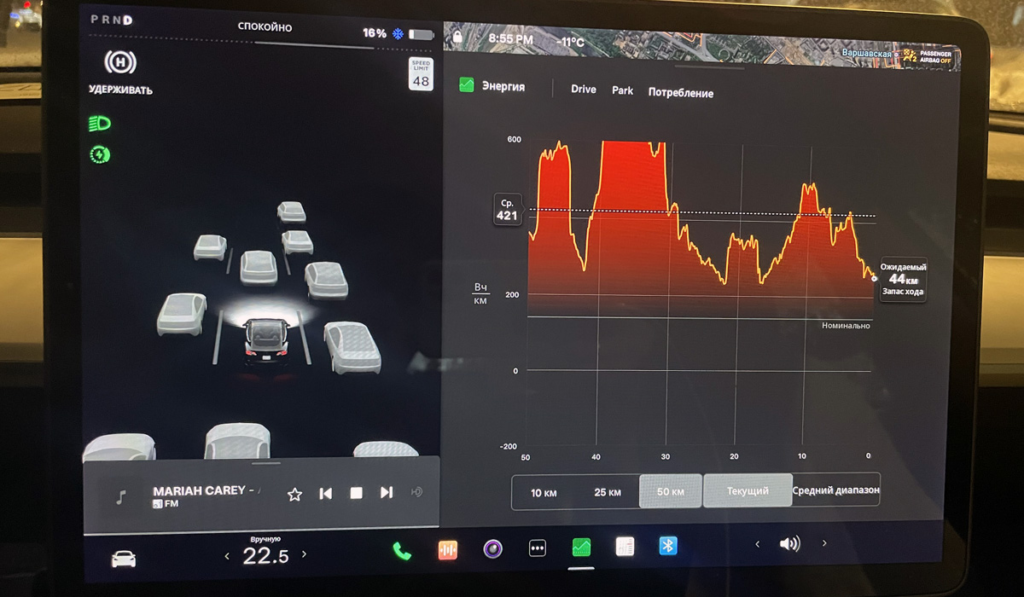
Consumption at sub-zero temperatures.
Tesla Teaches You to Plan — It Does Not Give You a Choice
And in time you get used to it. Taking the car to the office? Fine, there is a city charger nearby. Heading out of town? Plug it into a socket overnight. Only 30% left? Route yourself through a station with a CCS2 connector and top up quickly — for which, of course, you need to download an app. There are already more than a dozen of them on the “Transport” tab of my phone. Eventually you stop registering it as a problem. Although sometimes the show does not go to plan.
Nikita : Infrastructure — 0 : 1
It had to happen eventually — buy a Tesla and not end up on a tow truck? Having driven 120 km out of Moscow with 30% left, I reached instinctively for the charger to connect to a household socket and got: “Insufficient grounding of the socket.” Well, Nikita, you are screwed, to put it plainly — the same charger and the same socket had worked fine before.
In theory 30% should have covered the return trip. In practice the charge drains slightly over the course of a day, and with four people on board at 100 km/h on the MKAD it disappears almost instantly. Time for adventures: I had to find a charger.
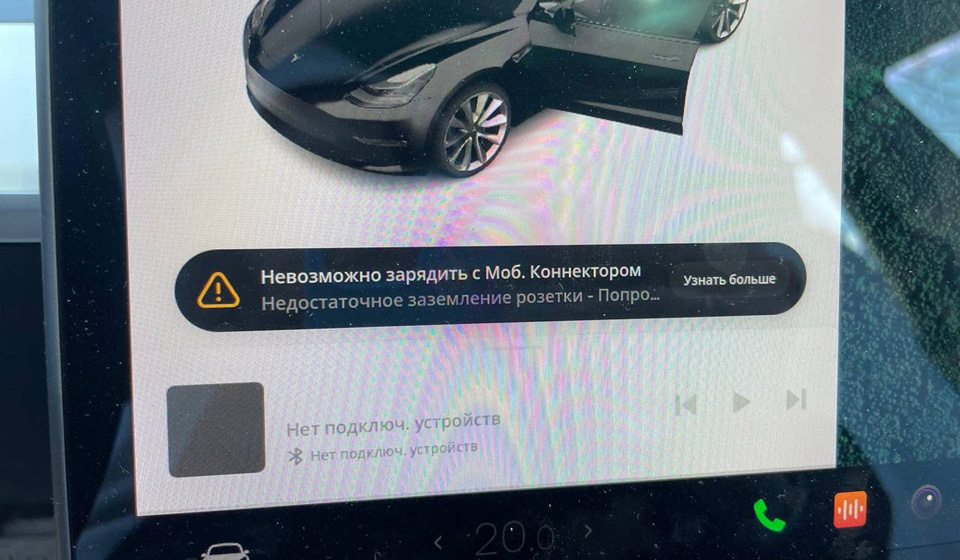
The App Said There Was a Charger
The 2Charges app shows the location and type of chargers across Russia. In theory very convenient. In practice:
- Stations on the grounds of private houses somehow end up in the database
- Data updating leaves much to be desired, to put it mildly
- Even Yandex.Maps muddles the reliability of the data — it sent me to a petrol station at night
The result: more than 140 kilometres in over three hours hunting for a charger that existed and worked, in vain. Special thanks to Rosseti — none of the three chargers I found were working. In one place the app had glitched, in another there was no CCS2 connector.
116 Wh/km, and 640 km — If You Drive Like a Hypermiler
What I did learn was how to drive as economically as humanly possible. Average consumption came out at 116 Wh/km, and at that rate a Tesla Model 3 Long Range will cover more than 640 km on one charge. It is also pointless as a way to travel: 50-60 km/h, coasting, and the rest of the eco-rally repertoire. Not much fun. For comparison, driven comfortably around town it uses 160-200 Wh/km.
Three in the Morning, 7% Charge, and a Tow Truck
Three o’clock in the morning, 7% charge, somewhere near Voskresensk. Operation “Charge me if you can” had failed. Two options remained: call a mobile charger, or a tow truck to the nearest power source. The Volt To Go service only operates on weekdays and I could not find another, so the tow truck it was. We headed for the Trassa filling station at Mikhaylovskaya Sloboda — I had phoned ahead and asked about their chargers, and they swore everything was working.
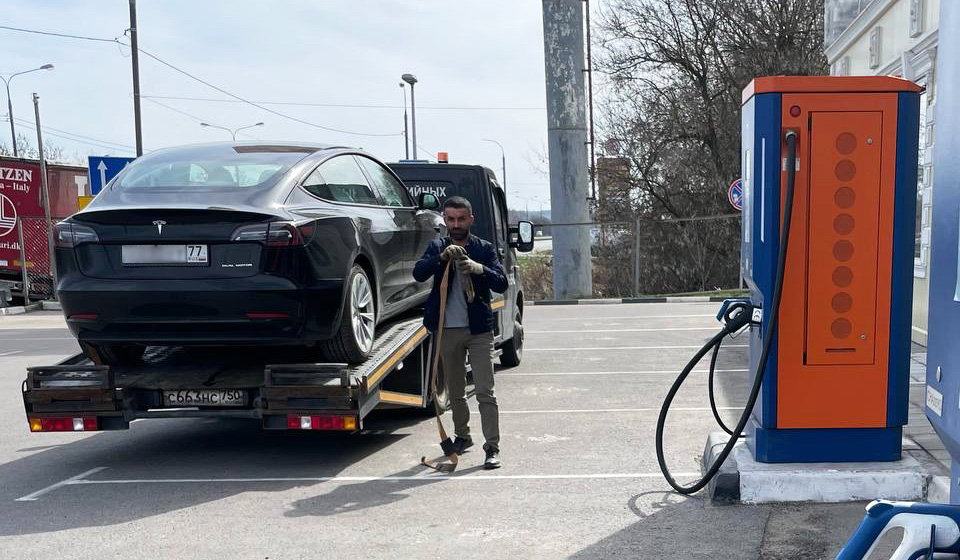
They had not deceived me. That was my first charge over CCS2, and the speed was astonishing: from 3% to 80% in 40 minutes. Nothing had ever charged that fast for me. The price was another matter — 18 rubles per kWh, and 1000 rubles for 80% of the battery. A hefty sum, especially in that situation. According to the women at the station cafe, the charger is not in high demand: three cars a week.
The story is as funny as it is instructive. We are still at the very beginning of building out electric infrastructure, and the further you get from the big cities the more obvious that becomes. The next purchase, incidentally, was a Type 2 adapter for Yandex chargers — 8000 rubles.
Does All This Sound Like Anti-Advertising for EVs?
I reread the text above and realised it might. It is not meant to be. Over the past year my Tesla has covered more than ten thousand kilometres across roughly a hundred trips, and only two of them ran into trouble serious enough to change my plans. The first was down to inexperience and distinctly untypical weather. So, broadly, was the second.
Safety and reliability of the supply matter, so the socket is now wired directly from the pole, with proper grounding. Ideally it should be a 380-volt supply — and that means buying another adapter.
So Is It Worth Switching to an Electric Car?
It is. In the next part I will cover how the Tesla compares with conventional cars on comfort, performance and the rest.
A Year with a Tesla Model 3 Long Range: The Numbers
- Claimed range: over 530 km (EPA) · usable in winter: around 60% of it
- Best observed consumption: 116 Wh/km, worth more than 640 km — at 50-60 km/h
- Normal city consumption: 160-200 Wh/km · out of town, above zero: 150-170 Wh/km
- City traffic at -10°C: more than 400 Wh/km
- Adapters: 50,000 rubles up front, plus 8000 for a Type 2 adapter later
- Charging costs: free on “Moscow Energy” (about 10% per hour), 1300-1800 rubles for a full commercial DC charge, 18 rubles per kWh at Trassa
- Fastest charge recorded: 3% to 80% in 40 minutes over CCS2
- Year’s mileage: more than 10,000 km over about a hundred trips, two of which went wrong
Frequently Asked Questions
How much range does a Tesla Model 3 Long Range really have in winter? The EPA figure is over 530 km, but a hard Moscow winter roughly halves it, and protecting battery health brings usable capacity to around 60%.
What adapters do you need to charge a US-market Tesla in Russia? A European socket adapter, a Type 2 cable for city stations and a CCS Combo 2 adapter — about 50,000 rubles together, plus a further Type 2 adapter for Yandex chargers at 8000 rubles.
How long does a fast charge take? Over CCS2, 3% to 80% took 40 minutes and cost 1000 rubles at 18 rubles per kWh.
Can you charge from an ordinary household socket? Yes, but slowly, and it depends on the supply. At 8-12 amperes an overnight charge works; at 5 amperes through two extension cords in -25°C weather the battery barely gained anything.
Is the charging infrastructure reliable? Not yet outside the big cities. One search covered more than 140 km in three hours and found three chargers, none of which worked.
Photo: Nikita Sytnikov
This is a translation. You can read the original article here: Tesla для петролхеда. Часть вторая: про зарядки и запас хода

Published April 25, 2024 • 9m to read