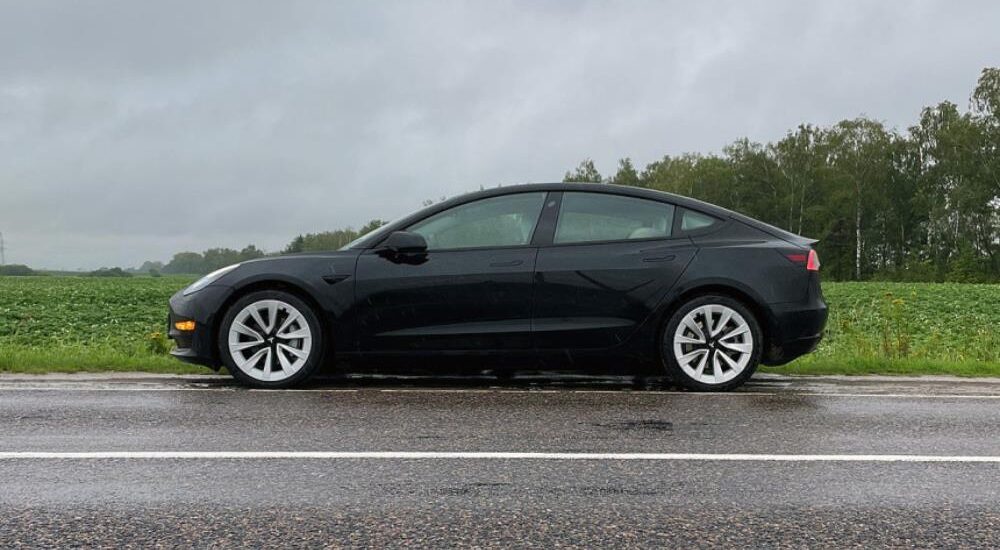

English textbooks have an exercise called “find the odd word,” where you pick the one item in a list that does not belong. My car fleet would make a perfect set for it: BMW 320i (E36), BMW 520i (E28), BMW 520i (E34), Cadillac Fleetwood, Peugeot 405, and… Tesla Model 3. How did that happen? Let me explain.
Ten Years With an F30 320d
The BMW 320d of the F30 generation is a fantastic car. Ten years of ownership have convinced me that this compact diesel saloon is the ideal family vehicle. Yes, it is rear-wheel drive, but that is a question of the skill between the steering wheel and the seat. Yes, it is not the roomiest, but even with two children it is entirely adequate. And with two hundred diesel horses, four hundred Newton-metres and a fantastic ZF automatic, it always had power in hand. Reliability, in all that time, was never an issue.
And yet I wanted to upgrade the three. I did not need to; I wanted to. All the more so as there were spare funds lying around, losing value fast. For me, replacing a car means either an upgrade or something radically new, and daydreams about a BMW X7 or a Porsche Cayenne were not going to survive contact with their price tags without loans and debts. Swapping the F30 three for a G20 three, meanwhile, amounted to throwing away three million for the same car, only newer. So: onwards, into the unknown.
Why an Electric Car, and Why Tesla
Buying a Tesla was an adventure on one hand and a cynical calculation on the other. Because an electric car means:
- No tax, free parking, and charging.
- Over 400 horsepower in a family car form factor. And performance that would make many sports cars envious.
- A wonderful new world where everything is different. A ten-minute ride in Mikhail Podorozhansky’s Tesla Model S has left a lasting impression.
- And all of this for the price of a modestly equipped BMW 320d (G20).
Next question: why Tesla? Because Elon Musk is a genius, and because his company brings a fresh perspective and unconventional solutions. Everything lined up neatly here: Tesla Inc. has no decades of experience building cars, and I have no infrastructure for running an electric one. I live on the thirteenth floor of a panel building in a residential district of Moscow. No underground parking, no house in the country — in short, no guaranteed place to charge. As I said: an adventure.
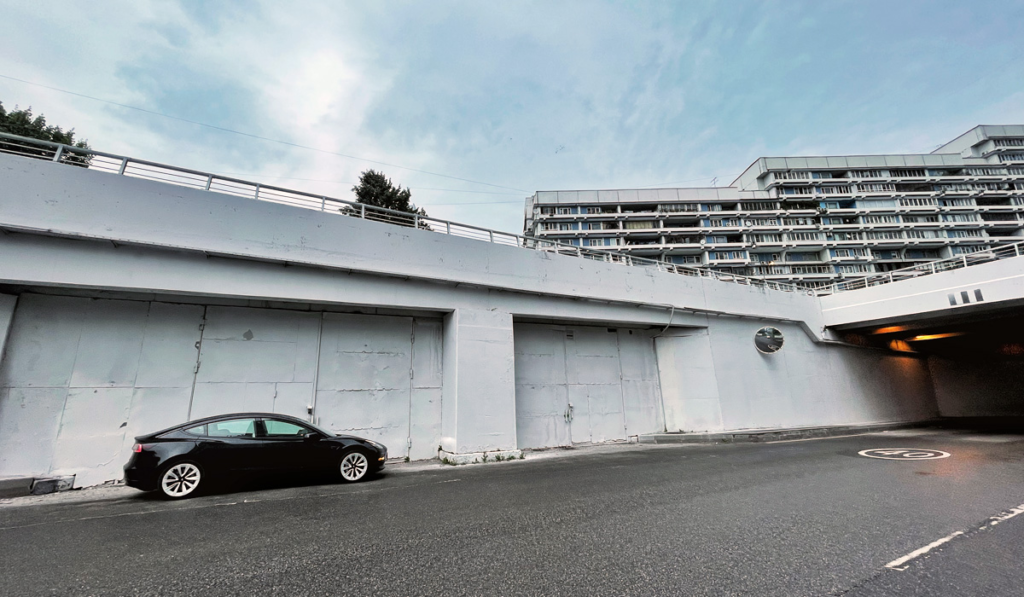
There was a calculation in it too. On weekdays I almost always take public transport and see no point in driving in Moscow, and weekend mileage averages 200-300 kilometres. At first I thought that on a schedule like that the charging question could always be solved somehow. That turned out to be wishful thinking.
Buying at an American Insurance Auction
Choosing the model and the version was simple: a facelifted dual-motor Tesla Model 3 Performance from the 2021 model year, because the traction battery had to be large and the power had to be maximum. But walking into a dealership and picking a car off the stock list was too expensive and too boring. By my estimate the grey importers’ margin at that point, the end of 2021, could reach 40%. Too much. Fortunately some acquaintances of mine import cars from America, and they encouraged me to look at a Tesla. I decided to go through the whole process with them — from choosing a car at an insurance auction in the States to registering it in Russia.
A Total Loss That Is Not Much of a Loss
Yes, you read that right: I decided to buy a total loss and repair it in Moscow. Restoring my youngtimers had taught me that this is not as frightening as it sounds. And choosing a car at auction turned out to be the most interesting stage of the whole business. For one thing, it is largely a lottery. The information on a lot is thin — a dozen or so badly lit photographs, a short description of the damage, and a note on whether it drives or not. You look, you guess, you choose, and you pray.
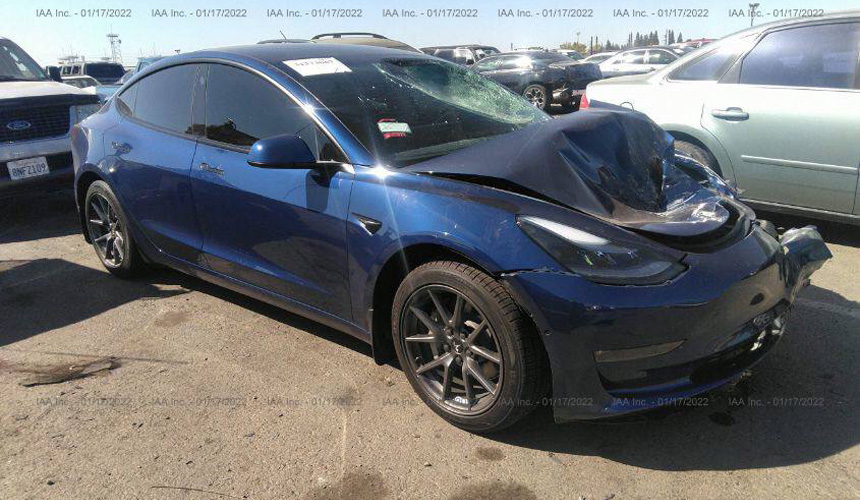
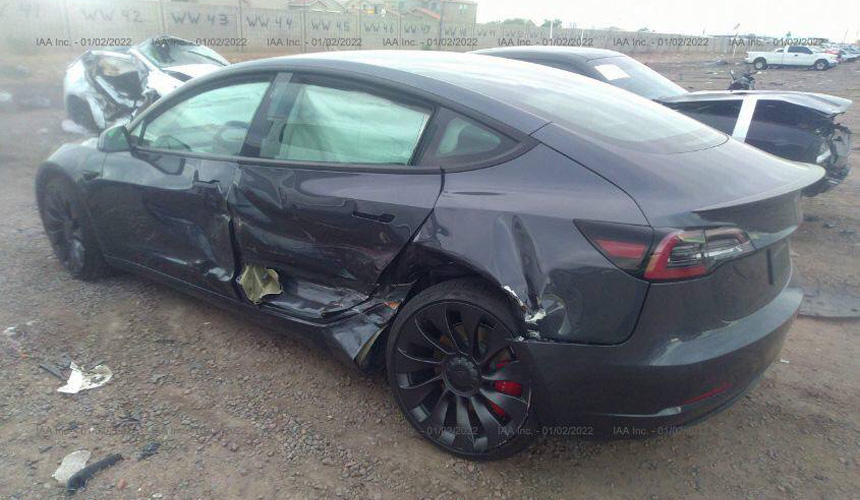
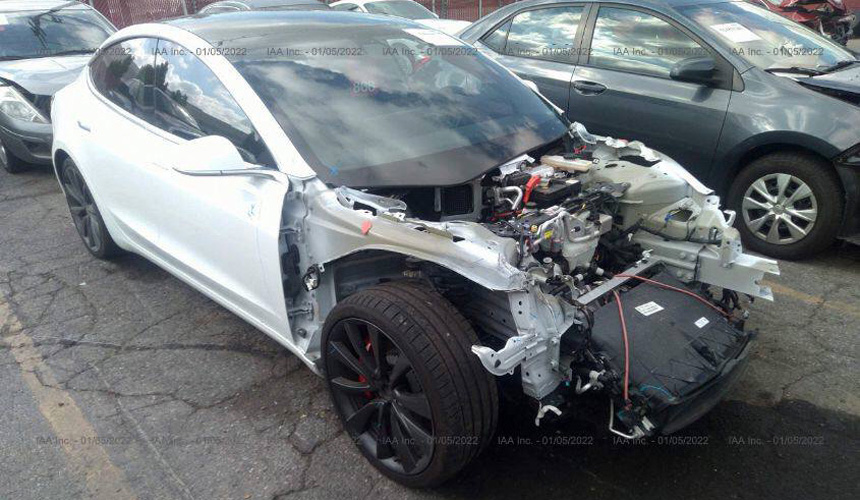
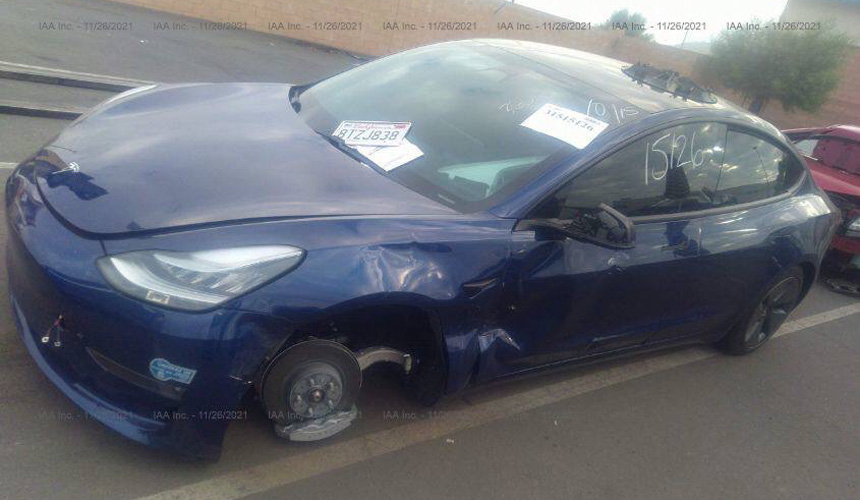
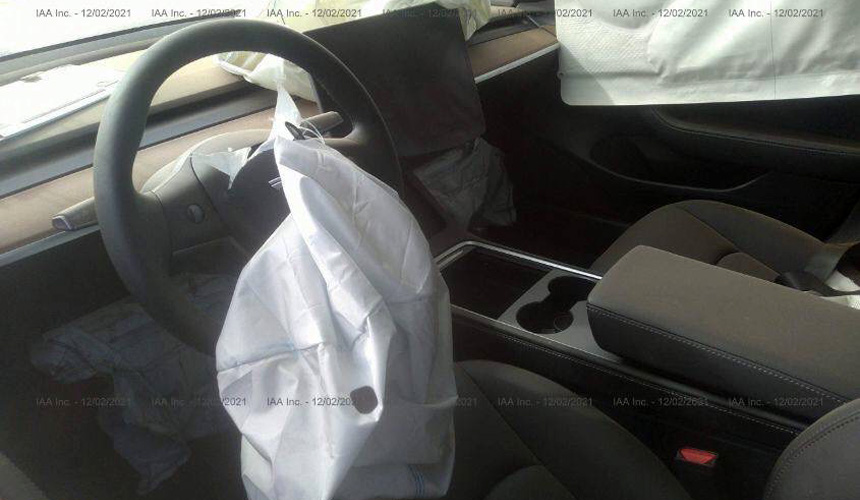
For another, where a total loss in Russia usually means a car that has been through the meat grinder, American insurers sometimes write off cars with minimal damage; expensive labour works in their favour. Even so, finding a fresh Model 3 Performance in decent condition proved impossible. I lowered my sights and settled reluctantly on the Long Range — also dual-motor, but less powerful, at 440 hp instead of 513. The choice there was much wider, though not wide enough to be fussy about body colour or interior.
The Car That Had Been Under Water
We did not buy at the first attempt. In one place we haggled; in another the prices turned out to be far above expectations. The auction for a given lot lasts less than a minute, too — you have several days to decide, but the bids themselves have to be made very quickly. And then a very interesting Tesla Model 3 Long Range surfaced: facelifted, absolutely intact, drivable, with a laughable 10,000 miles on it. Radically black, with a fancy white interior. Surfaced in the literal sense, too — the car had been submerged, though not badly. Judging by the marker line on the pillar, the water rose a little above the wheel hubs. The interior was free of water and mould and there was no external damage. Tempting? Yes. But the traction battery and the electric motors were at risk. We worked out what replacing the motors would cost, and decided to take the chance.
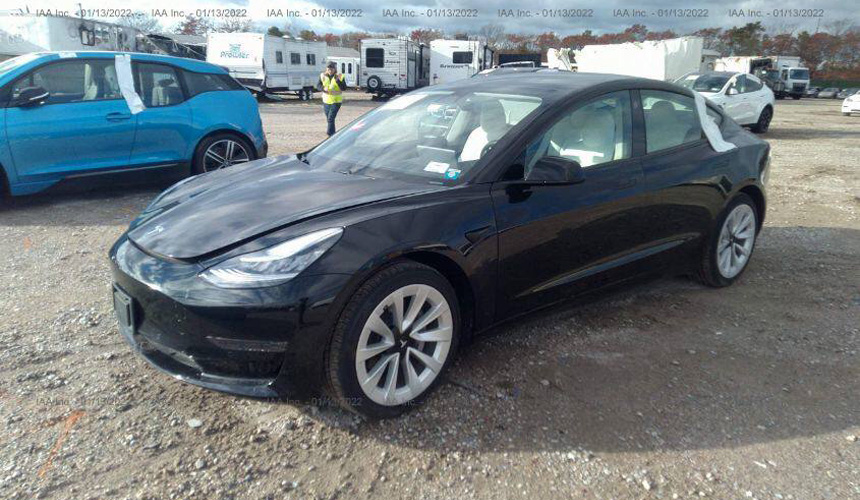
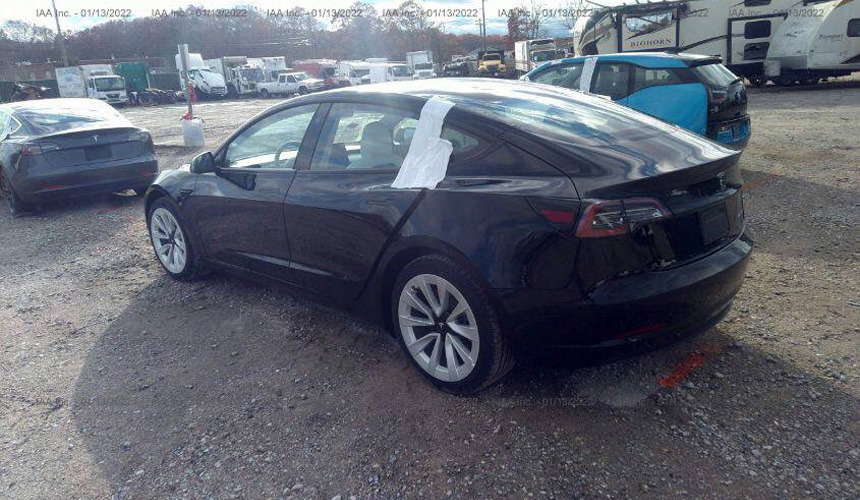
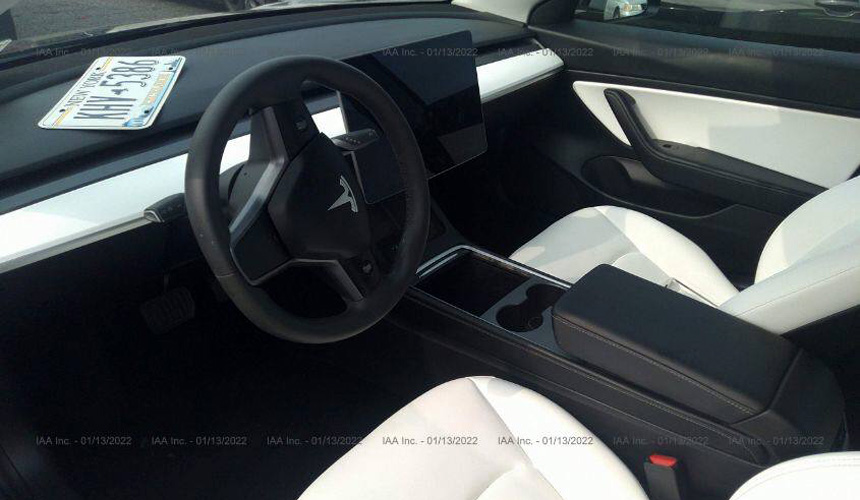
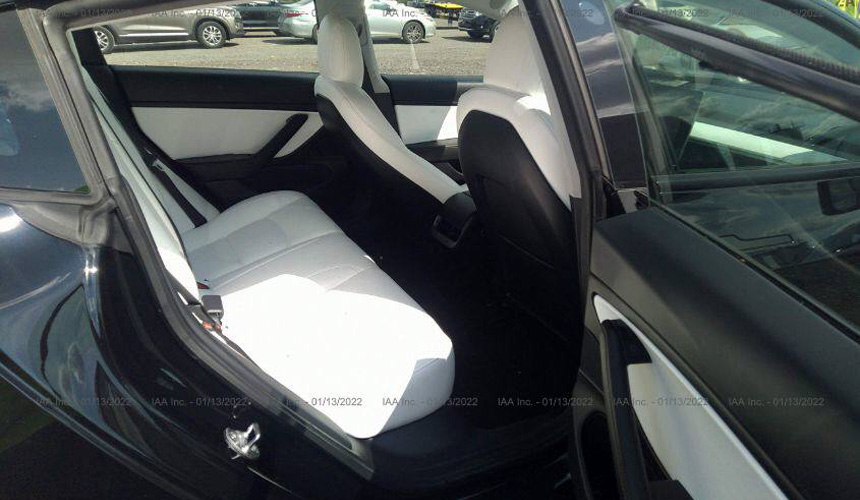
We did not win. The winning bid came in a few hundred dollars higher, and we went back, disappointed again, to browsing the listings. Then, in the morning, came the news that the winner had backed out. Which made me the owner of a Tesla Model 3 Long Range saloon, the first electric car of my life. Legally the owner, at least. And even then with reservations. Very large reservations.
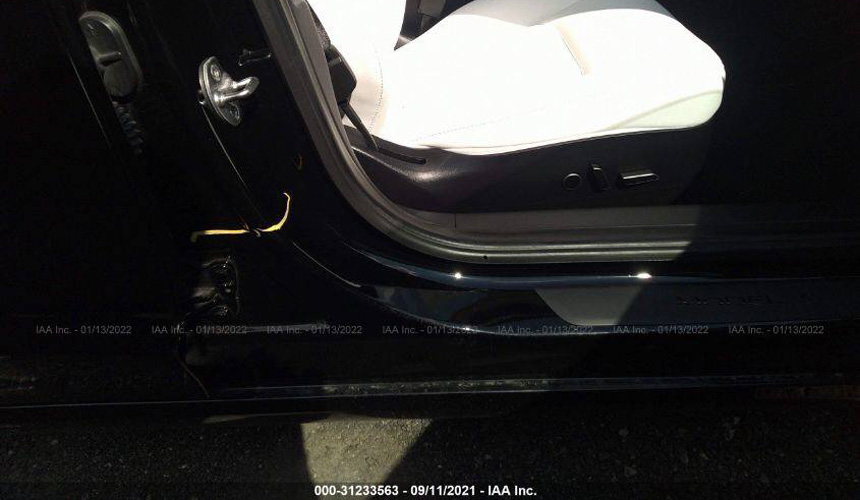
A marker mark in the doorway indicates the water level during flooding.
Then February 2022 Happened
On December 25, 2021 I paid $34,075 for the car, about $1,000 in auction fees, and roughly the same again to ship it to the port of New York. In total, 2,748,694 rubles at the exchange rate on the day of payment. And then the interesting part began. The ship carrying my car left port on February 25, 2022. You see where this is going. In the 45 days the cargo vessel took to reach Klaipeda, Russia was hit with sanctions the way a bad stand-up comedian is hit with tomatoes. I had already said goodbye to the Tesla in my head and written off nearly three million rubles as an amusing but unsuccessful experiment.
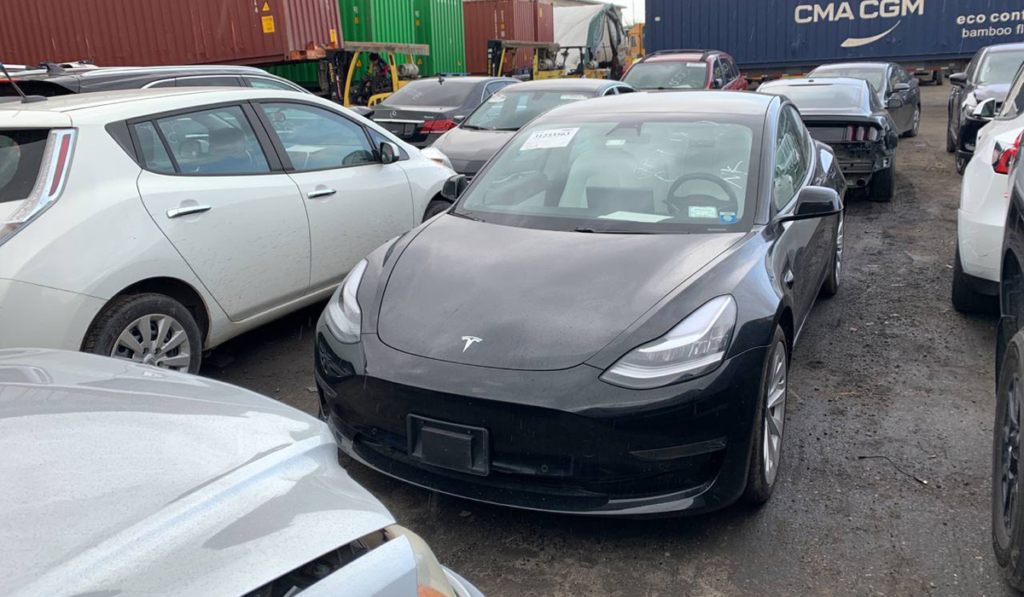
Already purchased Tesla at the port before loading onto the ship.
Lithuania, Belarus, and 15% Duty
The car did reach Lithuania. And then the fun started. I waited a month and a half for it to be loaded onto a tow truck that would take the Tesla to Belarus; the men at the Baltic port were unhurried, to put it mildly, about getting cars out of containers. Further sanctions played their part, because bringing a car out of Europe could now only be done semi-privately rather than by container as before. Then came Belarusian customs. That went smoothly enough, but a 15% import duty — about $5,400 — still had to be paid, duty-free import having ended in 2021.
The SBKTS, and Two Months of Waiting
Next came obtaining the Vehicle Safety Certificate (SBKTS). Tesla has never had official representation in Russia, which means there is no Vehicle Type Approval either, and in that case a car has to go through an individual procedure to check it against Russian requirements. I had to replace the rear lights with European ones, with yellow indicator lenses, and carry out a few other operations, plus two or three hundred dollars for parts. The agonising part was the waiting: the flood of grey imports had inundated the country and I had to wait my turn for two months. I only received the SBKTS in the autumn of 2022. With all the associated costs, the Tesla had cost me 3.4 million rubles. All that remained was to hang the plates on it — but before registering the car I had to establish the scale of the disaster, because it had, after all, been under water.
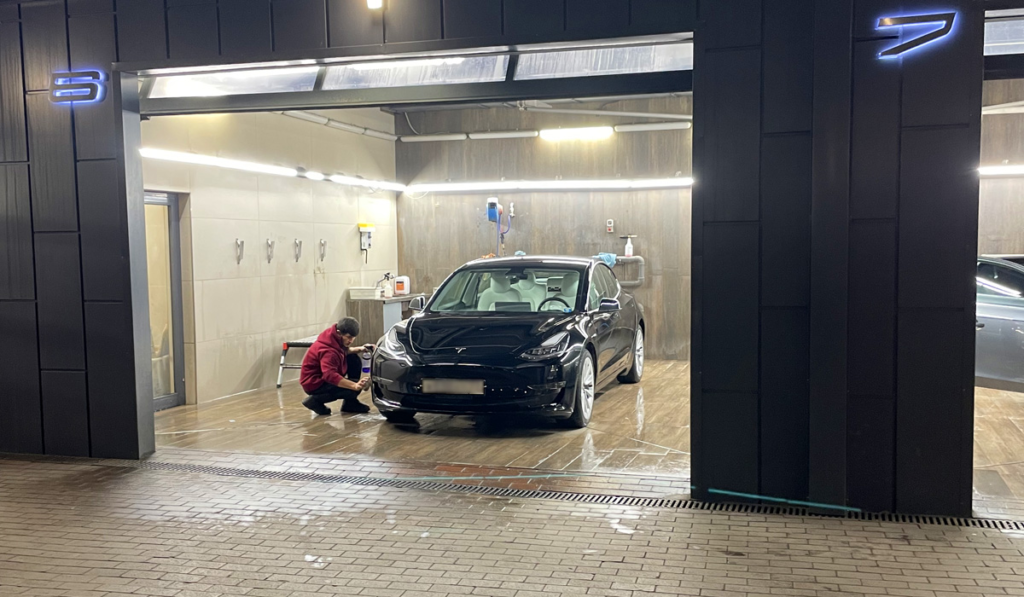
What the Flood Actually Cost
The Tesla was taken apart everywhere it could be taken apart, and nothing untoward turned up. There was no smell, and even the French fries lurking somewhere under the mats were dry and free of mould. A good sign. There was still money to spend, though a replacement right fog light, a 12-volt battery and a couple of sensors hardly amount to serious expenditure. On the whole I was very lucky. Buying a flooded electric car and running into no trouble with the electrics, the electronics or any of the rest of it is rare luck indeed. I do not rule out that the flooding will make itself felt eventually, but I have been driving this Tesla for over a year now and nothing has surfaced yet.
As for running an electric car in Moscow without a charging point or a garage of my own — that is the subject of the next part.
Photo: Nikita Sitnikov | online auctions
This is a translation. You can read the original article here: Tesla для петролхеда. Часть первая: покупка в Америке и доставка в Россию
Published March 28, 2024 • 7m to read