
Americans have visited the Balkans before — and it was not without their involvement that Yugoslavia dissolved into several states, with the lingering pain of a past civil war. And now the Yankees have returned to Croatia with new Harley-Davidson motorcycles. I’ve already told you about the Sportster family test drive; now let’s talk about the Touring series.
Two baggers, 95 percent the same motorcycle
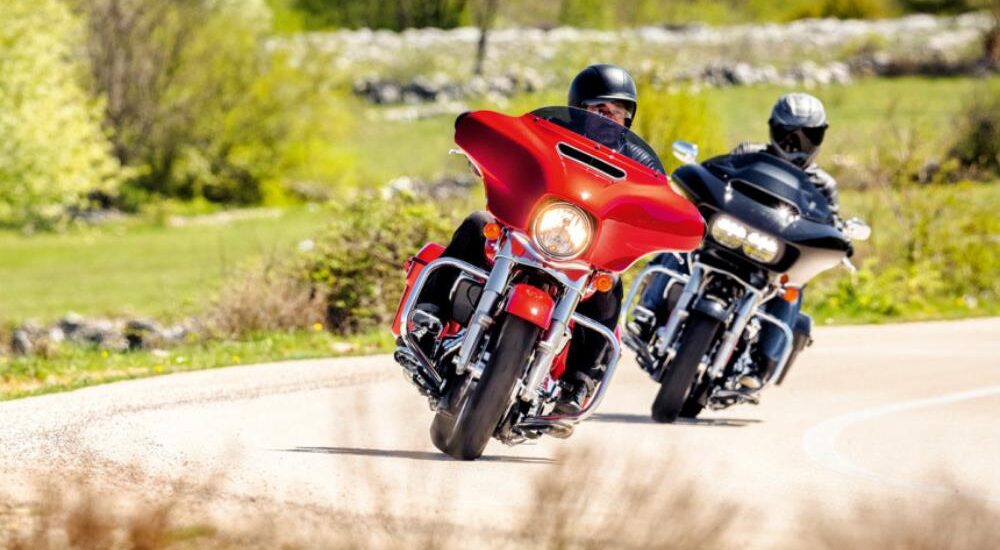
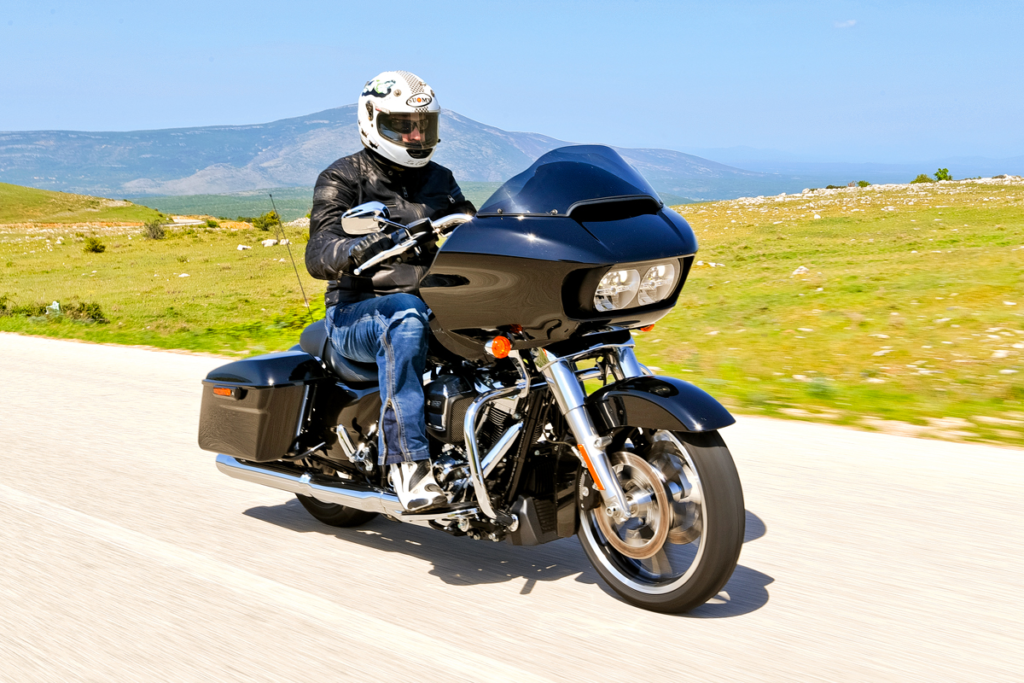
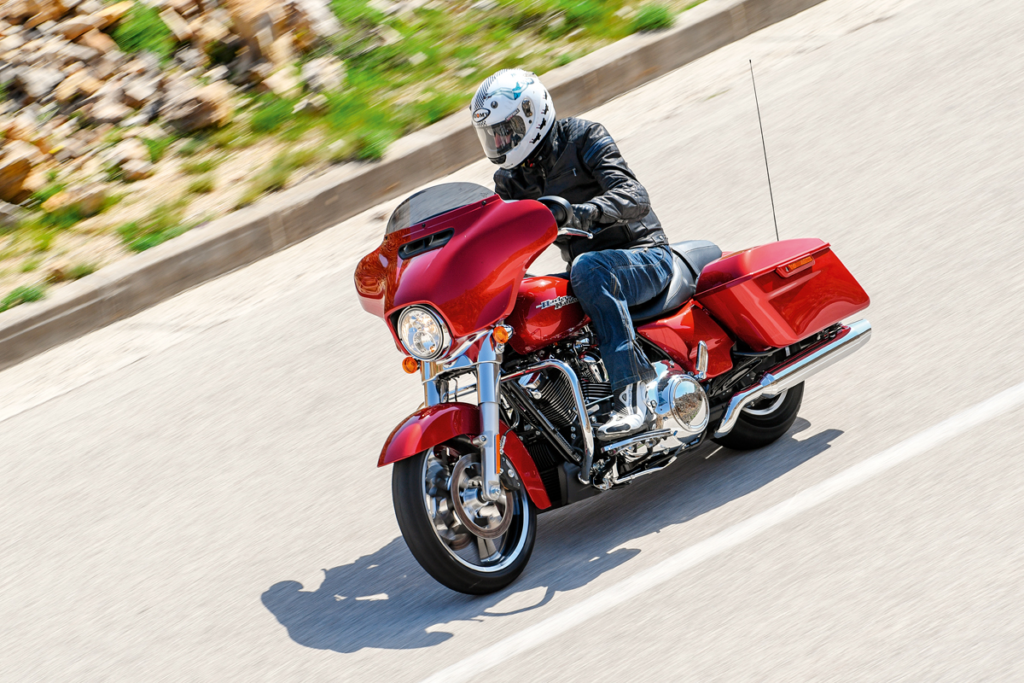
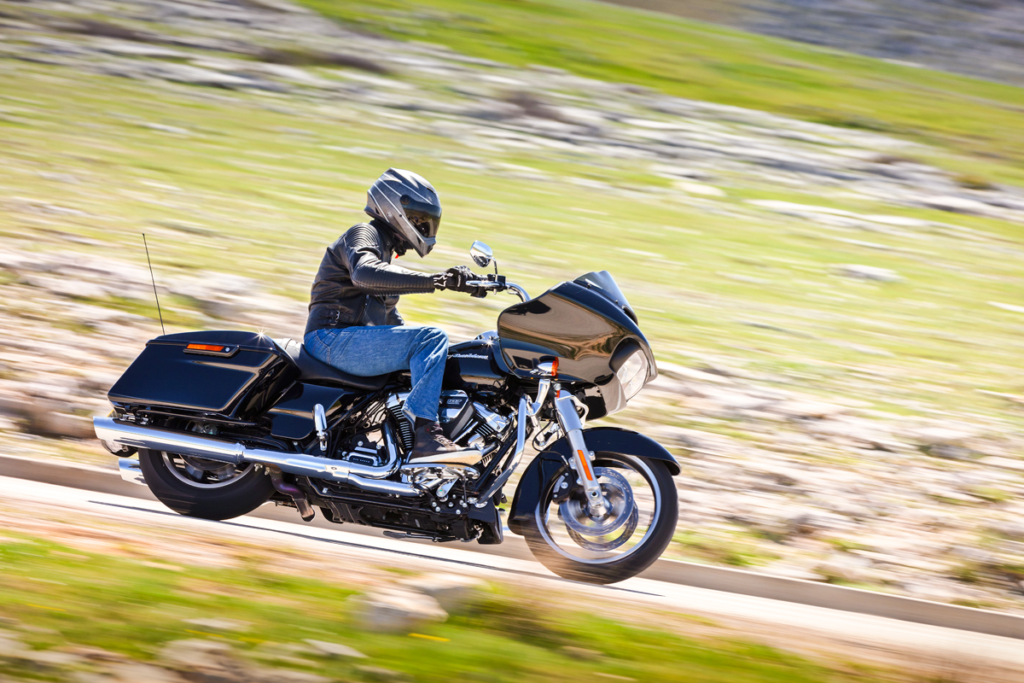
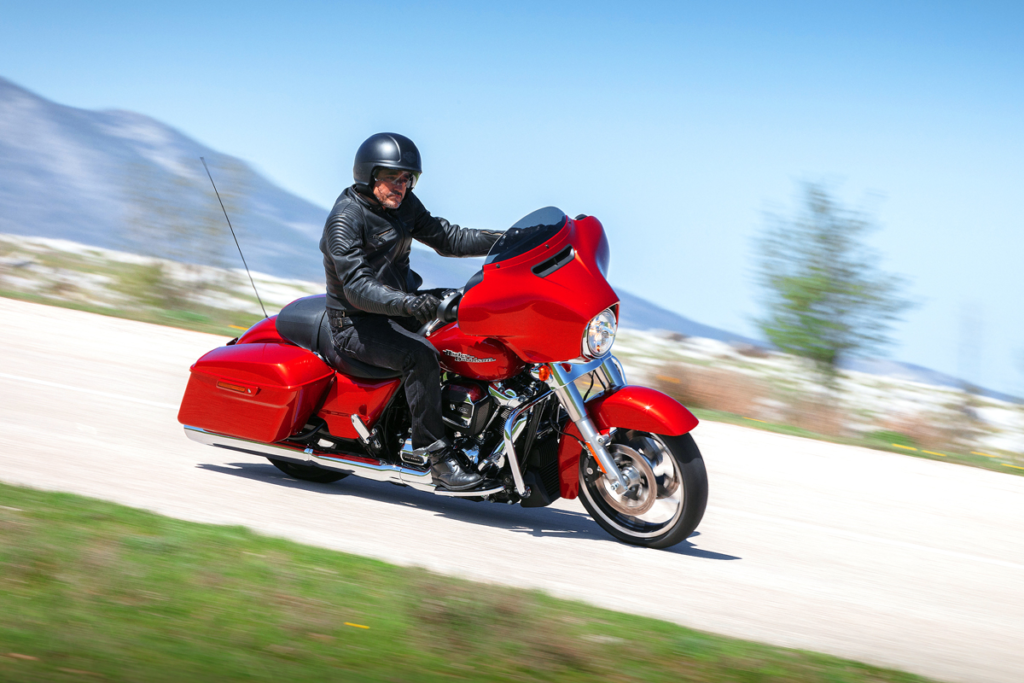
Baggers! True fashionistas, successfully exploiting the image of their predecessors from the fifties and sixties. And although the Street Glide and Road Glide look quite different, they are 95% the same motorcycle. The Road variant has a slightly longer fork extension, and its fairing is pushed far forward and lives a life independent of the handlebars.
Shark nose and batwing
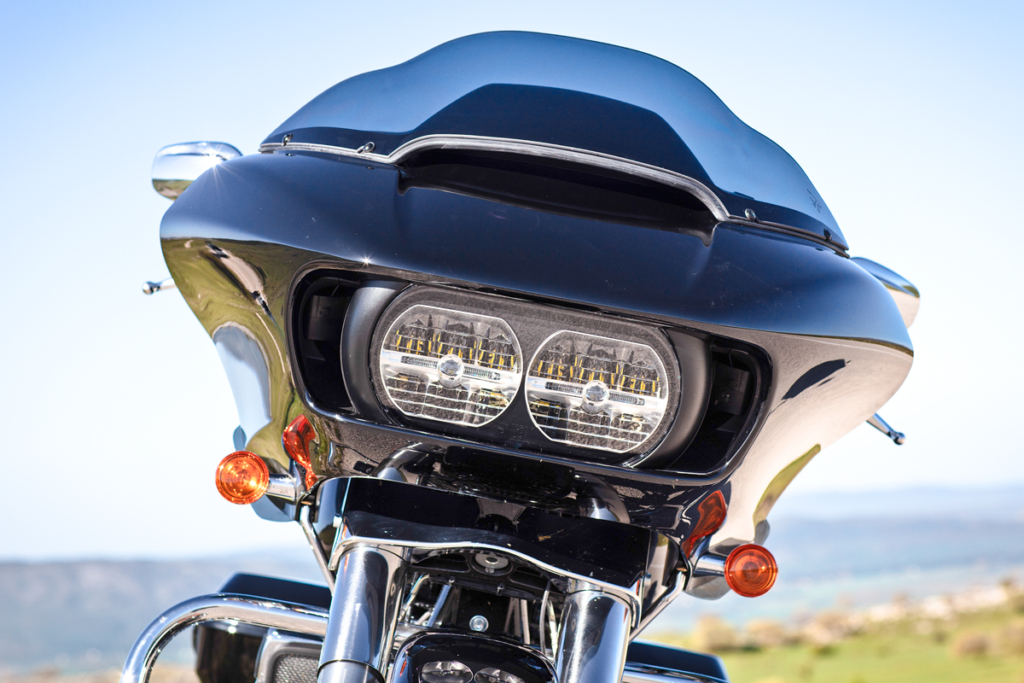
That front end, with its double, frowning oval eyes, turned out to be ambiguous: some love it, others hate it. I belong to the first group. This Road immediately reminded me of the first-generation Buick Riviera coupe, at the sight of which I lose my will and am ready to emigrate immediately. In the company of Harley-Davidson, however, this symbol of greatness has its own name — the shark nose.
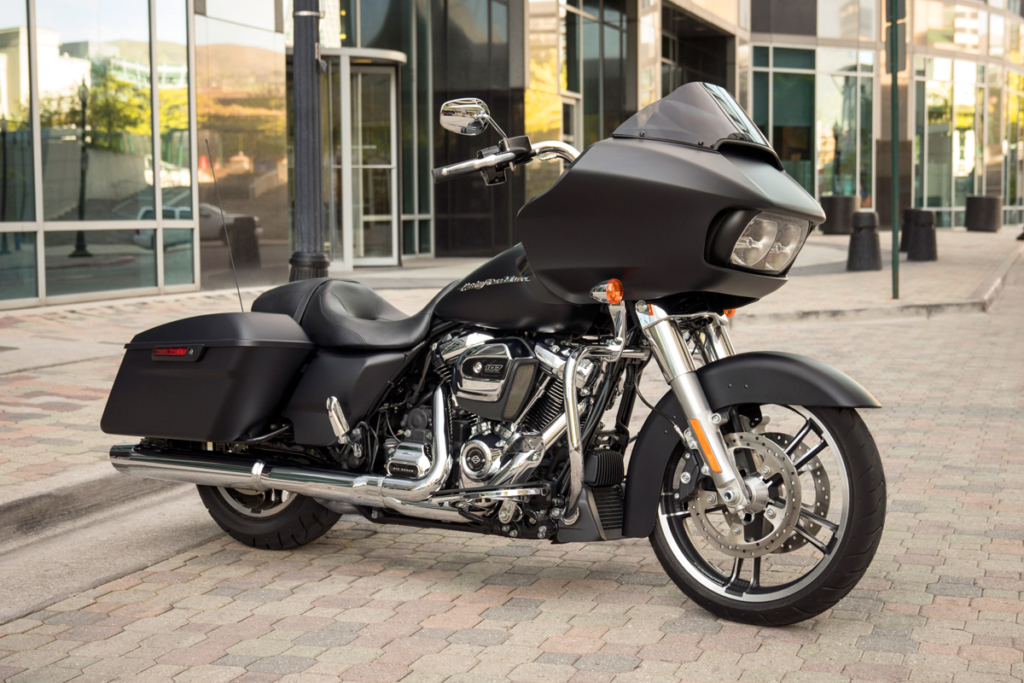
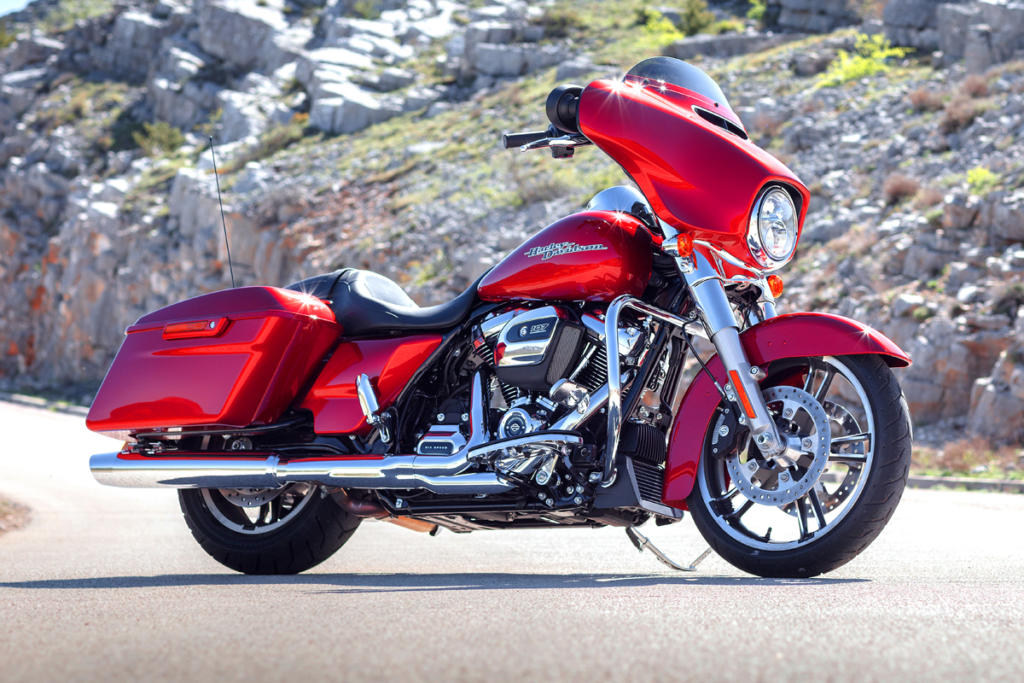
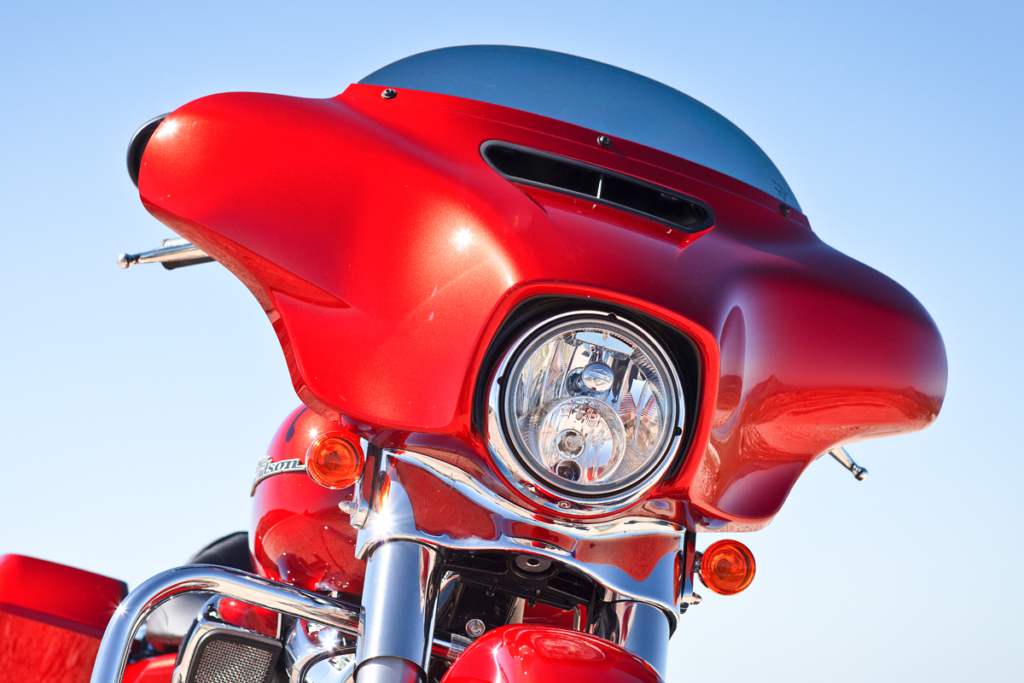
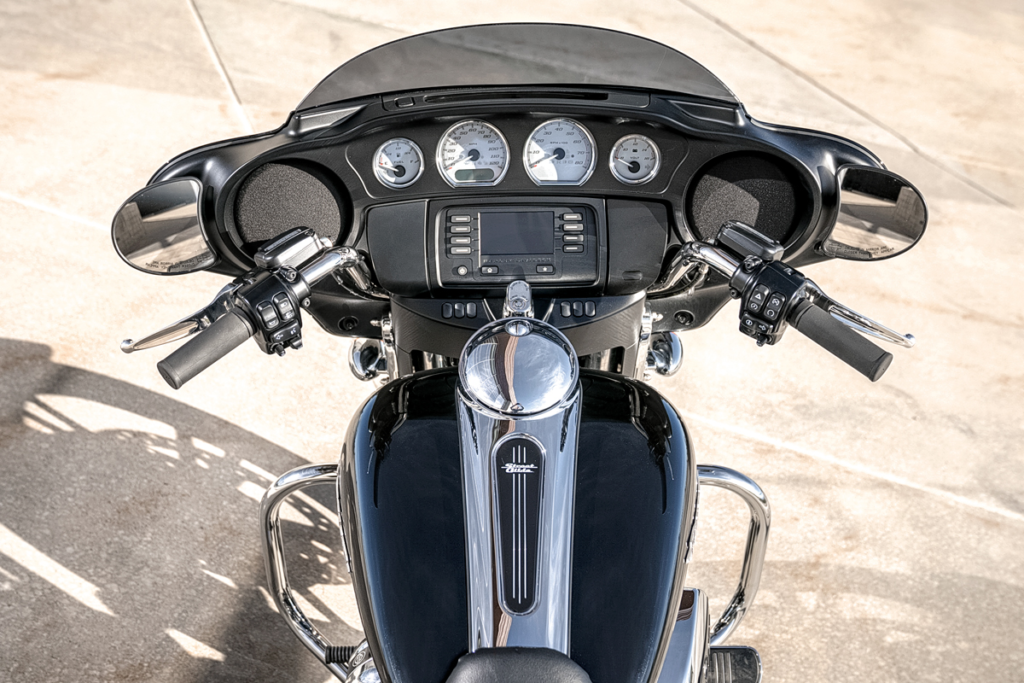
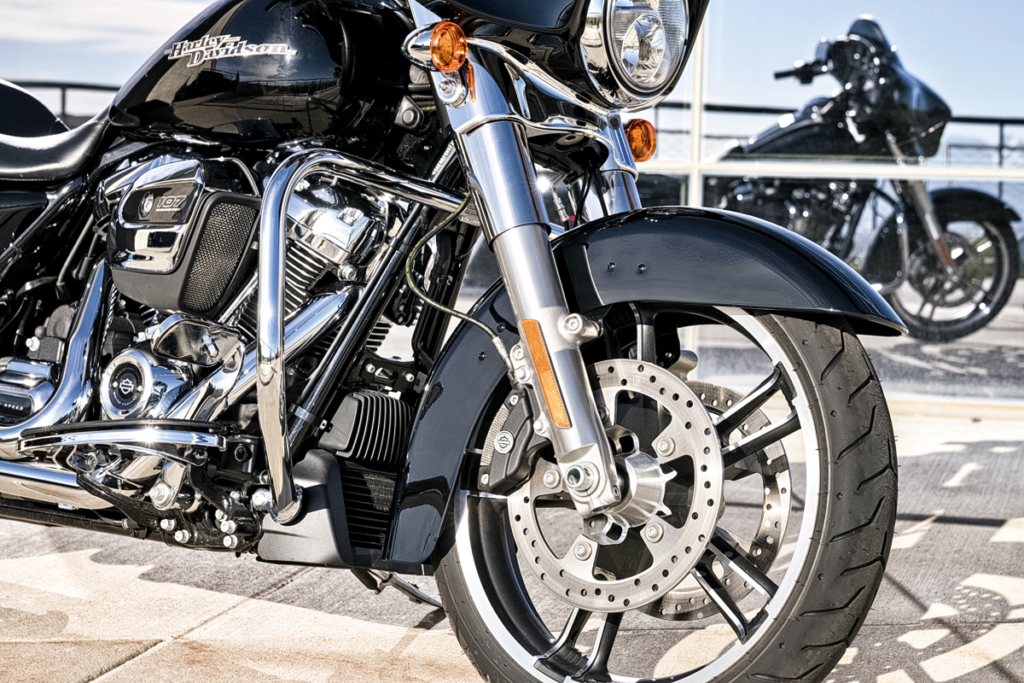
As for the Street, the fairing traditionally sits on the handlebars, and the headlight is round. This front-end form factor is called batwing. Such a couple — the Sharkboy and Batman.
Built for big riders
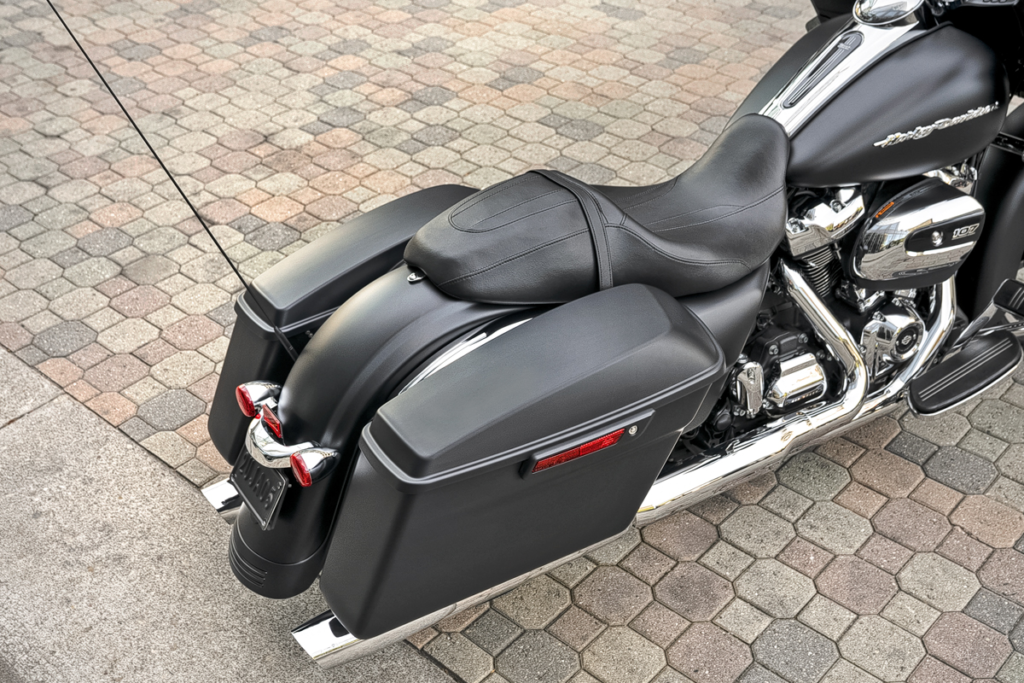
Both are designed for big guys. Gigantic foot platforms extended towards Arizona somewhere, sofa seats easily capable of accommodating a captain of XXXL size — the passenger gets half the area, undisguised sexism. Only the Bat’s handlebars sit slightly closer to the rider than the Shark’s.
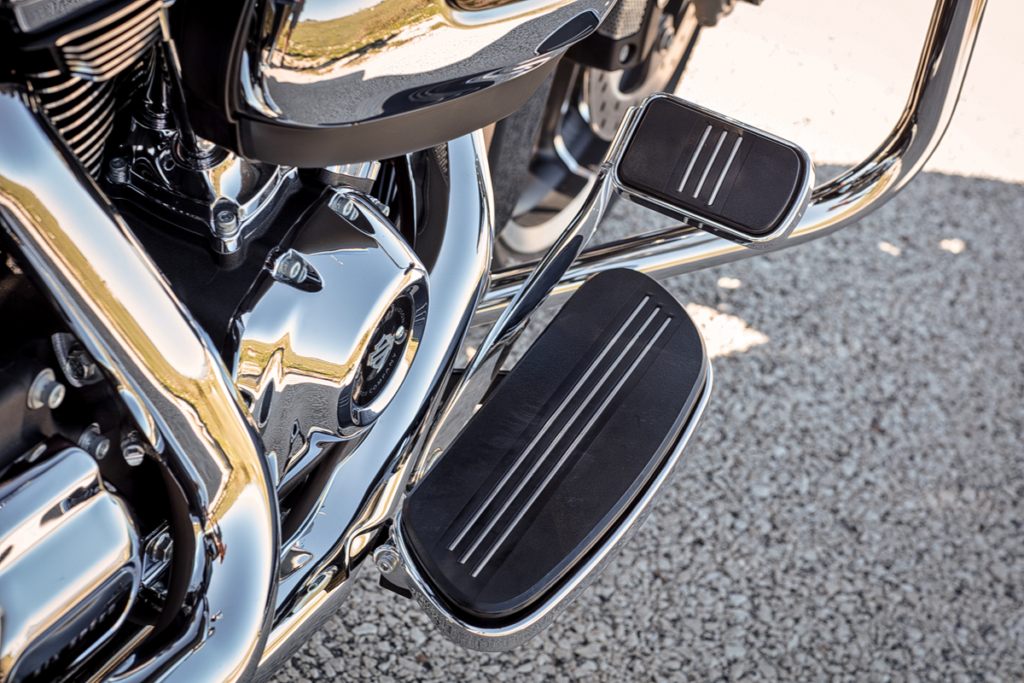
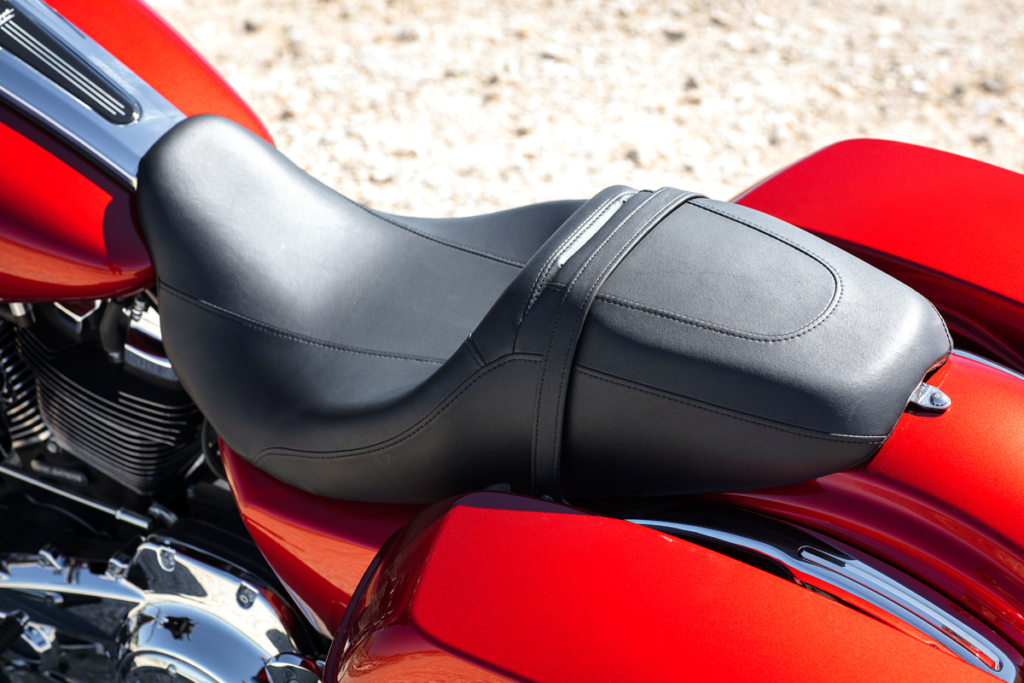
Does that mean it will be uncomfortable for owners who are not tall — short, slender, not corpulent? Yes, but more mentally than physically: outstretched arms and legs spread far apart only emphasize the modest dimensions of the brand’s devotee.
The Milwaukee-Eight 107
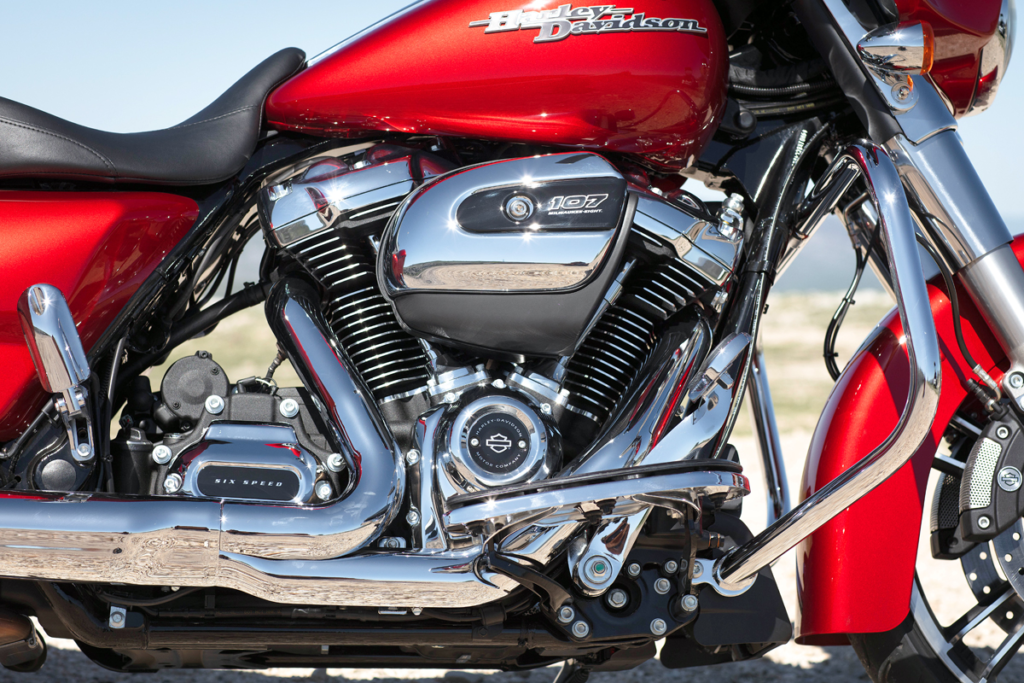
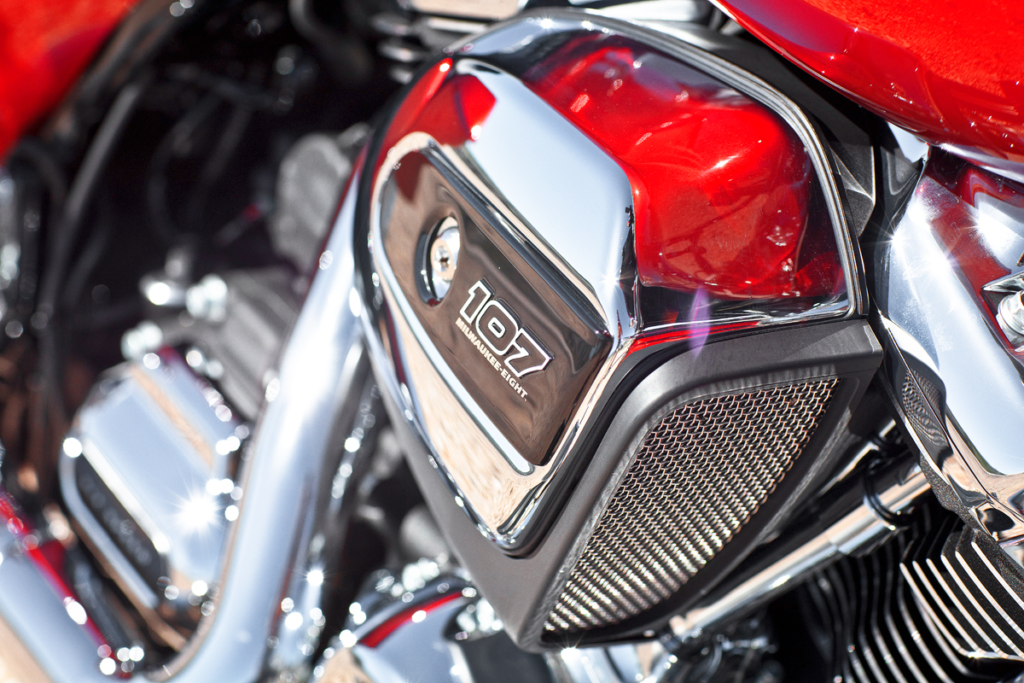
This pair is so imbued with the American spirit that you could recognize the brand tied up and blindfolded on the seat. The Milwaukee-Eight 107 engine, with a capacity of about two liters (1745 cc, or 107 cubic inches), hums businesslike and leisurely operates the pushrod valve lifters. The camshaft is low, and there is only one. Progress has reached even this relic, though. No, they don’t provide traction control and adjustable ignition maps, but each cylinder has two spark plugs and four valves, and there is even a balancer shaft that really does reduce the trademark vibrations. All this wealth is air-cooled, and at the output you get 90 hp — not much for leviathans with almost 400 kg of curb weight.
On the road
Where is the hurry on these tourers, though? It is the more powerful “114” engine, with combined liquid-air cooling and increased compression, that lets you light things up. With the “107” you have to live in the moment instead — the more easily since there is a generous 150 Nm available at 3250 rpm, almost all of it accessible from 2000. You ride it like a highway truck.
At 70 km/h I pushed the six-speed gearbox into its highest gear, enjoying the signature sound of a pump-action shotgun being racked, and relaxed: there would be enough torque. Cruise control, effective wind protection… Life is good! You can twist the throttle handle inside out and the acceleration will not get any more intense; after 130 km/h, tranquility sets in. Harley riders speak contemptuously of any Japanese sportbike, and this is emphatically not one.
If you insist, you can expect 180 km/h on the speedometer. But, I suppose, only journalists ride these motorcycles like that.
Brakes and suspension
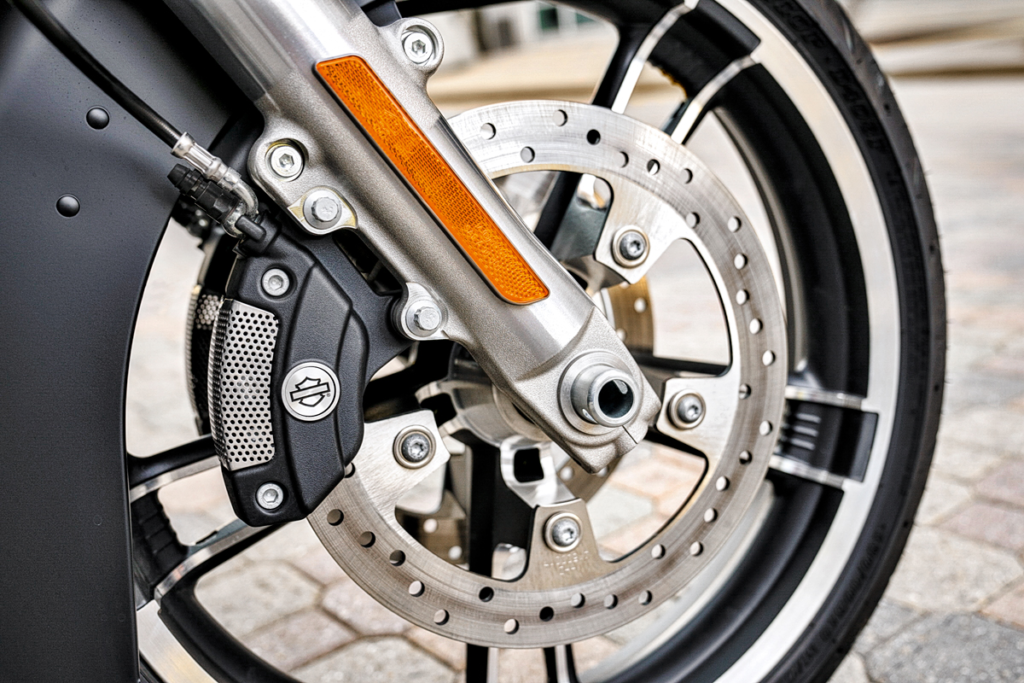
You can feel the “extra” 12 kilograms hanging on the shark nose version of the Road Glide. But to notice it you would have to be riding at the limit, shaving those mighty foot platforms in every turn and testing fate on a motorcycle priced like a good crossover. Why would you? The trio of 300mm brake discs with four-piston calipers shares this opinion: in normal conditions they are more than sufficient, but start “performing” aggressively and overheating won’t keep you waiting.
The suspension astonishingly combines languidness with short travel. The latter does not mean sharp handling, however: both machines lean noticeably, as befits heavy machines of this class. Is there shaking? On a bad road, yes. But these monsters flatten out good asphalt with the composure of aircraft carriers surrounded by small pie-sized vehicles.
Instruments, audio and chrome
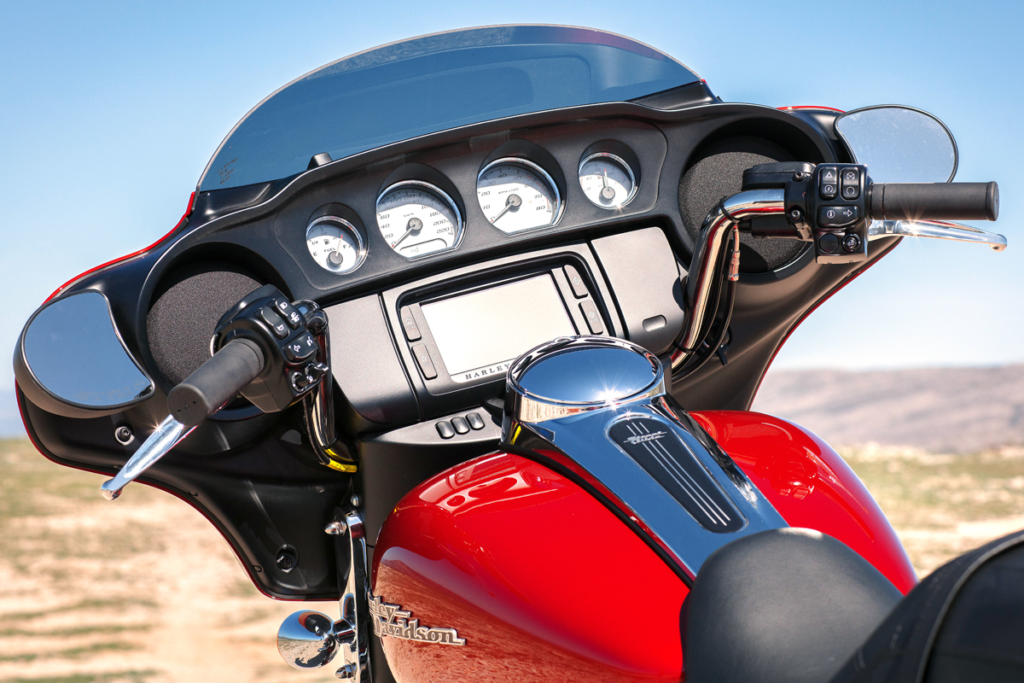
The instruments further enhance the resemblance to long-haul trucks from the mid-80s — Peterbilt, Kenworth, Mack — with classic gauges in chromed frames generously scattered about. The only thing that stands out is the Boom!Box 6.5GT multimedia system with a six-and-a-half-inch diagonal touchscreen display, and you can boldly “spread” the image even with gloves on. The system understands six languages, including Russian, and finally has navigation that works in our native lands. It is also capable of recognizing voice commands, but I didn’t test that: I’ve never been a fan of a helmet headset.
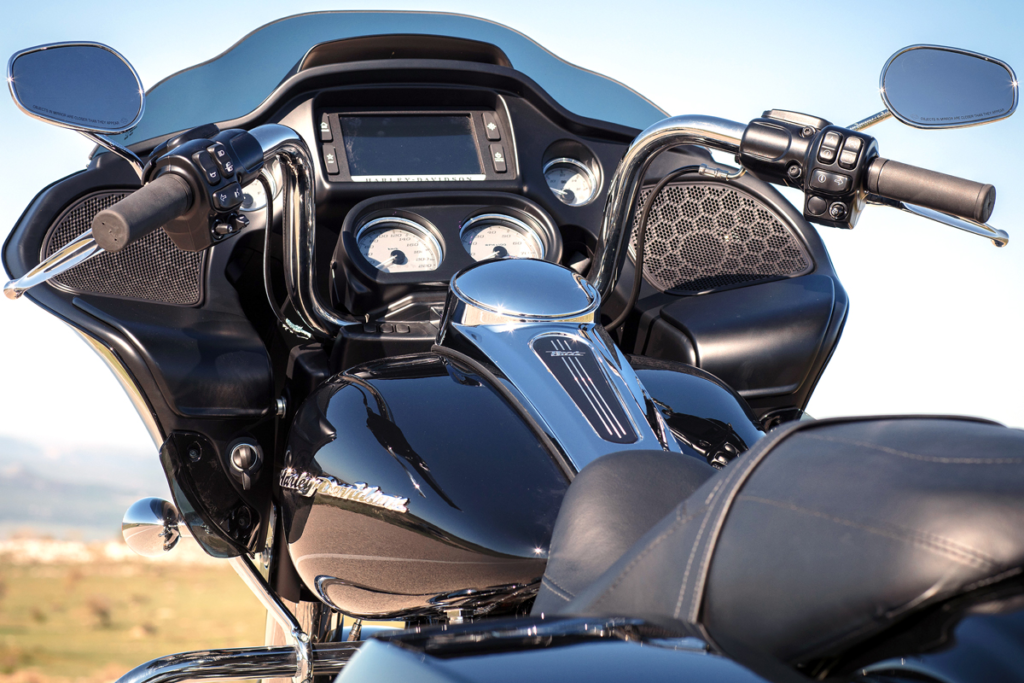
How does the audio system sound? Loud. Even for my undemanding ear that is the best definition, and a well-known audiophile wouldn’t last a couple of seconds. What can you do: motorcycles with quality audio equipment straight from the factory are almost science fiction — in my memory it was only the Harley-Davidson CVO Street Glide, for a staggering 3.5 million rubles. In all other cases expensive tuning is required.
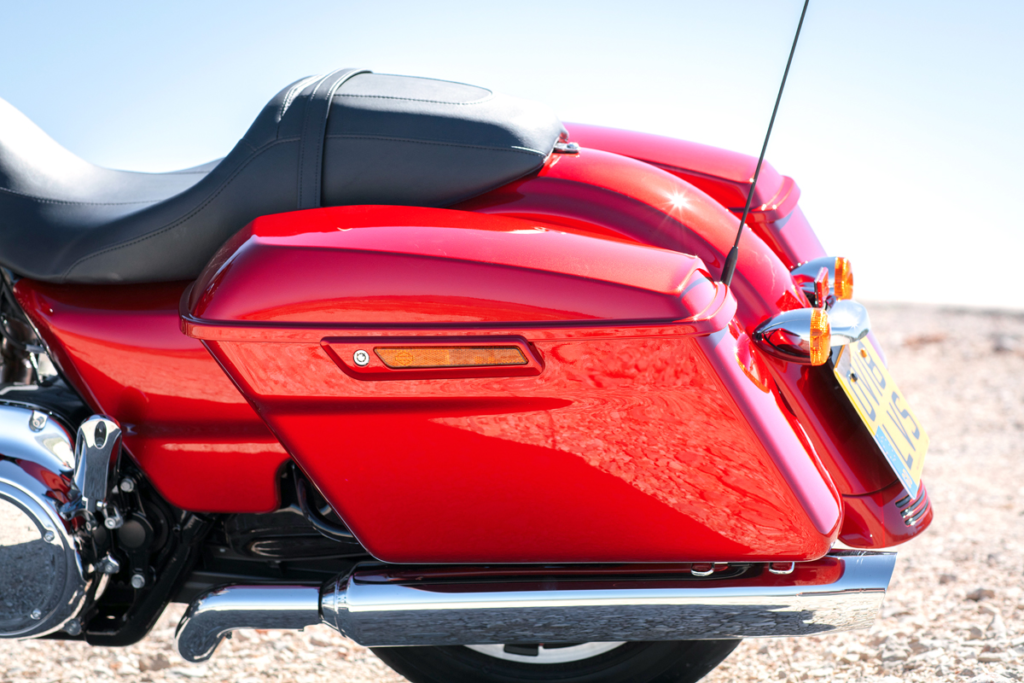
Seeing a Harley that hasn’t undergone merciless upgrades is almost impossible, mind you: every owner tries to stand out and give their favorite bike maximum individuality, because nobody buys these for their last penny. The factory tuning catalogs are thicker than the heaviest volumes, and once you join the cult you disappear into it forever, giving up everything, including your soul, for chromed accessories.
Prices and rivals
By the way, in the brand’s overall sales portfolio in Russia the Touring series accounts for about 30%. So we will definitely see the characteristic silhouette of the heavy “tourer” on our roads — despite the fact that the starting price for the Street Glide is only 2.2 million rubles, and the Road Glide is 150,000 rubles more expensive.
What about competitors? All the big “Japanese” bikes in this class left our market a long time ago, and in this format only the American-Italian couple remains: the Indian Chieftain, very similar in characteristics and philosophy, starts at 2,293,000 rubles, while the technologically advanced Moto Guzzi MGX-21 Flying Fortress is noticeably cheaper at 1,919,000 rubles. But even this duo has sold fewer than 20 units in total, while Harley sold almost three hundred of its baggers last year.
Specifications
| Motorcycle | Harley-Davidson Street Glide | Harley-Davidson Road Glide |
| Dimensions, mm Length Width Height Wheelbase Seat Height Ground Clearance | 2450 960 1350 1625 695 135 | 2430 980 1310 1625 695 140 |
| Front fork rake/offset, degrees/mm | 26/170 | 26/173 |
| Frame | Steel, tubular | Steel, tubular |
| Curb weight, kg | 376 | 388 |
| Number and arrangement of cylinders⠀ | 2, V-shaped | 2, V-shaped |
| Cylinder bore/stroke, mm | 100/111 | 100/111 |
| Compression ratio | 10.0:1 | 10.0:1 |
| Displacement, cm³ | 1745 | 1745 |
| Number of valves | 8 | 8 |
| Maximum power, hp/kW/rpm | 90/66/5450 | 90/66/5450 |
| Maximum torque, Nm/rpm | 150/3250 | 150/3250 |
| Transmission | 6-speed, multi-disc clutch in oil bath, belt | 6-speed, multi-disc clutch in oil bath, belt |
| Front suspension | Telescopic fork, Ø tubes 49 mm | Telescopic fork, Ø tubes 49 mm |
| Rear suspension | Two shock absorbers, adjustments: spring preload | Two shock absorbers, adjustments: spring preload |
| Front brake | Two Ø 300 mm discs, 4-piston calipers | Two Ø 300 mm discs, 4-piston calipers |
| Rear brake | Ø 300 mm disc, 4-piston caliper | Ø 300 mm disc, 4-piston caliper |
| Front wheel | 130/60-19″ | 130/60-19″ |
| Rear wheel | 180/65-16″ | 180/65-16″ |
| Fuel tank capacity, liters | 22.7 | 22.7 |
| Fuel | AI-95-98 | AI-95-98 |
Photo: Harley-Davidson
This is a translation. You can read the original article here: Что объединяет бэггеры Harley-Davidson Road Glide и Street Glide: выясняем на дорогах Хорватии

Published November 15, 2023 • 8m to read