
The Porsche mid-engined twins have always been a hit with enthusiasts. However, not everyone accepted the transition of the Boxster and Cayman line to turbocharged four-cylinder engines — with their gruff character and hint of turbo lag. The introduction of the 718 badge, historically tied to a racing four-cylinder, only deepened the sense of loss for those who cherished the six-cylinder soul of earlier models.
Why the Return to Six Cylinders Was Inevitable
The appearance of the naturally aspirated flat-six 4.0 in the Cayman GT4 and Spyder was predictable. But seeing it trickle down to the GTS variants came as a genuine surprise — and a welcome one. It fits neatly with Porsche’s updated GTS philosophy: these cars now receive detuned engines from higher-tier models, much like the Panamera GTS in 2018 or the refreshed Macan GTS (more on that at the end).
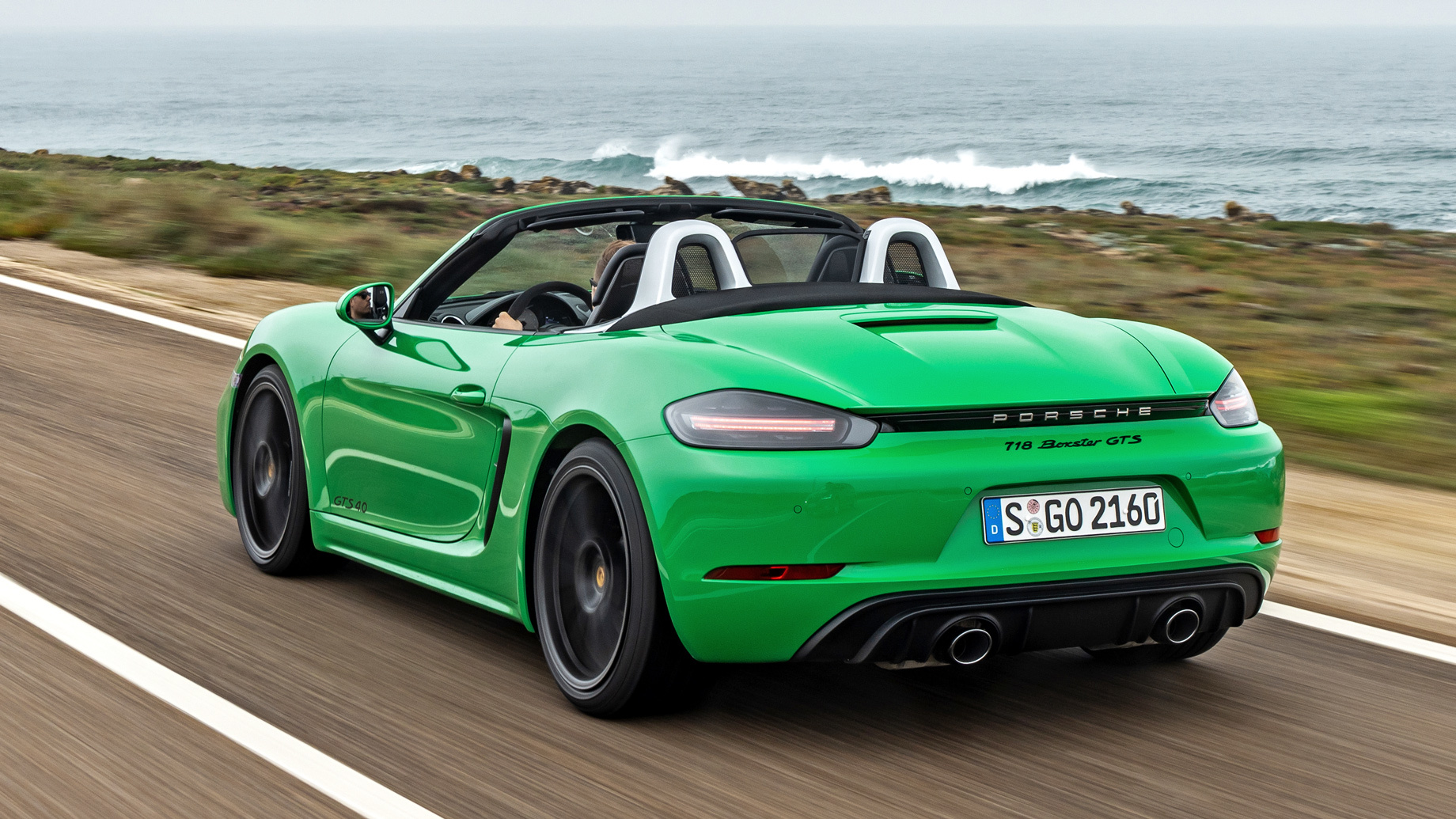
The 9A2 4.0 Engine: A Naturally Aspirated Masterpiece
Perhaps the most surprising fact about the new four-liter 9A2 engine is its origin: it is derived from the twin-turbocharged 3.0-liter six-cylinder that debuted in the 911 during the 2016 facelift. Turning a turbocharged 3.0 into a naturally aspirated 4.0 is an unconventional path, but one that Porsche’s engineers have executed brilliantly.
Compared to the GT4 and Spyder — which fall under the Porsche GT department — the GTS 4.0 engine is slightly detuned. Here are the key differences at a glance:
- Power output: 400 hp (vs. 420 hp in the GT4/Spyder)
- Peak power RPM: 7,000 rpm (vs. 7,600 rpm)
- Rev limiter: 7,800 rpm (vs. 8,000 rpm)
- Maximum torque: 420 N·m at 5,000 rpm (identical to GT4/Spyder)
- Torque curve: Begins to taper at 6,500 rpm (GT4/Spyder holds slightly longer, to 6,800 rpm)
- All differences achieved via software calibration only, according to powertrain engineer Fabian Zink
On paper, the detuned figures raise a red flag — and memories of the disappointing 3.8-liter engine that found its way into the 981-generation GT4 and Spyder don’t help. Fortunately, this time it’s a different story entirely. The 4.0-liter engine charges to the rev limiter with a ferocity that leaves no room for regret. Spend just a few minutes back-to-back with the GT4 and the GTS 4.0, and you’ll struggle to feel the power difference at all.
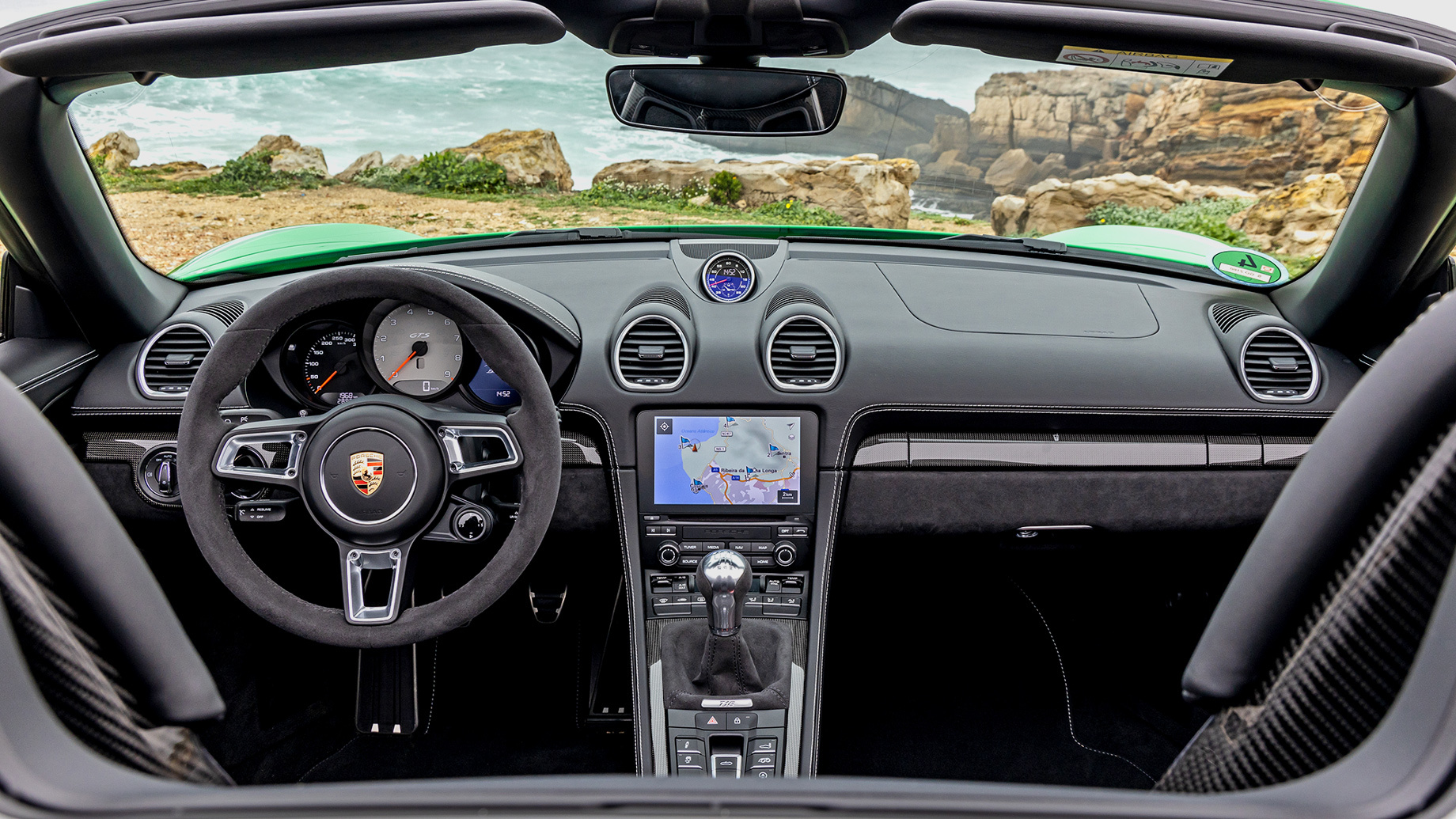
Throttle Response, Power Delivery, and That Sound
As befits a naturally aspirated Porsche boxer, the engine responds to throttle inputs with the speed of an electrical discharge — which is no longer even a metaphor in the age of drive-by-wire systems. There is no perceptible delay between pressing the accelerator and the precisely measured surge of acceleration. The power delivery unfolds in a deeply satisfying progression:
- From 3,000 rpm: Four liters of displacement pull with confident low-end torque
- At 5,500 rpm: A pronounced secondary surge kicks in
- From 5,500 rpm to the limiter: Relentless, unbroken pressure all the way to the redline
Those who criticize the sonic character of the 718 GTS 4.0 tend to overstate the loss. The flat-six retains more than enough vocal talent to make you forget this car was ever fitted with a four-cylinder. From inside the cabin — just a few inches from the air intakes and the engine itself — the soundtrack is genuinely engaging. That said, if the goal is to turn heads on a boulevard lined with luxury boutiques, temper expectations: the exhaust note is refined rather than theatrical.
Even against the older naturally aspirated 9A1, the 9A2 4.0 sounds more refined and precise. And when 718 owners inevitably start upgrading the exhaust system, the resulting sound will comfortably put nostalgia to rest — bringing the engine closer to the flat-six GT3 ideal, though the 718’s 7,800-rpm ceiling is a far cry from that engine’s 9,000-rpm stratosphere.
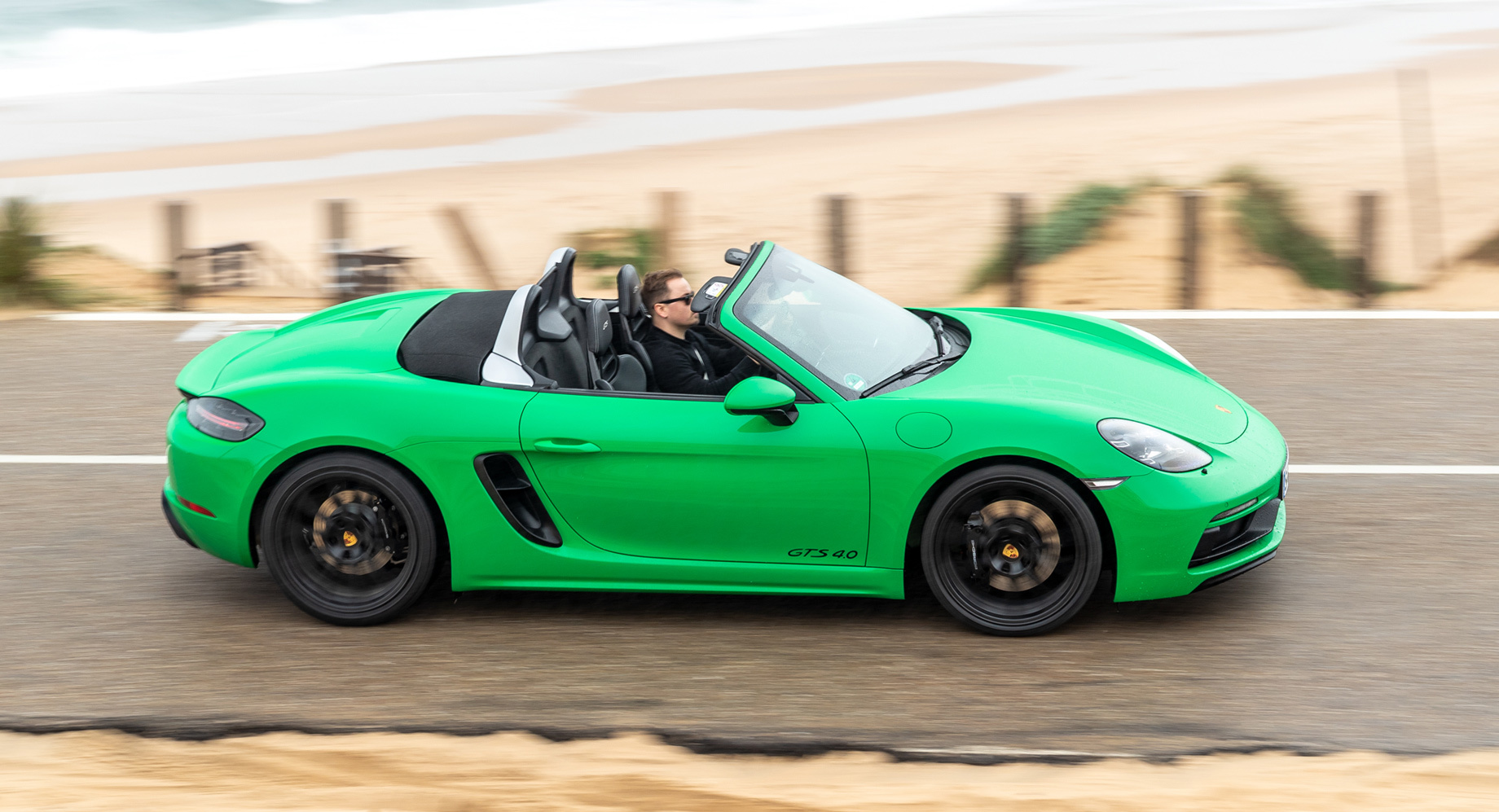
The Six-Speed Manual: Still One of the Best Gearboxes on the Planet
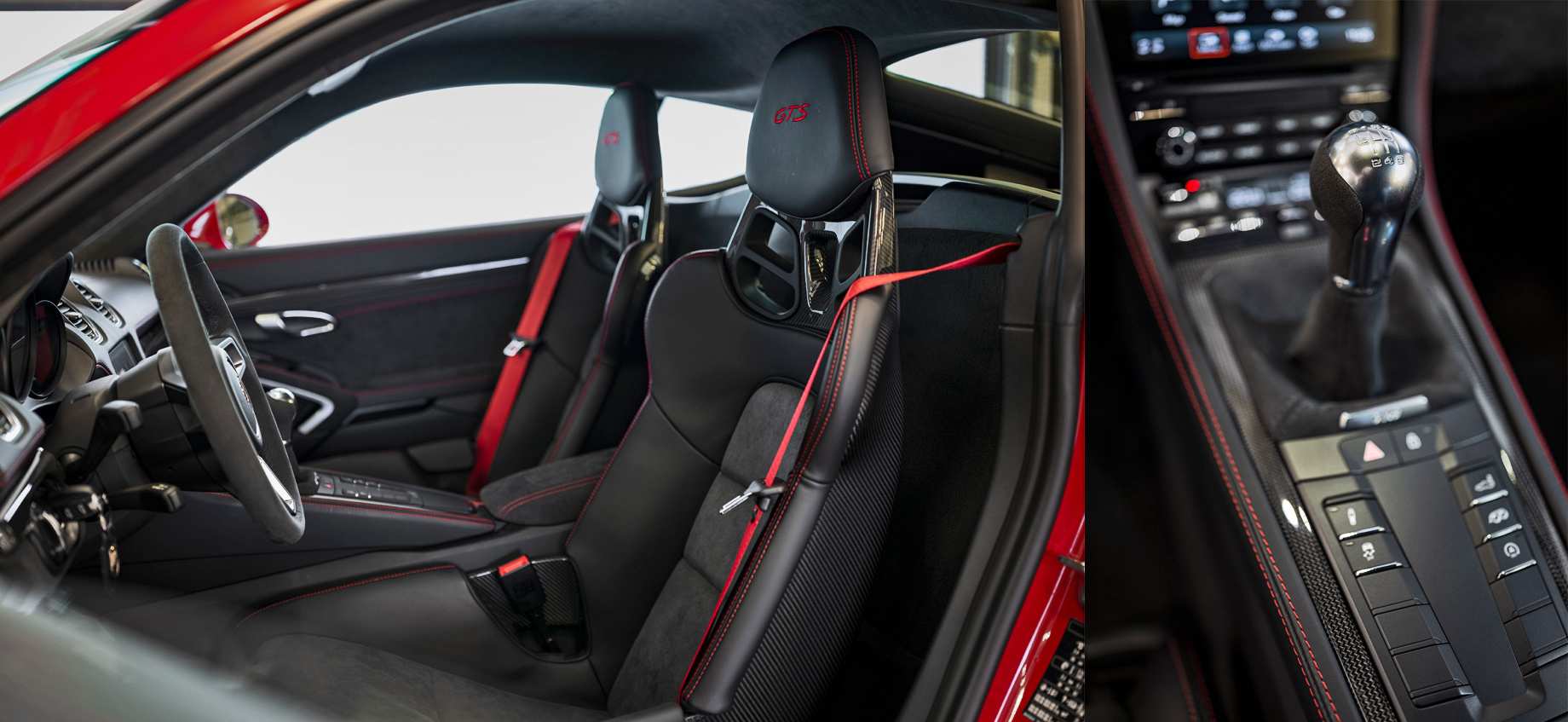
It’s the same six-speed manual transmission that has been a hallmark of the model since the 981 generation arrived in 2012. In a world where truly mechanical sports cars are becoming increasingly rare, this gearbox deserves a long life. Every shift is a small mechanical event in itself:
- Throw is short, precise, and deeply satisfying
- Clutch weight is perfectly judged
- Feedback through the lever is a class reference
- Sport+ mode enables automatic throttle blipping on upshifts
The gear ratios remain famously long — calling them tall is an understatement. Second gear feels endless; it’s possible to exceed the speed limit on almost any road without approaching the rev limiter. Third gear takes you to nearly 87 mph. Absurdly long, yes — but equally absurd to dwell on. Better cars invite journalists to hunt for imperfections to avoid sounding like press releases. In practice, you adapt quickly, simply holding first gear a touch longer than usual, and the Sport+ throttle blip feature keeps things smooth on upshifts regardless.
Emissions, Noise Laws, and the Exhaust Note in Context
Since the 981 generation (2012–2016), emissions and noise regulations have tightened dramatically. The naturally aspirated 982-generation engine simply cannot roar as freely as its predecessors. But this is worth keeping in perspective — everyday Porsches have always been subject to the rules of their era:
- The 996 and 997 Carrera S models were notably quieter than the factory sports exhaust-equipped 991
- The 986 and 987 mid-engined cars were subdued compared to the 981
- Stricter legislation is coming — which makes enjoying the 718 GTS 4.0 right now all the more worthwhile
Chassis, Suspension, and Weight Distribution
The chassis carries over unchanged from the four-cylinder 718 models. GTS variants come standard with electronically controlled adaptive dampers and shorter springs that reduce ride height by 0.4 inches. The new naturally aspirated engine adds 24.5 lbs over the outgoing 2.5-liter turbo unit, but Porsche’s engineers deemed the impact on weight distribution negligible and left the chassis tuning untouched.
There are inherent advantages to the 718’s MacPherson strut layout all around compared to the 911’s more complex rear multi-link arrangement — simpler, lighter, and well-suited to a mid-engined platform where the engine already sits close to the ideal balance point.
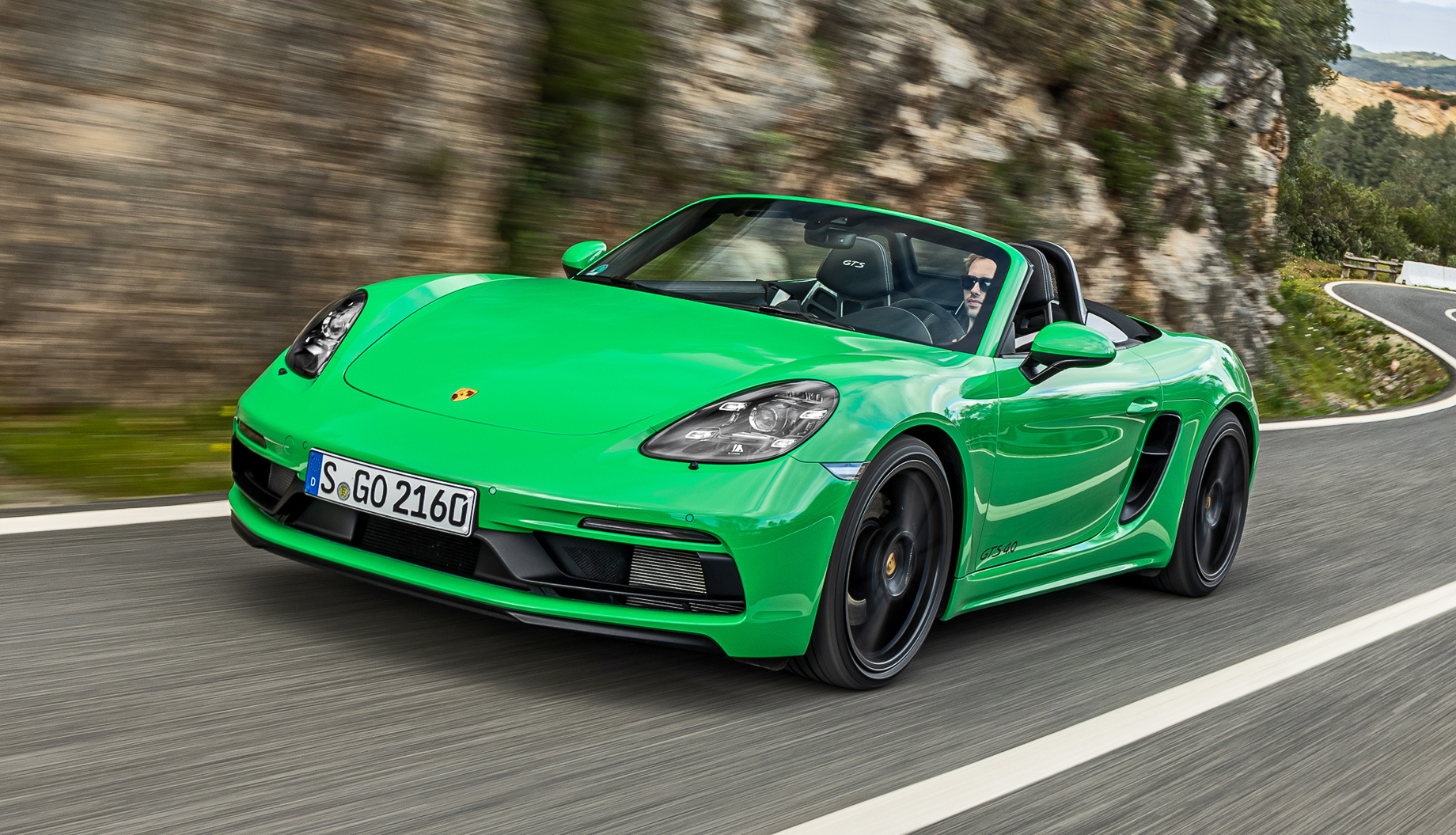
Driving the Boxster GTS 4.0 on the Road
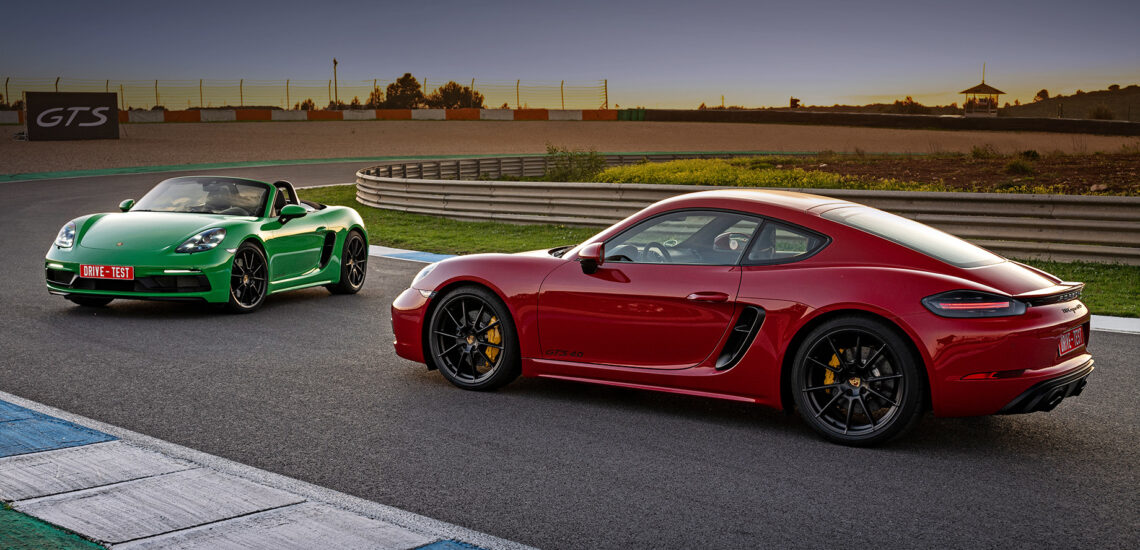
For the road portion of the test, the Boxster GTS 4.0 was the natural choice — the weather demanded the roof go down. It’s on ordinary asphalt that Porsche’s engineering philosophy reveals itself most clearly. Any hint of rear traction loss, noticeable in track conditions, simply dissolves on a winding mountain road where you’re chasing enjoyment rather than lap times. If the roadster steps out, it doesn’t frighten — it actively rewards assertive inputs. Steering feel is exceptional, even by the standards of modern electric power-assisted systems, which often sacrifice feedback for convenience.
The mid-engine layout creates minimal rotational inertia around the vertical axis — the car changes direction with almost superhero-like ease. Lowered by 0.8 inches, the chassis is composed and tolerant of imperfect road surfaces. In Sport mode, the adaptive dampers firm up noticeably. Comfort is relative here — switch from an Audi Q7 and the Porsche will feel brutal. But for a sports car at this performance level, the Boxster offers a surprisingly livable day-to-day experience.
Cayman GTS 4.0 on Track: The Estoril Experience
On the legendary Estoril circuit, the closed Cayman GTS 4.0 is entirely at home. What continues to amaze, even with prior racing experience in the 981, is how approachable and predictable this car’s handling balance remains at the limit. Highlights from the track session:
- Direction changes require minimal steering input — the Cayman seems to read your intentions
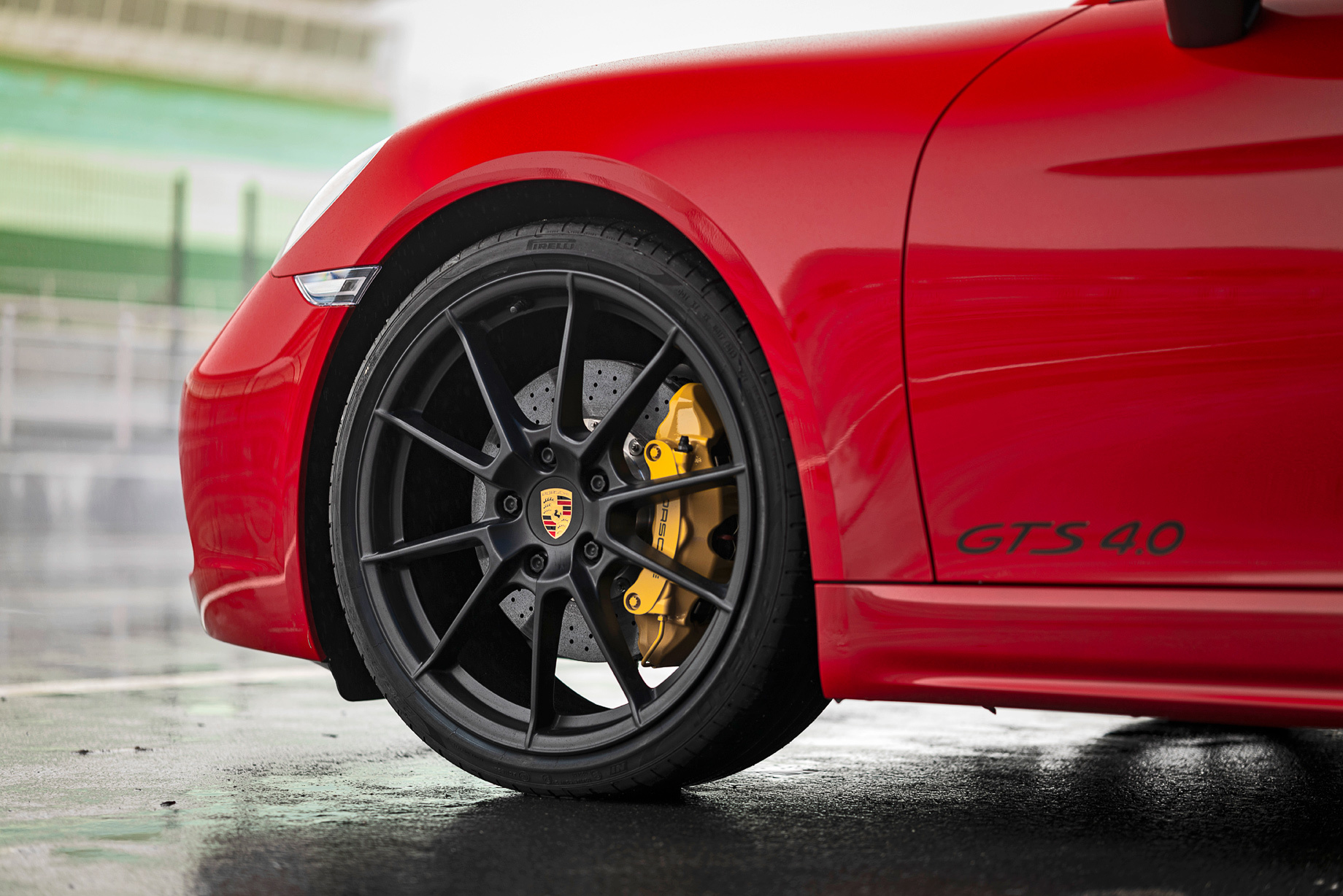
- Optional carbon-ceramic brakes deliver powerful initial bite, progressive pedal feel, and outstanding fade resistance under repeated heavy braking
- Standard cast-iron brakes, however, deliver roughly 98% of the performance — the ceramics are a luxury, not a necessity
- Long gear ratios work brilliantly on a flowing circuit — third-to-fifth skips work particularly well, and fifth is sufficient for the entire main straight
- Acceleration above 120 mph is genuinely impressive
PDK vs. Manual: Performance and the Case for the Gearbox
The declared 0–60 mph time with the manual gearbox is under 4.5 seconds — quick, though not headline-grabbing in the current performance car landscape. For those who prefer two pedals, Porsche added a PDK option for the GTS 4.0 in the second half of 2020. The performance gains are real:
- PDK with launch control removes approximately half a second from the 0–60 mph time
- Real-world PDK-equipped 718 GTS 4.0 can run from around 4.0 seconds
- This puts it comfortably ahead of a standard Carrera, with the price gap narrowing — though remaining meaningful
For the purist, though, the manual remains the definitive choice. The PDK will make the GTS 4.0 faster; the manual will make the driver feel more involved — and in a car this good, involvement is the whole point.
Does the Porsche 718 GTS 4.0 Have Any Real Competitors?
In many markets, the answer is effectively no. The combination of a naturally aspirated engine, manual gearbox, mid-engine layout, and compact dimensions is virtually unique. Even casting the net wider:
- The Toyota Supra and BMW Z4 are fast and competitively priced, but offer no manual transmission option
- The BMW M2 Competition is in a different segment — a front-engined coupe with a very different character
- Porsche occupies a niche that is, at best, stagnating — and at worst, in terminal decline as sports car sales continue to slide
Porsche’s own sales data underscores the challenge: combined Cayman and Boxster sales fell from 7,292 units in 2014 to just 3,880 in 2019. Yet the 718 GTS 4.0 makes a compelling case that the nameplate still has a future — provided Porsche keeps building cars this good.
Boxster or Cayman GTS 4.0? How to Choose
The Boxster GTS 4.0 makes the stronger case for most buyers, simply because it has the least overlap with the rest of the Porsche lineup. The Boxster Spyder is absent from many markets, and even where available, its complex roof discourages daily use. The GTS also retains full color and options flexibility that the more focused models forgo. Reasons to pick the Boxster:
- Convertible top dramatically expands the car’s sensory appeal
- Less overlap with the Cayman GT4, which is the natural rival for closed-coupe buyers
- Full options catalog access, including colors and interior configurations
- Equally capable on road and track, but more rewarding in everyday use
The Cayman GTS 4.0 targets a narrower audience — buyers who drive harder and use the track regularly. But many of those buyers may ultimately stretch to the Cayman GT4 instead, particularly now that an RS variant with PDK has expanded the GT4 lineup and further compressed the choice between a push-button Cayman and a touchscreen Carrera.
What About the Four-Cylinder 718 Models?
The 718 GTS with the 365 hp 2.5-liter turbo engine has been discontinued in Western markets. The current entry-level range stands as follows:
- 718 base: 300 hp 2.0-liter turbocharged flat-four — competitive in markets where tax is tied to displacement (Italy, China)
- 718 S: 350 hp 2.5-liter turbocharged flat-four — increasingly squeezed by the GTS 4.0’s proximity
- 718 GTS 4.0: 400 hp 4.0-liter naturally aspirated flat-six — the sweet spot of the range
It’s worth noting that without Chinese demand for the smaller-displacement four-cylinder models, the story of the mid-engined 718 twins might have ended with the 981 generation. It’s American enthusiasm for the naturally aspirated six, conversely, that we have to thank for the 4.0 returning at all. If that kind of market pressure persists, there’s a reasonable argument that this engine could eventually find its way into a purist 992 variant — a Carrera T, perhaps — where 400 hp would comfortably surpass the previous generation’s 370-hp T model.
Verdict: The Best Smile-Per-Mile Car Money Can Buy?
The 718 and 911 are fundamentally different machines. The Carrera is a genuine daily driver, evolving steadily toward a comfortable Grand Tourer. The Cayman and Boxster are old-fashioned, two-seat sports cars in the best possible sense. If driving pleasure — unfiltered, undiluted, and unconcerned with practicality — is the priority, it’s hard to think of anything better at this price point than the GTS 4.0 family.
And if you want maximum enjoyment on ordinary roads with the option to drop the roof on a warm evening? The Boxster GTS 4.0 is the answer.
Bonus: The Updated Macan GTS
With limited time and a short route, the refreshed Macan GTS was also on the test schedule. The key change over the pre-facelift model is the engine — the slightly boosted 3.0-liter V6 from the Macan S has been replaced by the more advanced 2.9-liter unit from the Turbo, here dialed back to 380 hp and 520 N·m. Notable specs:
- Engine: 2.9-liter twin-turbocharged V6, 380 hp / 520 N·m
- 0–60 mph: 4.7 seconds (with Sport Chrono launch control, standard equipment)
- Transmission: PDK dual-clutch automatic
- Platform: MLB Evo (shared with Audi Q5 / VW Touareg generation)
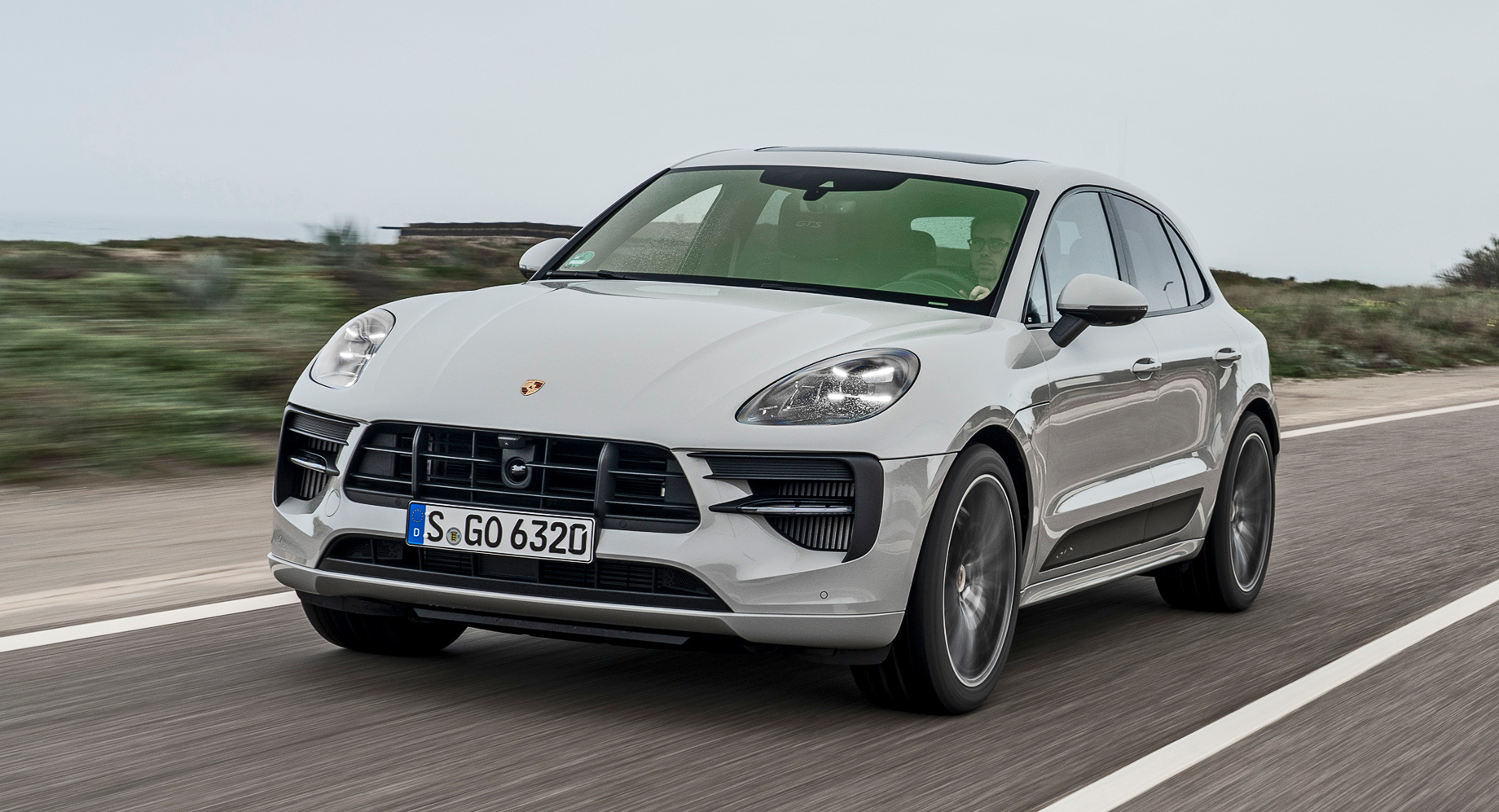
The character difference between the 2.9 and the outgoing 3.0 is subtle, though mandatory gasoline particulate filters have softened the exhaust note somewhat — it remains satisfying inside the cabin, if less dramatic than before. The engine is effectively inert below 2,500 rpm, but there’s little reason to linger there: throttle response is excellent for a turbocharged unit, and power delivery stays strong all the way to the limiter.
Despite the age of the MLB platform underpinning it, the Macan continues to be the benchmark for driver engagement in the compact SUV class. It remains the only crossover capable of making you temporarily forget its compromise nature on a winding road. Even without air suspension on the test vehicle, ride comfort is reasonable — this is a sports car with a raised roofline, not a luxury cruiser, and it makes no apologies for that.
The interior divides opinion: traditionalists see it as a welcome refuge from the sea of haptic touchscreens; critics note it’s beginning to show its age. The GTS receives the updated larger infotainment screen from the facelift, which meaningfully improves navigation usability. Alcantara trim extends throughout, though leather on the steering wheel would have been a more practical choice for longevity.
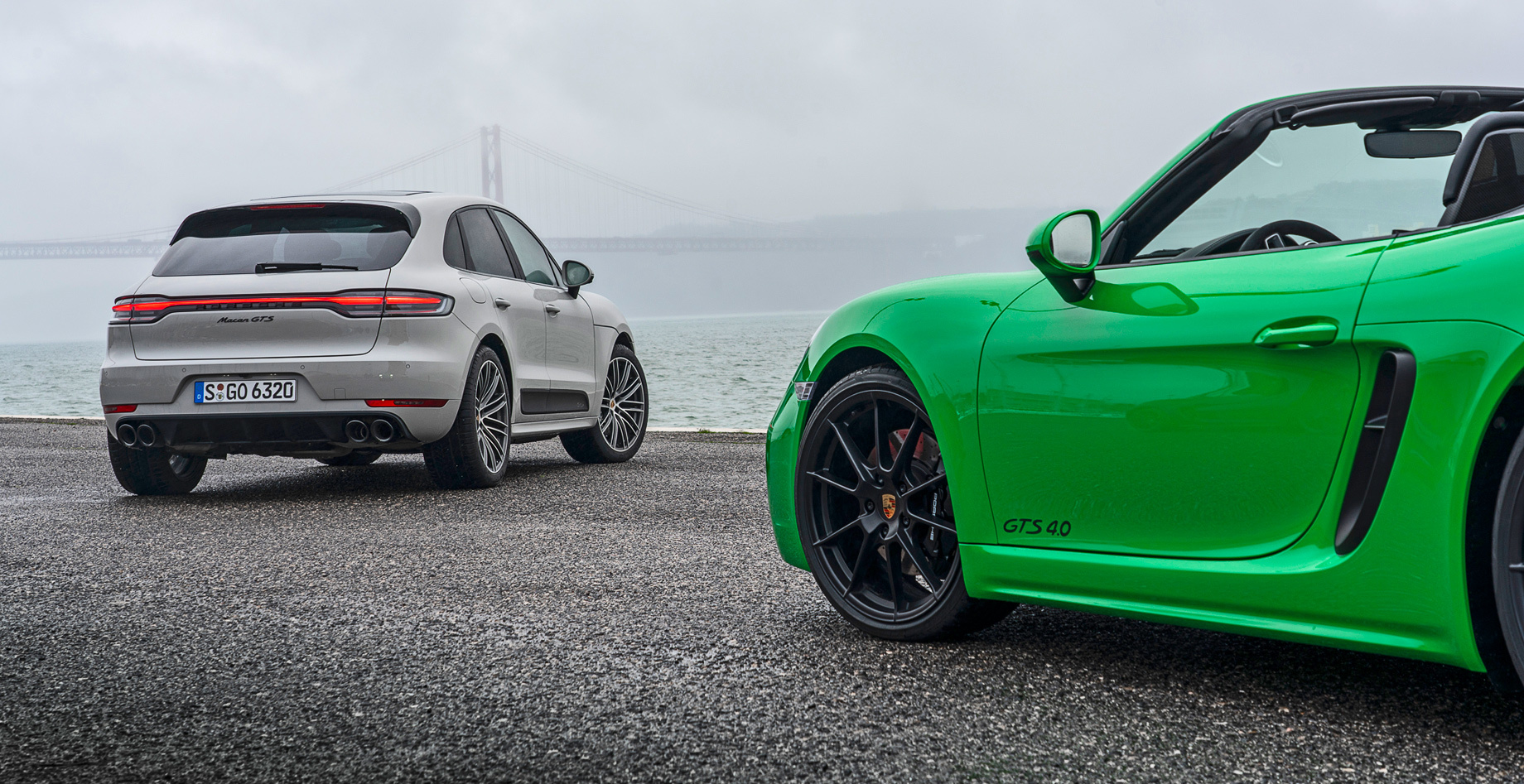
Despite limited seat time, the Macan GTS is a clear demonstration of how effectively Porsche can refresh an aging platform with surgical precision. If you already own a pre-facelift Macan, the update is unlikely to tempt you into a new purchase. But for anyone entering the Porsche family for the first time, the GTS version of the refreshed Macan makes an increasingly compelling argument.
This is a translation. You can read the original here: https://www.drive.ru/test-drive/porsche/5e4c36a3ec05c4db10000000.html

Published February 09, 2023 • 13m to read