
Rolls-Royce, the quintessential British luxury car manufacturer, has never operated its own body production division. From its inception, the company focused on achieving the highest possible quality in chassis manufacturing for the time, leaving the aesthetic task of ‘dressing’ the chassis to master coachbuilders—plentiful in early 20th-century England. However, times have evolved, and so has Rolls-Royce.
Why the independent coachbuilders disappeared
For decades Rolls-Royce adhered steadfastly to that business strategy, unwavering even during the Great Depression, which severely tested the market demand for its luxurious offerings. It was not until World War II that the traditional production scheme finally began to show signs of strain.
In post-war England the number of independent coachbuilding firms dwindled significantly compared with the interwar period. Some were decimated by the Great Depression; others, having switched to wartime production, failed to transition back to civilian work; a fortunate few merged with major automotive manufacturers. Park Ward, for example, which had fallen under Rolls-Royce’s influence before the war, played a crucial role in the transition to all-metal bodies. Though it formally maintained its independent brand, its close association with Rolls-Royce was not publicized directly.
The first factory bodies
The shift to standard “factory” bodies began cautiously in 1946 with the Bentley Mark VI. These bodies, while nominally factory-made, were supplied under contract — not by a prestigious coachbuilder, but by the Pressed Steel Company, a metalworking plant founded in 1926. That facility, initially a joint venture between Morris Motors and the American giant Budd Corporation, had by then become an independent producer specializing in cold pressing and capable of delivering complete body shells to various automakers. It was a prestigious contract for any company, and especially so with Rolls-Royce.
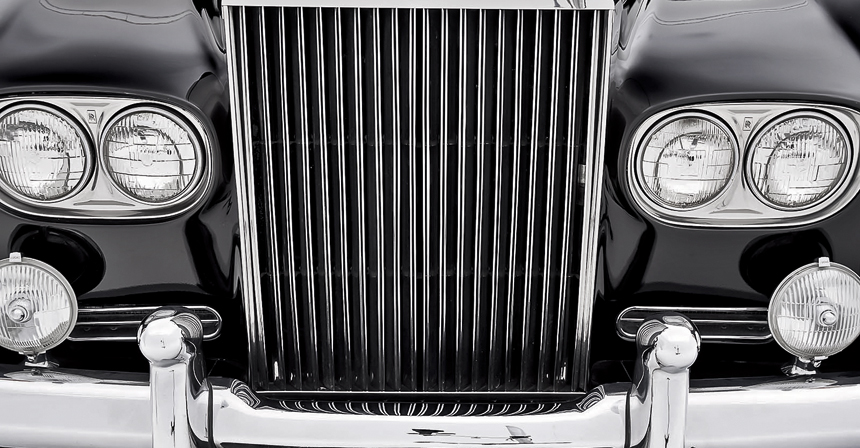
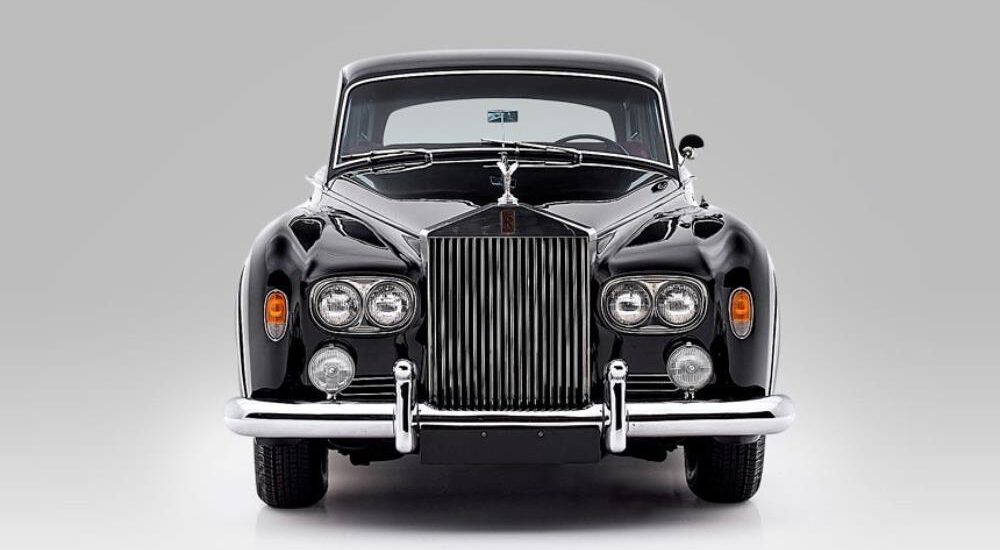
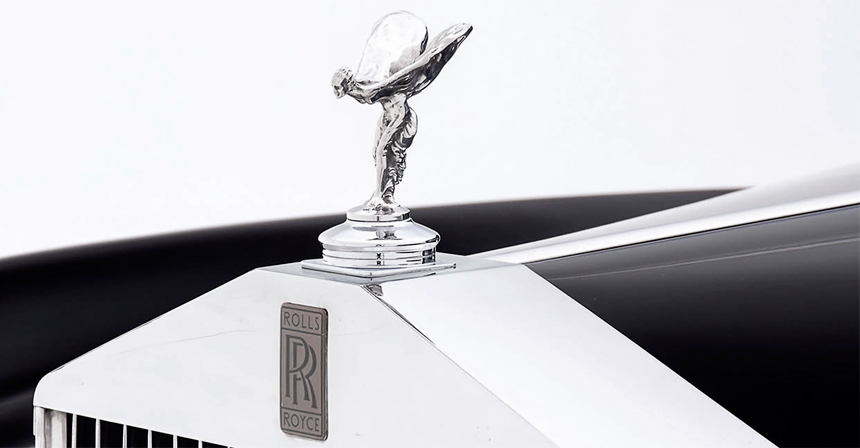
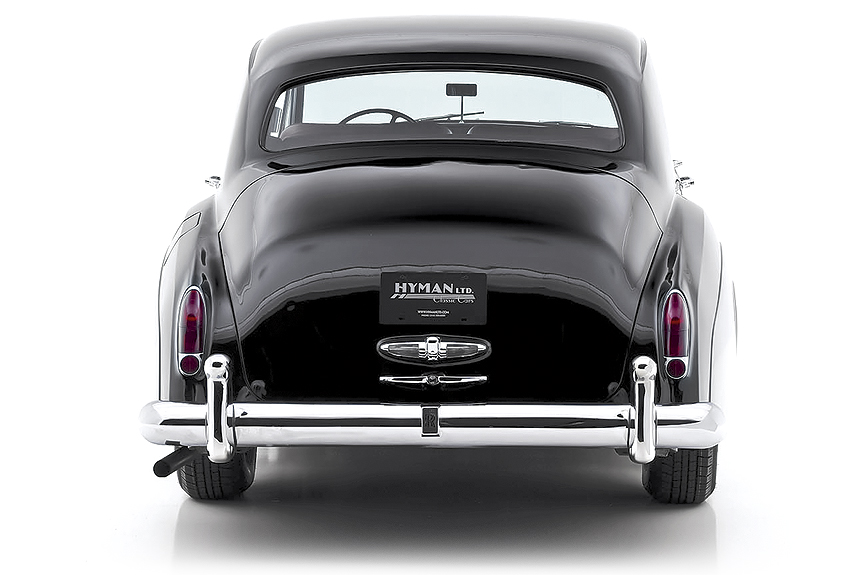
Judging by the tiny RR monograms between the headlights, this example was manufactured in the second half of 1964 – and is therefore among the last of them: already in 1965 this model gave way in production to the more modern Silver Shadow.
From Silver Dawn to Silver Cloud
The “body in white” arrived at Rolls-Royce’s Crewe factory fully assembled, with final finishing and painting carried out on a dedicated production line set up specifically for the purpose.
Having refined this production method with the Bentley Mark VI, Rolls-Royce began to market some of these vehicles under its own brand in the late 1940s, primarily for export, adjusting their exteriors accordingly. The initiative led to the birth of the Rolls-Royce Silver Dawn, produced from 1949 to 1955, which enjoyed success both overseas and in the UK — from October 1953 with the steering wheel correctly positioned for the British market. The model sold 760 units before being replaced in the lineup by the more modern Silver Cloud, the subject of our feature.
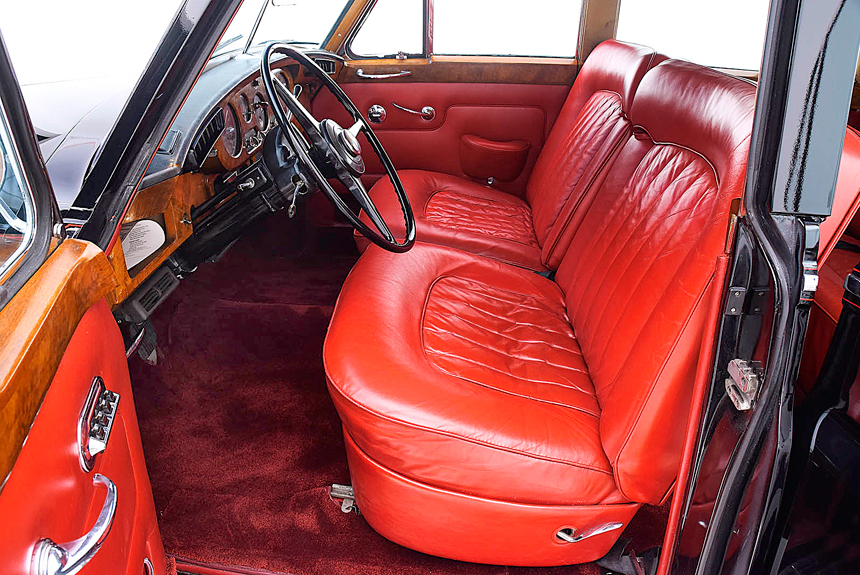
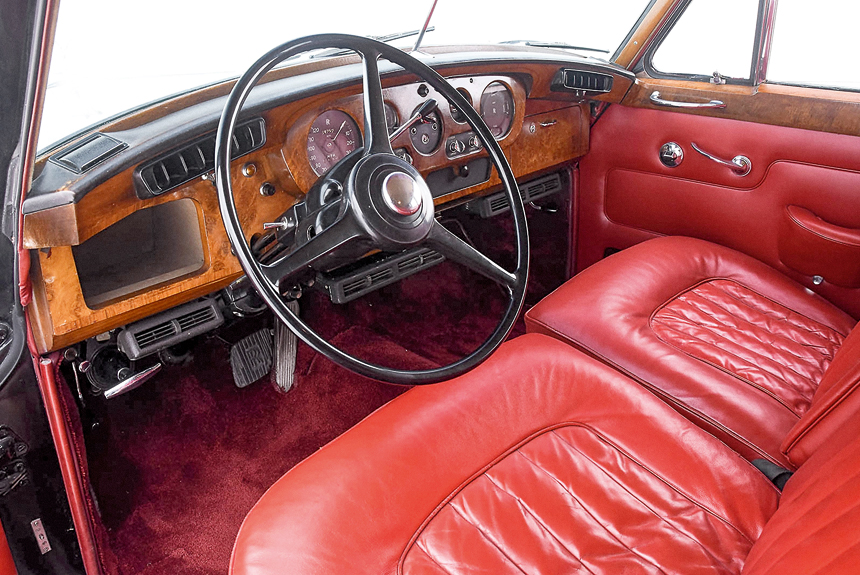
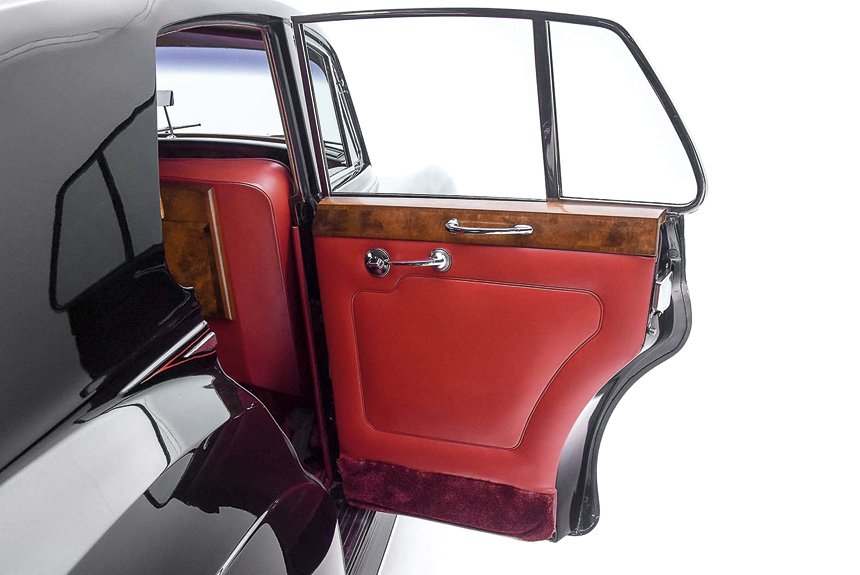
The interior of the car is full of discreet luxury. If it is leather, then it is of the best quality, if it is wood, then it is necessarily of valuable species. Another characteristic feature of the late model is that the front seats are separate, rather than a bench.
John Blatchley, the self-taught designer
The Silver Cloud’s body was designed by the gifted John Blatchley, a self-taught genius who transitioned to Rolls-Royce from the renowned coachbuilder J. Gurney Nutting. Deprived of formal education by a severe illness in his youth, Blatchley had natural talent enough to compensate for the lack of professional training. Among his notable achievements were the development of the Bentley Mark VI and its transformation into the Rolls-Royce Silver Dawn, and he also established Rolls-Royce Ltd.’s automotive design division.
Tasked with designing the Silver Cloud from scratch in the mid-1950s, Blatchley saw his initial project rejected by the company’s conservative leadership for being too modern. In a 1996 interview with Giles Chapman from Classic & Sports Car, Blatchley recalled, “I was deeply influenced by the American approach to car body styling at the time, which reflected in my design. It was developed into a sizeable presentation model… At that presentation, management instructed me to create something more traditional. On the spot, I sketched what that ‘more traditional’ could look like on a piece of gray paper with a white pencil, a rough idea featuring the Bentley’s distinctive radiator shape and badge. They accepted it immediately, not just as a basis but as it was…”
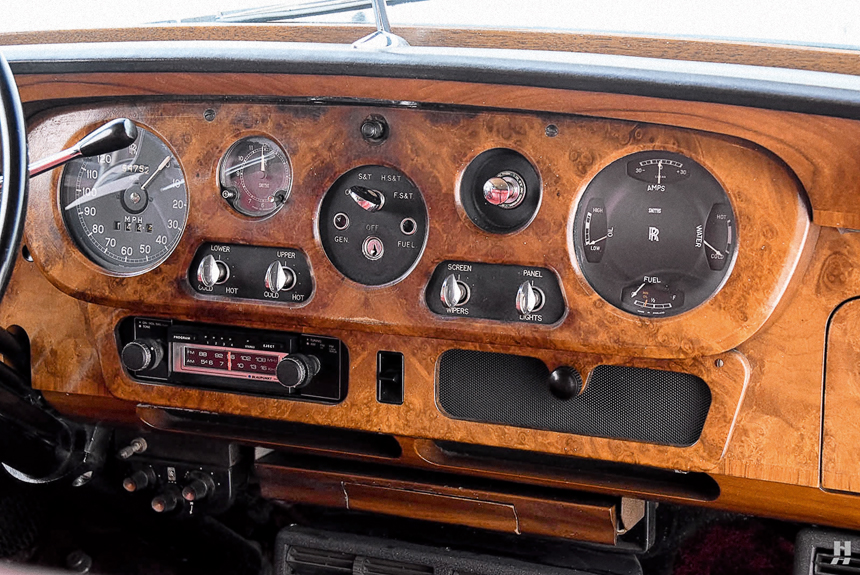
The instrument panel is arranged symmetrically: the left dial is the speedometer, the right one is all the other scales, and the ignition switch and some electrical controls are located on the round panel in the center. The radio receiver on this example is German, from Blaupunkt
The Silver Cloud arrives, 1955
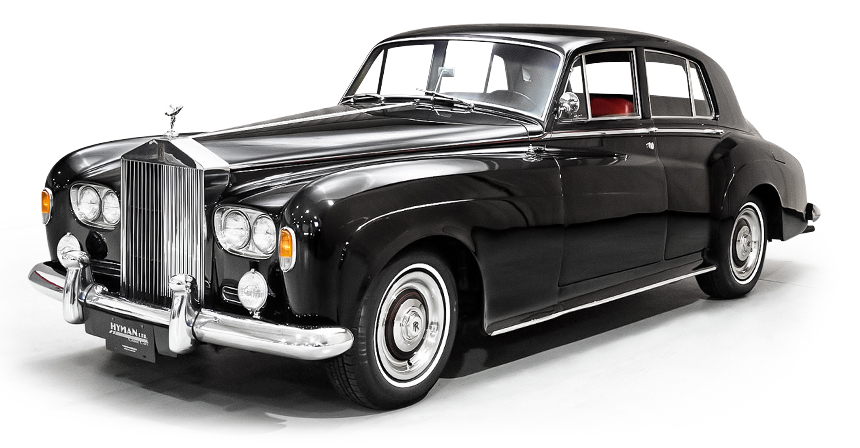
The new model debuted in 1955 as both the Rolls-Royce Silver Cloud and the Bentley Type S, continuing the design evolution set by its predecessors. It had an overhead valve inline-six engine, automatic transmission (standard since 1953), independent front suspension, a live rear axle and power-assisted drum brakes on all wheels. As development continued, power steering was added, initially as an option and later as standard equipment.
The front suspension and transmission were based on American designs, with patents acquired from General Motors. In 1957 a longer wheelbase variant was introduced, enhancing rear cabin space. The frame construction still allowed for custom-bodied versions if clients wanted bespoke designs from the few remaining independent coachbuilders.
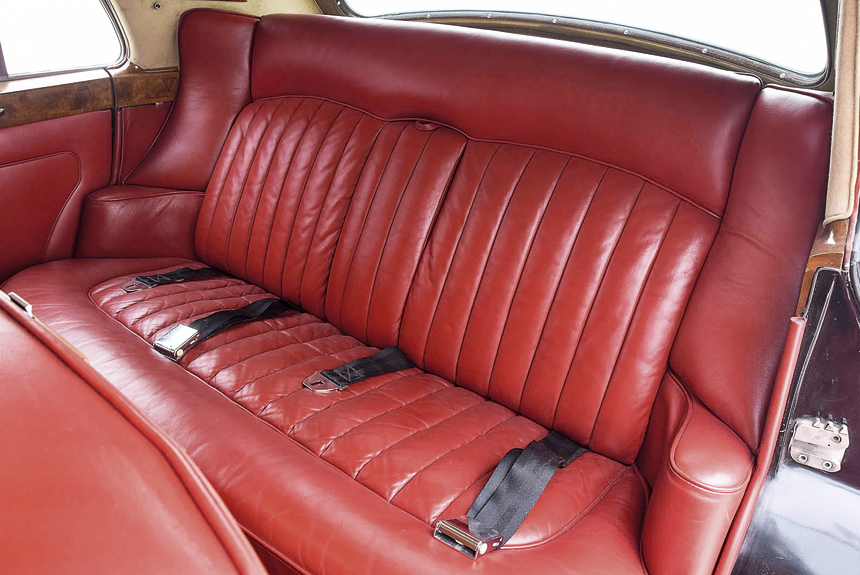
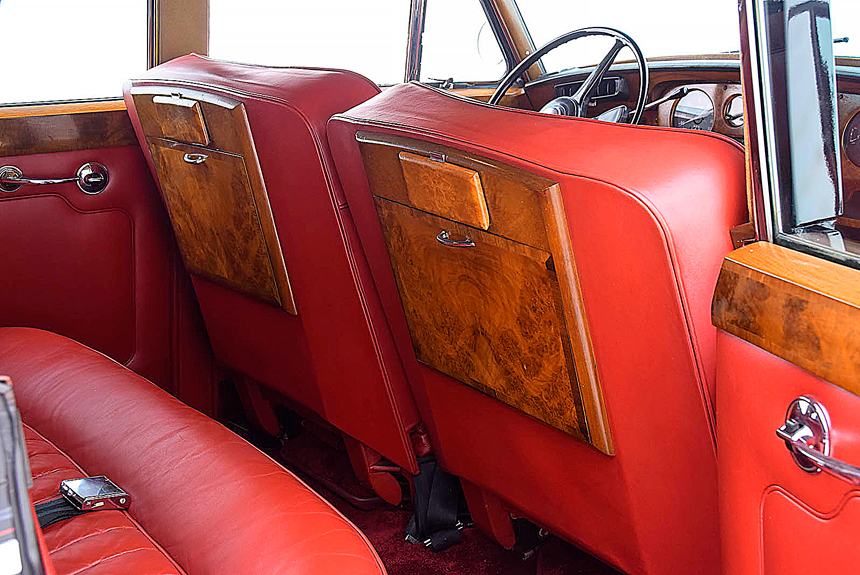
Passengers in the rear seat are provided not only with seat belts, but also with a convenient central armrest, which can be removed when not needed, and folding tables mounted on the backs of the front seats.
Six cylinders were no longer enough
As the 1950s drew to a close, Rolls-Royce decided to move to a V-shaped eight-cylinder engine, feeling that six cylinders were insufficient for a vehicle of its stature and aiming to match or exceed its international contemporaries. The decision was not without challenges: Rolls-Royce had limited experience with V8 engines, having built its last one in 1905. Ultimately a licensing agreement with General Motors allowed for the development of a new V8, which was custom-built by Rolls-Royce — a significant evolution from the company’s earlier reliance on inline engines.
Silver Cloud II, 1959
The transition to V8 engines debuted with the 1959 models, named the Silver Cloud II and Bentley Type S-2. These retained the external styling of their predecessors, as there was no need to disturb Blatchley, who was deeply involved in developing a large six-window limousine to replace the Silver Wraith. The new models brought a host of technical improvements, including increased engine compression and refined carburetors, enhancing performance without altering the classic look.
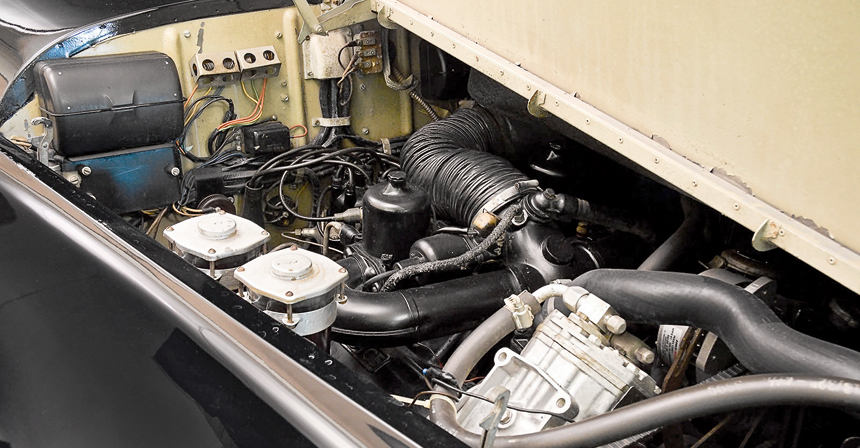
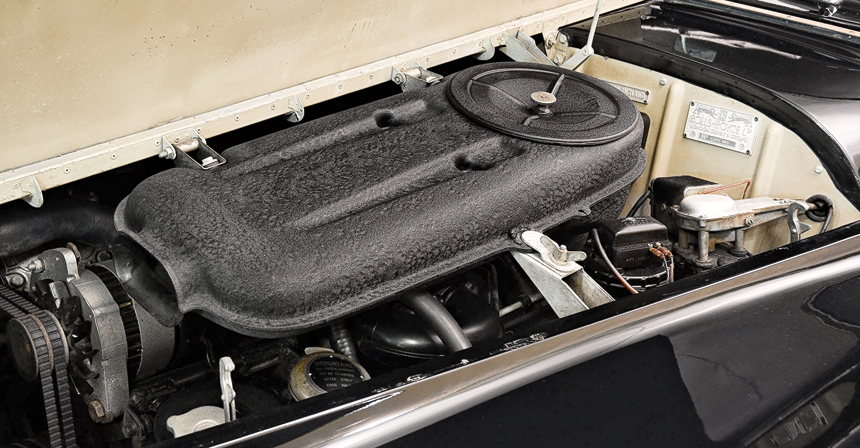
The V8 engine in the engine bay, originally designed for an inline six-cylinder engine, is still a bit cramped. The elongated air filter housing is hinged upwards, and in this position it can be hooked onto the hood with a special rod – here it is not a solid alligator, but a “butterfly” type and consists of two halves
Four headlights for America
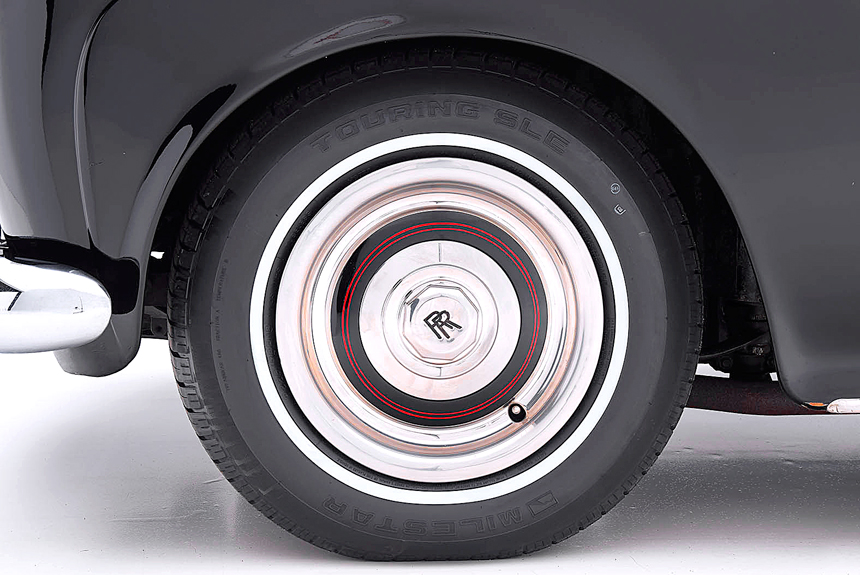
The primary market for these illustrious vehicles remained the United States, where quad headlights had become standard by 1958. To align with American standards and aesthetic preferences, Rolls-Royce integrated paired headlights into the design, a move mirrored in modifications to the front signals and the radiator grille.
The legacy
Despite the technological and stylistic advancements, the essence of Rolls-Royce’s luxury and craftsmanship remained untouched, ensuring that each vehicle represented not only the pinnacle of automotive engineering but also a timeless symbol of status and sophistication. As the Silver Cloud made way for newer models like the Silver Shadow and ultimately the Phantom series, each iteration continued to build on a legacy of unmatched luxury, culminating in a lineage that is as much a statement of architectural beauty as it is of automotive prestige.
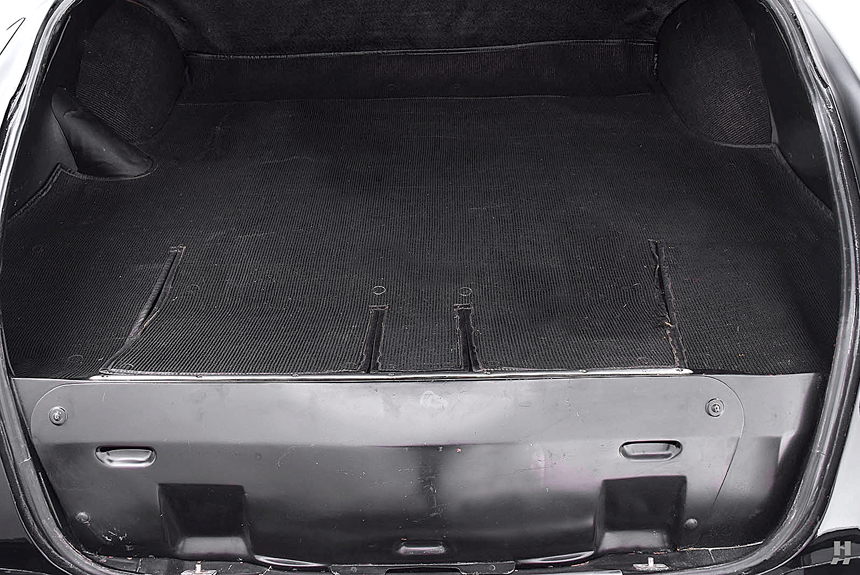
Rolls-Royce Silver Cloud III luggage compartment
John Blatchley’s tenure at Rolls-Royce may have ended in the late 1960s, but his influence persists in the elegant lines and dignified presence of the cars he designed. His vision helped shape an era of Rolls-Royce that continues to enchant collectors and enthusiasts around the world, underscoring a legacy that blends artistic craftsmanship with mechanical excellence.
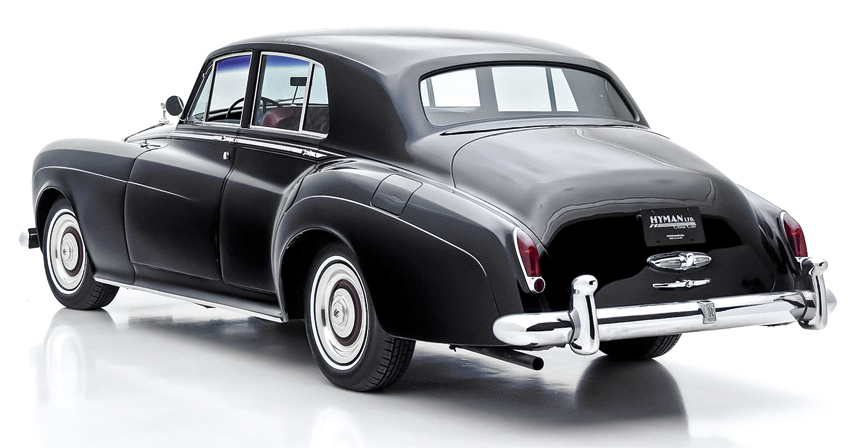
Photo: Sean Dugan, Hyman Ltd.
This is a translation. You can read the original article here: Серебряное облако черного цвета: Rolls-Royce Silver Cloud III 1965 года в рассказе Андрея Хрисанфова

Published September 25, 2024 • 7m to read