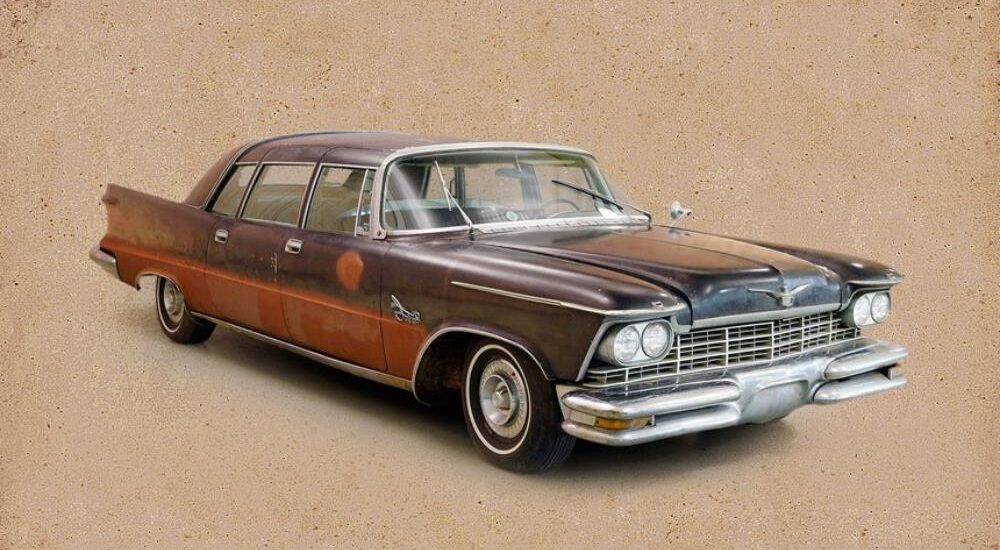


We typically steer clear of exhibits in such a state of disrepair in our “Kunstkamera.” But in this case, there’s nothing we can do; there were only around 36 of these limousines, like this one, built almost six decades ago, and even fewer have survived to the present day.
A Flagship Chrysler Had Carried Since 1926
For many years the Chrysler Corporation considered it essential to have at least one high-class multi-passenger vehicle in its product line. The prestigious Imperial had crowned the corporate range since 1926; at first the term referred only to a particular type of body, but it quickly became the name of a distinct series of Chrysler cars — the luxury series.
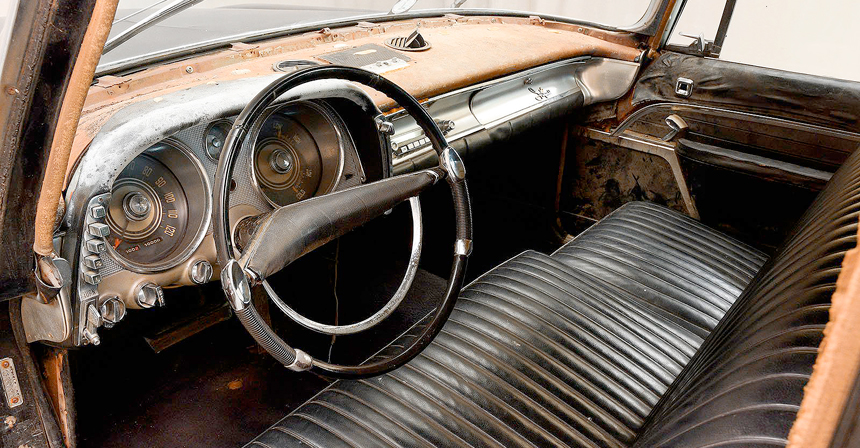
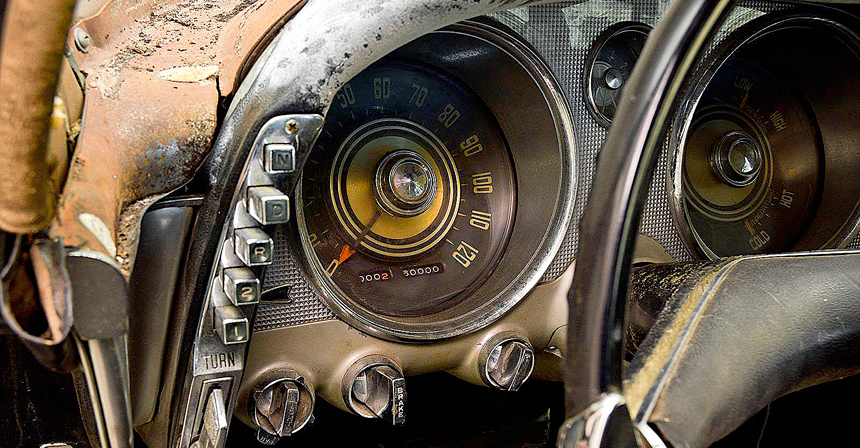
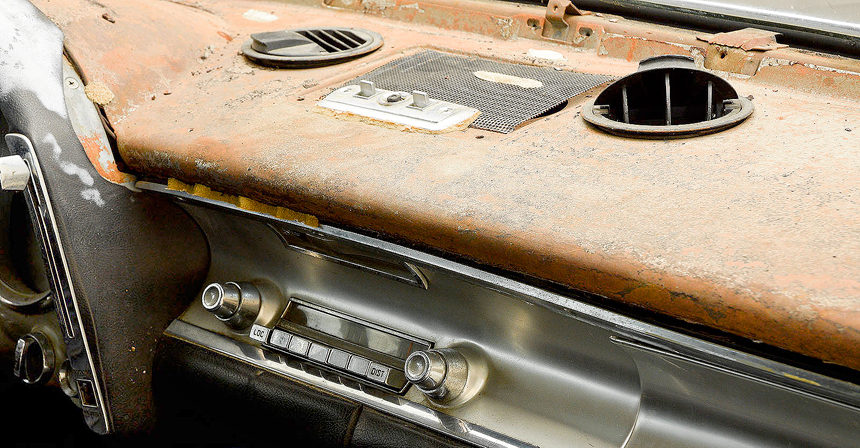
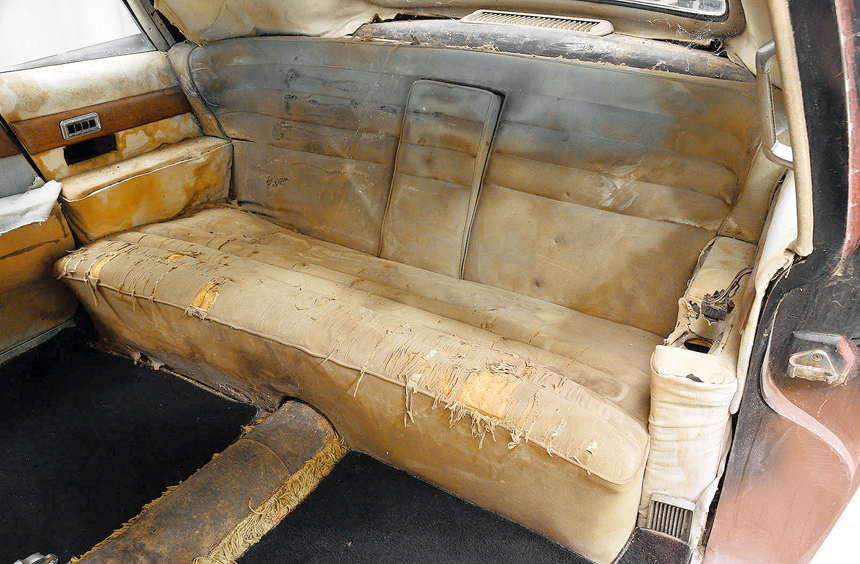
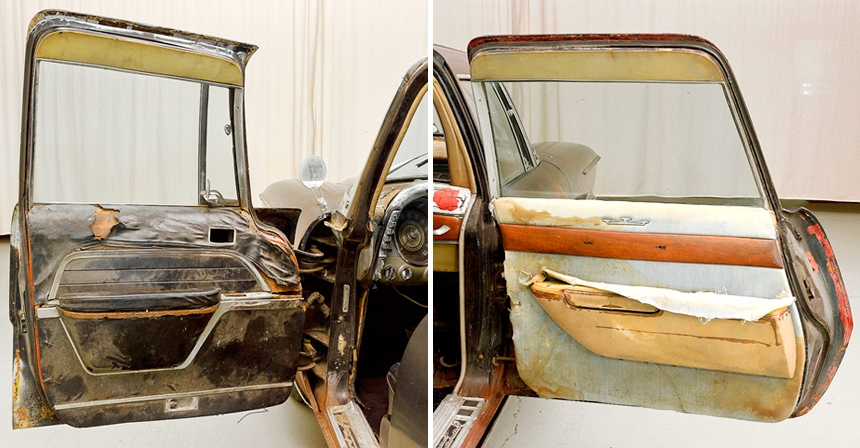
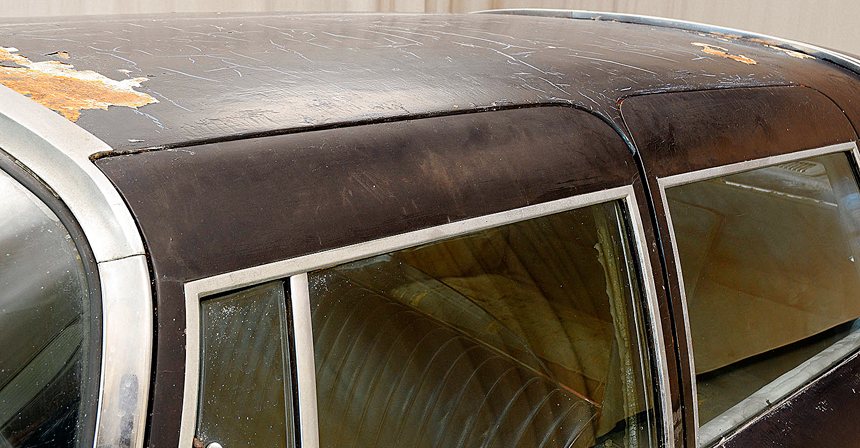
The remnants of former luxury. It’s mind-boggling how such an expensive and rare vehicle ended up in such a dismal state. Judging by the odometer, it has driven just over fifty thousand miles. Achieving complete authenticity during restoration is unlikely, as the upholstery fabric that was available in 1957 is a rare find today. Finding a close match is the only option. The leather for the front section of the cabin, however, will likely be easier to match, and it has held up better than the fabric.
Everyone Else Had Already Left the Segment
Until the mid-1950s there was always a long-wheelbase limousine in the Imperial line, built directly at the company’s own factory — though Chrysler never shied away from using outside coachbuilders. In 1956, however, it was time to reconsider. Imperial had just been made a separate brand; until 1955 it had always been sold as the Chrysler Imperial. And demand for limousines had been declining steadily since the post-war years. Competitors were leaving the segment one by one, abandoning it to the victor, the General Motors Corporation, which went on steadfastly producing its Cadillac Fleetwood 75. Lincoln had retreated after 1945, building limousines, if at all, only on special order from the White House. Packard held on a while longer with help from its long-standing partners at the Henney coachbuilding company, but withdrew with the move to the 1955 models — which immediately killed Henney, left without orders.
198 Cars, and Then a Rethink
Winning this particular contest was always going to be an uphill battle, and yet Chrysler did not give in without a fight, producing 198 vehicles entirely on its own between 1955 and 1956, on an extended wheelbase of 3797 mm. 85 of those could not be counted as limousines, having no internal partition in the cabin. By 1957 the corporation was planning a quantum leap, replacing every model then in production with a more modern design — and a separate factory department for multi-passenger, low-volume cars did not fit that picture. It had to go.
The Answer Was in Turin
A solution was found, and not just anywhere but overseas, in the Old World. From the early 1950s practically all of Chrysler’s promising prototypes had been sent for realisation to the Italian coachbuilding atelier Carrozzeria Ghia. Over the years the relationship between Virgil Exner, head of the corporate styling division, and Luigi Segre, one of Ghia’s two owners, had become very warm. So it is no surprise that the idea of engaging the Italians in building limousines for the American corporation was met with enthusiasm on both sides. What remained was the logistics — because prototyping is one thing, and a series, however small, is quite another.
What Arrived From America, in One Kit
In practice, building American limousines in Italy worked something like this. Italian craftsmen received a car kit shipped from the United States by sea, not air. The kit consisted of a production two-door Imperial body mounted on the frame of an open model of the same marque, a convertible; the convertible frame carried an additional X-shaped crosspiece that made it more rigid. Engine, transmission and every other chassis component were already assembled on the frame. In place of the two standard-length doors, a full set from a four-door Imperial sedan was supplied. Additional external trim, front and rear bumpers, curved side windows, assorted internal fittings and everything else needed were added — including extended fuel lines, brake lines, exhaust pipes and driveshafts, all the things the coachbuilders would install on site during final assembly. Every detail had to be thought through to avoid shipping a suddenly needed part back and forth across the Atlantic and the Mediterranean Sea. The trunk usually held insulating and finishing materials in rolls, along with cans of paint in the colour specified for that particular car. It all travelled by rail to the seaport and onwards to Italy by sea, and in the port of Genoa the recipients collected the kit and took it to their workshop by road.
First, Cut Everything in Half
On arrival at Ghia the first step was to cut both body and frame in half and extend each by about half a metre. The roof was removed and worked on separately. The two-door body had been chosen for the kit because of the particular shape of the rear part of that roof. During the extension of the wheelbase of the chassis, extra reinforcements were added at the necessary points, after which all the conduits and driveshafts mentioned above were mounted on it.
Then Build a Pillar That Never Existed
Next the Italian craftsmen turned to the doors. The upper part had to be modified to overlap the roof slightly, and the external trim was replaced at the rear, doing away with the cutouts on the rear edge — after the wheelbase was extended, they no longer needed to wrap around the wheel arch. At this stage the central body pillar was fitted, and it had to be fabricated first, because the original body had no such pillar at all. At the same time the roof panel was extended and formed, then adjusted to the shape and position of the upper edge of the doors. Once everything was assembled and fitted, the craftsmen installed the ventilation ducts of the air conditioning: the Airtemp system came from the factory as part of the kit, but its standard ducts were not long enough for the stretched limousine. Only then was the headliner added — a fabric originally intended for expensive men’s suits, which had to be steamed before it would sit properly.
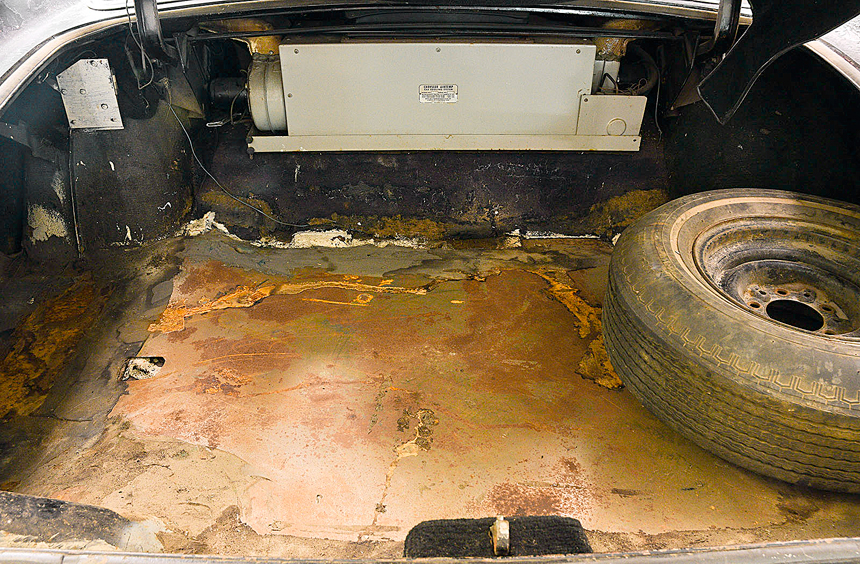
The trunk floor clearly required replacement, but the residing air conditioner seems to have survived.
Sixty Kilograms of Solder, and Two Weeks of Paint
With the body assembled, it was ready for paint — and in Ghia’s workshop that was a slow, labour-intensive procedure that could take more than two weeks. The body arrived in the kit already primed, but the remade parts were sanded first and their surfaces levelled, using a technique that involved heating them with a special lead-based solder; up to 60 kg of solder went into a single car. Then primer was applied. Just before painting, the doors were finally hung and every joint and gap on the body aligned to a width of four millimetres, which could take 17 man-hours on its own. The surface was then cleaned of any possible contaminant with a special solution and covered with a layer of pale green “stucco”, the Italian masters’ signature compound and the base for the first coat of colour. That went on immediately after the green chromo-zinc matte primer had dried, which revealed any remaining surface defects; those were filled and sanded, and only then could the actual painting begin.
Four Colours, and a Polish Made From Sepia
Only four colours were offered for the limousine: black, dark blue, dark green and dark red. Each was applied in multiple layers, every layer sanded once dry, for thickness and uniformity. To finish, the dried body was rubbed by hand with a special polish containing an exotic substance known as sepia — the same ink that octopuses use to protect themselves from predators. Jeffrey Godshall, an automotive historian and former Chrysler stylist, says the sepia came from certain purely Mediterranean species of cephalopod. The process gave the surface a unique mirror shine. Once that was achieved, all the bright decorative details were attached, both those that had crossed the ocean in the kit and those made on site: mouldings, window frames, emblems, nameplates and so on. And as a final touch, a cream pinstripe was applied by hand with a fine brush, running along the sides from front to rear.
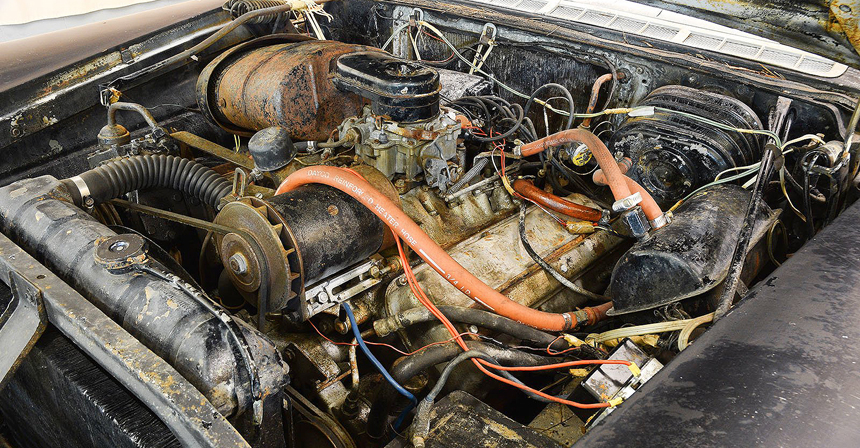
The engine will certainly need an overhaul. It’s likely not worn out but has simply been sitting idle, requiring meticulous attention. The automatic transmission, and indeed the entire suspension, will also need a thorough inspection and refurbishment.
Twenty Combinations of Colour and Trim
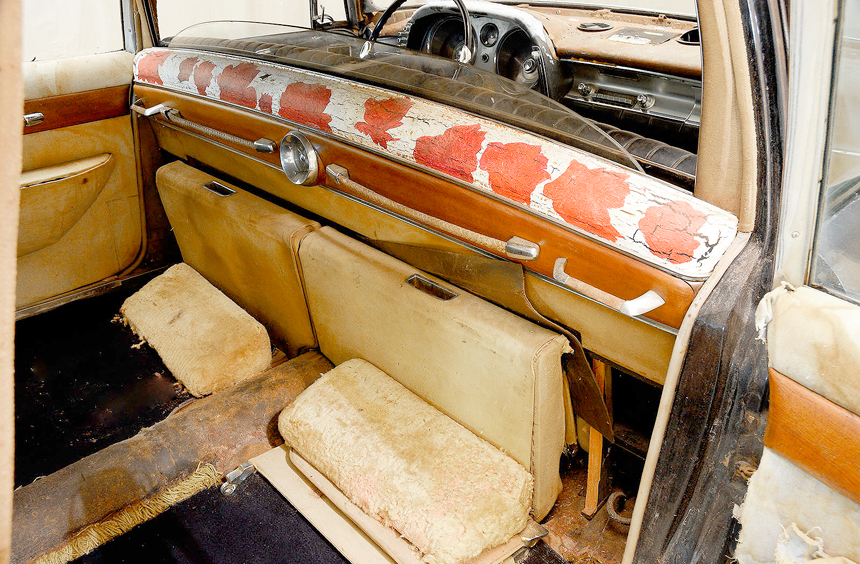
Then came the interior. The seats arrived from the United States without upholstery. The front seats, as is customary in a limousine, were covered in genuine leather, while the rear used noble fabrics, mostly grey or beige and mostly of Italian origin. The internal door trim followed suit: leather at the front, matching fabric at the rear. An internal partition with a drop-down window was installed, wiring was run to the electric window mechanisms, additional folding seats were mounted, and carpet was laid — nylon in the front and the trunk, wool at the rear. Five interior finishing options were offered in all which, combined with the four body colours, produced 20 different combinations of interior and exterior.
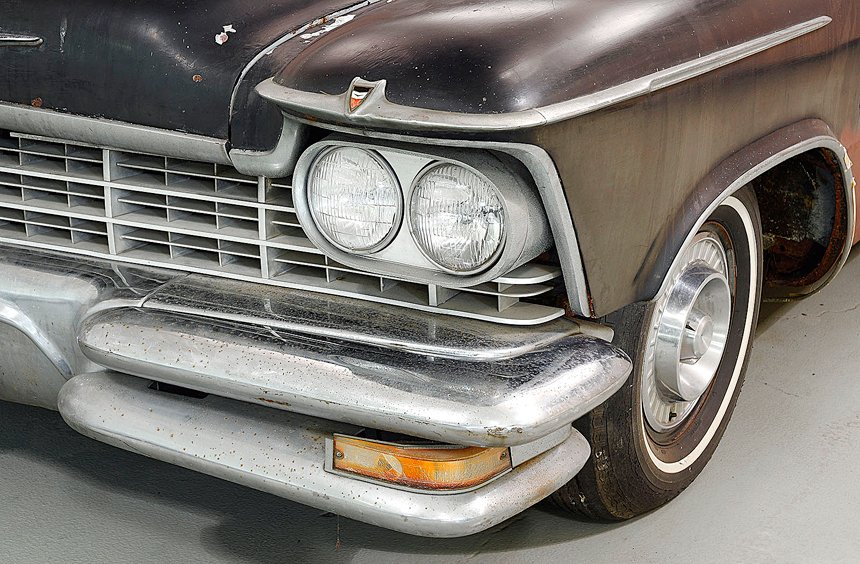
The faux radiator grille design from the 1957 model year is combined with the headlight design from the 1958 model year. Limousines Imperial began appearing on the market much later than all other body variants, and by that time, the issue of using paired front headlights had been successfully resolved across all states.
A Test Drive, a Wooden Crate, and Bandits
A finished limousine was taken for a test drive on Italian streets to make sure it neither squeaked nor rattled on the move. Any shortcomings were dealt with before shipping. The car was then wrapped entirely in soft fabric and packed into a wooden transport container, built as meticulously as the bodywork itself. In one documented case, a limousine made to order for an Arabian sheikh was transported by train across the Arabian desert. Bandits attacked the train, took the car out of its container — and left the luxurious vehicle behind. No surprise there: what use is a car like that in a desert where camels reign supreme?
Half a Year From Order to Delivery
Before reaching the port of Genoa the packed cars travelled on auto trains along narrow, winding Italian roads of varying quality. A modern highway had been built by Fiat for its own import and export needs, but it was open to the public only at weekends and charged a fee during the week. The whole intricate process took a great deal of time, so from placing an order to receiving the finished car could take as long as half a year.
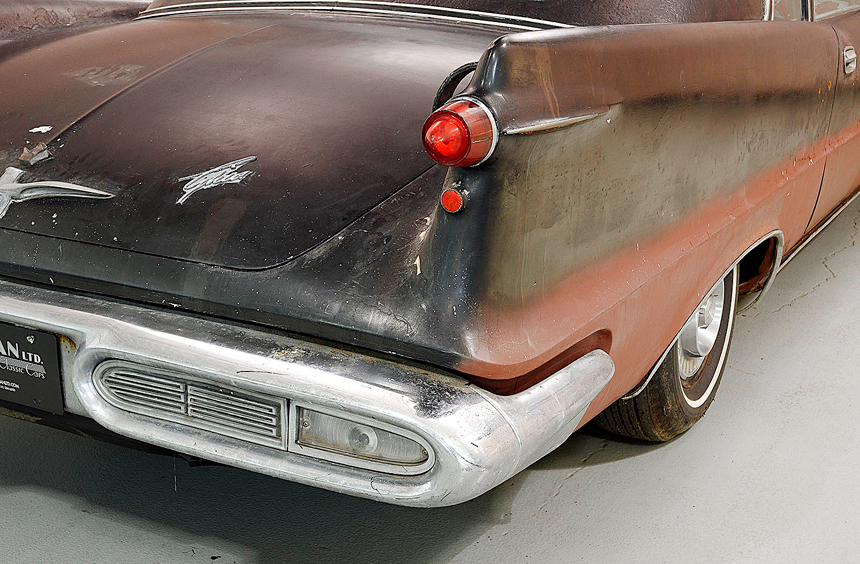
The chrome needs redoing too. In short, it is a great deal of hassle — and it is worth it.
What Restoring One Would Actually Involve
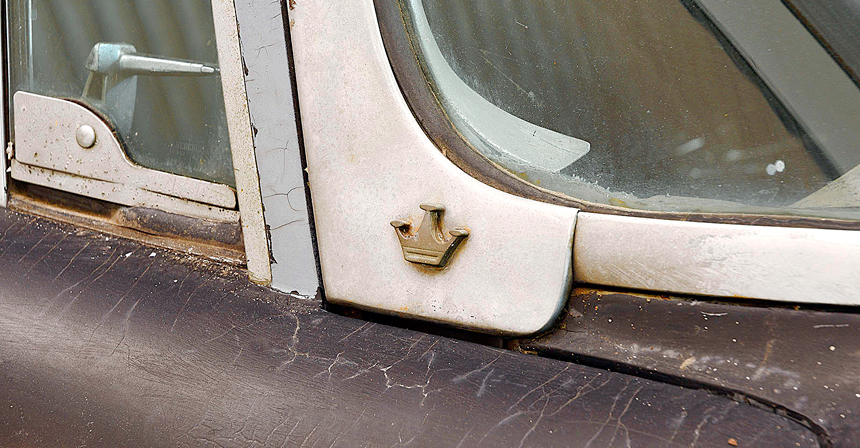
Work on each Crown Imperial limousine took about a month. Anyone considering restoring a car like the one shown here needs to understand what they are taking on. The body will have to be stripped to bare metal and completely repainted. It is not 1957 any more, of course, and nobody is going to use cephalopods for their magical sepia; new paint materials have appeared over the years. Restoring the finish will still take a considerable time. The interior will have to be replaced entirely, because it is beyond use in its present condition — and suitable materials will have to be sourced, or the restoration will not count as authentic. Surprisingly, the car still runs, but both engine and transmission will need overhauling to bring them to proper working order. The electrical system will demand thorough attention, and it would be wise to obtain a wiring diagram in advance, because it is complex and not something you can simply work out. Serious problems will arise with the rubber door seals: the old ones will crumble to dust, since the car is sixty years old, and new ones are simply hard to find, being non-standard. Certain elements of the external decor and some of the hardware are missing — it looks as though somebody once began a restoration and gave up quickly at the scale of it. Fortunately nothing is lost. The car is quite complete.
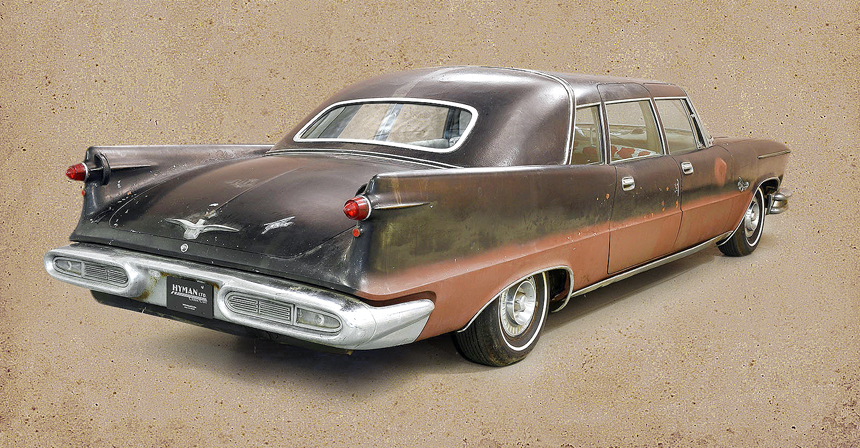
This vehicle, though battered, is not beyond hope. With dedicated work and a love for the craft, it can be restored to its original splendor.
Restorers, this is your call to bravery. The Crown Imperial Limousine awaits its revival.
Photo: Sean Dugan, Hyman Ltd.
This is a translation. You can read an original article here: Комплектный, под реставрацию. Crown Imperial Limousine by Carrozzeria Ghia в рассказе Андрея Хрисанфова

Published January 03, 2024 • 10m to read