
In the first part of our report from the IAA exhibition, we covered the highlights from European manufacturers. Now, here’s part two.
Tesla Semi, and its Chinese twin
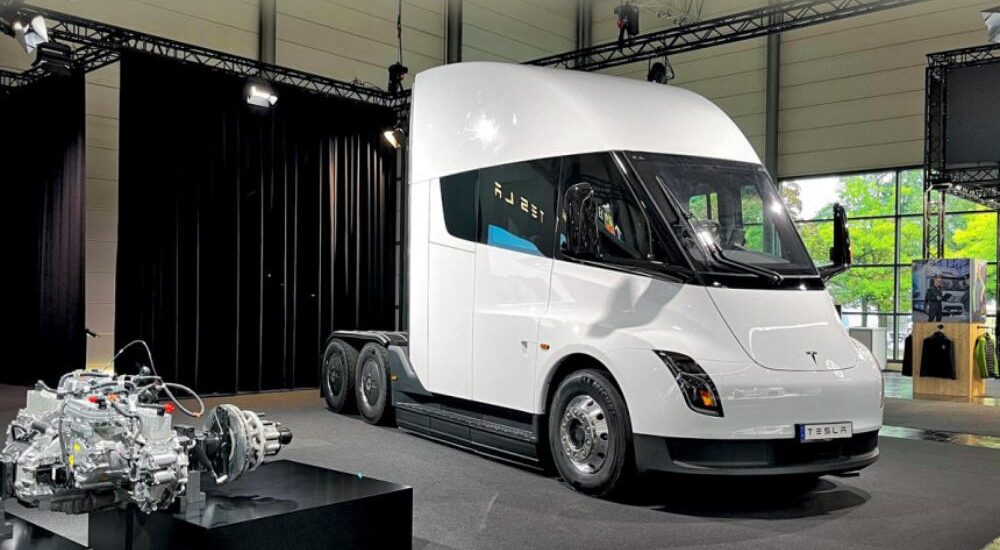
Meet the Tesla Semi tractor at the German exhibition! But wait — what are these vehicles alongside it, astonishingly similar and with Polish plates? These are the newest Windrose clones from China. Their battery capacity is 729 kWh compared to Tesla’s 500 or 800 kWh, claimed driving range is 940 km versus Tesla’s 800 km, and their aerodynamic drag coefficient is lower: 0.2755 against Tesla’s 0.35–0.36. According to Windrose, a 26-tonne fully loaded truck recently completed a 2253 km route with just two recharges. Windrose has already conducted tests in both Europe and the US — how about that, Elon Musk?
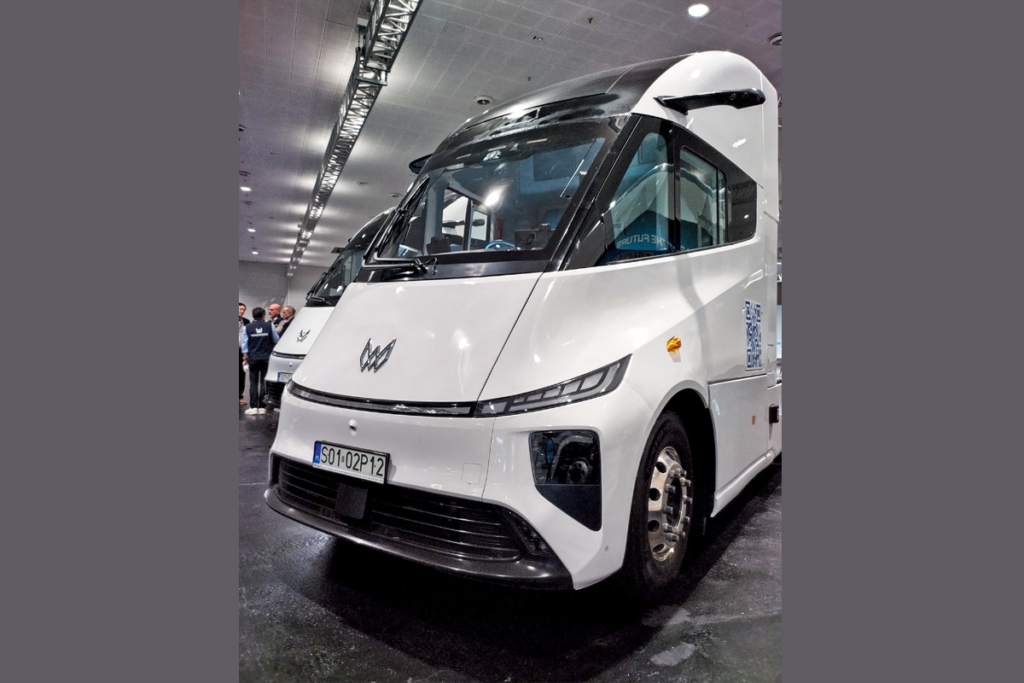
The electric Tesla Semi (on the cover photo) arrived at the IAA for the first time, and the Chinese immediately showed a copy of it!
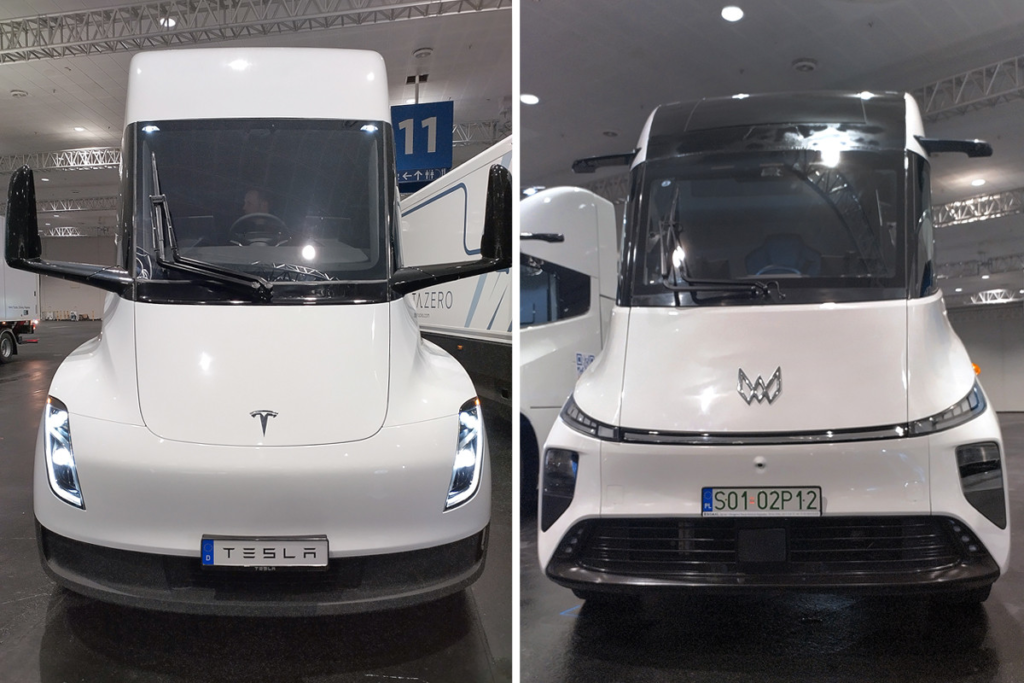
Tesla Semi (left), Windrose (right)
Hydrogen from Shandong: Huanghe, Sitrak and Shacmoto
Almost as aerodynamic, with a drag coefficient of 0.286, is the equally impressive Huanghe tractor, known as Yellow River in English. Its propulsion system is hydrogen-based, but unlike other manufacturers it is powered not by fuel cells but by China’s first hydrogen internal combustion engine for trucks — a 14.56-liter Weichai unit producing 350 hp and 2700 Nm of torque.
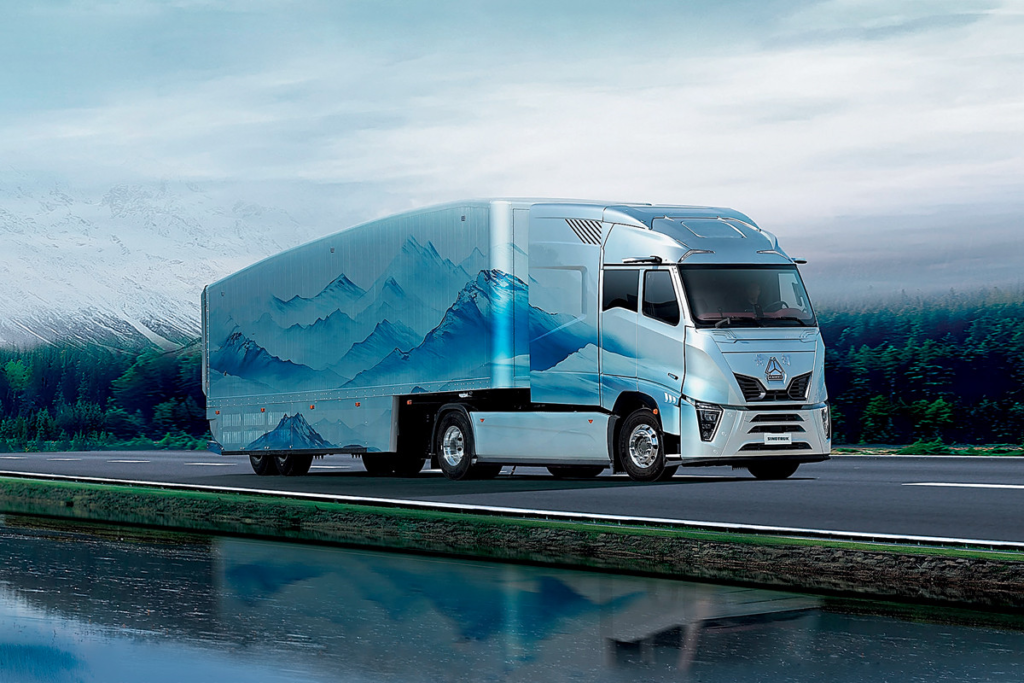
Under the cabin of the “bullet-shaped” Yellow River HICEV truck is a Weichai hydrogen engine…
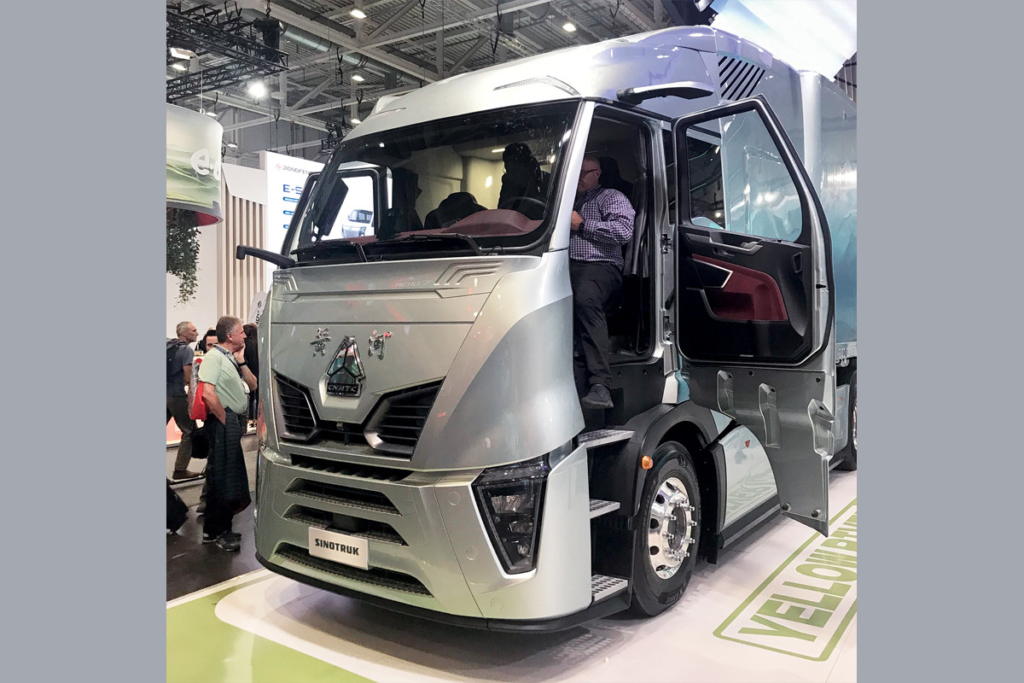
…and the doors open like a Tesla, against the direction of the movement
The Shandong Heavy Industry Group, which includes Huanghe as well as familiar names such as Sitrak and Shacman — marketed in Europe as Shacmoto, to avoid associations with MAN — also showcased other new trucks. Sitrak presented another facelift of the C9H model, in both hydrogen (range of 1250 km) and battery-electric versions. Shacmoto exhibited the hydrogen-powered X6000 FCV. Other “hydrogen-Chinese” trucks were on display as well, including the futuristic silver-colored King Long and vehicles from the previously unknown brand Wisdom Motor.
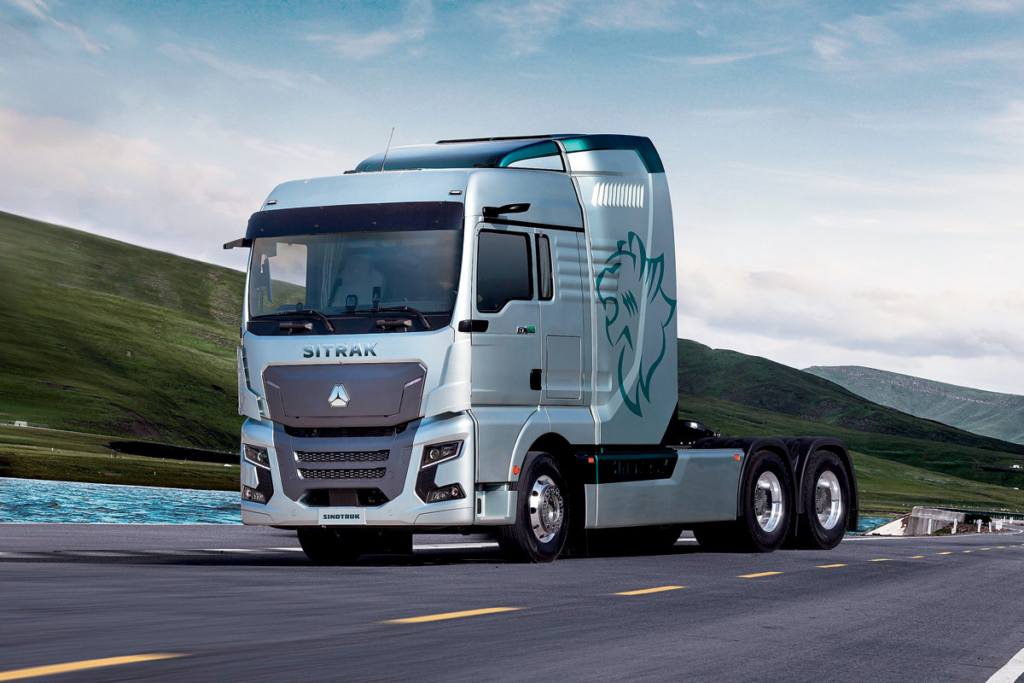
Sitrak gets another restyling and a hydrogen version of the FCEV with cylinders behind the cabin
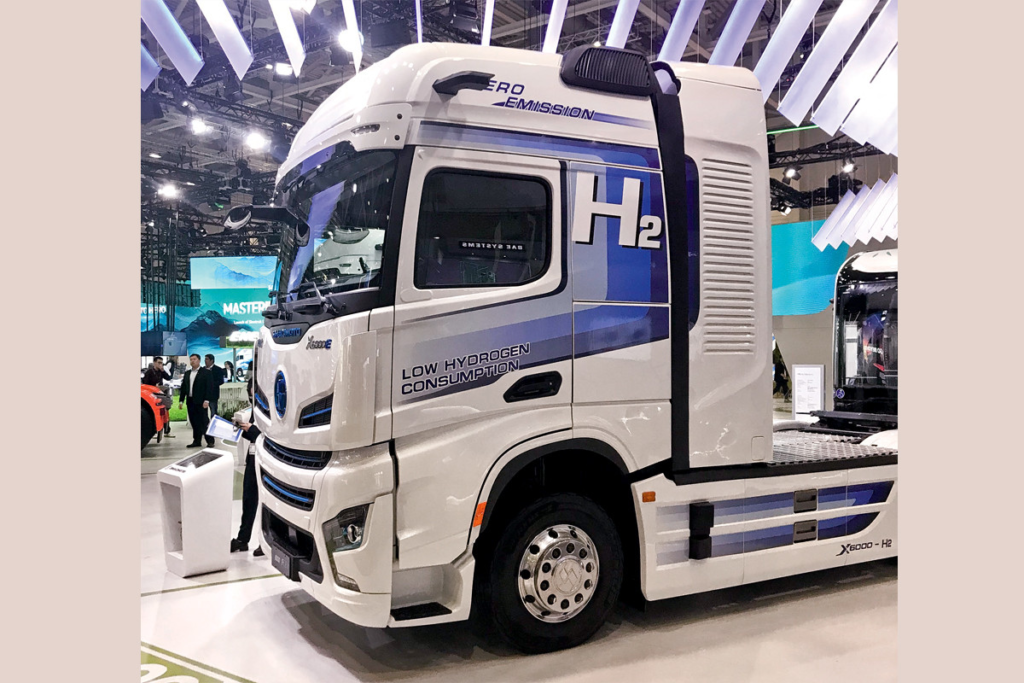
Shacmoto (Shacman)
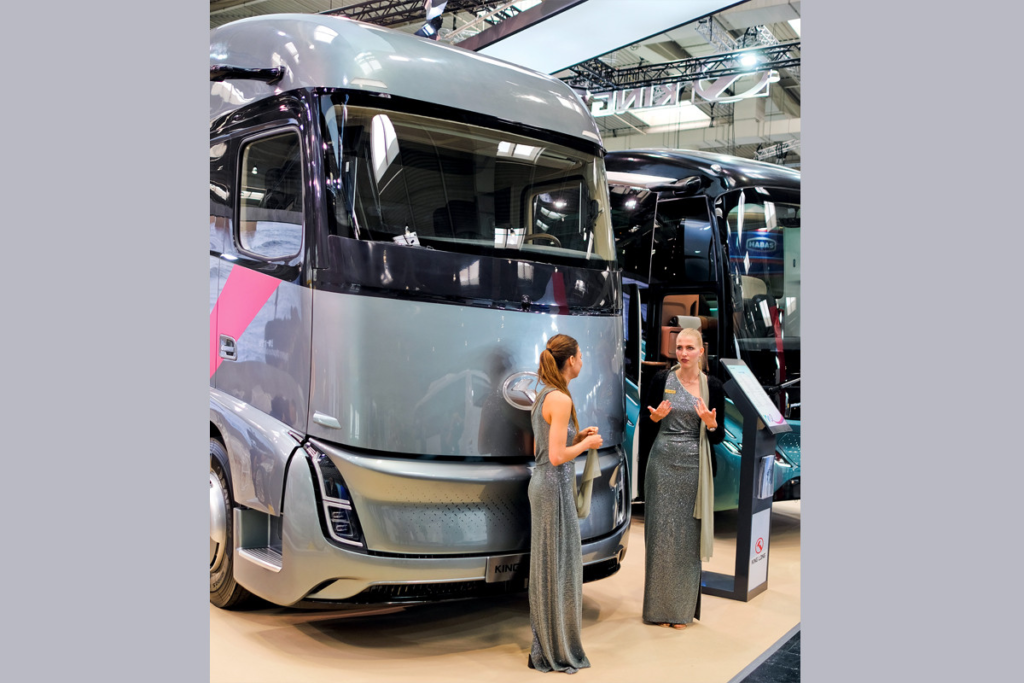
King Long offers not only buses, but also a hydrogen-powered “space” truck
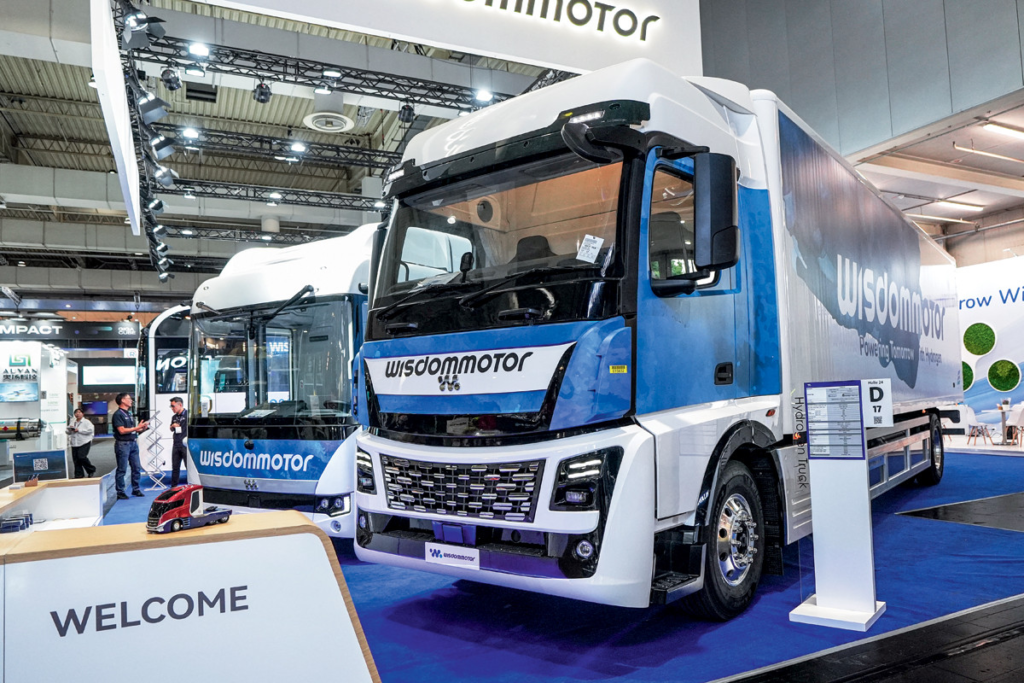
Wisdom Motor’s hydrogen trucks
Steyr eTopas 600: an Austrian badge on a Chinese truck
But what about the electric Steyr eTopas 600? The brand is Austrian, but its cab is identical to the JAC K7 tractor, just with a different grille. As it turns out, this is a purebred “electric-Chinese” truck, which the renowned Steyr factory has decided to assemble, or partly assemble, and promote, in partnership with a Chinese “super partner” aptly named SuperPartner.
Until recently Steyr produced light- and medium-duty MAN trucks, but during the pandemic MAN ceased its operations here and considered closing the plant. Now renamed Steyr Automotive, the plant manufactures garbage trucks, among other things. Serial production of the displayed tractor — with an electric axle drive, LFP batteries and a 500 km range — is planned for late 2025, and DHL is already identified as a potential customer.
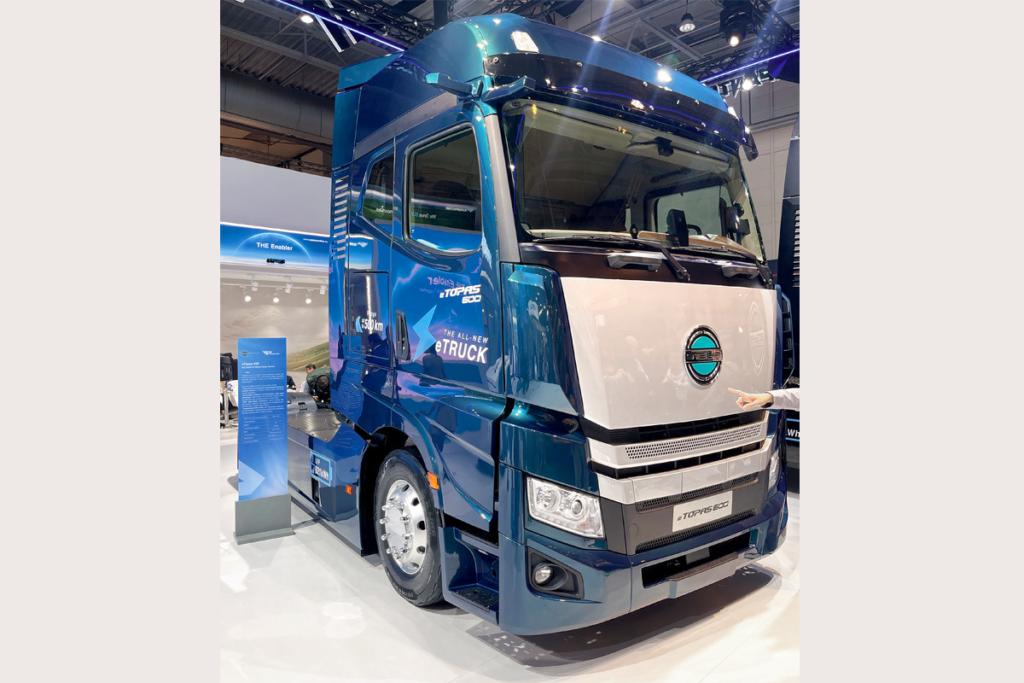
Austrian Steyr eTopas 600 is nothing more than an “electric Chinese” with a JAC cabin
Ode to Hydrogen
Hydrogen-powered trucks, which manufacturers believe will eventually replace battery-electric vehicles, are like Schrödinger’s cat: absent on roads… but abundant at exhibitions!
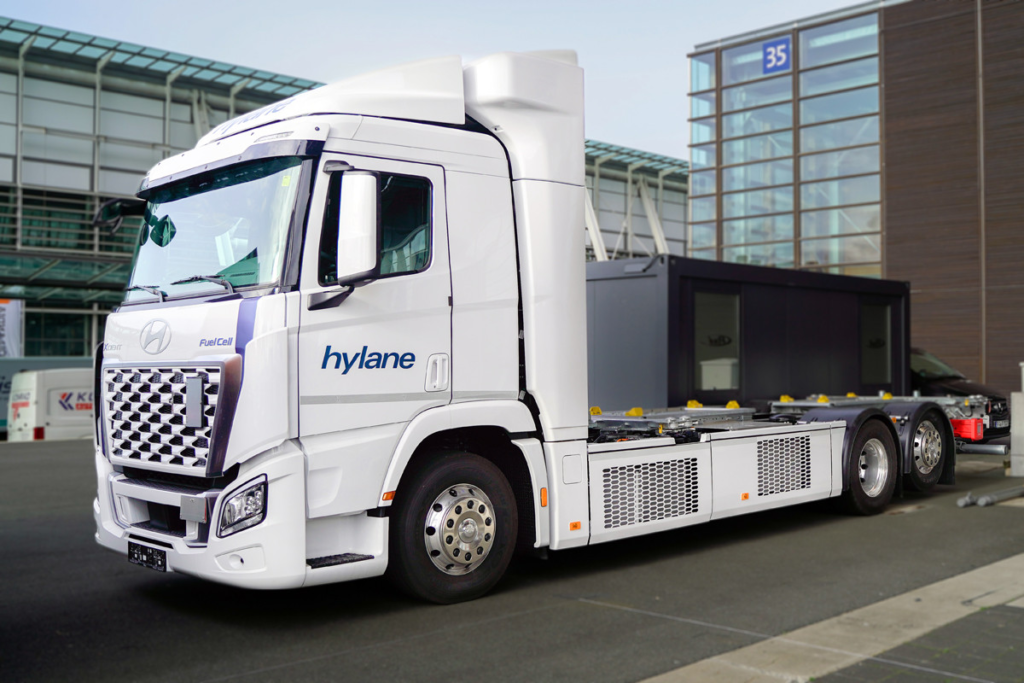
Hyundai Xcient
Hyundai, Mercedes and Paul
The European pioneer of this movement, Hyundai, ceased its project to implement Xcient hydrogen trucks in Switzerland in 2022 because of high fuel costs, shifting its experiments to the US. Nevertheless, a hydrogen-powered Xcient adapted for transporting interchangeable BDF bodies was displayed at the booth of the Mercedes specialist Paul.
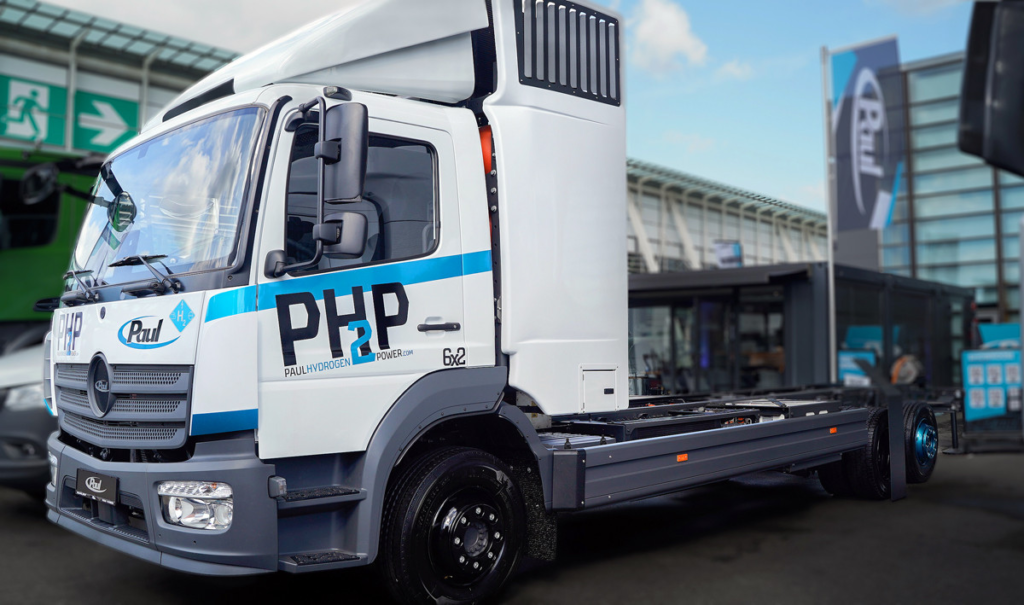
Paul PH2P based on a Mercedes Atego light truck
A similar situation applies to hydrogen-powered Mercedes trucks. Daimler itself is not yet heavily invested in them: current prototypes are based on pre-facelift Actros trucks, with production planned for 2027 or later. Paul, however, showcased the PH2P model based on the lightweight Mercedes Atego truck, with Toyota fuel cells, a Voith electric motor and hydrogen tanks giving a driving range of up to 300 km.
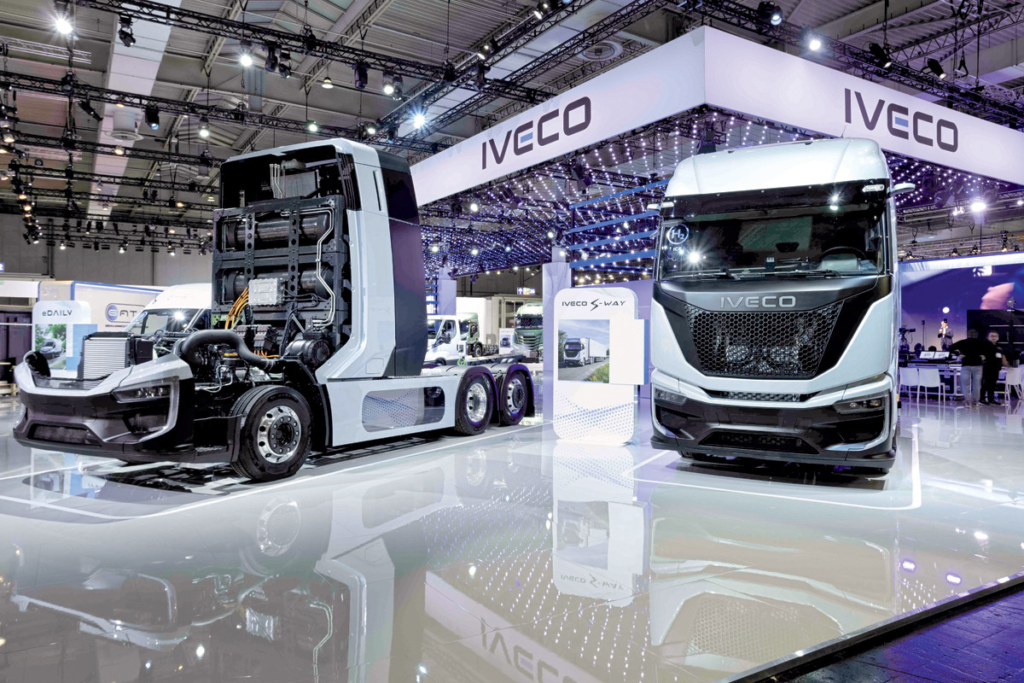
IVECO has divorced its partner Nikola, but has shown a familiar hydrogen model of joint development. On the left is a model without a cabin: behind it you can see the cylinders
IVECO without Nikola
IVECO parted ways with the electric-hydrogen startup Nikola, despite ceremonially opening a joint production facility in Turin several years ago. Nikola, like Hyundai, now focuses on America, but the tractor itself remained with the Italians, renamed with the jawbreaker IVECO S-eWay C9 H2 Series Hybrid Concept. Interestingly, IVECO scarcely mentions this model in press releases…
Though Renault Trucks did not attend the exhibition, another French startup, Hylico, showcased a hydrogen truck based on the Renault T model, again using Toyota fuel cells.
MAN, Quantron, and a startup from Zwickau
Representatives from MAN previously admitted during a presentation that they saw no future in hydrogen, but have now announced plans to produce 200 prototypes by 2025 for customer testing. These are intended not for long-haul tractors but for three-axle vehicles designed to carry construction materials or lumber — areas where hydrogen refueling stations are conveniently available.
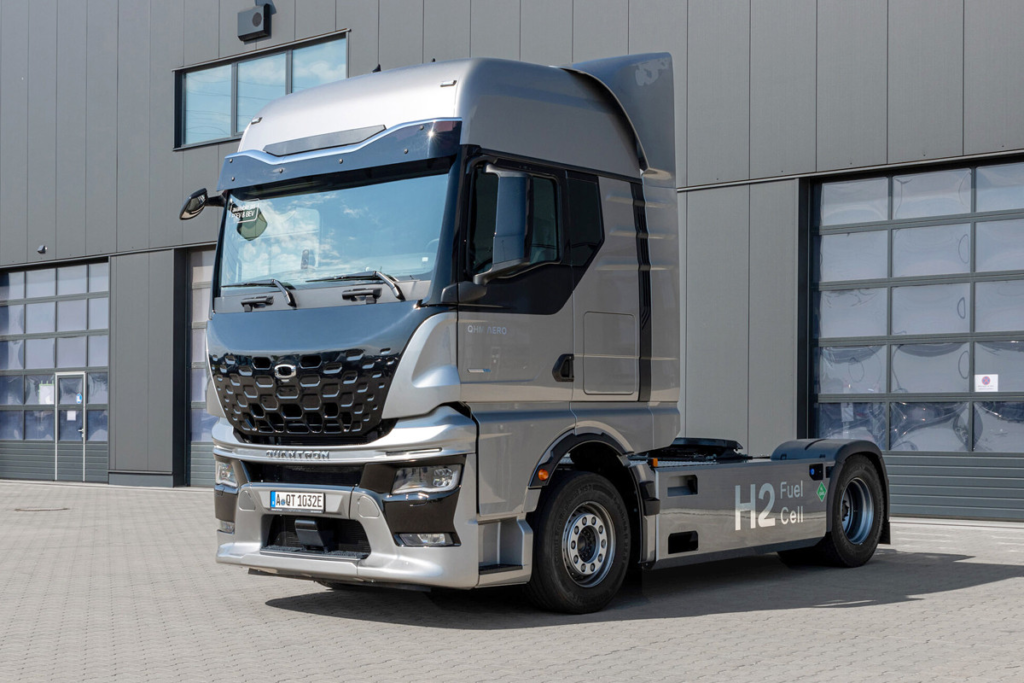
Quantron
And what about Germany’s Quantron, which two years ago, at IAA 2022, announced intentions to produce its models based on MAN TGX tractors — electric, hydrogen-powered and restyled versions? Apparently something went wrong, as Quantron did not participate in the current exhibition.
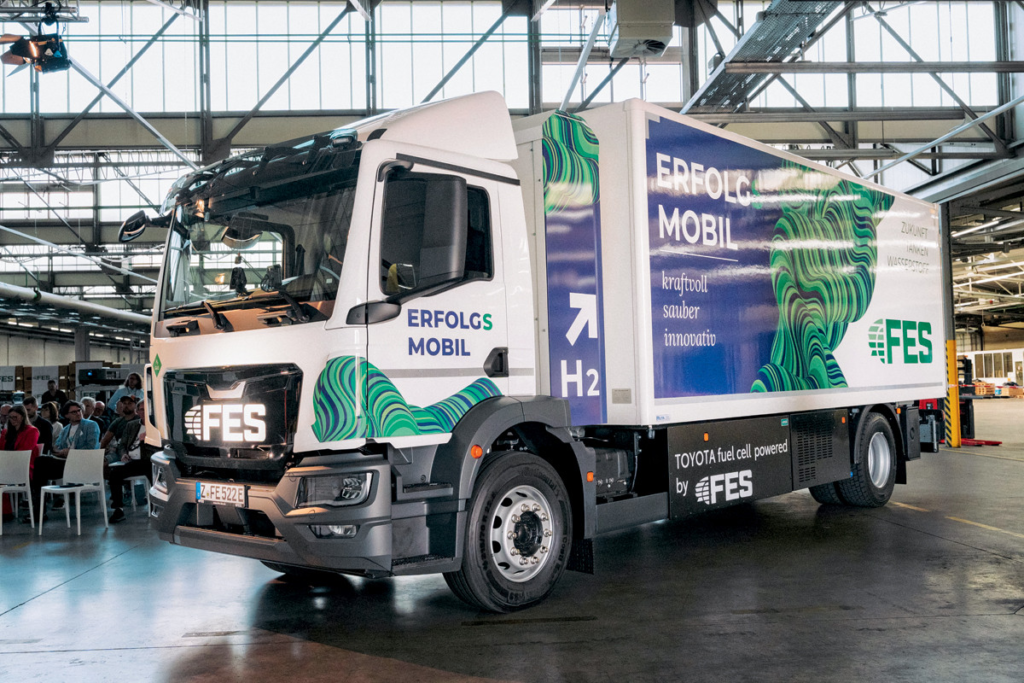
Hydrogen FEScell based on MAN
Instead, a new startup emerged from Zwickau, a former East German city known for producing the tiny Trabant. The truck is named FEScell 180/280/220, and is also boldly labeled Erfolgsmobil — “Success Vehicle.” Built on the chassis of the 18-tonne MAN TGM delivery truck, it carries tanks holding 33 kg of hydrogen, Chinese Toyota Tsusho Nexty Electronics fuel cells, an electric motor and a modest 57 kWh traction battery, both supplied by the German company FRAMO.
Tests indicate hydrogen consumption on the highway ranges from 6.6 to 7 kg per 100 km, providing a total driving range of 470–500 km, with an additional 30 km from the battery. “And now, ladies and gentlemen, with all this onboard, we shall attempt to take flight.” Will these hydrogen projects truly take off?
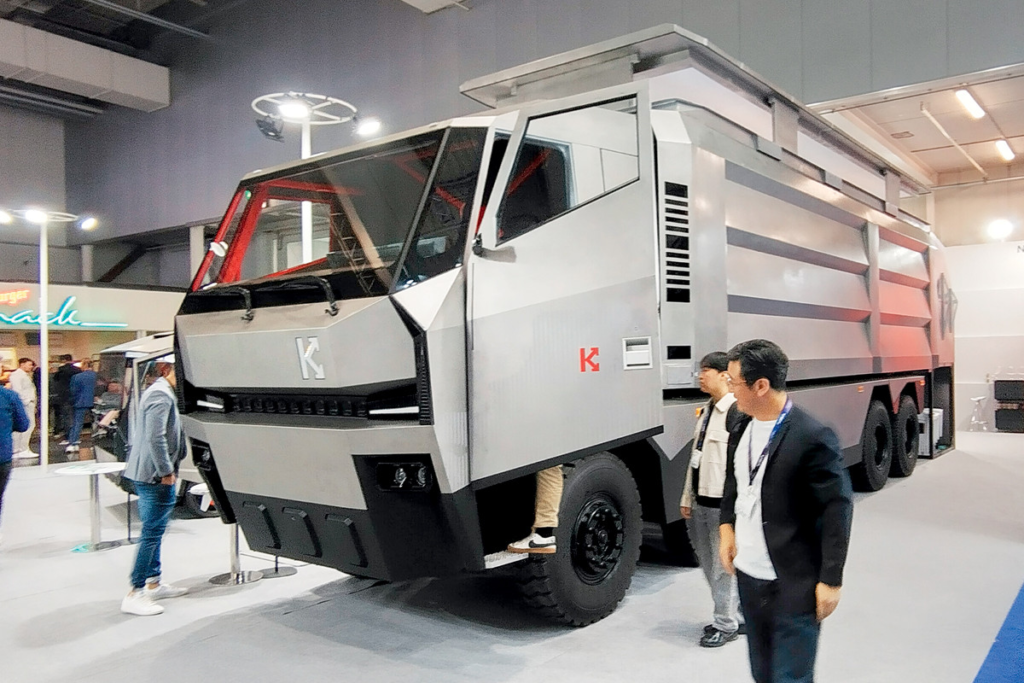
This is not a cross between an armored car and a garbage truck, but a concept (hydrogen-powered, of course!) from the Chinese company Kaiyun, which designs angular cargo transport
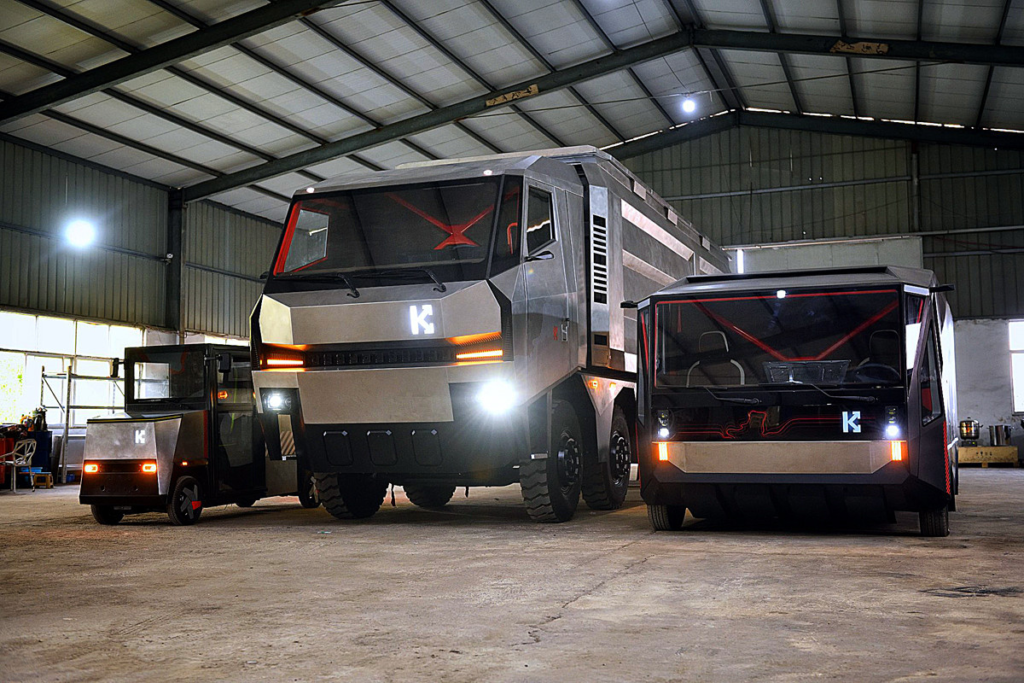
Chinese company Kaiyun designs angular cargo transport
Photo: Alexander Tsypin | manufacturing companies | Milan Olshansky | organizers
This is a translation. You can read the original article here: Tesla Semi, «китайцы» и водородные грузовики на выставке IAA в Ганновере

Published July 30, 2025 • 6m to read