
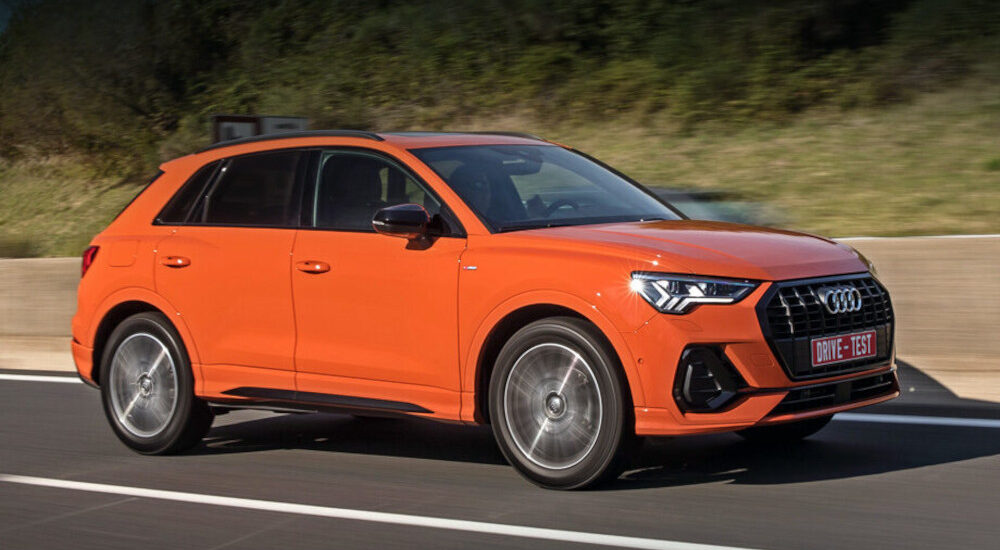

In some countries, the Audi Q3 has long been seen as a car for women — statistics show 70% of owners are female, typically around age 35. But the new generation, finally built on Volkswagen’s MQB platform, aims to broaden its appeal. Sharing its underpinnings with the Volkswagen Tiguan, the redesigned Q3 is more versatile, more grown-up, and — as this review argues — no longer easy to pigeonhole by gender at all.
Interior Space and Practicality
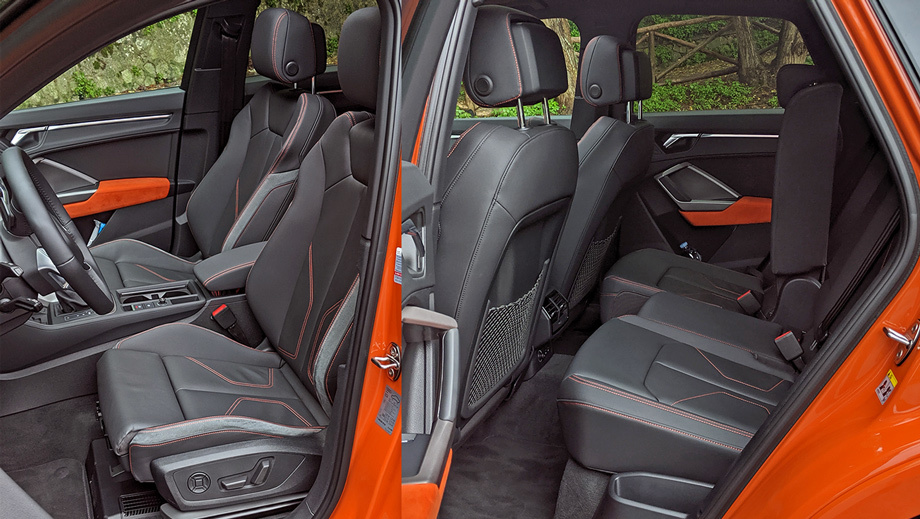
Despite the redesign, the Q3 still shows signs of being built with smaller households in mind:
- No sensors for hands-free unlocking on the rear door handles
- Rear door openings remain narrow
- At 6’1″, rear legroom behind a tall driver is adequate but tight — no real reserve
- Seats slide fully backward mainly to free up cargo length, not passenger comfort
The trunk is a bright spot: the rearranged cargo floor is spacious, well-organized, and even includes a hidden storage shelf underneath. Loading height dropped by about an inch but is still relatively high, at 29.5 inches.
Exterior Design: A More Proportionate Look
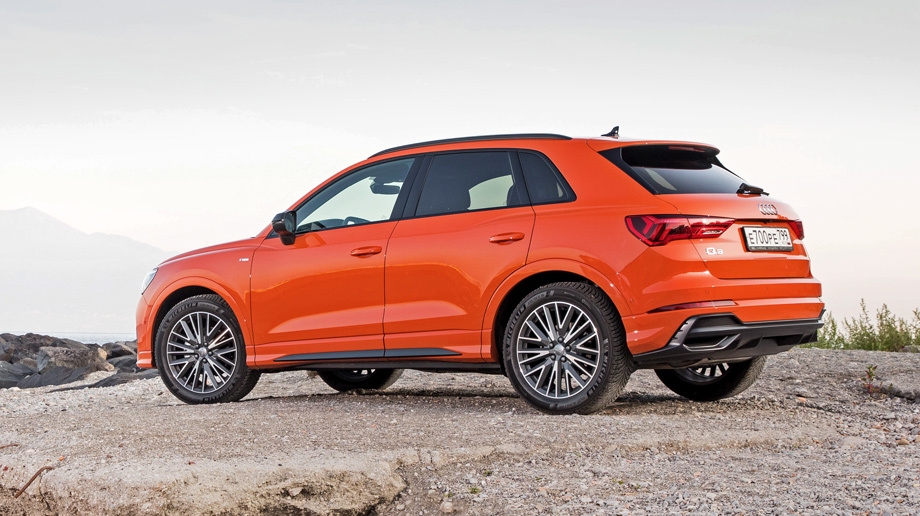
The new Q3 grew nearly 4 inches in length, now stretching almost 14.7 feet. The extra length pays off visually — the old model’s slightly top-heavy, tall-and-short stance is gone, replaced by a more balanced, serious silhouette. True to Audi’s minimalist tradition, standout styling details are rare, though higher trims offer an eye-catching lighting signature with animated turn signals and matrix LED headlights.
A few quirky design choices stand out:
- The rocker panels stay clean, tucked behind the lower door edges
- Doors require a firm, swinging push to close — a byproduct of improved noise-sealing, according to Audi
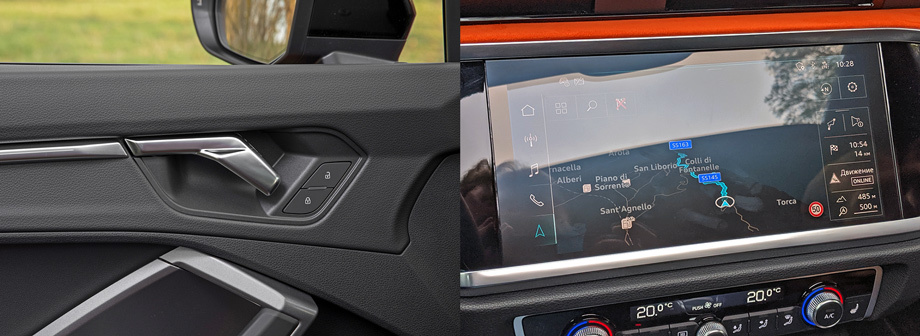
- Interior door handles are unusually shaped, angled downward — functional but disorienting until you get used to them
Driving Position and Ergonomics
The longer wheelbase (up 3.03 inches) noticeably improves the driving position. The steering column tilts 4.5 degrees less than before, so the seating posture no longer feels van-like. The driver’s seat offers good side support but can feel tight in the hips — curiously, the front passenger seat is roomier.
A few notes for anyone configuring their Q3:
- Skip the flat-bottom steering wheel option — heated steering is only available with the standard round wheel
- Visibility is strong overall, helped by unusual combined jet-fan washer nozzles
- The 360-degree camera system has excellent image quality but no protection from dirt buildup
Interior Quality and Technology
The cabin feels modern and well-built without seeming overly cold or “techy.” Fabric inserts on the armrests, front and rear, add a touch of warmth, and digital instrumentation comes standard. The optional 12.3-inch digital display brings extra customization options and looks especially good in person.
At the center of the dashboard sits Audi’s MIB infotainment system (version 2+), which is fast and intuitive — though the screen suffers from noticeable glare, especially with the panoramic sunroof shade open. One odd ergonomic miss: the engine start button sits on a mostly blank panel below the main controls, as if forgotten by the design team.
Engine Options and Performance
The following engine options are currently available to choose from:
- Audi Q3 40 TFSI quattro — 2.0-liter turbo, 180 hp, all-wheel drive
- Audi Q3 35 TFSI — 1.4-liter turbo, 150 hp, front-wheel drive
Based on sales of the previous generation, the base 35 TFSI is expected to be far less popular — roughly seven times fewer buyers than the quattro model. A more powerful engine option may eventually arrive, but likely only on the coupe-style Sportback variant (excluding the high-performance RS Q3).
On the road, the lack of an automatic start/stop system is a welcome touch, and full-throttle acceleration feels genuinely strong. Throttle response is sharp right from the initial pedal input. The six-speed DSG dual-clutch transmission is less impressive at partial throttle, sometimes lingering in a high gear before abruptly dropping two or three gears at once. Braking, at least, is confidence-inspiring: a short, firm pedal delivers precise, predictable stopping power.
Handling and Ride Comfort
Testing took place in Italy in mild weather (roughly +59°F to +68°F), but the press cars were fitted with winter tires, limiting how much can be said definitively about handling. That said, the optional variable-ratio steering rack is worth the extra cost — it delivers accurate, logical turn-in without requiring multiple steering wheel rotations lock-to-lock. In terms of body roll, feedback, and overall cornering behavior, the Q3 feels nearly identical to its Tiguan sibling: composed, predictable, and unmistakably Volkswagen Group in character.
Ride comfort is best described as solidly average for the segment:
- The suspension is firm but absorbs small-to-medium bumps better than it looks like it should
- Adaptive dampers aren’t offered in this market, though a lowered sport suspension is optional
- Sharp-edged potholes are still felt more than expected, even on the standard setup
- Cabin noise insulation is excellent, with only tire hum noticeable at highway speeds
Is the Q3 Still a “Woman’s Car”?
After spending time with the new Q3, it’s hard to find anything in its ergonomics or character that reads as gendered. This is a mature, capable small SUV — arguably more of a “man’s car” than before, if that label still means anything. The one real compromise is the 6.6-inch ground clearance, protected only by plastic underbody trim. To offset this, Audi added an Offroad mode to the Drive Select menu, which adjusts gear-shift logic and throttle mapping for light off-road use.
Pricing and Competitors
If the 180-horsepower quattro drives as well as it promises to on paper, it’s an easy car to recommend — just be prepared for the final price tag, since a well-optioned Q3 in the photos above costs significantly more than the base configuration suggests. Comparing pricing against the locally-built Tiguan is difficult given the Q3’s Hungarian import status, but the Q3 does hold its own against direct rivals:
- BMW X1
- Mercedes-Benz GLA
Neither competitor undercuts the Q3 significantly on price. Even so, this more grown-up, gender-neutral Q3 seems unlikely to become a runaway sales hit — but it’s a more convincing all-around small SUV than its predecessor.
This is a translation. You can read the original here: https://www.drive.ru/test-drive/audi/5dcd0037ec05c4f138000110.html

Published May 25, 2023 • 6m to read