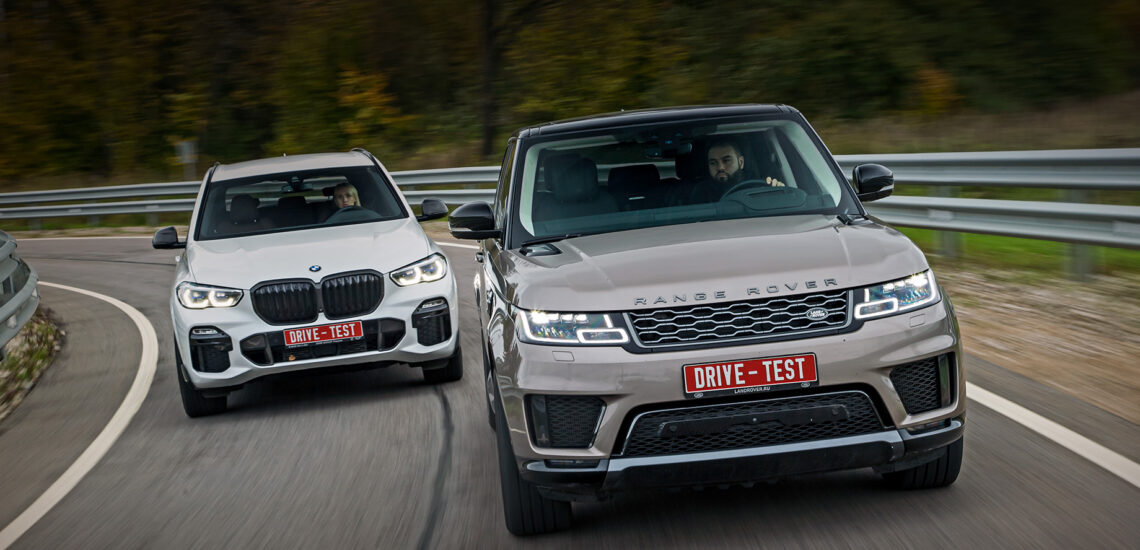

The updated 2017 Range Rover Sport marked a turning point for Land Rover — not as an all-new model, but as the first to receive the brand’s own Ingenium 3.0 inline turbodiesel. With this engine swap, another thread connecting Land Rover to its past was cut: the proven Ford V6 and V8 units were finally retired in favor of an in-house design. But does the new powerplant hold its own against the competition?
Choosing the Right Rival: Why the BMW X5 xDrive30d?
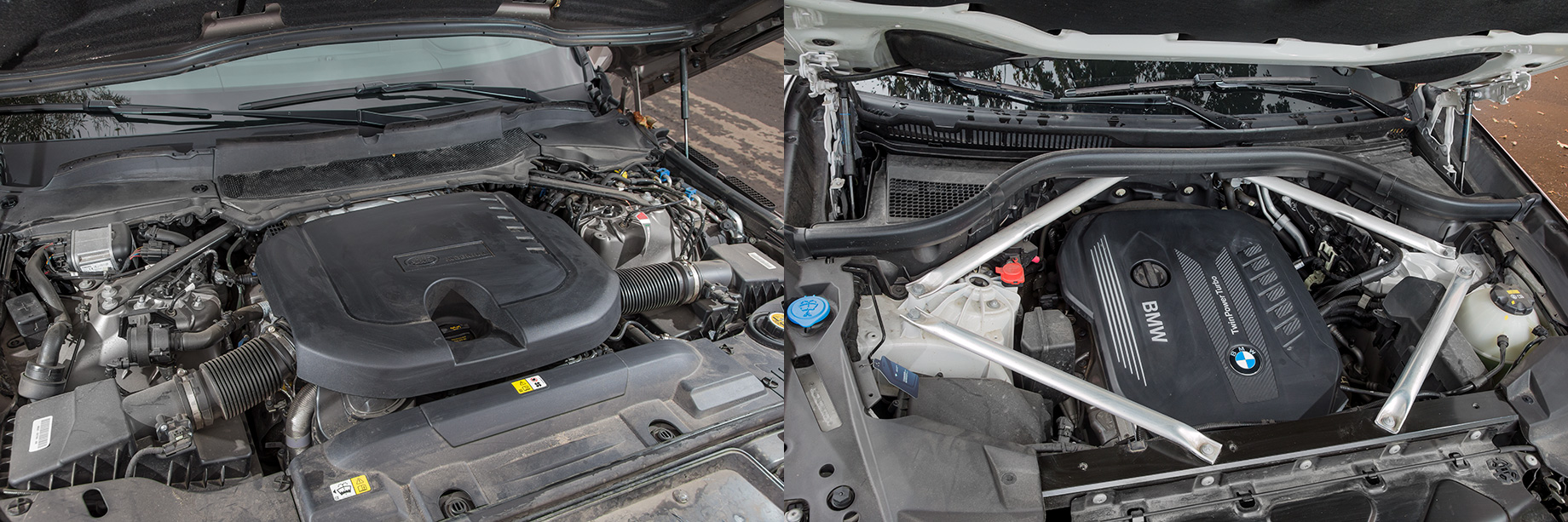
To put the new Ingenium diesel to the test, we needed a worthy benchmark. We chose BMW’s B57D30 — widely regarded as one of the finest modern diesel engines available — fitted inside the BMW X5 xDrive30d. Crucially, both rivals share the same eight-speed ZF 8HP76 automatic transmission, making for a fair and controlled comparison. Remarkably, these two had never gone head-to-head in our tests before.
Engine Specs: Range Rover Sport D250 at a Glance
The Ingenium diesel comes in three output levels, giving buyers genuine flexibility:
- D249 — 249 hp (entry-level diesel)
- D300 — 300 hp (mid-range option)
- D350 — 350 hp (top-of-the-range diesel)
Our test car was the D250 — the sweet spot of the range — producing 250 hp and 600 Nm of torque. This particular Sport was not sourced from the press fleet, which meant it came in a relatively modest spec. Notably, it was our first time driving a Range Rover Sport without a dedicated Sport driving mode fitted.
Refinement and NVH: Whisper-Quiet Cabin
On refinement, the Ingenium engine genuinely impresses. At idle, it’s barely audible from outside the car and completely inaudible from within the cabin. There are no vibrations through the steering wheel, floor, or seats — a meaningful step up from the twin-turbo six-cylinder it replaced. That older unit was by no means rough, but the Ingenium raises the bar for diesel refinement noticeably.
Performance Testing: 0–62 mph Results
On paper, the D250’s performance looks adequate. In practice, it tells a different story. With both pedals held down and the brake released, the aluminum SUV launches off the line willingly — but the momentum stalls sharply when shifting from second to third gear, where an unusually long gear change interrupts the flow.
Racelogic timing equipment recorded the following results:
- Range Rover Sport D250 — 0 to 62 mph in 8.5 seconds (matching the manufacturer’s claim, but noticeably behind the previous V6 of the same power at 7.9 s)
- BMW X5 xDrive30d — 0 to 62 mph in 6.8 seconds, aided by launch control and two sharp, decisive gearshifts
The BMW is louder and has more vibration at startup — its only real disadvantage — but the standing start performance is in a different league. To put it in perspective, the X5 xDrive30d is nominally faster than even the Range Rover Sport D350.
Throttle Response and Gearbox Behaviour in Traffic
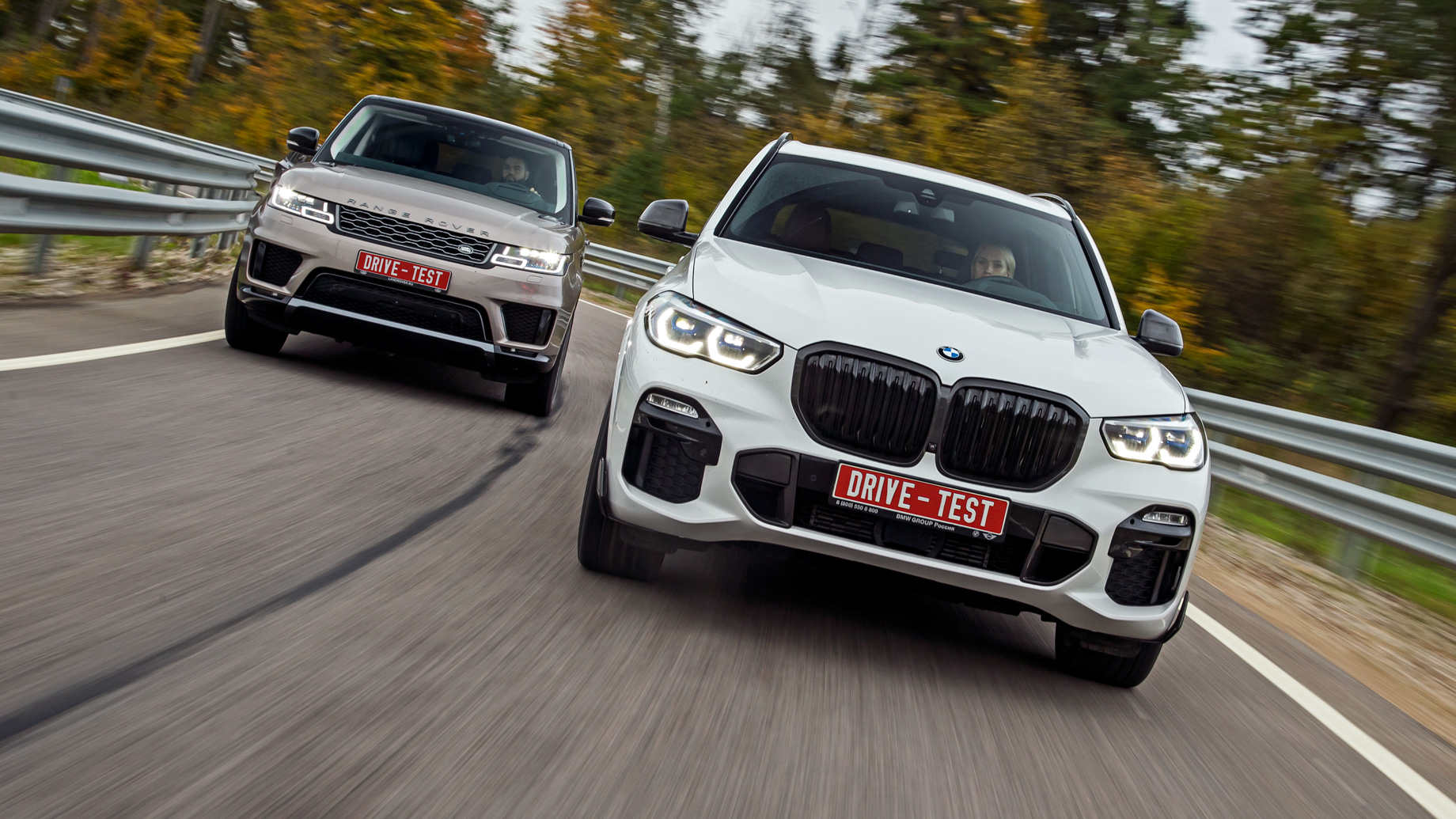
In everyday driving, the gap between the two widens further. The BMW’s calibration of the shared ZF automatic transmission is simply superior across the board. In any mode except the deadened Eco Pro, the X5 reacts to throttle inputs faster and more naturally regardless of traffic density.
The Range Rover’s throttle response is far more inconsistent:
- In free-flowing traffic, the Sport feels lively and impressively nimble for a 2.2-tonne SUV — almost hot hatch-like in character
- In dense urban traffic, the connection to the accelerator all but disappears, with a clear lag followed by an overshoot — the car gives more speed than asked for
- In stop-start conditions, the gearbox shifts erratically, sometimes holding a gear far too long, other times changing at random
Switching to Sport gearbox mode helps bring the Range Rover to life in the city. Throttle sensitivity improves, downshifts become more logical, and responses at higher speeds grow progressively more linear. But it’s a workaround rather than a solution.
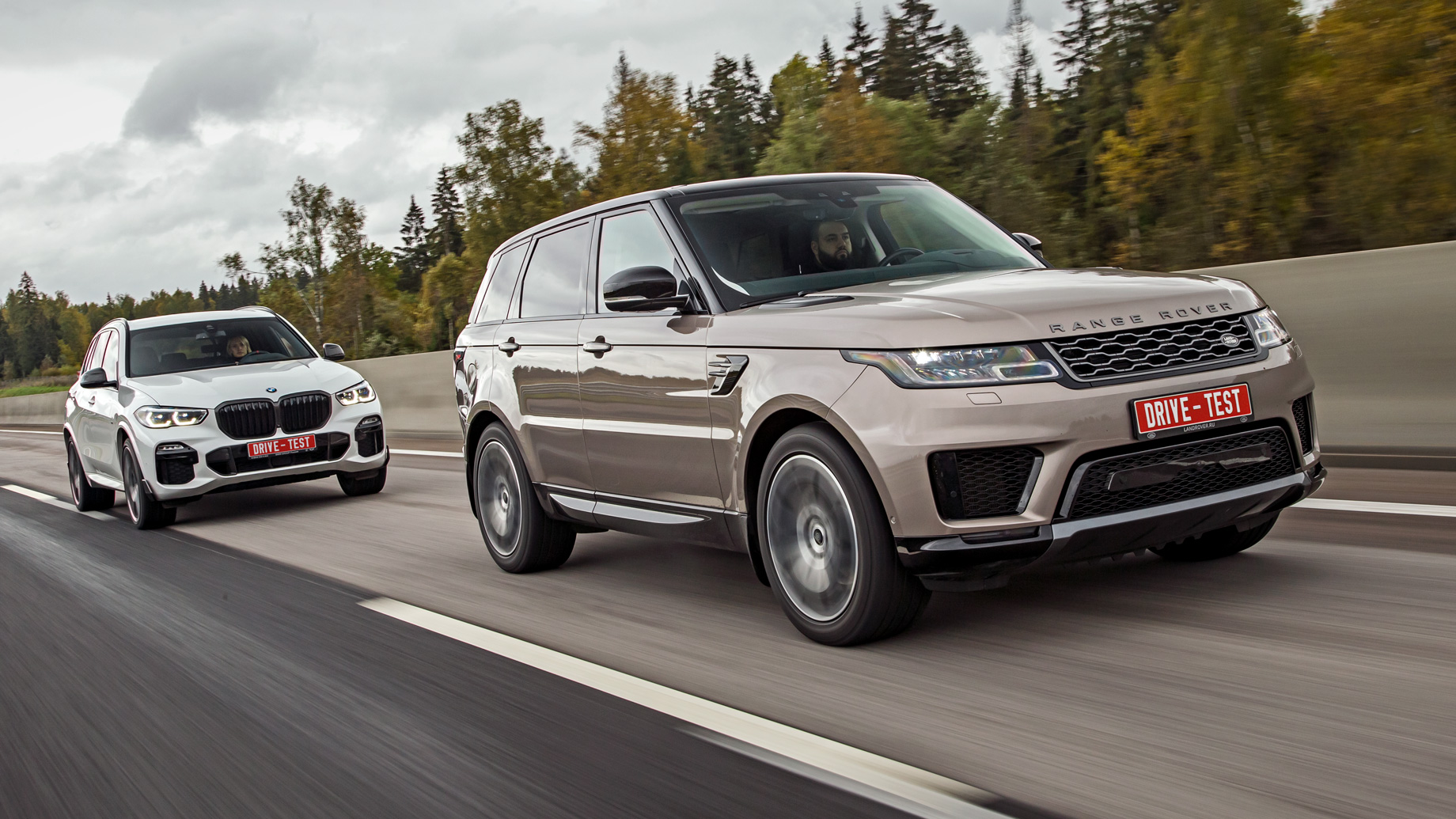
Motorway Performance: Where the BMW Pulls Away
Beyond 75 mph, the Range Rover visibly runs out of enthusiasm. Overtaking maneuvers require planning ahead: the Ingenium turbodiesel struggles at higher engine speeds, and the gearbox is slow to execute kickdown. This is partly down to the engine’s power characteristics:
- Ingenium inline-six — peak torque from 1,250–2,250 rpm; peak power at 4,000 rpm
- Previous V6 turbodiesel — peak torque from 1,500–2,500 rpm; peak power across a 3,500–4,250 rpm range
- BMW B57D30 — peak torque from 2,000–2,500 rpm; peak power also at 4,000 rpm
While the Ingenium’s torque band arrives earlier in the rev range, it runs out of steam sooner on the highway. The BMW, by contrast, delivers effortless, immediate power at any speed. Half-throttle is enough — no need to floor it, no need to force a Sport mode. The automatic transmission handles everything cleanly, keeping the engine poised without excessive downshifts. The X5 also proved more fuel-efficient over the course of our test.
Handling and Dynamics: Two Very Different Characters
The two SUVs approach handling from entirely different philosophies:
The Range Rover Sport is calm, composed, and almost stately in its responses. The air suspension delivers a serene, floating ride quality on smooth surfaces — genuinely one of the best in this class. But in corners, it rolls noticeably, loses front traction early, and the steering offers little in the way of connection or feedback. Braking is adequate but uninspiring. Push it hard and it can be quick, but that’s working against its nature.
The BMW X5 is focused, precise, and driver-oriented. The steering tracks true through high-speed sweeps and fills with reassuring weight as the Pirelli P Zero tyres approach their limits. Trail the throttle mid-corner and the rear steps out gently and predictably. The M-spec brakes provide a flawless safety net. The X5 simply does everything it’s asked to do.
Ride Quality: Road Surface Makes All the Difference
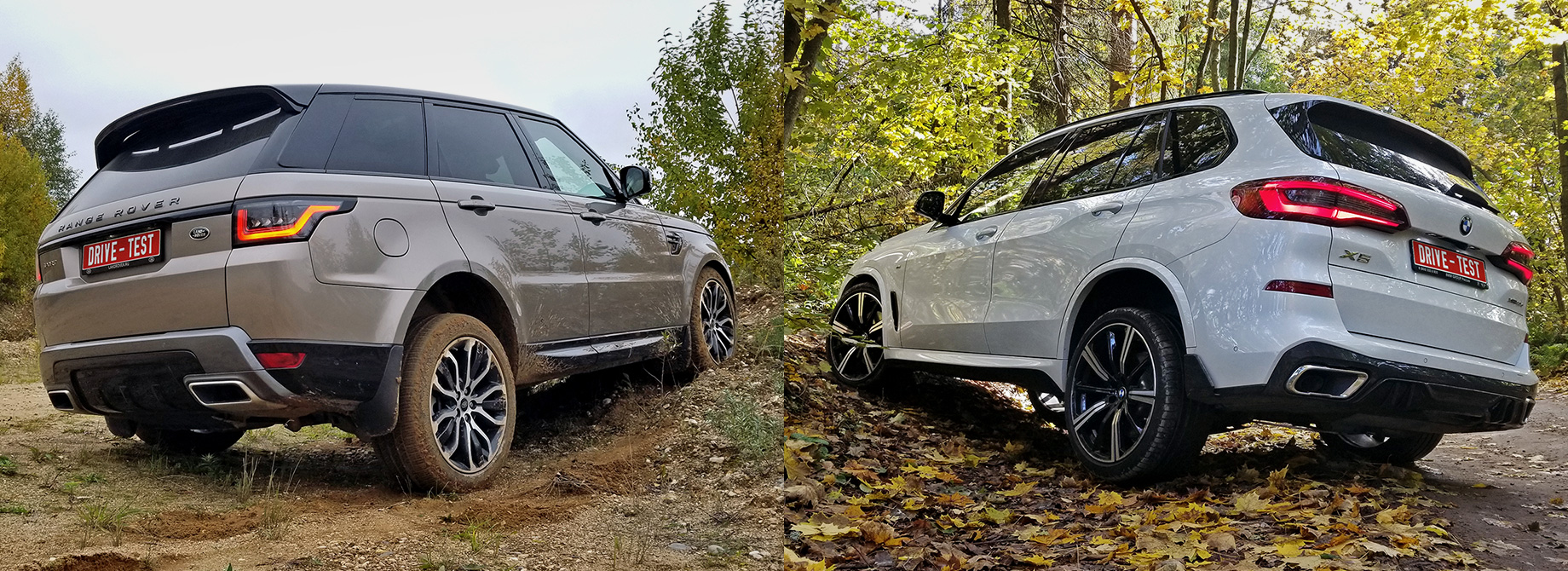
This is where the Range Rover regains meaningful ground. On smooth tarmac and roads with occasional imperfections, the Sport’s ride quality is exceptional — it absorbs micro-surface irregularities and larger potholes with equal composure, and the steering wheel is impressively isolated from vibrations. Even on rough dirt tracks, the long-travel suspension keeps things under control at speeds that would unsettle most rivals.
The X5, despite its adaptive dampers, is less forgiving:
- Smooth motorways and gentle undulations — handled well in Comfort mode
- Expansion joints, sharp-edged potholes, and rough country roads — produces firm, sometimes harsh impacts through the cabin
- The 22-inch run-flat tyres of the M Package don’t help matters, amplifying the harshness on poor surfaces
However, the Range Rover is not without its own long-standing flaws. After eight years in production, the Sport still suffers from a persistent rattling in the front suspension — a problem shared with the co-platform Range Rover L405. The cabin also creaks noticeably, which is particularly jarring given the otherwise excellent sound insulation of the engine compartment, door seals, and wheel arches.
Interior, Space, and Overall Quality Feel
Inside, the BMW feels like the more modern and technologically accomplished car. The driver’s position is better configured, and the passenger compartment offers more usable space. Overall build quality and the sense of premium sophistication tilt clearly toward Munich.
The Range Rover’s cabin is not without merit — particularly its ride-related composure that makes long journeys relaxing — but it doesn’t match the X5’s all-round sense of quality and modernity.
Final Verdict: Which Diesel SUV Wins?
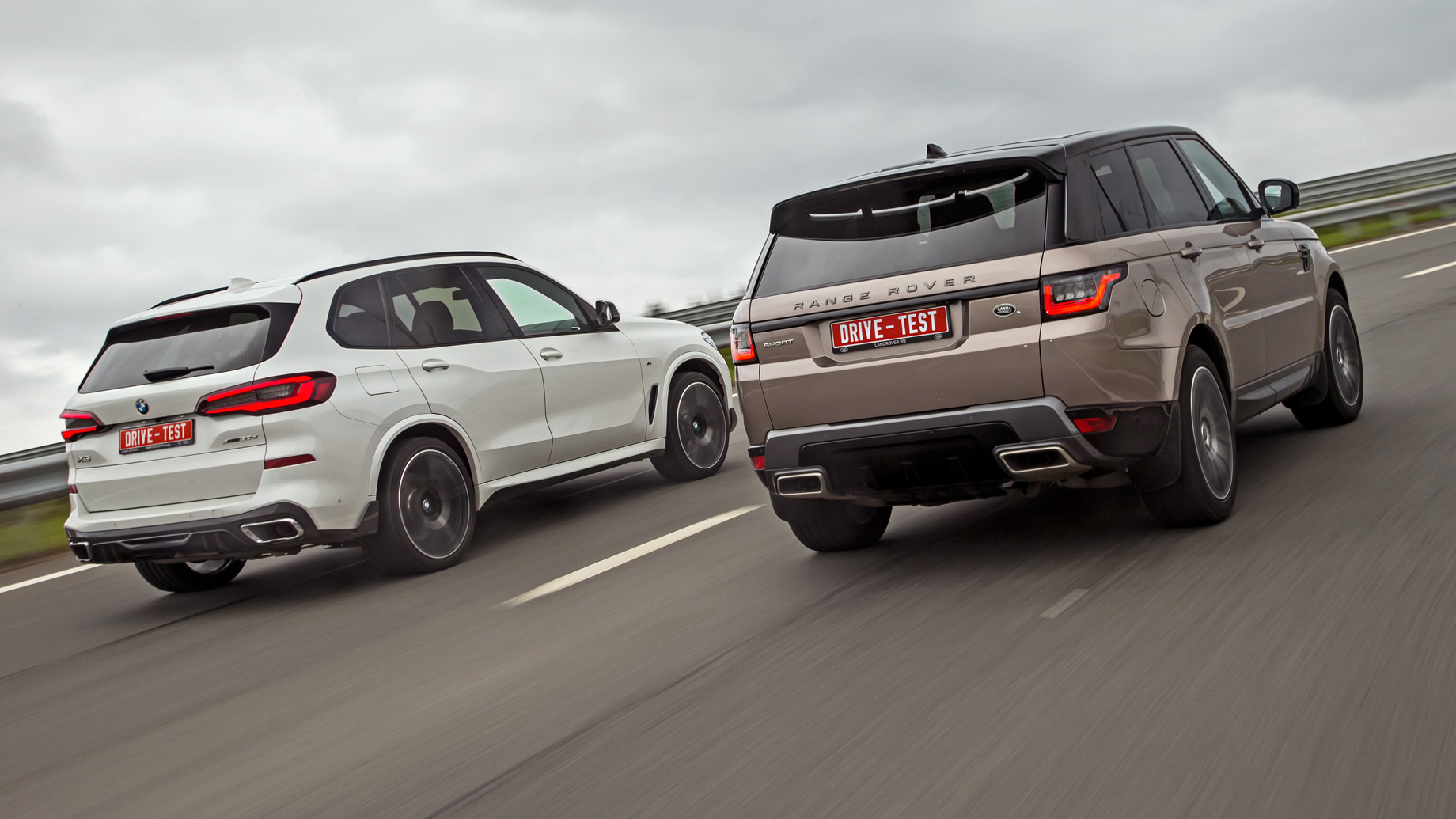
In a points-based comparison, the BMW X5 xDrive30d wins comfortably — and that’s before accounting for its lesser off-road capability. Here’s how the two stack up in summary:
- Engine performance — BMW wins clearly, with faster acceleration, sharper throttle response, and better motorway pulling power
- Transmission calibration — BMW wins; despite sharing the same ZF unit, the X5’s programming is far superior
- Fuel economy — BMW wins in real-world testing
- On-road ride quality — Range Rover wins on smooth and rough roads alike
- Off-road capability — Range Rover wins with its more capable all-wheel drive and low range
- Interior space and quality — BMW wins
- Refinement — Range Rover wins for engine noise and vibration
- Handling and dynamics — BMW wins decisively
The Range Rover Sport D250 is more comfortable on the move — but not by enough to tip the scales. Its biggest problem is the new Ingenium diesel itself: it not only falls short of the BMW B57D30, but also fails to surpass its own predecessor in some key areas. In its twilight years, the Sport has become more refined and less demanding to live with. But the engine at the heart of this comparison lets it down, and that’s hard to forgive at this price point.
This is a translation. You can read the original here: https://www.drive.ru/test-drive/bmw/landrover/618303a138daa9b8a91c335d.html

Published May 05, 2022 • 7m to read