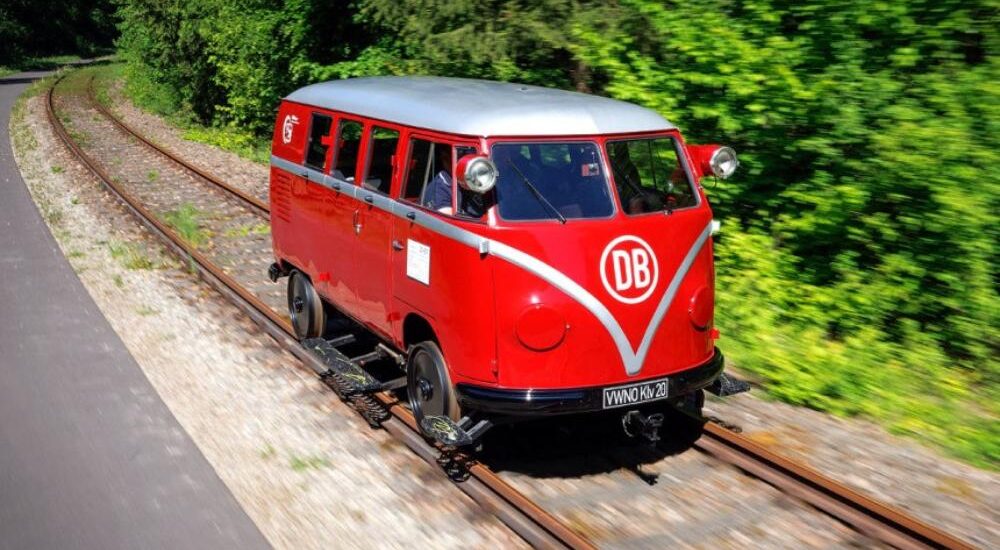

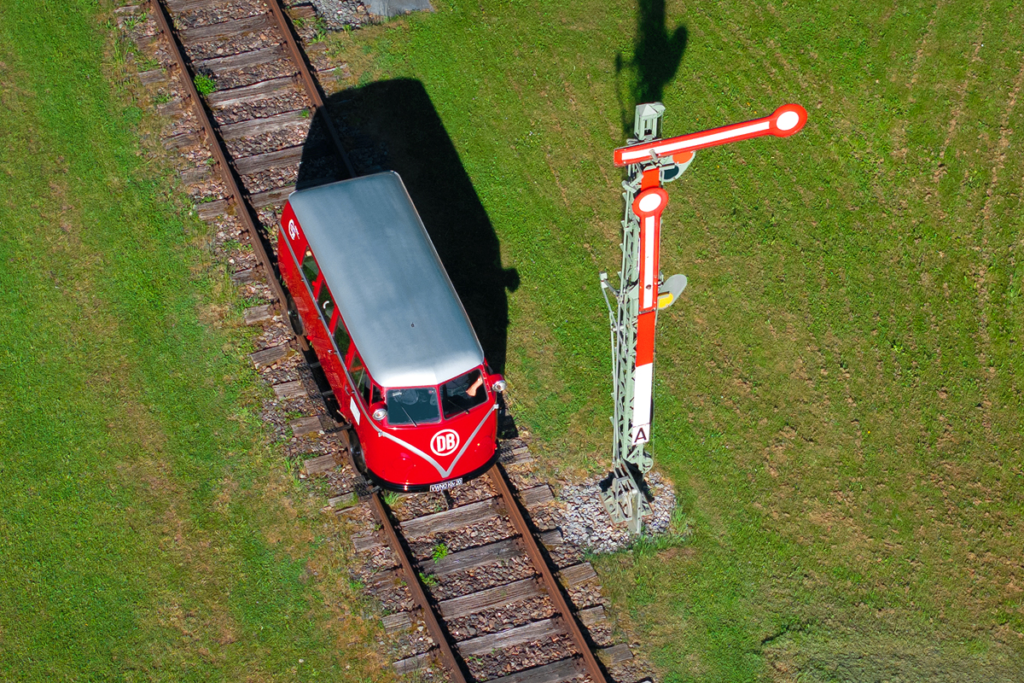
A small train station in the German state of Thuringia. The crossing barrier lowers… and along the railroad tracks an old Volkswagen Transporter appears, motor humming away, sporting a prominent DB (Deutsche Bahn – German Railways) emblem on its front. The reason: Volkswagen’s heritage commercial vehicle division has just acquired a unique railcar based on the first-generation Transporter, the one affectionately nicknamed “Bulli”.
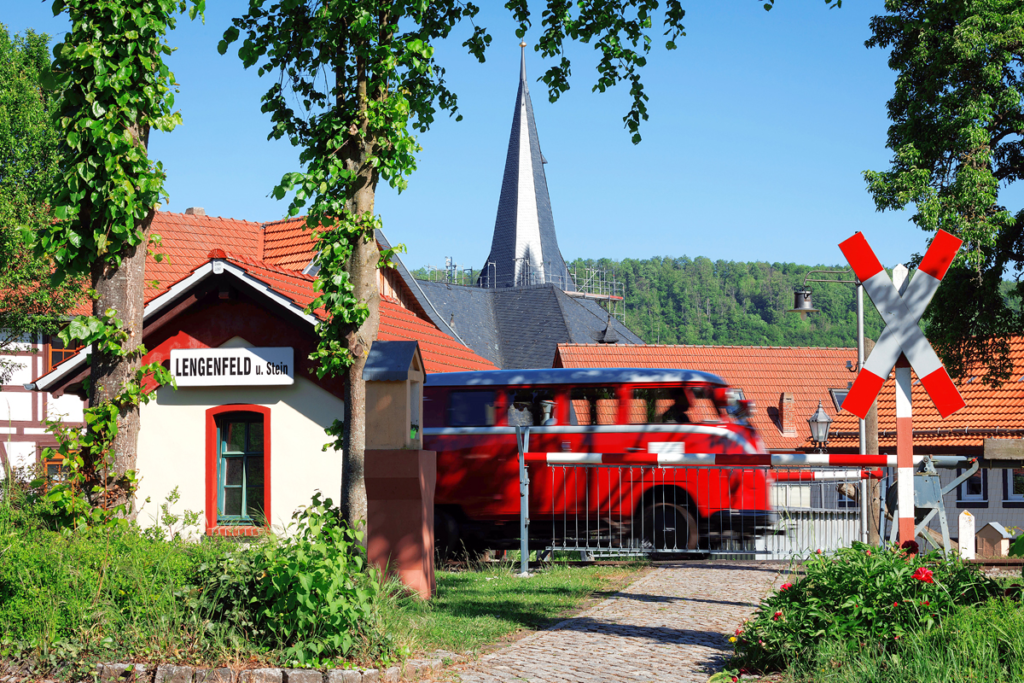
Cars on Rails Are Not New
Vehicles able to travel on rails existed well before the Russian Revolution, and during World War I trucks adapted for rail even hauled entire trains. The USSR’s railway troops used many road-rail vehicles, some of which also served civilian purposes. Dual-mode Unimogs work in the Moscow metro today, and back in 2014 I took part myself in testing a similar MAZ truck in Belarus.
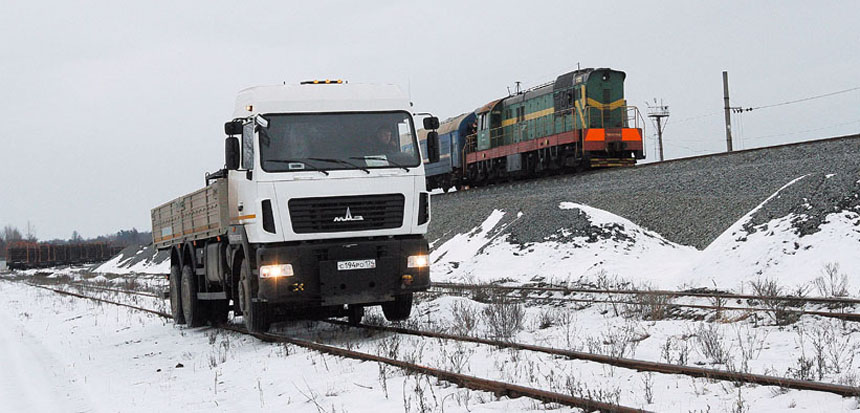
Rail-capable vehicles fall into two groups. Dual-mode machines run on asphalt on ordinary wheels and switch to rail by lowering guide wheels. Pure rail vehicles give up their tyres altogether for steel wheels with flanges.
What a Klv-20 Is
The Transporter in these photographs belongs to the second group. In 1955 two German companies, Martin Beilhack and Waggon-und Maschinenbau Donauwörth, each built 15 such railcars, designated Klv-20 — Kleinwagen mit Verbrennungsmotor, “small vehicle with an internal combustion engine”. Their job was to carry the teams that inspected and repaired track and signals.
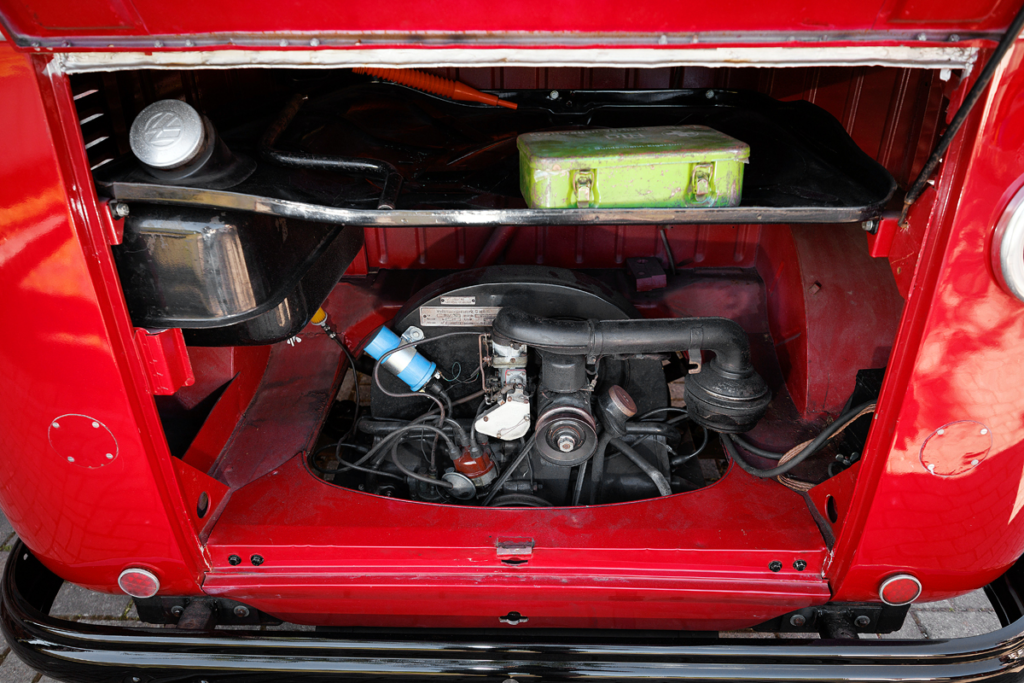
The power supply is provided by a 1.2 opposed engine with air cooling.
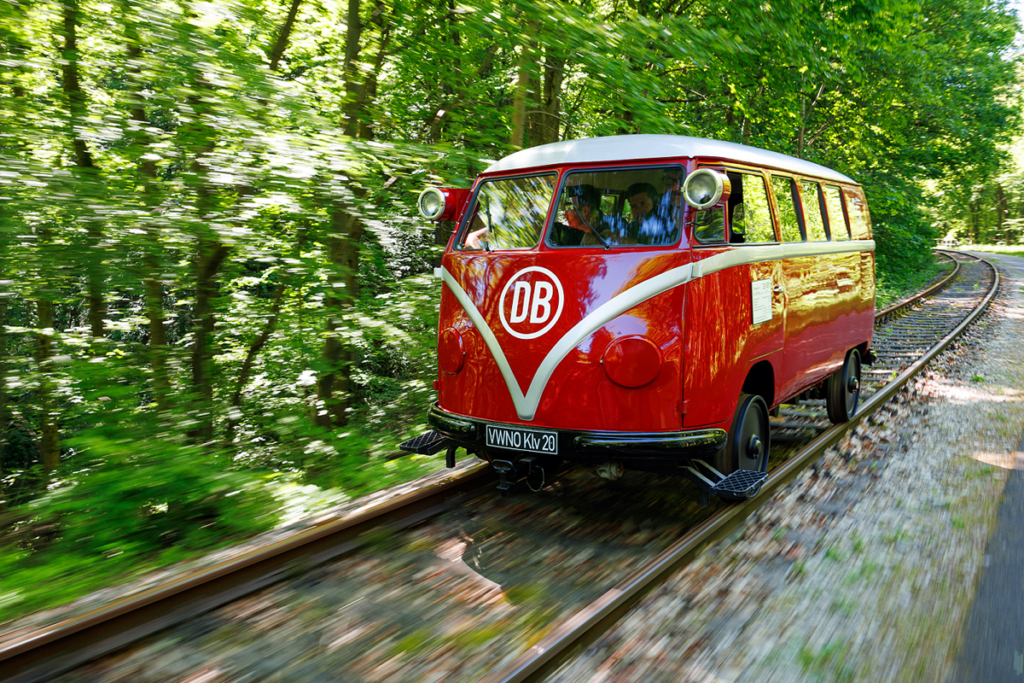
A Klv-20 is a VW T1 Kombi body, a standard powertrain — the 1.2-litre air-cooled petrol engine of 28 hp with a four-speed gearbox — and a special chassis on leaf springs with steel wheels 55 cm in diameter. Rubber inserts under the wheel rims absorb the shocks from rail joints, and the body itself sits on rubber mounts for comfort.
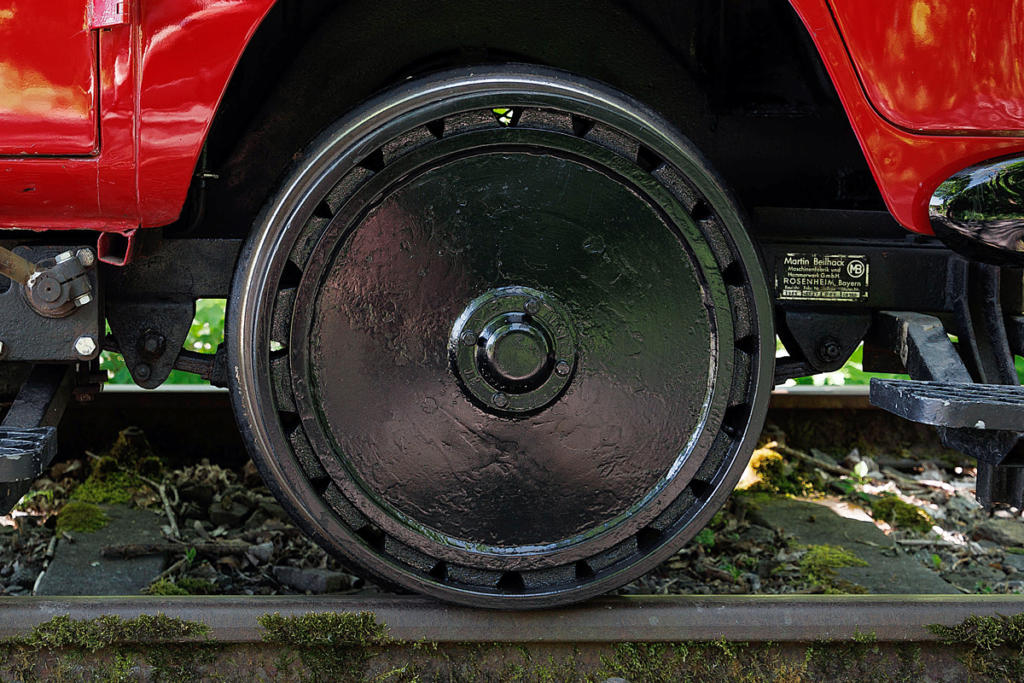
Under the rims of steel wheels – shock-absorbing rubber blocks
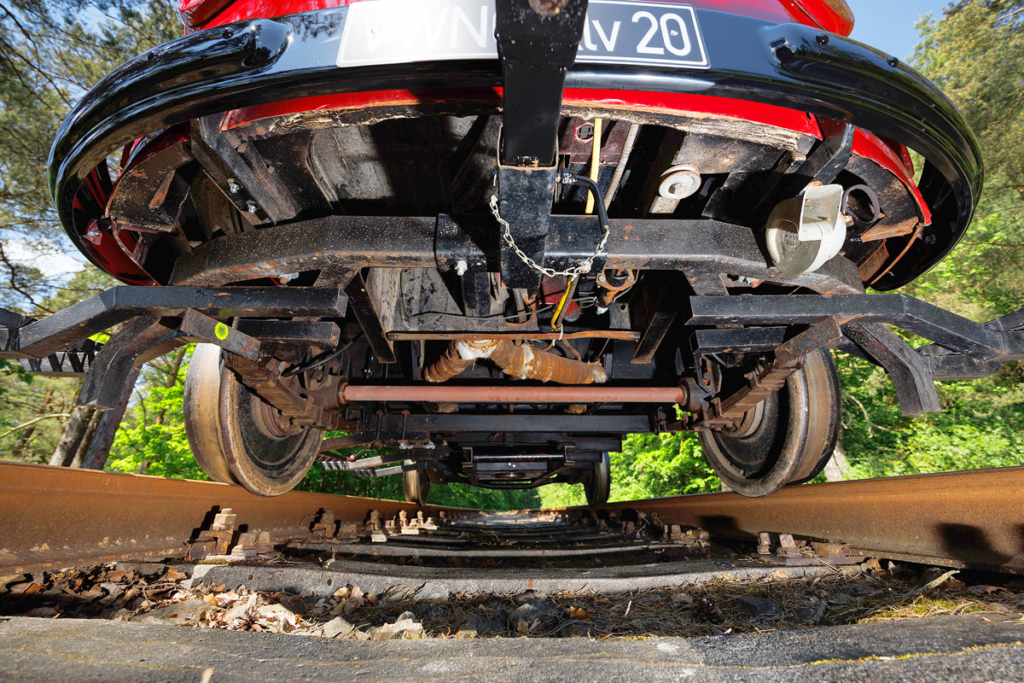
On the spring suspension – almost a railway wheel pair
No Steering Wheel, and a Turntable Underneath
Beneath the chassis sits a hydraulically operated pivot that lets one person lift the vehicle and turn it on the spot to reverse direction — a device of the same kind appears in Emir Kusturica’s film Life is a Miracle.
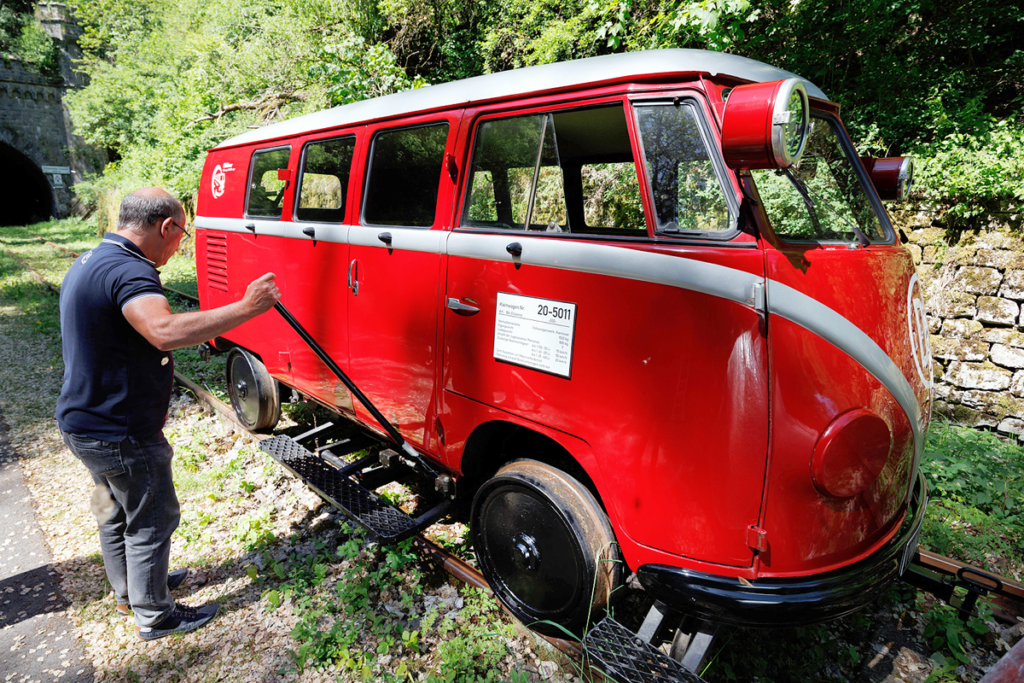
This is how the car is turned on the rails
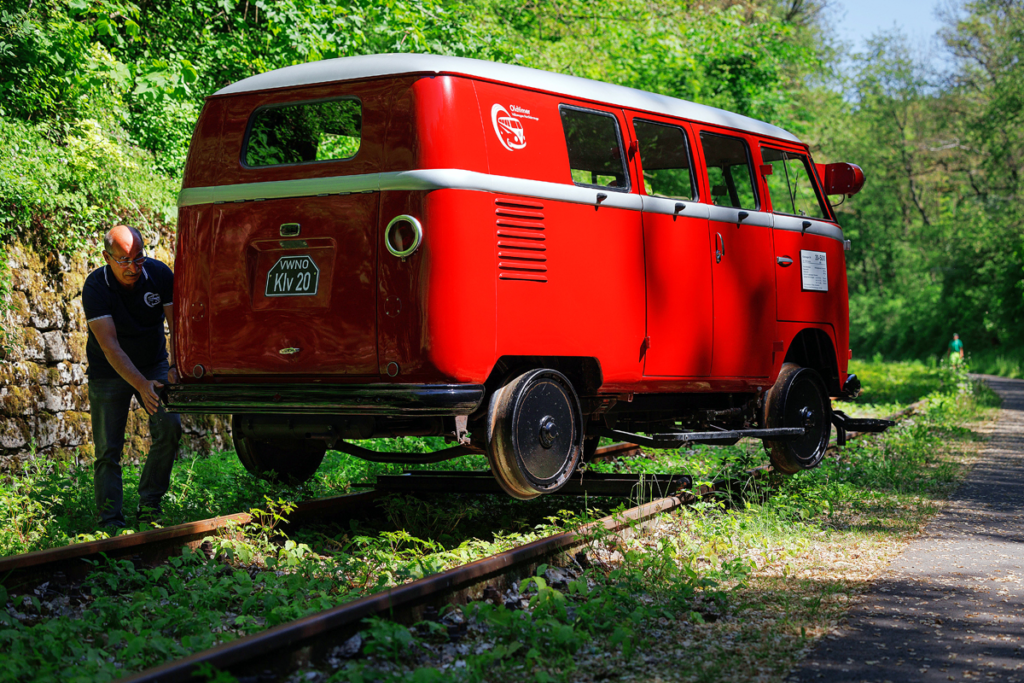
Braking is still hydraulic, with drums. The steering mechanism has been removed altogether, so there is no steering wheel in the cab at all: only pedals, the gearshift and handbrake levers, a couple of gauges, and switches for the lights and wipers.
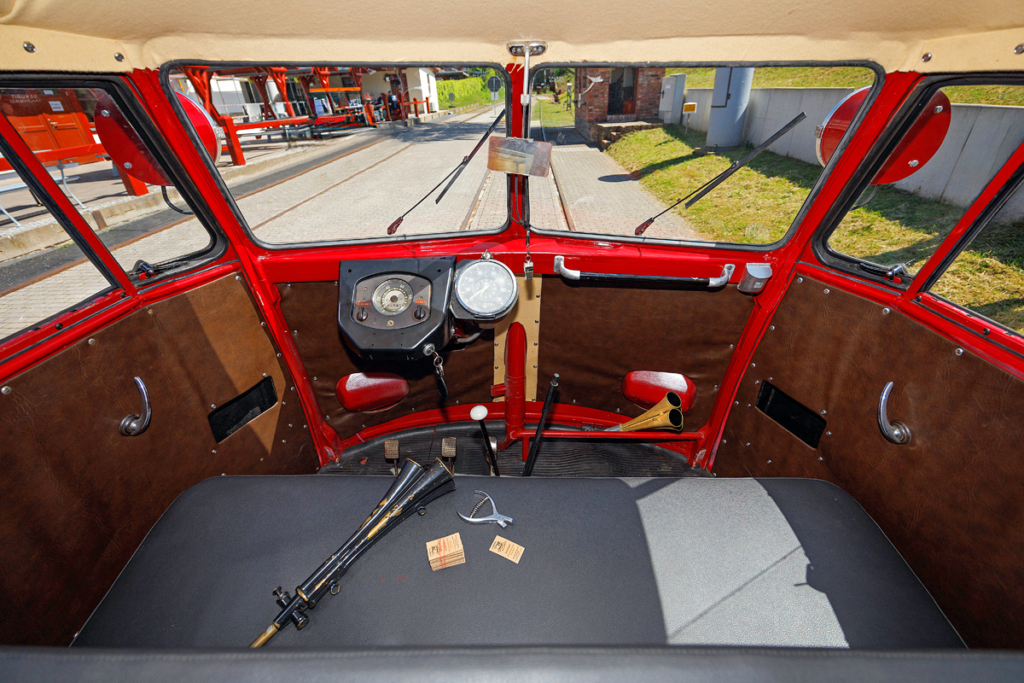
The ascetic cabin has no steering wheel and no rear-view mirrors. But you can see a pair of hand-held horns for giving signals: tu-tu-u, the trolley is leaving!
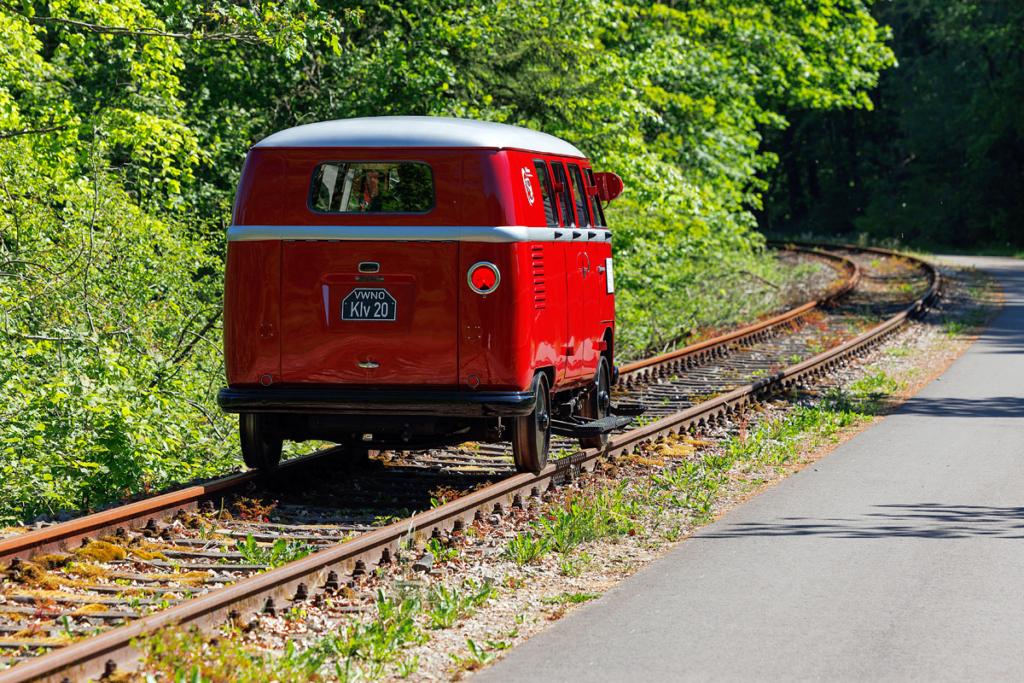
The usual automotive lighting has given way to two white spotlights at the front corners of the body and a single red lamp at the right rear corner. Worth noting, too: this Transporter is 400 kg heavier than a standard one, at 1550 kg.
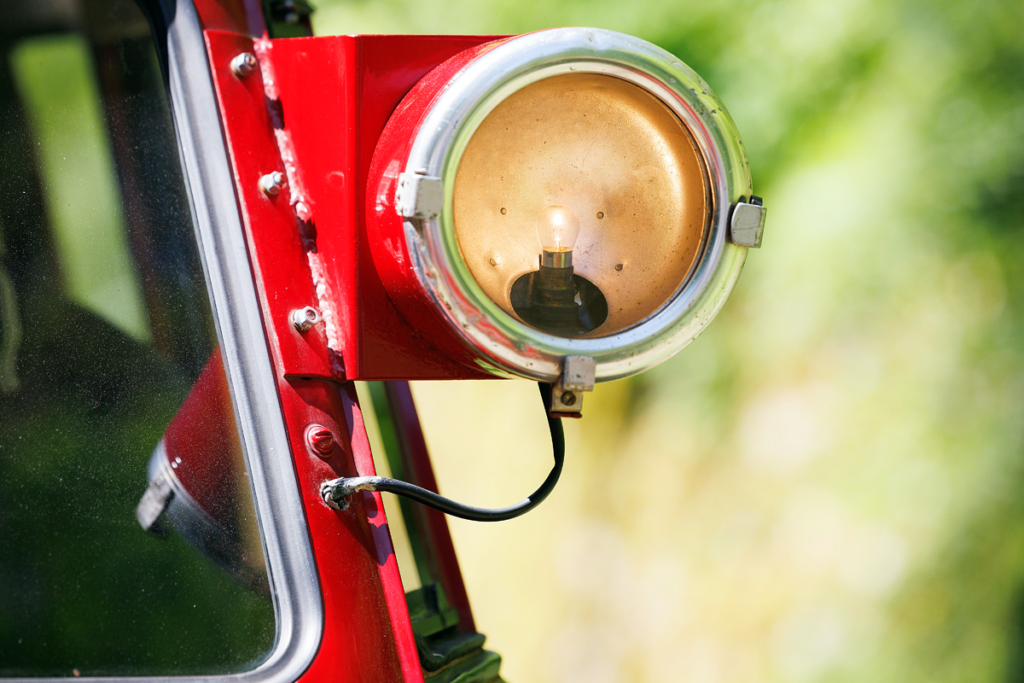
Instead of regular headlights – two spotlights
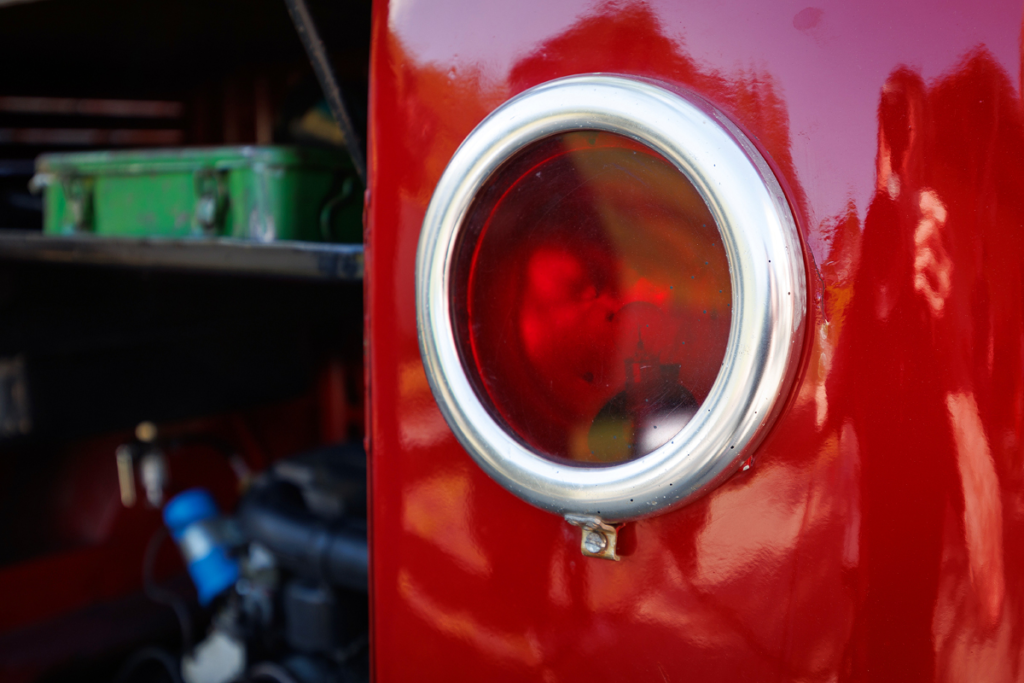
At the back – one red light
This One’s History
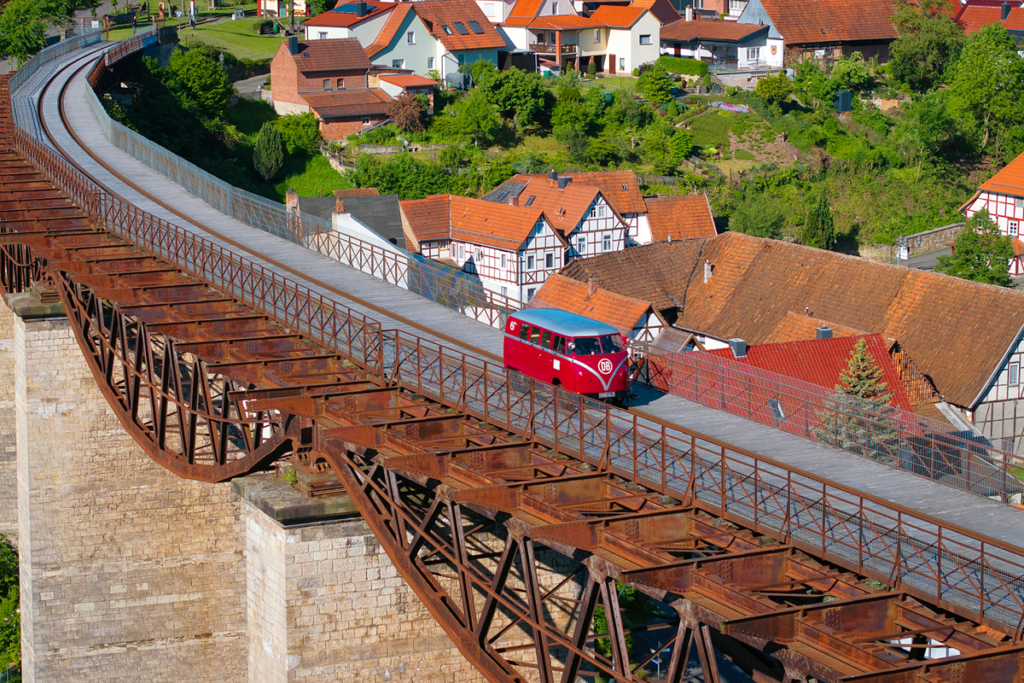
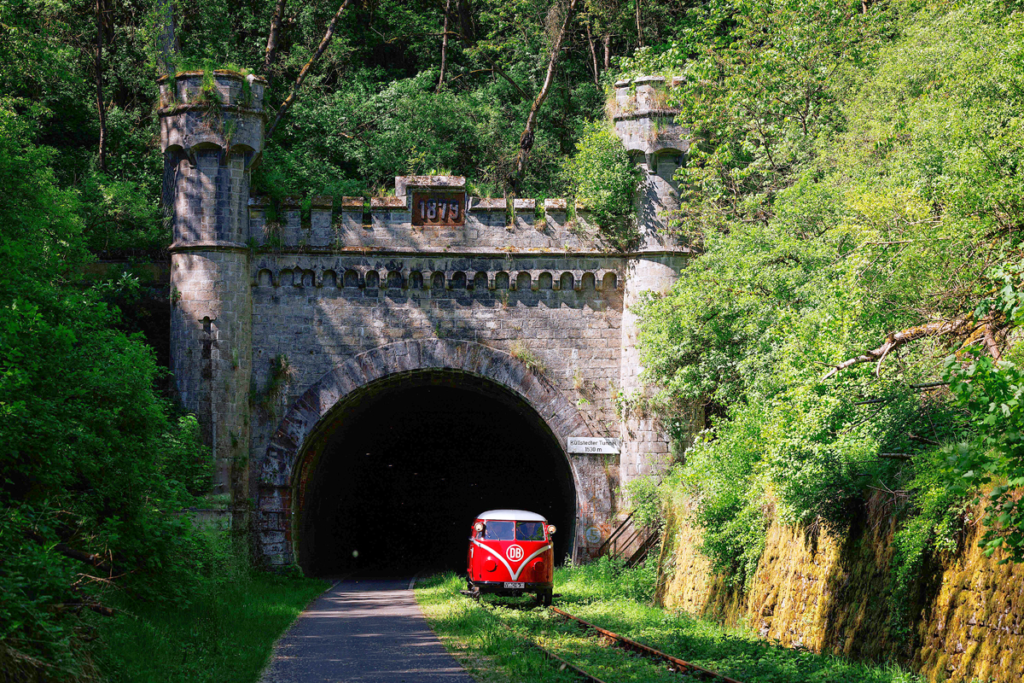
The vehicle pictured was built by Beilhack and worked at the Bavarian depot in Plattling, first on track maintenance and later on signals. It was retired in the 1970s and, fortunately, escaped scrapping. In 1988 a collector bought it, and recently Volkswagen bought it back. Imagine what the Volkswagen staff felt on its first test run — 32 km along the rails, through a five-kilometre tunnel and over a viaduct. Regular trains no longer run there; railcars carry tourists instead. On rails the Transporter reaches a genuine 70 km/h.
And in Russia?
In early June the restored machine was shown at a festival in Hanover, among VW microbus enthusiasts. Which raises a fair question: does anything similar survive in Russia? It does. Narrow-gauge railway museums still hold railcars with cabs taken from the GAZ-51 truck, the Pereslavl Railway Museum keeps a narrow-gauge ZIM passenger car, and Moscow’s Sviblovo metro depot has a rail-bound snowplough converted from a GAZ-63.
Klv-20 Railcar: The Key Facts
- What it is: a pure rail vehicle — steel flanged wheels, no tyres, no dual-mode conversion
- Built: 1955, by Martin Beilhack and Waggon-und Maschinenbau Donauwörth, 15 each
- Body: VW T1 Kombi, first-generation Transporter — the “Bulli”
- Engine: 1.2-litre air-cooled flat four, 28 hp, four-speed gearbox
- Wheels: steel, 55 cm across, on leaf springs, with rubber inserts under the rims
- Weight: 1550 kg — 400 kg more than a road Transporter
- Top speed: 70 km/h on rails
- This example: Plattling depot, retired in the 1970s, sold to a collector in 1988, bought back by Volkswagen
Frequently Asked Questions
Can it drive on a road? No. It is a pure rail vehicle: the tyres are gone, replaced by flanged steel wheels, and the steering mechanism has been removed entirely.
How does it turn round? On a hydraulic pivot under the chassis. One person can lift the vehicle and swing it on the spot.
What does Klv-20 stand for? Kleinwagen mit Verbrennungsmotor — “small vehicle with an internal combustion engine”.
How many were made? In 1955, 15 by Martin Beilhack and 15 by Waggon-und Maschinenbau Donauwörth.
Is it slow? Not especially. On rails it reaches 70 km/h, and its first test run under Volkswagen covered 32 km, tunnel and viaduct included.
Photo: Volkswagen | Fedor Lapshin
This is a translation. You can read the original article here: Булли чух-чух: в Германии вновь поставили на рельсы VW Transporter 1955 года

Published July 09, 2025 • 5m to read