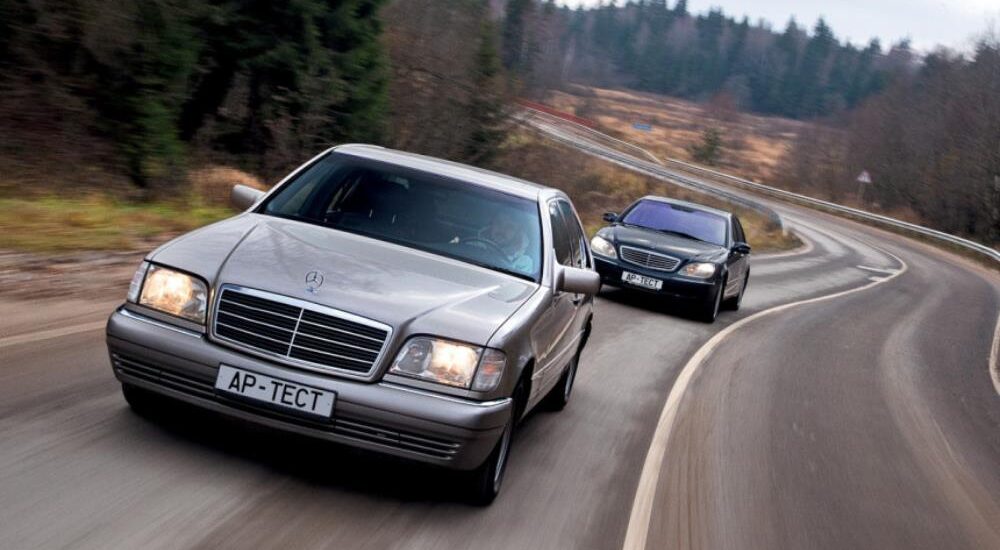

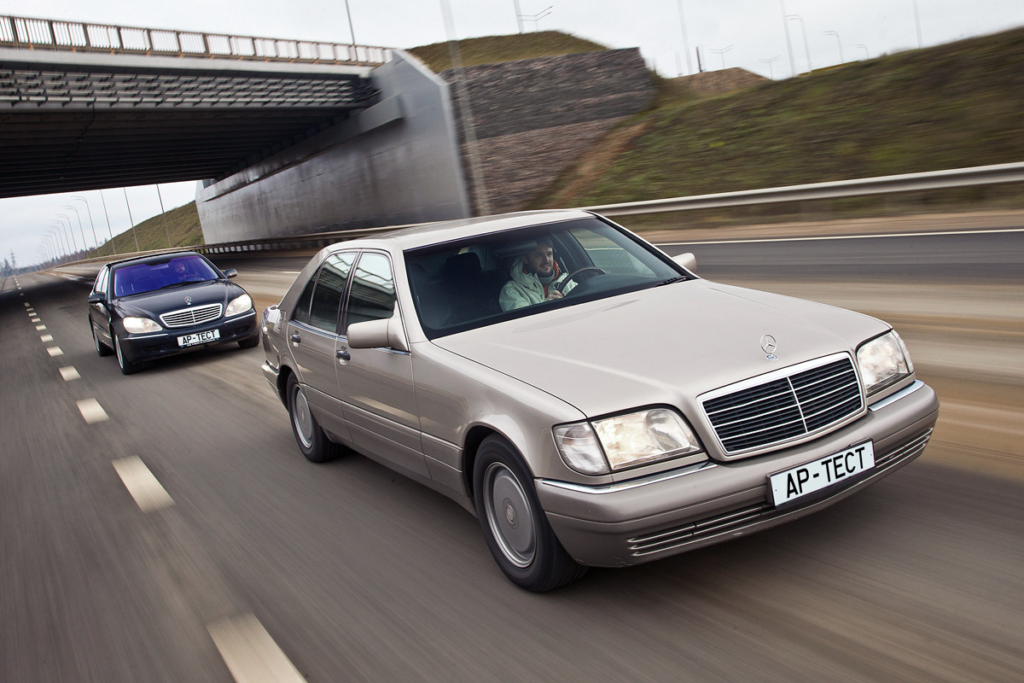
Nearly a quarter-century ago, in the fifth issue of AR in 1999, two S-Class models met on the pages. The young W220 effortlessly demonstrated over just a page and a half that a new Mercedes always outshines the old one. But now, they’re contemporaries – both aged. So, we decided to repeat the comparison, especially since the 1994 “S 500” versus the 1998 “S 500” is more than just an S-Class against S-Class; it’s the twentieth century taking on the twenty-first. It’s form versus substance. It’s “being” against “seeming.” But who is who?
One Hundred and Forty Shades of W220: First Impressions of the W140
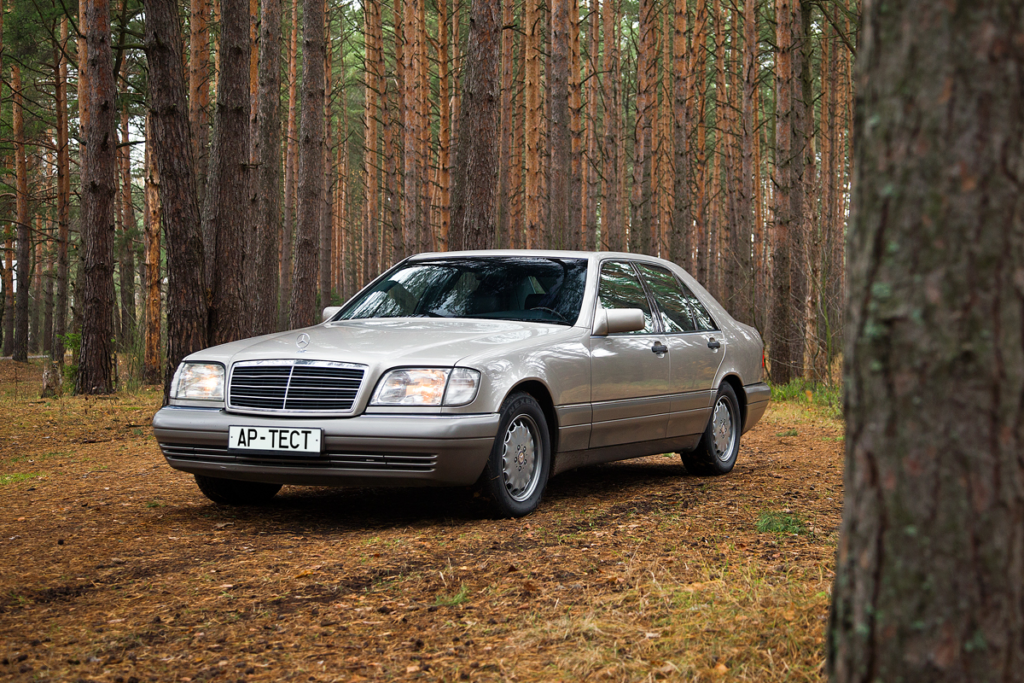
Just take a look at this S-Class: short wheelbase, simple trim, and ‘smoke silver’ color. Even Mercedes themselves dubbed the W140 a tank, reflecting the vehicle’s engineering aesthetics. In the ’90s, German journalists affectionately referred to it as “Die Kathedrale,” an ironic nod to the Pagoda W107. “Suitcase,” “brick,” and “shoebox” perfectly encapsulate the design.
Lighter and Smaller Than the Myth
Have you spotted a W140 on the road lately? After encountering six-meter-long Fleetwoods, it’s hard for me to be impressed by mere size, and surprisingly, the standard-wheelbase W140 is shorter, narrower, and less tall than the modern W223.
The scales at the test track confirmed this. Weighing in at a mere 2065 kg when equipped (sans driver) – it’s as light as a Changan Uni-K! And roughly 200 kg lighter than modern flagship sedans. Who would have thought, given the assumption that any W140 weighed at least two and a half tons? Stereotypes can be heavy…
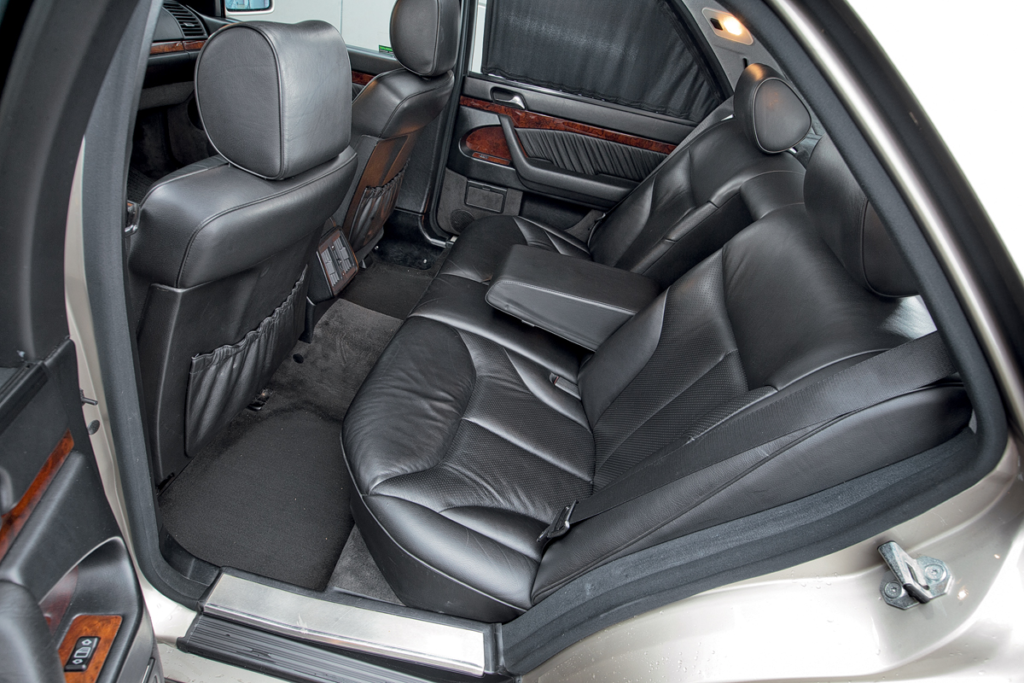
Another myth crumbled after measuring the interior. There isn’t as much legroom as expected – it’s akin to business class on domestic flights. Even if we had the long-wheelbase V140 (the letter ‘V’ denotes extended wheelbase in Mercedes parlance), it would still fall short compared to modern executive sedans in terms of legroom. However, the W140’s headroom and cabin width remain unrivaled.
A Whole Meter to the Roof
But this is precisely what captivates! Just as we marvel at an apartment with four-meter-high ceilings the moment we step in, the old S-Class interior makes our jaws drop as soon as we settle into the seat. A whole meter to the roof. Die Kathedrale.
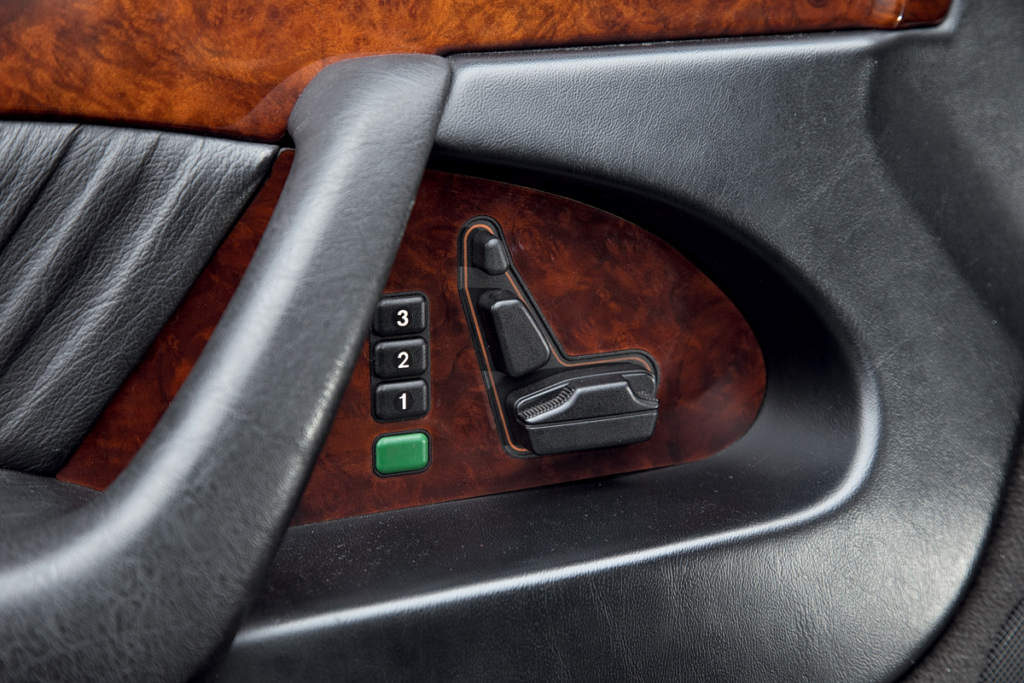
The plush and soft rear bench is akin to a throne, but the seating is distinctly upright. I find the driver’s seat more comfortable: it boasts a full array of electric adjustments and the cozy, old-school Mercedes seat, which our expert calls “a plywood sheet on springs.” It’s when the dense cushion cover doesn’t give way to indentation but gently lowers as a whole under the body’s weight.
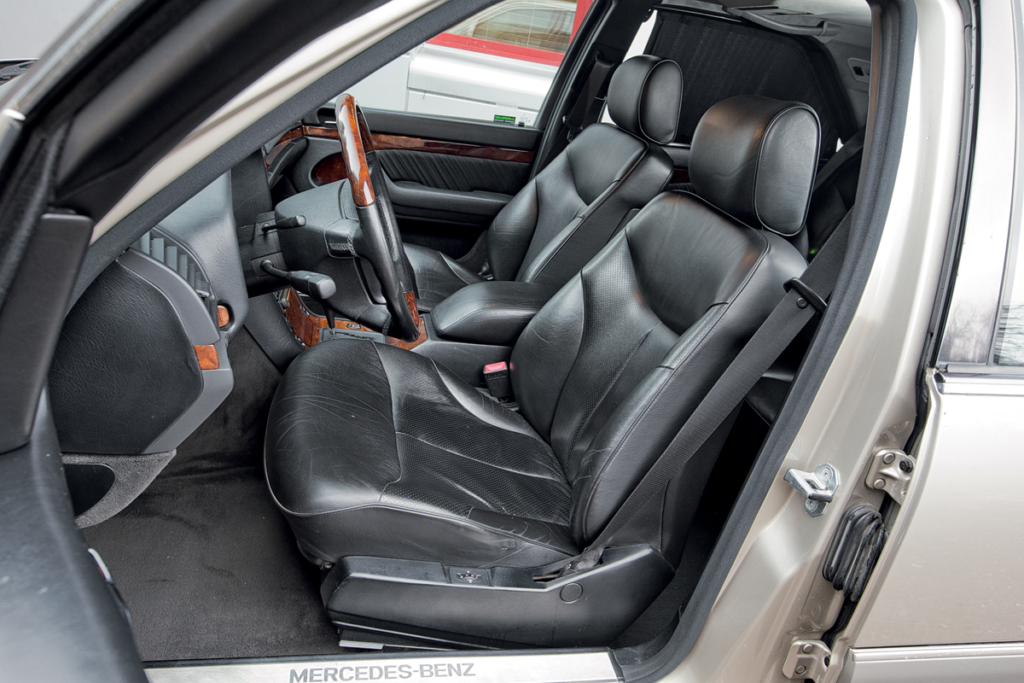
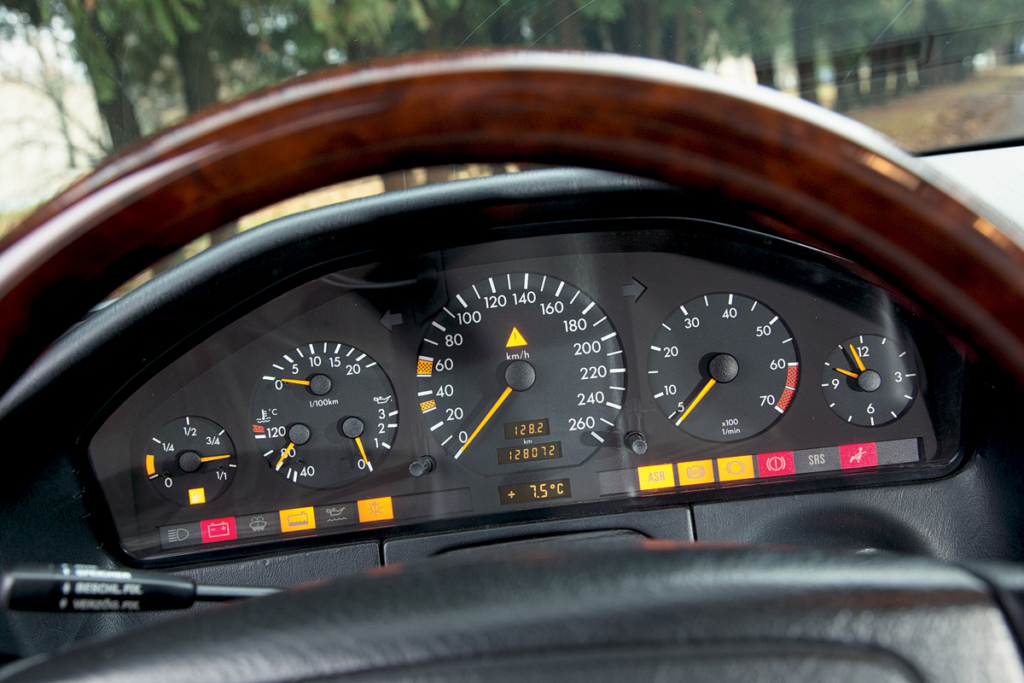
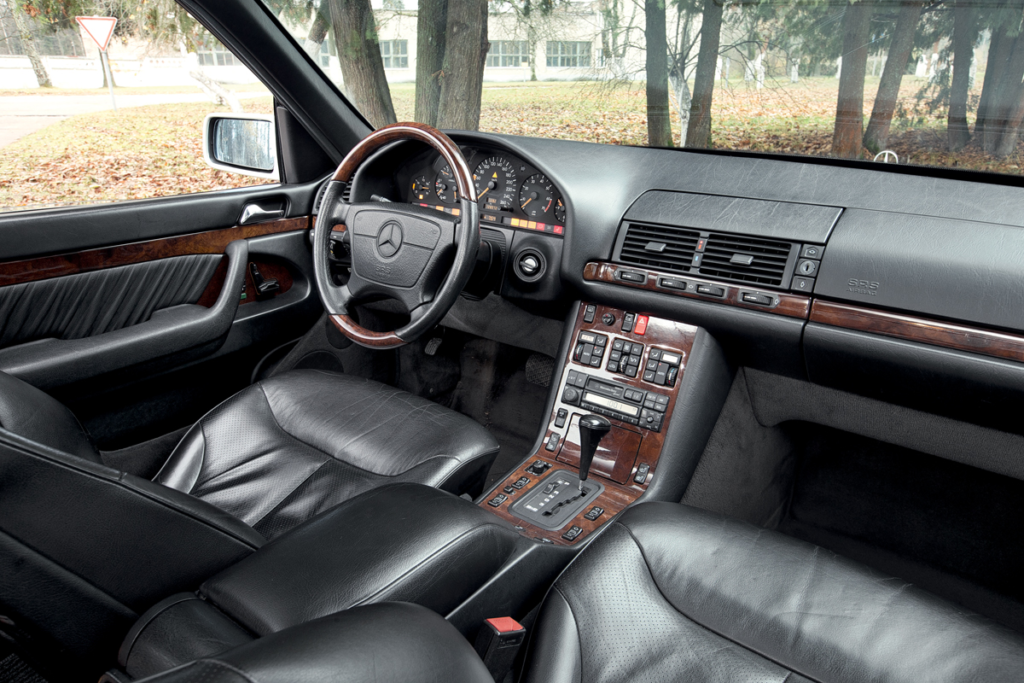
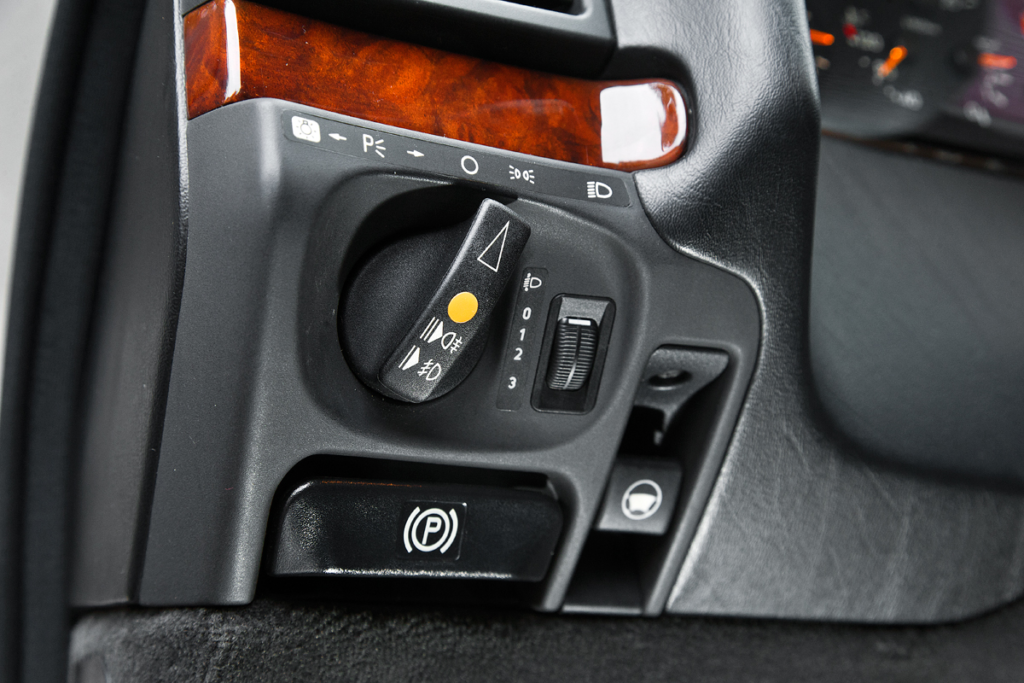
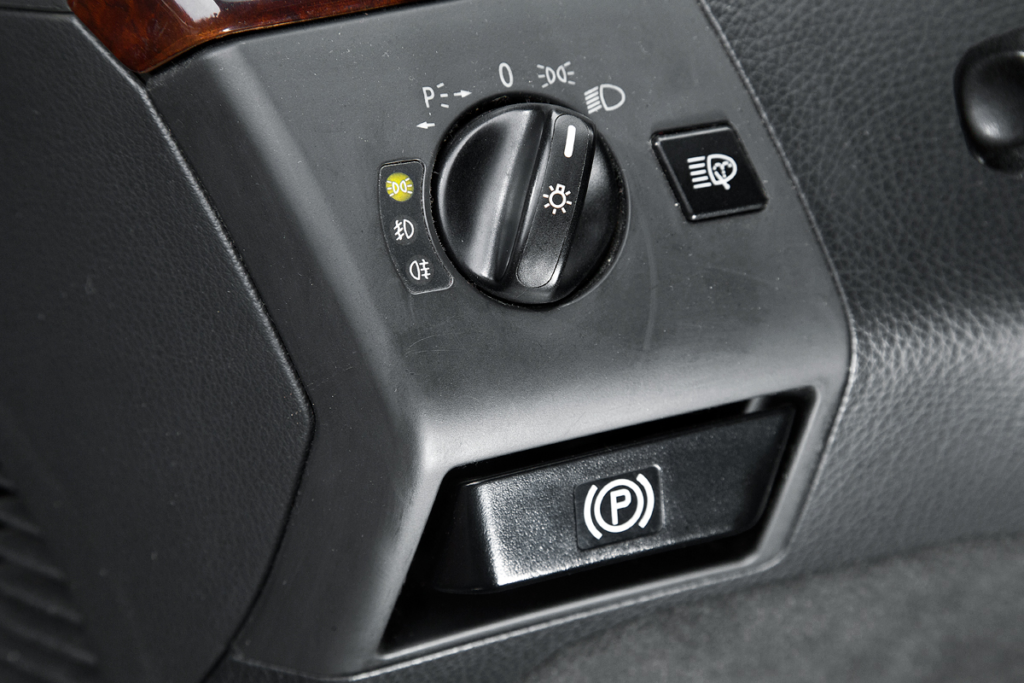
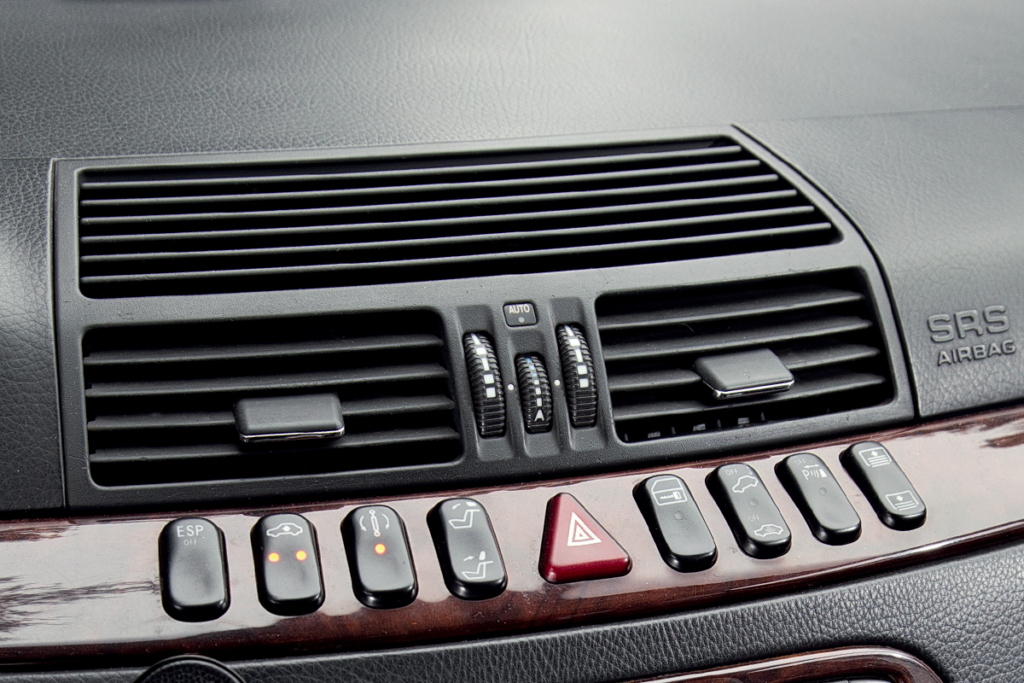
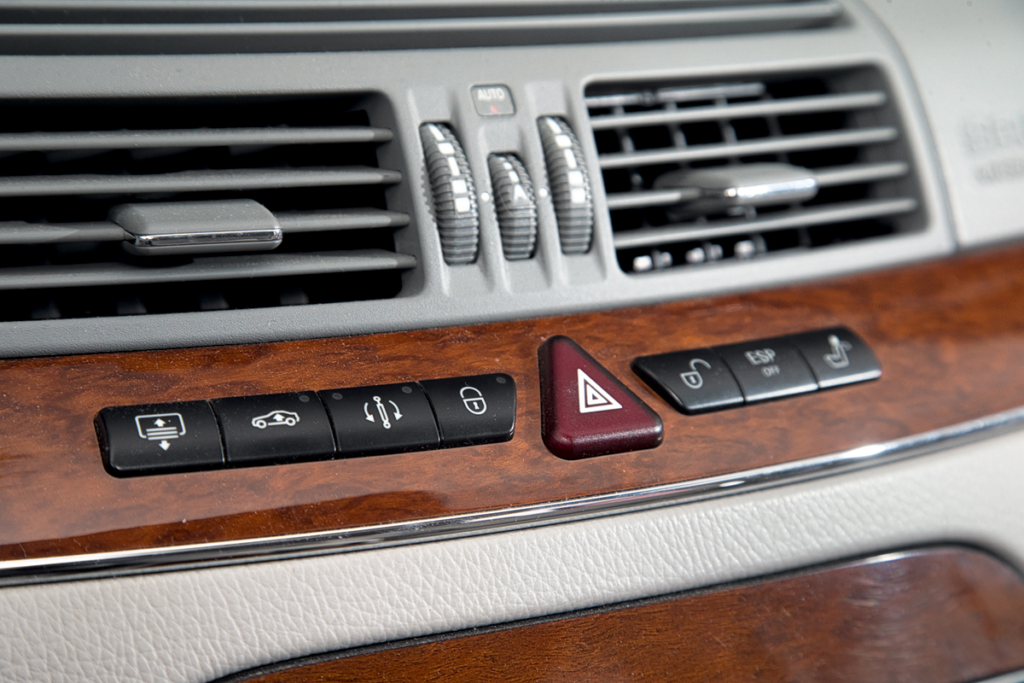
You can adjust the seat however you please, but in true Mercedes tradition, the steering wheel is slightly shifted to the right and turned to the left. Eight needles on five dials barely fit under one shade and have nudged the central air vents from their rightful place, breaking the symmetry of the central console. It somewhat echoes the asymmetry of the double-breasted jackets from the ’90s.
The W140’s Over-Engineered Party Tricks (And the Ones You’ve Never Heard Of)
The door closer silently drew the door in. The window raised a 9.5mm thick double-glazed unit. Upon engaging reverse, pneumatic parking indicators sprung out from the rear fenders.
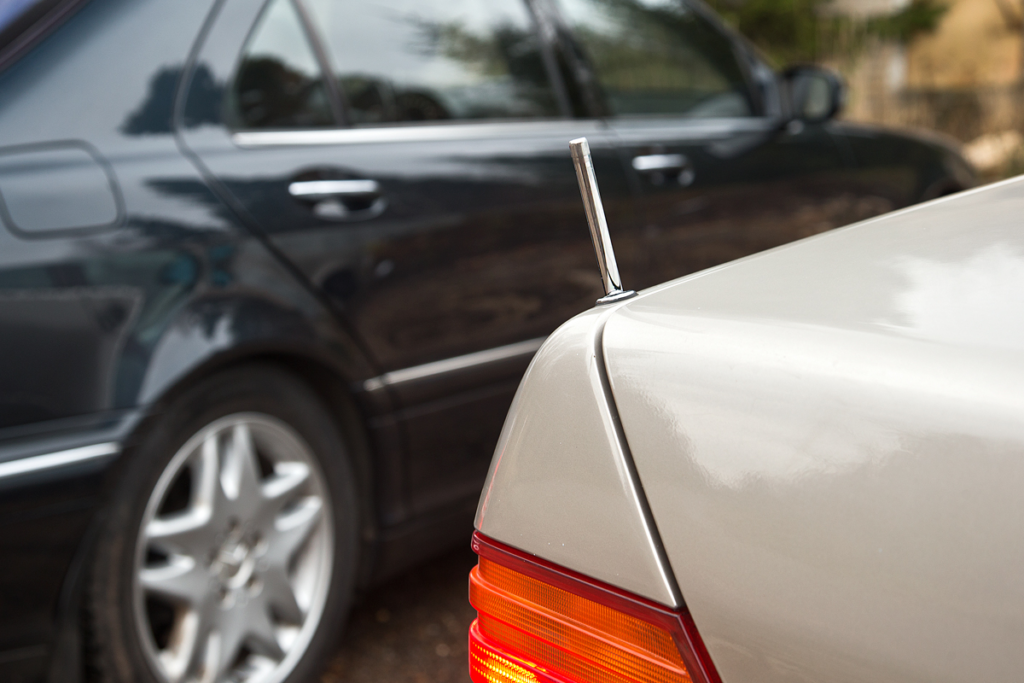
For some reason, every story about the W140 mentions these parking antennas, even though there are at least three more systems that better illustrate the depth of Mercedes’ budget at the time:
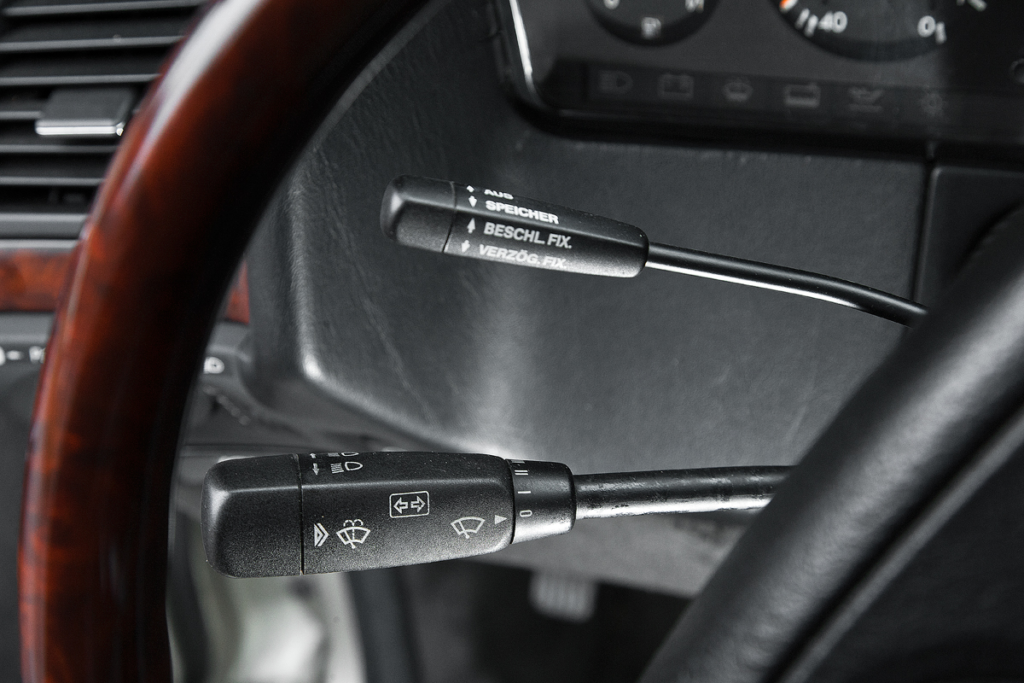
- Heated washer fluid and “dancing” wipers – they rise from the ‘wrong’ side, left to right, as in right-hand drive cars. This ensures the driver’s side of the windshield is cleaned first, though a triangle in the top left corner always stays dirty.
- Servo-driven trunk handle – it hides itself from dirt behind a panel, and to summon it you press the lock cylinder, which is, in turn, entirely unprotected.
- Servo-driven interior mirror – adjustable only via a joystick, a feature virtually unheard of in any other production car, seemingly aimed at buyers who’d struggle to reach the cathedral-like ceiling.
What Else Was Developed for This Car
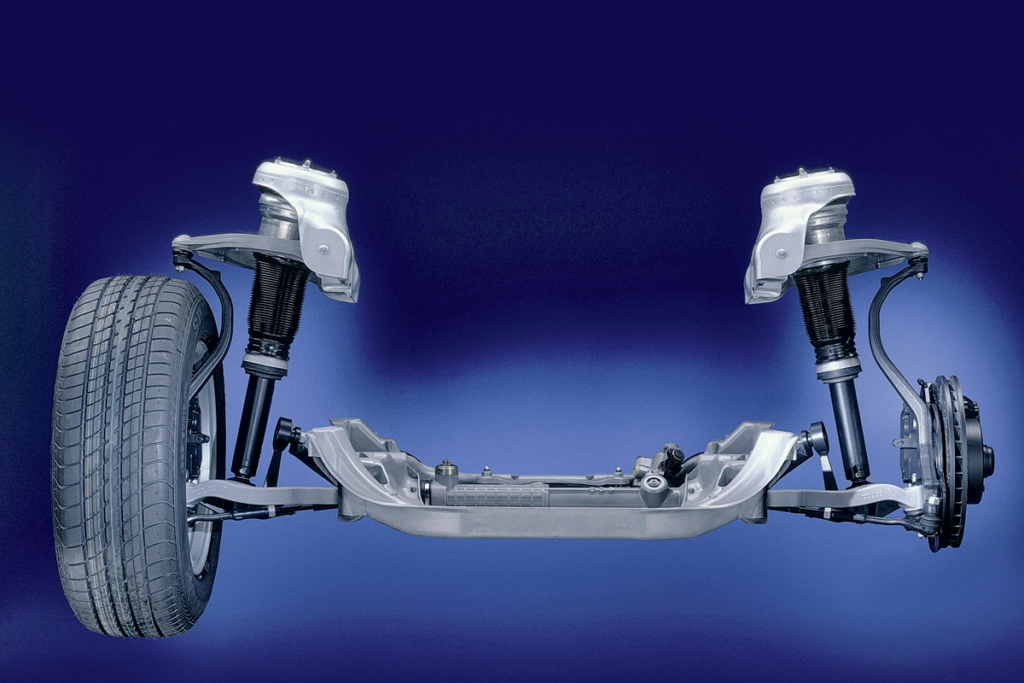
In addition to this, a new front suspension on the subframe, a new rear multi-link suspension, a new family of engines with four valves per cylinder, and of course, the flagship V12 engine were specifically developed for the W140. However, the S 500 became the golden mean.
W140 Engine, Transmission, and Acceleration: How the 5.0L V8 Performs Today
The badges didn’t lie back then. Under the hood, there were indeed exactly five liters and eight cylinders without supercharging, but with charisma. And with a voice — the engine purrs even at idle. And vibrates a bit.
The Four-Speed Butler
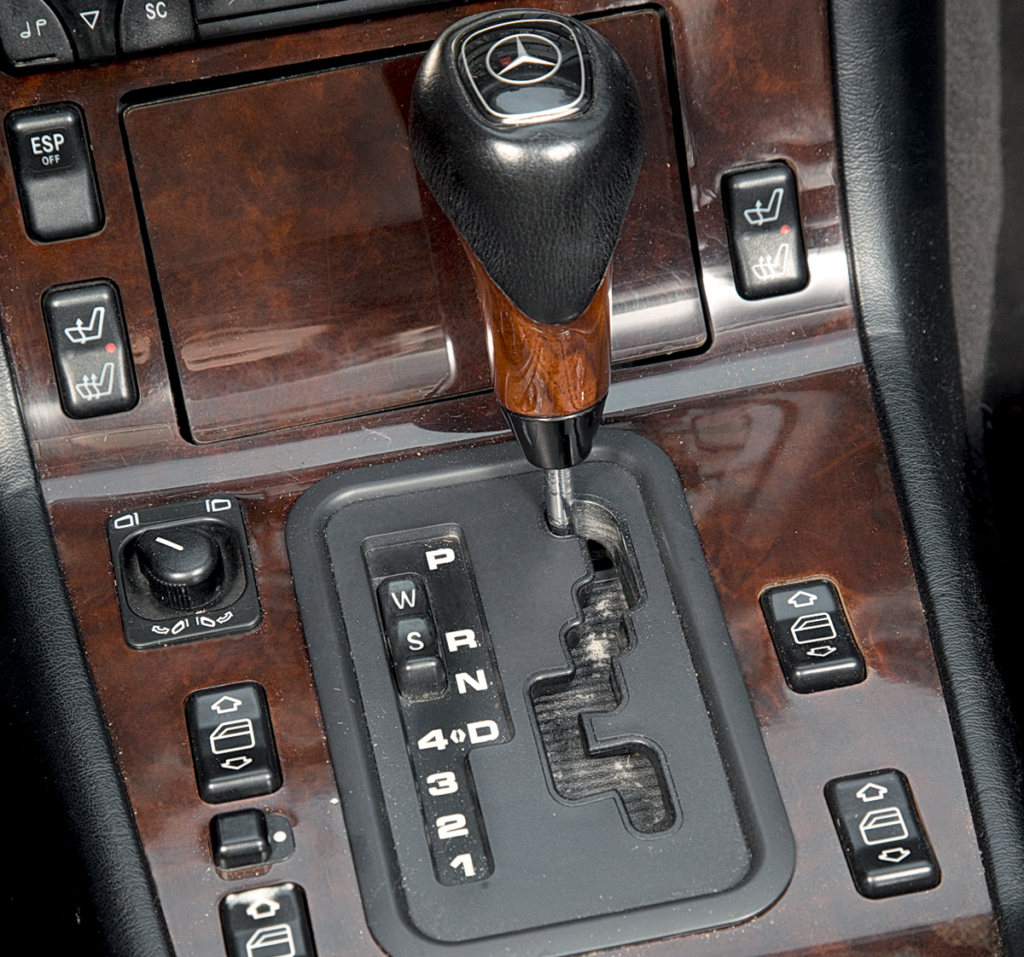
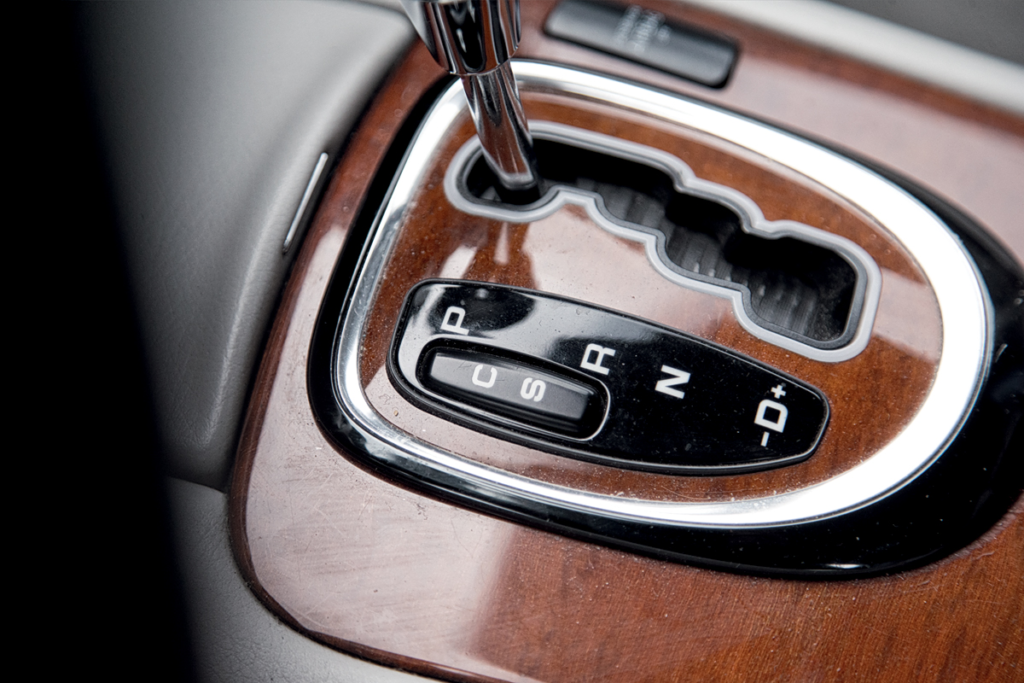
The short automatic transmission lever is unusually low, and the winding slot does not protect against missing the D position. The four-speed transmission, like an experienced butler, does not immediately execute the driver’s command but waits half a second in case you change your mind, and only then sends the torque to the wheels. However, age cannot be hidden: jolts and delays accompany almost every shift.
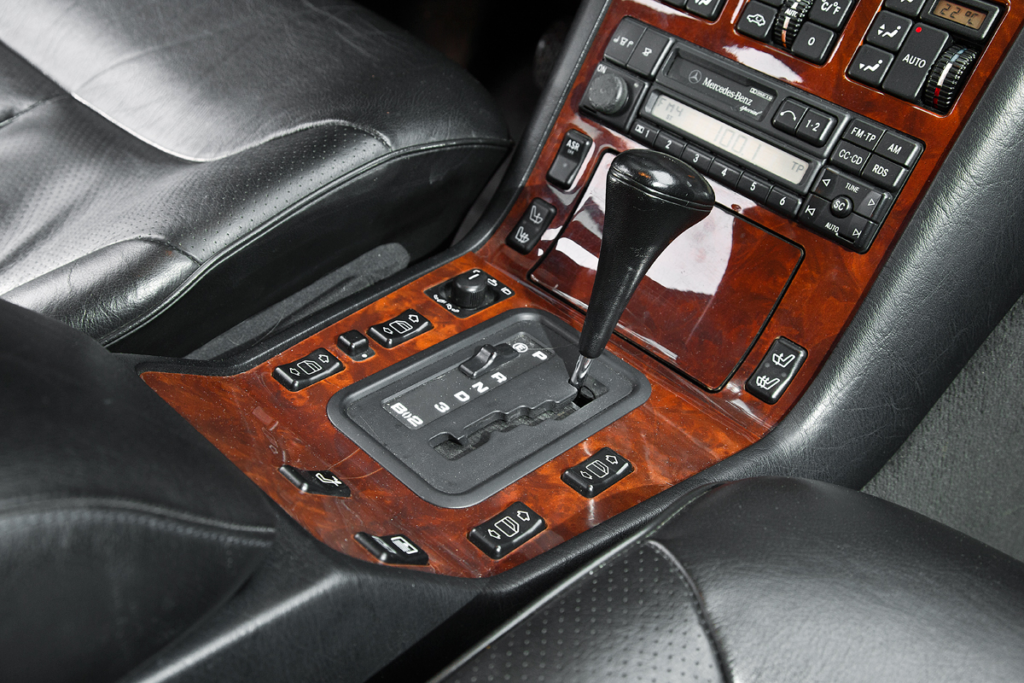
Fortunately, you don’t need to change gears too often. The 5.0-liter “eight” develops only 320 hp, but throughout the rev range, it delivers a generous 400-470 Nm of torque. Great engine. There’s so much pull that the S 500 is ready to accelerate from any speed, and if the automatic transmission guesses the gear correctly, controlling this acceleration becomes pure pleasure. The “one-forty” just flies behind the pedal.
Eight and a Half Seconds, Measured
Interestingly, there were no serial AMG versions for the W140, but if the Mercedes 500 E sedan made in collaboration with Porsche accelerated to 100 km/h in 6.1 seconds, and the Mercedes 190E 3.2 AMG did it in 6.9 seconds, the ordinary S 500 could do it in 7.3 seconds. What about now?
Youngtimers are not always good for low starts (Fleetwood asked for a replacement of the cardan shaft cross after our test), but we took the risk again. Full throttle, hesitation, a jolt from a standstill – and 8.8 seconds to 100 km/h. Impressive! What if without the anti-spin system or with both pedals? Better not repeat: in the first case, the spin ruins everything, and in the second case, the transmission just doesn’t understand what these people want from it.
W140 Ride, Handling, and Noise: Is It Really the “Silent Cathedral”?
But if you drive calmly, the W140 surprises with its sounds. Where is the “grave silence” that amazed in 1999? The engine rumbles, and besides it, you can hear the tires and the wind in the cabin. Neither double glazing nor thick insulation mats help. According to our rating system, the S-Class “acoustics” barely earns a four minus.
The same story is with ride smoothness. The W140 seems to round off roughness, but it can’t smooth the road completely. The itch from the micro-profile of the road, vibrations on short waves, and swaying in all directions are present in the cabin as constant companions.
A Loose Wheel and Anticipatory Lean
Add to this company also a loose steering wheel. The steering wheel is not long (3.1 turns from lock to lock), but there is almost no feedback. Reactive effort arises only at large angles of rotation. But you always have to steer! The accelerating W140 does not hold a straight line firmly and slightly floats on rough surfaces. The situation is complicated by the fact that the loose steering wheel remains sharp, so pressing the gas and relaxing won’t work.
Also, the W140 revives such a phenomenon as anticipatory tilts. That is, you decide to change lanes, pull the steering wheel – and the car first leans to the side and only then begins to change its trajectory. Fortunately, having chosen a roll, the W140 precisely writes the arc. And doesn’t even try to skid if you overdo it with speed, but when you let off the gas, it smoothly moves inside. This is a good balance that is worth a lot in a car without ESP and helps to pass the moose test with shallow, safe skids. But neither the winding roads nor the lane changes bring any thrill or joy.
So Where Is the Magic?
By and large, apart from acceleration, the W140 does not have any outstanding driving properties. So where is the magic? Where is the fabled combination of handling and comfort? Where is it, the absolute champion of all Mercedes in Mercedes-ness? Or maybe I am driving the W140 in some wrong way? Without respect?
In fact, the magic in such cars appears and disappears for one single reason – these are original spare parts. The indestructibility of this S-Class is the most indestructible myth. Yes, its interior will not fall apart, and the engine is likely not to “lay down” neither after two hundred nor after three hundred thousand kilometers, but it also had weak points in the electrics, suspension, and engines. For example, in our “five hundred” by the mileage of 128 thousand kilometers, the subframe supports finally “got tired” – and this killed all the ride smoothness.
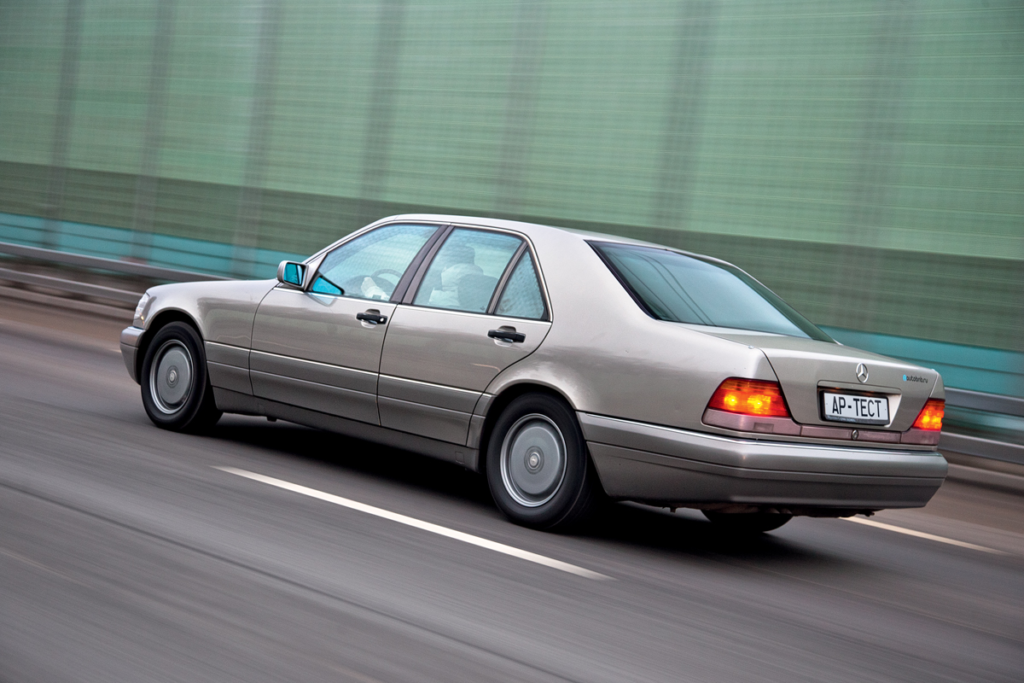
The W140 sedan is not a basic, but a truncated version of the body, created in the final stages of development. The slight disproportion of the profile is explained by the fact that in the initial technical specifications, the designers only had a long version.
Without these rubber parts, the W140 won’t die; it will continue to drive, feeding myths about itself, but it will no longer be an S-Class, but only its shell, a husk. Legendary form without its content.
Remember this thought because now the “two hundred twenty” will appear in our story, which had problems with form from the very beginning. But the content…
Inside the W220: Interior Space, Comfort, and Tech Compared to the W140
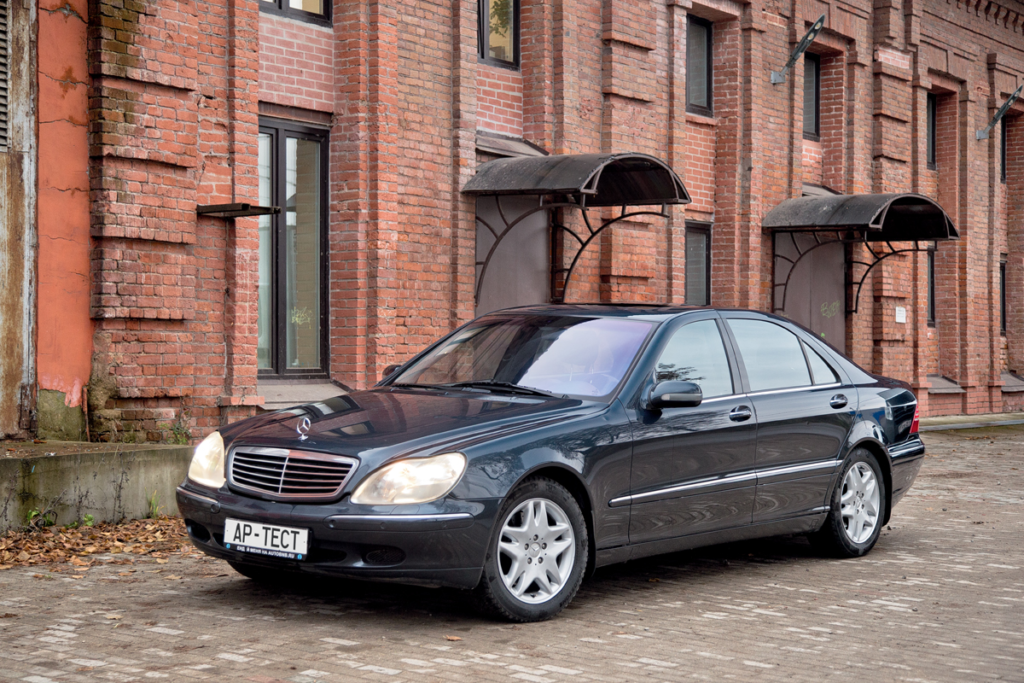
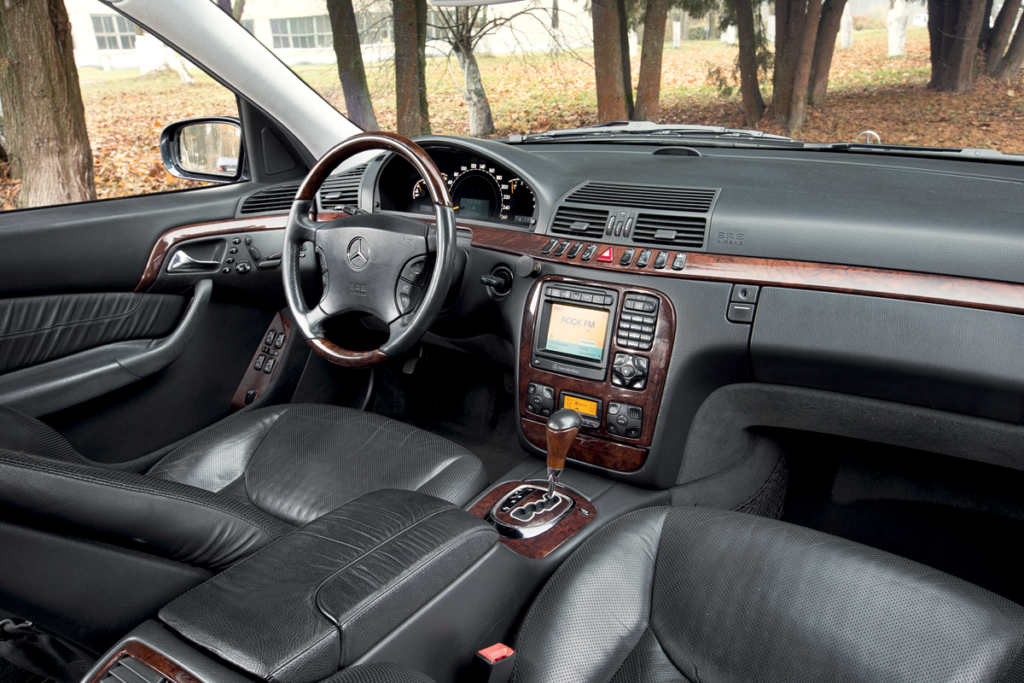
Place them side by side, then step inside. It’s fortunate that the S 500 from 1998 is in the Long version. The stretched V220 is five centimeters longer than the short W140, but it looks more like a car of a modest class. But that’s just from the outside. Inside, it’s ready to teach anyone a master class in executive sedan layout. It’s an entirely different level of space utilization.
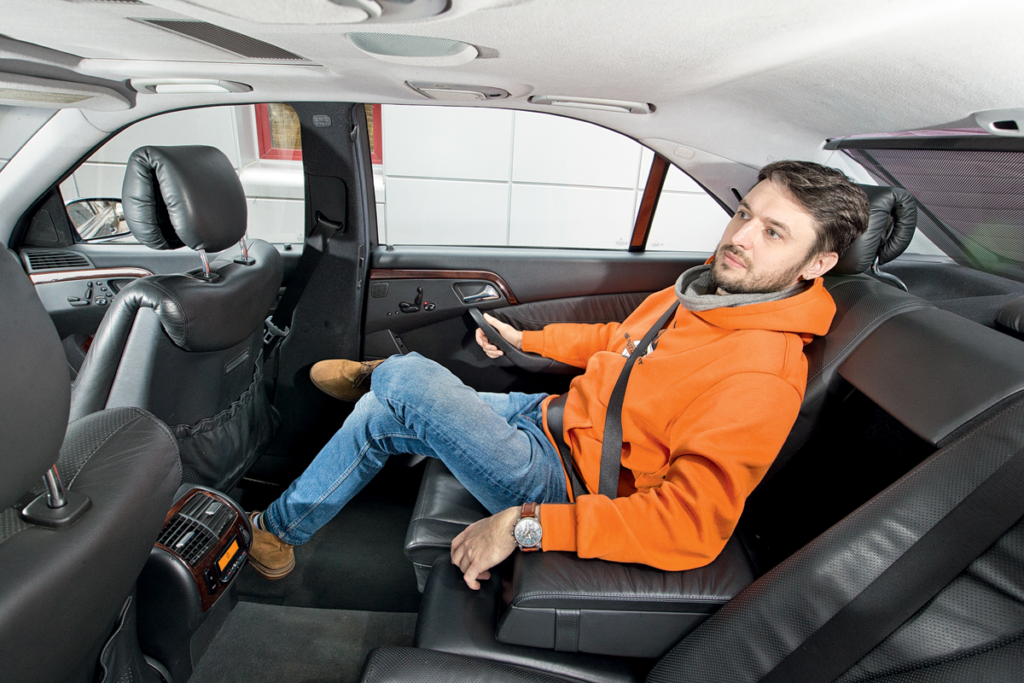
More Room Than a Modern S-Class
The Mercedes V220 is more spacious than the V223! Just think: if the right front seat is moved all the way forward, the current S-Class can offer the rear passenger 445 mm between the rows. The W220 offers 505 mm – more than half a meter! In comparison, our W140, with a maximum of 385 mm, looks downright economy class.
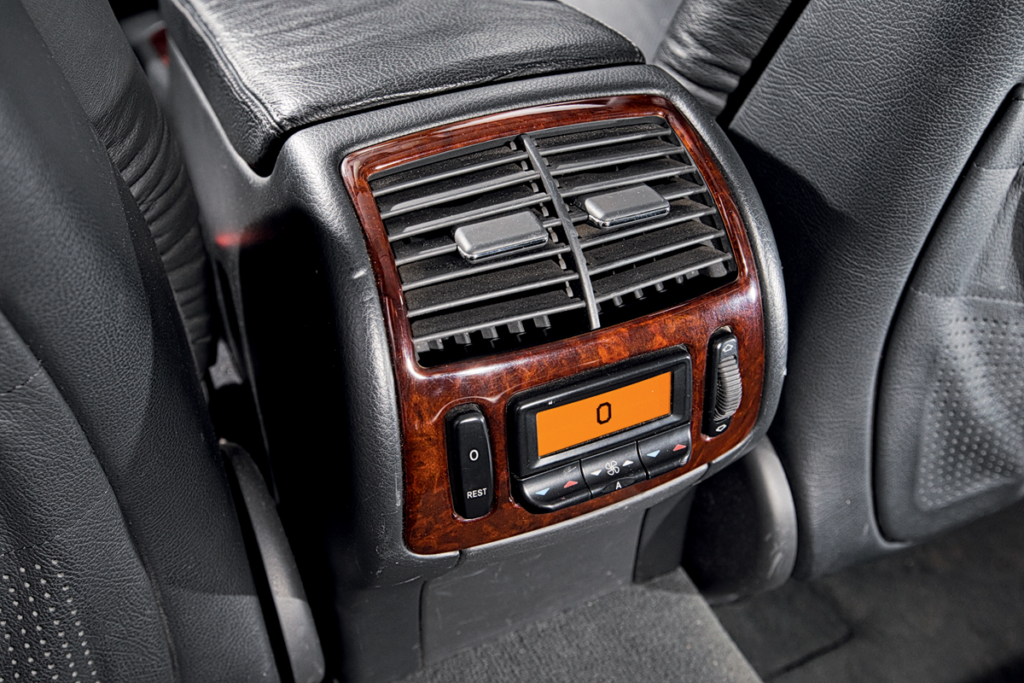
Moreover, the V220 is adept at indulgence. Its features include:
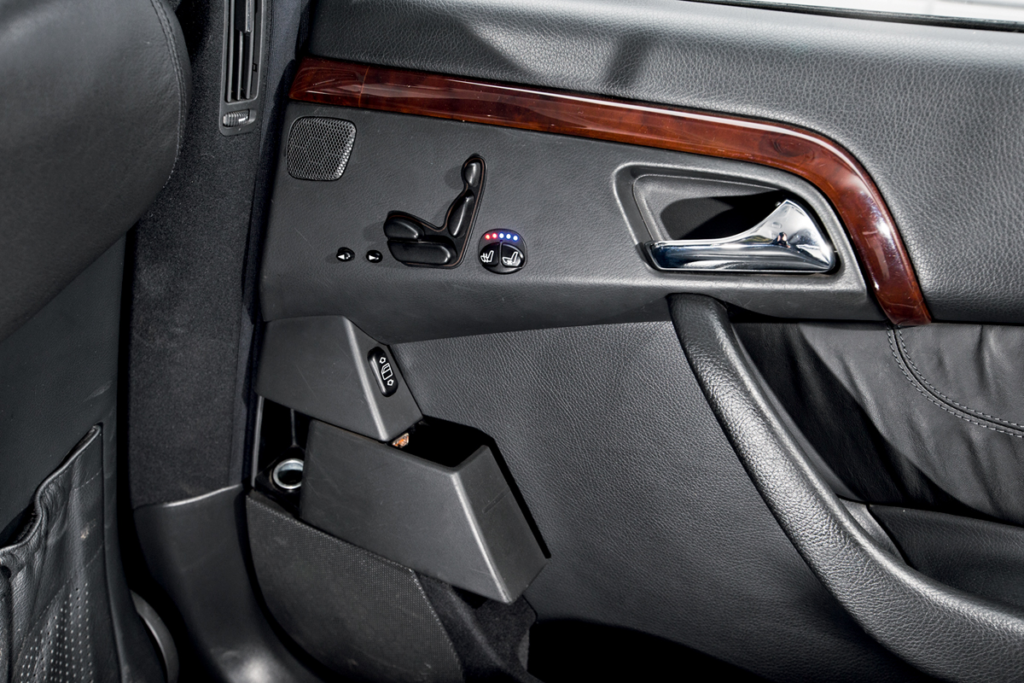
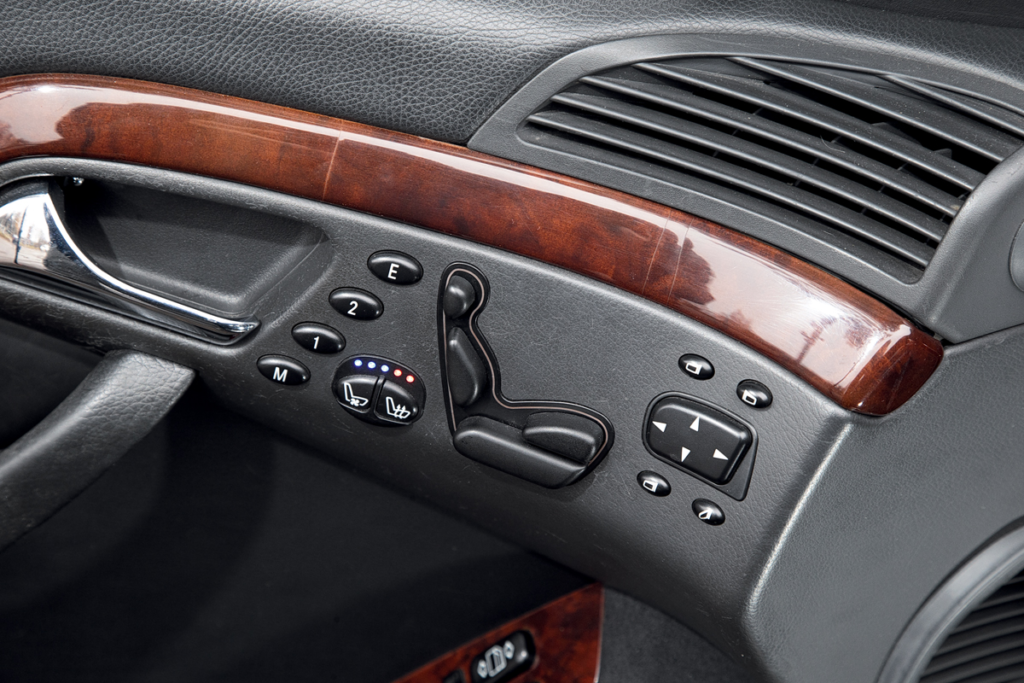
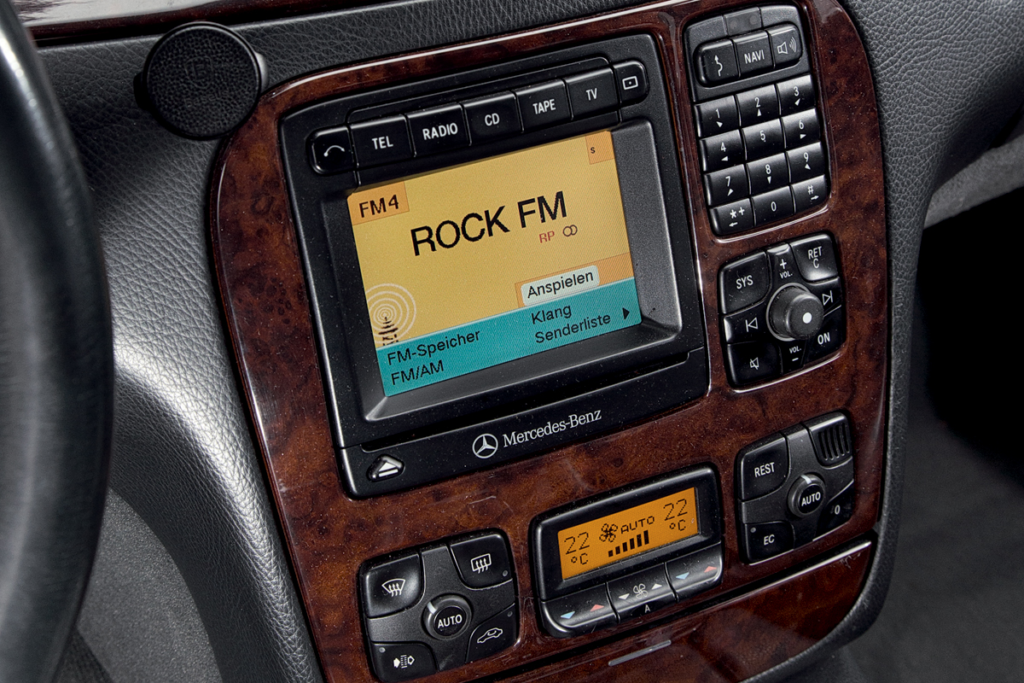
- Soft “multi-contour” seats with heating and ventilation
- A reclining rear bench designed more like a palace bedroom than a throne room
- Hidden ashtrays that emerge from the doors
- Cup holders in the front armrest
- A “TV” button on the standard color monitor
This is a cabin for discerning gentlemen.
And What Was Saved On
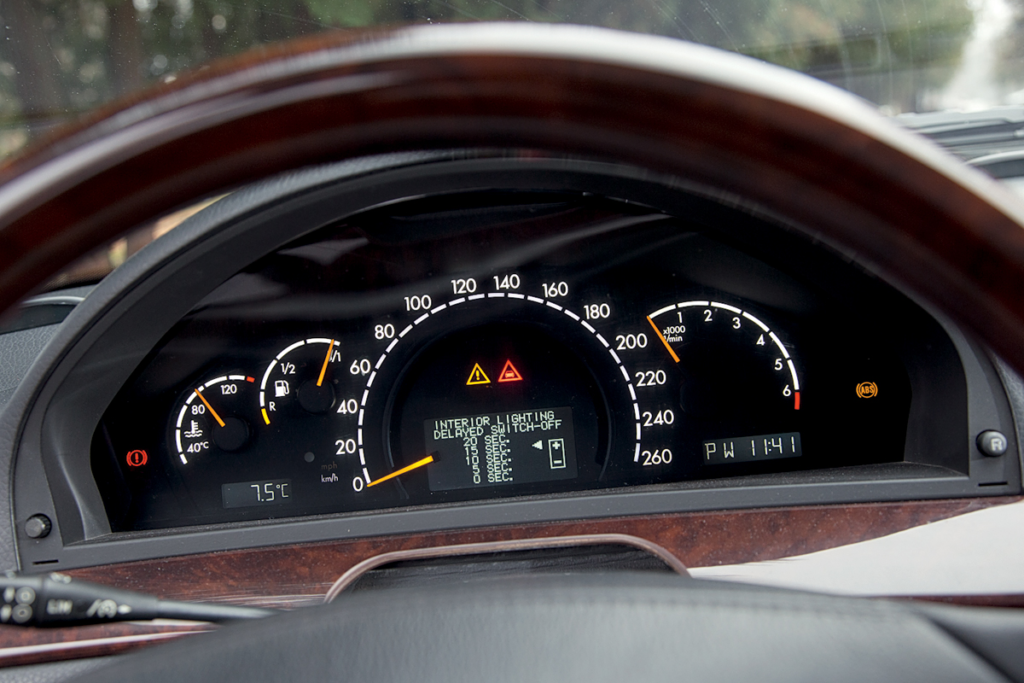
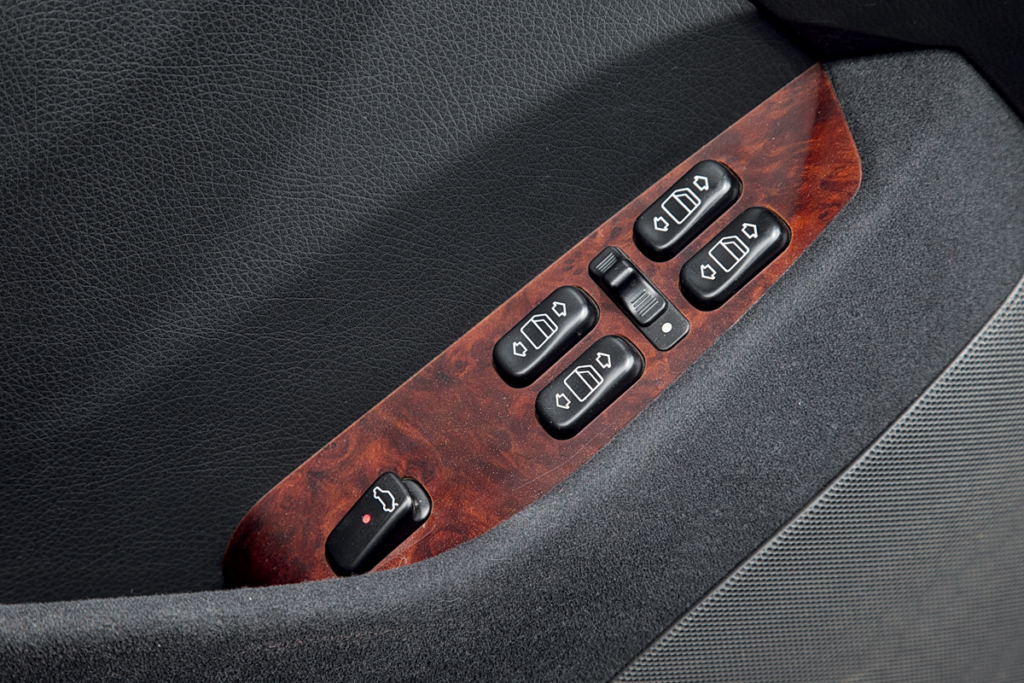
However, the double glass is gone. The coating on the steering wheel buttons has worn off. The plastic creaks. And the interior mirror must be adjusted manually.
The W220 project is famous not only for its feminine design but also for economizing on materials, so the interiors of these S-Classes tend to degrade at a similar pace. However, Mercedes didn’t skimp on technology.
Imagine, just seven years after the launch of the W140, they redesigned the front double-wishbone suspension, perfected three suspension options (springs, air struts, and active ABC hydraulics), added all-wheel drive, and prepared the next generation of petrol V6 and V8 engines. Not to mention electronics and safety systems.
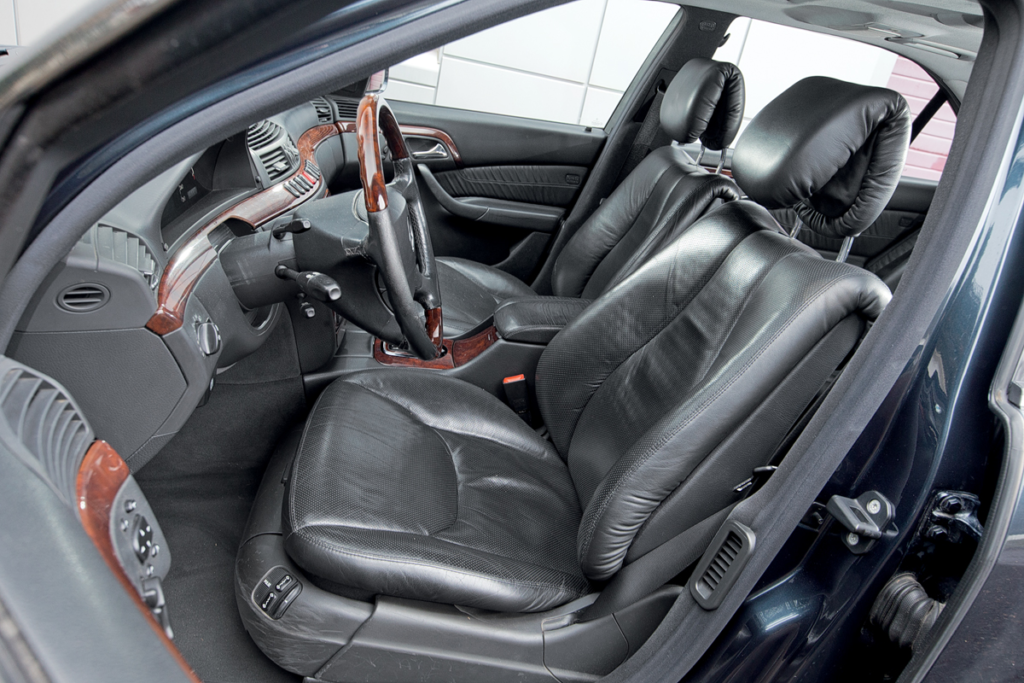
I believe this is why both passengers and the driver perceive the V220 as a car of our era. There’s no need to adapt to the old-school Mercedes language of comfort and ergonomics. The only remnants of its kinship with the W140 are the offset steering wheel and poor visibility through the right-side mirror, which, in both S-Classes, has brackets blocking a quarter of the field of view.
W220 Engine and Acceleration: The New M113 V8 vs the Old M119
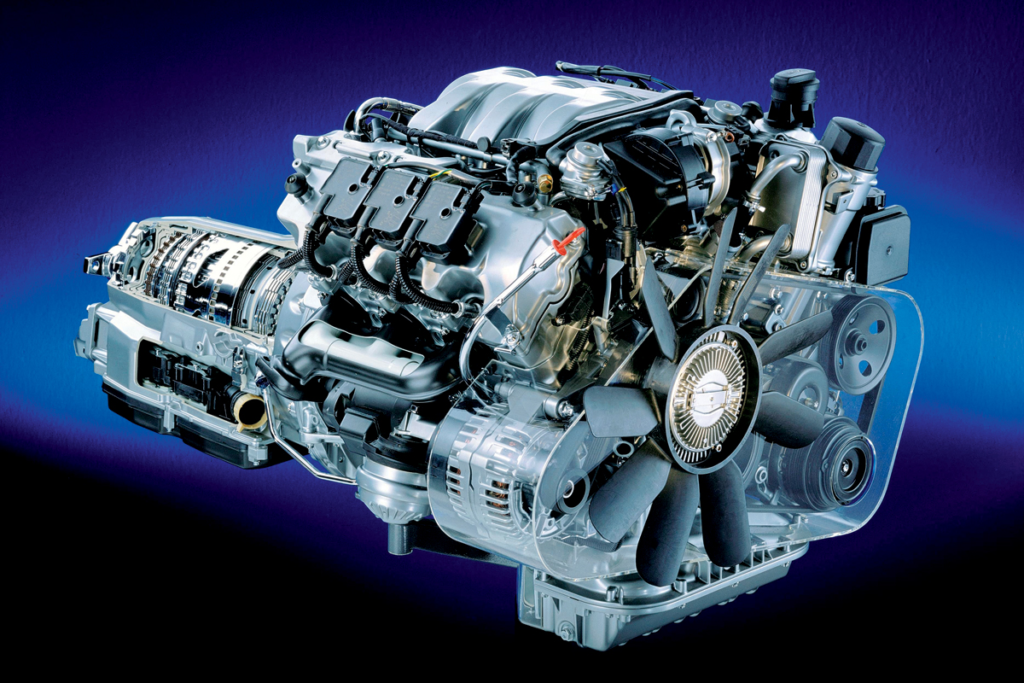
Beneath the old S 500 index hides the new heart – a V8 5.0 from the M113 series, this time with three valves per cylinder and only two camshafts. Power and torque have decreased (306 hp and 460 Nm), but the V220 accelerates a full second faster than the W140: 7.8 seconds to 100 km/h!
Acceleration and braking: W140 vs W220 at a glance
- 0–60 km/h: W140 – 4.16s (4.23s with traction control off); W220 L – 3.98s (4.09s with stability control off)
- 0–100 km/h: W140 – 8.84s (9.06s with traction control off); W220 L – 7.78s (8.01s with stability control off)
- Braking distance from 100 km/h: W140 – 45.51 m; W220 L – 40.39 m
Figures measured with ESP on and on winter tires on dry asphalt. However, without the aid of electronics, the rear-wheel-drive S 500, like its predecessor, loses time due to wheel spin.
The Five-Speed That Made the Difference
The secret to this dynamism is the new five-speed transmission with electronic control. Even by today’s standards, this is an almost exemplary automatic transmission that quickly finds the right gear and almost always does it smoothly. The engine’s response to the accelerator is excellent, making acceleration even more lively, emotional, and convenient than in the W140. But it’s louder too.
W220 Handling: Sharper Steering, but Twitchier at the Limit
But this S-Class is finally able to offer the driver pleasure behind the wheel. The recirculating ball steering has been replaced with rack and pinion, and the steering now has logical reactive effort (though in a small around-zero zone it is simply present as a viscous background). And now, if you turn the steering wheel, the car changes direction first and then starts to lean. The reactions are more precise and faster – this is a lively and interesting Mercedes, one you might even want to take on a mountain road.
But better not to.
Too Eager at the Limit
The very first turn reveals excessive agility. When releasing the gas, the V220 turns into curves so sharply that it almost constantly sends the rear wheels sliding. In any case, if those wheels have Korean Roadstone Winguard Ice Plus tires. The activated ESP immediately catches the car, but slalom turns into constant jerking. And without the aid of ESP, Mercedes repeatedly falls into sharp skids. On a moose test, this can end badly, because the skid is deep and long.
Comfort or Sport
In general, as in the case with the W140, it’s better to simply drive straight. Fortunately, this is already pleasant here. Although there are nuances, because pleasure strongly depends on the suspension mode. Here, air springs are combined with adjustable shock absorbers. And if the electronics automatically manage the ground clearance at speed, the driver must choose the stiffness. Or whoever he is driving for.
The Sport mode makes the S-Class taut and composed, sacrificing airiness, but in return, Mercedes gains strict linearity at speed. This is evidently the choice for the driver. Meanwhile, Comfort mode allows for smoother handling of bumps, forgetting about the jolts from short asphalt waves and more softly passing over speed bumps.
In this V220, it is better than the W140, but the old S 500 with its pronounced lean didn’t replicate the cross-sectional profile of the road, while this one rolls from side to side and also sways on long waves. Most importantly, just like its predecessor, these movements throw the car off its straight course and force the driver to make corrections.
So it turns out that the “two-twenty” is also far from ideal in terms of ride smoothness. At the same time, it is only slightly quieter than the W140 (tires, engine, and interior plastics are the loudest components), slightly more pleasant to handle, but falls short in braking convenience due to the pedal’s long and heavy free play.
What’s the conclusion?
Verdict: Which S-Class Wins — And Why It’s Complicated
As twenty-three years ago, the points victory should have been given to the “two-twenty”. But that would have been a Pyrrhic victory. Both old S-Classes no longer qualify for S-Class status and now find themselves on an equal footing. Two disappointments – that’s the conclusion of this test.
Or two revelations?
Why Germany Never Loved the W140
After all, in our region, the W140 is considered the best S-Class in history, whereas in Germany, it has the reputation of being as unsuccessful a project as the W220. It’s not even about the sales volume or losses, but the fact that it wasn’t considered a true Mercedes there.
Here are two simple facts that speak especially eloquently about this. In the year of the W140’s market debut, BMW increased sales of the “7 series” to former Mercedes owners by 20%. And in the last year of production of this S-Class, its numbers in the national German car fleet were half as much as that of the W126 model.
That S-Class remains a real one forever, while the W140 was surpassed and forgotten. By 2020, only 5,000 of these sedans remained in Germany, although initially, almost 105,000 were sold. Where did they all go? Right, they went where legends about real Mercedes are cherished.
As for the “two-twenty”, the revelation for me is that this car, universally recognized as the most improper S-Class, actually remains an unparalleled executive sedan. And if it had some margin of quality, reliability, and charisma, it could claim a cult status no less than the W140.
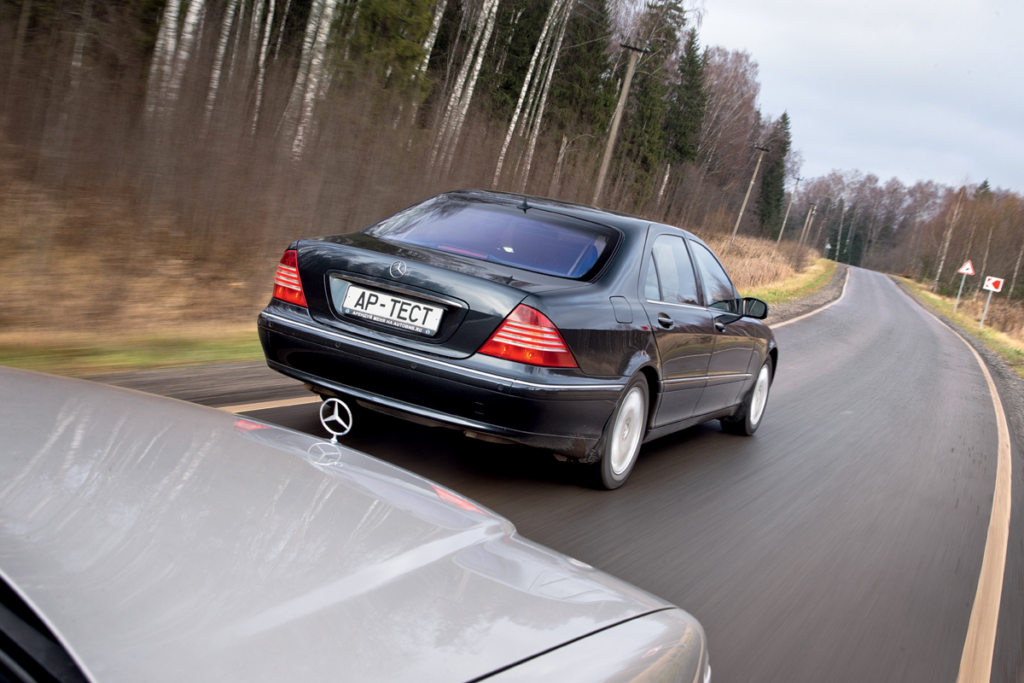
However, Mercedes does not tolerate the subjunctive mood. And this test merely reminded that the best S-Class is a new, serviceable car. Preferably a corporate one. And old S-Classes are attractions that you can take a ride on using the interesting car rental service autobnb.ru. Or ask Santa Claus for a gift certificate for such a test drive. Not so much to understand the cars, but to hear yourself and understand what is closer to you. What the W140 seems to be, or what the W220 actually is?
That is the thought I would leave you with to ponder on your own with these cars, had I not also taken a ride in two other S-Classes.
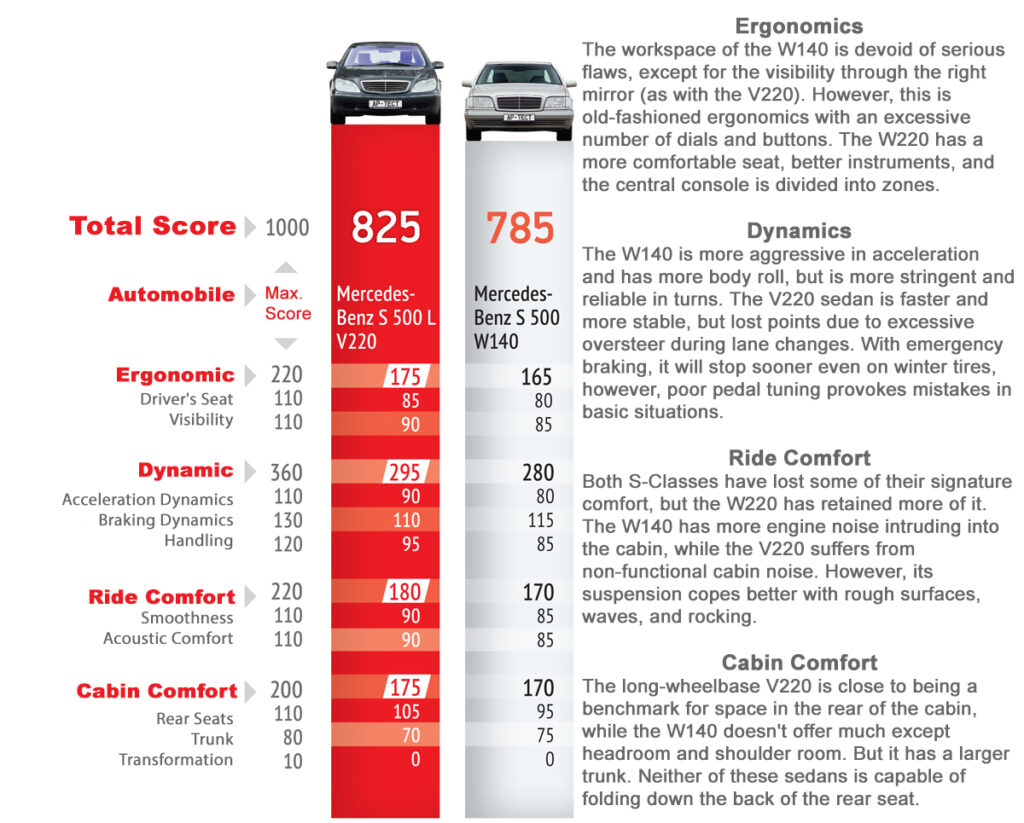
Total score – 1000
Mercedes-Benz S500L V220 – 825 of 1000
Mercedes-Benz S500 W140 – 785 of 1000
Ergonomics
The workspace of the W140 is devoid of serious flaws, except for the visibility through the right mirror (as with the V220). However, this is old-fashioned ergonomics with an excessive number of dials and buttons. The W220 has a more comfortable seat, better instruments, and the central console is divided into zones.
Total score – 220
Mercedes-Benz S500L V220 – 175 of 220 (Driver’s Seat – 85 of 110, Visibility – 90 of 110)
Mercedes-Benz S500 W140 – 165 of 220 (Driver’s Seat – 80 of 110, Visibility – 85 of 110)
Dynamics
The W140 is more aggressive in acceleration and has more body roll, but is more stringent and reliable in turns. The V220 sedan is faster and more stable, but lost points due to excessive oversteer during lane changes. With emergency braking, it will stop sooner even on winter tires, however, poor pedal tuning provokes mistakes in basic situations.
Total score – 360
Mercedes-Benz S500L V220 – 295 of 360 (Acceleration Dynamics – 90 of 110, Braking Dynamics – 110 of 130, Handling – 95 of 120)
Mercedes-Benz S500 W140 – 280 of 360 (Acceleration Dynamics – 80 of 110, Braking Dynamics – 115 of 130, Handling – 95 of 120)
Ride Comfort
Both S-Classes have lost some of their signature comfort, but the W220 has retained more of it. The W140 has more engine noise intruding into the cabin, while the V220 suffers from non-functional cabin noise. However, its suspension copes better with rough surfaces, waves, and rocking.
Total score – 220
Mercedes-Benz S500L V220 – 180 of 220 (Smoothness – 90 of 110, Acoustic Comfort – 90 of 110)
Mercedes-Benz S500 W140 – 170 of 220 (Smoothness – 85 of 110, Acoustic Comfort – 85 of 110)
Cabin Comfort
The long-wheelbase V220 is close to being a benchmark for space in the rear of the cabin, while the W140 doesn’t offer much except headroom and shoulder room. But it has a larger trunk. Neither of these sedans is capable of folding down the back of the rear seat.
Total score – 200
Mercedes-Benz S500L V220 – 175 of 200 (Rear Seats – 105 of 110, Trunk – 70 of 80, Transformation – 0 of 10)
Mercedes-Benz S500 W140 – 170 of 200 (Rear Seats – 95 of 110, Trunk – 75 of 80, Transformation – 0 of 10)
Trunk Space Compared: W140 vs V220
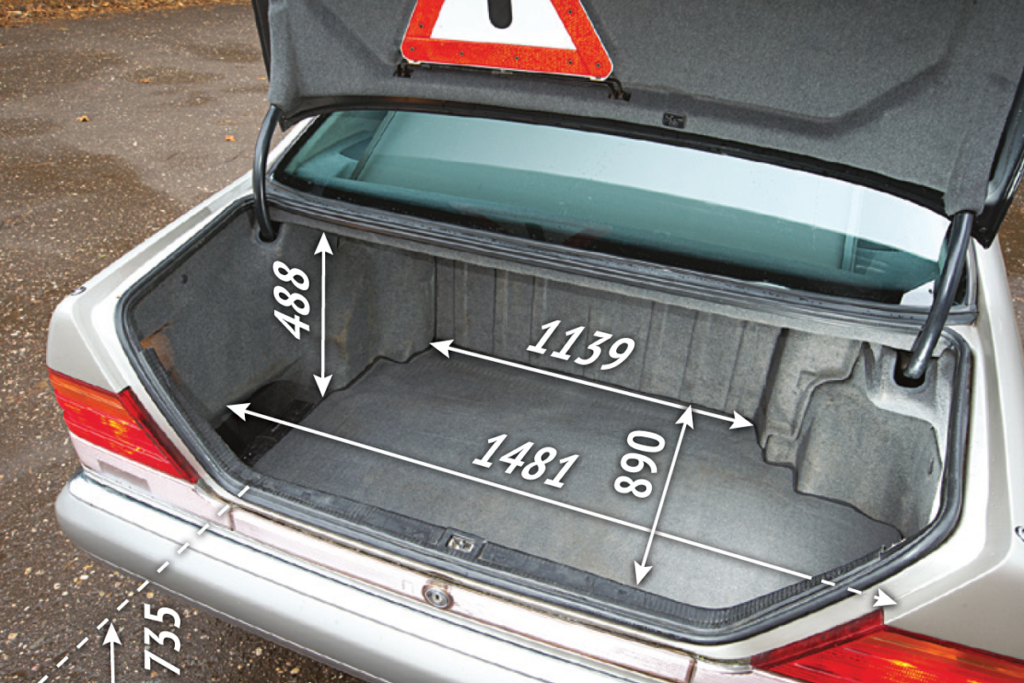
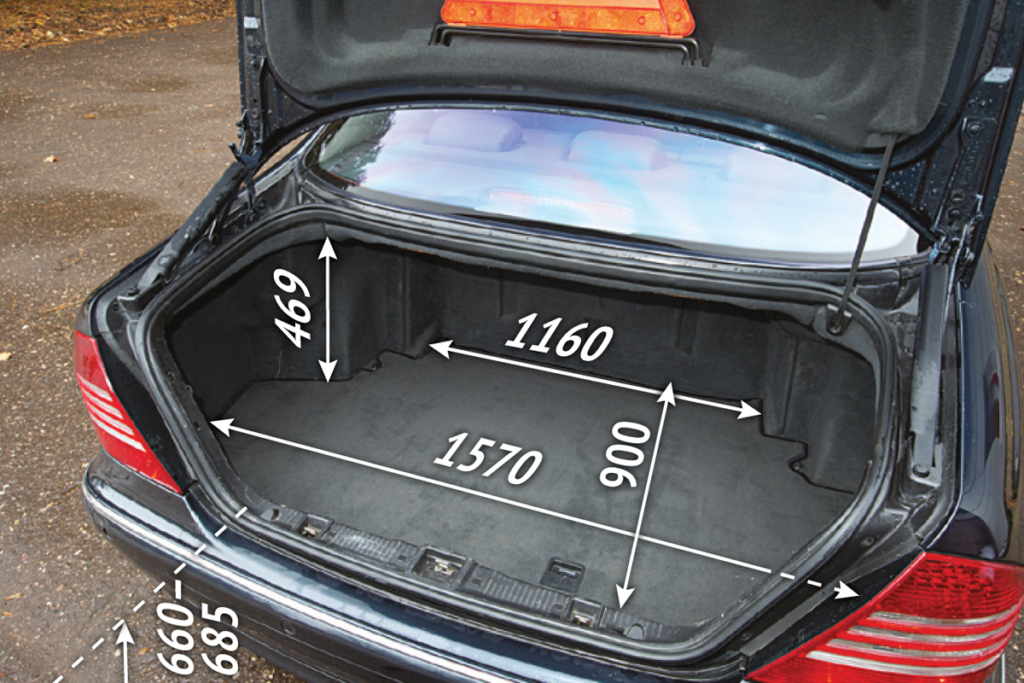
The trunk of the V220 became 25 liters smaller, but the edge of the opening has dropped significantly. Both S-Classes lack a folding sofa and even a hatch into the cabin.
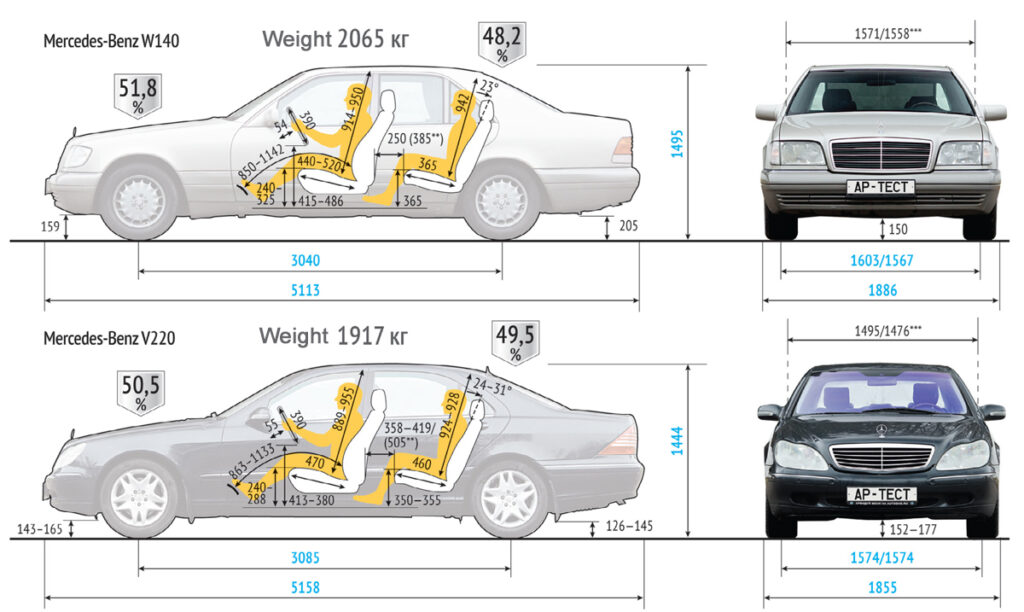
*Actual vehicle weight without driver, with full fuel tank and full process fluids
**For right rear seat
**Interior width at shoulder level in the first/second row of seats.
Two Hundred Twenty Shades of W220: Why Post-Facelift Models Are the Ones to Buy
Experienced owners of cars with the three-pointed star say that a Mercedes should be purchased after a facelift. By mid-life cycle, engineers usually deal with teething issues and begin to implement solutions intended for the next-generation model. This was the case with the facelifted versions of the W140 and W220.
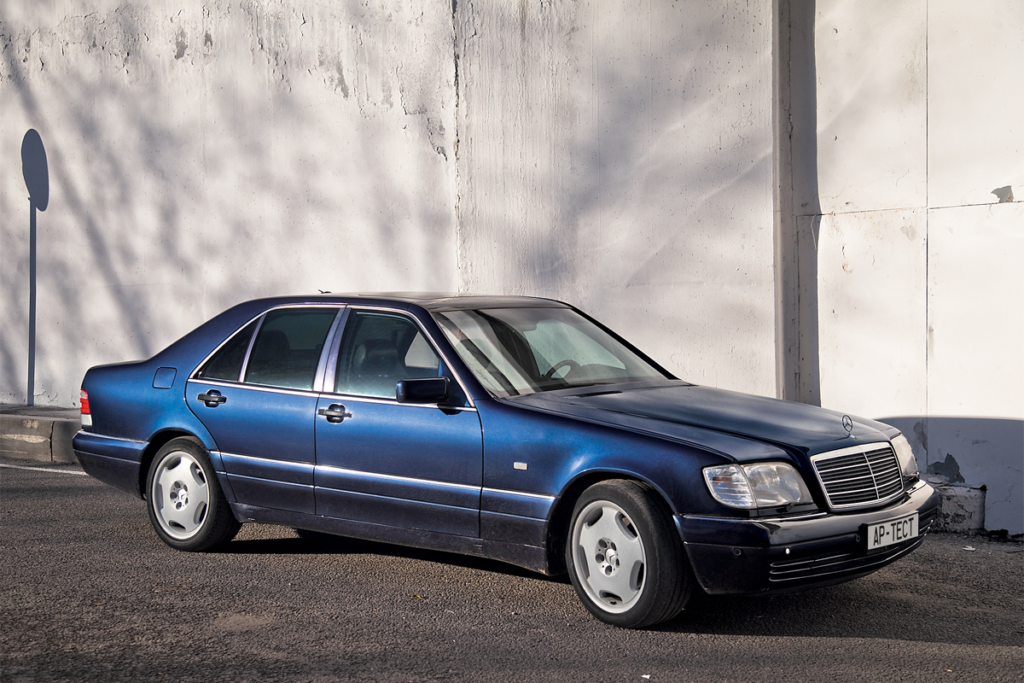
What the W140 Facelift Changed
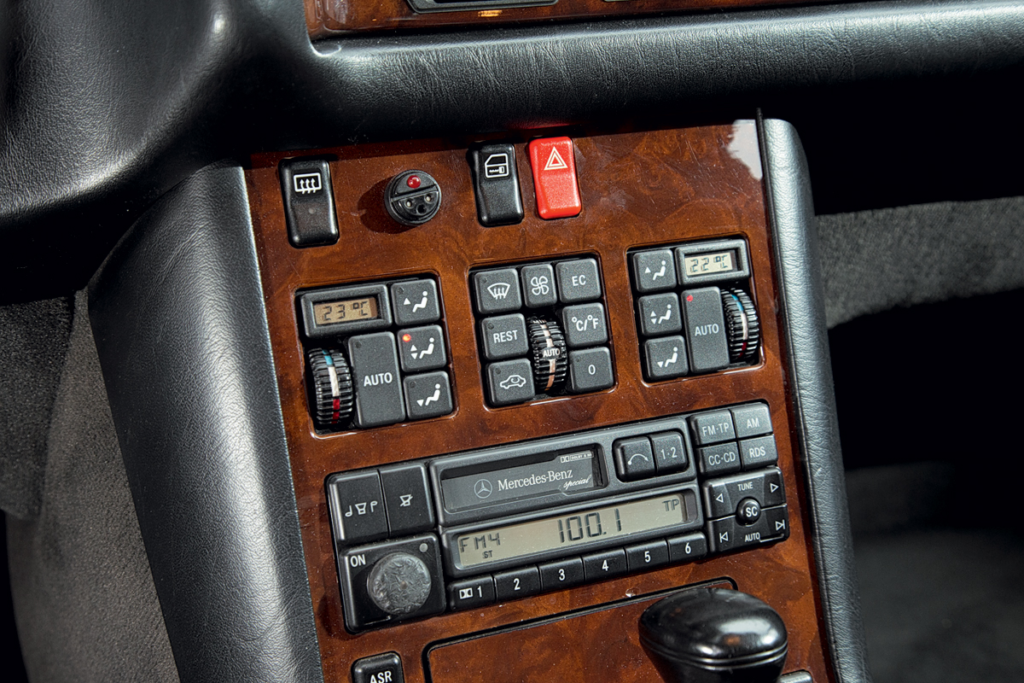
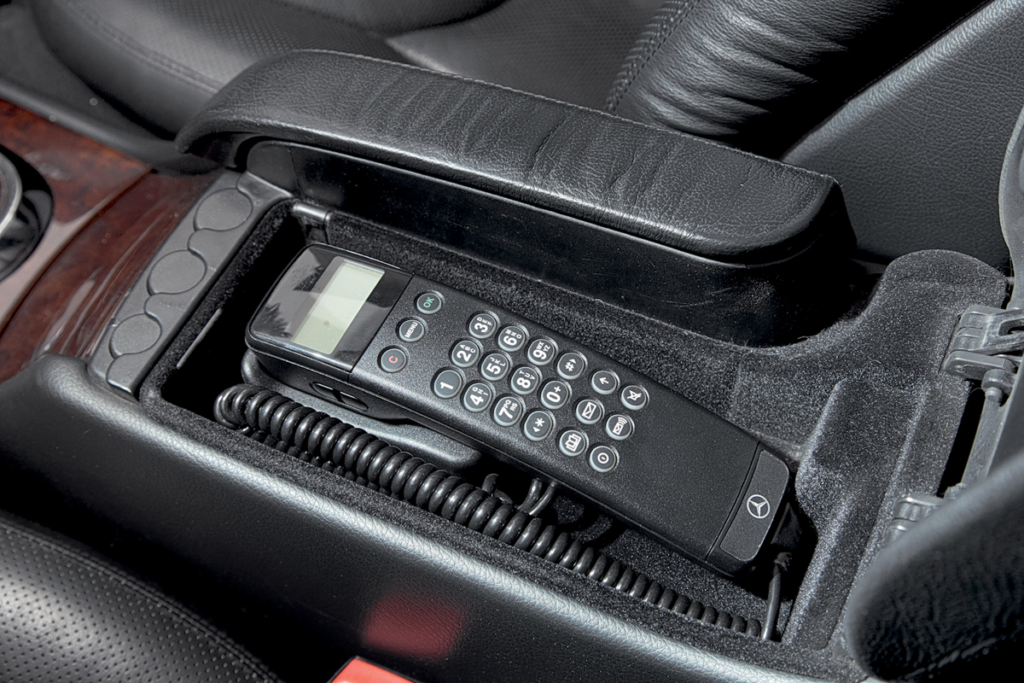
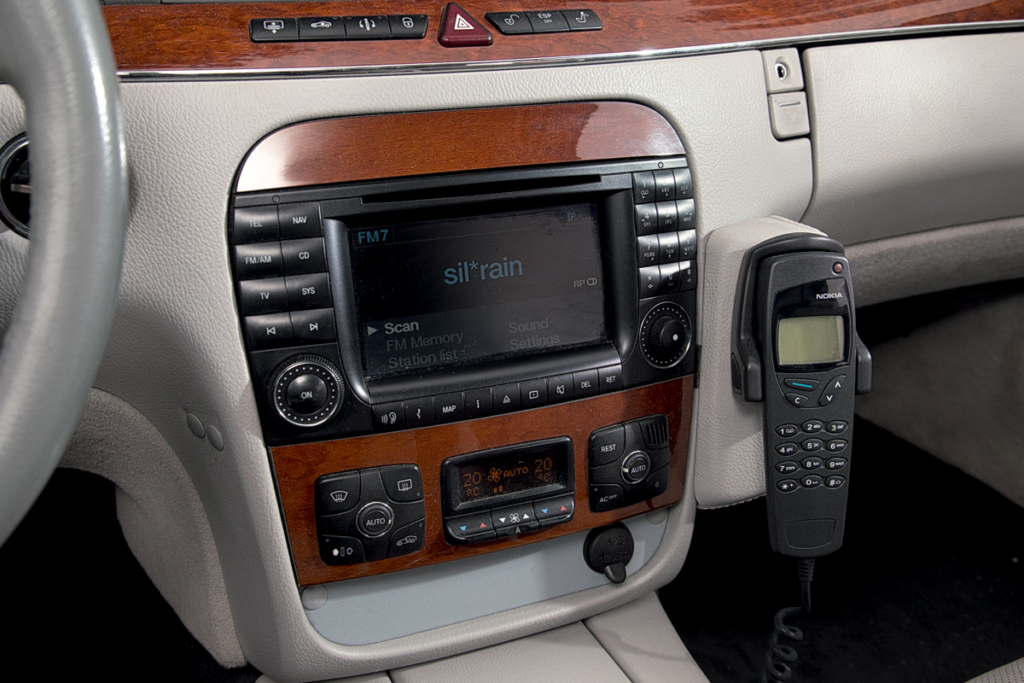
The modernization of the W140 stretched into 1994 and 1995. External changes were minimal, but retractable antennas became a thing of the past. Inside, the optional interior mirror servo disappeared, but a new central console appeared with an electronic climate control unit from the E-Class W210, a different multimedia system with a monochrome navigation screen, and ultrasonic parking sensor displays on the front panel.
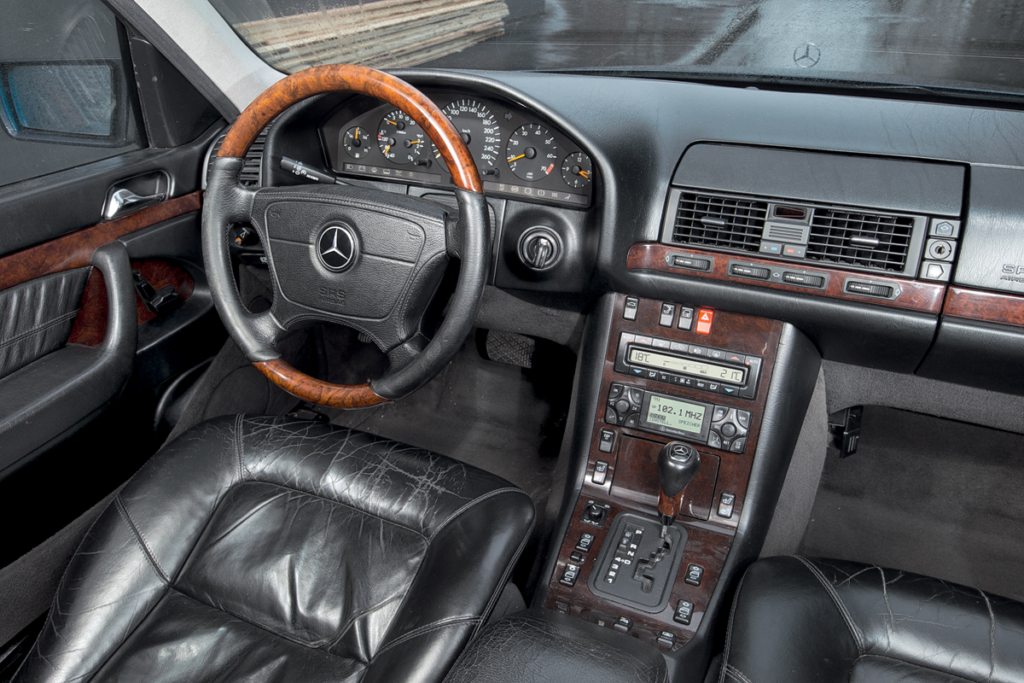
The V8 and V12 engines received new control units, but the main achievements of the Mercedes engineers were a five-speed automatic transmission with electronic control and the world’s first ESP. With them, the W140 became a little bit of a ‘two-twenty’ – there these elements will appear already tested.
I managed to drive a little on the short sedan S 320 (V6 3.2, 231 hp) of the final, 1998 year with almost a full package of additions. By all accounts, the W140 in this form should be fresher and more viable. But there was no magic in it either. A tired, saggy car in which only the engine and automatic transmission still retain some vigor.
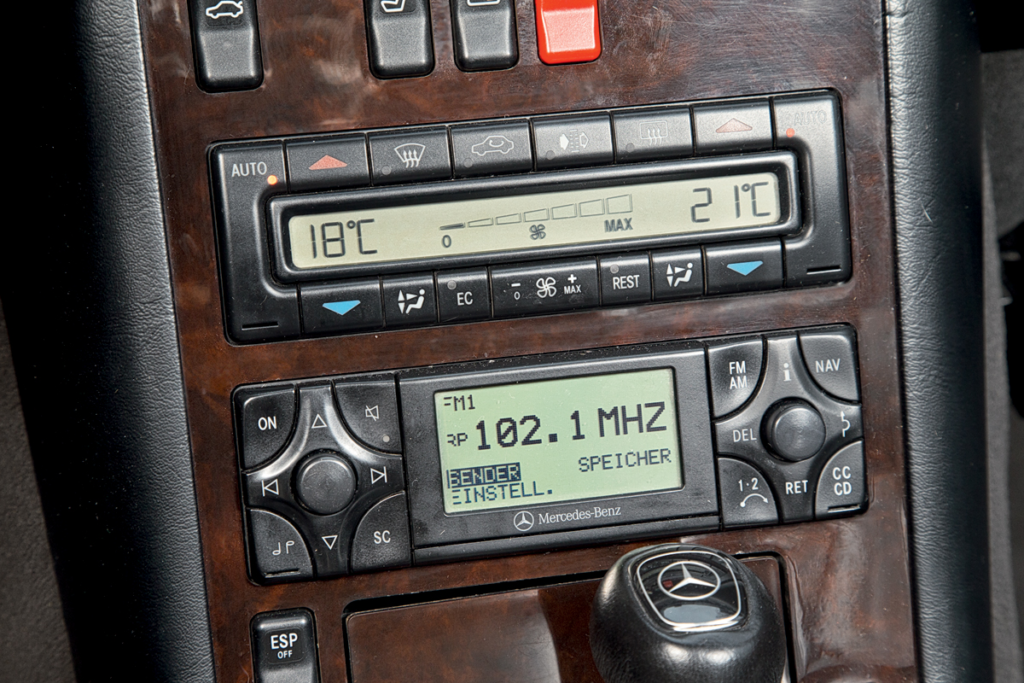
Shell. With the only difference being that after 1994, Mercedes began to use water-based paints, due to which all facelifted W140s are prone to corrosion and risk losing even this shell.
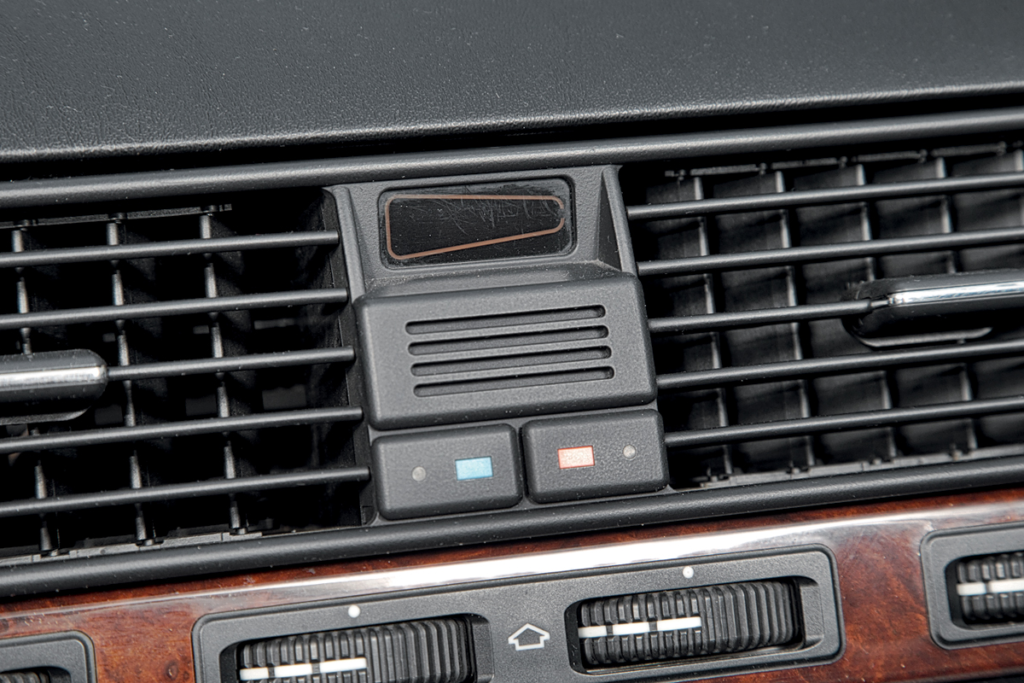
The S 350 That Still Has the Magic
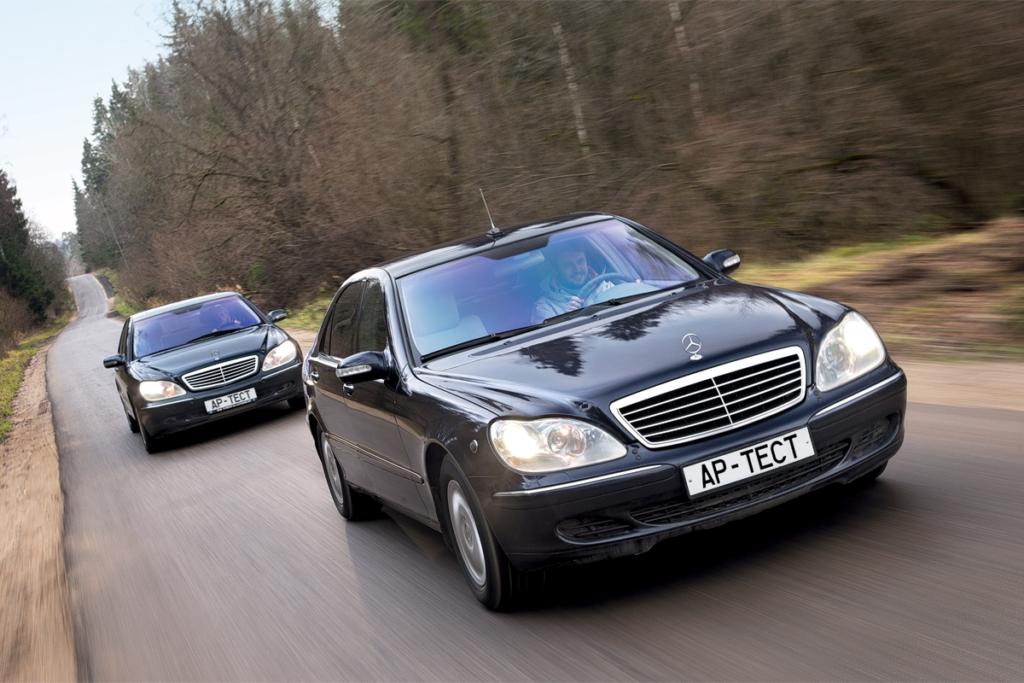
But among the facelifted ‘two-twenties’ I still managed to find a car that still possesses Mercedes magic. And it was not the ‘five hundred’, not the ‘six hundred’, and not the supercharged S 55 AMG, but a modest long-wheelbase sedan S 350 (V6 3.7, 245 hp) from 2003. It just got lucky with an owner who uses only original parts, from new front air struts to original wiper blades with brand stars.
The effect is stunning. This is how a real Mercedes should behave.
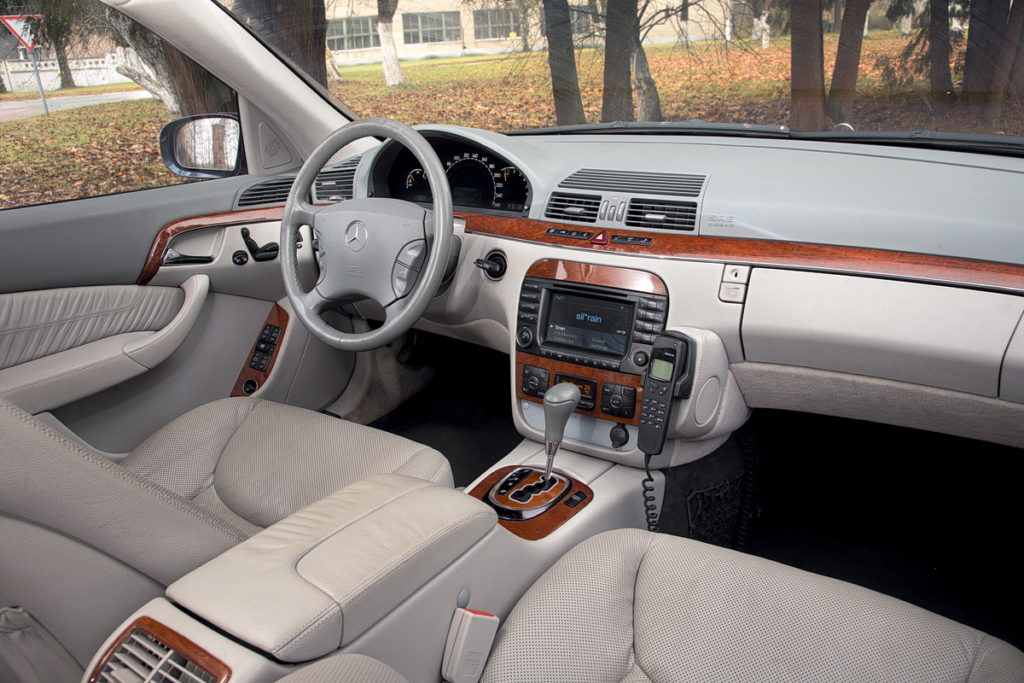
The interior is spacious and quiet in the light clean salon. The rear passengers have their own ventilation and electric drives. The gasoline ‘six’ purrs barely audible. The automatic transmission works so unnoticeably that the convenience of acceleration can be compared perhaps only with an electric car. Just press the gas, and the ‘two-twenty’ will respond with a solid, laminar stream of acceleration.
The suspension is a bit tighter than on the S 500, but thanks to this, the S 350 is less prone to swaying, although it copes just as well with bumps, potholes, and speed bumps.
The steering is the best of all four cars, with an almost exemplary natural effort. Monumental stability on a straight line, without hints of fishtailing. At the same time, it retains the impression of a light, small car that the ‘two-twenty’ produces from the outside. An elegant, sleek cigar. That’s how it drives. There is not a trace of the treacherous ‘driftiness’ of the ‘five hundred’. This S-Class obediently turns in under throttle release, remaining composed and predictable.
But what is most appealing is the harmony of all these elements of driving character. In this car, the driver doesn’t need to adapt and doesn’t need to change anything for himself. You can switch transmission and shock absorber modes, but there is no need: Mercedes is by default set to become an extension of the driver. It doesn’t play at sports, doesn’t copy BMW, doesn’t pretend to be Lexus. This is zen.
Such resonance between a person and a car becomes addictive. You want to drive more and more, no matter where. The modest ‘two-twenty’ is equally suitable as a family sedan and as a youngtimer for everyday use. Of course, provided that you have the means to keep it in original condition – and the courage to act contrary to stereotypes.
If the S 350 participated in the points count, it would have received the highest marks from us for handling and driving comfort. On par with modern flagships. A real S-Class. But now I want even more to ride the ‘one-forty’ in the same original condition. I believe that legends are not born out of thin air.
The ‘two-twenty’ could have happened to Mercedes not after, but instead of the ‘one-forty’ — if it were not for four inches and two engineers.
The W140’s Design History: From Sketches to the “Cathedral”
The development of the W140 project began in 1981, i.e., two years after the release of the W126 model. The state of design thinking at that time is well illustrated by the Auto 2000 concept car: Mercedes was looking for aerodynamic styling for the classic profile of its cars.
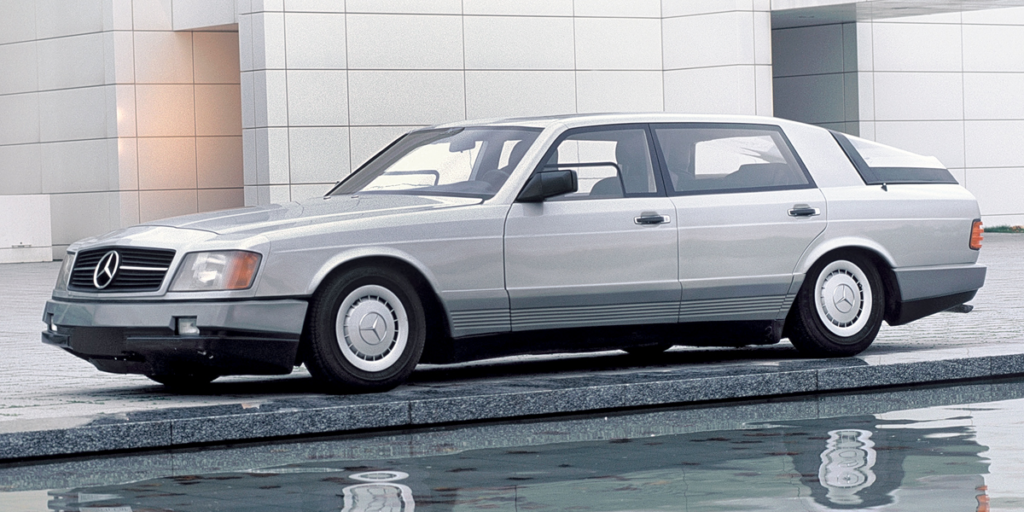
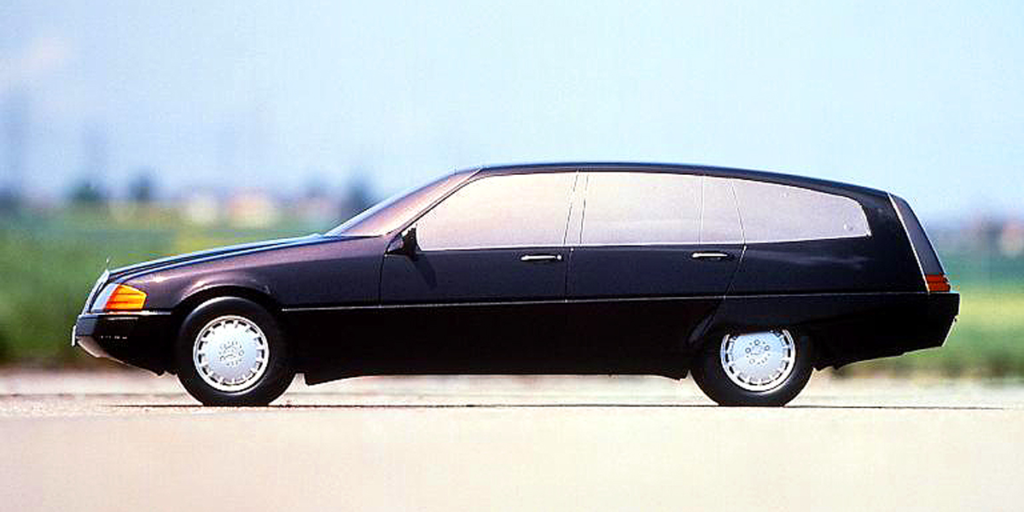
One of the options seemed to be a two-volume silhouette, and the S-Class-based concept car had a cap that turned the sedan into a hatchback. In the early exploratory sketches, the designers even considered a station wagon modification for the ‘one-forty’.
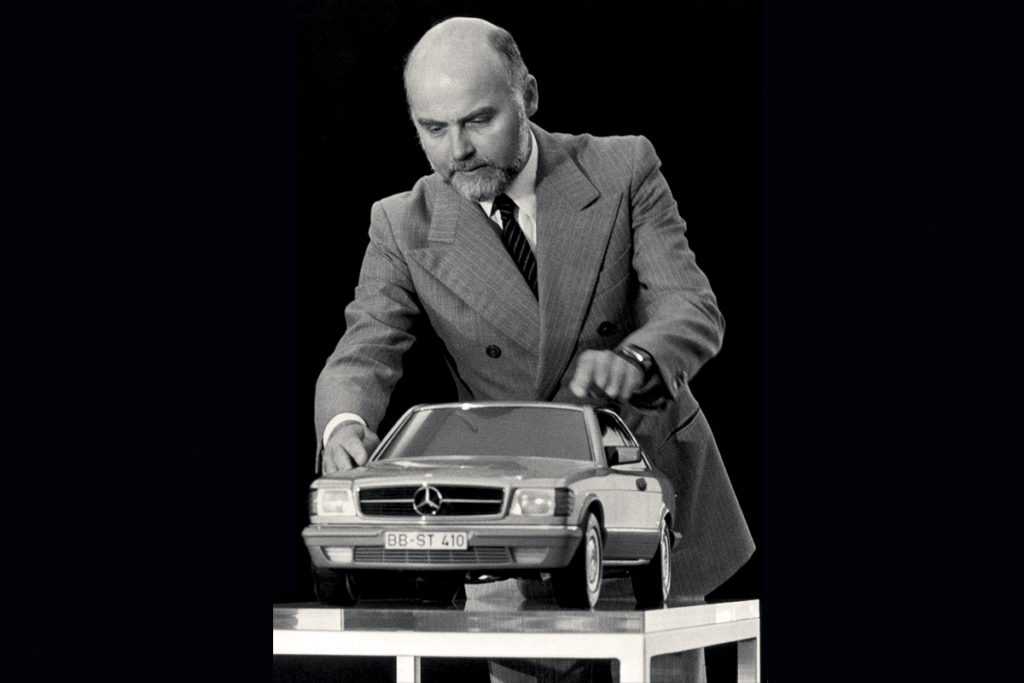
The Mercedes style was then headed by maestro Bruno Sacco, who was at that time impressed by the aesthetics of Jaguar cars, so an alternative direction of search was a more traditional three-volume body with light, sleek shapes.
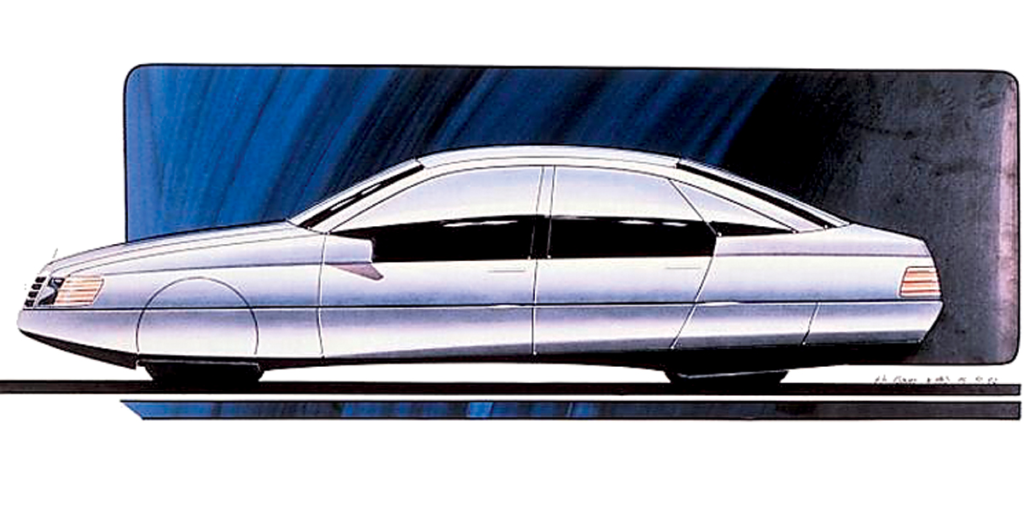
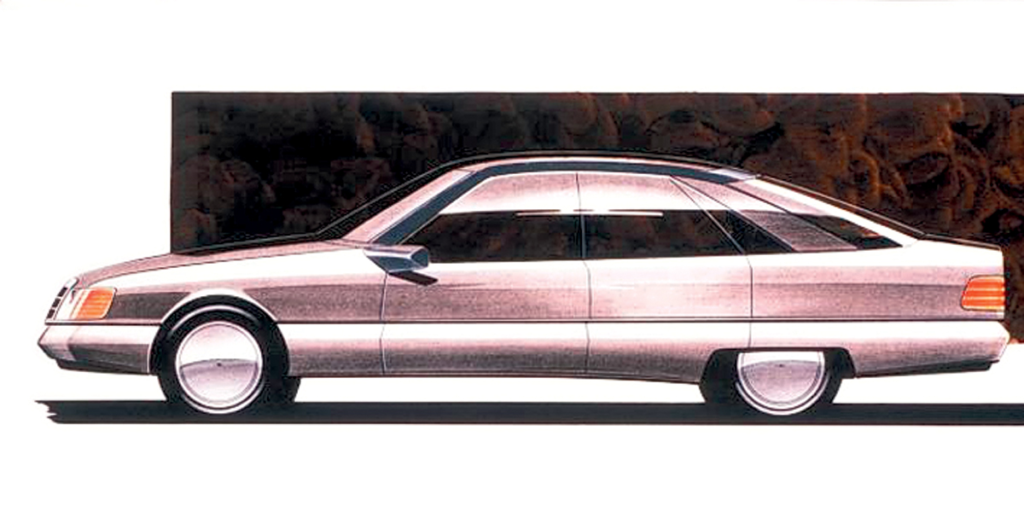
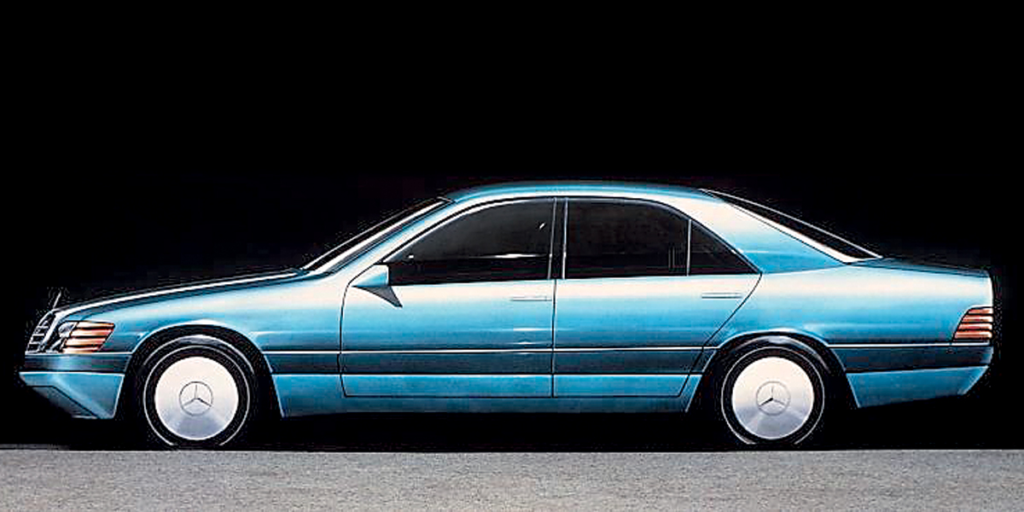
Scale Models, and the Roads Not Taken
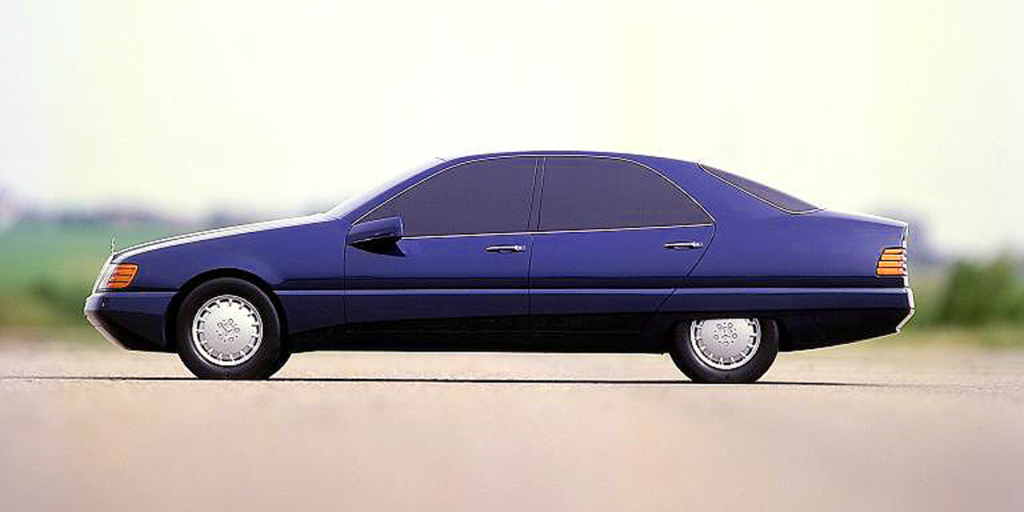
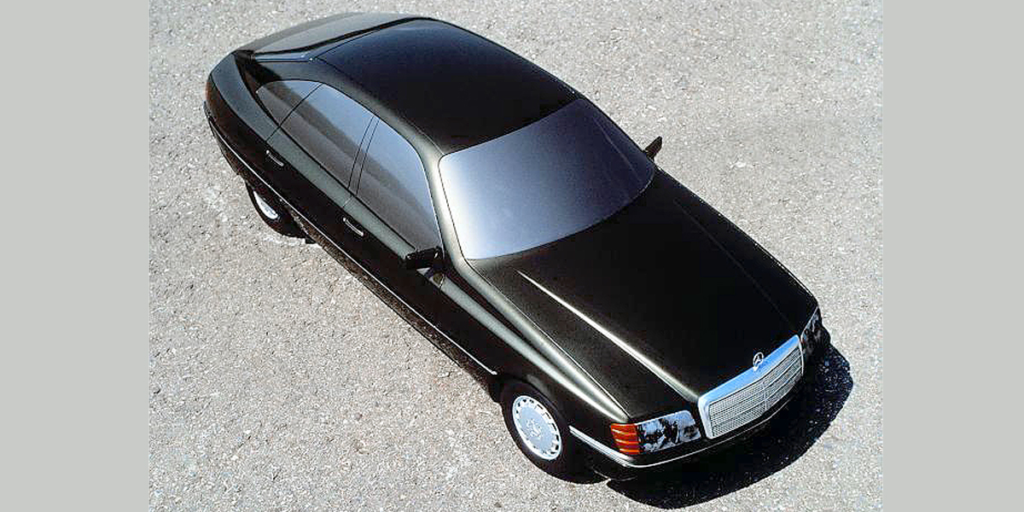
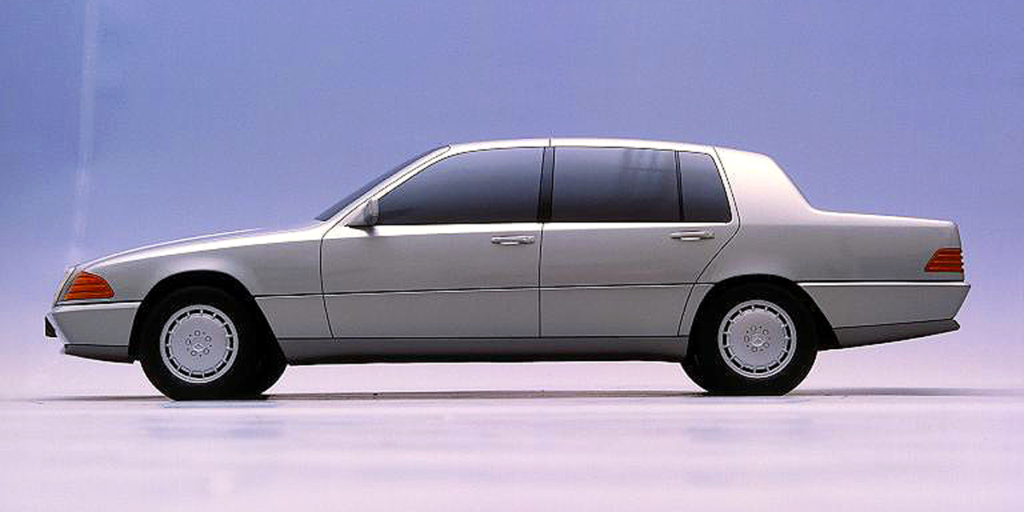
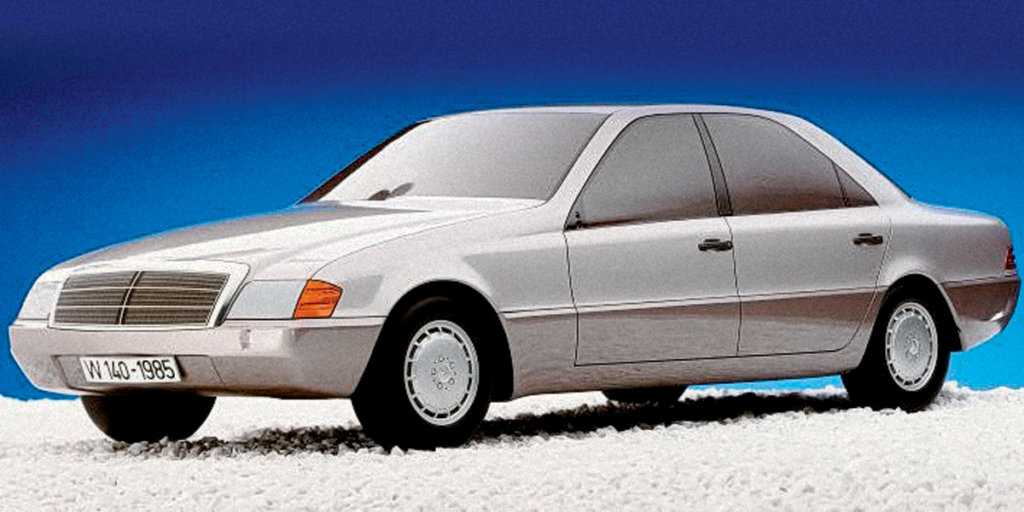
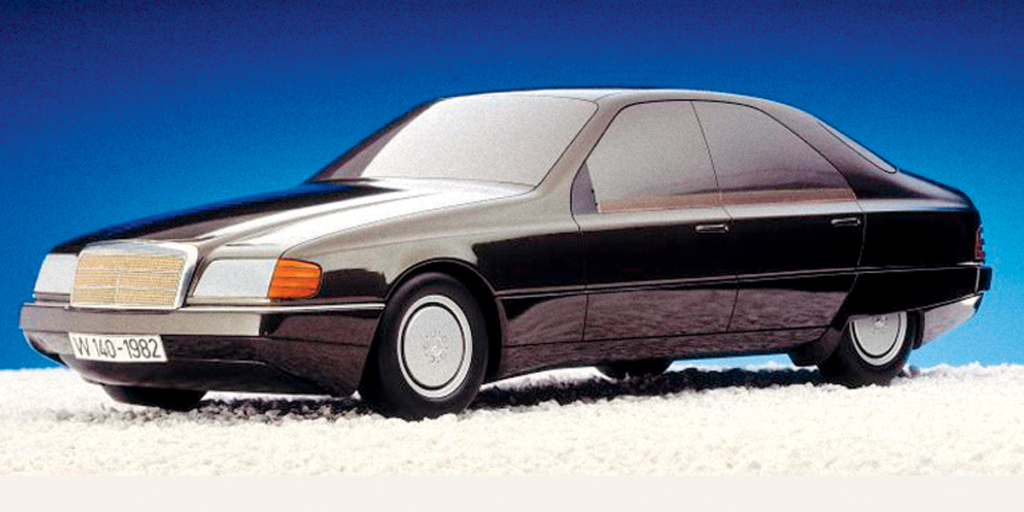
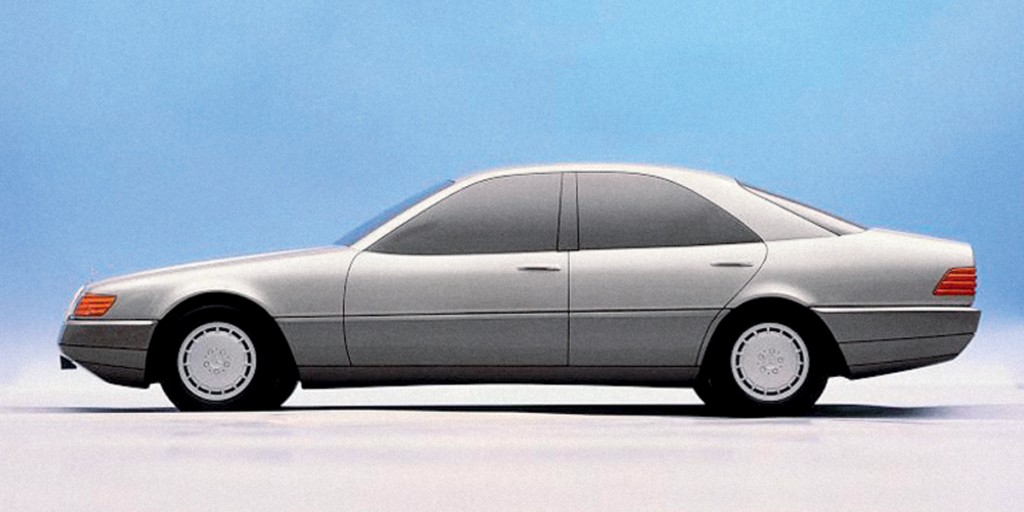
In 1984-1985, a series of 1:5 scale models were ready. Among them was a variant that combined the Jaguar theme with aerodynamics, resulting in a low hood, long tail, and a high air top-up of the cabin. Another model had a more smoothed silhouette with rounded sides and a wide rear body pillar, transitioning into a high trunk. Practically the ‘two-twenty’ from the 1980s, but at that time preference was given to a more conservative image.
Four Inches and Two Engineers
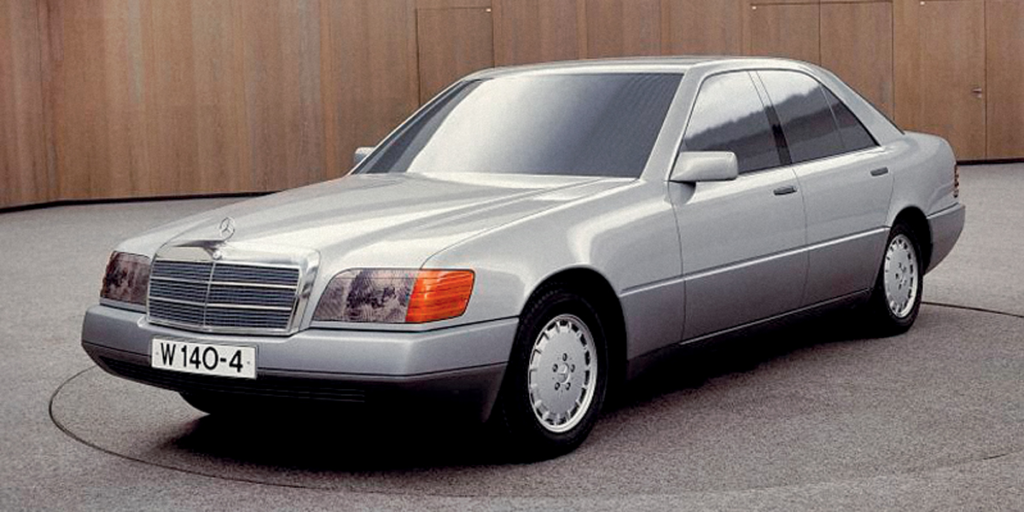
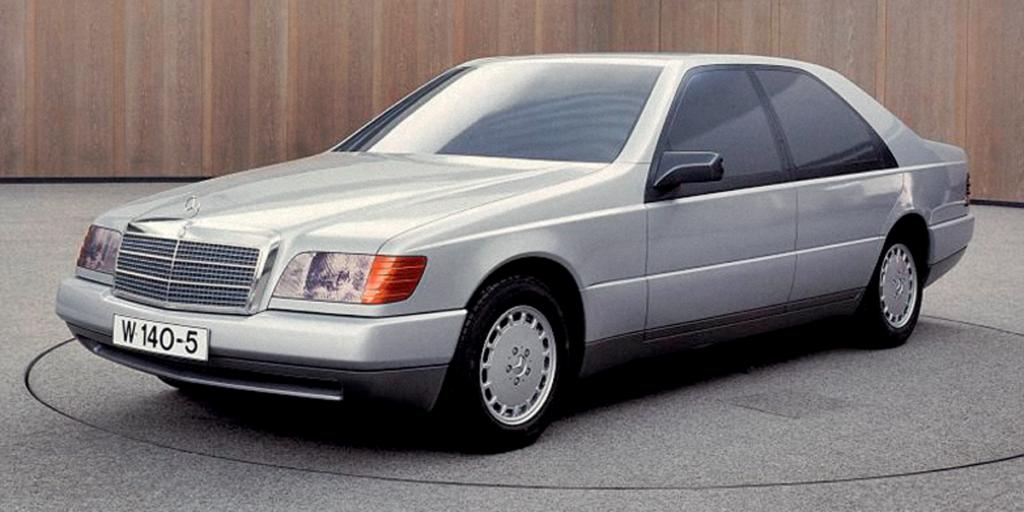
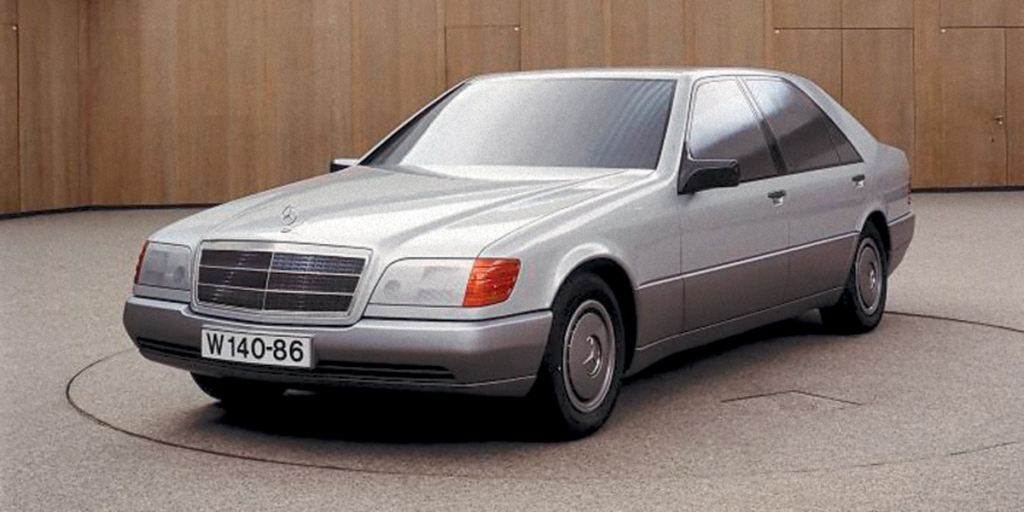
The series of full-scale models culminated in a sedan marked W140-4, which resembled an enlarged W124 with more streamlined optics. Then something strange happens, and variant number five, dated 1985, looks as if Bruno Sacco’s team suddenly forgot how to draw beautiful cars. Their Mercedes got wider, taller, lost its waist, and the window line dropped so low that the glasses crept onto the door handles.
This transformation has a name and surname. Actually, even two. It is Mercedes’ chief engineer Wolfgang Peter and the head of the passenger car line, Rudolf Uhlenhaut. Both were 190 cm tall and bumped their heads on the ceiling of the seating model during the “fitting”. Peter insisted that the roof of the model be raised until they both felt comfortable.
Designers were against this “escalation”, as the project already assumed that the W140 would be taller than the W126. But the engineers’ wish coincided with the vision of the board of directors, which was systematically expanding the boundaries of the brand: younger Mercedes had to become more compact, and seniors – larger.
The change in ceiling height probably occurred in early or mid-1985 because the full-size model of 1986 already looks almost like the serial W140. And in the fall of the same year, the board of directors approved the exterior in the final version.
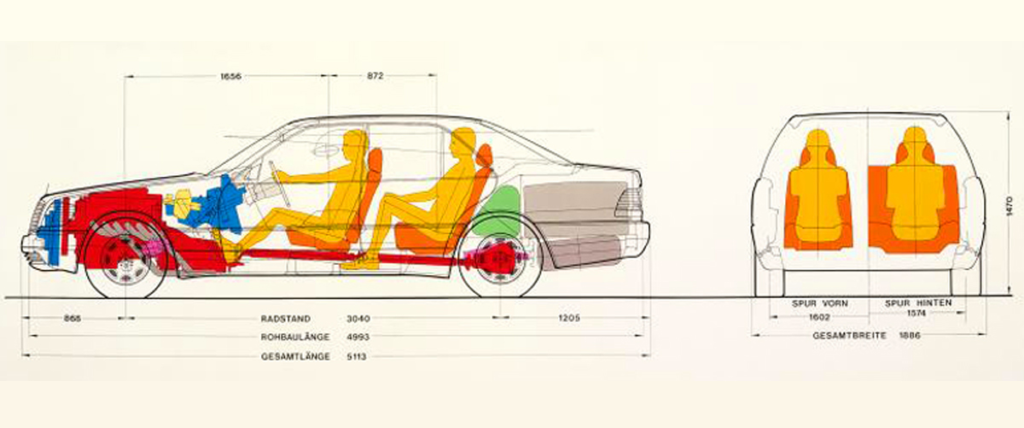
The new flagship was one and a half meters high – 50 mm more than the W126. So that such a giant would not look like a refrigerator, the designers had to further widen the body (the difference with the predecessor was 66 mm), make flat sides, and raise the rear edge of the hood.
By that time, Mercedes already had an almost ready chassis, which assumed standard 15-inch wheels. With them, the new image looked even heavier. Bruno Sacco, after retiring, in an interview in the early 2010s, will say that he dislikes only one of all the Mercedes he created – the W140, which was four inches higher than necessary.
By the way, four inches is ten centimeters, so the maestro himself wanted the S-class to be 1390 mm high, roughly like the mid-80s Jaguar XJ.
The Interior That Was Not Chosen
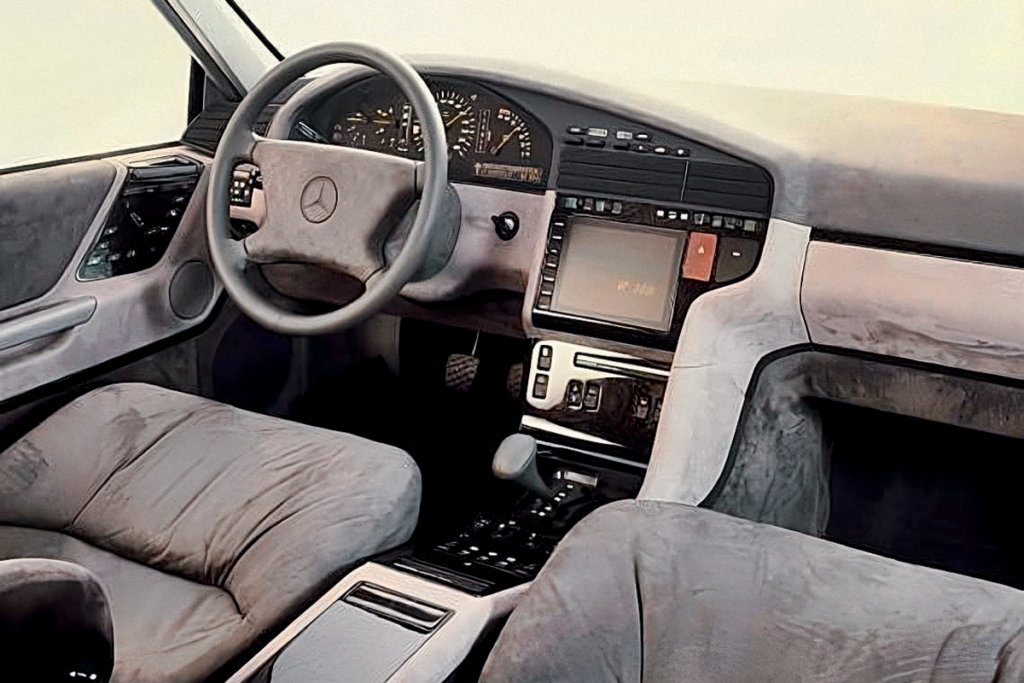
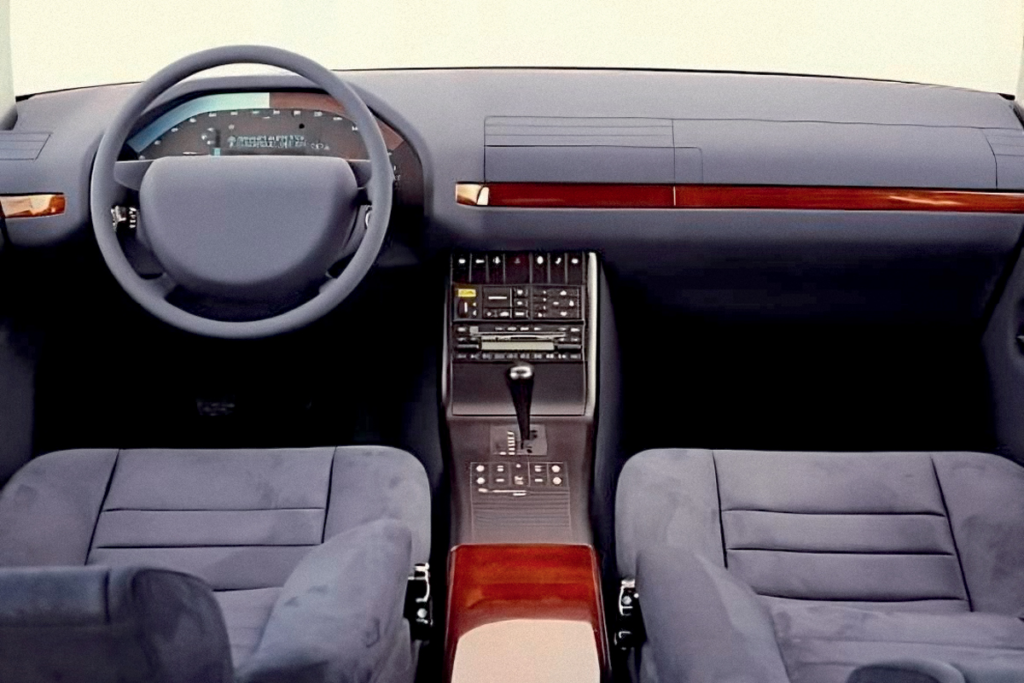
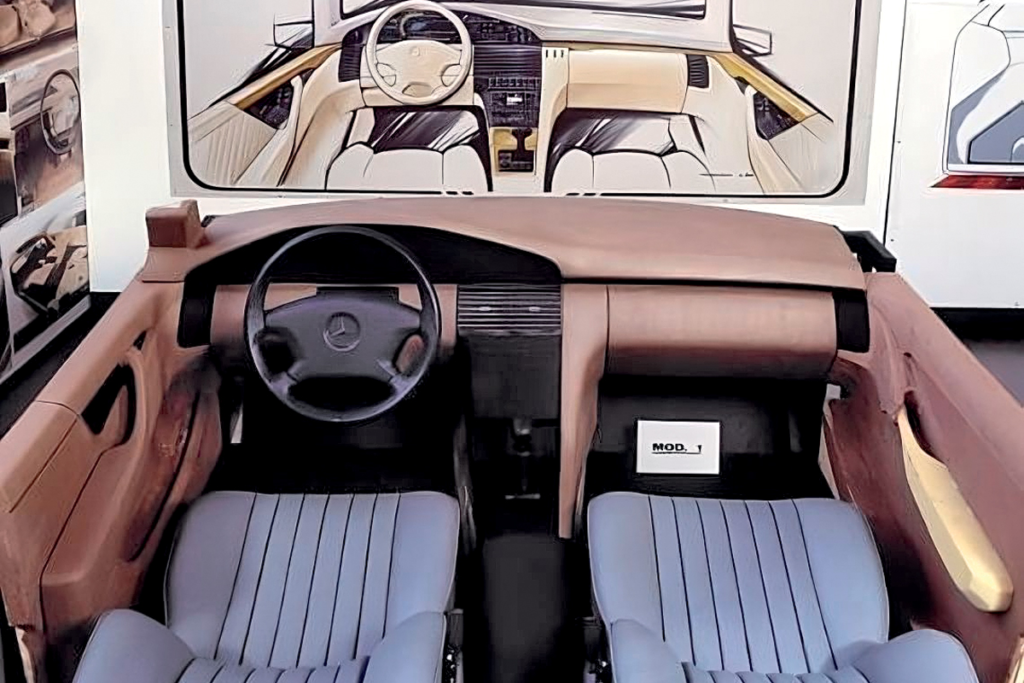
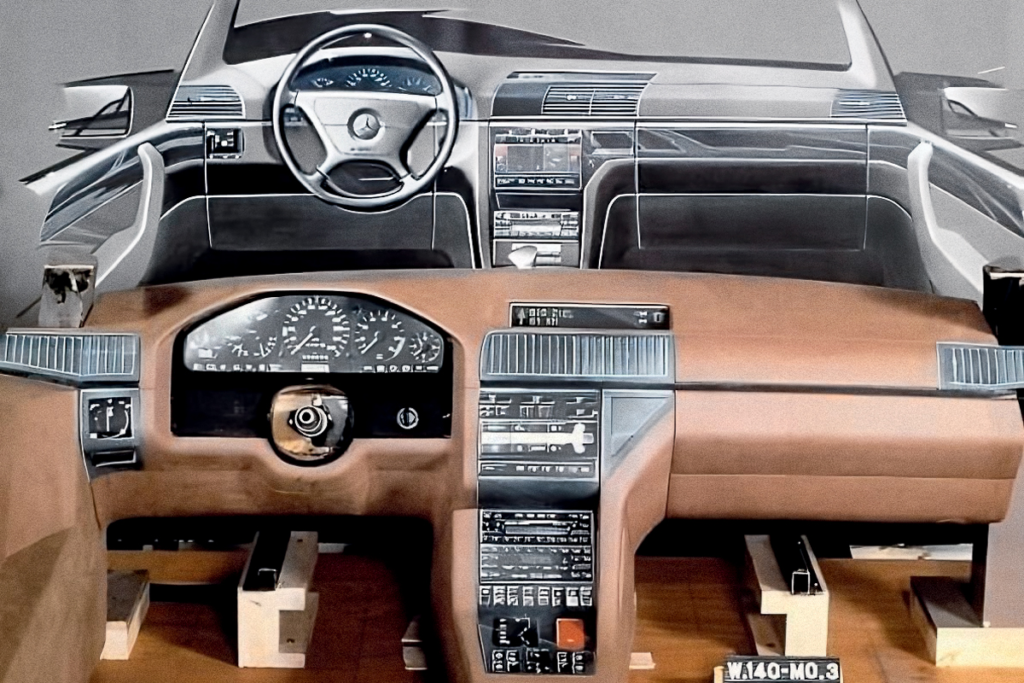
Curious metamorphoses also occurred with the interior concept. Judging by the models, they tried on the W140 a large screen in the upper part of the center console and LCD devices. But they chose the simplest and most conservative interior.
Engineering Under the Skin: W140 Suspension and the V12 Engine Program
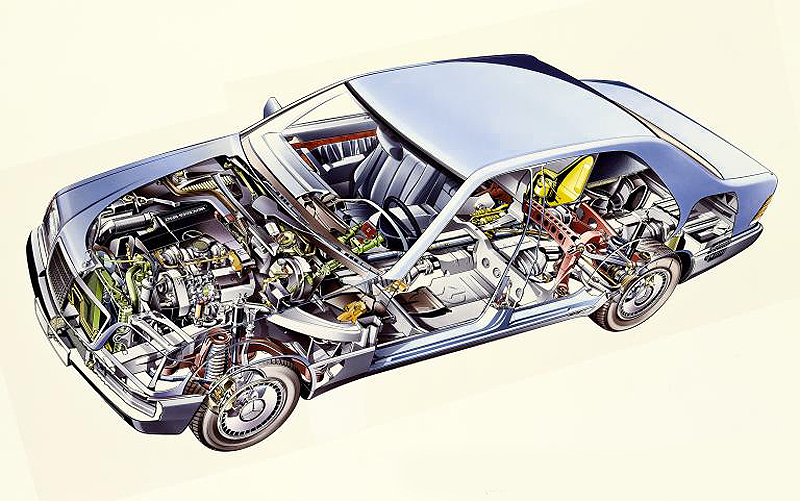
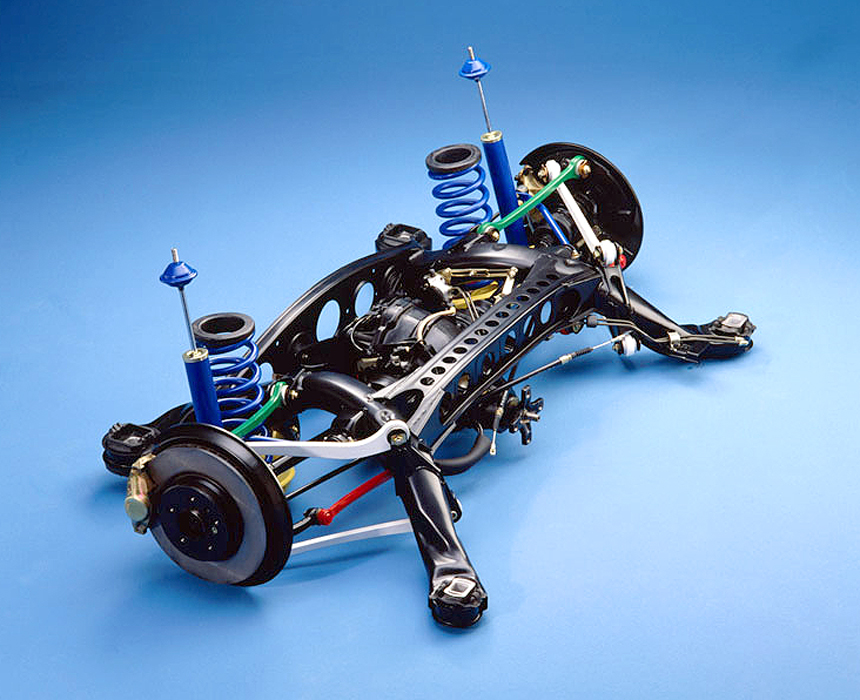
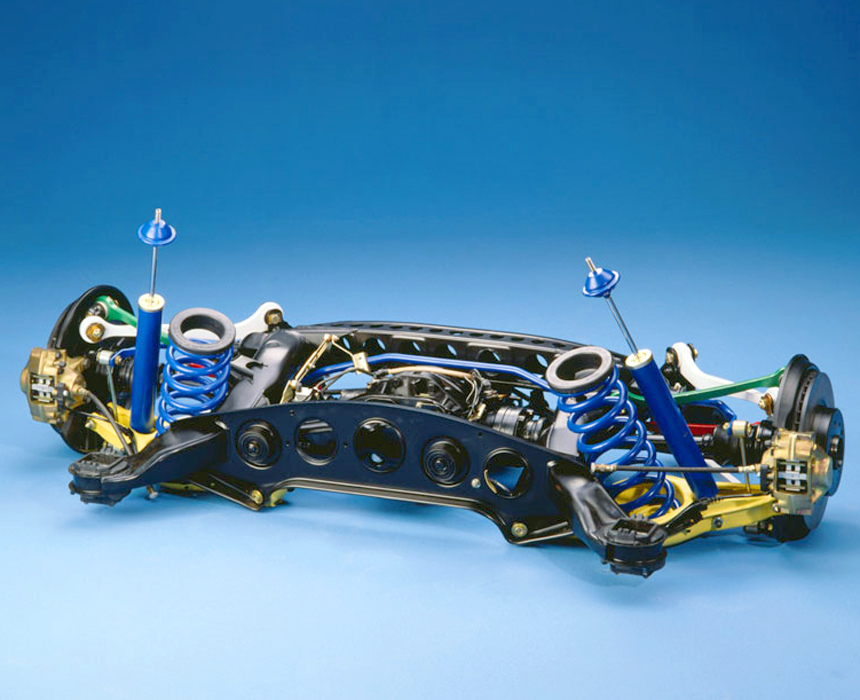
The double wishbone front suspension is notable for the fact that the springs rest on a subframe, while the shock absorbers are separate and the upper supports are connected to the body:
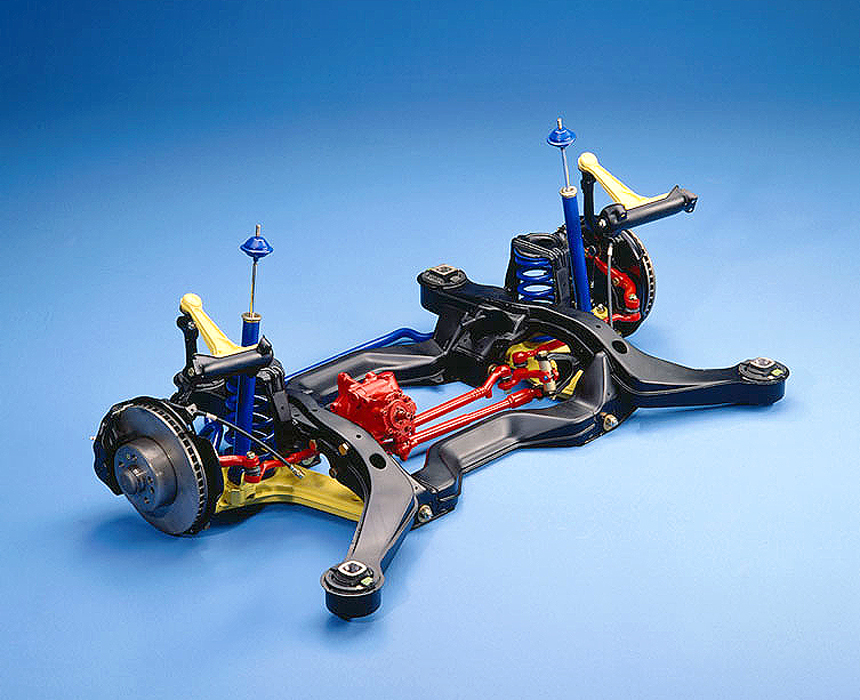
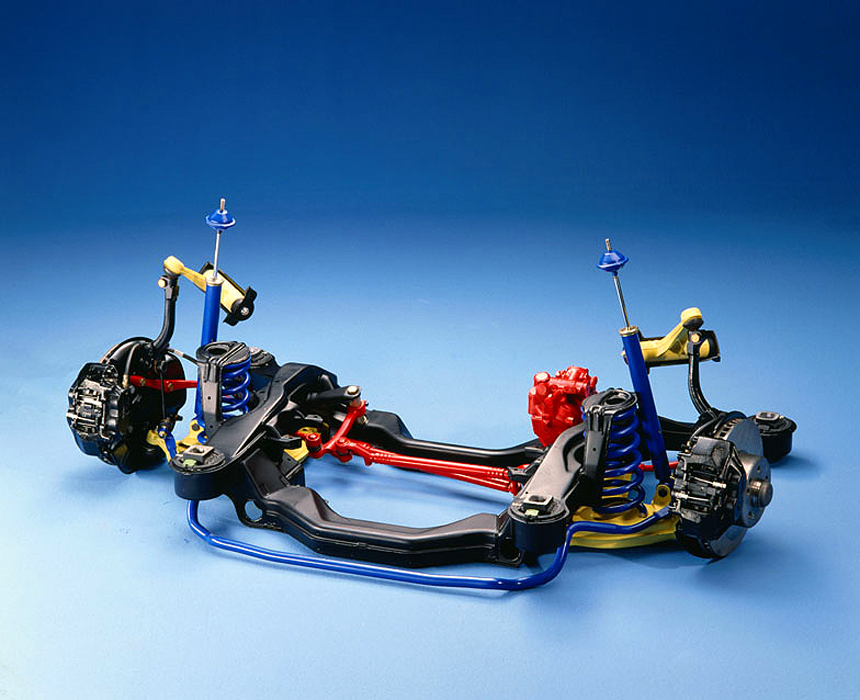
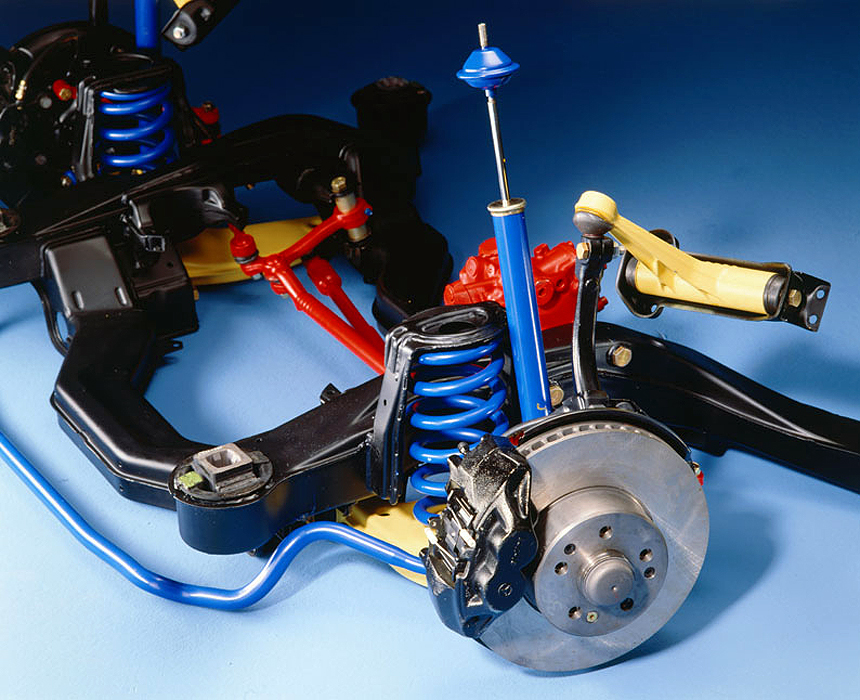
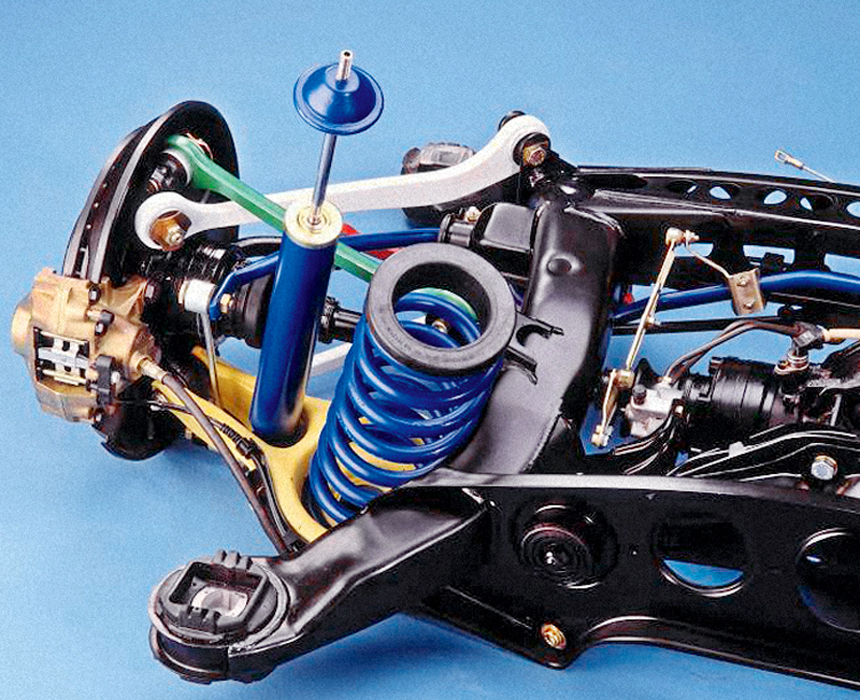
The rear five-lever is a variation on the layout that Mercedes first used on the 190 (W201) – and which it still uses:
Three Chassis Concepts at Once
The technology was even more difficult. In 1983, prototypes in the W126 guise began to work out three different chassis concepts at once: a conventional body, a body with a suspension on subframes, and, finally, a unique frame structure with an active system controlling the position of the body. This was a distant ancestor of the ABC hydro-pneumatic system, but only the scheme with subframes performed well.
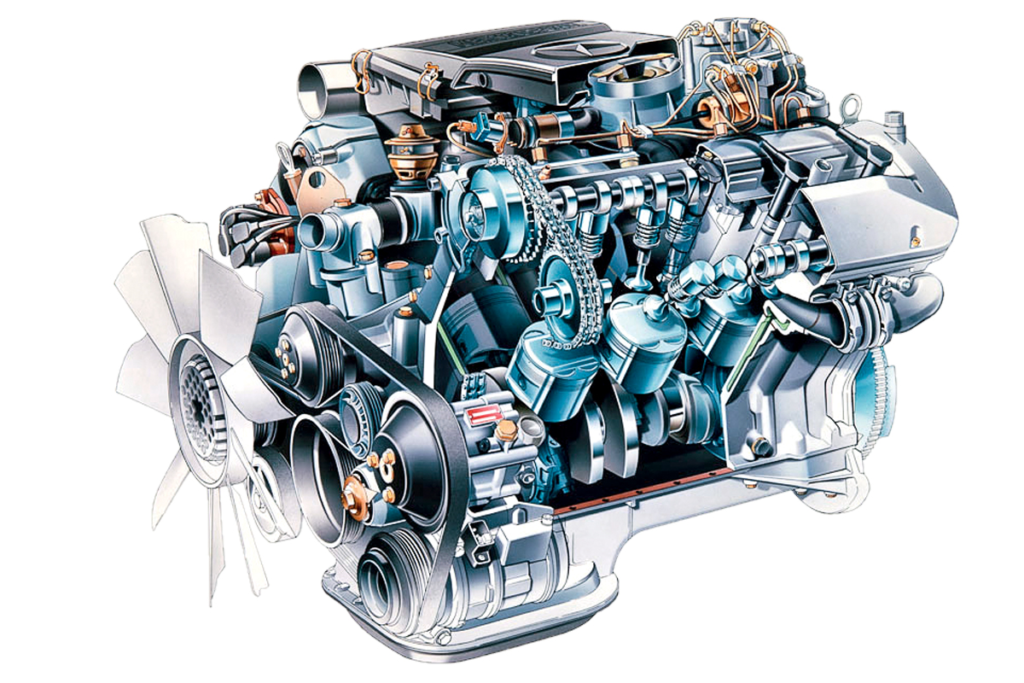
The Mercedes-Benz S 500 shares its lineage with the mighty M119 series 5.0-liter V8 engine, which also powers the fierce Mercedes 500 E sedan, the charismatic SL 500 roadster, and has connections with the Le Mans CLK LM race car and the C11 prototype.
The V12 Programme
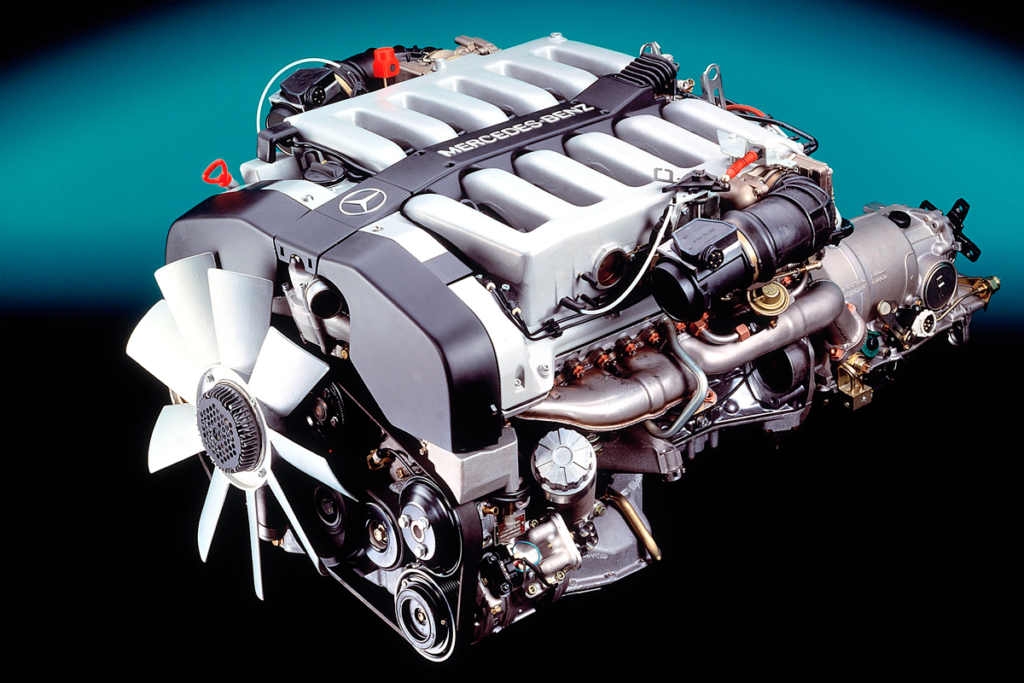
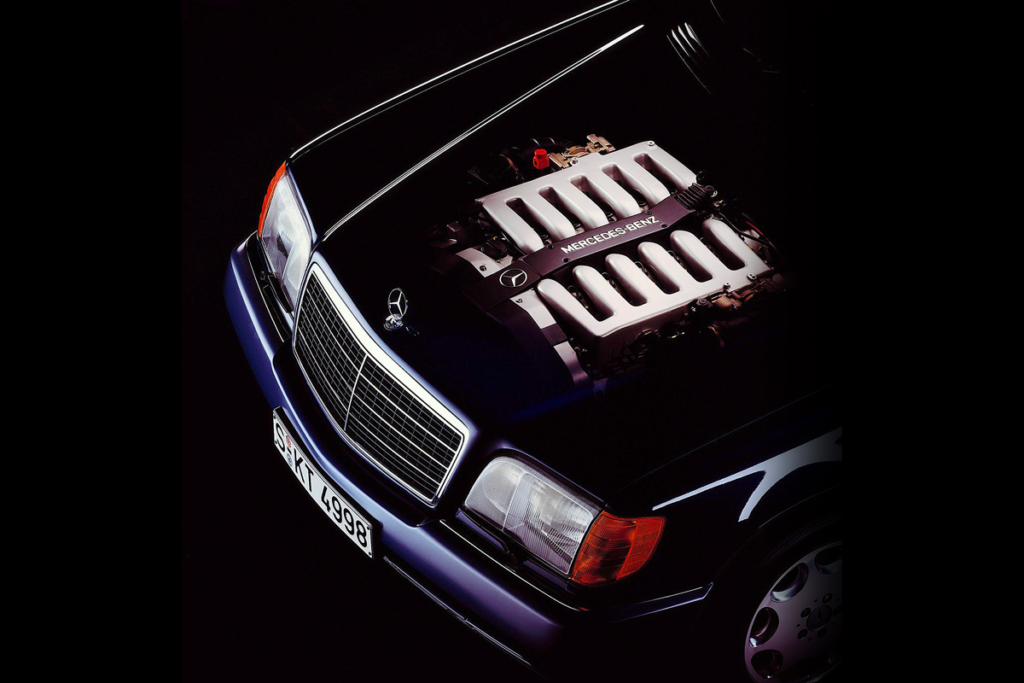
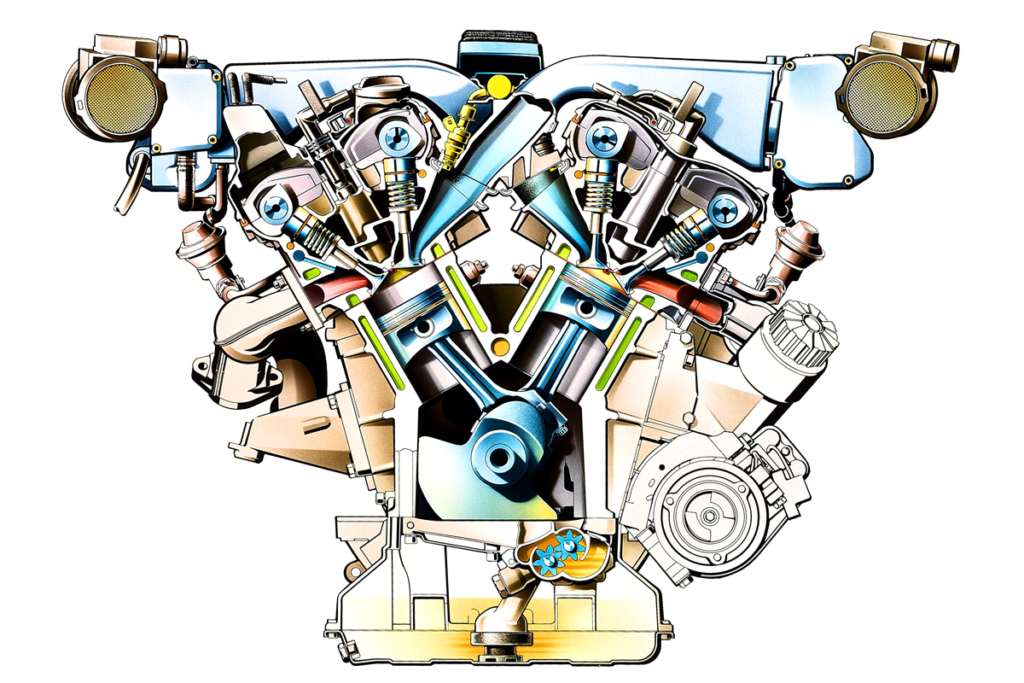
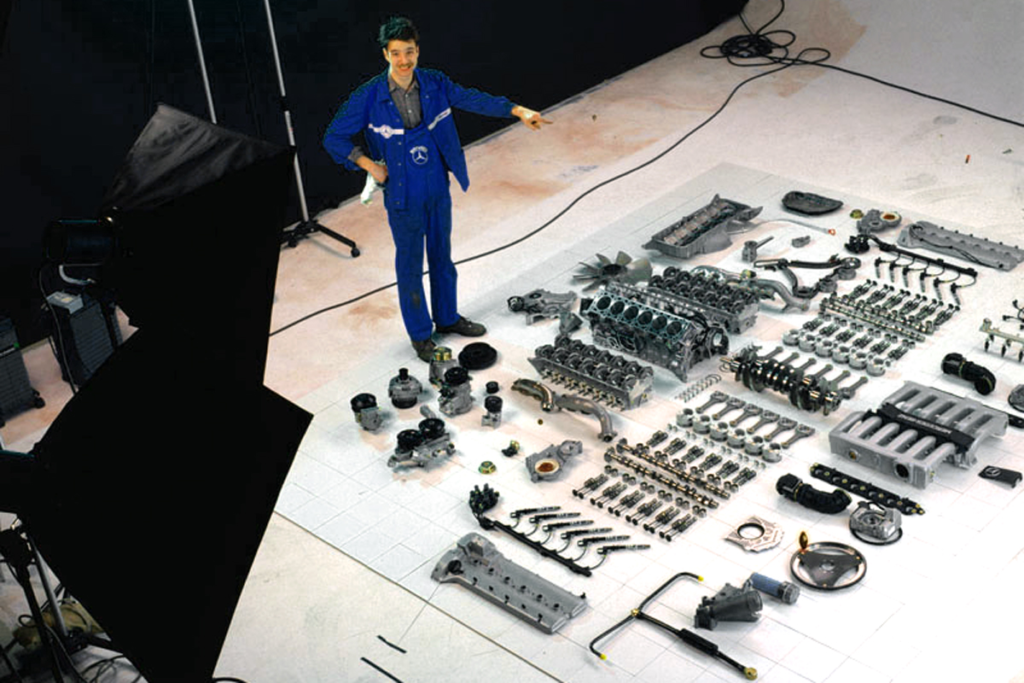
Originally, the plan for the flagship S-Class was to equip it with a new 5.6-liter V8 engine featuring four valves per cylinder. However, the stars at Stuttgart had an epiphany in early 1986 upon hearing news about BMW’s new 7 Series, and instantly set out to develop their own V12 engine. By 1988, the engine was ready and the design was set in stone. The first pre-production S-Classes were unleashed onto the Nürburgring for testing.
The 6.0 V12 engine developed 394-408 hp. and 570-580 Nm. A total of 32,517 long-wheelbase sedans S 600 and 3399 short wheelbase were produced:
Ten Years, and Two Billion Marks
The test results were alarming: the Mercedes leaned like a fishing trawler and struggled with braking. Wolfgang Peter’s task force quickly went into damage control mode. They modified the suspension geometry, beefed up the brakes, and ditched the standard 215/65 R15 wheels for wider 235/60 R16 ones, which necessitated the designers to alter the wheel arches.
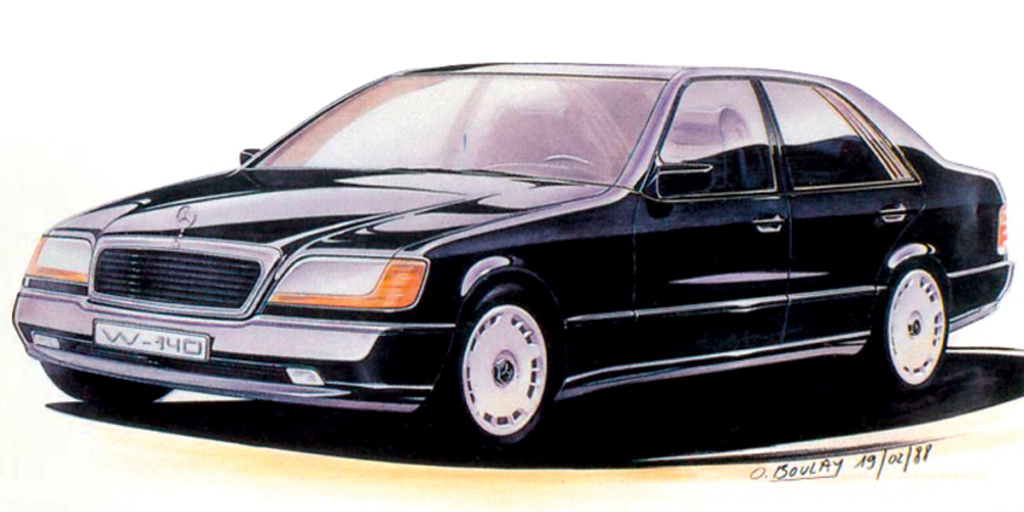
The grand reveal was initially scheduled for 1989, but Mercedes was falling behind, and the release of Lexus LS put even more pressure on them. Last-minute changes kept pouring in. The board of directors suddenly wanted the S-Class to have two wheelbase options. Since the project was originally centered on a long-wheelbase with 3139mm between the axles, they audaciously sliced out 10 centimeters from the rear door space.
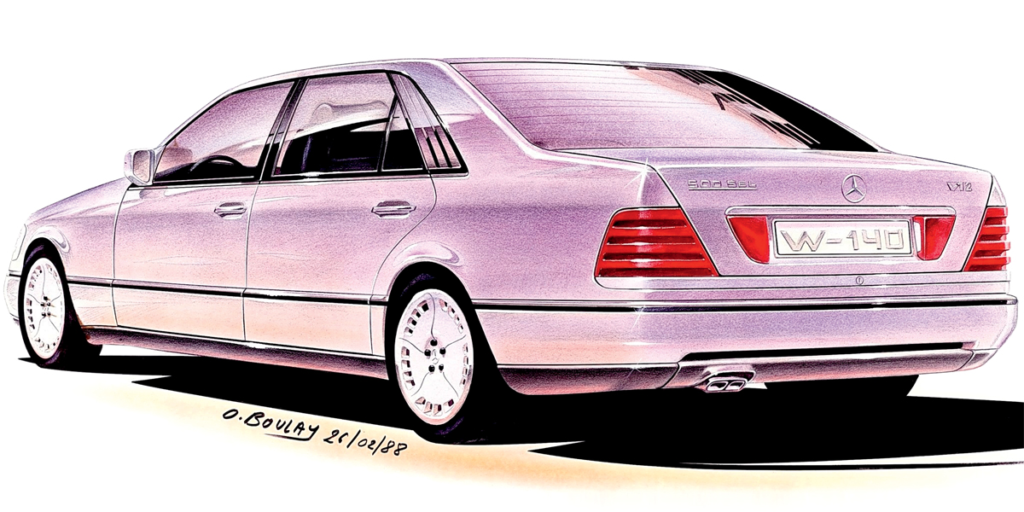
Changes continued to roll in until the fall of 1990. The word “overengineering” took on a new meaning as Mercedes was engaged in repeated cycles of redesign and refinement. The development cycle stretched out over ten years, and yet some components like the air suspension and parking sensors still weren’t perfected in time. The project’s budget ballooned to two billion Deutsche Marks, making it the most expensive in Mercedes history, and eventually leading to the removal of Wolfgang Peter from his position.
Spring of 1991 finally saw the curtains lift on the much-awaited new S-Class at the Geneva Motor Show. But guess what? Its market debut was met with an immediate revamp.
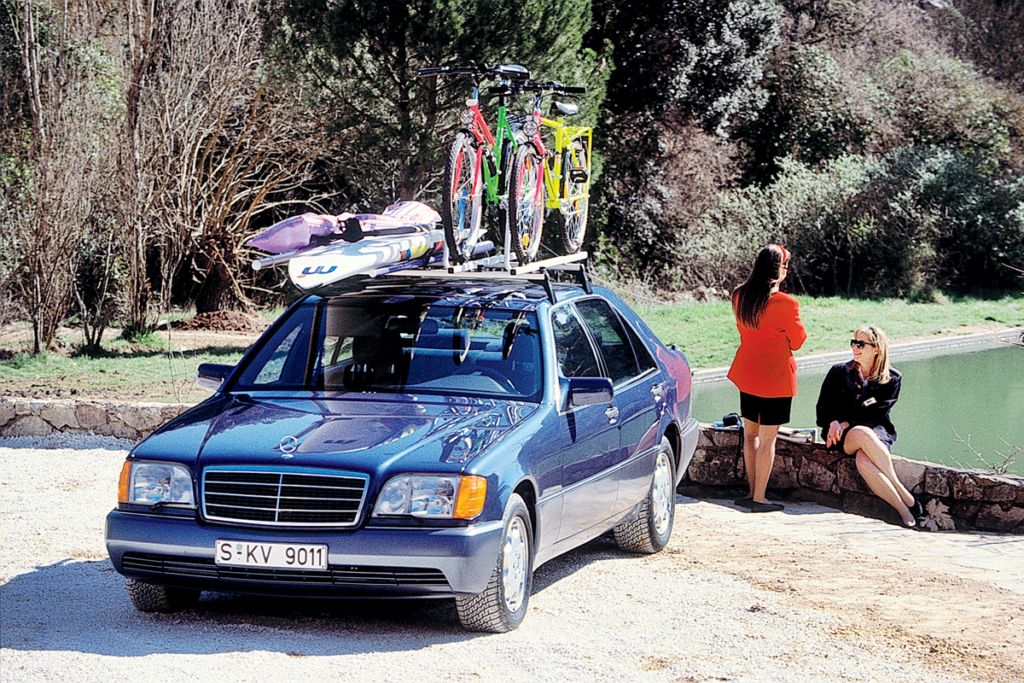
Early W140 Problems: The Sylt Train, Mirror Servos, and a Payload Fix
It quickly became clear that, due to its width, the W140 would not fit in rail cars. Only these were not just wagons, but car transporters of the train that went to the island of Sylt, which happened to be Germany’s premier resort. The island was connected to the mainland only by a railway dam, which ferried passenger express trains. The S-Class had to have its own cargo train.
The problem was resolved by incorporating a servomotor to fold the exterior mirrors as standard. However, this too had to be replaced because the mechanism corroded and the mirrors vibrated at high speeds.
Ninety-Two Kilograms per Person
Another oversight meant the flagship S 600 had a payload of only 480kg according to its documentation, including driver and luggage. This amounted to just 92kg per person, akin to the new Aurus Komendant crossover. Ideally, the car would have needed a complete redesign, but they managed a fix by increasing the standard tire pressure in all models starting October 1991, raising the payload to 530kg. However, this slightly compromised the ride smoothness, and early owners complained that the tires of the hefty car would lose their roundness after being parked for extended periods.
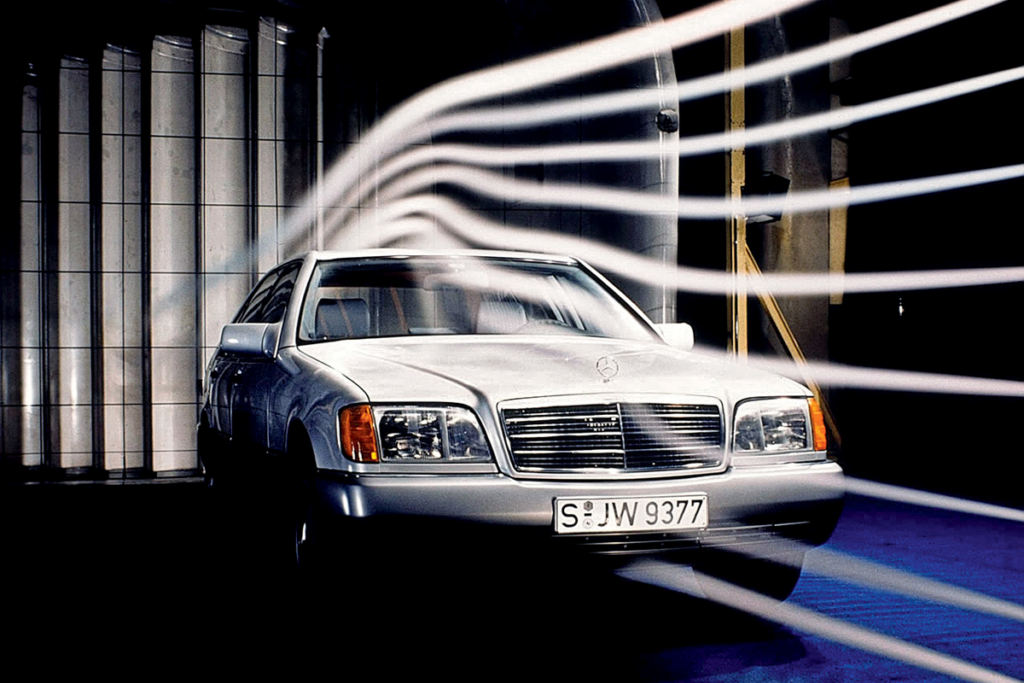
Mercedes-Benz never announced any recall campaigns for the W140, which reinforces the myth about its ultra-reliability. However, improvements and additions were made to the design almost every year, both before and after the facelift. For instance, trunk opening buttons in the cabin and on the key fob were only introduced two years before the end of production.
Some initial issues, besides the mirrors, included:
- Squeaky brakes
- Sticking door locks
- Traction control errors
- Frequent throttle valve actuator malfunctions on gasoline-powered models
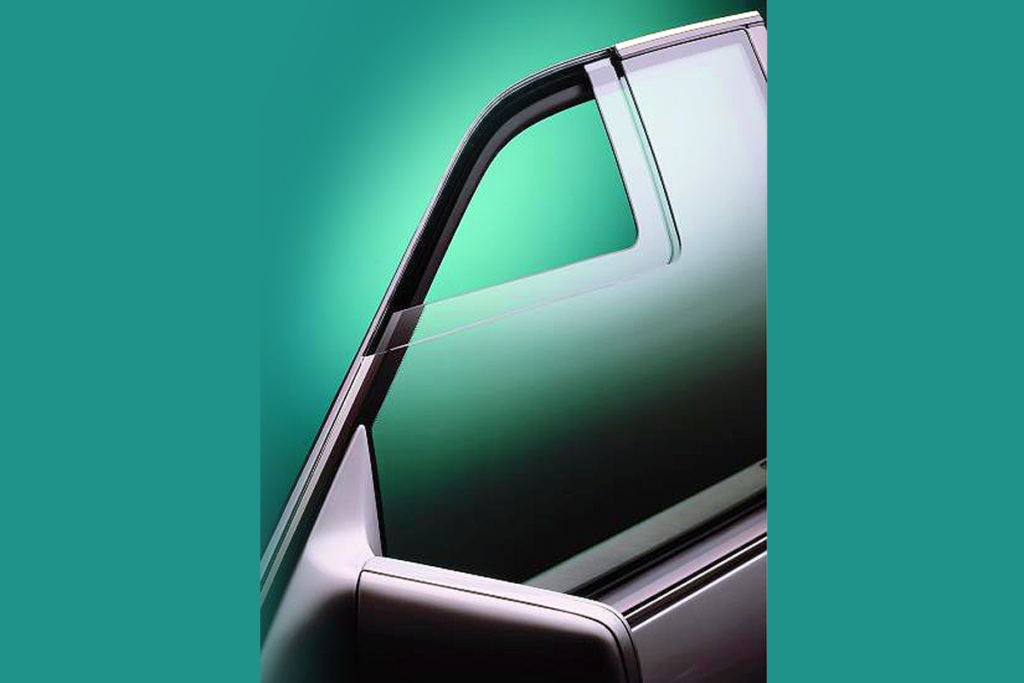
How Many Were Sold, and Where
In Germany, public opinion was against the overly large S-Class, which was not particularly fuel-efficient and was priced 25% higher than its predecessor. However, the W140 was well received in America and the Middle East. Nevertheless, over seven years of production, only 406,717 sedans were sold – half the number of its predecessor, the W126. Another 26,000 were attributed to the C140 coupes.
The most popular versions were the S 320 (45% of the total) and S 500 (21%). In Germany, 104.6 thousand sedans were sold, while the U.S. accounted for 30,000 more.
These sketches by Steve Mattin are dated November 1992 – a little over a year has passed since the premiere of W140:
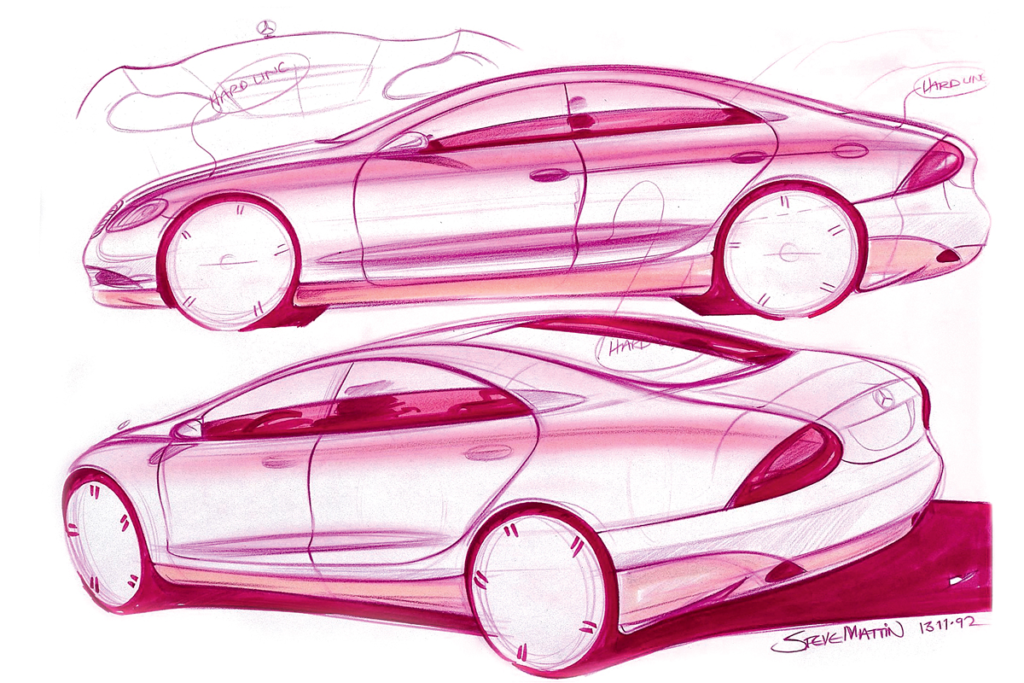
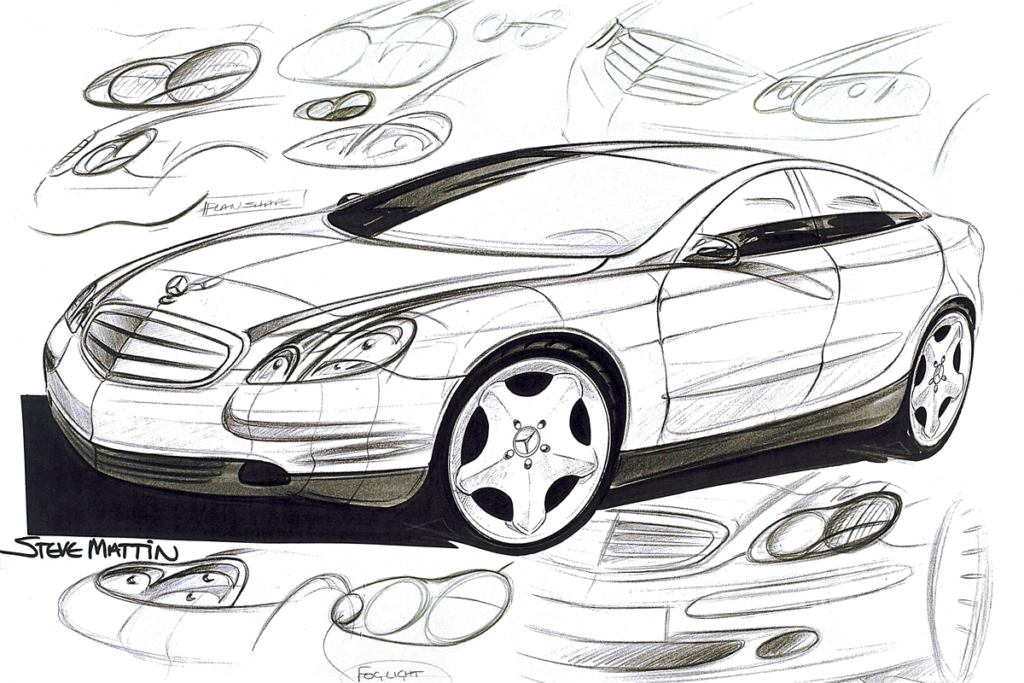
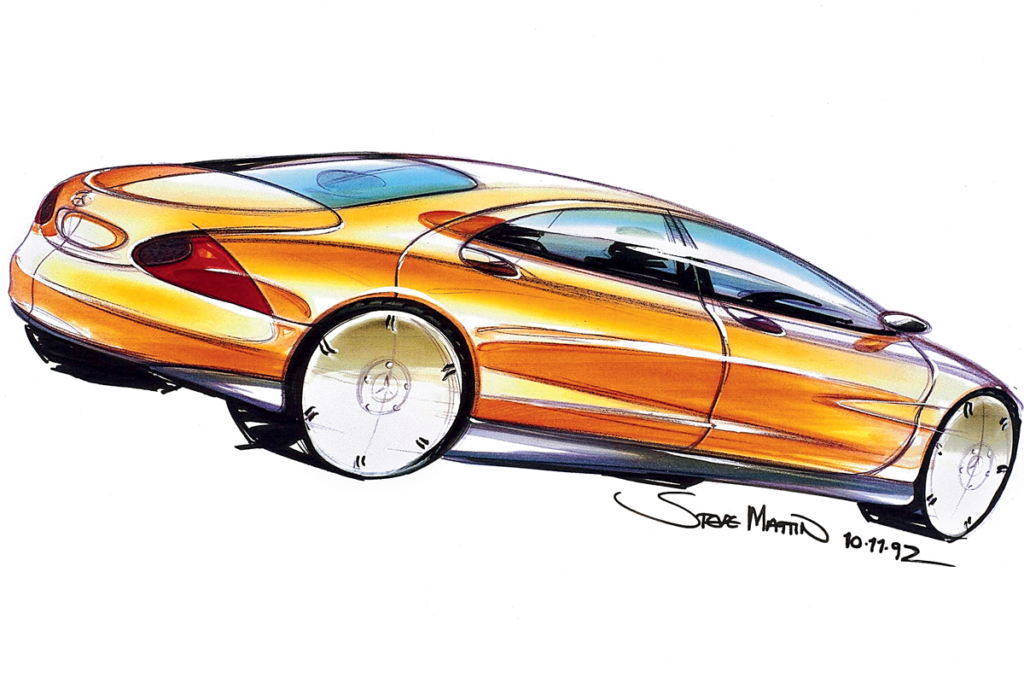
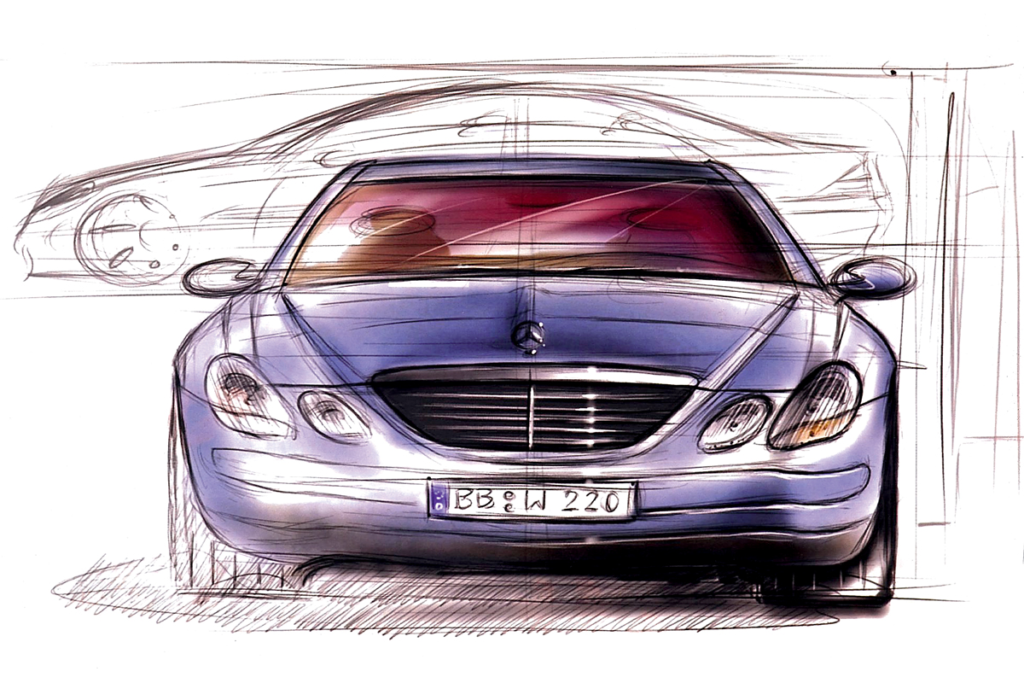
How the W220 Was Designed: Steve Mattin’s Faster, Cheaper Approach
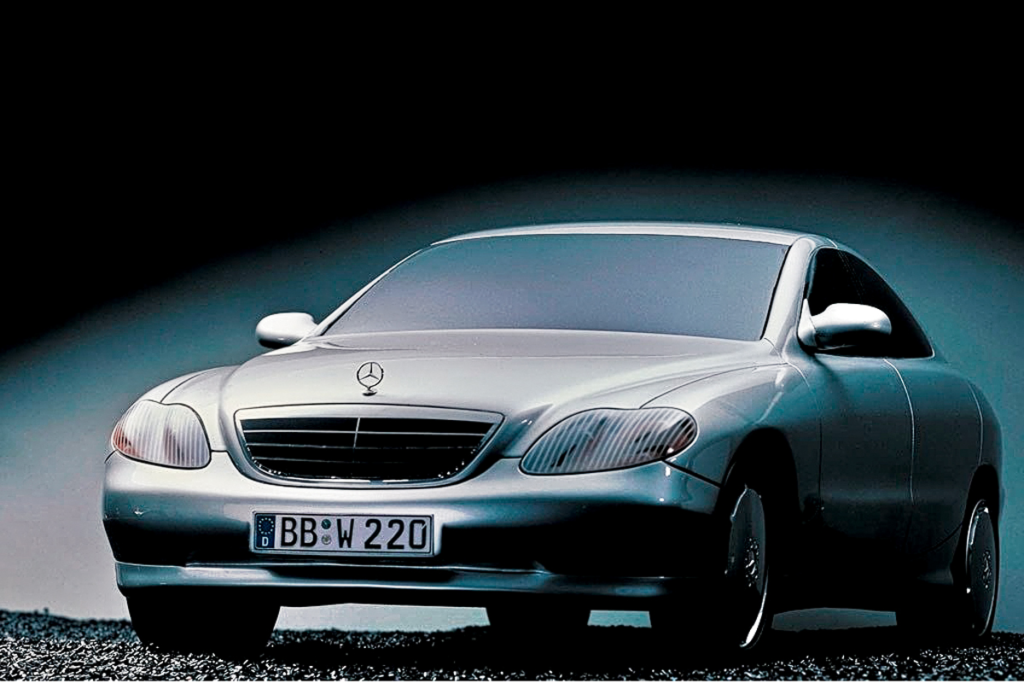
The development story of the “W220” is not as epic as that of the W140, but it is notable because its design was crafted by the then-young British designer Steve Mattin, who had already made a name for himself with the A-Class project.
Bruno Sacco was still formally in charge of Mercedes-Benz styling until 1999, but Peter Pfeiffer was already overseeing the processes. The W220 embodied ideas that had been abandoned in the mid-80s – it was not four, but two inches lower: the roof was lowered by 40 mm, to the level of the W126 sedan.
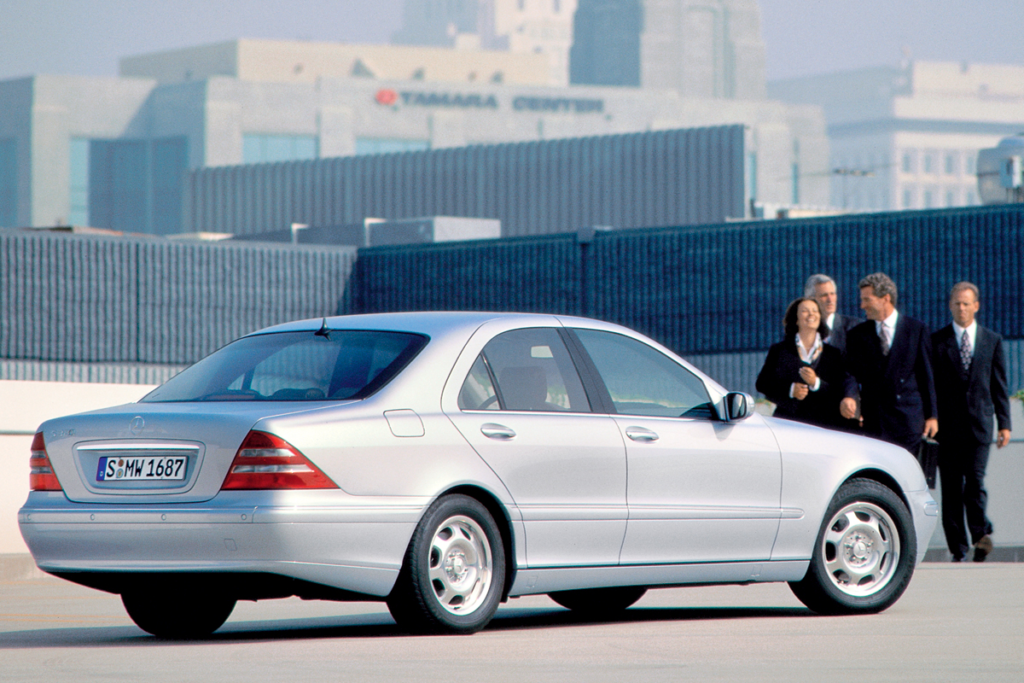
Six Years Instead of Ten
The new model featured no fewer innovations than the W140, however, Mercedes wanted to quickly regain sales volumes and compensate for the losses from the W140 project. Development took only six years and cost much less, and the policy of cutting costs led to the fact that a typical W220 that has survived to this day is a rusty body with foggy headlights, sitting on deflated air suspension.
But Mercedes no longer needed a thirty-year lifespan, they made a bet on rapid renewal – and it paid off. In seven years, 484.7 thousand units of the new S-Class were sold, and most importantly – it was the W220 that once again overtook the BMW 7 Series and regained the top spot in sales among competitors for the flagship Mercedes. As for the W140, it continued its life under the Maybach brand, although that’s a whole different story.
Frequently Asked Questions
Which of the two is quicker? The W220. On our timing gear the long-wheelbase S 500 needed 7.78 seconds to 100 km/h against the W140’s 8.84, and it also stopped from 100 km/h in 40.39 meters to the older car’s 45.51 — both on winter tires with ESP on.
Which has more room in the back? The long-wheelbase V220, by a wide margin: 505 mm between the rows against 385 mm in the short W140 — and even against 445 mm in the current V223.
Is the W140 really as heavy as people say? No. Ours weighed 2065 kg on the scales without a driver, roughly 200 kg less than a modern flagship sedan, and the short-wheelbase car is shorter, narrower and lower than today’s W223.
Why is the W140 called “Die Kathedrale”? German journalists coined the nickname for its height: the roof stands one and a half meters tall, 50 mm above the W126, because two 190-cm engineers kept hitting their heads on the seating mock-up. Bruno Sacco later called it the one Mercedes he disliked, four inches taller than it needed to be.
Which one should you actually buy? A post-facelift car in original condition. The one that impressed us most was not an S 500 or an S 600 but a 2003 S 350 whose owner replaced everything with genuine parts — it drives like a real S-Class.
How many were built? 406,717 W140 sedans over seven years — half of what the W126 managed — plus about 26,000 C140 coupes. The W220 sold 484,700 in its own seven years and took the segment lead back from the BMW 7 Series.
Photo by Dmitry Pitersky
This is a translation. You can read an original article here: Два капитала: Mercedes-Benz S 500 поколений W140 и W220

Published August 02, 2023 • 35m to read