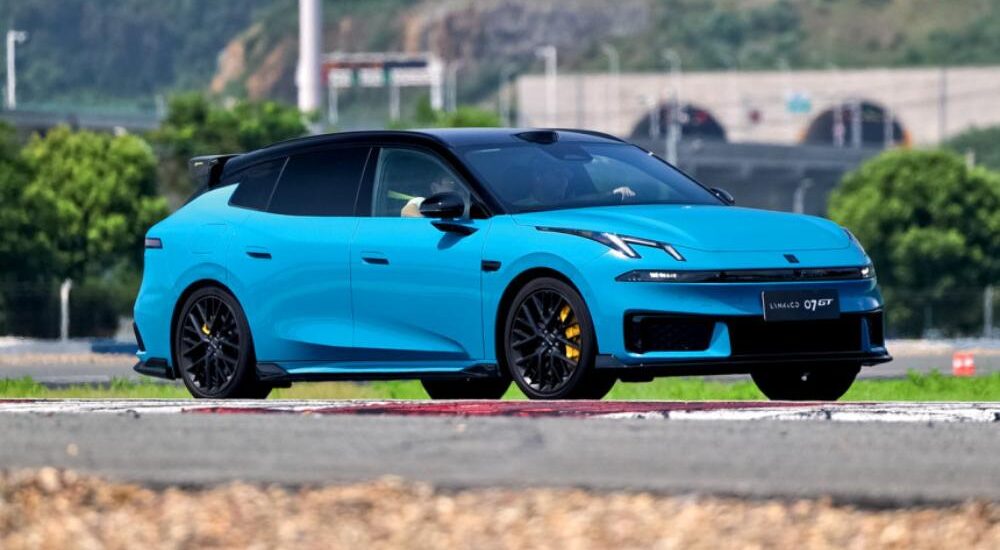

We finally got a proper world premiere — a hybrid sport estate on a real racing track in China. Just two laps, and the battery was nearly dead. But here’s the twist: guess who tuned the chassis?
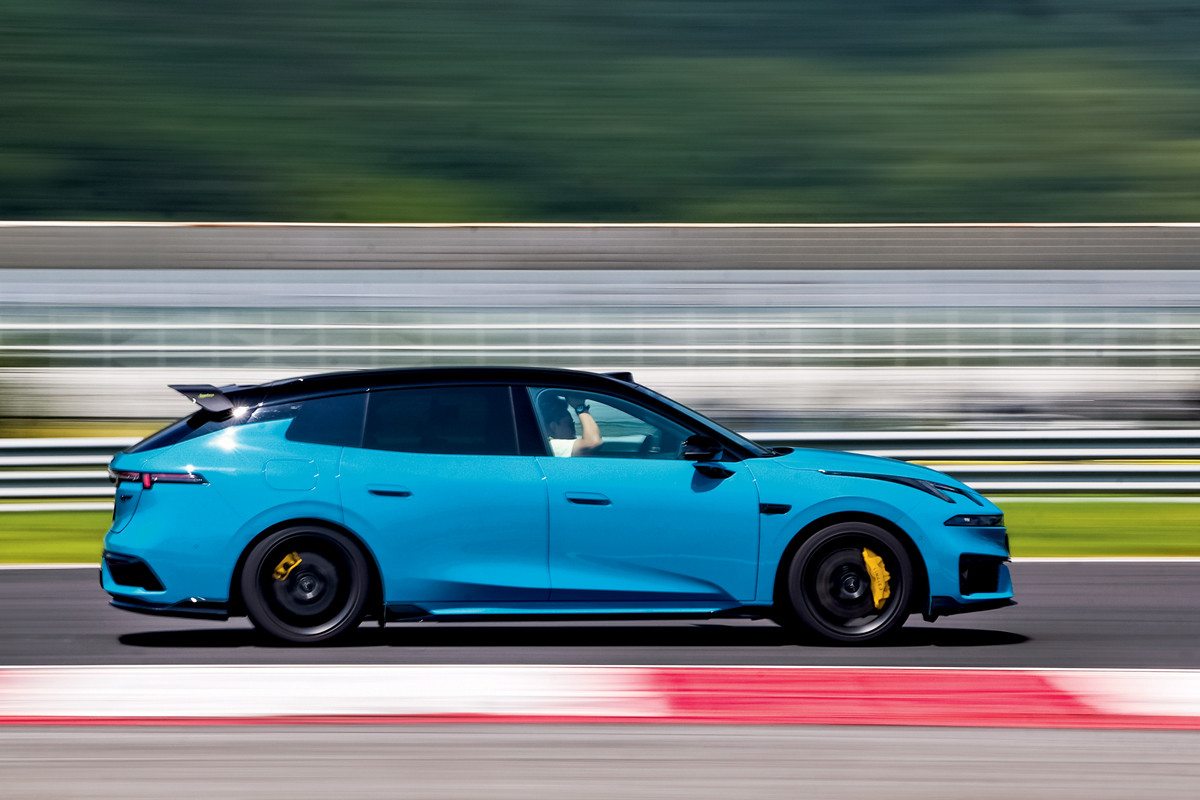
The Setting: Ningbo, Racing Track, and Only Three Cars
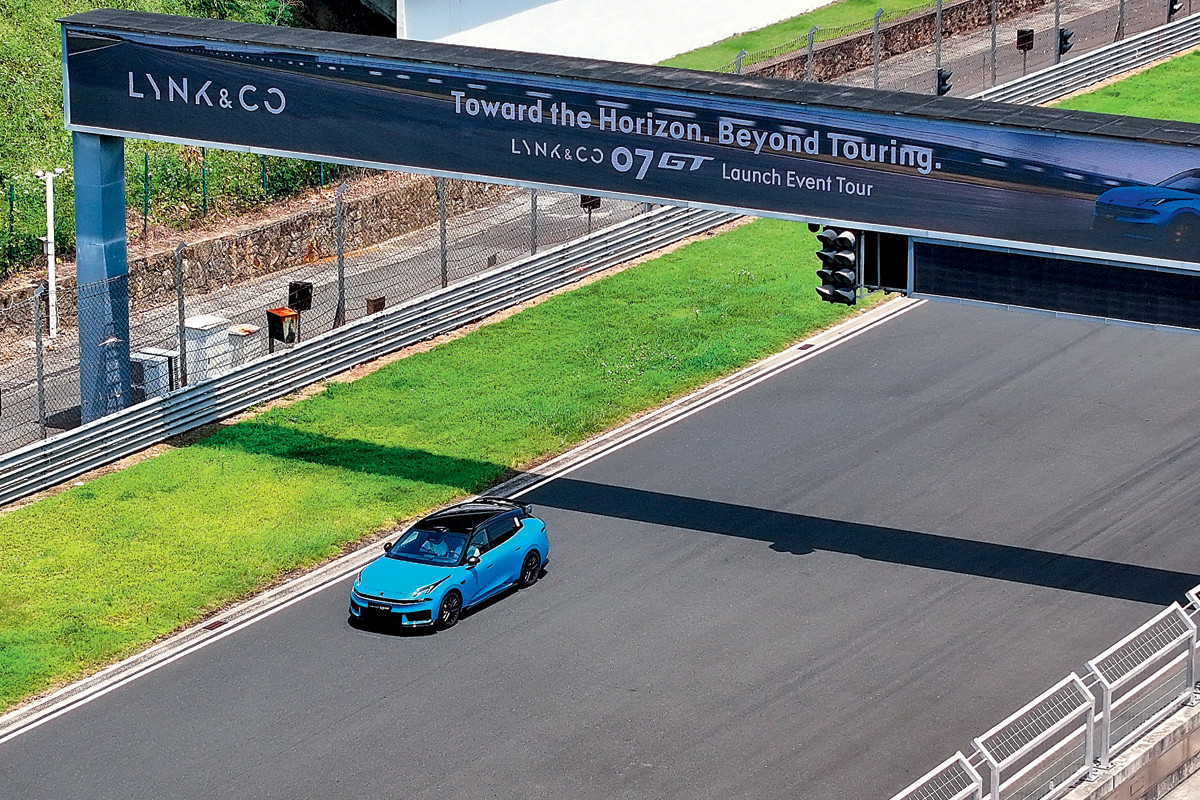
The Chinese test drive experience can be brutal. We found ourselves in Ningbo — Geely’s headquarters is just down the road in Hangzhou — home to factories, a comprehensive safety centre with world-class crash-test equipment, and a private motorsport complex. The four-kilometre FIA Grade 2 circuit, designed by Alan Wilson, sits mostly quiet: only a handful of local touring championship rounds and a Chinese Formula 4 race are held here each year. This is also where Lynk & Co’s factory test team is based.
So how many cars did they bring from the neighbouring plant for an international driving presentation with around a hundred bloggers from Kazakhstan, India, Russia, Israel, and Myanmar?
Three.
To pass the time between sessions, guests could take laps in other Lynk & Co models around the paddock. Having already spent time behind the wheel of the compact 06 crossover and the flagship 900 hybrid — courtesy of the team at E.N.Cars — I was there for one reason only: the stunning 07 GT, with its dramatic composite rooftop spoiler. A poor man’s Panamera Sport Turismo? Let’s find out.
Exterior Design: Built to Shine at Night
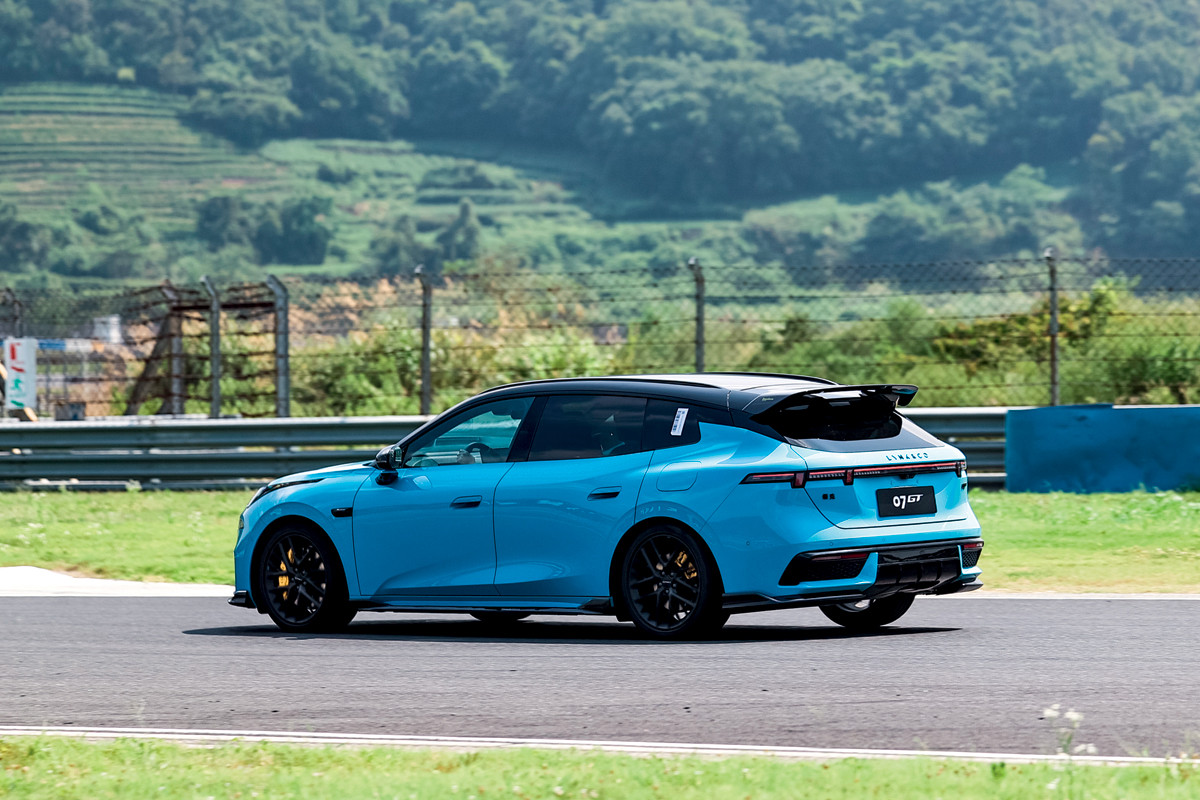
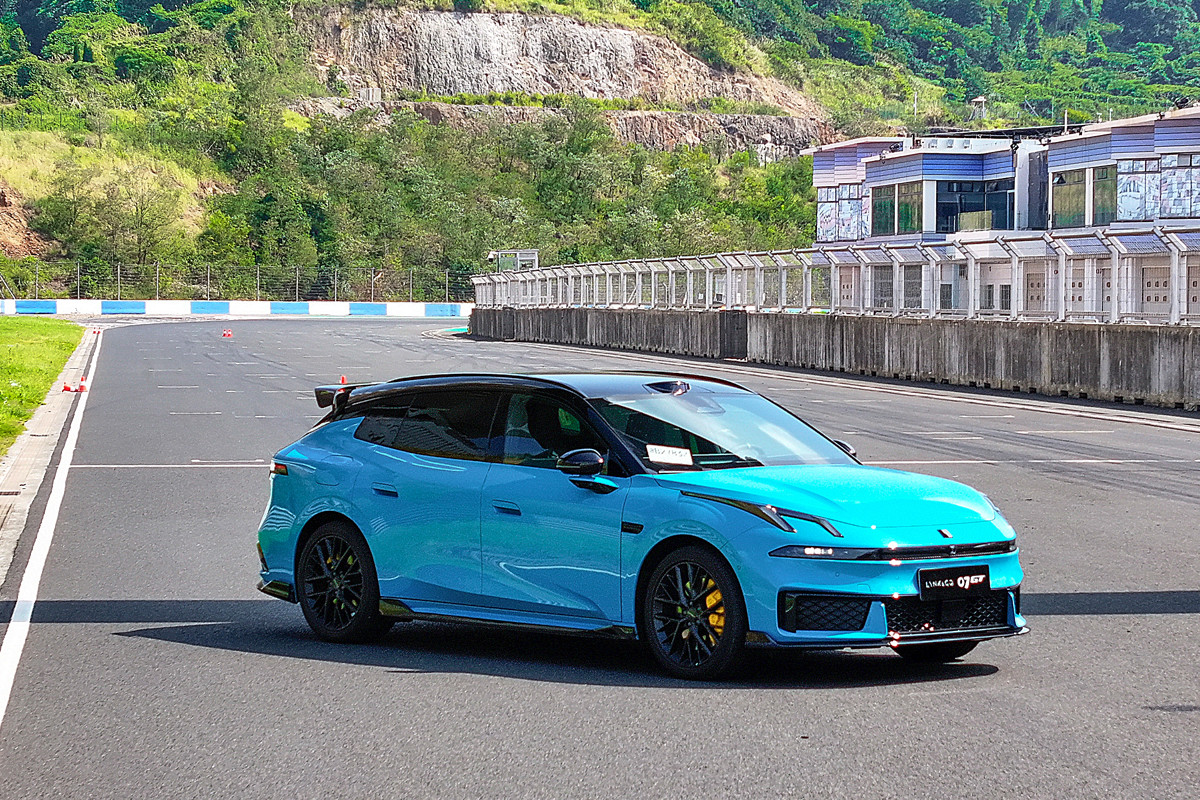
The 07 GT is a striking car. At 4.8 metres long, it commands attention. Lynk & Co’s head of design Stefan Rosén — a Volvo veteran since the 1990s — has laid out the brand’s visual philosophy clearly: Swedish cars are designed to look their best under soft Scandinavian daylight, while Chinese models are built to dazzle under the neon glow of a Guangzhou night.
The 07 GT absolutely lives up to that brief. The wide haunches, the roofline-mounted carbon spoiler, and the sharp LED detailing all make it one of the most visually distinctive estate cars on sale today.
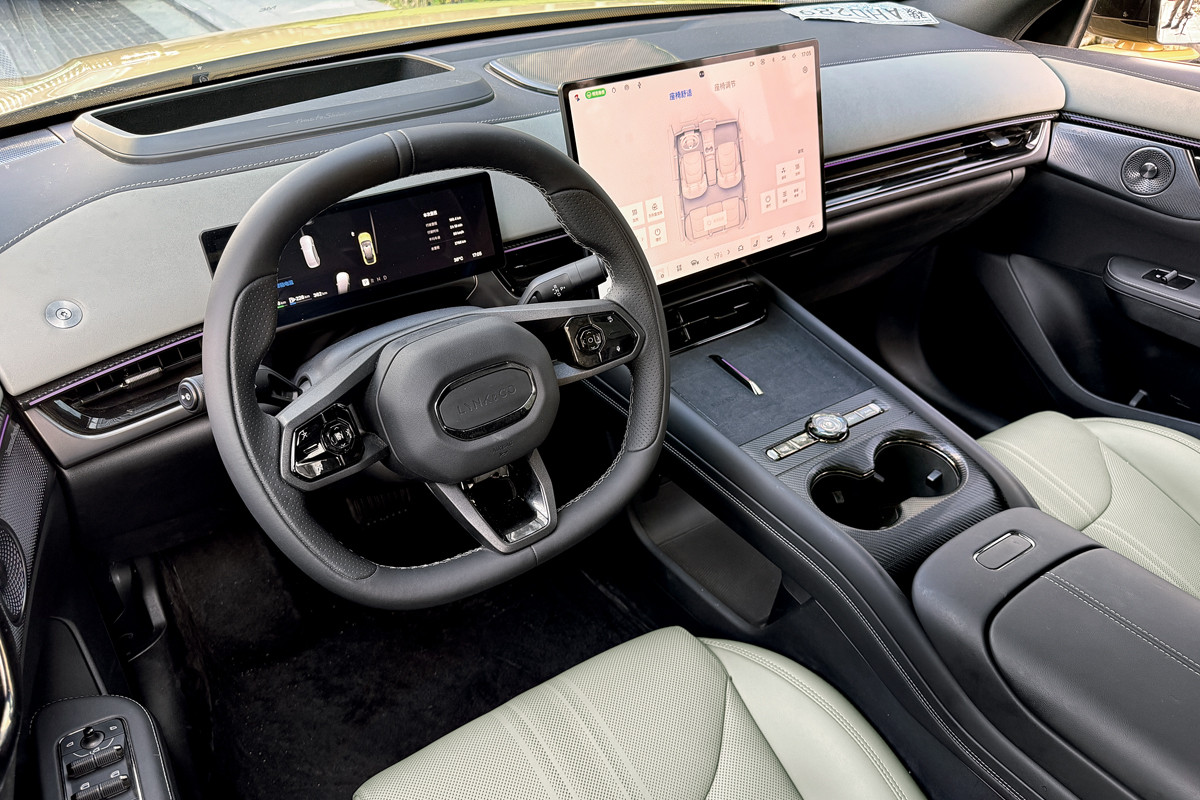
Interior: Impressive Tech, Mixed Execution
Unfortunately, Rosén didn’t offer the same commentary about the interior — and there’s a reason for that. Step inside, and the 07 GT fails to match the promise of its bodywork.
What’s good:
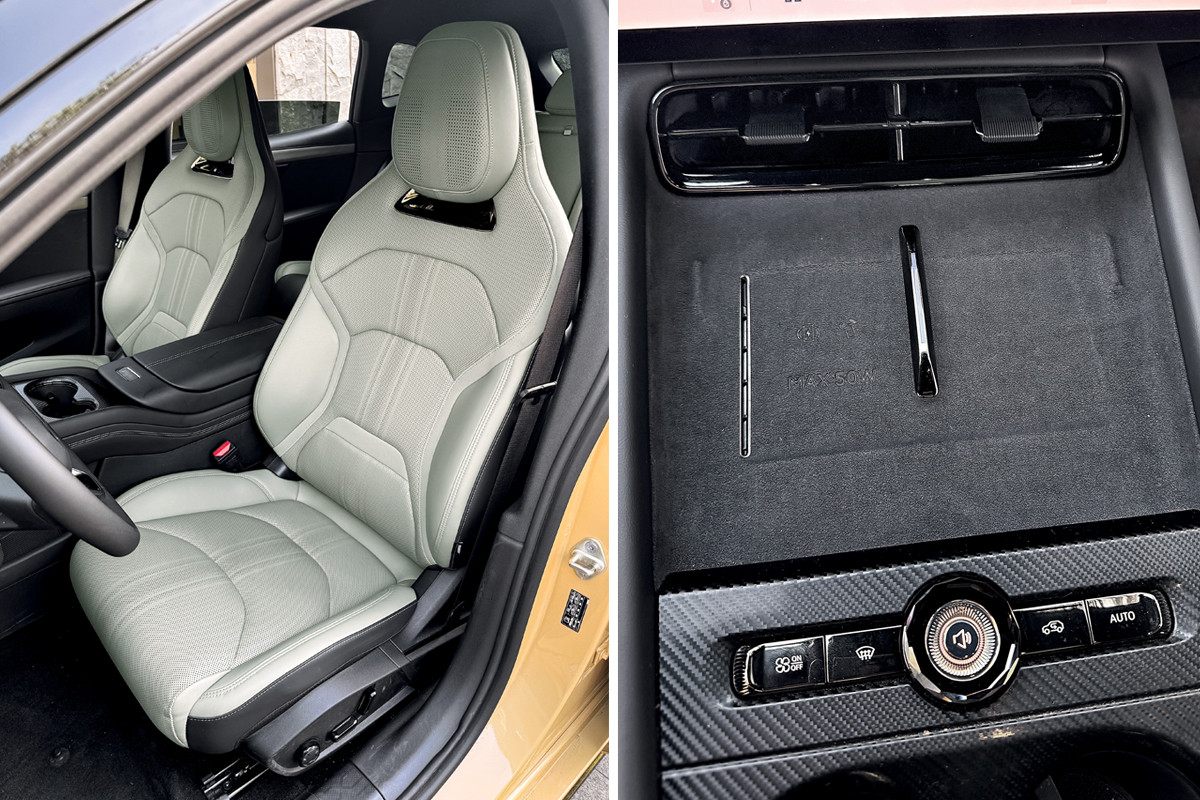
- Decent quality materials throughout the cabin
- Ventilated and massaging front seats
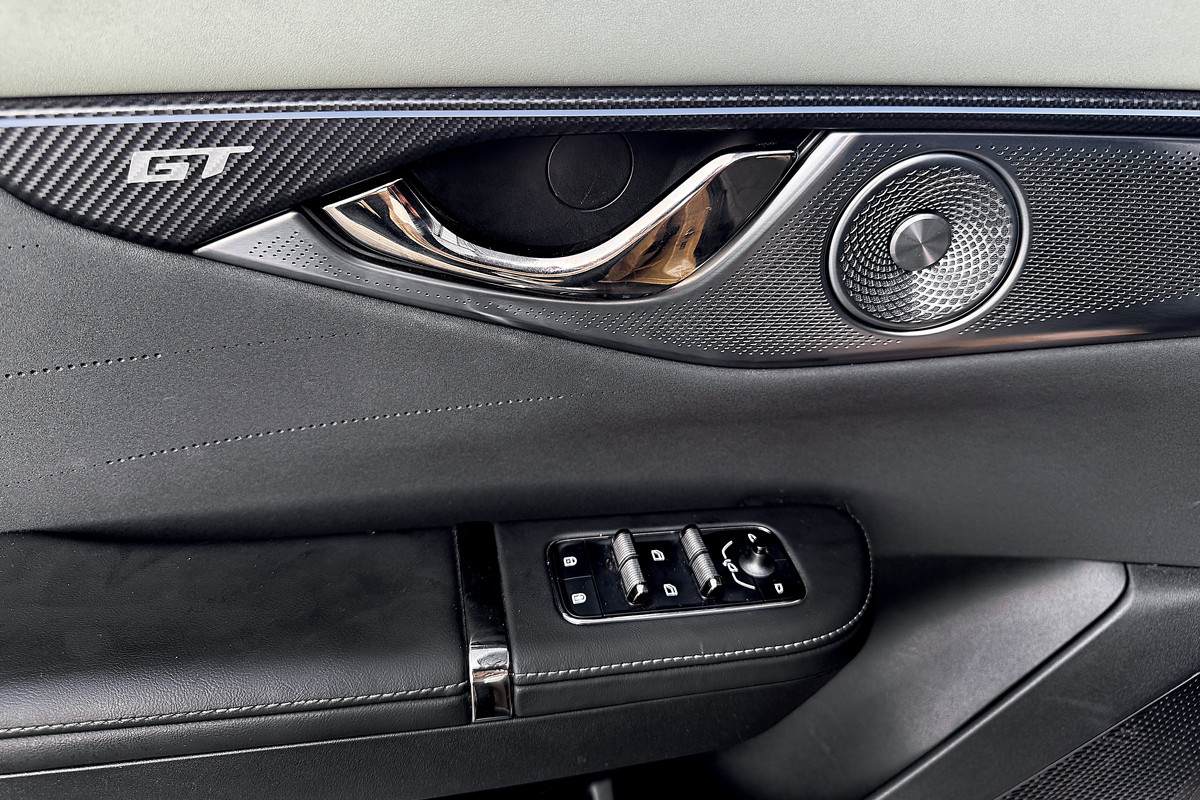
- An outstanding 1,600-watt Harman/Kardon audio system with 23 speakers
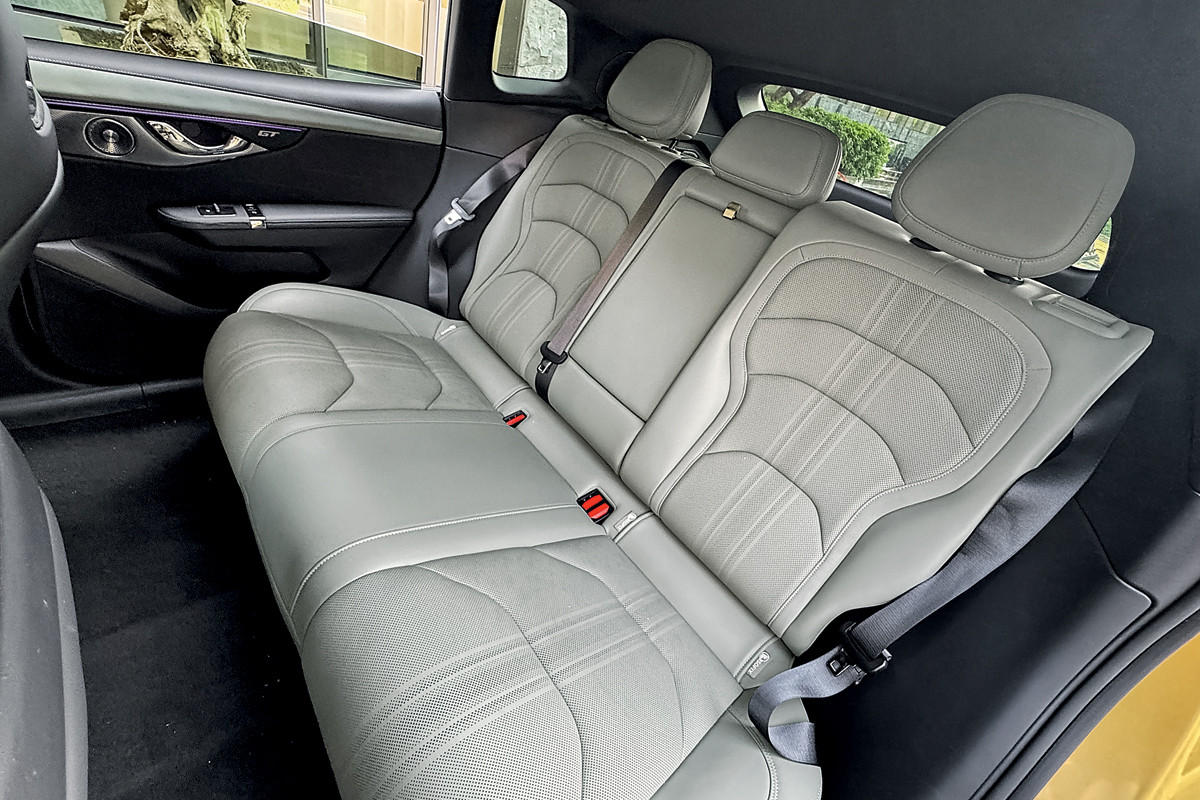
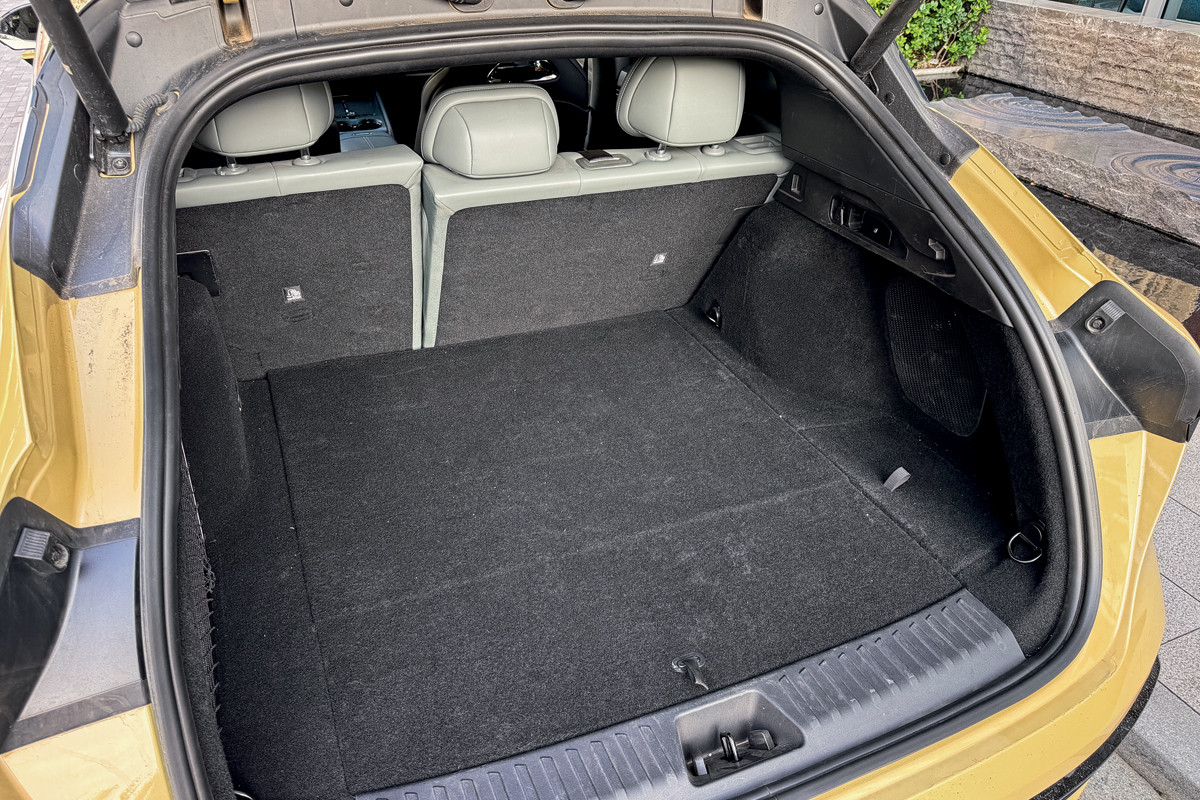
- A spacious boot — this is, after all, a Gran Turismo built for two passengers and their luggage
What falls short:
- Frameless door windows rattle when the doors are shut
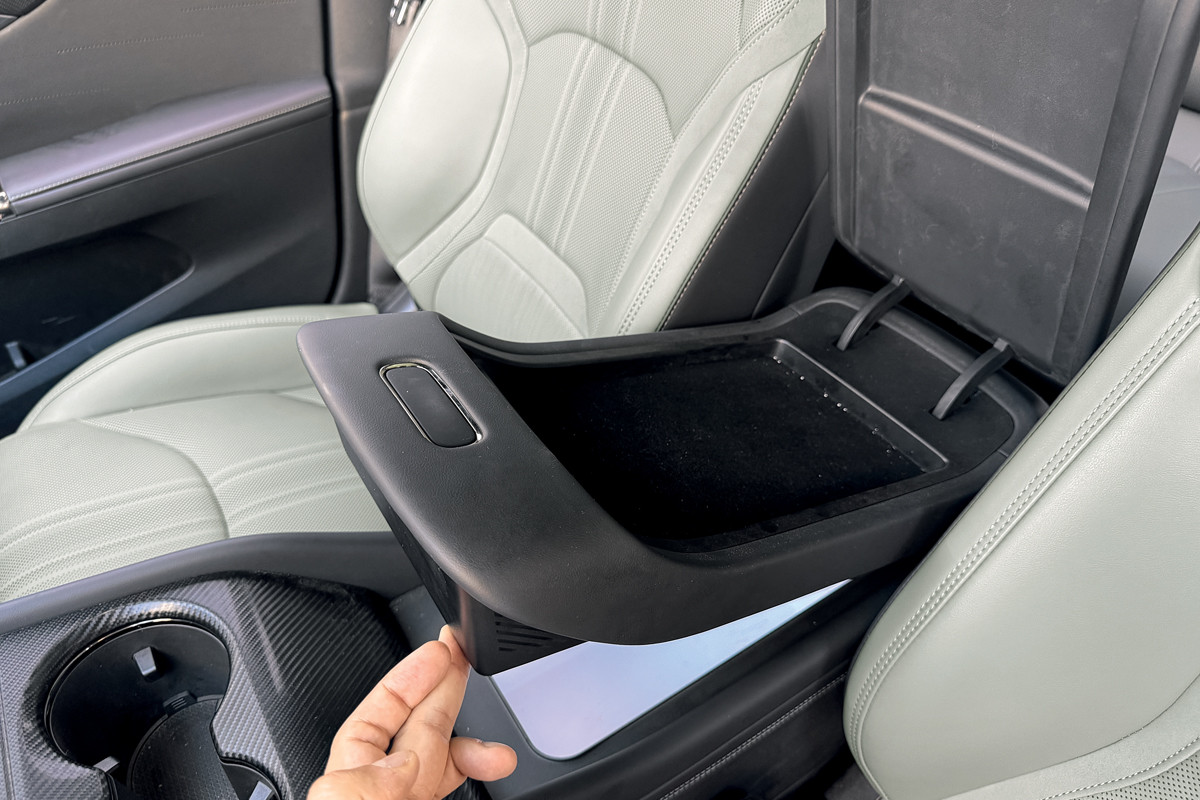
- Rear passenger space is noticeably tight — especially when compared to something like the Changan Nevo A06 liftback
- Overall cabin ambiance doesn’t quite live up to the exterior’s promise
Powertrain: 530 hp on Paper, Empty Battery in Practice
Here’s where the test conditions really bite. The 07 GT is rated at 530 hp and claims a 0–100 km/h time of 5.5 seconds. On the day, it felt nowhere near that — closer to eight seconds in practice.
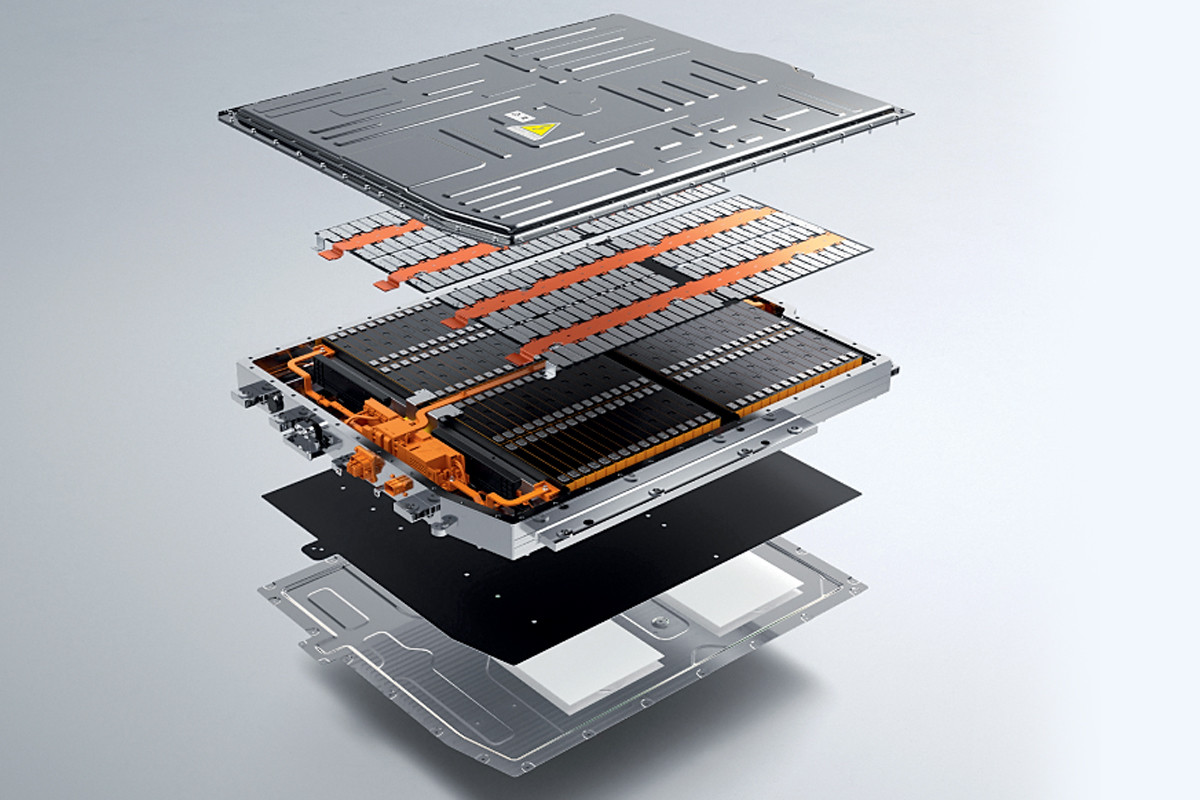
Why? The 28.3 kWh LFP battery was essentially flat after just a few laps of the four-kilometre circuit. With no charge, the powertrain had almost nothing to draw from.
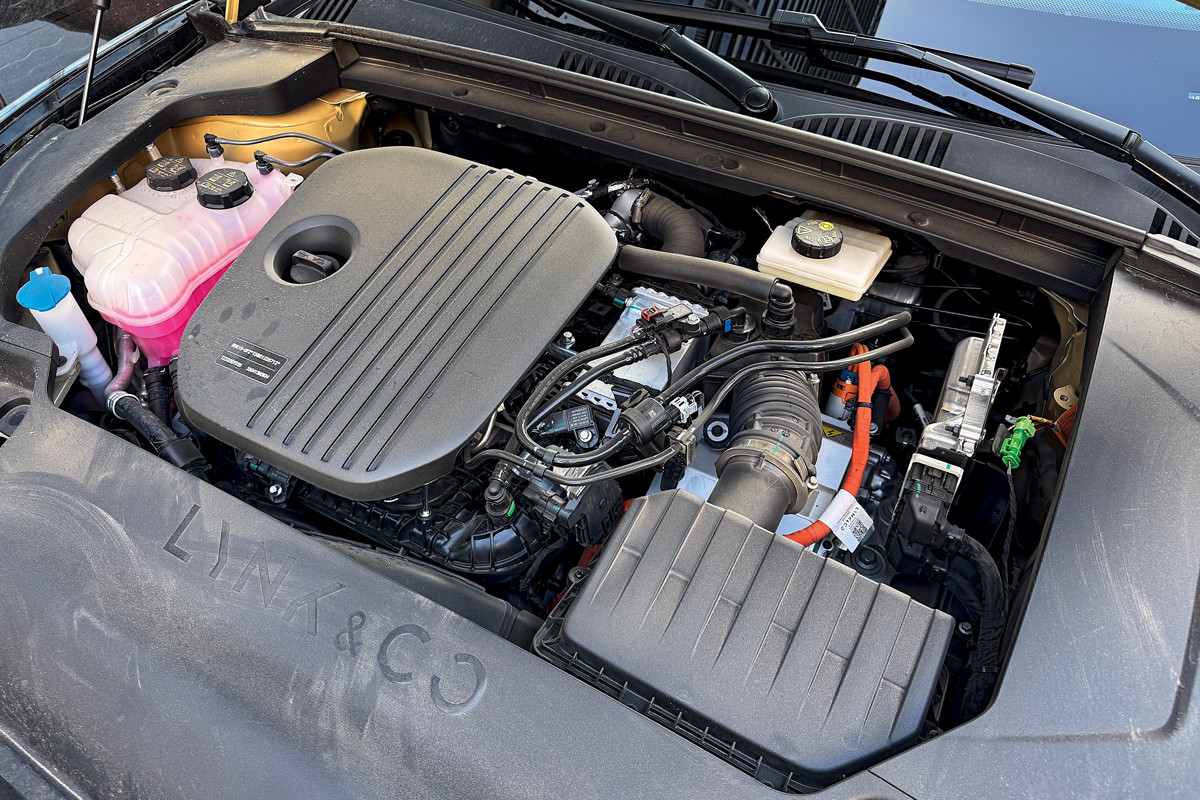
The 07 GT’s hybrid system consists of:
- A 1.5-litre turbocharged petrol engine producing 163 hp at peak
- An integrated starter-generator on the crankshaft rated at 82 hp
- A front electric motor producing 245 hp
- A rear auxiliary electric motor producing 122 hp
- A three-speed automatic transmission connecting the petrol engine directly to the front wheels
- Geely’s parallel-series 3DHT Evo transmission architecture
This setup allows the combustion engine to both charge the battery via the generator and drive the front wheels directly through the gearbox. In the Lynk & Co 900 — a related flagship model — gear changes from the ICU were perceptible, at least on earlier software versions. You’d expect the 07 GT to deliver an even more mechanical, engaging experience, especially with a flat battery forcing the engine to work harder.
But no matter how hard I pushed, I couldn’t feel a direct mechanical connection from the engine to the wheels. Geely’s engineers have clearly prioritised seamless, EV-like power delivery — the same philosophy applied to the heavier Zeekr 9X, 8X, and Lotus For Me. For a two-tonne Gran Turismo estate being driven hard on a circuit with a flat battery, that smoothness works against you. A more assertive ICU contribution would have been welcome.
Chassis and Handling: The Real Highlight
This is where the 07 GT genuinely impresses — and it becomes clear from the very first corner.
Steering:
- 2.5 turns lock-to-lock
- Sharp, well-defined responses
- Surprisingly light and “transparent” feel with excellent on-centre clarity
- Rack-mounted electric power steering (dual pinion), rather than column-mounted — a setup designed specifically to improve feedback, especially around the straight-ahead position
Handling balance:
- Body roll is well controlled
- The suspension absorbs kerbs cleanly and without drama
- At the limit, the car tends towards safe, progressive understeer
- Lift off mid-corner and the rear five-link suspension subtly tightens the line — a welcome dynamic touch
The chassis was developed and tuned by the engineers at Hethel — home of Lotus, now fully integrated into the Geely family. That heritage shows.
Suspension Technology: Magnetorheological Dampers and More
The 07 GT’s front suspension uses MacPherson struts — not the double-wishbone setup found on some rivals like the Changan Nevo A06. But the type of damper fitted more than makes up for it.
Two damper options are available across the range:
- Base versions: Frequency-selective dampers (FSD) with Koni-developed passive valving — the same technology used by GAC on the S7 crossover
- Top-spec GT: Magnetorheological dampers (MRC) filled with ferrofluid instead of conventional oil, allowing stepless damping adjustment at 1,000 Hz
The MRC system can alter suspension settings within 10 milliseconds of the onboard ADAS system — equipped with lidar and an Nvidia Drive Thor-U chip capable of up to 700 trillion operations per second — detecting a change in the road surface ahead.
These magnetorheological dampers are supplied by BWI Group, a Beijing-based state-owned company formed in 2009 from the former Delphi chassis division. BWI supplies the same technology to Ferrari, Lamborghini, Ford, Cadillac, and now Changan (Deepal L06) and Geely. A remarkable trajectory for what was once an American automotive supplier.
How Does the Standard Lynk & Co 07 Sedan Compare?
I managed to squeeze in a lap in the regular Lynk & Co 07 saloon — front-wheel drive only, with conventional dampers. The difference was substantial:
- Noticeably slower, as expected
- More pronounced body roll
- Softer, less controlled suspension feel
- Less communicative steering
The GT’s chassis isn’t just incrementally better — it’s a different category of machine.
Price and Value: Is It Worth It in China?
The top-spec Lynk & Co 07 GT — all-wheel drive, full options, including a power-operated tow hitch — is priced at 208,000 yuan in China.
In absolute yuan terms, that’s not cheap. In the context of the current Chinese market, where price wars between EV and hybrid manufacturers are at their most aggressive, that money buys you an enormous range of crossovers with similar specifications.
For context, what 208,000 yuan gets you in the 07 GT:
- 530 hp all-wheel-drive hybrid powertrain
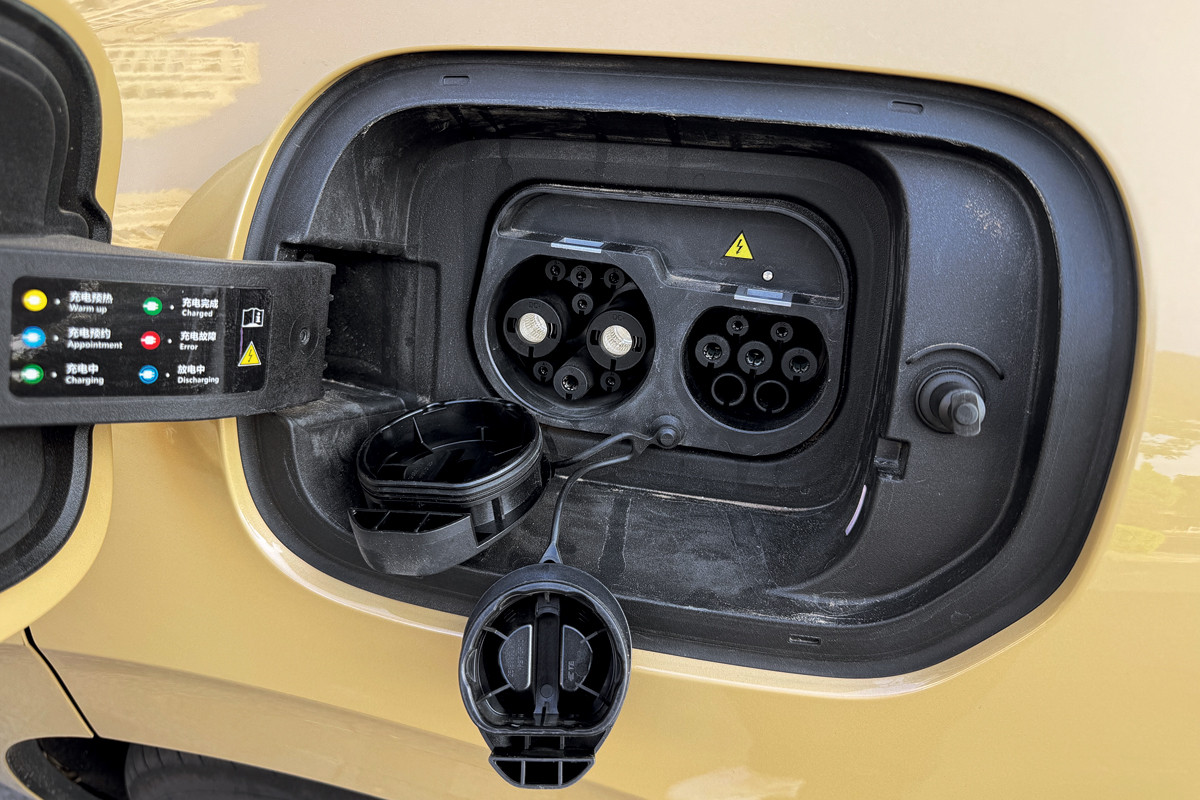
- Approximately 100 km of pure electric range
- Around half the fuel consumption of a comparable petrol-only car
- Lidar-equipped semi-autonomous driving assistance
- Magnetorheological adaptive suspension (top spec)
- Ventilated and massaging front seats
- 1,600-watt Harman/Kardon audio with 23 speakers
- Power tow hitch (top spec)
For historical comparison: in the early 2000s, an Alfa Romeo 156 Sportwagon cost roughly the same amount in hard currency terms. That Alfa — whose electronics extended to air conditioning and a rain sensor — was undeniably better to drive dynamically. But it offered none of the above. Factoring in roughly 90% inflation in the dollar and euro zones over the past 25 years, that Alfa would cost approximately twice as much at today’s prices.
The 07 GT isn’t quite at the Alfa’s level when it comes to pure chassis feel and driving pleasure. But the gap is smaller than you might expect — and the technology advantage is overwhelming.
Verdict: A Near-Miracle, With One Wish
The Lynk & Co 07 GT is a genuinely impressive machine — especially when you consider what it offers at its price point. The chassis tuning from the Hethel team is the star of the show: composed, communicative, and surprisingly engaging for a two-tonne family estate.
Strengths:
- Outstanding adaptive chassis with MRC dampers
- Transparent, well-calibrated steering
- Strong real-world electric range
- Excellent audio system
- Striking, distinctive exterior design
Weaknesses:
- Interior quality and rear space don’t match the exterior ambition
- Seamless power delivery philosophy blunts the driving experience when the battery is low
- Price is competitive in China but hard to stomach when converted to other currencies
If Geely can give a future variant a rear-biased power delivery and a larger battery, this could be something truly special. And having driven what they’ve already built — I’m confident that car is coming.
Stay tuned for our next feature: a closer look at Geely’s comprehensive safety centre in Ningbo, and what it means for passive safety in Chinese cars.
Photo: Leonid Golovanov
This is a translation. You can read the original article here: Lynk & Co 07 GT: знакомство на гоночной трассе в Китае

Published August 21, 2026 • 9m to read