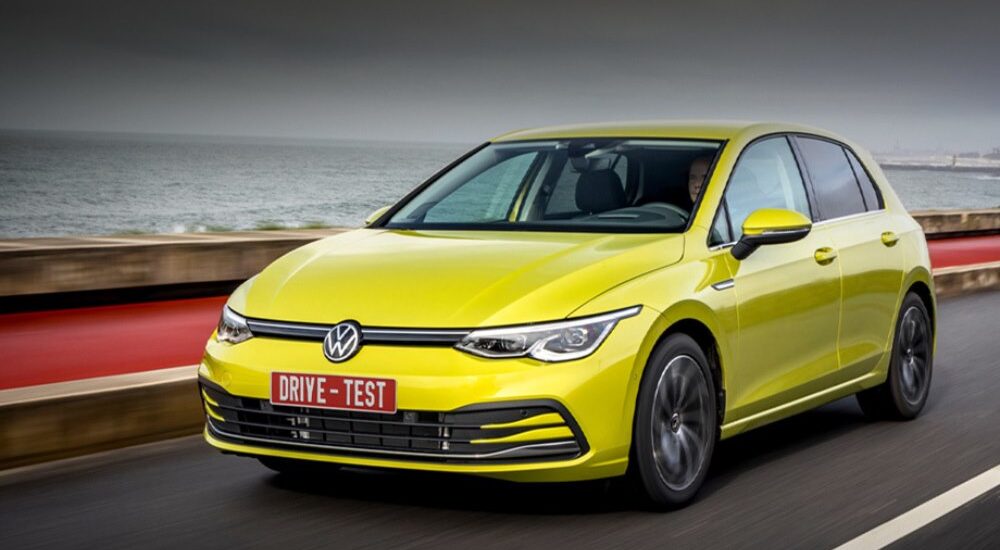

The eighth-generation Volkswagen Golf tested on Portuguese roads is, in the eyes of several journalists, still a work in progress — especially for markets like Russia. The version relevant to Russian buyers won’t arrive for at least a year, and it will come with a suspension tuned for rough roads and, like the Jetta, two localized engine options.
Engine Lineup for the Russian Market
- 150-hp turbo 1.4 TSI, paired with an eight-speed Aisin automatic (not the six-speed used elsewhere)
- 110-hp 1.6 MPI naturally aspirated engine, built in Kaluga and shared with the Polo and Rapid — this will be the base engine
As with the sedan, these engines will be shipped to Wolfsburg for final assembly rather than to Mexico.
Interior and Cabin Design: Fewer Buttons, More Frustration
Cabin changes apply across every market, and unfortunately they’re not for the better. The fully analog interior of the previous Golf Mk7 required no learning curve. The new cabin, by contrast, feels like a puzzle to figure out. Physical buttons have almost entirely given way to touch panels, and some functions are only accessible through the multimedia interface.
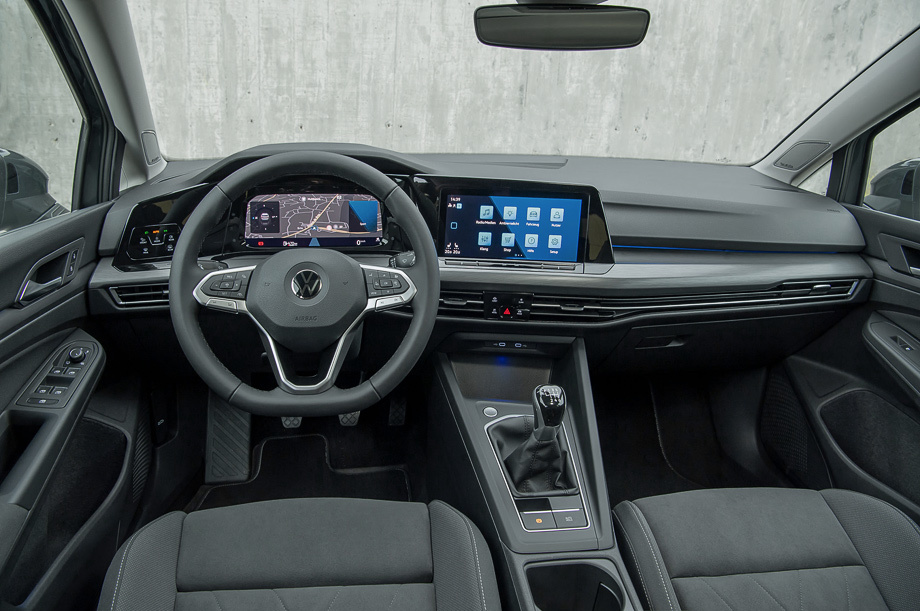
A touch-sensitive strip in front of the main display handles key adjustments:
- Hold the middle section to adjust volume
- Hold either end to adjust temperature
- Only one person — driver or passenger — can control a setting at a time; whoever touches first “wins”
- More detailed settings require digging through on-screen menus
The menu logic is sound, but it’s still distracting to navigate while driving.
Connectivity Quirks and Software Bugs
The electronics still feel unfinished in places:
- QR-code Wi-Fi pairing doesn’t work, despite being advertised as an option
- Manually entering the password works, but only temporarily
- Once wireless CarPlay is activated, internet sharing shuts off — and doesn’t resume even after disconnecting the phone
- The system lags in certain menus
Ergonomics and Visibility
No complaints about seating position, which is unchanged from the previous generation. Adjustment ranges remain comprehensive, and control placement is well thought out. Visibility is also strong: the front pillars are slim, the left wiper blade falls just short of the windshield edge, side mirrors are compact but effective, and nothing blocks the view into the cabin. Even so, none of this offsets the sense that overall ergonomics have taken a step backward due to the touch-heavy controls.
Ride Comfort and Cabin Noise
Ride comfort isn’t the new Golf’s strong suit either. The cabin feels noisier than expected — engine notes are overly prominent under acceleration, without much acoustic charm. Past 60 mph, wind noise starts building around the front pillars, as if the car is pushing into thicker air. Road noise scales with tire size: 18-inch wheels add a noticeable ringing over small bumps. That’s a shame, since Golf buyers can now order a genuinely impressive Harman Kardon sound system — one that seems best appreciated stuck in traffic, where road noise isn’t competing with it.
Suspension and Handling: Multi-Link vs. Torsion Beam
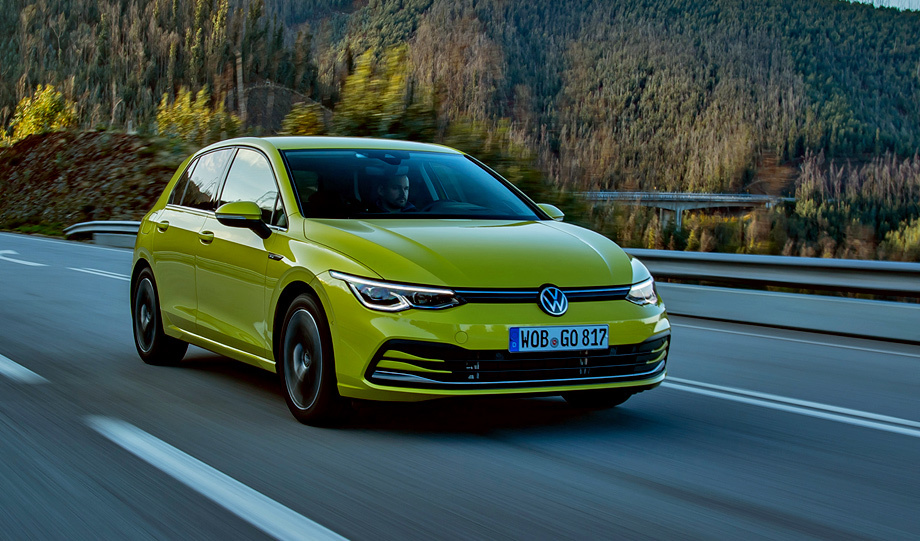
Test cars with the multi-link rear suspension rode on Bridgestone Turanza T005 tires (225/40 R18). In this setup, the chassis feels stiff and transmits medium-to-large road imperfections to the body more than you’d like. That said, the suspension tuning for Russian-market cars will likely be revised. Electronically controlled shock absorbers once again proved largely pointless — most buyers will never bother hunting for the one correct setting among a dozen options, only noticing a difference between the extremes.
The torsion-beam version, fitted with DCC dampers, rides firmer than the multi-link car and trembles noticeably over short, sharp bumps. It runs on 17-inch Goodyear Eagle F1 Asymmetric 3 tires, which hum less and transmit road texture less aggressively than the Bridgestones. Around corners, the simpler suspension setup actually feels more predictable, even though the rear axle fidgets slightly over mid-corner bumps. The multi-link setup, by comparison, is harder to read.
Steering Feel
All test cars use a progressively variable steering rack, which feels sharp near center but gets vague as you turn further — making it hard to judge exactly how much the wheels have turned. The result is a slight lack of clarity when maneuvering, especially in tight spaces. A fixed-ratio steering rack is also available for the Golf, and it may be the better choice.
Powertrain Options: Gasoline, Hybrid, and Diesel
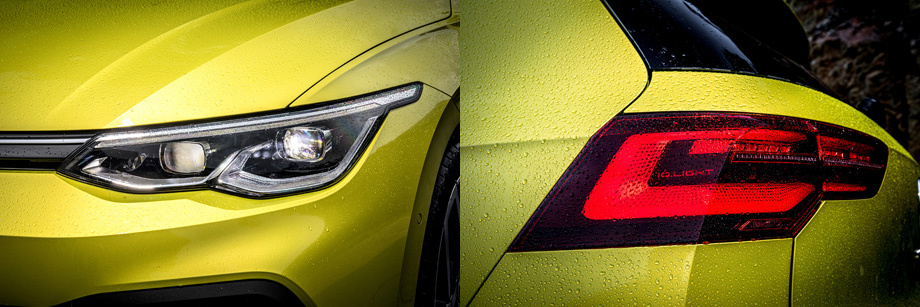
European buyers don’t have much to complain about on the engine front, starting with the 1.5-liter EA211 evo gasoline unit. The mild-hybrid 1.5 eTSI (150 hp), with its 48-volt starter-generator, can run on two cylinders but accelerates in a smooth, slightly uneventful way. The Golf Mk8 gained just 44 lbs over the previous 1.5-liter version and lost only a tenth of a second in the 0–60 mph sprint. Still, the old turbocharged Mk7 with a DSG gearbox subjectively feels punchier. If the automatic gearbox holds up, the Russian-spec Golf should actually be quicker than its European counterpart.
Other engine notes:
- The detuned 130-hp version feels slow and unremarkable, though its six-speed manual is genuinely satisfying — not that it will be offered in Russia
- The 150-hp 2.0 TDI diesel with DSG is the standout: noisy, but with real driving character
- The diesel is nominally slower to 60 mph than the 1.5 eTSI (8.8 seconds vs. 8.5), but its 360 N•m of torque makes it feel effortlessly quick in practice — the best hatchback drive of the bunch so far
Traction, Stability, and Braking
Traction control is well-calibrated across every version. The full-time stability system reliably steps in if you carry too much speed into a corner, and the simulated differential lock gently tucks the car into turns under power. Brake feel is a bit less polished, with overly long pedal travel and an odd “sniffing” sound when the pedal is pressed. That said, actual stopping performance raises no concerns.
Is the Golf VIII Worth It for Russian Buyers?
Overall, the gap between the new Golf and the Mk7 is comparable to the jump between the fifth and sixth generations — more of a deep restyling than a true generational leap. From a Russian buyer’s perspective, today’s Golf mostly brings extra (and arguably excessive) multimedia complexity, which distances the driver from the car rather than drawing them closer. This comes against a broader retreat from the C-segment hatchback in general — at Tiguan-level pricing, the Golf mainly exists to round out VW’s lineup.
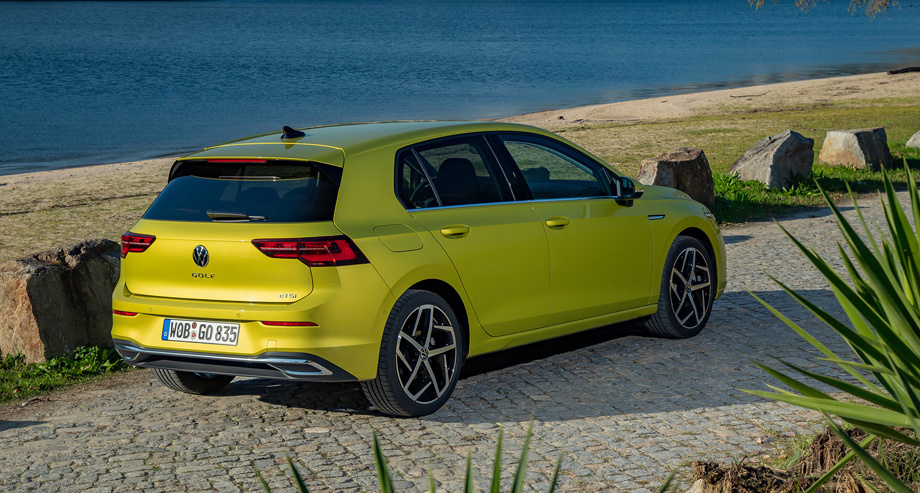
In Europe, the Golf holds a notable first: it’s the first Volkswagen capable of exchanging data with road infrastructure and other vehicles within an 800-meter radius (Car2X), warning drivers of traffic jams and hazards ahead. Onboard services like Amazon’s Alexa are also available. Certain features can be managed via smartphone, which is set to eventually replace the traditional key. Still, global sales trends show buyers steadily moving away from hatchbacks, and the new Golf doesn’t seem poised to reverse that trend.
Where Would We Be Without the Classics?
Volkswagen’s Depot Classic historical department brought examples from all seven previous Golf generations to Portugal for comparison. There wasn’t time to drive everything, so the three newest generations were skipped in favor of the originals. Unfortunately, the fourth-generation Golf — fitted with an unusual offset-inline VR6 2.8 engine producing 204 hp — was pulled from the test early after a breakdown under one of the other journalists.
Golf Mk1 (1980): The Original
This first-generation five-door model, built in 1980, has fewer than 621 miles on the odometer — essentially a brand-new car nearly forty years later. The interior is basic but tidy. The thin steering wheel spins easily even at a standstill, despite the lack of power assistance, and the clutch is predictable enough to nail first-time starts. With just 70 hp and a curb weight around 800 kg, the car doesn’t feel sluggish thanks to how eagerly the engine responds to throttle input, even if it’s slow by modern standards.
What matters most is how enjoyable it is to drive. Body roll in corners gives you an honest read on the car’s limits. The long-throw four-speed shifter needs sweeping movements, but they feel natural here. And the visibility is remarkable — you do have to turn your head, since the small mirrors aren’t much help, but it’s worth it. Handing the car back, it’s hard not to be smiling.
Golf Mk2: A Blast of 1980s Nostalgia
Sitting in the second-generation Golf inevitably brings to mind the Lada 21099 from years past — same boxy plastic interior, though the VW’s build quality is noticeably better. The 1.8-liter engine is livelier than the Lada’s 1.5, but the overall sensations are similar, right down to the same jerkiness under throttle and deceleration. A genuine dose of nostalgia.
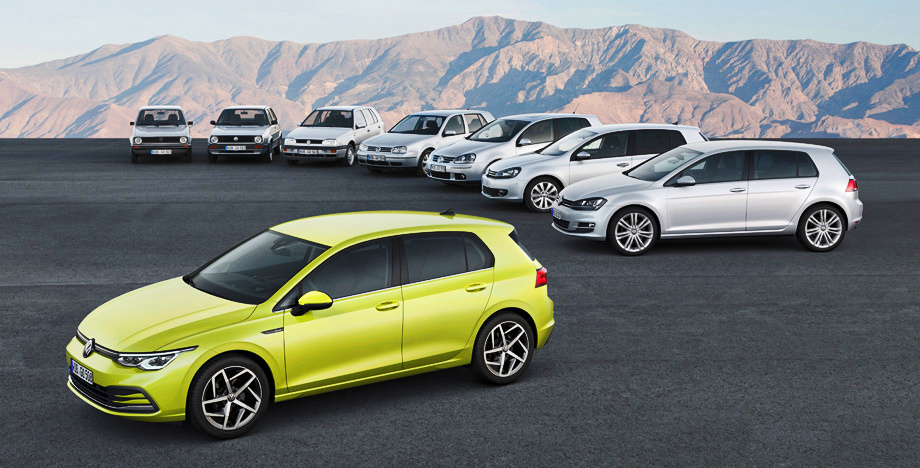
Over forty-five years, more than 35 million Golfs were produced. The first-generation model turned out to be the most popular: 6.99 million units, including the Jetta
The steering no longer feels light once moving. In this particular car — with well over 56,000 miles on it — the shifter gate has some play and gear changes feel a touch stiff, though lever travel is close to normal. Roughly 220 lbs heavier than the Mk1, this generation feels more composed, accelerates more confidently, and handles corners with more authority. It’s still clearly an old car, but it no longer feels like a museum piece. Stepping into its mid-1990s successor afterward really highlights how fast cars matured during that era.
Golf Mk3: The Sleeper Favorite
The third-generation Golf was the standout of the classics — more engaging to drive than plenty of modern cars. The 90-hp turbodiesel 1.9 pulls confidently and eagerly across a wide rev range. Gear changes are crisp, the long-travel clutch is easy to modulate, the steering builds weight naturally on return, and ride quality is excellent — helped along by its modest 14-inch wheels. This is a car you could genuinely drive every day and enjoy. Sadly, finding a Mk3 in this kind of condition is nearly impossible today, especially in markets like Russia.
This is a translation. You can read the original here: https://www.drive.ru/test-drive/volkswagen/5df9fdb3ec05c4802000000e.html

Published April 13, 2023 • 9m to read