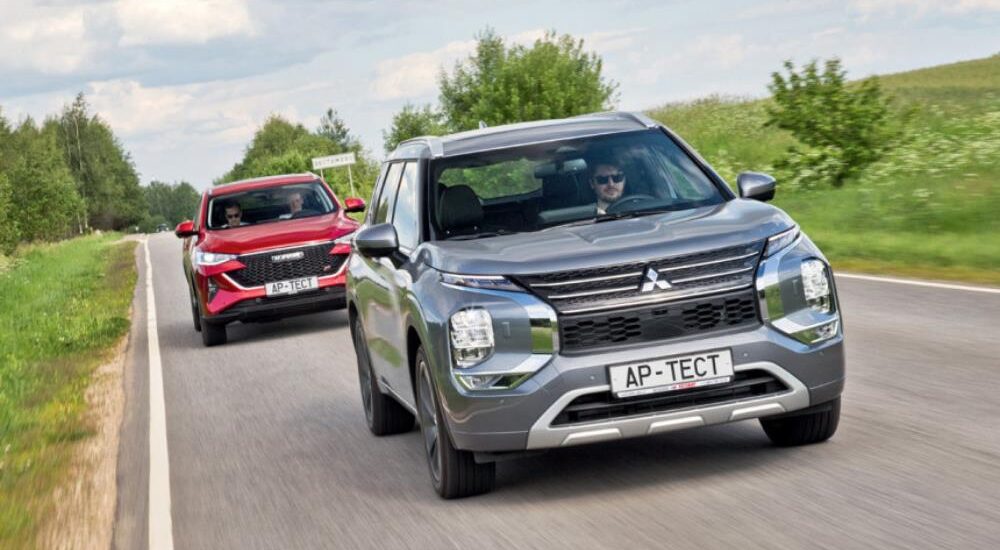

Serious cars are those where you reach down from the top for a parking ticket, pay 50% more for a car wash, and walk twice as far to reach a tractor. In other words, we’re talking about SUVs. Until 2022, the adult SUV segment was represented by cars like the Toyota RAV4, Volkswagen Tiguan, Nissan X-Trail, or Mitsubishi Outlander. But today? Right now, the most popular midsize SUV is the Haval F7 family, but thanks to parallel imports, the new-generation Outlander has finally made its way to us. It’s longer, wider, taller, more powerful, and one and a half times more expensive.
Made in Japan, Sold in Dubai, Driven Here
Now it’s a real Outlander, meaning “Foreigner.” The factory label reads: «Made in Japan. صنعت من قبل : ميتسوبيشي موتورز كوربوريشن». This means the car is made in Japan but intended for the Middle East and reached us in Russia via Dubai. There are Arabic inscriptions on the mirrors, and the built-in navigation system easily navigates the nearby emirates, but it doesn’t know the way to the Dmitrov test track.
In general, the new Outlander is also a Wanderer. The fourth-generation crossover was supposed to be released in 2018, and its design was formed two years earlier. The original platform was Mitsubishi’s own development, but after the company was acquired by Nissan, the management of the newly formed alliance decided to quickly transfer the Outlander to the CMF-C/D chassis, which is also used by the new Nissan X-Trail (known as the Rogue in some markets). These cars have the same wheelbase, the same Nissan 2.5-liter naturally aspirated engine, and the same Jatco chain-driven CVT.
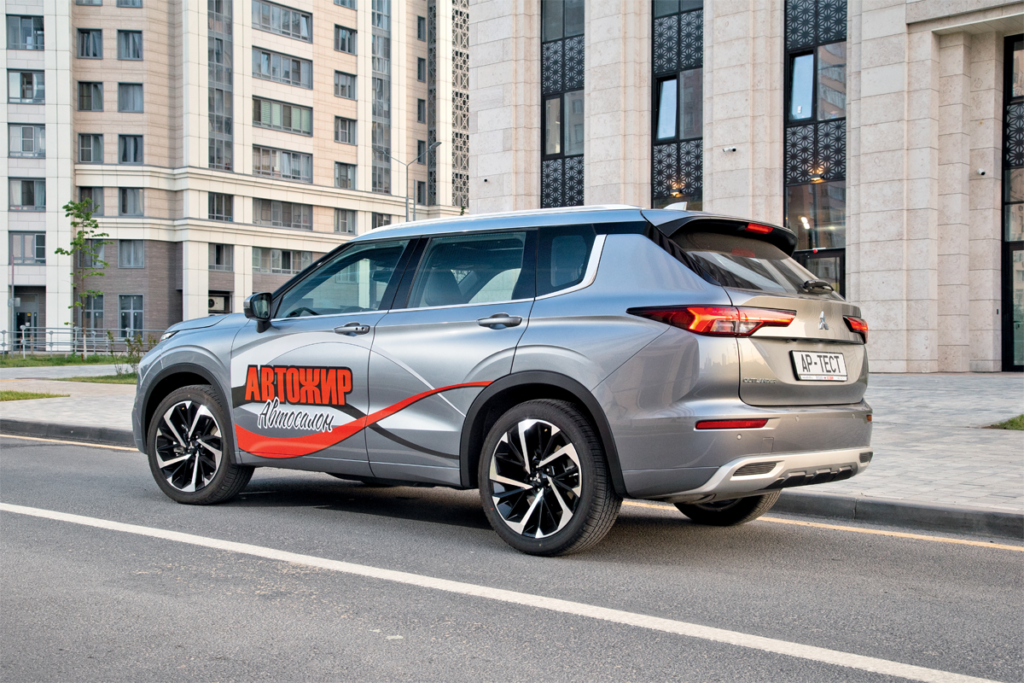
Despite its shorter wheelbase, the Outlander is longer than the F7x due to its overhangs. It also boasts a higher ground clearance, measuring 198 mm by our standards.
The redesign was completed in 2020, and production began in early 2021, but even today, over two years later, the old Outlander is still being sold in most countries, while the new one is just entering the market. It appeared in the Middle East and China only in the autumn of 2022, will be available in Europe by the beginning of 2024, and in Kaluga, they didn’t even start preparing for its production, even in peaceful times.
However, there’s always room for a new player, and today, the role of the Outlander is taken on by the Haval F7 — the most affordable midsize crossover with all-wheel drive among brand-new cars. And it costs exactly the same amount as the Outlander in the top version two years ago — starting from 2.9 million rubles.
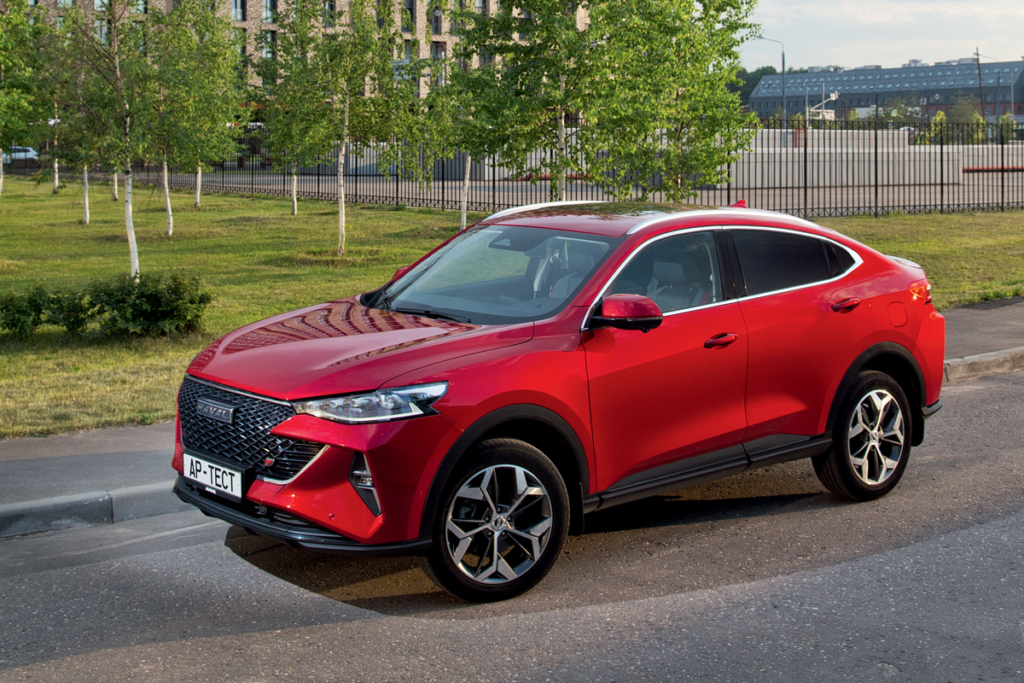
Four years ago, the production of two models from the F7 family began at the Haval factory in Tula. Last year’s facelift brought new bumpers and a radiator grille, new fog lights, dual-zone climate control, heating for the entire windshield, driver’s seat ventilation, and other minor improvements.
Haval F7x: What the Facelift Changed
Interestingly, in Russia, the coupe-like F7x is more popular than the base F7 with a wagon body. This Haval comes with a turbocharged 2.0-liter engine (190 hp) and a seven-speed automatic. We had it for testing in the winter of 2021, but back then, it didn’t undergo any dynamic tests or emergency maneuver tests. Moreover, all this happened before the modernization that the F7 family underwent in 2022, receiving new displays, climate control, bumpers, and even a windshield washer tank. But did Haval fix the fundamental chassis issues for which we criticized the F7 from the very beginning?
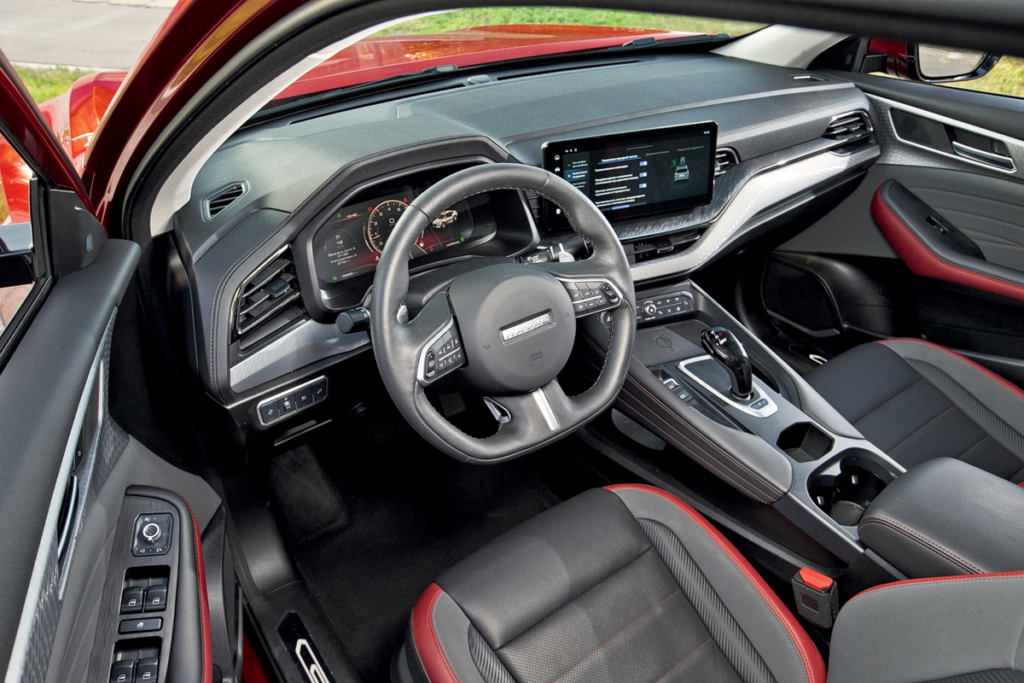
The “almost like a BMW” cockpit is driver-focused and nicely designed, but the poorly positioned steering wheel spoils the driver’s mood. After the facelift, the central touchscreen has grown in size, but the control knob for the multimedia system is still missing from the center console.
The seating geometry hasn’t changed either, the steering wheel still sits at an odd angle, and the range of longitudinal adjustment hasn’t increased. I have to move closer and lean over the steering wheel, like in a child’s pedal car. It’s a shame because Haval wants to please the driver.
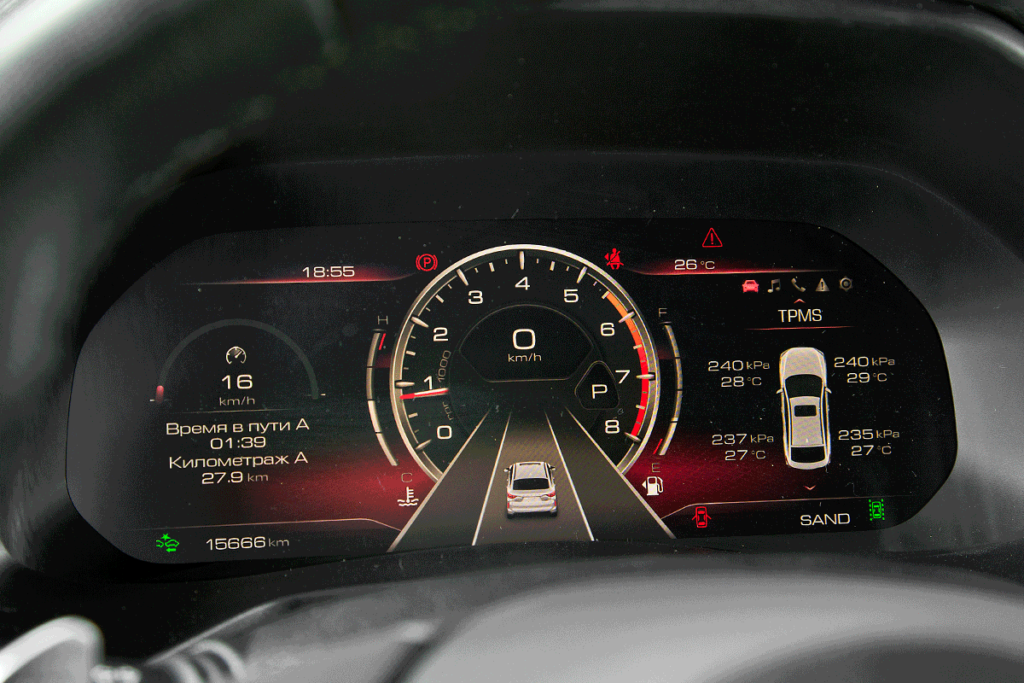
The new instrument cluster with a 12.3-inch screen is available only for the top trim level. The base version gets regular analog dials.
The central console retains its leftward orientation, and the inconspicuous seven-inch instrument panel has been replaced by a wide 12.3-inch display with a beautiful analog-style tachometer, reminiscent of a Ferrari. However, the climate control button cluster remains chaotic, and the touchscreen is dominated by the most useless icons.
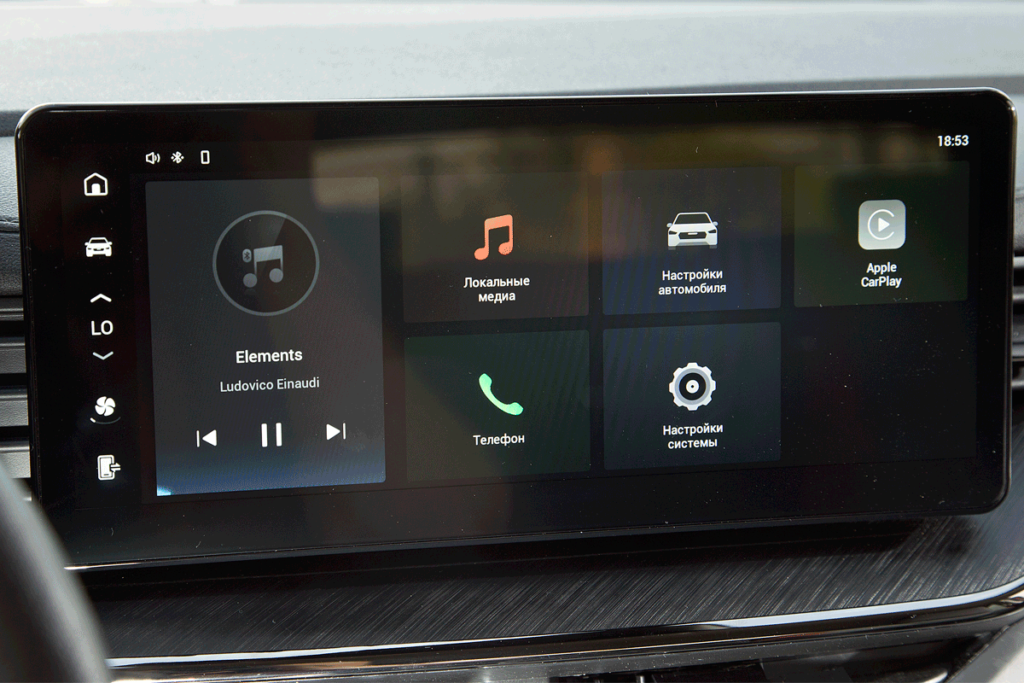
However, there are some quirks that leave room for improvement. For instance, the large tablet-like touchscreen lacks its own navigation, and the most important functions, like temperature and volume control, are hidden behind the smallest icons.
It’s also strange that the driver’s seat now has ventilation, while the passenger seat lacks even basic power adjustments. Similarly, you can’t equip the F7x with factory navigation or a power liftgate.
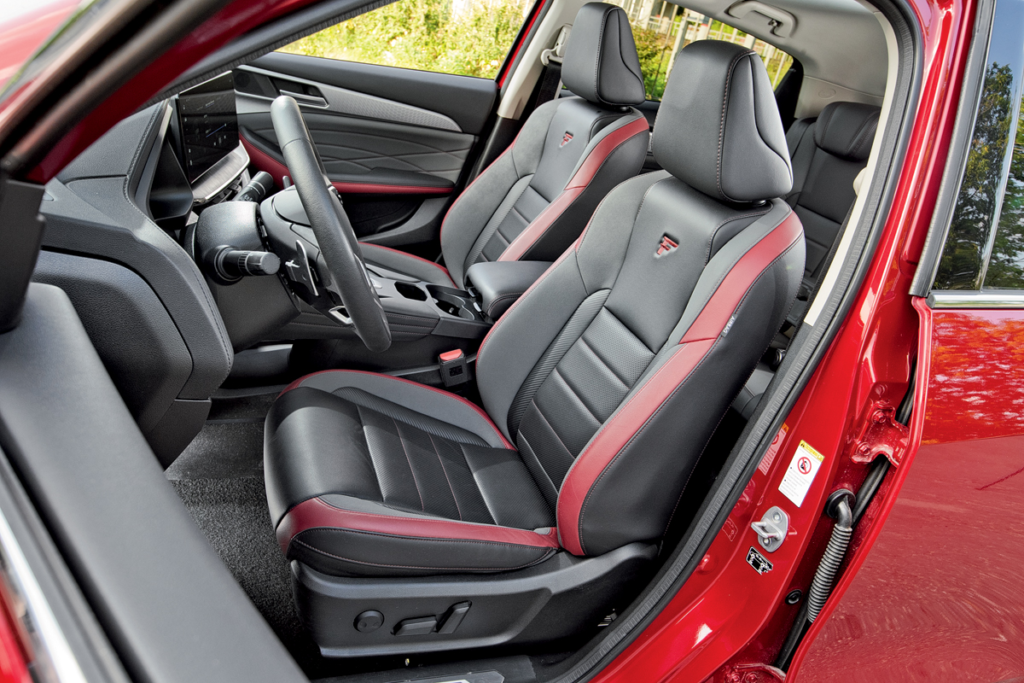
The top-of-the-line seat has modest adjustments and cheap artificial leather, but the profile is decent, and the soft cushion partially compensates for the stiffness of the suspension.
A 56-Litre Tank, and 400 km if You Are Lucky
What’s most troubling is that the fuel gauge shows a range of 100 km when the 56-liter tank is a quarter full, and around plus or minus 400 km when it’s full. It’s like rewriting an old joke: Haval car owners don’t say hello to each other because they’ve already seen each other at the gas station in the morning.
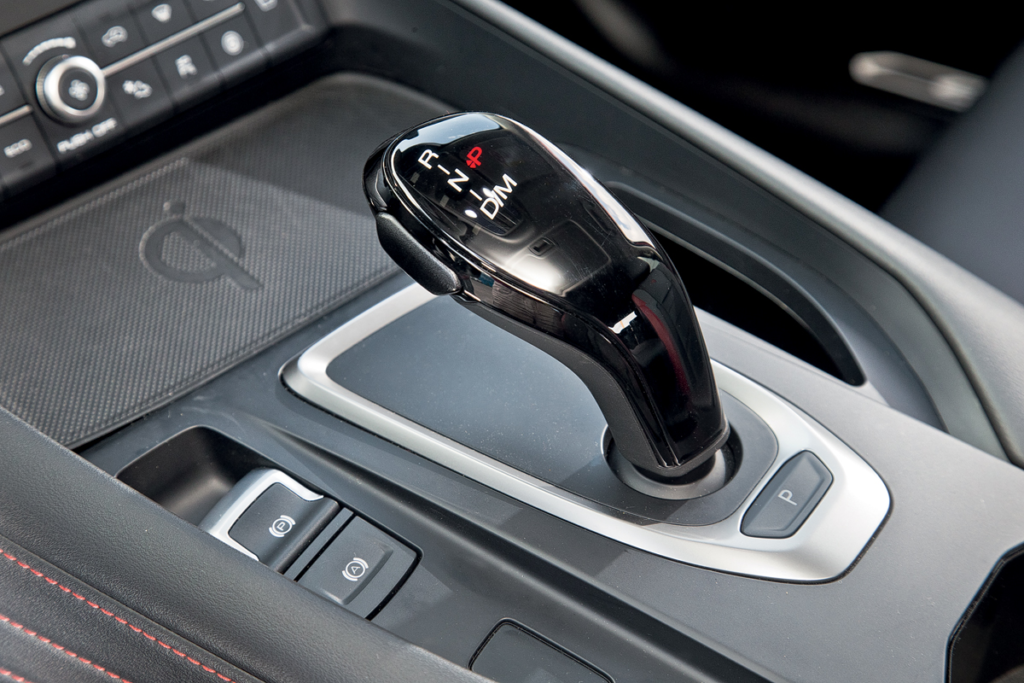
The joystick of the automatic transmission can be moved intuitively, but the Parking button requires special aiming.
Assistants That Get in the Way
Add to this that electronic assistants in typical Moscow traffic can, for example, activate the hazard lights, mistaking a fast car in the adjacent lane for a rear-end collision threat. The lane-keeping system is also overly intrusive, constantly tugging at the steering wheel. The steering itself has a wide dead zone and lacks clear reactive effort. The brake pedal is too heavy and doesn’t provide information about the transition between free travel and braking.
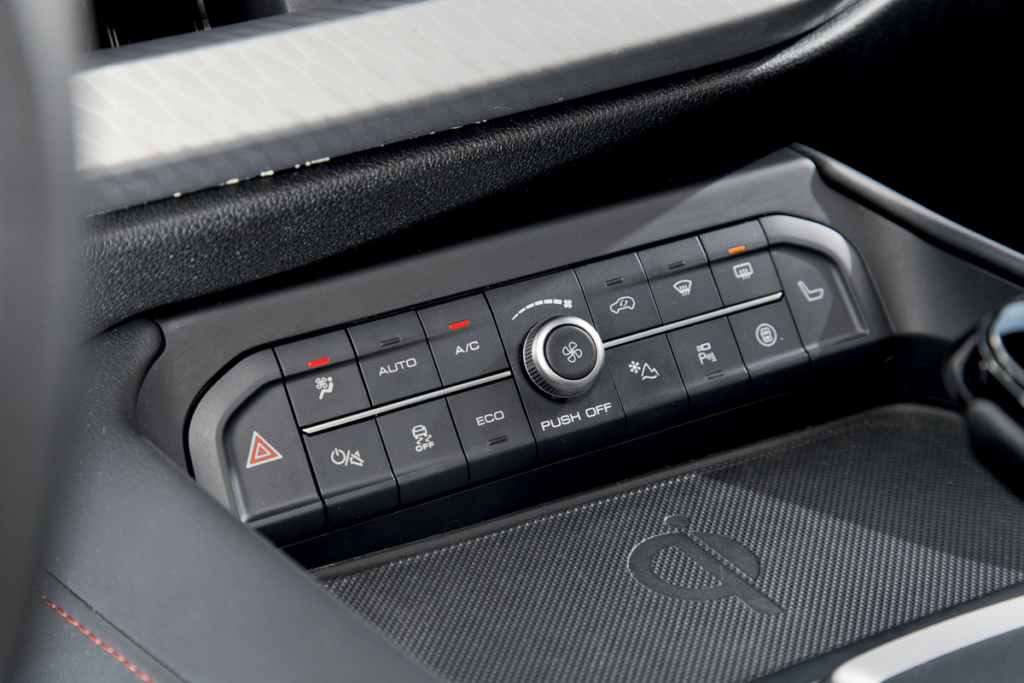
Who came up with this? The large knob in the center changes the fan speed, the ECO button next to it is responsible for power unit settings, while the Sport mode is hidden behind mountains and a snowflake.
However, the Haval accelerates well in “full throttle” mode when the “robot” transmission fully understands the driver’s intentions, and the engine has room to show off. Overtaking is a pleasure. But only as long as you’re driving on perfectly smooth highways.
Stiff and Soft at the Same Time
Because the suspension disappoints with both stiffness and softness at the same time. If you exclusively drive in the city, where the main concerns are bridge joints and speed bumps, Haval might seem comfortable. Springs and shock absorbers handle artificial bumps smoothly and solidly, with a substantial energy reserve. But as soon as you hit those rural roads that haven’t seen maintenance budgets, your impression will change to the opposite.
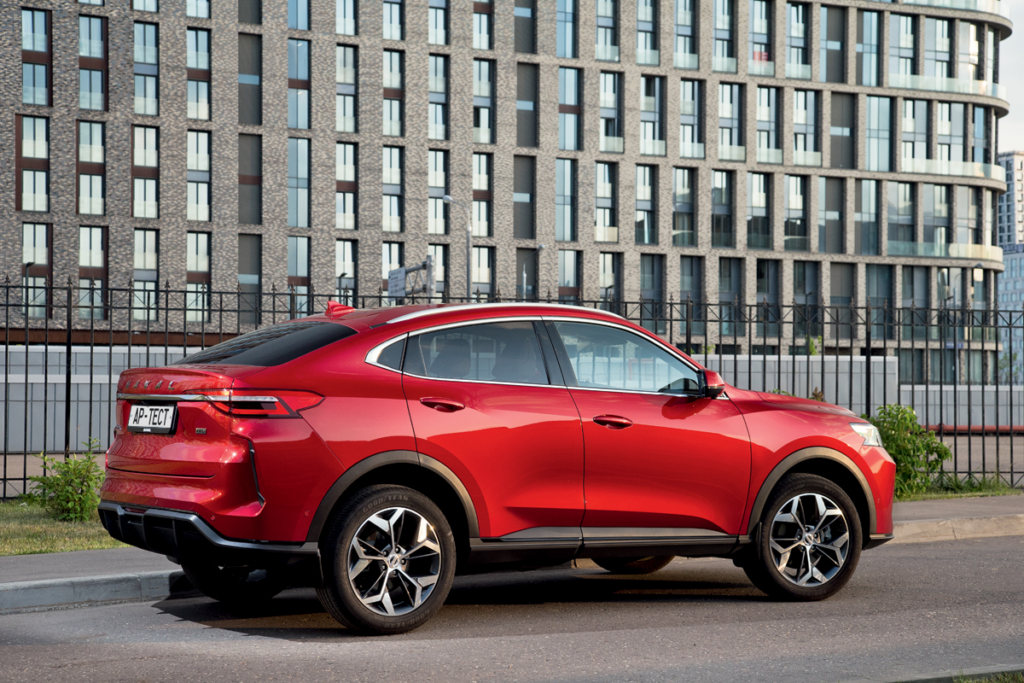
Following the facelift, the coupe-crossover’s ground clearance has slightly decreased (our measurements show 173 mm instead of 182 mm), and the approach and departure angles have become less generous. However, a bright red color has been added to the palette.
Haval shakes its passengers on short asphalt waves, jolts over every bump and pothole, and quickly picks up an unpleasant oscillation resonance on uneven dirt roads. It’s not just stiff; it’s humiliatingly stiff because when your cheeks are shaking along with the suspension, it means you need to change not only the car. What’s even more surprising is that despite this roughness, the F7x manages to sway at high speeds. A real collection of bad advice for suspension engineers.
In the city, the two-liter F7x behaves like it has not just a high appetite but a gasoline binge with withdrawal symptoms. Delays in throttle responses don’t allow for a smooth connection with the car. You press the gas, and Haval thinks. Then it lunges forward. But by the time it does, you’ve already released the pedal, yet the engine holds the revs for a fraction of a second and drags the car along. The Sport mode slightly reduces the delays by sharpening the throttle, but the F7x still can’t precisely follow the pedal. In traffic, all of this is accompanied by constant nose lifting and jerking.
Mitsubishi Outlander: Worth the Extra Million
After switching to the Mitsubishi, you quickly realize that the extra million rubles for the Outlander is justified down to every penny.
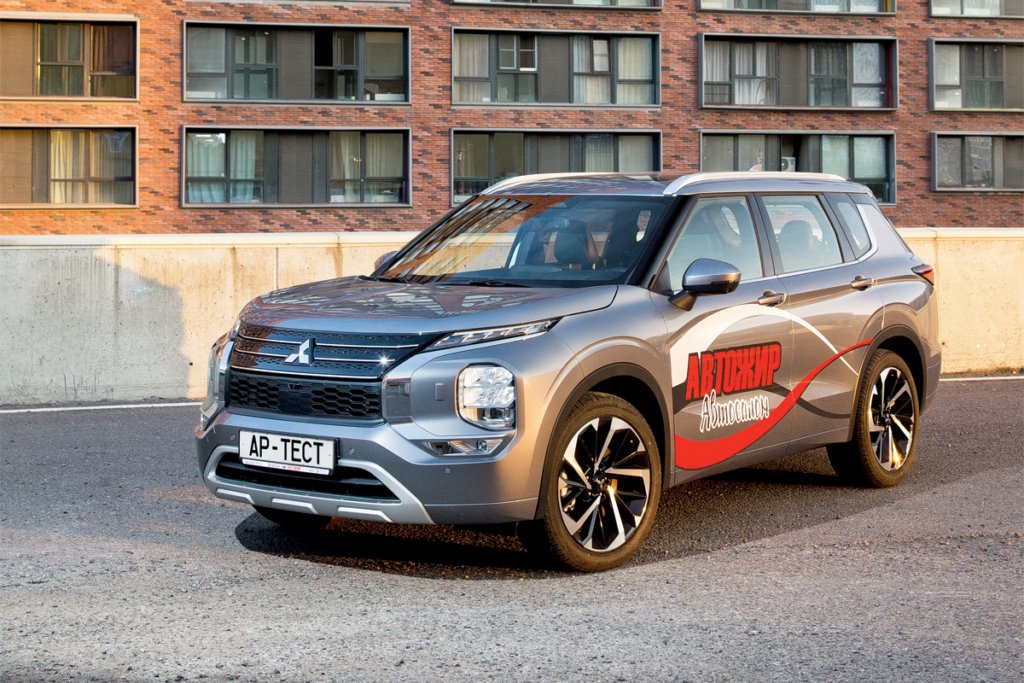
The exterior of the Outlander was designed by the previous chief designer of Mitsubishi, Tsunehiro Kunimoto, who came from Nissan in 2014. His extensive creative baggage included the Skyline R32, Infiniti FX, and Nissan 350Z, but for Mitsubishi cars, he promoted a massive X-face and a style somewhat reminiscent of the Nissan Juke, which is also in Kunimoto-san’s portfolio. Aesthetics can be debated, but the huge headlights on either side of the chromed “X” wonderfully illuminate the night road.
Where the Extra Money Goes
In reality, the price difference is a bit more significant because the F7x in the top trim level costs 3.2 million from dealers, while the richest Outlander, which we took from the Autogyro salon, is priced at 4.5 million. But is it not worth it? With nearly identical dimensions, the initial impression is that Mitsubishi is a class above Haval. Compared to the previous-generation Outlander, which celebrated its second decade, this is a leap from the Stone Age into the MBA graduates’ club.
The strategic decision to switch to the Nissan platform seems absolutely correct. The body has become longer, taller, and wider, and the wheelbase has increased from 2670 to 2705 mm. That’s two centimeters less than the F7x, but the Mitsubishi cabin is more spacious in all dimensions.
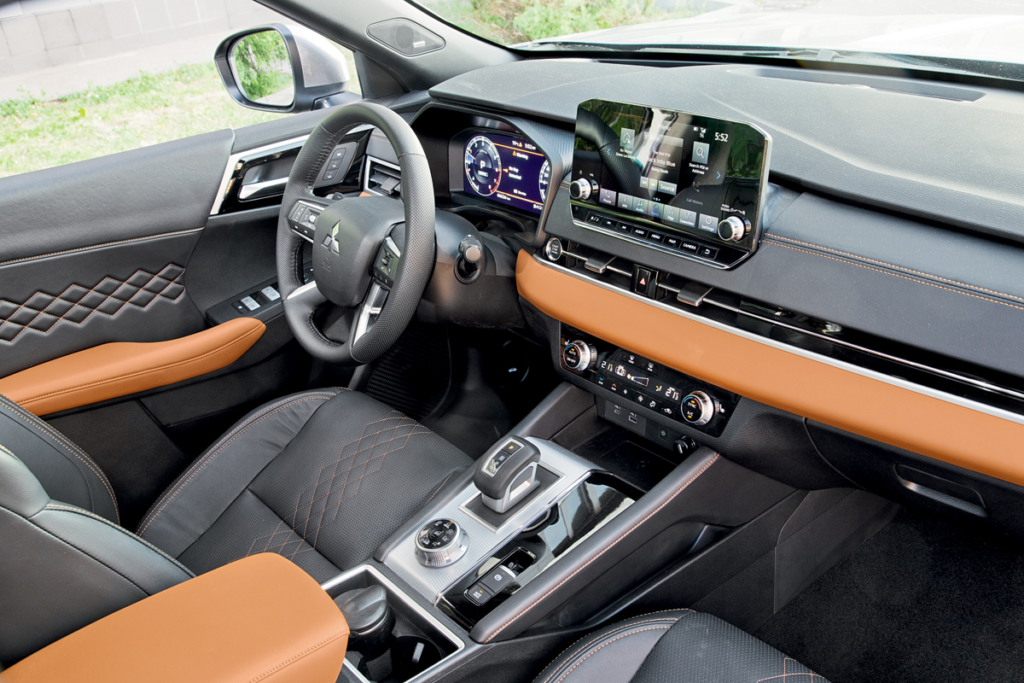
The new Outlander inside looks like a mini-Pathfinder. Only the steering wheel is unique. Even the materials and color palette echo Nissan, and that’s a compliment. Alongside the instruments, there’s a head-up display. The quality of the details and the seating comfort have reached a new level.
A Cabin Borrowed From the Pathfinder
Driver’s seat adjustment is nearly flawless. Finally, in the Outlander, you can adjust the seat properly for length and backrest tilt. The steering wheel also moves in a wide range and fits perfectly in hand. The liquid crystal instrument panel features bright and clear scales. The classic climate control unit, automatic transmission selector, drive mode control dial, and central display are almost the same as in the larger Nissan Pathfinder crossover—an optimal blend of analog and digital worlds.
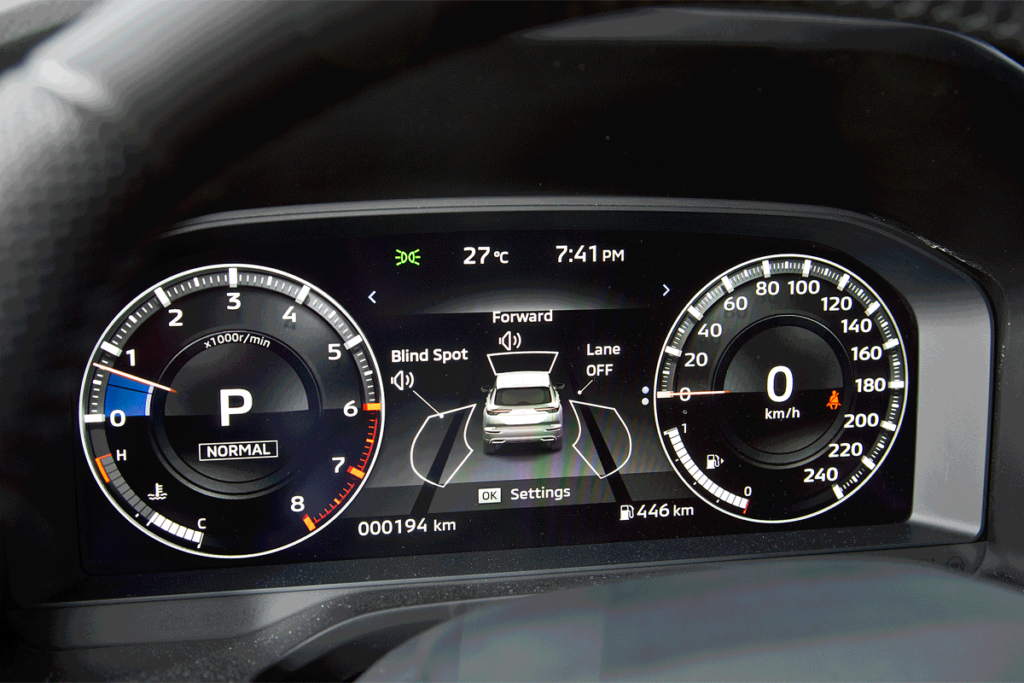
The virtual gauges of the Outlander are almost exemplary, although the display is slightly overloaded with secondary information.
And how great is the Outlander’s response to the gas pedal! Initially, it smoothly and nobly lifts off the line, then it gives you that priceless feeling of a sharp, precise connection with the engine, which is almost lost in today’s Chinese turbocharged engines with CVTs.
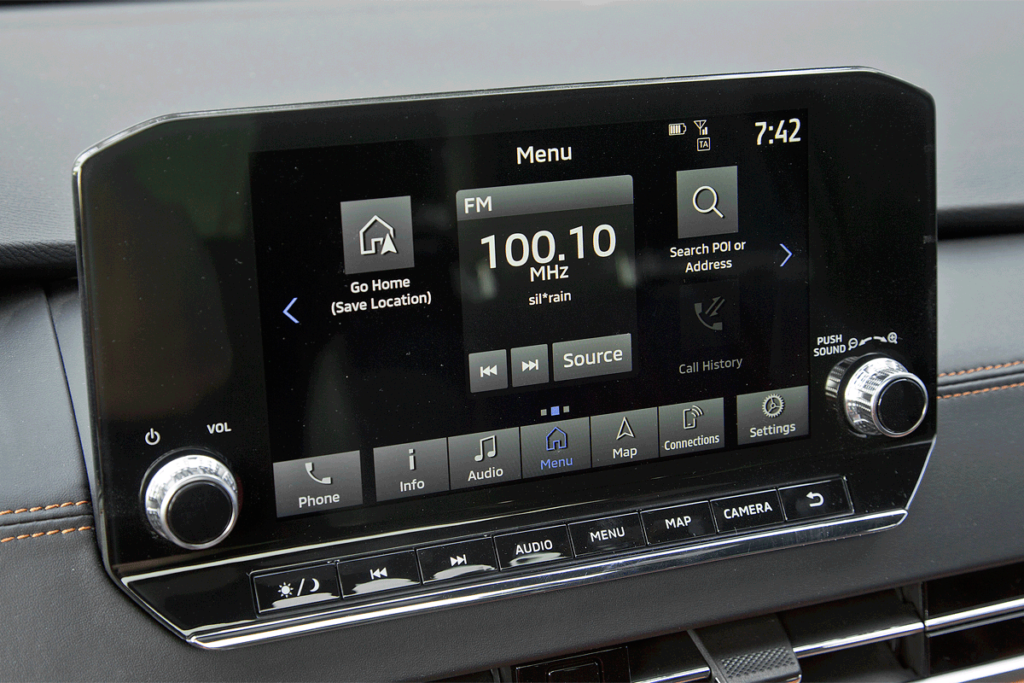
The touchscreen menu is complemented by physical buttons, and the knobs are in their usual places – a classic setup.
The Best CVT Anyone Has Built Yet
No, Mitsubishi also has a modern power unit, but it’s a naturally aspirated “four” PR25DD with 184 hp paired with the new Jatco CVT-X transmission, model JF022E. It still has eight fixed gears but an expanded range of torque converter lockup and an added electric oil pump.
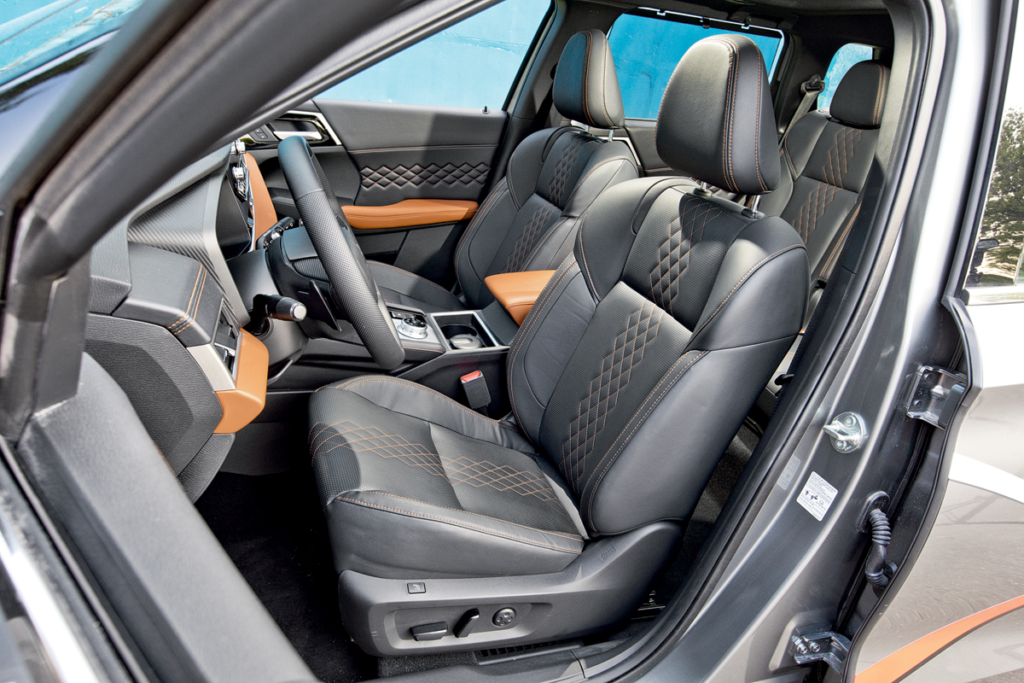
Beyond the basic adjustments, there is a massage function, but no ventilation, and the backrest narrows at the shoulders.
During acceleration, it revs almost up to 6000 rpm, shifts occur on time and smoothly. In sport mode, the CVT can downshift and hold it until the next acceleration, and there are convenient paddle shifters for manual mode. In general, CVT developers have finally managed to eliminate everything that CVTs were created for in the first place, and they’ve created a brilliant “automatic.”
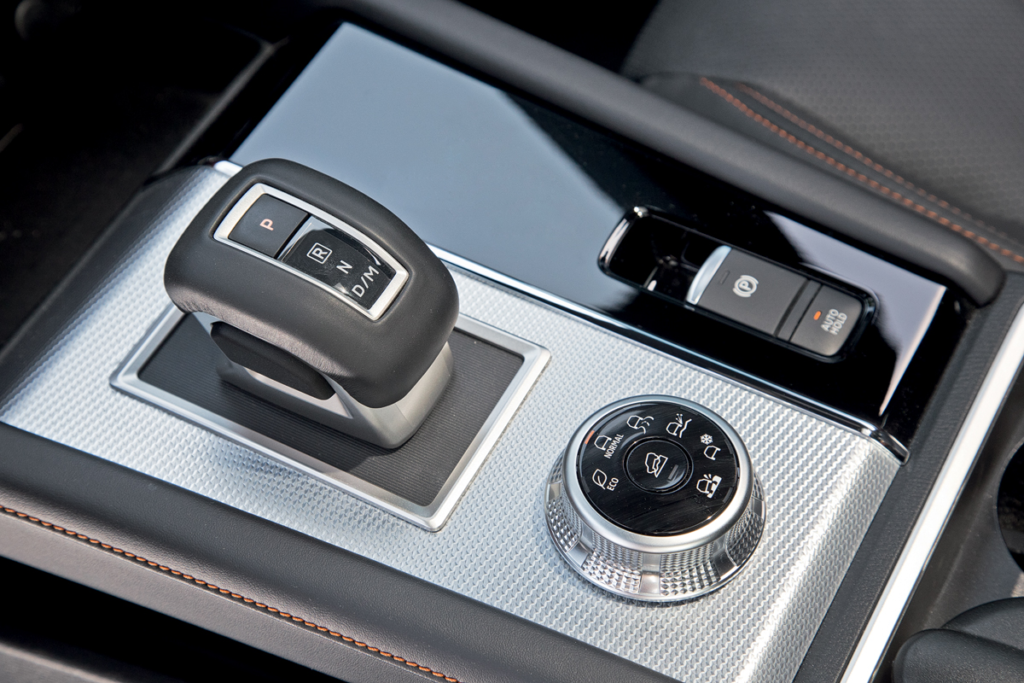
The sliding selector is logical and convenient, and the drive mode dial handles power unit modes.
The brake pedal on the Mitsubishi is tuned much better, and the noise insulation is better too. With a 55-liter tank, the Outlander is ready to cover almost 450 km.
But Why Is the Suspension So Stiff?
However, the Japanese vehicle on 255/45 R20 tires shakes less frequently and less than the Chinese vehicle on 225/55 R19 tires, and fortunately, it doesn’t reach the resonance of fatty layers. But in everyday terms, the ride comfort only rates about four out of ten and somewhat resembles the Pathfinder. Are they related? Interestingly, the Outlander handles speed bumps even more painfully than the Haval, but it doesn’t sway on waves.
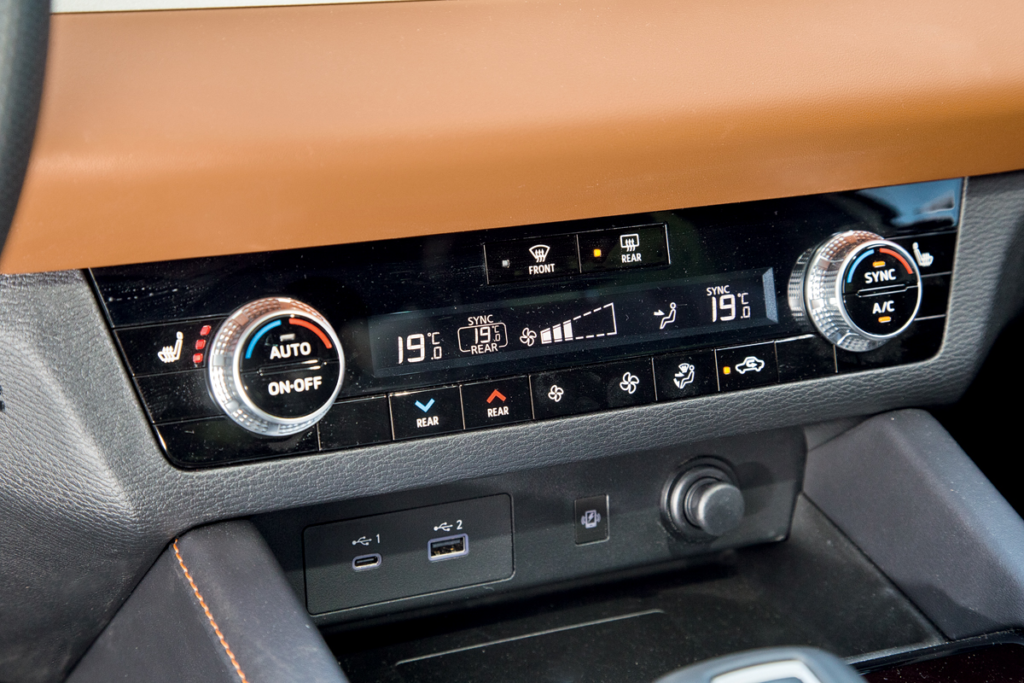
The climate control unit can be taken as an ergonomic standard. Even on a small panel, there’s enough space for temperature buttons for the rear zone.
However, it’s frustrating that the excessive suspension stiffness causes the Mitsubishi to wander on uneven roads. And the steering wheel, which combines sharpness in the near-zero zone with a lack of normal feedback in this sector, hinders correcting the direction. As a result, the car seems to sway slightly within the lane, keeping the driver’s hands busy.
Haval doesn’t excel in clear feedback either, but its steering wheel is much more sluggish, so the icy zero, while unpleasant, doesn’t cause deviations from straight-line driving.
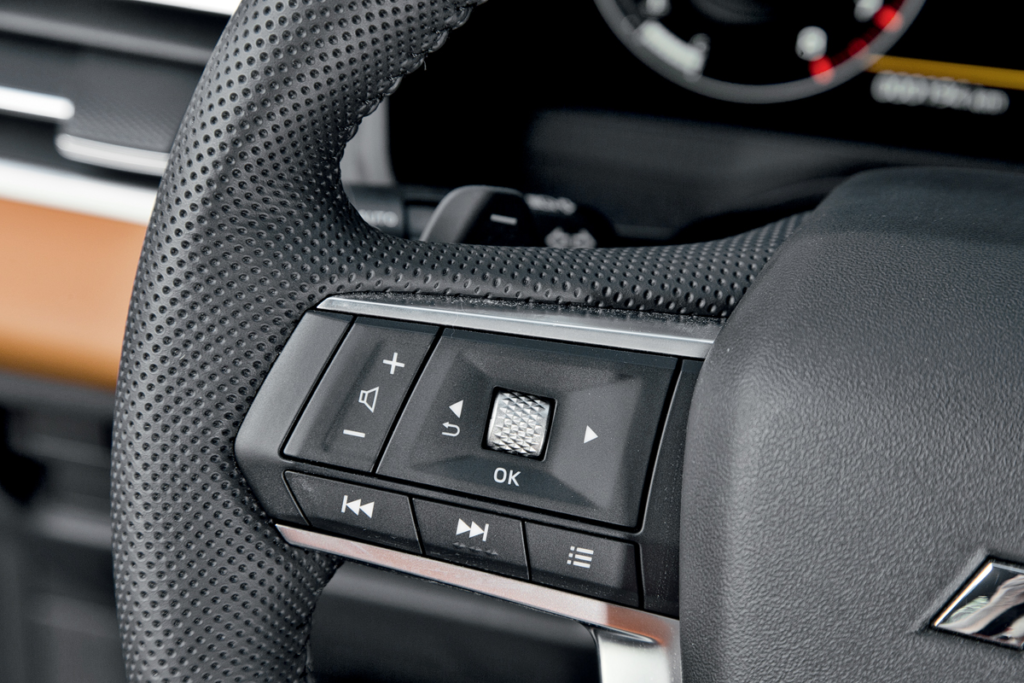
Buttons on the left spoke control the music and onboard computer.
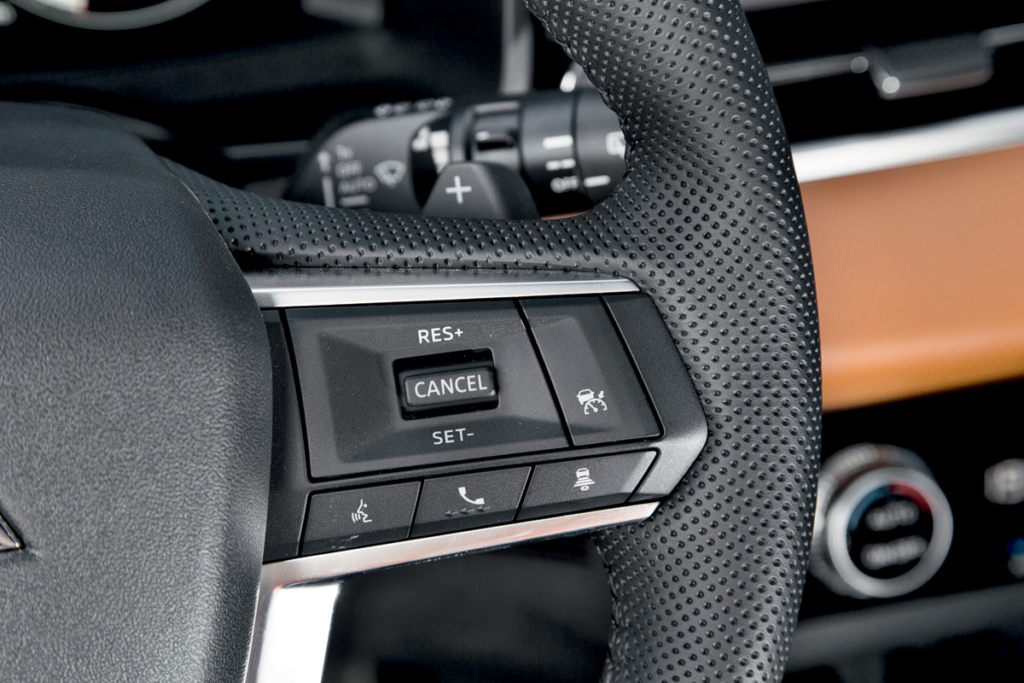
On the right, there are cruise control and hands-free functions.
Still, despite these caveats, the Outlander is perceived as a vehicle with a mature form and content, while the Haval is seen as a less mature individual. But that’s why it’s cheaper.
On the Test Track, Everything Changes
Verdict? But wait, so far, this has been an evaluation on public roads. And when we, along with Yaroslav Tsyplenkov, reached the test track, well…
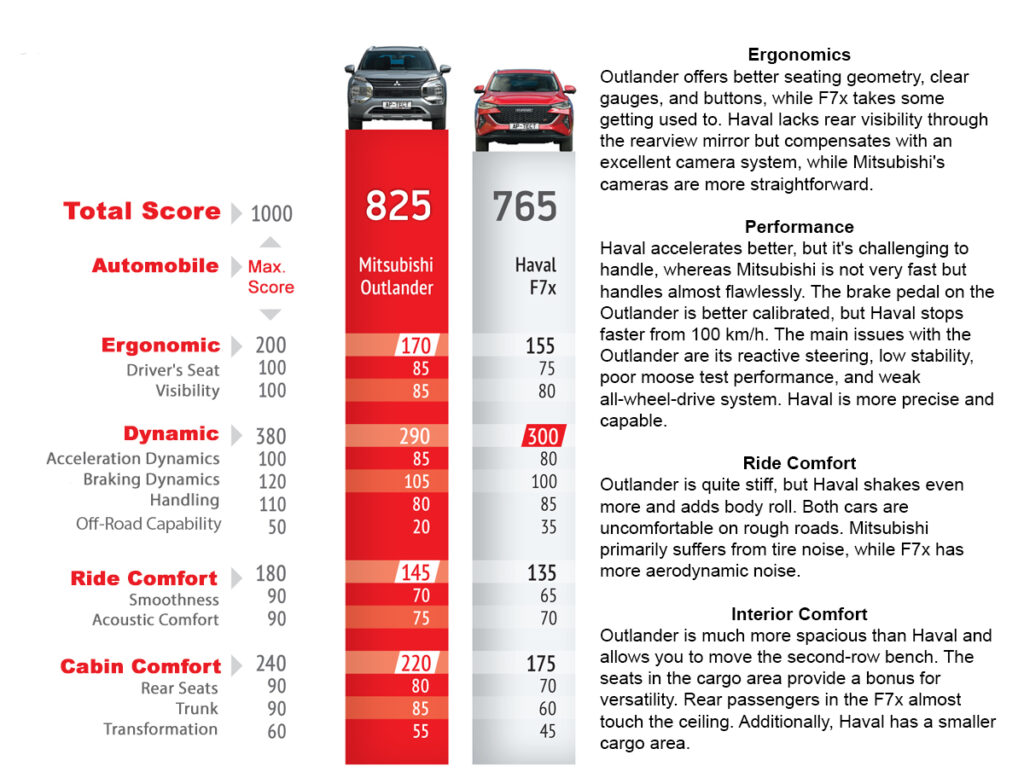
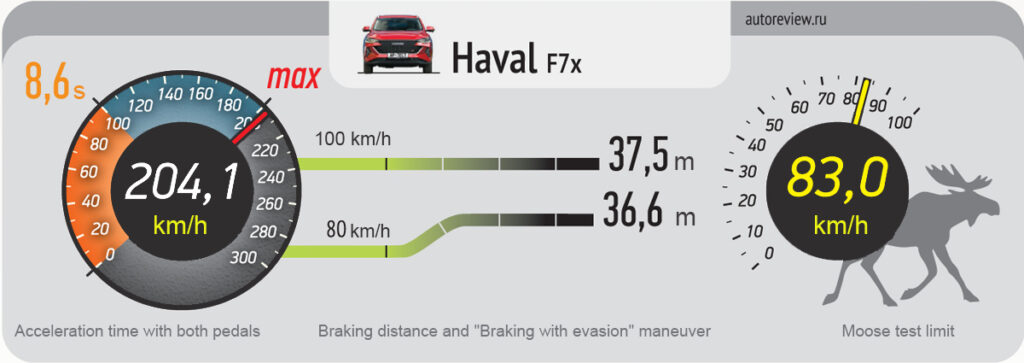
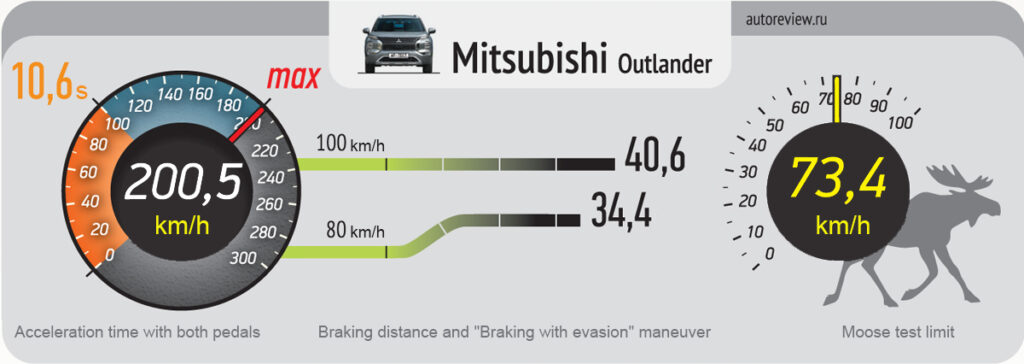
Firstly, despite almost identical weight and very close power figures, the Outlander is significantly slower than the Haval. The most spirited acceleration from the Mitsubishi to 100 km/h takes 10.6 seconds, while the F7x, even with a slight delay at the start, accomplishes it in 9.7 seconds in the worst attempts. If you activate launch control, the Haval will eliminate any delay and do the same a full second faster.
Secondly, at speeds over 120 km/h, the F7x offers a precise steering feel and unwavering stability. In contrast, the Mitsubishi becomes more nervous the faster you go, with unsettling body movements.
Thirdly, from 100 km/h, the Outlander’s braking performance is notably long, with jerky and locked wheels. The braking distance exceeds 40 meters! Yes, the Haval’s braking isn’t graceful either; its front suspension compresses almost to the stops, and the unladen rear sways from side to side. However, there’s no lockup, and the overall distance is much shorter — 37.5 meters. This is a significant improvement compared to what the pre-facelift F7 showed four years ago when it required a staggering 43 meters to stop.
| Parameter | Haval F7x | Mitsubishi Outlander |
|---|---|---|
| Maximum Speed (km/h) | 204.1 | 200.5 |
| Acceleration Time (s) 0–50 km/h 0–100 km/h 0–150 km/h 0–200 km/h 400 m Sprint (s) 1000 m Sprint (s) 60–100 km/h (D) 80–120 km/h (D) | 2.9 8.6/9.7* 19.9 62.7 16.3 30.0 4.8 6.2 | 4 10.6/10.9* 23.4 78.6 17.7 31.9 6.3 7.2 |
| Braking Distance from 100 km/h Path (m) Deceleration (m/s²) | 37.5 10.3 | 40.6 9.5 |
*Two-pedal Acceleration / Acceleration with Foot Transfer in Normal Mode.
Fourthly, the updates clearly affected the stability control system. Now, during emergency lane change maneuvers at 80 km/h, the Haval stops in just 36.6 meters, not the previous 41.9 meters. Chinese electronics now perform excellently. The undesirable tendency to oversteer has been tamed, both during evasive maneuvers and in regular quick turns. The Outlander doesn’t suffer from oversteer, but it can’t match the Haval’s agility — it outright refuses to execute evasive maneuvers and drifts off course. This is a failure. However, there were no stability issues observed during the emergency lane change test with the Japanese ESP.
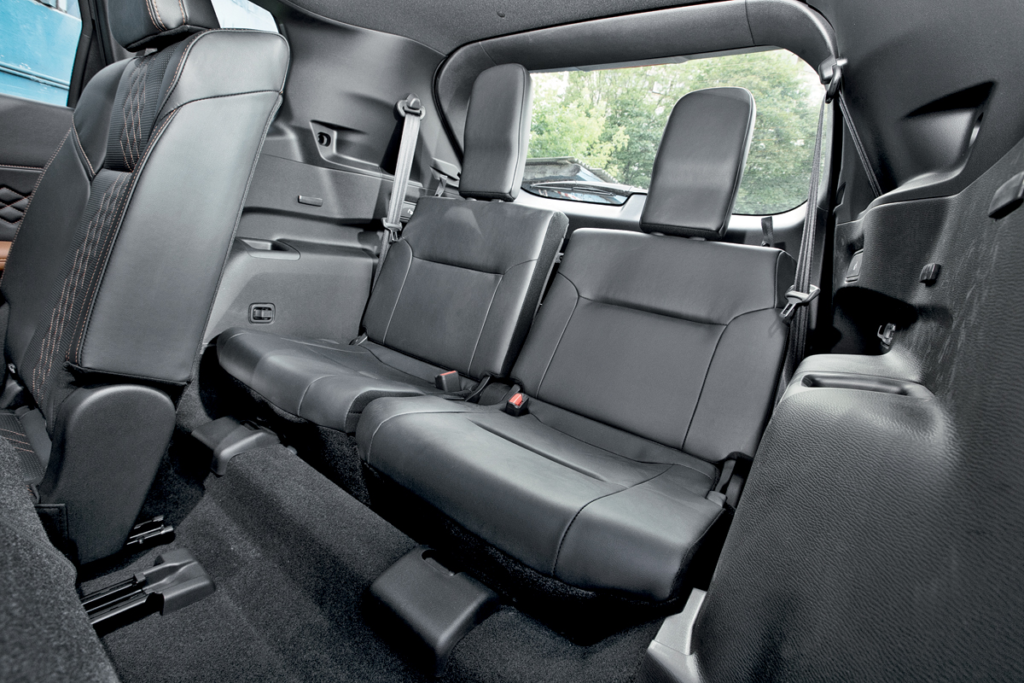
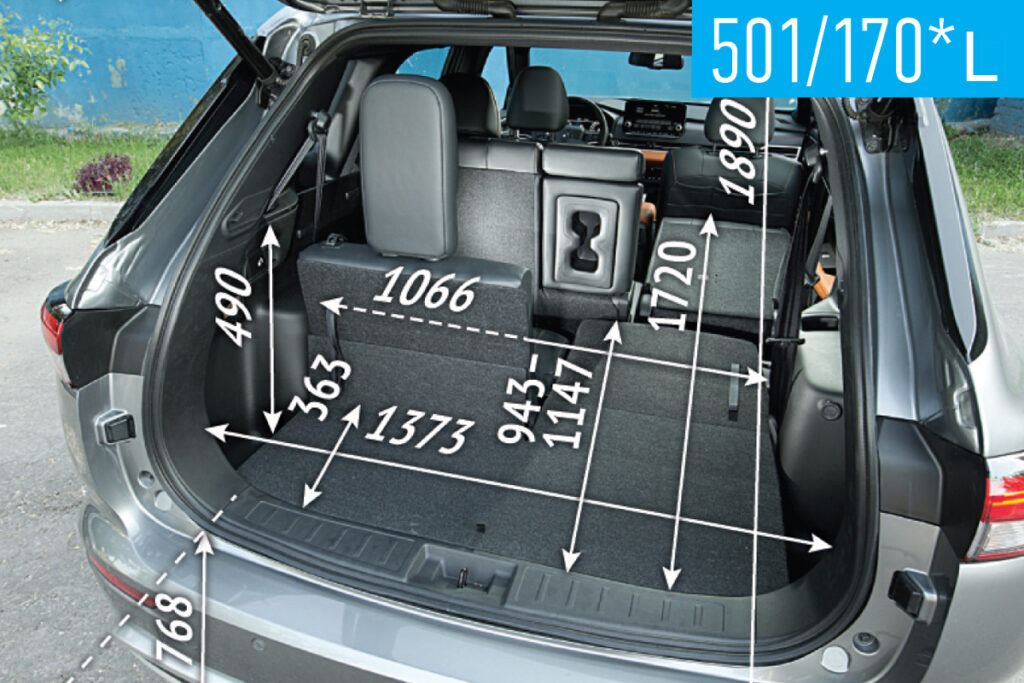
The third row of the Outlander is practical, only if you move the bench seat far forward: it will be tight for everyone, but you can ride. The Haval F7 is strictly a five-seater regardless of the body type.
Off Road, the Cheaper Car Wins
And finally, fifthly, the Outlander seems to have lost its off-road capability somewhere along the way. The all-wheel drive system with a multi-plate clutch struggles even on regular diagonal articulation tests, losing its way on where to transfer torque. The Mitsubishi couldn’t even make it up a grassy incline in any of its off-road modes — the front wheels were spinning, the rears were stationary, the CVT overheated, and it refused to move the car any further.
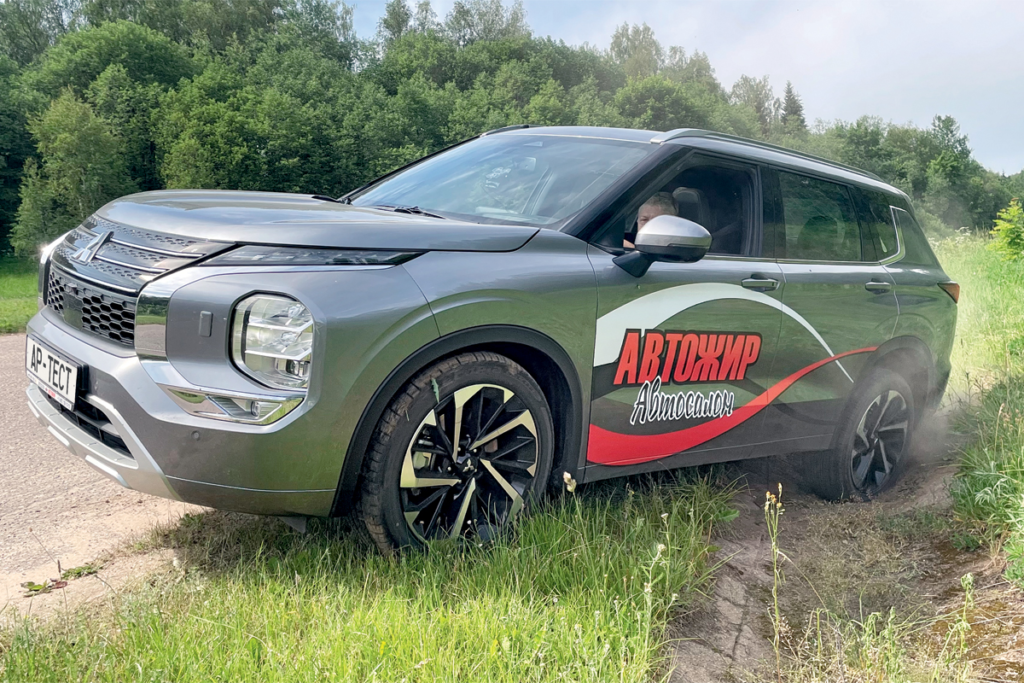
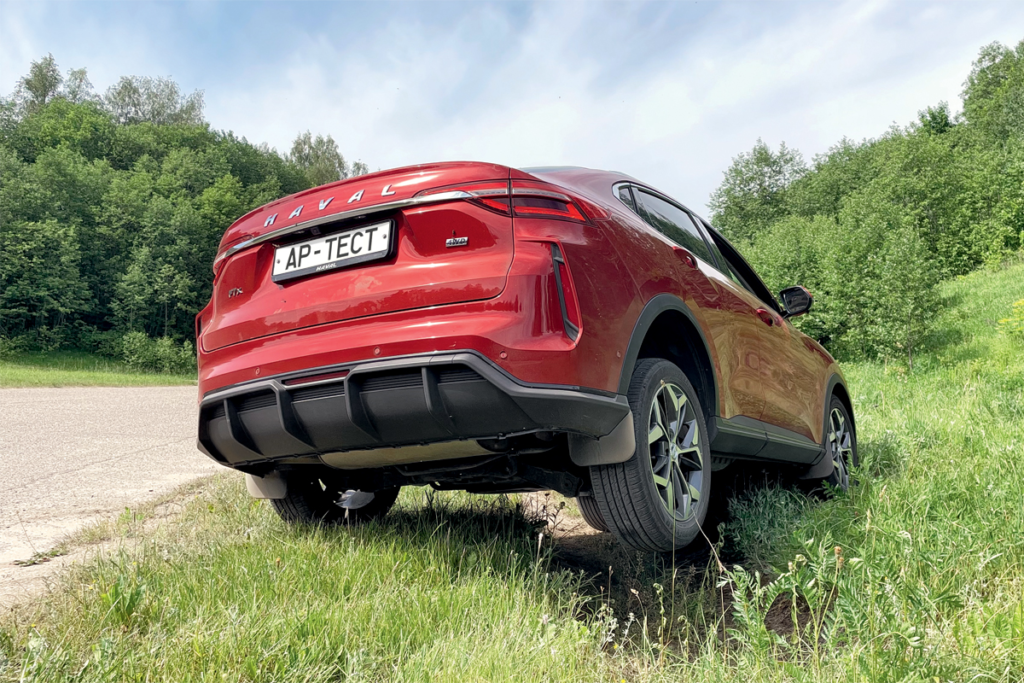
The suspension of the F7x has short travel and lifts the wheels high, but when it comes to diagonal articulation, the Outlander faces more difficulties.
In contrast, despite having less ground clearance and less suspension travel, the Haval proved to be a significantly better off-roader. On a grassy slope, the F7x turns all its wheels and climbs up as long as there’s traction. Sure, the “robot” doesn’t like prolonged wheel spin and disengages the clutches to prevent overheating. Still, the Haval can start climbing a 60% incline, while the Mitsubishi just helplessly revs its engine.
The Verdict: Mature, but Not Where It Counts
So, there you have it — a mature crossover with a compromised off-road performance against a youthful and agile performer.
Nevertheless, the Outlander won this test in terms of points because it offers a versatile body style and a third row of seats. However, its image as a mature vehicle has faded in our eyes. This crossover can create an impression of “elevated service class,” and it will support this image in most road situations. However, when it comes to serious challenges, it behaves like an inexperienced novice.
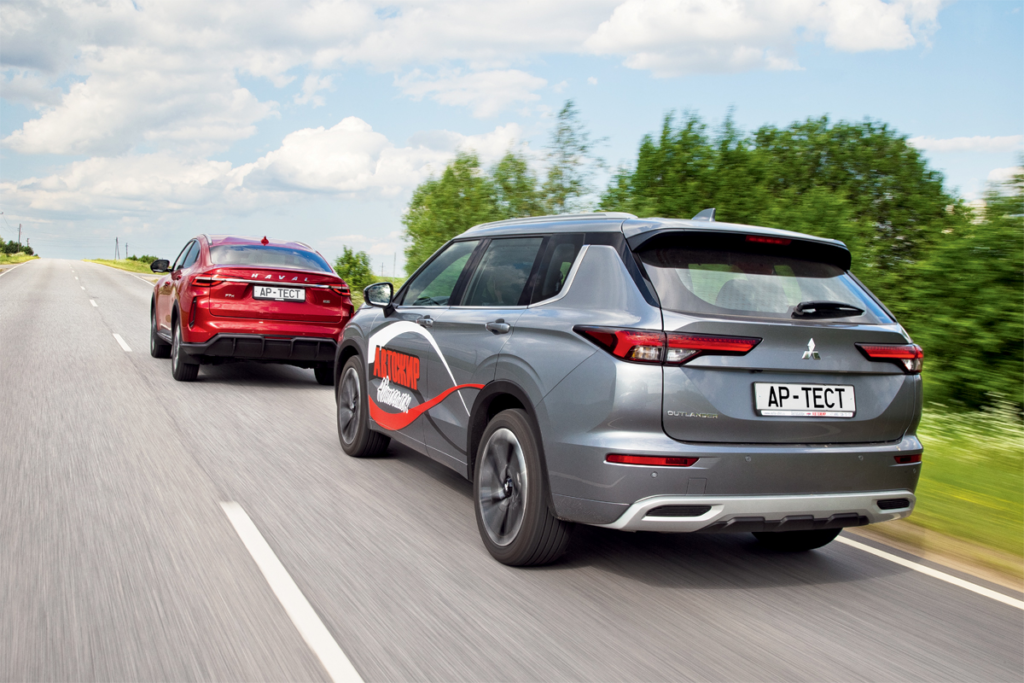
The new Outlander is currently only available with the 2.5-liter engine in our market, with a choice between front-wheel drive and all-wheel drive. The more upscale 3.0 V6 engine will no longer be offered. In China, they use a 1.5-liter turbo-four, producing 215 hp. For Europe, Japan, and the United States, there’s the hybrid Outlander PHEV with a 2.4-liter naturally aspirated engine (133 hp) and two electric motors (116 and 136 hp).
In contrast, Haval pleasantly surprised with its improvements during the facelift — the F7x has grown up. The coupe-crossover format didn’t allow it to match the seven-seat Outlander, but if we had the standard F7 in this test, the difference in scores for trunk space and rear seats would have been minimal. And it’s essential that Haval has now earned a good rating in fundamental driving tests. Fine-tuning the details remains, but that’s probably a task for the next-generation crossover, which will be even more mature. And likely more expensive too.
Emergency Situations
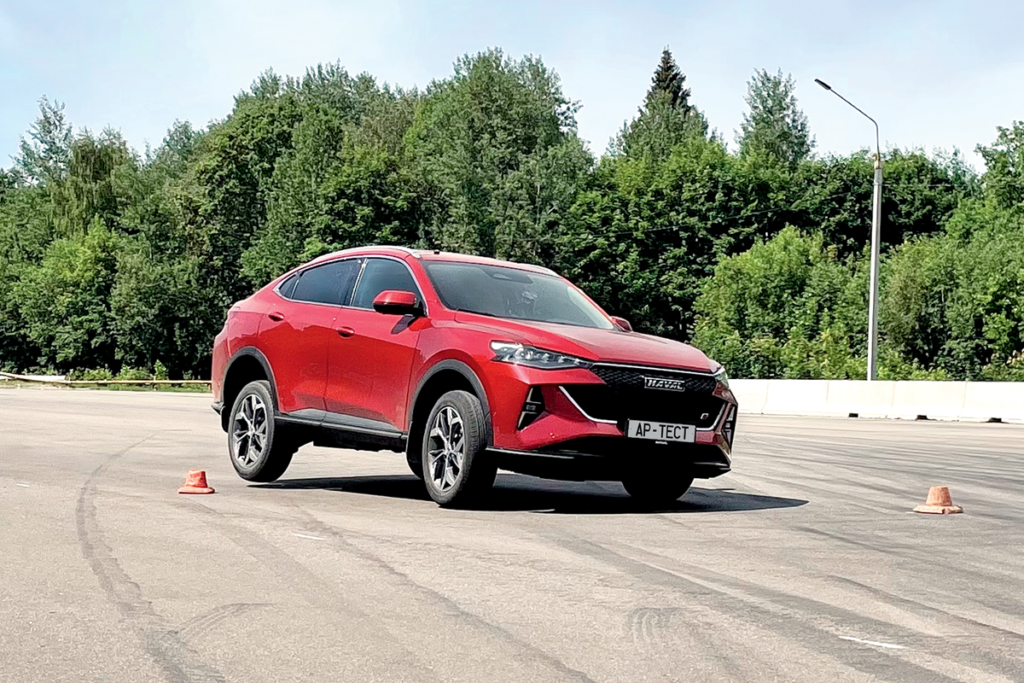
In the moose test — also known as the elk test — the Haval F7x outperformed the Mitsubishi Outlander. The Haval was able to repeatedly navigate through the cones, reaching speeds over 80 km/h while maintaining control. It demonstrated a bit of oversteer at low speeds but managed to correct it quickly, and the stability control system smoothly intervened to maintain control. However, on one attempt, the Haval went slightly off course, with its left front wheel hitting one of the cones upon returning to the original lane. Despite this minor issue, the electronic stability control worked remarkably well in conjunction with a not particularly outstanding chassis.
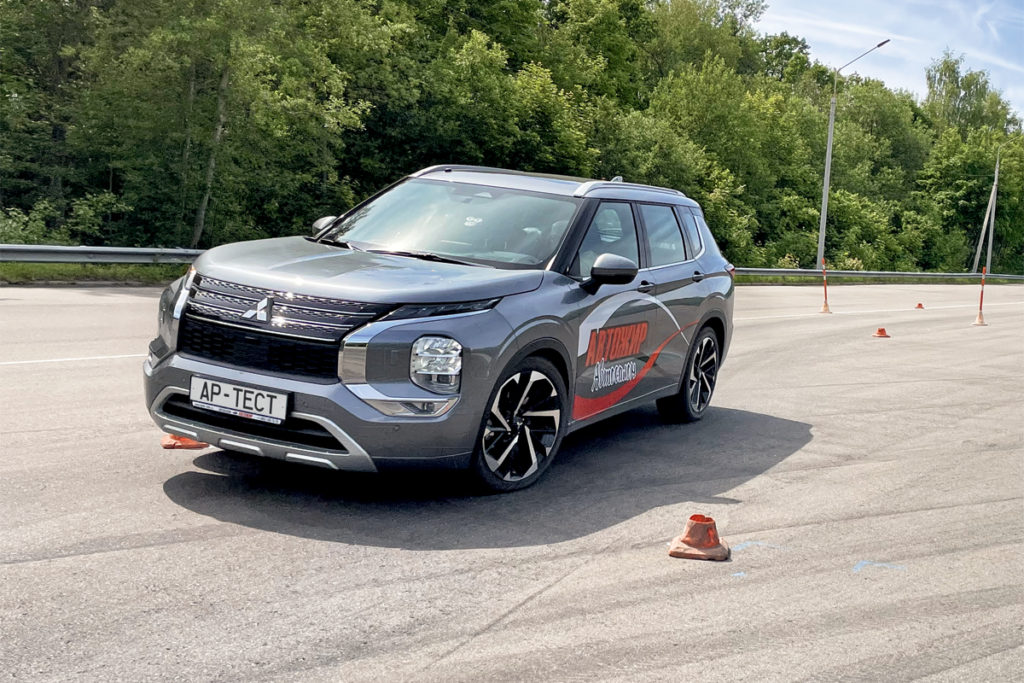
On the other hand, the Mitsubishi Outlander struggled from the beginning, starting to lose control at speeds as low as 70 km/h. At higher speeds, the electronic stability control system completely took over, compensating for oversteer by inducing understeer. This caused the car to behave in an almost straight line, making it impossible for the driver to regain control through steering input. Even at a relatively low speed of 73.4 km/h, the Outlander refused to turn and went straight past the cones in the third lane. This behavior can be quite unsettling for an inexperienced driver.
Braking with an Evasive Maneuver
In the braking with an evasive maneuver test performed at 80 km/h, both vehicles faced challenges due to the complexity of changing direction while braking. Haval F7x exhibited a strong tendency to oversteer, requiring the driver to apply significant force on both the brake pedal and the steering wheel to avoid obstacles. The average braking distance was 36.6 meters, with up to 3.5 meters of variance due to the occasional release of brakes. Furthermore, the Chinese suspension couldn’t withstand the load, producing a jarring impact during the initial moments of the maneuver.
Mitsubishi, on the other hand, performed well in this test, with no signs of oversteer. The car exhibited a slight oversteer during the maneuver, but it was automatically corrected when returning to the original lane. The average braking distance was 34.4 meters, with minimal variations in different attempts. However, the Outlander’s suspension also struggled with the impacts from the test’s conditions.
Rear Seats
The rear seats in the Mitsubishi are more spacious, but only when the seat rails are set to the farthest rearward position. Haval offers only reclining adjustments for the rear seatbacks, but it provides a separate central armrest that flips down. In contrast, the Outlander’s central armrest exposes a wide gap into the trunk area when opened.
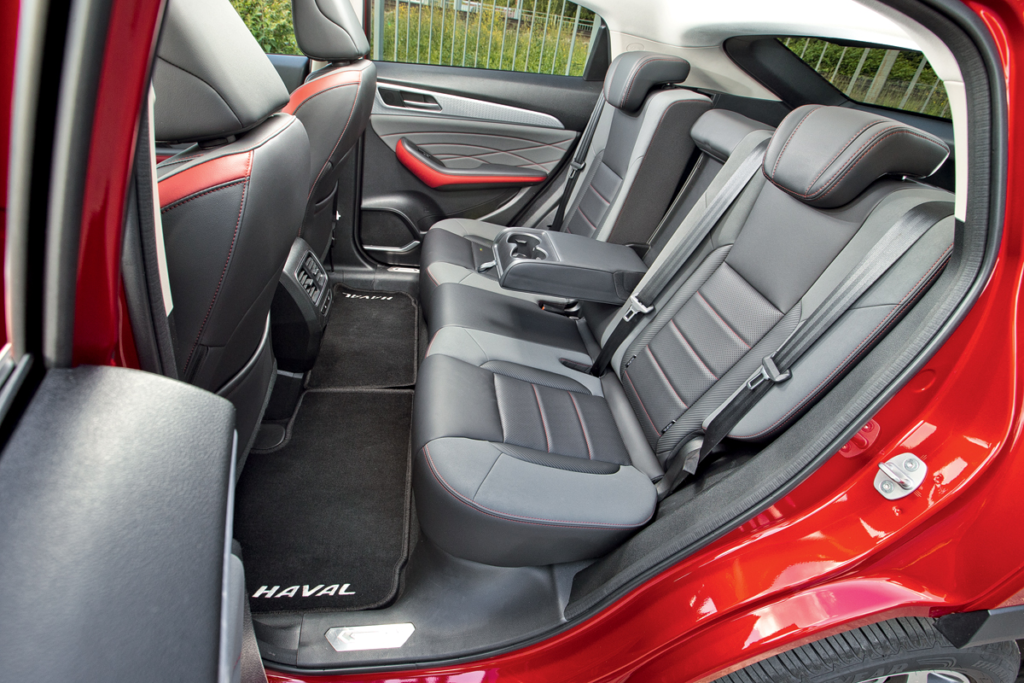
Haval F7x
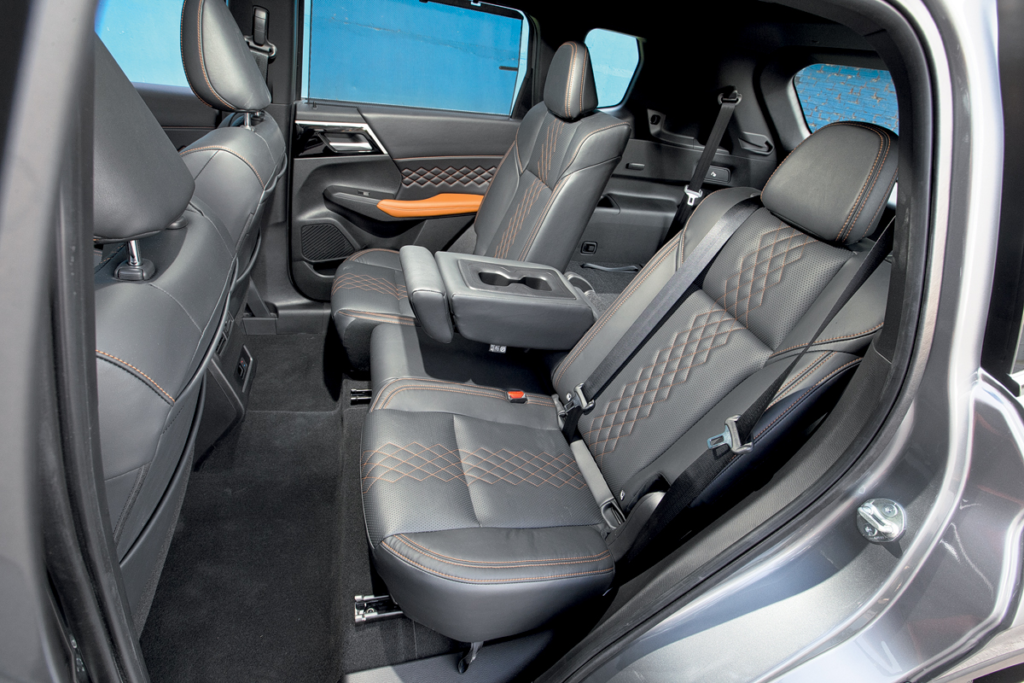
Mitsubishi Outlander
Cargo Space
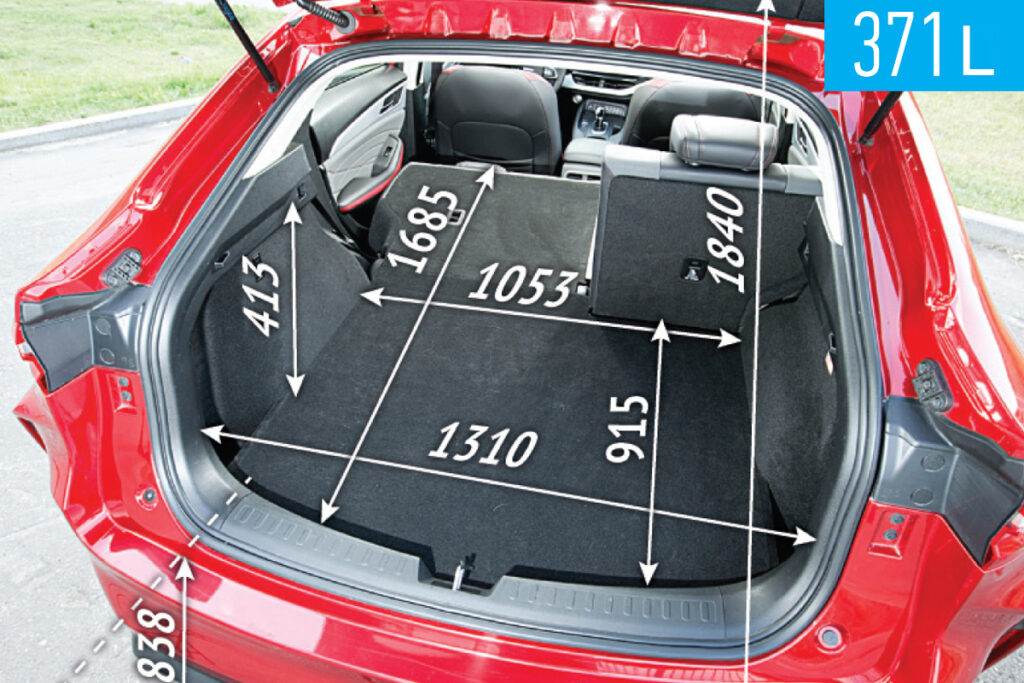
Haval F7x
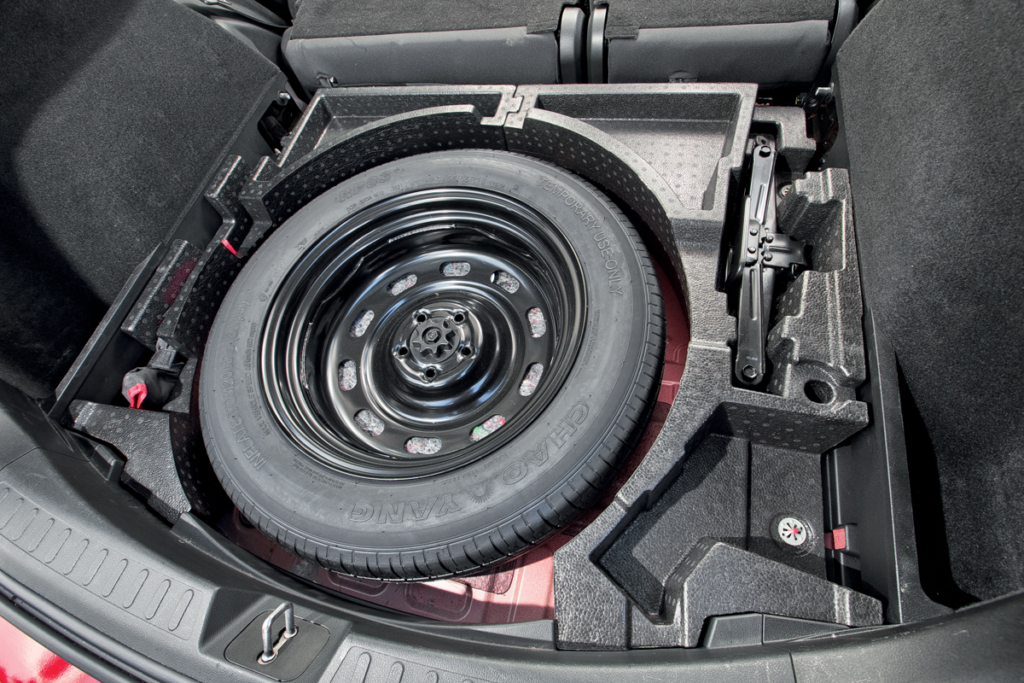
Haval F7x
Mitsubishi Outlander
Mitsubishi Outlander
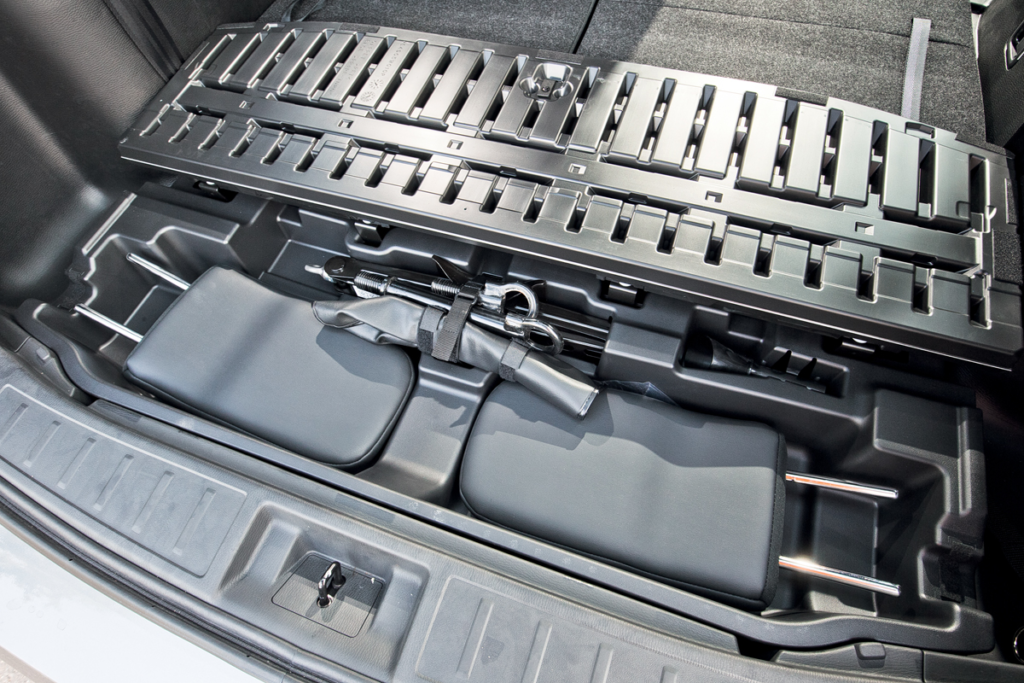
Cargo space in both vehicles varies depending on whether they are configured for 5 or 7 passengers. Specific measurements weren’t provided, but it’s noted that the Mitsubishi has a more versatile and spacious cargo area, especially when configured for 5 passengers.
Visibility
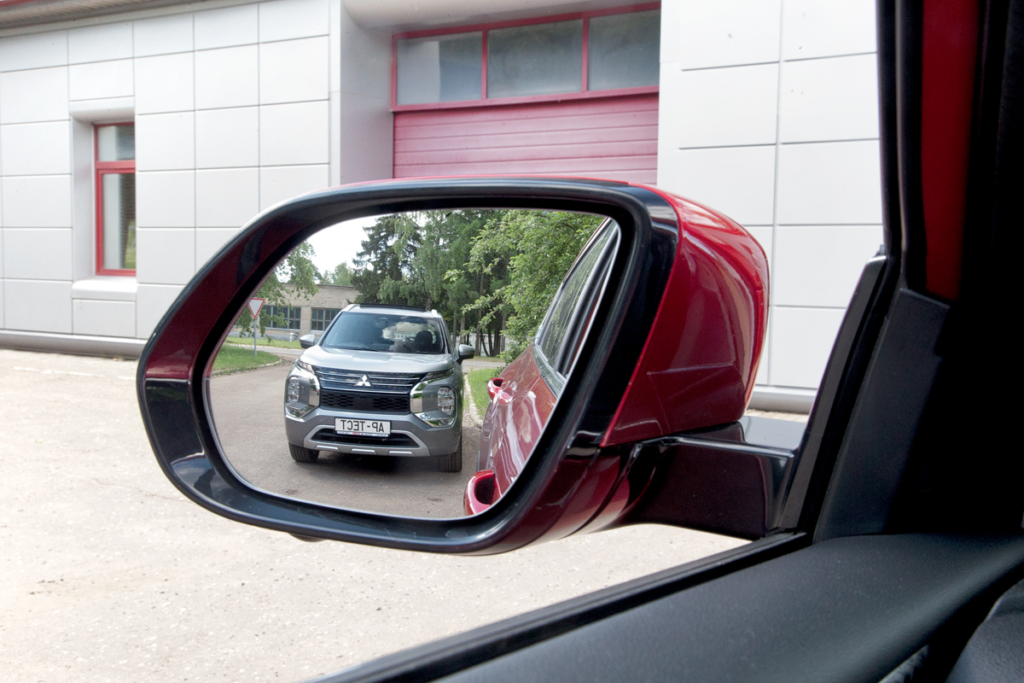
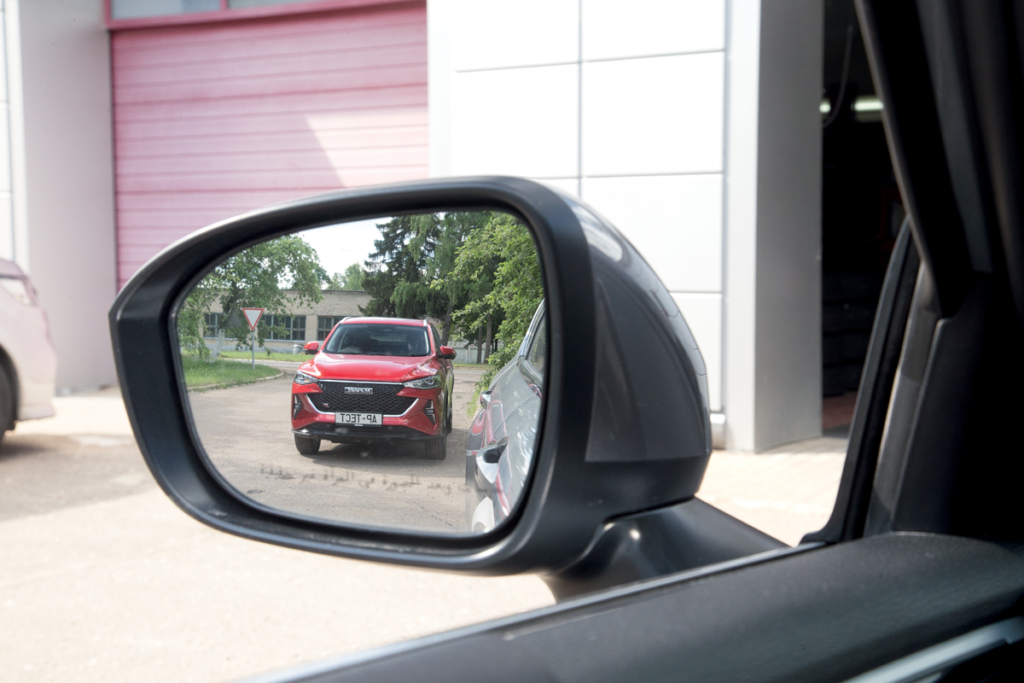
In terms of physical visibility, the Mitsubishi Outlander is preferred due to its larger mirrors and fewer blind spots behind the front pillars. However, the coupe-crossover design of the Haval compromises rearward visibility through the rearview mirror. Still, Haval compensates for this with an excellent set of cameras that allow the driver to select various views in any direction, enhancing visibility in real-world driving scenarios.
Haval F7x
Mitsubishi Outlander
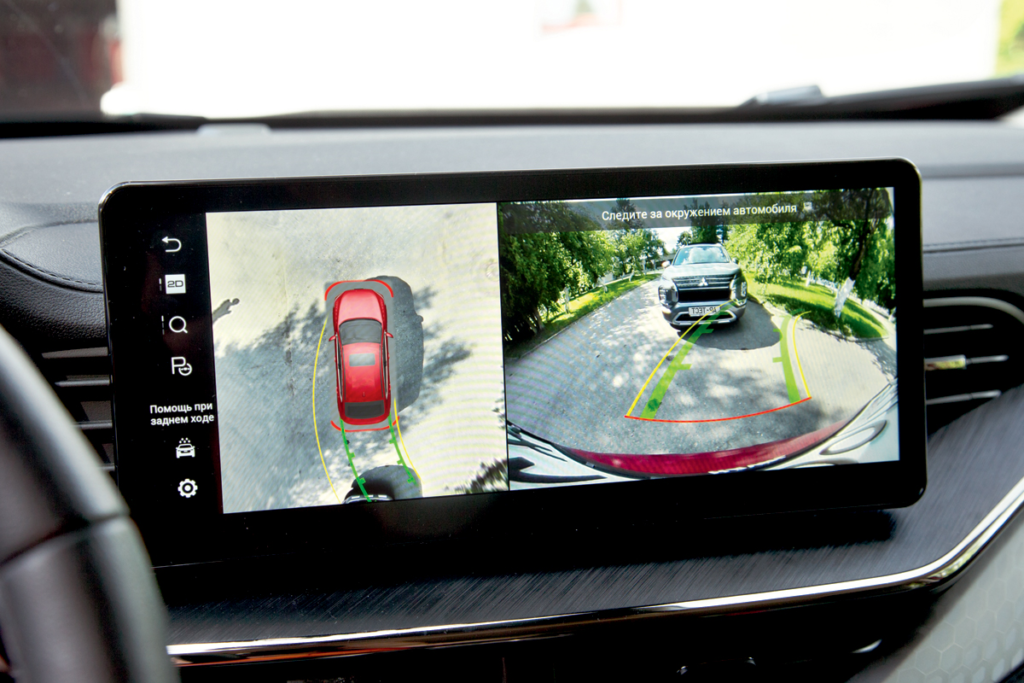
Haval F7x
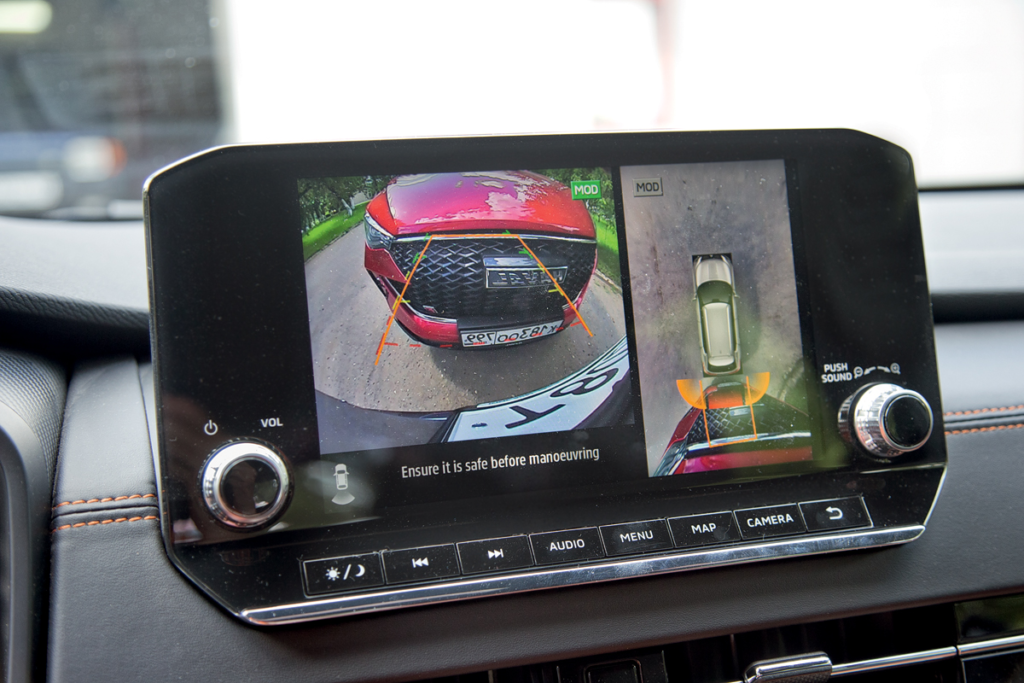
Mitsubishi Outlander
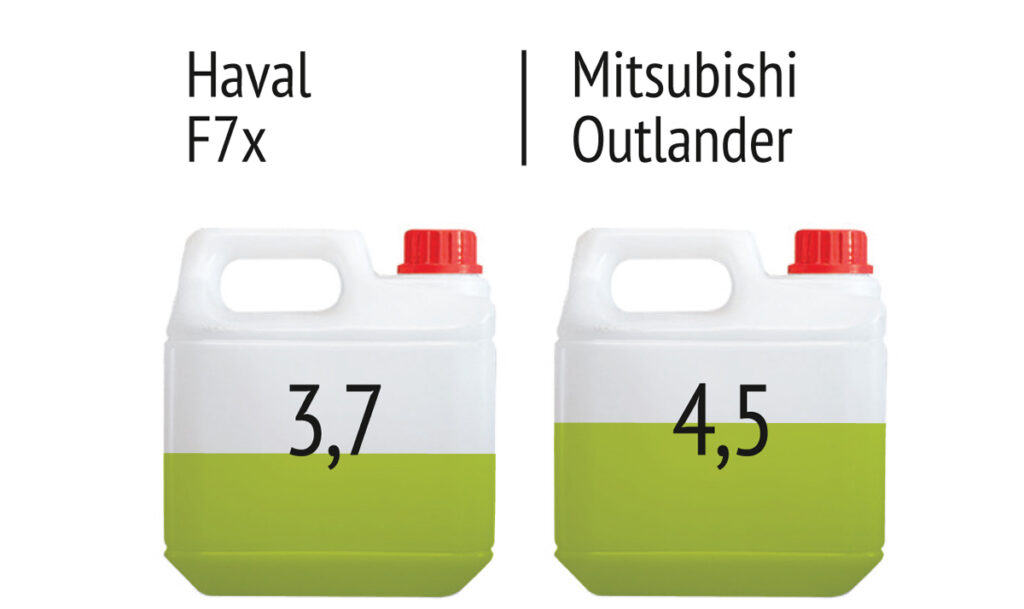
Volume of washer reservoirs, l
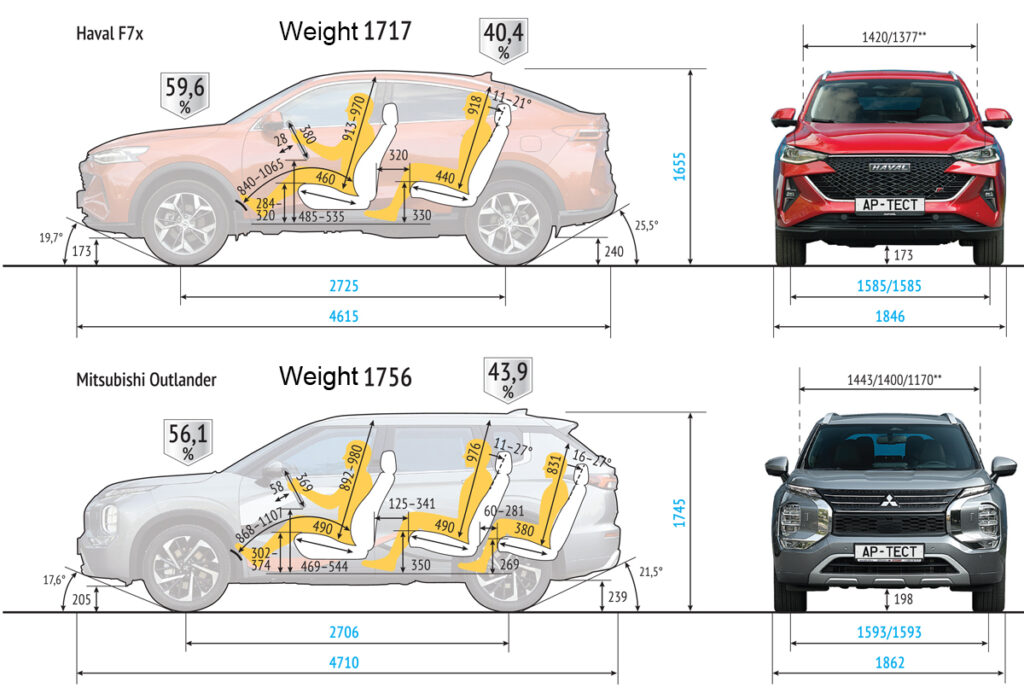
Manufacturers’ data are highlighted in blue/Autoreview measurements are highlighted in black. Dimensions are in millimeters.
*Actual vehicle weight without driver, with full fuel tank and full process fluids
**For right rear seat
**Interior width at shoulder level in the first/second row of seats.
Haval F7x vs Mitsubishi Outlander: Full Specifications
| Parameters | Haval F7x | Mitsubishi Outlander |
|---|---|---|
| Body Type | Five-door liftback | Five-door wagon |
| Number of Seats | 5 | 7 |
| Cargo Volume (liters) | 466—1443* | 205/651/1451** |
| Curb Weight (kg) | 1710 | 1745 |
| Gross Vehicle Weight (kg) | 2220 | 2355 |
| Engine | Turbocharged gasoline | Gasoline |
| Engine Placement | Front, transverse | Front, transverse |
| Number and Arrangement of Cylindersㅤ | 4, in-line | 4, in-line |
| Displacement (cc) | 1967 | 2488 |
| Number of Valves | 16 | 16 |
| Max. Power (hp/kW/rpm) | 190/140/5500 | 184/135/6000 |
| Max. Torque (Nm/rpm) | 340/2000—3200 | 245/3600 |
| Transmission | 7-speed robotized, sequential | Belt-type CVT |
| Drivetrain | All-wheel drive, with multi-plate clutch in rear | All-wheel drive, with multi-plate clutch in rear |
| Front Suspension | Independent, spring, McPherson | Independent, spring, McPherson |
| Rear Suspension | Independent, spring, double wishbone | Independent, spring, multi-link |
| Front Brakes | Ventilated disc | Ventilated disc |
| Rear Brakes | Disc | Disc |
| Base Tire Size | 225/55 R19 | 255/45 R20 |
| Max Speed (km/h) | 195 | 187 |
| Acceleration 0–100 km/h (s) | 9.0 | n.d.*** |
| Fuel Consumption (L/100 km) Urban Cycle Extra-Urban Cycle Combined Cycle | 12.5 7.5 9.4 | n.d. n.d. 9 |
| Environmental Class | Euro-5 | Euro-5 |
| Fuel Tank Capacity (L) | 56 | 55 |
| Fuel Type | Gasoline (AI-95) | Gasoline (AI-95) |
* With the second-row seats folded
** In 7-seat/5-seat/2-seat
*** n.d. — no data
Key Facts at a Glance
- Price as tested: Haval F7x 3.2 million rubles in top trim; Mitsubishi Outlander 4.5 million — the F7 family starts from 2.9 million
- Engines: Haval turbocharged 2.0 with 190 hp and a seven-speed twin-clutch; Outlander naturally aspirated PR25DD with 184 hp and the Jatco CVT-X
- 0-100 km/h: Haval 9.7 s, or 8.6 s with launch control; Outlander 10.6 s
- Braking from 100 km/h: Haval 37.5 m; Outlander 40.6 m, with wheel lockup
- Moose test: Haval clears the cones above 80 km/h; the Outlander runs straight past them at 73.4 km/h
- Off road: the Haval climbs a 60% grade; the Outlander stalls on a grassy slope and overheats its CVT
- Seats: Outlander seven, Haval F7x five — and the F7 wagon is a five-seater too
- The result: the Outlander wins on points for its body versatility and third row, but loses every dynamic test
Frequently Asked Questions
Which is faster, the Haval F7x or the Mitsubishi Outlander? The Haval, clearly. Even on its worst run it reached 100 km/h in 9.7 seconds against the Outlander’s 10.6, and launch control takes it down to 8.6.
Why is the new Outlander so much more expensive? It reaches Russia through parallel imports — this car was built in Japan for the Middle East and came via Dubai. The tested example cost 4.5 million rubles against 3.2 million for the top Haval.
What platform is the fourth-generation Outlander built on? The Nissan CMF-C/D, shared with the current X-Trail, along with the 2.5-litre naturally aspirated engine and the Jatco chain CVT. Mitsubishi’s own platform was dropped after Nissan took over.
Is the Outlander any good off road? Not really. Its multi-plate clutch all-wheel drive struggles on diagonal articulation, and on a grassy incline the front wheels spun, the rear ones stayed still, and the CVT overheated. The Haval, with less ground clearance and less travel, got up a 60% grade.
Did the facelift fix the Haval’s chassis? Partly. Braking improved from 43 to 37.5 metres and the emergency lane change from 41.9 to 36.6, and the stability control is now genuinely good. The ride, however, is still harsh on anything worse than city asphalt, and the throttle response still lags.
Which one should you buy? The Outlander if you need seven seats and a grown-up cabin, and you will mostly stay on tarmac. The Haval if you want the quicker, more stable and more capable car for a third less money, and can live with the ride.
Photo: Dmitry Pitersky
This is a translation. You can read an original article here: Кто взрослее — дубайский Mitsubishi Outlander или тульский Haval F7х?

Published November 29, 2023 • 20m to read