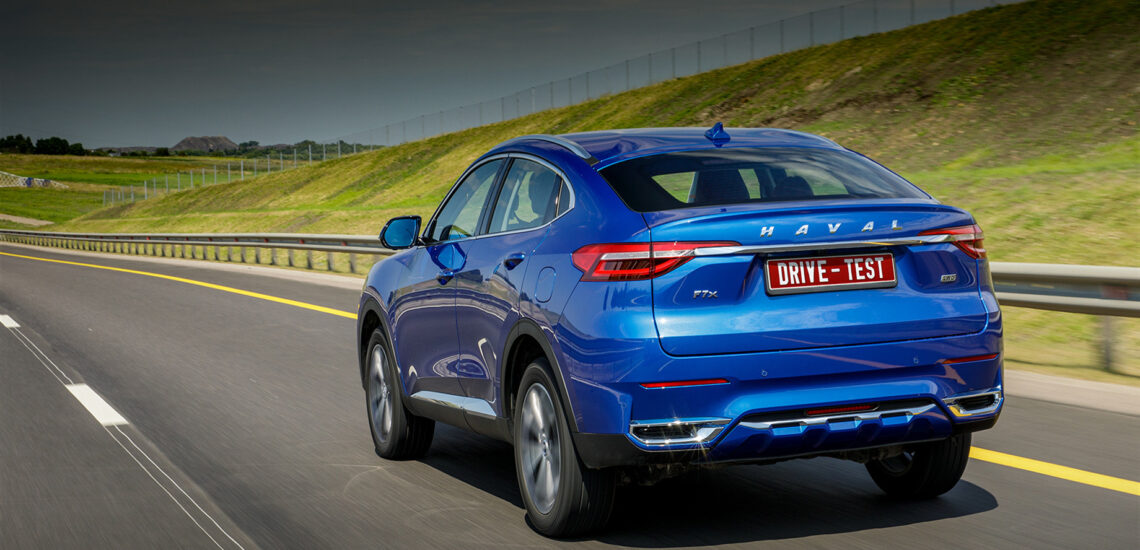

Tilt the rear pillar, drop the roofline by an inch, and the Haval F7 transforms into the sportier, dandier F7x. Beyond the body style, the two share an identical mechanical platform. With the top-end F7 now featuring a digital instrument cluster and an advanced media system, the gap between the highest trim levels of both models has all but disappeared. The F7x commands a premium over the standard F7 — but does the coupe-crossover silhouette justify the extra spend? Having driven both, I found some genuine differences worth talking about.
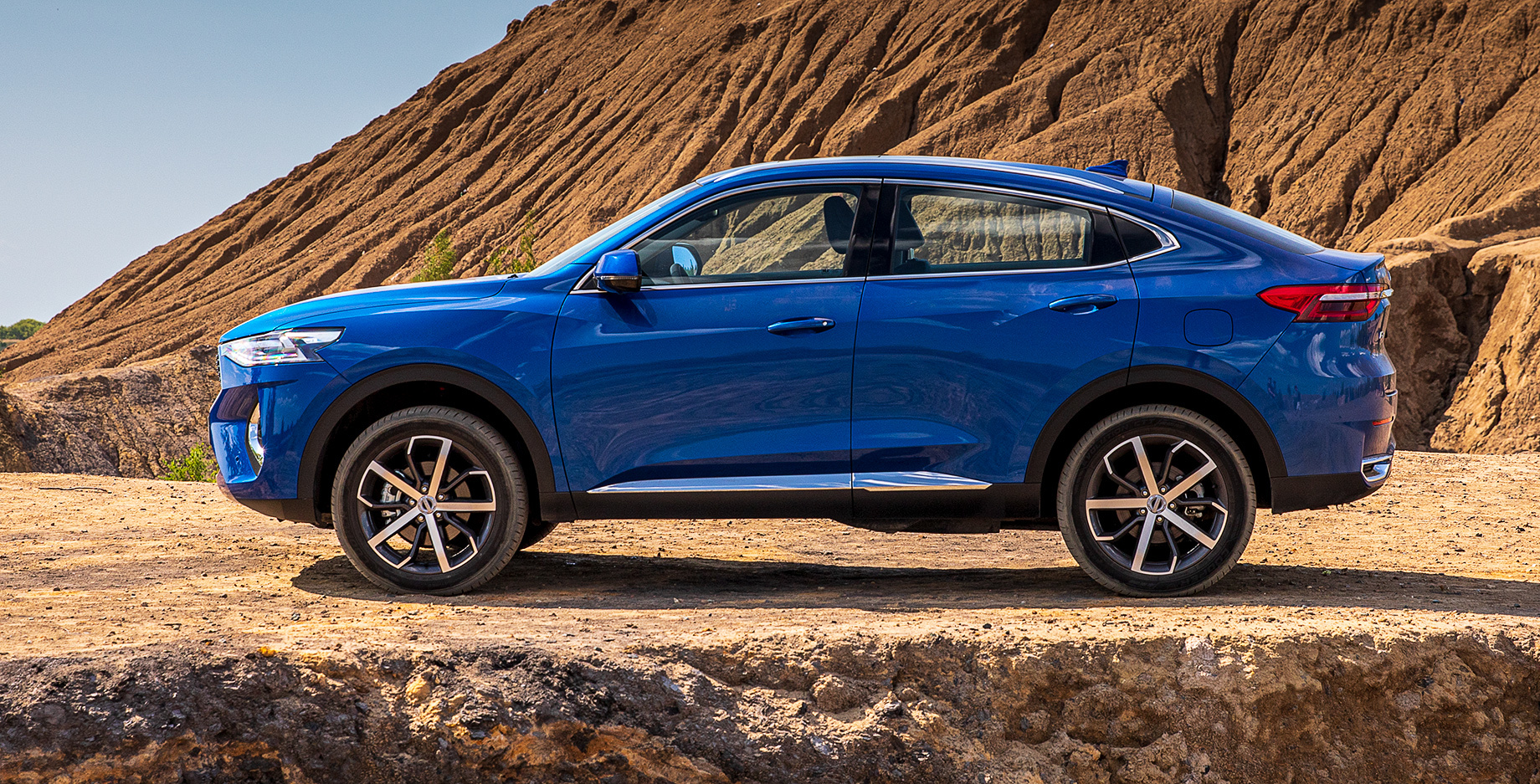
Design and Styling: Is the F7x Worth the Premium?
Dressed in its sleeker bodywork, the F7x genuinely looks better than the standard wagon. There’s something in its profile that echoes another famous “X” — the BMW X6 of the 2007 era — and that’s no coincidence: designer Pierre Leclerc had a hand in both cars. The slanted C-pillar and raised tail were expected to compromise the rearview mirror sightline, but in practice the driver experience feels much the same as in the F7.
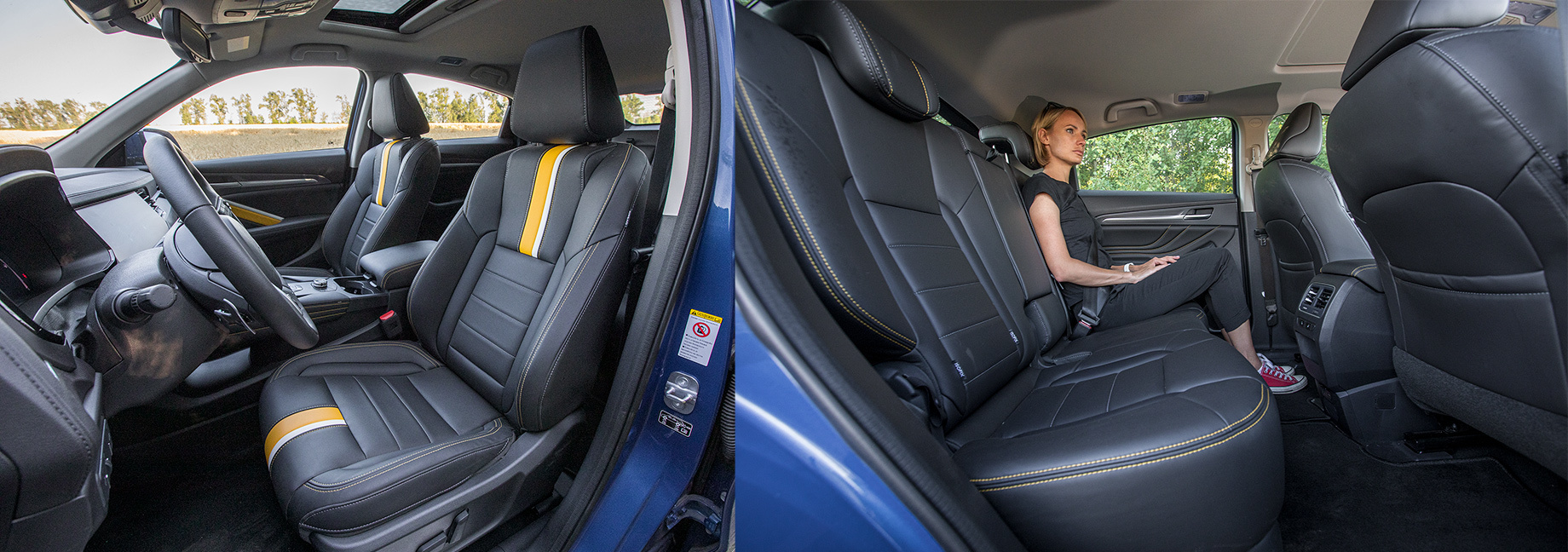
A few interior ergonomics niggles carry over from the standard model:
- Front seats feel amorphous and lack strong lateral support
- The steering column reach adjustment is on the short side
- The button cluster at the base of the center console is cluttered with functions
- No middle head restraint in the rear, despite three available seat belts
Rear Seat and Cargo Space
Sitting in the back row, taller passengers may find the sloping roofline clips their head against the rail — though climbing in doesn’t feel as awkward as you might expect. Headroom is only marginally less than in the panoramic-roof F7, and width plus knee space remain generously limousine-like.
Trunk volume figures vary depending on the source, which is frustrating for buyers trying to compare:
- Approximately 68 gallons (some sources quote 72) with the rear seats up
- Around 275 gallons with the rear seats folded flat
- Some retailers incorrectly claim the F7 and F7x share identical cargo capacity — they do not
Engine and Gearbox Performance
Managing the 2.0-litre turbocharged engine’s 190 hp remains a challenge in everyday driving. The throttle response is inconsistent — a light touch at low speed produces a lurch, while the crossover responds to gentle fuel inputs with a noticeable delay before lunging forward. The seven-speed dual-clutch robotized gearbox doesn’t help matters, producing bumps and hesitation during gear changes in urban traffic.
In short, city driving highlights the drivetrain’s weaknesses:
- Jerky throttle response at low speeds
- Delayed power delivery when pulling away gently
- Abrupt gearbox shifts in stop-start traffic
- The advertised performance is only truly felt during hard acceleration from standstill
Highway Driving and Fuel Economy
Things improve noticeably on the open road. Under sustained, steady throttle the relationship between pedal input and acceleration becomes much more predictable, and the gearbox settles into smooth, well-timed shifts. Cruising at 60 mph drops fuel consumption from a city figure of around 2.8 gallons per 60 miles down to a more respectable 1.9.
Cabin noise, however, is a persistent issue at highway speeds:
- Noticeable wind noise around the window seals
- Tyre roar audible in the wheel arches
- Rear tyres become particularly loud on coarser road surfaces — possibly amplified by the gap between the rear seat backrest and the load shelf
Steering and Handling: Where the F7x Stands Apart
The F7x’s steering feels noticeably weightier than the standard F7’s. The straight-ahead centre point is more clearly defined, making long motorway stints easier to manage. As you add steering angle, the artificial weighting gives way to a more natural feel, with progressive resistance building through corners. Body roll also builds more evenly with steering input — the F7x doesn’t tip into corners as sharply as the station wagon.
On smooth sweeping bends, there’s a distinct tendency for the car to push toward the outside of the arc — what engineers call understeer. This encourages early unwinding of the steering, and the hatchback occasionally wants to run wide. By comparison, the standard F7 is more neutral mid-corner but ultimately duller to drive.
Suspension and Ride Quality
The front suspension behaves identically to the F7 — moderately compliant, noticing smaller bumps but unfazed by larger potholes. The rear end is the real surprise: it feels more composed and firmer than the station wagon’s, without any of the floaty looseness. It adds a hint of sharpness that you wouldn’t expect from a budget crossover.
Possible reasons for the improved rear behaviour include:
- A stiffer body shell — the hatch’s larger rear opening required reinforcement around the entire aperture
- Slightly altered weight distribution (though the official kerb weight difference is just 22 lbs)
- The hatchback responds more actively to throttle lift-off and is more reactive to power adjustments mid-corner
Haval is notably tight-lipped with technical data, so these observations can’t be verified against factory specifications. One real-world indicator: all doors on the F7x open and close without binding — the F7 station wagon’s tailgate, by contrast, sometimes catches on its misaligned aperture.
Off-Road Capability
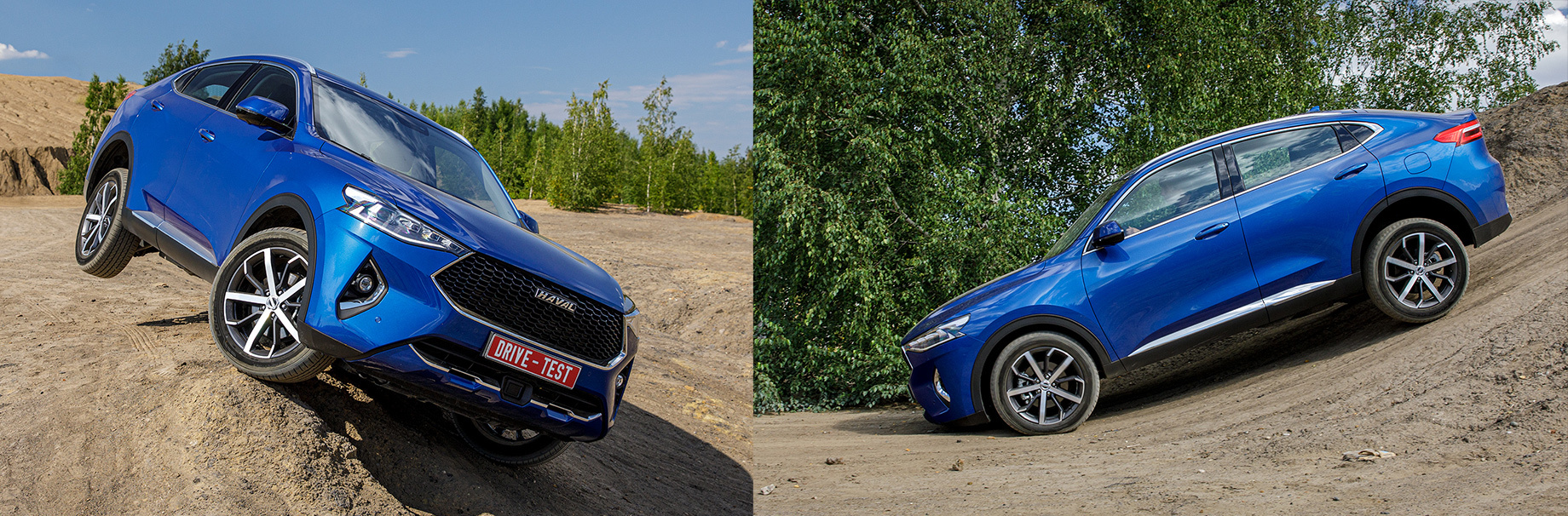
The off-road test wasn’t planned — it arose out of necessity when leaving a quarry after a photo shoot. The F7x tackled a steep dry slope on the first attempt, both with and without the six Terrain Response programs active. Differences between the modes were minimal, but the ESP and traction control worked effectively as a safety net, catching wheelspin without killing momentum.
For context, a Renault Kaptur with a 150 hp engine and CVT completed the same climb — less dramatically, but equally successfully on the first try. The takeaway:
- The F7x handles light off-road duties competently
- Success on the dry slope is largely down to the powerful engine, not electronic wizardry
- In deep mud or with wheels fully in the air, the limits are reached quickly
Verdict: Should You Buy the Haval F7x?
The “X” in F7x earns its place. The reinforced body contributes to more engaging road manners, the styling is genuinely more attractive than the standard wagon, and the off-road credentials are solid for the class. The trade-off is a more modest boot and the same drivetrain frustrations that affect the F7 in urban traffic. If you can live with a smaller cargo area and are prepared to adapt your driving style to the twitchy throttle, the F7x is the more rewarding car to drive — and the better-looking one to park.
This is a translation. You can read the original here: https://www.drive.ru/test-drive/haval/5f3f93d6ec05c4d210000021.html

Published September 22, 2022 • 6m to read