
Reaching for your phone, adjusting the temperature, and suddenly, you look up only to see brake lights crashing into your car’s hood. It’s an experience no one should have, but in my line of work, I occasionally need to simulate these “accidents” intentionally on a test track, of course, to evaluate the performance of safety electronics. Now is an excellent time to see how effective such “antidotes” are, especially in Chinese cars.
Where automatic braking came from
The journey of automatic obstacle detection in vehicles dates back to 1959 and the Cadillac Cyclone concept car, which carried two radars in its rocket-like front wings. It was not until 1995, however, that the Mitsubishi Diamante began equipping production cars with a similar alert system. A decade later the Mercedes S-Class W221 series introduced automatic braking, and the technology has become steadily more common since then, even in affordable, mass-produced vehicles.
Chinese manufacturers have embraced these safety technologies quickly. Eight of the ten finalists in our rating test come with automatic braking systems, and seven treat the feature as standard. But can we really trust Chinese electronics?
How the test works
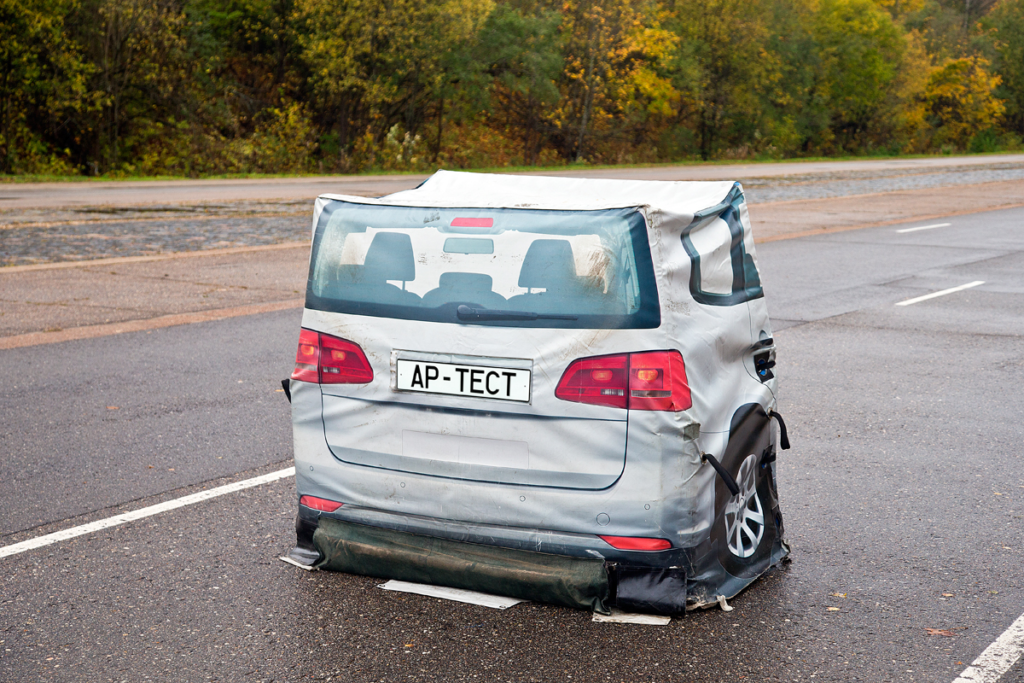
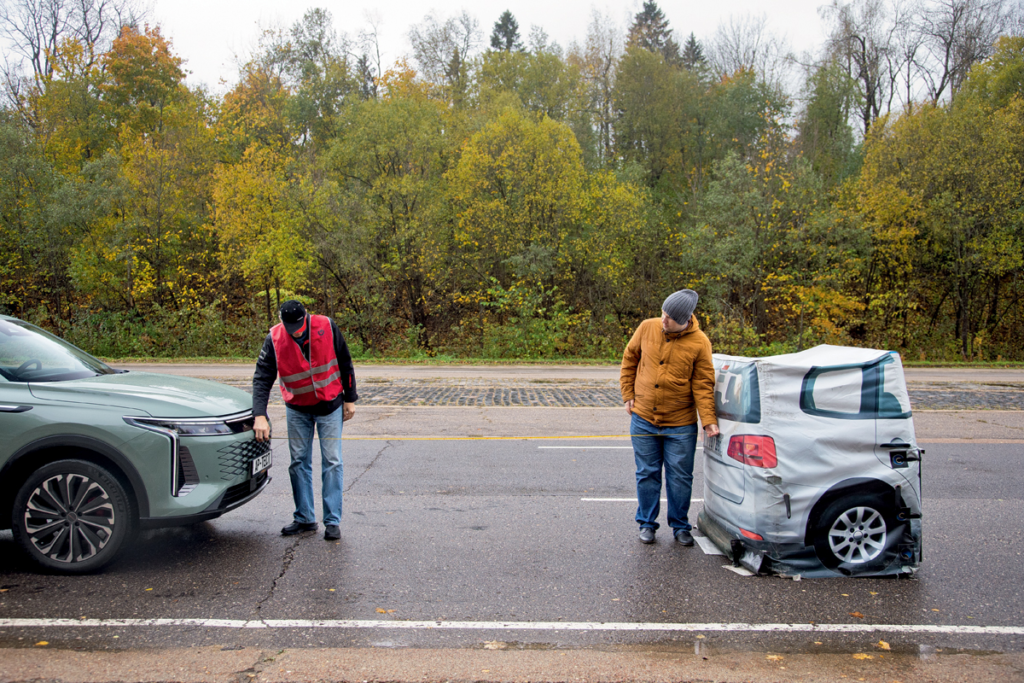
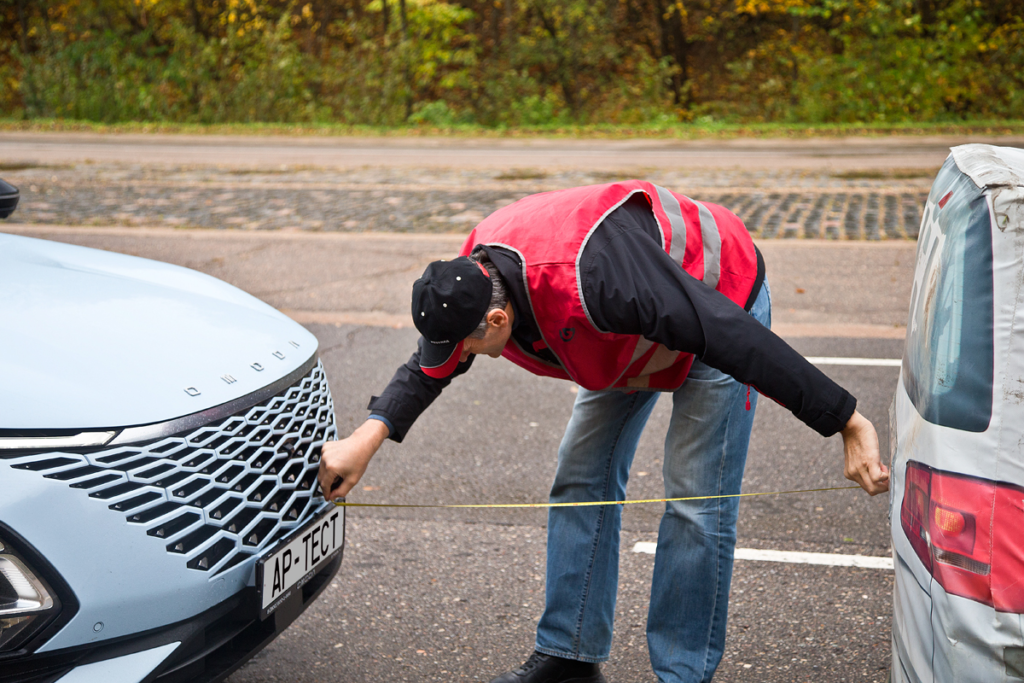
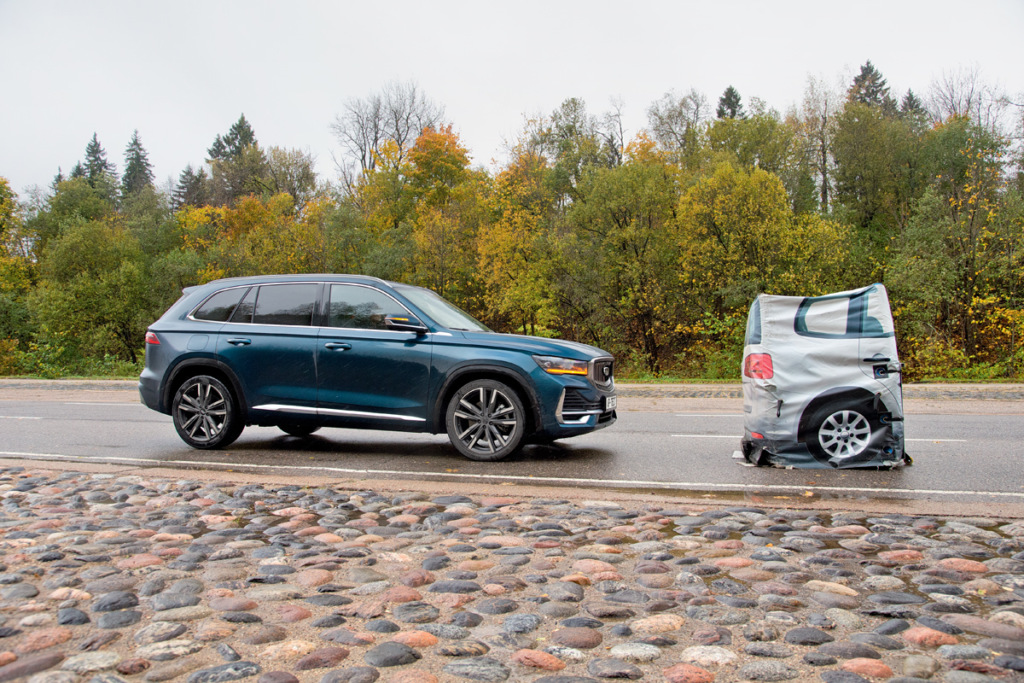
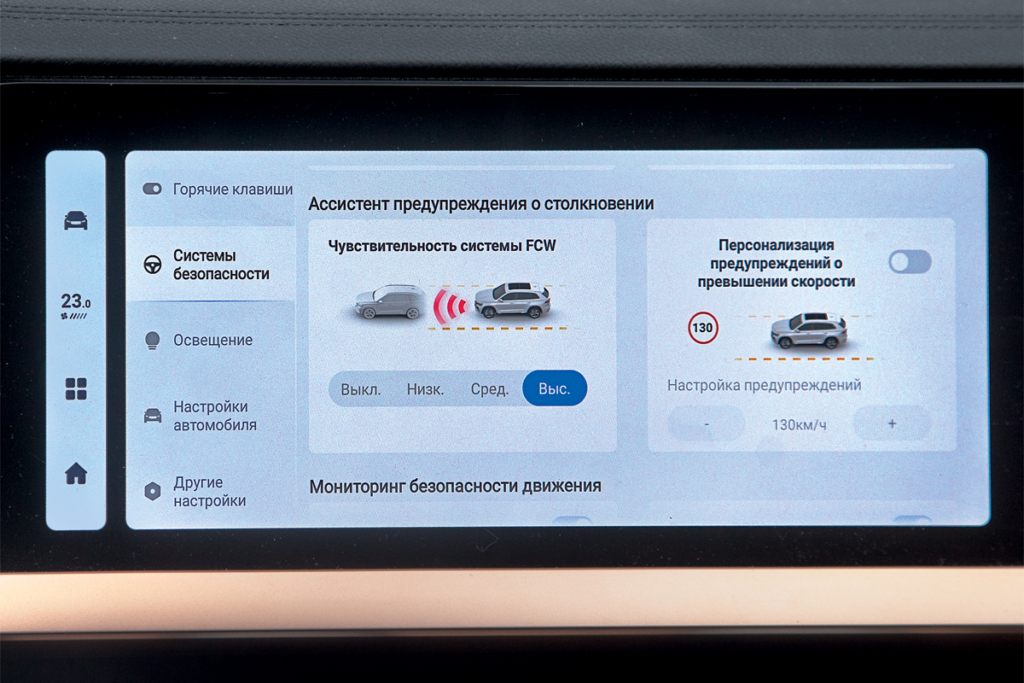
For our tests we deploy a certified target simulating the rear of a Volkswagen Touran compact van on the special roads of our testing ground. The method is straightforward: I drive directly towards the stationary Touran at 30, 40 or 50 km/h. The system first issues an audio and visual alert, then engages emergency braking, even if I keep pressing the accelerator. You can usually adjust the warning distance through the system settings, but those adjustments do not affect the emergency braking intervention itself.
Which cars stopped soonest
Behind the wheel of the Exeed RX crossover one feels safest. At 30 km/h or at 50, it brakes preemptively, as if gauging the road surface, and stops well over three meters from the target. The Tank 500 yields almost identical results, consistently stopping at the same safe distance whatever the speed.
Admittedly, we had reservations about relying on the Chinese systems and opted not to test at high speeds — no more than 50 km/h. Even European manufacturers do not guarantee 100% efficacy in automatic braking, and their manuals often state that the system will either prevent or mitigate a collision. Under Euro NCAP protocols, moreover, automatic braking systems are tested at urban speeds, which in Europe means a maximum of 50 km/h.
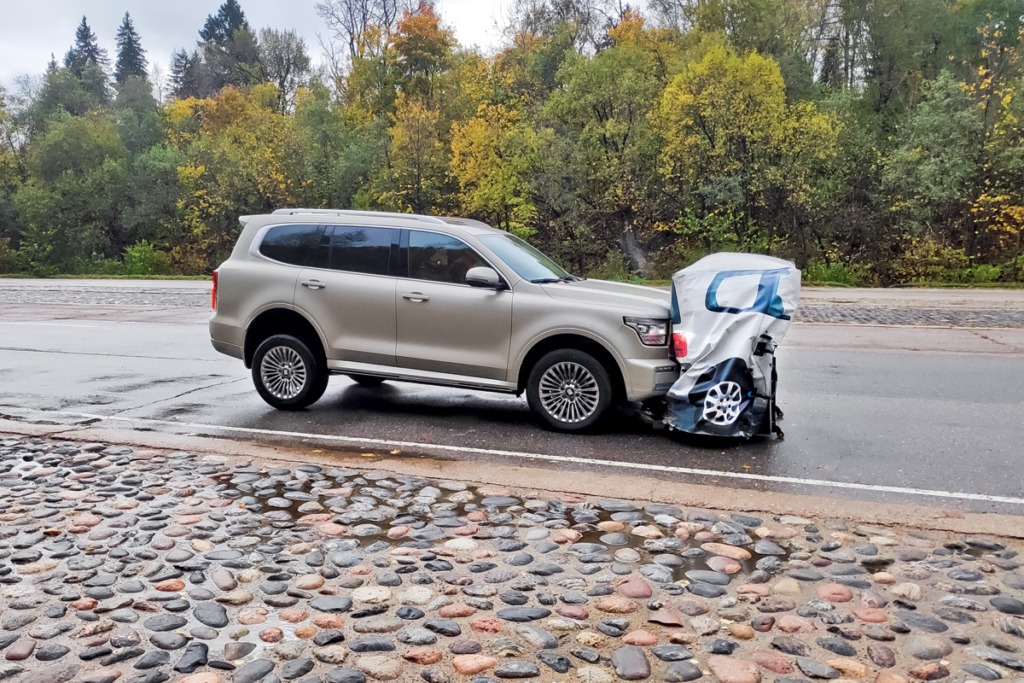
The Tank at 70 km/h
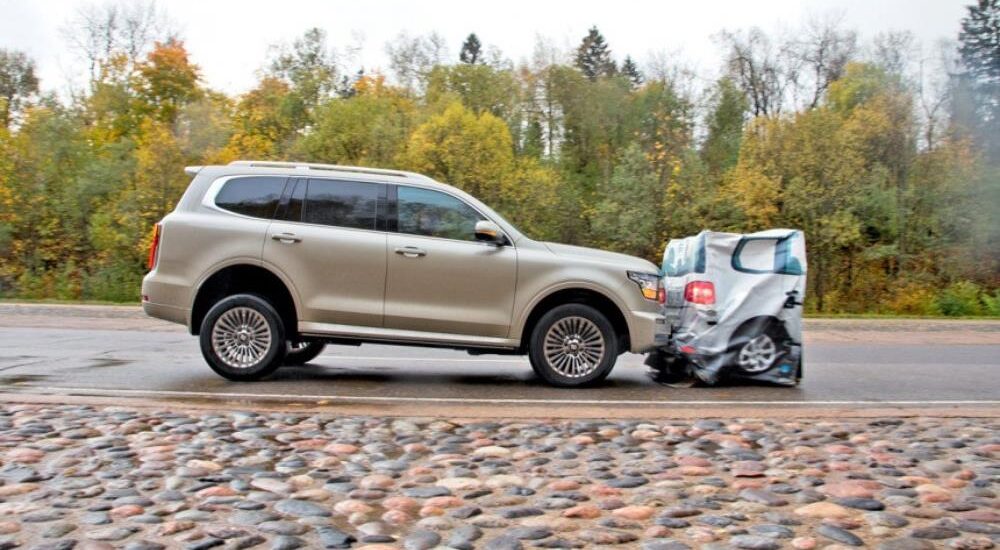
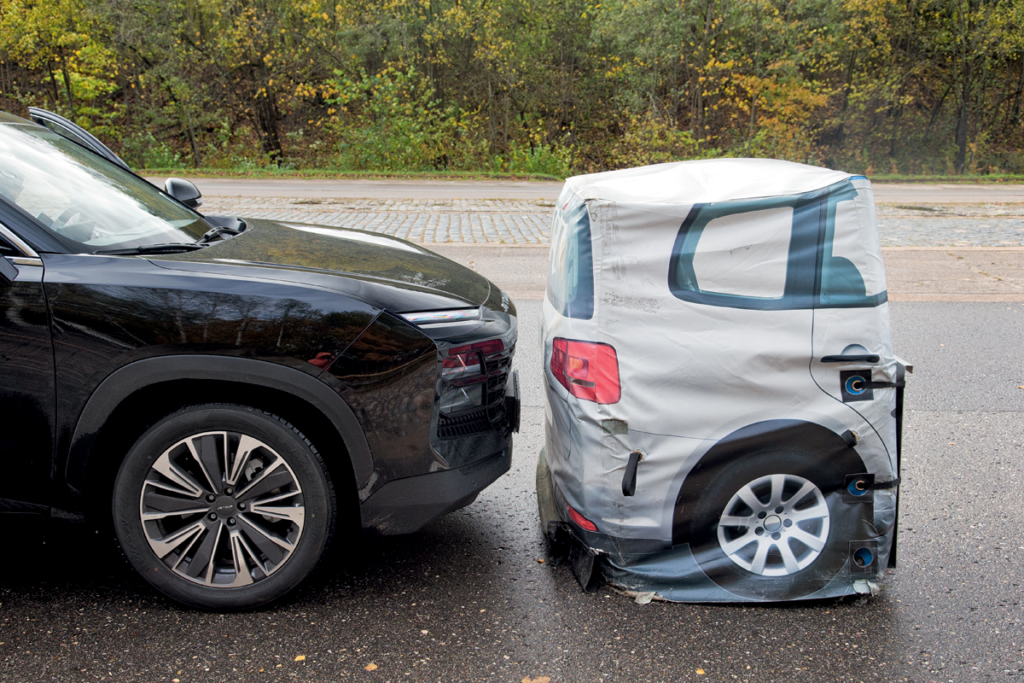
The decisive braking of the Tank and its sturdy bumper inspired enough confidence for me to test it at 70 km/h. As one of the photos shows, the target was propelled about ten meters. Braking did occur, then, but it was not entirely effective. Indeed, the car’s manual states that the system “activates active braking to reduce the vehicle’s speed, minimizing the consequences of collisions.” Fortunately the test concluded without any damage — the bumper and grille remained intact. Had a real vehicle been in place of the soft target, damage would have been unavoidable.
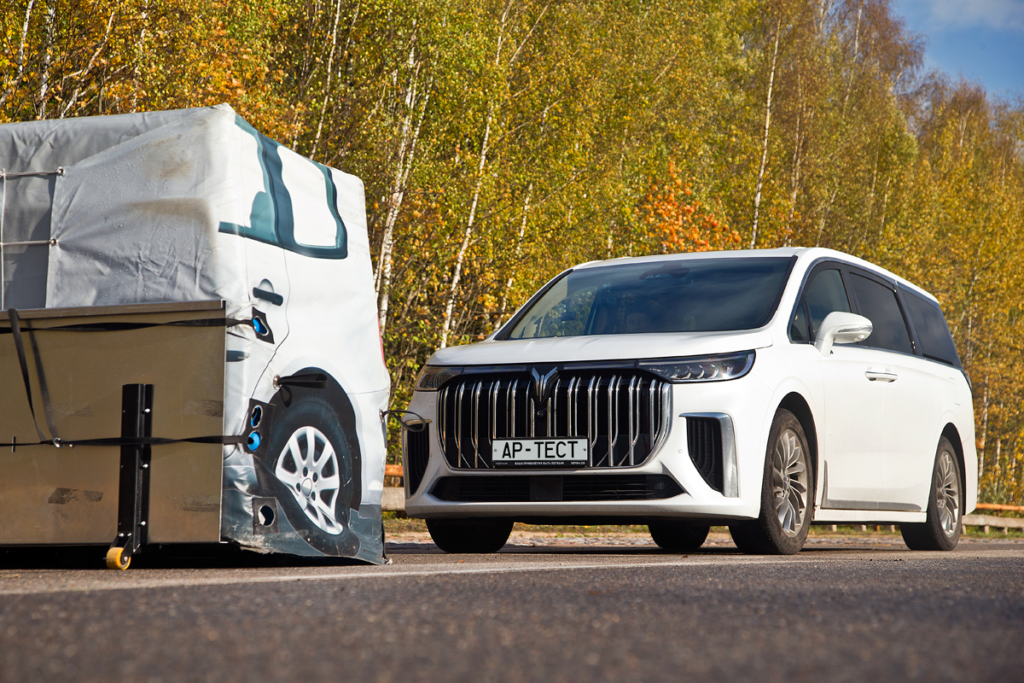
The three Voyahs
The Voyah Dream minivan ranked third in preemptive braking performance, reliably stopping 2.4—2.8 meters from the target. Its platform mate, the Voyah Free, began to fray nerves: after issuing audio and visual warnings it commanded braking at the last moment, leaving less than a meter to the obstacle — a rather harrowing experience.
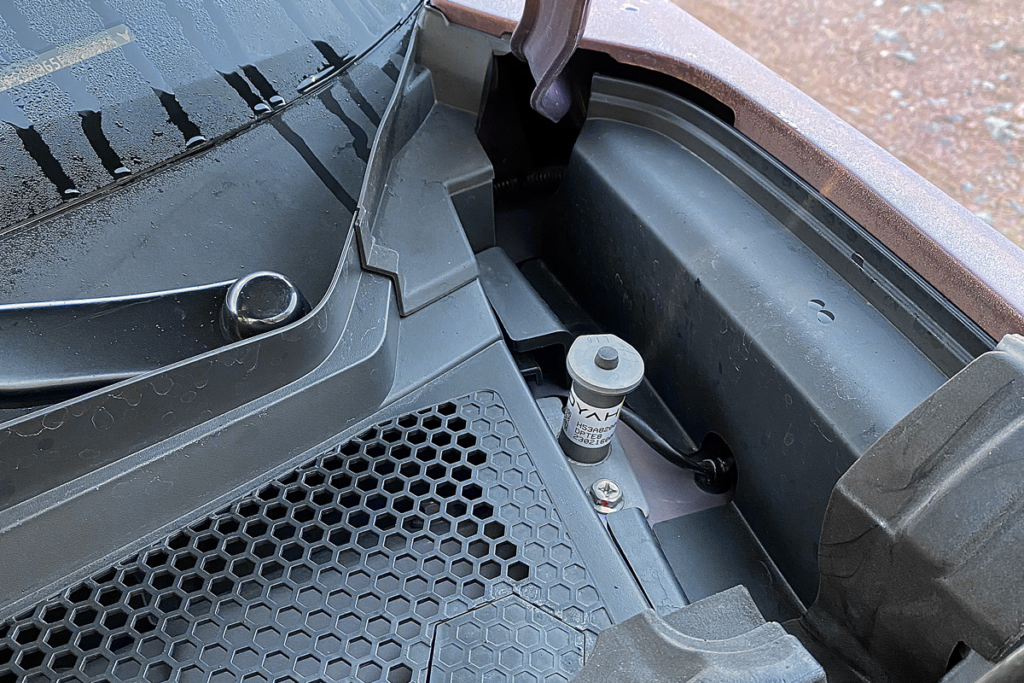
I chose not to test the third Voyah model, the electric sedan named Passion, under the same conditions. Inspecting the car, I found pyrotechnic devices next to the hood hinges, designed to lift the back of the hood by about ten centimeters in a collision with a pedestrian and so reduce the impact. Potentially good for pedestrians; less ideal for testing. I recall that during our tests with the Mazda 6 these pyrotechnics triggered such that the hood buckled significantly. No, we will not risk damaging the bodywork — or the editorial budget.
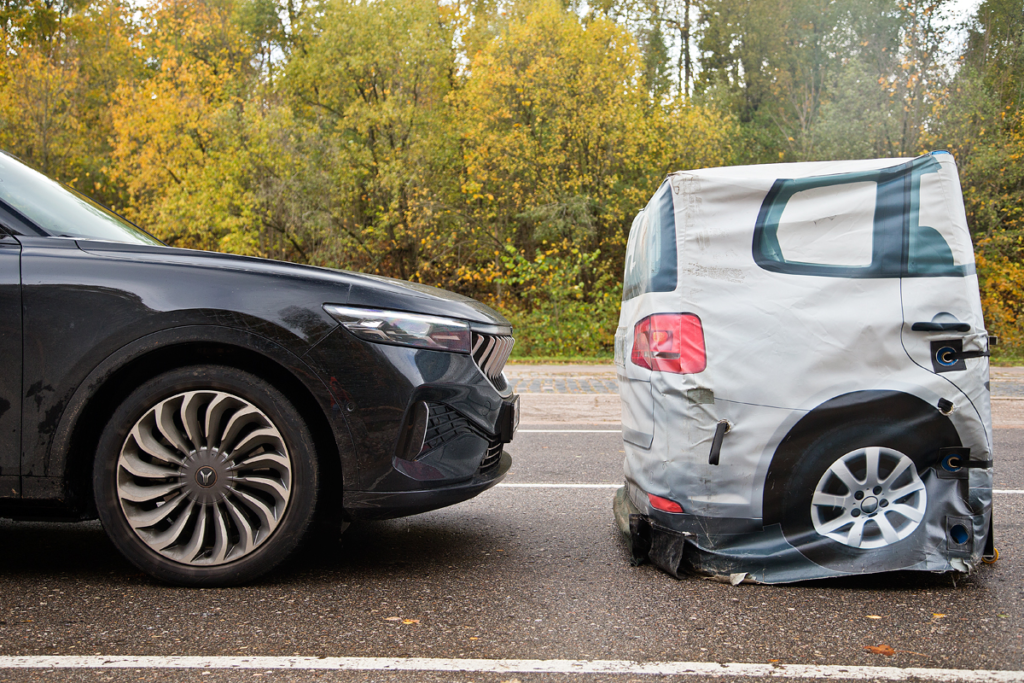
Do these systems work?
In conclusion, whether some perform better than others, these systems do work. If a driver is inexperienced or frequently distracted — say, by a smartphone — the electronics provide a crucial safety net. That holds true not only when approaching another vehicle but also when encountering pedestrians or cyclists on the road.
Adaptive cruise control and lane keeping
Yes, Chinese engineers are fast learners, and they are rapidly incorporating features into their vehicles that were, until recently, rare even among European automakers. Looking for adaptive cruise control? Check. Lane centering? Absolutely. And the M11 highway, part of our test route, proves an ideal setting in which to evaluate such systems. These features might see limited use in city driving, but on a high-speed highway with clear markings it is almost instinctive to engage the autopilot.
Omoda C5: five to ten minutes hands-free
In a surprising twist, the least expensive crossover in our lineup, the Omoda C5, emerged as the most autonomous in terms of steering. Other vehicles with adaptive cruise control and lane tracking allow hands-free steering for only 15—20 seconds; the Omoda can maintain autonomy for 5—10 minutes. You can’t sleep at the wheel, but you can certainly manage a sandwich and a drink. Keeping your hands on the wheel is advisable all the same, because the car’s nervous steering adjustments can be quite disconcerting — especially when overtaking large trucks, where the Omoda’s electronics may abruptly jerk the wheel in an attempt to maintain lane integrity at 130 km/h.
Operating the Omoda’s adaptive cruise control is straightforward: it activates with two button presses on the steering wheel and has an intuitive speed adjustment algorithm. The speed limiter is equally user-friendly, though monitoring the current settings on the display can be a bit cumbersome. Unexpectedly, an image of a motorcycle appears in the center of the screen, where road conditions and markings are displayed — even when no motorcycle is present on the road. This “ghost” appeared more than once during rain.
The Tanks, the touch panels and the Jetour Dashing
The other vehicles’ cruise controls and driving electronics evoke fewer emotions. The most user-friendly cruise controls, speed adjustment included, turned out to be those of both Tanks. They share a control mechanism on a stalk on the steering column which, although hidden from view, has a simple logic that becomes second nature after a few uses. There is a speed limiter mode with convenient one or ten-kilometer-per-hour intervals, and lane centering is available too, operating much more smoothly than in the Omoda.
In other cars cruise control is managed from the spokes of the steering wheel, and that setup is quite good with physical buttons. Touch panels immediately reduce usability, however, and increase the number of errors when setting speed and distance. This is exactly what happens in the electric Voyah Passion. Its display gives very clear information about the road situation — down to depicting road workers and the cones with which they have cordoned off a section for repairs — but in practice simplicity of settings matters more, because it takes less attention from the road.
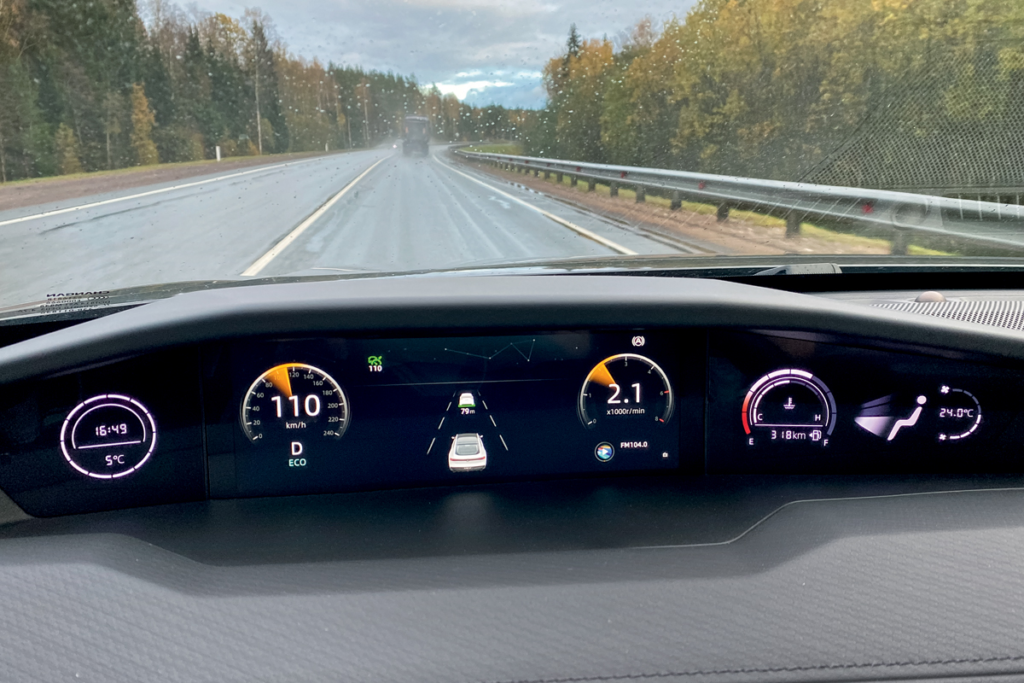
From this perspective the Jetour Dashing proved the most cumbersome cruise control to use. Its attempt to emulate Tesla is noted: the cruise is adjusted by wheels on the steering wheel which, in other modes, control the mirrors and the cabin temperature. Constant confusion, all trip long. The set values for the adaptive cruise speed are not shown on the instrument panel either, but on the central display: you turn the wheels on the steering wheel while looking at the “TV” to the right, searching for the small speed numbers, and end up more distracted from the road than in any of the other cars.
The Dashing also does not yet offer a lane marking tracking system on the Russian market, and even in the top version there is no speed limiter. Overall, it is no surprise that the Dashing ended up at the bottom of our cruise control rating.
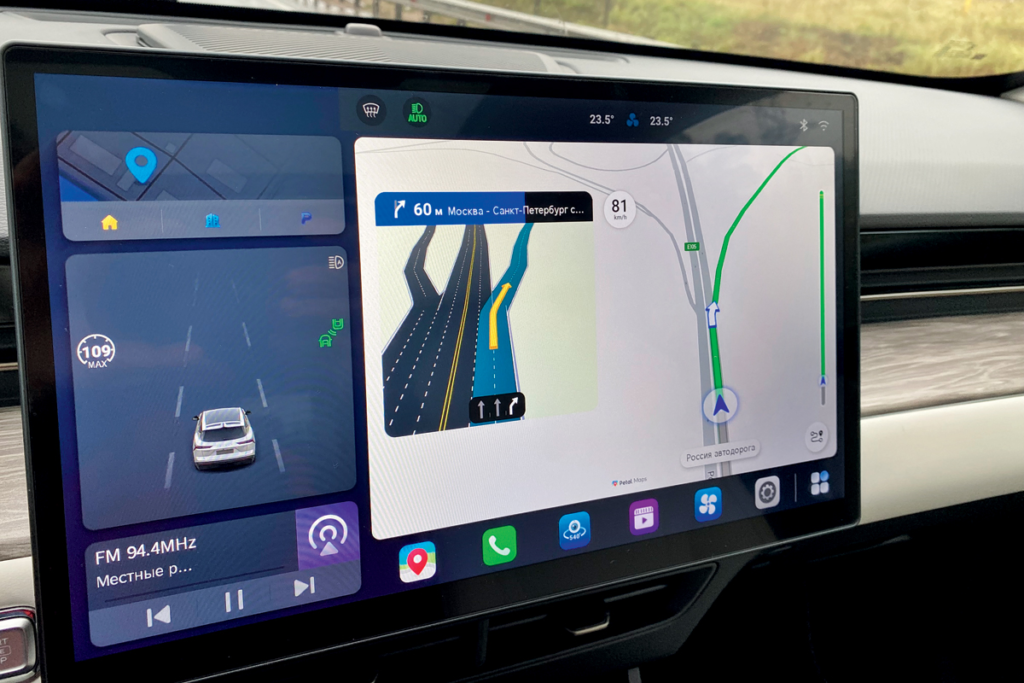
We awarded expert points to all ten cars for the convenience of managing cruise control and the other driver assistance systems. The top three were the Tank 500, the Tank 300 and the Geely Monjaro. All three provide the most comfortable system management and help you relax behind the wheel, both on long journeys and in city traffic.
Distance left to the target when the car stopped
The table below presents the same information in numbers — the gap that remained between car and target at the moment the car came to a stop:
| Speed | Exeed RX | Geely Monjaro | Jetour Dashing | Omoda C5 | Tank 500 | Voyah Dream | Voyah Free |
|---|---|---|---|---|---|---|---|
| 30 km/h | 3 m | 1.18 m | 0.74 m | 0.93 m | 2.97 m | 2.74 m | 0.78 m |
| 40 km/h | 3.7 m | 0.8 m | 0.07 m | 1.3 m | 2.95 m | 2.84 m | 0.82 m |
| 50 km/h | 3.2 m | 0.62 m | * | 1.5 m | 2.96 m | 2.36 m | 0.76 m |
* tests were not conducted at 50 km/h for Jetour Dashing due to late activation of the system at 40 km/h.
Photo: Dmitry Piterskiy | Igor Vladimirskiy | Oleg Rastegaev
Expert group: Andrey Mokhov
This is a translation. You can read the original article here: Машины рейтинг-теста: испытания систем автоторможения и адаптивных круиз-контролей

Published October 03, 2024 • 9m to read