
Anyone who has ever considered buying a second-hand Japanese car knows the dilemma: they’re mechanically excellent, but the steering wheel is on the “wrong” side. What most people don’t realize is that in Japan, a left-hand-drive car is actually seen as a status symbol. So how did the world end up so divided on something as fundamental as which side of the road to drive on?
The Origins of Left vs. Right: Social Class and Handedness
Long before cars existed, humanity was already debating which side of the road was the right one. Two key factors shaped the early answer: social status and the fact that most people are right-handed.
- Commoners walked and drove carts on the right, making it easier to manage goods carried on the right shoulder and to handle reins with their stronger hand.
- Soldiers and knights kept to the left on horseback — with their sword arm closest to oncoming opponents, and scabbards on the left hip that wouldn’t clash when passing others.
Since soldiers were always a minority, and weapons gradually disappeared from everyday road use, right-hand traffic slowly became the norm. By the 18th and 19th centuries, traffic had grown dense enough to require legislation.
The First Traffic Laws in History
Contrary to popular belief, it was not Napoleon who established right-hand traffic in Russia. In 1752, Empress Elizabeth of Russia beat enlightened Europe to the punch by issuing a decree mandating that carriages and coaches travel on the right side of paved roads.
Meanwhile, Britain was heading in a different direction — literally. Key milestones in early traffic legislation include:
- 1756 — The English Parliament passed the Bill regulating traffic on London Bridge, mandating left-side travel. It also introduced history’s first recorded traffic fine: 1 pound of silver for driving on the wrong side.
- 1773 — Britain’s Road Act extended the left-side rule to all English roads.
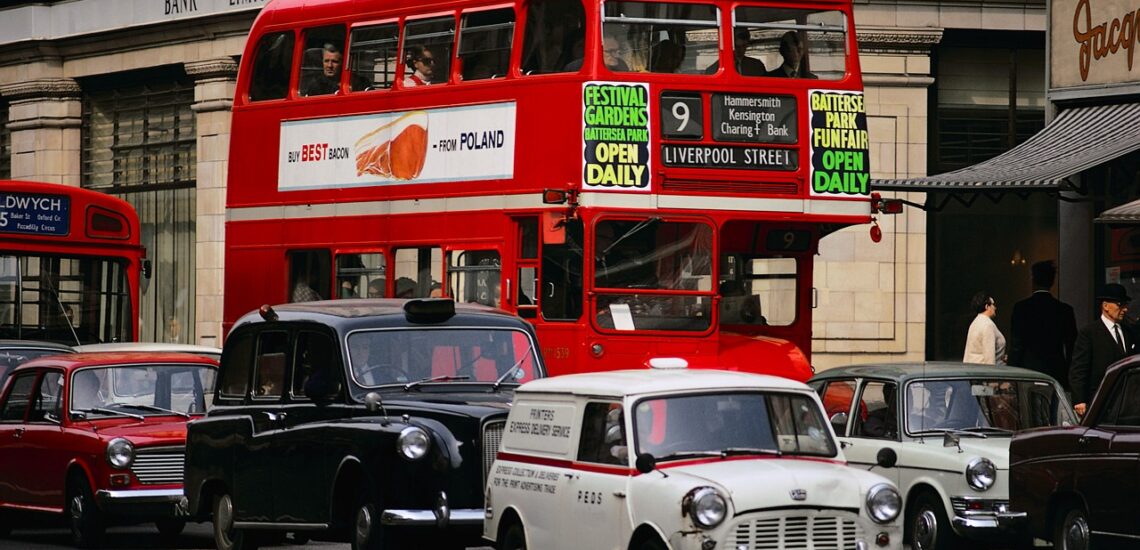
- 1872 — The British built Japan’s first railway, naturally following their own left-side convention — and the Japanese have driven on the left ever since.
Why did Britain choose the left? The most widely accepted theory traces it to maritime navigation rules, where ships pass each other on the starboard (right) side — meaning vessels effectively keep to the left. Britain’s global influence then spread left-hand traffic to India, Australia, East and South Africa, and across the Pacific.
How the Steering Wheel Found Its Place
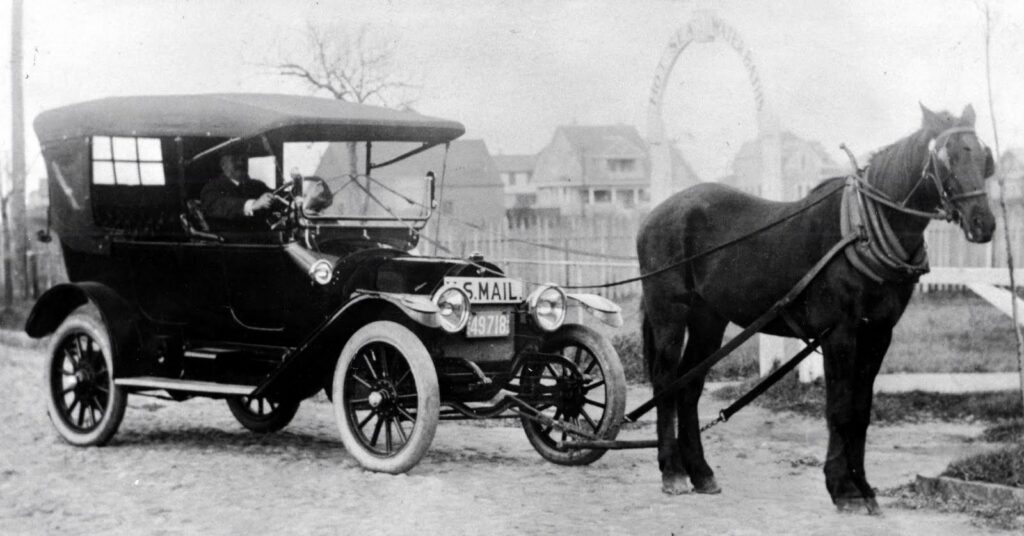
Early horseless carriages were steered with a floor-mounted lever called a “tiller” or “leash” — a physically demanding mechanism that led drivers to sit on the left side of the vehicle where they had more leverage. In 1893, the steering wheel replaced it on the French Panhard, built for the Paris–Amsterdam race.
Once the steering wheel arrived, manufacturers had to decide where to put it:
- Early placement: The wheel was initially positioned on the roadside edge of the car — right side for right-hand traffic, left side for left-hand traffic — making it easier for drivers to step out and judge clearance from horse-drawn carts.
- The shift: As car volumes increased, drivers needed better visibility of oncoming and overtaking traffic, so the steering wheel moved to the centre-of-road side.
- The standard is set: The iconic 1908 Ford Model T became the first mass-produced car with a left-hand drive layout, placing the driver on the traffic side — a configuration that quickly became the global norm for right-hand traffic countries.
Notable Exceptions and Quirky Traditions
Even after standards were established, plenty of exceptions persisted — and some still do today:
- Lancia in Italy: Until the 1960s, Lancia equipped all its models with right-hand drive for better visibility on narrow mountain roads — despite Italy being a right-hand traffic country. Some Italian trucks still follow this logic.
- US and Canadian postal vehicles: Mail delivery vehicles retain right-hand drive so postal workers can reach curbside mailboxes without leaving the car.
- Sweden’s dramatic switch (1967): Sweden drove on the left with European-spec (left-hand drive) cars — a dangerous combination that caused constant problems at borders with Norway and Finland. A 1955 referendum saw 83% of Swedes vote against switching, but in 1967, parliament overruled public opinion. At 4:50 AM on Sunday, September 3, 1967, all Swedish traffic stopped, crossed to the right side, and resumed driving at 5:00 AM. Accidents dropped to near zero in the first month — though within two years, rates returned to normal.
- Mozambique’s reverse switch: The only modern example of a country switching from right-hand to left-hand traffic, Mozambique made the change to align with neighbouring Zimbabwe and South Africa.

Crossing Borders: Engineering Solutions for Conflicting Traffic
Where countries with opposing traffic conventions share a border, engineers must get creative. Solutions range from simple road markings and signage on low-traffic crossings to elaborate multi-level interchanges and dedicated switching bridges on major highways. Many of these structures have become celebrated feats of engineering in their own right.
Can You Drive a “Wrong-Side” Car in Another Country?
Under the Vienna Convention on Road Traffic (1968), a vehicle is legal in any signatory country as long as it meets the registration standards of its home country — regardless of which side the steering wheel is on. However, not all countries have signed the convention (Oman, for example, does not recognise it), and permanent registration of a non-standard vehicle is a different matter entirely:
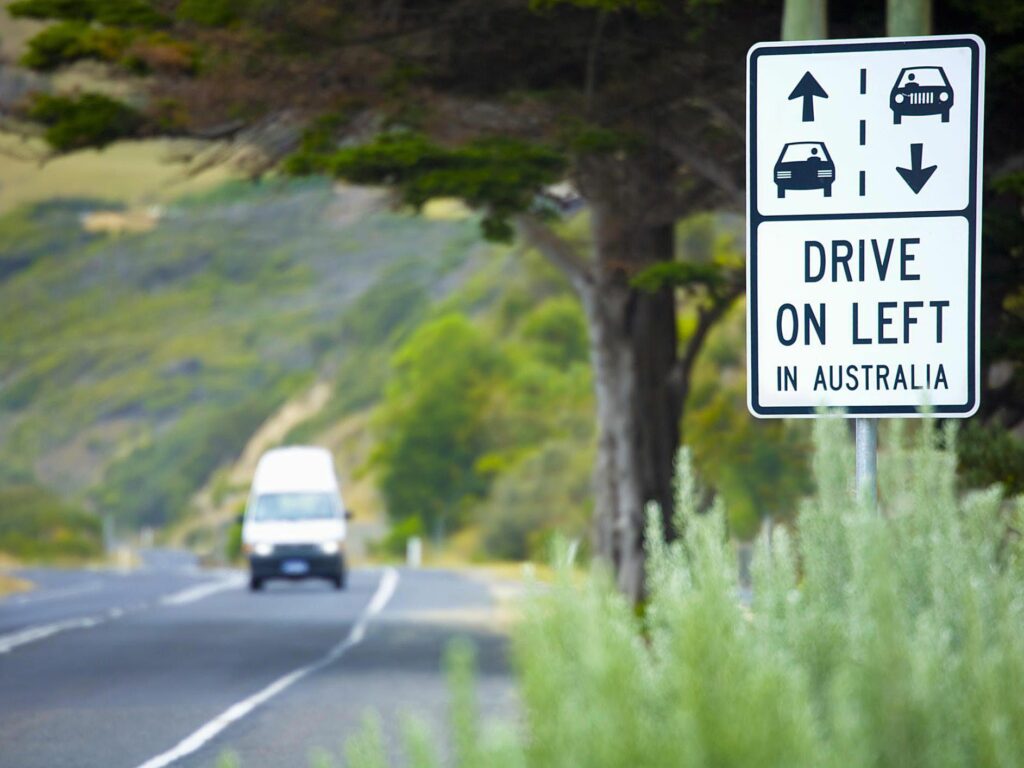
- Australia: Left-hand drive cars are banned for road use. Imports must be converted — unless the vehicle is a classic over 30 years old.
- New Zealand: A special permit is required for non-standard vehicles. Diplomats and Antarctic expedition teams (who typically use imported equipment) are exempt.
- Cambodia: Right-hand drive cars make up roughly 80% of the fleet, but the government banned them in 2001 and threatened confiscation for non-compliance. Steering wheel conversion costs the equivalent of one to two years’ average salary.
- Slovakia and Lithuania: Right-hand drive vehicles cannot be registered under EU regulations.
- Russia: Traffic authorities have periodically attempted to restrict right-hand drive imports (common from Japan), so far without lasting success.
The One Thing Every Country Agrees On: The Pedals
Despite all the variation in steering wheel placement and road-side conventions, there is one universal constant: the order of the foot pedals. In every country in the world, the layout follows the ABC rule — Accelerator, Brake, Clutch, from right to left. This means a Russian driver renting a car in left-hand-drive Cyprus will never confuse their feet, even if everything else feels unfamiliar.
As borders become increasingly blurred and vehicles more globally standardised, it’s possible that the world will eventually converge on a single steering wheel position — something a few forward-thinking concept cars have already hinted at by placing the wheel back in the centre.
This is a translation. You can read the original here: https://www.drive.ru/technic/4efb332e00f11713001e3even6.html

Published December 02, 2021 • 6m to read