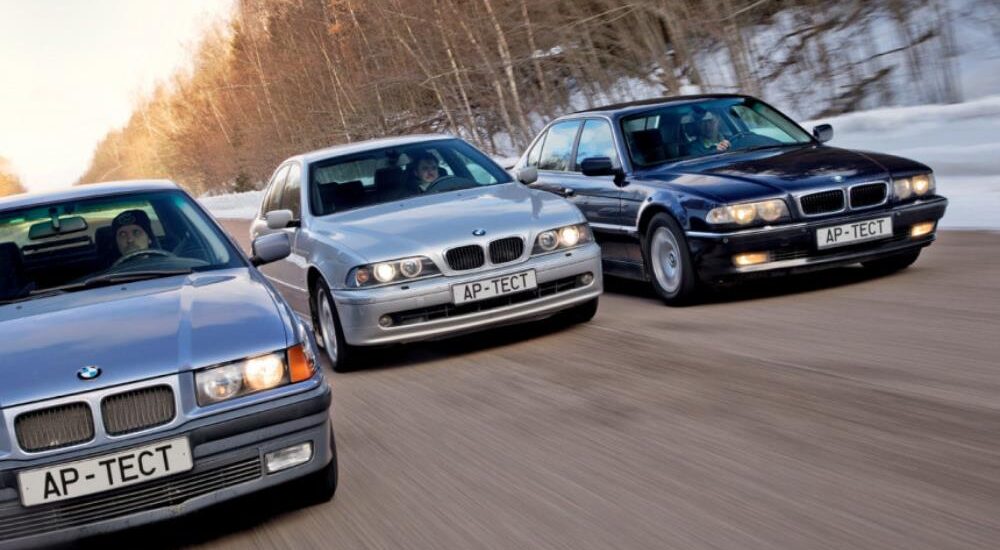

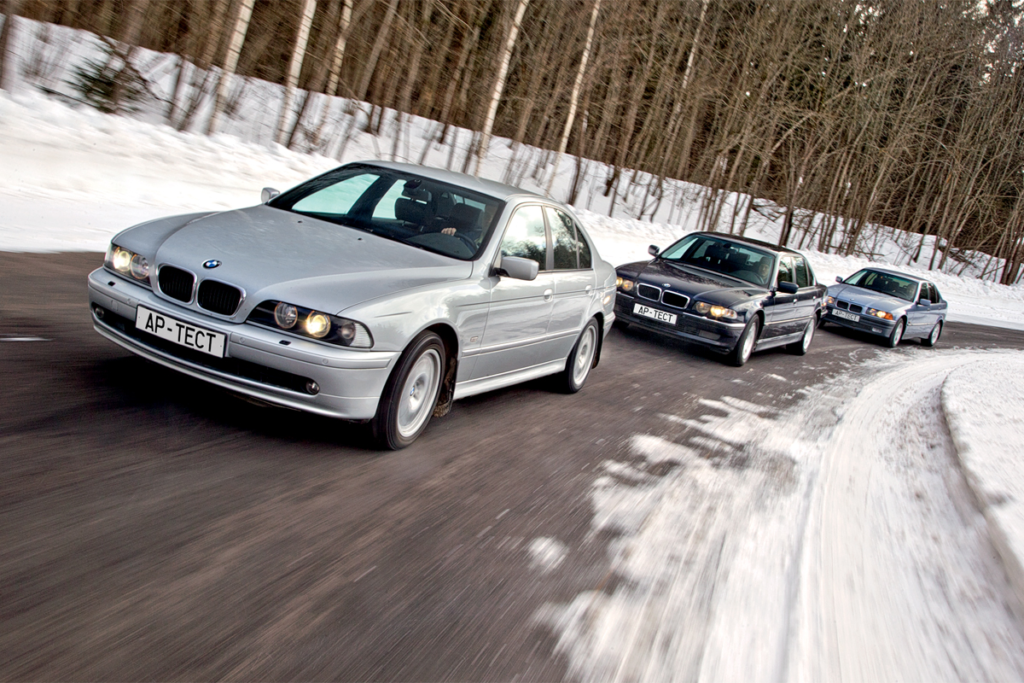
They might be 68 years old between them, but I am not one for the “retro test” label. These “Bumers” are still going strong, out on the road almost every day and delivering on their promise. Pleasure? Absolutely, they deliver that too. Three brothers, three legends, three moods — or three diagnoses of BMW?
Picture it: eight in the morning, minus ten on the thermometer, empty test-track roads, snow, ice and powdered asphalt. It is the sixth of March, the perfect petrolhead spring. In the E39 the contact goes astray somewhere in the speed sensor circuit and the stability-off lamp lights up by itself. Need more hints?
Not a Comparison Test — a Family Reunion
“Three-thirty”, “five-thirty”, “seven-forty” — music in numbers. Riding in that company is a holiday in itself, and a serious comparison test between them is hard to imagine: these sedans were never competitors but a gang from the same courtyard. They also overlapped for a very short time, from 1995 to 1998. To my mind that stretch was the zenith of the classical Bavarian triad, and twenty-something years on the E36, E39 and E38 — the “three”, the “five” and the “seven” — have become classmates in the “necropremium” segment. Which is reason enough to sort out where they stand.
There is another reason. My “thirty-nine” now shows 312,000 km on the odometer, and I would see a similar number on the calculator if I dared add up everything I have spent in the year and a half since buying it. Given that I have driven only 15,000 km of that myself, the average outlay per hundred does not quite fit reasonable norms — so occasionally I still wonder whether the money could have been disposed of more rationally. By buying the E36 or the E38, for instance. In short, you have understood correctly: I used my official position to close the winter season on legendary cars and check my choice one more time.
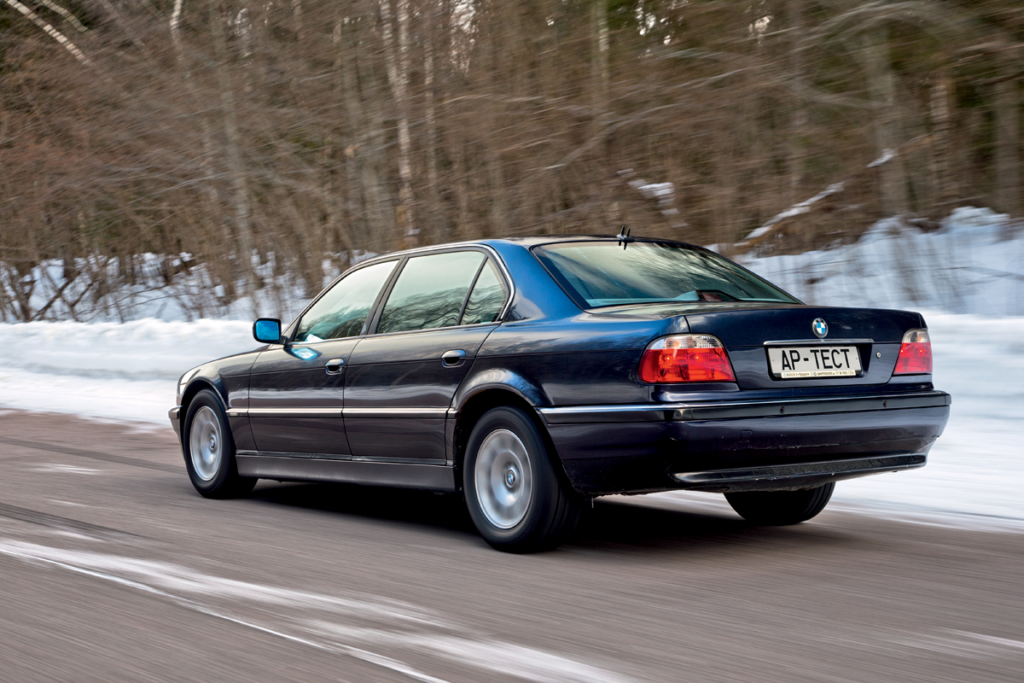
BMW 740iL (1999)
Time is the best critic. Stand the E38 next to the “sevens” of every later generation and say which of them is the true aristocrat. This design is eternal. The E65 and even F01 cars already struggle to hide their age, while the E38, like Dorian Gray, only improves. It is sad that BMW has not managed a more elegant large sedan since. Chris Bangle usually takes the blame — the E38 was one of the last projects finished before the American chief designer arrived — but the direct author of that masterful silhouette, the Austrian Boyke Boyer, stayed on as BMW’s chief exterior designer for years and only retired in the mid-2000s.
It is not only about people. At the end of the twentieth century the whole company shifted its priorities towards engines that needed more air and more space. The bonnet line rose, the roof height and the tail followed, and the result is today’s G11 flagship — which even in base 730i four-cylinder form accelerates faster than the dazzling seven-forty of the nineties.
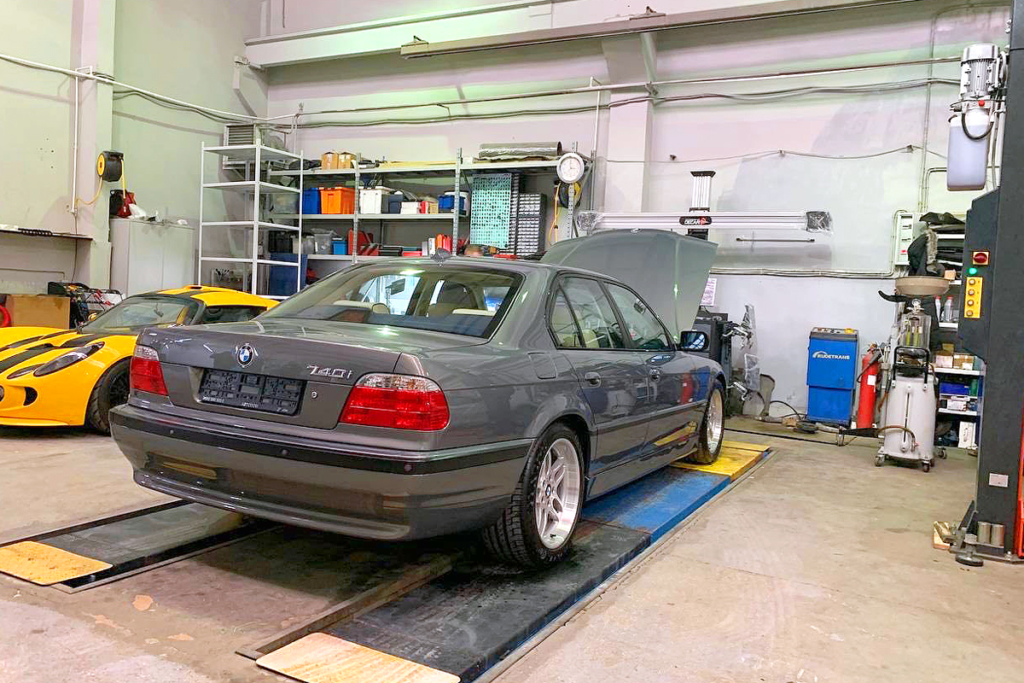
But the E38 has a low silhouette — lower than a modern 3 Series — and exemplary proportions. And you have not even seen the M Sport BMW 740i with 180,000 km that my friend Georgiy restored to collector condition. I had hoped that car would take part in this test, but nearly every Russian “seven” in near-perfect shape has one thing in common: it does not leave the garage in winter, or in summer if the weather turns. So welcome a different seven-forty — slightly dulled lustre, 215,000 km, but in long-wheelbase form and without signs of “do not touch with hands”.
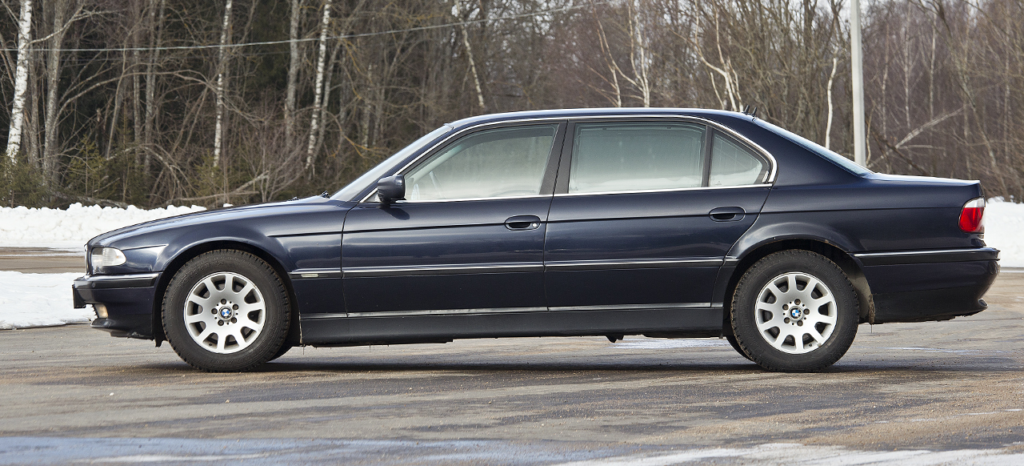
Stretched BMW 740iL is 100 mm longer than the base sedan. The chances of finding a functional “seven” are slightly higher among those “il” that worked in corporate parks and were well serviced.
Inside: Double-Breasted and Timeless
Of the E38’s interior the blogger Doug DeMuro once said: “Behind the wheel of this car, you feel like the director of a company who is going to the office to fire a subordinate for stealing paper clips.” I would add that you are wearing a broad-shouldered double-breasted jacket, baggy trousers and a paisley tie. Some would insist the jacket has to be burgundy, but for me the “new Russian” image and the “seven” are not synonyms — that was the foam of the day, almost washed away by now. The nineties sense of oversize, though, is still alive.
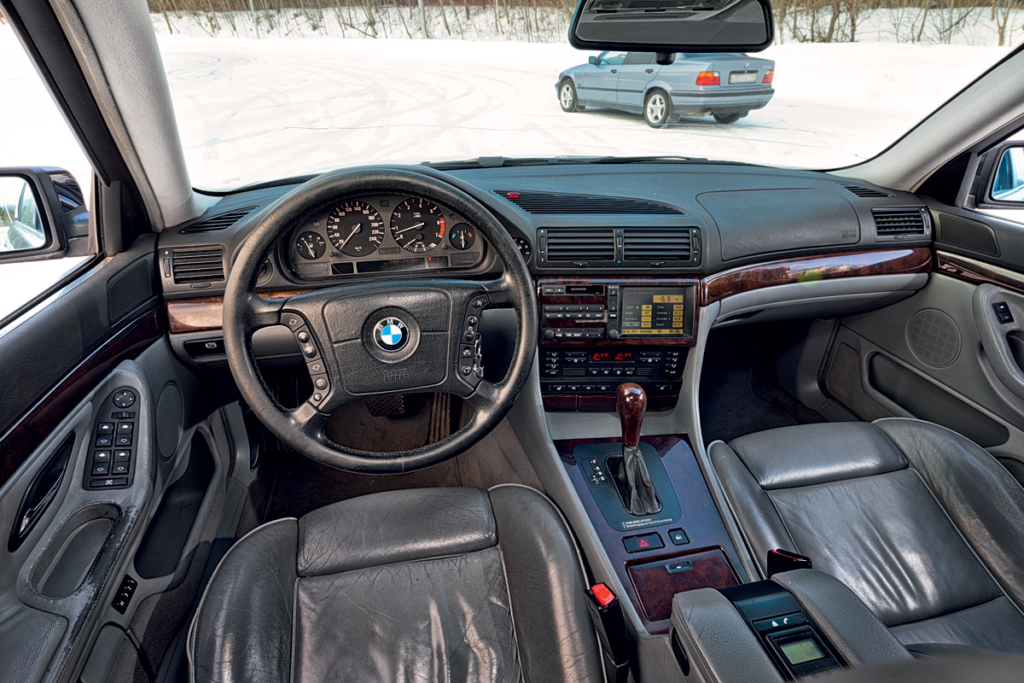
A quartet of dials, orange backlighting, a sprawling console — timeless classics. Just like the sense of quality in the “thousand little things” such as velvet inside the door pockets, but the flagship status against the “five” is expressed solely in size.
The E38 cabin has the same impeccable, timeless details as my E39. The armrest is wider, the vents are larger, the handbrake sits elsewhere, and there are a few more buttons on the centre console — here you adjust not only temperature but airflow speed separately for the left and right zones, and richer versions even had massage buttons. Visible attributes of luxury, though, are almost absent.
The similarity is explained by the “seven” and the “five” sharing a platform and launching a year apart. It also tells you that BMW’s engineers cared about the driver’s experience rather than flashy displays of opulence. Although on the subject of the driver’s experience, I would put it like this: the E38 is the E39 on holiday.
On the Road: Serene, With Genes Showing
The E38’s sporting streak probably set it apart from its contemporaries; today it is simply a serene sedan with smooth responses and a fairly soft suspension. Thank the fat 235/60 R16 winter tyres for the comfort — but the roll and the slight sway are in the genes. Stability is still excellent, though the steering is unexpectedly long at almost four turns lock to lock, and in lane changes the “seven” feels a little sluggish.
Which Engine, and What It Costs
I also came to realise that the 740iL is the minimum viable living space for an E38, which may not be the happiest news for vintage hunters. This generation ran from 1994 to 2001 with ten engine variations, including the first diesel “sevens”, but the mainstream choice was the naturally aspirated petrol V8. This 1999 car came after the 1998 facelift, which brought narrowed headlights, reconfigured tail lights, DSC, side airbags as standard — and most importantly a new 4.4 in place of the four-litre eight. Power barely moved (286 against 282 hp), but aluminium-silicon liners and the famous VANOS mechanism on the intake arrived with it.
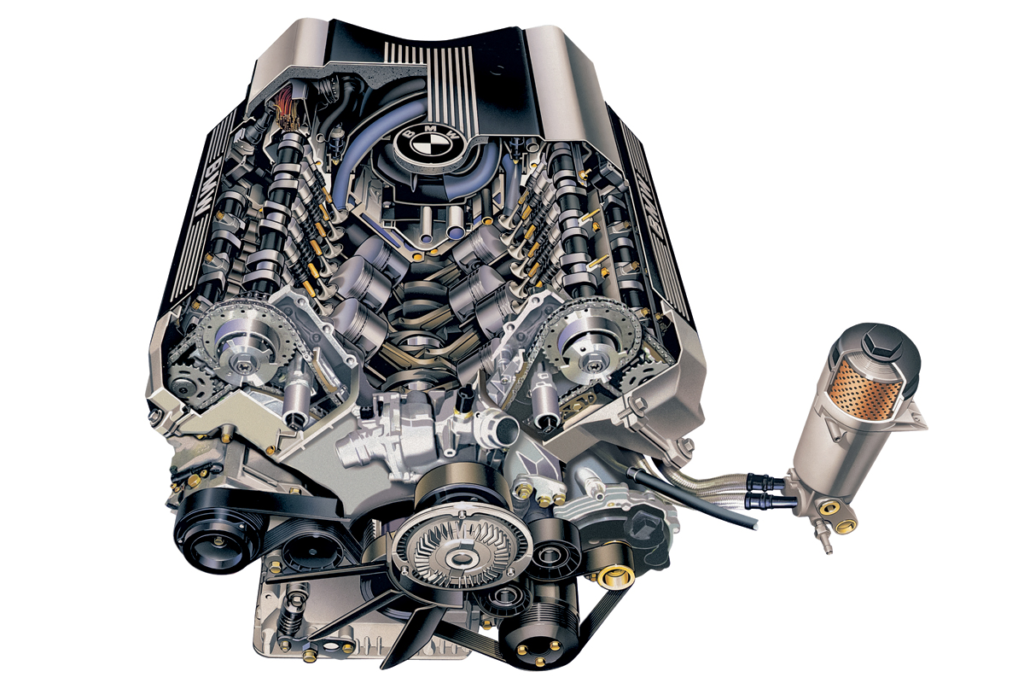
In 1992, BMW returned to V8 engines after a quarter of a century and encountered maximum bumps. Alusil, mass replacements of M60 engines under warranty, and the rushed launch in 1995 of the improved but no less controversial Nikasil V8 M62, which in 1998 also received the VANOS mechanism in M62TUB44 versions (pictured).
In good health this engine promises a nearly two-tonne “seven” real energy, and a 0-100 time better than my E39 530i at 6.9 seconds. In reality both the rate of acceleration and the sharpness of the throttle feel more subdued than that. The thrust builds smoothly with no sudden pick-up, the sound is noble but restrained, and the animal instincts stay asleep. Boniface on vacation.
All of which applies if the engine is healthy. If it is not, it is easier to find a new Boniface from Japan for 150,000-200,000 rubles — an overhaul costs almost twice that.
The Automatic Is the Weak Point
I am sceptical about old cars with automatics in general: an ancient transmission exposes the age of the machinery more than anything else, and more often gets in the way of the conversation with an old-school engine than it adds comfort. In this “seven” the logic and speed of the shifts seem fine, but the jerks have started, and there is no telling how much pleasure the next shift will cost you. A manual would be simpler, livelier and cheaper — particularly since the E38 is the last “seven” offered with one. Although where would you find it now?
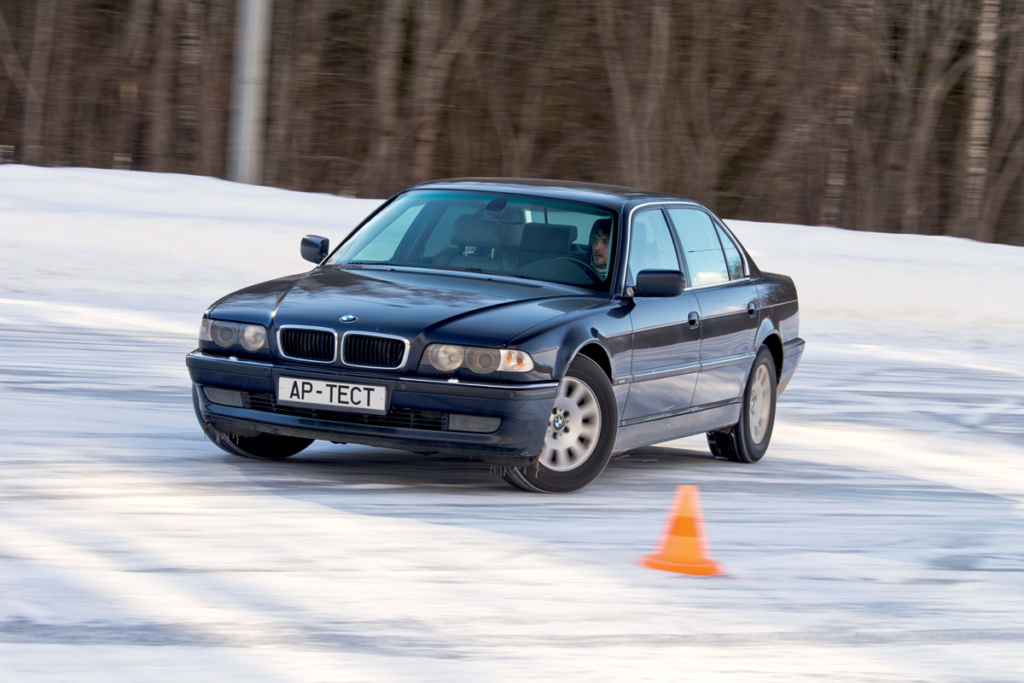
Then You Reach a Mountain Road
My first impression of the seven-forty was not overwhelming — and then I drove it on a serpentine, and after that on ice. Listen: it is a turn fighter. A bomber-interceptor. Despite 1964 kg with half a tank, slightly under 51% of the mass sits on the front axle. On a mountain road the E38 puts its nose into the corner without effort, draws the arc and pulls out of it. When the rear does slide, though, you need plenty of steering and plenty of anticipation, because the size and mass are always there.
With that combination of comfort and handling the E38 suits the role of a Sunday family youngtimer perfectly. It served exactly that purpose with its owner for nearly a year — and shortly after this test it sold for 420,000 rubles. Somebody got a very decent example.
I do not regret that it was not me, but I take my hat off to the “seven” as a work of art: the E38 is the only one of this triad with a real claim to future collector value. Getting there means investing another three or four times the price of the car, of course, and even then we are talking about a budget around two million rubles — in which an Octavia or a Camry look like far safer investments, provided residual value is all you want from a car.
BMW 320i (1995)
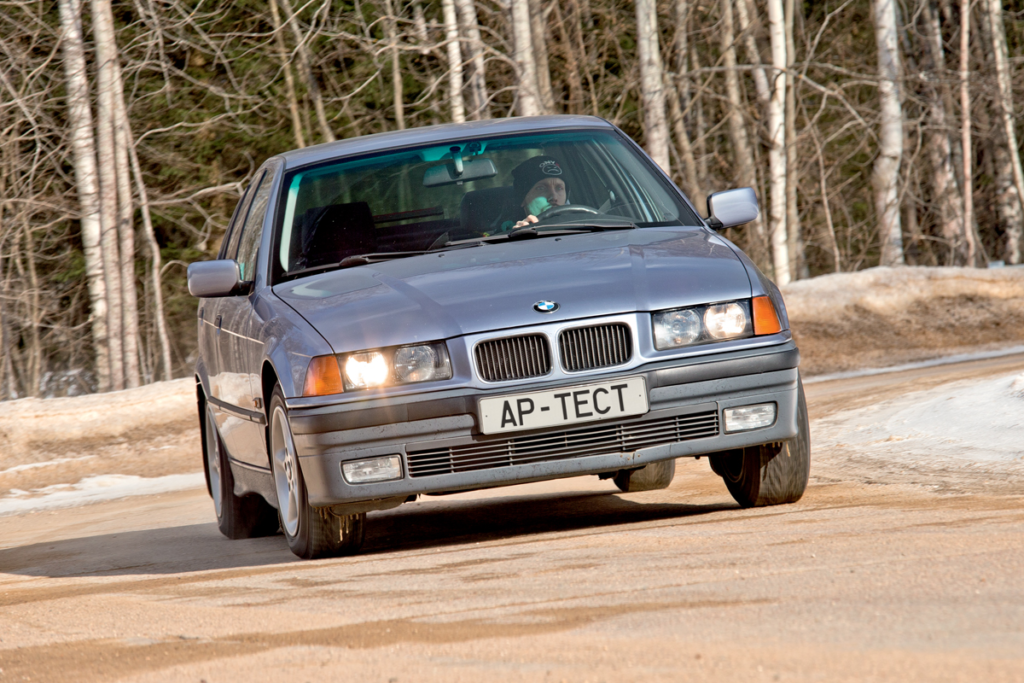
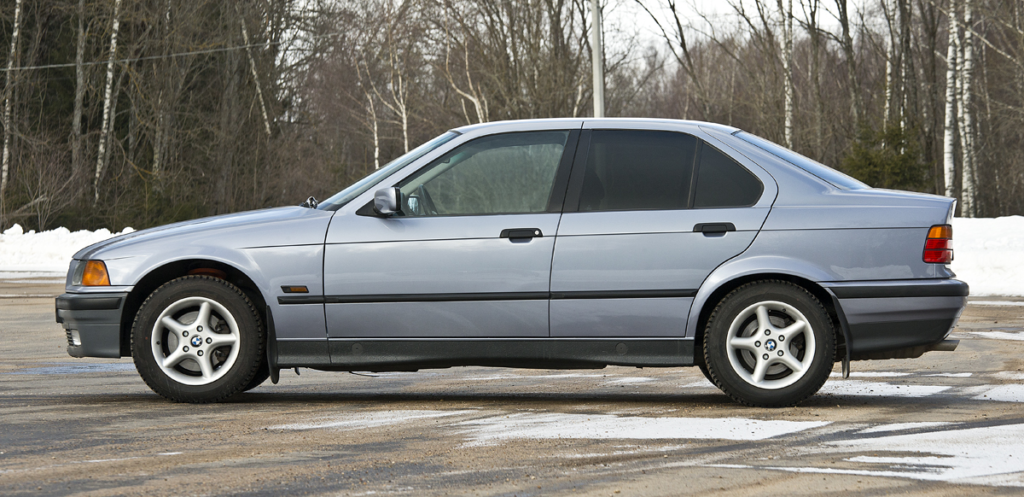
A living BMW E36 for three hundred thousand rubles is a yeti. A legend. Many believe, nobody has seen one. So feast your eyes on an actual miracle: this light-purple sedan, built in 1995, was bought three years ago for just 225,000 rubles — plus tickets to Chelyabinsk and a car carrier to Moscow. So for the half a million my E39 cost, could I have had a spare “thirty-sixth” for parts as well?
Arithmetically, yes. In practice, solving that problem would take an eternity. There will be no more phenomena like this E36, because the automotive journalists have already bought them all.
Why Everyone Suddenly Wants One
The thirty-sixth’s second youth flared up three years ago. It started, naturally, with Melnikov, and I now count at least five adepts among my colleagues — although Vladimir himself recently sold his BMW 325i, saying he was tired of it and had outgrown it. These cars are passed from hand to hand, cherished and generously fertilised. The prettiest story belongs to the “three” built by the racer Sergei Udotov, whom you may know from several of our circuit tests — he can tell it first-hand below. Personally, though, I am more interested in this budget three-twenty from the garage of Nikita Sitnikov, Avtorevyu’s former advertising director. A whole car, for the price of repairing the E39.
You do not look such a gift horse in the mouth. Or rather, you do not look at the interior colour or even the engine capacity. If the sills and the PTS are in place, take it. What for?
The Alien of the Nineties Line-Up
The “threes” of this series stand apart among nineties BMWs. The E30/E32/E34 group was a mafia in Italian suits. The E38/E39/E46 population were careerists. The E36 is simply an alien — from its unique platform down to details like doors that wrap onto the roof, which BMW never used again. Or the Saab-like vents around the dashboard.
In base specification the steering wheel adjusts for neither reach nor height, and it is turned noticeably to the left — yet you still sit comfortably. The seat is low and holds you tightly, the gear lever moves crisply. But the mood is set by the first response to the throttle. What a personality we have lost.
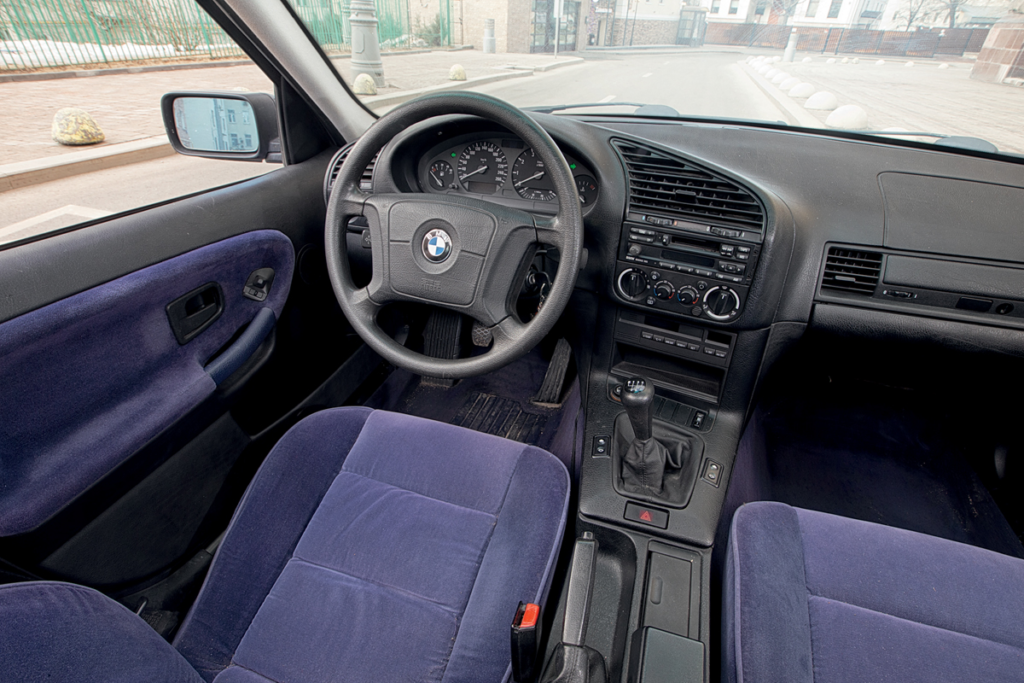
The “golden age” of BMW also includes crooked steering wheels, strange color schemes, and ergonomic quirks. Automatic air conditioning — with knobs, climate control — with buttons.
Six Cylinders, Two Litres, One Voice
Six cylinders for two litres. Engines in this configuration were once built not only by BMW but by Alfa Romeo, Honda, Ford, Mazda, Renault and even Nissan. Only at BMW were the cylinders in a row and did they sound like an orchestra. The single-injector aluminium M52B20 makes 150 hp, and the sedan in standard trim weighed 1345 kg on the scales — a power-to-weight ratio on the level of a Vesta Sport. But what a sensitive throttle, what a bright pick-up after 3500 rpm, and what a voice. Unlike the “seven”, the acceleration here feels brighter than it actually is.
50.3% on the Rear Axle
Non-standard Koni Street dampers made this “three” stiff without changing its DNA: 50.3% of the mass on the rear wheels. The E36 appears not to know what understeer is, and on a winter road it goes sideways both on a lifted throttle and on a fed one. The steering is long at 3.5 turns lock to lock, yet there is no sense of winding yourself around the wheel as you shift the car from slide to slide. On the contrary, you want to steer more and more, because there is natural weight under your fingers that always tells you what the front wheels are doing. It seems I am in the cult now too.
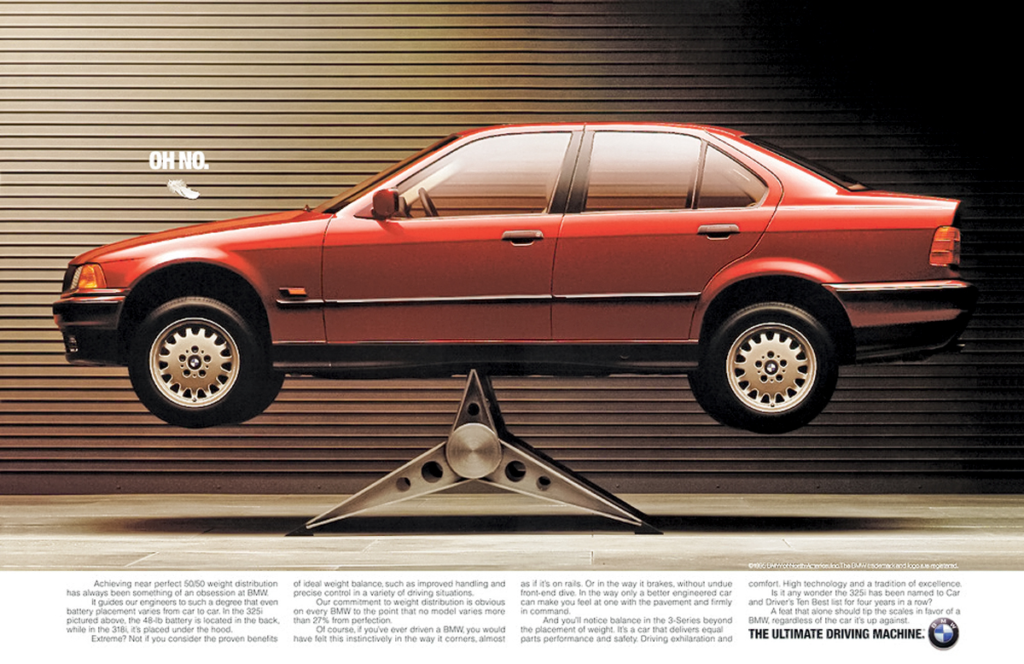
One of BMW’s many famous ads about the perfect balance of the E36. For this, the BMW 318i had the battery under the hood, and on the BMW 320i and 325i — in the trunk.
No wonder the three-link concept from the nineties E36 became the basis for the rear suspension of the new Mini and is still in use today, long after the 3 Series itself moved on. A phenomenal chassis. The world figure-skating champion.
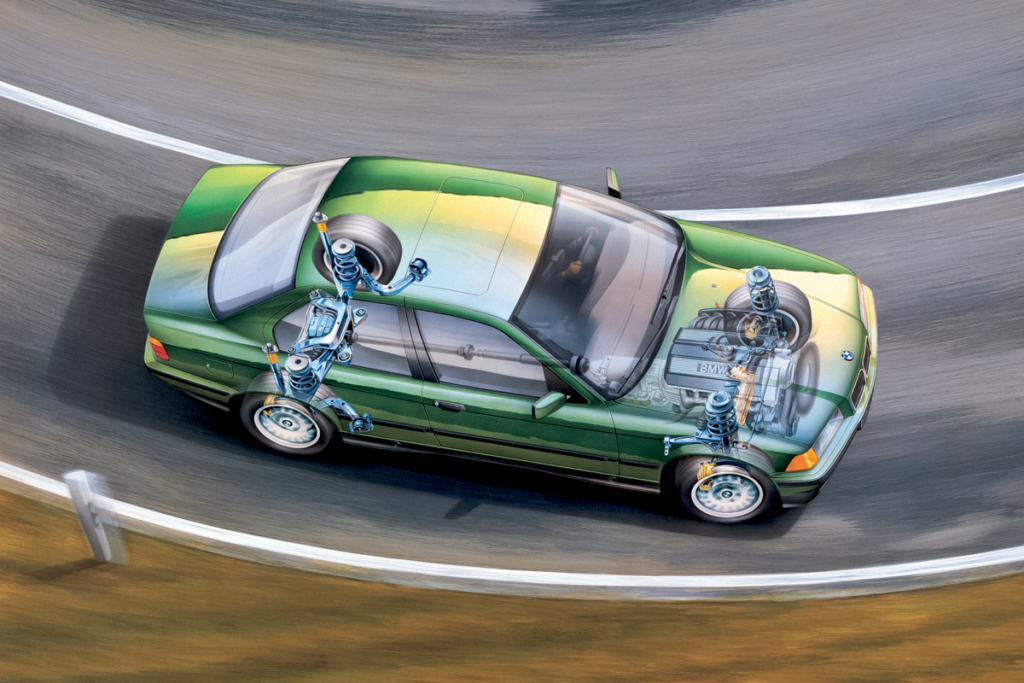
The E36 “three,” along with the low-volume Z1 roadster, pioneered the new rear three-link suspension with a longitudinal trailing arm. The design was inherited by the next third series (project E46), as well as the new Mini, Rover 75, the first-generation X3 crossover (E83), and the BMW Z4 of the first two generations (E85 and E89).
What It Is Not
Or rather the champion’s training rig. Driving it daily is noisy, cramped, miserable and unsafe, and to be a genuine sports projectile the three-twenty lacks power, a limited-slip differential and a roll cage. But ask Sergei Udotov about the road to perfection — and the true greatness of the three-twenty today is that for the price of a Lada it is a car with a capital “B”.
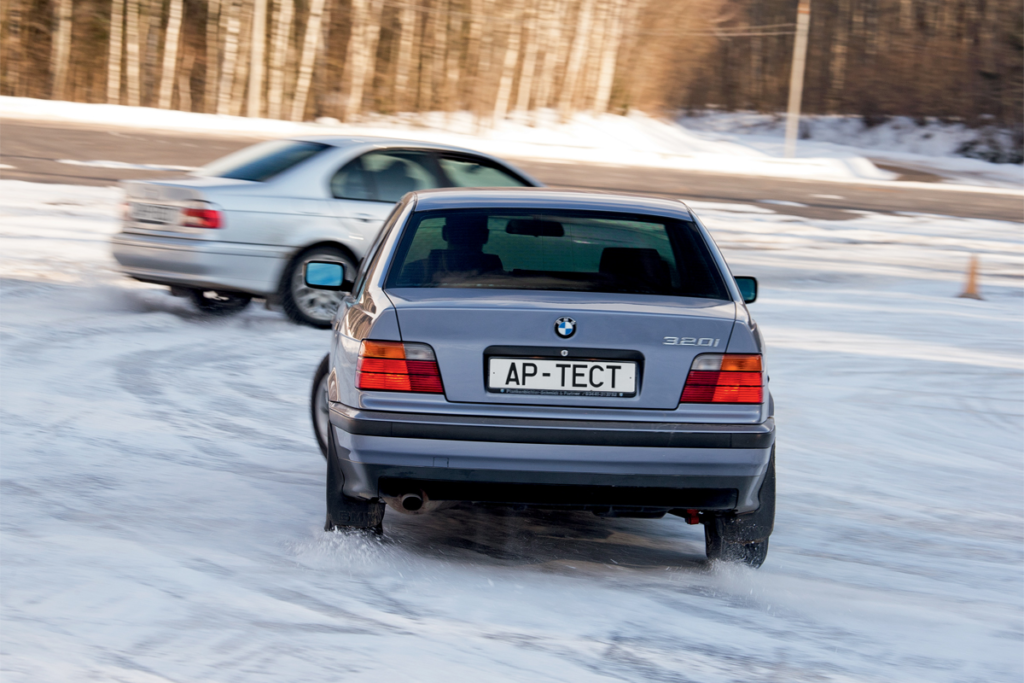
In 1992, BMW discontinued all-wheel drive on the “threes” and “fives,” so all E36, E38, and E39 models were exclusively rear-wheel drive. Versions with “xDrive” returned to the third series only after the release of the X5 in 2000.
BMW 530i (2001)
Let us not deceive ourselves: I expected my E39 to be the golden mean, the perfect blend of the “three’s” excitement and the “seven’s” comfort. In reality the five-thirty turns out to be made of two unequal halves.
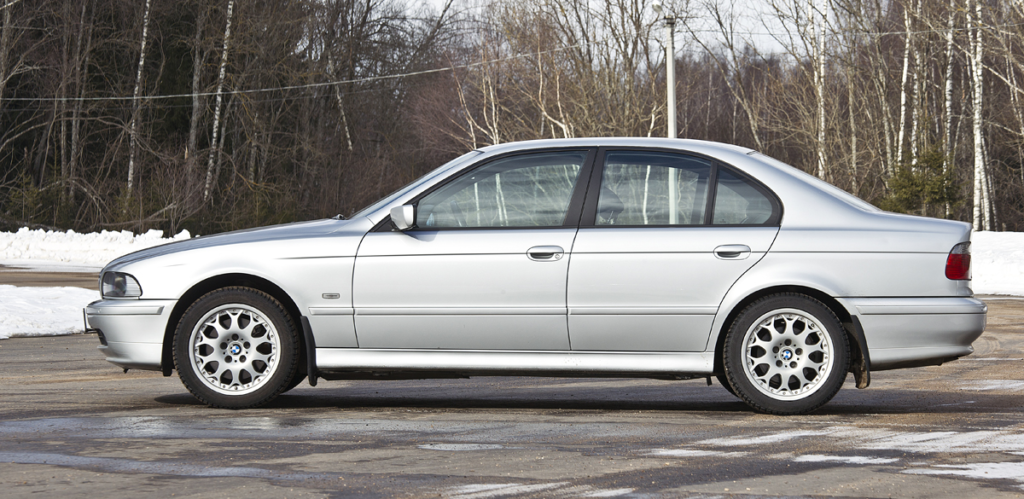
The Engine Is Still a Hurricane
The first half is the M54B30. At twenty years old it is still a hurricane. Mathematically, 231 hp on 1631 kg is roughly equivalent to today’s BMW 530i, but the surge of torque after 4000 rpm is spectacular, and on that count the five-thirty is more thrilling than plenty of modern cars.
I am cheating slightly here: an acquaintance reprogrammed the throttle map, removing the damping BMW built in for the sake of emissions and comfort. It does not change the engine’s external speed characteristic, it just sharpens the first part of the pedal travel. More fun in town, easier throttle blips — and the surprise is that fuel consumption fell to 11.5 l/100 km. Even so, the five-thirty is less sharp than the E36.
I am pleased that over a year and a half and 15,000 km the engine has produced no fundamental problems — beyond a thirst for a litre of oil every 3000 km, and a hydraulic lock. Wait, have I not told that story? It deserves its own section.
The Body Lives by Other Laws
The engine is the soul of the BMW 530i, but the body lives by its own rules. The E39’s ride and handling are much closer to the “seven” than to the “three”. Comfort was never in doubt: soft, quiet, cosy. The roll was no surprise either. What did surprise me is that the E39 is the most nose-heavy BMW of this company at 51.1% on the front axle — and that is with my originally automatic car now running a lighter manual gearbox, and a limited-slip differential added at the back.
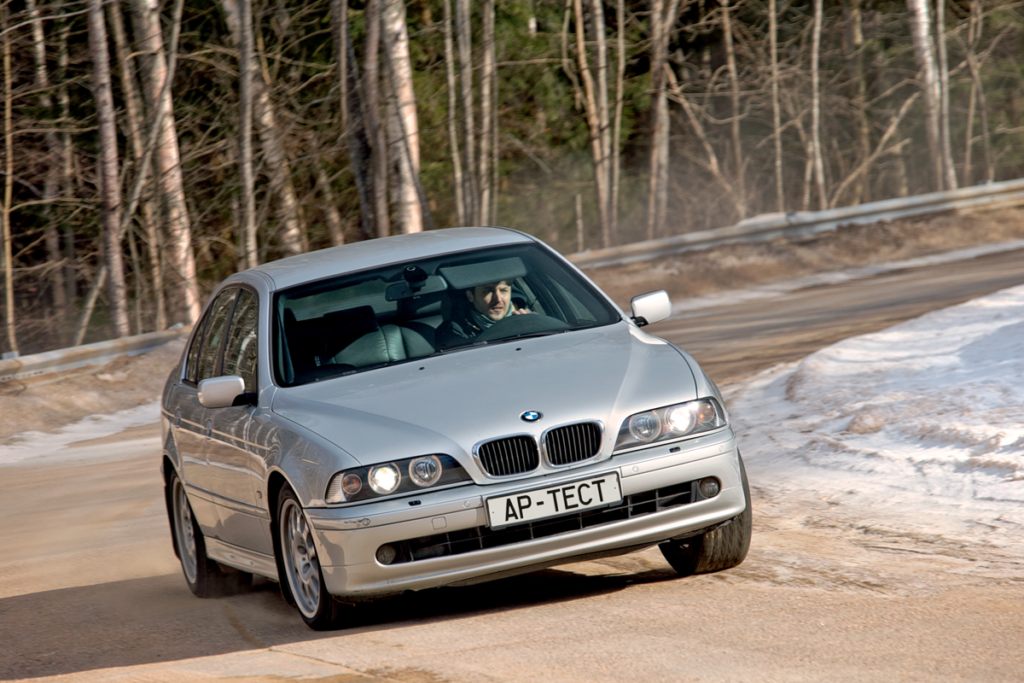
One per cent is 16 kg. It sounds negligible, but on a serpentine the front end goes first, and what the E36 does naturally the E39 needs to be asked for. Before a slippery corner you have to place the car with the throttle or a downshift; it will not turn in willingly on its own. This is where the strong engine and the limited-slip differential earn their place, and once the angle is set the five-thirty holds it more reliably and more quickly than the three-twenty.
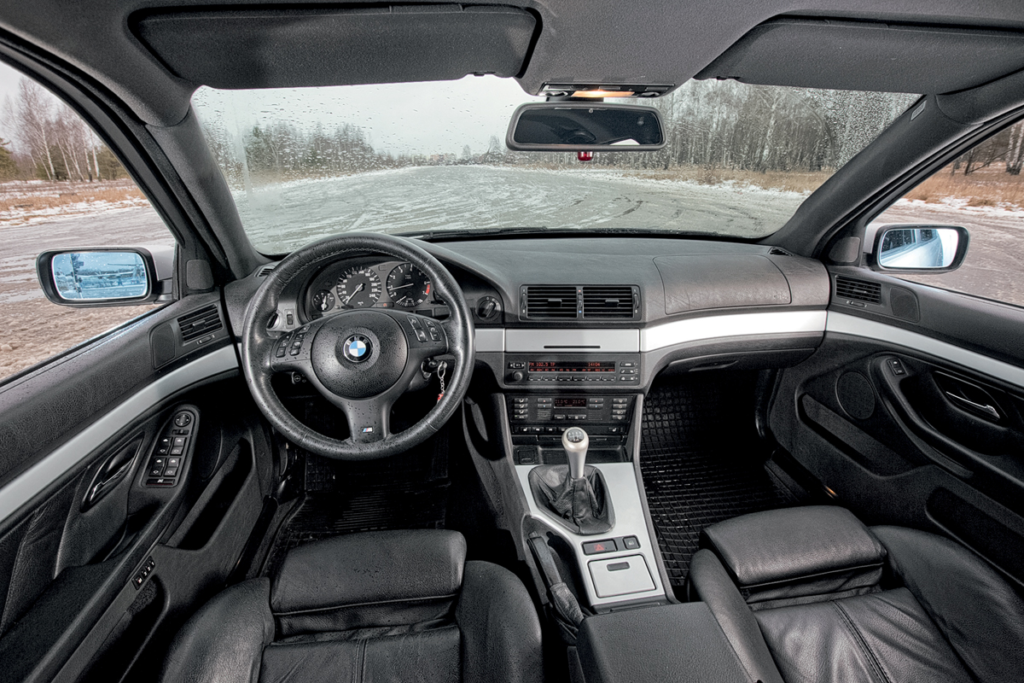
Was it better before? Yes, there’s soft plastic even under the handbrake in the “five,” and front headrests with electric drive, but the manual gearbox has a maximum of five gears, the side airbags are still in the form of “sausages,” and navigation maps for expensive versions took up to eight compact discs.
Is the E39 Any Good as a Winter Car?
I get asked this often. In short: yes, on three conditions.
- A manual gearbox, to help with traction both when provoking a slide and when controlling it
- Good tyres. At the start of this winter I swapped worn Pirellis for new studded Continental IceContact 2s, which grip well on snow and ice, behave on asphalt and do not shed studs, although I am not gentle with them
- A limited-slip differential. On the E39 that means aftermarket — but without it, in my view, the car is both boring and unsafe
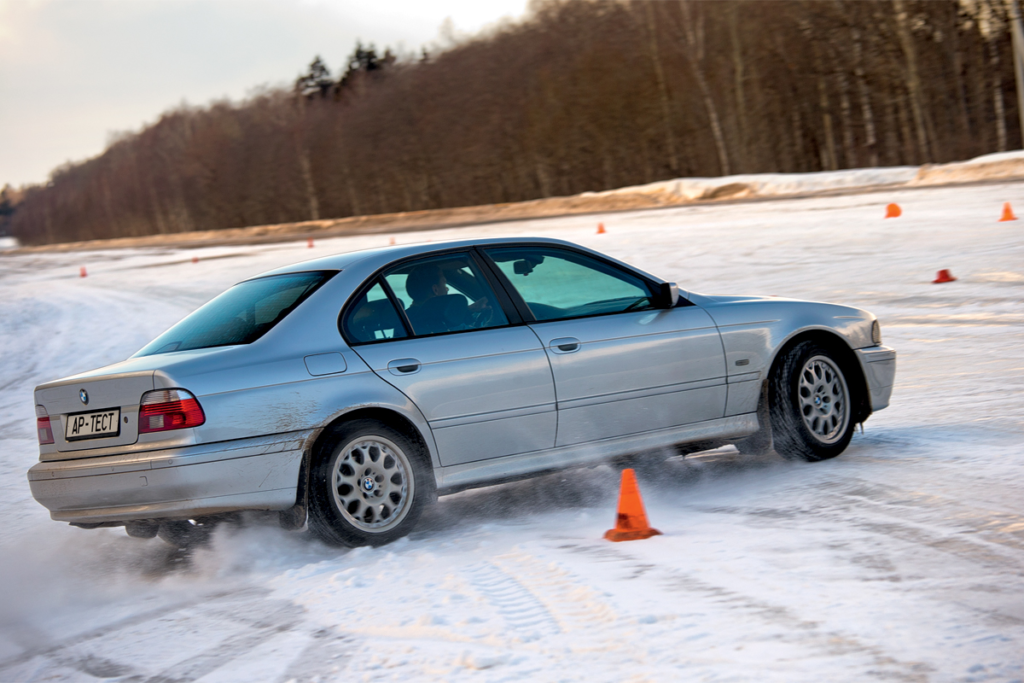
Unlike the preceding E34 “five,” standard “thirty-nines” did not come with a factory differential lock (just like the six-speed manual, which was only for the “M”), but it’s precisely the self-locking differential that makes the BMW 530i a vivid winter car — both in terms of driving experience and off-road capability.
And in Summer?
Last spring I had an answer ready: find a new suspension that would let the E39 ride tighter and more composed. The BMW M Tech II kit that came on M-package “fives”, say, or something from the tuning catalogues. The pandemic prevented that plan, and now I am less sure of the original idea. A new factory suspension costs about as much as an E36, and is unlikely to turn the E39 into a comfortable “three”. So — maybe a summer car instead of a summer suspension? Or tuning after all? Okay, Bimmer, it seems I need another test.
Hydraulic Lock: A Cautionary Tale
The “five” with the naturally aspirated M54B30 mixes joy and pain about the way petrol mixes with air. Its design is a splendid illustration of how German engineering genius helps you find trouble out of nowhere and then extracts you from it gracefully. Every newcomer to the E39 movement knows the two main buzzwords — “rust” and “engine rebuild”. There is a third: “drainage”. That is life. I learned about it last summer.
If the drains are blocked, rainwater from the windscreen does not run into the wheel arch but collects in the tray to the left in front of the engine bulkhead — where, as luck would have it, the brake booster lives. On a twenty-year-old car the booster does not guarantee a seal, so once the bath is half full the vacuum starts drawing water inside.
The sloshing under the brake pedal is easy to miss when you set off, and after that it depends on the owner’s luck. If luck is out, you accelerate nicely, hit the brakes — and the BMW avenges Stalingrad by directing a stream of water straight into the intake manifold. Hydraulic lock guaranteed, on a dry road.
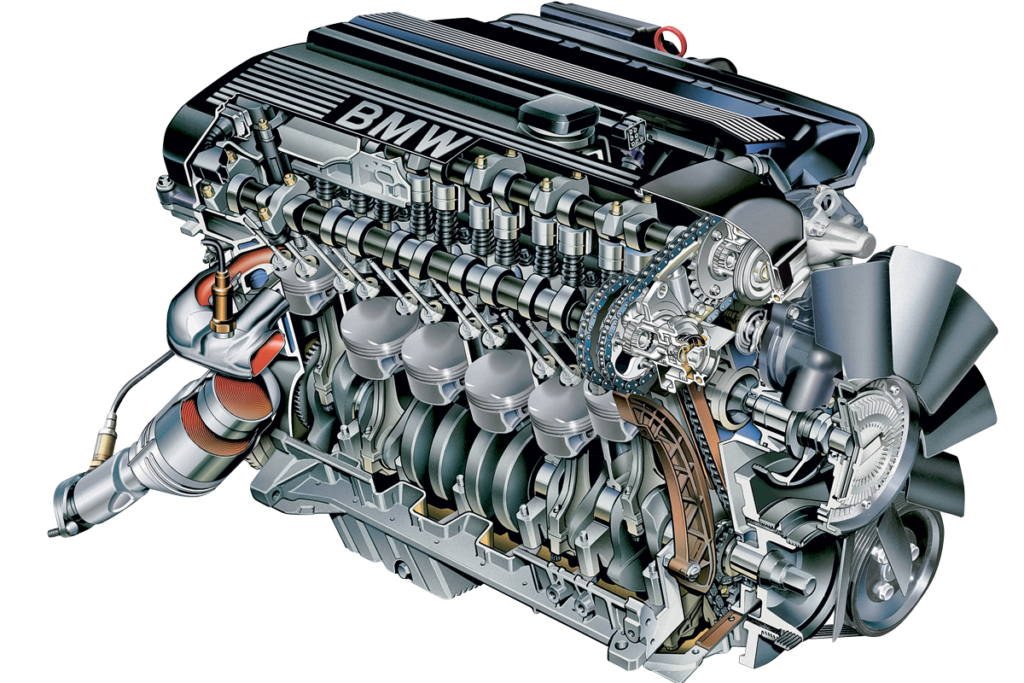
And if the karma is fine then, like me, you simply slow for a speed bump near the shop and the engine stalls at idle.
The diagnosis is the same either way — water in the cylinders — but the consequences differ. I got away with a flooded throttle body and washed compression. The M54’s connecting rod and piston assembly survived the hydraulic lock with no damage to geometry and no emulsion in the oil. The “five” started once the cylinders were dried and flies to this day. The repair, a new booster, bleeding the system and a set of brake discs as a bonus came to 30,000 rubles. The experience is priceless, and I am passing it on: check your drains.
Georgy Balabadzhyan: Buying and Restoring an E38
 Georgy Balabadzhyan
It is remarkable, but E38 “sevens” on the Russian secondary market cost as much as they do in Germany and considerably more than in the USA. That does not make one easier to find here. Fans of the “seven” divide into those hunting for a copy of the BMW from the film Bimmer — and everybody else. There is no shortage of bold black-on-black sedans for every taste and budget. I was after something else, and monitored the market fruitlessly for years.
Incidentally, it is surprising that with so many E38s for sale they are almost invisible on the roads — mostly they come out at weekends, or sit in garages.
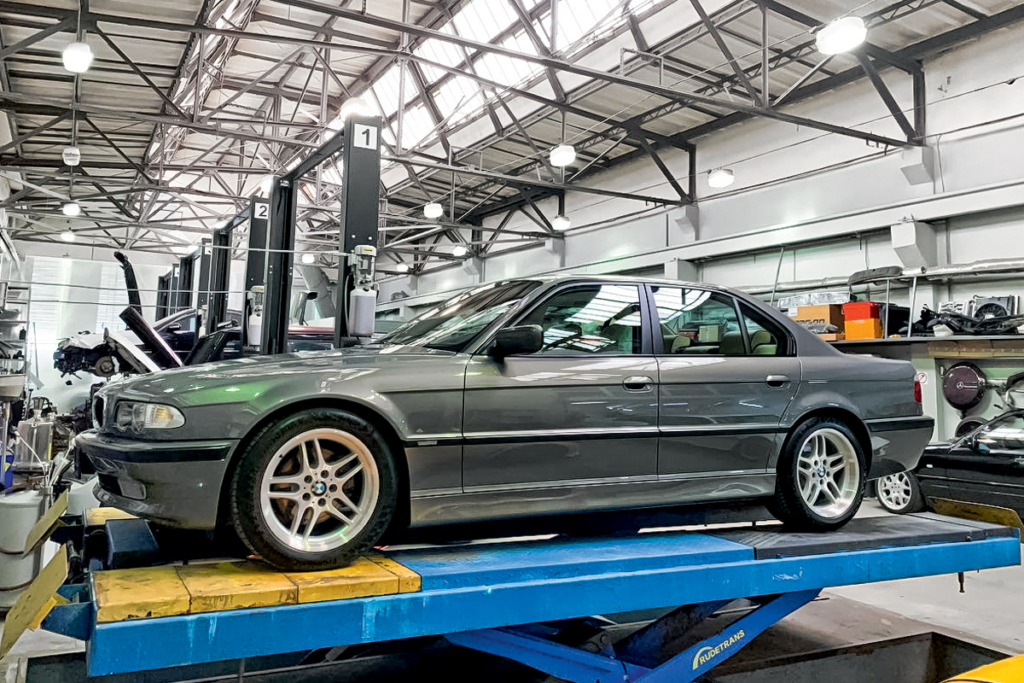
In the end I bought my short-wheelbase American BMW 740i, built in 2000, in Armenia with 175,000 km. A rare colour, Stratus Metallic, with a light interior — only about five hundred facelifted seven-forties were made in it. An equally rare M Sport package brings Sachs dampers, the Shadow Line kit, folding seats and much more. The body is in perfect condition, and so are the engine and automatic transmission, thanks to years in California. The price was only $7500. But that is just the deposit on the youngtimer mortgage.
The Californian heat had dried out the interior along with the seals, the mouldings had degraded and the headlights had gone cloudy. I have been working on this car for exactly a year and have already spent about 1.5 million rubles bringing it to the condition I want — and that is almost without bodywork. The money went on new lights, small decorative parts, interior trim, wheel restoration, missing fasteners and other little things. Many parts, by the way, are already out of production.
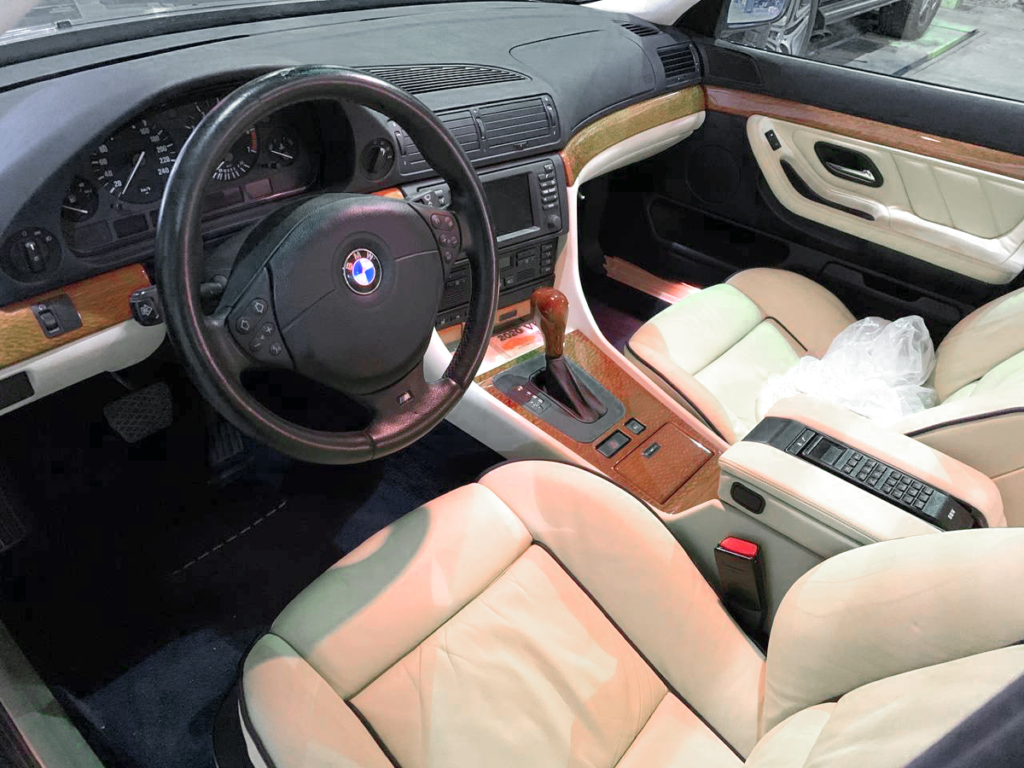
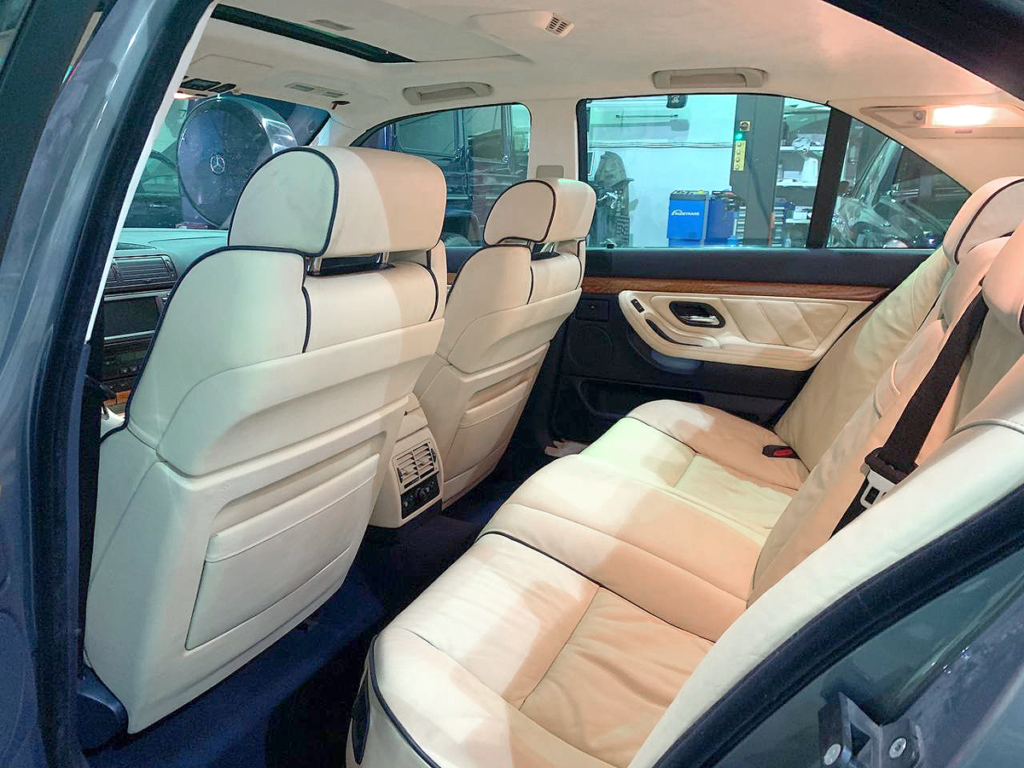
It gets worse from here. This is an expensive, high-class car and the parts prices match. It is also a very complex one, full of electronics and sophisticated solutions, so restoring each function is a story in itself.
Investment potential? A well-maintained, well-preserved or restored example will appreciate over time — possibly by an order of magnitude. But the most valuable of all will be the BMW Individual versions in rare colour combinations. Those are what is worth investing time and resources in. Definitely not the black Bimmers.
I do not expect great financial results; I simply enjoy it. And that, incidentally, is why I do not drive it in winter. I spent a whole year restoring the “seven” to its beauty, and snowdrifts, slush and dirty feet on a light interior would ruin the magic. A “seven” in the mud is violence against beauty.
Sergei Udotov: Building the M316i BMW Never Made
 Sergei Udotov
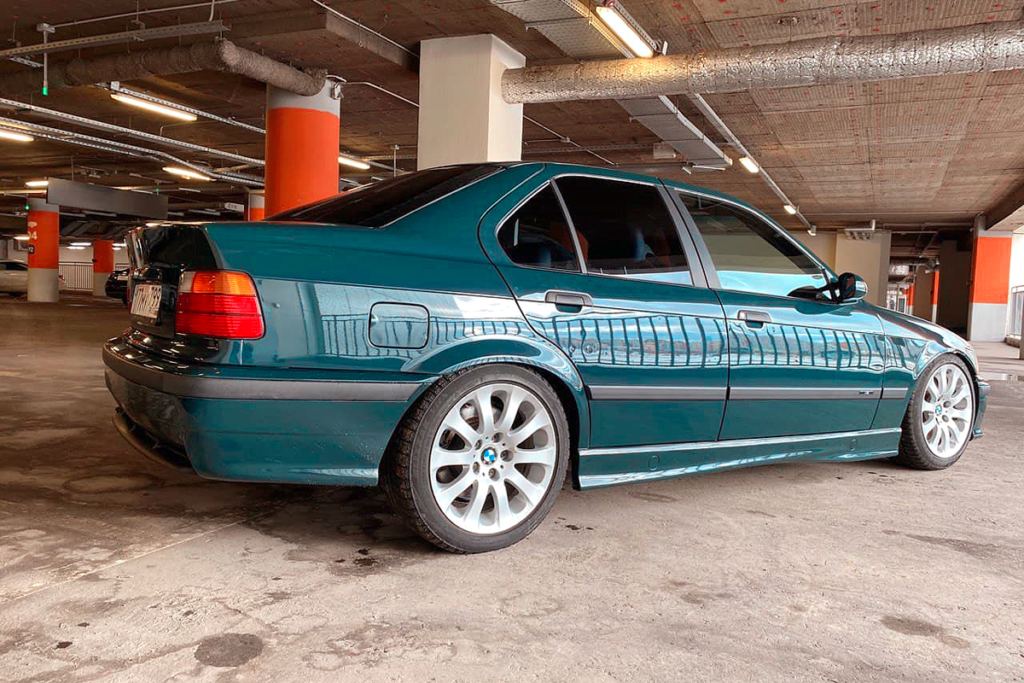
If BMW had built this sedan themselves it would be called the M316i. They did not, so a friend and I took the job on. It started two and a half years ago when we bought a green “three” for 220,000 rubles. The idea was a beautiful classic capable of enriching the bloodstream with petrol both in town and on a circuit. We looked at several thirty-sixes and were horrified: replaced panels, rotten sills, holes in the floor. Then one day, among that raw material, we found a pleasant four-cylinder BMW 316i in the most basic specification with 200,000 km — no sign of rust and almost entirely in its original paint.
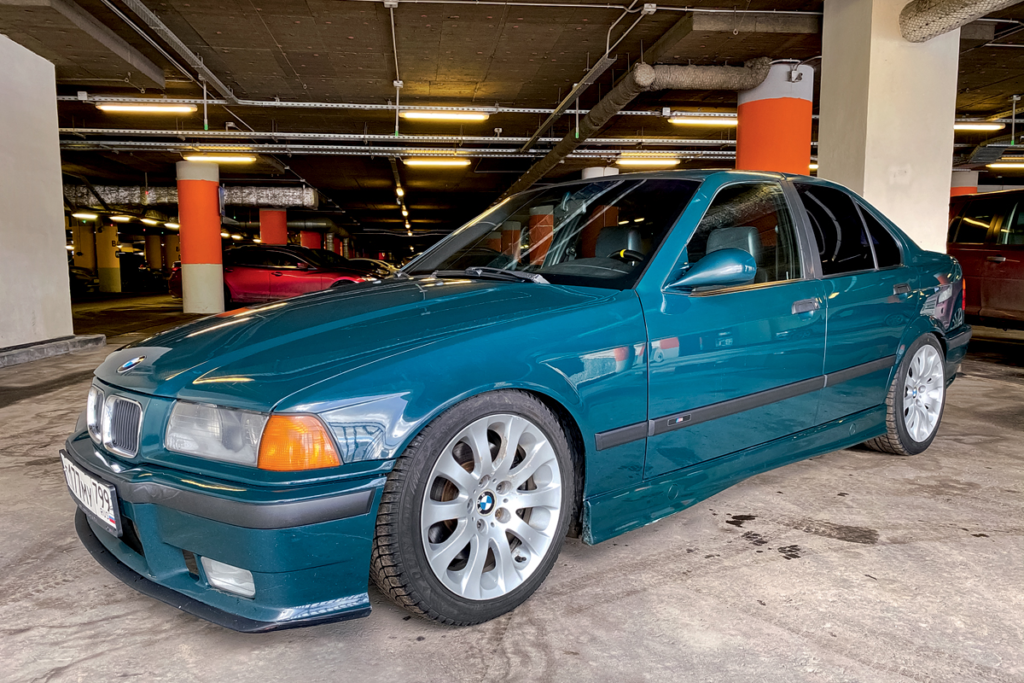
To realise the vision we promptly acquired an M52B28 engine (2.8 litres, 193 hp), subframes, brakes from the E36 M3, a limited-slip differential, wiring, brake lines and assorted other parts. Despite the workshop promising two weeks, the project ran to six months. After roughly a thousand kilometres the engine overheated on the service centre’s own premises following a thermostat replacement — so the cycle began again. Parts, a rebuild at 150,000 rubles, and more waiting.
The BMW, now a 328i, performed admirably. We even won on the Moscow drift track several times, the car showing it could carry the whole course gracefully. Then one race ended with a loss of power and a tow truck — compression gone. Unwilling to face another repair, I bought an engine from an M3 for 300,000 rubles: the inline six S52B32 (3.2 litres, 243 hp), along with Bilstein PSS coilovers. My enjoyment was short-lived; this engine needed repairs after another thousand kilometres.
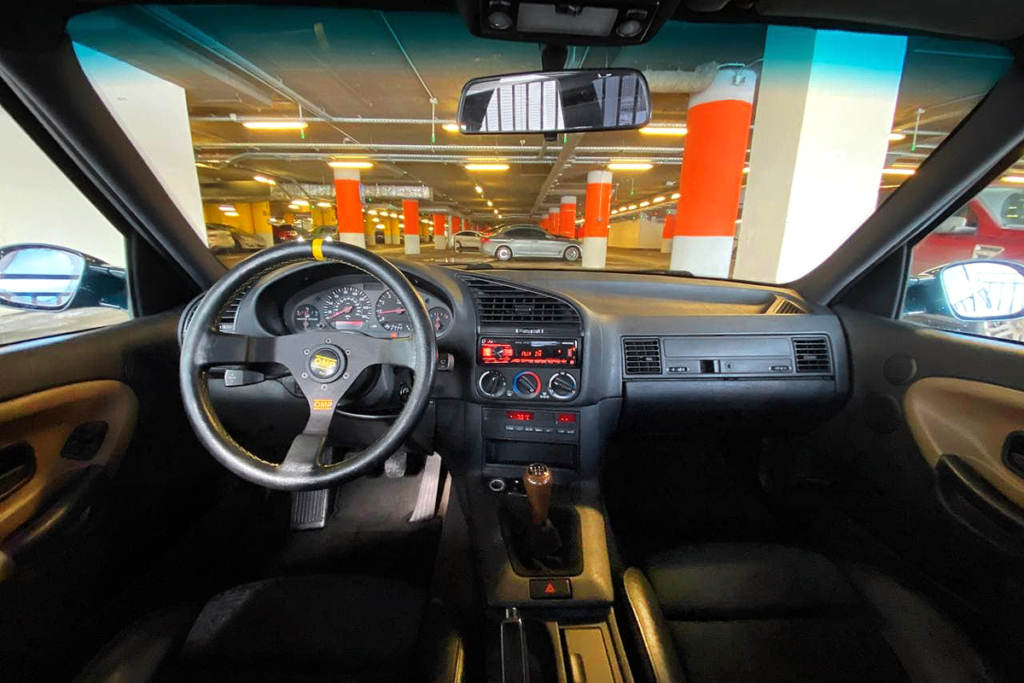
Essentially, if I were a blogger the E36 would be the quintessential project — a content generator: moments in workshops, streaming from a tow truck, Matsuri events, thrilling drift angles. In terms of track driving, though, it falls short. Even with the new suspension, driving it lacks the excitement of a modern car like the Toyota GT86.
We put 2.5 million rubles into the car after buying it and covered 20,000 km over three years, only to sell the “three” for 800,000 rubles. The biggest loss, though, was time — spending it in service centres is justifiable only when it is your profession. And buying aged vehicles for that purpose is wholly unnecessary.
Ilya Khlebushkin: What Actually Breaks
 Ilya Khlebushkin
An academic reliability review of these cars is a peculiar exercise, because the main problem with 1990s BMWs is age, which makes the year of manufacture irrelevant beyond the youngtimer label. You could discuss Nikasil, Alusil or the cylinder liners of M52 engines, or the varying reliability of ZF and GM automatics — but uncovering a pristine time capsule is about as likely as finding pirate treasure.
Whatever the optimistic odometers say, many examples have passed 400,000 km, and plenty have had overhauls or unit replacements. Worth noting, then: the best engines in the BMW E36 are the cast-iron petrol sixes of 2.0 and 2.5 litres from the revered non-VANOS M50 series, while the BMW E39 and E38 have the equally legendary M57 diesel sixes.
Cooling system failures, electrical faults, suspension problems and steering failures are all commonplace — and at this age virtually any component can go. What matters is not the year of manufacture but the condition, which usually reflects a difficult last decade of service. Did you know, for instance, that an almost irreparable water-cooled alternator costs nearly two average Russian monthly salaries?
Unfortunately many BMWs were subjected to ruthless cost-cutting: heaters from Zhigulis, power steering pumps from Nivas, fuel pumps from Gazelles. In that state they are prone to sudden failures, and those happen right across the country.
Where to Find a Good One
The chance of finding a well-preserved E38 “seven” is slightly better than for an E36, thanks to later and lighter cost-cutting, but the greater complexity and the modest original population work against you. E39 “fives”, by contrast, are about seven times more abundant on the market, thanks to production in Kaliningrad. Until 2009, remarkably fresh E39s were also imported from Japan, a market where left-hand-drive “fives” were popular. Today the customs duties — over a million rubles — make importing a BMW from Japan viable only as a source of spare parts.
The nearby Eurasian territories are bleaker still. Cars from Armenia can be registered in Russia only if they were originally imported before 2014, while those from Belarus must meet Euro-5 or be more than 30 years old — which narrows the field considerably. These regions also tended to import from the lower end of the European market rather than collectible examples.
Beware the Tempting Price
The key on our secondary market is to avoid temptingly low prices. The spread between top and bottom for each model is staggering: the 3 Series runs from 80,000 to 800,000 rubles, the “five” from 100,000 to a million, and the “seven” from 150,000 to one and a half million.
Rust Is the Real Enemy
Corrosion threatens all three, the E36 most of all. Rather than focusing on holes in the wings, ask about the strength of the suspension mounts and whether the car can be lifted on a jack at all. The “five” and the “seven” are not far behind, with sills, floors and arches routinely showing corrosion — so look for examples with a southern residence permit and minimal exposure to salt. And stay alert to any criminal history attached to a prospective purchase.
There is a silver lining, though: BMW E36, E39 and E38 examples in genuinely good condition have stopped depreciating and hold promise of future appreciation — provided they survive.
The Three Bimmers at a Glance
- BMW 740iL (E38, 1999): 4.4 V8, 286 hp · 1964 kg, just under 51% front · 0-100 in 6.9 s · four turns lock to lock · 215,000 km on test · sold afterwards for 420,000 rubles
- BMW 320i (E36, 1995): M52B20 inline six, 150 hp · 1345 kg, 50.3% rear · 3.5 turns lock to lock · bought for 225,000 rubles
- BMW 530i (E39, 2001): M54B30, 231 hp · 1631 kg, 51.1% front — the most nose-heavy of the three · 11.5 l/100 km after a throttle remap · 312,000 km on the odometer
- Model years: E38 built 1994-2001 with ten engine variants; all three overlapped only from 1995 to 1998
- Market spread today: “three” 80,000-800,000 rubles · “five” 100,000-1,000,000 · “seven” 150,000-1,500,000
- Best engines: E36 — cast-iron 2.0 and 2.5 non-VANOS M50 petrol sixes; E38 and E39 — the M57 diesel sixes
Frequently Asked Questions
Which of the three is the future classic? The E38. It is the only one of the triad with a real claim to collector value — though reaching that condition costs three or four times the price of the car.
Which one is best to drive? The E36. With 50.3% of its mass on the rear axle it appears not to know what understeer is, and its three-link rear suspension was good enough to underpin the new Mini. It is also noisy, cramped and unsafe as daily transport.
Is an E39 a sensible winter car? Yes, with a manual gearbox, good studded tyres and an aftermarket limited-slip differential. Without the differential it is boring and unsafe.
What is the hydraulic lock everyone warns about? Blocked drains let rainwater collect in front of the engine bulkhead, where the brake booster draws it into the intake manifold. Diagnosis: water in the cylinders. Our repair cost 30,000 rubles — check your drains.
How much should you budget? Far more than the purchase price. One owner paid $7,500 for an E38 in Armenia and has spent about 1.5 million rubles on it in a year, almost without touching the bodywork. Another put 2.5 million rubles into an E36 and sold it for 800,000.
Photo: Georgy Balabadzhyan | Dmitry Pitersky | BMW Company | Nikita Kolobanov | Sergei Udotov
This is a translation. You can read the original article here: Ок, бумеры: «тройка», «пятерка» и «семерка» из девяностых

Published March 13, 2024 • 23m to read