
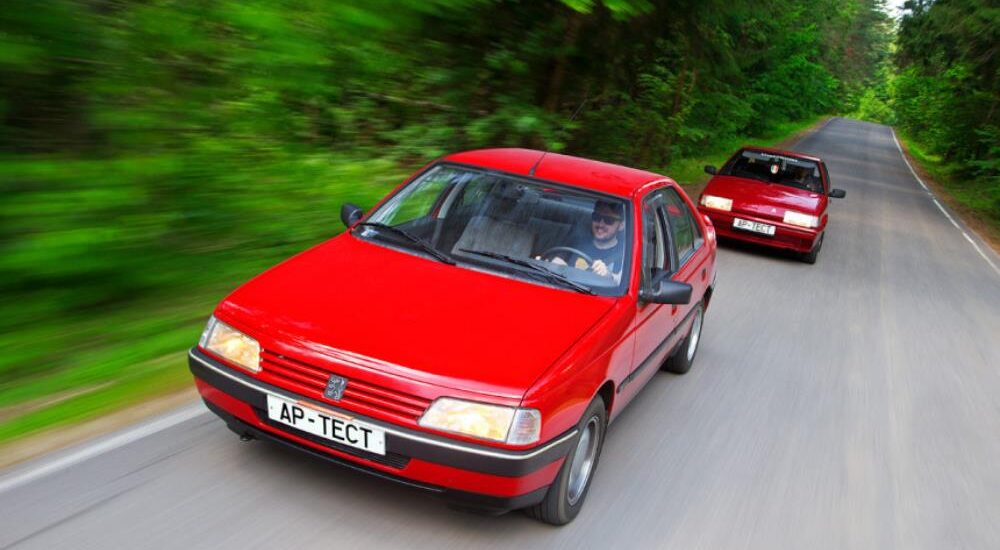

Embarking on a nostalgic journey through the automotive wonders of the late ’80s, I found myself behind the wheel of two iconic French classics: the Citroen BX and its platform sibling, the Peugeot 405. Back then, auto critics playfully dubbed them cars built out of a bucket of spare parts. Little did they know these cars would evolve into bestsellers, becoming true masterpieces of automotive culture.
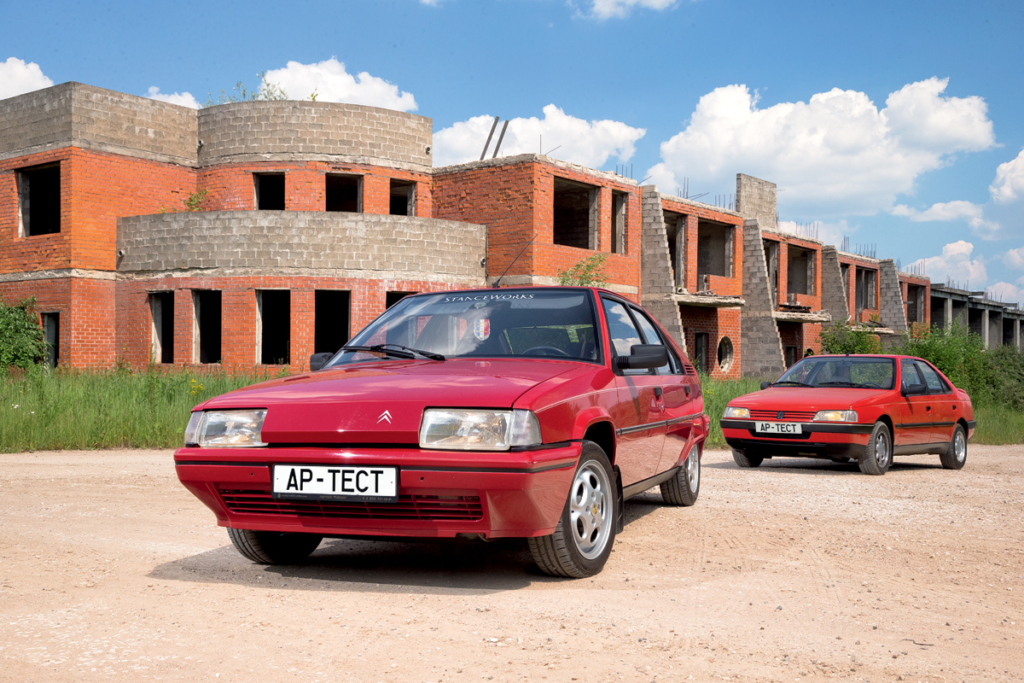
For more than half a century, all cars in France were equipped with yellow headlights. Legend has it that this rule was born on the eve of World War II to distinguish enemy cars from our own. But the law was passed back in 1936, and there was still a compelling scientific rationale behind it: yellow light is less blinding, does not create glare, and copes better with fog. In 1993, unified European requirements appeared – and FFBA00 color headlights became history.
Two Cars Out of One Parts Bin
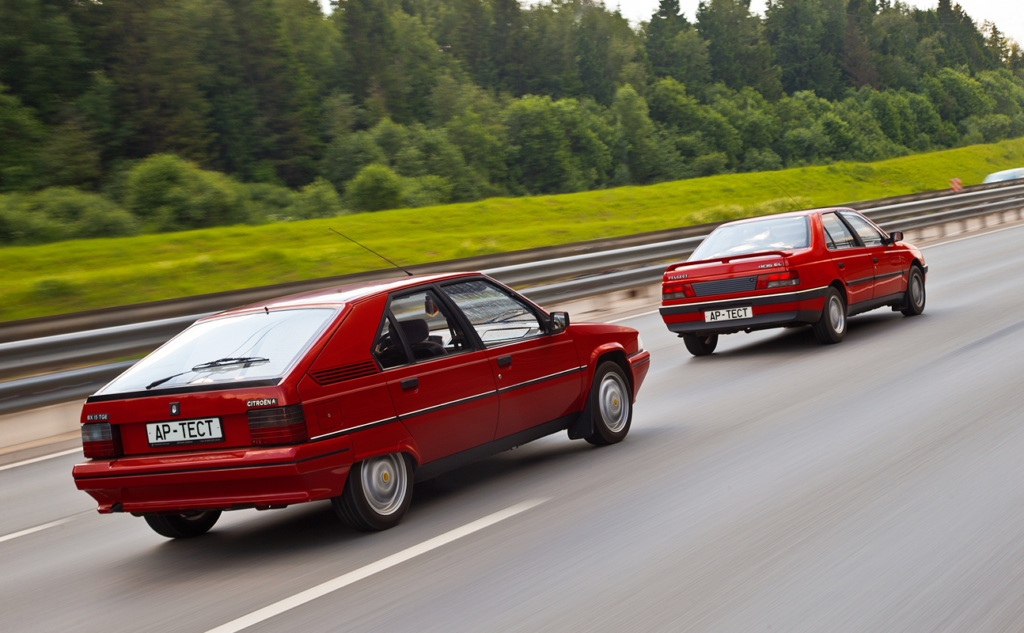
The more time I spent with these two, the more of a puzzle they became. They came out of the same parts bin, and yet the diversity between them is unexpected — from the exterior down to the details of the cabin, the Citroen and the Peugeot have quite distinct characters.
In the turbulent ’70s Citroen faced bankruptcy, Peugeot acquired a significant stake, and the PSA Peugeot Citroen group was formed. Out of those financial difficulties came a collaboration that produced the BX in 1982 and the Peugeot 405 in 1987. So much for the myth of the stingy French carmaker: what these two marques embarked on was an ambitious cost-saving project.
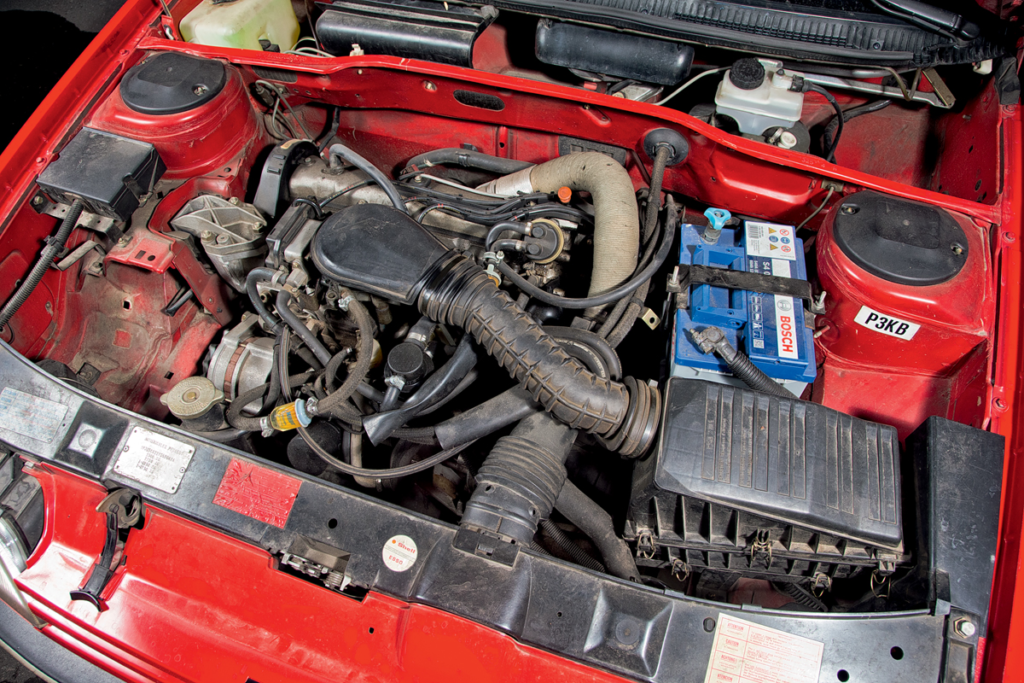
The eight-valve XU51C on Citroen and the XU52C on Peugeot are fundamentally different only in carburetors: the BX with a single-chamber can count on only 80 hp, and the “four hundred and fifth” with a two-chamber is 12 hp more powerful.
Bertone and Pininfarina, Working Apart
Contrary to expectation, the visual differences are striking. Drawn by Bertone and Pininfarina respectively, the Citroen and the Peugeot carry entirely separate design signatures. Panel gaps, the curvature of the windshield, even the wipers reveal their individuality. Beneath all that, the engine compartment is the only visible sign of a shared lineage.
One Engine, Two Carburetors
That engine, the XU5, hints at unity while still embracing diversity. The Citroen BX 15 TGE and the Peugeot 1.6 GL share the same 1580 cc displacement. The choice of carburetor is what separates them, and with it the power: 92 hp for the Peugeot, 80 hp for the Citroen.
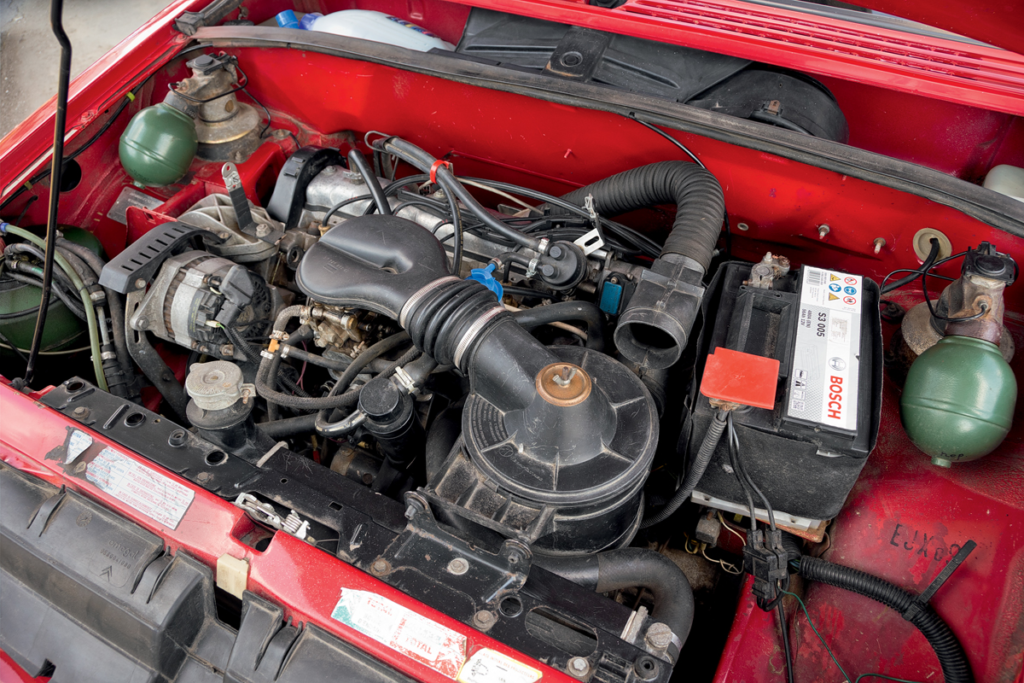
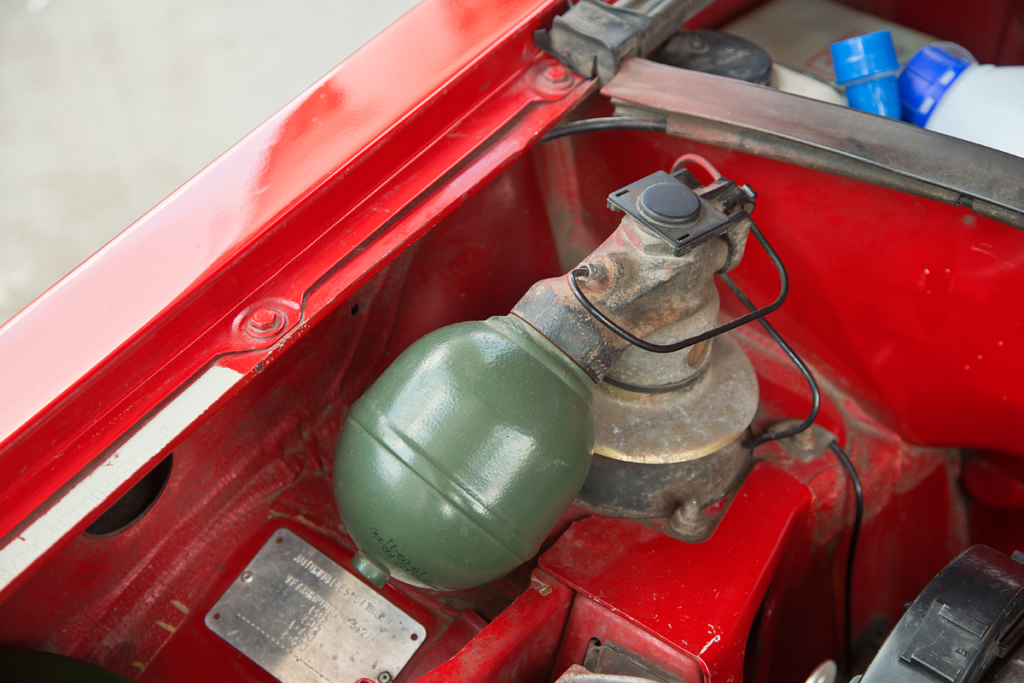
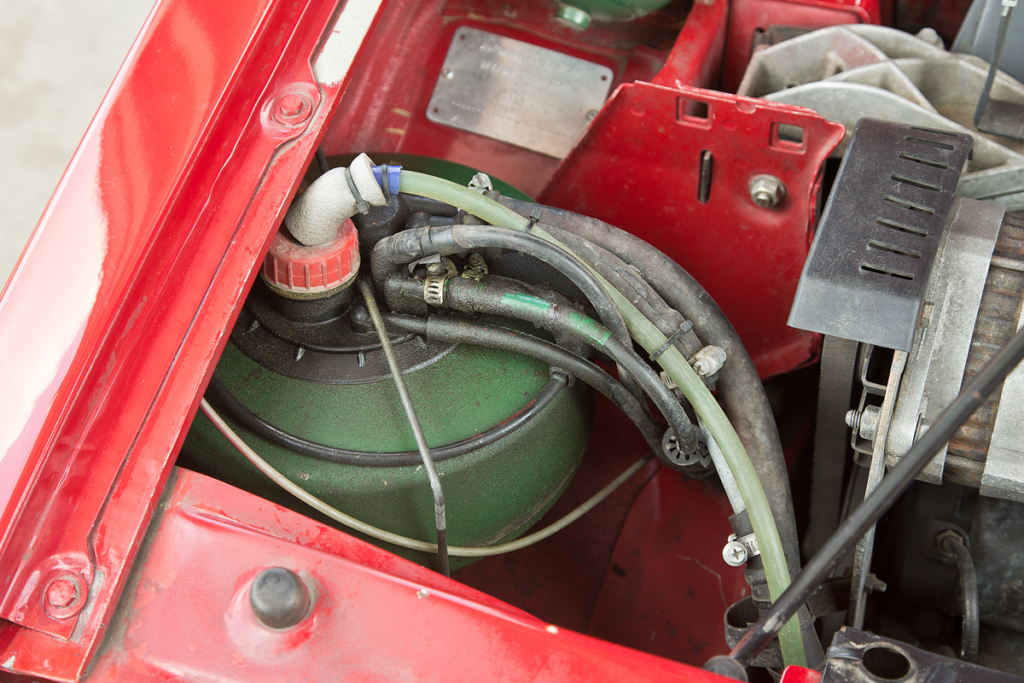
The Peugeot XU series engine debuted on Citroens with the BX model. The bulbs on the supports of the struts are the spheres of the front suspension, and the main hydroaccumulator is installed behind the right headlight.
Struts, Spheres and Brakes
Below the surface the differences continue. Citroen fitted its hydropneumatic suspension with a twist — struts instead of the traditional double wishbones — while Peugeot relied on conventional McPherson spring struts. The brake systems diverge too: the Peugeot has a horizontal vacuum servo, whereas the Citroen integrates braking into the hydraulic system of the suspension. French engineering, doing what it does.
Two Cabins, Two Postures
Inside, the dissimilarities persist. The Peugeot’s cockpit puts you low and focused; the Citroen sits you back in a relaxed, reclined posture, rather like an aircraft seat. And in both there is a faint hint of Lada nostalgia — the grey matte plastic and the console design left their mark on more than one automotive culture.
In short, these two French classics defy the parts-bin cliché. What the collaboration produced was two distinct personalities, each with its own story.
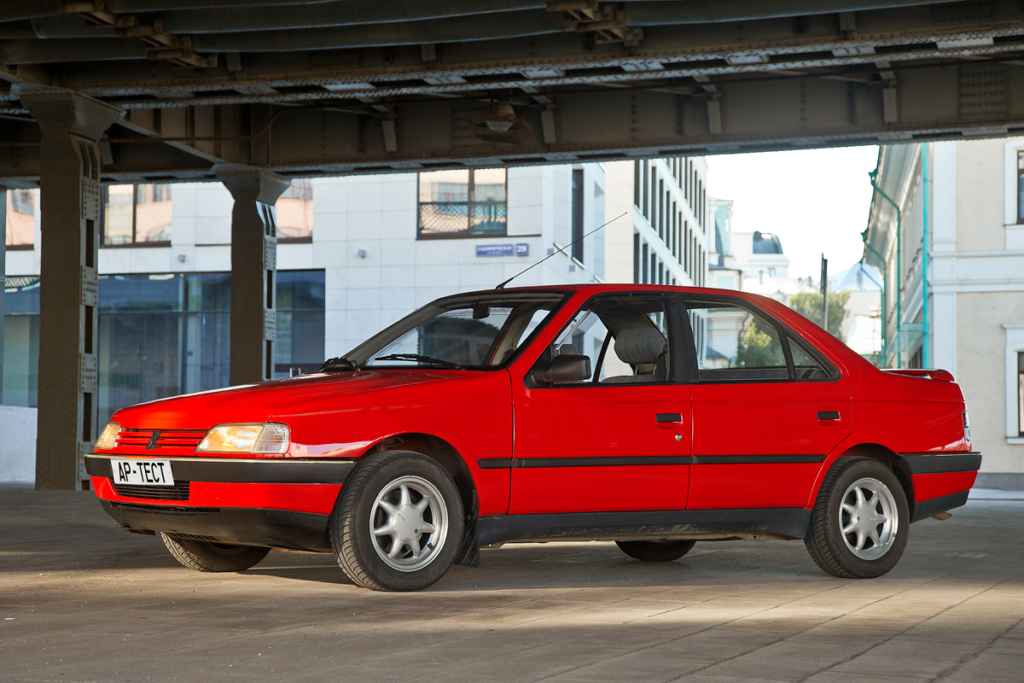
A 1991 Peugeot 405, Almost Untouched by Time
Back, then, to the late ’80s, and to the Peugeot 405. Our friends at the car rental service autobnb.ru turned up a rare find: a 1991 “four hundred and fifth” in Russia, almost untouched by time. You can experience it yourself with a 10% discount, using the promo code “Авторевю” on any of the 50 cars in their collection.
With 67,000 kilometres on the odometer and a single owner, this car is more than a time capsule. It is an automotive Mona Lisa. What makes it so enchanting?
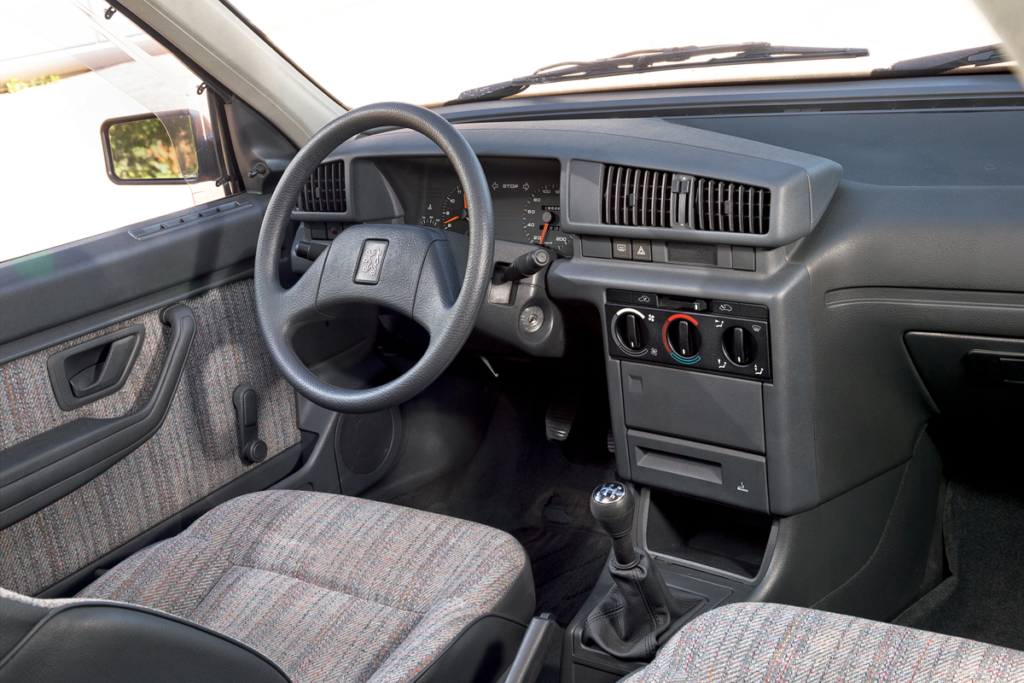
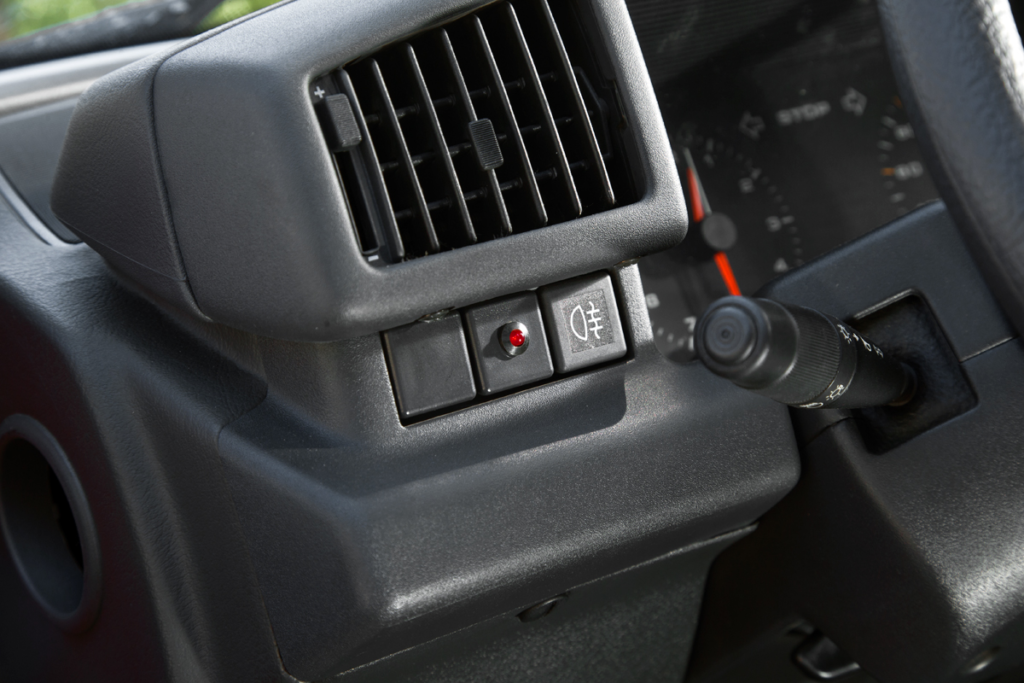
The driver’s mood and style are included in the basic equipment here. Unlike power steering, air conditioning, and ABS. But this is the first Peugeot with tilt steering adjustment.
Turning the Key
Turn the key and the starter whispers into life; a gentle tap on the accelerator wakes the engine. First gear goes in easily, with a short, precise movement, though you have to find the sweet spot in the clutch travel, because there is a little hesitation low down.
Around a parking lot there are a few quirks: the accelerator is firm, the steering is heavy across its 4.2 turns, and warm air from the fan adds a period touch. Out on the open road, though, the car transforms. It glides effortlessly through traffic, small and nimble, answering a gentle tug at the wheel, with plenty of torque in the mid-range. Visibility is exceptional and the brake pedal is responsive.
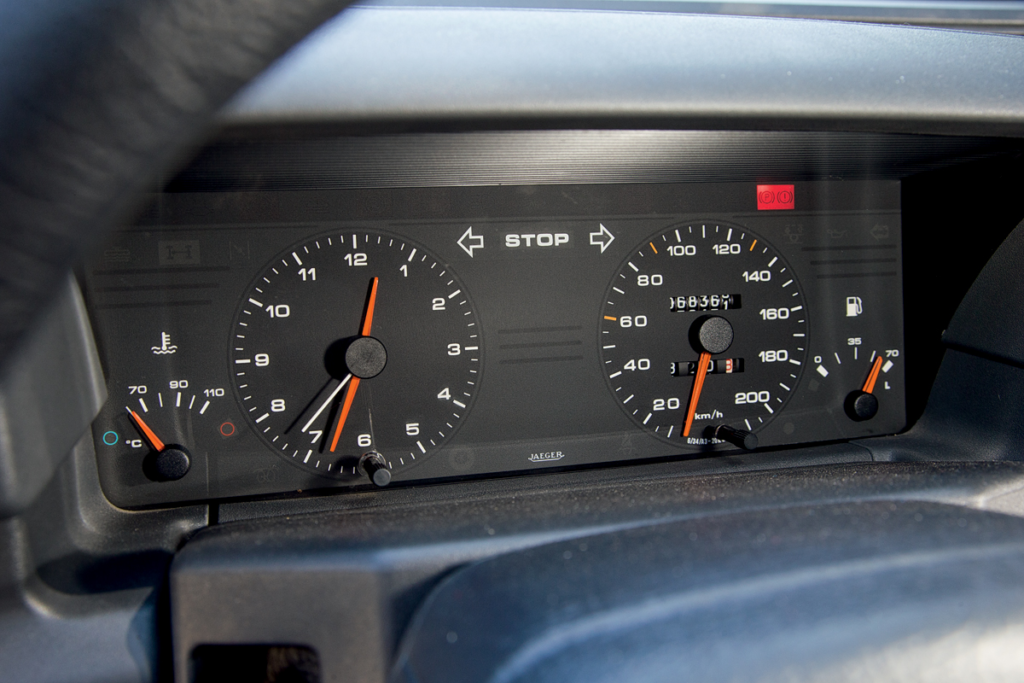
The tachometer is marked up to 12,000! They used to know how to make them. Although wait… In the simplest combination of instruments, ordinary clocks are in the main place next to the speedometer. But there is a full-fledged temperature gauge, which is indispensable for old cars.
A Land Glider
The Peugeot 405 feels like a land glider. Accelerating takes a collective effort from driver and car, and with no tachometer the shift points are chosen by ear and by feel. Peak torque, at around three thousand RPM, arrives with a distinct shove and a surge of acceleration; beyond that the engine hums energetically but gradually eases off. Changing up a little earlier, at around 6000 RPM, feels about right.
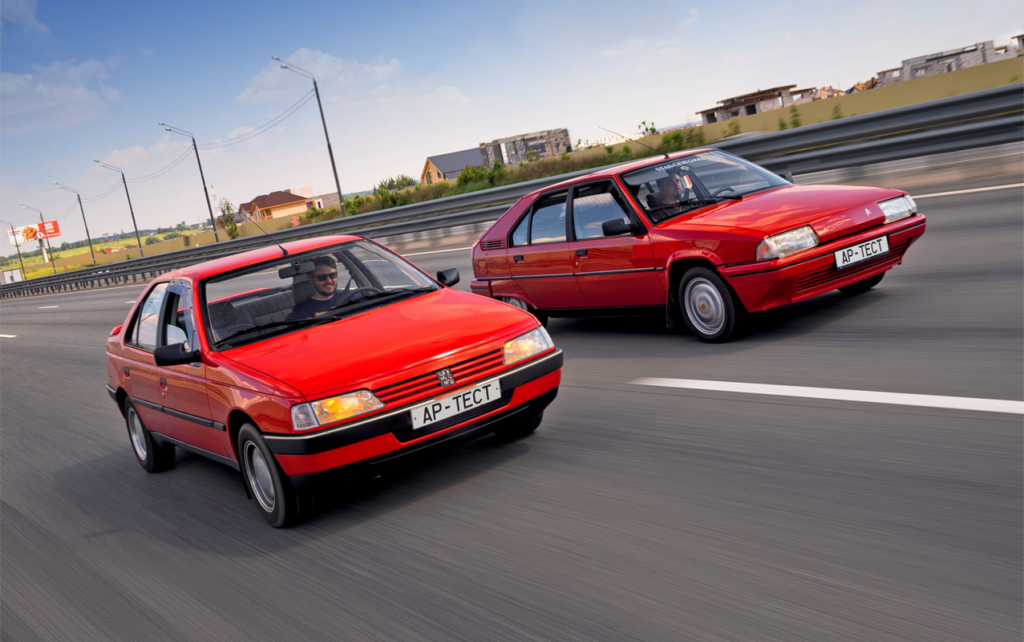
13 Seconds to a Hundred — and 175 km/h
In a mere 13 seconds you conquer the first “hundred”, and once there the Peugeot holds and settles the speed gracefully. Overrun behaviour and straight-line stability are both commendable, and the car feels more secure the higher the speedometer climbs. A slight dead zone in the steering at low speed disappears as you accelerate, replaced by precision. The top speed is a notable 175 km/h — an exhilarating experience for car and driver alike.
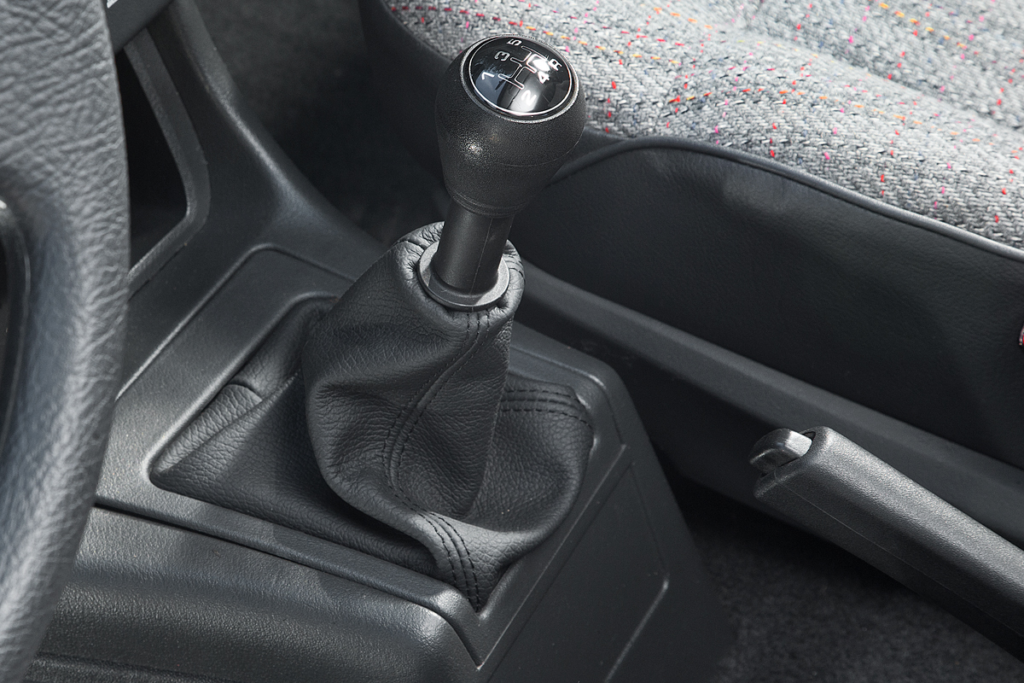
The five-speed BE3 transmission with reverse gear opposite to the fifth appeared on Peugeot in the late 80s. Prior to this, the “reverse” was engaged like on Samaras – to the left of the first.
It Loves a Corner
The Peugeot 405 loves a dance of intricate manoeuvres on a serpentine test track, defying the very concept of understeer. Its slim nose leans into a bend effortlessly and the feedback to the driver is impeccable. Lift off and the rear wheels answer with a textbook gentle slide, guiding the car elegantly into the turn without ever tipping into a sharp drift.
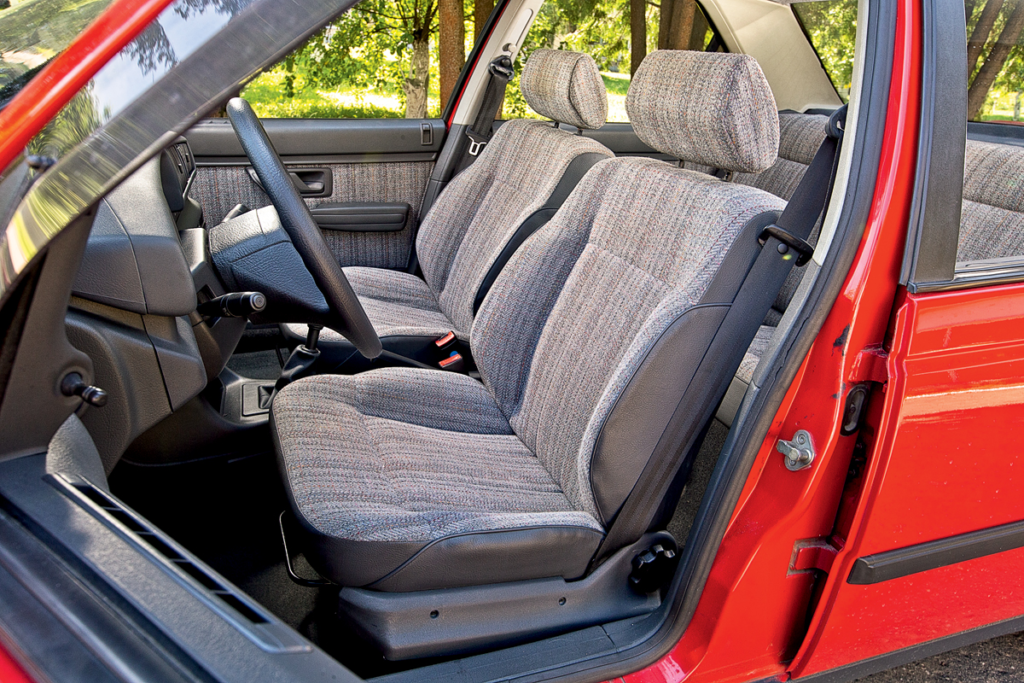
The soft and cozy-looking chair delights with unexpectedly firm side support rollers.
Two Caveats
There are a couple of caveats. First, there is some body roll, and it trails slightly behind the steering response: the Peugeot leans before it adjusts its line. Second, the unassisted steering is heavy. You appreciate its natural transparency and simultaneously find yourself leaning into the wheel, lifting off the seat. Add the influence of uneven asphalt and the modest compliance of a safety-oriented rim, and you realise there is no point complaining about that kind of simplicity and honesty.
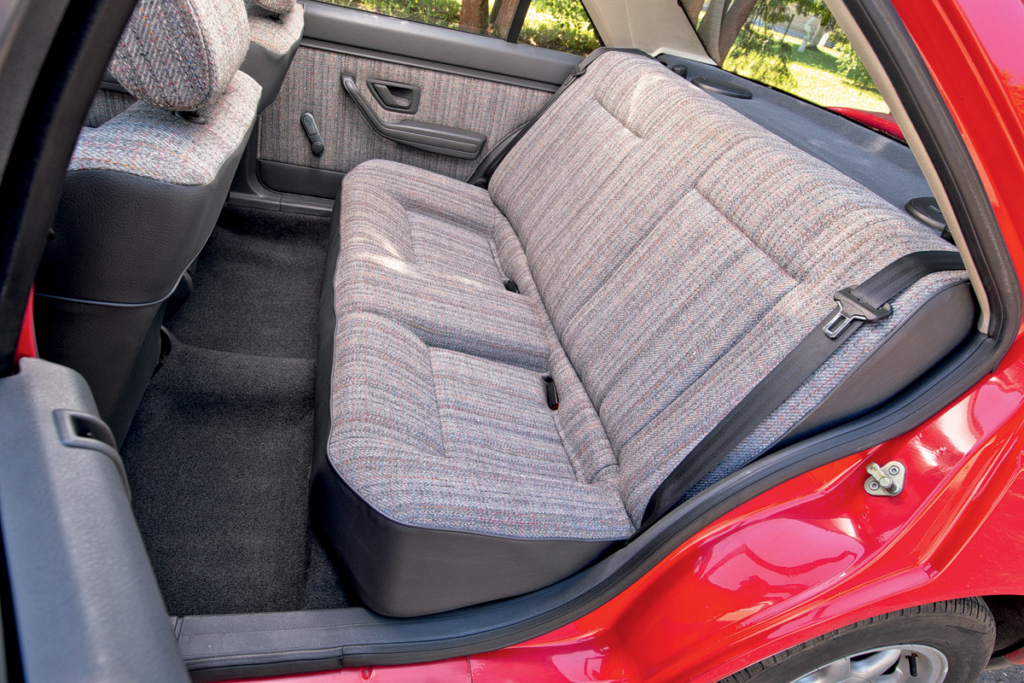
The rear sofa is soft and relief, but there are no seat belts for the middle passenger here.
The Vanishing Art of Ride and Handling
That blend of agility and comfort is a rare combination, and a vanishing art. The Peugeot 405’s suspension deals gracefully with every imperfection the road offers, from potholes and bumps to speed humps, tram tracks and cobbles. It keeps exceptional dignity over the long waves of a country road, following the profile with minimal sway. Vibration only becomes noticeable when small, sharp irregularities reach the wheels — the washboard of a graded gravel road. For a mass-produced car, this is close to exemplary.
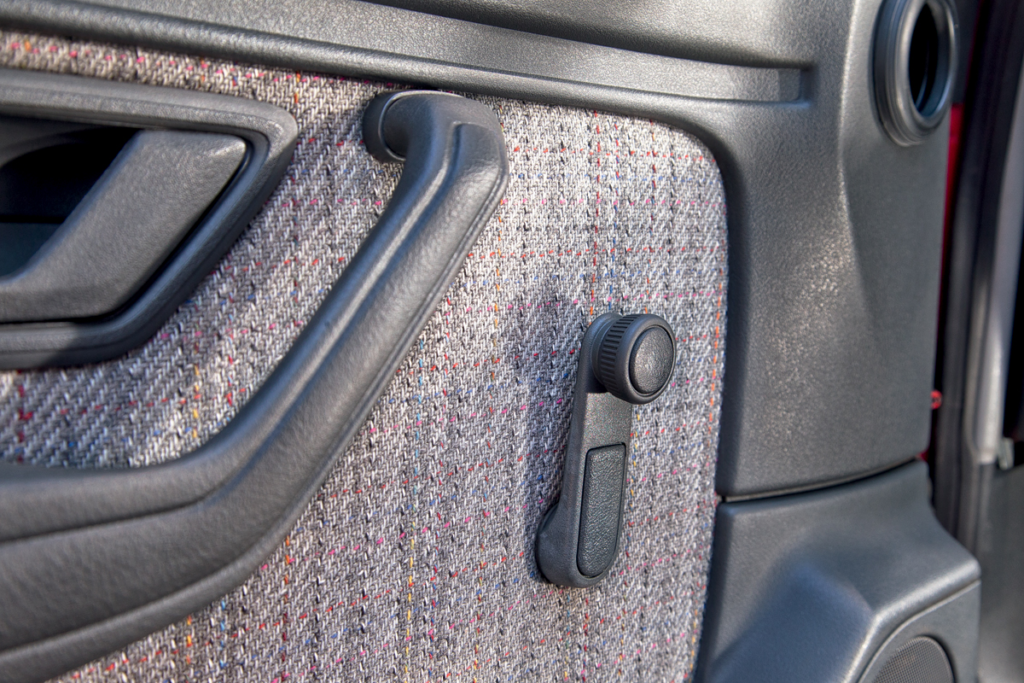
With such a stylish interior upholstery, even “oars” look elegant.
The BX Got There First
In the mid-’80s, long before the Peugeot 405 reached the road, similar praise was being heaped on the BX. Met at first with reserve, this standardised Frenchman quickly became a favourite. It was light and quick even with modest engines, and it was affordable. It had a suspension descended from the legendary big Citroëns and a spacious trunk with a folding rear seat. Before the “four hundred and fifth” had even premiered, the BX already had its sporting versions — Sport, GT and GTI. England took to it, doubling Citroën’s market share there, and the BX’s success ran on across France and continental Europe.
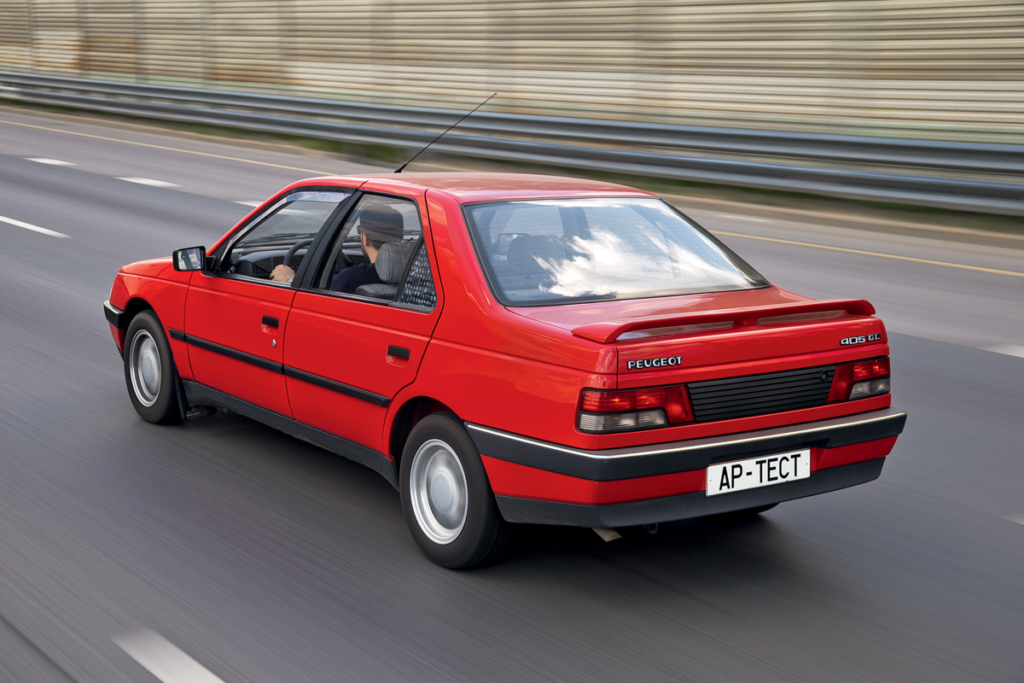
White sections of the rear lights and a plastic insert between them are signs of pre-facelift sedans. The spoiler was not factory equipment for carburetor versions of the GL 1.6. Without it, the aerodynamic drag coefficient of the Peugeot 405 was 0.31, but on some versions, it dropped to 0.29.
“Loves Driving, Hates Garages”
In England the BX was promoted with the slogan “Loves driving, hates garages” — the point being that this French car belonged on the road rather than in the workshop. Times have reversed since: a working BX is now rarer than an unused Peugeot, especially in Russia.
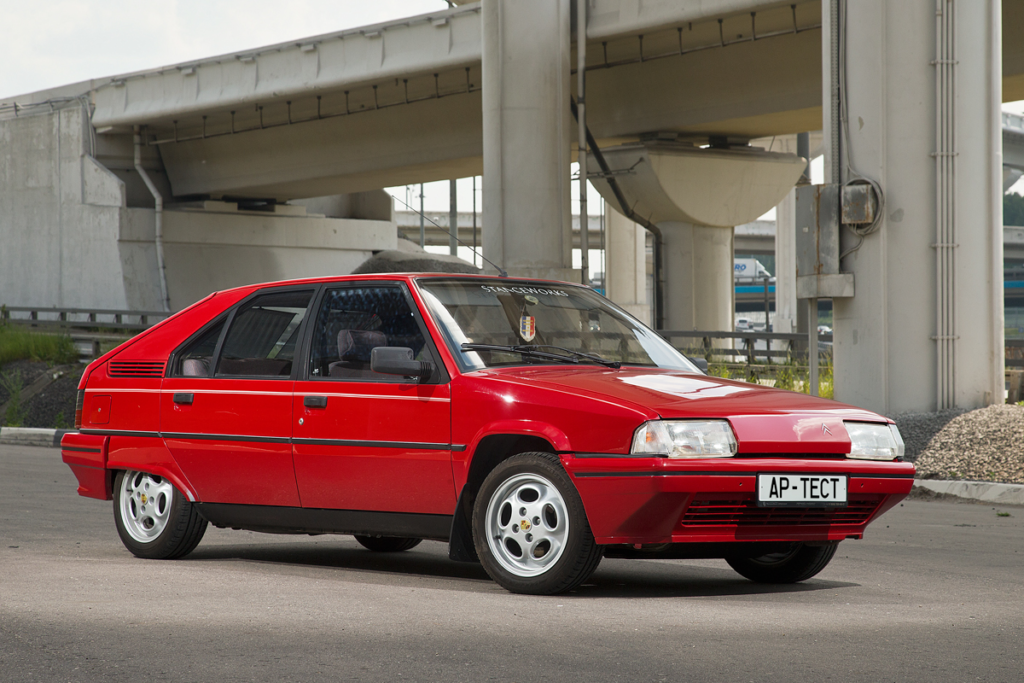
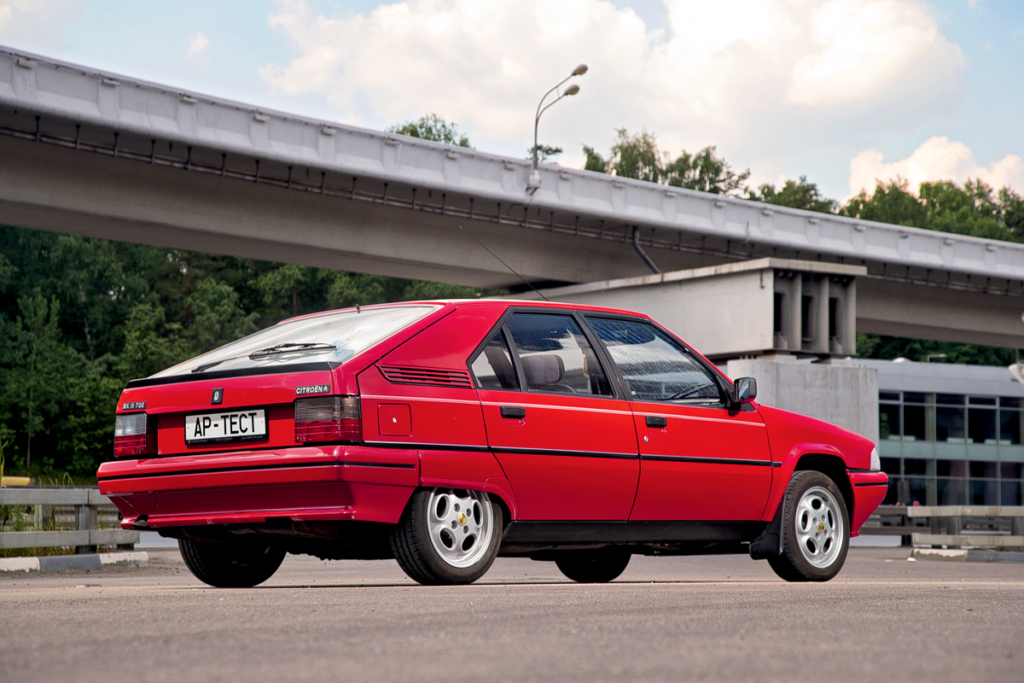
Strange emblems on the wheels? As it turned out, original discs on the BX are such a rarity that it was much easier to find wheels suitable in size from a Porsche 924 with a four-bolt hub.
Our red Citroën, after at least 120,000 kilometres over 32 years, found a home with Konstantin, an enthusiast dedicated to preserving old French cars. It is a noble pursuit that comes with its own difficulties — hunting down rare parts to keep the car’s original appearance, and fielding endless enquiries about the state of the hydropneumatic suspension.
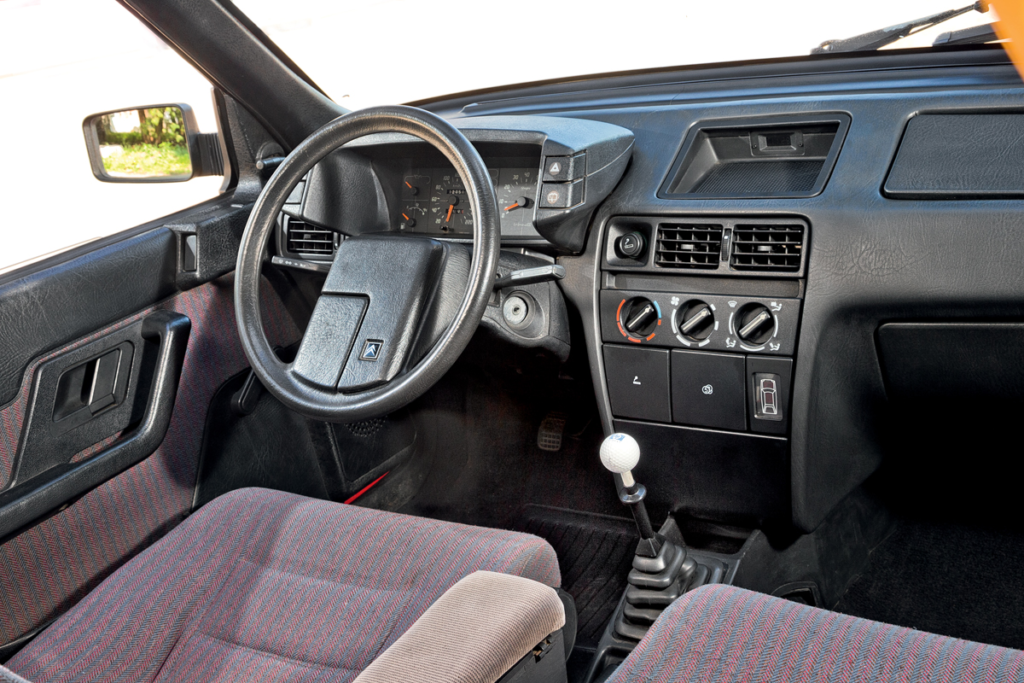
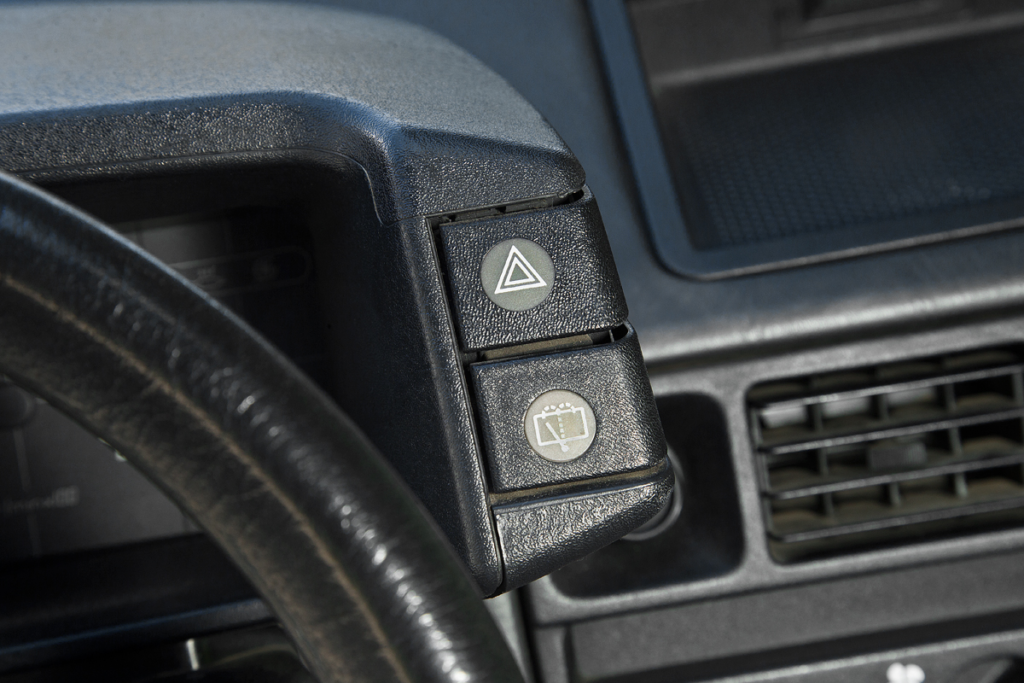
The restyled Citroen salon is almost similar to the interiors of “normal” cars. It only reminds of the avant-garde 80s with a steering wheel with a single spoke.
Why the BX Is Sitting on Its Rear Wheels
Our BX in the parking lot has settled onto its rear wheels. “Is it supposed to do that?” Unfortunately not. The system that maintains pressure gradually lowers the car, returning fluid to the central reservoir, and the years take their toll on it. Start the engine and you have to wait a few seconds for the pump to restore pressure in the rear cylinders, and the BX lifts its tail.
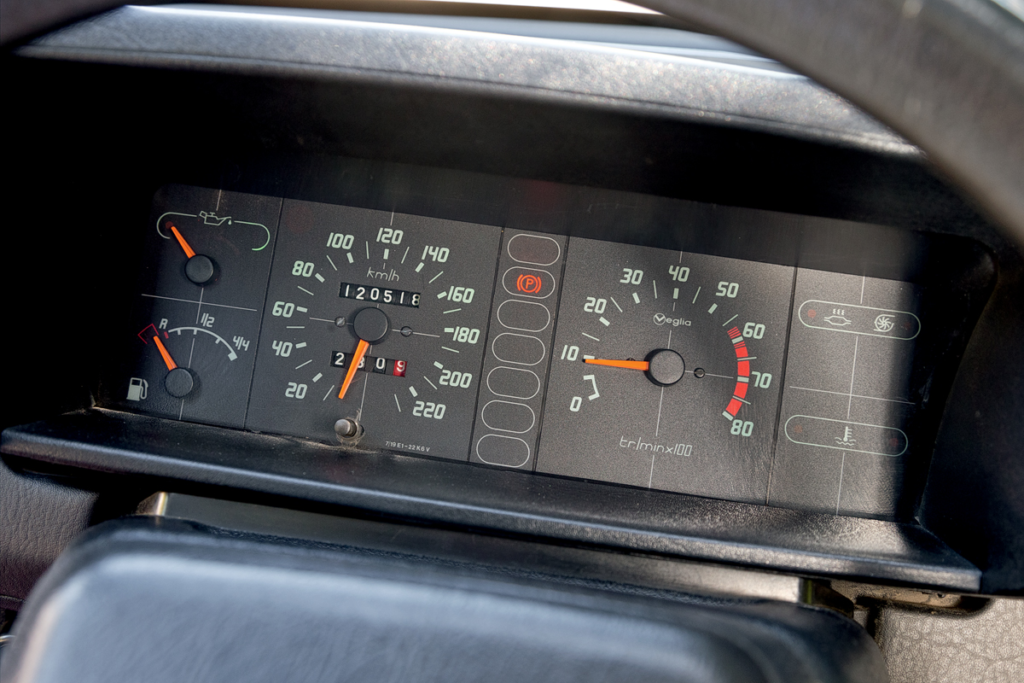
Such scales appeared on Citroen only by 1987. The basic version has a tachometer, but there is no coolant temperature gauge. Instead, there are only two indicator lights – yellow and red, which warn of overheating.
Eighty Horsepower, Twenty-Two Seconds
The Citroën makes do with minimal equipment, though it did once offer power steering. Its shorter rack, 3.6 turns lock to lock, makes the steering heavy, while the accelerator is lighter and sharper. Appearances aside, the BX’s eighty horsepower demand careful planning of every overtake. There is a tachometer here — but acceleration to 100 km/h takes 22 seconds and the maximum is just 143 km/h, which uses up almost the whole of the dynamometer road.
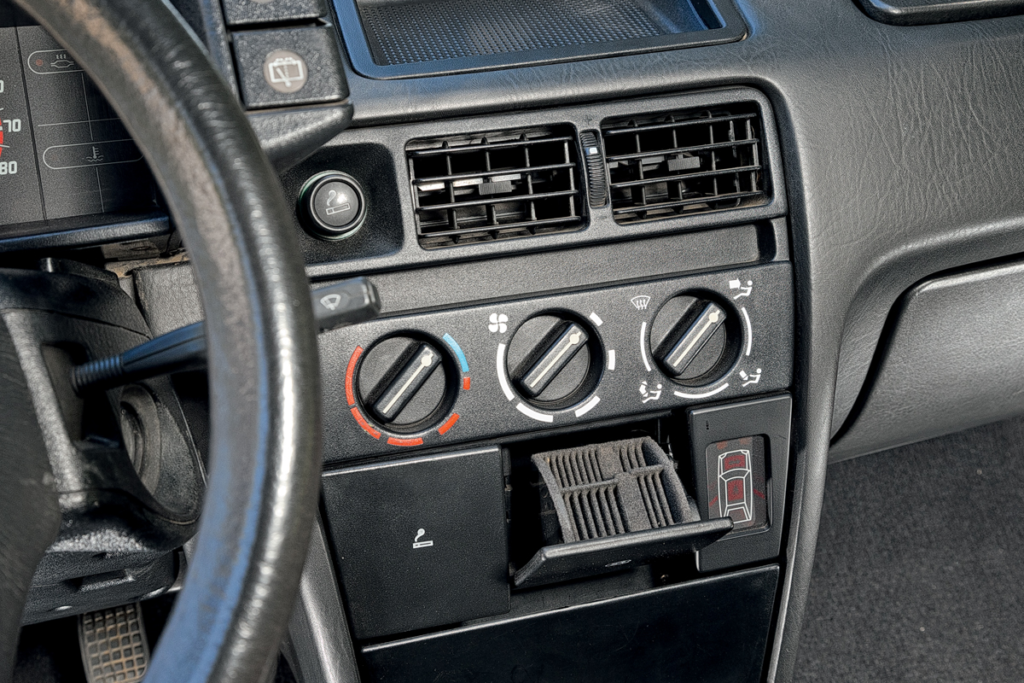
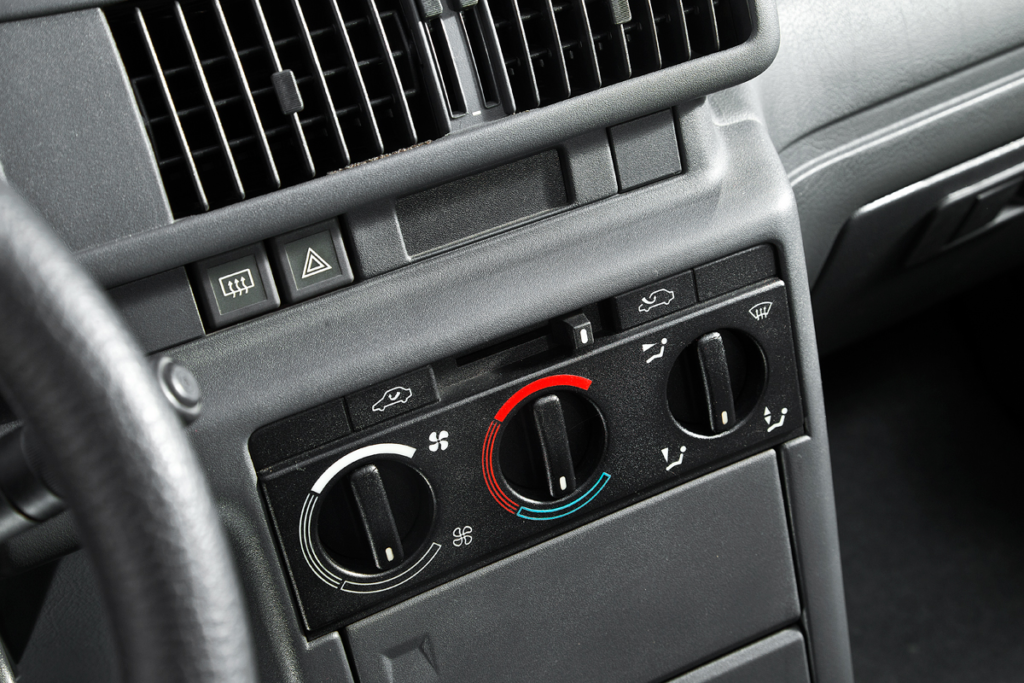
Ventilation control knobs may look similar but are installed in a different order. In this configuration on Citroen (first slide), there is no recirculation mode, but there is a coin holder.
The BX Does Not Enjoy Being Hurried
Unlike the “four hundred and fifth”, the BX takes no pleasure in fast driving. It wanders off line and asks for corrections. Surprisingly, its steering feedback is calmer than the Peugeot’s with its longer rack. The wheel grows heavier in a corner, but the feedback is more blurred, impacts come through more sharply, and the driving position is not ideal for working at the wheel. Roll is more pronounced. The result is family transport rather than a thrill.
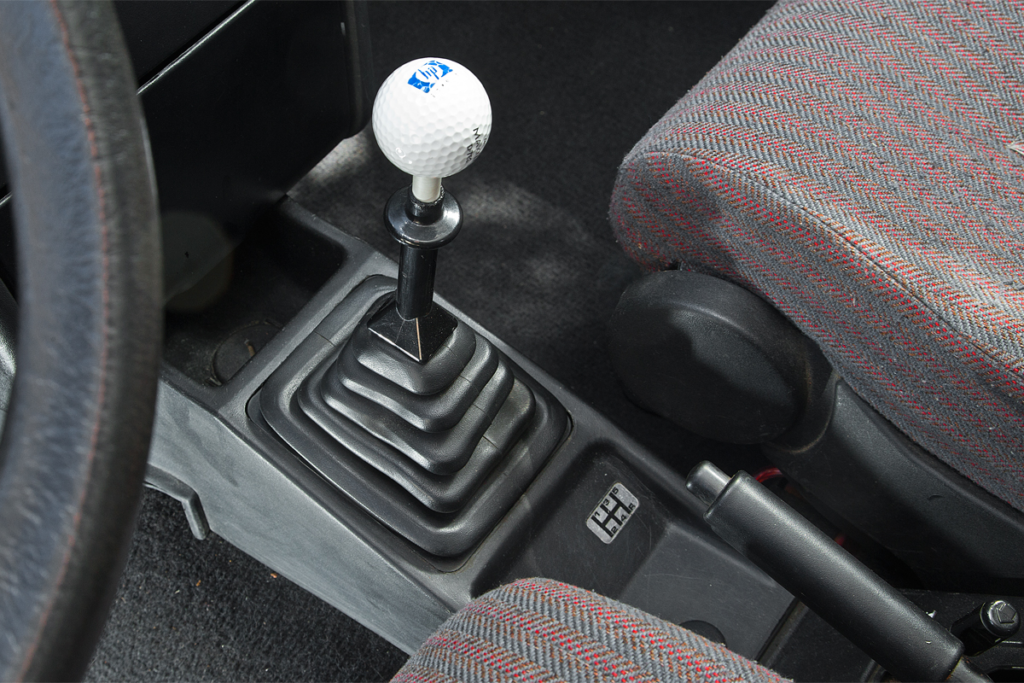
The lever is decorated to the taste of the owner, although the same BE3 transmission is installed on Citroen as on Peugeot. Except that the clarity noticeably decreased due to age.
Brakes, and a Pedal Like a Rubber Ball
The brakes, without ABS like the Peugeot’s, decelerate stably on mixed surfaces. The pedal takes some getting used to, though: minimal travel, maximum sensitivity, and real effort required — rather like pressing a rubber ball into the floor.
Comfort lives in the soft, broad seat and in a gentle sway over smooth asphalt waves. When the good asphalt turns bad, the body starts taking a barrage of impacts from small and medium irregularities.
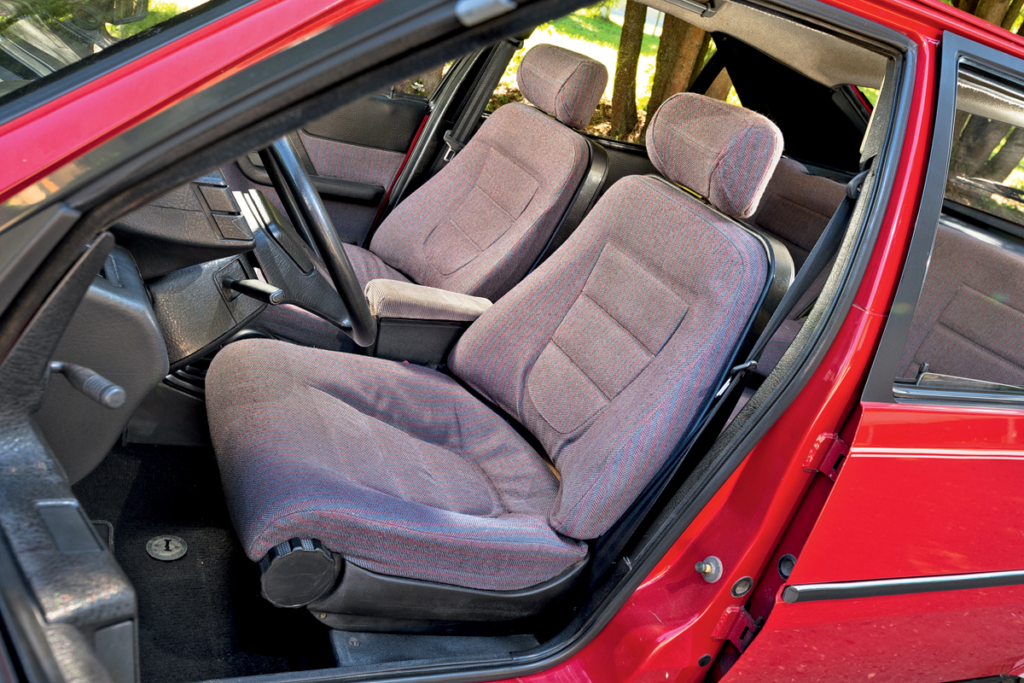
The chair seems relief, although there is almost no side support. Adjustment is handled by two drums at the corners of the cushion.
The Lever Between the Seats
The BX driver has no way of adjusting suspension stiffness — it is fixed. The lever between the seats only sets ride height. For normal driving it is best to stay in the two middle positions, reserving the lowest and highest strictly for maintenance, where the car doubles as its own jack, and for rough ground.
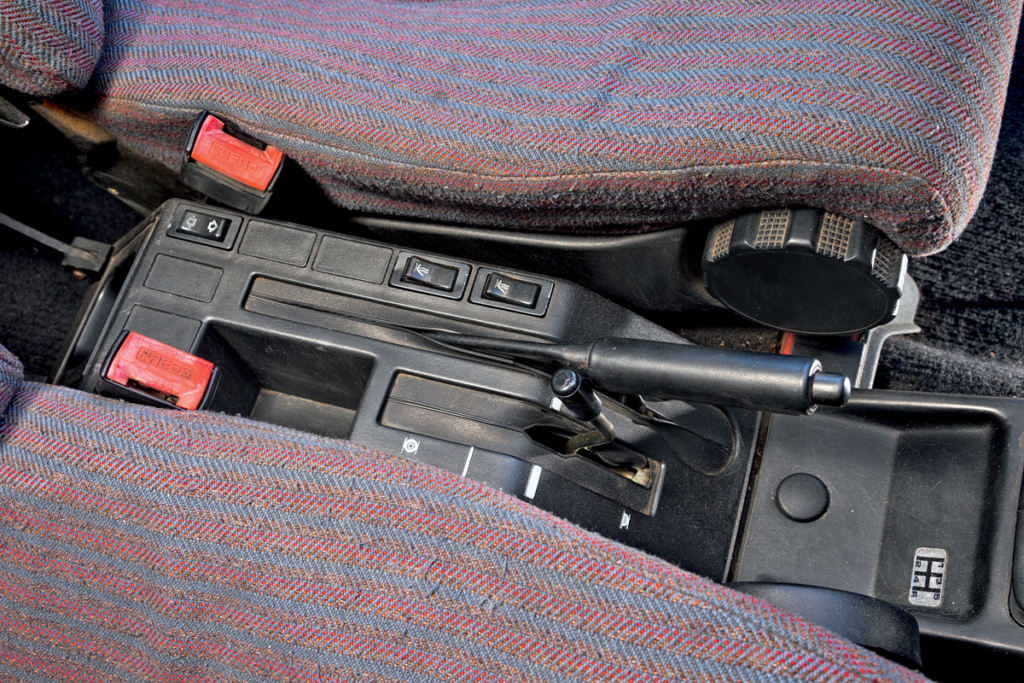
The lever near the handbrake is responsible for the suspension level.
The Hydraulic Ballet, and What Went Wrong
The enchanting hydraulic ballet of the BX shows itself only fleetingly — precisely when the rear wheels negotiate a speed hump, and the suspension glides over the change in height almost imperceptibly. For the front wheels the same obstacle turns into a pronounced impact.
Is it supposed to be like this?
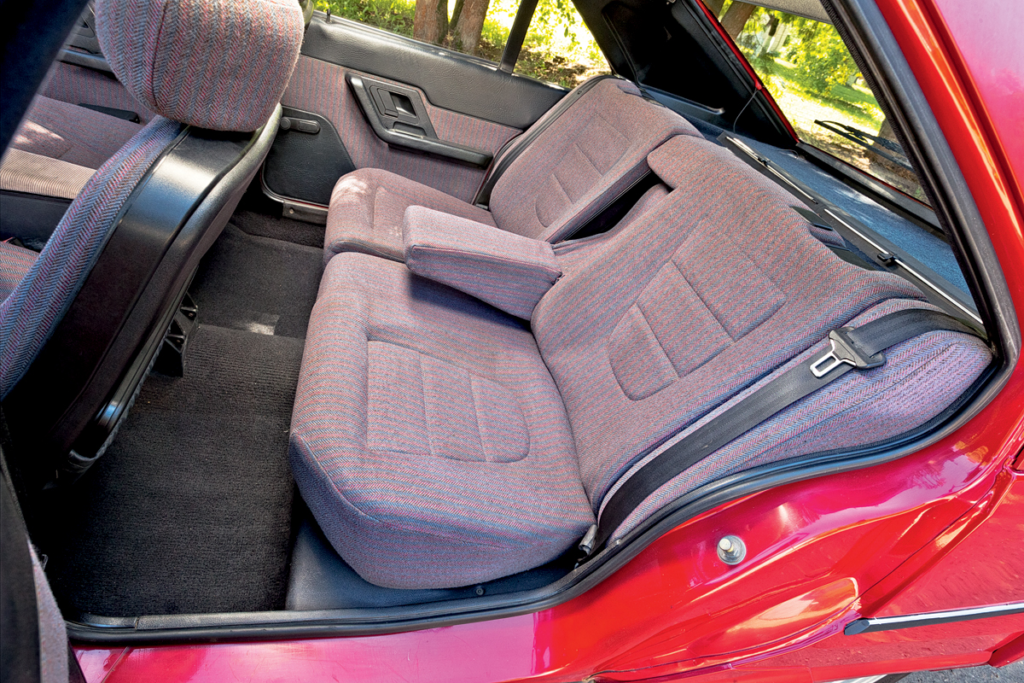
There is a rear armrest and separate backrest, but there is less space than in Peugeot.
Again, no. It turned out that a fault had developed in the hydraulic system: the central hydropneumatic accumulator, the part responsible for absorbing the heaviest impacts, had failed. Frustrating — and an integral part of life with a Citroën.
Scored Against a Modern Protocol
And still it feels worthwhile. Yaroslav Tsyplenkov and I decided to put these retro cars through a contemporary expert evaluation protocol once again. The results were modest, but the Citroën came out on top, thanks to its trunk and the transformability of its interior, where the Peugeot scored a resolute zero. I suspect the same thing would happen if we awarded points for cultural value.
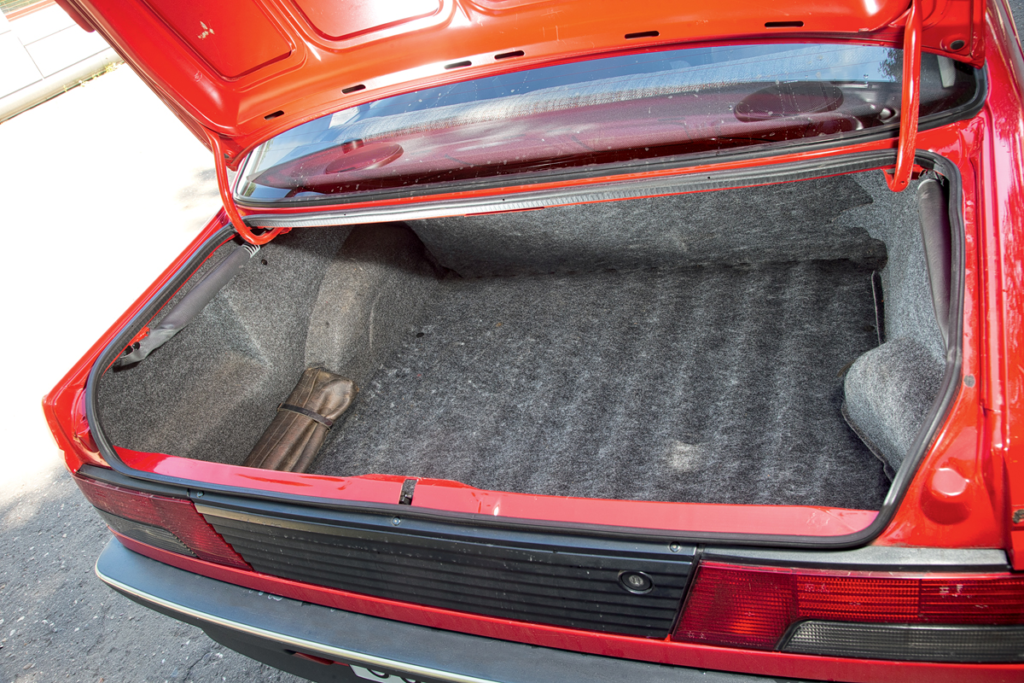
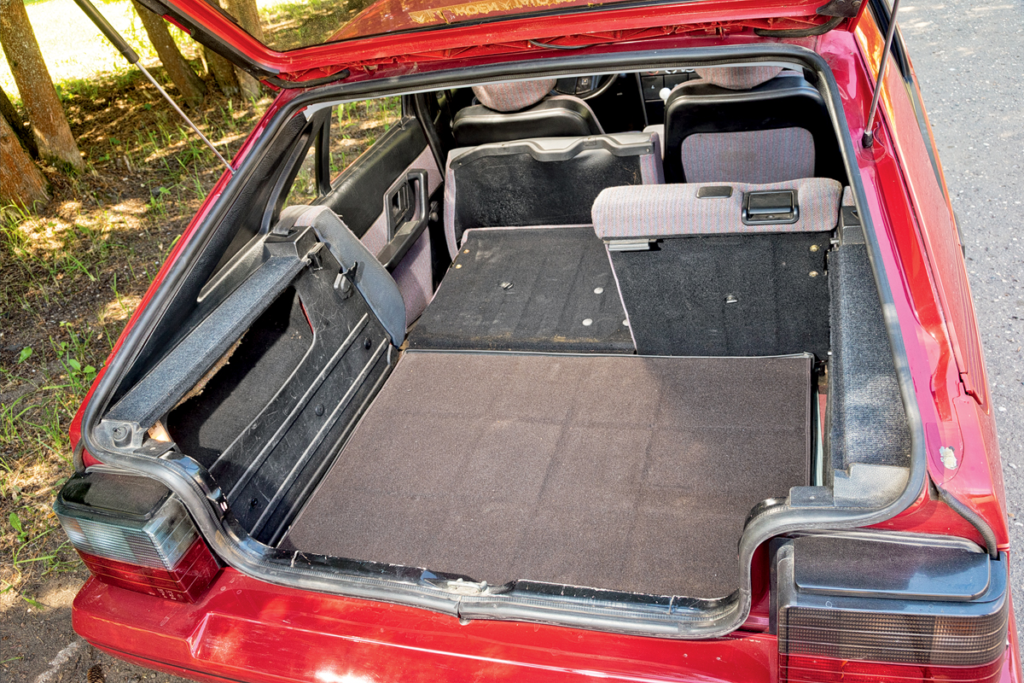
The Peugeot trunk (first slide) has 470 liters of cargo space – with a high board, and there are only a few “useful little things” here, such as the filling neck bump on the right wall. Citroen is more modest in numbers – 444 liters, but the compartment is flat and with shelves on the sides. The sofa folds separately and level with the floor but in two steps. In the two-seater configuration, the useful volume increases to 1455 liters.
An Ageing Alien Spacecraft
The French cars of the late ’80s and early ’90s have all but vanished from our roads, and those that survive have not turned into coveted collector’s items. Estranged from any notion of prestige or aggression, they never gathered a cult following and remain misunderstood and unappreciated. The Citroën stands out even so, for its design and its technical ingenuity — unmistakably an ageing alien spacecraft, a genuine UFO that may not soar the way it once did but keeps its authentic allure.
A Violin Among Synthesizers
The Peugeot 405 is a more intricate story. Even in pristine condition, set against the modern automotive panorama, this car is a violin or a flute among electric guitars and synthesizers: a delicate, fragile instrument capable of very little, which does what it does with a poignant and distinctive resonance. Not everyone will understand or value it. Those who do will remember it.
Healthy Platform Sharing, Illustrated
Let these two cars be remembered together, as an illustration of healthy platform sharing — proof that masterpieces can emerge in the mass market too, and that cost-cutting, when it comes with talent and a love of cars, turns effortlessly into genuine magic.
Photo: Dmitry Pitersky
This is a translation. You can read an original article here: Экономагия: Citroen BX против Peugeot 405 (+ воспоминания Подорожанского и Мохова)

Published February 29, 2024 • 12m to read