
For nearly seven decades the British marque Lagonda has led a flickering sort of existence. It first attached itself to Aston Martin in 1947, under the businessman David Brown, and since then it is remembered only when the sports car maker decides to build something with four doors.
A Badge That Flickers
The first such comeback happened in the early 1960s and lasted four years. The most recent is happening now, in front of us: the Taraf appeared a couple of years ago under an Arabic name, and by February of this year 40 of these 12-cylinder cars had been built and sold. The car in these photographs is the second attempt, from the mid-1970s.
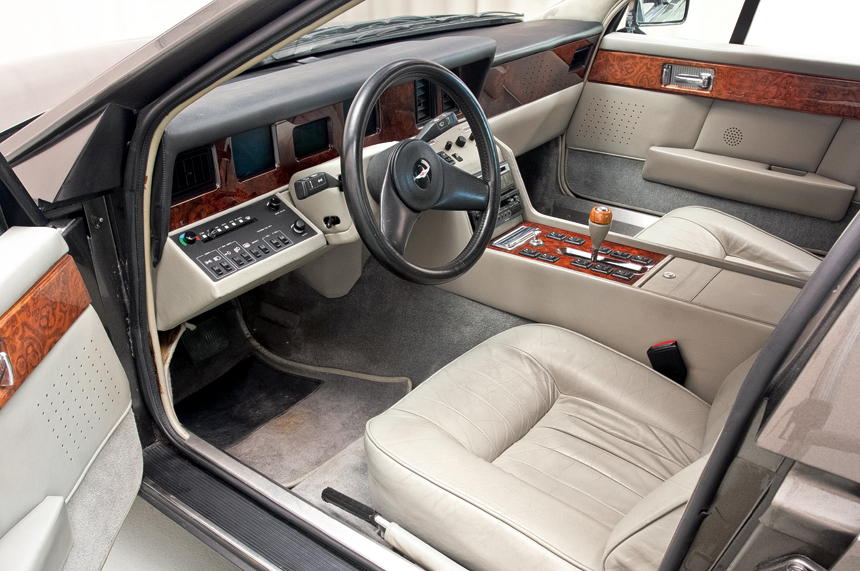
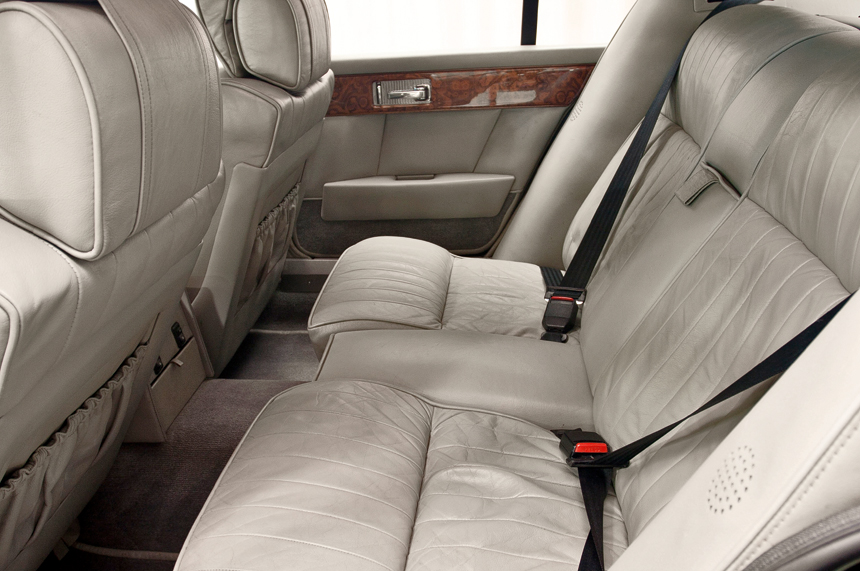
The car’s interior is richly finished: there is both wood and leather, and both, of course, are natural.
Why Aston Martin Needed a Saloon in 1974
The market of the day was not exactly calling for such a car. The early 1970s were difficult for the British motor industry, from British Leyland to Rolls-Royce. Collaborations formed and dissolved at speed, and venerable marques disappeared one after another. Surviving those years took an enormous effort.
Aston Martin had just changed hands, passing from David Brown to a group of independent investors. They urgently needed to establish their position: to reassure everybody that they were still here, still working, still in their segment, and still building excellent, expensive cars.
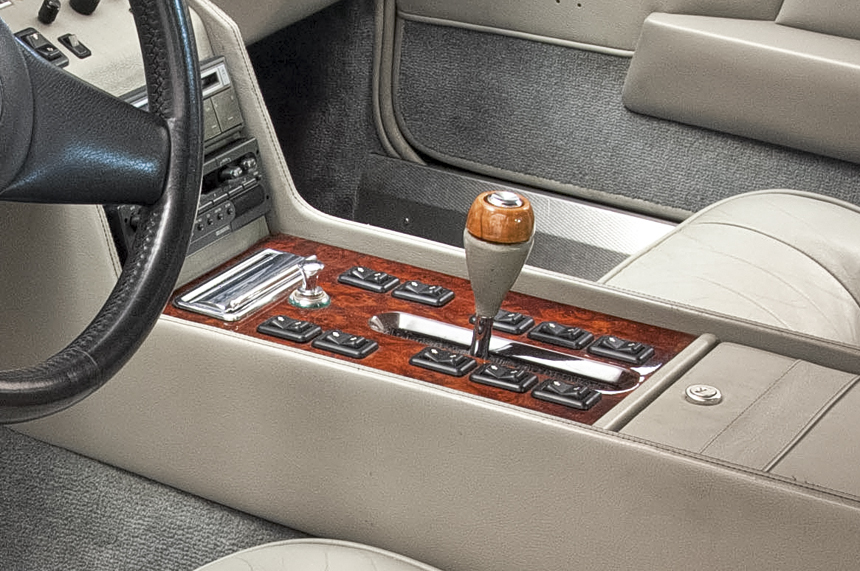
The positions of the transmission lever on the tunnel are not marked in any way – they are also displayed on the electronic display.
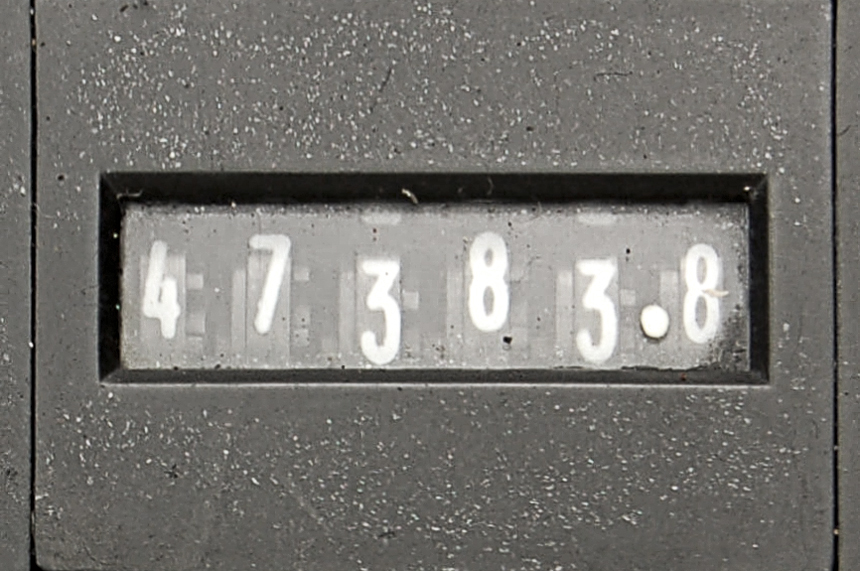
The only normal, non-electronic indicator in the car is the odometer, the total mileage counter. In addition, the daily mileage is displayed on the digital instrument panel.
William Towns Turns Avant-Garde
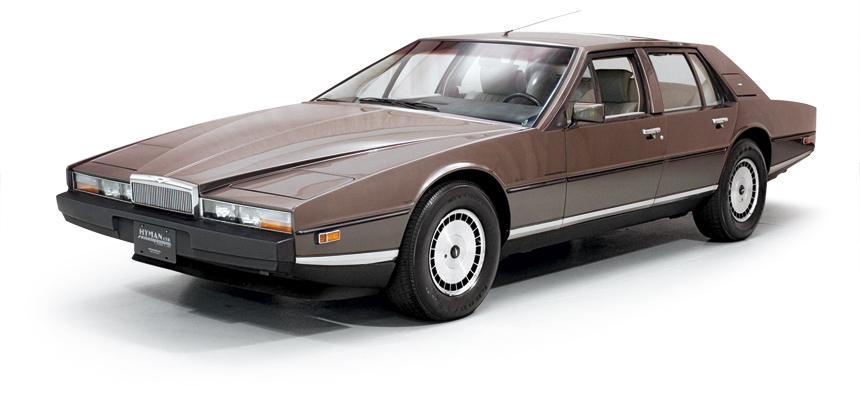
The seven handmade Lagonda saloons of 1974 and 1975 were designed by William Towns, who had worked with Aston Martin since the mid-1960s and had created the successful DBS. No surprise, then, that the Lagonda project went to him. His first instinct was the path of least resistance: modify an existing body, lengthen it, add a second pair of doors, alter the distinctive bonnet shape a little. For good measure he even worked in subtle echoes of the front end of that early-1960s Lagonda.
Then, realising that retro references were not resonating at the time, Towns turned 180 degrees towards the avant-garde. It paid off. The result is what you see here.
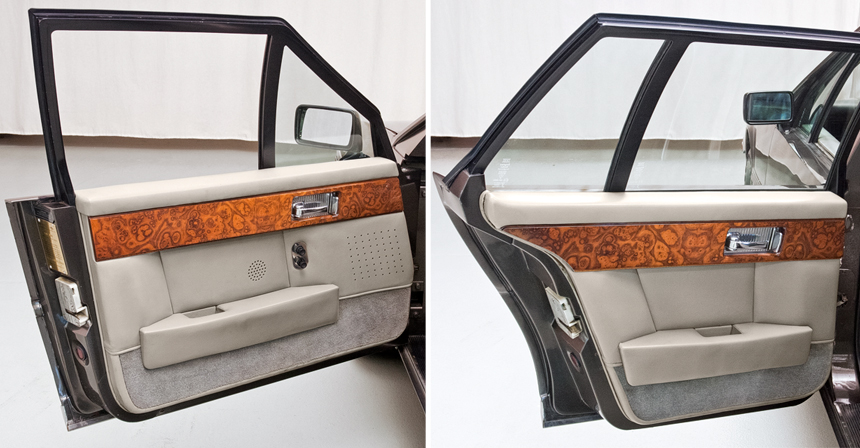
There’s no window up and down button on the inner surface of the doors. That’s correct. Rear windows with this feature only appeared in the fourth series of these cars, and this particular specimen belongs to the second series. In such circumstances, a transparent partially opening panel in the roof above the rear seats becomes an urgent necessity. However, there are also two separate air conditioning systems, one for the front seats and one for the rear. On the driver’s door, you’ll find the window control buttons. Opposite them is a panel with openings, covering one of the speakers in the built-in sound system.
Even now, forty years after its London debut, the car looks futuristic, and it is easy to imagine the sensation it caused in the mid-1970s. That low wedge profile — 1302 mm tall, 5281 mm long — was like nothing else on the world market. Hidden longitudinal members and an extra pair of crossmembers, front and rear, improved the body’s rigidity considerably; running the earlier seven cars had shown they flexed a good deal on the move.
Under the Flat Bonnet
Under that low, flat bonnet they contrived to fit the same V8 as the Aston Martin DBS: 5340 cc, 280 horsepower at 5000 rpm, coupled to a bought-in TorqueFlite automatic from the American Chrysler Corporation. This was not conceived as a sports car, so an automatic was defensible — although, sports car or not, it managed 230 km/h and 0 to 60 mph in 8.8 seconds, which is impressive for a four-door saloon. The suspension came from the DBS and was modified. The car went round corners remarkably well. The disc brakes did not get on with the steel wheels and tended to overheat; extra attention was paid to them, and they were never entirely sorted.
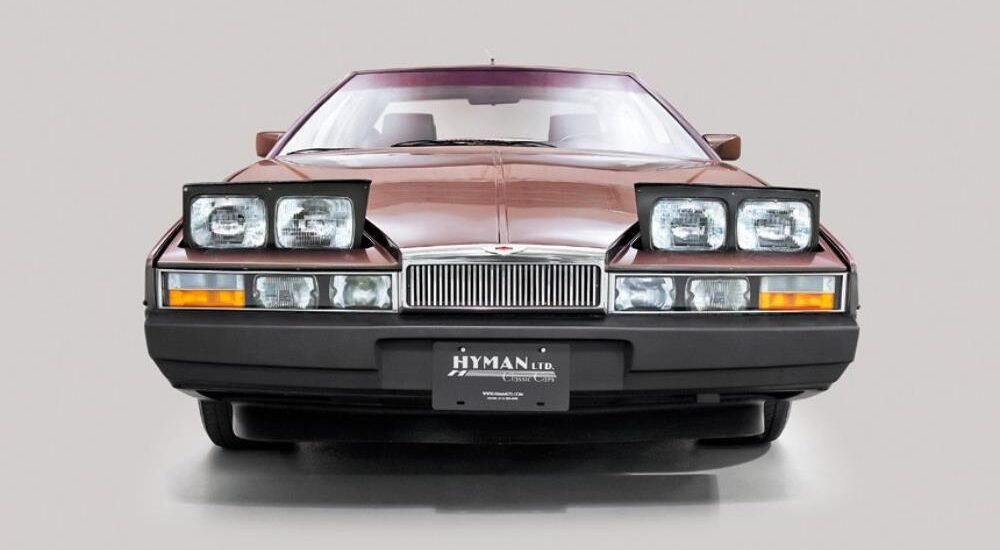
The headlights refused to fit into the flattened nose, so they had to be concealed — retractable, like those of the ten-year-old Oldsmobile Toronado.
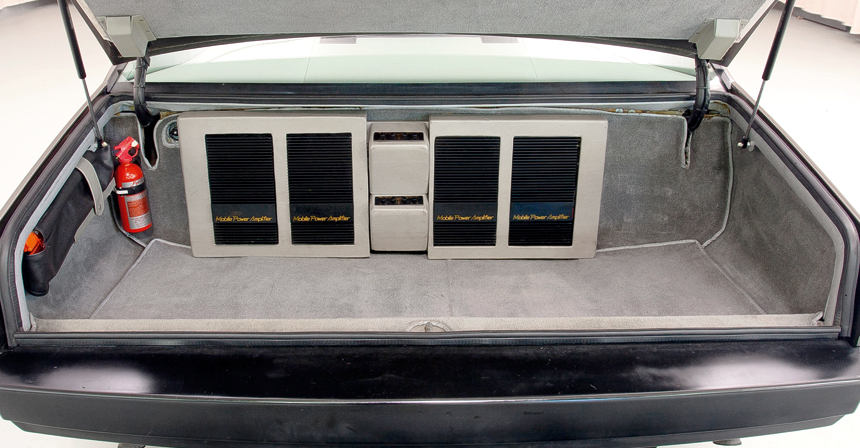
Another later addition: a powerful Yamaha amplifier in the trunk. There’s also a CD player, but it’s discreetly hidden.
The Cabin From the Future
The futurism of the exterior was taken to unbelievable heights inside. The steering wheel had a single spoke, like that of the French Citroen DS, the other car of the future at the time. In front of it was an instrument cluster with no dials or gauges of any kind: a wholly black panel on which small red digits lit up once you turned the key. Towns’s vision extended to a digital instrument panel, and it was not his fault that the digital technology of the period was not up to it. Neither the LED displays of the early cars nor the cathode-ray tubes of the later ones were particularly reliable. Developing all that electronics cost considerably more than building the car itself — the more so as the avant-garde display came with a touch-sensitive control panel in place of ordinary switches and buttons.
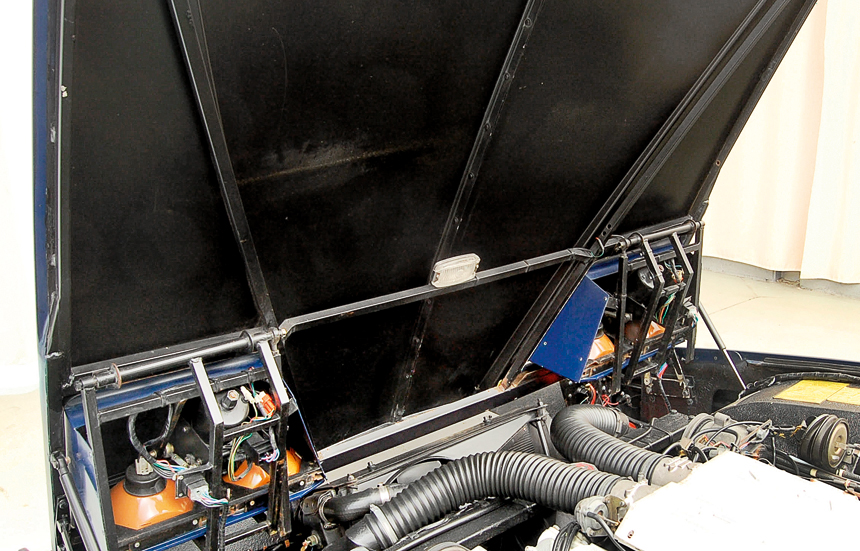
The hood tilts forward in a ‘Zhiguli’ (Lada) manner, and then the mechanisms for retracting the headlights become visible.
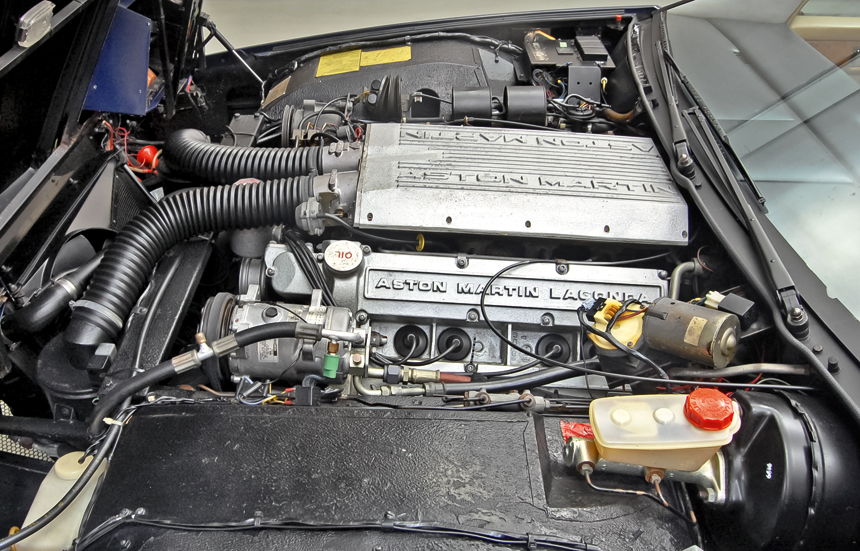
And instead of a heart, a fiery engine, the same one that was installed in Aston Martin DBS cars: eight cylinders, four overhead camshafts, and 280 horsepower, but according to knowledgeable people, it definitely lacked torque at low revs.
Four Series in Sixteen Years
Counting from the first seven cars, production of the Aston Martin Lagonda divided into four series:
- Series 1 — the seven handmade saloons of 1974–1975
- Series 2 — the car on these pages, and the most numerous: 458 built between 1976 and 1985. It was this version that began exporting to the United States in 1972, fitted with the lighting features needed to comply with U.S. standards
- Series 3 — 1986–1987 only, with fuel injection. Just 75 built, and externally indistinguishable from the second series
- Series 4 — shown at the Geneva Motor Show in March 1987 and reworked by Towns himself; 105 built up to January 1990
For the fourth series Towns carefully smoothed away some of the sharpest angles, deleted the double longitudinal pressing that ran the whole length of the flank, and finally did away with the retractable headlights, which were never much use in bad weather. The easiest way to tell a fourth-series car from the rest is head-on: six headlights, three either side of the false radiator.
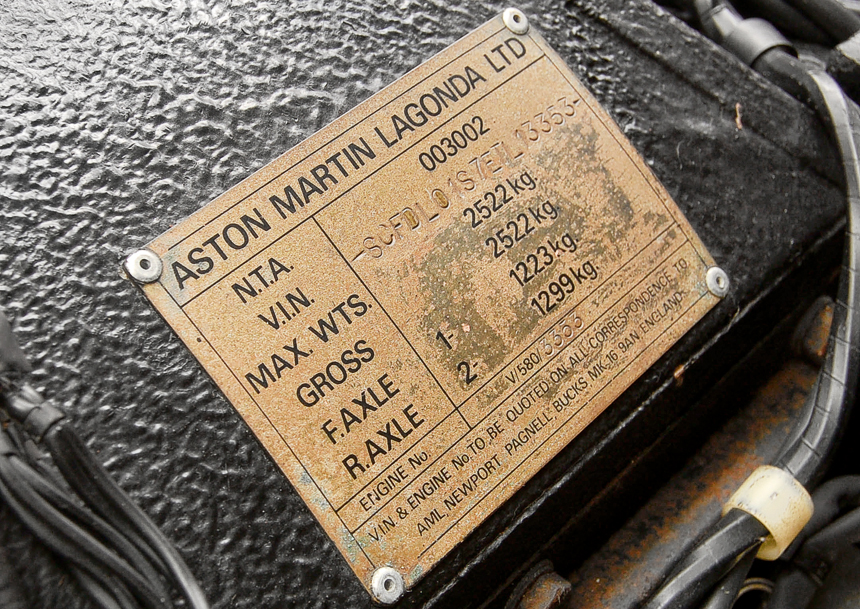
This is the factory plate with the serial number and specifications. The two bottom lines indicate the manufacturer’s address and the instruction to ‘always provide the above VIN and engine number in all correspondence regarding maintenance and repair.
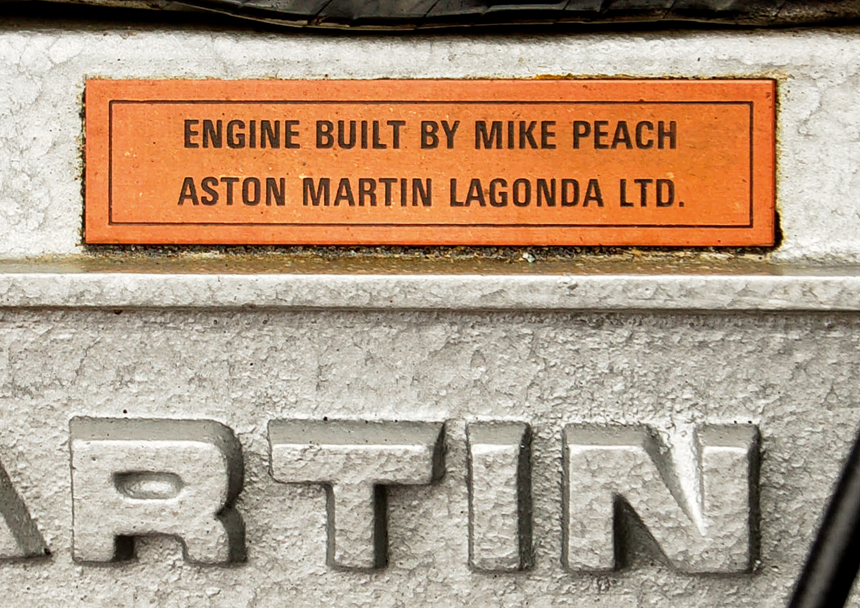
The author’s mark of the person who assembled the engine for this specific car.
Did It Work?
Fewer than six hundred and fifty cars is no kind of record. But given a launch price nearly level with a Rolls-Royce or a Bentley of the period, nothing else could reasonably have been expected. The model did what it was built to do: within eighteen months of the debut, more than 170 pre-orders had been placed, each with a deposit of two thousand pounds. Filling them took the Lagonda to forty-six percent of Aston Martin’s total output by 1979. It made money, and — most important of all — it put the company back in the spotlight, exactly as the new owners had hoped. The customer base widened too: wealthy oil magnates from the Middle East were willing not merely to leave a deposit but to pay cash on the spot, simply to have the car sooner.
Today’s Lagonda appears to be aimed at exactly the same clientele. It is no accident that it carries the Arabic name Taraf, which translates roughly as “utmost luxury” — nor that its debut took place not in Geneva or London but in Dubai.
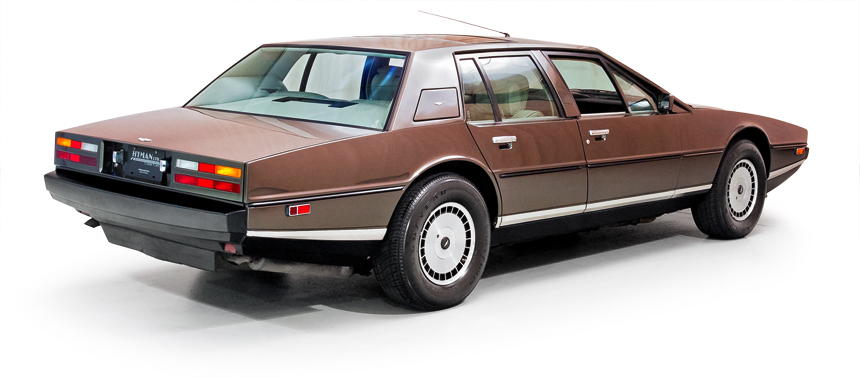
Photo: Sean Dugan, www.hymanltd.com
This is a translation. You can read the original article here: Эксклюзив: Aston Martin Lagonda в рассказе Андрея Хрисанфова

Published December 06, 2023 • 7m to read