
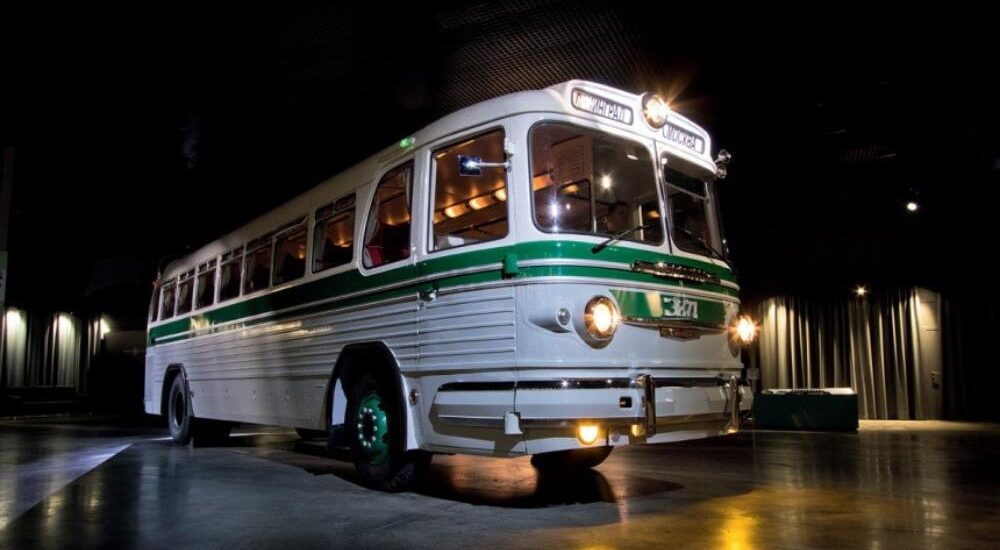

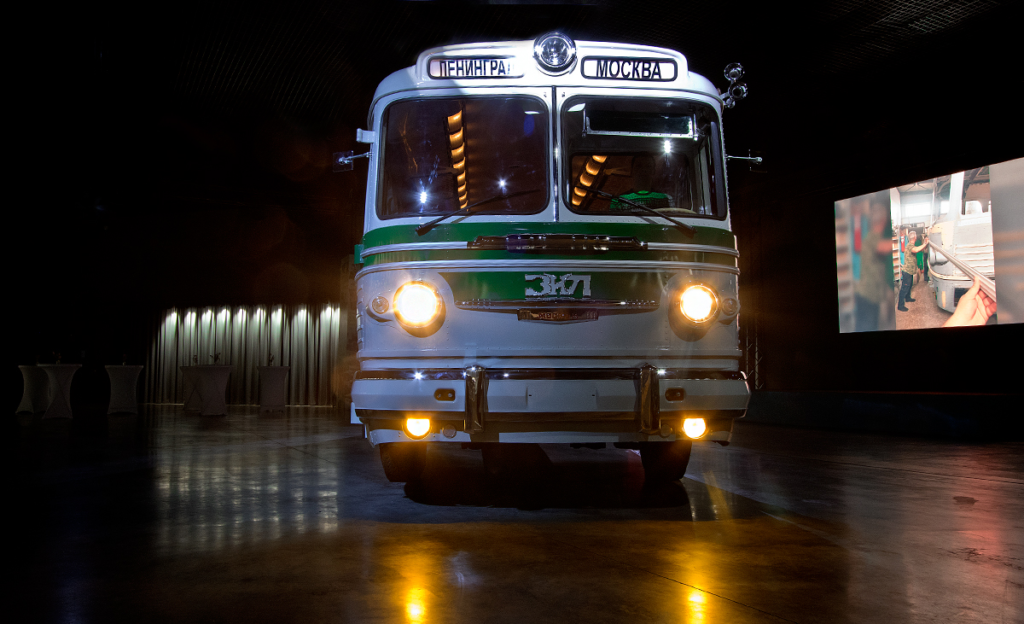
Up until recently, only one restored example of the distinctive ZIS/ZIL-127 bus, known for the searchlight set into its nose, its ribbed aluminum sides riveted together, and plush seats akin to those in the TU-104 airliner, existed—and it was located in Tallinn. Now, a second one has made its debut in Moscow. This bus underwent a meticulous five-year restoration and has been transformed into a spectacular sight.
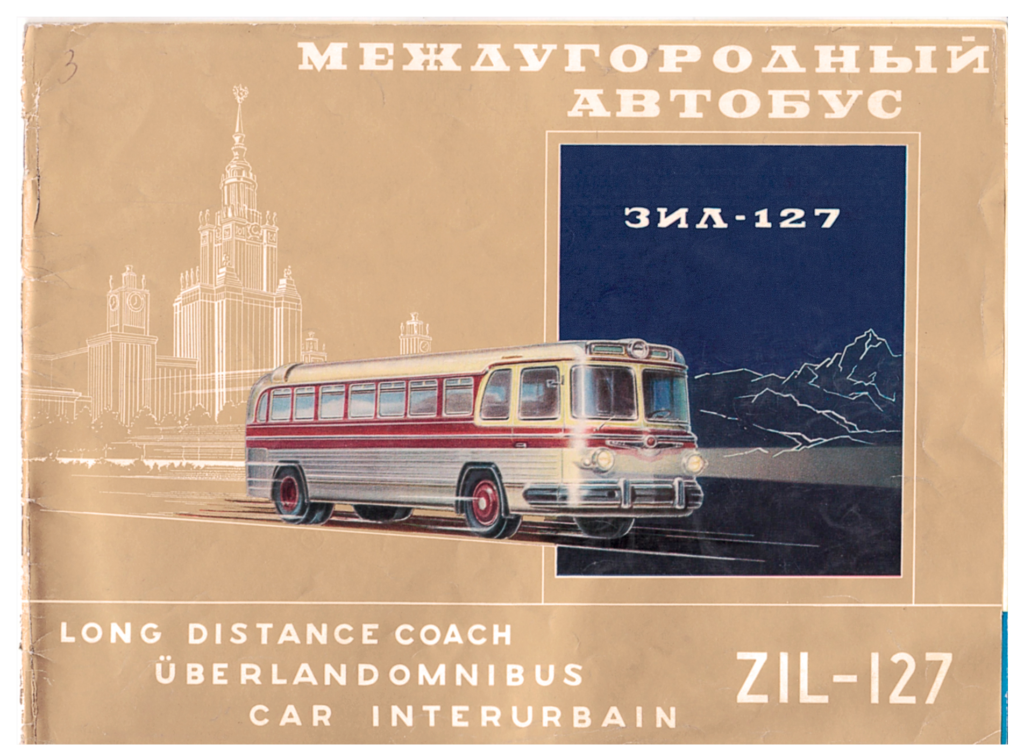
A Star of the 1956 Exhibition
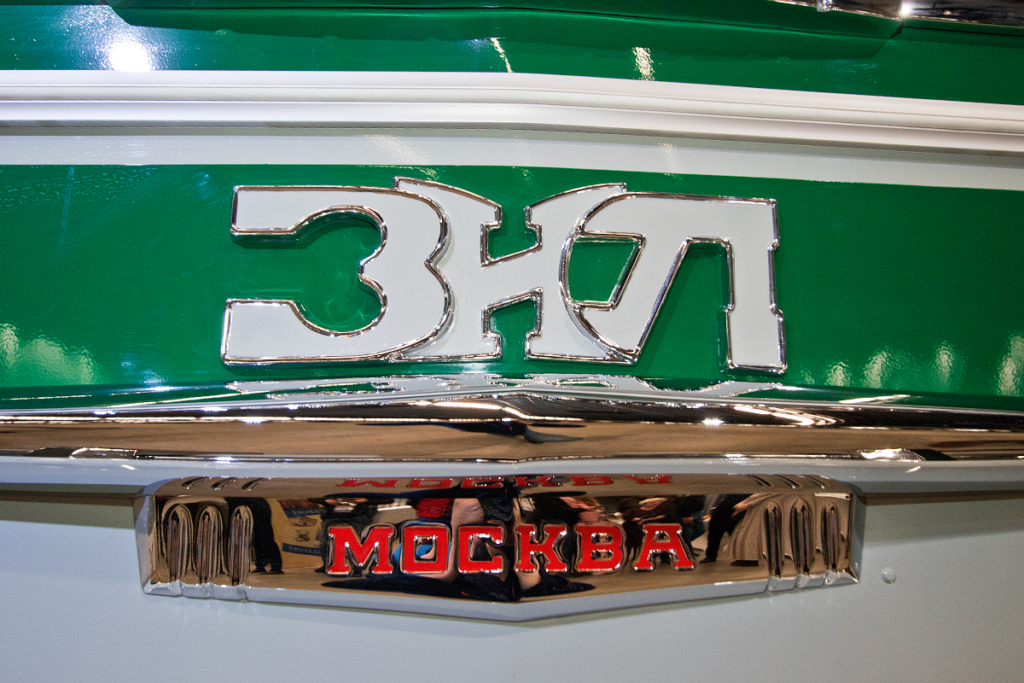
Back in the summer of 1956, the VDNKh Engineering Pavilion — now known as Cosmos — began showing the first Soviet intercity liner, the ZIS-127, alongside other automotive marvels. The chrome details and the gleaming “ZIS Moscow” inscription on the nose must have had visitors imagining swift journeys to distant cities, or luxurious resorts.
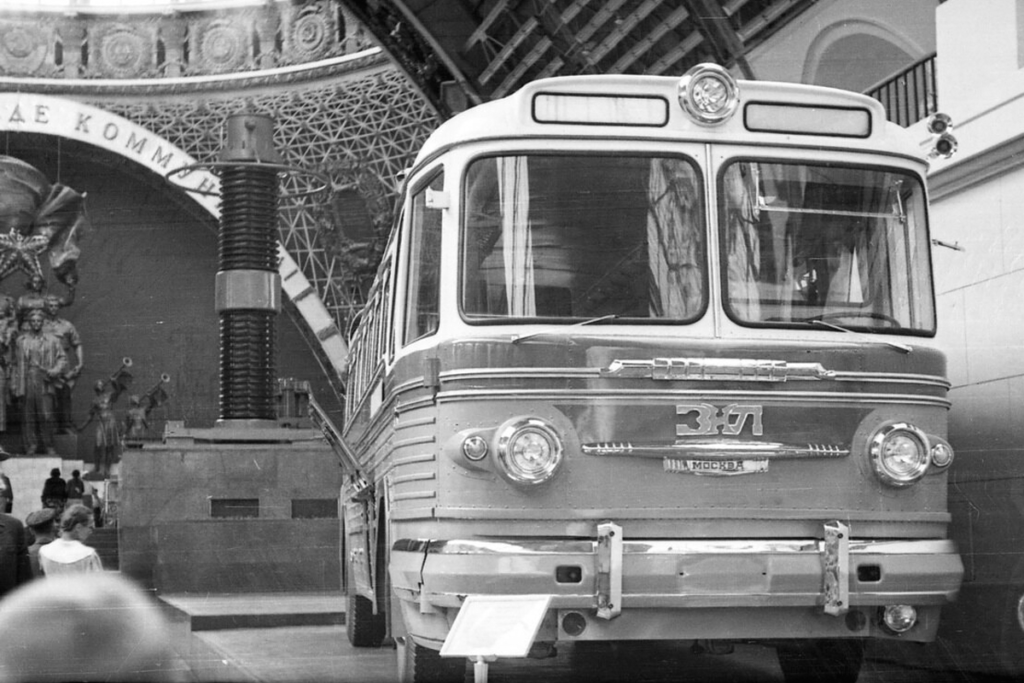
ZIL-127 at VDNKh, 1958 (photo pastvu.com)
“Faster Than a Train”
On December 2, 1957, “Evening Moscow” reported on a new intercity route under the headline “Faster Than a Train”: a swift and comfortable ZIL-127 had left Kursky Rail Terminal for Yaroslavl at eight that morning, offering 32 soft seats with reclining backrests and everything a passenger might need — effective heating, ventilation, radio and a clock — with special compartments under the body for luggage. The paper noted that the bus covered the over 280 kilometers to Yaroslavl in five hours, including stops, reaching speeds of 70—80 kilometers per hour on certain sections, while the train journey takes six hours.
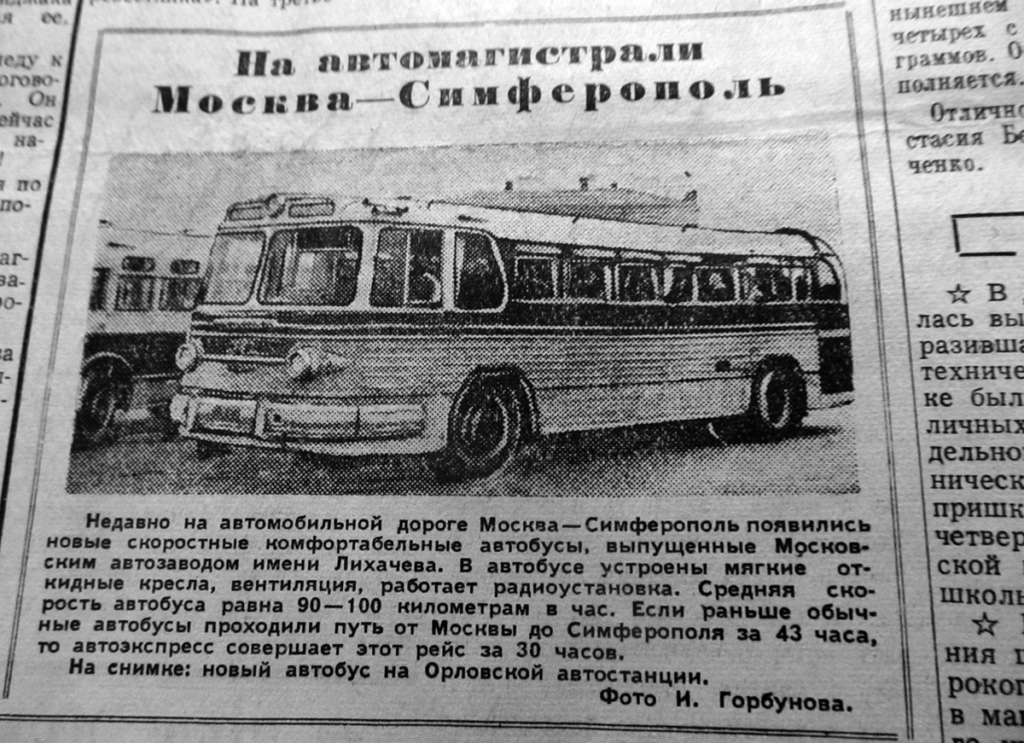
Note from the newspaper “Orlovskaya Pravda”
These express buses outpaced their predecessors on the Moscow—Simferopol route too, cruising at 90-100 km/h and completing the journey in 30 hours — a substantial saving on the 43 hours the older ZIS-155 needed. They were the Soviet answer to the iconic American Greyhound buses known for coast-to-coast travel.
Back Where It Started, Seven Decades On
Nearly seven decades later the ZIL-127 has resurfaced at VDNKh, not far from where it was originally displayed, in the neighbouring pavilion that houses the GON museum — a place that has become a hub for retro automotive projects. With its unparalleled beauty and singular design, the ZIL-127 arguably qualifies as a bus with a special purpose.
What Was New About It
The model brought several firsts to Soviet buses. It was powered by the two-stroke YAAZ-206D diesel, unlike the diesel-electric ZIS-154 city bus; it had power steering borrowed from a Lviv loader; and it carried a tube radio receiver, the model A-5, also used in the luxury ZIS-110 and ZIM cars.
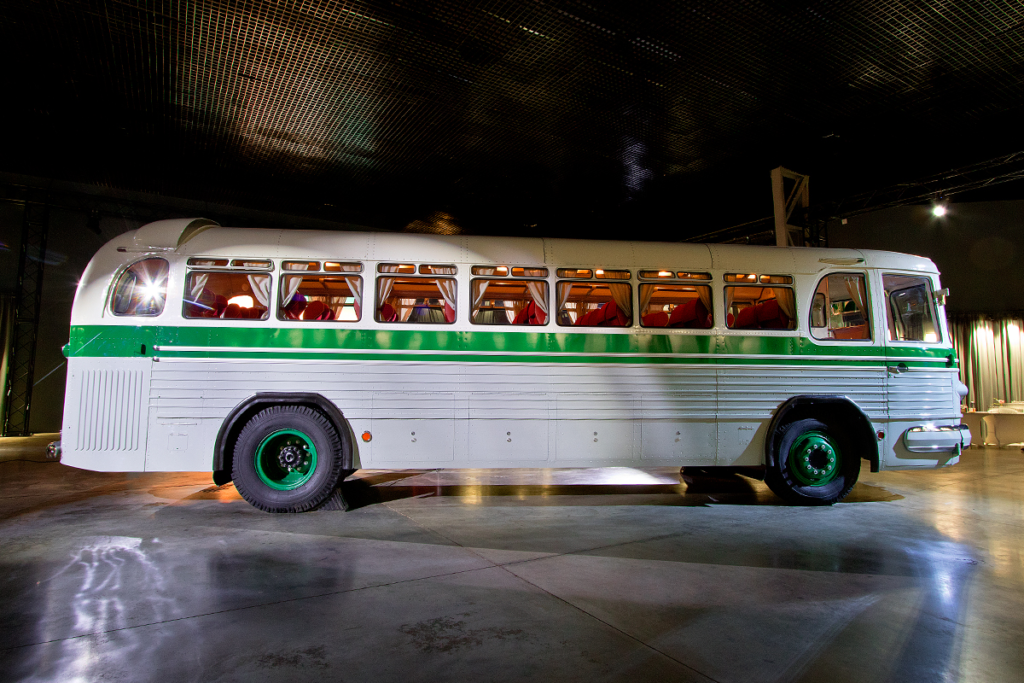
The influence of the American industry, and specifically of the ribbed-sided Greyhound buses, was heavy: ZIS set out to emulate American design. The attention the ZIL-127 received was substantial, and it appeared regularly in “Evening Moscow”, which chronicled not only the bus’s features but the trouble it ran into.
A Designer’s Complaint in Verse
Before the launch into production, a designer humorously lamented in a May 5, 1955, verse, “I am completely unaware of the ZIS-127 brand. Without this brand, I have enough worries. I’m still on the edge, knowing nothing about where the equipment or the drawings are. So, don’t bother me!”
Despite promises of 100 buses in 1959, only 30 were actually built.
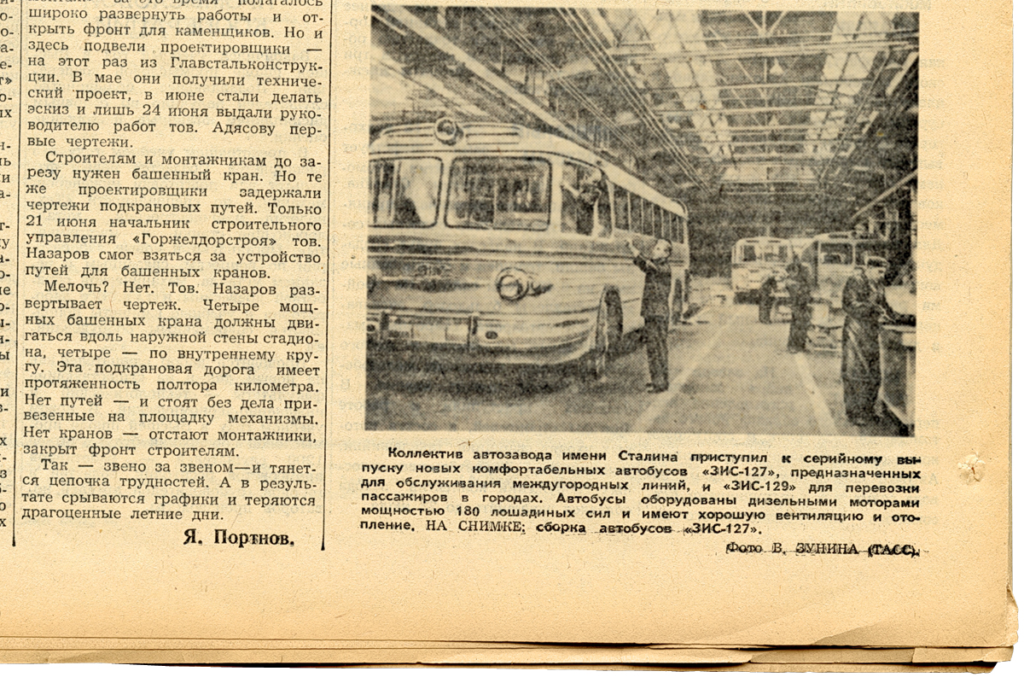
On July 6, 1955, “Evening Moscow” reported on the start of serial production of ZIS-127 buses
On July 6 the factory began mass production of the ZIS-127 for intercity work and the ZIS-129 for urban routes — though the latter was ultimately judged a failure and never reached mass production.
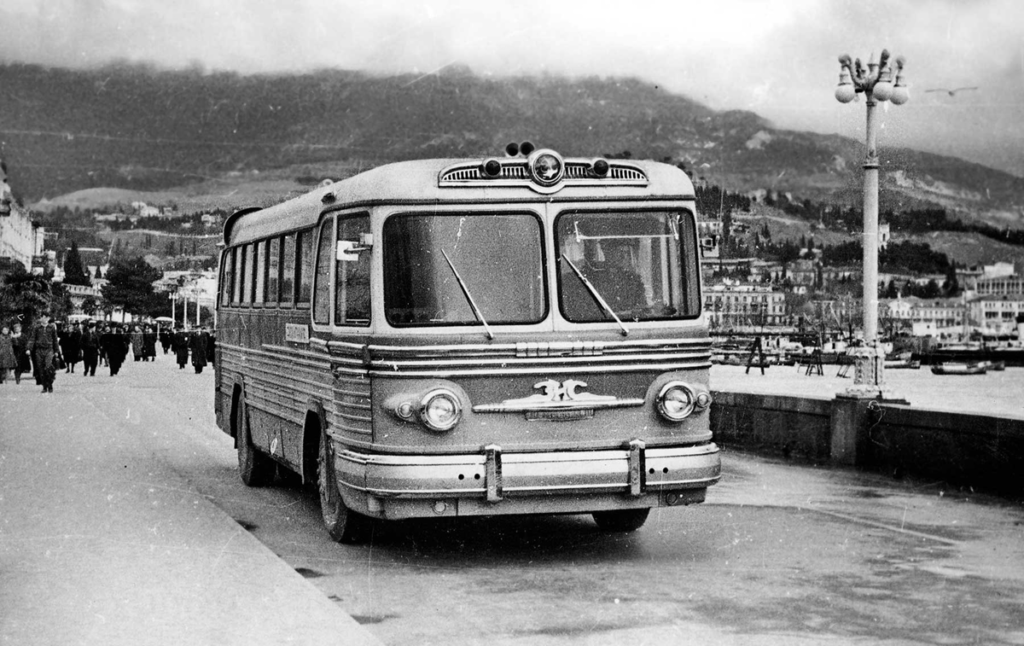
ZIS-127 on the Yalta embankment – apparently, one of the prototypes. (Photo pastvu.com)
The Trouble the Newspapers Reported
The difficulties continued. On January 18, 1956, “Evening Moscow” detailed how the first batch of intercity ZIS-127s needed significant rework because of inadequate design and documentation, which pushed production costs up substantially.
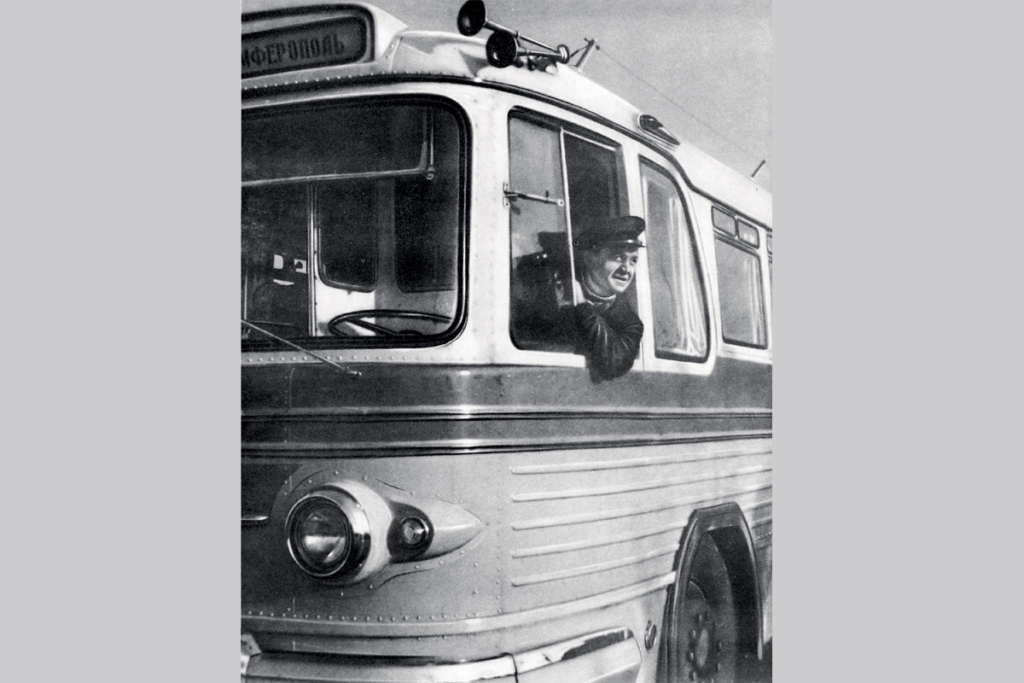
Photo from the magazine “Za Rulem”, No. 8, 1957
Drivers voiced their own dissatisfaction on May 8. The bus could cut the Moscow-Kharkov journey from 22 hours to 17, they pointed out — and yet they were penalised for speeding and given minimal rest under stringent schedules.
Silver Horns on the Roof
Drivers also asked for the higher speed to be legalised on the highway for the new model, and for signs requiring other vehicles to give way to buses “with a special signal”. There was indeed such a signal: silver horns on the roof, a mighty pneumatic C42, permitted only on highways.
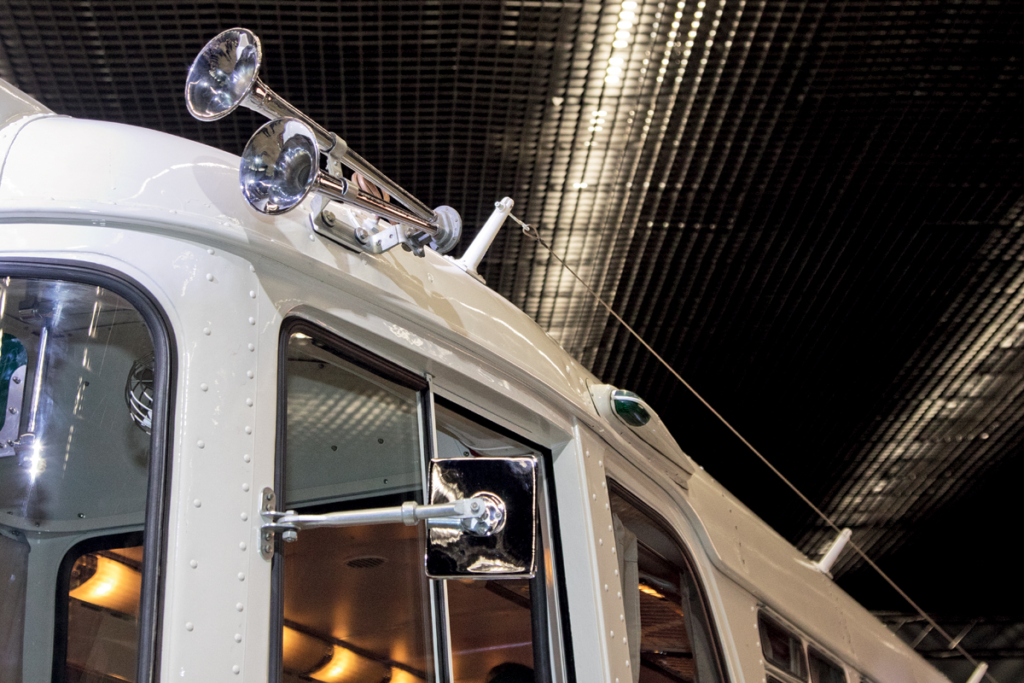
On the roof – a pneumatic signal and a horizontally stretched radio antenna. This type of horn was produced only for this model: it was distinguished by chrome plating and mesh inside the “horns”
By June 1 the police had been instructed to let ZIS-127s travel unhindered at higher speeds, accommodation for driver rest was improved, and journey times fell significantly.
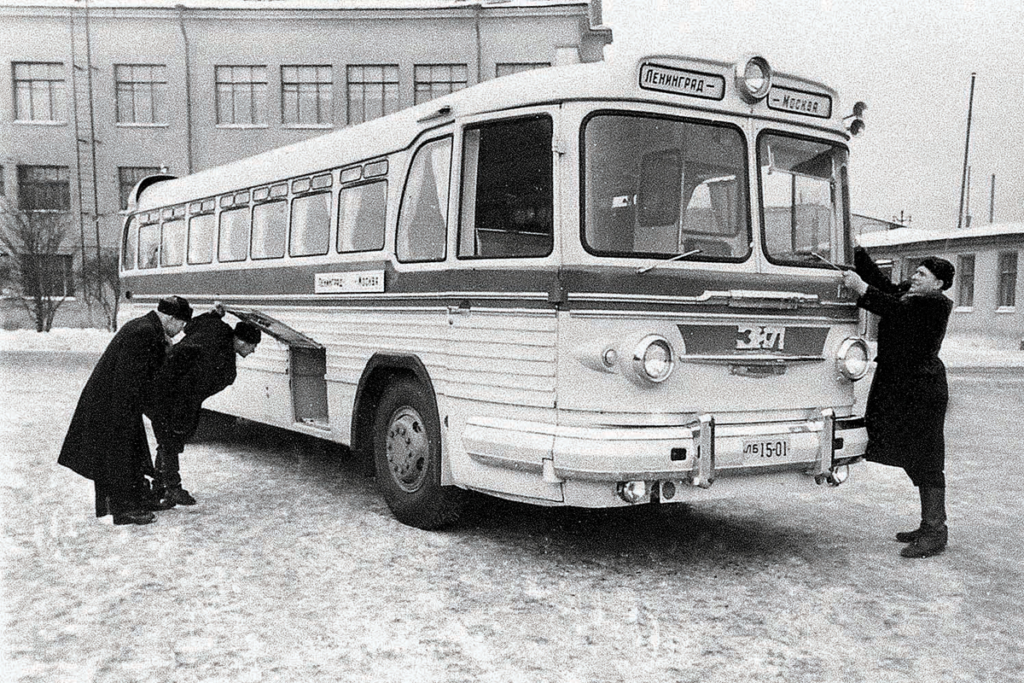
Moscow to Leningrad Overnight
On January 28, 1958, with the Moscow-Leningrad highway complete, it was announced that the route would be served by nocturnal high-speed ZIL-127s. The journey, stops included, was timed at 14 hours, with buses leaving daily at 6:40 PM and arriving at 9:00 AM. A ticket cost 102 rubles and 60 kopecks, at a time when the average salary was 767 rubles.
By April 16, 1959, passengers of the TU-104-B on the newly opened Moscow-Leningrad line began their journey not at Vnukovo Airport but at Revolution Square, where three freshly built green-and-blue ZIL-127s waited to move them from one aircraft seat to another.
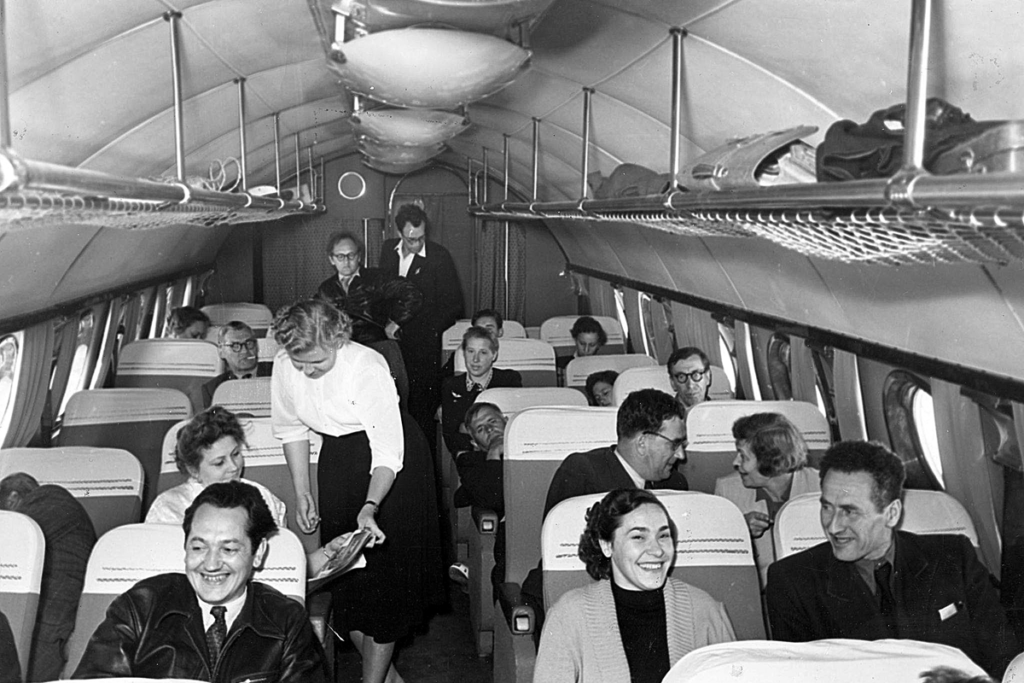
Interior of the Tu-104 airliner
On June 7, 1961, advertisements for Mosttransagency’s routes to Leningrad, Yalta, Rostov, Kharkov, Minsk, Pskov and Novgorod were still selling the comfort of the ZIL-127, noting that the buses arrived at the boarding point 30 minutes before departure.
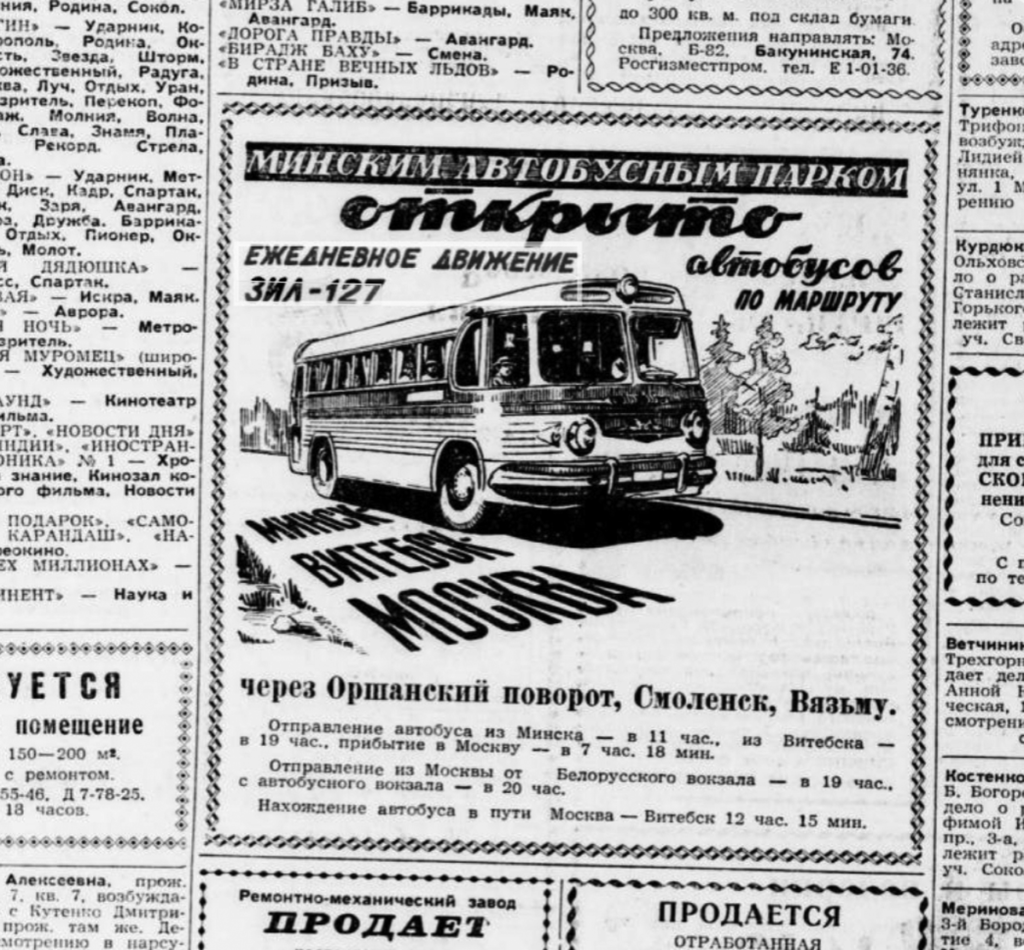
Killed by a Convention, and by Hungary
That same year the ZIL-127 production line came to an end. Over five years, 851 units were built. The formal reason was non-compliance with the width limit of the Road Traffic Convention, which the USSR had signed: 2.68 metres exceeded the 2.5-metre limit.
The real reason was economic, and came out of the Council for Mutual Economic Assistance, the Soviet-led economic bloc. To support Hungary’s automotive industry it was decided to stop building the ZIL-127 and instead import Hungarian Ikarus-55 Lux buses into the USSR in bulk.
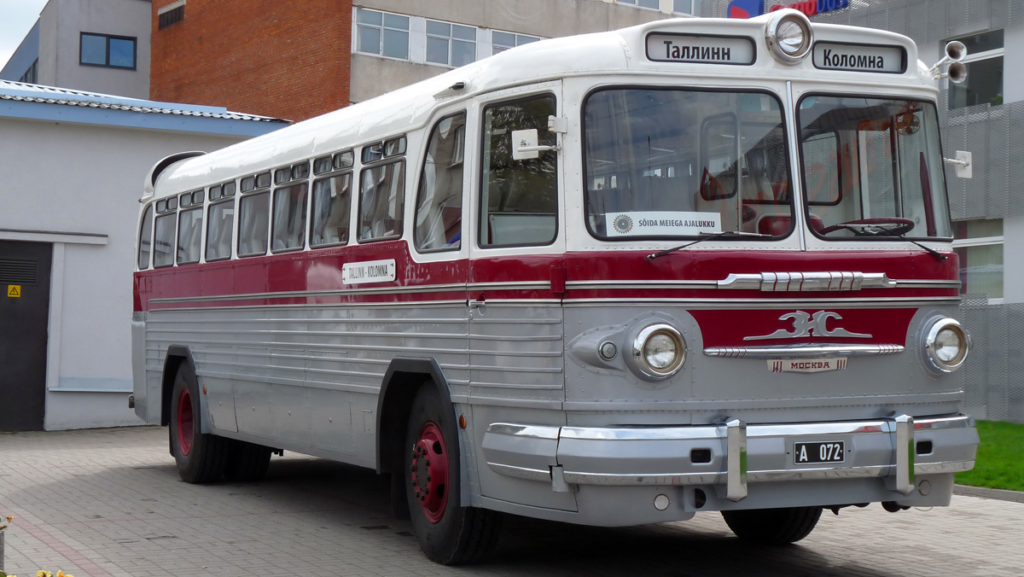
A restored example from Tallinn before being sent to the “World of Buses” exhibition in Kolomna near Moscow (photo: wikipedia.org)
Four Survivors, and Not One of Them Whole
ZIL buses ran out of the Moscow bus terminal until 1972. Today only four examples of the model survive within the former USSR, and none of them complete. The one operational restored version was in Tallinn and has travelled to Russia for exhibitions. Another is believed to be in Riga, painted pink for a music video, its condition unknown. And in the Mosgortrans stores there is a severely deteriorated body, stripped of its components.
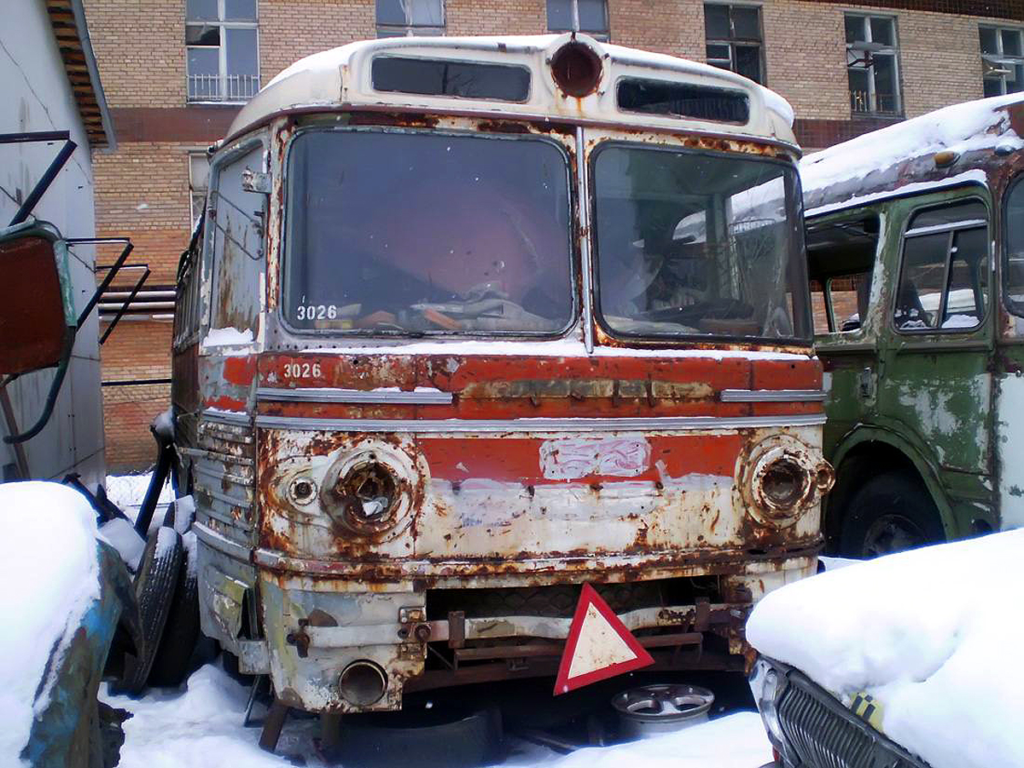
This type of body is stored in the Mosgortrans storerooms (photo by Andrey Mikhailov, 2008)
From Shuttle Traders to a Scrapyard
The 1956 car discussed here had a somewhat fortunate life after service. Decommissioned, it carried shuttle traders from Bataysk to the flea markets of the capital through the 1990s — though by then it was far from its prime and resembled a weary trolleybus.
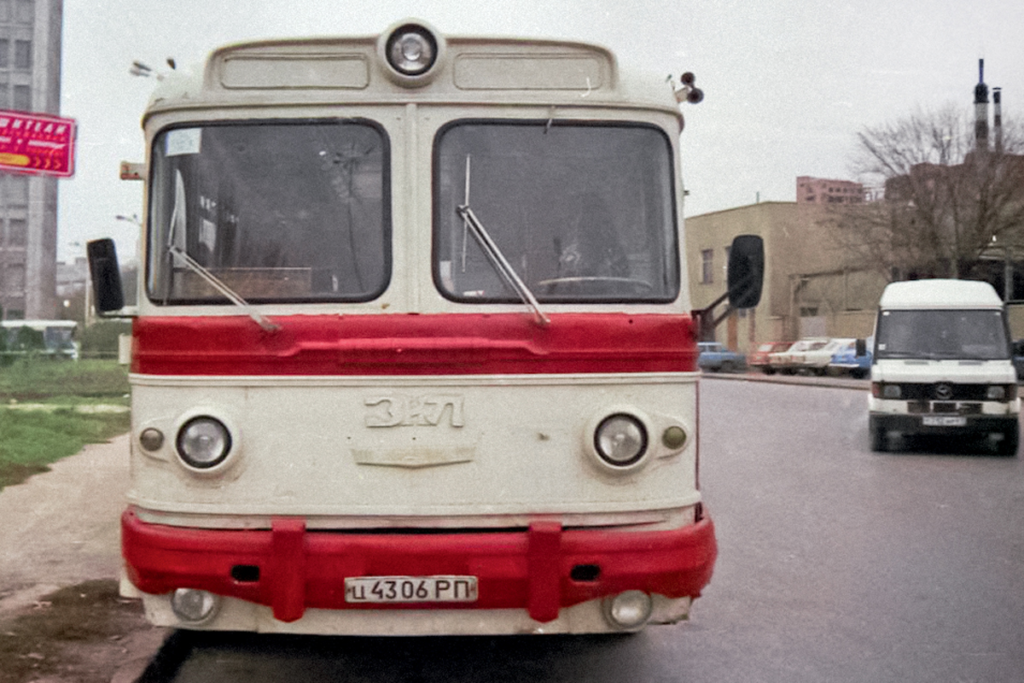
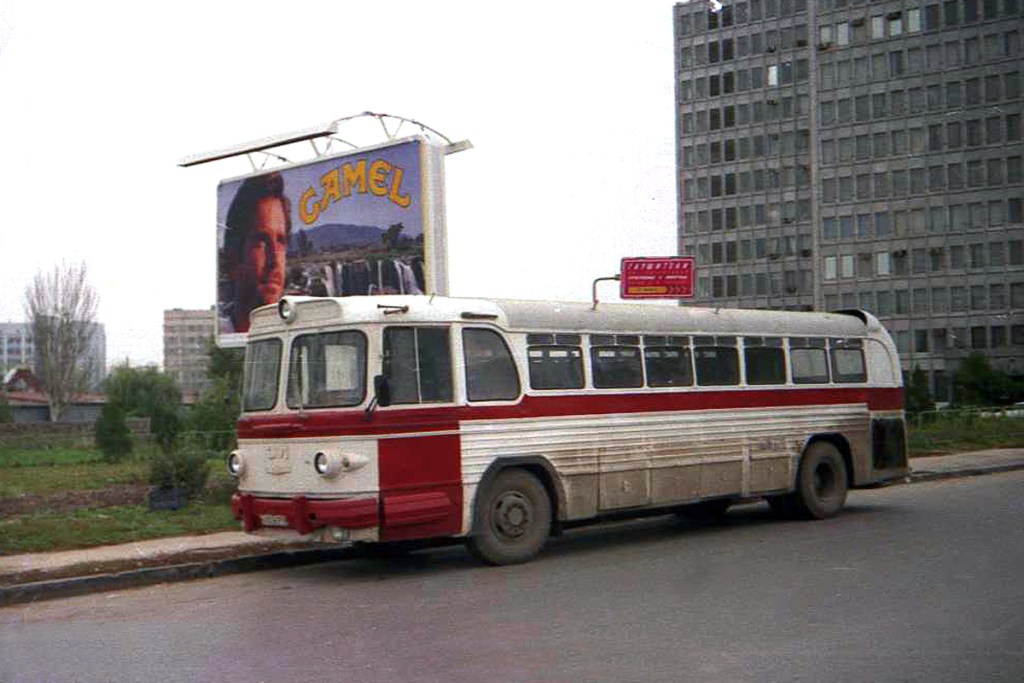
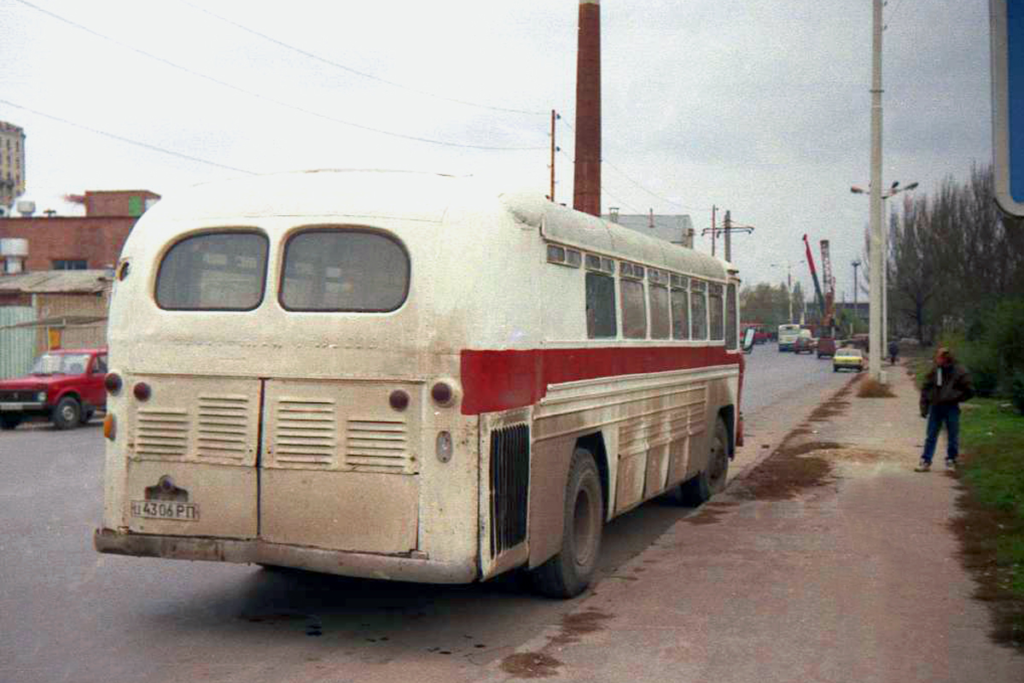
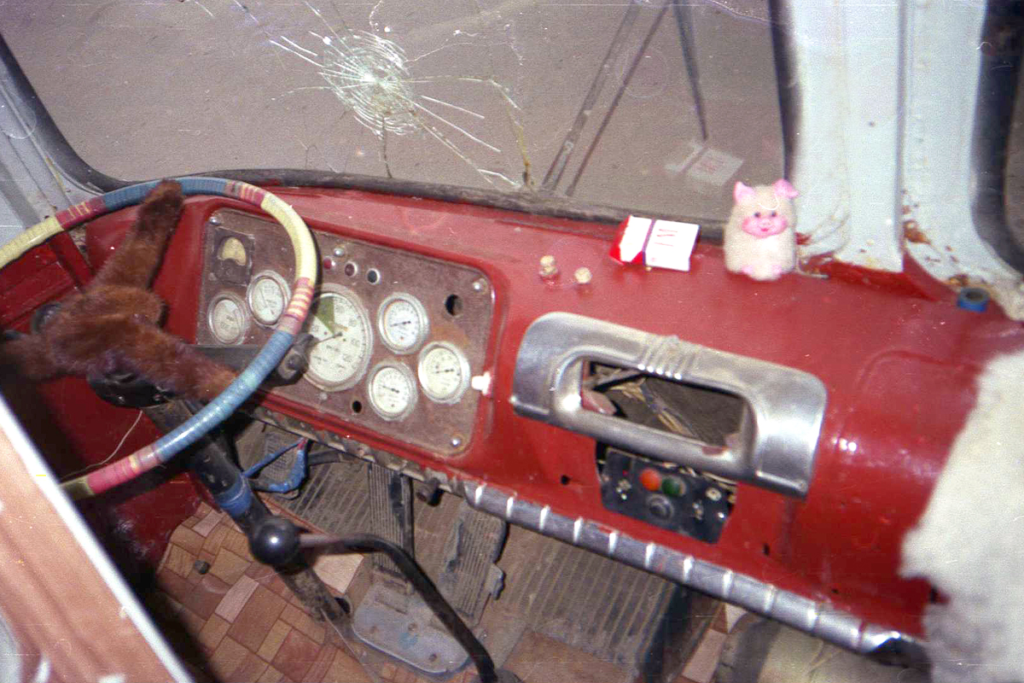
This is what the example from our article looked like in 1997, when it was transporting shuttle traders (Photo by Oleg Chernikov)
Eventually the bus ended up at ZIL, exchanged for two trucks in the hope of a restoration. That plan never came to anything, and it stood idle for a decade.
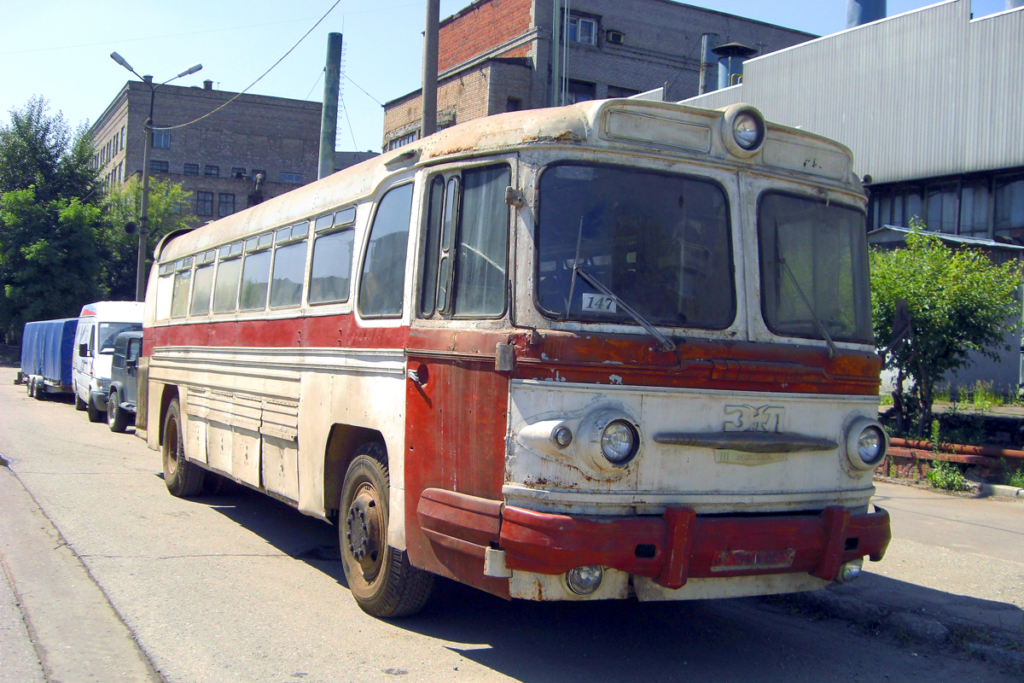
This is what the bus looked like when it was parked at ZIL (photo from the VK group amozilclub)
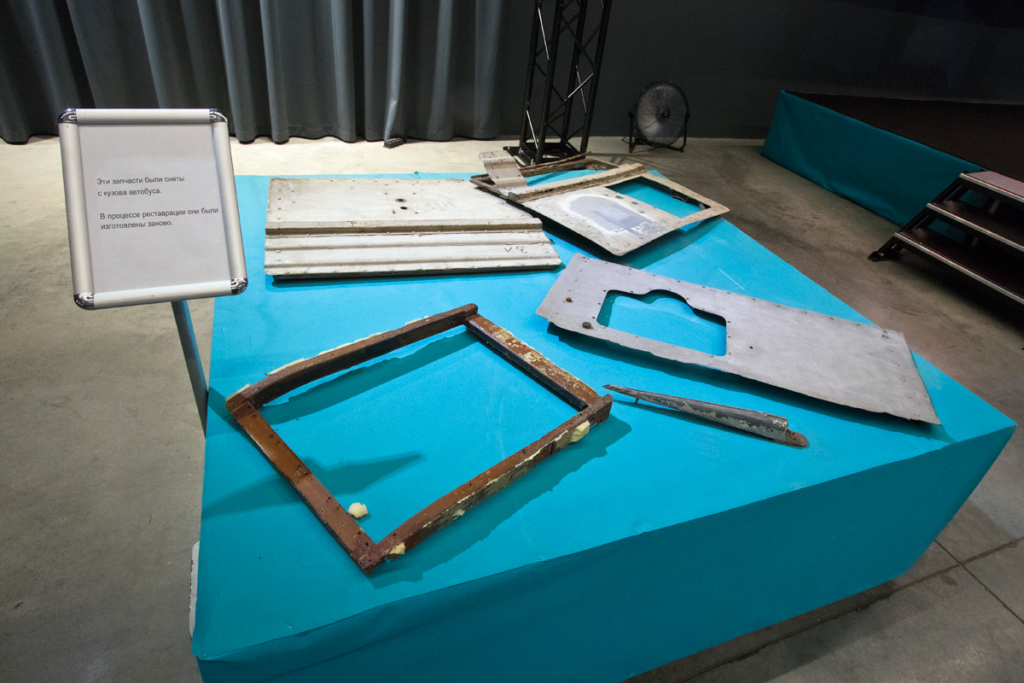
Instead of these parts (here are only some of them), removed from the bus during the restoration process, new ones were made
Rescued From a Demolition
When the factory faced demolition, this and other vehicles were rescued by enthusiasts from MSC-6, led by Kirill Molodtsov. Restoration began in 2018 and involved digital reconstruction of the original drawings and the fabrication of new parts. The full restoration brought the bus back to its original splendour, and took around 30 people to do.
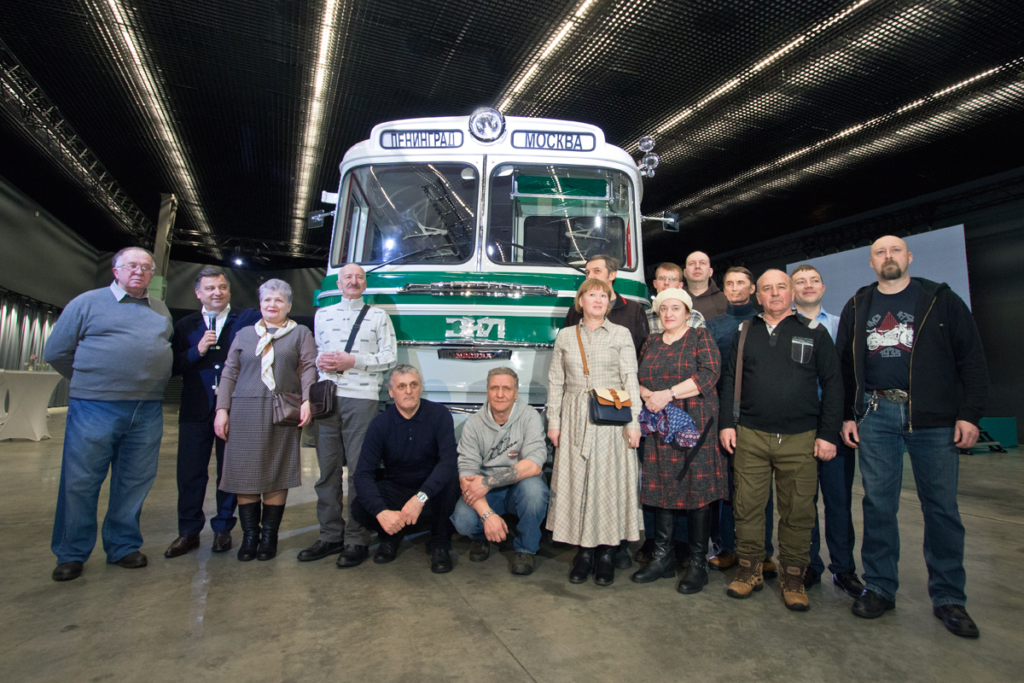
A team of restorers…
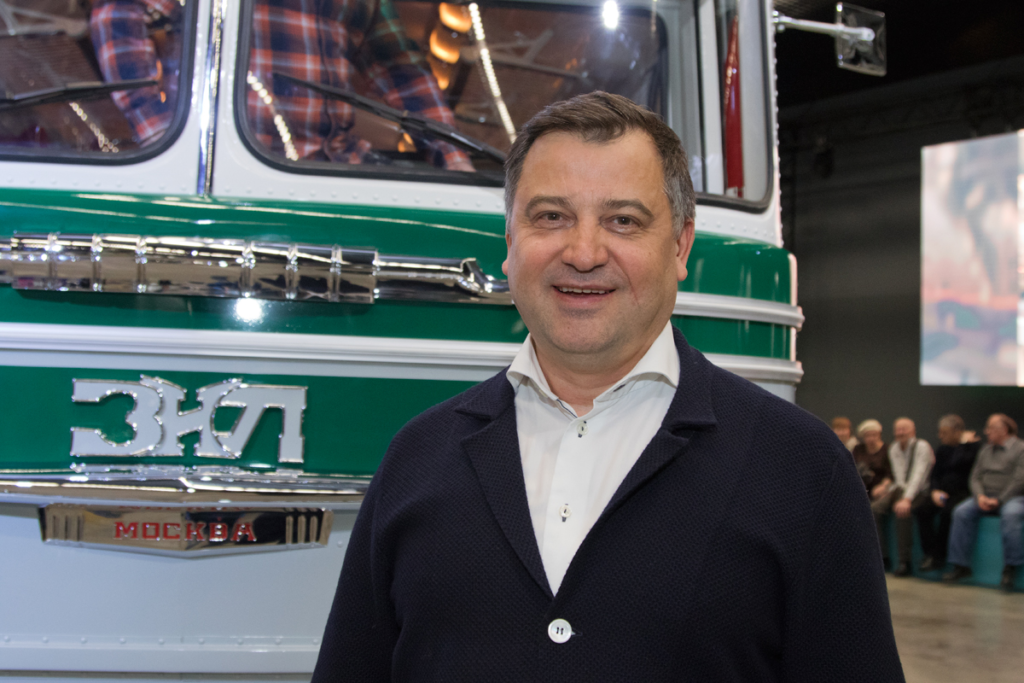
…and its leader Kirill Molodtsov
Inside: An Aircraft Cabin on Wheels
Today the bus lives under the arches of the GON museum, and its elegance is unmistakable. A uniquely heavy door with a satisfyingly clicking lock invites you into an interior that recalls an aircraft, with luxurious semi-sleeper seats and a cockpit full of vintage controls.
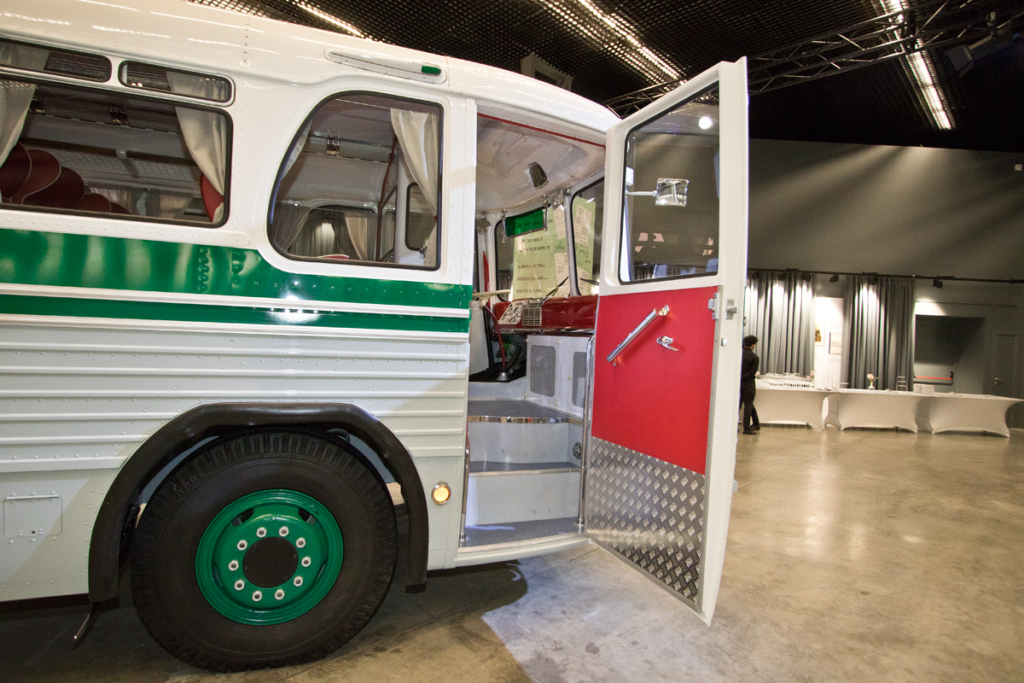
There is only one door – in the front, a hinged one
Behind the driver is practically an aircraft cabin: two lines of ceiling lights, luggage racks and plush seats that the operation manual itself calls “semi-sleeper”. I have never met seats this comfortable on a bus. You sit down and sink between the armrests, and pull the handle at the side and not just the backrest but the whole seat reclines into a half-lying position. To repeat what the restorers say, these seats are of a kind with those on the Tu-104.
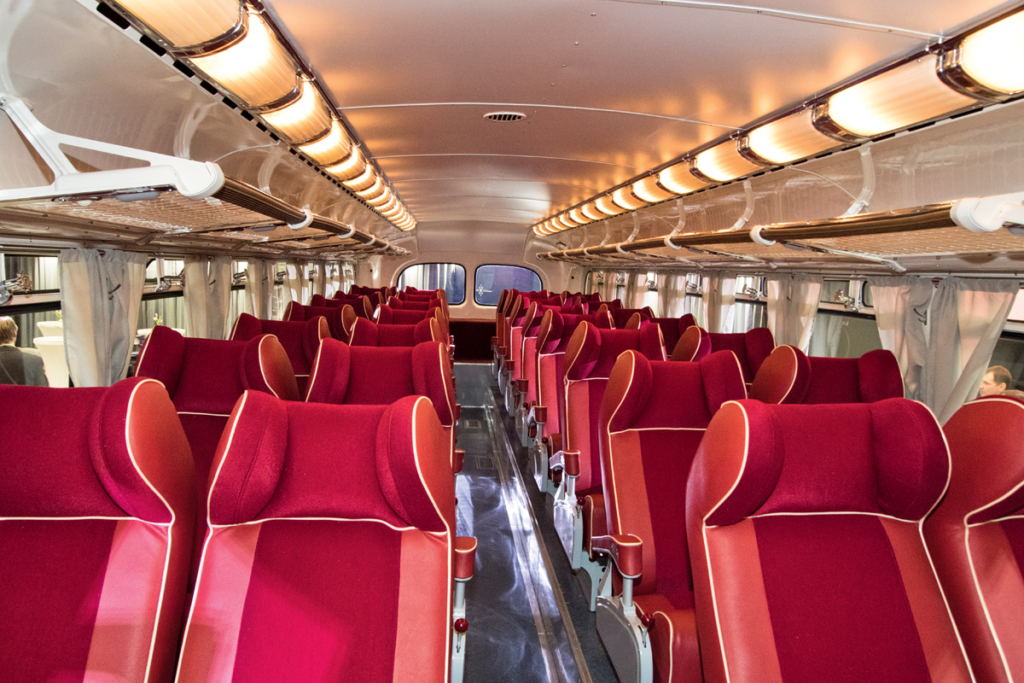
In the cabin 32 “semi-sleeper” chairs with plush upholstery
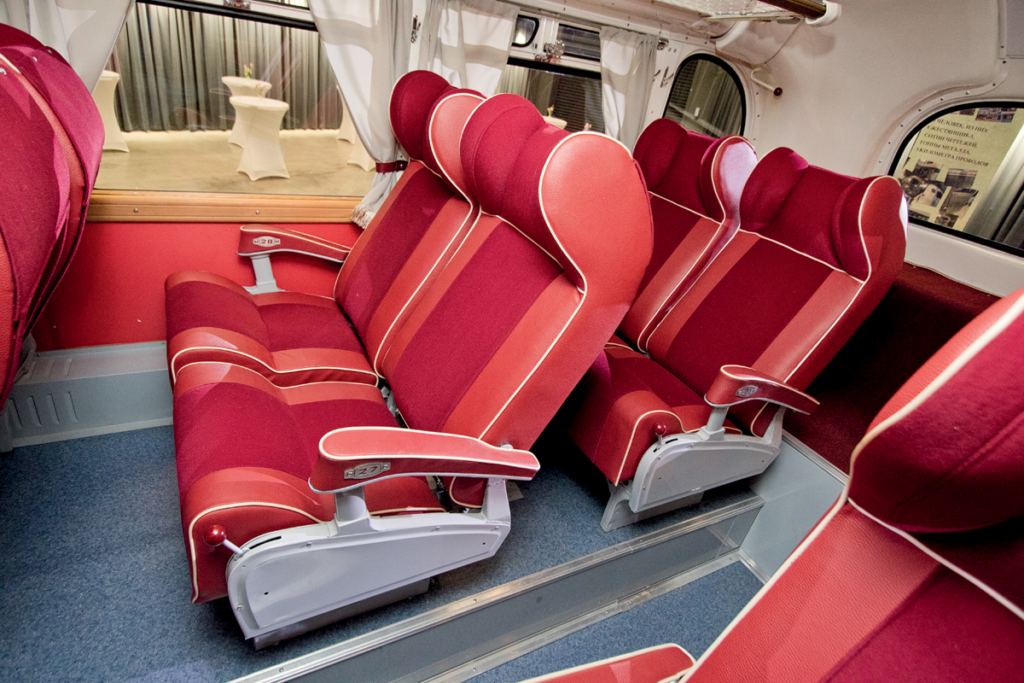
Luxurious chairs can be folded out
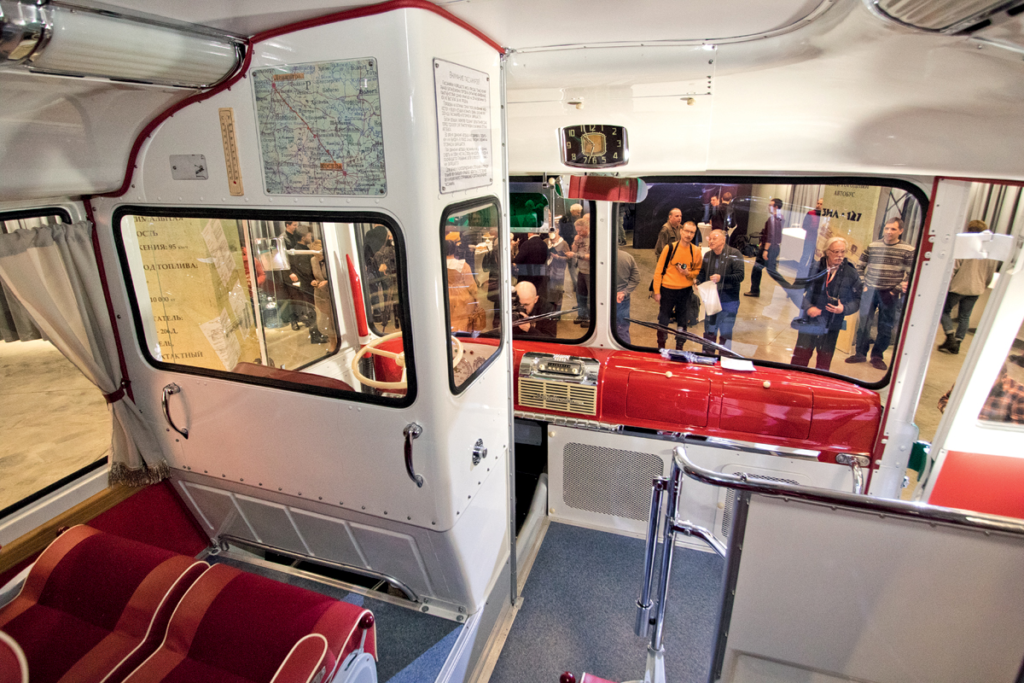
The driver sits in a semi-closed cabin
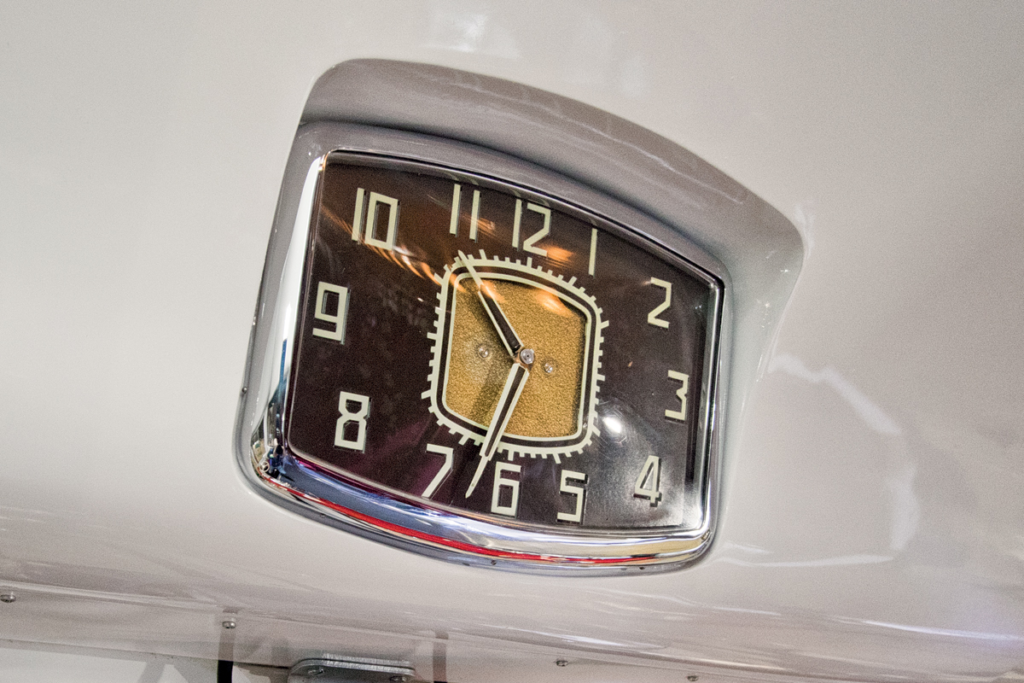
Authentic watches can now be bought at an online auction for 30 thousand rubles
And as on an airliner, the windows did not open: they had only narrow vents, so that passengers could not lean out on the move. Among the delicacies at the driver’s place are a sparkling handbrake lever and a long vertical pipe that I first took for a microphone stand — it turned out to be a warm air duct for demisting the windows.
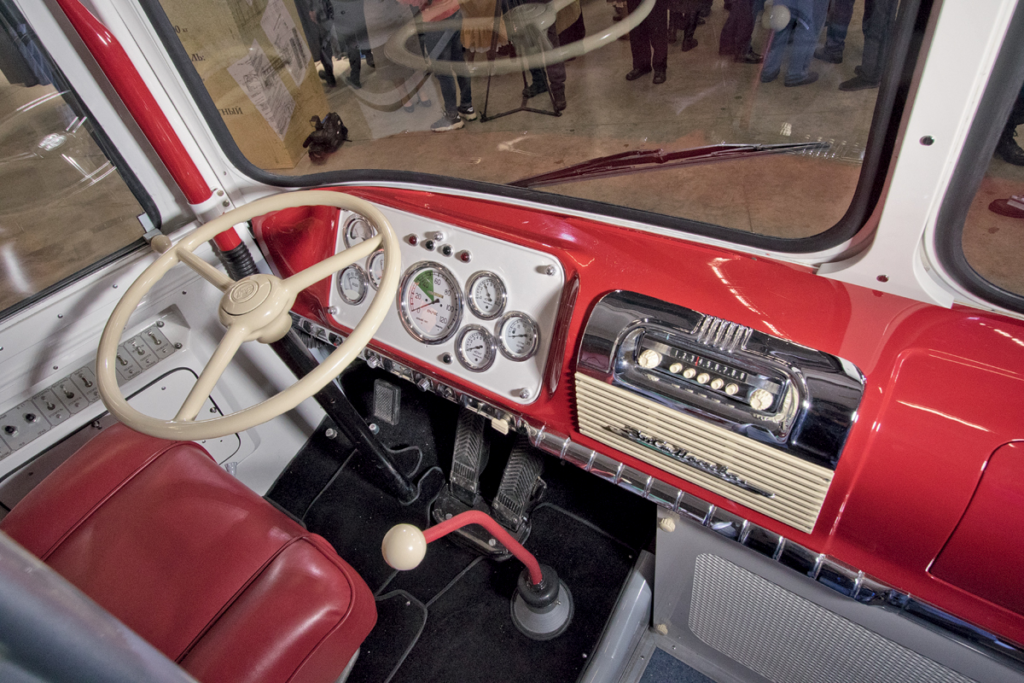
Rock and roll and boogie-woogie: the cabin interior resembles American cars of those years
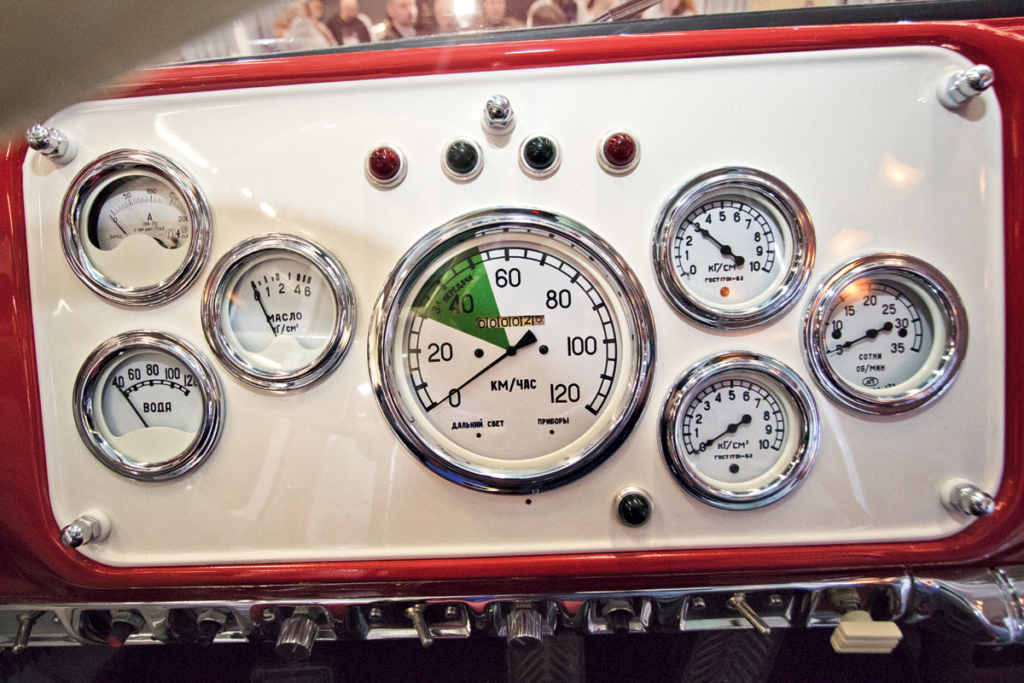
The main dial is the speedometer with an unusual green zone
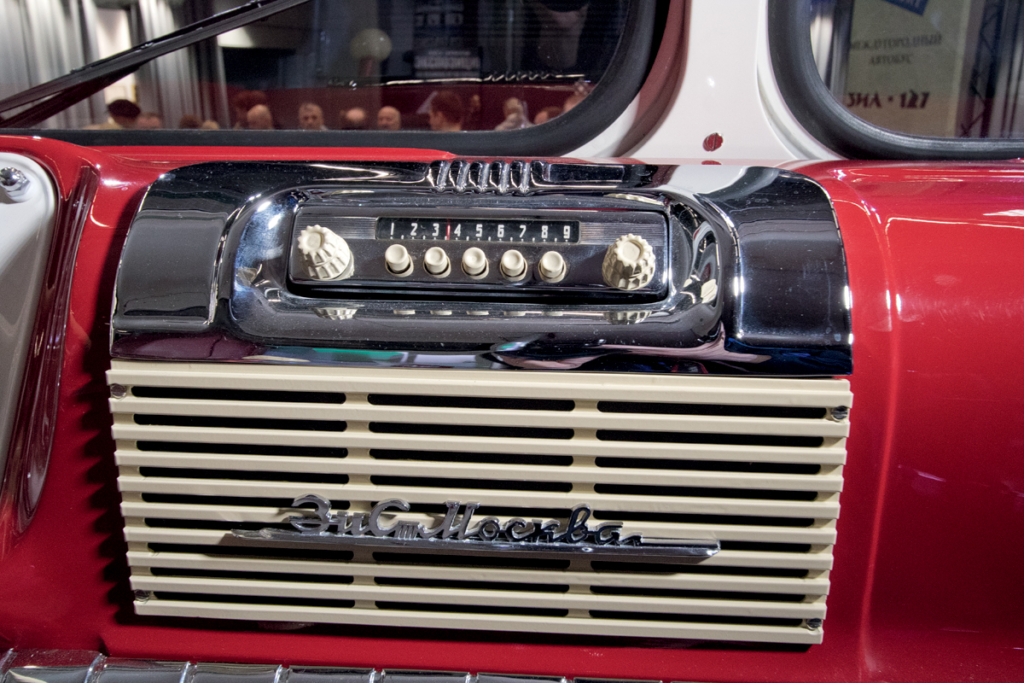
The A-5 tube receiver is the same as in the ZIS-110 and ZIM passenger cars
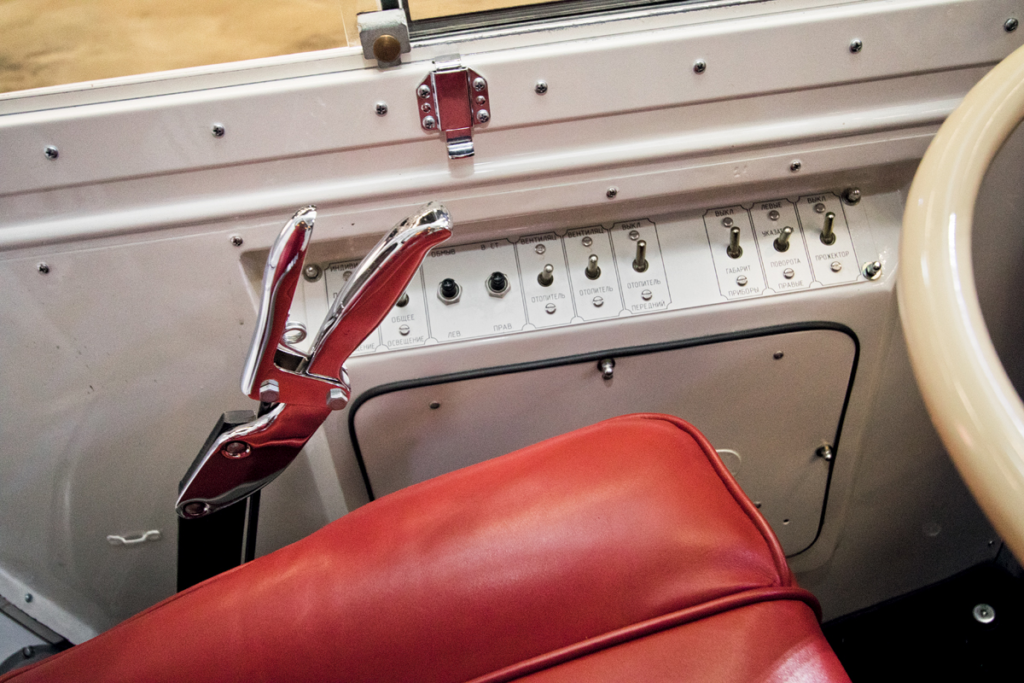
To the left of the driver is a sparkling handbrake, lighting and heating switches
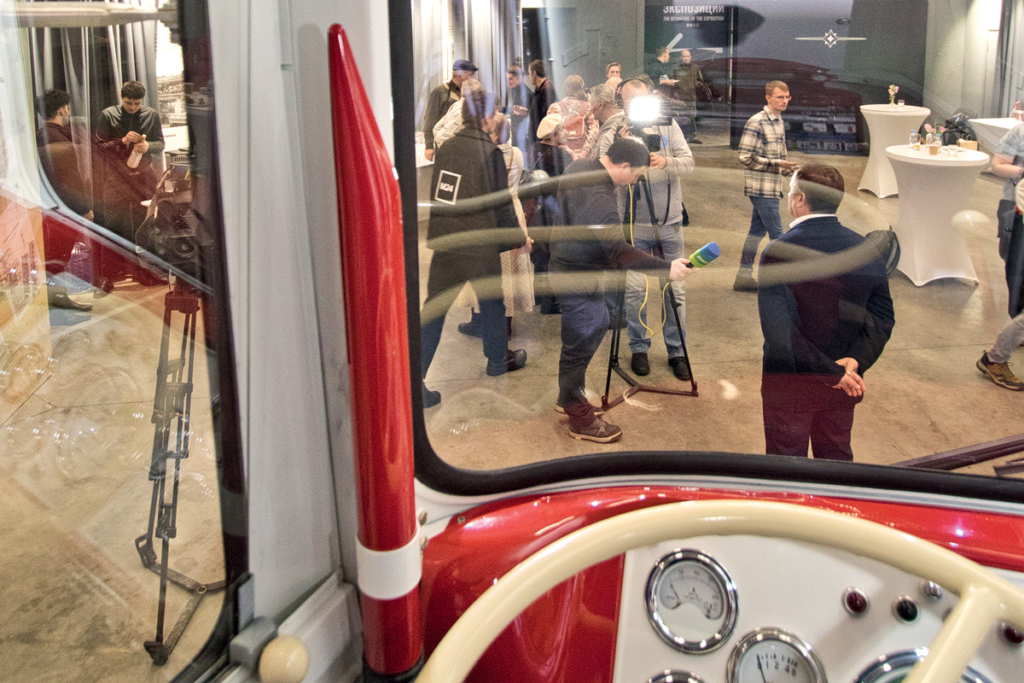
This pipe is a windshield blower!
Plywood Between the Leaf Springs
Explore around and beneath the ZIS/ZIL-127 and the details keep coming. The suspension is entirely leaf-sprung and known for exceptional smoothness — and the manual highlights one inventive touch: “plywood inserts between the leaf springs”, intended to extend the suspension’s life.
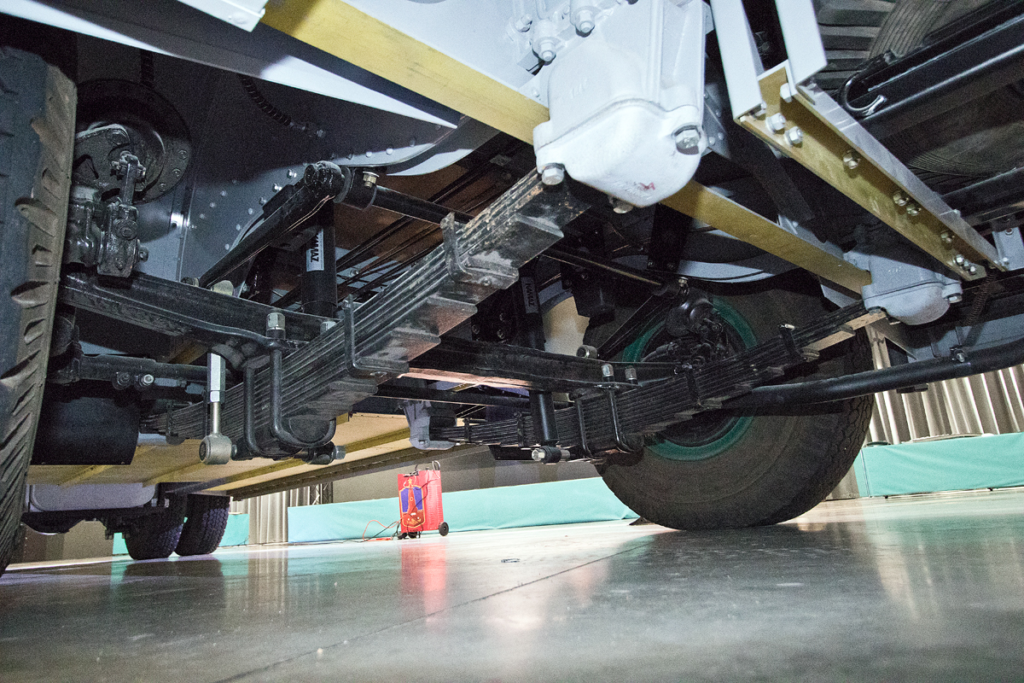
Leaf spring suspension: front…
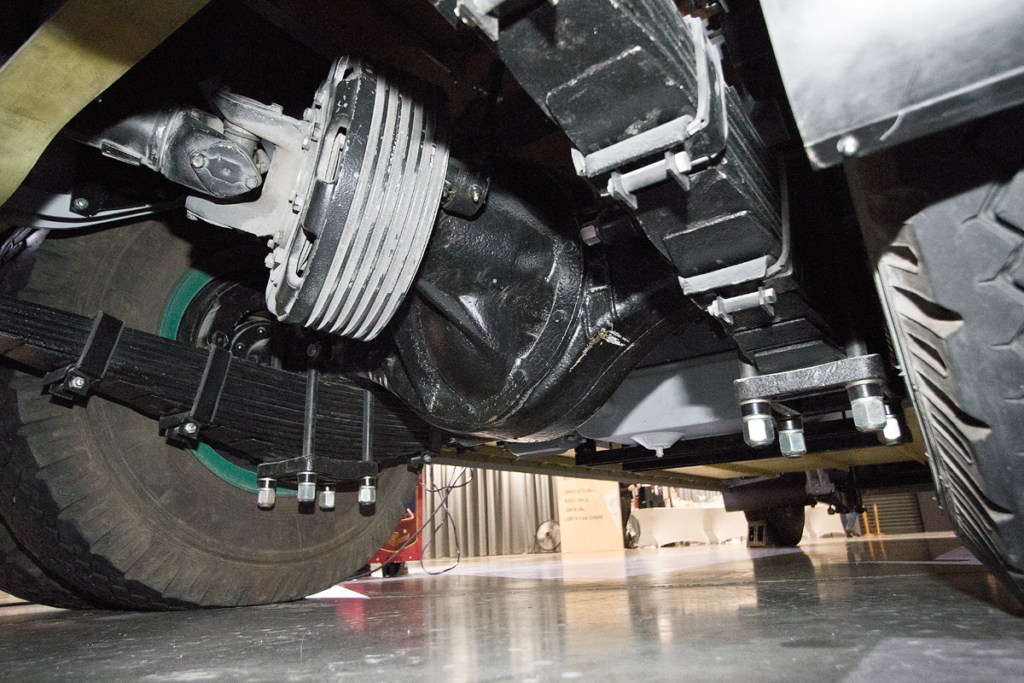
…and rear
Another clever touch hides behind the fuel filler cover: a fuel gauge with its own illumination button, a reminder to check the level at every stop.
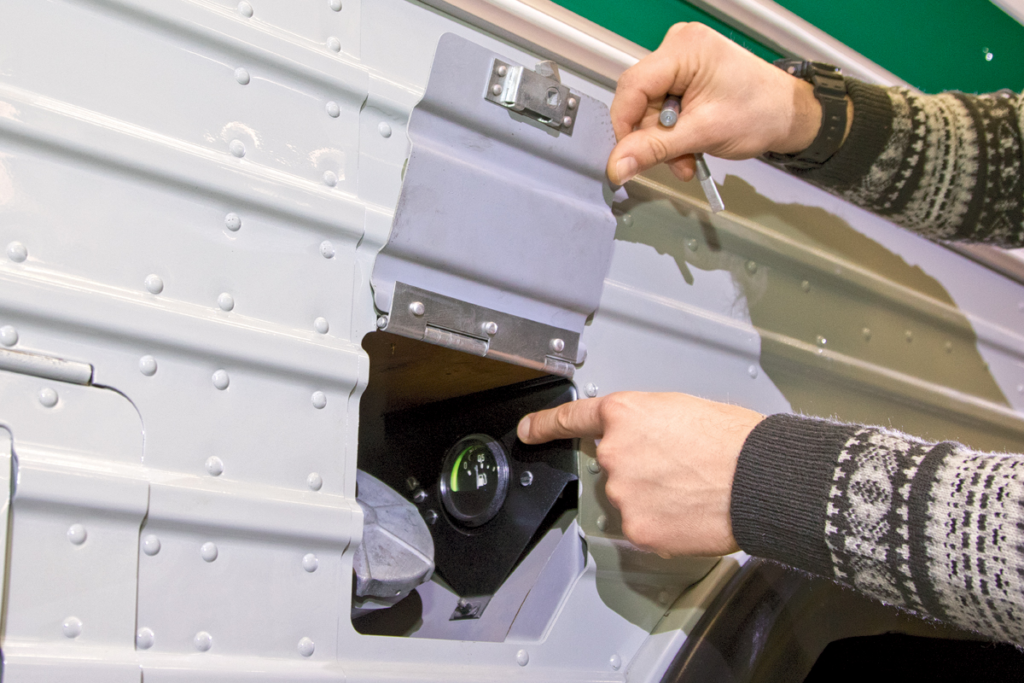
The fuel gauge with a backlight button is in the fuel hatch
The Engine, and the Ear-Shaped Vents
The diesel engine and four-speed gearbox are mounted transversely in the engine compartment, and the engineering around them is refined. The slits of the side ear-shaped hatches, for instance, are deliberately oriented: the left one leads to the radiator, the right to the engine belts. A smaller ear vent is placed exactly where it will cool the generator.
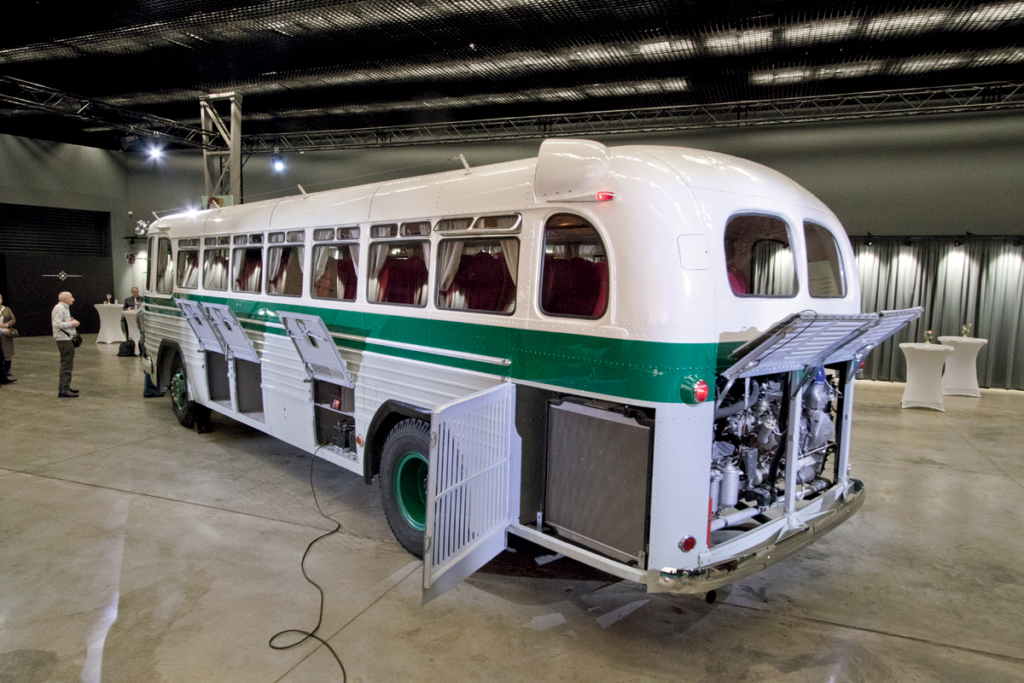
At the back — access to the power unit and its systems, on the side — luggage compartments and a compartment with batteries
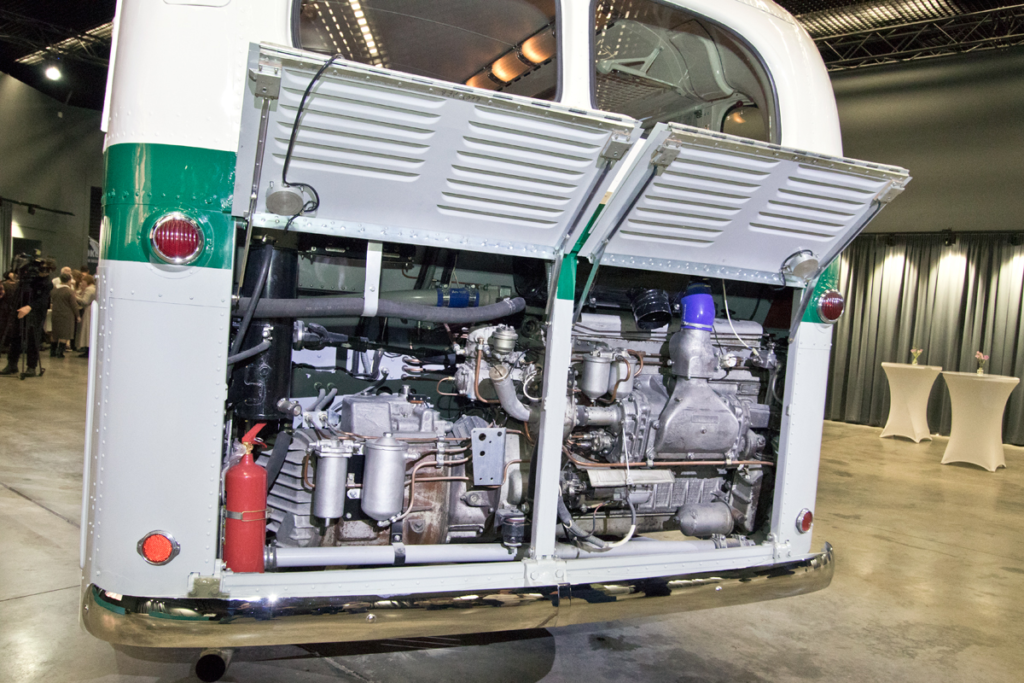
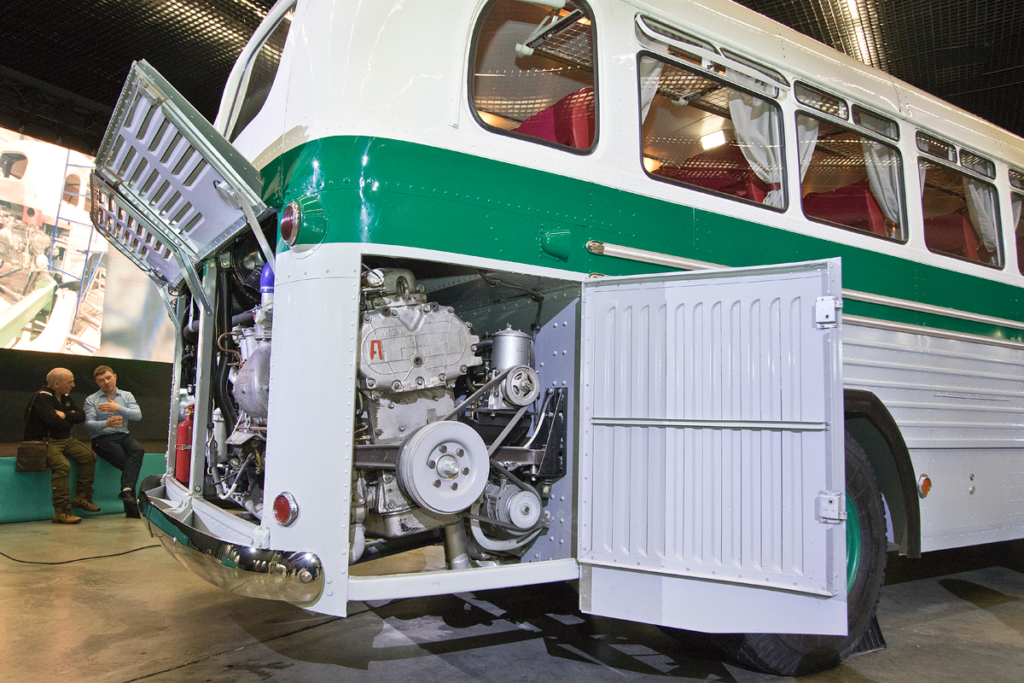
On the right — access to the belts
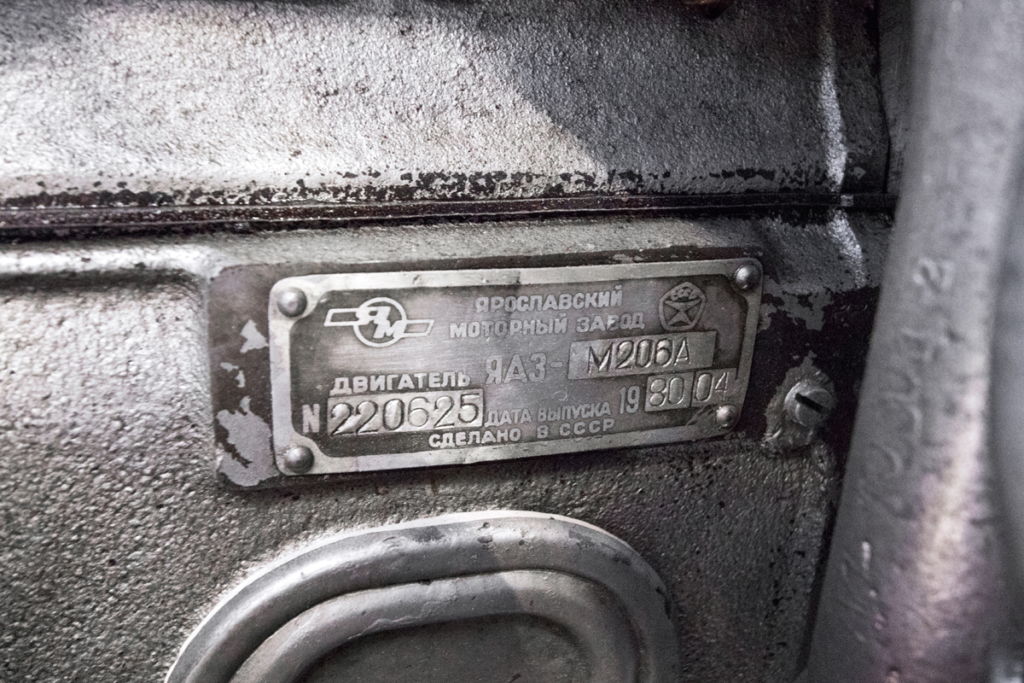
Judging by the plate, the engine, although not original, is authentic
Hot Water Before Starting
According to the operation manual, starting the engine below minus 5 degrees Celsius required preheating — pouring in hot water or hot oil, or supplying steam — because otherwise it simply would not start. The manual also warned that the diesel could run away if the control mechanism of the pump-injector racks jammed; in that case a valve would cut the air supply sharply at the push of a button. The Yaroslavl two-stroke was a robust thing, and the manual said so matter-of-factly: “If the engine emits heavy smoke, it is not yet a reason for repair.”
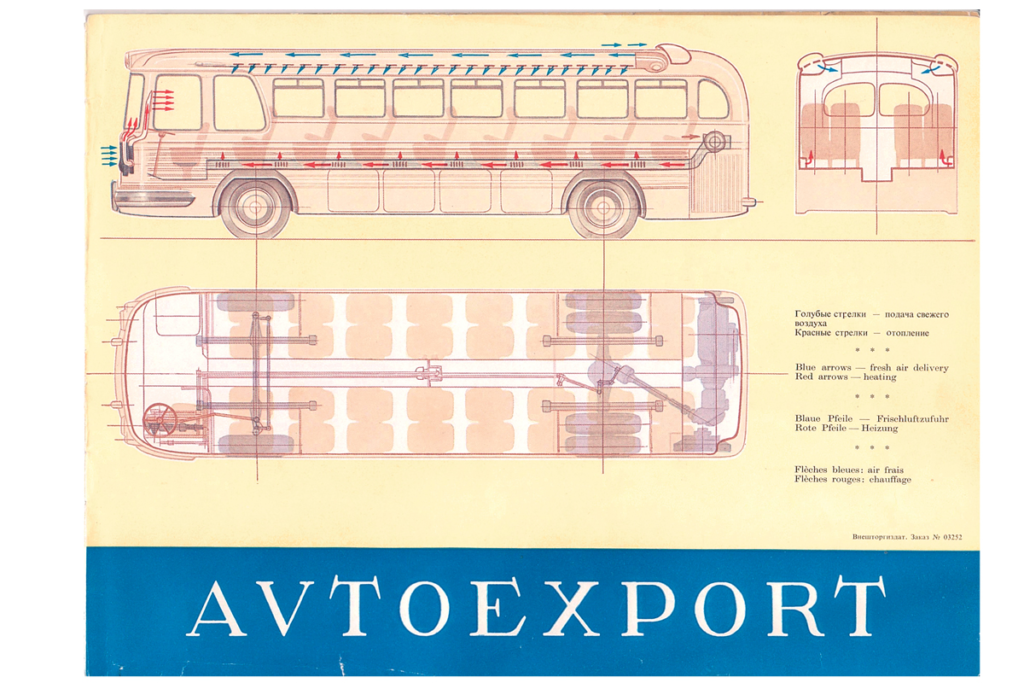
The diagram clearly shows the power unit, located transversely at the back, and the cardan shaft, running diagonally to the rear axle
Forty-Five Litres per Hundred Kilometres
Fuel efficiency was not a strength of the YAAZ diesel. Fully loaded at 70 km/h the bus was supposed to use 40 litres per 100 km, but Mosgortrans reported 45 — and likely more when pushed on a highway. Maintenance was demanding too: a TO-1 service every 2500-3000 km and a fuller TO-2 every 10-14 thousand kilometres, which included an oil change and a complete flush of the lubrication system with a mixture of diesel, oil and kerosene. A look through the spare parts catalogue reveals a bewildering array of components, and makes the bus look like a land-bound aircraft, particularly in the way the body is built.
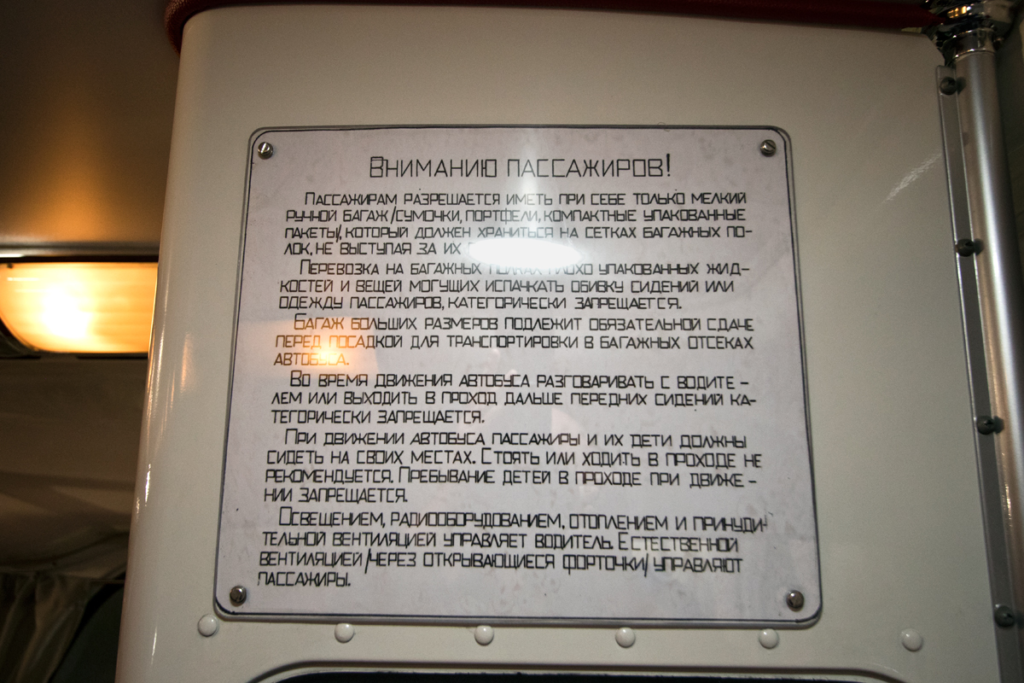
On the partition of the cabin — rules of conduct…
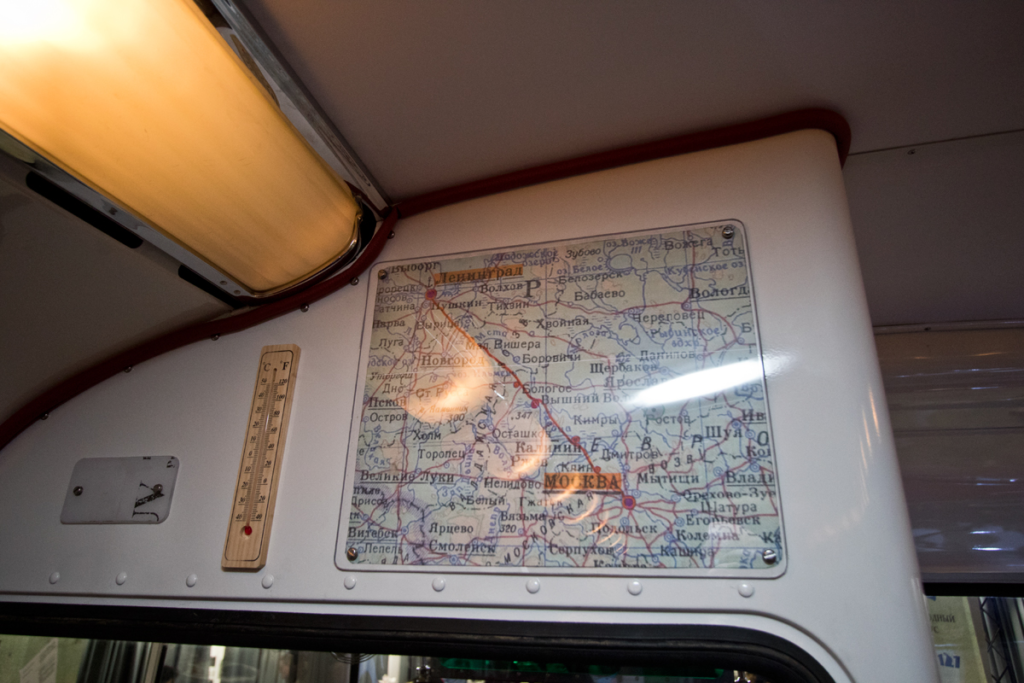
…the route of the liner and a thermometer
Which raises a rhetorical question. Why was restoring a vehicle this unique achievable by private restorers, while Mosgortrans, with its substantial resources, neglected the one it has?
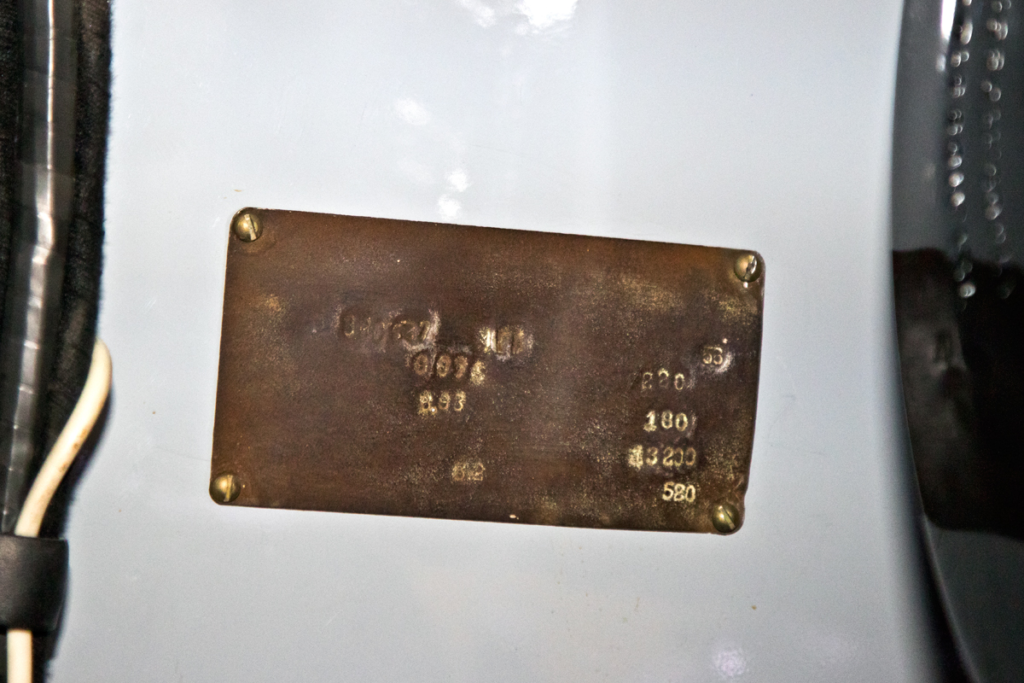
Judging by the preserved factory plate, the bus was manufactured in 1956. And the inscription “ZIL” on its nose is already later
Next Stop, Saint Petersburg
After its unveiling at the GON museum, the plan is for this “heavy luxury” to go on display first at the ZIL museum in Sokolniki. At the end of May the bus will travel by trailer to the retro parade in Saint Petersburg, where it should be one of the stars of the event — and it is already running. A new automotive transport museum is under development in Saint Petersburg, home to many vintage buses still in working order. Adding the ZIL-127 to that collection would be a magnificent sight.
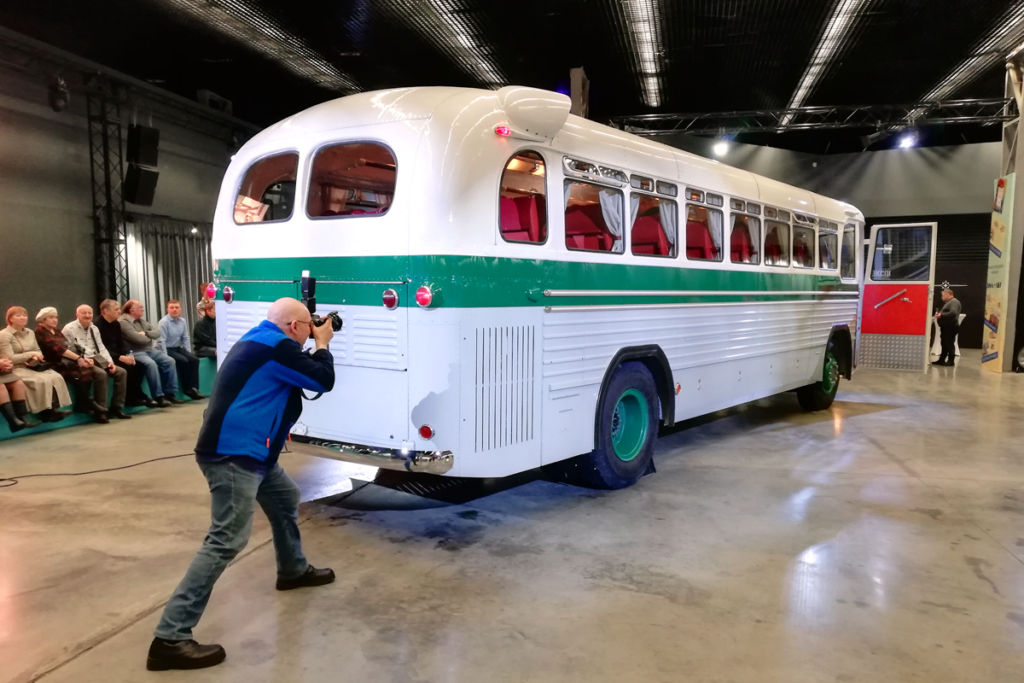
This is how this article was created (photo by Denis Orlov)
Photo: Fedor Lapshin
This is a translation. You can read the original article here: Тяжелый люкс: рассказываем про уникальный отреставрированный автобус ЗИЛ-127

Published August 29, 2024 • 11m to read