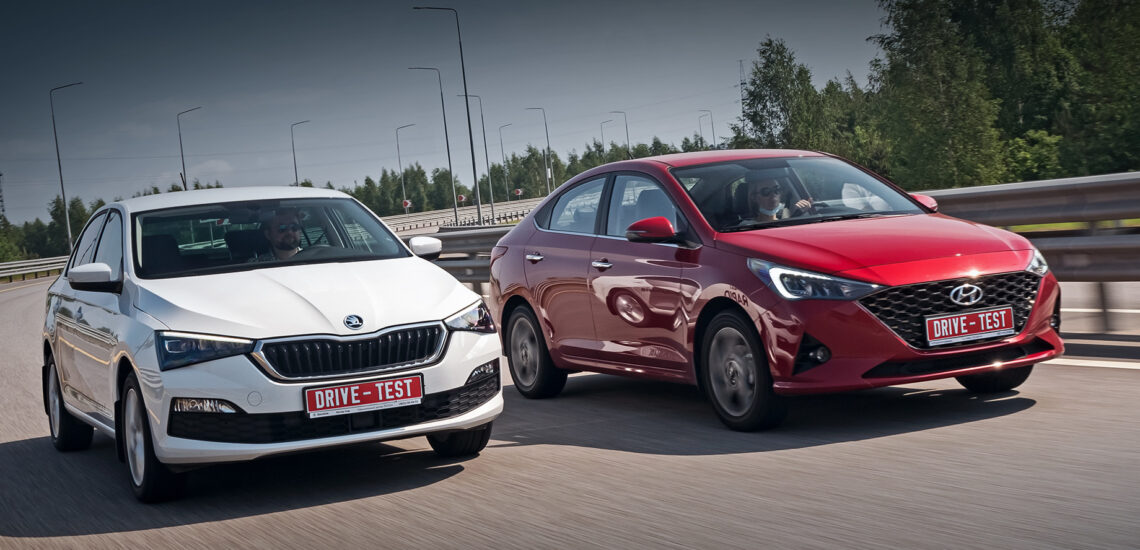

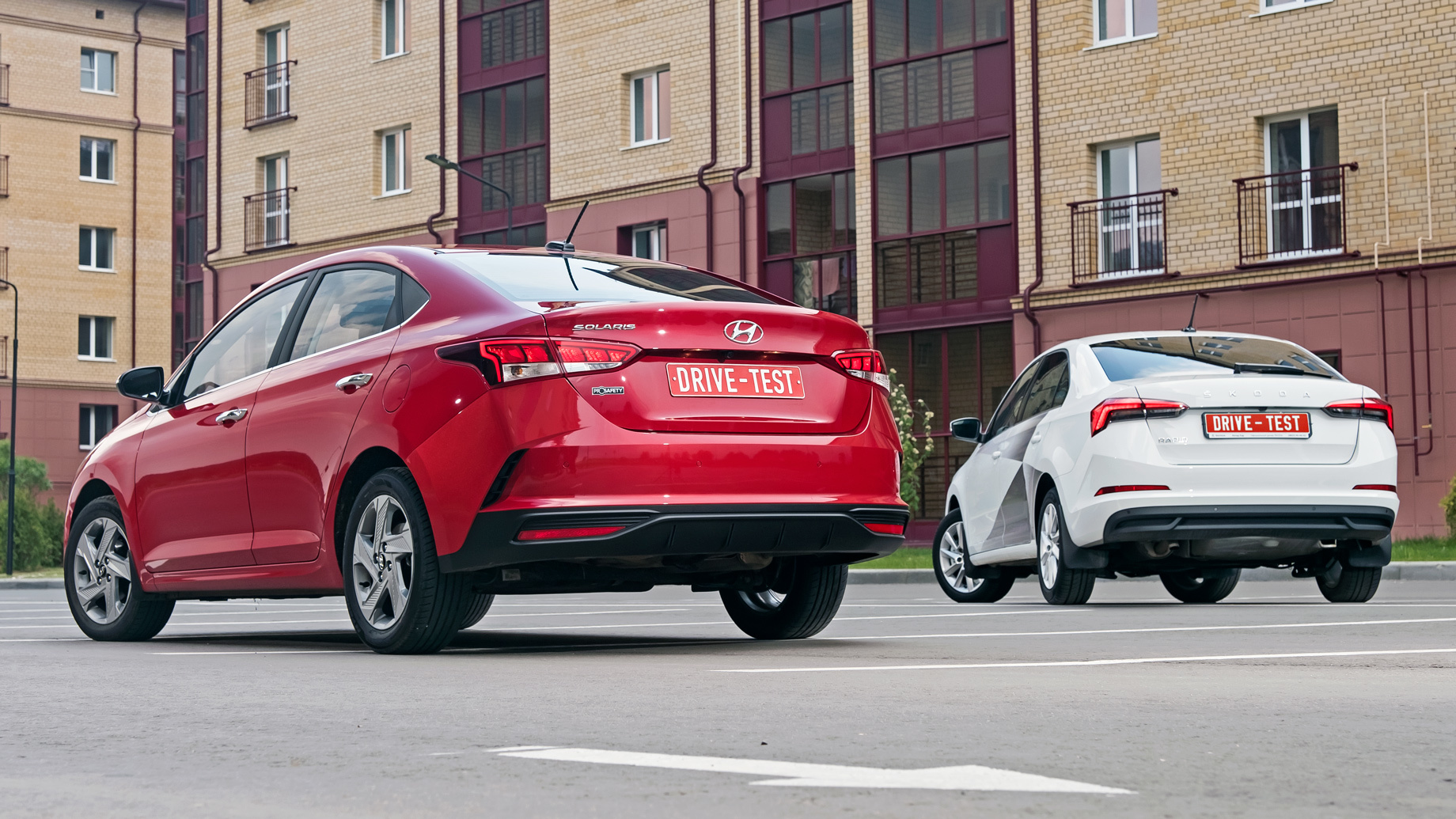
The B-segment sedan market is getting a major shake-up this year as its bestsellers roll out fresh updates. We put two of the most anticipated refreshed models head-to-head: the Hyundai Solaris sedan and the Skoda Rapid liftback. The Solaris gives us a preview of what’s coming for its platform sibling, the Kia Rio, while the Rapid foreshadows the heavily unified next-generation Polo. Both test cars came equipped with 1.6-litre naturally aspirated engines and six-speed automatic gearboxes, and their prices are in a similar bracket — making this a genuinely fair fight.
Trim Levels and Equipment We Tested
To get the most out of both refreshes, we selected the highest available trim levels for each car:
- Hyundai Solaris Prosafety — a special top-tier version with extended safety and comfort features
- Skoda Rapid Style — the flagship trim, enhanced with a range of optional extras
It’s worth noting that much of the additional equipment on both cars is also available for mid-range configurations. The Skoda offers a broader and more flexible options list, whereas Hyundai tends to bundle features into fixed packages with fewer standalone choices.
Exterior Design: Sharper Looks for Both
Both cars have received noticeably more aggressive, contemporary front-end styling, with sharper LED headlights now part of the visual identity. Key differences in how they wear it:
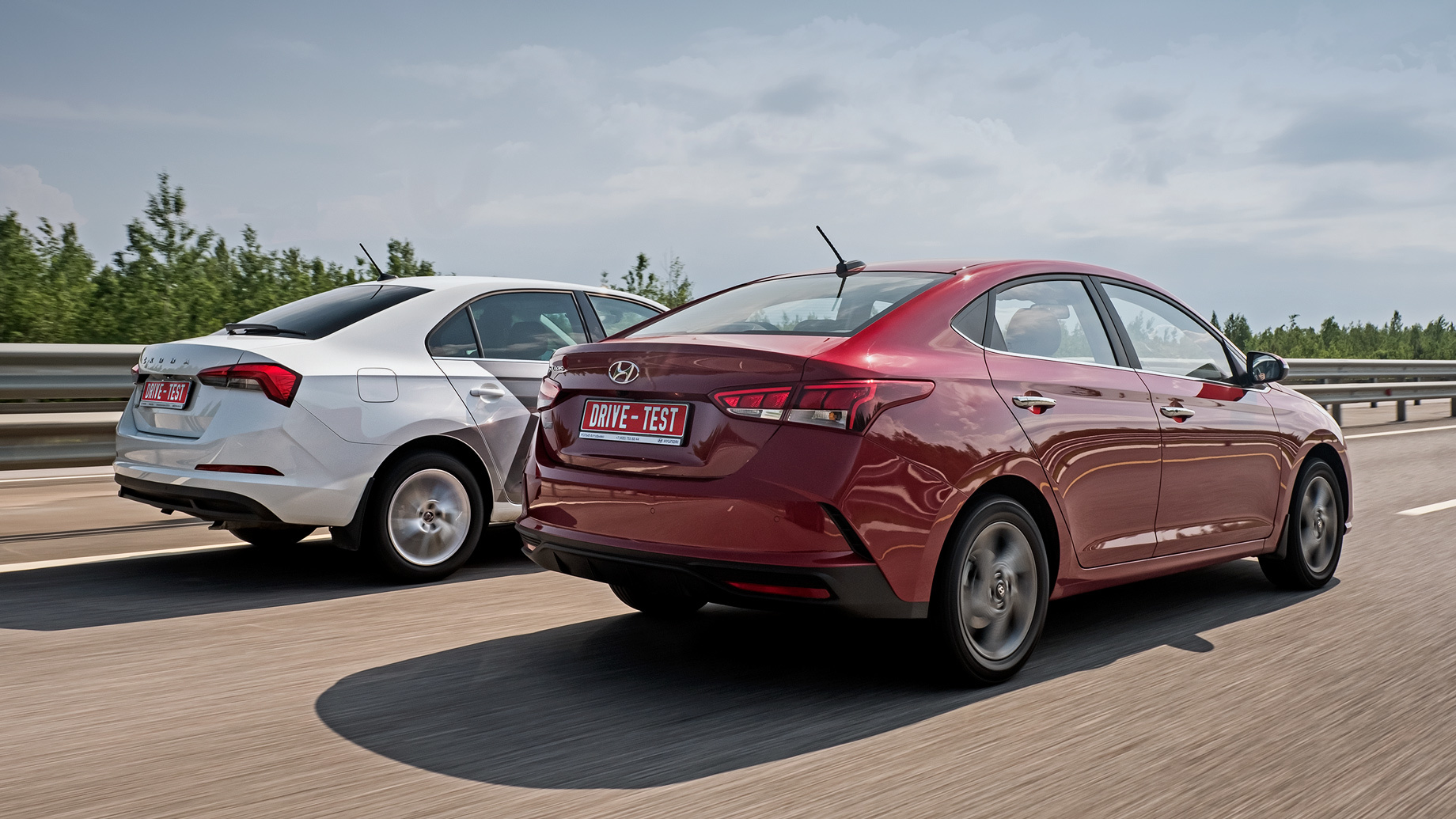
- The Solaris looks more striking from the front, thanks to its bold bumper design and distinctive 3D radiator grille that integrates the license plate. The rear, however, is barely distinguishable from the pre-facelift model.
- The Rapid made more visible progress at the back — the taillights now extend onto the trunk door, giving it a noticeably cleaner and more modern look.
- LED headlights are standard on the Rapid; on the Solaris, they remain exclusive to the Prosafety trim.
- Rear LED taillights are also base equipment on the Skoda, while the Hyundai again limits them to the top version.
Interior Quality and Comfort
Step inside and the two cars take noticeably different approaches to comfort and material quality.
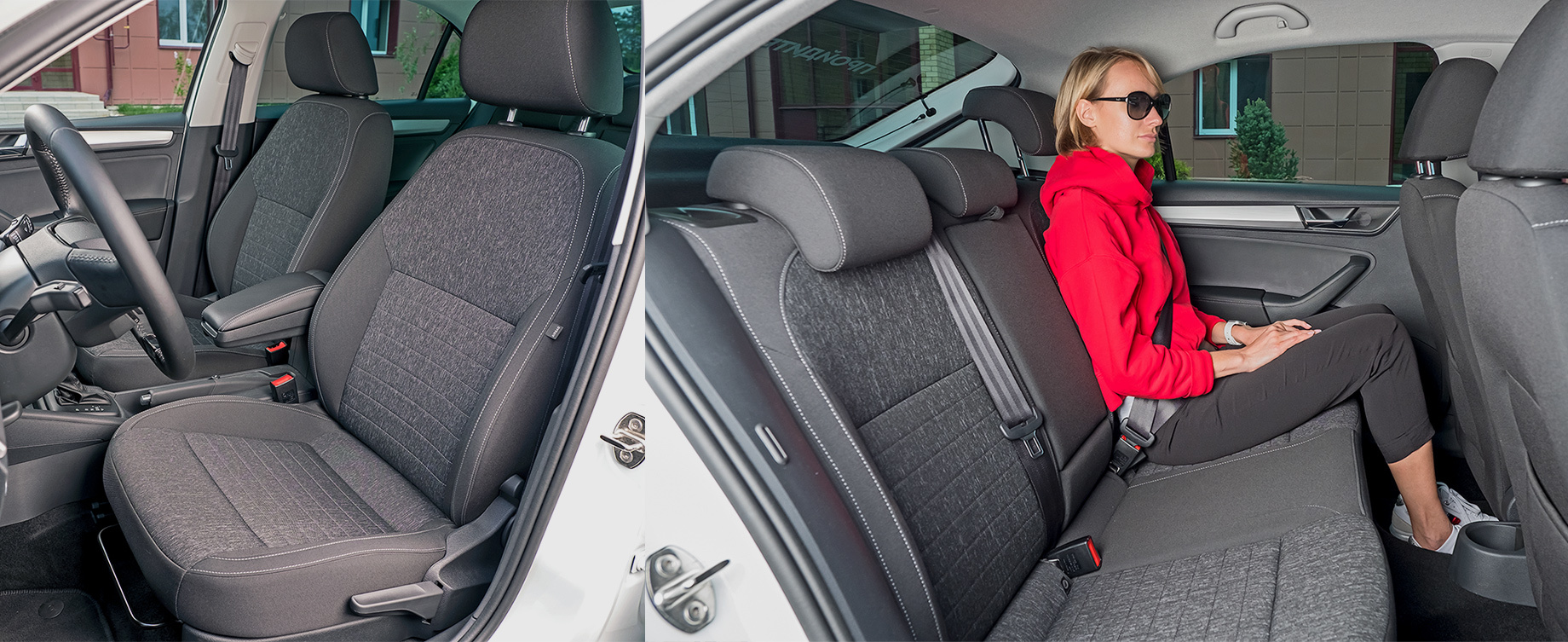
The Rapid’s interior feels richer overall, especially in the Style trim with its silver insert on the passenger side. Modern design touches have genuinely refreshed the cabin’s feel. That said, hard plastic dominates almost every surface except the armrests, and the seats haven’t improved ergonomically — the lumbar area remains unregulated. The driving position is slightly cramped: despite the available adjustments, the steering wheel sits closer to the pedals than in the Hyundai, and that’s always been the case.
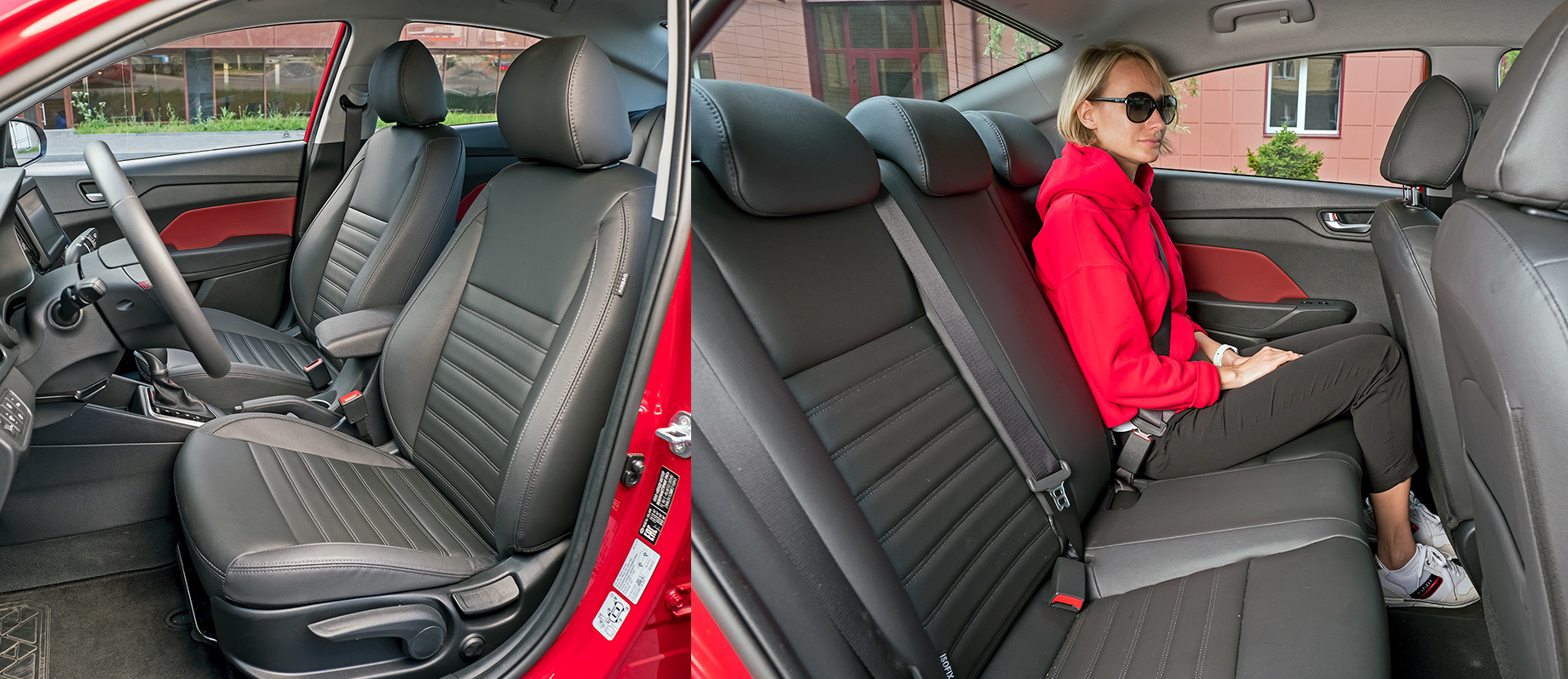
The Solaris interior has also stepped up its game. Standout features include:
- Leatherette upholstery — looks premium but keeps your back sweaty on longer drives
- Electrically adjustable lumbar support — available from the base trim, and genuinely useful on longer journeys despite the firmer, flatter seat cushion
- Electromechanically folding mirrors
- Remote engine start with a memory function for all heaters — not confirmed by turn signals and only works in top trims with keyless entry
- An improved headliner that beats the Rapid’s
One complaint: the Solaris air vents allow air to pass through even in the “closed” position. A minor but persistent annoyance.
Infotainment and Technology
Both cars get updated multimedia systems, but there’s a clear winner in day-to-day usability.
The Solaris gains an eight-inch media display that’s less intrusive in person than in photos. It also includes a built-in navigator — a first for the segment alongside the Rapid. However, the execution has issues:
- The touchscreen requires noticeably more pressure to register inputs
- The navigator is unreliable — pressing its icon often results in no response at all, or an error message
The Rapid’s optional media system delivers better graphics, a more thoughtful interface design, and a significantly faster touch response. The only downside is an occasionally unstable Bluetooth connection.
On the steering wheel front, the Rapid’s new two-spoke wheel features rotating and pressing control drums — a genuinely premium-feeling addition. There’s a minor quality hiccup though: a decorative plug in the lower section came loose during first use.
Unique Features That Stand Out
Several features on each car are either segment firsts or exclusive to their respective brands at this price point:
Hyundai Solaris Prosafety exclusive features:
- Remote engine start with full heater memory
- Built-in satellite navigation
- Electric lumbar support (available from base trim)
- Electromechanically folding mirrors
Skoda Rapid Style exclusive features:
- Front Assist — the first radar-based distance control and automatic emergency braking system in the budget segment
- High beam assistant — another segment first
- Fully heated rear seat (vs. cushion-only heating on the Solaris)
- Electronic instrument cluster (coming soon as an option)
- Climate control that operates quietly and accurately
Boot Space and Practicality: Rapid Wins Comfortably
This is where the Skoda pulls well ahead. The Rapid’s liftback body style gives it a significant real-world advantage:
- Larger boot volume and far more convenient access via the liftback tailgate
- Optional pass-through hatch for long cargo
- Underfloor organiser (vs. bare metal in the Hyundai)
- Cargo hooks and Velcro fasteners built in
- 12-volt socket in the boot
The Solaris boot is functional but basic by comparison. Both cars cost similar amounts — which makes the Rapid’s practicality advantage even harder to overlook.
Rear Seat Space: Who’s Better for Passengers?
The Rapid is the better choice for rear passengers, and it’s not particularly close. For a 188 cm (6’2″) passenger in the back seat:
- The Solaris is genuinely tight — both knees and head make contact with the front seat. This is somewhat surprising given its popularity as a taxi.
- The Rapid offers a couple of extra finger-widths of knee room and approximately 2.5 cm (an inch) more headroom.
The Rapid also wins on rear comfort features:
- Cup holders and a central armrest in the rear (Solaris has neither)
- Two seat-back pockets per side (Solaris has one)
- Grippy interior door handles that are simply nicer to use
Neither car offers automatic rear windows.
Engine and Transmission Performance
The driving dynamics haven’t changed significantly with either update, so let’s focus on the key differences between the two powertrains:
- The Solaris runs a 1.6-litre engine producing 123 hp — noticeably more punch than the Rapid in full-throttle acceleration
- The Rapid uses a 1.6-litre unit with 110 hp, though Skoda also offers a more spirited 1.4 TSI turbo (125 hp) with a DSG gearbox at extra cost
- Both six-speed automatics are adequate at a steady pace but become jerky during uneven driving — gear-hunting and downshift hesitation are present in both, more noticeably in the Rapid
- The Hyundai provides stronger engine braking, which some drivers will prefer
Both cars are perfectly comfortable holding 140–150 km/h (87–93 mph) on motorways. The Rapid feels more planted at speed, tracking straight with minimal steering input needed. The Solaris requires small but frequent corrections, with a slightly vague feel around the steering centre. In spirited cornering, the Hyundai actually shows less understeer — an unexpected plus for the more dynamically inclined driver.
Ride Quality and Road Noise
Both cars ride on 16-inch wheels — a step up from the 15-inch fitments standard on most budget rivals. Here’s how they compare in real-world conditions:
- The Solaris rides more firmly but absorbs rough rural roads with good wheel travel. It transmits more high-frequency vibration through the steering wheel and pedals on coarse asphalt, and the engine note is more present at idle and in the cabin generally.
- The Rapid feels marginally more refined on smooth highways, with a slight wave-like motion that feels composed rather than floaty. It suffers more over severe bumps and road joints, and road noise through the body is rougher.
- The Solaris is noisier overall in the city — tyre roar fills the cabin and overshadows engine noise during acceleration up to around 100–120 km/h (60–75 mph).
- At motorway speeds, the Rapid’s aerodynamic noise increases noticeably, narrowing its acoustic advantage.
Overall, ride comfort is broadly similar between the two — any advantage depends more on road type than on one car being definitively better.
Verdict: Which One Is Worth Your Money?
Both cars have earned their updates, but they’ve landed in different places.
The Skoda Rapid has gone through a more thorough and cohesive refresh. Addressing most of its previous weaknesses, it now offers superior practicality, better rear passenger space, smarter technology, and a richer feature set at the same price. The remaining issues — the tight steering wheel position, small mirrors, and a high centre tunnel — are relatively minor and correctable.
The Hyundai Solaris update took a slightly different path — leaning into style touches like leatherette upholstery rather than tackling longstanding issues like cabin noise and rear seat room. The powerful engine, unique remote start, and electric lumbar support are genuine selling points, but they’re not enough to close the gap in overall value.
At least in these top-spec versions, the Skoda Rapid wins on price-to-quality ratio. If you’re shopping in the budget segment and want the most car for your money, the Rapid is the stronger recommendation.
This is a translation. You can read the original here: https://www.drive.ru/test-drive/hyundai/skoda/5ef4beefec05c49b2f00010a.html

Published November 17, 2022 • 8m to read