
Err. Err-rr! Somehow, the Englishman, Adam, just can’t engage the second gear on the Alfa Romeo Giulietta Spider. “You say double clutching?” he exclaims. “Err. Err-rr-rr-rr!” I tell him that won’t work. How can anyone drive with such a gearbox? Alright, Adam, it’s forgivable. Were you taught how to drive a GAZ-52 truck with a non-synchronized gearbox in well-off England? Let me do it.
What Is Nostalgic Tours? A Classic Alfa Romeo Road Trip Through Tuscany
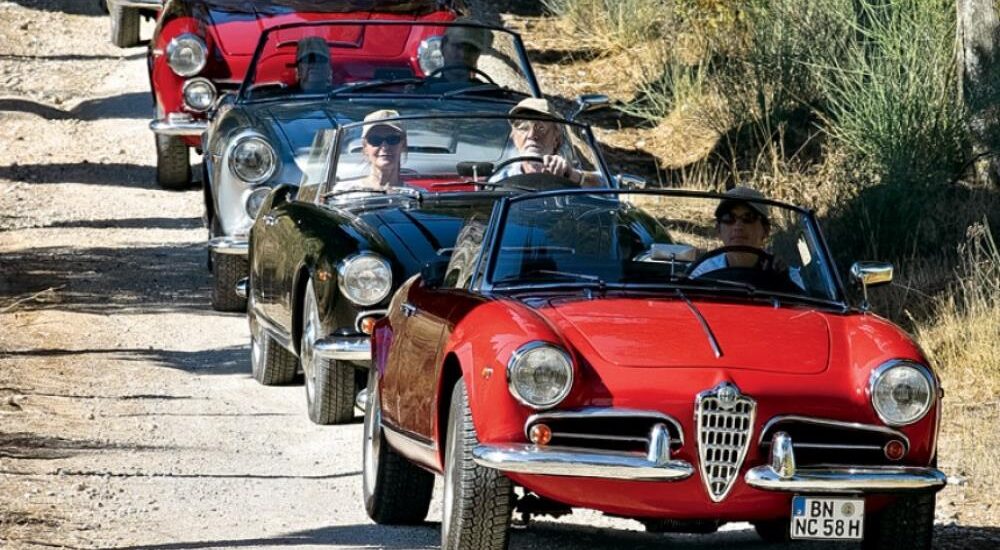
The event, organized by the German private company Nostalgic Tours, is quite similar to a regular automotive journalist test drive. You fly to Italy, get paired up in cars, are given a roadbook — a legend of the upcoming route — and off you go through the roads of Tuscany. Then dinner, a night in a good hotel, and another almost full day of driving. The only difference is that the cars aren’t new; they’re old: Alfa Romeo spiders from the 50s, 60s, and 70s.
The Alfa Romeo brand itself has no direct connection to “Nostalgic Tours” — a few German alfisti, lovers of old Alfas, decided to share their passion with the world and turned it into a small business. They bought about twenty retro cars of their favorite brand, hired a former Italian racing mechanic to maintain them, and offer “nostalgic tours” for about 2,500 euros per person.
- Fly to Italy and get paired up in a classic Alfa Romeo
- Follow a roadbook through the Tuscan countryside
- Stop for lunch, dinner, and an overnight stay in a quality hotel
- Swap cars and drivers across a second full day of touring
- Price: around 2,500 euros per person
For me, this tour carries a completely different meaning: if a Soviet person can feel nostalgic, it’s probably only for the humpbacked Zaporozhets, the VAZ “kopeyka,” or that “gazon” whose gearbox I ground while receiving some colorful language lessons from the mentor at Auto Plant No. 1. Alfa Romeo Giulietta, Giulia, or Spider were nothing more than a dream — one that could only be read about in the DOSAAF magazine Behind the Wheel.
And now, here I am, along with Englishman Adam, able to try out all the cars from the Nostalgic Tours fleet. Following the chronology, we start with the earliest Alfa.
The Alfa Romeo Giulietta: Italy’s First “Personal” Alfa
So, it was called Giulietta…
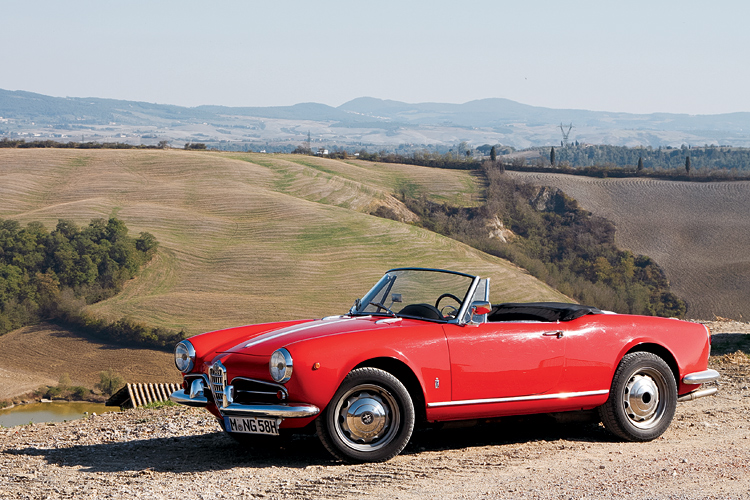
The early fifties: Italy was emerging from post-war depression, with mass transport limited to bicycles and Isetta motor scooters built under license from BMW. The grandeur of pre-war Alfa Romeo — eight-cylinder beauties and victorious racing cars funded by the fascist government — was in the past. The war had left its mark: aircraft engine production for Italian fighters and bombers, the complete destruction of the main Portello factory in Milan, and attempts to manufacture kitchen stoves at the surviving southern branch in Pomigliano.
But the engineers in love with speed didn’t leave Alfa Romeo: designer Orazio Satta, engine builder Giuseppe Busso, and Giuseppe Colombo, creator of the pre-war Alfa Romeo 158 “formula.” The first post-war model was a failure — the Alfa Romeo 1900 sedan was too large and expensive for impoverished Italy. So, with loud presentations and an announcement of a nationwide lottery (whose winners never received the promised 200 initial cars), Alfa Romeo gathered funds for a more compact mass model, which reached the assembly line in 1954 under the name Giulietta.
Some say the name — the first “personal” one for Alfa Romeo — was suggested by the wife of the famous Italian poet Leonardo Sinisgalli. Others mention a Russian nobleman who was an impresario in a Milan nightclub, who joked when people from Alfa Romeo introduced themselves: “You have eight Romeos here and not a single Juliet?”
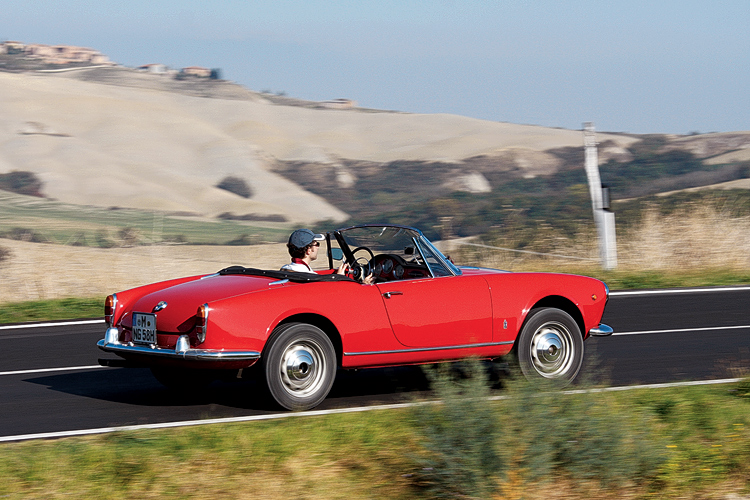
Either way, Giulietta emerged as a beauty. Even the sedan was nice — far more attractive than its Soviet contemporary, the Moskvich-402. And the coupe by Bertone and the spider by Farina…
Driving Position and Interior: The Famous “Italian” Seating Layout
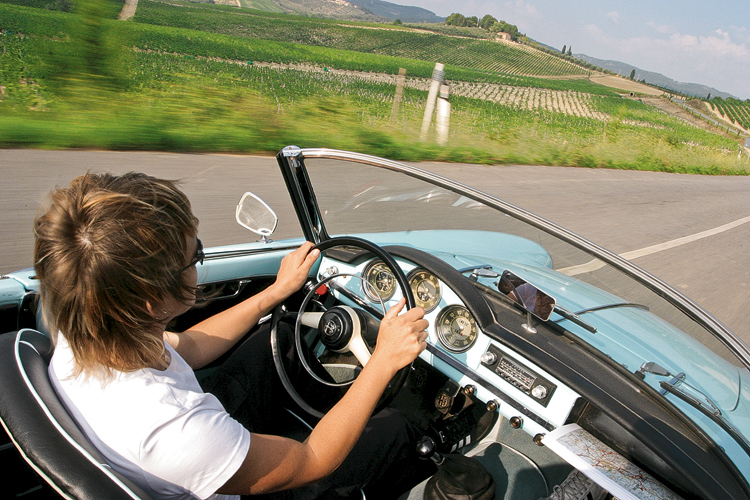
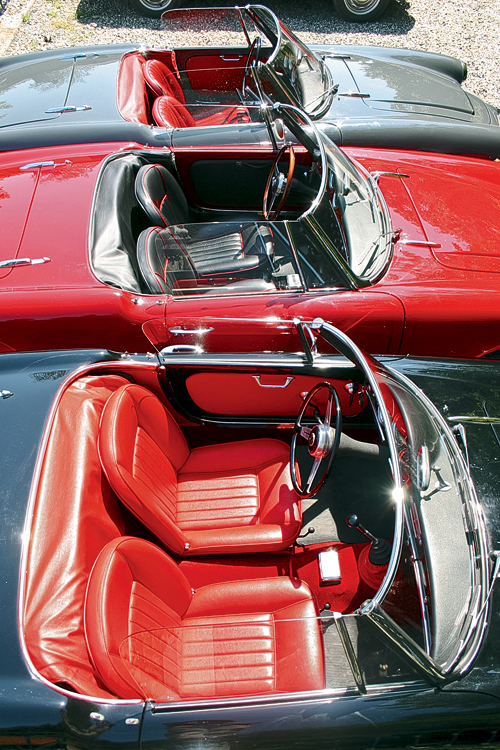
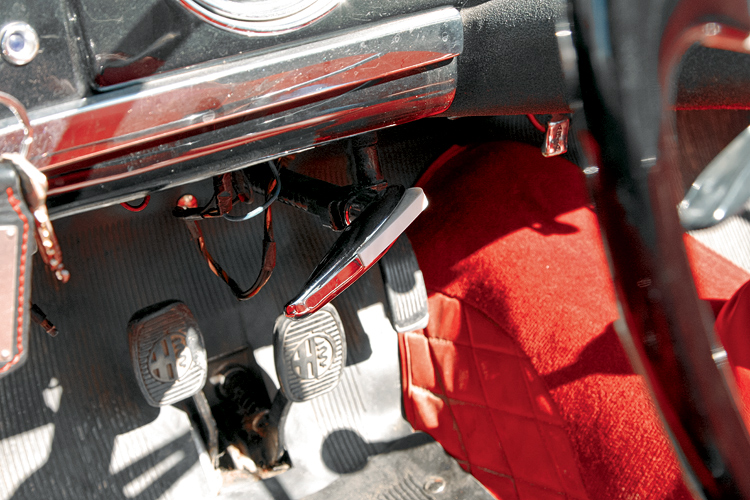
What I feared most was the tightness and the infamous “Italian driving position” that wraps the steering column with your legs — the clutch and brake pedals plus the hanging accelerator. The compact seat sits practically at floor level, letting you sit in a racecar-like posture with legs stretched out. Compared with a supercar of that era like the Jaguar E-Type, which I recently “squeezed” into during the Monte-Carlo Historique rally, the Giulietta actually triumphs in ergonomics thanks to its elegant pedal feel. It’s as if the Giulietta gently taps you with a graceful foot in a stylish shoe. In the E-Type you sit somewhat hunched over; here, you recline halfway, like lounging on a chaise longue. It’s the dolce vita, the sweet life under the boundless Apennine sky!
But proceed with caution: no seatbelts, no safety features to speak of, and the hub of the steering wheel points right at your chest. As you navigate a chaotic curve, you might wonder if the next scooter approaching at breakneck speed will pass on the left.
However, fear not — such concerns won’t plague you with an Alfa. This car was born to bring nothing but happiness!
The slender pedals sit close to the transmission tunnel — floor-mounted brake and clutch, complemented by a suspended accelerator. Press down on the gas, and the 1300cc engine initially struggles — not from emotion, but from an abundance of air, as the check valve in the accelerator pump has trouble holding it all back.
Under the Hood: The Legendary Twin-Cam Alfa Romeo Engine
Ah, where is my thirteen and the white VAZ “kopeyka” with the black license plate 57-71 MTB? Back then, in the early ’80s, the sound of the “Italian” engine caressed the ears amidst the bassy Moscow-made cars — and now, I recognize those “VAZ” silky tones. Classic Italy! After all, the architecture of this “four” was laid out even before the war by the legendary Vittorio Jano, engine builder Lanzi, and Ferrari.
- Aluminum block with cast-iron liners
- Five-bearing forged crankshaft
- Hemispherical combustion chamber
- Two overhead camshafts driven by a double-row chain
- Centrally positioned spark plugs
In various forms, this engine remained on FIAT Group assembly lines until 1995!
When the carburetor finally draws fuel through all its intricate channels and there’s a smooth pull, it’s still not enough: the engine lacks power for steep hills, and you have to gradually shift down to first gear. One Master of Sports in motor racing praised the Giulietta coupe’s acceleration — but he was driving a well-maintained private car. The cars at Nostalgic Tours are essentially rentals, and it’s unlikely most riders know how to properly handle delicate retro technology.
Giulietta vs. Moskvich-402: Power and Handling Compared
Giulietta was famous not only for its design but also for its handling! The Moscow-made Moskvich-402 of that era had a lower-valve “cast iron” 35-horsepower engine, only three gears with a lever shift under the steering wheel, and a rear axle on leaf springs. Even the 1958 Moskvich-407, with overhead valves, an aluminum head, and a displacement bored to 1360cc, developed only 45 horsepower.
- Simplest Giulietta sedan engine: 53 hp
- Giulietta coupe and spider (same 1300cc engine): 81 hp
- Giulietta Veloce (“Fast”): 90 hp and 75 kg lighter
- Four short gears versus the Moskvich’s three
The thin steering wheel, made of black “bone-like” plastic, initially feels light, but as soon as you turn it, your hands feel its weight: the car’s front immediately moves to the side, exposing its limited maneuverability. But in a moment, the Giulietta adjusts and the steering wheel “lightens.” This comes down to Lancia’s independent front suspension “all around,” present even before the war — while Orazio Satta and colleagues opted for a cheaper solution at the rear: an undivided axle, suspended on springs and connected to the body with a third central A-shaped lever. Even the red Koni Classic shock absorbers combined with 15-inch Uniroyal radial tires don’t fully compensate for the kinematic imperfections. Fast corners in the Giulietta therefore demand a “searching steering” technique, balancing between understeer and oversteer.
Mastering the Gearbox: Double-Clutching an Unsynchronized Alfa
And what about the gearbox? Shifting up requires double clutching, and shifting down needs an intermediate blip in neutral to rev the primary shaft. In fact, the transmissions in the Giulietta roadsters were fully synchronized — a luxury for the time, since Italians had bought a license for synchronizers from Porsche. But this particular car is quite worn: the body shines with fresh paint and the chrome gleams in the Italian sun, yet the synchronizers are “dead.” Err-rr-rr-rr, err-rr-rr! Englishman Adam only filled the Tuscan hills with a dreadful grinding of gears, losing momentum whenever he tried to engage second gear after third or fourth.
No matter what anyone says, I stand by Suvorov’s principle: “Hard in training, easy in battle!” I learned to drive on “logs” in my youth — I drove anything with pistons, regardless of brakes or steering play. If you can drive that, you can drive anything!
Switching to the Alfa Romeo Giulia: Sharper Gearbox, Weaker Brakes
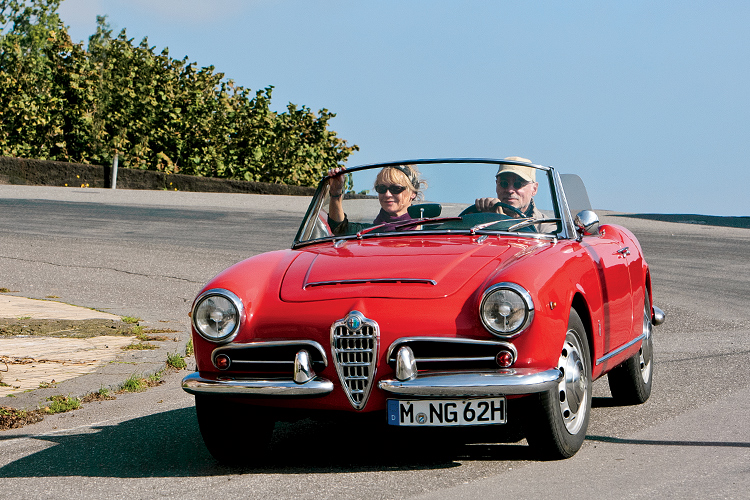
A lunch break brought a chance to switch to the Giulia. It marked a change of generations, but while the Giulia sedans differed significantly from the Giuliettas, the coupes and roadsters underwent only minor modernization — a phased process, not unlike the transition from the VAZ “ten” to the Priora. The transformation of the Giulietta into the Giulia began in 1959 with a longer wheelbase and was completed in 1965, when a larger 1600cc engine required adding “nostrils” to the air intake. A questionable styling choice, perhaps, but 90 hp made it far more fun.
The gearbox in this car was in perfect order — gears engaged easily and precisely. But the brakes! There were simply none up front; only the rear brakes worked. Press slightly harder than expected, and the car would slide. It was this very car that later got into an accident involving a Dutch businessman-publisher’s wife: she braked too hard before a turn, and the beautiful Alfa instantly spun and hit a barrier with its trunk. Luckily, not too seriously.
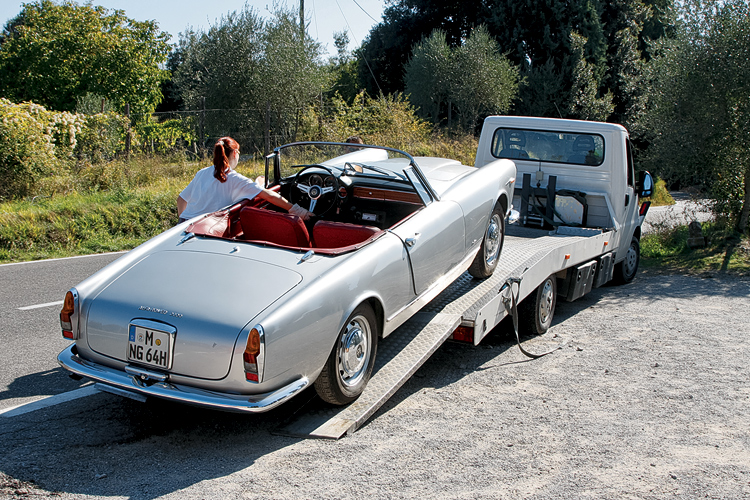
But an evacuation truck follows the convoy for such cases, with a replacement car — and I had to use its services too. I was driving an Alfa Romeo 2600 convertible, and suddenly…
The Alfa Romeo 2600: More Expensive, Not Necessarily Better
This car is clear proof that “more expensive” doesn’t necessarily mean “better.” This model never had its own name — the 2600 index simply reflected the displacement of the inline six, which finally returned under the hoods of Alfa’s road cars for the first time since pre-war days. The Alfa 2600 sedan replaced the previous flagship, the Alfa Romeo 2000, in 1961, and the coupes and roadsters based on it were designed by Giugiaro and Carrozzeria Touring respectively, styled to echo the Giulietta’s look.
It’s beautiful, no doubt, but there’s no longer that organic feel. The six cylinders sound softer and more refined than the four in the Giulietta, and the suspension is more comfortable — while the Giulietta constantly jolts on a bad road with its light (yet solid and monolithic) body, the Alfa 2600 rides noticeably smoother. But it’s heavier and accelerates more slowly, and the steering turns heavy in corners with pronounced understeer.
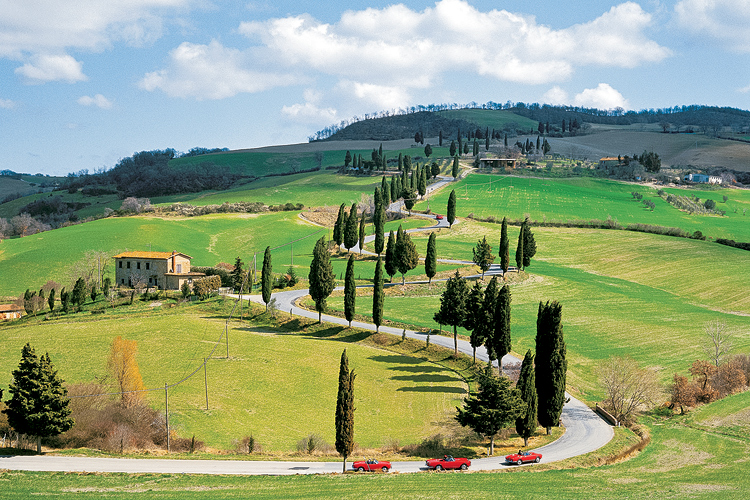
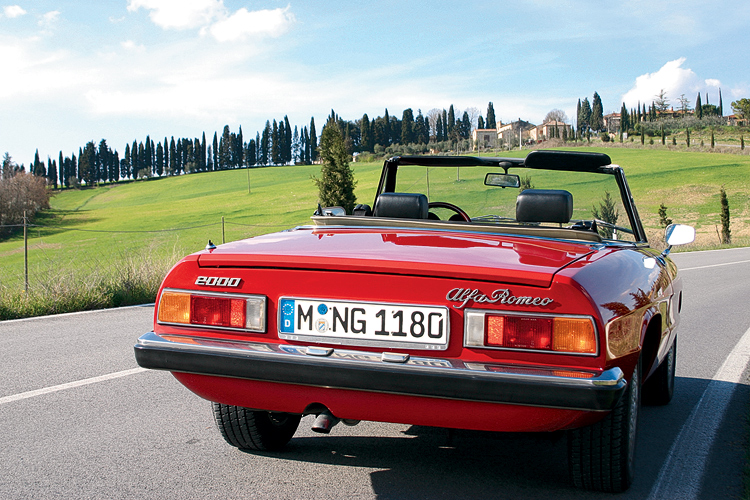
So pronounced, in fact, that there’s simply no desire to go fast at all — just leisurely cruising, taking in the Tuscan scenery. The sparsely wooded hills, the rows of sentinel cypresses lining straight paths of crisp white gravel, the endless vineyards…
And of course, a convertible offers an entirely different level of connection with the surrounding world. Especially an old convertible, when wind noise and birdsong blend with the guttural rumble of the carbureted engine, and the bitter smell of “unclean” exhaust mixes with the aromas of the blessed Tuscan soil…
And the wind in your face, indeed.
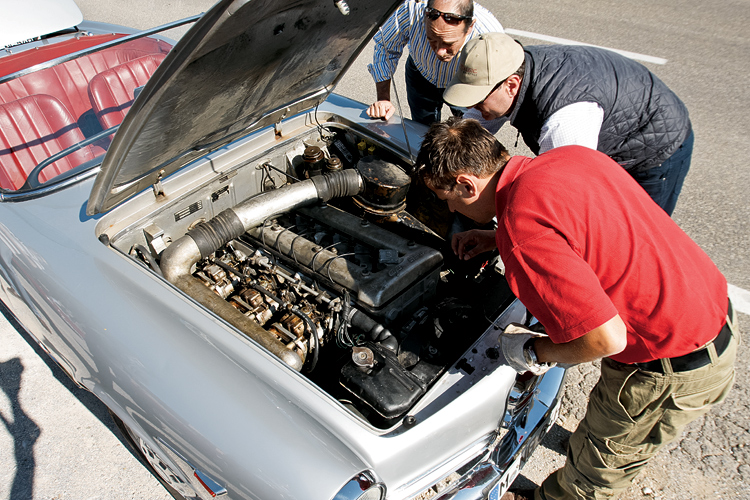
But suddenly — “tr-r-r-r-r”: the engine lost power and stalled, as if someone had switched it off. I rolled to the side using the starter and lifted the hood… Ah, I’ve lost my touch. Before, without hesitation, I would’ve checked the fuel level in the float chamber or pulled the high-voltage wire to check for spark. But it’s been a while since I held any wrenches, and an Alfa isn’t a Zaporozhets. So, 15 minutes after the call, co-owner of Nostalgic Tours Gert Pichler arrived with his colleague, the lovely Russian girl Alena Bychikhina. They loaded the “dead” Alfa 2600 onto the evacuation truck, and in return, Adam and I got an Alfa Romeo Spider.
The Alfa Romeo Spider (Duetto): 27 Years on the Assembly Line
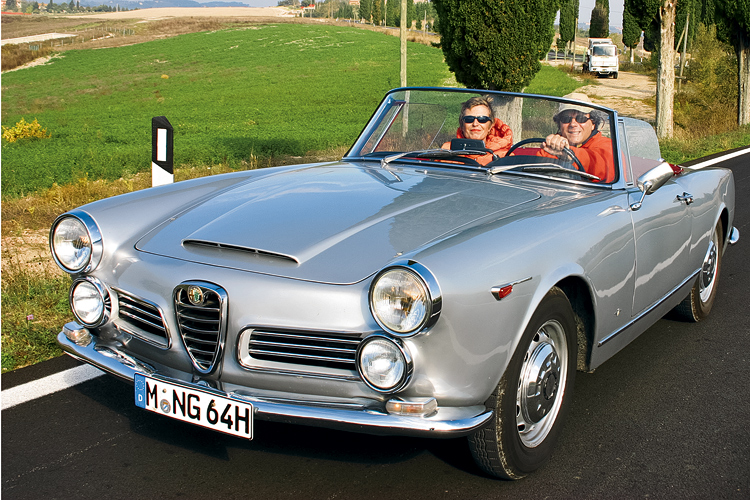
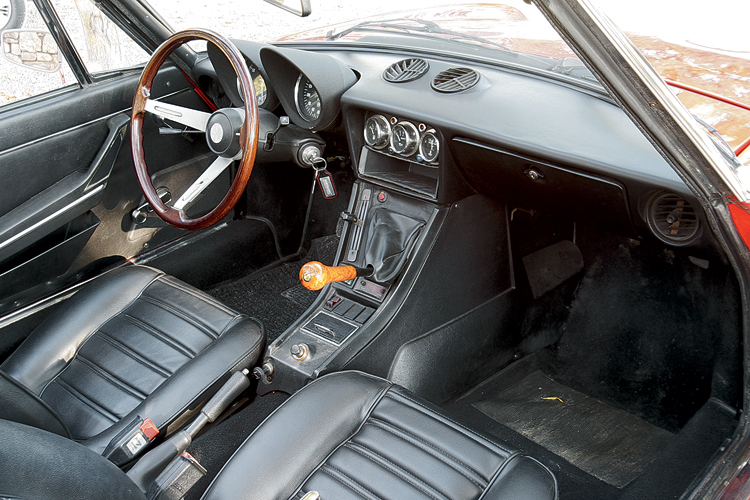
The Spider replaced the Giulia in 1966, its streamlined low body reminiscent of the Jaguar E-Type. But the technology was much simpler: still a rigid rear axle and “worm and roller nut” steering. The initial name, “Duetto,” chosen through a nationwide competition, never really caught on — from the mid-70s it was simply known as the Spider. I drove a second-generation car from the early 70s, with the truncated rear and a 133-hp 2-liter engine.
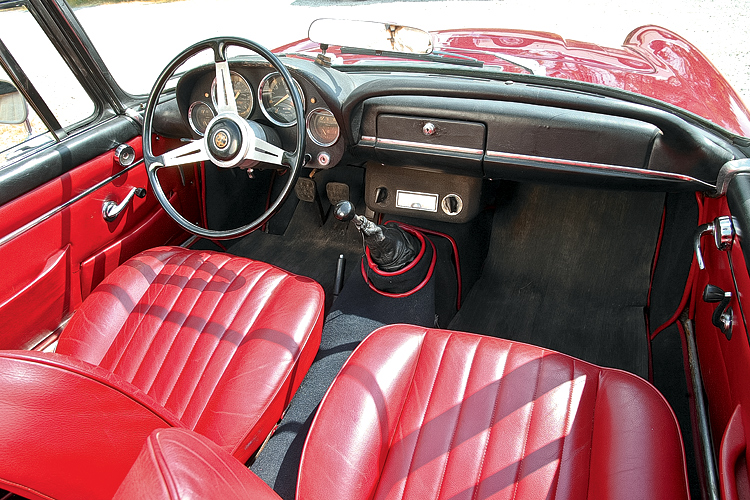
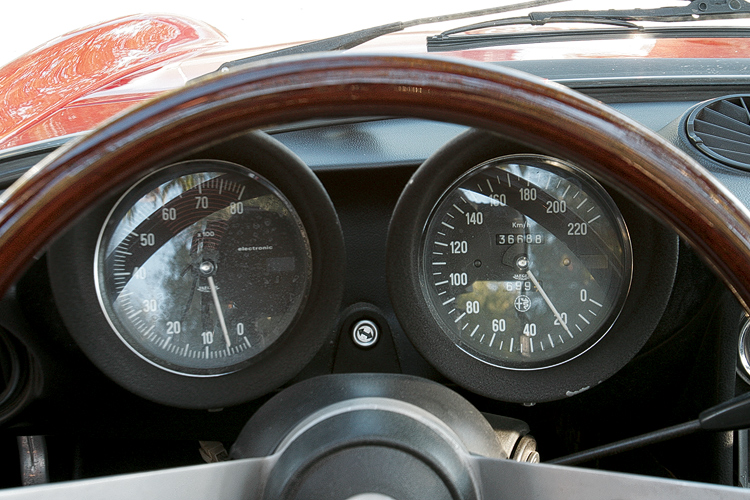
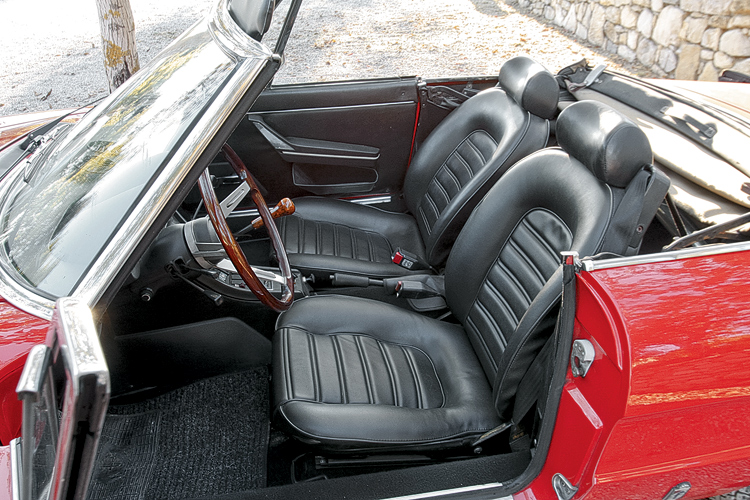
The interior is finished in black plastic, with instrument gauges angled downward, just like in modern Alfas. Power delivery is cheerful and smooth, albeit with typical carburetor hesitation. The brakes are modern, with a vacuum booster: the pedal is light and the car doesn’t lunge anywhere. But the handling still feels dated: reactions near center are lazy, then the steering wheel suddenly loads up with effort as responsiveness increases. There’s also noticeable “rubber” give from the full-profile tires, straight out of the 60s.
You feel the road far more acutely than in a modern car. Even on smooth asphalt you sense constant slight vibrations, and as soon as you turn onto a dirt road, the cabin starts to rattle and the steering shows noticeable play.
Living the Dolce Vita: What Nostalgic Tours Really Sells
But the Spider of those days was far from a supercar — just like the Giulietta-Giulia. Today, that niche is filled by cars like the Audi TT or BMW Z4: expensive, but still accessible beyond millionaires. Actresses and artists, lawyers and dentists bought Alfas back then, and enjoyed life.
That’s exactly what the organizers of “nostalgic tours” sell: the chance to feel like the successful “middle class” of half a century ago. For the sake of authenticity, they arrange:
- Dinners in a castle-museum, where owners personally welcome guests and display family paintings, furniture, tableware, clothing, and porcelain dolls collected over centuries
- Meals in small family restaurants, where a huge plate of homemade pasta generously topped with delicate local truffles costs just ten euros
In short — Italy.
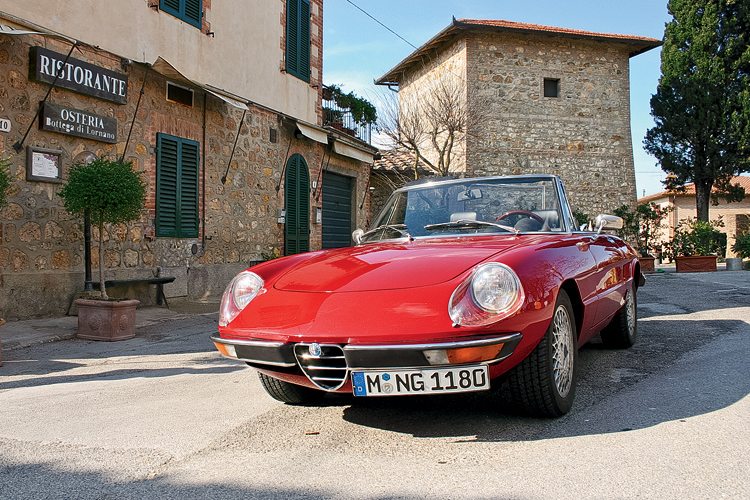
Photo: Nostalgic Tours Company | Leonid Golovanov
This a translation. You can read the original article here: Леонид Голованов поездил на старых Alfa Romeo из коллекции Nostalgic Tours
Country guides

Published August 30, 2023 • 13m to read