
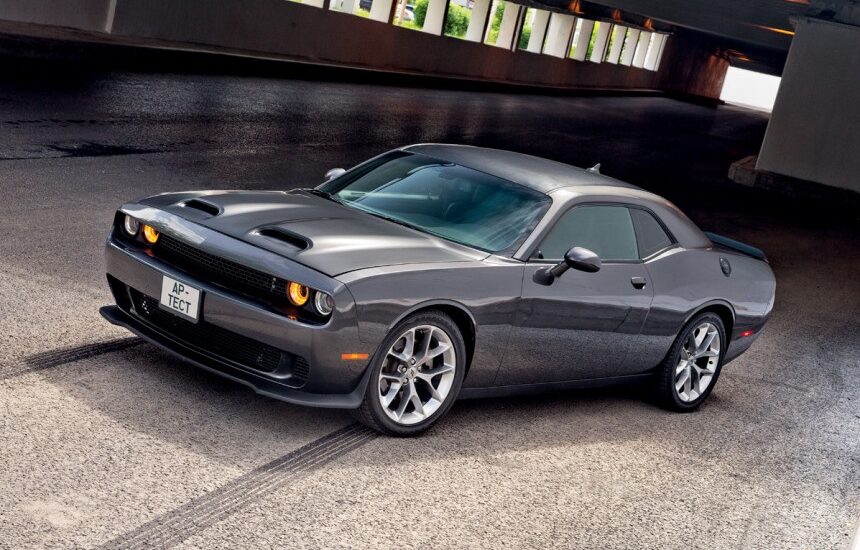

Auto Review’s editorial team, with a hint of irony, handed the farewell piece for the newly discontinued Dodge Challenger to a writer who has spent the past two years driving a Tesla. More intriguing that way, perhaps. I spent nearly a week in this black Dodge, wondering whether it was time to sing a requiem for the V8 — or whether its era really has passed.
Ask me to describe a typical muscle car and I would say: big, heavy, archaic, faintly sluggish, and loud enough to knock birds out of the trees. A cliché, obviously. Against that background, writing something engaging looked daunting, so I went digging in Auto Review’s archives for material — and found nothing. There were pages on the Chevrolet Camaro, which was officially sold in Russia for a while, and on the Ford Mustang. The Dodge Challenger had never earned that attention. So this farewell is also a debut: for the magazine, and for me.
One Name, Three Very Different Lives
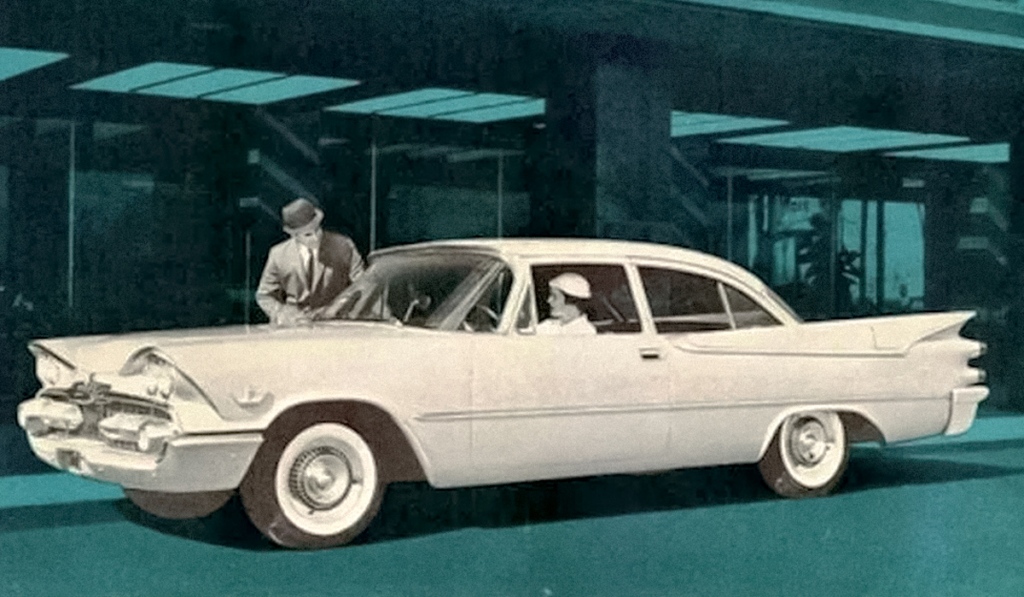
The Challenger name first appeared in 1959: the two-door Dodge Silver Challenger sedan was just a special version of the Coronet model.
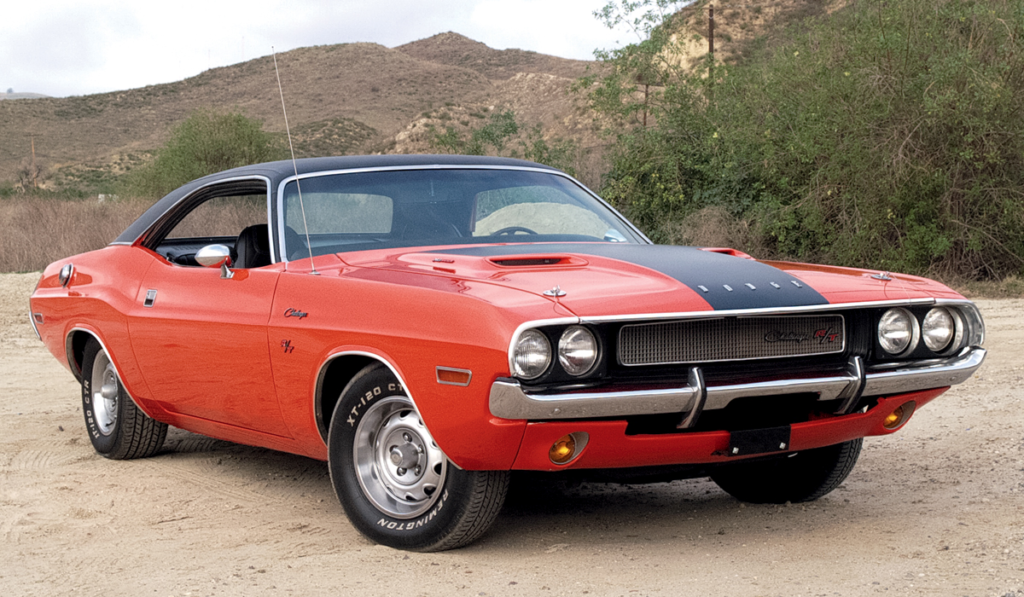
The first generation Dodge Challenger (1969-1974) was offered with inline sixes (3.2-3.7 l) and V8 engines (5.2-7.2 l). 165 thousand cars were produced.
That gap in the archive is telling. The original seventies Challenger spent its short life in the shadow of its Detroit rivals. It arrived five years after the Mustang and three years after the Camaro — about as useful as turning up for mushroom season at noon. While Ford and Chevrolet counted the money, Dodge managed 165,000 cars in five years before killing the model, a figure the Mustang was clearing annually.
Then came the fuel crisis, and a second generation that captured the misery of the era perfectly: a badge-engineered version of the compact Mitsubishi Galant Lambda, with four-cylinder engines from 1.6 to 2.6 litres and a choice of five-speed manual or three-speed automatic. Less muscle car than soup kitchen. After five years of that indignity the Challenger disappeared from the Dodge range for a quarter of a century.
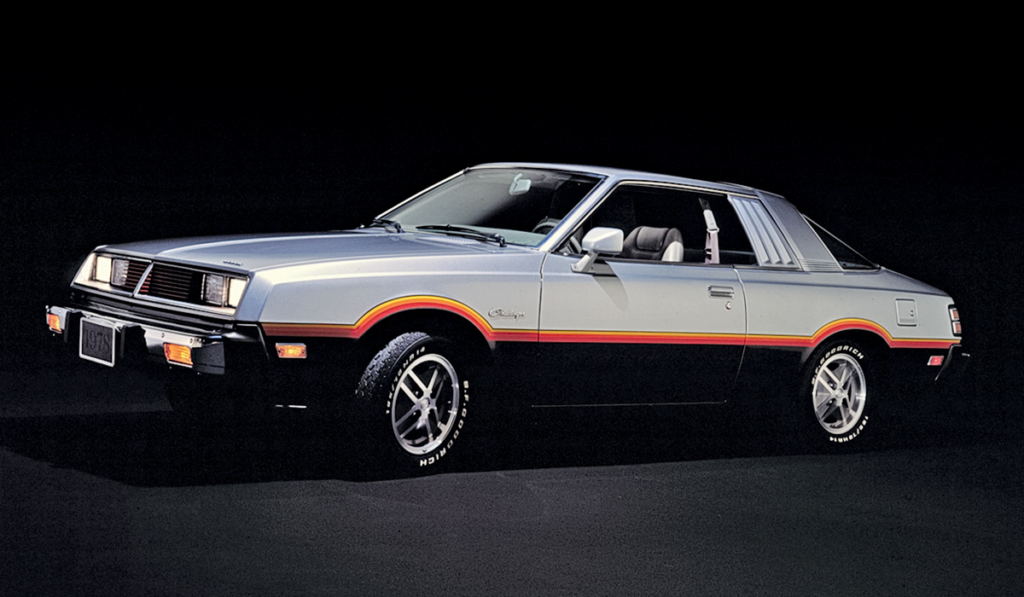
The second generation Dodge Challenger (1978-1983) was produced in Japan. During its entire production run, 107 thousand cars with four-cylinder 1.6 and 2.6 engines were sold.
The Retro Revival
The early 2000s were a golden age of homage, remake and tribute. It started with European compacts — the Volkswagen Beetle, the Mini — and the Americans answered handsomely: Chevrolet with the SSR and the Camaro, Chrysler with the PT Cruiser and the Crossfire, Ford with the Mustang and the GT. Not merely bold moves. Statements.
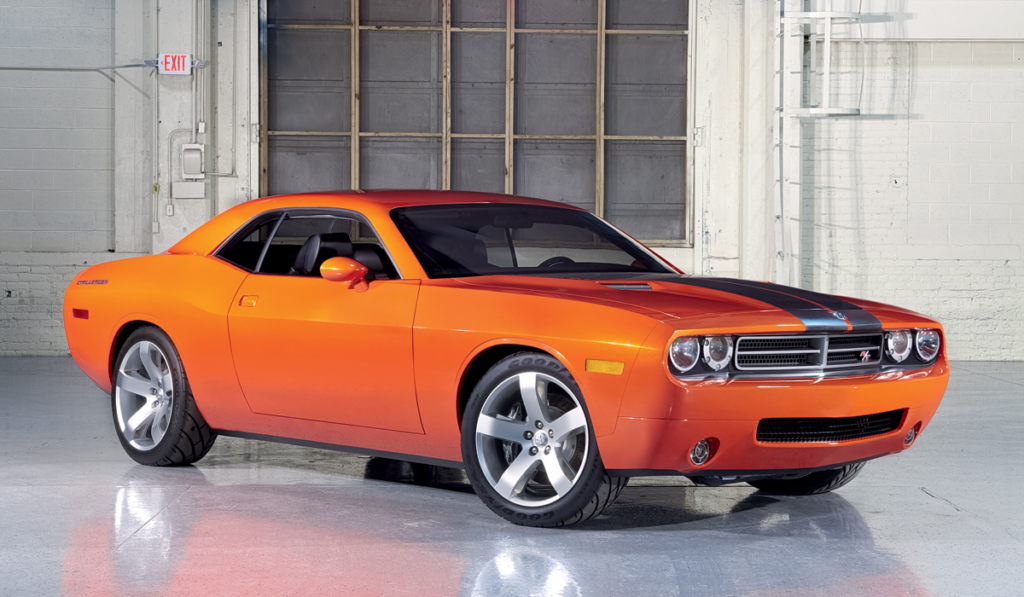
This 2006 concept evolved into the production Dodge Challenger with minimal changes. Production at a plant in Canada began in the spring of 2008.
The Challenger was part of that revival, and once again it turned up four years after the newest Mustang. It was not developed from scratch: the third generation used a shortened LX platform, shared with the Chrysler 300, Dodge Magnum and Dodge Charger. That platform was itself a product of the failed DaimlerChrysler merger and its dream of fusing German and American engineering — which is why it carries front suspension from the Mercedes-Benz S-Class (W220) and rear suspension from the E-Class (W210), among other borrowings.
A Two-Door Coupe the Size of an S-Class
The size is the first thing that lands. The Challenger is only a few centimetres shorter than that S-Class (W220) and nearly seven centimetres wider. Believe me, that is substantial. A two-door coupe with the footprint of a luxury saloon has presence built in — and when you wrap that in retro styling modelled on the first-generation car, which had reached cult status by the millennium, the effect multiplies.
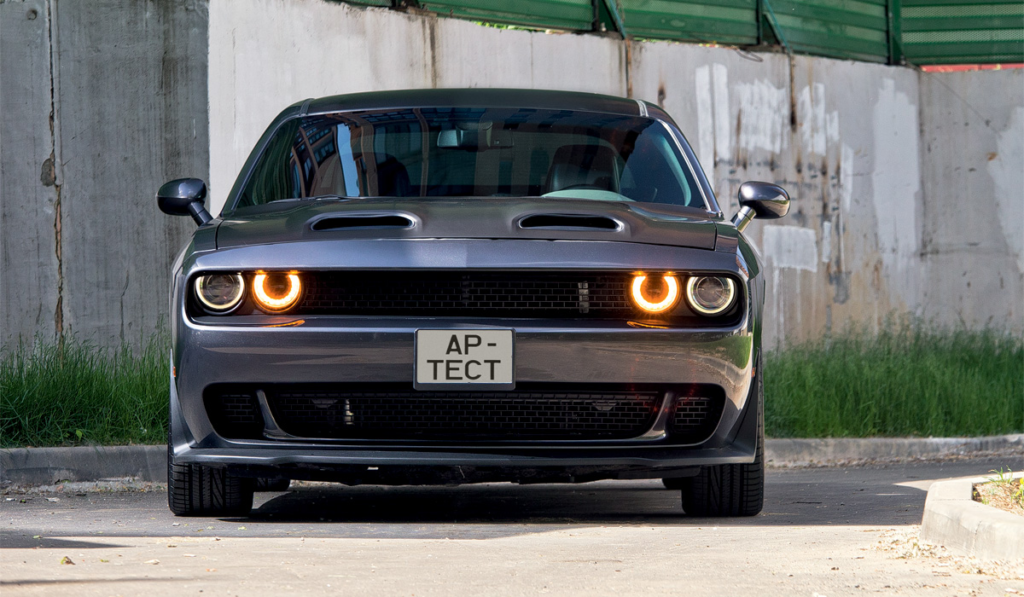
Where the Mustang and Camaro grew more refined over the years, the Challenger stayed exactly what it was and never took a serious restyling. The aggression, the hood scoops, the high beltline rising sharply towards the rear pillar — these are not styling elements so much as concentrated testosterone. Owning this Dodge, and enjoying it, took a certain amount of courage.
Almost as Many Versions as There Are NBA Teams
The experience varied enormously depending on which one you bought.
- Entry level — naturally aspirated V6, 253 to 309 hp. All-wheel drive only became available after 2017, and then as a token gesture
- R/T (Road and Track) — where it gets serious: the canonical 5.7-litre V8 Hemi, from 377 hp
- Naturally aspirated 6.4-litre V8 — up to 485 hp
- SRT Hellcat (2015) — the quantum leap: supercharged 6.2-litre V8, at least 717 hp
- SRT Demon 170 — the wildest factory Challenger of all, at 1039 hp
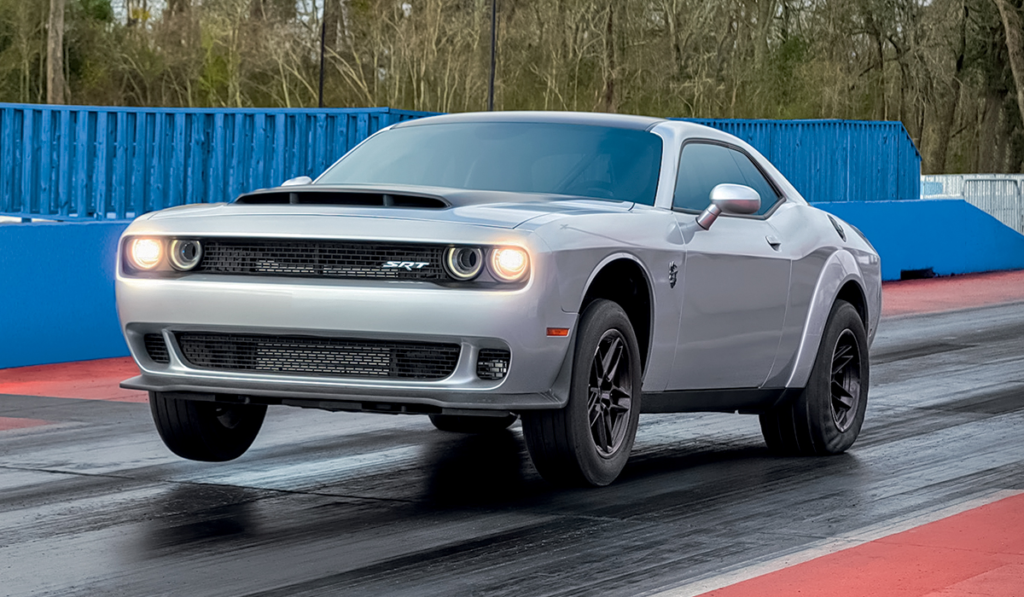
The farewell Dodge Challenger SRT Demon 170 became the most powerful in the range: on a mixture of E85, the supercharged V8 produces up to 1039 hp. 3300 of these road dragsters were produced.
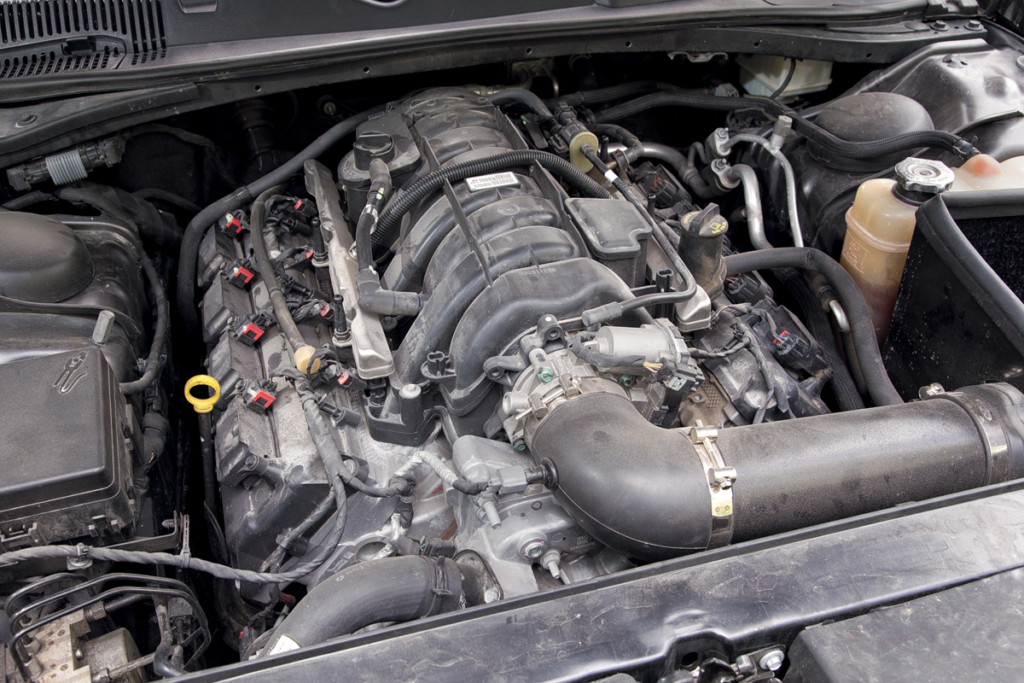
Our Test Car: A Lightly Tuned 2021 R/T
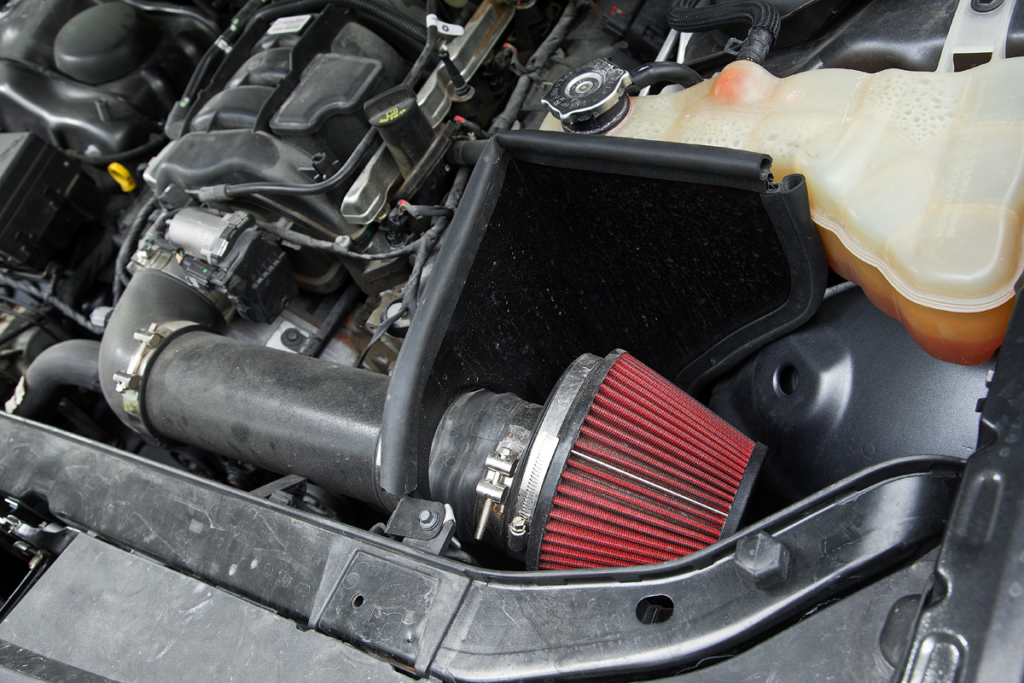
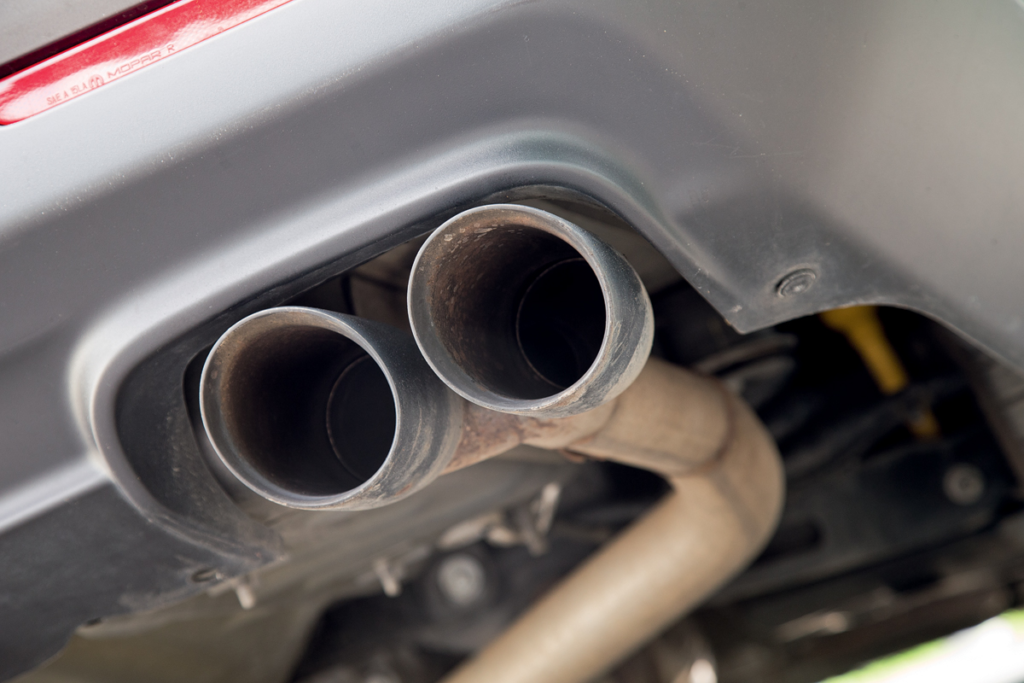
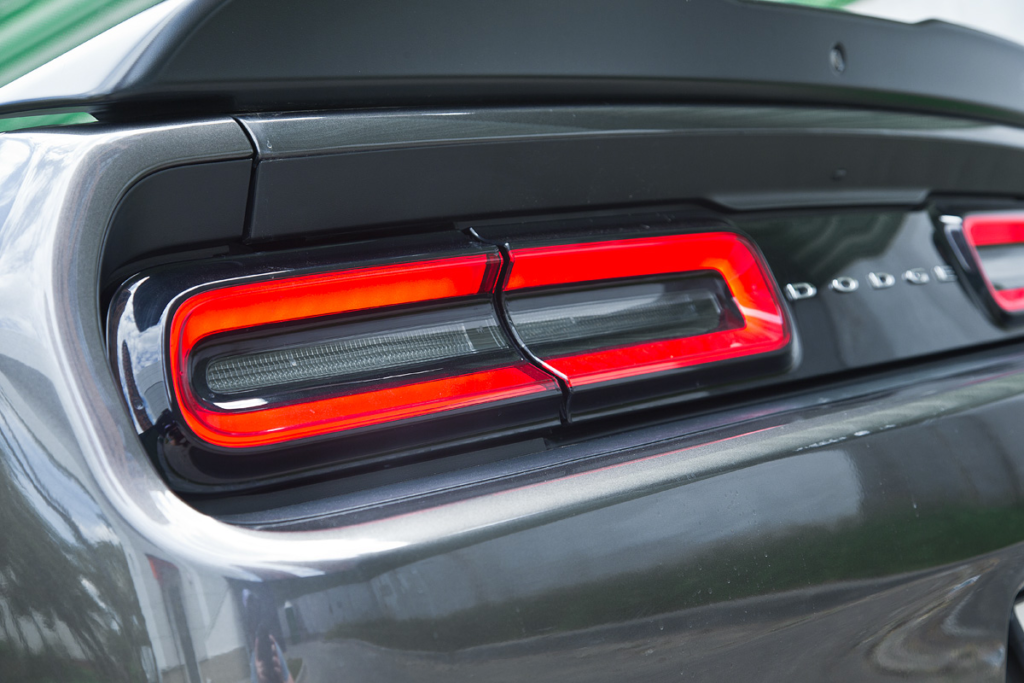
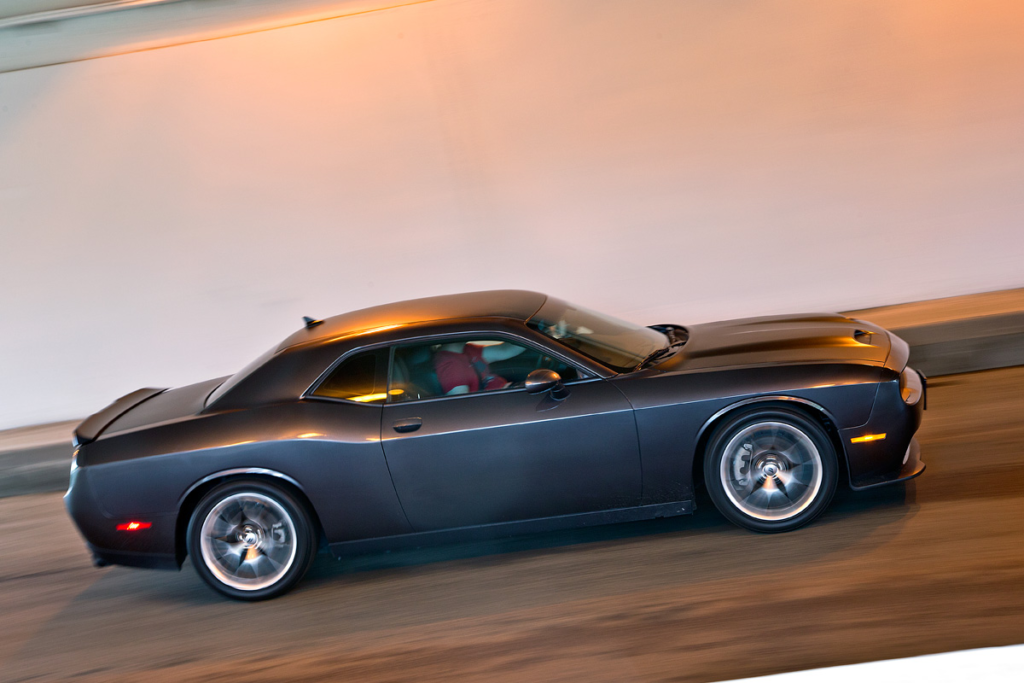
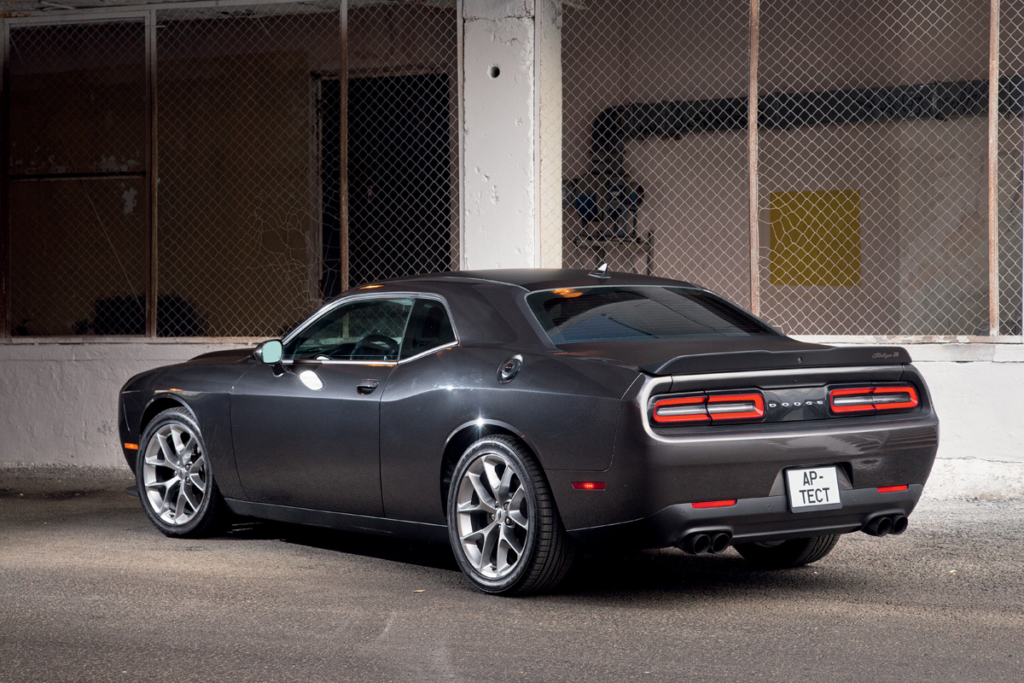
The black Challenger from the autobnb rental service was a 2021 R/T, imported used from America and modestly tuned: a K&N zero-resistance intake filter, Magnaflow resonators and tips on the exhaust, and a Stage 1 tune. Together those lifted the V8 from 377 to roughly 405 hp. Once that would have been an impressive number.
Electric cars have devalued horsepower and performance figures remarkably quickly. And given that a standard Challenger takes five and a half seconds to 100 km/h, the old stereotype broadly holds: big, heavy, not especially fast. But if the stars are lit, someone needed them lit. The first surprise was waiting inside.
Inside: Considerably Better Than Expected
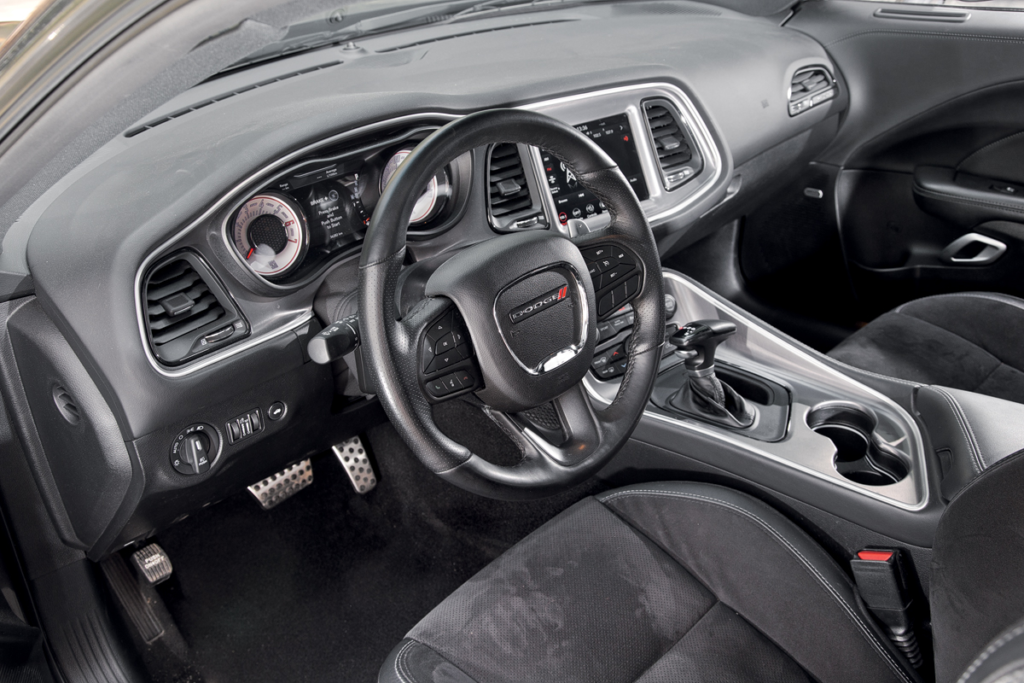
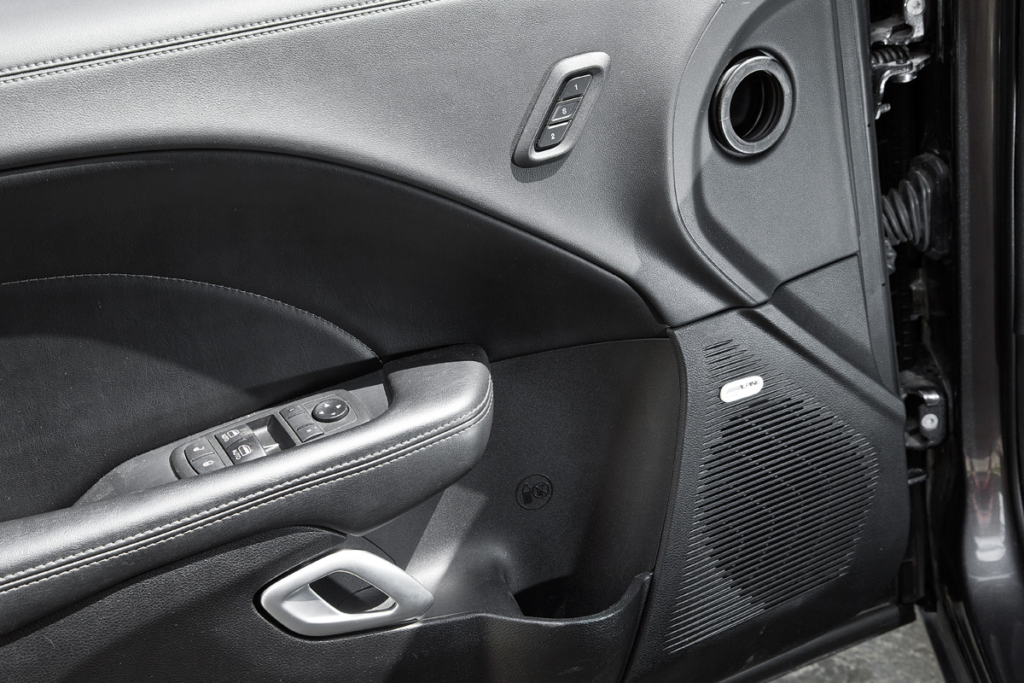
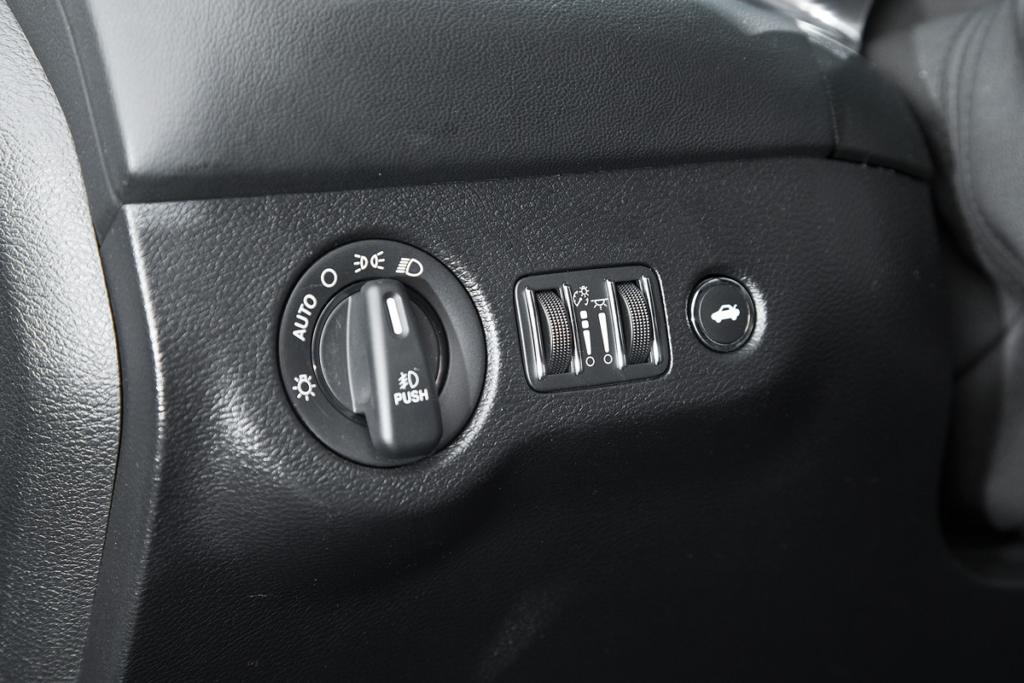
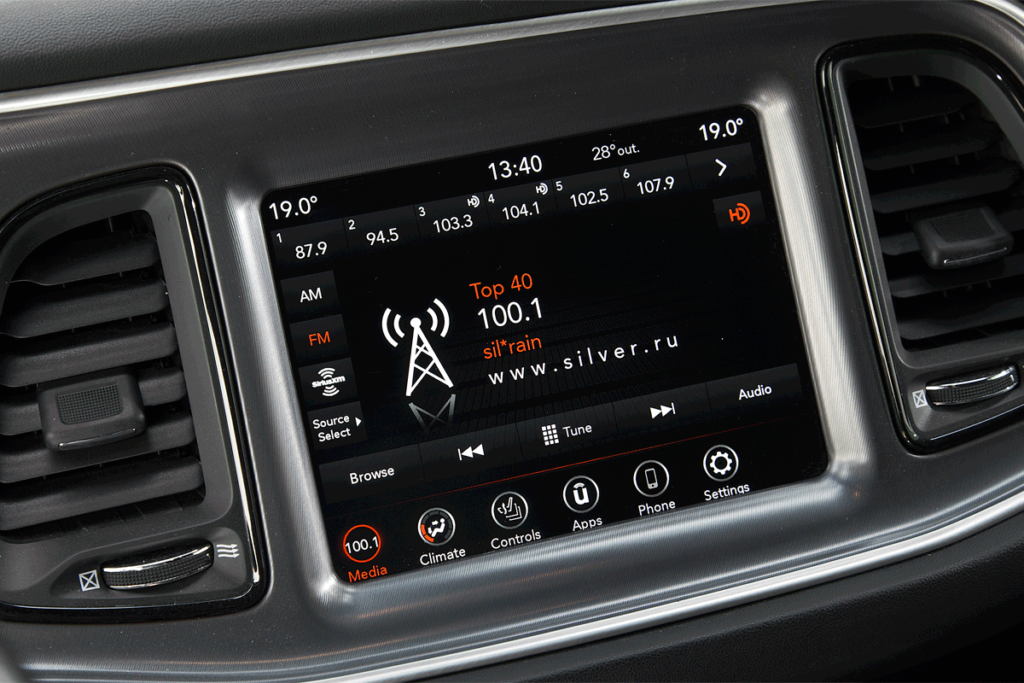
I expected something primitive, if not outright grim, equipped with little beyond cup holders. The Challenger is not that. The design is pleasant, there is the notorious soft-touch plastic, and a multifunction steering wheel — it feels like a modern car, at least in T/A (Trans Am) trim. That trim brings the Uconnect media system with a large (ha!) 8.4-inch screen, memory seats with ventilation, dual-zone climate control, a heated steering wheel, an Alpine audio system and the rest. All the gentlemanly essentials.
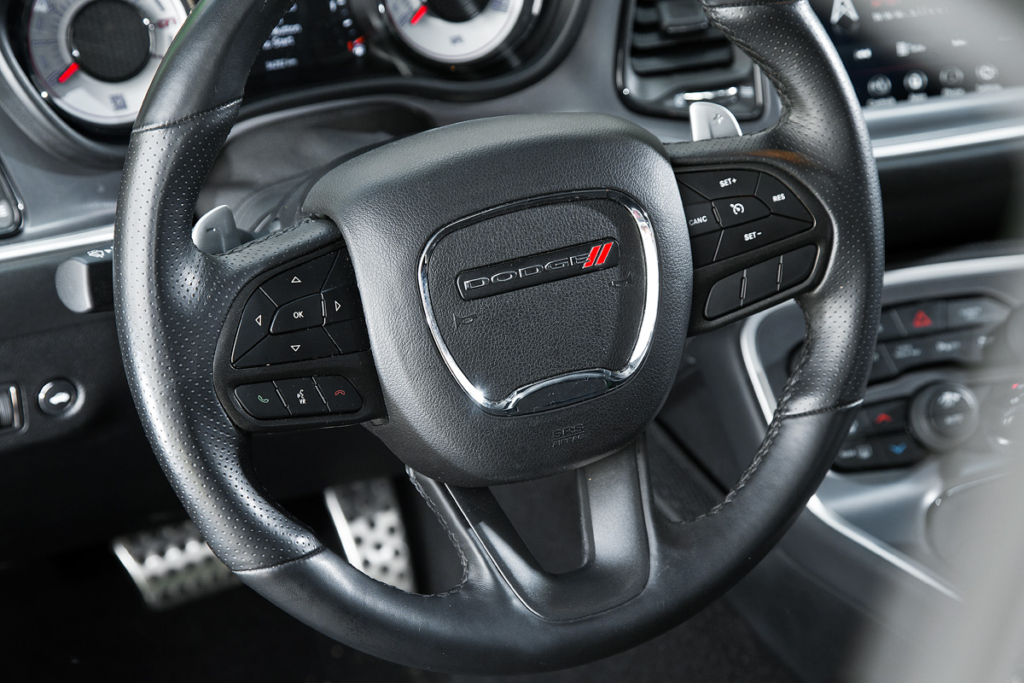
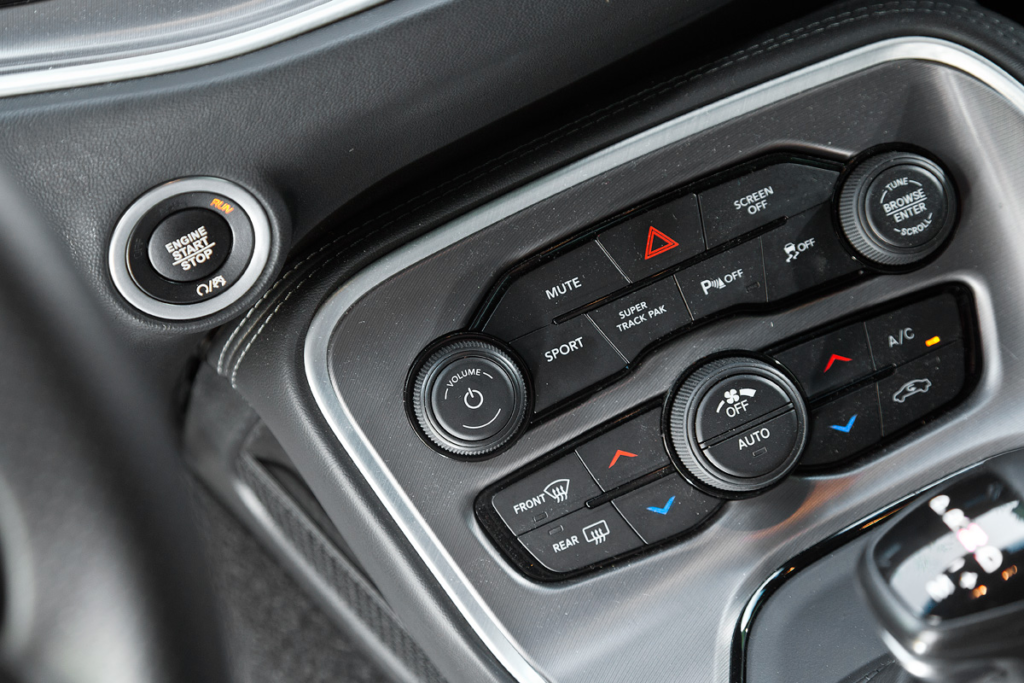
Be honest about the software, though: it is stuck in 2008. The graphics are rudimentary, the camera resolution is 0.1 megapixels, and the touchscreen is sluggish. My old 2012 BMW F30 3 Series was leagues ahead here, let alone the Tesla Model 3 I drive now. Dodge tries to keep up and does not always manage it.
Ergonomics, and the Bunker Feeling
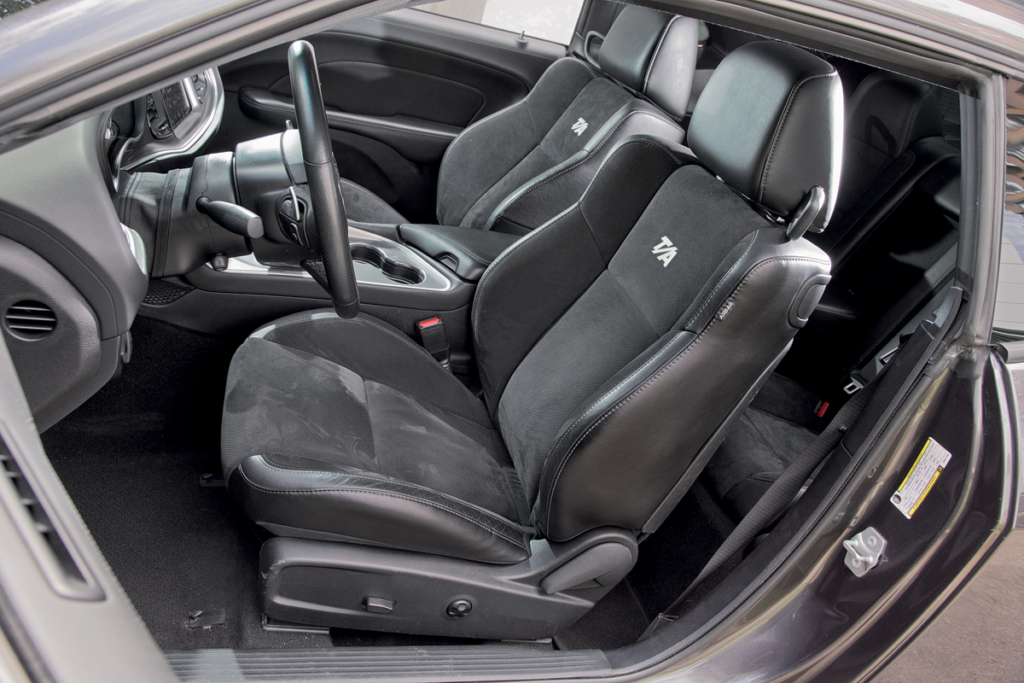
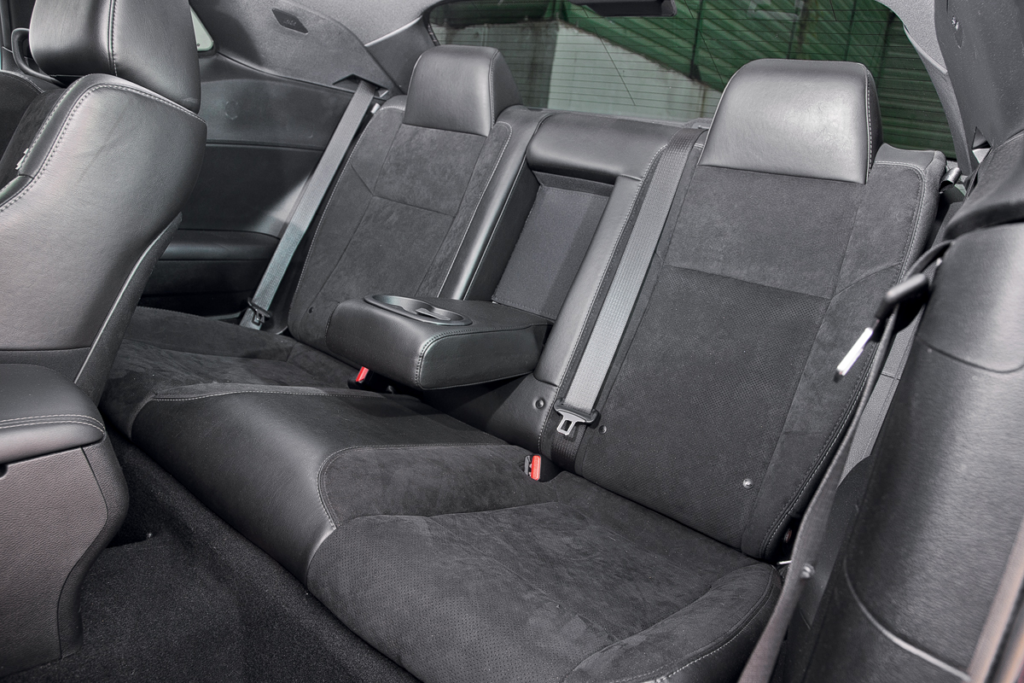
The ergonomics deserve credit. The deep, low-slung Recaro seats in suede are comfortable and the wheel adjusts for height and reach, so an average driver of about 1.8 metres will settle straight in. The high central tunnel and the cluster of analogue buttons under your right hand give you a cockpit feeling — though in the Challenger it is closer to a fortified bunker: dark cabin, narrow slit windows, small mirrors. It takes some getting used to.
Living With the Noise in Moscow Traffic
The whole car demands acclimatisation, the engine most of all. Press the starter and four hundred horsepower of V8 barks into life and announces: “Get ready, we’re about to have some fun!” That aggressive growl becomes tiring fast, though, when you are crawling through congested Moscow simply trying to get from A to B. Here the Dodge is a caged tiger — ready to pounce, nowhere to go.
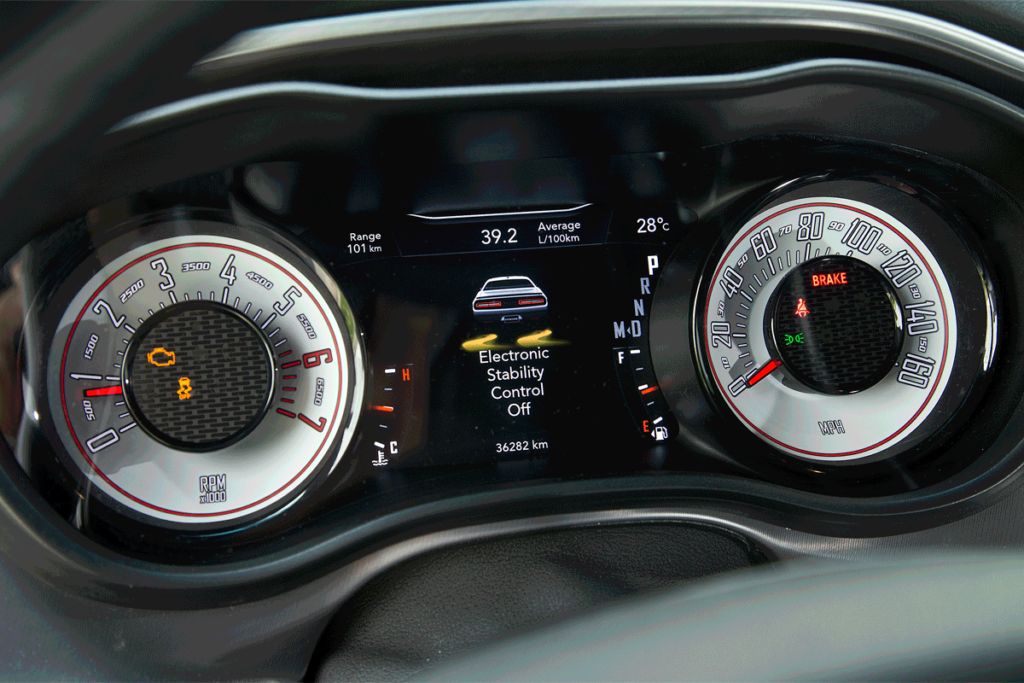
The engineers did genuinely try to make the coupe liveable. In comfort mode the steering is light and a little vague, the throttle is muted and the brakes are adequate. But the Challenger is still too much car — too big, too loud, too powerful, too in-your-face. After a few days of it around Moscow I found myself on my balcony thinking: “Who buys cars like this, especially in the city? Why do you need four hundred horses and five meters of rolling self-assertion? Or… is this just a sign of me getting older?”
When I was 25 I got to drive an Audi R8 for a day and did not waste a minute of it — everywhere, every mode. The experience is still vivid. So perhaps it is not the car. Perhaps it is me. The only way to find out was to get off the balcony and go back to the car park.
Then You Find a Straight Road
The Challenger never needs persuading. It is always ready, as long as there is fuel in the tank. All it takes is a straight road and the engine climbing past four thousand rpm — and then you begin to understand why people love these cars.
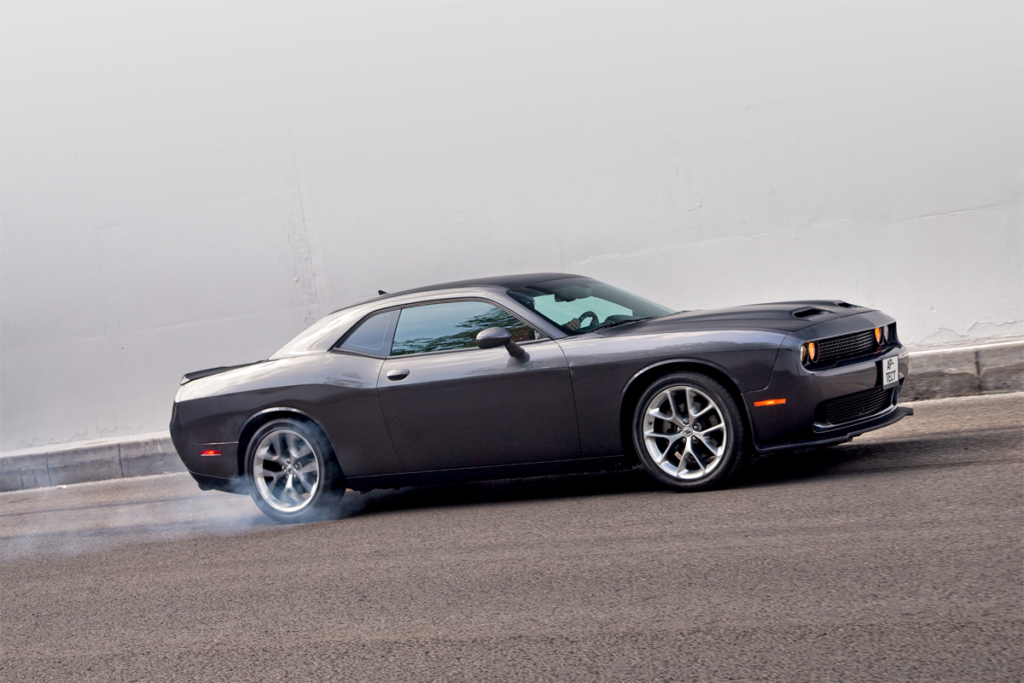
If you are expecting me to rave about a deep, bassy, iconic American V8 rumble, prepare to be disappointed. This Hemi does not sound like my Cadillac Fleetwood Brougham, which has a similar capacity. Perhaps it is the exhaust work, but the Challenger does not growl — it screams. Loudly enough that pedestrians take cover behind trees and curses come down from the windows above. The animal roar is intoxicating and you want it again and again: every green light, every open road, every time you remember that T/A trim includes launch control for the most dramatic start available. In those moments the performance figures stop mattering. It is all emotion.
Yes, the Tesla Model 3 and most modern EVs are faster. But their sterile acceleration is not in the same business as pressing the Challenger’s throttle. It is no accident that the mute button sits next to the sport mode button. Ideally there would be a third one that drops both side windows at once and lets the noise in.
Stay awake, though. Whatever mode you select, the Challenger wants to spin its rear tyres off the line — and if you cross tram tracks mid-acceleration you had better be quick with the correction. Exhilarating.
Gearbox, Ride and Handling
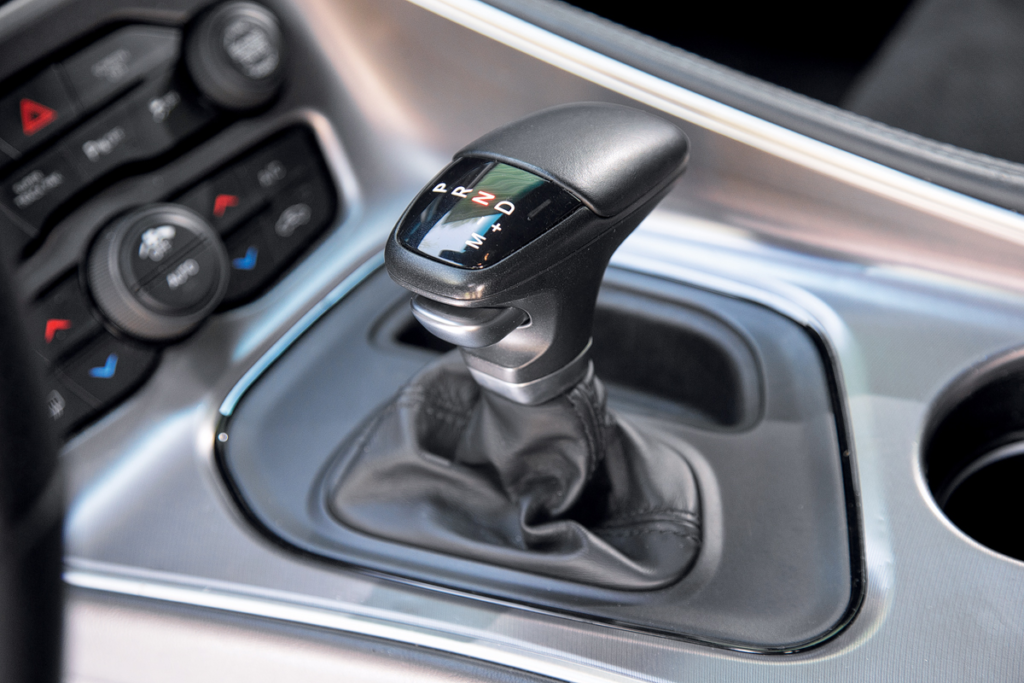
Step back from the adrenaline and the details start showing. The eight-speed ZF automatic is good in most situations, but there is a noticeable lag when you floor it. There is a manual mode and there are paddles, but how often does anyone actually use them? After a Tesla, where transmission delay does not exist as a concept, even Porsche’s PDK starts to feel slow.
The suspension, on the other hand, is a pleasant surprise. Where is the traditional American wallow? The roll, the slack? Not there. The catch is that road crews could use a fleet of these Dodges to survey pavement quality: potholes, expansion joints, ruts — you suddenly appreciate how many imperfections Moscow’s roads contain. At least there is no float over long undulations and no seasickness. Better this than riding on jelly.
Handling brings the same collision between expectation and reality: the Dodge drives better than I thought it would. Even in the light comfort setting you have a decent sense of the front wheels and their angle. But there is no urge to explore the limit. Whatever buttons you press and whichever mode you choose, this is a huge coupe weighing close to two tonnes, and physics does not negotiate — especially without adaptive dampers, which the Challenger does not have. It runs passive dampers and springs.
The brakes, with optional perforated discs, do their best without being invincible. Go into a corner too fast and you will run wide; get greedy with the throttle on the way out and you will be catching the rear axle. Classic stuff. After a couple of near misses you think twice about pushing this American again.
So What Does It Actually Do Best?
It lets you revel in the noise. It lets you correct the rear axle off the line. It lets you feel the raw masculinity it was built to embody. That is where the Challenger excels — but is that enough? Even on the used market an eight-cylinder Challenger starts around 4 million rubles, and prices comfortably exceed 10 million.
Why Nikolai Bought a Second One
Handing the keys back to the owner, Nikolai, I could not resist asking why — having sold his six-cylinder Challenger SXT — he bought another American car, and a more powerful R/T at that. The answer had nothing to do with money. Nikolai had briefly switched to a Volvo XC60 and could not stand driving it. Comfortable, versatile, and boring to death: not a car, just transport. So a five-metre American muscle car with a 5.7-litre V8 is once again parked in his Moscow courtyard.
The End of the V8 at Dodge
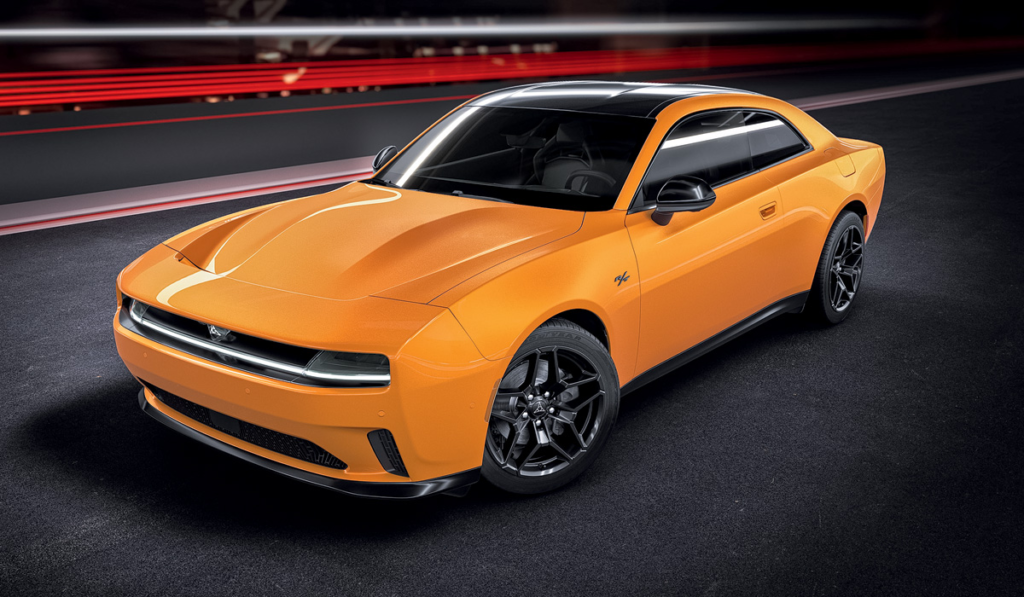
These cars will not be made again, and that is a loss. Dodge has not merely retired the Challenger name — production ended in December 2023 — it has abandoned V8 engines altogether. The Hemi family goes out of production in 2024, which means no more eights in Jeep, Ram or Chrysler either. The new Dodge Charger, a three-door or five-door liftback, comes with a turbocharged inline-six or electric power. It is faster, more efficient and cleaner. But muscle cars were always about something else, something the next Dodges will not be able to offer.
The Chevrolet Camaro’s fate is bleaker still: discontinued with no successor at all. Which looks stranger when you notice that Ford has no intention of giving up V8s. Ford’s CEO Jim Farley said recently that they will keep putting eights in Mustangs for as long as “God and politicians allow”. That is an approach worth respecting.
Unless Stellantis Changes Its Mind
Let us not despair prematurely. Stellantis, Dodge’s parent, has a history of reversing decisions — including ones already carried out. So who knows: after a short pause the V8 might come back, once somebody works out that selling emotion without one is impossible. Let us wait and see.
Dodge Challenger: The Key Numbers
- Generation one (1969-1974): inline sixes 3.2-3.7 l and V8s 5.2-7.2 l · 165,000 built
- Generation two (1978-1983): built in Japan, 1.6 and 2.6 four-cylinders · 107,000 sold
- Generation three: concept shown 2006, production from spring 2008 in Canada, on the shortened LX platform
- Engine range: V6 253-309 hp · 5.7 V8 from 377 hp · 6.4 V8 up to 485 hp · 6.2 supercharged from 717 hp · Demon 170 up to 1039 hp on E85, 3,300 built
- Test car: 2021 R/T, 5.7 Hemi tuned from 377 to about 405 hp
- 0-100 km/h: five and a half seconds (standard car) · weight: close to two tonnes
- Transmission: eight-speed ZF automatic · passive dampers, no adaptive suspension
- Used prices in Russia: from about 4 million rubles, easily over 10 million
- Production ended: December 2023
Dodge Challenger R/T: Full Specifications
| Specification | Details |
|---|---|
| Car Model | Dodge Challenger R/T |
| Body Type | Two-door coupe |
| Number of Seats | 5 |
| Dimensions (mm) – Length | 5027 |
| Dimensions (mm) – Width | 1923 |
| Dimensions (mm) – Height | 1465 |
| Wheelbase (mm) | 2946 |
| Track Front/Rear (mm) | 1610/1620 |
| Drag Coefficient (Cx) | 0.365 |
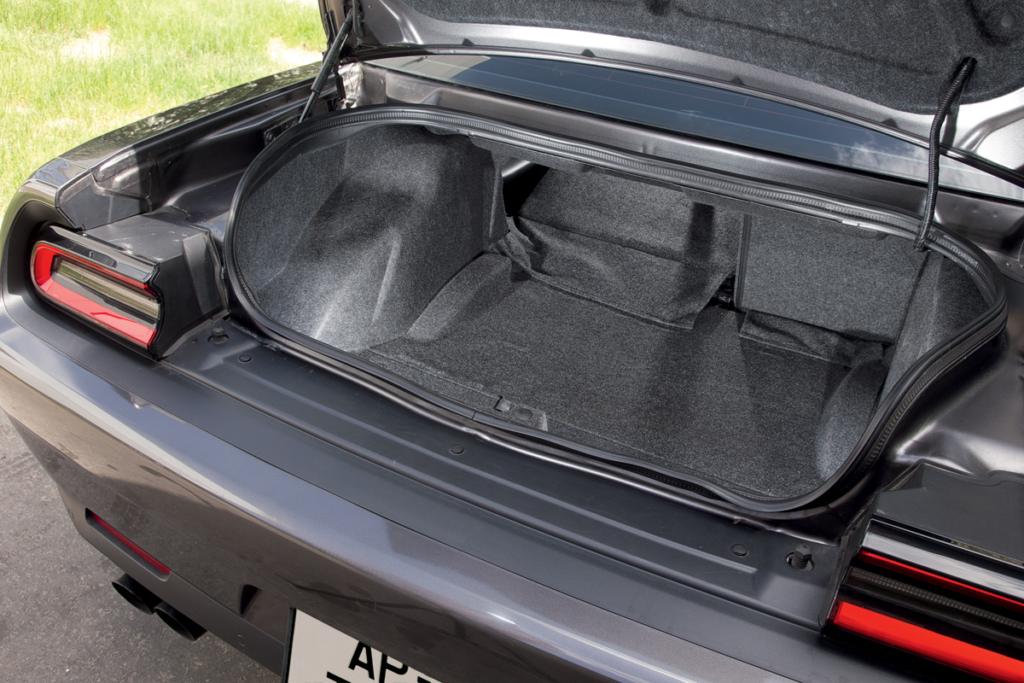
| Trunk Volume (L) | 459 |
| Curb Weight (kg) | 1889 |
| Gross Vehicle Weight (kg) | 2404 |
| Engine Type | Petrol, with direct injection |
| Engine Position | Front, longitudinal |
| Number and Arrangement of Cylinders | 8, V-shaped |
| Engine Displacement (cc) | 5654 |
| Cylinder Diameter/Piston Stroke (mm) | 99.5/90.9 |
| Compression Ratio | 10.5:1 |
| Number of Valves | 16 |
| Max Power (hp/kW/rpm) | 377/277/5200 |
| Max Torque (Nm/rpm) | 542/4400 |
| Transmission | Automatic, 8-speed |
| Drive Type | Rear |
| Front Suspension | Independent, spring, double wishbone |
| Rear Suspension | Independent, spring, multi-link |
| Brakes | Disc, ventilated |
| Base Tire Dimensions | 245/45 ZR20 |
| Top Speed (km/h) | n/a* |
| Acceleration 0-100 km/h (s) | n/a |
| Fuel Consumption – Urban (L/100 km) | 14.7 |
| Fuel Consumption – Extra Urban (L/100 km) | 9.4 |
| Fuel Consumption – Combined (L/100 km) | 12.4 |
| Fuel Tank Capacity (L) | 70 |
| Fuel Type | Petrol AI-95 |
n/a* – No data available.
Frequently Asked Questions
Why was the Dodge Challenger discontinued? Production ended in December 2023 as Dodge moved away from V8 engines entirely. The Hemi family goes out of production in 2024, and the new Charger uses a turbocharged inline-six or electric power.
How powerful was the most extreme Challenger? The SRT Demon 170, whose supercharged V8 produces up to 1039 hp on E85. Dodge built 3,300 of them.
What platform is the modern Challenger based on? A shortened LX platform shared with the Chrysler 300, Dodge Magnum and Dodge Charger — a leftover of the DaimlerChrysler merger, with front suspension from the Mercedes-Benz S-Class (W220) and rear from the E-Class (W210).
Is the Challenger good to drive every day? In city traffic it is exhausting — too big, too loud, and the software is stuck in 2008. On an open road, past four thousand rpm, it makes complete sense.
Will V8 muscle cars come back? Ford says it will keep V8s in the Mustang for as long as “God and politicians allow”. Stellantis has reversed decisions before, so a return is not impossible.
Photo: Dmitry Piterskiy | Dodge
This is a translation. You can read the original article here: Анти-Tesla: знакомство и прощание с восьмицилиндровым купе Dodge Challenger

Published October 31, 2024 • 13m to read