


Which winter tyres should you choose — studded or studless? In our tests we compare them on ice, on snow and on asphalt. This time we look only at asphalt, and at two sets from one brand: the studded Gislaved NordFrost 200 and the studless Gislaved SoftFrost 200. Alongside a sprint test of braking on wet and dry asphalt, the programme includes a marathon — a drive from Moscow to Saint Petersburg to see what the studs do to fuel consumption.
Why Gislaved, and Why the 200 Series
Unlike many other brands, Gislaved has stayed in Russia. More than that: after its parent company Continental left, the plant in Kaluga and some of the tyre models moved across to the Gislaved brand. For this experiment we chose the well-known 200 series, in production for ten years now. They have taken part in several Autoreview comparison tests, and we usually recommend them above all for winter use in town.
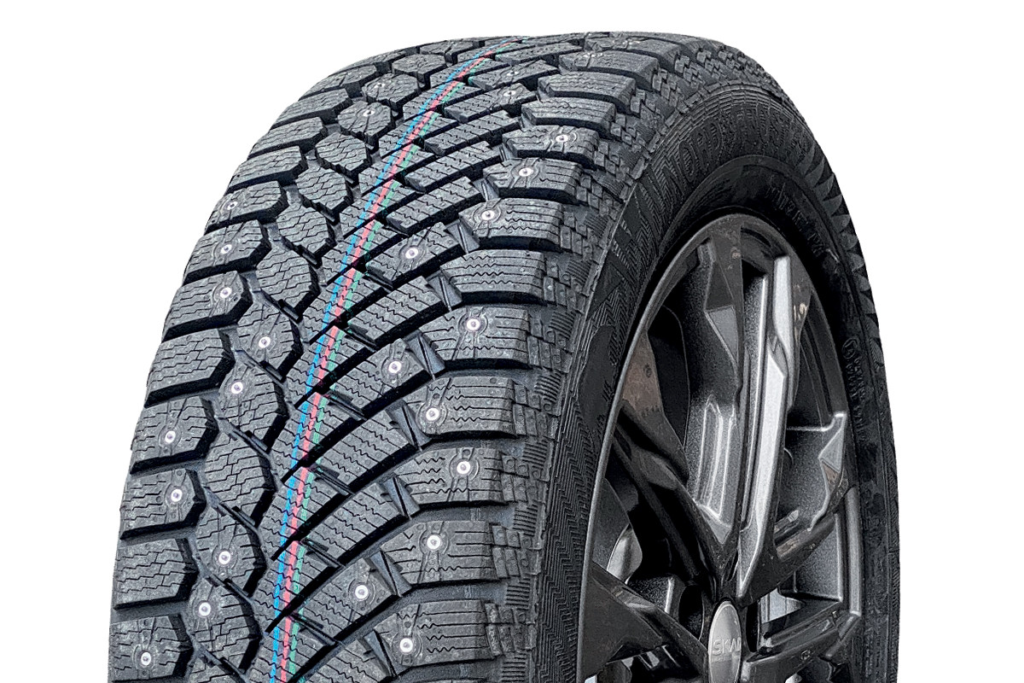
Gislaved Nord*Frost 200
The studded Gislaved NordFrost 200 is still one of the quietest of its rivals, who have got themselves into an arms race over stud counts. There are models, Chinese ones among them, with 180, 200, even 250 studs. The 17-inch Gislaved NordFrost 200 has 130. That is hard to compete with on ice, of course — but on asphalt?
Gislaved’s performance on snow and ice is in our comparison tests. The task here is to put numbers on the difference between studded and studless tyres from one maker on asphalt. However severe the winter, roads in large cities are usually cleared and cars spend most of their time on asphalt — never mind the shoulder seasons and the thaws.
The Tyres, Weighed and Measured
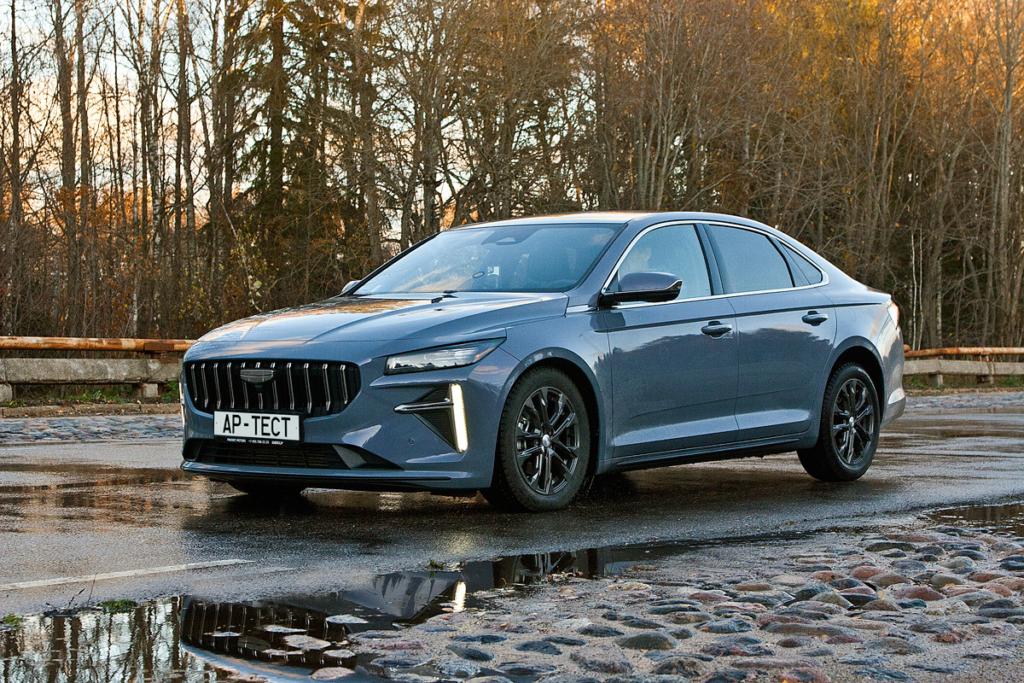
The test tyres are naturally the same size, and the conditions were matched throughout:
- Size: 215/55 R17
- Load and speed indexes: 98T — up to 750 kg and up to 190 km/h
- Wheels: identical Skad Atakor
- Test car: the Geely Preface saloon, recently released in Russia
The car’s factory wheels are 18-inch, on Chinese Atlas tyres, and each of those assemblies weighs 22.8 kg. The 17-inch sets are lighter: 22.0 kg with the studded tyres, 21.1 kg with the studless. Going down to 17 inches therefore reduces unsprung mass and eases the load on the suspension.
Why a Studded Tyre Weighs More
Why do the studded tyres weigh nearly a kilogram more? Not because of the studs, clearly: each weighs no more than 1.6 grams, or 208 grams a tyre in total. The rest of the difference is rubber, because the tread of a studded tyre also has to hold its studs securely. That calls for a harder compound — in our case 10 units harder on the Shore scale, 67 against 57.
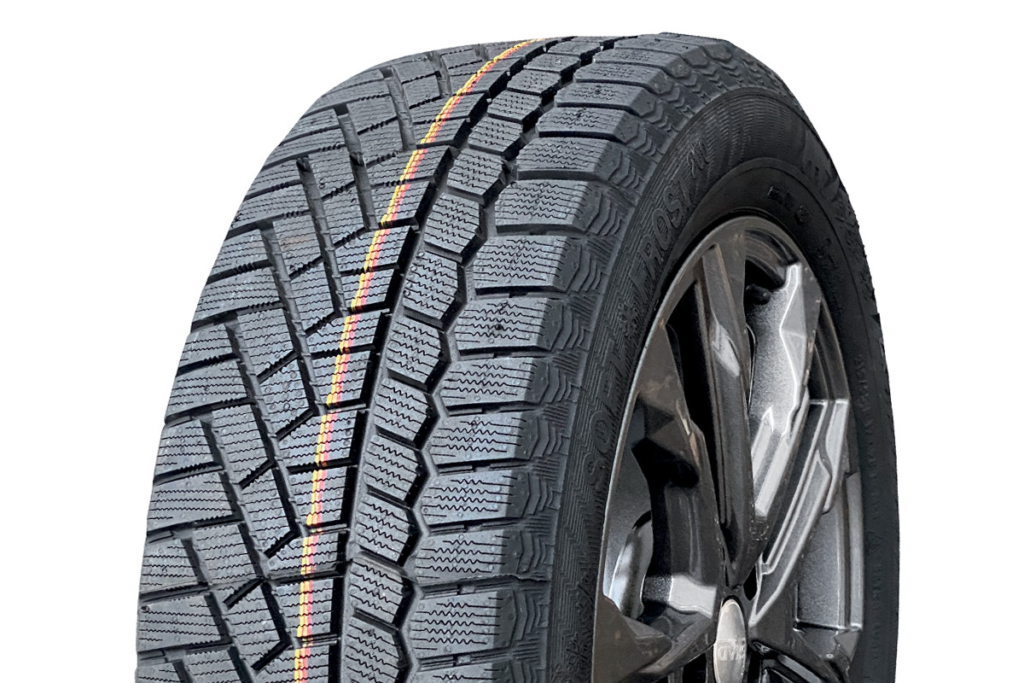
Gislaved Soft*Frost 200
The Marathon: Moscow to Saint Petersburg
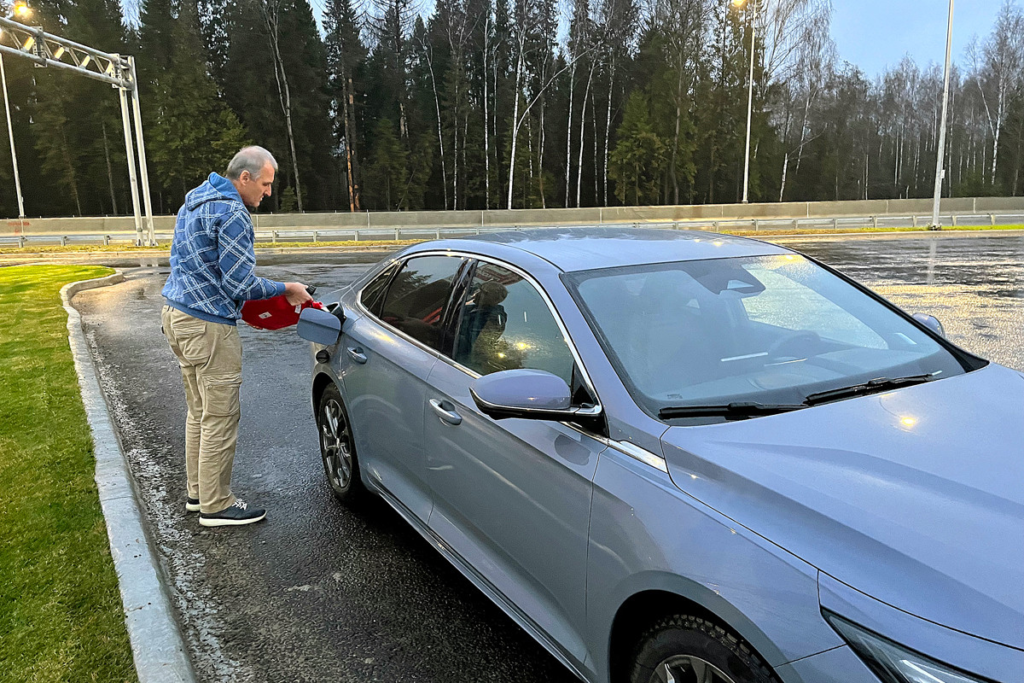
With the static measurements done, I set off to test winter tyres in Saint Petersburg — not exactly to run them in. The point of the trip was to establish what winter tyres really do to fuel consumption. I drove up on the studded Gislaved NordFrost 200 and came back on the studless SoftFrost 200. The load was the same both ways, and the driving mode on the M11 toll road was a constant 130 km/h on cruise control. There were moments when I had to slow for lunch or fuel, naturally, but over 650 km those have little influence on the result.
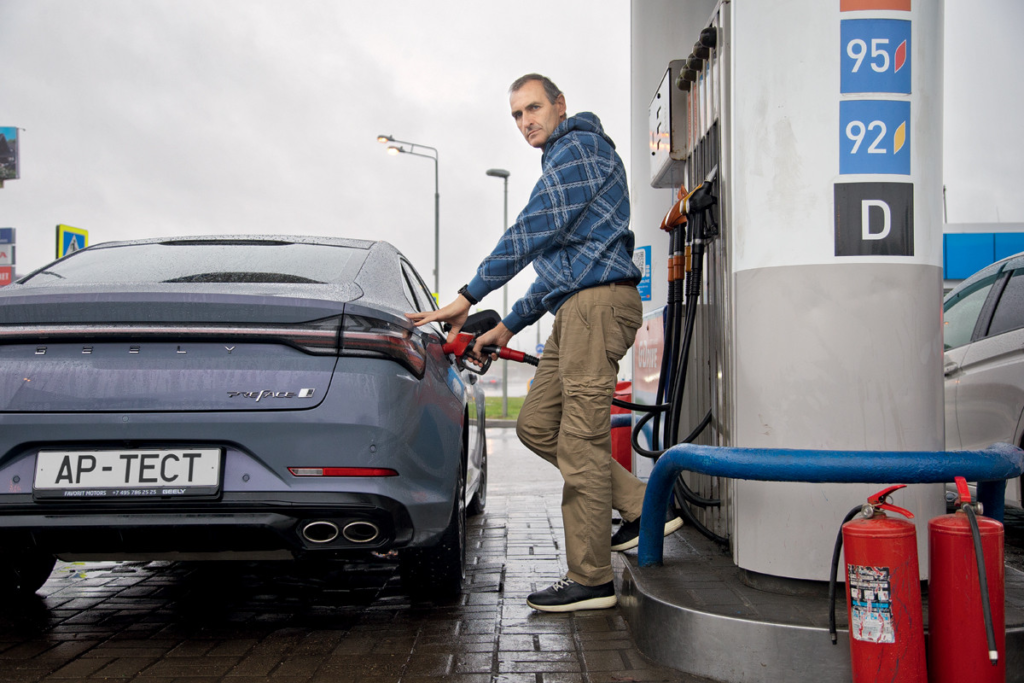
Fuel consumption assessment – based on data from fuel dispensers
What the Onboard Computer Said
Having filled the tank on the outskirts of Moscow, I hoped to reach Saint Petersburg without stopping, and it became clear halfway that the Geely’s 49-litre tank was too small for the journey. It might have sufficed at 100—110 km/h, but with 130 km/h legally allowed from April to October, that would have been slow and dismal.
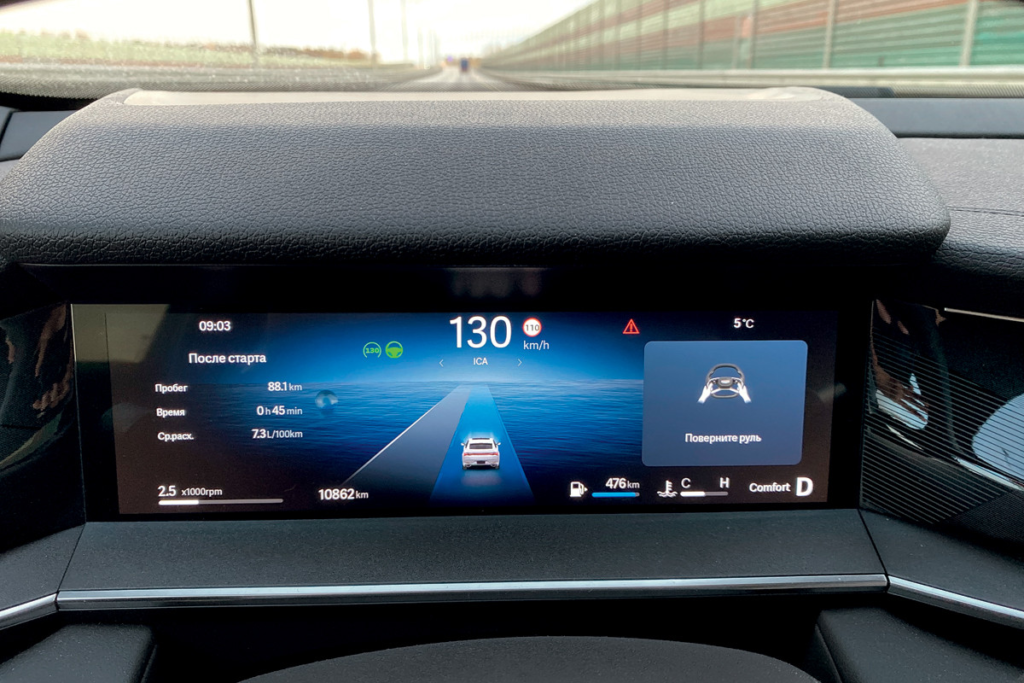
Curiously, the Geely Preface’s onboard computer contradicted itself all the way. It showed an average of 7.3—7.5 l/100 km, and yet calculated the remaining range quite differently, promising 80—100 km less than the 49/7.5 = 653 km that figure implies. Just as well I did not trust the 7.5 l/100 km on the display and stopped to refuel: the actual consumption over 644 km turned out to be 8.2 l/100 km. Let us not be too hard on the Chinese motor industry, though — we have caught onboard computers understating consumption on Japanese and European cars often enough.
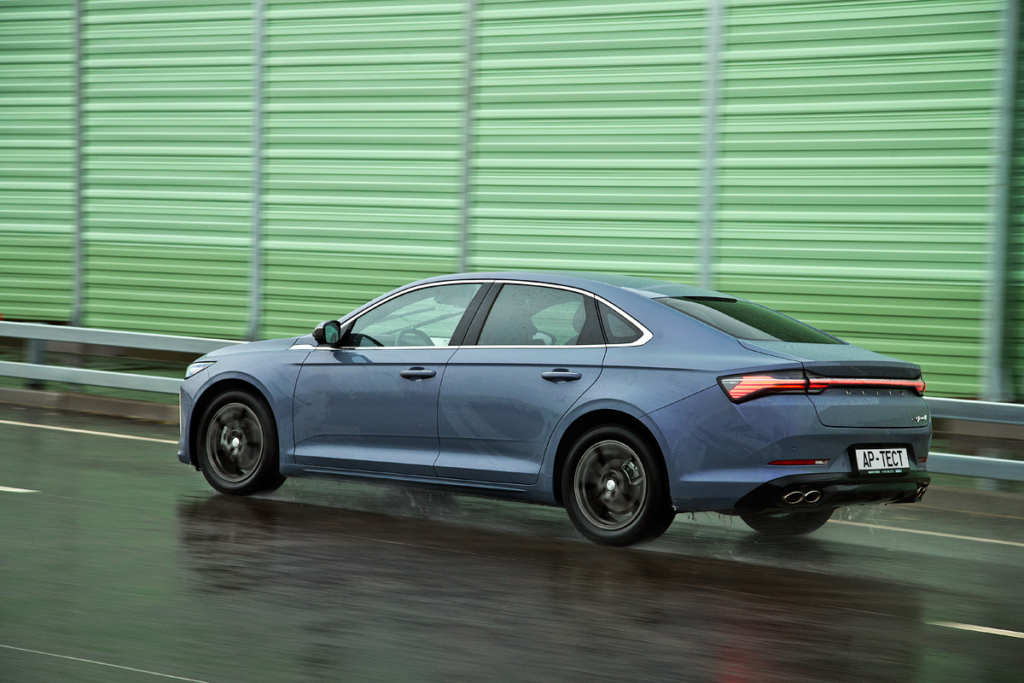
This was, incidentally, my first run on the M11 in its new seamless form, now that the last section — the northern bypass of Tver — has opened. You can now travel from Moscow to Saint Petersburg without leaving the expressway: take a ticket at the entrance and pay for the whole trip at the end. I turned off towards Pushkin, 20 km short of the Ring Road, and paid 4120 rubles for the road. At weekends it costs another 300.
The Return Trip, on Studless
After a night in Pushkin I changed to the studless tyres for the way back. The same five hours of driving, and at the end of the route the Geely’s trip computer showed 7.2 l/100 km. That is a recorded saving of 0.3 l/100 km. The real difference, worked out from the amount of 95-octane petrol actually put in, was larger still: 0.4 l/100 km.
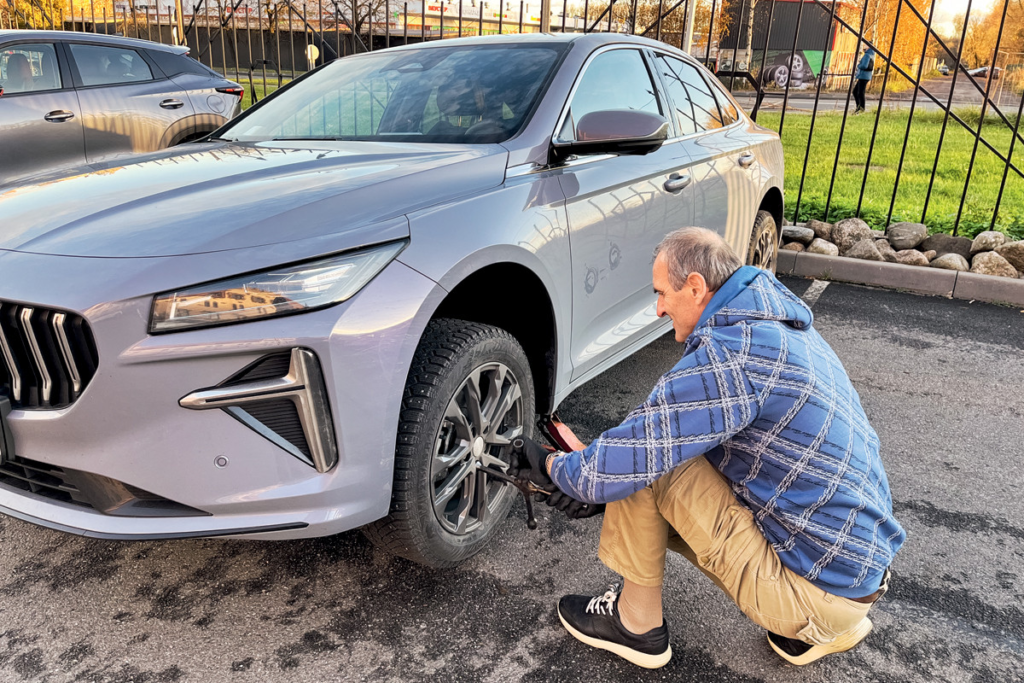
Change of wheels, mandatory pressure check (2.3 bar front and back) – and on the return trip from St. Petersburg to Moscow.
What the Studs Cost in Fuel
Studded tyres have higher rolling resistance, certainly — but a fuel consumption figure is a great deal more illustrative than a dimensionless rolling resistance coefficient measured on a test bench, on drums, where a studded tyre rolls without its studs. Road results are much closer to reality.
Translated into absolute terms, though, the studless tyres save 2.5 litres of petrol over the Moscow–Saint Petersburg route. Or 150 rubles. That is unlikely to deter anyone used to driving on studs. The safety arguments matter far more — and for those, welcome to the special roads of the Dmitrovskoye Autodrome.
The Sprint: Braking on Wet and Dry
Studded tyres are preferable in most situations on ice, obviously, and we do not need to wait for winter to confirm it again. Many drivers believe studs make things worse on asphalt. I am not so sure. My experience, across dozens of comparison tests, is that it depends entirely on the model. Here we have tyres from one manufacturer, of the same construction, with similar asymmetric tread patterns — ideal conditions for a head-to-head duel. The Racelogic VBOX Sport acts as second, measuring braking distance on wet and dry asphalt precisely.
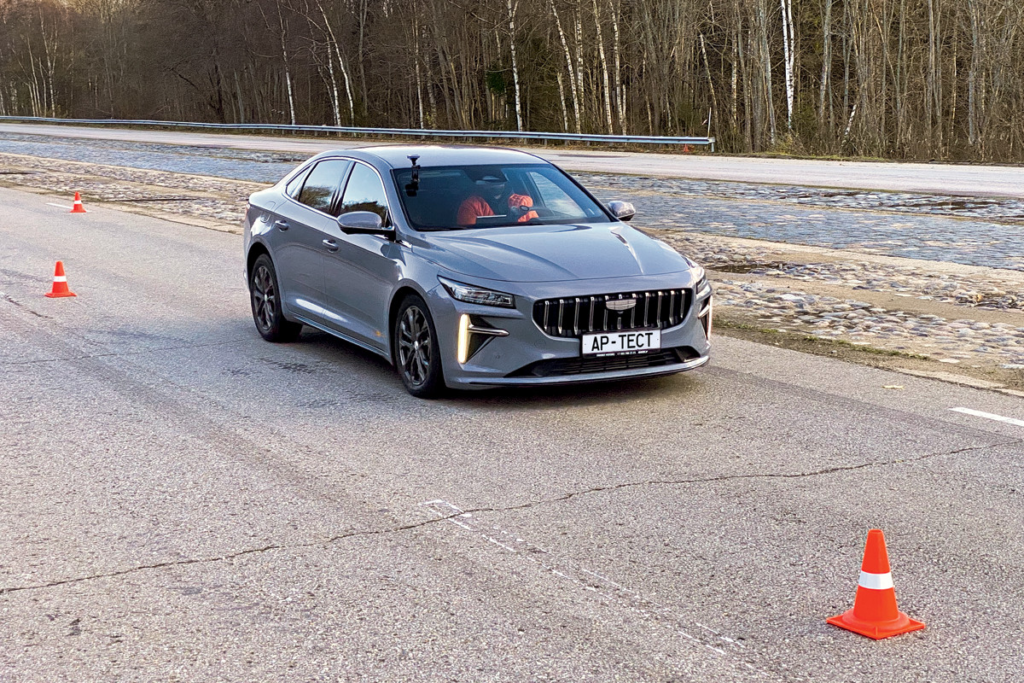
The studded tires withstood a series of full-force braking from a speed of 100 km/h without any losses: the tread does not look worn after the tests, all the studs are in place.
Five or six braking runs on each set, averaged, put the difference on wet asphalt from 80 km/h at just 40 cm — and in favour of the studded Gislaved Nord*Frost 200. On dry asphalt the gap is smaller still: 8 cm from 100 km/h, which is within measurement error.
What matters more here is the absolute figure. Where the Geely Preface stops from 100 km/h in 39—40 metres on its factory summer tyres, on winter tyres the braking distance is over 53 metres. Which means that the moment you fit winter tyres you must change how you drive: slow down before corners, leave more space in front. Because if the car ahead is still on summer tyres, its emergency braking distance will be noticeably shorter than yours.
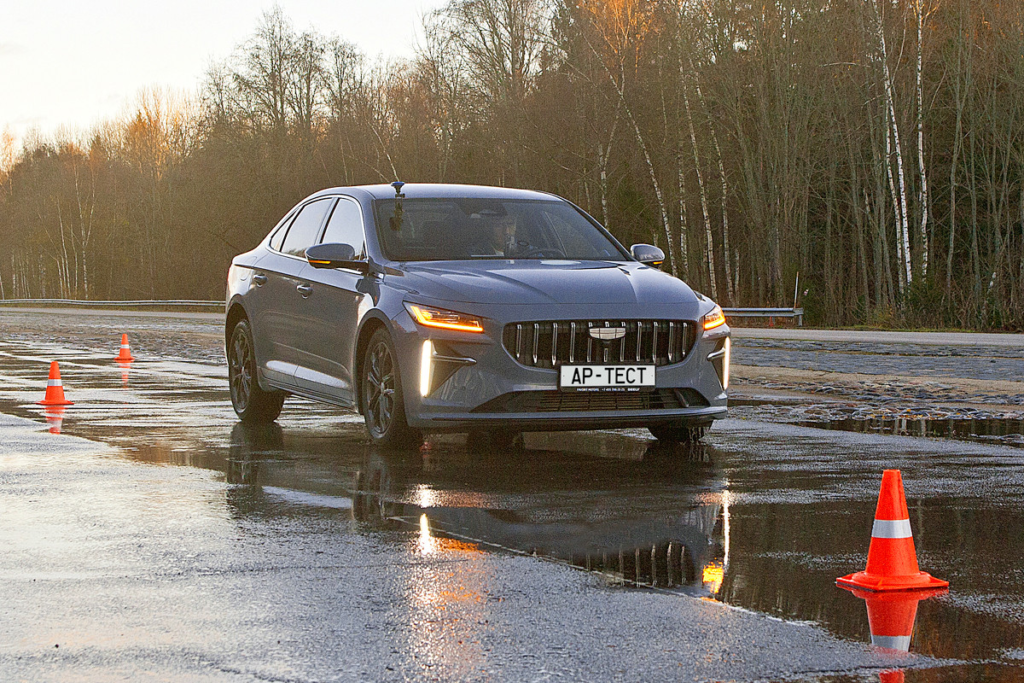
Braking on both dry and wet asphalt was carried out at a temperature of +3 C
Conclusions
So to the arguments for studs our experiment adds this: on asphalt studded tyres are no worse, and in the case of these Gislaveds are marginally better, than studless ones. The cost is at the pump — highway fuel consumption on studs rises by 5%.
It is worth wondering how the results would look with tyres from other manufacturers. That is what we mean to find out: Autoreview plans to continue these real-world experiments with different types of tyre.
Results
| Tire Model | Average Fuel Consumption at 130 km/h (l/100 km) | Braking Distance on Wet Asphalt 80—0 km/h (m) | Braking Distance on Dry Asphalt 100—0 km/h (m) |
|---|---|---|---|
| Gislaved NordFrost 200 | 8.2 | 34.66 | 53.68 |
| Gislaved SoftFrost 200 | 7.8 | 35.06 | 53.76 |
Photo: Dmitry Piterskiy | Oleg Rastegaev
This is a translation. You can read the original article here: Зимние шины: с шипами или без? Сравниваем экономичность и тормозной путь.

Published December 05, 2024 • 7m to read