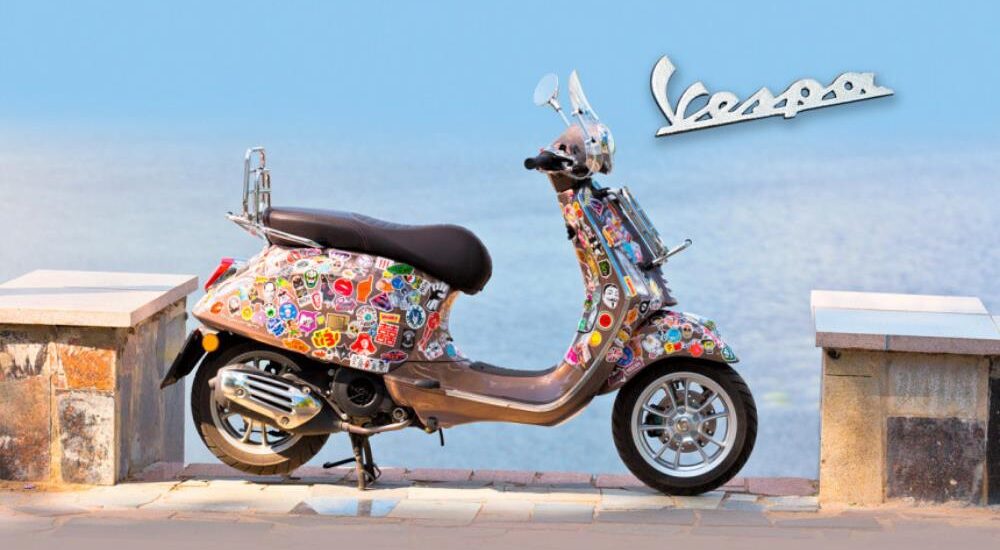

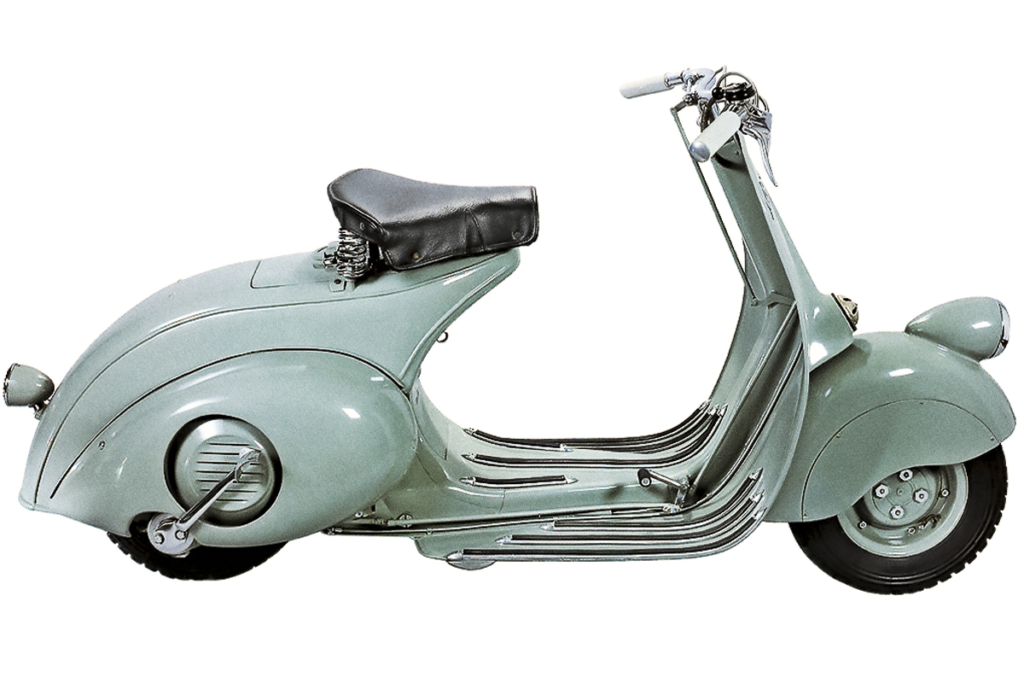
Born in Italy in 1946 in defiance of every existing norm, this scooter changed the world. A steel monocoque body carried the engine and wheel, paired with a three-speed gearbox. The machine rolled through decades and film history, through cultures and continents, and this Italian wonder was cloned everywhere. This is Vespa — and in our case, it’s the Vespa Primavera Touring 150.
The Vyatka VP-150: The USSR’s Vespa-Inspired Scooter
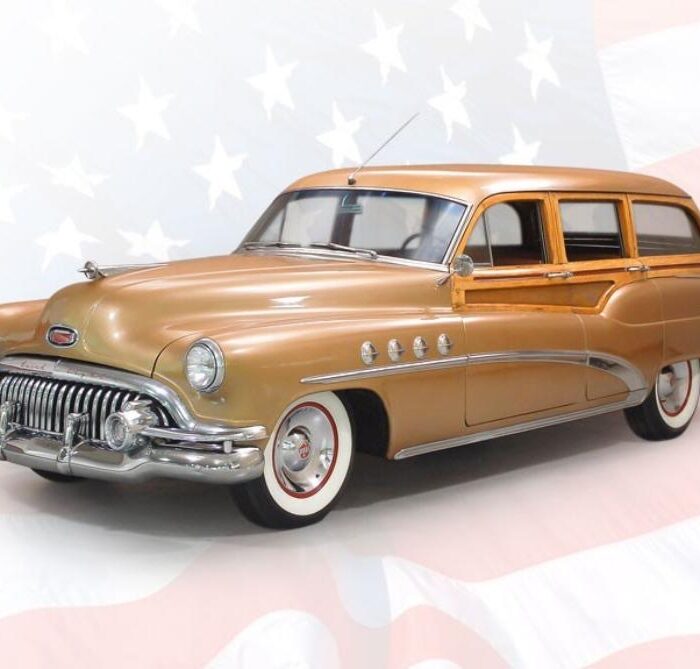
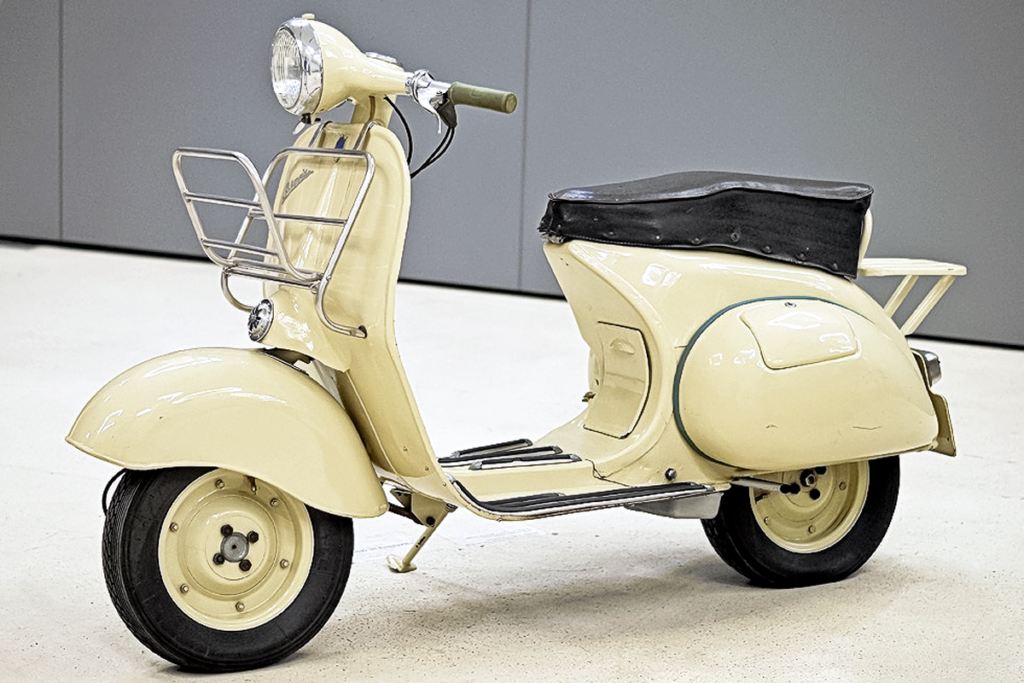
In the USSR, genuine Vespas never officially arrived. Western countries bought licenses directly from the Italians: Spain, France, England, and Germany all built their own versions. The Soviet Vyatka VP-150, produced from 1957 to 1966, was honestly just “spied on” instead. Even later scooters from the Vyatsko-Polyansky Molot plant — the Vyatka VP-150M (built until 1974) and the Electron (discontinued in 1979) — still carried a trace of that sparkling Italian essence.
72 Years of Heritage: What Makes the Modern Primavera Special
Vespa is still alive and kicking after 72 years, and the continuity between generations is remarkably well preserved. The modern Primavera Touring 150 still uses the same monocoque body — a testament to the foresight of aviation engineer Corradino de Ascanio, who applied such bold and unconventional solutions decades ago. It also keeps the single-cylinder engine with forced air cooling. What has changed:
- The three-speed gearbox has been replaced by a variator
- The carburetor has given way to a fuel injection system
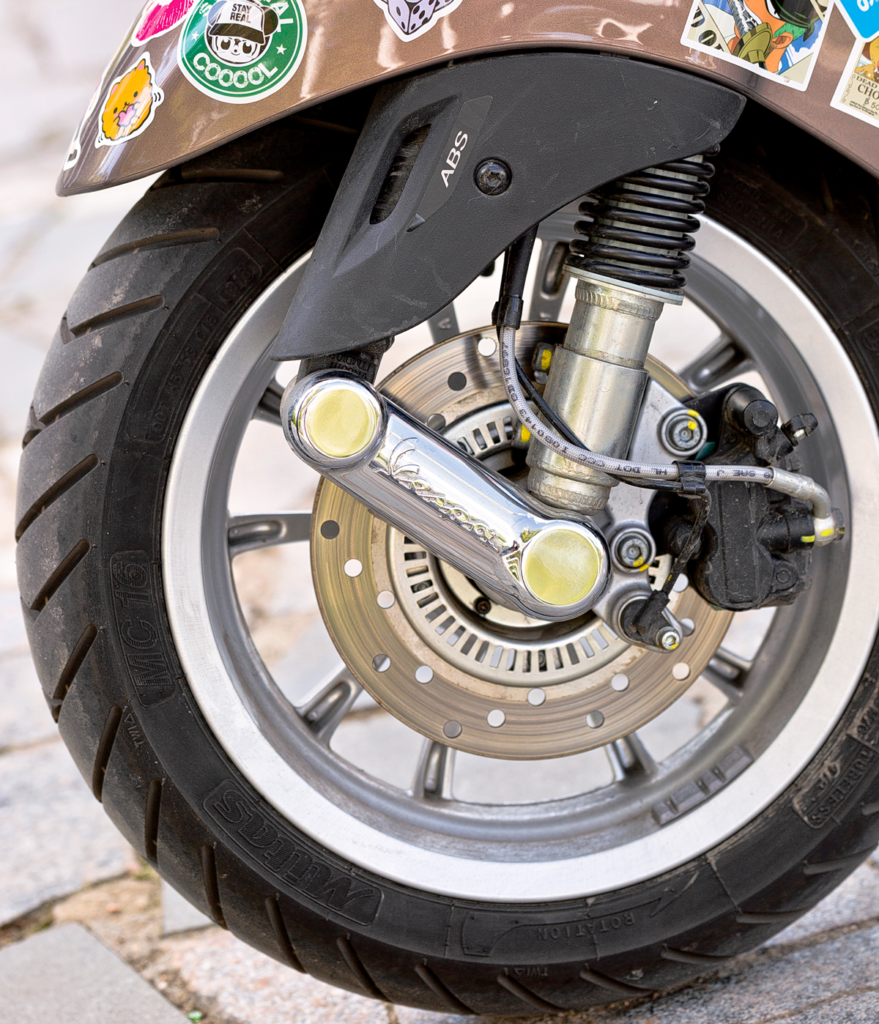
- The front brake caliper now includes a simple single-channel ABS
- The old-fashioned rear drum brake remains, without ABS assistance
Comfort and Convenience Features
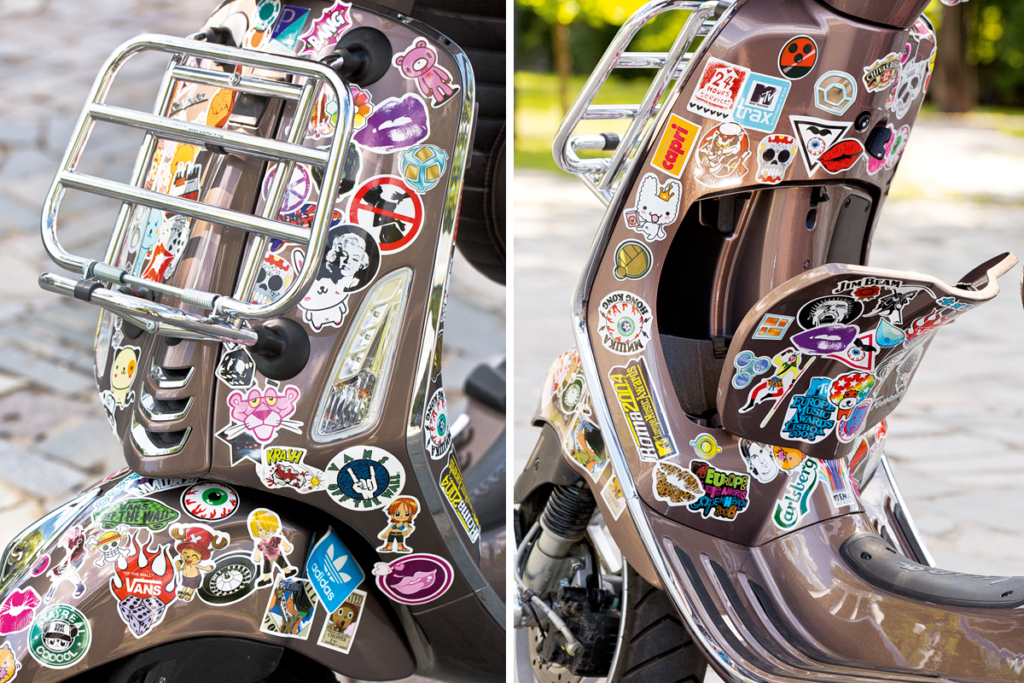
The Vespa Primavera Touring 150 3V ABS E4 — the tourist modification featured here — comes with a thoughtful set of practical touches:
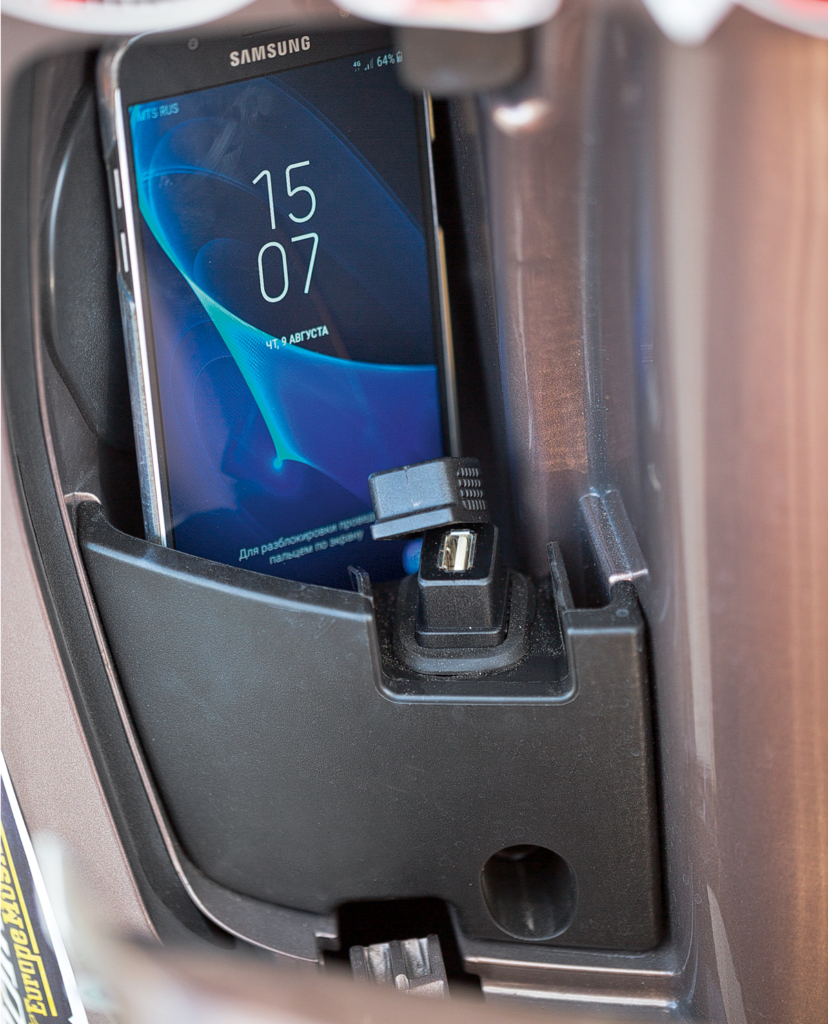
- A USB port in the glove compartment, big enough for an average smartphone
- Spring-loaded front and rear luggage racks
- A fold-out hook for bags on the front seat
- A small windscreen that turns out to be surprisingly effective
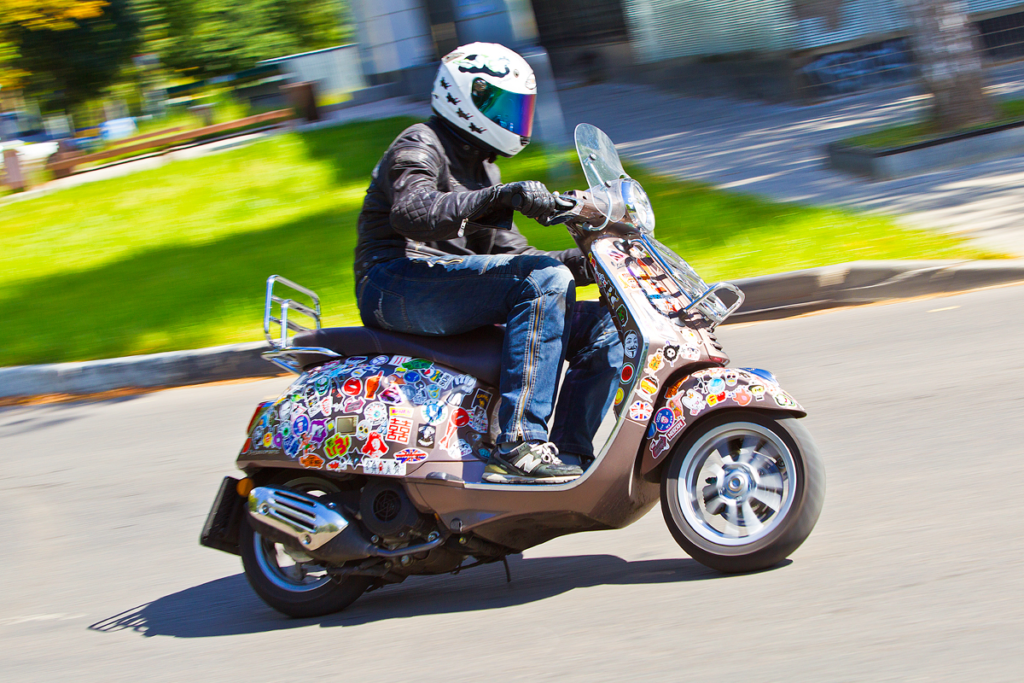
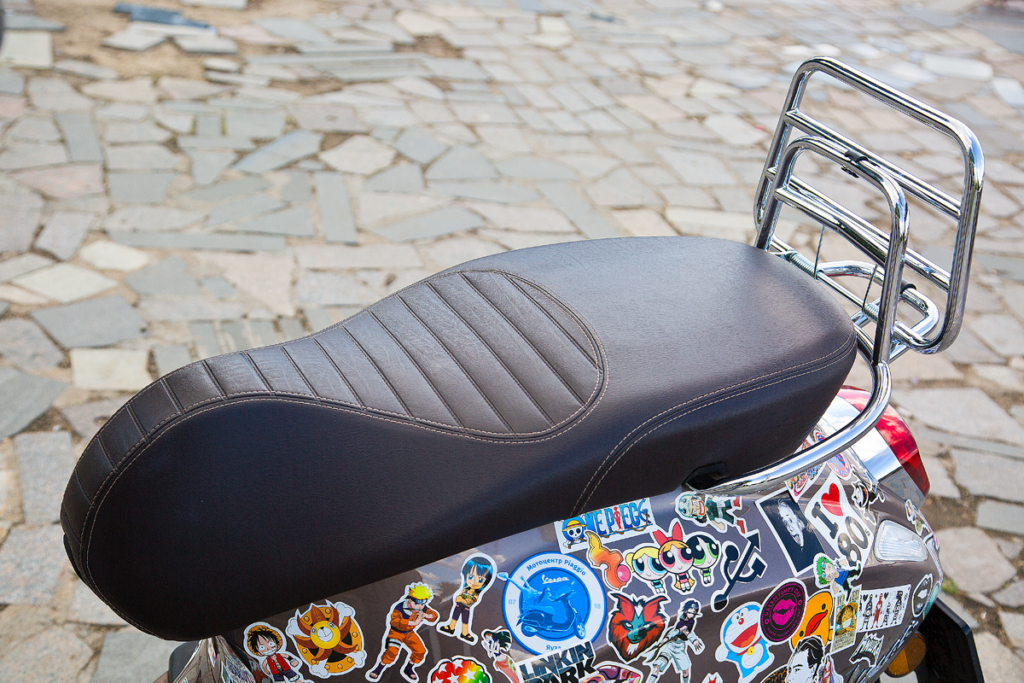
The ergonomics were a pleasant surprise too. I didn’t expect to find a comfortable riding position on such an elegant “Italian beauty,” but I managed it easily, and there’s plenty of room for a passenger on the back.
Coming from sports bikes, this is a completely different world. Here, neither power, nor lean angle, nor top speed, nor any constellation of electronic rider aids really matters.
Engine Performance and Dynamics
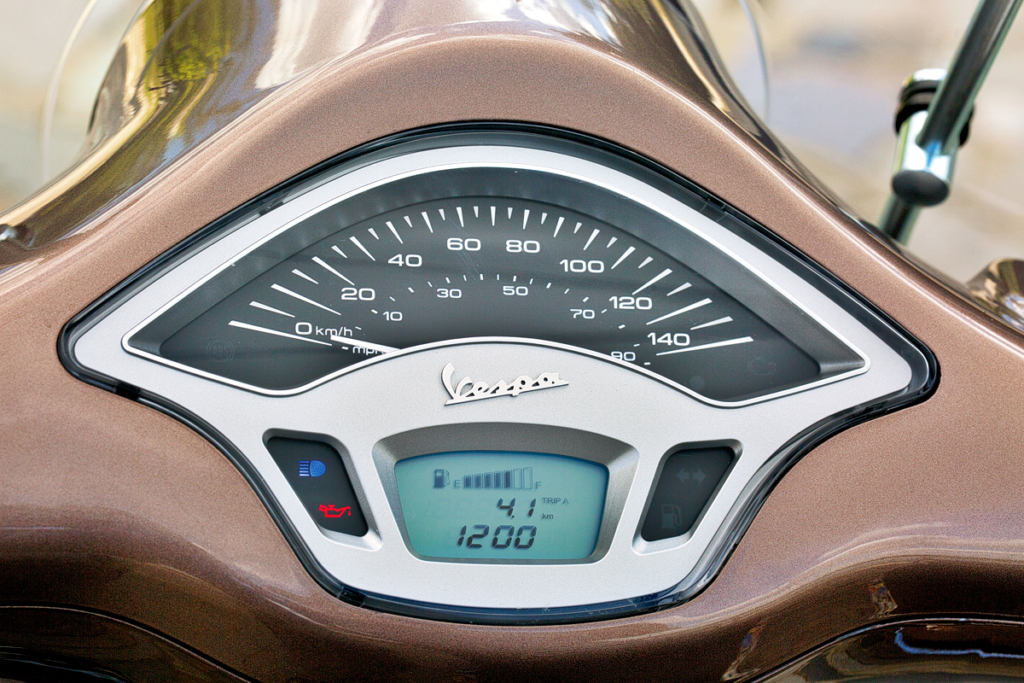
Dynamics feel lively up to about 70 km/h — beyond that, everything happens in slow motion, even though the speedometer flatters you with a reading of 110 km/h (the real figure is closer to 105 km/h). With 154.8 cubic centimeters of displacement and 12.9 horsepower on tap, the engine is just about enough for brisk city traffic, and at full throttle I never held anyone up. The real question is how long the engine will hold up if you keep it “in the red zone.”
Ride Quality, Handling, and Braking
It helps to change your mindset behind the handlebars. There’s no need to rush anywhere; once you slow down mentally, a real sense of harmony and style takes over. Vibration is practically absent even at maximum engine speeds, and the engine itself stays quiet and unobtrusive. Fuel consumption of just 2.5 liters per 100 kilometers allows for unhurried contemplation of everything moving meditatively around you.
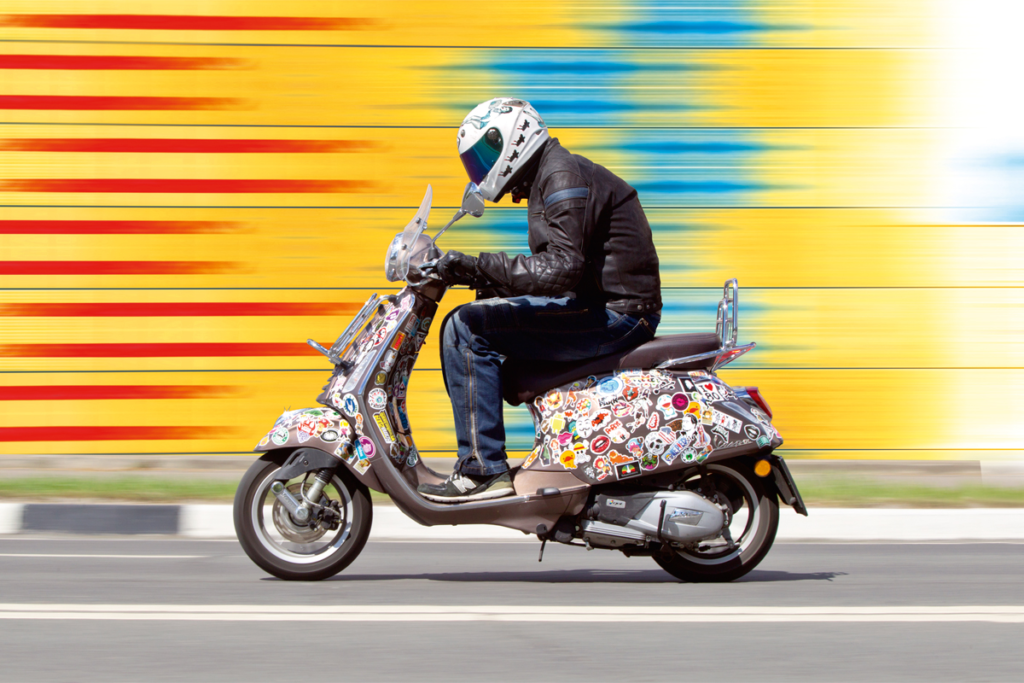
That said, the small wheels demand close attention to road irregularities, and speed bumps are crossed “whispering” rather than gliding. On the plus side, the scooter leans into turns and changes direction so effortlessly it feels like it’s reading your eyebrow movements. On smooth roads, the basic suspension delivers acceptable comfort. With a compact width of just 735 mm, the Primavera slips between rows of cars like a very fast bicycle.
Braking performance isn’t limited so much by the modest 200 mm front disc with its single two-piston caliper, or by the archaic rear drum brake — it’s limited by the tires. At just 11 inches, they look like they’d fit better on toy cars.
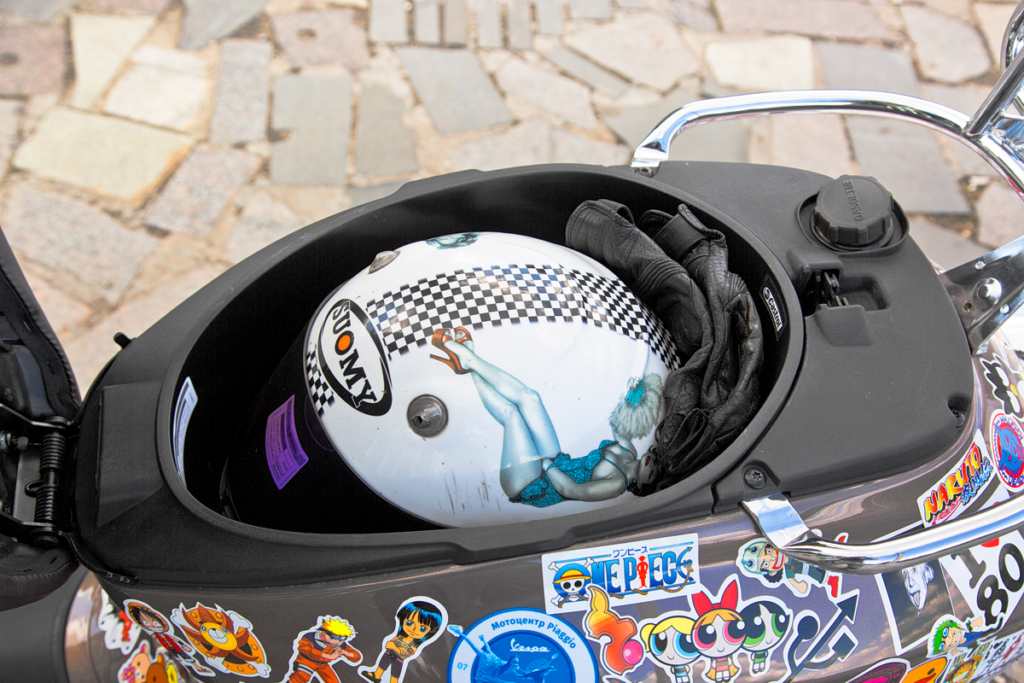
After riding the Vespa, I was left with an unusual sensation — as if classical Italian music were playing somewhere inside me.
Market Position and Competitors
Setting Taiwanese options aside, there’s practically no other competition in this small-displacement scooter segment worth mentioning here — the real players all live in Europe, and they’re doing quite well there too. But whether abroad or at home, the slender Primavera (Vespa translates from Italian as “wasp” or “hornet”) costs more than most of its rivals. That’s because it’s the real deal, built for true connoisseurs. Last year, around 50,000 of these aesthetes’ machines were sold across the Old World.
Vespa Primavera Touring 150 3V ABS E4: Full Specifications
- Dimensions: Length 1860 mm, Width 735 mm, Height 1145 mm
- Wheelbase: 1340 mm
- Seat height: 780 mm
- Ground clearance: 125 mm
- Fork angle/offset: N/D (no data)
- Frame: Steel monocoque
- Curb weight: 126 kg
- Cylinders: 1, vertical arrangement
- Cylinder diameter/stroke: 58/58.6 mm
- Compression ratio: 10.9:1
- Displacement: 154.8 cm³
- Valves: 3
- Max power: 12.9 hp / 9.48 kW at 7750 rpm
- Max torque: 12.8 Nm at 6500 rpm
- Transmission: Stepless, variator, belt-driven
- Front suspension: Telescopic, 120 mm wheel travel
- Rear suspension: Monoshock, adjustable spring preload, 117 mm wheel travel
- Front brake: Disc Ø 200 mm, 2-piston caliper
- Rear brake: Drum Ø 140 mm
- Maximum speed: 105 km/h (measured by Autoreview)
- Front wheel: 110/70-11″
- Rear wheel: 120/70-11″
- Fuel tank capacity: 8 liters
- Fuel type: Gasoline AI-95
Author: Vladimir Zdorov
Photo: Nikita Kolobanov
This is a translation. You can read an original article here: Итальянская «оса» за 5500 евро: Vespa Primavera Touring 150 и ее секреты

Published September 06, 2023 • 5m to read