
In the early 1950s America became involved in the Korean conflict, and once again — just as in the middle of the previous decade — the national automotive industry had to deprioritise civilian production. Manufacturers had to rush minimally updated versions of the previous year’s models to market, and most buyers found it hard to say precisely what distinguished the new cars from the old.
How to Date a 1952 Buick
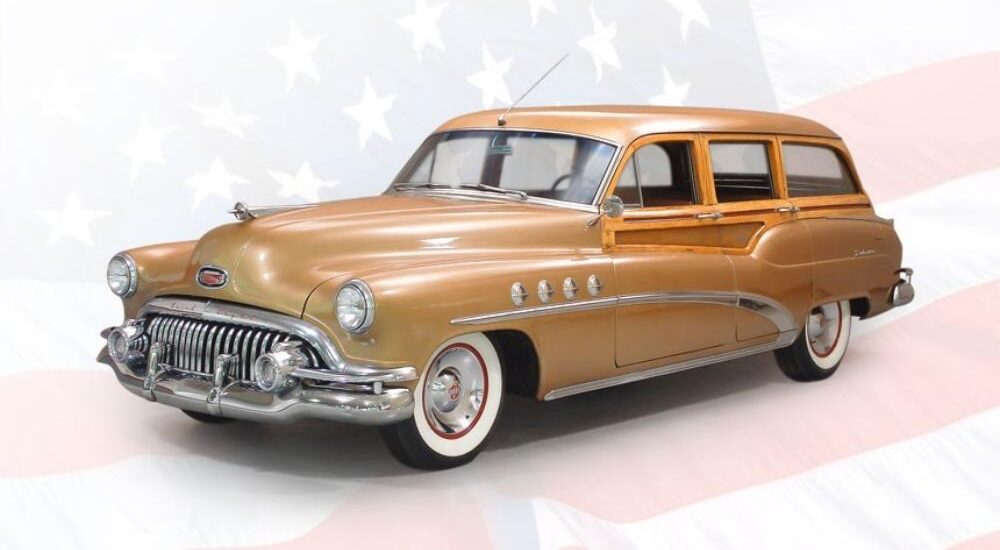
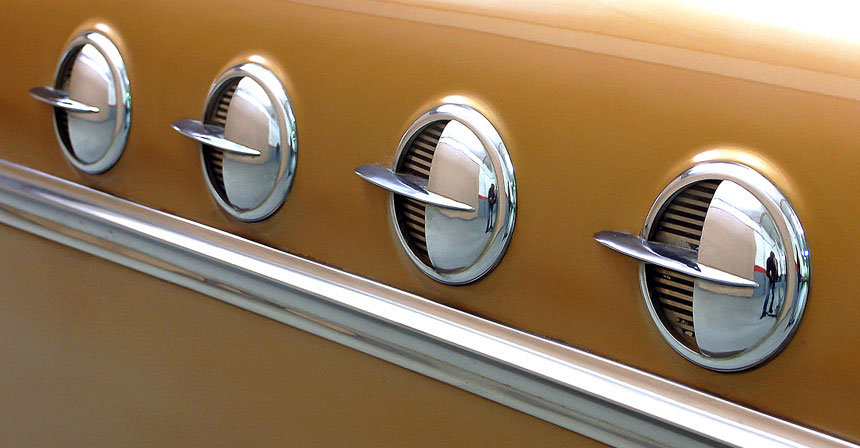
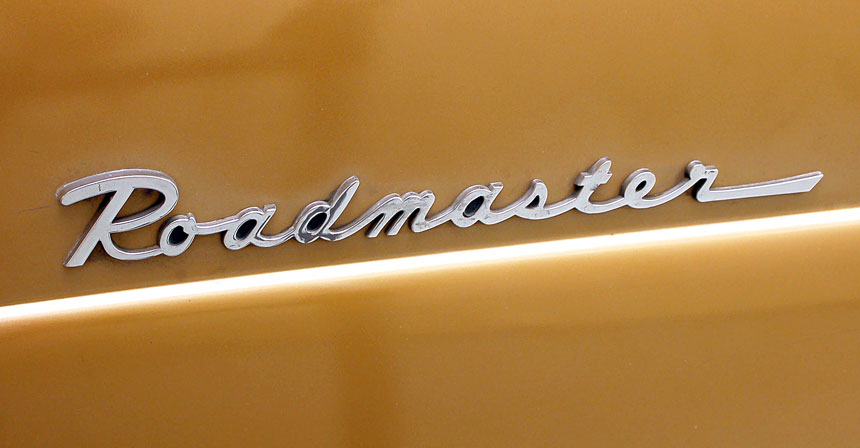
The bronze Buick station wagon here can be dated precisely to 1952 — you only need to know where to look. It closely resembles its predecessor, but certain details tell the two apart without standing them side by side. Set aside the minor points, such as the decorative “mouse holes” along the sides (four in a row — it is a Roadmaster) or the modest little fins running along the rear fenders towards the tail lights. It is enough to watch the elegant flourish of the moulding that sweeps along the flank.
If it barely reaches the rear wheel arch and turns back towards the front, as on these pages, this is a 1952 model. On the previous model the trim also ran back as a thin line, just above the rear wheel openings, but all the space forward of the wheel opening was taken by a solid triangular chrome panel — a “stone guard” that traditionally, or perhaps only out of inertia, protected the lower part of the rear fenders.
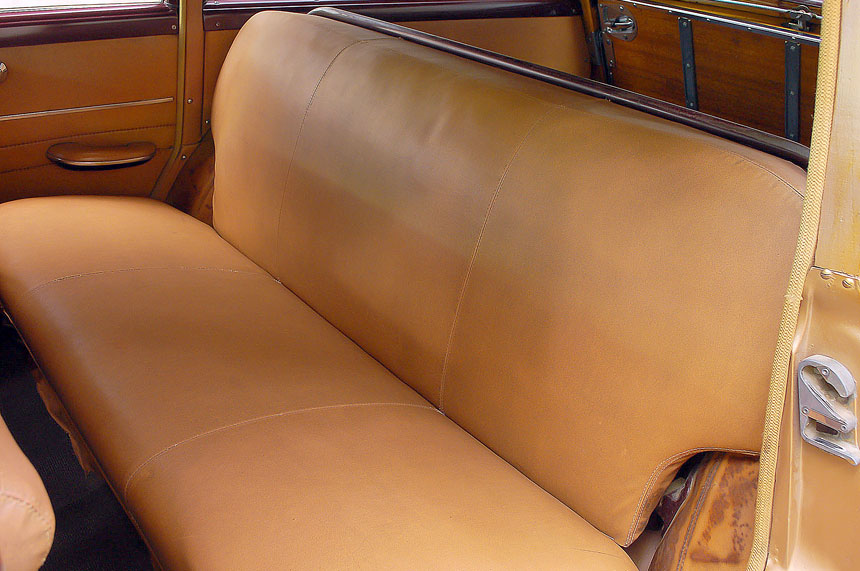
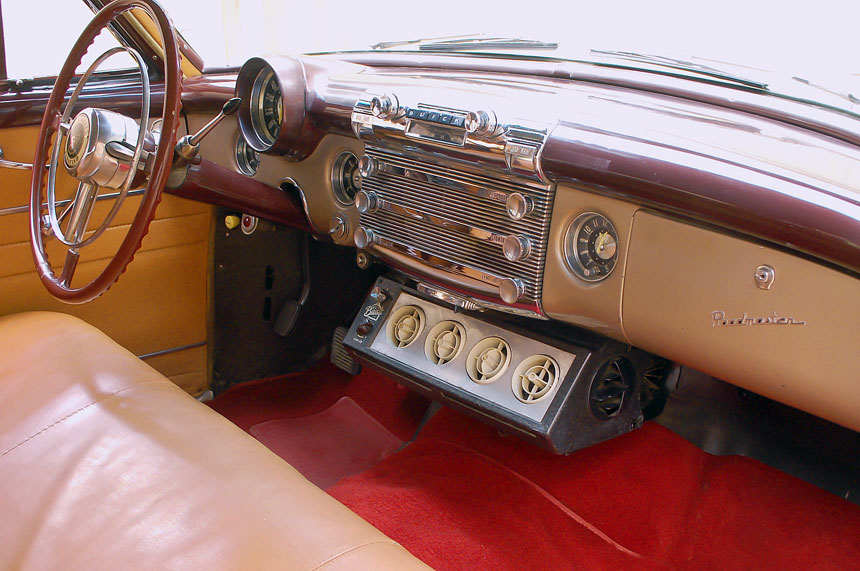
The car’s interior is leather, like a convertible; the trim is rather modest, without pretentious “prettiness”
What Actually Changed Underneath
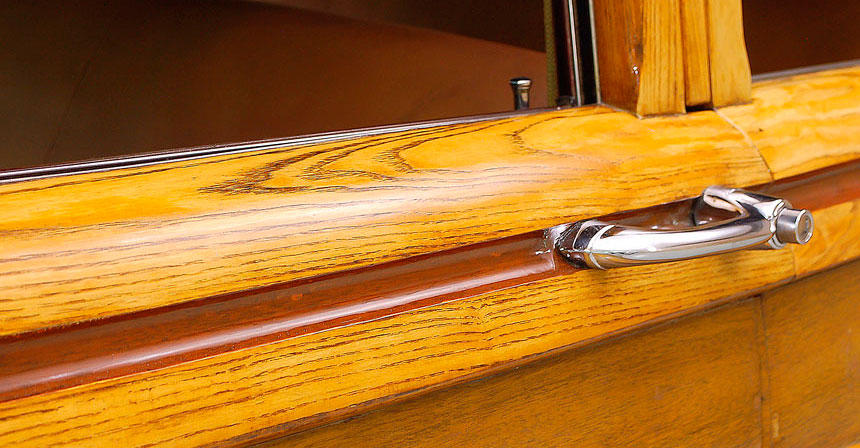
Engineering was another matter: the car was far from an exact copy of the previous model. The fuel system got a new carburettor with four venturis — the first such system in the entire American automotive industry. The steering gear could now be had with power assistance, as an option rather than as standard: it had to be asked for, and it cost an extra $199. Before the 1952 model year Buick had not offered it at all. Boot capacity grew as well, which made the boot lid less sloping — more “squared”, to be exact. That detail is not visible in our illustrations, because the imposing bronze-gold car shown here has a station-wagon body. And that wooden body was not Buick’s own factory work: it came from an outside coachbuilder, Ionia Manufacturing, of Ionia, Michigan.
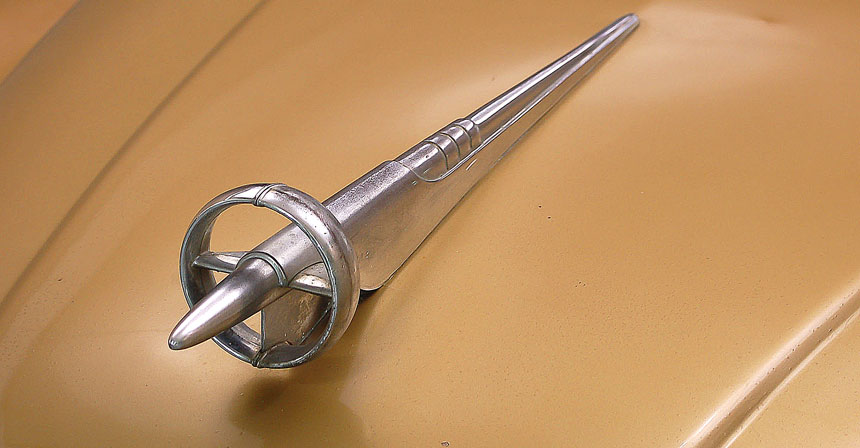
The Body Came from a Furniture Maker
Ionia had started as a furniture manufacturer under a different name, Ypsilanti Reed Furniture Co., and grew by buying up local businesses — among them one that supplied detachable waterproof tops for open-bodied Ford Model T cars. The range widened accordingly, then shifted entirely to automotive work: passenger car bodies, truck bodies, truck cabs. They had tried to work with General Motors Corporation before the war, at the very end of the 1930s, but landed their first substantial contract only in 1946, supplying complete wooden station-wagon bodies for Chevrolet and Pontiac. Buick bodies followed shortly after; until 1948 those had come from another company, Hercules. The new order arrived at the right moment, because from the 1949 models Pontiac and Chevrolet both moved to all-metal station wagon bodies, which could have left the Ionia craftsmen with no GM work at all.
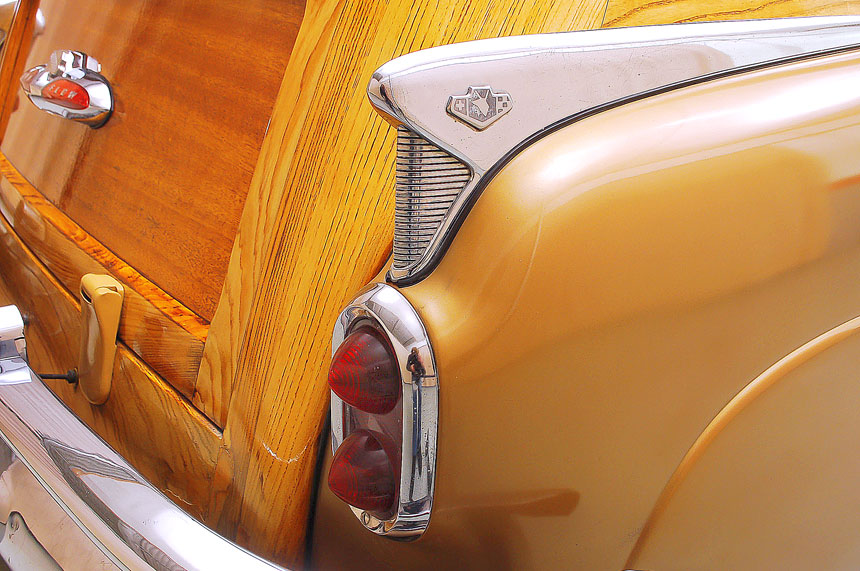
The shiny decorative “fins” on the rear fenders are decorated with stylized Buick emblems
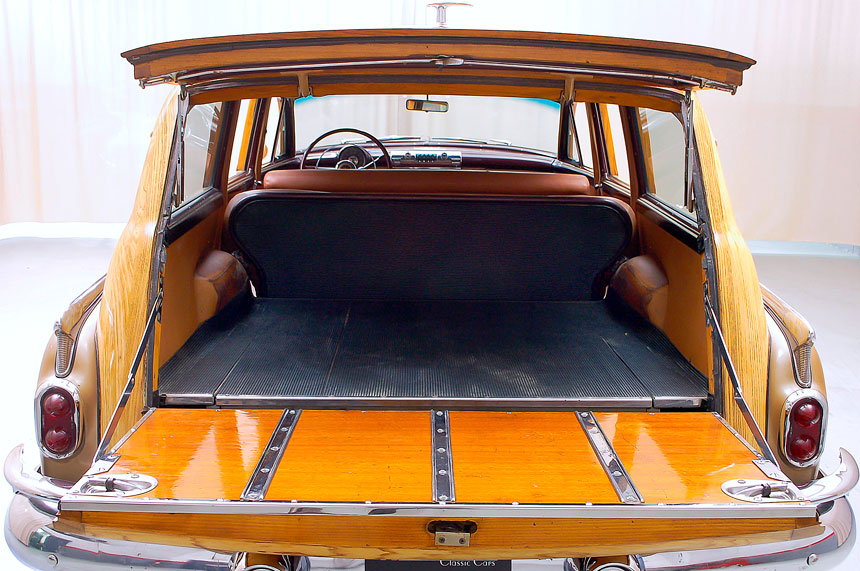
The rear door, made of two halves that opened up and down, was a common practice at the time.
The Car in These Photographs
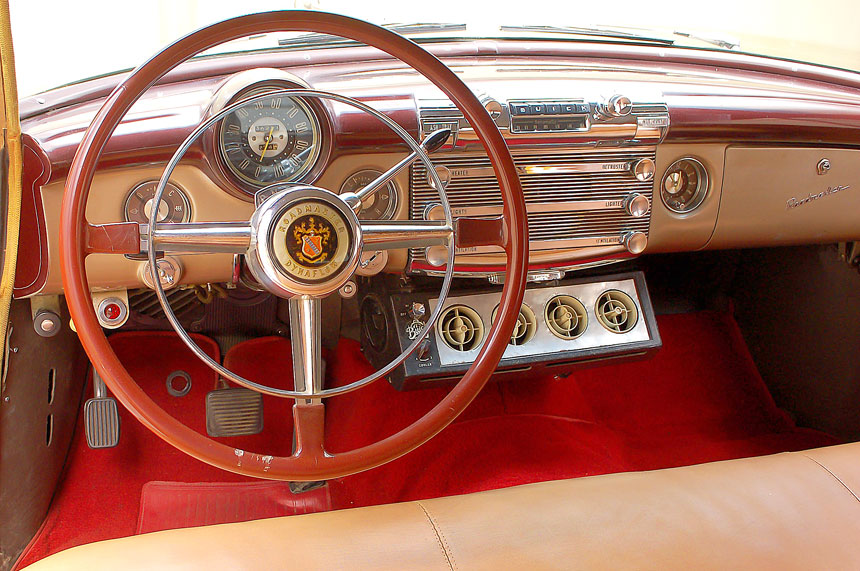
This one is built on the chassis of Buick’s largest and most expensive 1952 model. The engine is the overhead-valve inline eight-cylinder Fireball of 320 cubic inches, with the Airpower four-barrel carburettor mentioned above, giving 170 horsepower, and paired only with Buick’s distinctive Dynaflow automatic transmission. The car shown has power-assisted steering and brakes, a built-in radio, and even air conditioning mounted under the dashboard. Just 359 were built in this configuration.
Buick’s second station wagon, from the Super series, sold 1,641 units in 1952. It had a shorter wheelbase and shorter overall length, and it went without the new carburettor, so its engine gave less power. Its body, too, came from Ionia.
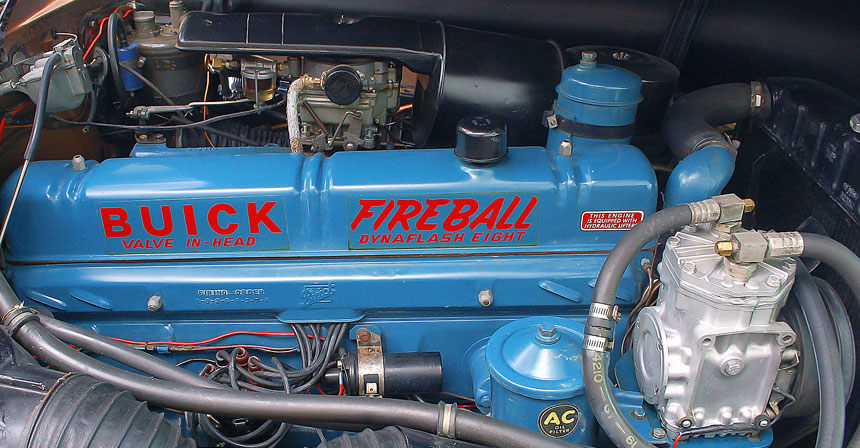
Inline eight-cylinder Fireball engine. The touching red plate on the block informs that “this engine is equipped with hydraulic valve lifters”
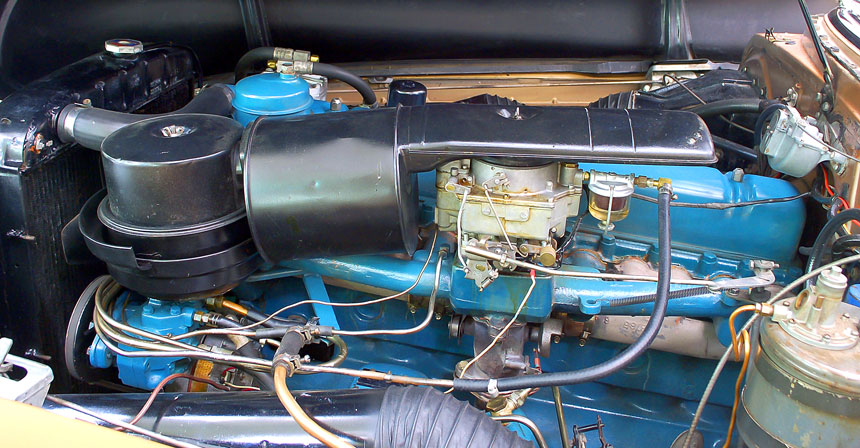
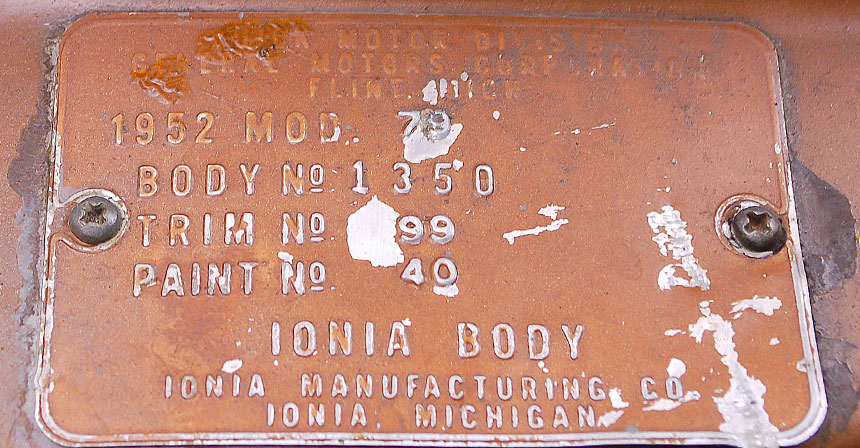
The nameplate leaves no doubt about the origin of the body
The Last of the Wooden Buicks
In 1953 Buick marked its 50th anniversary. The gift to itself was a new V8 in place of the inline engine — the Special series excepted — and a particularly prestigious open-bodied Skylark. The station wagons, though, kept their wooden structure. They gave it up only the following year, when fully metal “station wagon” bodies arrived at last. Ionia Manufacturing went on building those new bodies for Buick until 1964.
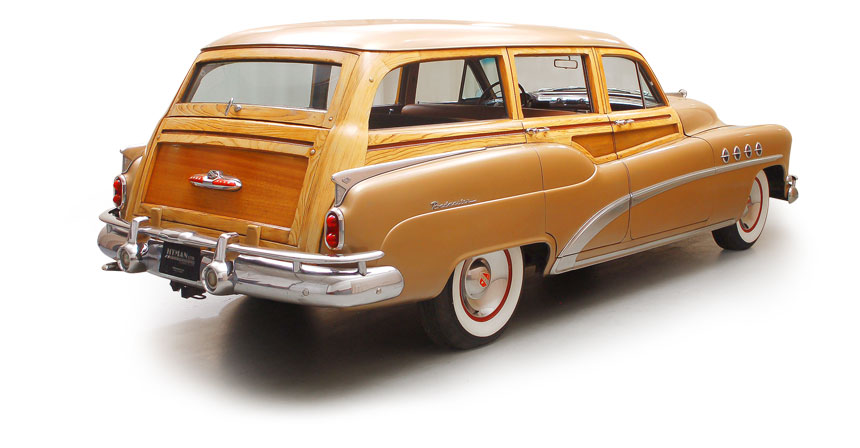
Wooden bodies require very careful maintenance, otherwise they dry out and lose their luxurious appearance. This car was lucky: all three of its owners surrounded it with the closest attention and managed to keep it practically untouched.
1952 Buick Roadmaster Station Wagon: The Key Facts
- How to date it: the side moulding turns back towards the front at the rear wheel arch — the previous model has a triangular chrome “stone guard” there instead
- Engine: Fireball inline eight, overhead valve, 320 cubic inches, 170 horsepower
- Carburettor: Airpower, four venturis — the first four-barrel in the American industry
- Transmission: Dynaflow automatic, and nothing else
- New option: power steering, $199 extra, unavailable on any Buick before 1952
- Body: wood, built by Ionia Manufacturing of Ionia, Michigan — not by Buick
- Production: 359 in this configuration; the shorter Super station wagon accounted for 1,641
Frequently Asked Questions
How do you tell a 1952 Buick from the model before it? Follow the side moulding. On the 1952 it reaches the rear wheel arch and turns back towards the front; earlier, the space ahead of that opening was filled by a solid triangular chrome panel.
Did Buick build the wooden body? No. It was made by Ionia Manufacturing in Ionia, Michigan, a firm that had begun life as the furniture maker Ypsilanti Reed Furniture Co.
How rare is this car? Only 359 were built in this configuration. The Super series station wagon, on a shorter wheelbase and without the new carburettor, ran to 1,641 in the same year.
When did Buick stop using wood? The year after the 1953 anniversary, when fully metal station wagon bodies arrived. Ionia kept building those bodies for Buick until 1964.
Why were the 1952 cars so similar to the 1951s? The Korean conflict pushed civilian production down the priority list, so manufacturers brought out minimally updated versions of the previous year’s cars.
Photo: Sean Dugan, www.hymanltd.com
This is a translation. You can read the original article here: Ионический Buick: Roadmaster Model 1952 года с деревянным кузовом в рассказе Андрея Хрисанфова

Published July 23, 2025 • 6m to read