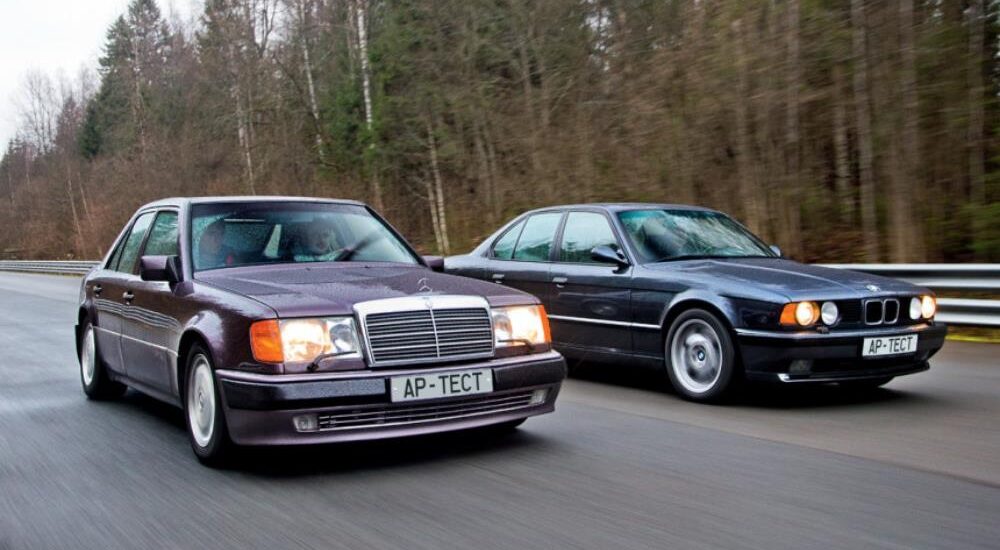

Wolves in sheep’s clothing? Certainly not. Even in their base models, the BMW E34 and the ‘124’ series Mercedes-Benz don’t pretend to be anything but what they are: predators. They exude a Wall Street wolf vibe, dressed in elegant Italian suits. Yet, in their M5 and 500 E guises, they truly transform into monsters once they leave the corporate parking lot.
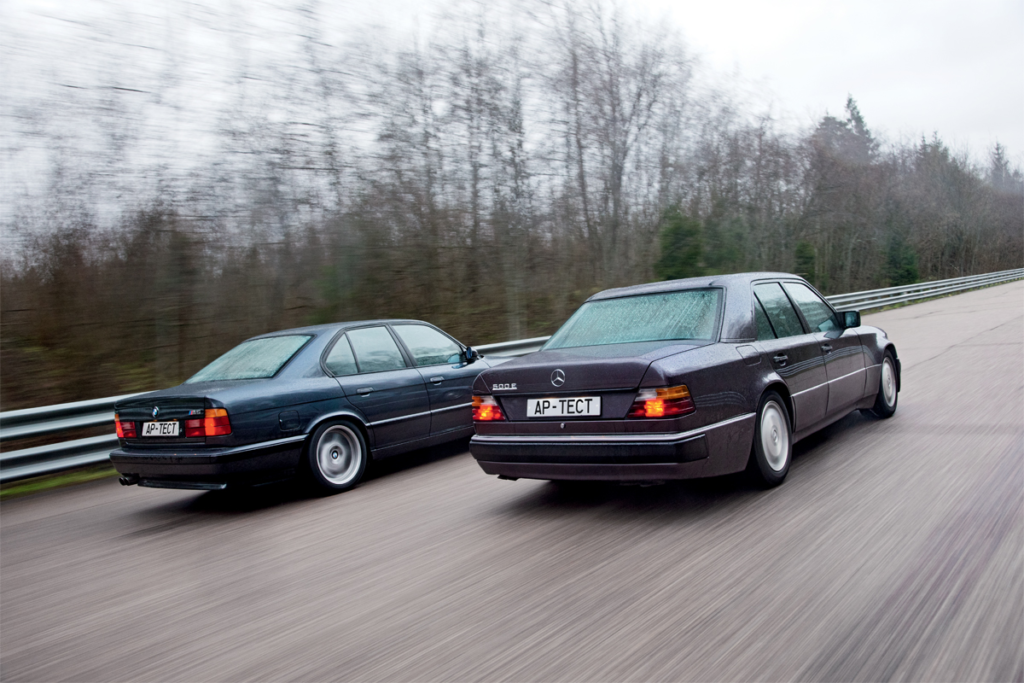
The last drizzle of a November thaw is on the windshield, and I need to hold on to autumn for six more seconds. Ahead lies the straight of the Dmitrovsky testing ground, the rear tires of my BMW hunting for the last dry patches of asphalt. “Finally, we meet, M5,” I think. “And I need all your dark magic now.”
A Showdown Thirty Years Late
I have often heard that the later E39 M5 “just isn’t the same” — that the real, untamed M5 stayed behind in the early ’90s with the E34, the version that never wore a collar. And yet a pristine E34, even a standard one, had always eluded me. A colleague did manage to put a BMW 535i against a Mercedes-Benz 300 E three years ago, and ever since I have been obsessed with arranging the ultimate showdown, because the M5 of that era never took part in an Auto Review test, and neither did its archrival, the Mercedes-Benz 500 E.
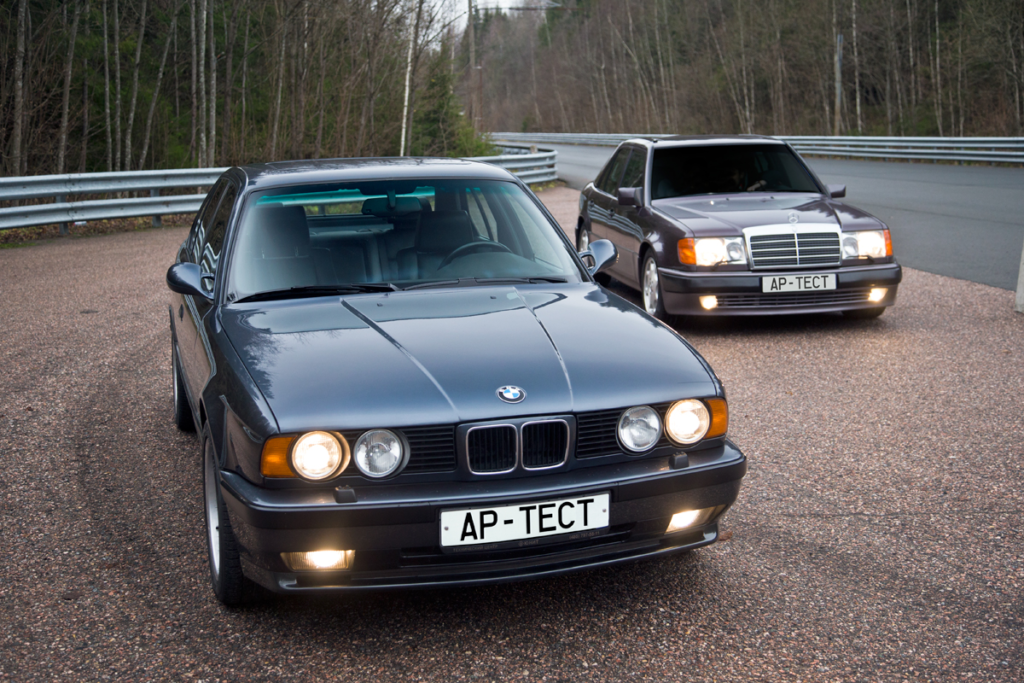
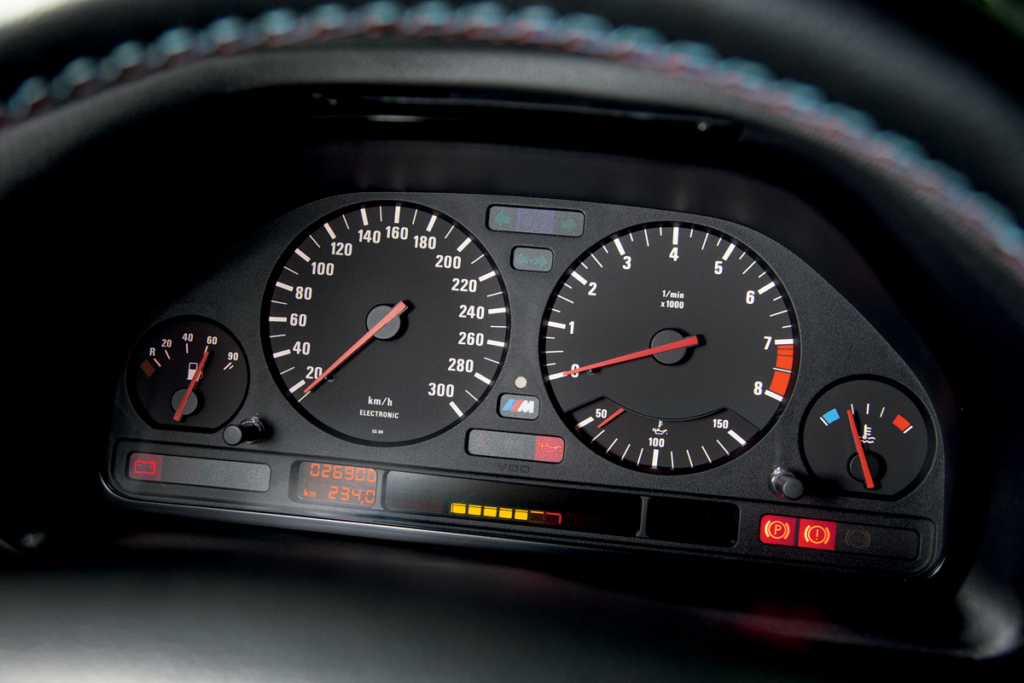
Now both cars roll slowly up to the barrier of the testing ground, their halogen headlights from the golden age of car manufacturing lighting the parking lot. This piece may sit in the “retro test” category, but don’t be fooled. The BMW’s digital display reads just 26,900 km; the Mercedes odometer shows 88,550. Do beasts like these really age?
Two Survivors in Showroom Condition
In truth, only the BMW’s mileage is verifiable; the Mercedes has probably covered at least three times as much. The 500 E debuted in 1990, but this particular car was built in April 1992 and met its first owner in Hamburg. It arrived in Russia five years later and was fully restored to its original condition this summer.
The BMW is a year younger than the 500 E and belongs to the E34 M5 line that began in 1988 — but it was substantially upgraded shortly after the five-liter Mercedes appeared, with the improvements arriving in 1992. So our sedan, assembled in September 1993, is the better M5: the more powerful S38B38 engine and the Nürburgring Pack, which brings adaptive electronically controlled dampers, wider rear wheels and Servotronic steering assistance.
Thirty-year-old classics in showroom condition are every enthusiast’s dream, and the price of that eternal youth is steep. A BMW M5 and a Mercedes 500 E in comparable condition today fetch roughly what they cost in the early ’90s: between $60,000 and $80,000. But age is just a number, so let’s leave the credentials for later. The road is calling. Let them prove themselves — after they have been weighed.
On the Scales: Seventeen Hundred Kilograms Each
Weighing a car before a test verifies the specification sheet, and it also tests your own judgement. The ‘124’ looks compact and refined, the E34 lean and toned, as though nothing in either design or build is superfluous. The word that comes to mind is “light” — and it is the wrong word. Both sedans stop the scales at seventeen hundred kilograms. The Mercedes weighs 1763 kg with a full 90-liter tank and no driver, 53% of it on the front axle. The BMW is about thirty kilograms lighter, despite two fewer cylinders, a manual gearbox instead of an automatic and an 80-liter tank — and its axle load distribution is close to perfect.
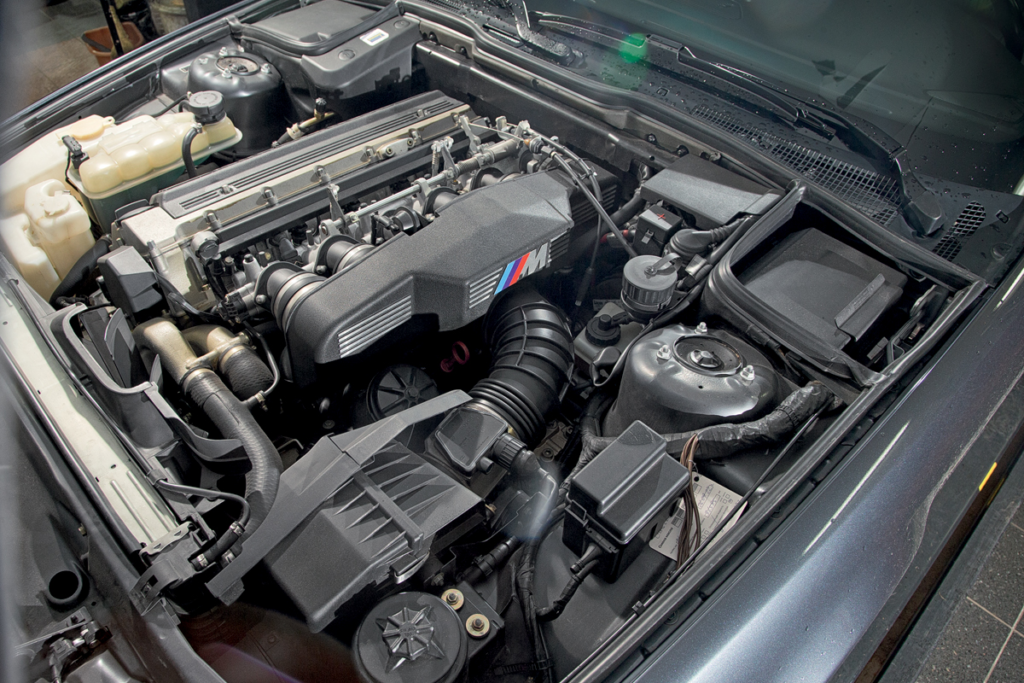
It’s interesting that the S38 engine for the M5 E34, which cost about as much to produce as an entire BMW 316i, was mentioned in passing in the anniversary edition of “The Century of BMW.” This later S38B38 variant also entered history as the largest six-cylinder engine BMW has ever made. It featured an iron block combined with a 24-valve head, and unique aspects of the 3.8 version included electronic ignition with individual coils, a dual-mass flywheel, lightweight pistons, and enlarged 50 mm throttles.
The BMW’s 3.8-liter inline-six produces 340 hp, which gives it a clear power-to-weight advantage: 5.1 kg per horsepower, or 196.6 hp per tonne. The Mercedes five-liter V8 delivers 326 hp, each horsepower carrying 5.4 kg, or 184.9 hp per tonne. Torque tells the opposite story: 400 Nm from Munich against 480 Nm from Stuttgart. And all of it has to be used while the road still resembles dry asphalt.
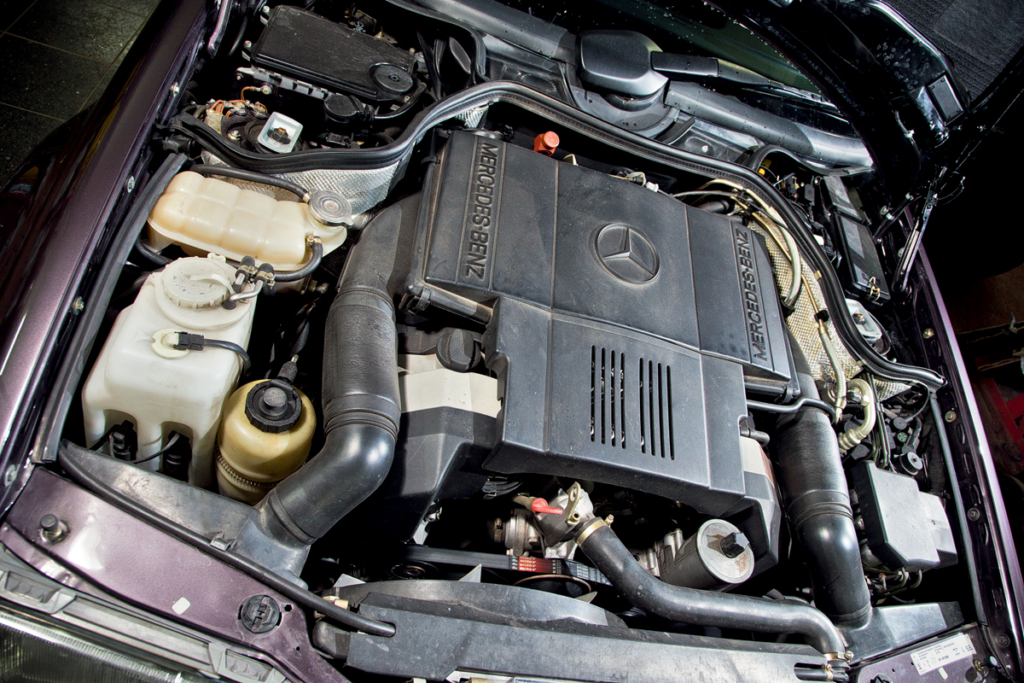
Mercedes didn’t immediately learn how to show off in the engine compartment. Beneath utilitarian plastic hides a beautiful manifold and dual-cam heads with variable intake timing. The M119 engine was developed for the 500 SL roadster, but in the 500 E sedan, it gained electronic injection and produces more torque (480 Nm instead of 450 Nm). Notice: the air intake is through the headlights, because the gaps around them create the highest pressure.
The Mercedes First: Charisma You Can See
That morning I chose the Mercedes first. Its charisma is the richer of the two, and its big, wide-open headlights radiate good humour. The upward tilt of the orange turn signals suggests a cheerful disposition, but the broad shoulders of the front fenders hint at something more deceptive. The aesthetics of the ‘124’ are genuinely enchanting. The body panels hang like fabric over the power underneath, pulled tight at the roof and pillars, flowing more loosely below. Only the wheel arches push out through that cover, and they are the giveaway.
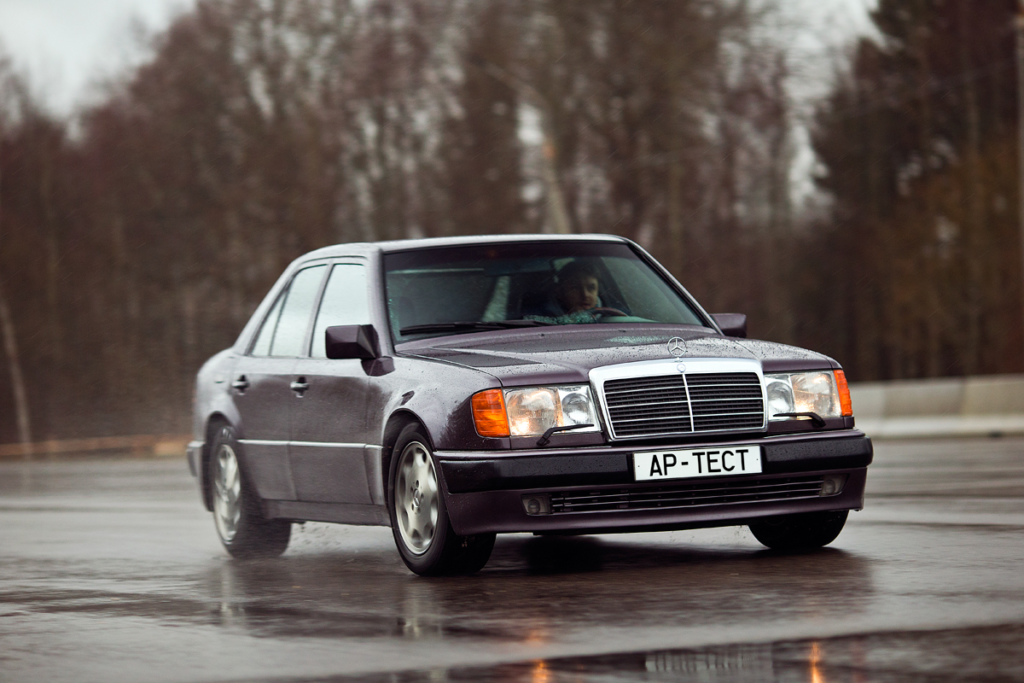
The “five-hundred” sits on mere 16-inch wheels, which still comes as a surprise. Factory 225/55 R16 tires were standard on every 500 E except the limited Evo version, which came on 17-inch wheels.
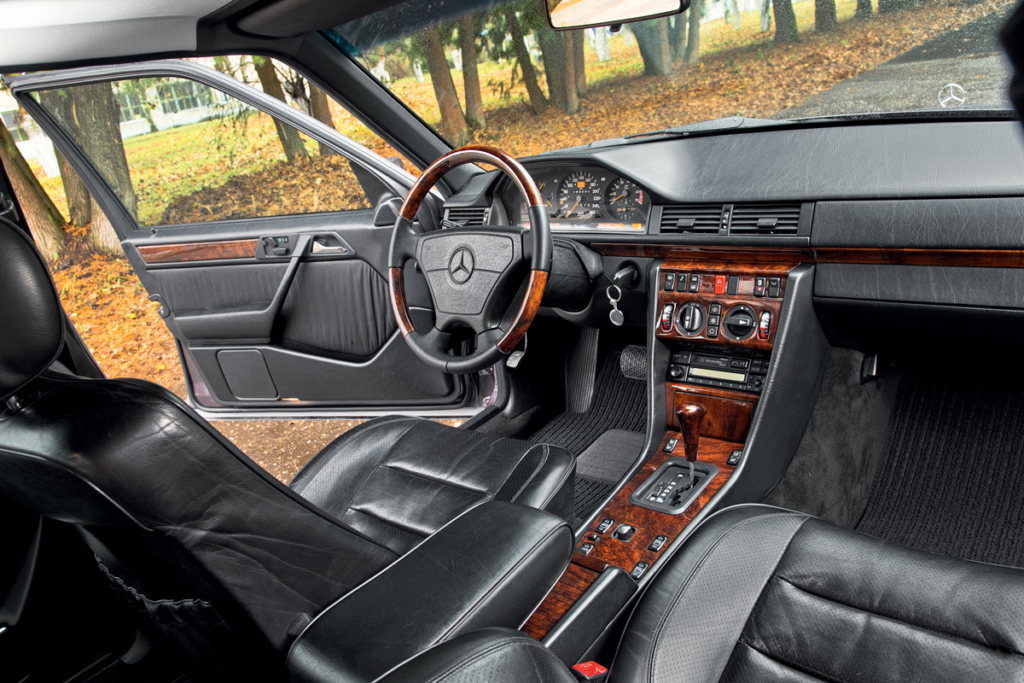
It’s surprising, but this conservative business “office” copes well with the role of a pilot’s workplace. There are almost no miscalculations in basic ergonomics, and the steering wheel is even shorter than BMW’s: 2.9 turns from lock to lock.
A Business Cabin That Works as a Cockpit
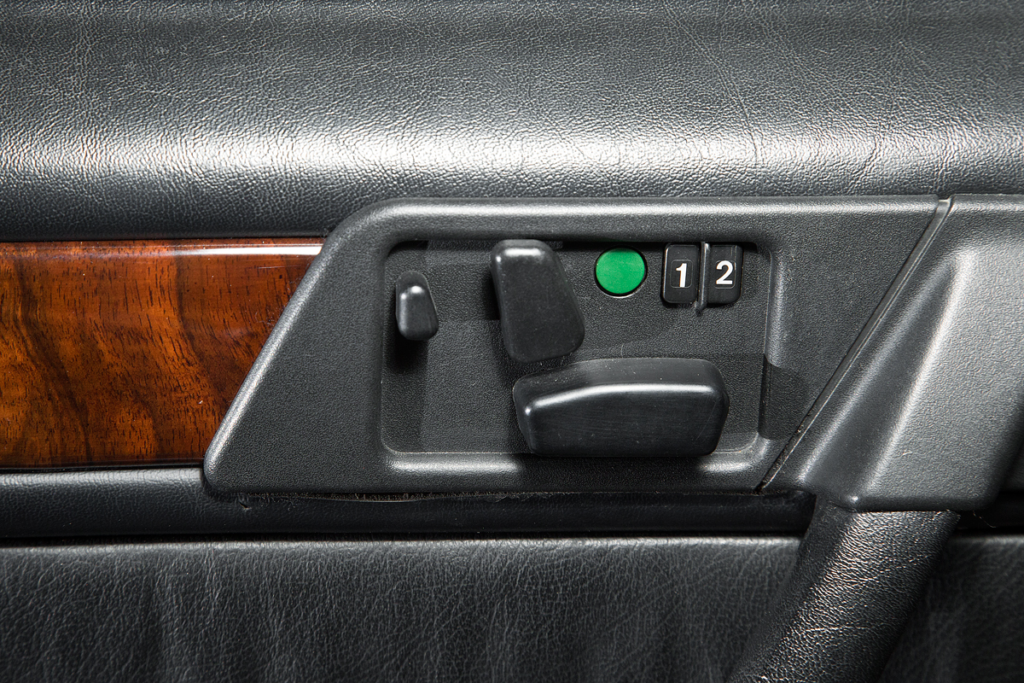
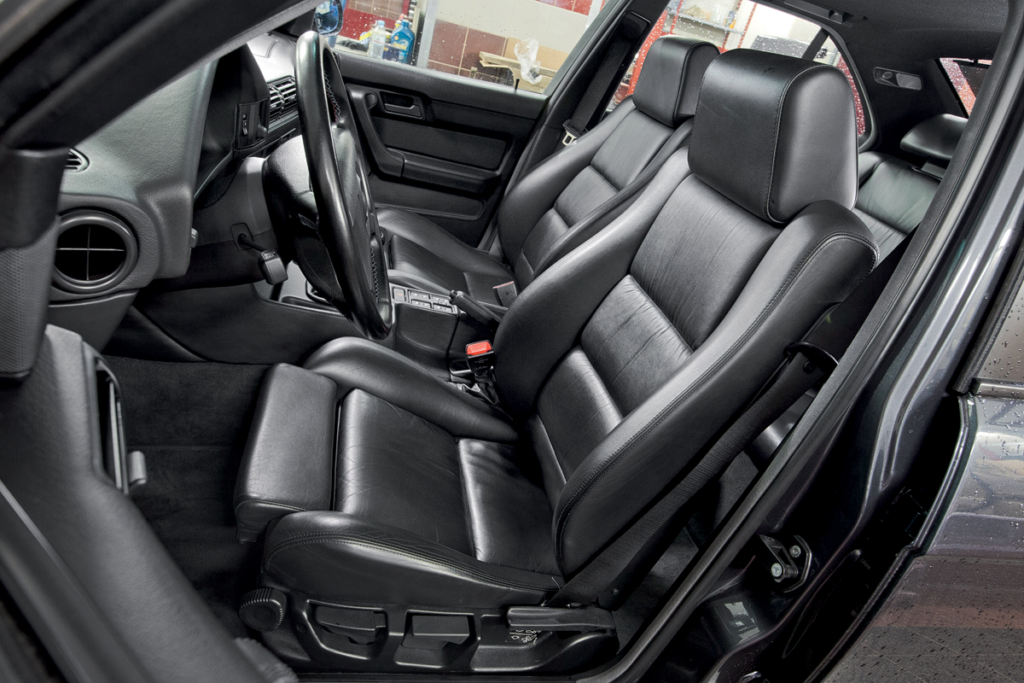
A contoured seat in an old Mercedes is another surprise, offering both lateral support and thigh bolsters, though the leather is a little slick. The steering wheel adjusts electronically, and only for reach. The gauges are those of an ordinary W124 “three-hundred”, distinguished only by the yellow gear markings on the speedometer and by a tachometer redline that begins 500 rpm sooner — not later — than in the base Mercedes.
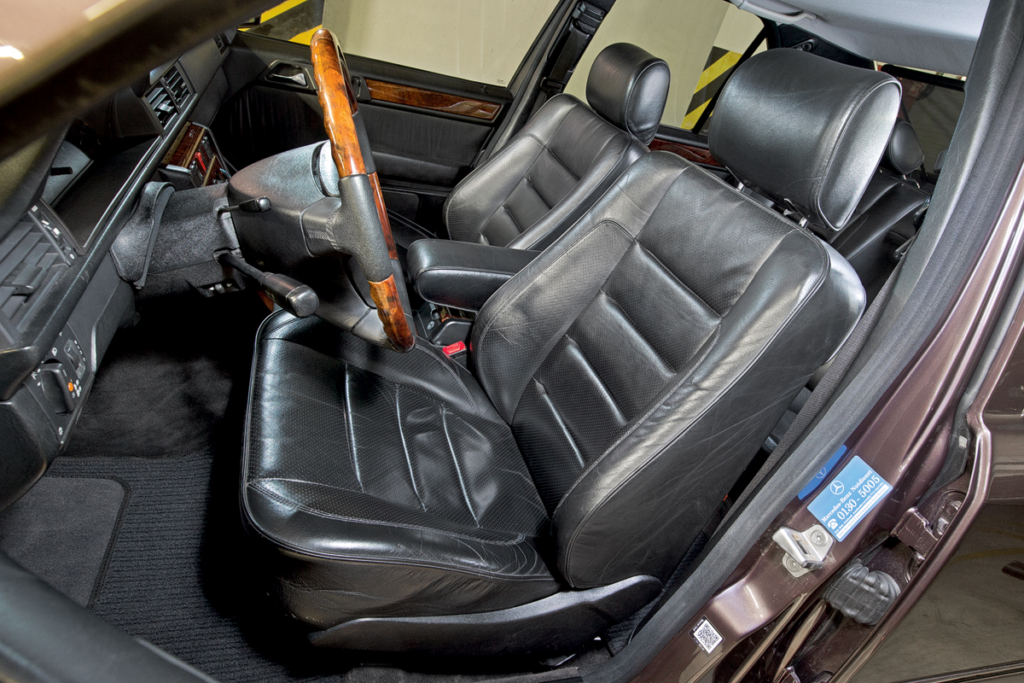
Both cars are equipped by default with Recaro sport seats. In the Mercedes (first slide), they are slightly more laid-back but feature electric adjustments with memory (second slide), while in BMW (third slide), the seats are stricter and more functional.
Everyday Mode: A Private Therapy Session
The engine wakes up loudly. The automatic’s lever clicks quietly into ‘D’ and the “five-hundred” pulls away smoothly at a touch of the accelerator. The steering is fairly light and empty around the centre, but it gains a pleasant reactive weight in corners. The gearbox does its best to keep up with the throttle. The suspension is soft — and I begin to suspect I was wrong about the Wall Street wolf. In everyday life this Mercedes clearly prefers private psychotherapy sessions.
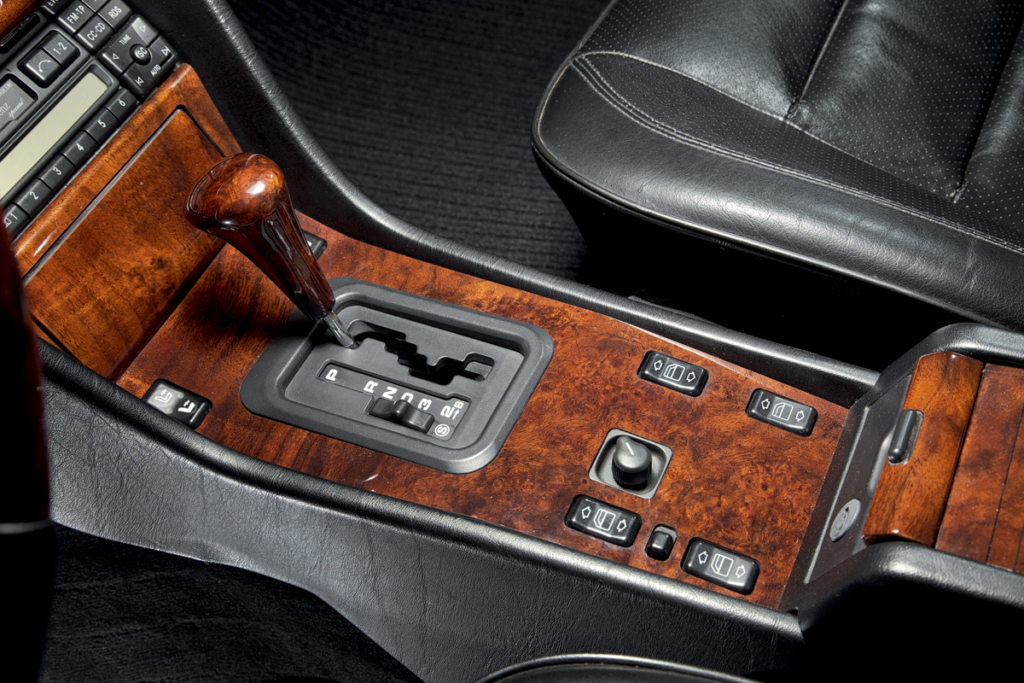
The legendary Mercedes automatic transmission W4A028 is used here in the 722.365 version with a final drive ratio of 2.82. The slider to the left of the selector switches between sport mode and economy mode and vice versa.
Nervous about piloting a legendary super sedan on summer tires, through puddles, at around freezing? Relax. A Mercedes remains a Mercedes, even when it has been fine-tuned in partnership with Porsche. Notice how calmly the chassis answers the steering, how smoothly the suspension glides over the testing ground’s cobblestones on the way to the dynamometer. There is nothing to worry about. It is all predictable and safe.
Now Floor It
Reassured? Good. Now push that pedal into the floor and accelerate.
The transformation in the 500 E catches you out every single time. I drove it for half a day and was still astonished at every full-throttle launch. The range of temperaments in this sedan is extraordinarily wide.
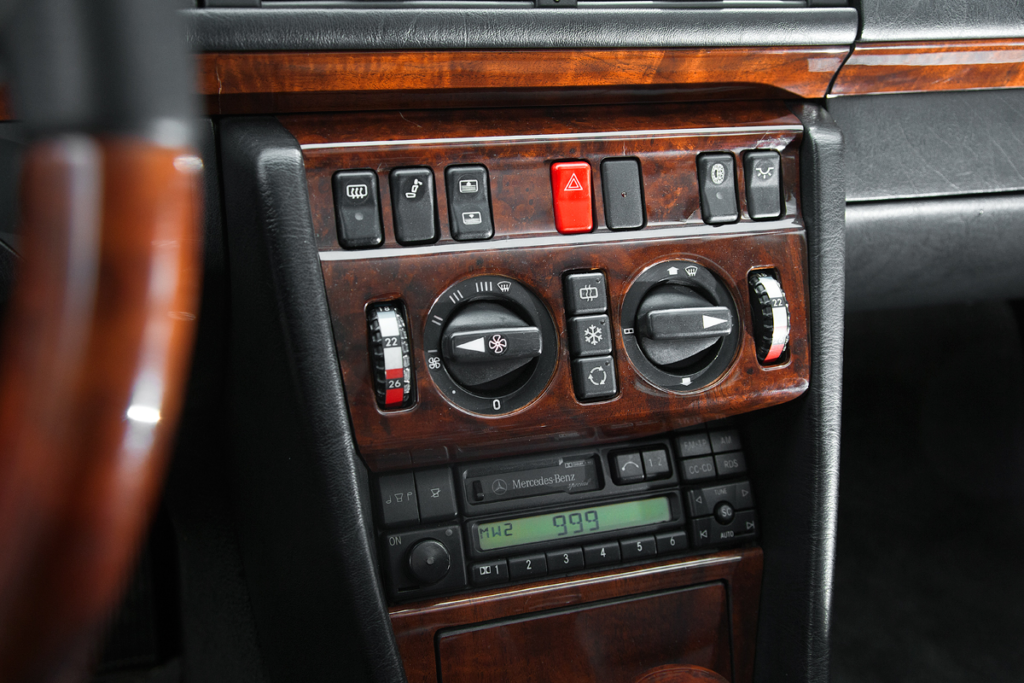
The Mercedes hurls itself forward, its nose lifting slightly after a brief pause at the start. A pulsating, infrasonic roar fills the cabin and seems to resonate through the wooden dashboard like an expensive loudspeaker. It is the perfect sound system, and it happens to be the engine.
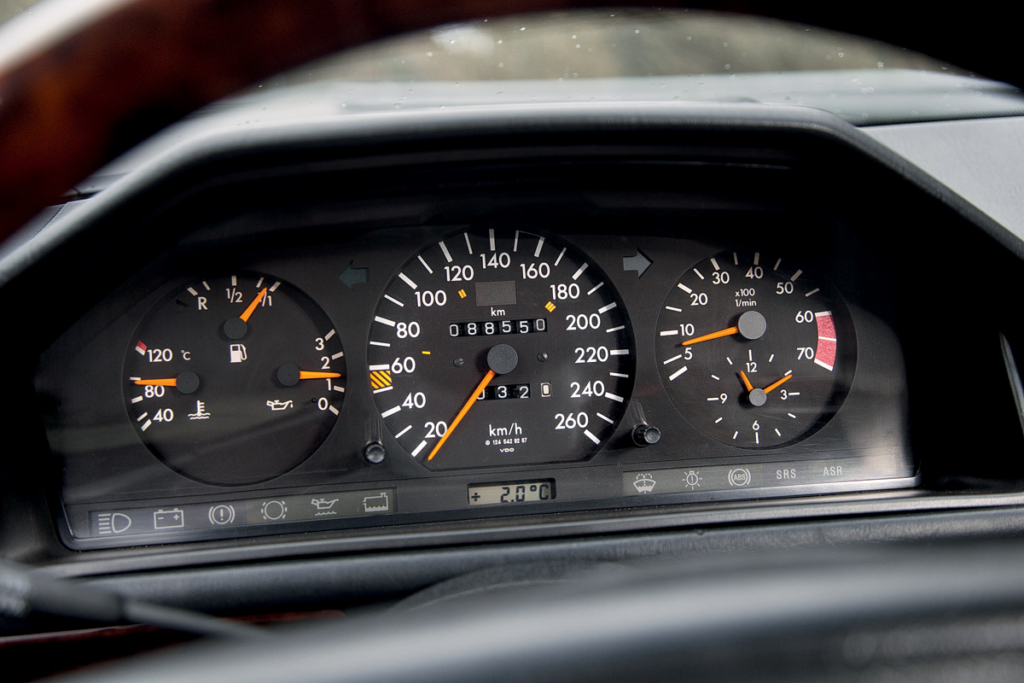
The instruments do not focus attention on the outstanding engine. Yellow marks on the speedometer are the gear boundaries: third gear—up to 180 km/h, and there are only four gears in total.
The Numbers Behind the Feeling
Finding the driest patch, I managed to measure acceleration without the non-deactivatable ASR traction control cutting in. The initial surge reached 0.9g. The engine ran to 6000 rpm, inside the redline, and the shifts came on time and cleanly. The 500 E pulls to nearly 80 km/h in first gear and to 120 km/h in second. It is thrilling and vivid — and the numbers show it was not quite as fast as it felt. Standstill to 60 km/h took 3.5 seconds, and to 100 km/h a flat seven seconds. The best run from 100 to 200 km/h took 21.5 seconds. Pushing beyond that became a little frightening.
Above 150 km/h, the Composure Runs Out
Beyond 150 km/h the Mercedes somehow loses its stability and starts to sway from side to side. How I miss the reassuring coach of a few minutes ago — but now the 500 E seems unsure how to regain its own composure. Those relaxed responses have me gripping the wheel harder than I would like. Delays and body roll appear, then sporadic traction hiccups, as though one cylinder were misfiring. We decided against a maximum speed run, not least because the top speed is electronically limited anyway.
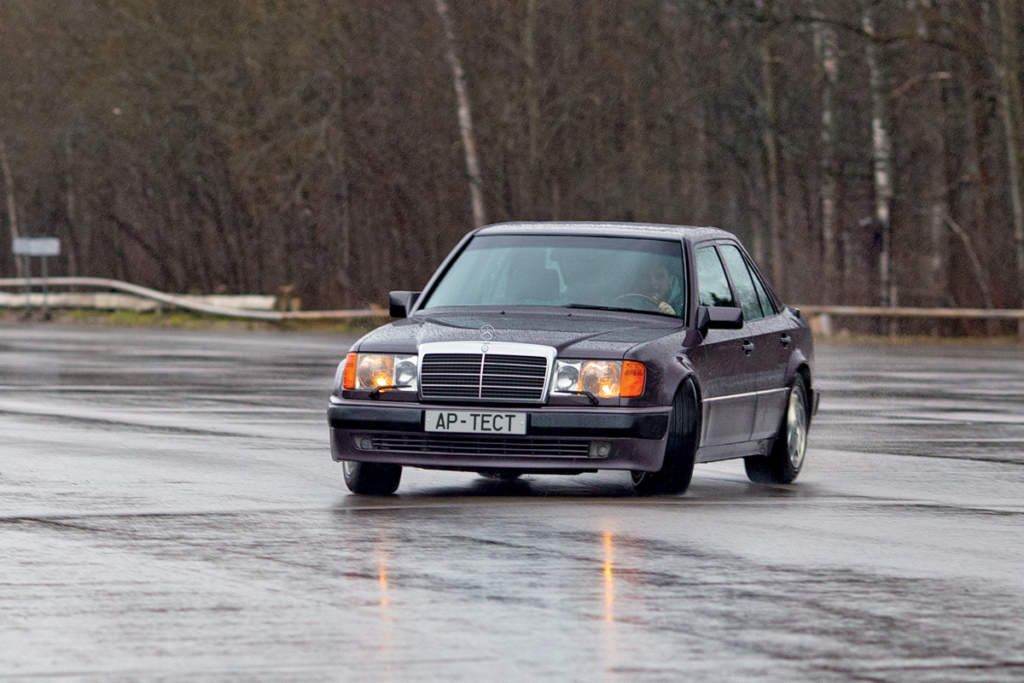
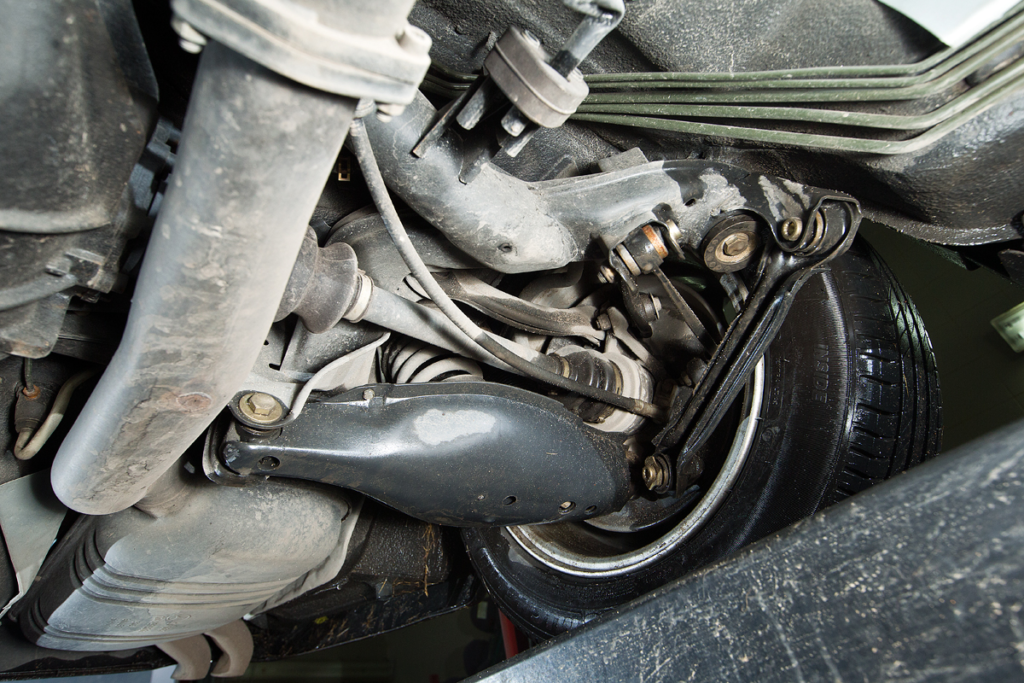
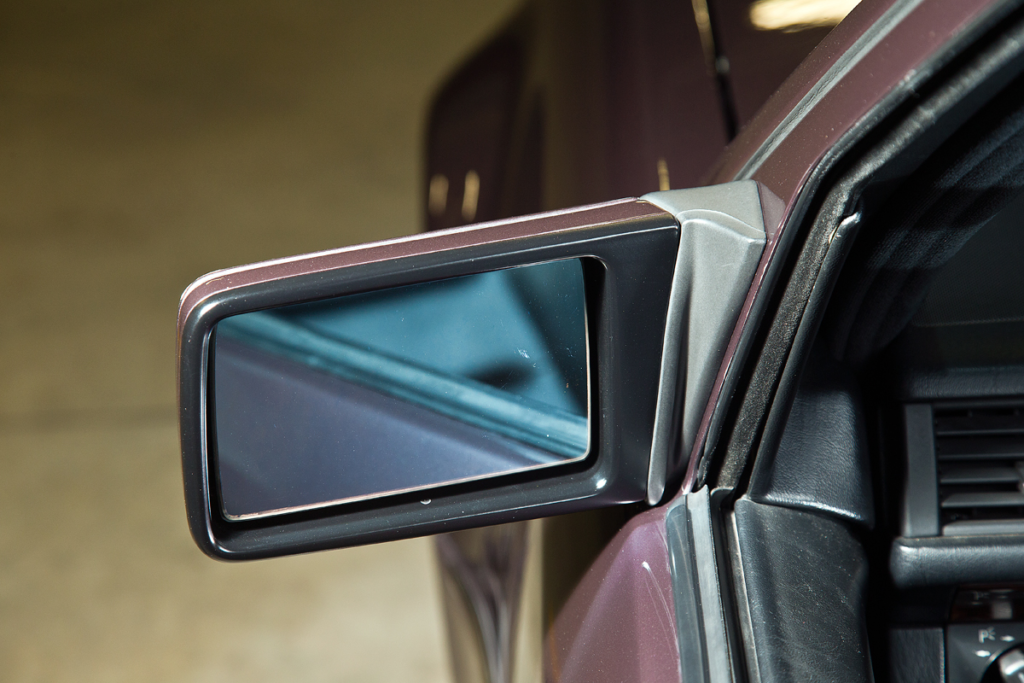
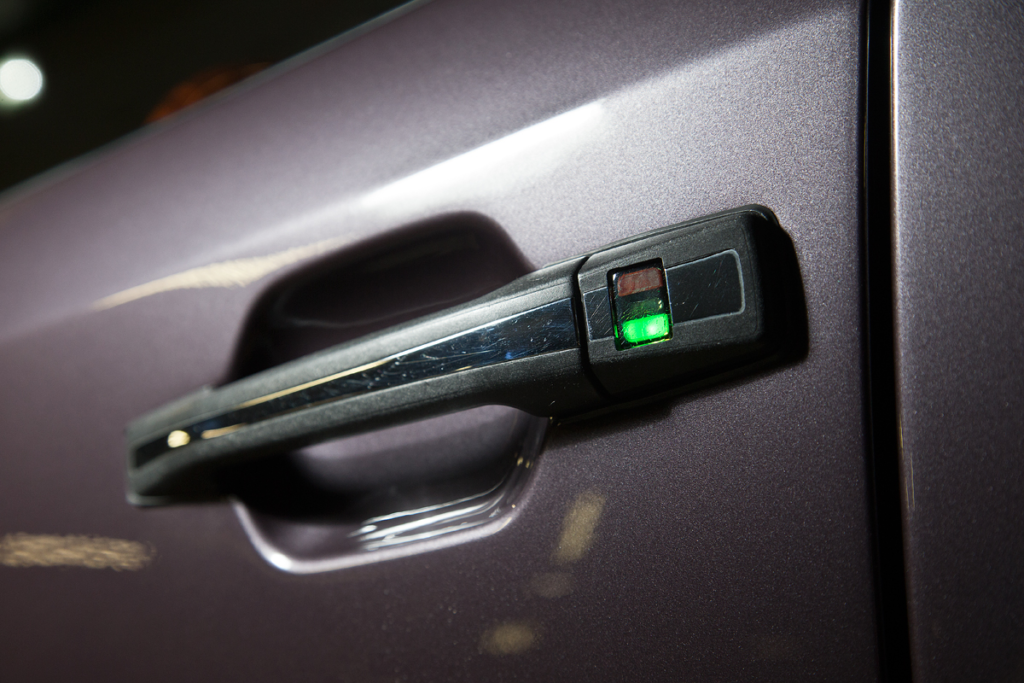
Mercedes allows for sliding in brief phases when ASR has not yet had time to wake up. But how delightful it is to sink into a skid and how obediently it comes out of it! By the way, this frame clearly shows why the “five-hundred” needs such wide wheel arches.
Your Turn, M5
Have you ever noticed that the BMW E34 never smiles? It is always fixed on the result, and all its lines converge at the front, pointing where the headlights are aimed. It is already ahead of you in its mind, has covered the distance, and is waiting for you to do at least as well. That is what the focused gaze is for.
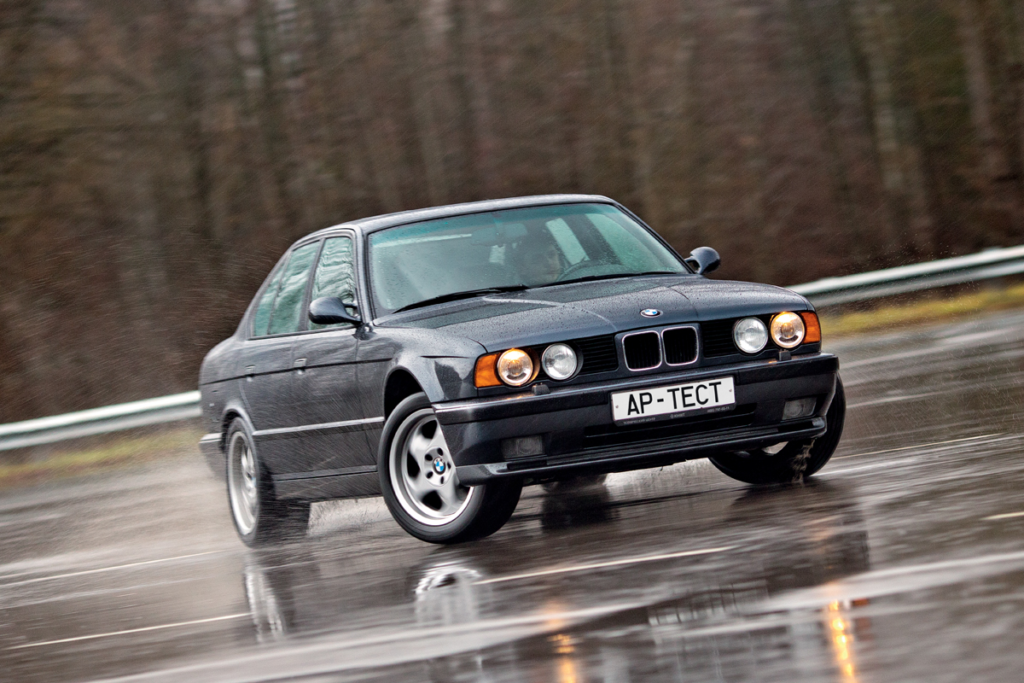
Thomas Ammerschlager, the chief engineer of BMW Motorsport, said that the M5 does not need “accelerating cosmetics.” But special wheels have always been a fetish for M versions. Initially, E34s were fitted with composite Turbine M wheels with a fan effect, and for the 3.8 engine version, a set of Throwing Star wheels by the legendary firm Otto Fuchs appeared. They also ventilate the brakes. But few know that the iconic “stars” are actually caps over forged five-spoke wheels.
Everything Converges on the Driver
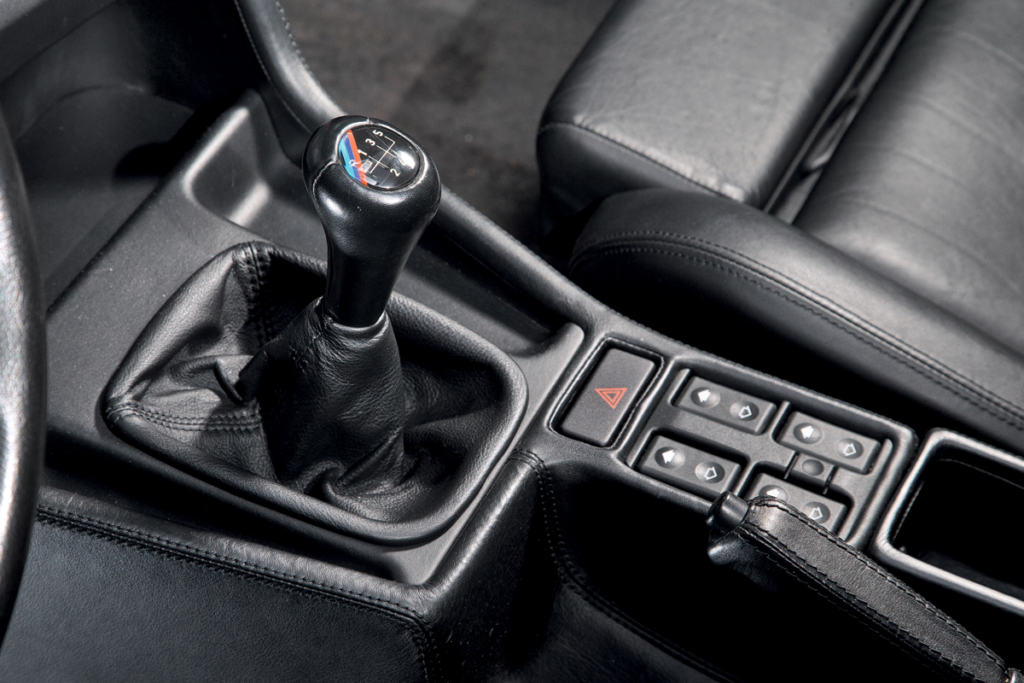
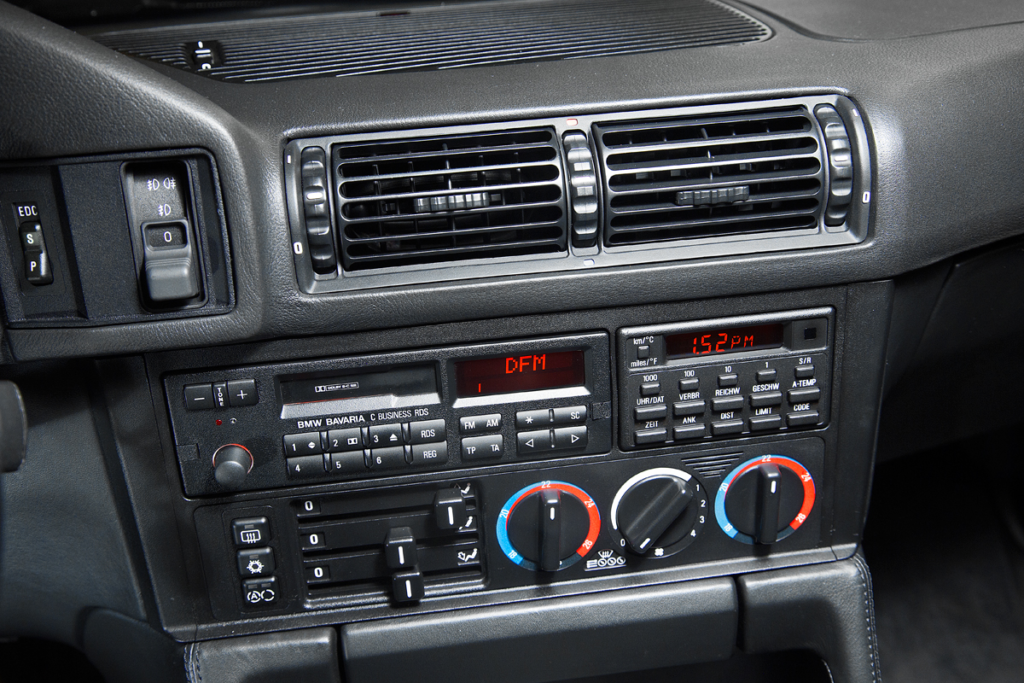
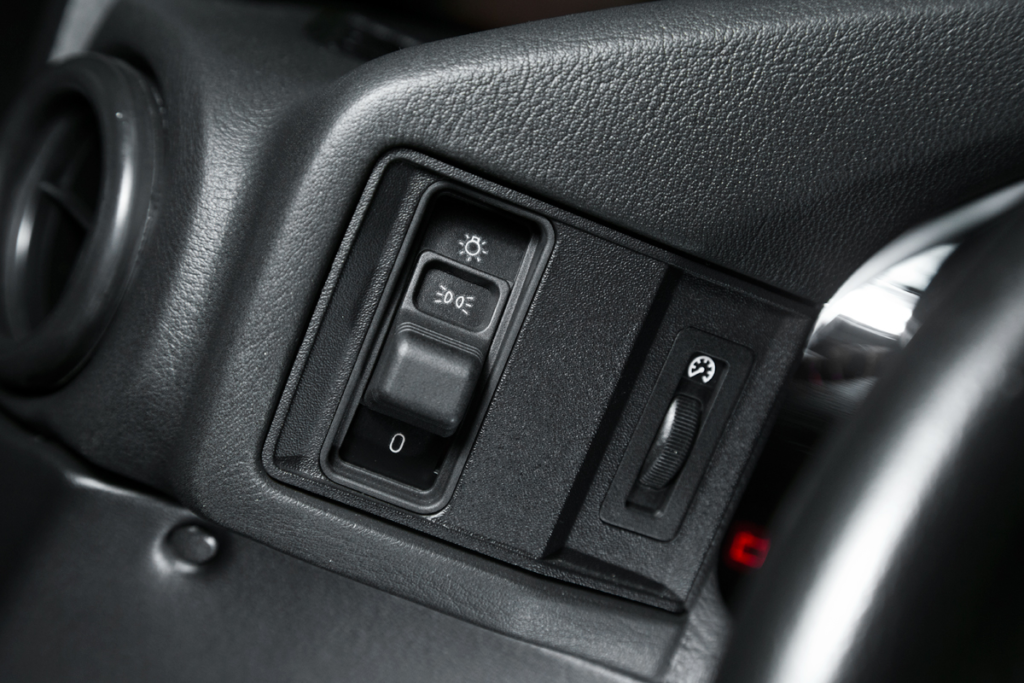
The interior follows the same philosophy: everything converges on the driver. Coming from my own E39, I feel almost at home. Almost — because unlike the E39 the E34’s steering wheel does not adjust for reach, and the climate control panel is a jumble of buttons and sliders in assorted sizes. But the seat holds you perfectly, the driving position feels even lower, and the lever of the five-speed manual moves with more precision and a shorter throw than in any other retro BMW I have driven.
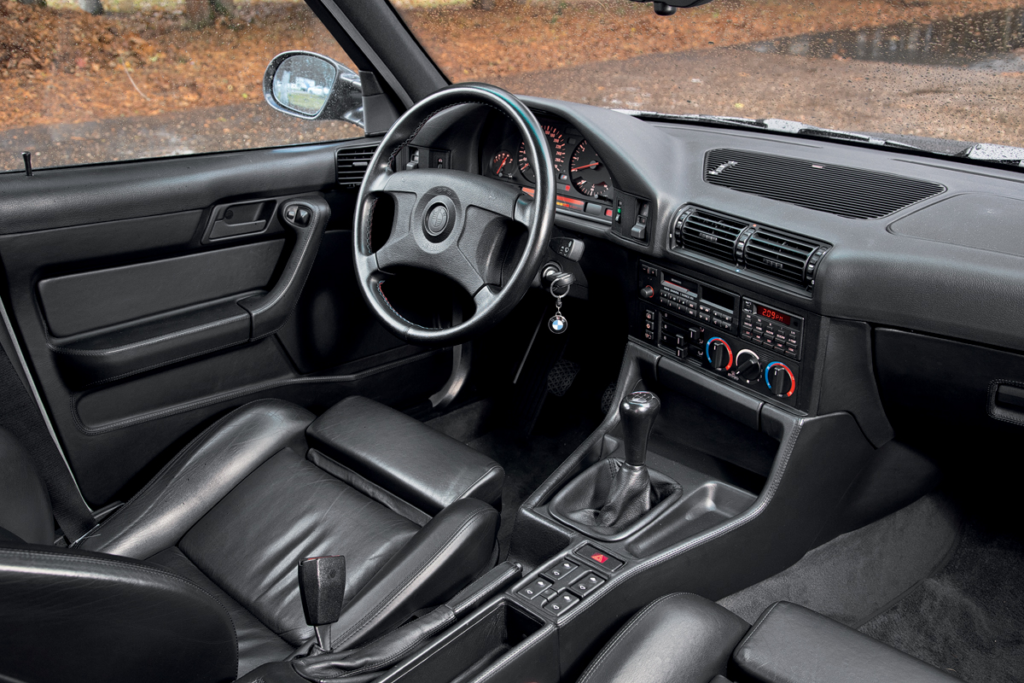
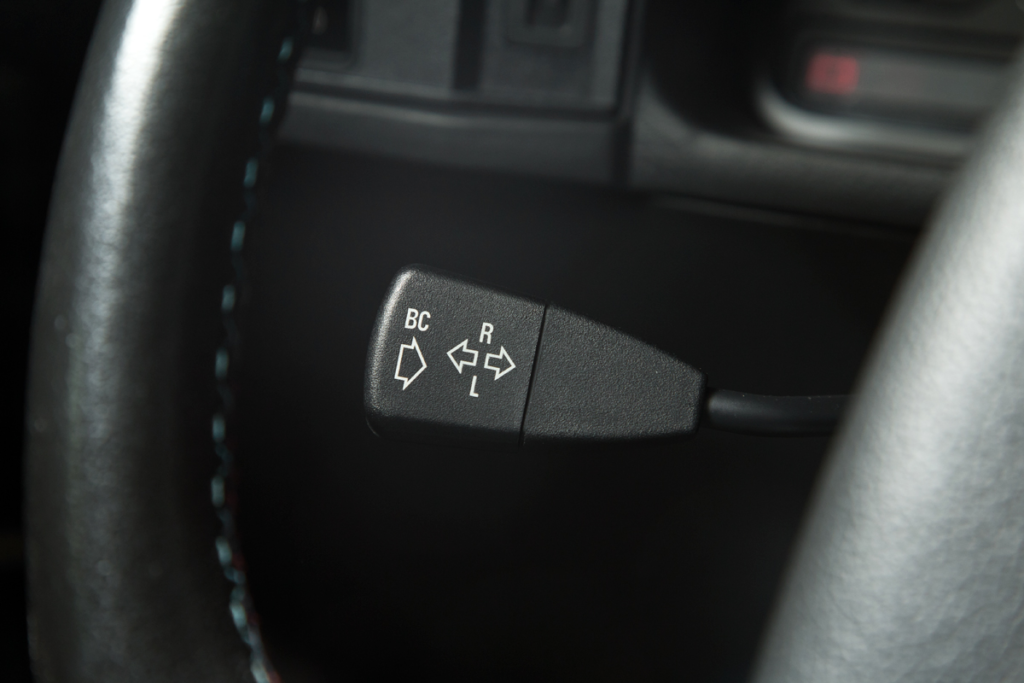
Buttons, arrows—and not a single cup holder. It’s a pity that the beautiful emblem on the steering wheel at that time was not compatible with an airbag. This functional perfectionism is celebrated by fans and journalists, but soon BMW will learn to add a sense of wealth and luxury to the interiors. And then decide that, besides them, nothing else is needed.
In everyday life the M car is not a psychotherapist but a motivational coach, and it calms you by doing the opposite. Burnt out? Turn the key and take light from the instrument backlighting. Not in the mood? Blip the accelerator twice and listen to the sound of an appetite for life. Confident, sure you can handle anything? Let the clutch out and set yourself a harder task.
Firm From the First Metre
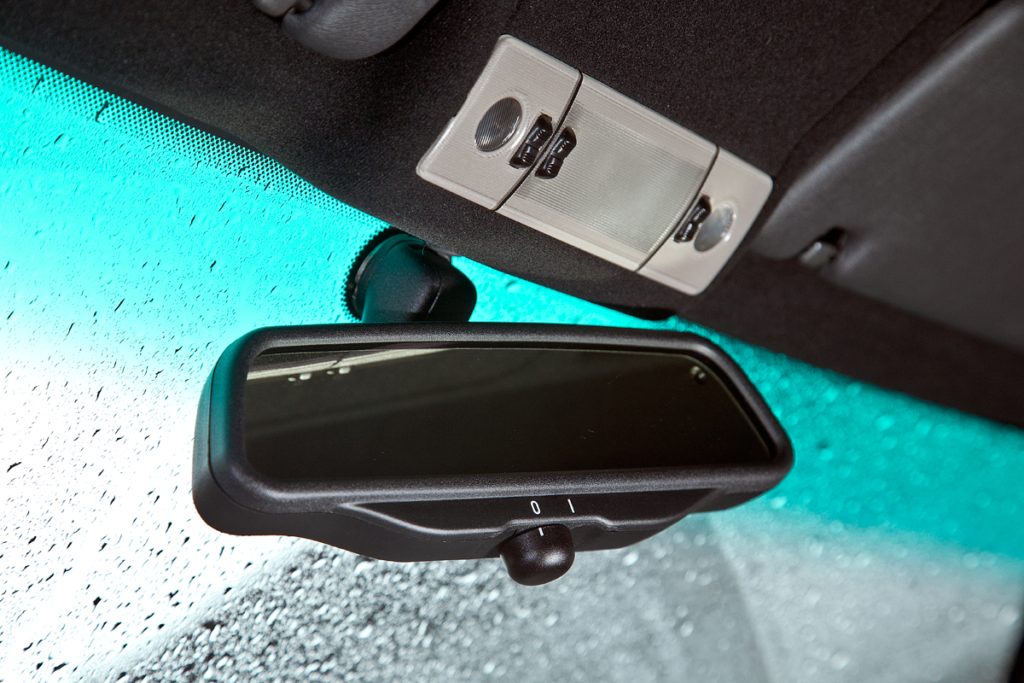
There is no ambiguity here. The BMW drives with a firm, precise grip from the very first metre. The steering is heavy and always loaded with effort, the responses are instant, body roll is practically absent. The M badge lights up the dashboard, the speedometer runs to 300 km/h, and the only driver aid on board is an adjustable auto-dimming rear-view mirror.
Now, under the first drops of rain, we are on that same straight, chasing the last of a fast-fading autumn and trying to beat the Mercedes.
Launching 340 Horsepower on a Wet Straight
For the facelifted M5 the displacement grew from 3.6 to 3.8 liters, which improved torque low down and in the mid-range. Even so, there is still a shortage of pull below 4000 rpm. Ideally you would launch from five thousand rpm, but the rear wheels spin every time, so I wind it back to 3500 rpm and let the clutch out rather more gently than I should. We are hooked up. The sound does not fill the cabin so much as pierce it, from the engine block through to the exhaust pipe.
Two Hundred and Forty-Seven Point Eight
The tachometer needle dances between 5000 and 7500 rpm. Past 140 km/h a whistle starts up near the front roof pillar and you can feel the air trying to push the car off line, but the M5 holds its trajectory far more accurately than the Mercedes. From 220 km/h in fifth the acceleration only gives up once the speedometer reads 260 km/h — in reality 247.8 km/h. This is where the M5’s electronic limiter is supposed to intervene, and the engine arrives at it so gently that it feels as though it could go further.
A Second Slower Than the Brochure
On its best run the M5 edges out the “five-hundred”, though only symbolically: 6.9 seconds to 100 km/h and 15.9 seconds from 100 to 200 km/h. Peak accelerations are higher, at 1.0g, but there is no jaw-dropping moment in the way it gathers speed. There is no werewolf effect. In the BMW the transformation happens at the start of every drive rather than during acceleration, and that is what separates it from the Mercedes.
Both cars have lost about a second against their passport figures. It would be easy to blame the weather, but I was intrigued by the M5’s throttle action, which behaves as though there were a drive-by-wire pedal in the car when it is in fact a metal cable running to individual throttles. The response is damped all the same, and a throttle blip needs the pedal held down a fraction longer than usual.
Which One Actually Drifts
Surprisingly, the M5 3.8 is not fond of drifting. It is hard to believe, but even on wet asphalt it has to be provoked deliberately into losing traction; left alone, the front wheels slide first. To start a drift you have to send the full thrust to those wide rear wheels and keep the revs up, or the tires hook up again and the M5 straightens itself out. Despite a “shortened” differential it still has a long steering ratio, 3.25 turns lock to lock, and a smaller steering angle than a standard E34 because of the wide tires. Which might prompt a second look at those iconic Tbilisi drifting scenes.
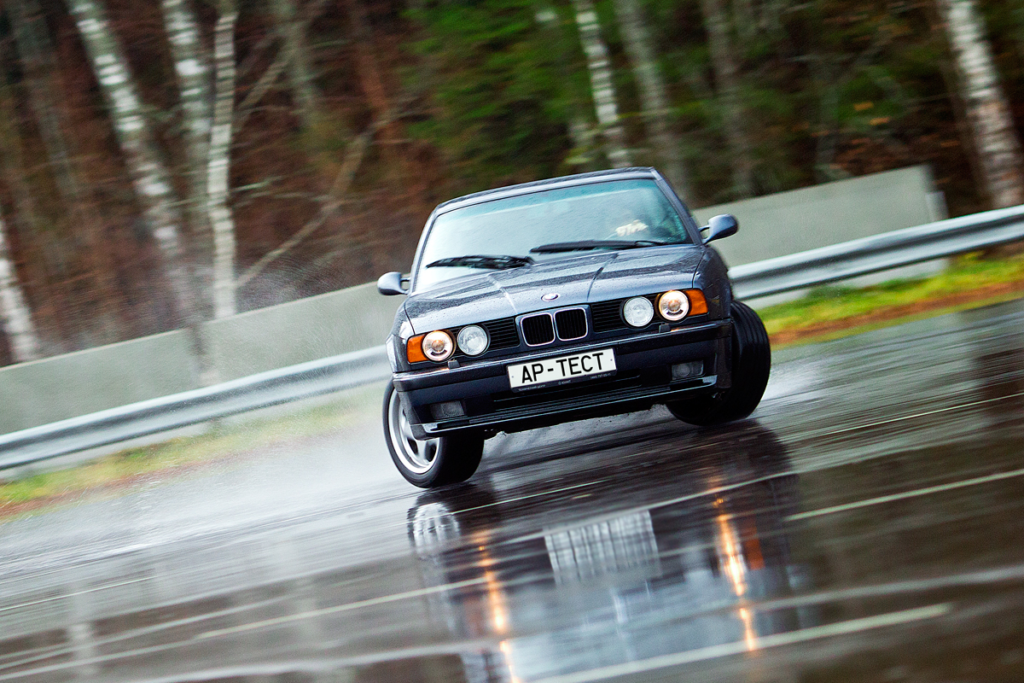
The Mercedes, conversely, turned out to be pleasantly willing to drift. It has the displacement and the torque to spin the rear wheels, and the non-deactivatable ASR briefly takes it all away again. That is a shame, because the W124 answers at its limit by sliding the rear, and in the moments when ASR lags behind it hands full control to the driver without hesitation. Without the electronics this would be a thrilling, responsive car — a werewolf on a chain.
EDC: Where the BMW’s Magic Really Lives
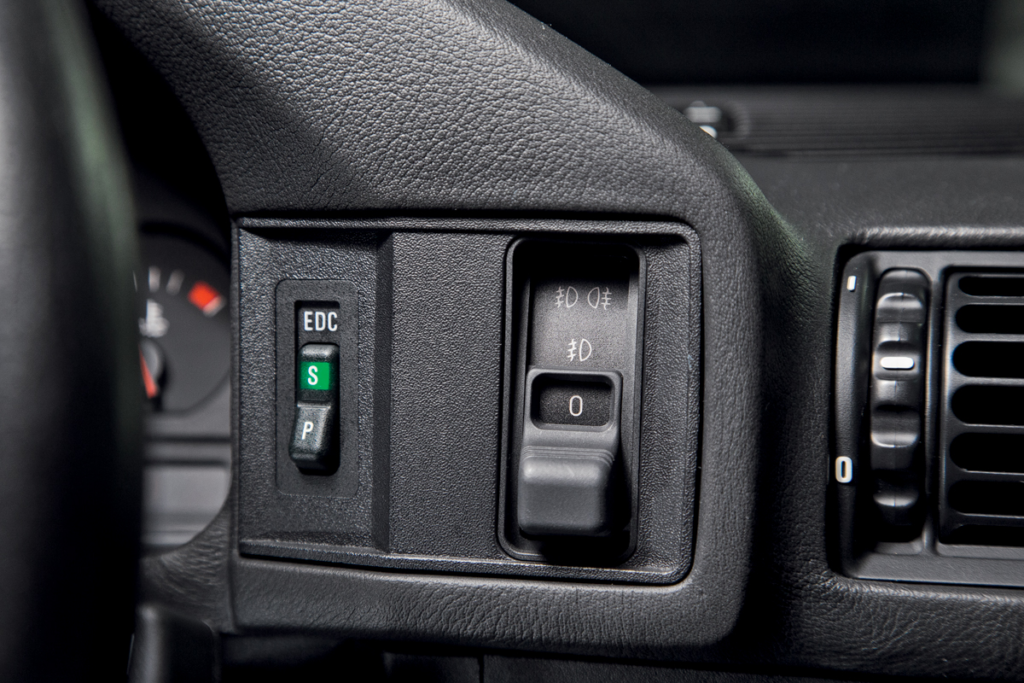
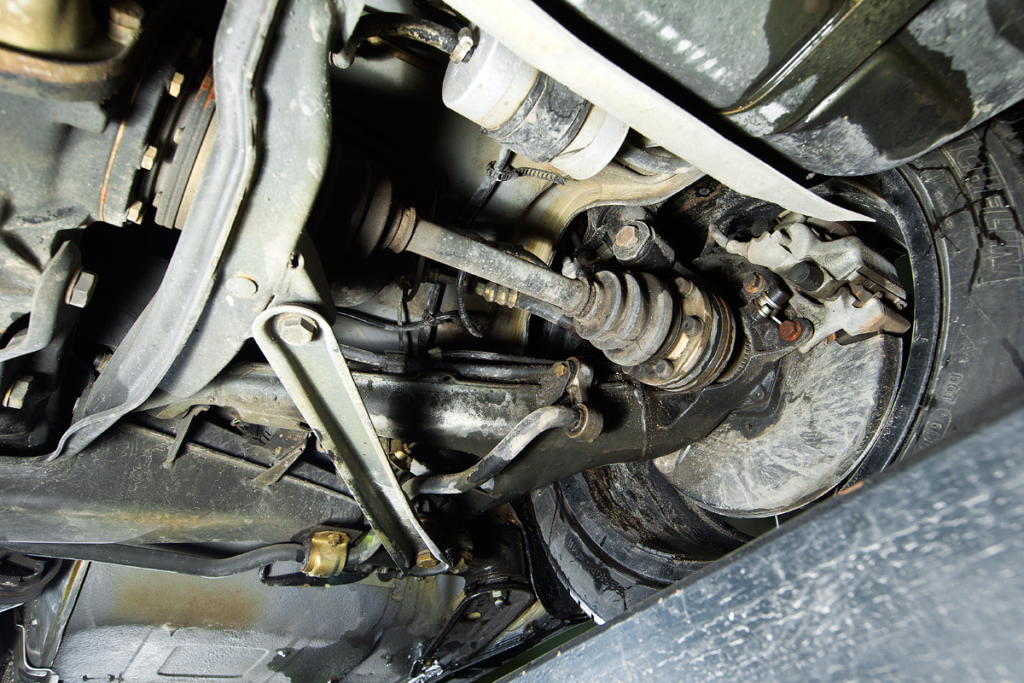
And yet the BMW does have a magic that makes you say “wow”, and it comes from the EDC suspension with its electronically controlled Boge dampers. There are only two modes. “Sport” gives a firm M chassis that suppresses any movement it considers unnecessary; “Adaptive” gives the dampers more freedom to smooth road imperfections away. It is not as soft as the Mercedes, but it comes close enough to the comfort everyday driving demands.
The Werewolf That Doesn’t Need Revs
The most unexpected conclusion of this test is also the most logical one: the BMW M5 is perfect for the role you would have assumed belonged to the Mercedes. It is a werewolf that needs no high revs to transform. The M5’s magic switches on instantly, so even without a track or an autobahn you still get the charge. It energises you with composure, motivation and the urge to keep moving — an indispensable coach for daily life.
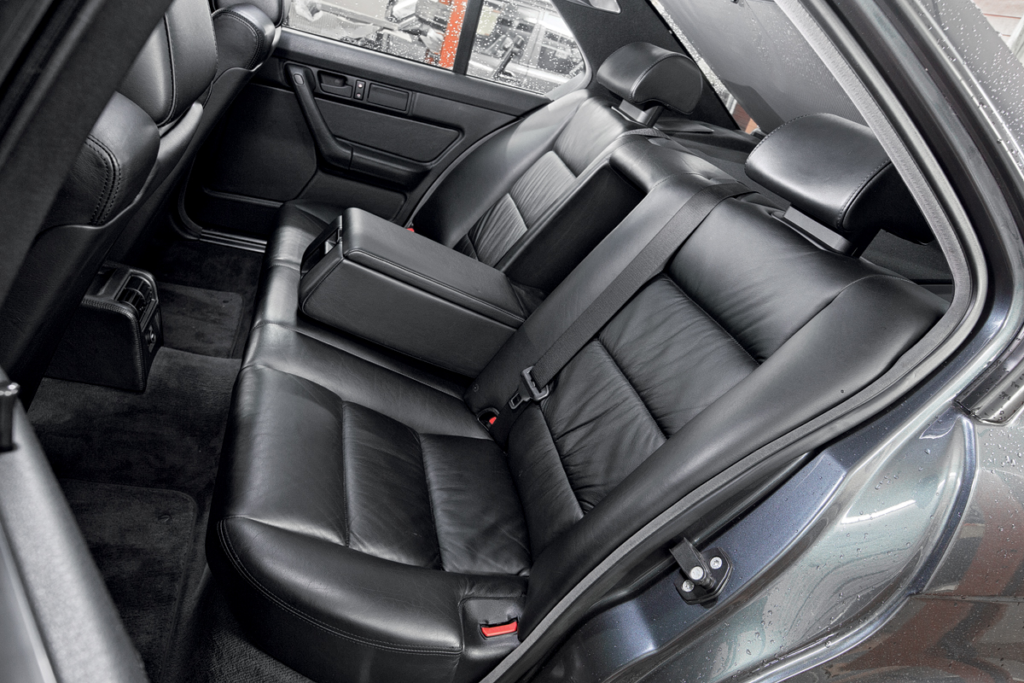
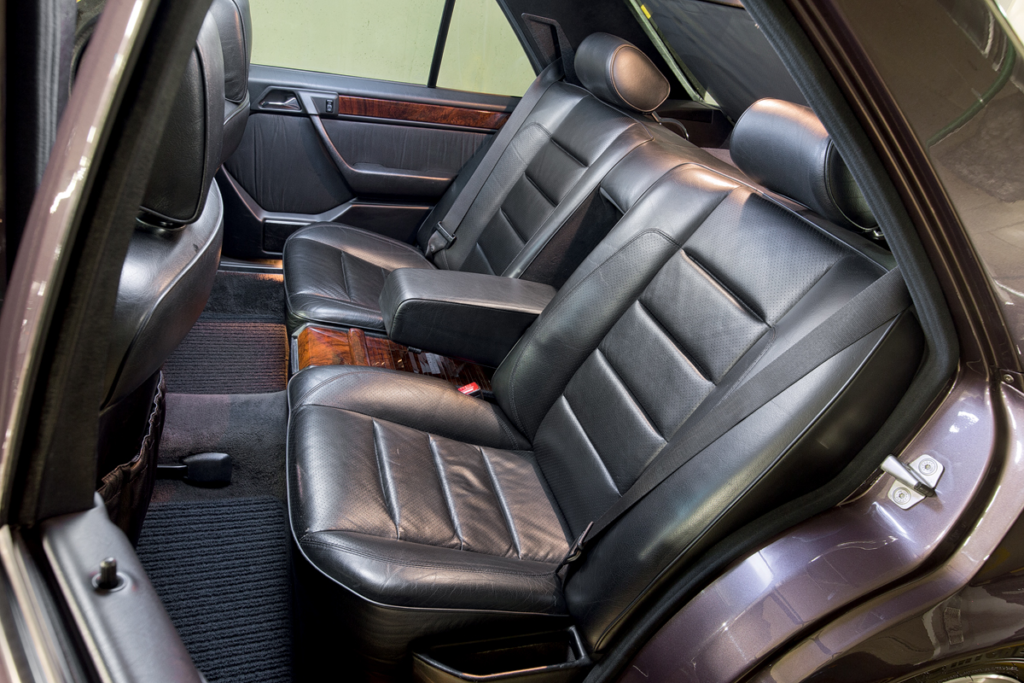
The five-seat cabin was offered in later E34 M versions (first slide), while early versions had a console in the middle of the rear seat, similar to in a Mercedes. The “five-hundred” (second slide) was always strictly a four-seater because all the space under the center cushion was occupied by a large differential from the 500 SL roadster.
Living With the Five-Hundred
Daily life with the Mercedes might leave us both a little bored. It is a volcano that lives for the ease with which it turns into a monster, and those transformations need space and the chance to accelerate flat out at every set of lights. So if a choice has to be made…
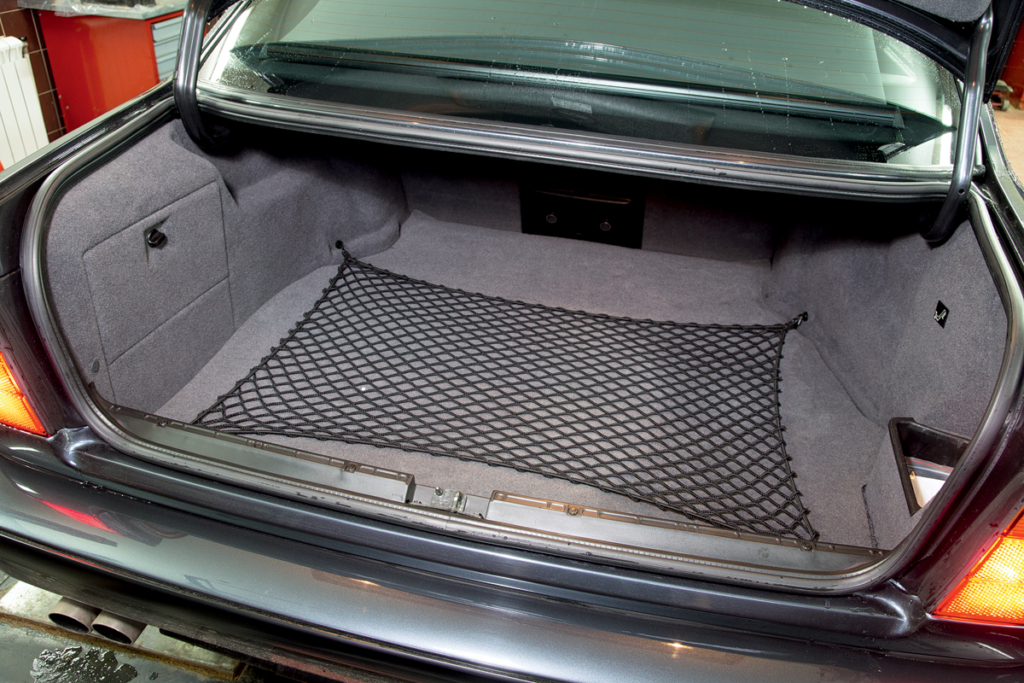
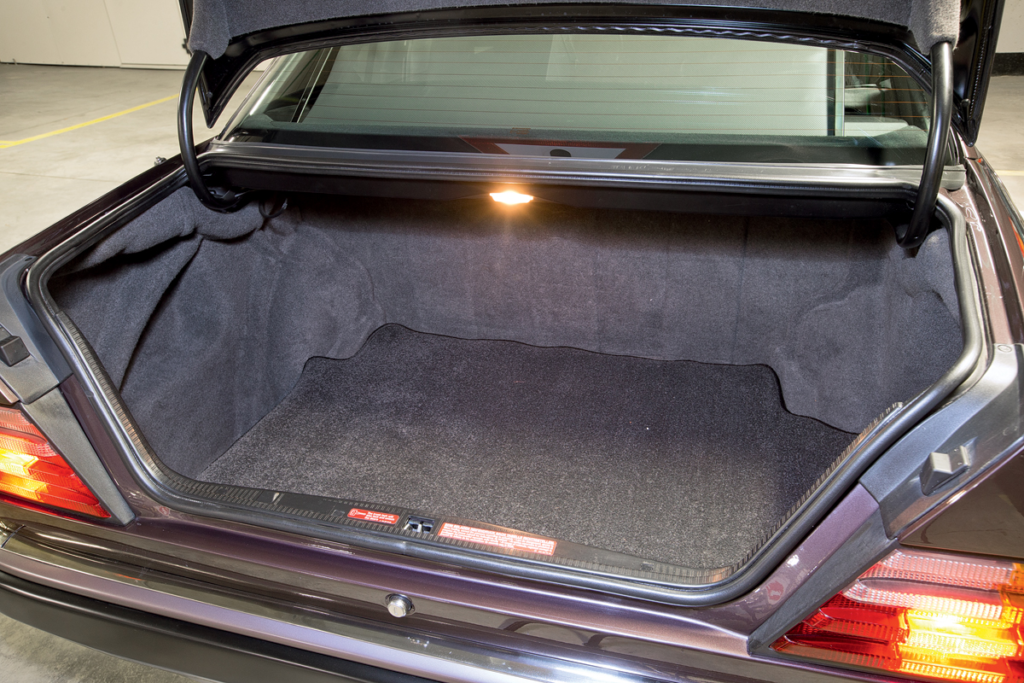
Trunks are the last thing such cars should compete in, but here Mercedes (second slide) has the edge in volume, while BMW (first slide) wins in practicality: a net, side boxes, a hatch in the backrest, and a toolset were included in the standard equipment.
The Ideal Garage Holds Both
Let’s be frank. Cars like these are rarely the only occupants of a garage, and their owners rarely have to pick just one. To my mind the ideal garage holds both. That, in the end, is the value of the era that produced the M5 and the 500 E: BMW and Mercedes were rivals then, each pushing the other, and neither imitating nor copying. They built cars that could turn into anything while remaining unmistakably themselves.
Dimensions and weight
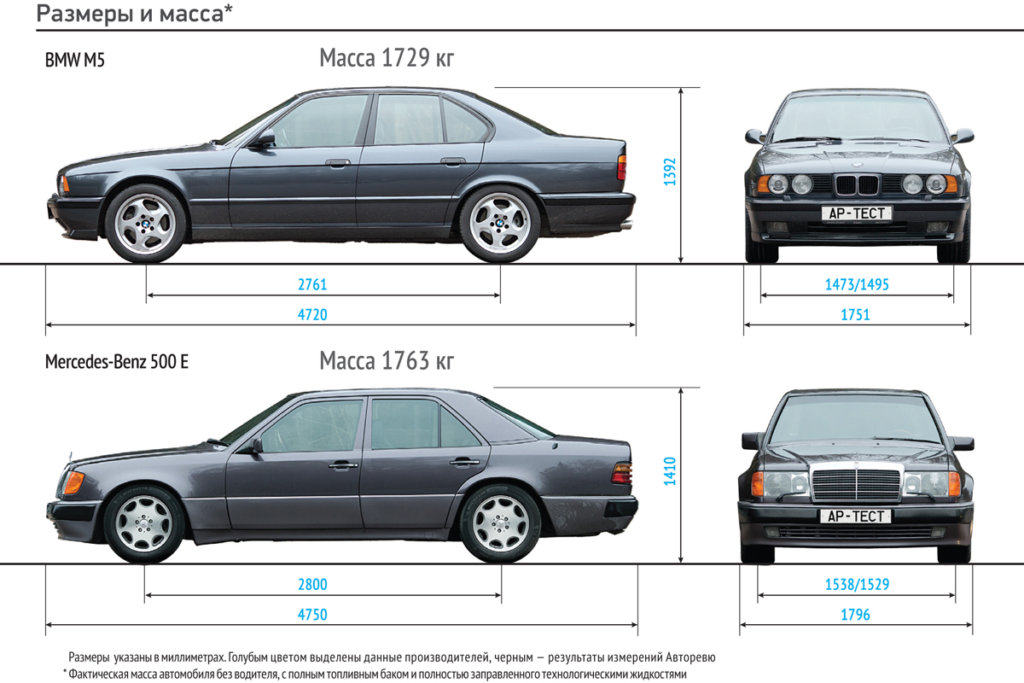
Dimensions are in millimeters. Manufacturers’ data are highlighted in blue/Autoreview measurements are highlighted in black. Actual vehicle weight without driver, with full fuel tank and full process fluids
Full Specifications
| Specification | BMW M5 | Mercedes-Benz 500 E |
|---|---|---|
| Body Type | Four-door sedan | Four-door sedan |
| Number of Seats | 5 | 4 |
| Trunk Volume (liters) | 460 | 485 |
| Curb Weight (kg) | 1725 | 1710 |
| Gross Vehicle Weight (kg) | 2150 | 2160 |
| Engine Type | Gasoline, with distributed injection | Gasoline, with distributed injection |
| Engine Position | Front, longitudinal | Front, longitudinal |
| Number and Configuration of Cylinders | Inline 6 | V8 |
| Engine Displacement (cc) | 3795 | 4973 |
| Number of Valves | 24 | 32 |
| Cylinder Diameter/Stroke (mm) | 94.6/90.0 | 96.5/85.0 |
| Compression Ratio | 10.5:1 | 10.0:1 |
| Maximum Power (hp/kW/rpm) | 340/250/6900 | 326/240/5600 |
| Maximum Torque (Nm/rpm) | 400/4750 | 480/3900 |
| Transmission | Manual, 5-speed | Automatic, 4-speed |
| Drive Type | Rear-wheel drive | Rear-wheel drive |
| Front Suspension | Independent, coil springs, McPherson | Independent, coil springs, McPherson with separated spring and shock absorber |
| Rear Suspension | Independent, coil springs, semi-trailing arms | Independent, coil springs, multi-link |
| Tire Size | 235/45 R17 | 225/55 R16 |
| Maximum Speed (km/h) | 250* | 250* |
| Acceleration 0—100 km/h (s) | 5.9 | 6.1 |
| Fuel Consumption, mixed cycle (l/100 km) | 12 | 13.5 |
| Fuel Tank Capacity (liters) | 80 | 90 |
| Fuel Type | Gasoline AI-95 | Gasoline AI-95 |
Photo: Dmitry Pitersky
This is a translation. You can read an original article here: Оборотни максимальной мощности: Mercedes-Benz 500 E и BMW M5 на полигоне

Published July 18, 2024 • 15m to read