
“Ebony and ivory live together in perfect harmony”
Paul McCartney
Rarely does a car come along as singular as the Cadillac Die Valkyrie. Only two of them are known to exist anywhere in the world, and the second was found recently, hidden away in a barn in Maryland. History records that somewhere between five and six were originally intended — and the plan behind them was nothing short of ambitious: no fewer than a hundred. Here is the story behind an extraordinary car.
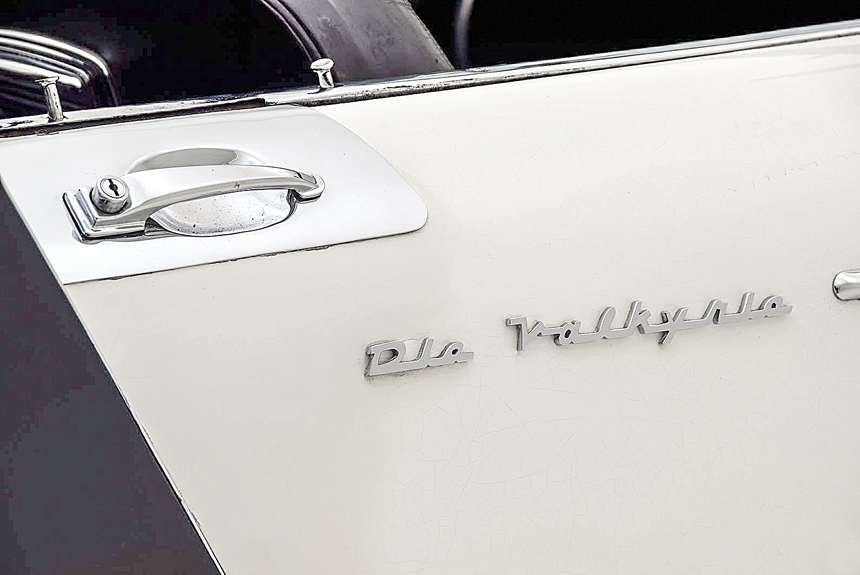
Six Point Seven Metres, and Four Seats
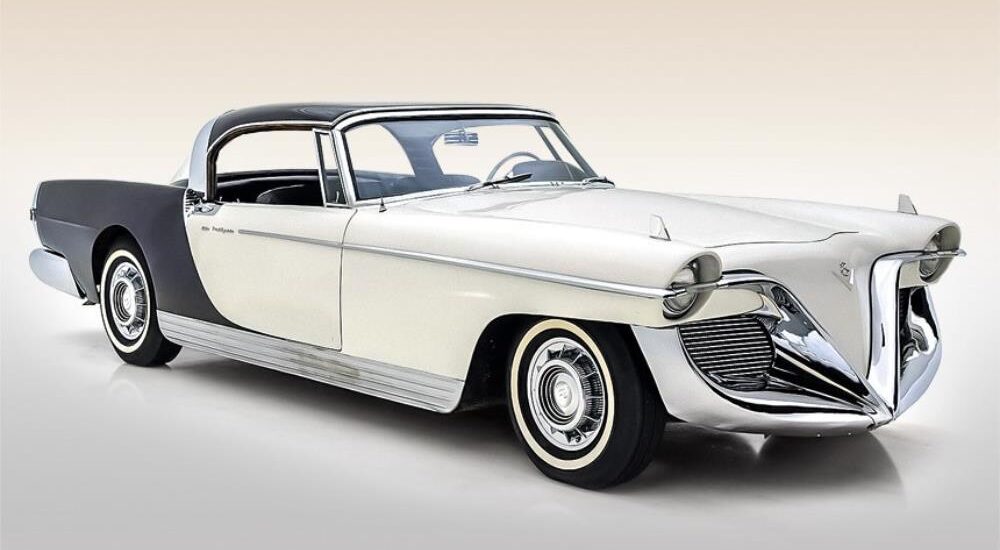
The car in these photographs made its debut at the 1954 Paris Auto Show and left a mark on everyone who saw it. The Die Valkyrie is colossal, to put it mildly: 6,700 mm from nose to tail, with a hood two metres forty long all by itself. And for all that size, it seats four.
This German-bodied machine, designed on American principles, left French enthusiasts in something close to shock. They were not used to dimensions like these. To work out what it even was you had to look closely, because the body carried no brand emblems at all — only proud V8 badges, front and rear.
Today anyone can identify it at a glance from the wheel caps, which wear the Cadillac crest. At its Parisian debut, though, the car ran different wheels altogether: wire spokes, with a narrow white insert in the tyres.
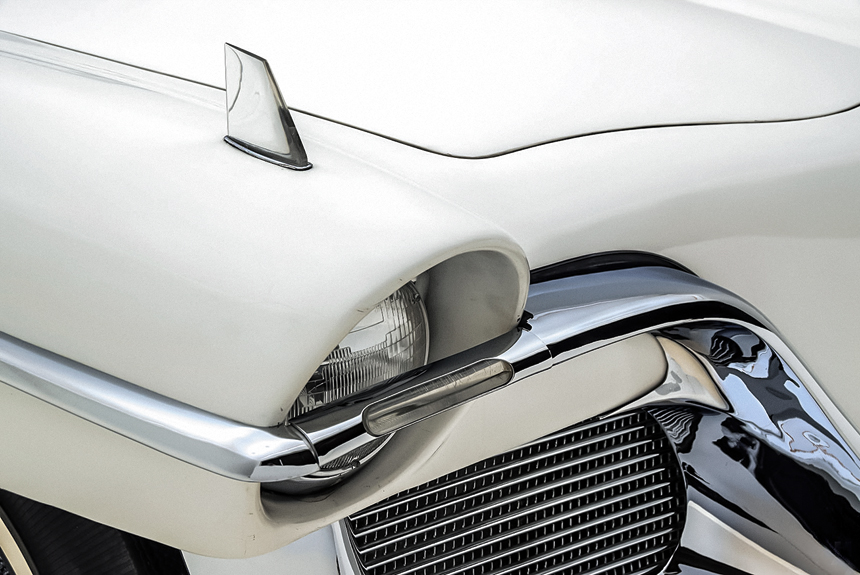
In the front treatment, a grotesque V-shaped motif dominates, gracefully winding around the body with longitudinal moldings. The transparent plexiglass inserts opposite the headlights are supposedly meant to enhance their long-range visibility. The decorative “blades” on the front fenders (also plexiglass) serve as turn signal repeaters, flashing in sync with them.
The Man Who Ordered It
The visionary behind the Die Valkyrie was a prominent Cleveland businessman with the suggestive surname of Metzenbaum. He was no ordinary entrepreneur: a developer, or in plainer terms a real estate magnate. What he wanted was a car built entirely to his own specification, the way things had been done in the 1920s and 1930s, only modern. To make it happen he engaged the celebrated American designer Brooks Stevens.
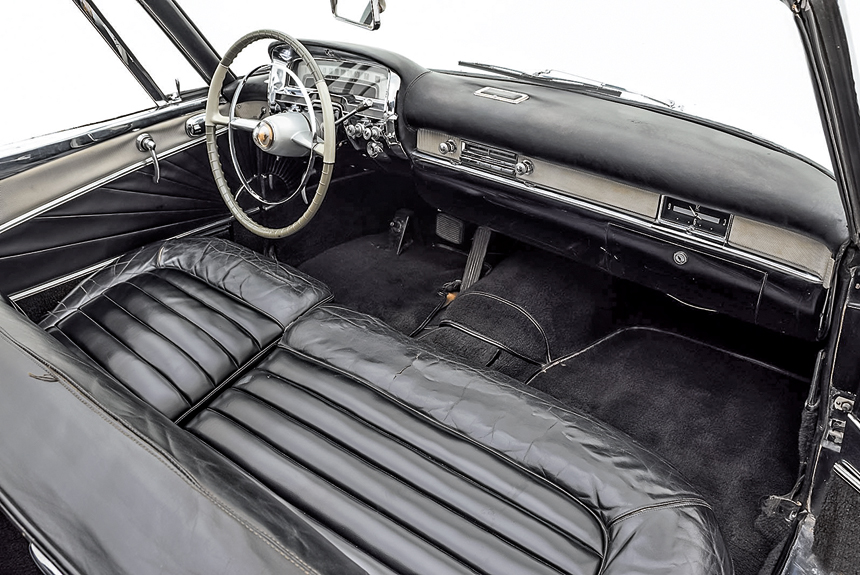
The front dashboard, steering wheel, and other control components are borrowed from a standard production Cadillac car.
Brooks Stevens, Designer of Everything
Brooks Stevens was a man of many talents who went into a great many fields and was good at all of them. You have seen his work whether you know it or not: the Miller beer logo, with its distinctive flying cursive, is on every can and bottle of the stuff.
Stevens was an architect by training, a 1933 graduate of the architecture department at Cornell University, and although his architectural work was worth having, versatility was the point of him. His projects spanned:
- railroad cars
- kitchen furniture
- outboard boat motors
- Harley-Davidson motorcycles
Among his automotive projects of the mid-1950s, the civilian Willys models stood out — the open Jeepster in particular.
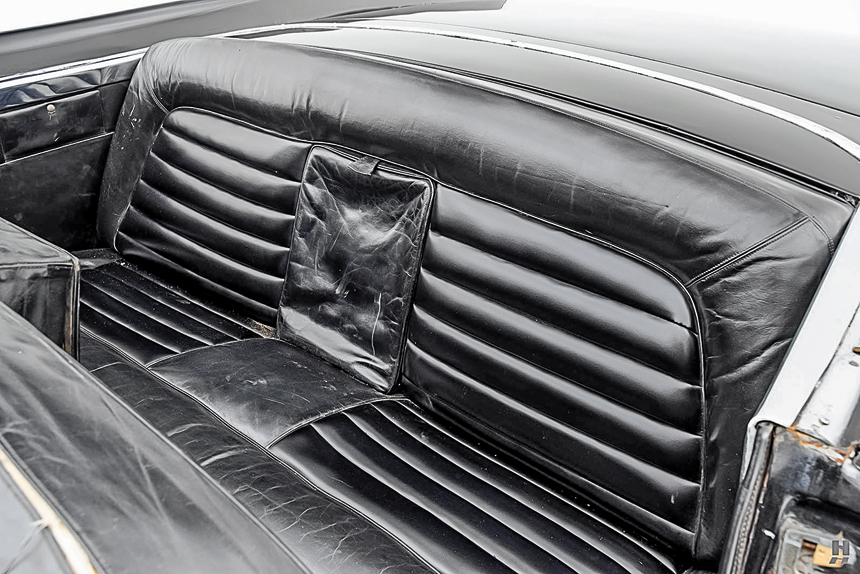
Leather seats, according to some reports, were created using springs and other components from Mercedes-Benz 300 (W186) car seats.
Building It on a Fleetwood 60 Special
Stevens took the Die Valkyrie project entirely seriously. For its foundation he chose the chassis of a Cadillac Fleetwood 60 Special, on the strength of its 133-inch wheelbase — 3,378 mm. That set it apart: every other Cadillac of the day, limousines excepted, had a wheelbase of 125 inches, or 3,175 mm.
The Die Valkyrie was to have a four-seat interior and an easily removable hardtop. In time its author even considered a soft folding roof, though that was frankly an auxiliary measure, for the occasional shower that catches you en route.
The earliest sketches, from the beginning of 1954, carry the author’s own name for the car: Rapier. It only acquired its thoroughly Wagnerian designation after Brooks Stevens decided to entrust the building of it to West Germany’s Spohn atelier.
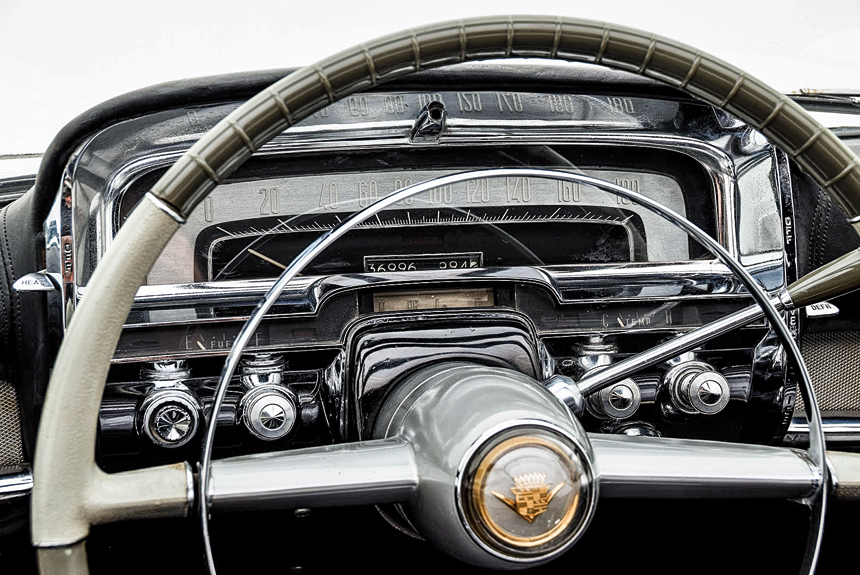
The car’s mileage, judging by the odometer, is relatively low, at only about sixty thousand kilometers.
Spohn of Ravensburg
The story of the Die Valkyrie is bound up with the story of the coachbuilder that made it. Spohn was founded in 1920 in Ravensburg, Germany, by Hermann Spohn and Joseph Eiwanger, initially as a body repair shop; the partners moved quickly into building custom bodies instead. Spohn’s untimely death in 1923 left Eiwanger to carry the business on alone.
For years the celebrated Maybach firm, from neighbouring Friedrichshafen, remained a loyal client of the Ravensburg workshop. Between the wars Spohn supplied custom bodies for a wide range of makes — Bugatti, Opel, Steyr, Hispano-Suiza, Mercedes, Benz, and from 1926 Mercedes-Benz.
Spohn’s work stood out consistently for its craftsmanship, and Joseph Eiwanger grew into a first-rate stylist unafraid of streamlining. One of his most remarkable achievements was an aerodynamically sound Maybach developed with Professor Paul Jaray, which caused a stir at every European exhibition it appeared at in 1935.
From Maybach to the Occupying Forces
The onset of World War II in 1939 swiftly saw the Nazi military machine take Spohn over and monopolise it for military equipment; custom bodywork went on hold for a long time. Only with the return of peace could the company go back to cars, and then mostly to restoring military vehicles for the occupying forces. By that point Joseph Eiwanger had retired, leaving his son Joseph Jr in charge, and it was Joseph Jr who steered the family firm back into coachbuilding after the German currency reform of 1948.
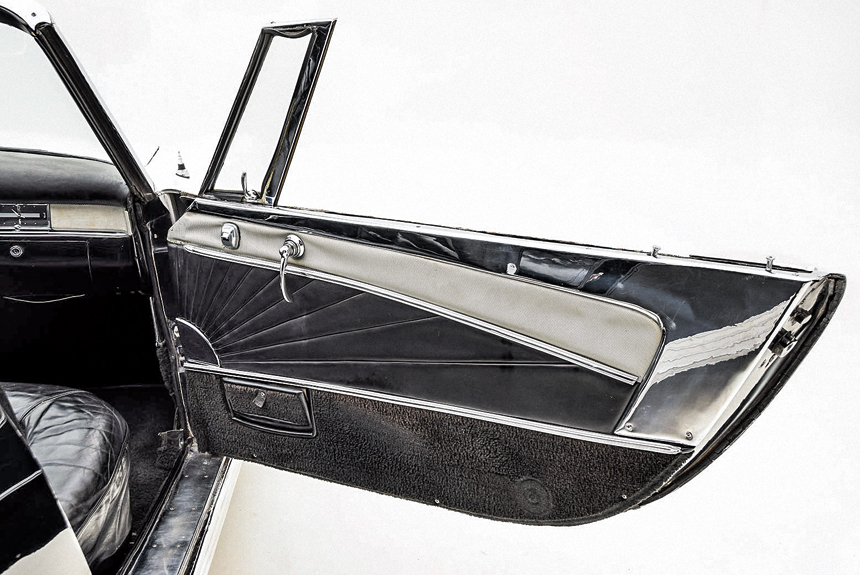
The interior door trim is rather intricate in design.
The timing was poor. Orders for custom bodies from European nobility had all but evaporated and the traditional clientele was gone, so Joseph Jr aimed at servicemen of the occupying forces instead. Ravensburg lay in the American sector by then, and the gamble paid off. Customising cars of every make and model for American soldiers and officers, he became the first man in Germany to work with the new material of fiberglass, and made a great deal of money doing it.
What he did not have was his father’s grounding in the classical era of car design, and his work often came out as an odd medley of unrelated artistic — and sometimes not very artistic — devices. Americans liked it anyway, and some took an Eiwanger creation home with them when their service ended. It was precisely that inventiveness that caught the eye of Brooks Stevens.
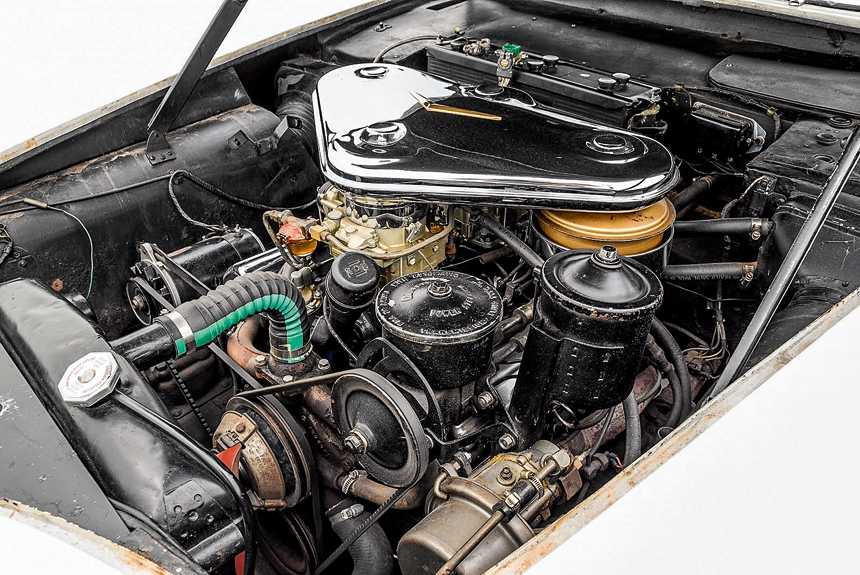
The engine under the hood of the car is entirely standard, identical to that of any other Cadillac model.
Two Cars, and the Hundred That Never Came
The first Die Valkyrie went straight to its client in Cleveland on completion. Metzenbaum was delighted, and announced that he would order a hundred more from the German craftsmen and sell them at a handsome profit. The second Die Valkyrie, built alongside the first, went to the Paris Auto Show.
When the show closed, Brooks Stevens bought that second car from Metzenbaum. Metzenbaum’s enthusiasm for mass production had quickly waned, and Stevens presented the car to his beloved wife, Alice. Mrs Stevens used it actively and intensively for a while, though in the end it took its rightful place in Brooks Stevens’ collection of rare and exceptional cars.
And that is the car in these photographs. Stevens went on making remarkable contributions to car design for the rest of his career. He was the driving force behind the Excalibur project, which produced the world’s first replicar, backed by his elder sons. He performed a brilliant transformation on the Studebaker Hawk, bringing it into line with contemporary fashion, and his portfolio holds several other Studebaker prototypes — among them an exotic station wagon with a sliding roof, so that an upright refrigerator could be carried home in it.
What Became of Brooks Stevens
Brooks Stevens left his mark on the Brazilian Willys passenger cars, and played a crucial part in the long life of the four-door Jeep Wagoneer, which stayed in production with minimal changes from 1963 to 1991. His own journey ended in early 1995, when he died of a heart attack at the age of eighty-four. A couple of years later, as his heirs began auctioning off the collection, the Die Valkyrie was bought by Joe Bortz, the well-known Chicago collector with a taste for “dream cars from days gone by.” That he chose to put the Die Valkyrie up at auction in early September may hint at pressing financial needs.
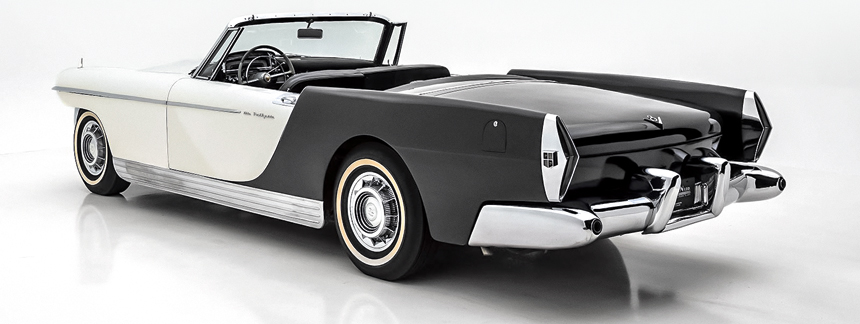
Photo: Sean Dugan, Hyman Ltd.
This is a translation. You can read the original article here: Cadillac Die Valkyrie 1954 года в рассказе Андрея Хрисанфова

Published January 18, 2024 • 7m to read