
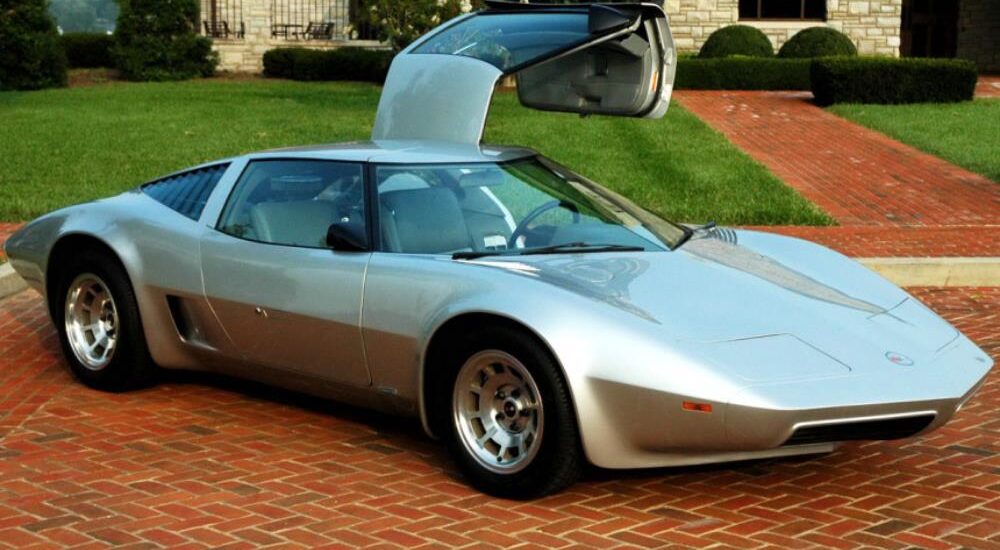

The Corvette’s journey to becoming a mid-engine supercar began in 1962, during the development of its second generation, the Corvette Sting Ray. The vision was spearheaded by Zora Arkus-Duntov, known as the “father of the Corvette,” and his team. Despite not being involved in the very first Corvette roadster, Duntov played a crucial role in the brand’s evolution. The mid-engine car’s sleek design was the brainchild of Larry Shinoda and Anatoli Lapine.

Chevrolet CERV II
CERV II, 1964: 500 hp and four-wheel drive
Ambitious plans were set to place the future Corvette supercar alongside racing legends like the Ford GT40 and Ferrari, both known for their mid-engine designs. The first prototype, the Chevrolet CERV II (Chevrolet Engineering Research Vehicle), emerged in 1964. It had an experimental 6.2L V8 aluminum engine with overhead camshafts and fuel injection, pushing around 500 hp. Notably, it was all-wheel drive, each axle equipped with its own two-speed automatic transmission.

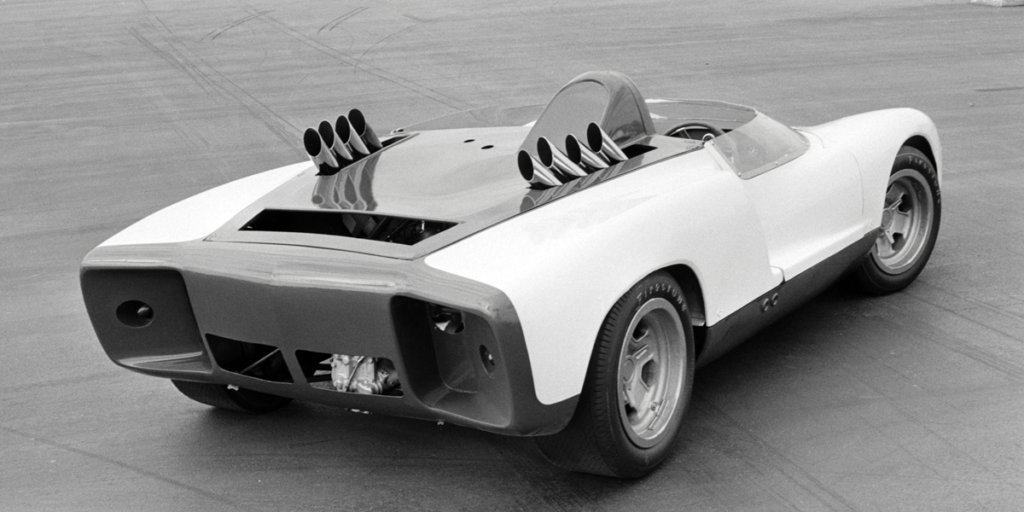
Chevrolet CERV II
Initial tests yielded impressive results: the prototype accelerated to 60 mph (97 km/h) in about three seconds, with a top speed of 322 km/h. Chevrolet’s management did not pursue the project further, however, leaving CERV II as a singular marvel. In 1970 it was repurposed to test the upcoming ZL-1 engine, losing its original powertrain in the process — but thankfully the prototype survives to this day.
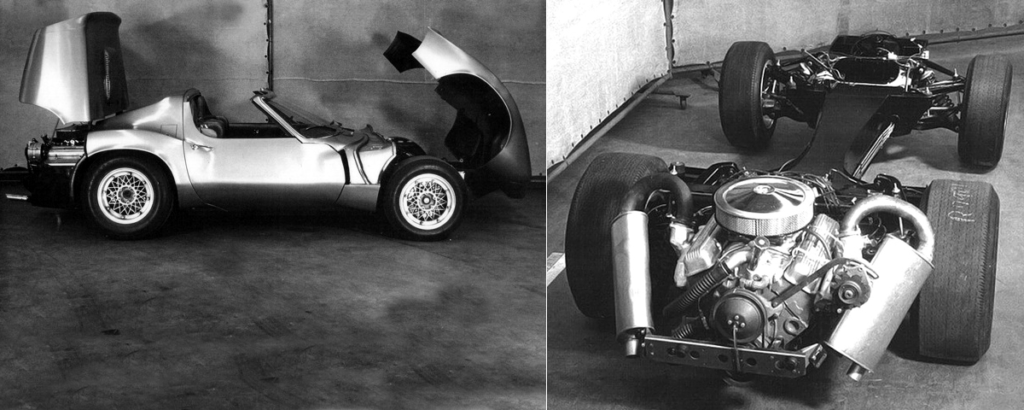
Chevrolet XP-819 and its chassis
XP-819: the rear-engine detour
The XP-819 project ran parallel to CERV II, breaking Corvette conventions with its rear-engined design. Engineer Frank Winchell, inspired by Porsche’s success, led the project, though Arkus-Duntov was initially skeptical. The XP-819, built in 1964, had a backbone frame and a boat’s aluminum V8 engine. Unusually wide tires were fitted to counterbalance the rear-heavy design. Standard Corvette wheels, however, led to a severe crash during high-speed testing, which ended the rear-engine exploration in Corvette’s history.
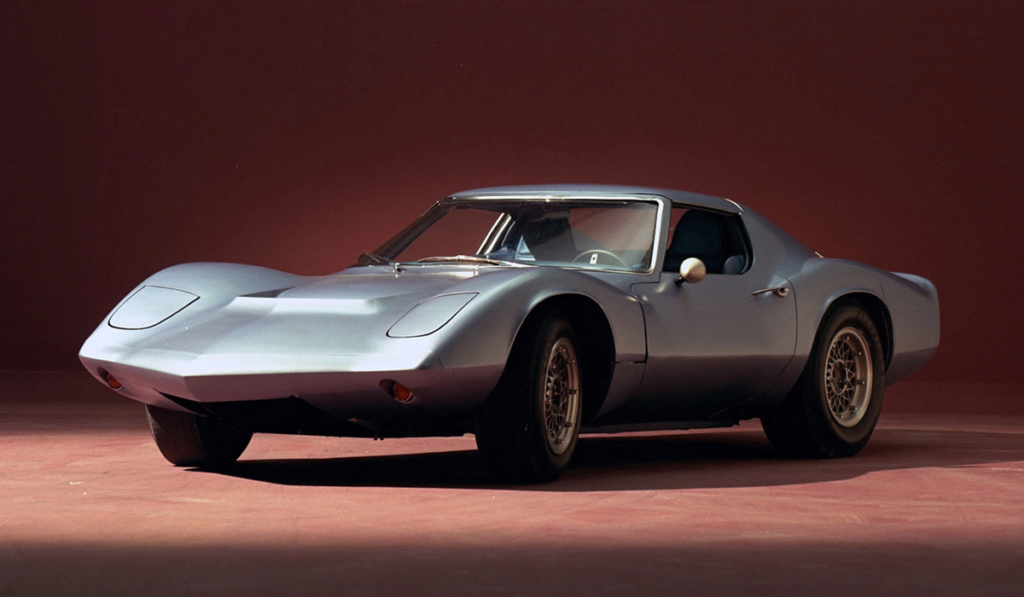
Chevrolet XP-819

Yet this setback led to a breakthrough. Larry Shinoda’s striking design for the XP-819 prototype was later adapted for the third-generation Corvette Stingray. The crashed sports car was eventually bought and restored by an enthusiast, albeit with a standard cast-iron block engine, which gave the XP-819 a unique “wheelie” capability during acceleration.

Chevrolet Astro II
Astro II and XP-882
The mid-engined Corvette concept continued to evolve within General Motors. Engineers and designers experimented with various models and full-scale mock-ups. One significant development was the Chevrolet Astro II (XP-880), unveiled at the 1968 New York Auto Show. This prototype had a backbone frame, common GM suspension parts, a nearly stock 7.0L V8 engine and a fully finished interior, all of which suggested that mass production was within reach. The use of standard components, however — especially the transmission from the front-engine Pontiac Tempest — and inadequate cooling solutions dictated by aesthetics were significant drawbacks.
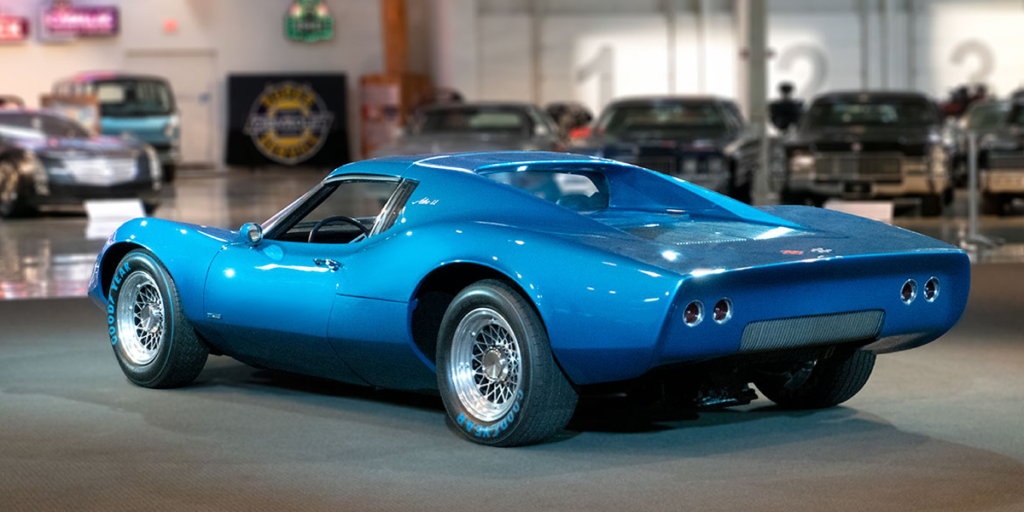
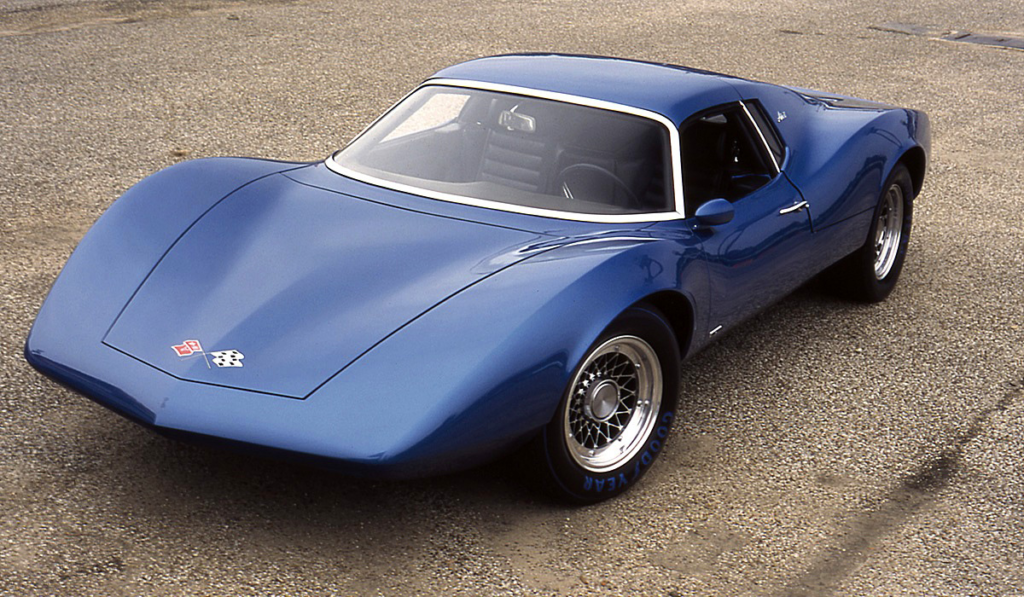
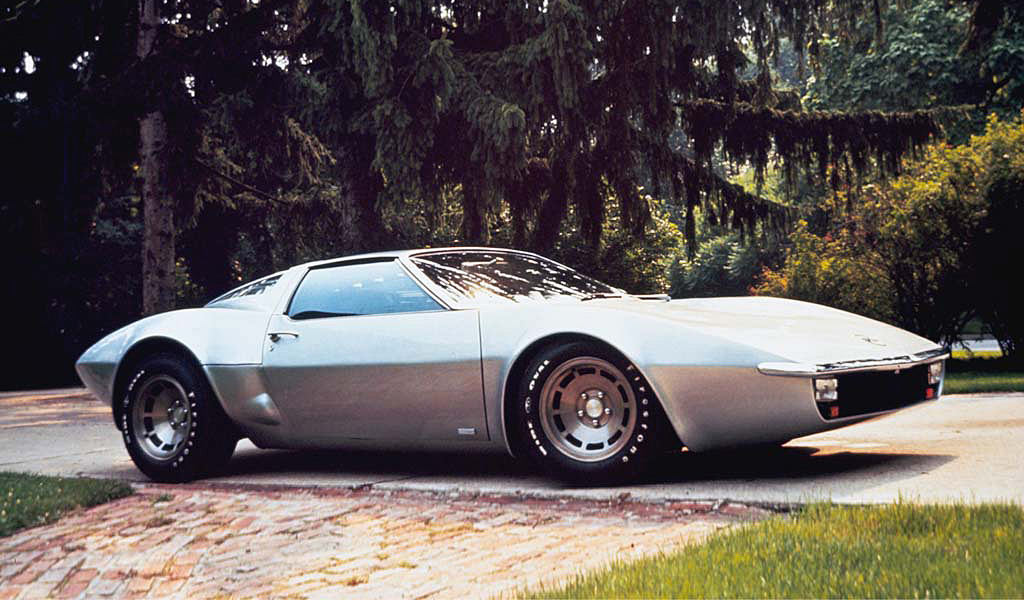

Chevrolet XP-882
Despite these challenges, the Chevrolet Astro II made waves at exhibitions and encouraged continued development of the mid-engined Corvette. In 1969 the Chevrolet XP-882 prototype with an angular design was introduced, featuring a transversely mounted V8 engine behind the seats and a modified three-speed automatic transmission from the Oldsmobile Toronado. The new design received public acclaim, though the existing Corvette Stingray, launched in 1968, was already successful in the market, which delayed the need for a replacement. Mid-engined designs therefore remained a future prospect for GM, leading to further experimental endeavors in the field.
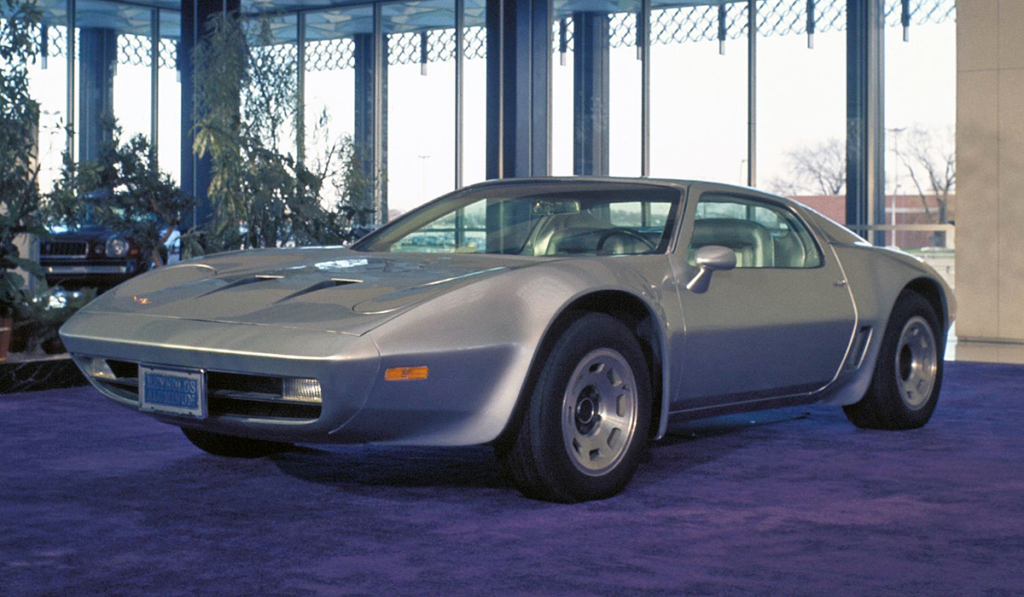
Chevrolet XP-895
The rotary years
Chevrolet’s pursuit of a mid-engine Corvette continued with innovative solutions. The XP-895, built in 1972, showcased an aluminum body crafted by Reynolds Metals Company. This prototype was technically similar to its predecessor, but GM was also exploring the potential of rotary engines, an idea many carmakers were experimenting with at the time.


Chevrolet XP-897 GT
In 1972 the Chevrolet XP-897 GT prototype was born, a compact coupe based on a Porsche 914 chassis with a 180 hp rotary-piston engine and a distinctive body. Fast forward to 1973, and the radical Chevrolet Corvette Four Rotor concept was unveiled at the Paris Motor Show. It had two dual-section engines working in tandem, delivering an impressive 360 hp, and a wedge-shaped body with lifting doors.
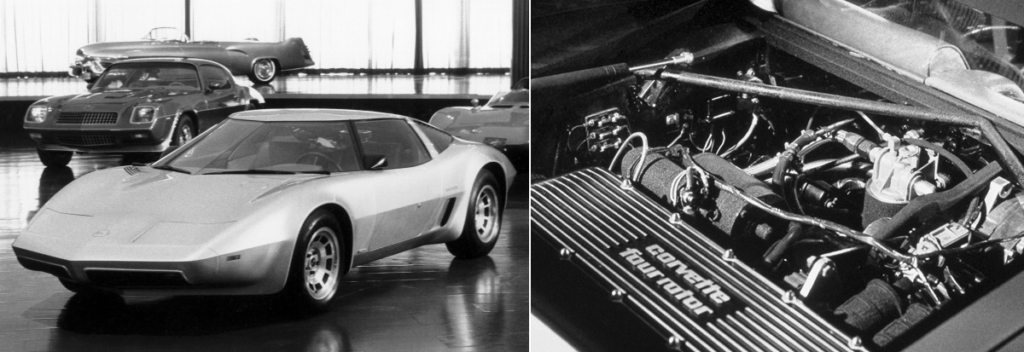
Chevrolet Corvette Four Rotor
Zora Arkus-Duntov, initially against the rotary engine concept, was proven right. Road tests revealed the rotary-powered Corvette’s inadequate dynamics and excessive fuel consumption, and GM abandoned the rotary sports car project.
Chevrolet Aerovette

Chevrolet Aerovette
Aerovette, 1976
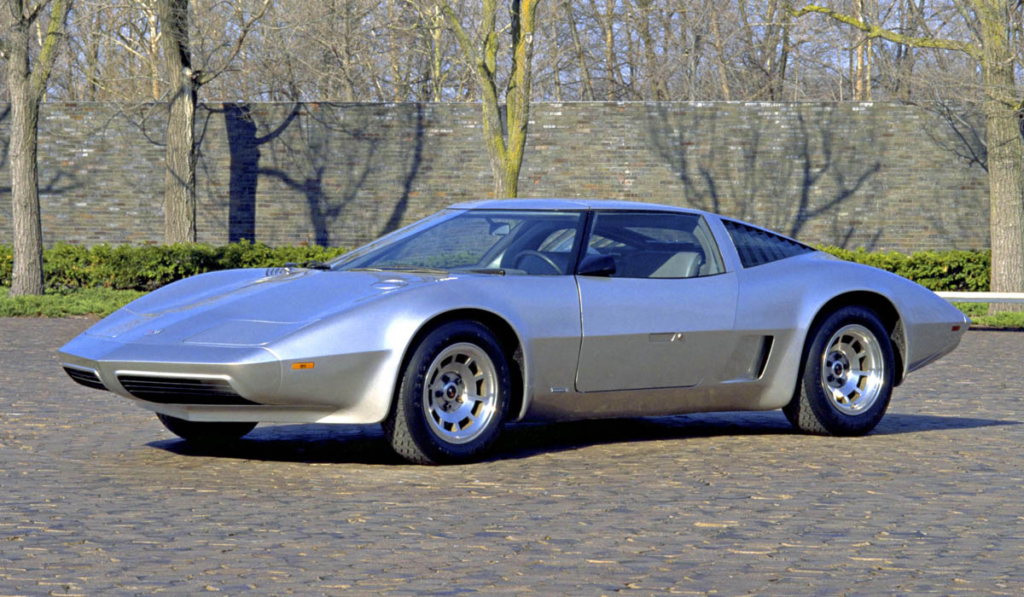
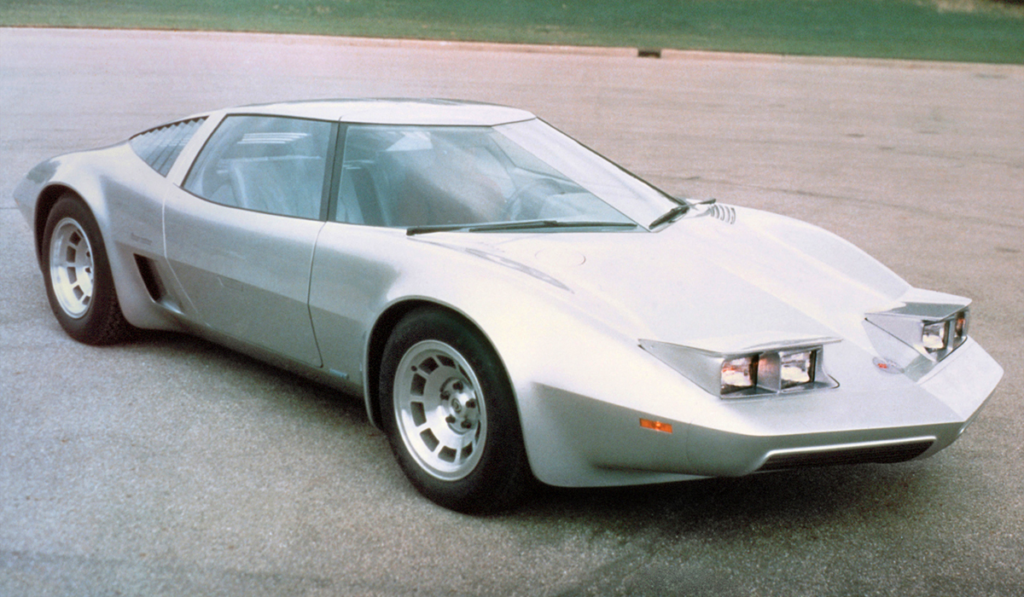
The mid-engine concept found new life in the Chevrolet Aerovette. Introduced in 1976, the Aerovette blended a classic V8 engine with a slightly modified design. Rumors swirled about the Aerovette becoming the 1980 Corvette, but it never materialized, and the fourth-generation Corvette maintained a traditional layout.
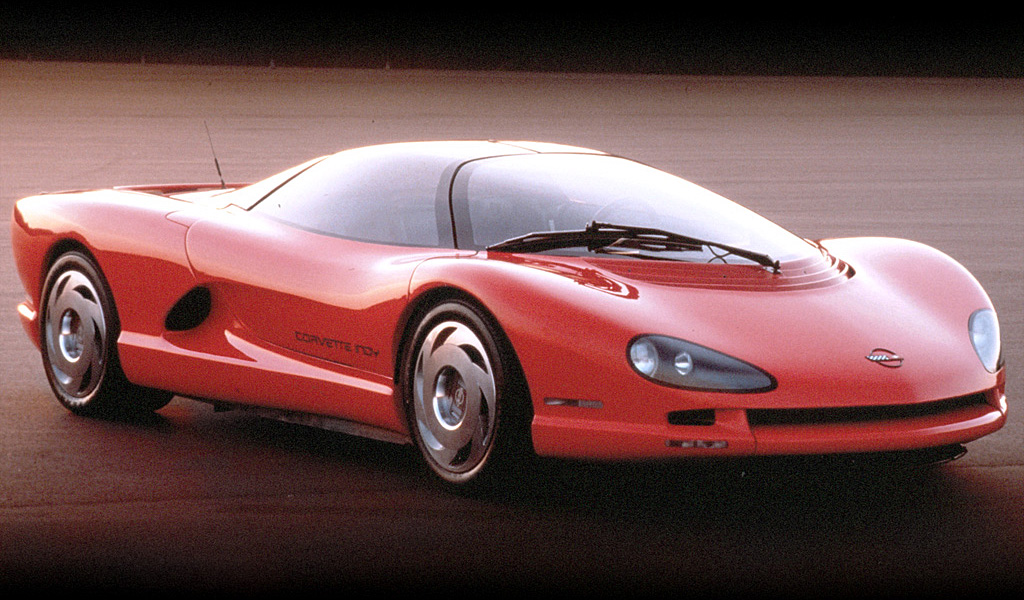
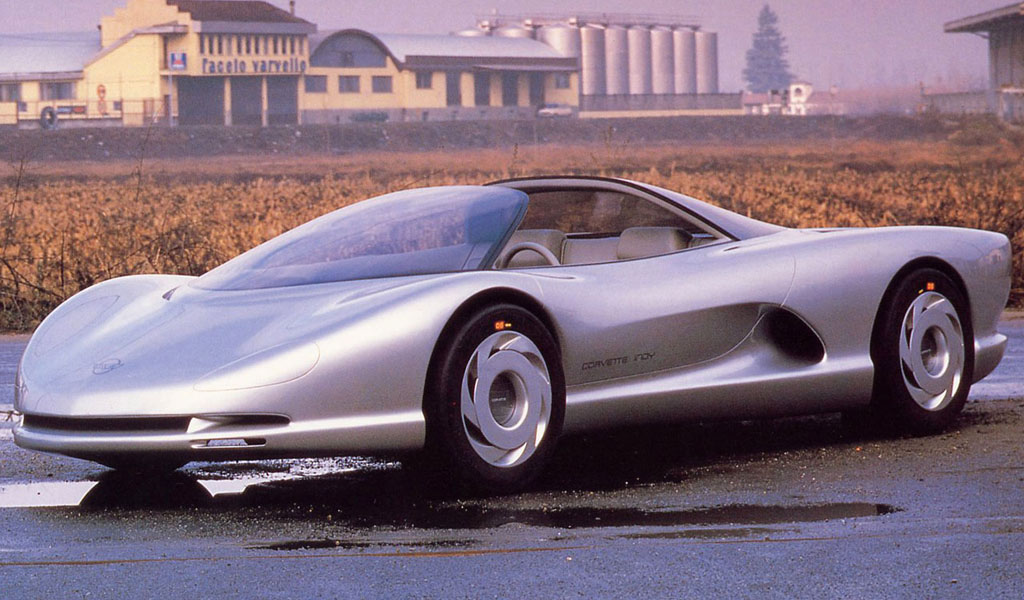
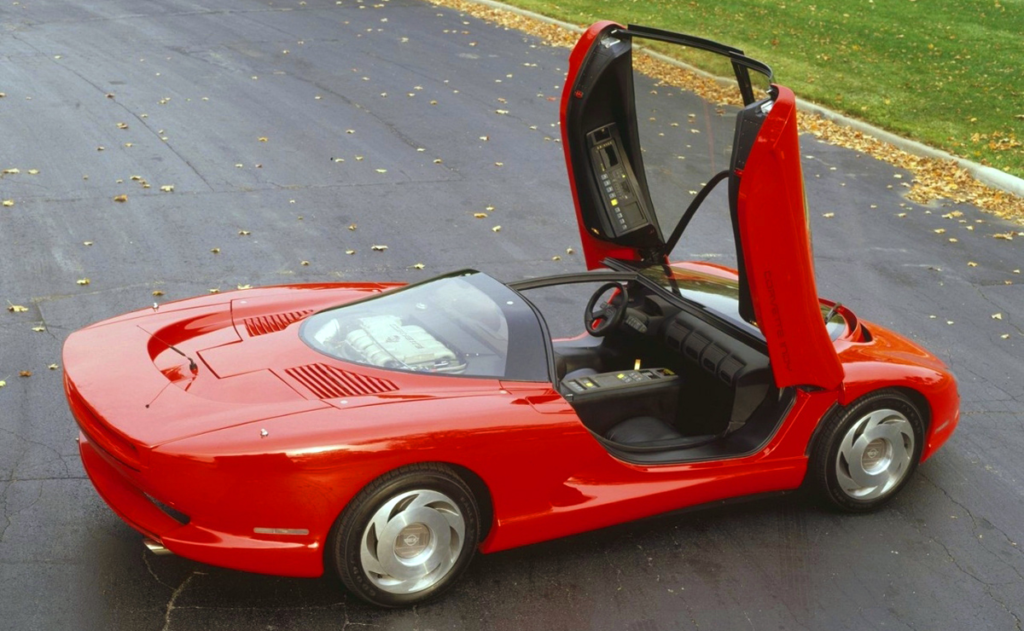
Chevrolet Corvette Indy
Corvette Indy, 1985
The mid-engine theme resurfaced in 1985 with the debut of the Chevrolet Corvette Indy. A technological marvel, it had a composite monocoque, carbon fiber and Kevlar body panels and advanced hydropneumatic suspension. The heart of the Corvette Indy was a 2.65L V8 engine with twin turbochargers, developed by Lotus Engineering. Despite its output of over 600 hp, the Corvette Indy remained a concept, with GM producing three prototypes for exhibition purposes.
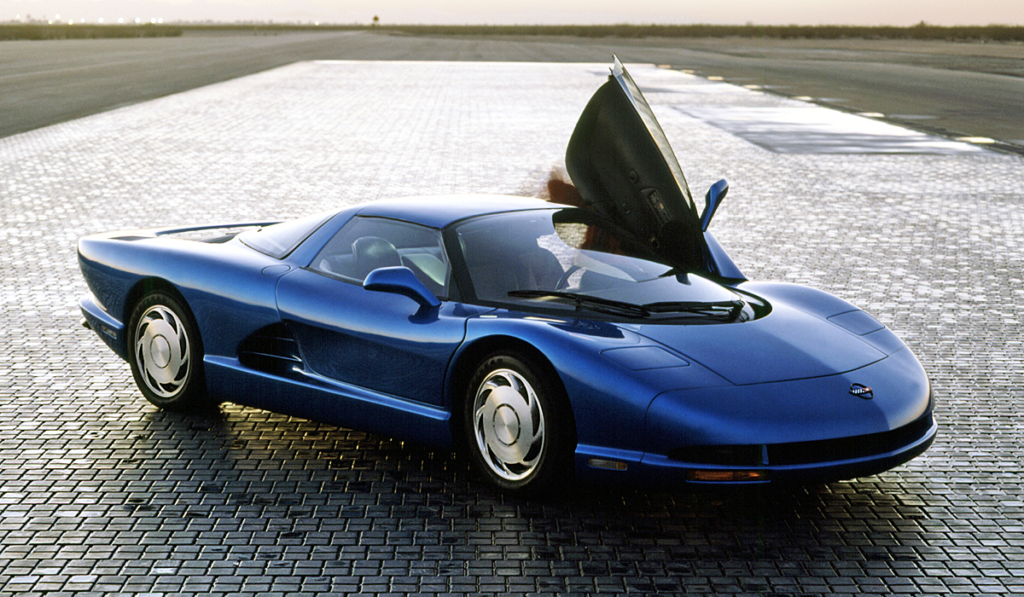
Chevrolet CERV III
CERV III, 1990
In 1990 the Chevrolet CERV III emerged as a direct descendant of the Chevrolet Engineering Research Vehicle II. The CERV III had a highly aerodynamic body and a 5.7L V8 engine with two turbochargers, producing 650 hp and reaching speeds of 362 km/h. It showcased a six-gear transmission system combining a Hydramatic “automatic” with another two-speed gearbox, all-wheel drive with an inter-axle differential, and dual brake discs on each wheel.
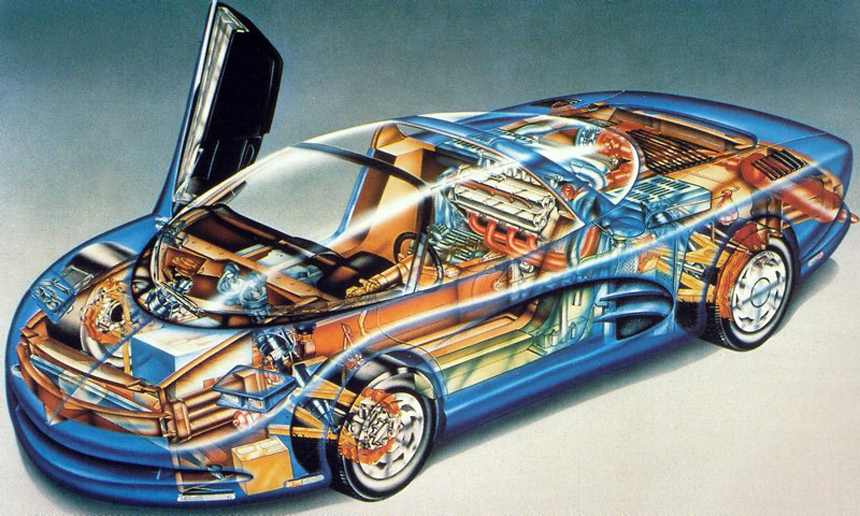
Chevrolet CERV III
Despite its groundbreaking features, the CERV III remained a prototype, with a production cost estimated at around $400,000 in the early nineties. To this day it stands as the last mid-engine Chevrolet, and while camouflaged prototypes with forward-shifted cabins have been spotted over the years, none have made it to production: the sixth (2004) and seventh (2013) generation Corvettes retained the classic layout.

Chevrolet CERV III
Photo: autowp.ru | GM Company
This is a translation. You can read the original article here: Среднемоторный Chevrolet Corvette: 57 лет экспериментов

Published February 15, 2024 • 6m to read