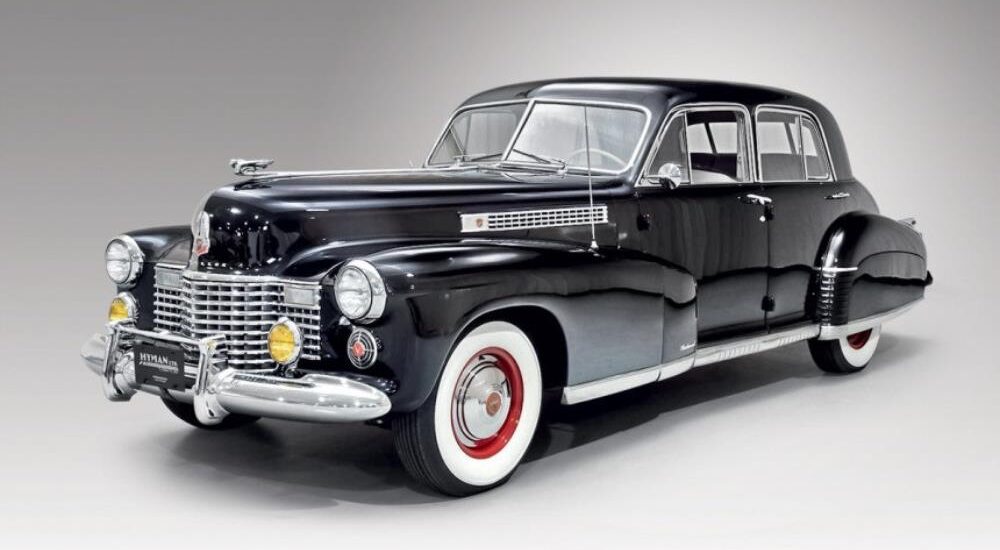

In the 1941 model year, Cadillac, a marque synonymous with luxury, offered its clientele eight models with limousine bodies. Here, we explore the smallest of these distinguished vehicles.
Eight limousines, and the smallest of them
Unlike the other limousines of 1941, which were built on extended wheelbases of 3454.4 mm for the Series 75 or 3505.2 mm for the Series 67, the model we’re discussing was designed on a more compact scale. Those larger vehicles could effortlessly accommodate a pair of folding seats behind the front seat and a glass partition with an electric window, which made them true limousines. Dubbed the “Imperial Division,” that feature allowed the rear-seat “emperor” to isolate themselves from the chauffeur. When the partition was included, the front seats were upholstered in black leather rather than fabric — reflecting the prestige of the passengers rather than the modesty due to the driver.
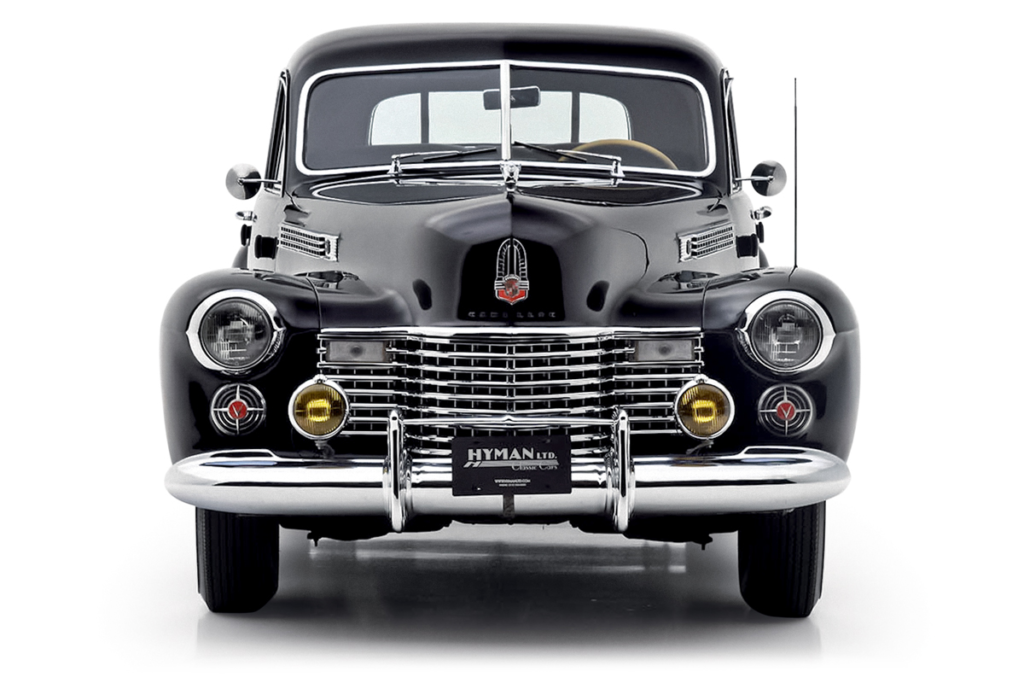
The frontal solution for all Cadillac cars in 1941 was uniform. Decorative covers with a red center, located below the headlights, cover the sockets provided in the front for additional fog lights. On this example, such were not specified when ordering, so the car was subsequently mounted with the “fog lights” of the previous year. The rear-view mirrors here are their own, native; they were installed directly at the factory for an additional charge of four and a half dollars for each.
Sedan, imperial sedan, or formal sedan
If a client opted only for foldaway seats, or for none at all, the vehicle was classified simply as a sedan, designed for five to seven occupants and equipped with foldable footrests in the passenger compartment. Those features could also be integrated into the “imperial sedan”, or even into the formal sedan, which had a solid roof in place of the third row of windows, if they were specified at the time of order.
What makes this car unusual
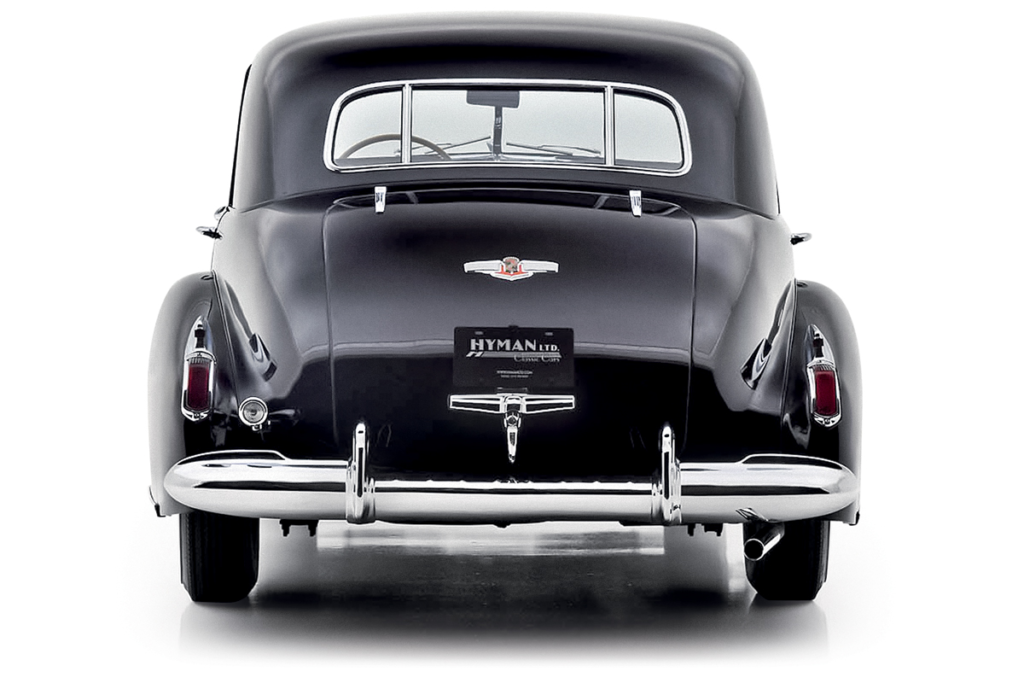
The example on our page, however, stands out. First, it keeps the standard wheelbase of 3.2 meters typical of 1941 Cadillac models, which leaves a shorter cabin that could not accommodate foldaway seats. Second, both the front and the rear cabin sections are upholstered in gray ‘Bedford’ cord fabric, with no leather anywhere. And yet it has the distinctive lift-up window inside the cabin. Does that make it an “Imperial Sedan”?
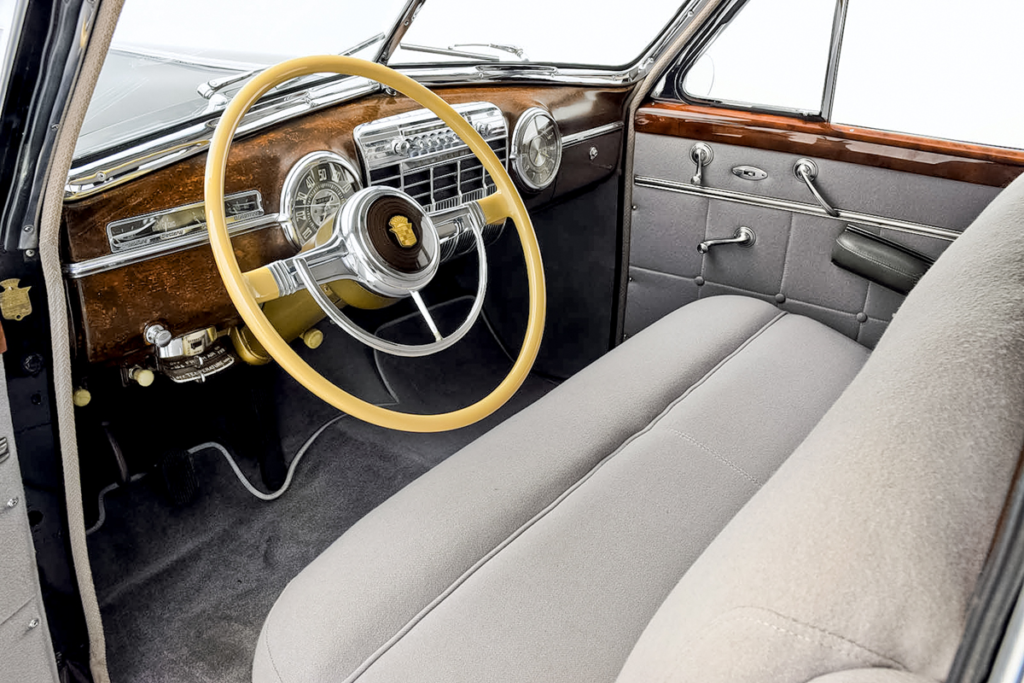
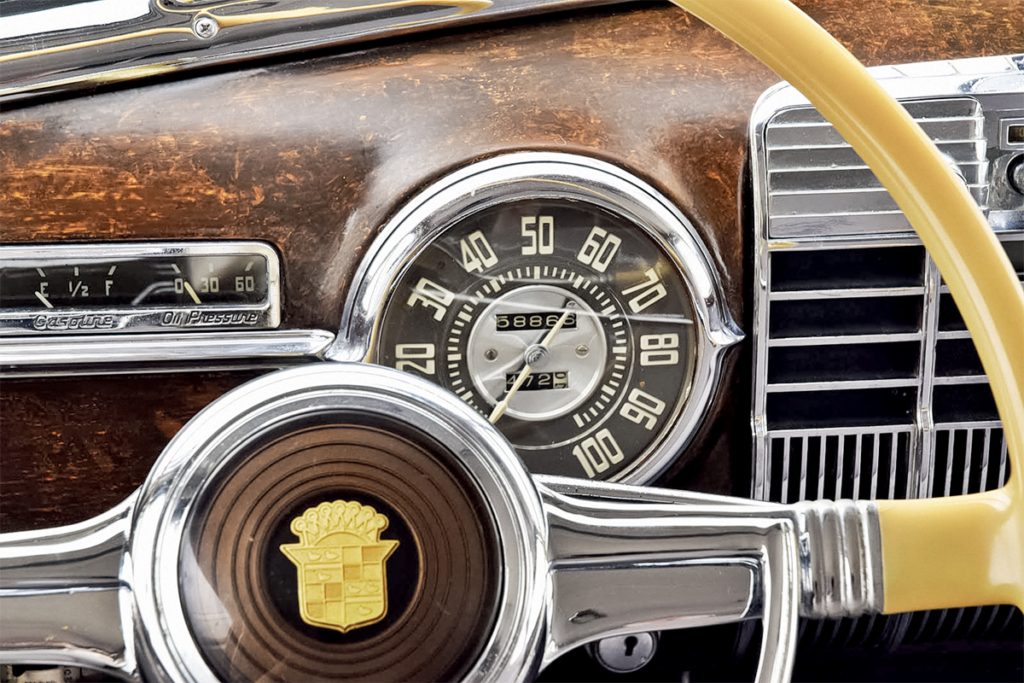
The front compartment has the same Bedford fabric trim as the rear. Under the dashboard, to the left of the steering column, is the “world’s first and only automatic heater-defroster”, as this accessory was proudly described in the company catalog: “With it, you won’t even need to install air conditioning.”
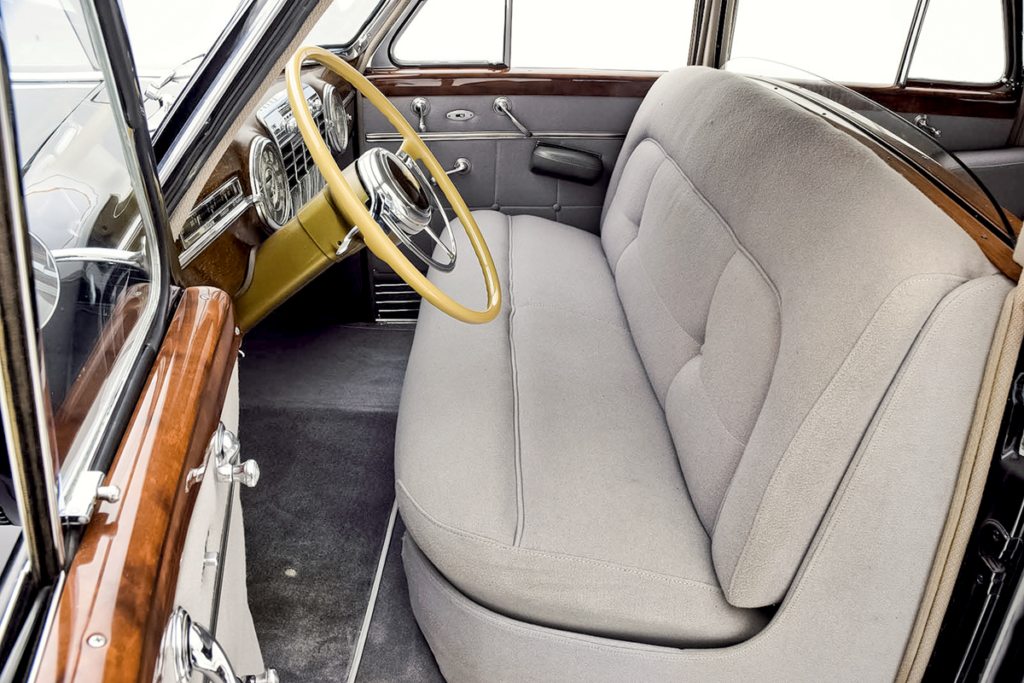
Indeed, this variation of the Series 60 Special is catalogued precisely as such: a unique modification of an already unique base model. Remarkably, in the 1941 model year Cadillac offered no other models under the index 60 at all.
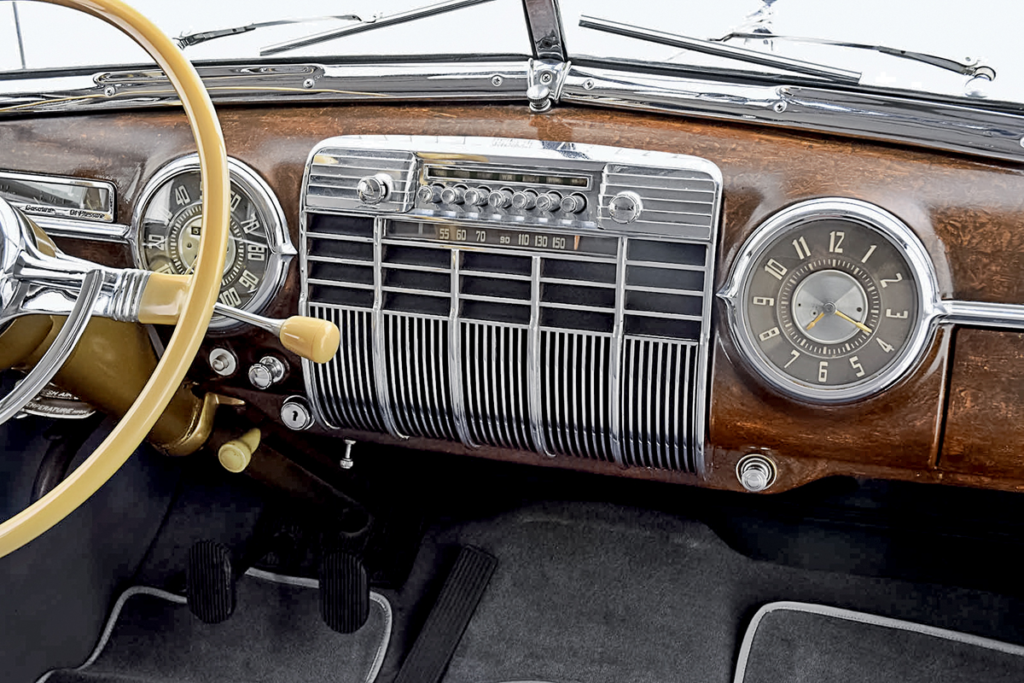
The speedometer and electric clock frame the grille that covers the loudspeaker of the seven-tube built-in radio. The left vernier is manual tuning, the right is the volume control; the leftmost button is a three-position tone control, the rightmost button is a switch, and the five between them are fixed settings.
Where the Series 60 came from
Introduced in 1935, the “Series 60” initially pertained to Cadillac’s 16-cylinder models. By the following year the naming system had evolved, and the 60 index was assigned to Cadillac’s most affordable vehicles, while the junior brand La Salle was denoted by the number 50. The 60 Special arrived in 1938 as a standalone model, distinct in nearly every aspect from the other Series 60 vehicles.
A frame built for one model
Envisioned as a luxurious and exclusive vehicle for a discerning buyer, the 60 Special resembled neither the contemporary Cadillac models nor the externally distinct La Salle models, also offered by General Motors. It was based on a lowered frame with a double bend on the long sides, which eliminated the need for running boards and allowed a sleeker, more integrated design. The frame was specially designed for the 60 Special, with an X-shaped cross member to enhance torsional rigidity, and it lowered the car’s overall height by 3 inches (76.2 mm).
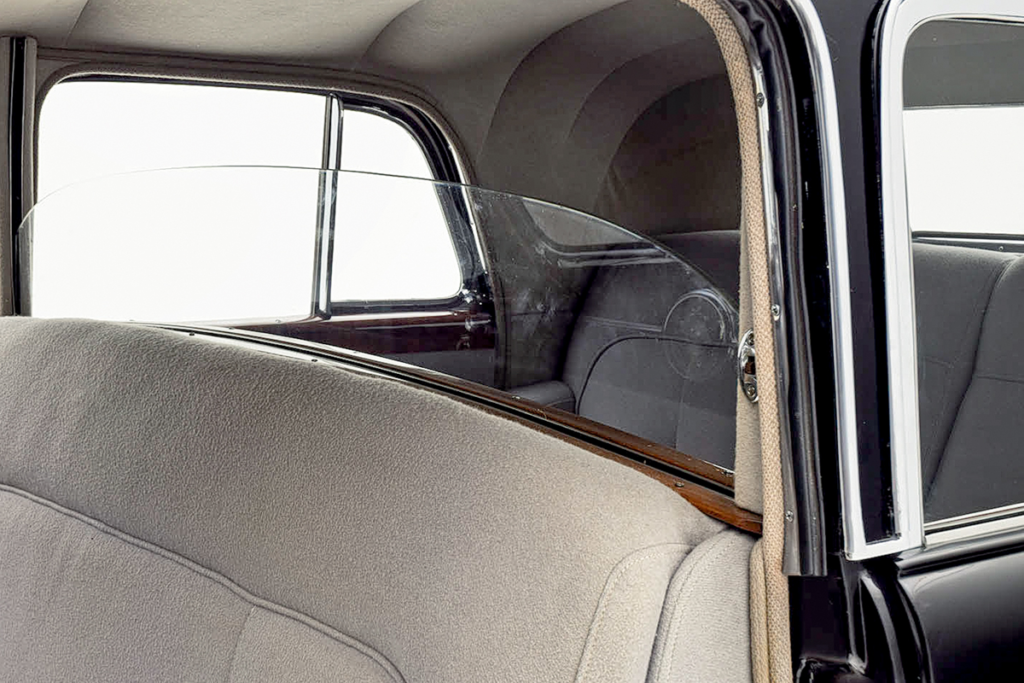
The natural walnut wood trim on the upper part of the back of the front sofa is due to the presence of an internal partition in the cabin
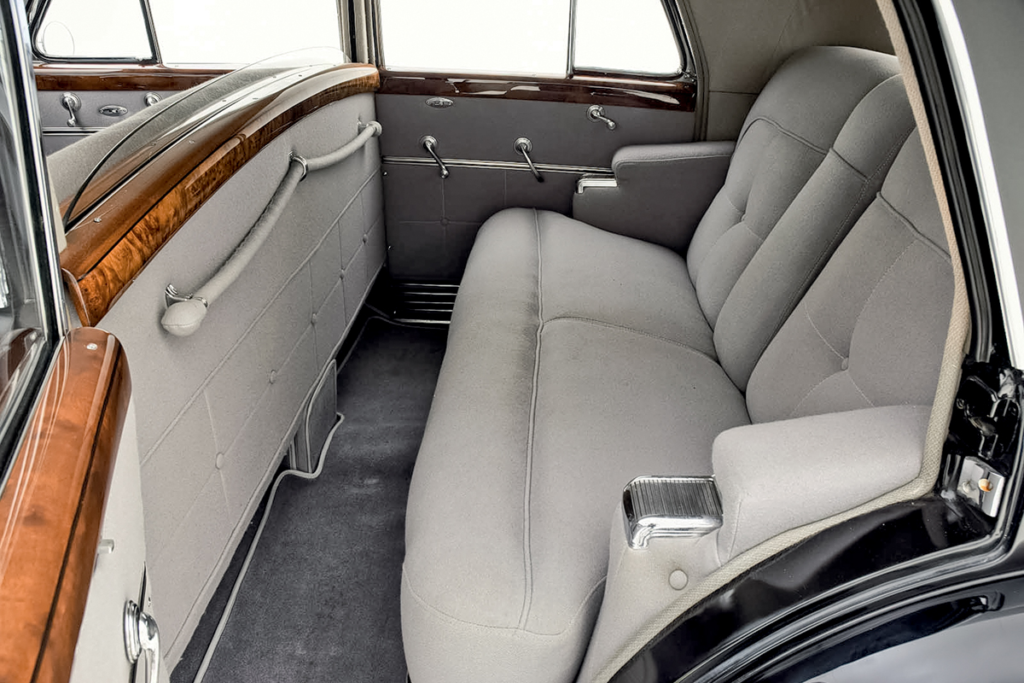
The ends of the soft grab handle are decorated with pompoms. The ashtray, cigarette lighter and glass partition up/down button are hidden under a sliding cover in the armrest.

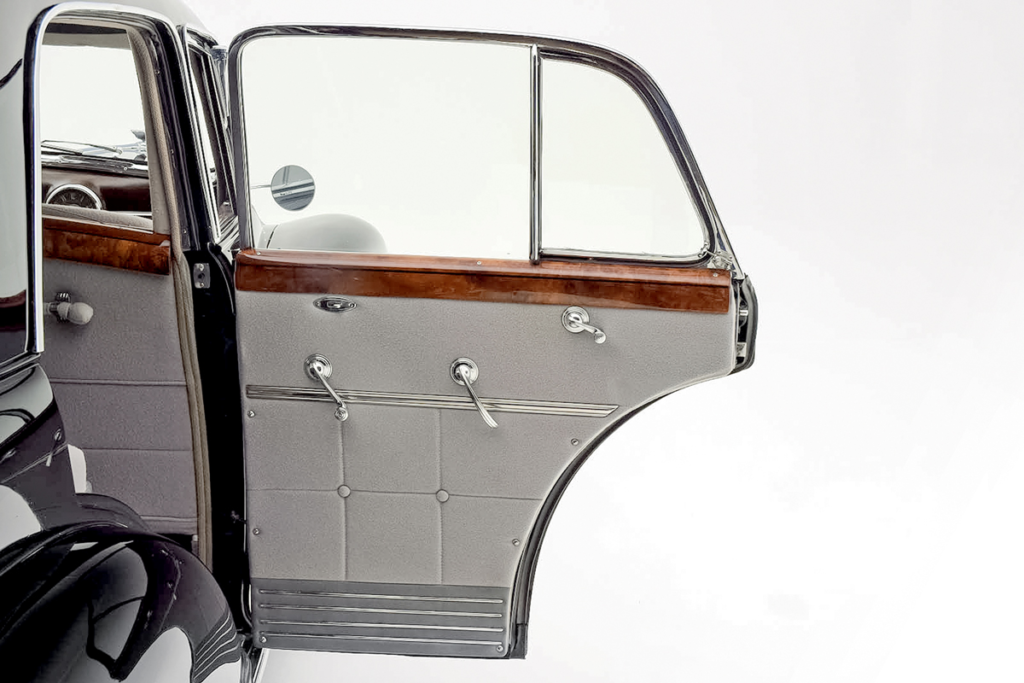
The rear doors on the 60 Special are wider than even those of the Fleetwood 75 series limousines, at 895 mm. But the rear armrest, which protrudes significantly into the doorway, still restricts access.
Bill Mitchell’s design
The project was spearheaded by the young and gifted William Larry Mitchell, known simply as “Bill.” Appointed head of Cadillac’s Artistic Design department in 1935 at the age of 23, Mitchell was a perfect fit for GM’s newly formed “Section of Aesthetics and Color,” which was looking for fresh, creative talent. Under his direction the design of the 60 Special broke away from the prevailing smooth, rounded, “aerodynamic” style of the era, introducing the more angular “suitcase fender” look that would become iconic in American automotive design.
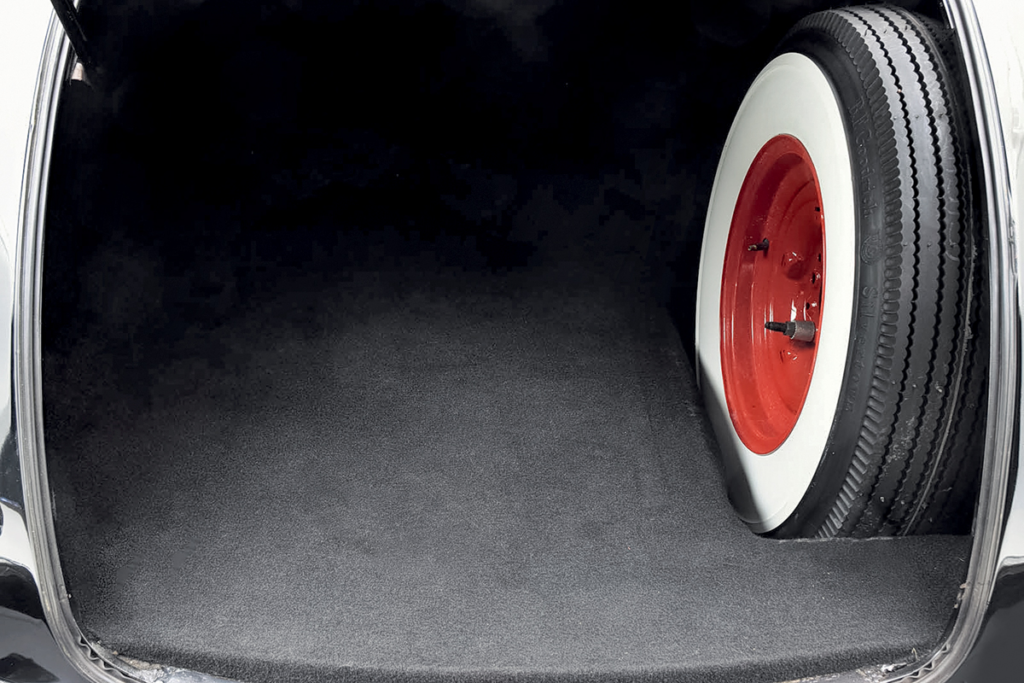
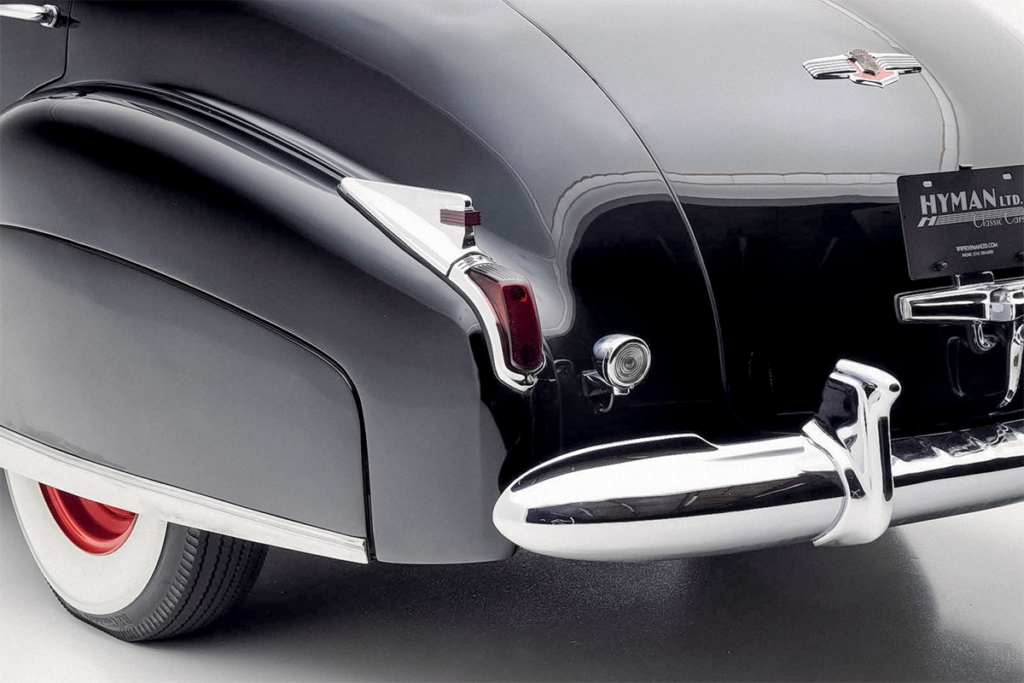
The spare wheel narrows the already not very spacious trunk, but the fashion of placing the wheel on the outside has not yet returned
How it sold, and what changed
The innovative design was well received, and the 60 Special outsold all other Series 60 models in 1938. By 1939 the Series 60 was discontinued, and all eight-cylinder models had a uniform, more pointed front design with elongated headlight housings. The 60 Special kept its distinctive protruding trunk, shiny window frames and lowered silhouette. That same year the glass partition version was introduced, alongside an option for a sliding roof — some compensation for the lack of an open model.
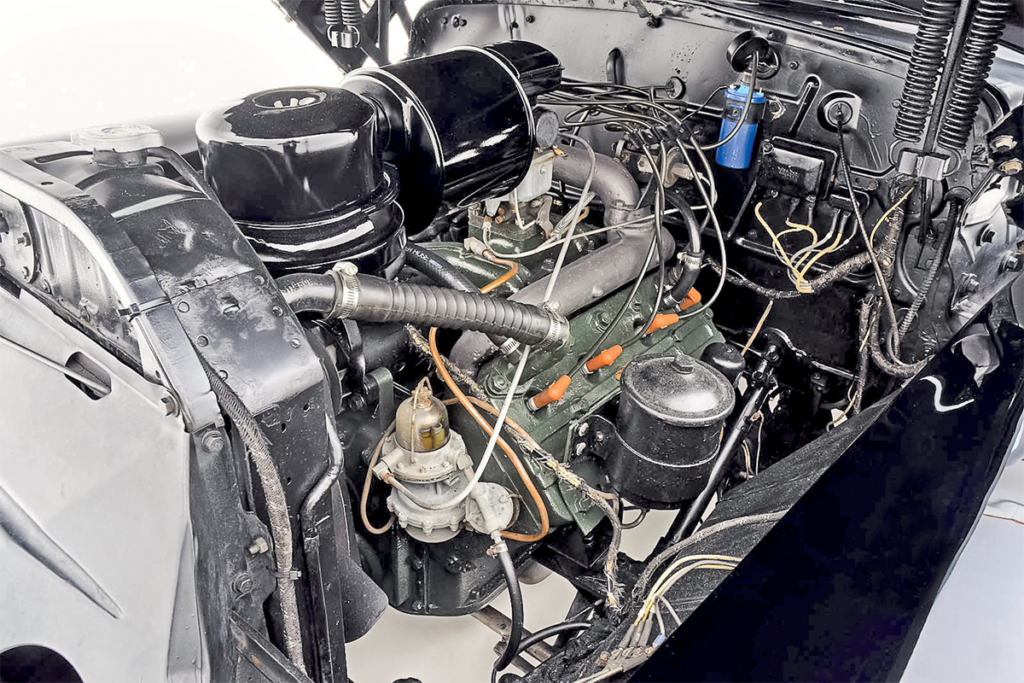
The engine is the same as every other 1941 Cadillac: a V-shaped, eight-cylinder, with a working volume of 5179 cc, and a power of 150 hp at 3400 rpm.
Two hundred cars
In total, only 200 units of the model shown here were produced; even fewer, just 185, had a roof hatch in 1941. The following year the Fleetwood 60 Special lost its distinct body and moved closer to the Cadillac Series 61 and 62 of 1942. As compensation its wheelbase was extended to 3378.2 mm, which increased rear cabin space, and the body was adorned with shiny decorative overlays. The 1942 model year was cut short by the U.S. entering the war, with only 1875 units produced, of which 190 had the internal lowering window.
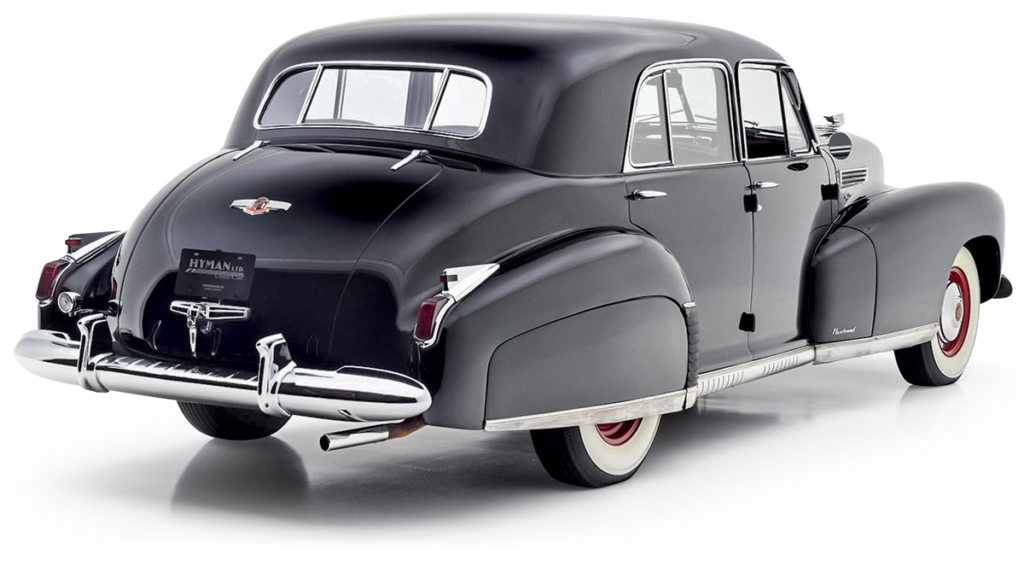
The Fleetwood 60 Special is the only Cadillac model that did not have running boards from the very beginning of its production. It has a characteristic three-box body with a pronounced trunk
William Mitchell, the visionary behind the Fleetwood 60 Special, eventually rose to become GM’s chief stylist, and many more fascinating and beautiful vehicles were created under his leadership.
Photo: Sean Dugan, Hyman Ltd.
This is a translation. You can read the original article here: Один из двух сотен: Cadillac Fleetwood 60 Special 1941 года в рассказе Андрея Хрисанфова

Published February 06, 2025 • 6m to read