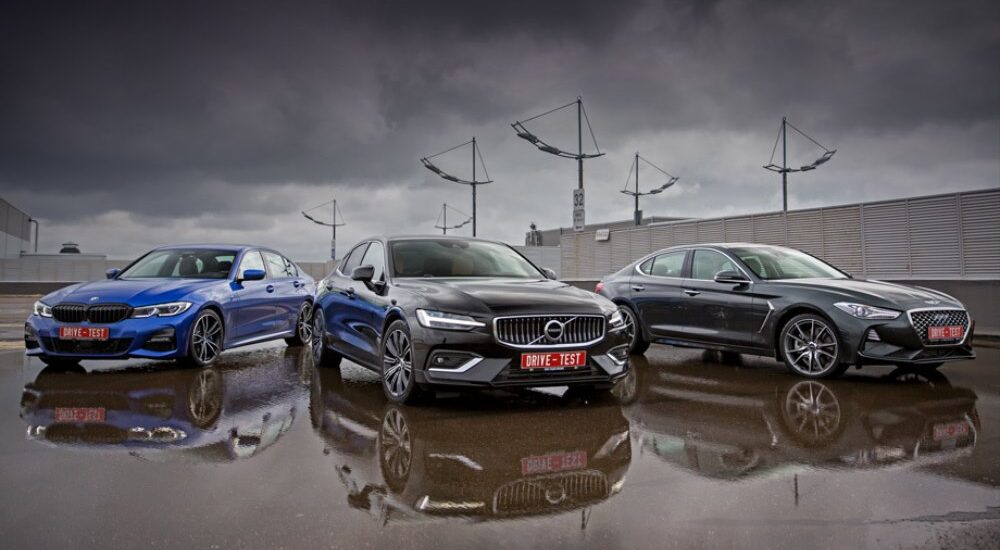

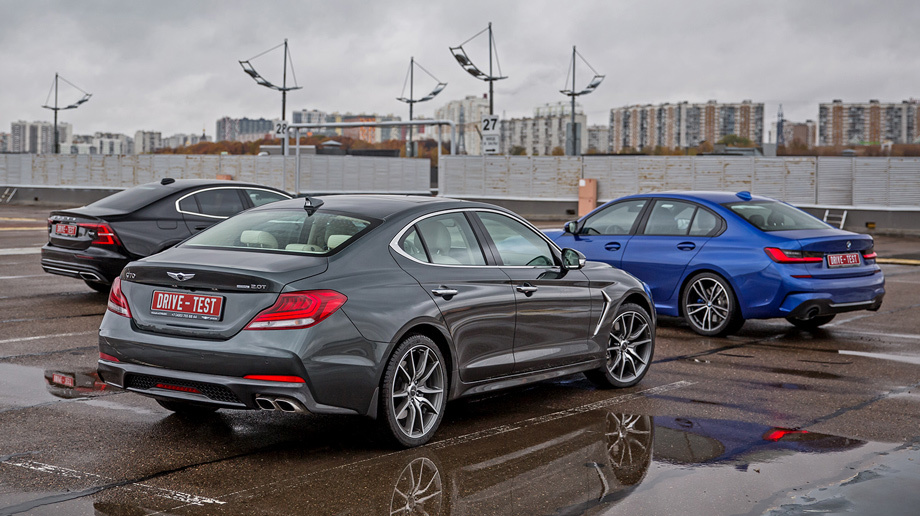
The 190-horsepower Volvo S60 T4 is shaping up to be the most popular version of Volvo’s latest sedan. To see how it stacks up, we pitted it against two very different rivals: the BMW 3 Series, the benchmark premium sports sedan, and the Genesis G70, a genuinely affordable alternative. Since the base gasoline 320i wasn’t yet available for this test, we used a 320d with a standard chassis and minimal options — though for photos, we swapped in a 330 with the M Sport package, since the 320d’s test car wore controversial body wrap. That M Sport car also comes in handy later when we talk about the more “driver-focused” side of the Volvo.
Exterior Design and Build Quality
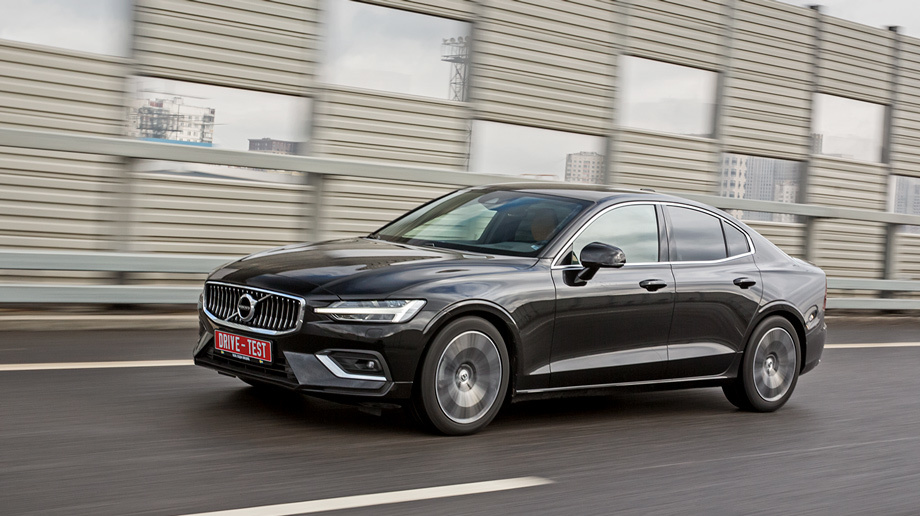
For my taste, the most attractive member of the “Sixty” family is actually the V60 Cross Country wagon. Next to it — and even next to the BMW or the less conventional Genesis — the S60 sedan looks a little plain and secondary. The one eye-catching detail is the headlight signature: a pattern that reads as either two tridents or the letters “E3”. The doors need a firm, deliberate slam to close properly the first time. Inside, the design is conservative, but material quality is genuinely impressive: the wood trim on the front panel is standard, not an option, though the air vent controls feel expensive but a bit cheap to the touch.

Interior, Controls, and Dashboard Layout
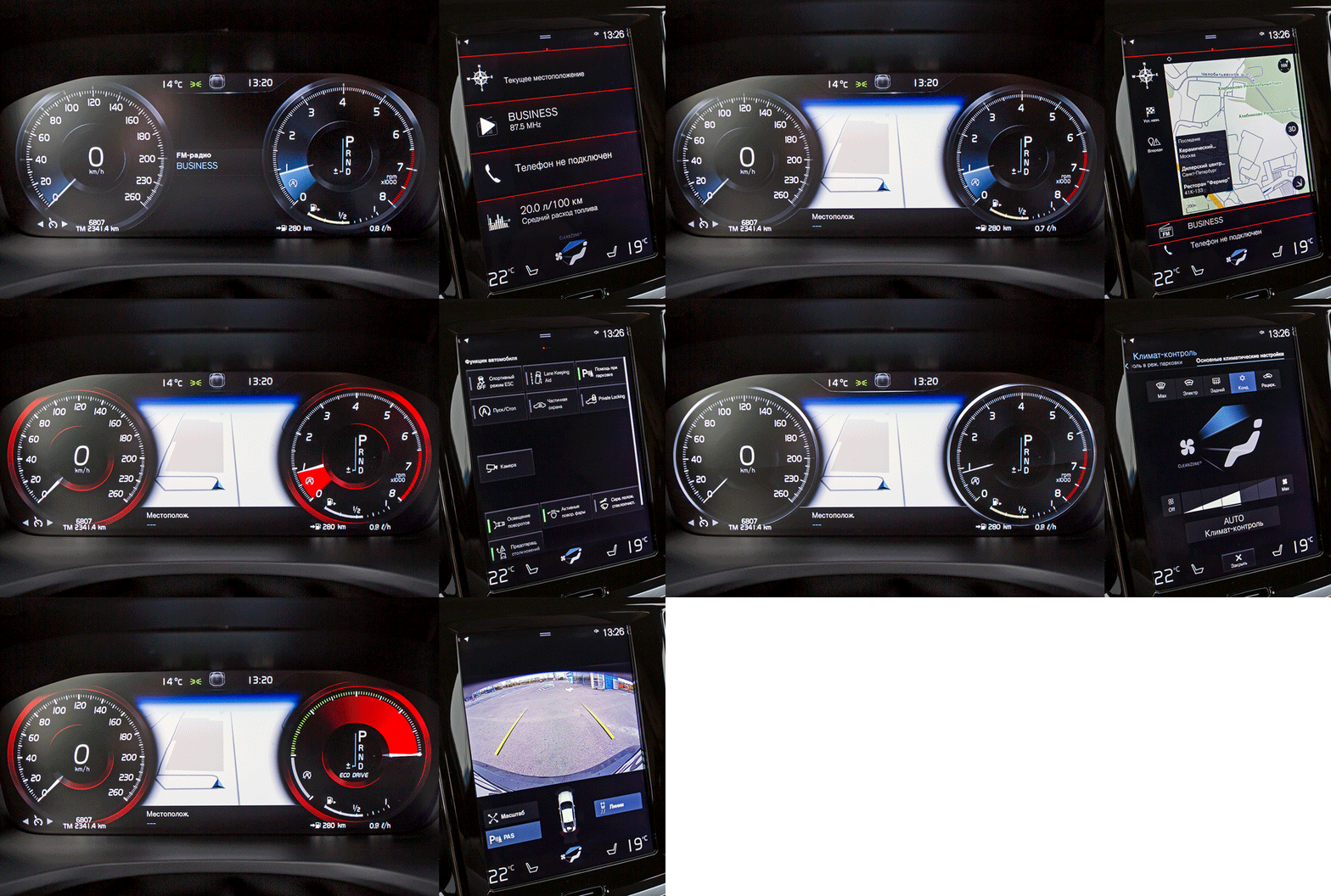
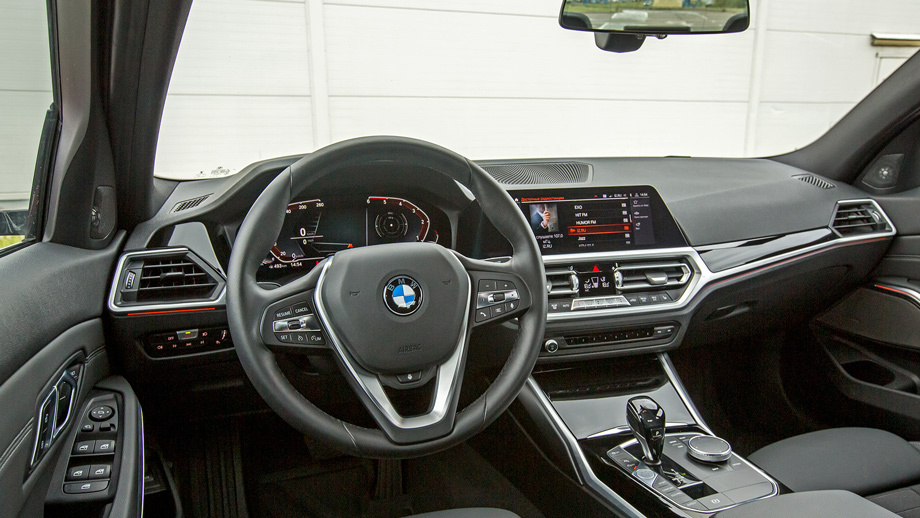
After the BMW’s fussy dashboard, the Volvo’s simple digital instrument cluster is a relief — it mimics analog gauges with needles, and there’s little to get used to. The one exception is the touchscreen’s outsized role in controlling secondary functions: turning on seat heating or air recirculation takes at least two steps, which pulls your attention off the road. That’s not ideal from a safety standpoint.

Unlike its rear- and all-wheel-drive rivals, the Volvo rides on a front-wheel-drive platform with a transversely mounted engine. That layout likely explains why the S60 feels roomier inside than the other two. Someone taller than 185 cm can sit behind a driver of the same height with a small knee gap, even if their head brushes the headliner.
Cabin Space and Trunk Comparison
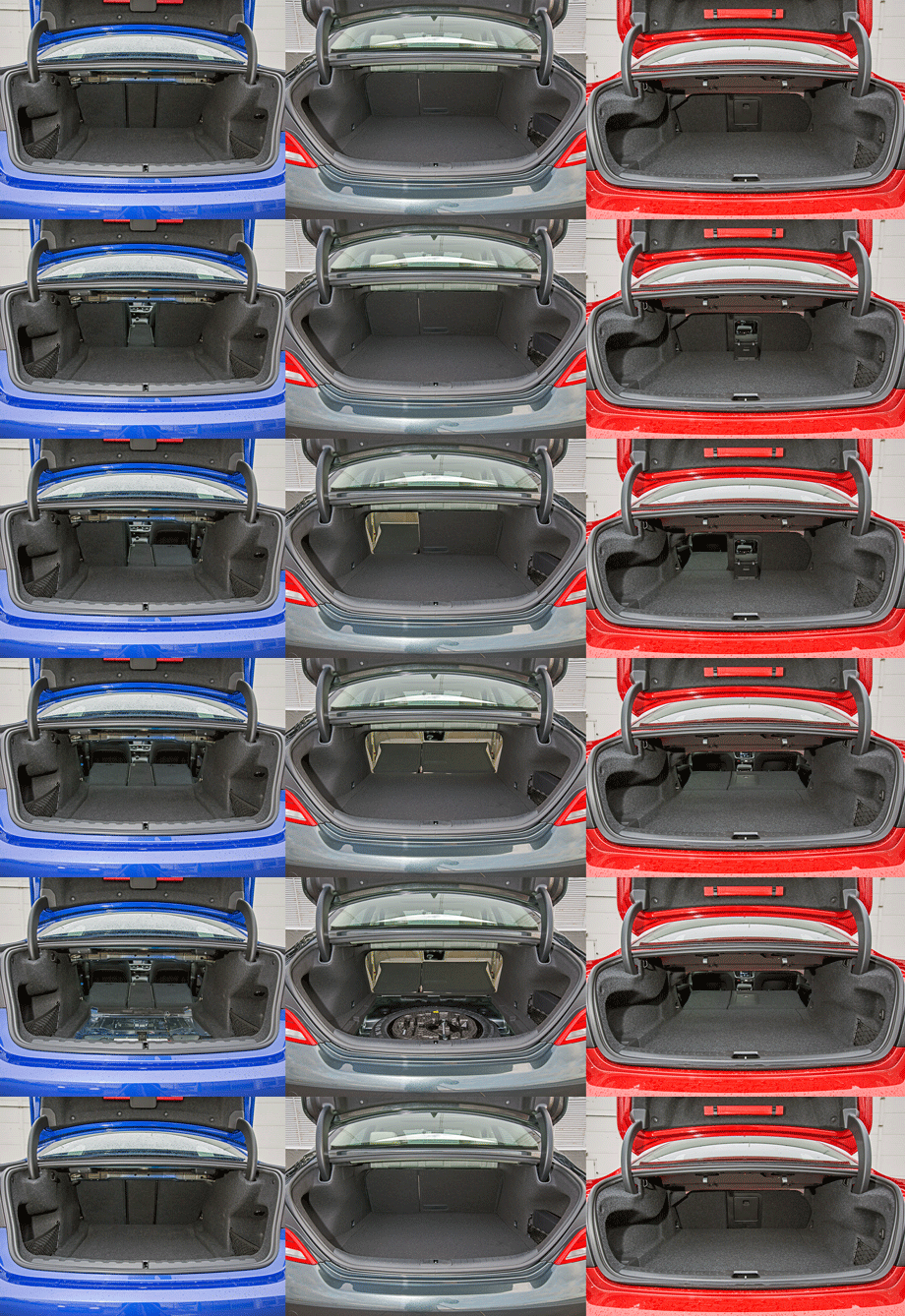
Space and access vary noticeably across the trio:
- BMW 320d – Harder to get into due to a high door sill, with tighter legroom; taller passengers’ legs press into the seatback.
- Genesis G70 – Genuinely cramped, with little room for feet or knees, and the smallest, hardest-to-load trunk with cheap trim.
- Volvo S60 – The roomiest cabin of the three, though its trunk lands in second place simply because a power-operated lid isn’t offered.
I like how the S60’s engine fires up with a twist of a knob on the center console. The BMW’s start button sits in the same spot but blends in among similar-looking controls, while the G70 hides its button behind the steering wheel. Oddly, though, turning the Volvo’s knob the other way doesn’t shut the engine off. The mechanical automatic gear selector with fixed positions may not be the trendiest design, but it leaves no doubt about which gear is engaged. All three cars use floor-mounted accelerator pedals.

Volvo S60: Driving Impressions
Surprisingly, the S60 drives with a distinctly BMW-like character. Traction control is precise, gear shifts aren’t overly soft, and the suspension handles bumps with resilience, soaking up short waves without letting the body sway. Steering weight builds noticeably with speed, and responses to steering inputs are quite accurate — though reactive force drops off in sharp turns. Body roll is minimal. Overall, the driving character leans toward “sporty.” The trade-off is noise: the S60 is the loudest car here, with noticeable tire roar on coarse asphalt from as little as 40 km/h. You’d be forgiven for double-checking you’re not in a BMW.
BMW 320d: Driving Impressions
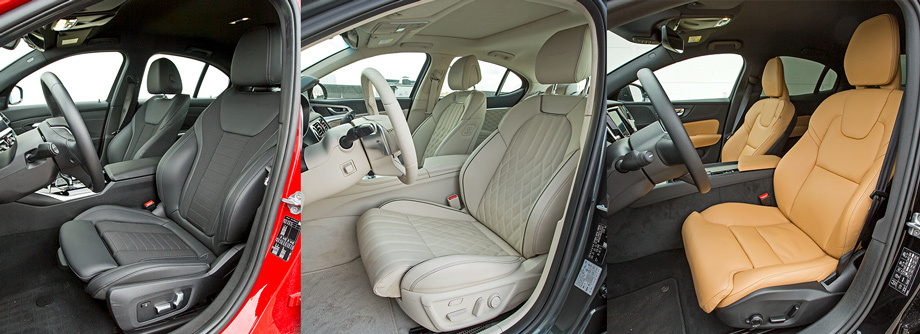
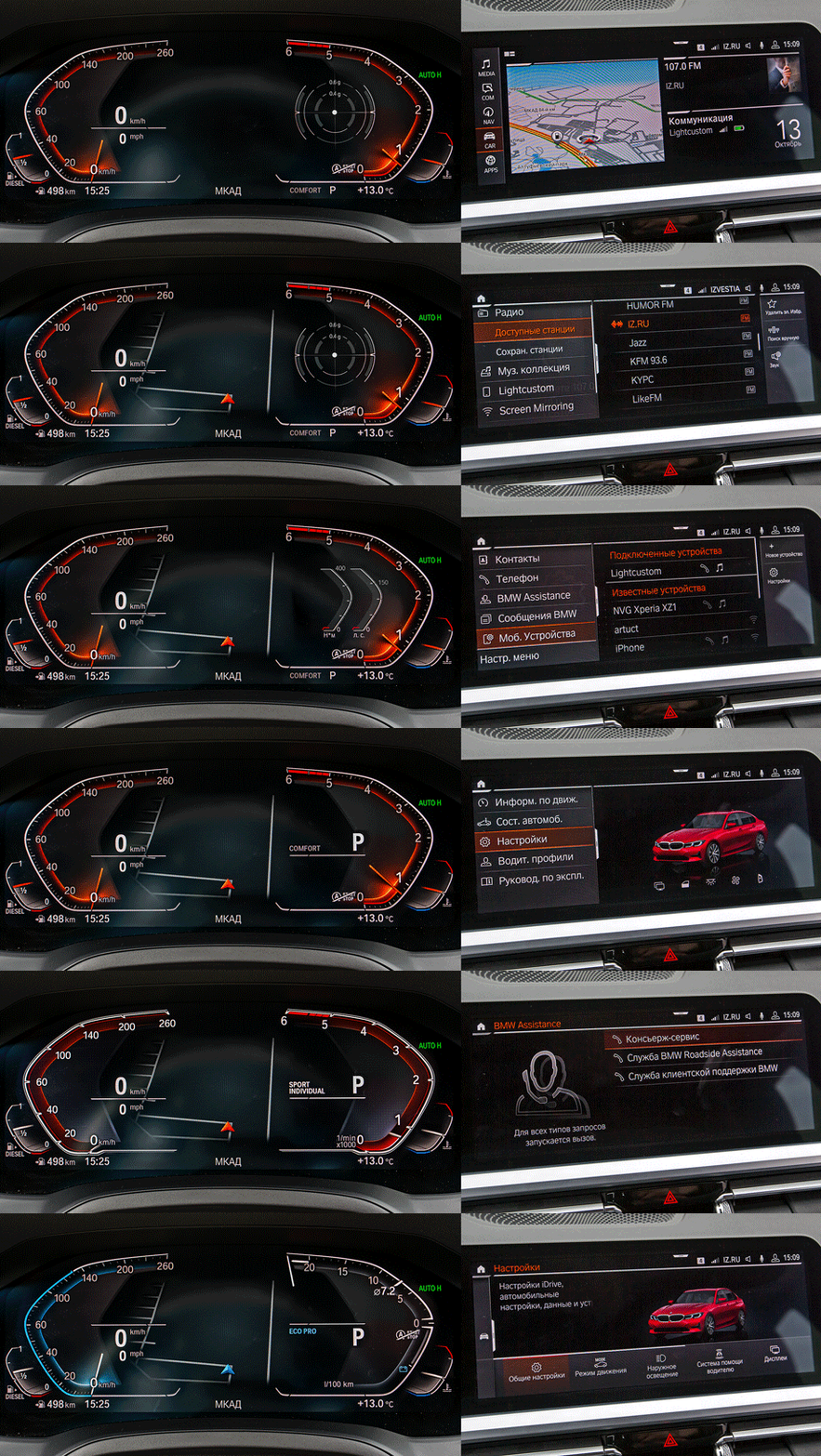
A genuinely Bavarian sedan is a treat for anyone who loves driving. You sit low in a snug seat that lacks adjustable lumbar support but lets you narrow the side bolsters on the backrest — standard equipment, along with a smaller-diameter, thicker-rimmed steering wheel than the Volvo’s. The left elbow feels a little cramped, though, and the optional digital instrument cluster is inconvenient enough that we’d recommend a head-up display instead. By comparison, the G70’s graphics and functionality are simpler.

Despite matching the Volvo’s 190 hp, the BMW’s diesel four-cylinder delivers 100 N·m more torque. The only complaint is a half-second lag off the line. Once it’s moving, though, the 320d pulls ahead of both rivals, propelled by strong, quiet torque delivery. The automatic transmission isn’t completely seamless, but its shifts are smoother than the S60’s or G70’s. Leave the start/stop system enabled and the diesel shudders on restart, almost like a worn engine mount. Braking feel is similar between the BMW and Volvo: short pedal travel with a firm, resilient bite.
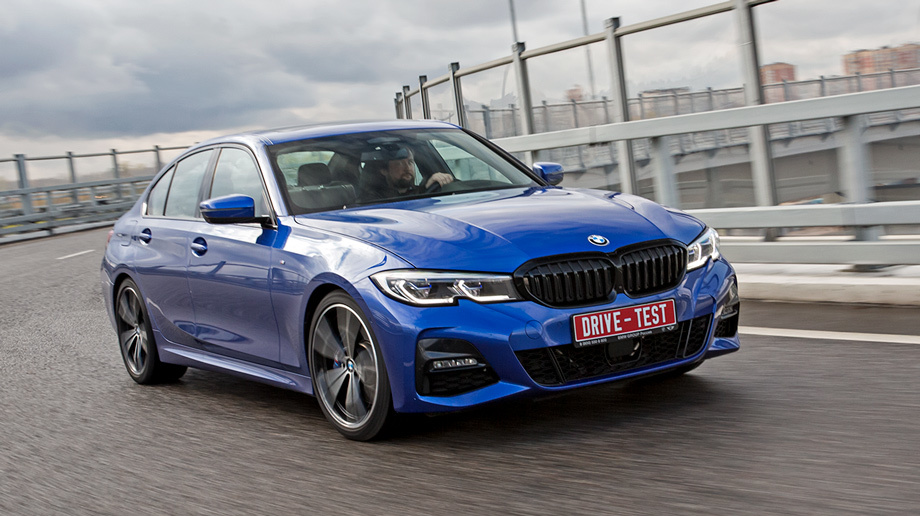
Though the steering wheel takes nearly three full turns lock-to-lock, it never feels sluggish, and it isn’t overly light either — on the 3 Series, effort builds up more logically, including through corners. The consistent steering weight makes it hard to feel the onset of a slide, but that point is still far away in normal driving; the balance between understeer and oversteer is finely tuned. As you’d expect, that more engaging handling comes at the cost of ride comfort, which trails the S60’s.
The base suspension, with amplitude-dependent shock absorbers, is well-judged for the sporty role it’s designed for — it won’t let big potholes pound through the cabin. The ride is dense and firm, but don’t expect the all-road comfort of the previous-generation 3 Series. Even with the optional acoustic front glass fitted to our test car, the 3 Series isn’t especially quiet: street noise gets in, as does roar from its Run Flat tires — the only such tires in this test. Still, the main takeaway holds: even the base 320d strikes a coherent balance as a sedan with clearly sporty intentions, exactly as you’d expect from a BMW.
Genesis G70: Interior Details
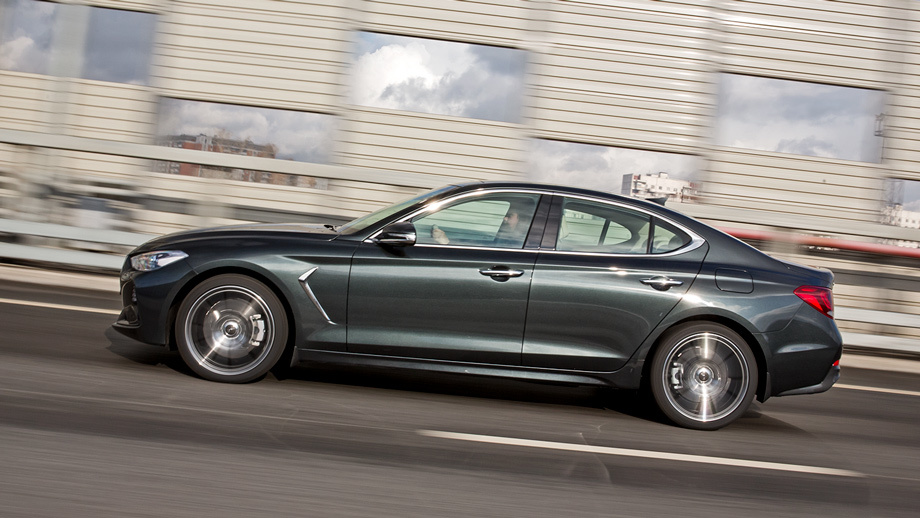
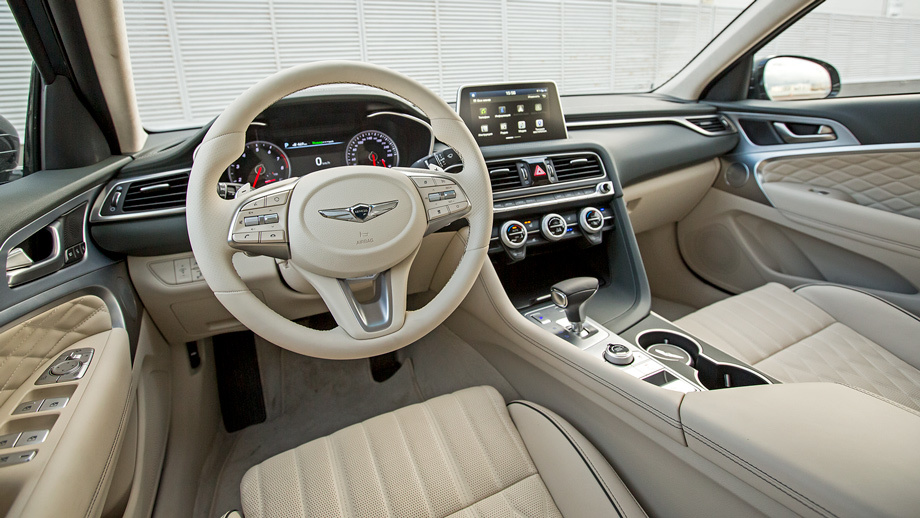
Genesis positions the G70 as the car that thinks outside the box, and there are a number of genuinely original touches to back that up. The brand doesn’t skimp on chrome trim, including on the door handles, though it does save money on keyless entry sensors — they’re fitted only to the front doors. Even the base model gets faux-leather trim on the front panel, though that can’t quite distract from the cheap-feeling silver interior buttons and cold blue ambient lighting. The door frame metal is left exposed, but the doors themselves shut with a more solid, upscale sound than either the Volvo’s or the BMW’s, both of which close with a cheap clatter that’s oddly out of place.

The steering wheel is surprisingly basic, with slippery drum-style controls for the audio system and trip computer. That said, the richly quilted seat allows for a more comfortable driving position than the flatter, more hunched profile you get in the Volvo. And a few features are exclusive to the G70 in this group:
- Ventilated front seats
- Electrically adjustable steering column

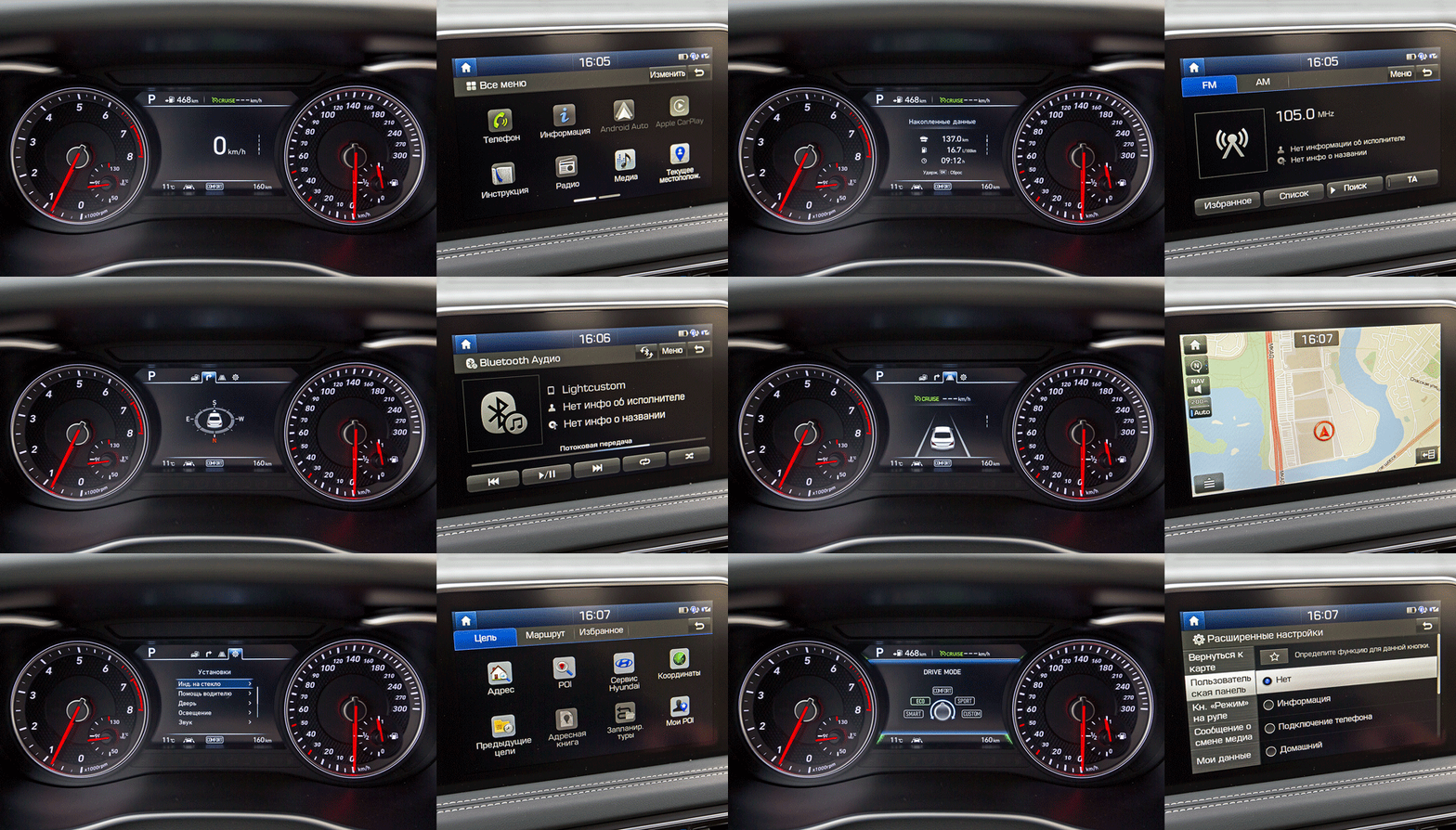
Screen graphics are on the dull side across the board. The Volvo’s infotainment system is the more functional of the two touch-based setups, while the BMW is actually easier to operate thanks to its rotary joystick controller, which means you don’t need to reach out and poke at touch-sensitive fields while driving. The optional 3 Series system (version 7.0) also deserves credit for genuinely useful real-time traffic and congestion data.
Genesis G70: Driving Impressions
For the first few kilometers, the G70 feels like the most comfortable car of the three. It’s quiet around town — provided you switch off the simulated engine sound piped through the speakers (there are three different options to choose from). The adaptive shock absorbers do a good job soaking up small road imperfections and settling body movements over undulations. That impression fades on longer drives: highway speeds bring in noticeable aerodynamic noise, so it’s not actually quieter than the BMW overall, and larger potholes on rough regional roads produce enough low-frequency body motion to unsettle sensitive stomachs.
If Genesis was aiming for comfort, it’s odd that the G70 got such a quick steering rack, needing only 2.3 turns lock-to-lock. There’s no relaxing on a fast highway — you have to constantly correct the trajectory, since the car darts off-line the moment you touch the wheel. On top of that, the steering picks up some parasitic kickback through uneven corners, and the rim transmits shocks straight from the road surface. It all feels a bit fussy and high-strung.
Throttle response is similarly disjointed. Tip in gently and the car moves off eagerly, but try to accelerate from a rolling start and there’s almost always a hesitation first. The automatic gearbox stubbornly holds higher gears and only kicks down after a pause, with a noticeable jolt. Those stepped throttle responses are unpleasant both in traffic and at highway speeds. Despite the G70 packing 7 more horsepower and 50 more N·m of torque than the Volvo, its real-world performance feels modest. Sport mode doesn’t fix things either — the suspension stays soft and acceleration remains non-linear — and to make matters worse, the car resets to Comfort mode every time it’s restarted.
Pricing, Warranty, and Ownership Costs
The Genesis has a few clear-cut advantages: standard all-wheel drive and 15 cm of ground clearance, compared to just 13-14 cm on its rivals. Its starting price is genuinely attractive, which is why most buyers gravitate toward the second-tier Elegance trim — neither BMW nor Volvo can match that price point. That said, there’s little reason to pay more for a higher trim on a car that’s cramped in back and can’t decide whether it wants to be comfortable or sporty. A heavily-optioned test car at a premium price simply isn’t worth it, no matter how well-equipped it is.
Final Verdict: Which Sedan Should You Choose?
The BMW’s appeal is clear-cut: it’s the ultimate choice for anyone who genuinely loves to drive — though that comes at a real price premium. In fact, shortly after this test wrapped, BMW announced that starting with November production, the 320d would only be offered in all-wheel-drive xDrive guise with the M Sport package. The front-wheel-drive Volvo S60 Inscription is a little more affordable, but given how well-equipped it is, what’s puzzling isn’t really the price — it’s how far it strays from Volvo’s traditional values. You’d instinctively expect a quiet, softly-sprung ride from a Swedish sedan, yet that’s a description that fits the Genesis better than the Volvo here. Strange, indeed.
Quick Comparison Summary
- Best for driving enthusiasts: BMW 320d — sharp handling, strong torque, but the priciest option and no longer available as front-wheel drive.
- Best value and comfort trade-off: Genesis G70 — standard all-wheel drive, attractive starting price, roomy trunk features like folding seats, but a cramped cabin and inconsistent throttle response.
- Best cabin space and everyday comfort: Volvo S60 — roomiest interior, smoothest ride, and surprisingly BMW-like handling, offset by road noise and a fussy touchscreen-heavy interface.
This is a translation. You can read the original here: https://www.drive.ru/test-drive/bmw/genesis/volvo/5db81d8aec05c4195a0000aa.html

Published June 01, 2023 • 12m to read