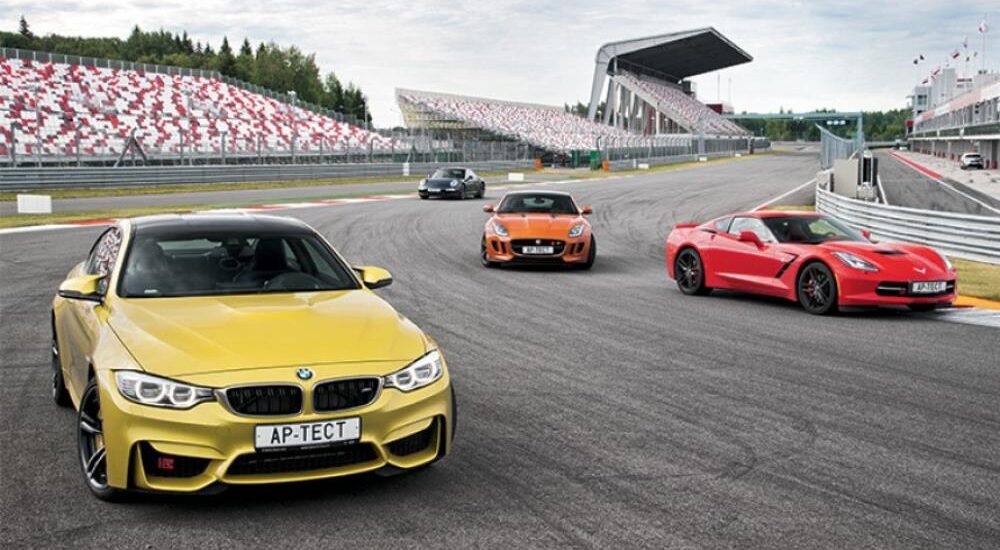

After attending the BMW M3/M4 launch in Portugal, I’ve come to recognize a true wizard. Sporting gray hair and standing nearly two meters tall, his tool of choice isn’t a wand but a carbon fiber driveshaft. His name is Albert Biermann, the mastermind behind the new M models. So compelling was Biermann’s presentation, I had no doubts about pitting the BMW M4 coupe against formidable rivals for a comparative test. Indeed, the lighter Porsche 911 Carrera 4S sports all-wheel drive, while the Chevrolet Corvette and the Jaguar F-Type R coupe boast higher power. Yet, I’d wager that on the Moscow Raceway, the M4 will more than hold its ground!
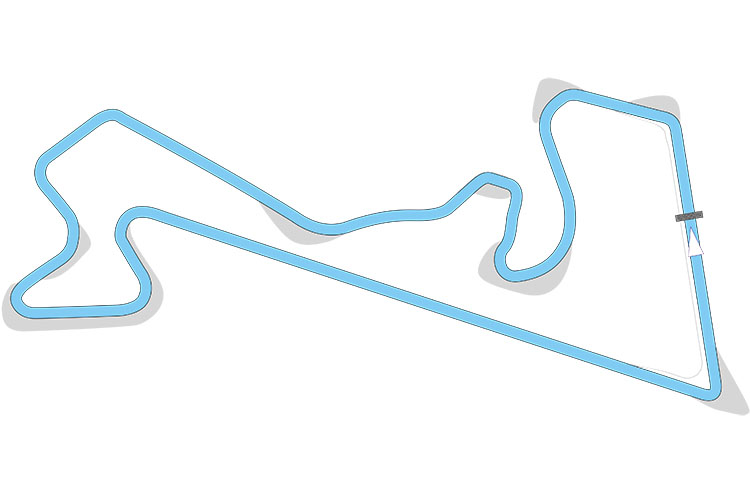
Moscow Raceway (FIM configuration)
Porsche 911: The Benchmark
The Porsche 911 serves as a kind of benchmark, reminiscent of those special laboratory railway wagons that inspect track conditions on the go. The 911 surveys the road in much the same way, capturing every imperfection, its body and steering wheel vibrating continuously. Pull the door handle and you agree to become a data carrier, slotting yourself into the hard seat and syncing with the reclined steering wheel. All that is left is to select the data transfer volume, via two suspension settings. Remember that even Porsche’s comfort mode diligently mirrors the road profile, jostling its passengers over bumps.
The suspension can absorb significant shocks without becoming uncomfortable, though, so you arrive at the racetrack in high spirits. And on the track…
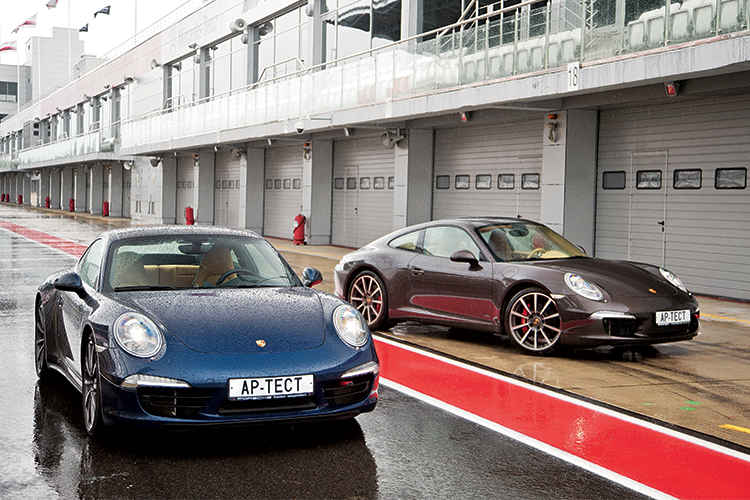
Porsche 911 – rear-wheel drive or all-wheel drive? To participate in the test, we chose the Carrera 4S version, but at Moscow Raceway we also picked up the monowheel Carrera S. It is 350 thousand rubles cheaper, 70 kg lighter and… Faster! The car slides less with the front axle, is more nimble, lively and “brings” the 4S version half a second per lap. But this is on dry land, but what about in the rain? We were lucky: we repeated the comparison in a rainstorm. And now the Carrera 4S turned out to be faster, but… only by 0.3 s
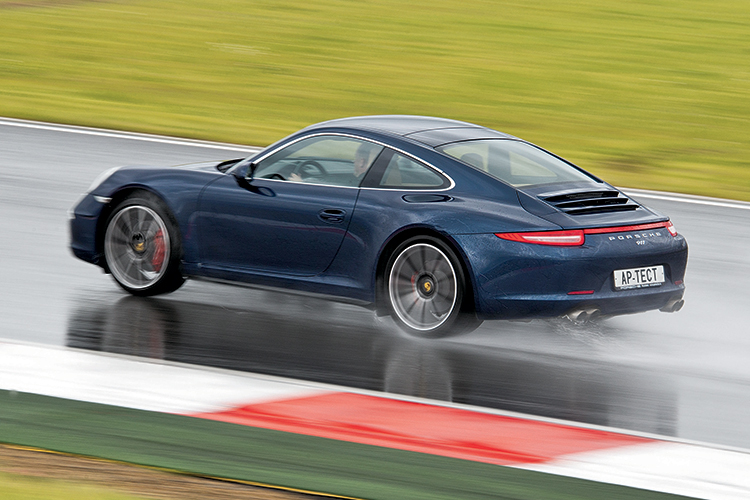
Alexander Divakov: The reactive action of the Porsche steering does not have adjustments, but it is not necessary: the drive is perfectly tuned
| Porsche 911 4S | |
| 0-250 km/h Lap time | 27,8 s 1 m 54,8 s |
Kesselman Takes It Out
The renowned racer Oleg Kesselman, whom I enlisted as our official driver, naturally opts for the sport suspension setting. In that mode body roll seems to vanish and the tires claw at the asphalt with desperate tenacity. The Porsche’s responses are the calmest and the most transparent of the four. The front tires are the first to give up in a corner: the all-wheel-drive Carrera starts to understeer before its rear-wheel-drive counterpart. Yet this rear-engined coupe lets you brake boldly into a turn without overloading the front axle, so you can accelerate out of the apex and feel, continuously, the thrust of the world’s finest preselective “robot” — the PDK gearbox in its most aggressive Sport Plus mode.
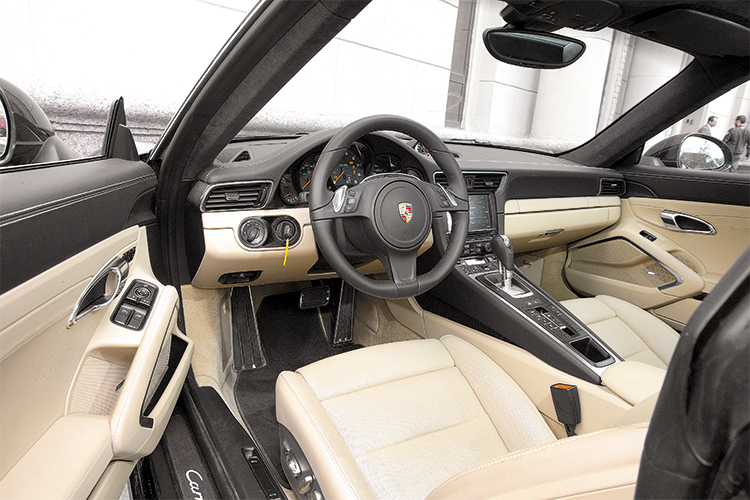
There is a strict mood in the Porsche salon.
400 hp, and the Best Aerodynamics Here
The 3.8-liter flat-six (400 hp, 440 Nm) may be short of raw output next to its rivals, and even at the lightest weight here, 1555 kg, its power-to-weight ratio does not lead the pack. And still it sprints to 100 km/h in 4.8 seconds, and its superior aerodynamics carry it to a top speed of 286 km/h.
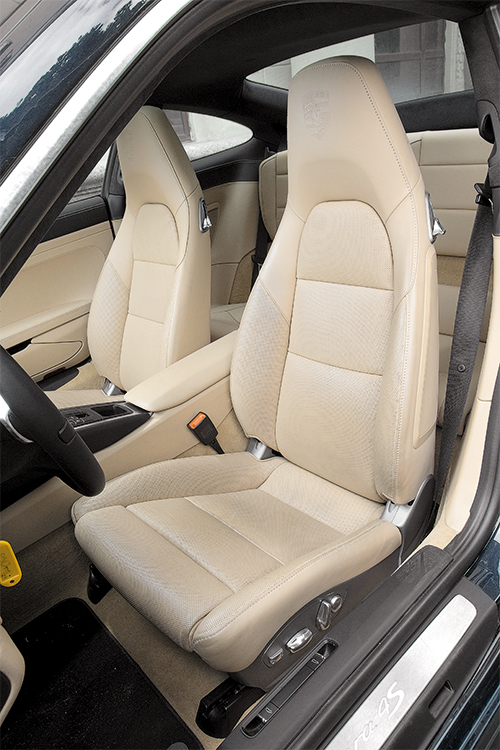
When ordering, hard seats can be exchanged for sports “buckets” (plus 159 thousand rubles). The PCM multimedia system with the same type of buttons clearly requires updating
The gritty growl of the six cylinders cuts off abruptly at 8000 rpm, echoing hollowly off the concrete barriers. Kesselman’s precision shows: three consecutive laps within tenths of a second of each other, even though the rain had washed some of the grip off the track.
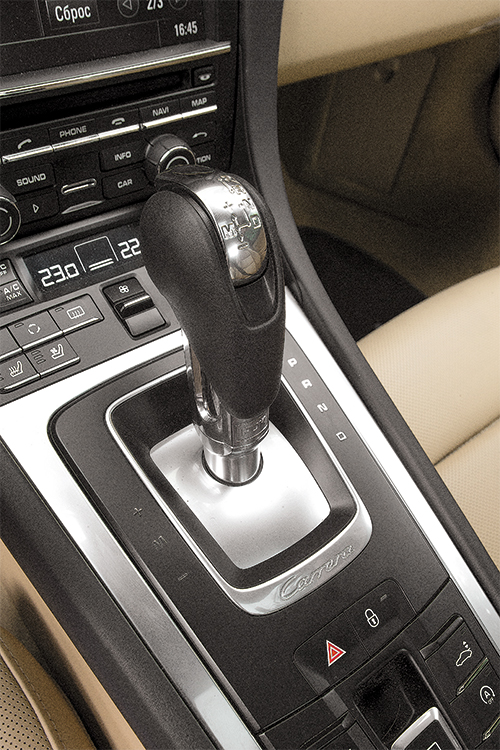
“Robot” PDK is perhaps the best in the world: auto mode is enough even on the track!
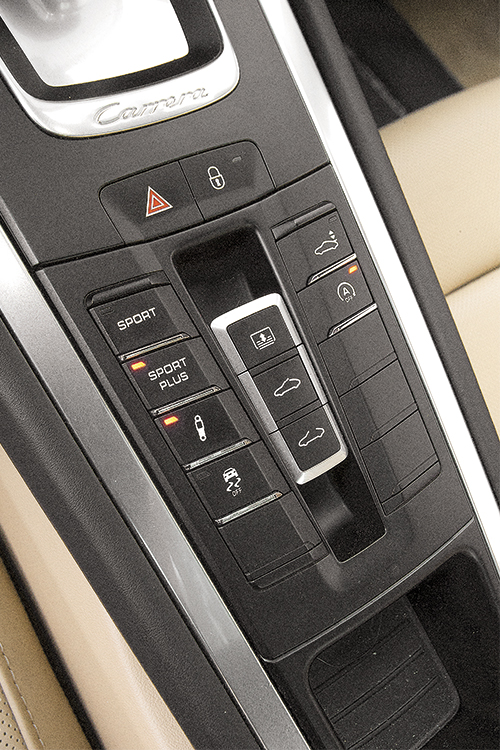
You can choose the stiffness of the suspension and the “degree of anger” of the power unit
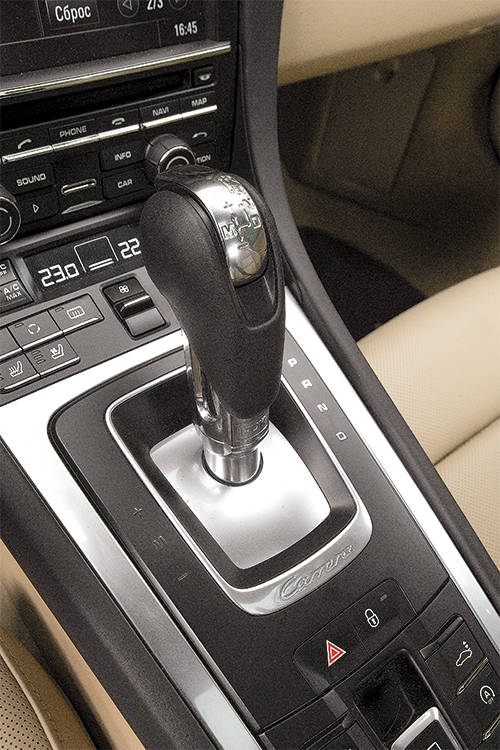
With this implementation of the “2+2” formula, few people will want to be “plus second” – these are more likely places for luggage
Jaguar F-Type R: A Decidedly Un-English Roar
Next, the Jaguar leaves the pits with a decidedly un-English roar.
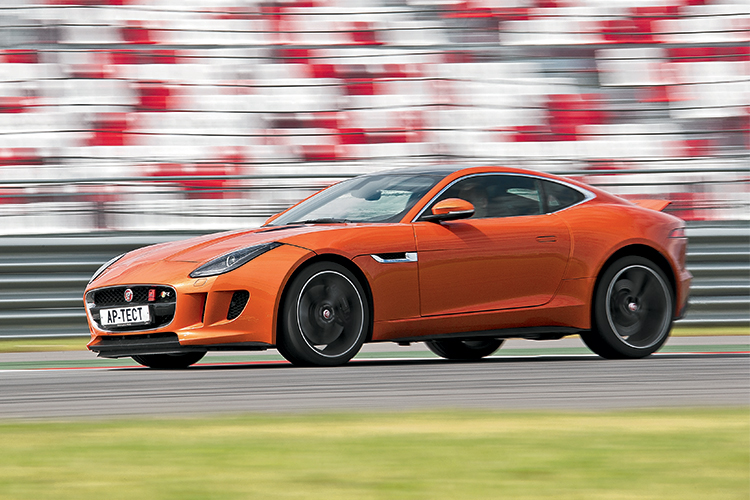
Oleg Keselman: Jaguar is an excellent choice for a gentleman who doesn’t mind having fun on the race track
| Jaguar F-Type R | |
| 0-250 km/h Lap time | 24,1 s 1 m 55,4 s |
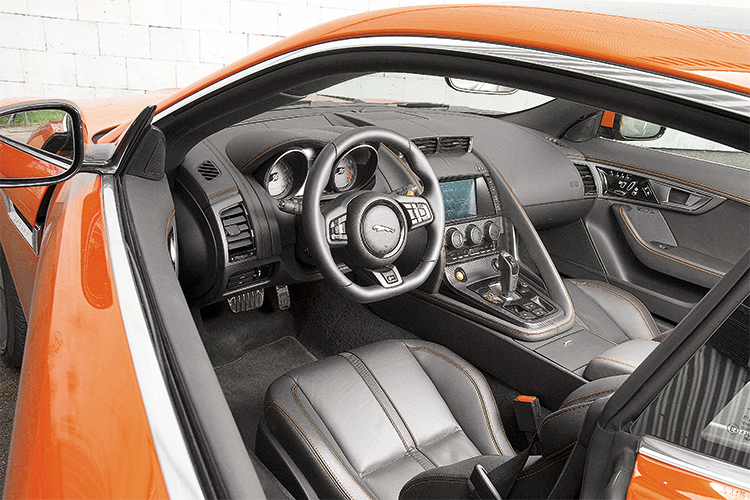
The interior of the Jaguar is gloomy, visibility is poor, and attention to detail is spot-on: rubberized climate control handles, a metal seat adjustment control, but plastic steering wheel paddles
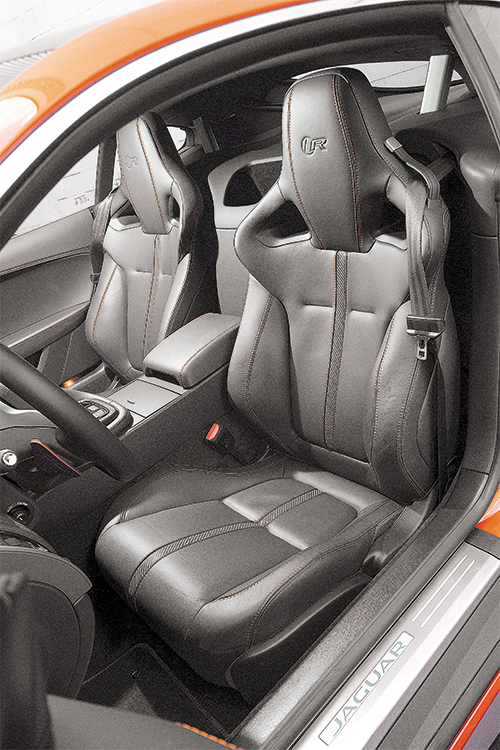
Beautiful, comfortable and very hard seats are located below the threshold level – getting out of the Jaguar is not easy
550 hp, and 4.5 Seconds
The F-Type is a poser, certainly, but the kind that earns its respect. It has worked its way up in the automotive gym, so why not flex the muscle of that supercharged V8 and its hefty 550 hp? From a standstill this vivid coupe rockets to 100 km/h in just 4.5 seconds. Only past 250 km/h does the acceleration begin to feel tame, and it tops out at 303 km/h.
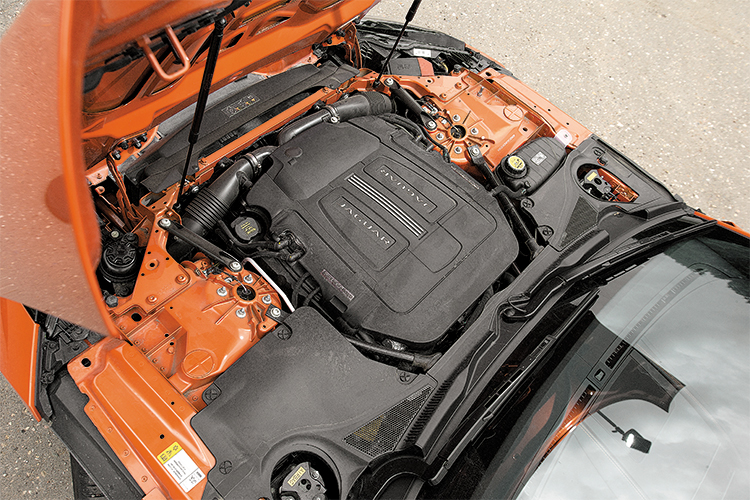
Unlike the Corvette, the V8 is not shifted deeper into the wheelbase, and this results in increased understeer
So Why Does It Lose to the Porsche?
Why, then, does the Jaguar trail the Porsche in the dynamic ratings? Because its eight-speed ZF automatic is afraid of sudden acceleration, hesitating alarmingly after a forceful throttle input even in sport mode.
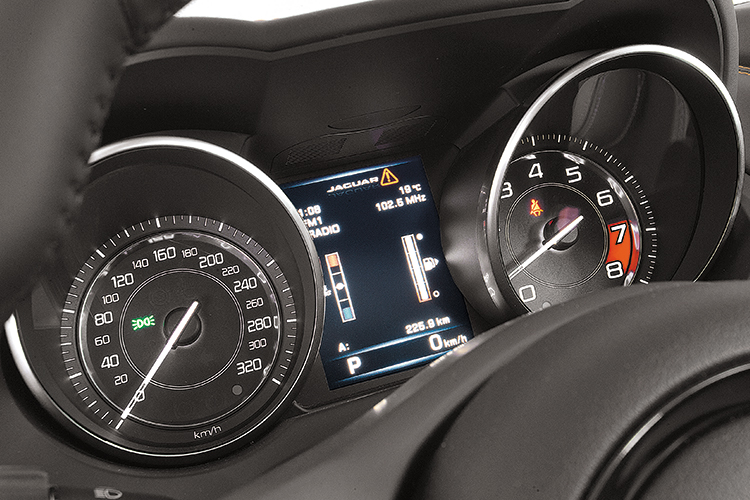
Simple scales, primitive columns of coolant temperature and fuel level indicators on a low-resolution screen…
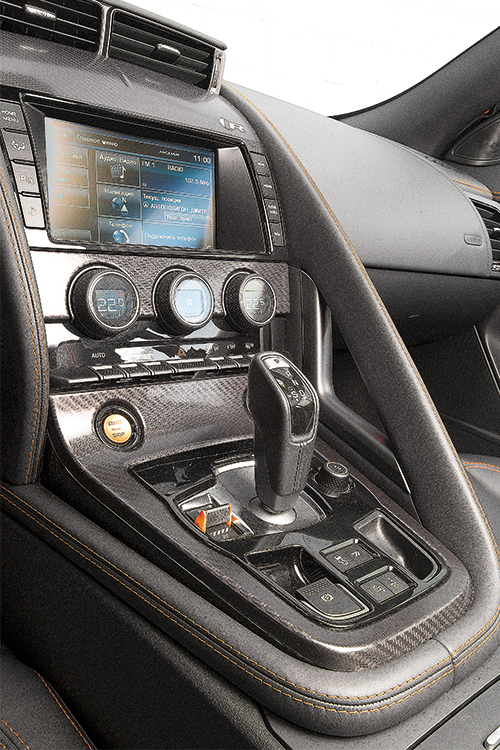
The ZF eight-speed automatic transmission is too soft even in sport mode. Multimedia system – outdated
Stiffer Than the Roadster, Fussier Than the 911
The coupe’s chassis is noticeably stiffer than the F-Type Roadster’s, with more precise responses and smoother handling. On country roads, though, the steering wakes up and turns jittery over imperfections: the Jaguar wants a smoother surface than even the 911 does. Excessively heavy at parking speeds, it becomes far less communicative later, and while its reactions are sharp, its line through a corner can be unsettled by surface irregularities.
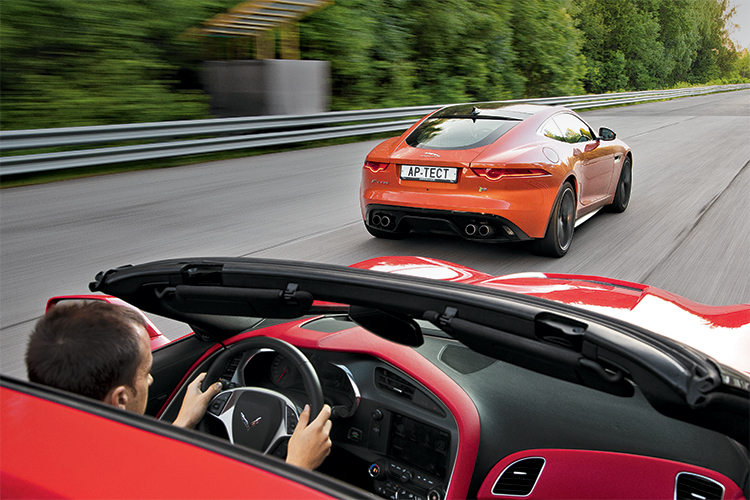
The F-Type R and Corvette share a rebellious spirit, but for now the Jaguar is faster and more precise. We’re looking forward to next year’s Corvette Z06 with a 650-horsepower engine and an eight-speed automatic transmission
Understeer — and 240 km/h on the Straight
Then there is the understeer: the heavy Jaguar, at 1809 kg, has lower cornering limits than the Porsche. Its acceleration, though, is exhilarating. According to our VBox Sport measurements, the Porsche barely exceeded 220 km/h on the track’s straight while the F-Type R surged past 240 km/h. Its lap time is still six-tenths of a second slower than the Porsche’s, at 1:55.4.
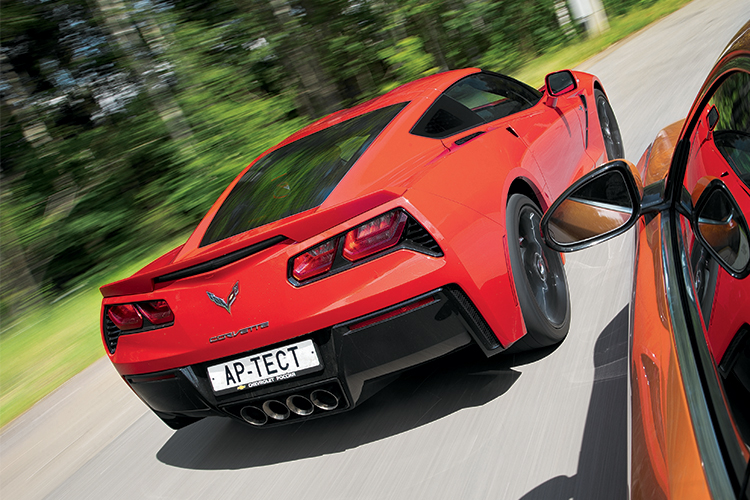
Leonid Golovanov: Stealth bomber! But it’s no longer possible to accurately put the new Corvette into a skid by lightly pressing the gas at the bottom, as happened before
| Chevrolet Corvette Stingray Z51 | |
| 0-250 km/h Lap time | 27,9 s 1 m 58,0 s |
Chevrolet Corvette: Can It Catch the Nine-Eleven?
Can the Chevrolet Corvette catch the “nine-eleven”? With its aluminium space frame, composite body panels and rear-mounted transaxle gearbox, the new Corvette is light, at 1584 kg, with almost balanced weight distribution. The seating position is the most extreme of the four: you sink into a snug, comfortable seat even lower than in the Jaguar. A cockpit, in other words — digital dashboard, massive centre tunnel, long hood stretching out ahead. The plastics are simpler, though, and the assembly a little sloppy.
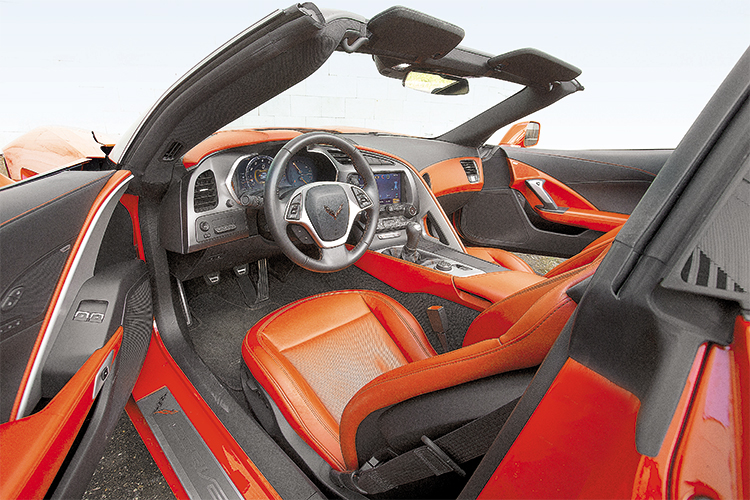
A small door, a wide threshold, a huge central tunnel and inexpensive plastic… The Chevrolet Corvette is truly unique! Visibility is better than expected – large exterior mirrors help out
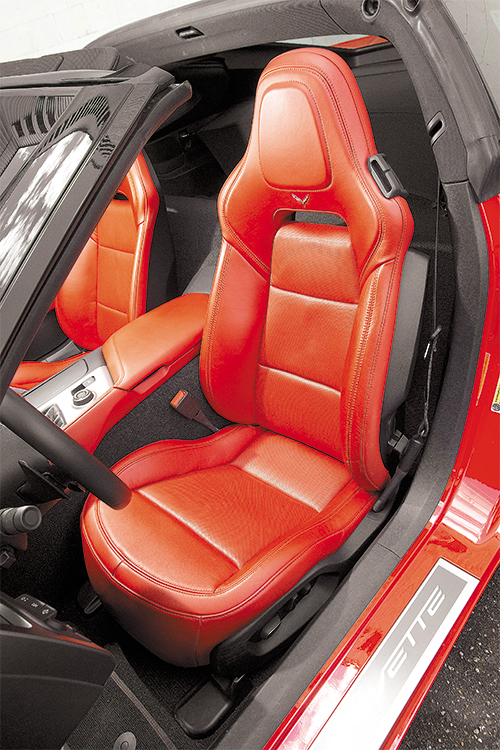
Next to the very tight “mechanics” lever is a rotating washer for selecting modes of the mechatronic chassis
466 hp, Delivered With Restrained Dignity
From the first roar of the 6.2-liter naturally aspirated engine (466 hp, 630 Nm) I expected drama; instead the V8 hums with restrained dignity. Even at full throttle the sound is muffled, and it lacks the emotional impact to match the acceleration.
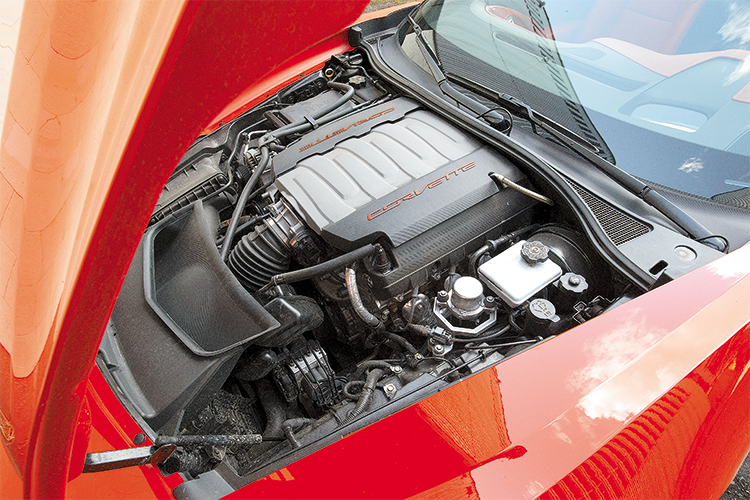
The famous V8 engines of the fifth generation small block family: direct injection, variable valve timing system and shutdown of half the cylinders. But there are only 16 valves, and their drive is from the bottom. Liter power is only 75 hp/l, but you can use AI-92 gasoline
A Manual That Makes You Work
The Corvette demands effort. It is not only the clutch that is stiff but the lever of the seven-speed manual: short throws, but poor selectivity, so you need a pause to engage a gear accurately. And why so many stretched ratios? Sixth and seventh are explicitly overdrives, for economy. Second will take you to 110 km/h, third to 160 km/h, and fourth to nearly 250 km/h on the speedometer.
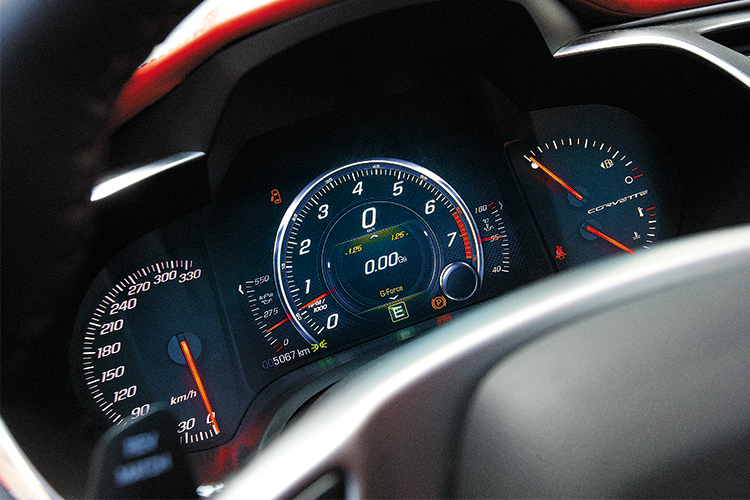
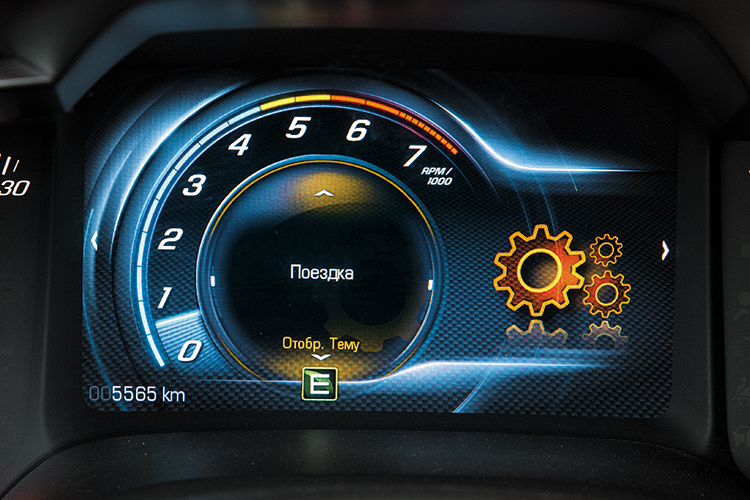
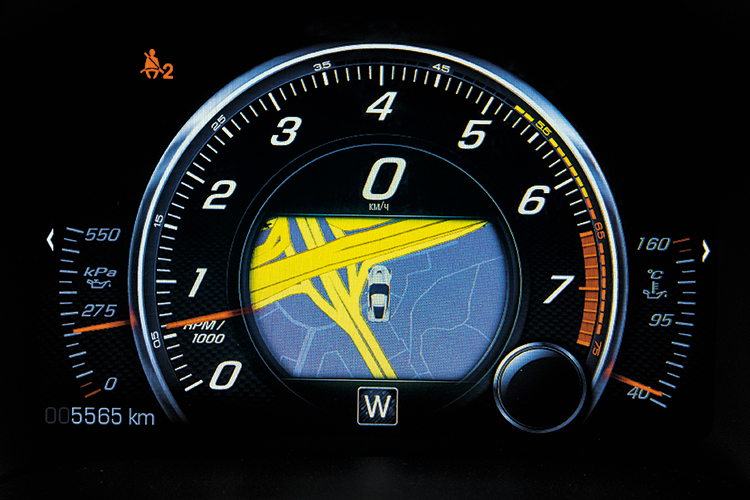
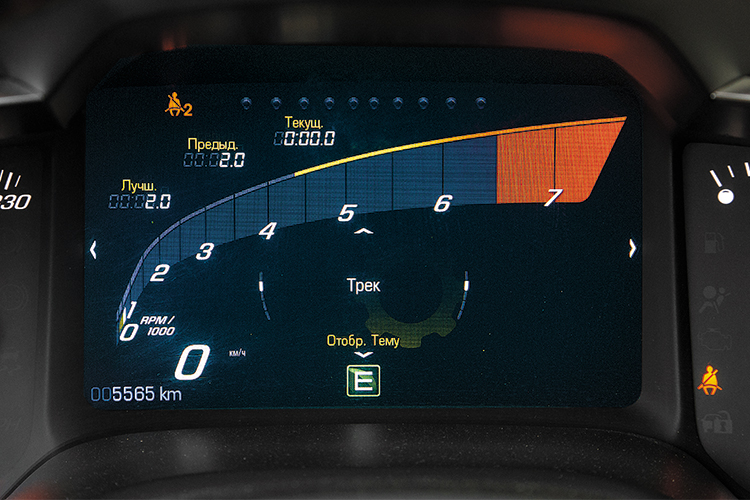
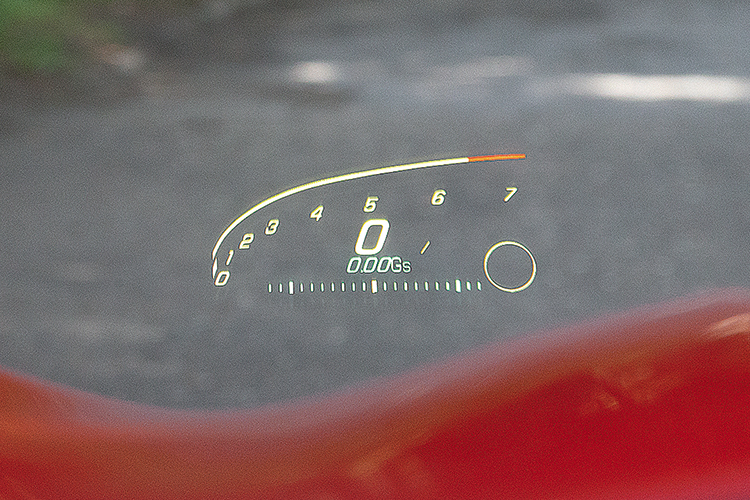
The configuration of the “digital” panel can be changed, plus there is a projection of basic data onto the windshield
Leaf Springs, and Life on the Road
The chassis intrigues: double wishbones with transverse composite leaf springs in place of coils. The Corvette is ill-suited to everyday use, though — uncomfortably stiff, unsettled on uneven surfaces, noisy, and the flexible front bumper skirt scrapes over every speed bump.
Little joy on ordinary roads, then. So: Track mode, and off to the circuit.
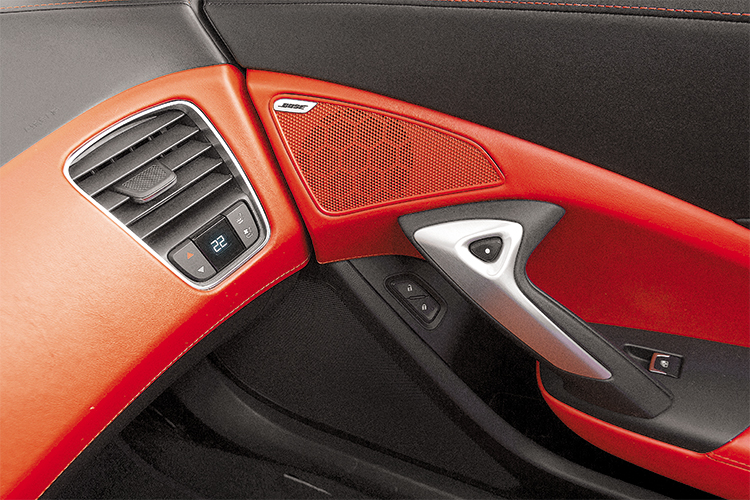
The passenger has his own “climate” remote control, and a button on the door handle unlocks the electric lock – but there is also a lever in case of emergency opening of the door
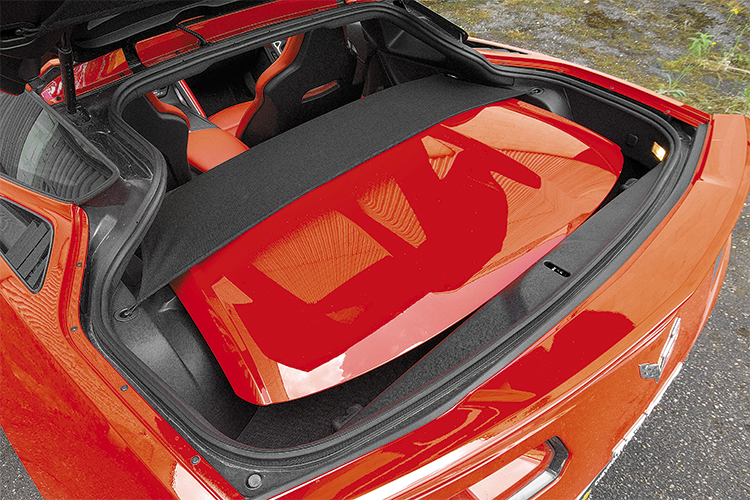
Chevrolet’s removable roof section has mounts in the trunk
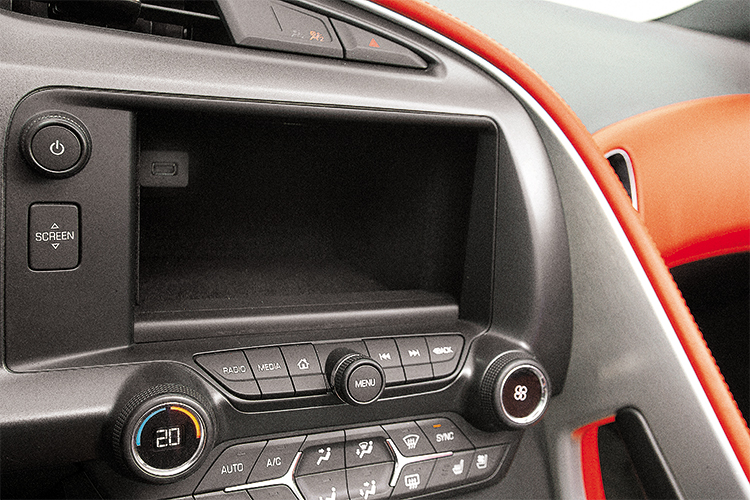
An original find – a hiding place behind the screen of the multimedia system
Track Mode Changes Everything
Do not get the wrong impression — I have been describing only one of the five modes of the Corvette’s mechatronic chassis. Tour is the one for everyday driving, while Track sharpens the throttle, stiffens the suspension to an ironclad degree, engages the rear active differential, and makes the Chevrolet chase the direction of the steering wheel aggressively. Steering has to be judicious to avoid provoking a slide. The reactive weight reminds me of the Jaguar: not exactly delightful, but eagerly absorbed.
Three valid laps produced a time of 1:58.0. So the Corvette is third fastest so far — and then the BMW took to the track.
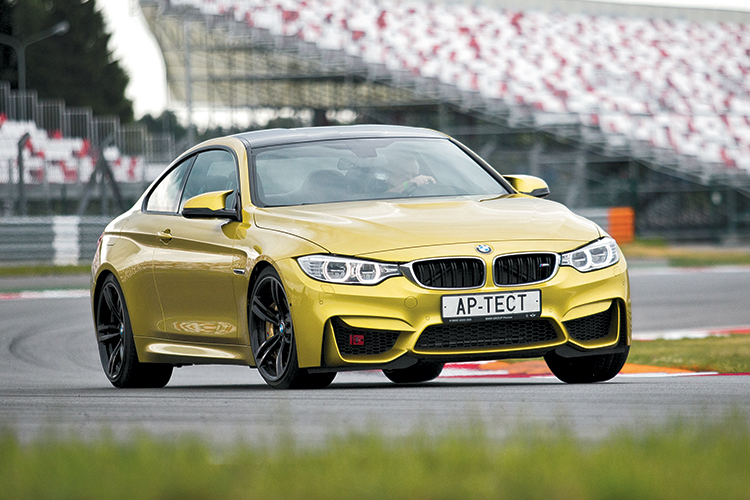
| BMW M4 | |
| 0-250 km/h Lap time | 25,4 s 1 m 57,2 s |
BMW M4: Dominance, and Permissiveness
By this point my initial excitement about the M from the Portugal event was fully shared by our experts. Faced with the choice of “Porsche or BMW?”, Divakov chose the M4. Why? For its absolute dominance, and perhaps for its permissiveness. Unlike the “nine-eleven”, the M4 does not burden you with racing gear. If you are not in the mood for racing you can leave the electronically controlled dampers in comfort and have a smooth, civilian ride. The cabin is quiet, the trunk is spacious, and four people fit comfortably. The ergonomics and the interior materials are on a par with the Porsche’s, and after the proprietary iDrive system every other multimedia system looks obsolete.
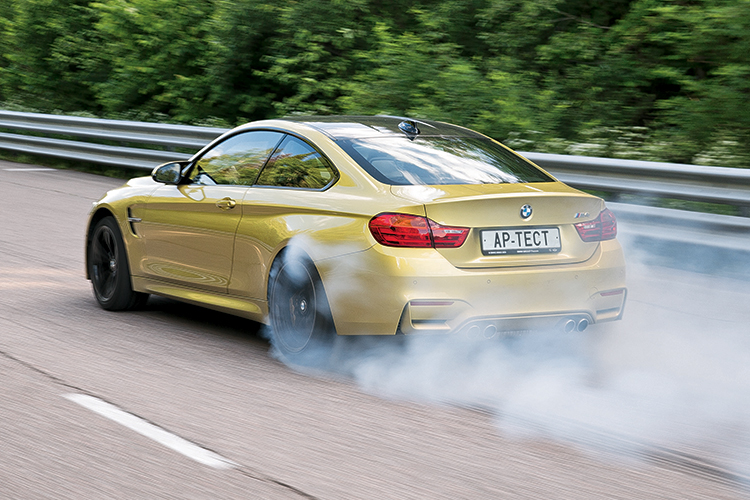
Mikhail Ukhov: The BMW M4 is a sports car of the current DTM era, when there is no need to make a homologation car too sporty – more comfort, more speed
Settings for Every Mood
Changed your mood? The M has individual settings for every scenario: power steering, throttle sharpness, shift speed, damper mode. Put the power steering into comfort straight away, because every other setting stiffens it at the expense of feedback. Sadly the M’s dual-clutch transmission cannot match the PDK for responsiveness: on the racetrack you still end up in manual mode, flicking the classy metal paddles behind the wheel.
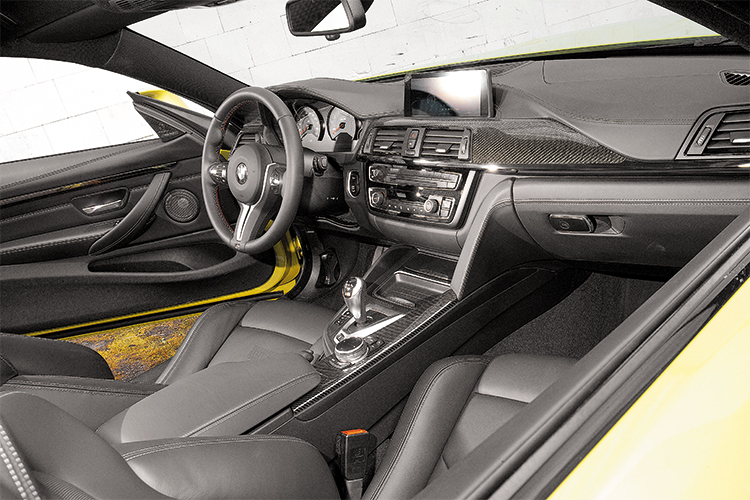
For a supercar (and the BMW M4 is a true supercar), the interior doesn’t differ enough from the civilian versions. Steering wheel, seats, a couple of personalized overlays… BMW is much more “transparent” than other cars, and possible difficulties when parking are removed by a platoon of all-round cameras
431 hp, and Stability Near 300
The engine is remarkable even after the wild Jaguar. The 4.9 seconds to 100 km/h may not astound, but the M accelerates effortlessly to 289 km/h and hits the limiter — with the M Driver’s Package it is capped at 280 km/h. And it stays stable even near 300 km/h, which none of the others manage. Most striking of all is the elasticity of this twin-turbocharged six (431 hp, 550 Nm) and the breadth of its torque band.
You could write the textbooks on car control in a drift off that torque plateau. For power slides, the M is a match for the Jaguar.
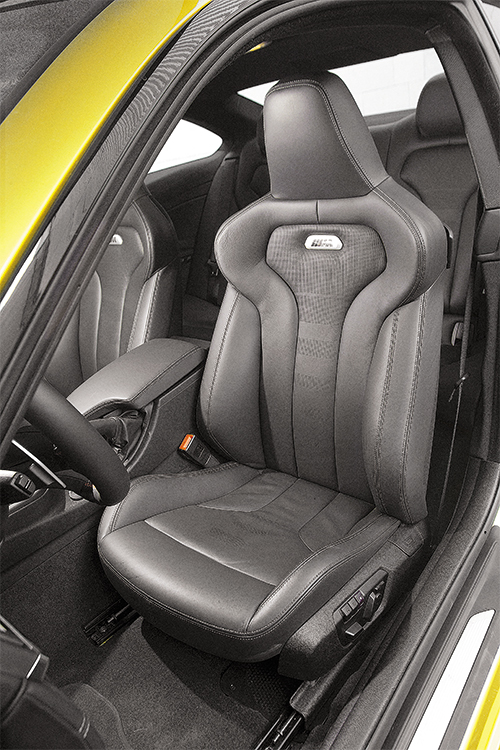
M4’s chairs are lightweight compared to regular ones, so there are no cushion extensions. Adjustable lateral support could be tighter – it would be better to choose grippy fabric upholstery
Then Kesselman Got In
When Kesselman switched to the BMW M4 we waited anxiously for the result. The early tests had already shown how good the M4’s chassis is, and yet, despite its perfect balance and grip comparable to the Porsche’s, the racer ran into traction problems. Mikhail Ukhov, a former Russian champion, tried to improve the time and gained only a second.
The Tire Mystery
A stroke of luck helped us work it out. Roberto Traverso of Pirelli discovered that the Pirelli P Zero tires fitted to the BMW were homologated for other models: the fronts for Mercedes, the rears for Jaguar. It turned out that other journalists had worn out the original Michelin Pilot Super Sport tires, and they had been replaced with whatever Pirellis were available in Moscow — marked for other cars. It was not noticeable in ordinary testing, but on timed laps the differences in tire characteristics ruined the handling. Interestingly, the Jaguar had a similar problem, though it affected its performance less.
Back in Moscow the correct tires could not be found — there was a shortage even in Germany — and we had to fit aftermarket Michelin Pilot Super Sport tires without the factory specification. Is there a difference? Nearly two seconds a lap.
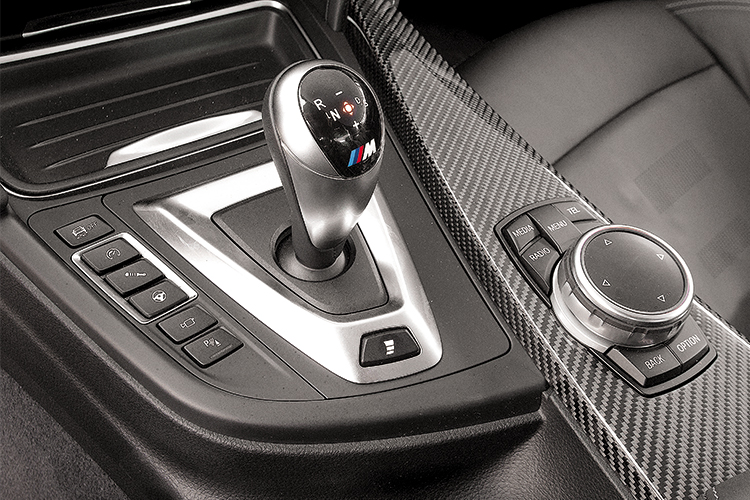
The M DCT “robot” is good, but on the race track it “can’t keep up” – you have to switch to manual mode
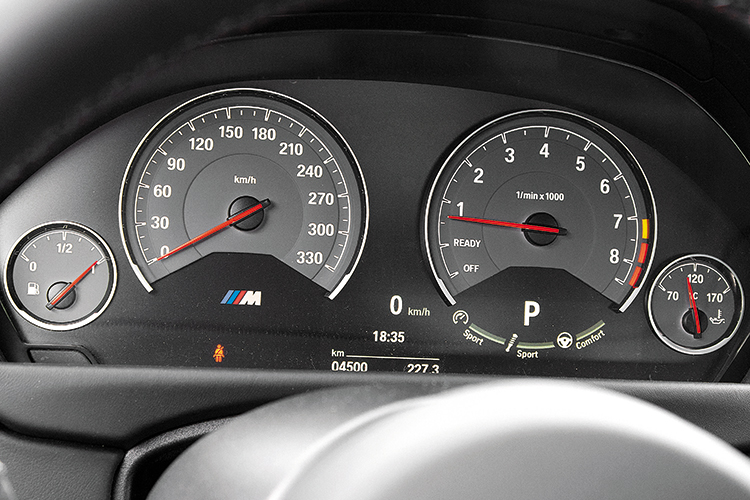
Below the tachometer is an indication of the mechatronic chassis settings
The Rerun
For the rerun we did not gather everyone — just the Porsche 911, so the track conditions would be consistent. Little had changed: the Porsche lapped consistently at 1:54.5. And the BMW’s best new time? 1:57.2. The M was still two and a half seconds off the Porsche, but that is a respectable pace — the previous-generation M3 was slower still.
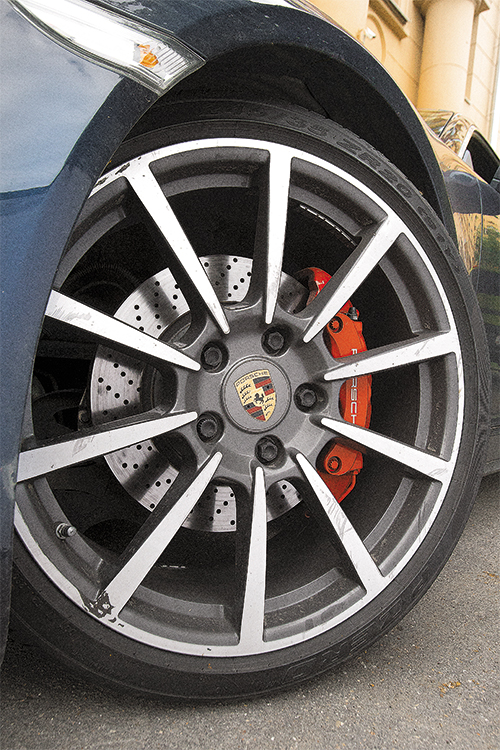
Porsche 911 Carrera 4S
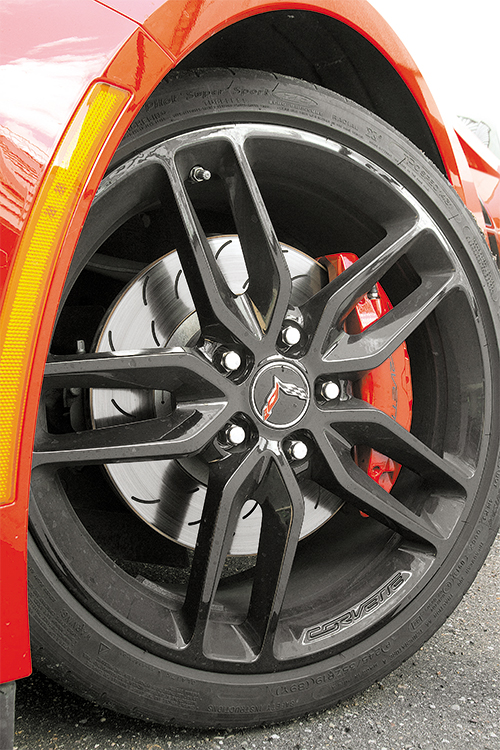
Chevrolet Corvette
Tires Matter More to the M4
Interestingly, the Porsche 911 Carrera 4S is less fussy about tires. The new-generation BMW M4 and M3 are extremely sensitive to having the right ones. Remember that: take these models to a circuit on tires that are not their own and you will not experience even half of Albert Biermann’s magic.
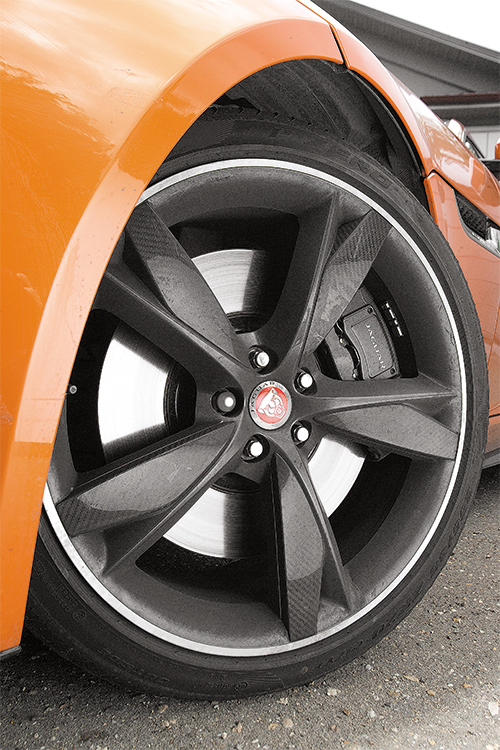
Jaguar F-Type R
On the Road, the Magic Is Intact
On ordinary roads, though, the magic of the M is fully intact even on the wrong tires. The M4 gives away nothing in dynamics or emotional appeal to genuine supercars, matches the Porsche in handling — and adds comfort, space and versatility. And, in the end, a convincing victory in the expert ratings. Even setting BMW’s practical advantages aside, it still comes out the leader.

BMW M4
Brakes
Porsche has the best brakes, both in the measured results and in use. BMW’s expensive carbon-ceramic discs perform flawlessly, though braking distances lengthen on the non-original tires. Worth noting: after 5,000 km of regular track days, the brake pad life predicted by the onboard computer fell from 410,000 km to 180,000 km. The heavy Jaguar has only two-piston calipers and still withstands three flat-out laps with no sign of overheating; under braking on a split-grip surface, though, the F-Type pulls towards the side with more grip. The problem is worse in the Chevrolet: braking from 80 km/h, the Corvette nearly spins.
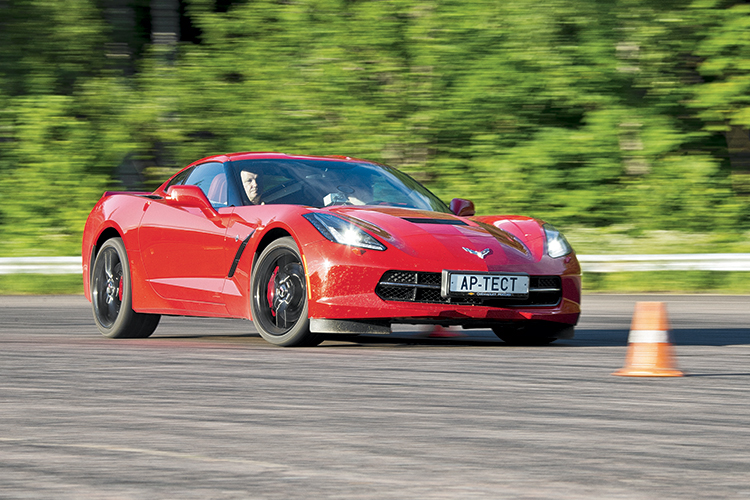
The Verdict
On lap times, I believe the M with its standard passive suspension, without electronically controlled dampers, would post better results — especially on its own tires. But the greatest triumph of the new M, and the main credit to Biermann’s magic, is that this time it was the M4 and not the Porsche that took the experts’ recognition.
On the track, nonetheless, the Porsche 911 still outperforms its rivals. However you tune your inline sixes or your V-shaped eights, the “nine-eleven” remains an unrivalled icon.
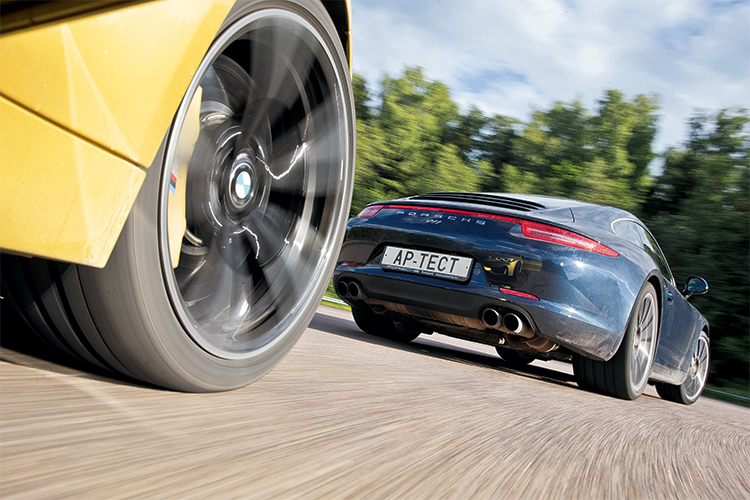
The Jaguar F-Type R may never become an icon, but it certainly makes a striking impression — much like the Corvette. Yes, in this company the American is the noisiest and has the braking difficulties on mixed surfaces. It does not stop it turning heads and becoming the poster car.
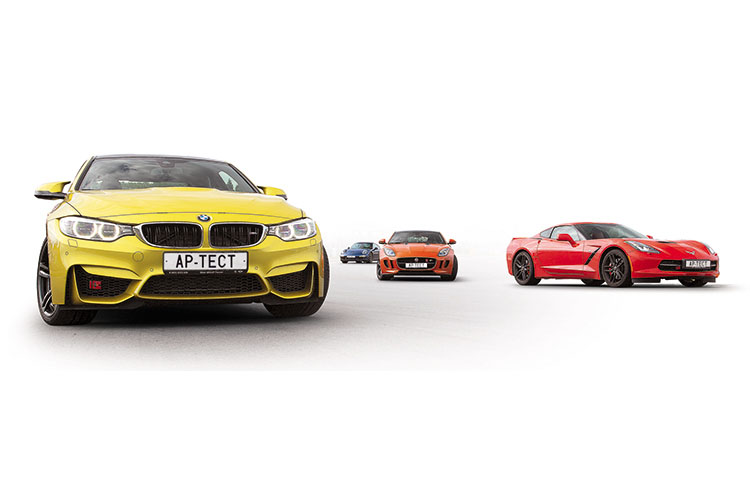
Photo: Stepan Schumacher
Expert group: Alexander Divakov | Andrey Mokhov | Ivan Shadrichev | Yuri Kuznetsov | Yaroslav Tsyplenkov
This is a translation. You can read the original article here: BMW M4, Porsche 911 Carrera 4S, Chevrolet Corvette или Jaguar F-Type R?

Published June 06, 2024 • 13m to read