
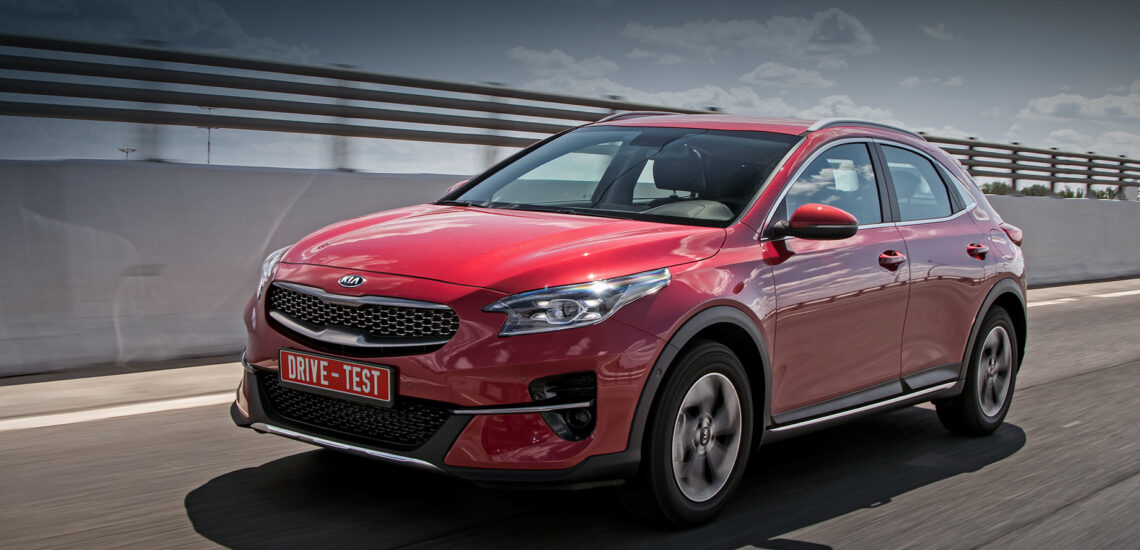

A shrinking market usually pushes automakers to trim their lineups to avoid spending on marketing and certification of slow-selling models. Kia, however, remains optimistic — or at least has long-term ambitions to become the top foreign brand in markets like Russia. That’s why niche models like the ProCeed sports wagon are still on sale there, despite moving only 30–50 units a month. The quasi-off-road hatchback XCeed, from the same Ceed family, is likely headed for a similarly cool reception.
Where Does the Kia XCeed Fit in the Market?
The XCeed occupies a genuinely unique segment — a golf-class five-door hatchback with slightly raised ground clearance, roof rails, and unpainted plastic body cladding. Comparable options exist at both higher and lower price points, but the competition tells an interesting story:
- Mercedes GLA, BMW X2, Audi Q3 Sportback — all more expensive and available with all-wheel drive
- Kia Seltos — a similarly priced, similarly sized crossover that offers more traditional off-road credentials
The XCeed sits in a curious no-man’s-land: too refined to be a crossover, too tall to be a regular hatchback. Whether that’s a strength or a weakness depends entirely on what you’re looking for.
Exterior and Interior Design
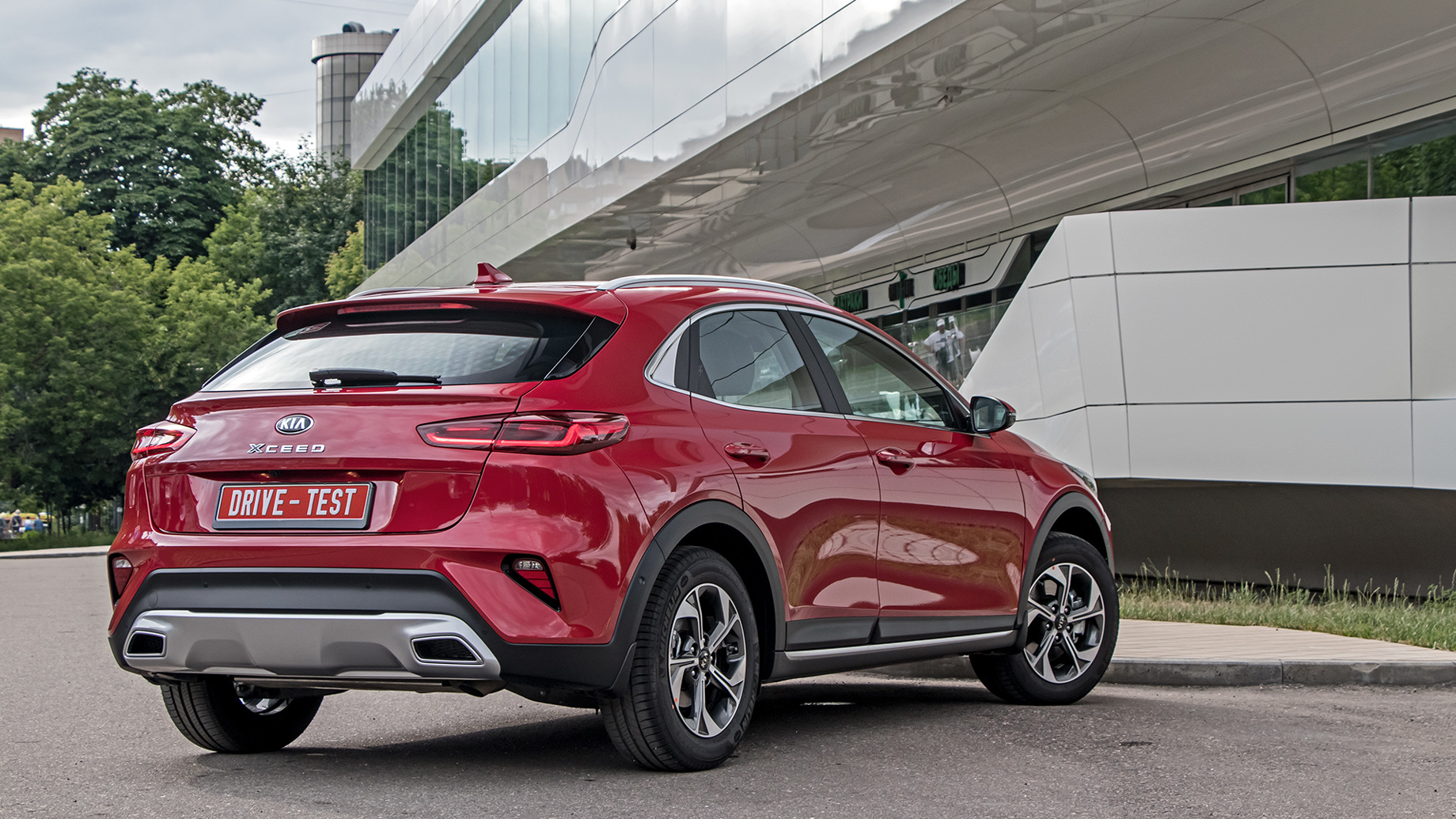
Despite sharing its bones with the Ceed, the XCeed’s body has been redrawn extensively. The result feels more like a stylish, sporty youth car than a rugged crossover — there’s no real brutality here. Ground clearance tops out at just 165 mm (6.5 inches), which reinforces that impression.
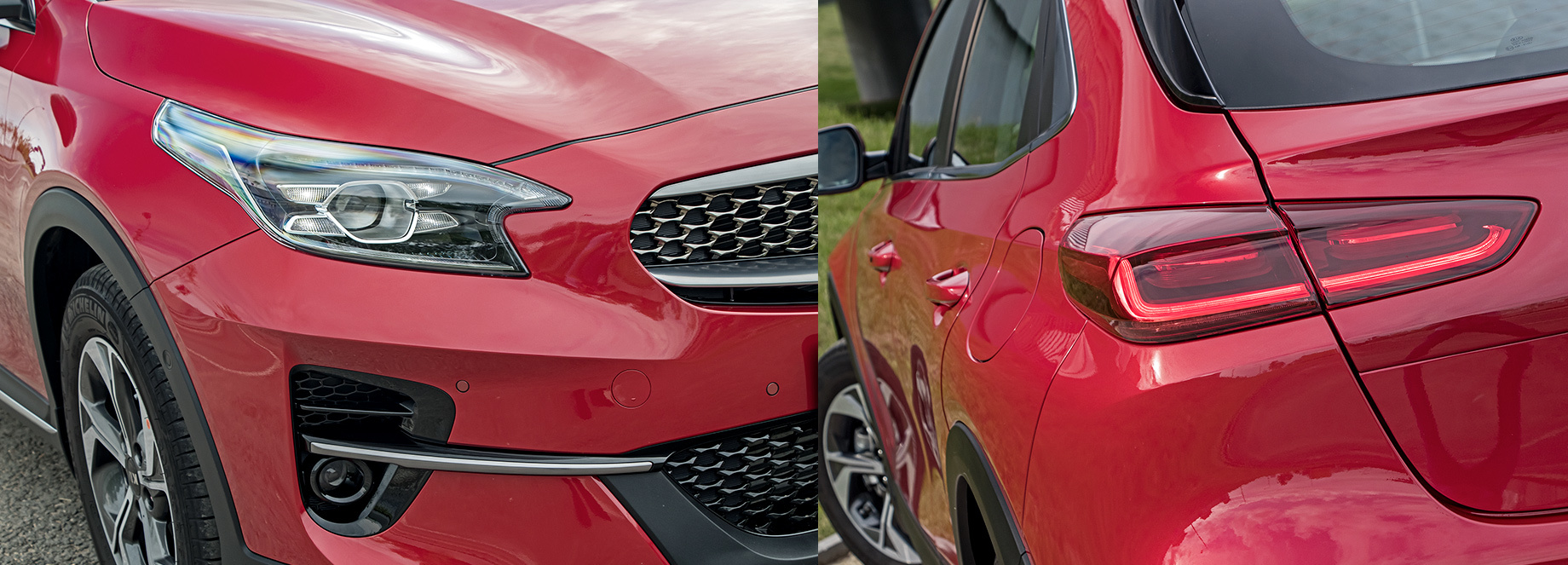
The interior is carried over from the standard Ceed — and that’s largely a good thing. Key interior highlights include:
- Softer, higher-quality plastics than the Kia Seltos
- Clever design touches that improve perceived quality without adding significant cost
- Front seats that position occupants approximately 1.38 inches higher than in a standard hatchback
- A suspension tuned for local road conditions
- Comfortable, supportive front seats with a firm but gentle hold
- An illuminated glove compartment (a rare Kia touch)
The driving position, however, feels low and car-like rather than crossover-elevated — which suits some drivers perfectly, while others may find it underwhelming. One notable omission on the Prestige-spec test car: no lumbar support adjustment, which starts to matter on longer journeys of 120–185 miles or more.
Engine and Transmission Performance
The 1.4 T-GDI turbocharged engine paired with a 7-speed dual-clutch semi-automatic gearbox feels like a notably refined combination compared to earlier Ceed variants. Here’s what to expect:
- Throttle response: Near-instant and eager — easily a 9 out of 10
- Gearshifts: Perceptible but far smoother than the Volkswagen 1.4 TSI + DSG pairing
- Power delivery: The 140 hp on offer never feels lacking — no regrets about skipping the 200 hp engine
- Jerks under load: Occasional hesitation during alternating throttle inputs, but nothing deal-breaking
Overall, the XCeed’s powertrain is more accommodating and driver-friendly than many rivals in its segment.
Ride Quality and Handling
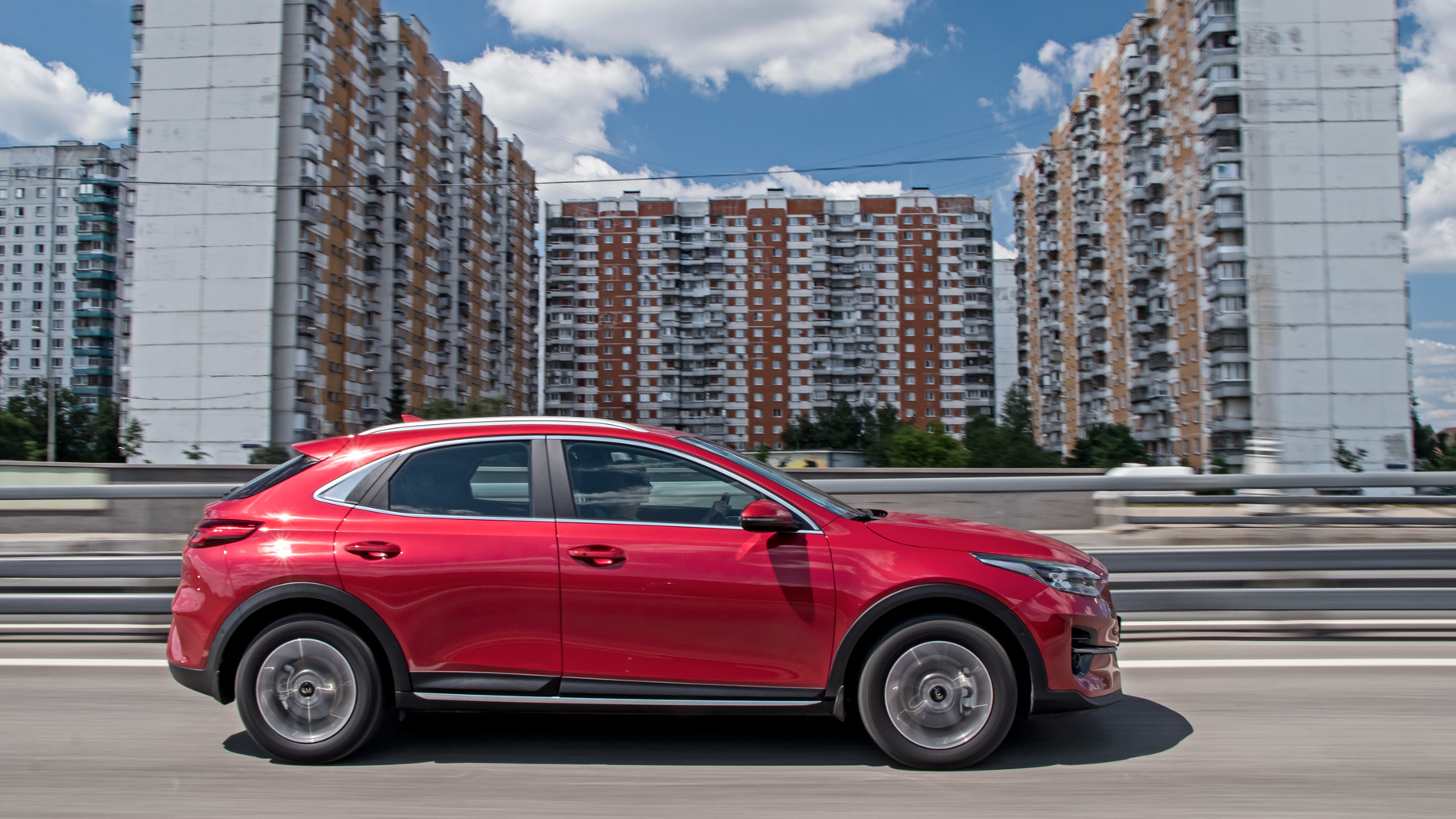
The XCeed’s suspension is tuned slightly differently from the standard hatch — springs are a few percent softer, and the front shock absorbers use hydraulic rebound bumpers. The results are a mixed bag depending on the road:
- City driving: Pleasantly elastic and composed — an enjoyable, European-style gait
- Speed bumps: Handled with enough composure to feel capable
- Motorway: The XCeed tends to skip and bounce on smooth asphalt, struggling with subtle road undulations at any speed
- Dirt roads: Every pebble is felt, and ruts are faithfully transmitted through the cabin
It’s worth noting that 18-inch wheels are standard on the 1.6 T-GDI engine, while even the base version on 16-inch Michelin Energy Saver+ eco tires raised ride comfort questions. If you regularly drive on rural or unpaved roads, a proper crossover may serve you better — the XCeed offers no off-road modes or terrain management systems.
Where the XCeed truly shines is in steering and handling. With just two and a half turns lock-to-lock, the steering is precise and responsive in both Normal and Sport modes. The car tracks straight confidently and turns in cleanly — until you push too hard. At that point, the eco-oriented Michelins will break traction and squeal early, and noticeable body roll sets in. That said, the XCeed corners in an engaging way, balancing weight across both axles in a manner that’s genuinely fun to exploit on a flowing road.
Noise, Comfort, and Cabin Refinement
Unfortunately, cabin noise is one of the XCeed’s clearest shortcomings. Most sounds are well suppressed, but a persistent low-frequency road drone cuts through the background hum at cruising speeds. While it’s quieter than models like the Kia Rio or Hyundai Solaris, the droning becomes fatiguing on longer trips — not what you’d expect from a car built for European roads. The source seems to be a combination of the tires and what sounds like resonating hub bearings.
Rear Seat Space and Practicality
The rear cabin is adequate but unremarkable. Taller passengers seated behind tall drivers will find knee room tight. The list of rear-seat amenities is short:
- Central armrest ✓
- Heated seat cushions ✓
- Rear seat belt warning (for Euro NCAP compliance) ✓
- Air vents on the tunnel ✗
- USB or charging sockets ✗
Storage spaces are plentiful in size but mostly untrimmed. The illuminated glove compartment is a pleasant surprise, though most cubbies feel bare.
Boot Space and Cargo Versatility
The XCeed’s boot is one of its stronger practical points. Key features include:
- A solid boot floor adjustable between two heights, with a 9 cm difference between levels
- 113 gallons (approximately 426 litres) of declared cargo volume on the lower setting
- A near-flat load floor when the rear seats are folded, using the upper position
- An electric tailgate as standard
- A space-saver spare tyre stored in the underfloor compartment
Loading isn’t the easiest, however — the boot sill sits 29 inches (74 cm) from the ground, which is higher than ideal. And unlike the Kia Seltos, a full-size spare wheel is not available.
Verdict: Should You Buy the Kia XCeed?
At current pricing, you’d have to be genuinely in love with the XCeed’s unique character to choose it over a conventional crossover. For the same budget, you can buy not only the Kia Seltos, but also the 150 hp Kia Sportage with all-wheel drive. The XCeed isn’t premium enough to command a price premium, yet it asks for one. It’s noisy, lean on some features, and compromised in off-road ability — even if it drives with real verve on the right road.
If Kia ever decides to slim down its model lineup at dealerships, the XCeed is probably one of the first candidates. That’s a shame, because it’s genuinely likeable — just hard to justify on paper.
This is a translation. You can read the original here: https://www.drive.ru/test-drive/kia/5f04c35fec05c4b30f0001ba.html

Published November 03, 2022 • 6m to read