
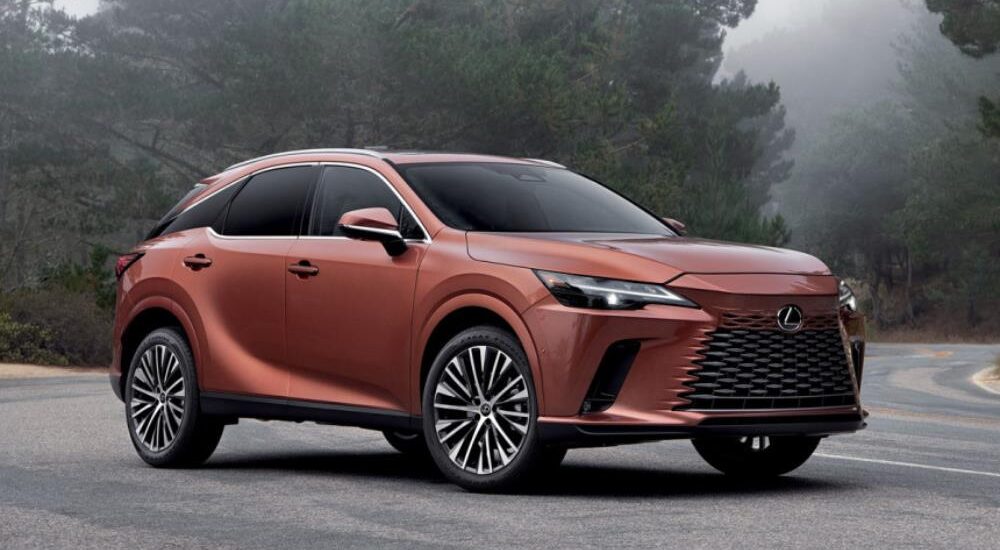

When I first saw the fourth-generation Lexus RX, I thought I had come across a stealth fighter jet. Now I’ve gotten my hands on a test drive of the fifth-generation model — and I’m asking myself: is it time for a change?
From a Ram 1500 to a Lexus RX 350: My Ownership Story
Regular readers know that I live in the American state of Florida. The most attentive ones might remember that I used to have a leased Honda Accord sedan. But after that publication, I had a radical change of heart — I bought a Ram 1500 pickup truck with a 5.7 HEMI V8 engine. A true compact apartment on wheels: my younger son could stand in the cabin, and it could accelerate to “a hundred” in just over six seconds with a menacing roar from its two exhaust pipes.
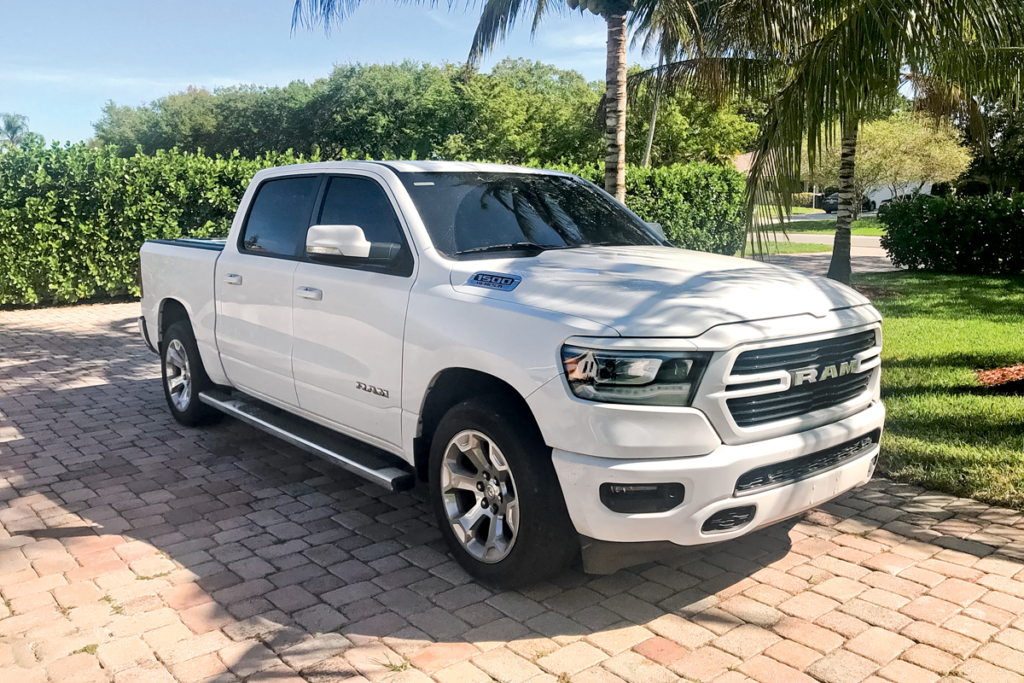
This Ram 1500 Longhorn 5.7 V8 gave me vivid emotions for over a year, but common sense prevailed.
I really enjoyed the Ram — every morning I got behind the wheel with the excitement of an upcoming adventure. But there was a big catch: 16 liters per 100 kilometers on the highway, if you barely touched the accelerator. In regular city driving, fuel consumption went well beyond 20 liters. So when, in the autumn of 2021, I stumbled upon a fresh Lexus RX 350 with only 20,000 miles on the clock for $35,000, I didn’t hesitate for long.
Joining the Club Ahead of Schedule
True, I am 44 years old, while the average age of Lexus owners in North America is 55. People with above-average incomes can afford such a car, and building a career takes time. Secondly, at 55 you’re not old in America — it’s an age of blossoming, when you already have money and the desire to spend it hasn’t faded yet. I’ve seen elderly couples well beyond 80 driving RXs. So I thought: why shouldn’t I join this club of silver-haired individuals, so to speak, ahead of schedule?
But there was no chemistry with the RX.
Design and Driving Feel: Stealth Looks, Soft Character
With such a design, the car simply must break speed records, possess razor-sharp handling, glide through turns with minimal body roll, and stay glued to the road defying the laws of physics. But in reality, the Lexus is quite the opposite. It seems to be there on the steering, there are 300 “horses” under the hood that wake up periodically, and the automatic transmission is decent. But everything is somewhat smoothed out, lacking that spark. The car seems to whisper in my ear all the time: “Release the gas pedal, relax, put on some slow music… see, it works this way too.”
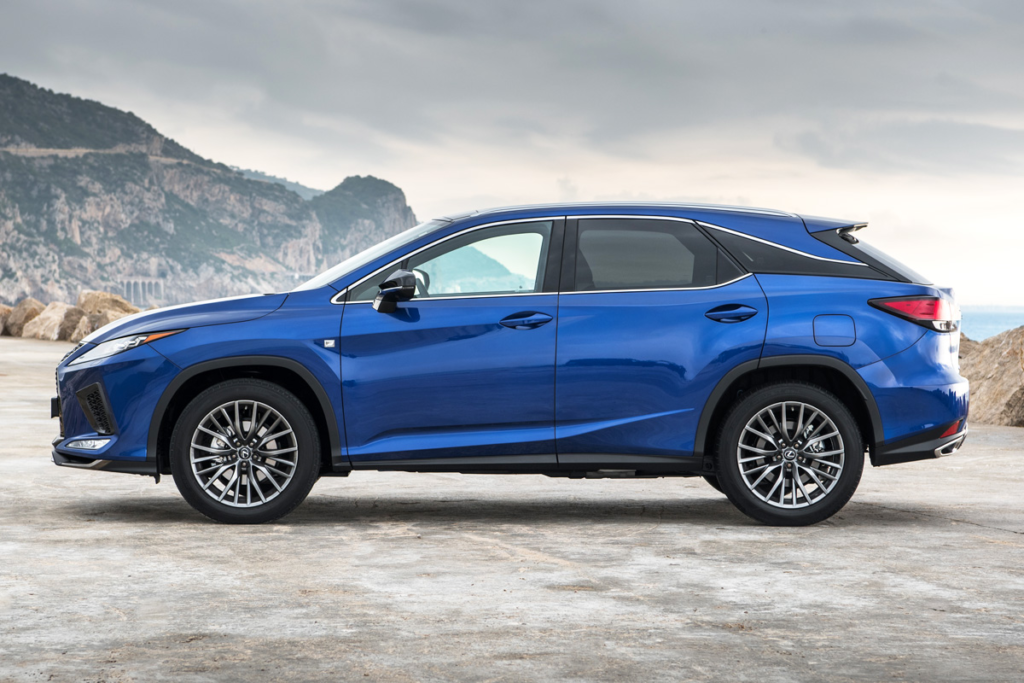
The previous, fourth-generation Lexus RX
The Rules of Good Design It Breaks
By the way, stealth airplanes are also just okay flyers: for radar stealth, many flight characteristics are sacrificed. The same goes for the Lexus. And the design — if you take a closer look, several rules of good automotive design are broken here:
- A notably short wheelbase relative to overall length
- A front pillar that aims past not just the front hub, but the entire wheel
- A massive front overhang
- Sides scored with multiple creases, which even earned the RX the nickname “crumpled paper”
However, none of this stops the RX from being a bestseller among premium crossovers in America. It’s obvious that the super-task set before the creators of the fifth generation was something like: do no harm, don’t alienate the traditional audience, and if it’s possible to slightly expand it, even better. I’m sure the brief for the previous generation sounded pretty much the same.
What’s New in the Fifth-Generation Lexus RX Exterior
The design of the predecessor was taken as a basis, although the “wrinkled paper” has been notably smoothed out. The length remained the same (4890 mm), but the wheelbase grew by 60 mm to 2850 mm. Still, the right proportions remain elusive, since the entire addition came from moving the rear axle closer to the tail — and the meter-long front overhang stayed put.
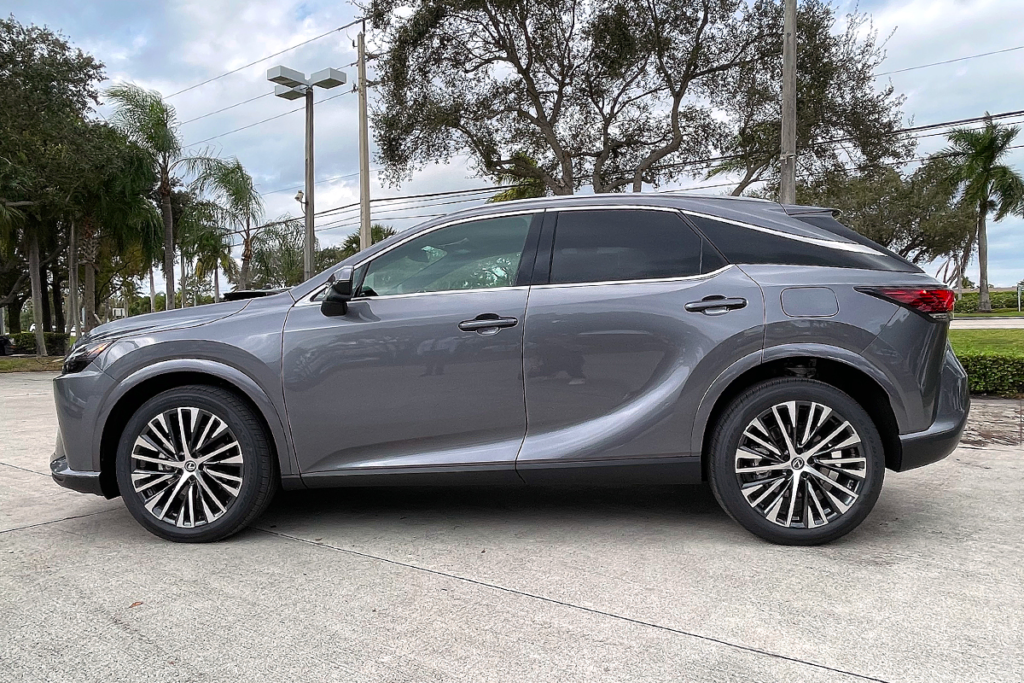
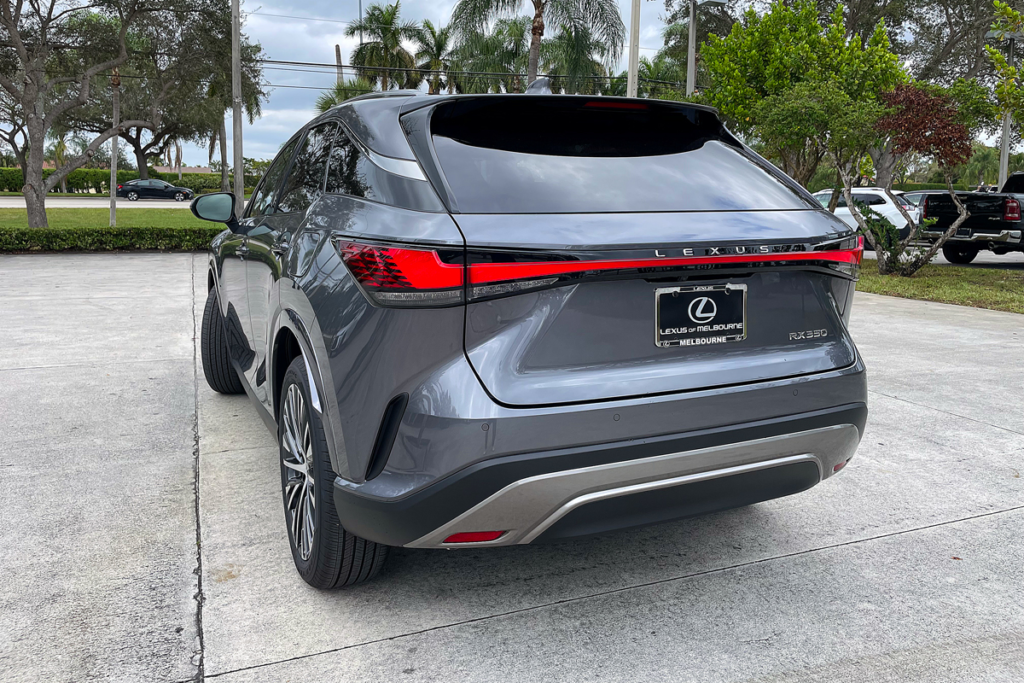
Where the Hourglass Grille Went
In profile, the new RX is absolutely recognizable, as the signature curve of the hovering roof remains almost unchanged. At the rear, there’s the fashionable LED monobrow that has become an attribute of many Lexus models. And what happened to the trademark hourglass-shaped radiator grille? This is clearly a hint that the era of internal combustion engine cars is ending — most likely, the fifth generation will be transitional and final. The next step in evolution will be the closed front ends of electric cars, similar to the Lexus RZ electric crossover, which will probably take the RX’s place in the model lineup.
Interior and Technology: Familiar Layout, Bigger Screens
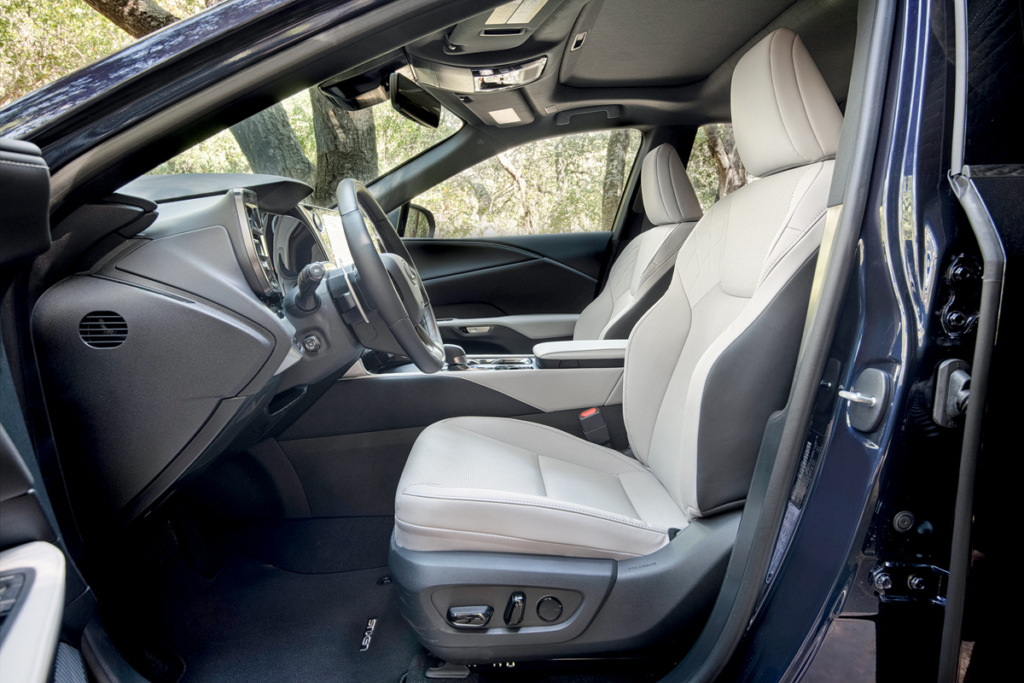
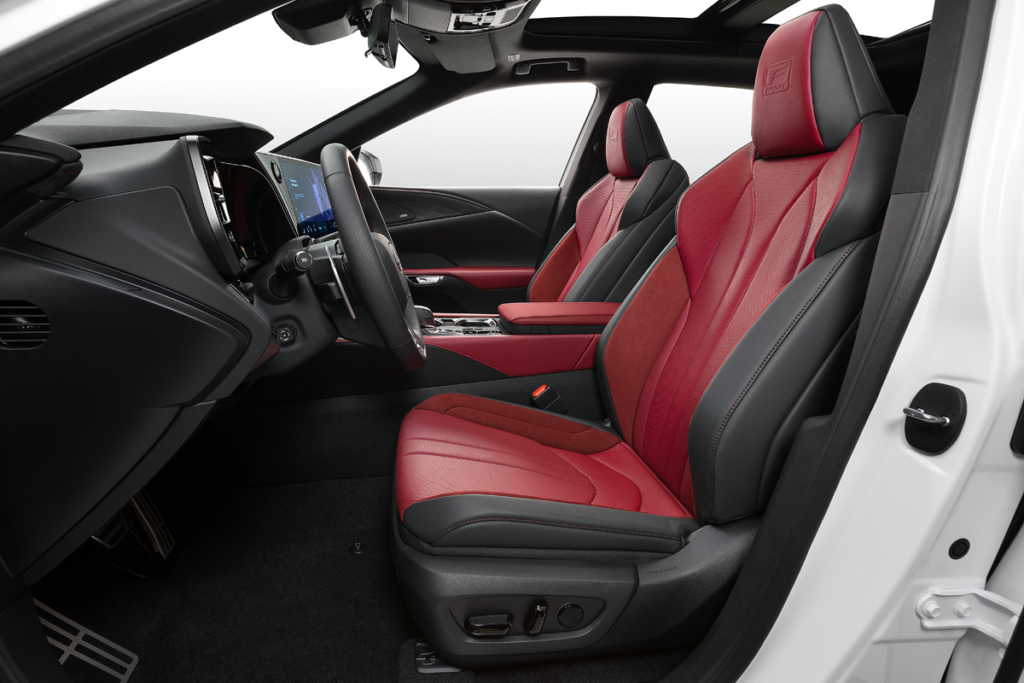
The seats are comfortable, and if you need firmer seats, then go for the RX F Sport
Getting behind the wheel of the gasoline-powered RX 350 feels familiar. It even seemed to me that the seats remained unchanged, but no — the side support around the shoulders is more pronounced. Even the font on the digital dashboard has been kept the same. Did they cut corners? I don’t think so — it’s more of a conscious decision not to require owners to adapt for too long.
After all, how does it work in America? You lease a car, three years pass, and then the next generation is already here. Sign a couple of papers and an hour later you’re driving off in a new car. The dealer will even help you transfer the small stuff from the old car to the new one.
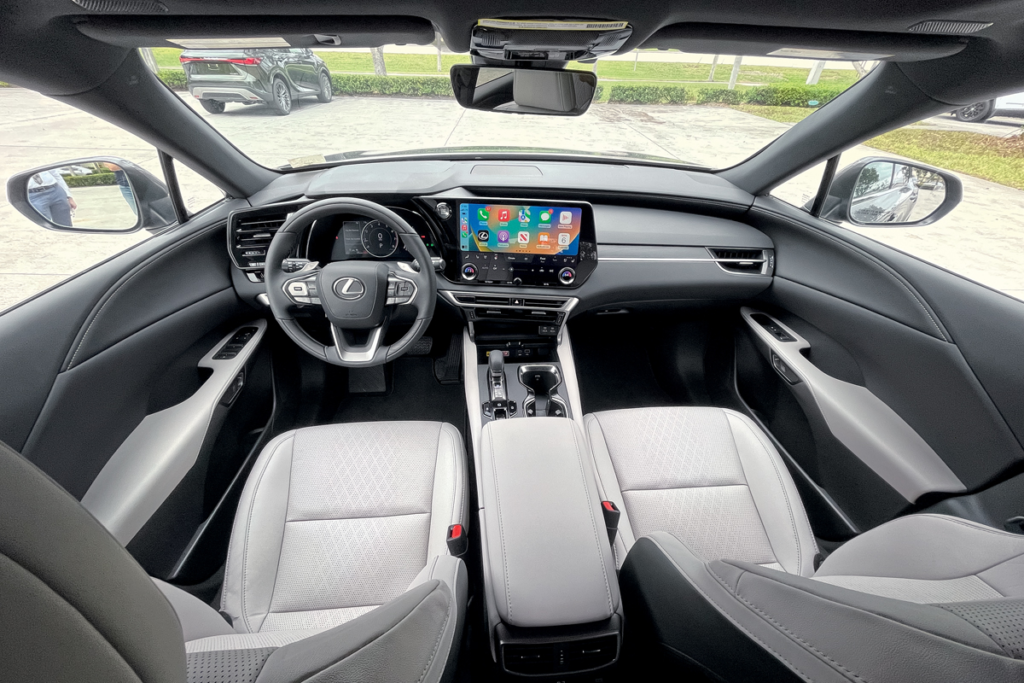
The basic dark interior is pretty boring, but the light-colored seats and door card decor make the F Sport version more memorable
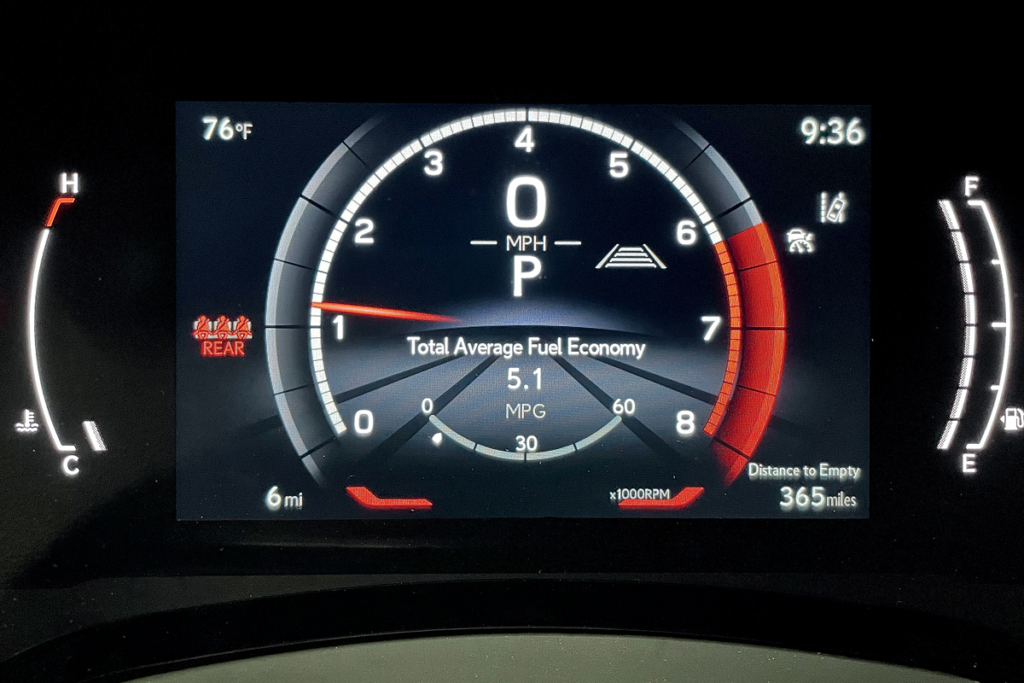
Virtual dashboard: seven inches, clearly lagging behind the competition
Lexus Gives In to Fingers
Ergonomically, the new RX largely repeats its predecessor, with one significant exception. Before, it was considered “not premium” to tap the screen with your finger, and a joystick or an equally inconvenient touchpad acted as an intermediary. Lexus has since given in to finger presses. As Steve Jobs put it, “We all have five styluses on each hand.” Modern kids even poke their fingers at TVs — and adults aren’t far behind.
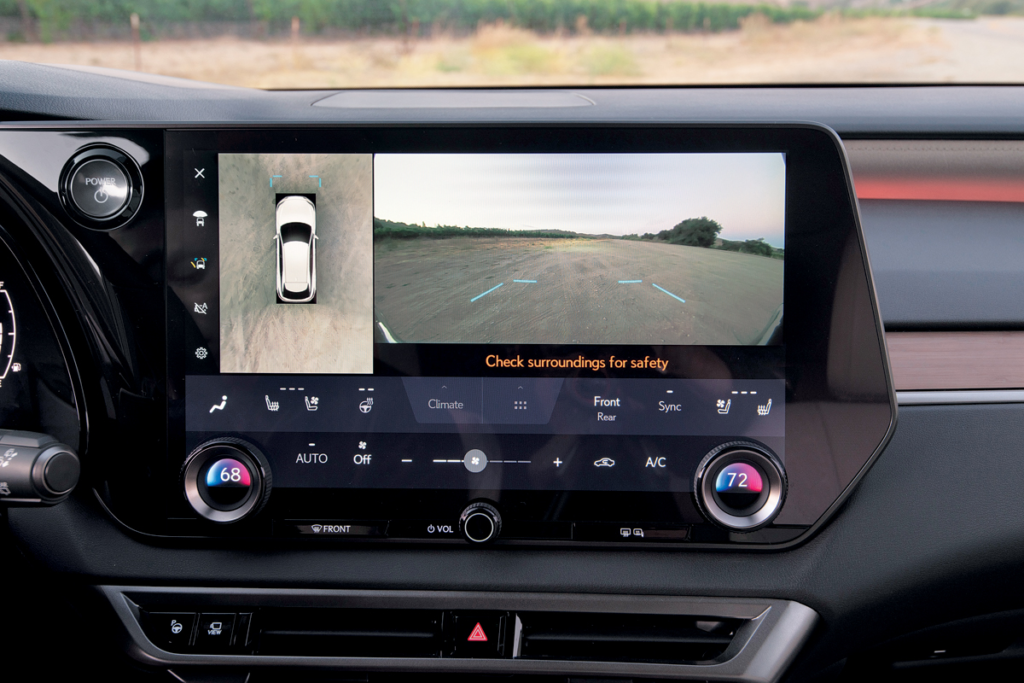
The resolution of the rear view and all-round cameras has become higher, but many competitors still have better resolution
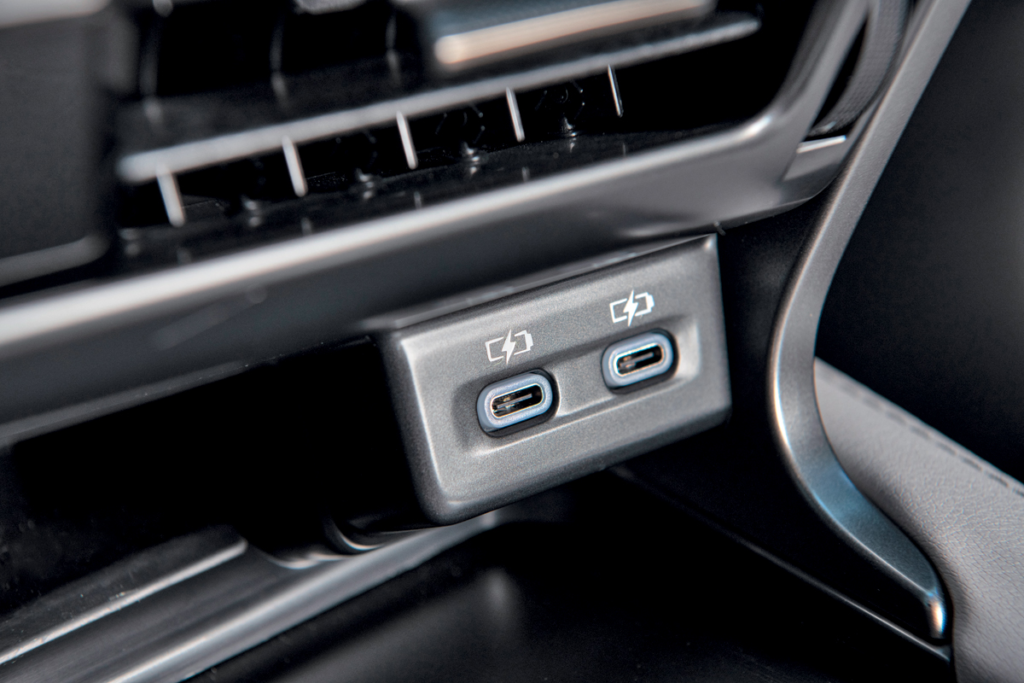
Wireless phone charging and USB-C ports for modernity
The base touchscreen has a 9.8-inch diagonal, while the optional one is a whopping 14 inches. The new Lexus Link Pro operating system is significantly faster than the previous one, with voice control, expanded online functionality, and remote access from a smartphone. Still, it’s not exactly state-of-the-art. This raises the question: why does everything Toyota and Lexus do seem to become outdated even at the design stage?
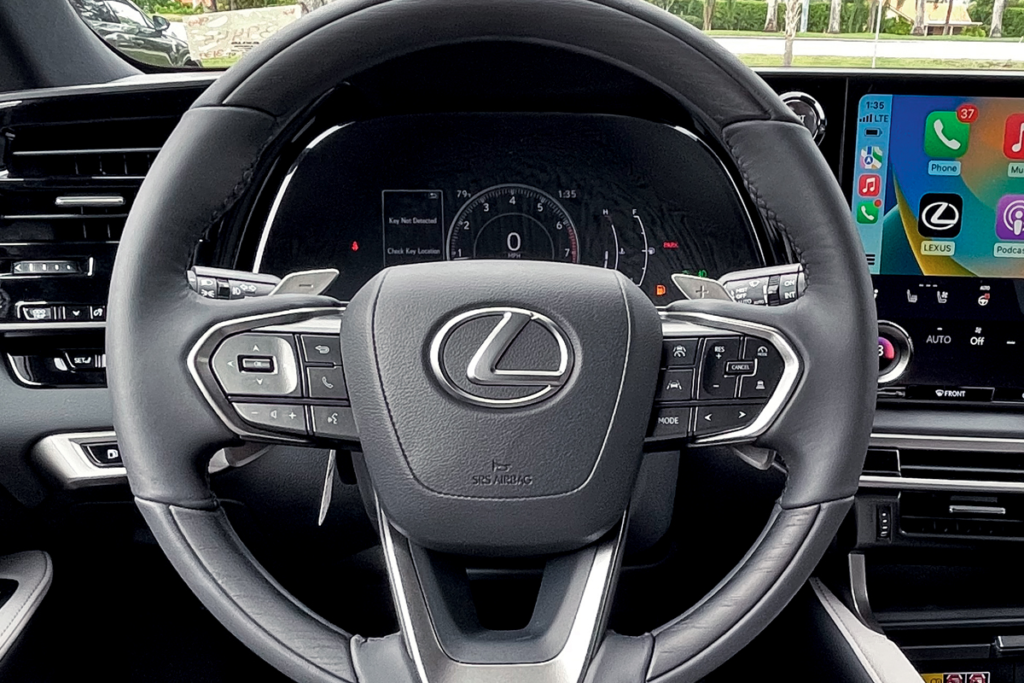
On expensive versions, the navigation buttons on the steering wheel are reassignable, and a projection display shows what they do
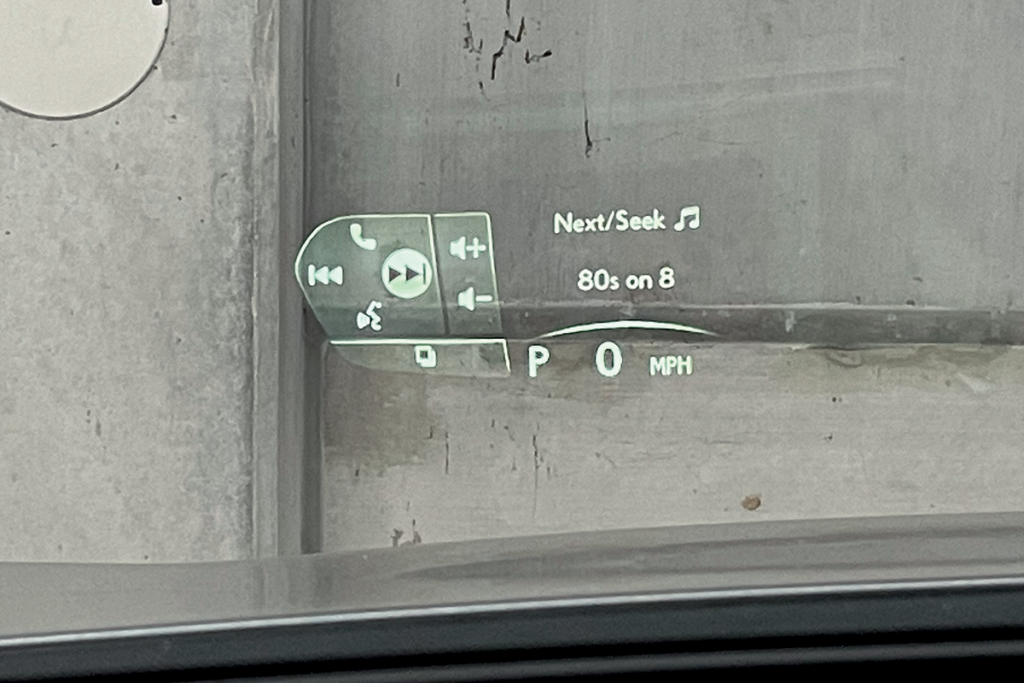
Displaying remappable button functions on the projection screen is always in view, but isn’t that a bit much for an RX owner?
Buttons That Change Their Minds
The configurable buttons on the steering wheel can be quite perplexing. Their functions change depending on the task, and the current value is reflected on the instrument panel or via an optional windshield projector. It’s a bit complicated. By the way, dealers told me that some customers are still searching for the previous-generation RX — those cars are still available.
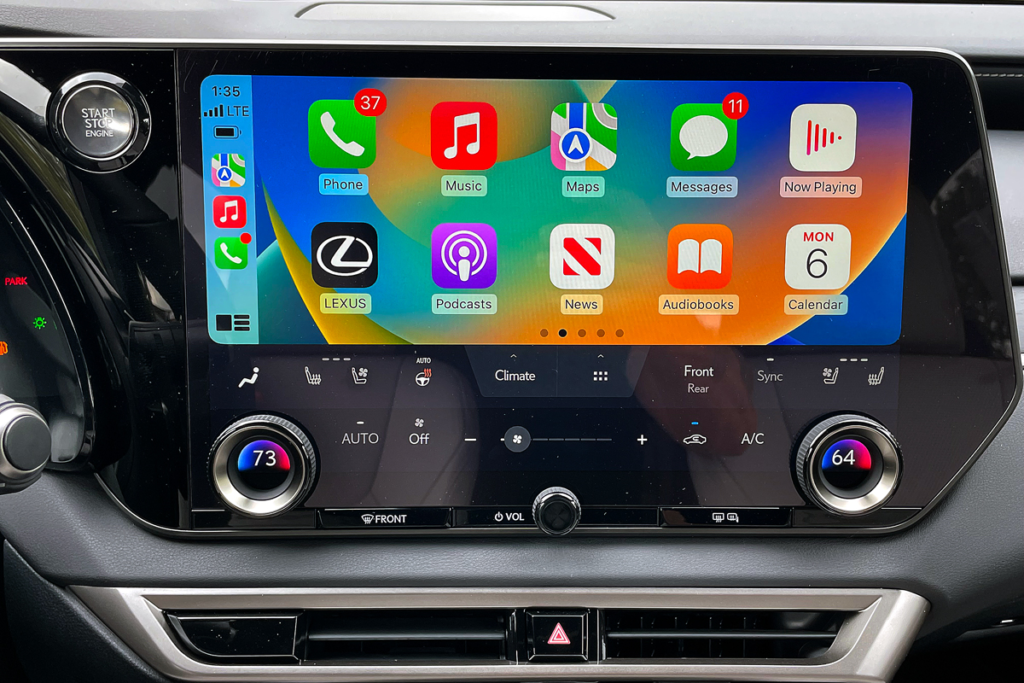
There are also some pleasant nuances. The virtual climate control panel is conveniently located at the bottom of the display and never changes, making it easy to manage. However, the two physical temperature control knobs on either side of the screen — while likely favored by conservative users — are quite easy to confuse with the Start/Stop button positioned just above.
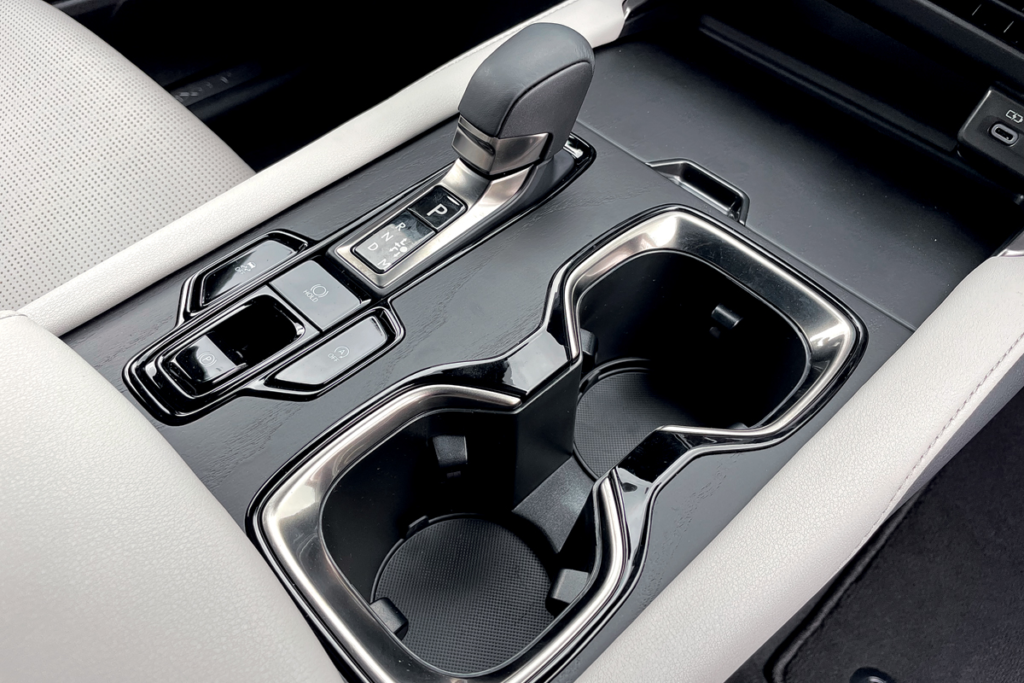
Inconvenient joysticks and touchpads are a thing of the past, but even the non-locking gear selector has become less straightforward — why was the P button separated?
The Gear Selector and the Electric Doors
Now, control of the transmission is handled by a non-locking joystick, whose operating logic is straightforward: towards you is “drive,” away from you is “reverse.” But blindly managing all modes, like before, is unlikely to work, since the Parking button sits separately.
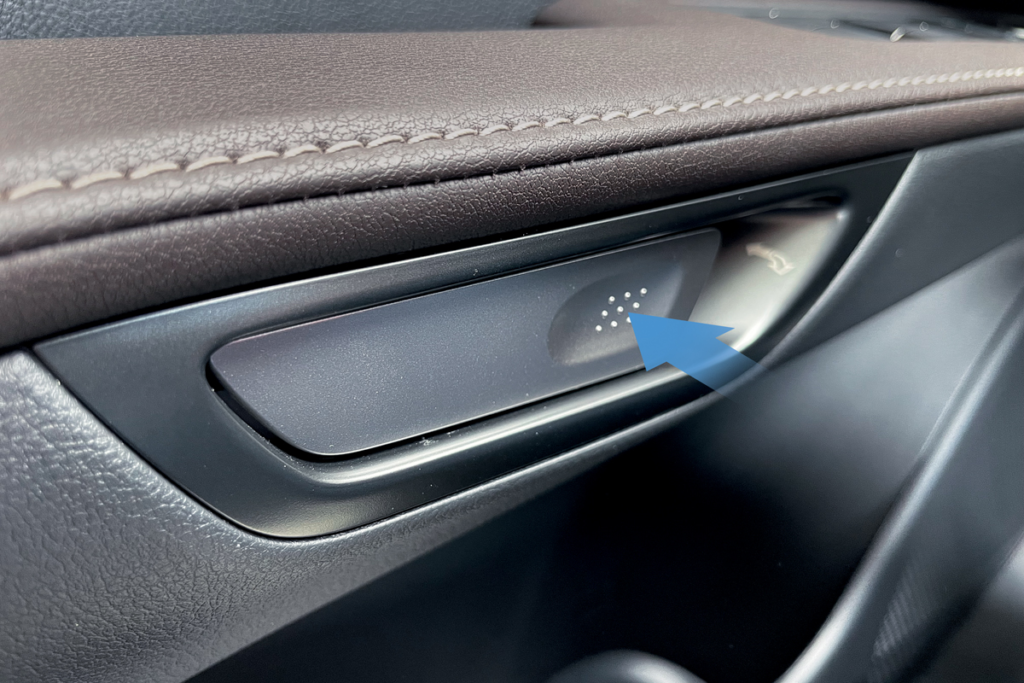
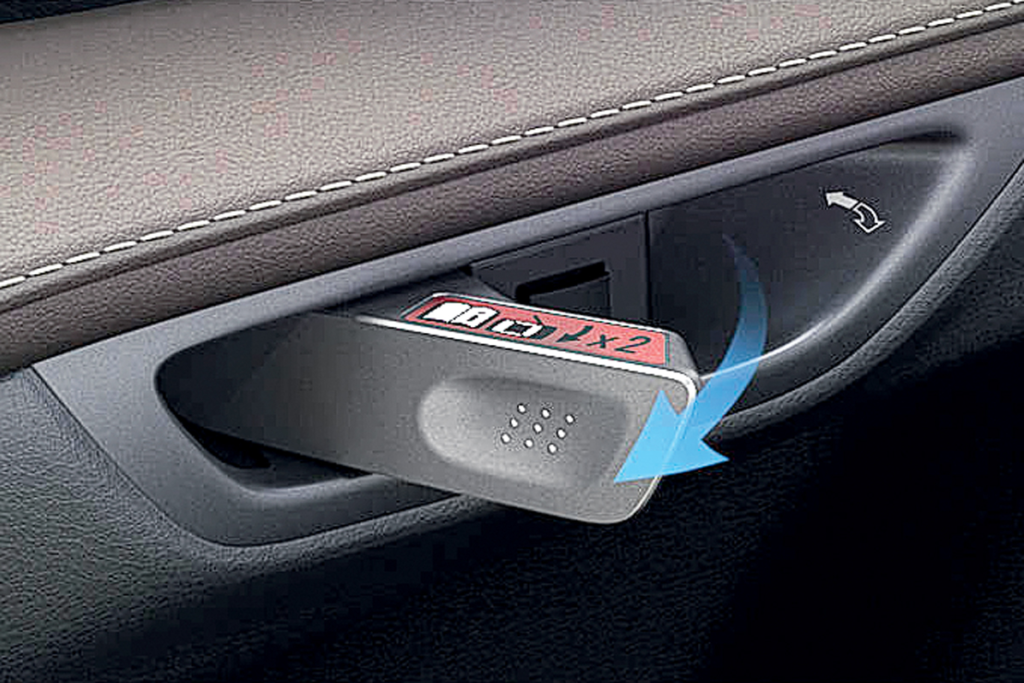
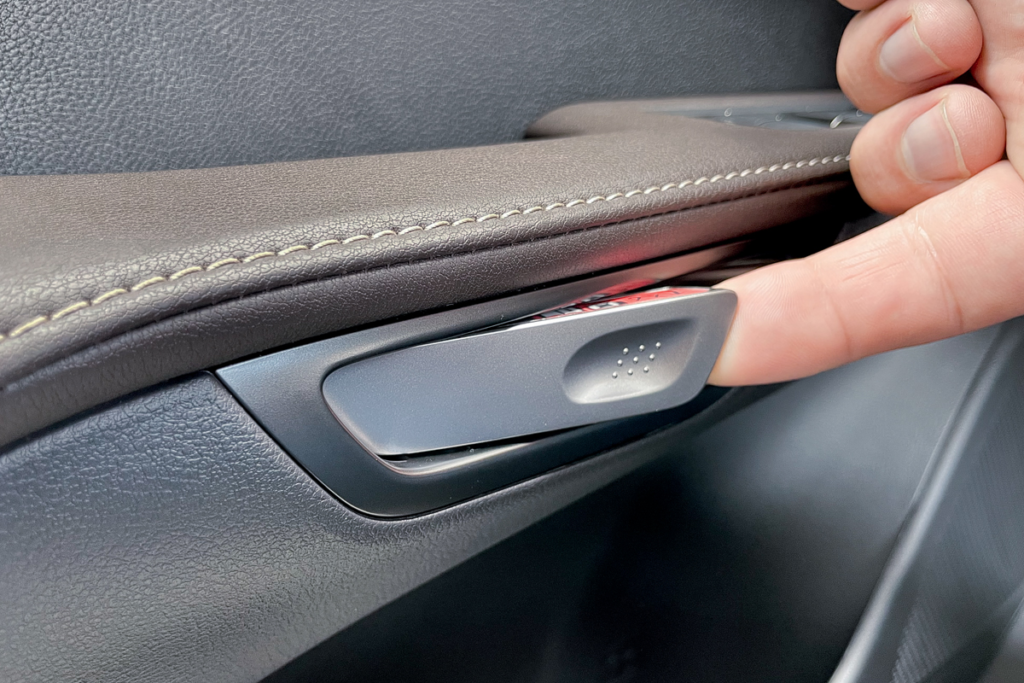
When you open it from the outside, it looks like the door hasn’t been closed. From the inside, everything happens a little more naturally: a press, a soft click — and the door is open
The electric door locks (e-Latch) come with quirks: to open, you need to press a button on the inner side of the stationary handle. From the inside, you just pull the handle, though a mechanical opening option remains — in that case, you need to lift it and pull it towards you.
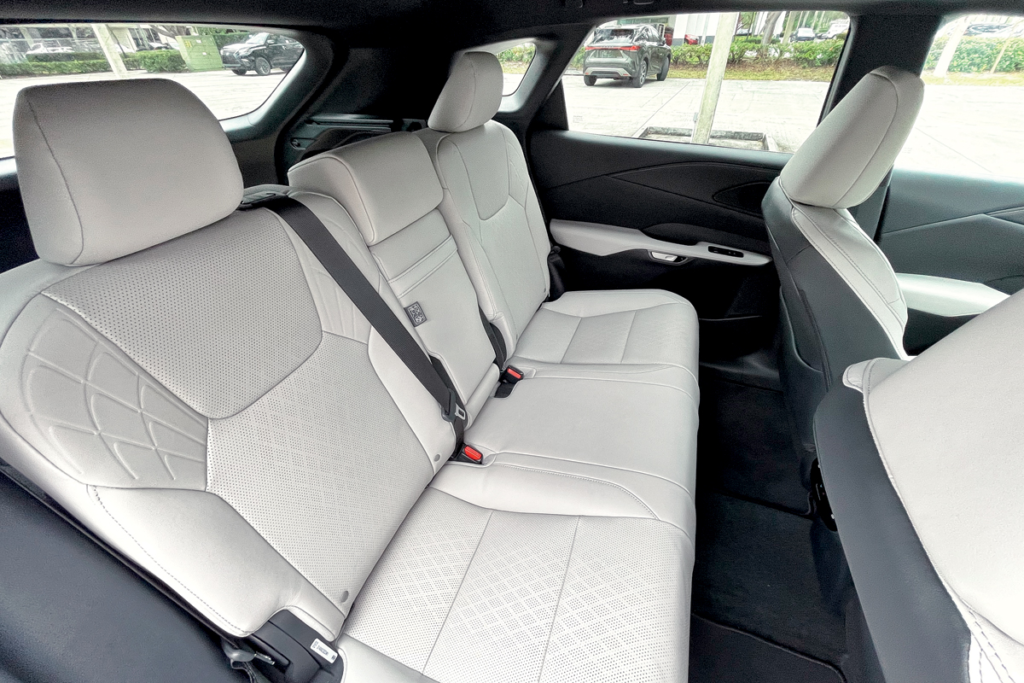
The distance between the rows of seats has increased by only 10 mm, and the seating position hasn’t changed much
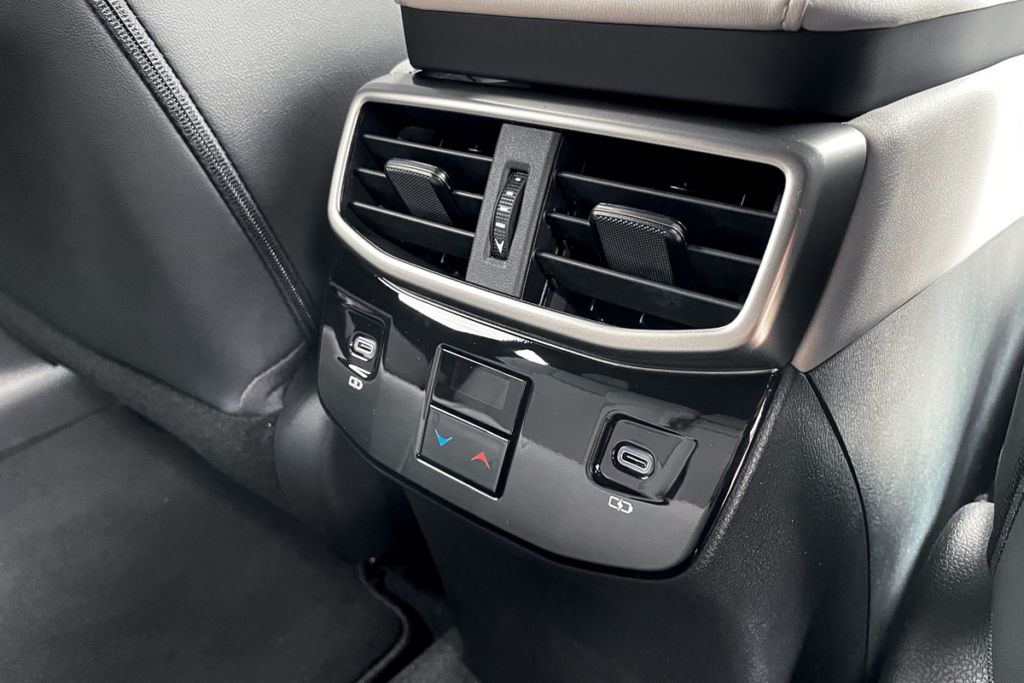
The third climate control zone is available in the base for a surcharge — ventilation and heating for the second row
Why such twists and turns? The electronics might not execute the door-opening command if it detects external danger — for instance, a cyclist approaching from the adjacent lane, or another car. Some versions even have a driver-monitoring camera above the steering wheel: the Lexus Safety System+ 3.0 electronic suite, which includes adaptive cruise control and numerous other assistants, can stop the car if it detects that the driver has fallen asleep or lost consciousness. So much for that average buyer age.
Engine and Performance: What Changed Under the Hood
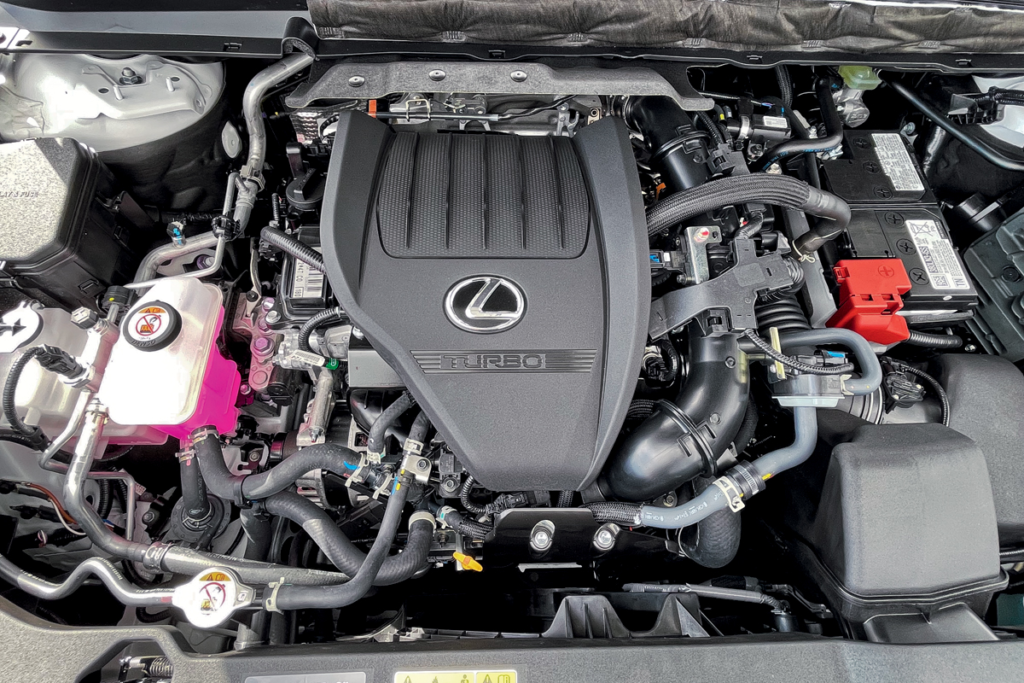
There are no more V6 engines in the lineup. Under the hood of the base version is a 2.4-liter turbocharged four-cylinder producing 279 hp and 430 Nm.
The version I tested was the RX 350, but now, instead of the 3.5-liter naturally aspirated V6, there’s a 2.4-liter turbocharged four-cylinder under the hood. It’s slightly less powerful at 279 hp, compared to the previous 299 hp. The main change for me is the engine sound: instead of the noble timbre of the old atmospheric “six,” you now hear the rattle of a four-cylinder at idle.
On paper, acceleration to 100 km/h is a second faster (7.1 seconds) thanks to increased torque, and flooring the accelerator from a standstill does show more effort from the new RX 350. But during normal acceleration, I didn’t feel any extra zest — likely due to turbo lag. The new engine is slightly more fuel-efficient at around 10 liters per 100 km, though my own RX 350 isn’t quite that frugal — closer to 12 liters per 100 km.
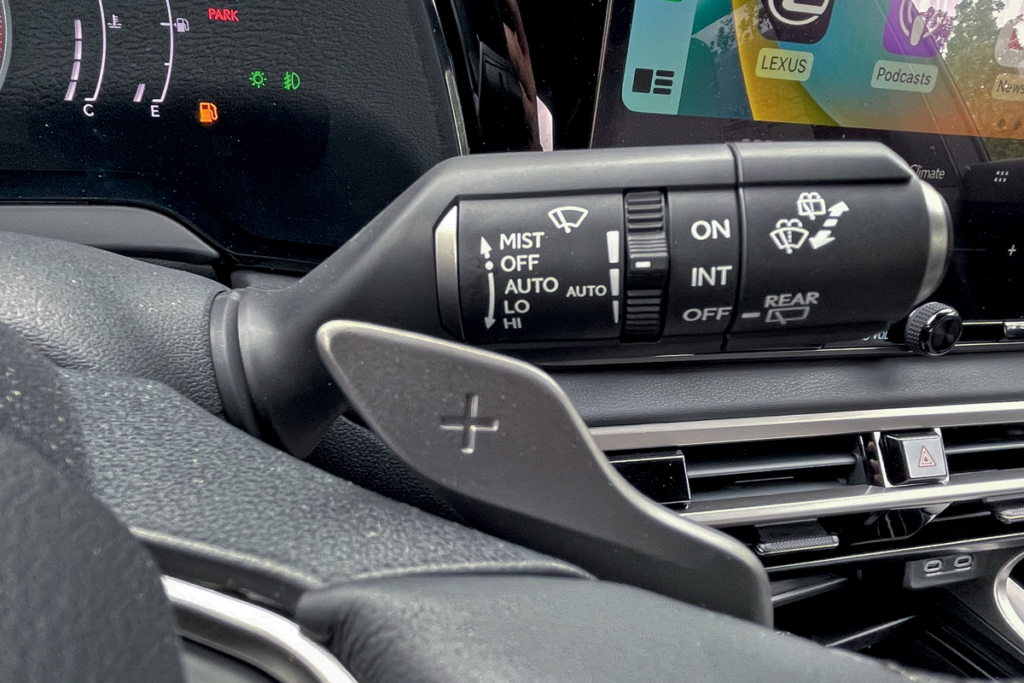
The steering-wheel-mounted paddles for Lexus are like a fifth leg to a dog — I have no desire to shift gears manually with them.
A New Platform Underneath
With the transition to the GA-K platform, the crossover has gained a rear multi-link suspension instead of the previous McPherson struts, and the center of gravity has been lowered. The body is stiffer, while the fenders and hood are made of aluminum, making the new RX 90 kg lighter than its predecessor. The front track is now 15 mm wider, and the rear track is a full 50 mm wider, giving the Lexus a somewhat Mercedes-Benz GLE-like rear stance.
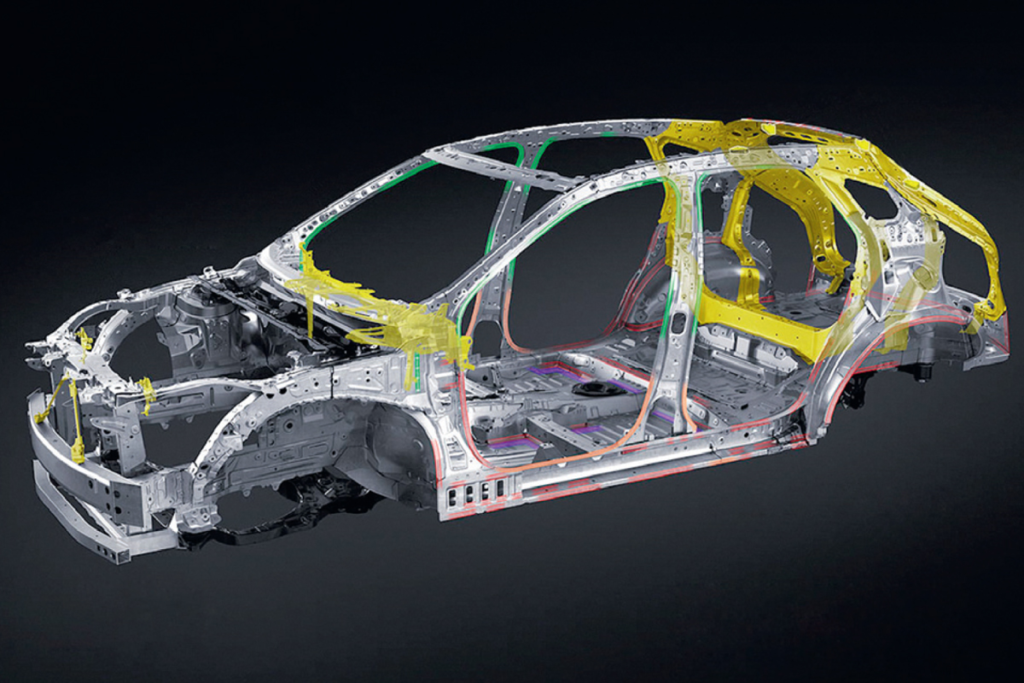
The body is now stiffer: reinforcements at the sills use 1180 MPa steel, and roof reinforcements use 1470 MPa steel. The fenders and hood are aluminum.
The RX still holds its line perfectly, and there are plenty of straight roads in America. The suspension has become a bit firmer over speed bumps, and body roll has decreased slightly. Overall, though, I can’t say the difference between old and new is significant enough to notice — especially for the typical Lexus buyer.
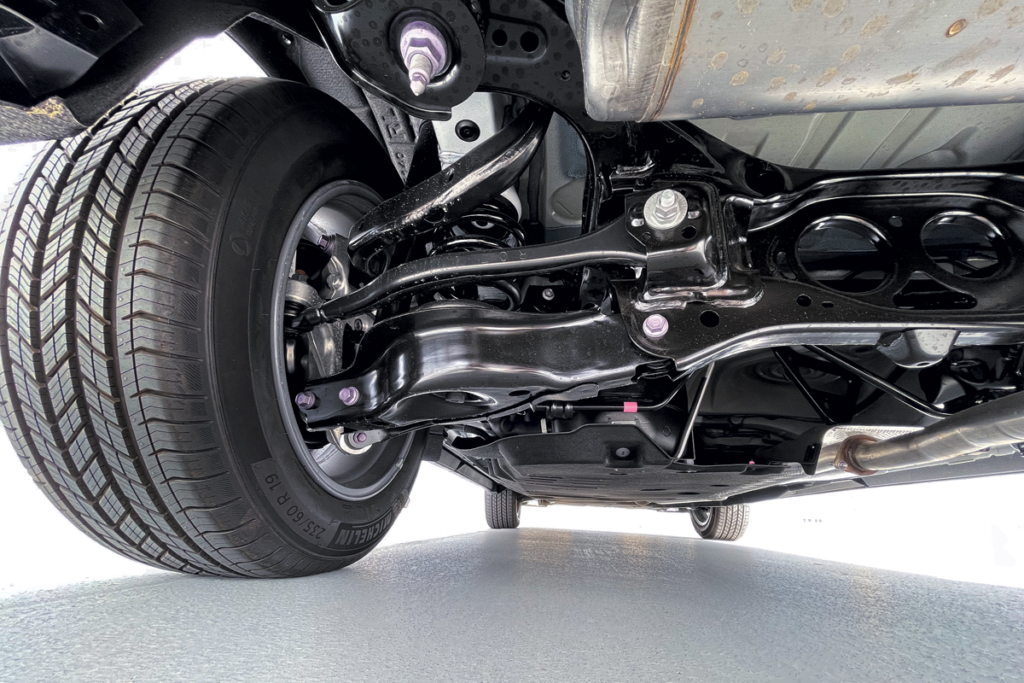
The new multi-link rear suspension instead of McPherson struts at the rear axle aims to improve handling.
Hybrid and Plug-In Lineup: RX 350h, RX 450h+, and RX 500h
Yes, the Lexus RX has never been — and probably never will be — a truly driver-focused car, despite its looks. However, in the advertising campaign for the new generation, Lexus emphasizes its wide range of electrified versions:
- RX 350h — the most accessible hybrid, pairing a 2.5-liter four-cylinder with an electromechanical continuously variable transmission for a total of 245 hp and 6.5 liters per 100 km combined. The optional E-Four full-time all-wheel-drive system uses a separate electric motor on the rear axle.
- RX 450h+ — a plug-in hybrid with E-Four all-wheel drive and more powerful electric motors, combining for 306 hp. Its 18.1 kWh lithium-ion battery delivers a 65-kilometer all-electric range.
- RX 500h F Sport Performance — the range-topper, with a 2.4-liter turbocharged engine and a six-speed automatic transmission using a clutch instead of a torque converter.
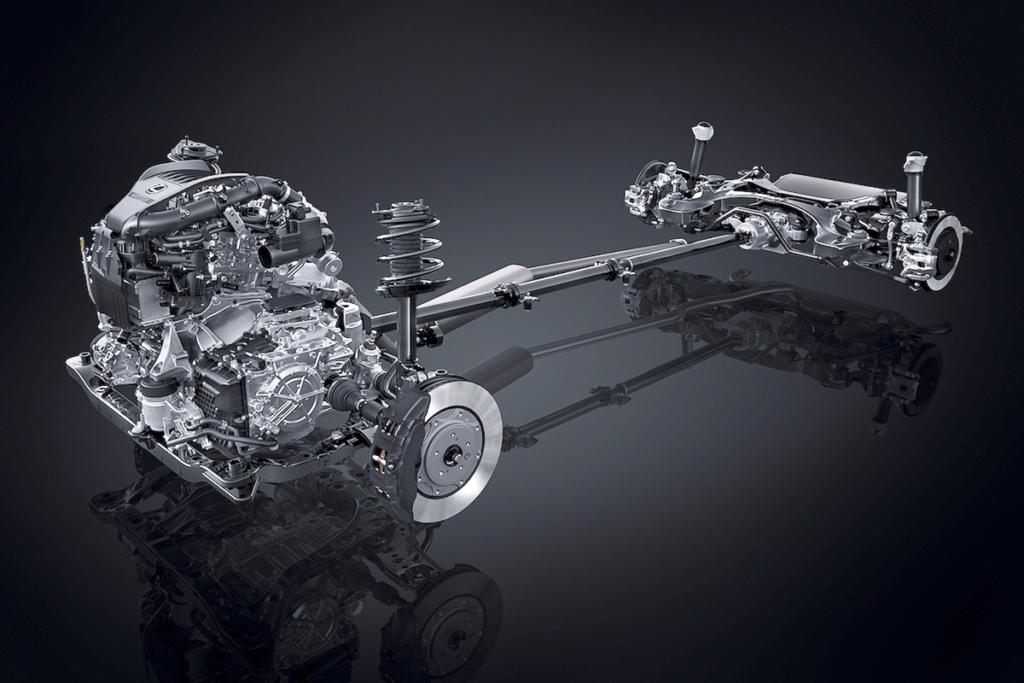
The base RX 350 can be either front- or all-wheel drive — with a clutch on the rear axle
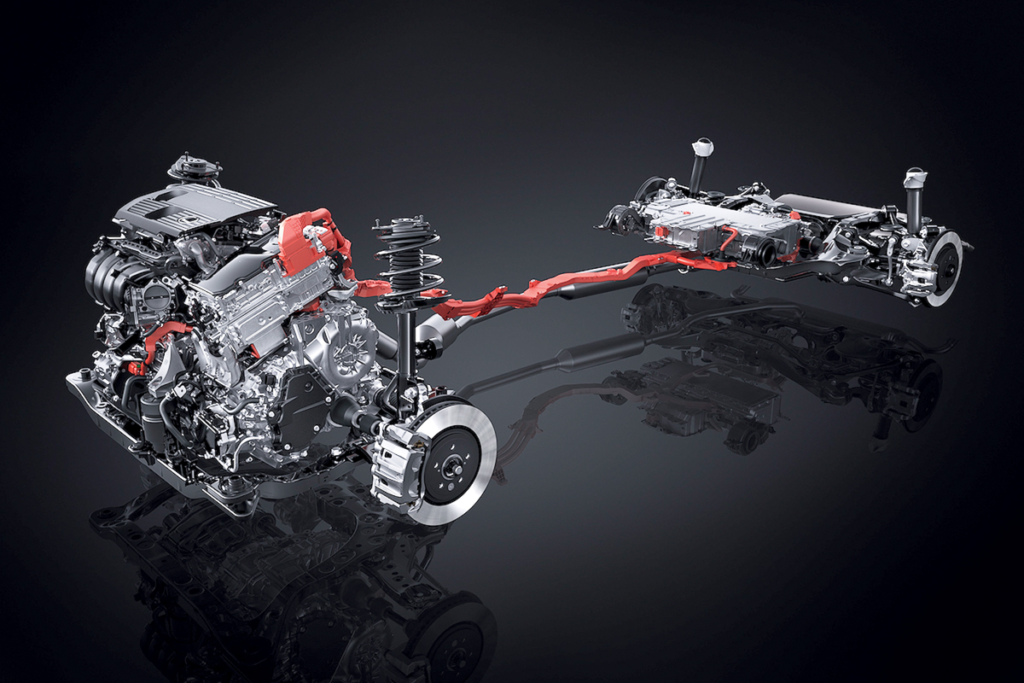
The hybrid version has an atmospheric “four” 2.5 under the hood. The battery of 216 cells sits under the rear seat, and the optional E-Four all-wheel drive is implemented via an electric motor on the rear axle
Why the RX 500h Dropped the Planetary CVT
Yes, on the RX 500h, the Toyota folks abandoned their signature electromechanical planetary gear-based CVT — practically a revolution, since the RX 500h became the first Lexus hybrid with a turbocharged engine (a similar scheme appeared slightly earlier on the body-on-frame Toyota Tundra and Sequoia).
Instead of developing a new generation of planetary CVTs for higher torque, the Japanese simply moved on — after all, the era of “pure” electrification lies ahead. The hybrid era of Toyota, which started with the Prius in 1997, lasted over a quarter of a century, so it’s time for the next chapter.
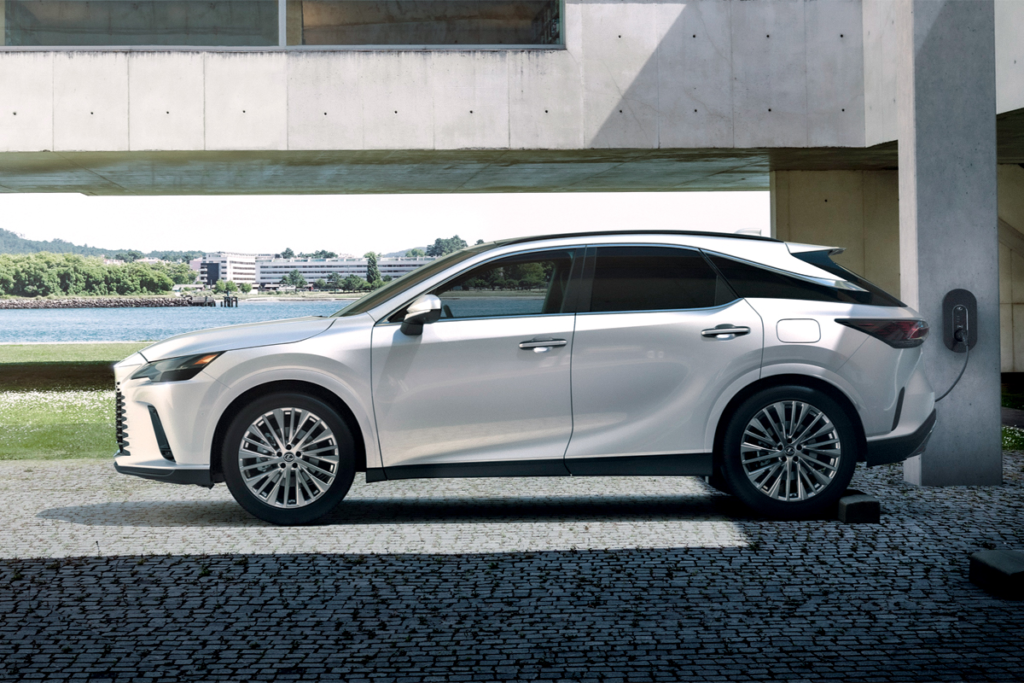
The plug-in hybrid RX 450h+ with all-wheel drive will arrive a bit later. It combines a 2.5-liter turbocharged four-cylinder with an 18.1 kWh lithium-ion battery under the floor and a rear E-Four motor.
The Range-Topping RX 500h
Interestingly, the top-tier RX 500h F Sport Performance has a rear module with an electric motor generating 109 hp and a traction battery borrowed from the new RZ 450e electric car — standardization at work. Combined output is 371 hp and 550 Nm, with 0-100 km/h in around six seconds. It also features a fully controlled chassis and six-piston front calipers. It would be interesting to take a ride in that, wouldn’t it?
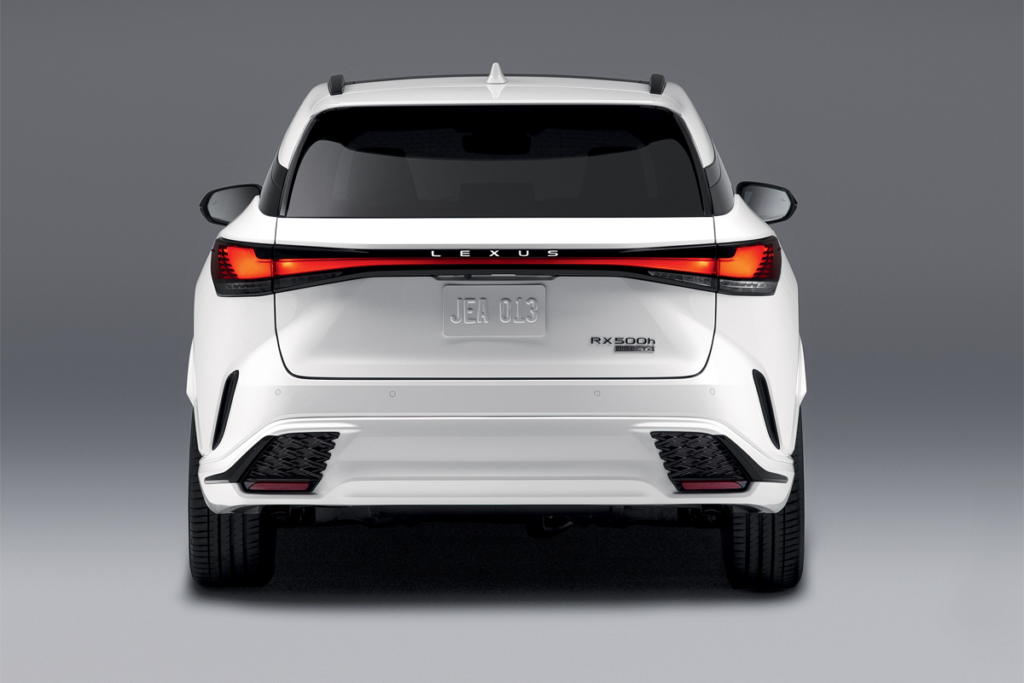
The RX 500h is a parallel hybrid with a Direct4 all-wheel drive system that automatically distributes torque between the front and rear axles in a ratio of 100:0 to 20:80

By the way, the extended Lexus RX L didn’t make it into the new generation lineup. However, this year, a separate three-row model, the Lexus TX, will be introduced.
Pricing: How the Lexus RX Compares to the BMW X5 and Mercedes-Benz GLE
So why is the new RX still so popular? Yes, it’s become slightly sportier, more composed on the road, and packed with more electronic gadgets. But the main aces in the deck remain the same: price, reliability, resale value, and size. Lexus and Toyota lead the industry in reliability and residual value, meaning the money spent on the car can be easily and quickly recovered. The RX is also cheaper than its German rivals, letting it pull in customers not just from direct competitors, but from lower-class models too.
Lexus competes with nearly every premium crossover in the $40,000–$70,000 range, which covers a huge portion of the market:
- Lexus RX 350 (base, front-wheel drive) — starts at $48,550
- Lexus RX 500h F Sport Performance (top trim) — up to $62,750
- BMW X5 sDrive40i — $61,600, more dynamic than any RX
- Mercedes-Benz GLE 350 (2.0-liter turbo) — $57,700, slightly more affordable but slower
(Prices exclude taxes and delivery.)
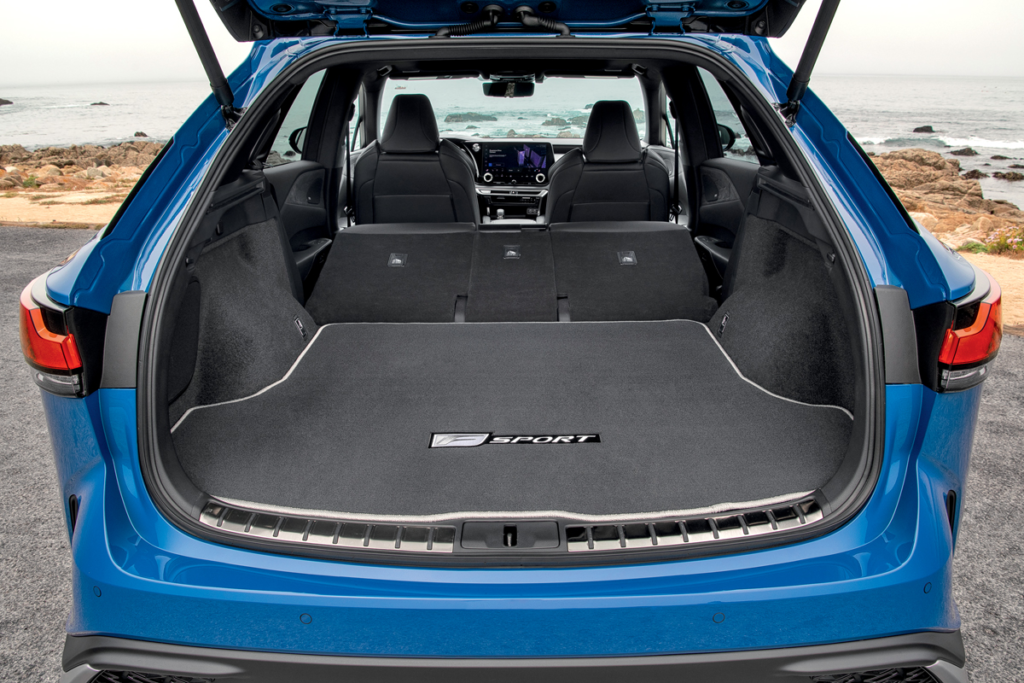
The trunk has increased compared to its predecessor and reached a volume of 461 liters according to European specification
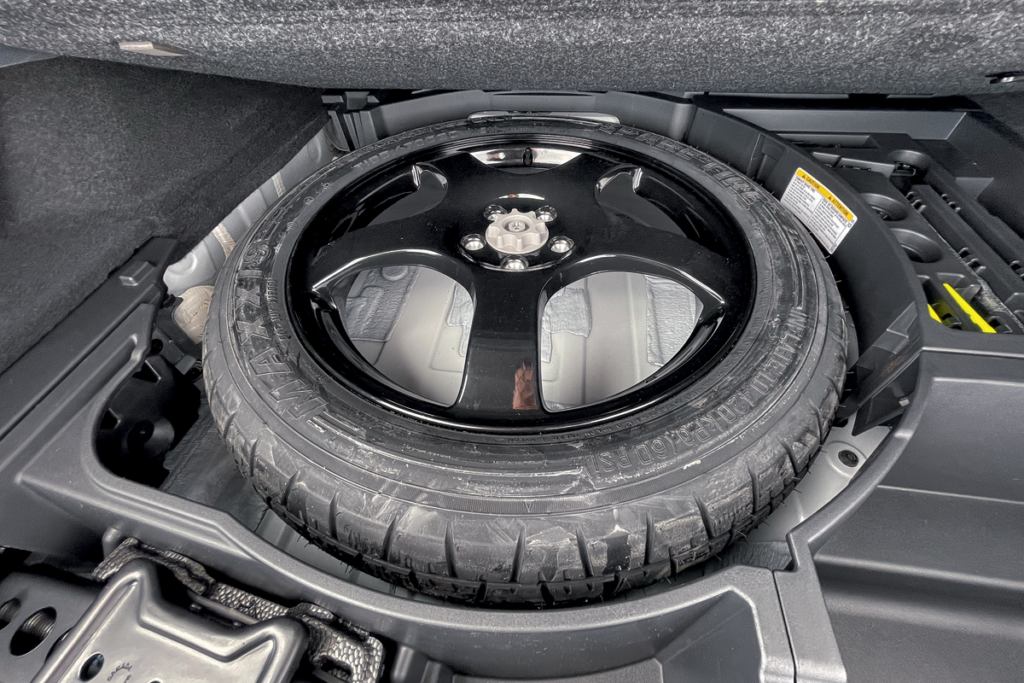
Underneath — a light-alloy spare tire
As a result, the RX sells a stable 100,000 to 110,000 units per year in America, despite financial crises or pandemics — making it the most popular premium crossover in the North American market. In Russia, the RX also led with a significant margin… in the past.
Final Verdict: Would I Trade My RX for the New Generation?
Definitely not. Firstly, Lexus is still not for me — I’ve certainly understood that now. The second reason is financial. American regulators raised the key interest rate to fight inflation, which surged to an inappropriate 6.5% after the pandemic. Today, the best car loan rate you can get is 6-7% per annum, assuming a good credit rating. It’s not unaffordable — it’s more psychologically unusual. After all, the rate on my loan was 4% a year and a half ago.
Remember how much I paid for my leased Accord? $297 a month. Forget about it: today you’ll pay one and a half times more for the exact same car, and the RX 350 will run you over a thousand a month.
So, for now, I’ll keep driving my fourth-generation RX, for which I pay only $620 a month — and its value has barely dropped.
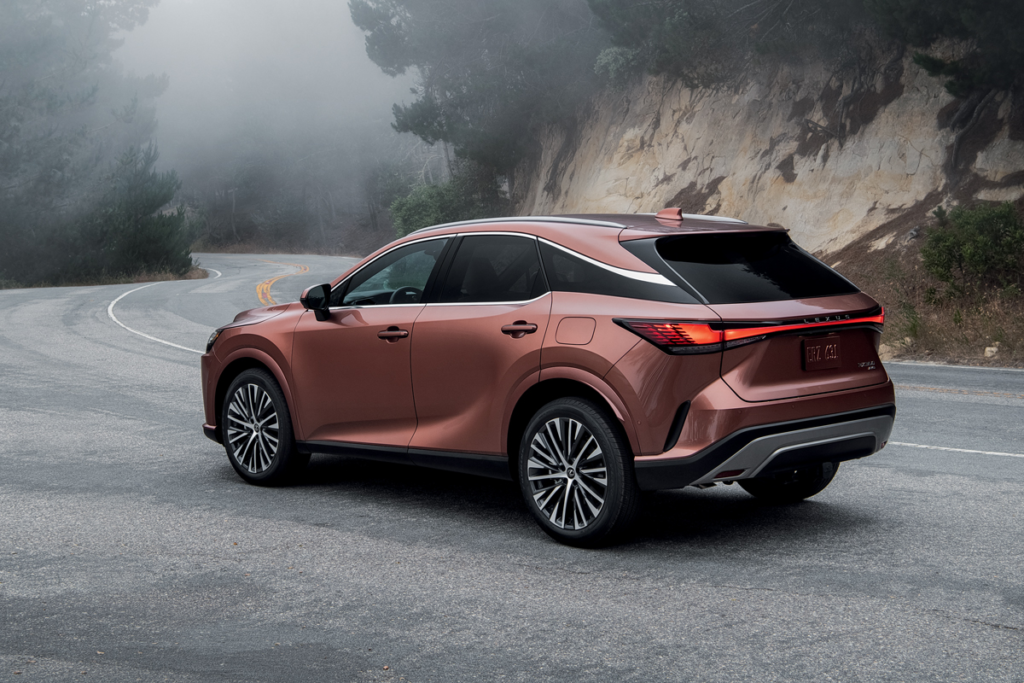
2023 Lexus RX 350 Specifications at a Glance
- Body type: Five-door SUV
- Dimensions: 4890 mm long, 1920 mm wide, 1710 mm tall
- Wheelbase: 2850 mm
- Front/rear track: 1655 / 1690 mm
- Ground clearance: 205 mm
- Approach/departure angle: 15° / 25°
- Cargo volume (SAE method): 838–1308 liters (rear seats folded)
- Curb weight: 1915 kg
- Gross vehicle weight: 2549 kg
- Engine: Turbocharged, direct-injection gasoline, inline 4-cylinder, front transverse
- Displacement: 2393 cm³ (bore 87.5 mm / stroke 99.5 mm)
- Compression ratio: 11.0:1
- Valves: 16
- Max power: 279 hp / 205 kW @ 6000 rpm
- Max torque: 430 Nm @ 1700–3600 rpm
- Transmission: 8-speed automatic
- Drive: All-wheel drive with multi-plate rear clutch
- Front suspension: Independent, McPherson struts
- Rear suspension: Independent, multi-link
- Brakes: Ventilated discs
- Base tire size: 235/60 R19
- Top speed: 200 km/h
- 0-97 km/h acceleration: 7.2 seconds
- Fuel consumption: 11.2 l/100 km (urban), 8.4 l/100 km (extra-urban), 9.8 l/100 km (combined)
- Fuel tank capacity: 67.5 liters
- Fuel type: Gasoline (AI-95—98)
Frequently Asked Questions
What engine does the fifth-generation RX 350 use? A 2.4-liter turbocharged four-cylinder with 279 hp and 430 Nm, driving through an eight-speed automatic. It replaces the 3.5-liter naturally aspirated V6, which made 299 hp.
Is the new RX bigger than the old one? No longer — the length stayed at 4890 mm. The wheelbase grew by 60 mm to 2850 mm, the rear track by 50 mm, and the car is 90 kg lighter thanks to aluminum fenders and hood.
Which electrified versions are offered? Three: the RX 350h hybrid with 245 hp, the RX 450h+ plug-in with 306 hp and a 65-kilometer electric range, and the RX 500h F Sport Performance with 371 hp and 550 Nm.
How does the price compare with German rivals? The RX 350 starts at $48,550 and the RX 500h F Sport Performance reaches $62,750, against $61,600 for the BMW X5 sDrive40i and $57,700 for the Mercedes-Benz GLE 350, before taxes and delivery.
Is there still a three-row RX? Not in this generation — the extended RX L was dropped. A separate three-row model, the Lexus TX, was set to arrive in its place.
Photo: Alexey Dmitriev | Lexus
This is a translation. You can read the original article here: Новый Lexus RX и его стелс-технологии. Наш тест в Америке

Published October 11, 2023 • 15m to read