
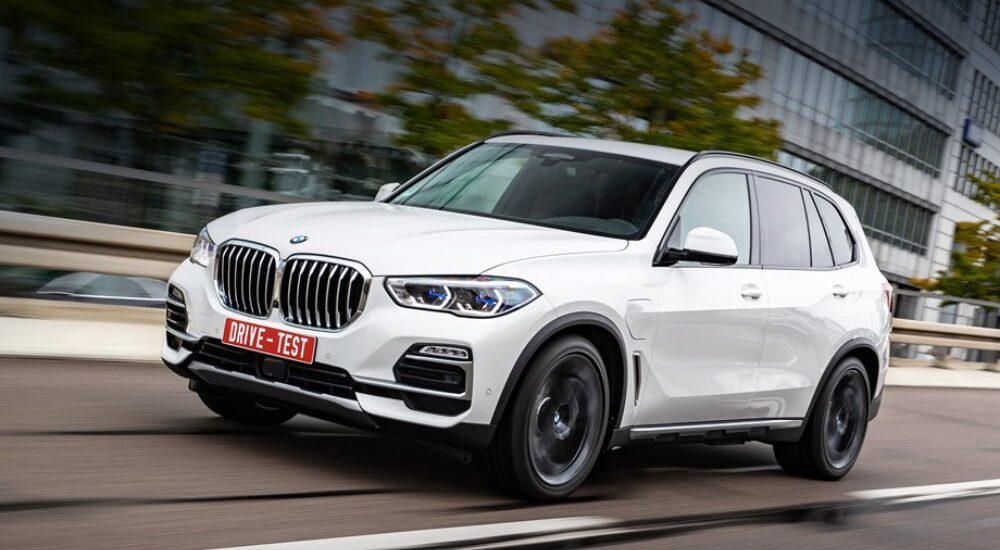

BMW first talked about a plug-in hybrid version of the X5 G05 crossover back in the fall of 2018, but production didn’t actually start until August 2019. Ahead of the car’s European sales launch, we were invited to a BMW X5 xDrive45e driving presentation, combined with a test drive of the closely related X6.
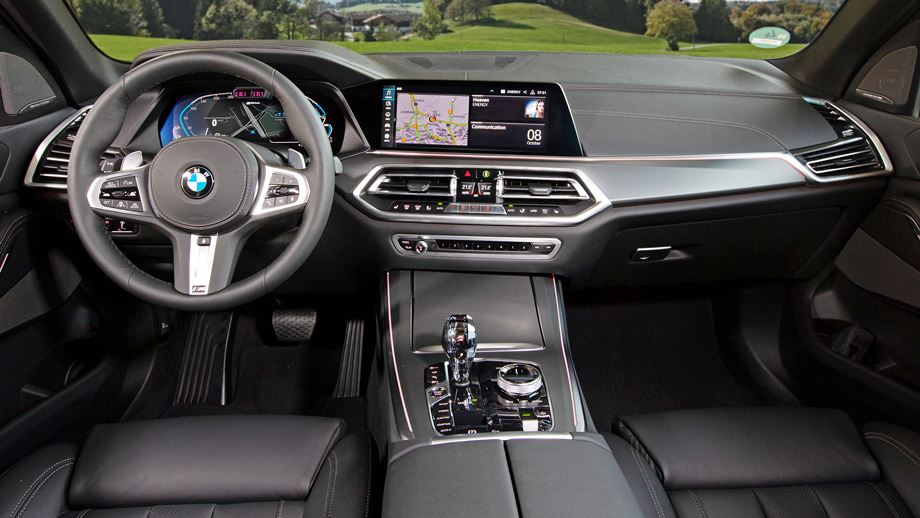
From xDrive40e to xDrive45e: How the Hybrid Has Evolved
The old xDrive40e, based on the previous-generation X5 F15, was part of a special iPerformance lineup alongside the 7 Series gasoline-electric sedan. That model is largely forgotten today, even though the current X5 hybrid actually delivers more “performance.” Instead of the old two-liter, 245-horsepower four-cylinder engine, the new-generation hybrid uses a six-cylinder 3.0-liter engine producing 286 hp.
Key Specs: Battery, Range, and Electric Motor
Judging by the numbers, the electric side of the system hasn’t changed much: the synchronous motor built into the eight-speed ZF automatic transmission still produces 113 hp. What has changed is the battery — capacity has grown to 24 kWh, up from 9 kWh in the previous generation. As a result, the claimed electric-only range has nearly tripled, now rated between 67 and 87 km on the WLTP cycle.
- Engine: 3.0-liter turbocharged six-cylinder, 286 hp
- Electric motor: 113 hp, integrated into an 8-speed ZF automatic
- Combined output: 394 hp
- Battery capacity: 24 kWh (up from 9 kWh previously)
- Electric-only range: 67–87 km (WLTP)
- 0–100 km/h: 5.6 seconds
For comparison, the BMW 745e sedan uses the same powertrain, but with a battery half the size and power sent only to the rear wheels. Among BMW’s plug-in hybrids, the xDrive45e leads in electric range — except for the X1 xDrive25Le, a compact crossover built specifically for the Chinese market.
Driving in Electric Mode: Quiet but Unremarkable
Turn the ignition on and the turbocharged six-cylinder engine stays silent — the car is ready to go and pulls away without a sound. Hybrid is the default driving mode, though a silent Electric mode can also be selected in the settings. Our test drive route didn’t allow for draining the battery without the combustion engine kicking in, and honestly, we weren’t eager to try — the xDrive45e isn’t especially impressive as a pure electric car.
Acceleration in electric mode is modest. The electric motor produces 265 N·m of torque — plenty for something like a Mini, but the X5 weighs almost 2.5 tons, so it accelerates with visible effort. The car responds quickly to throttle input, but there’s no real reserve of power behind it. What it does deliver is quiet: aside from wind noise, tire hum, and a faint whine from the transmission, there’s very little to hear. The turbo engine stays dormant even at full throttle, waking up only when kickdown kicks in.
Hybrid Mode Performance: Faster Than the Numbers Suggest
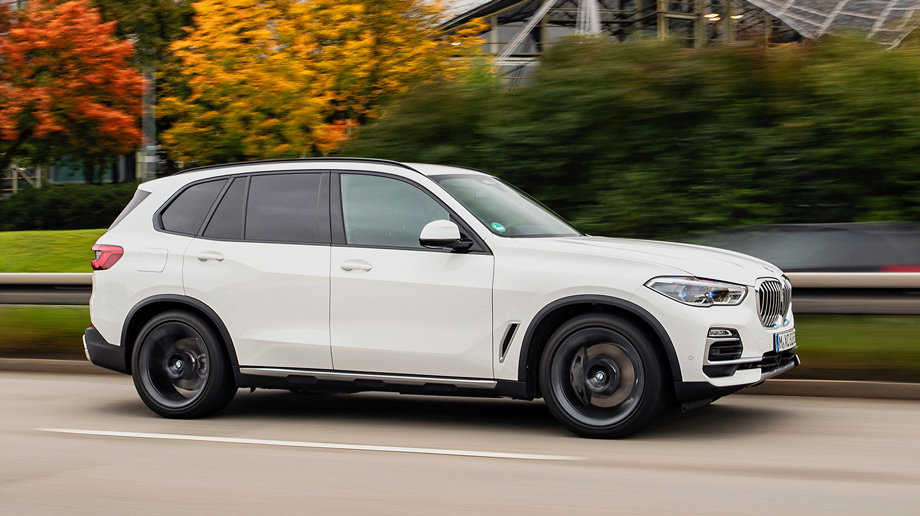
Switch to hybrid mode, though, and the picture changes. Acceleration feels genuinely convincing, even if it doesn’t push you back into your seat. The crossover doesn’t deliver dramatic thrills, but it builds speed quickly and confidently. The combined gasoline-electric powertrain produces 394 hp — 54 hp more than the standalone turbo engine in the xDrive40i version (340 hp). That advantage is partly offset by weight: the hybrid is nearly half a ton heavier than its gasoline sibling. As a result, it reaches 100 km/h a tenth of a second slower — 5.6 seconds versus 5.5. Still, that’s a clear improvement over the previous-generation hybrid, which needed 6.8 seconds for the same sprint.
In hybrid mode, you barely notice what’s happening under the hood. The turbo engine seems to spend a surprising amount of time switched off, especially while coasting. As expected in a car that leans heavily on regenerative braking, the brake pedal has a slight give when the system blends in feedback — but braking distances never felt inconsistent or hard to judge.
Ride, Handling, and Comfort
Beyond the powertrain, there’s little to set the hybrid apart from its gasoline-powered siblings on the same platform. Ride comfort remains smooth even on the test cars’ 21-inch wheels. Our test vehicles were also fitted with the optional variable-ratio steering system paired with fully adaptive suspension, and the combination pays off in corners — the hybrid feels agile and light on its feet, much like the standard X5 equipped with the same chassis hardware.
How the X5 xDrive45e Compares to Rival Luxury Hybrid SUVs
The X5 xDrive45e doesn’t have much direct competition yet. The closest rival is the Porsche Cayenne E-Hybrid, whose combined output is higher at 462 hp. The Audi Q7 60 TFSI e (455 combined hp) is close to launch. Mercedes has also introduced a hybrid version of the new GLE, though it remains uncertain whether the 320-hp diesel-electric GLE 350 de will be sold in every market.
- Porsche Cayenne E-Hybrid: 462 combined hp
- Audi Q7 60 TFSI e: 455 combined hp (pending launch)
- Mercedes GLE 350 de: 320 hp diesel-electric (limited market availability)
What’s Next for BMW’s Plug-In Hybrid Lineup
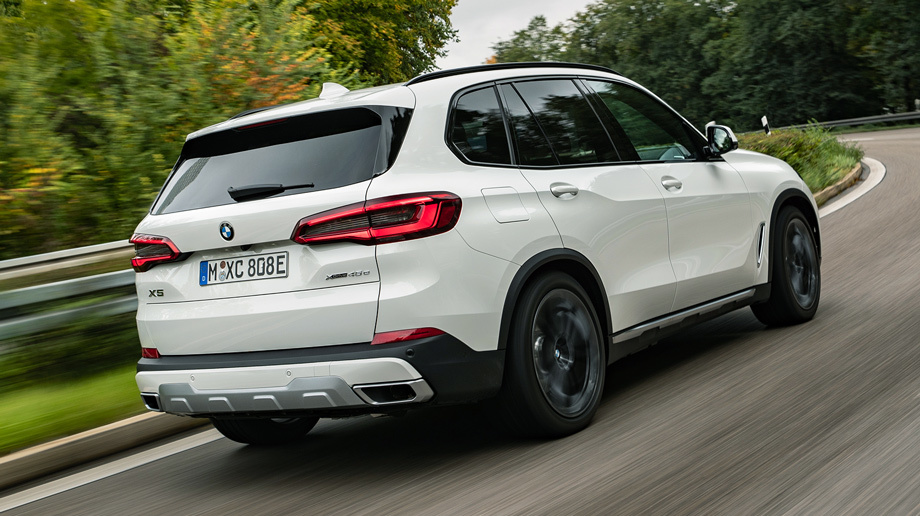
Starting in 2020, several European cities introduced eDrive zones, where hybrids are required to switch automatically to electric-only driving on command from the navigation system. Given this shift, BMW’s plug-in hybrid lineup is set to keep growing. The X3 PHEV and X1 PHEV crossovers are next in line, joined by a plug-in version of the 3 Series wagon.
This is a translation. You can read the original here: https://www.drive.ru/test-drive/bmw/5dd2701aec05c4f019000084.html

Published May 18, 2023 • 5m to read