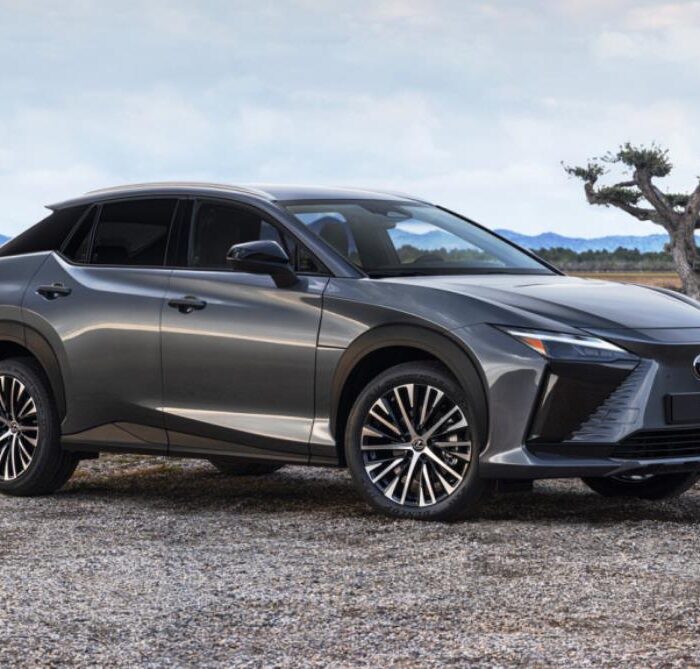


For the first time in the history of Autoreview tests, we introduce a Chinese coupe! While we’ve seen a variety of crossovers, flamboyant liftbacks, occasionally attractive sedans, and even the HiPhi Z, a classic sports car has never graced our pages. As coupes become a dwindling breed globally, one must wonder if Hozon Auto has erred with its Neta GT model. This concern arises particularly as traditional manufacturers like Jaguar wind down their sports car productions—the F-Type’s production at the Castle Bromwich plant will cease in June. Currently, it is making a farewell appearance in Autoreview’s comparative tests.


The Jaguar Still Sounds Right
The F-Type’s roar is unmistakable. This is not the F-Type R with the five-liter supercharged engine that could stir a neighbourhood, but the S, with its three-liter supercharged V6, growls quite adequately without tipping into the grotesque. I remember a comparison a decade ago in which the R version was overshadowed by its rivals: the Chevrolet Corvette outshone it for flamboyance, and both the Porsche 911 and the BMW M4 handled far more sharply. In the end, the street-tough persona attributed to the Jaguar left me indifferent.

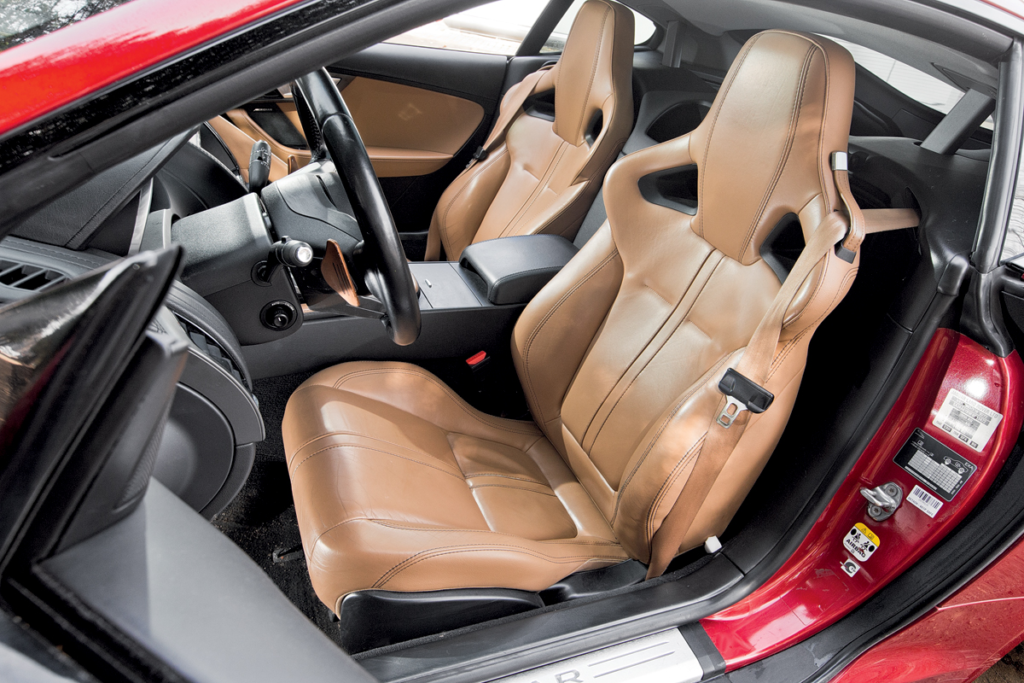
I have always respected the striking exterior, though, and the unusual interior with its beautiful rigid seats. Cross the aluminium sill, settle into the cockpit, and the atmosphere takes hold immediately. That enormous hood — the largest single piece of aluminium in car manufacturing — confirms that the Jaguar F-Type is a car with a personality of its own, which is exactly what you want from a coupe.

A Hundred Thousand Kilometres In
Even after more than a hundred thousand kilometres this car remains vigorous and accelerates close to its official figures. The eight-speed ZF automatic prefers the higher gears in normal mode and abandons them briskly in sport, punctuating every shift with a light jolt, as if to say: keep up, I am trying not to interrupt the flow of power. Age has told on the rear dampers, though. The rather sharp steering makes them and the anti-roll bars work hard to keep control — not always successfully.


Too Sharp for Its Own Good
That excessive sharpness, now a hallmark of every Jaguar of this generation, does not appeal to me. Driving one is a constant high-tension exercise: on 295 mm rear tires the F-Type does little to hold a straight line and sways from side to side instead. The tires were worn, too, so we did not test its top speed, even though the F-Type S will exceed 250 km/h. The need for heightened concentration persists even on the straights, and precision is a long way from optimal in a manoeuvre.

A Restless Cat
And yet every trip in an F-Type is an event, particularly with the stability system switched off. This is rear-wheel drive with a genuine mechanical limited-slip differential, and the 380 hp and 460 Nm from the V6 handle those broad tires perfectly well. The Jaguar is temperamental in a power slide, though, reluctant to hold a steady angle, alternating between adding to it and trying to correct it. A restless cat.

This winter I drove a similar all-wheel-drive coupe and enjoyed it. Its over-eagerness to slide meant constant steering corrections through a bend, but it made a fascinating and unconventional choice for snow. On icy asphalt it did not shift its line the way this one does.

Twenty Millimetres of Tire Changes Everything
The F-Type’s behaviour is highly sensitive to the choice of tire and its dimensions, and 295 mm is clearly ill-suited to our conditions. A few days after the test, Danila, who owns this Jaguar, switched to 275 mm rear tires — also factory approved — which made the F-Type considerably more manageable. Worth bearing in mind if you are considering the last gasoline Jaguar coupe. Prices for relatively recent examples hover around 5 million rubles.
Which is precisely what eTiger asks for a brand-new Neta GT 580 AWD.

What the Neta Does Not Have
Indeed, what doesn’t it have? No gasoline engine, no supercharger, no comfortable seats, no stylish exterior, no cosy interior, and no rear-wheel drive… Actually, I am mistaken there — the Neta is also available as a single-motor version, with one 231 hp motor on the rear axle. The dual-motor GT 580 AWD delivers 462 hp and claims a brisk 3.7 seconds to 100 km/h. As is typical of a Chinese electric car, the Neta falls seven tenths of a second short of its advertised performance. The acceleration is still vigorous, if without special effects: a thump in the back from the seat, the front wheels spinning slightly, and 4.4 seconds later you are at 100 km/h, with the speed capping at 180 km/h on the speedometer nine seconds after that.
| Parameter | Jaguar F-Type S | Neta GT 580 AWD |
|---|---|---|
| Maximum Speed (km/h) | — | 181.6 |
| Acceleration Time (s) | ||
| 0—50 km/h | 2.6 | 2.1 |
| 0—100 km/h | 5.2 | 4.4 |
| 0—150 km/h | 10.4 | 8.9 |
| Quarter Mile (s, 400 m) | 13.3 | 12.3 |
| Braking from 100 km/h | ||
| Distance (m) | 37.1 | 35.5 |
| Deceleration (m/s²) | 10.4 | 10.8 |
The Number That Actually Astonishes
Not impressed? Hozon Auto means to astonish you with different numbers. At home, the dual-motor Neta GT is priced at just over $31,000, and the base model asks $26,000. It is the most affordable car with a sporting image on the market.

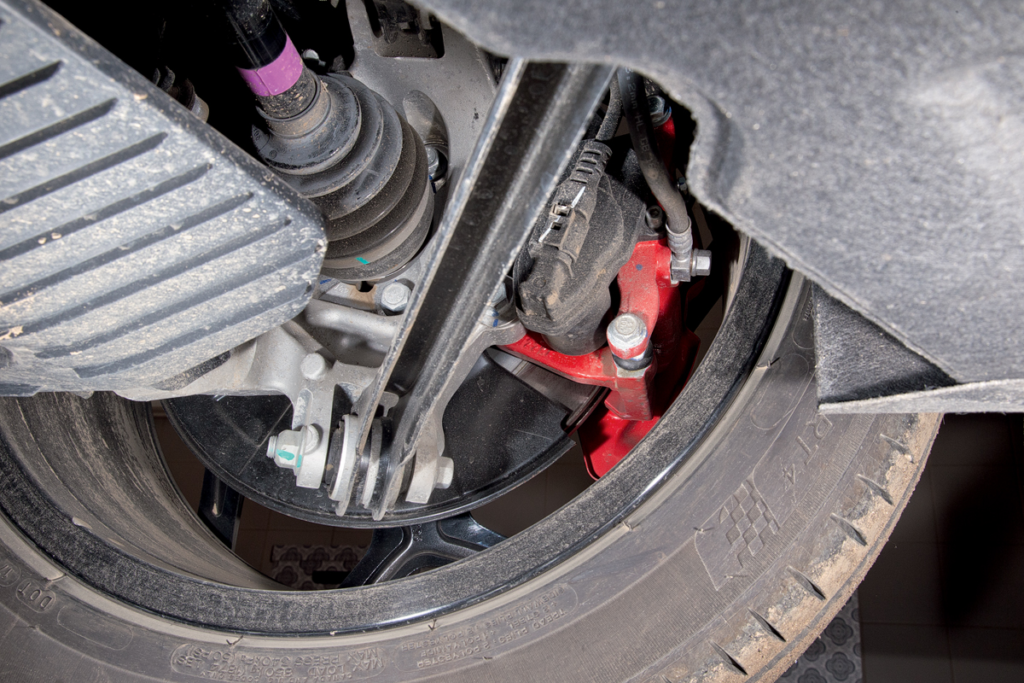
And it does not feel cheap at all. The meticulously fitted body panels, the eclectic but memorable detailing, the two-tone interior under an expansive glass roof — all of it speaks well. Look at the aluminium double wishbones at the front, or the complexity of the rear links. The Neta GT looks far more expensive than what it costs in China.

Not a One-Hit Wonder
Hozon Auto is not, moreover, a one-hit wonder assembled hastily out of borrowed money. Since entering the market six years ago with the compact and straightforward N01 crossover it has broadened its range substantially: the large Neta S sedan, the Neta U crossover, the GT coupe, and its own Yuhne and Shanhai platforms. By the end of last year Hozon Auto had produced 380,000 vehicles in total.

The Numbers Are Genuinely Good
Another question is whether modern technology and manufacturing culture always translate into the pleasure of driving. Automotive culture matters here, and Hozon Auto does not have it yet. The Neta GT is a commendable car, as our objective results show. I have already mentioned the acceleration; the braking is just as good. Stopping in under 36 metres from 100 km/h, in an electric car with a curb weight of 1972 kg and on relatively modest 245 mm Michelin Pilot Sport 4 tires, is a remarkable achievement. So I withdraw any earlier scepticism about the covers hiding the rear floating calipers.

And 83 km/h through the slalom? For the season’s first runs, on a post-winter track still strewn with dirt, that is an exceptional result. The stability system intervened minimally and barely scrubbed any speed off, so the credit belongs mostly to a balanced chassis.

But a Coupe Is Not Only Numbers
If we handed out diplomas on test results alone, the Neta would take top honours. But a car — and a coupe above all — is not only about numbers; it is also about the theatre of driving. The Neta has yet to learn how to stir a driver, mainly because of very poor reactive steering feel. At first the wheel is vague, and then the electric motor makes it as heavy as a fully loaded dump truck. Even at low speed you are constantly aware of its resistance. The response timings suit a family sedan better than a coupe. It needs more zest, more life. In corners the Neta is docile and dependable, much like a crossover, and understeers calmly if you misjudge the speed. There is no battle here as there is with the Jaguar — but nothing memorable either.


One Thing the Neta Wins Outright
The Neta’s cabin is far quieter. The F-Type, for all its loud engine, lets in wind noise and tire roar, and after an hour at the wheel you find yourself thinking about a quiet break. The Neta is whisper-quiet — even its simulated motor sound fails to leave any lasting impression.

The Suspension Came Last
If the ride could be improved, the Neta GT might compare to a Mercedes with batteries and acquire a more unified character. As it is, the Neta combines a slight bobbing with noticeable jolts over sharp bumps, and rough joints set the unsprung masses vibrating. Are the roads in China so impeccably smooth that suspension tuning is a secondary concern? First, it seems, comes arranging the seats around a massive television; then decorating the trunk lid with an excessive number of badges; then moving the window controls to a touch panel, which incidentally was done rather well. And only then is it time to think about the suspension.

And Half of It Does Not Work Here
Do not expect familiar symbols on that television: the interface offers neither English nor Russian. Neta’s electric cars are built primarily for the domestic market, and functionality is significantly reduced outside China. That covers not only the multimedia system but the radar autopilot, which is downgraded to basic cruise control. If you could let go of the wheel and let the car drive itself, the Neta might make a stronger impression — a futuristic capsule carrying you non-stop for up to 400 km, which is what a calm drive gets out of its 78 kWh battery.


Jaguar Missed the Same Targets
And yet Jaguar, with all its history and experience, missed the mark on exactly the same fronts. The F-Type lacked proper steering and suspension tuning. When it arrived in 2012 everybody was captivated by the way it looked and by what the engine could do — and it soon became clear that, for all the price, it was not assembled with Porsche-like precision, and that comparing driving precision was pointless. Even new coupes and roadsters felt overly volatile.

60,000 Cars, Against Four Times as Many 911s
For the first five years F-Type sales were modest but stable, then declined, and a facelift did not change that. Over the whole run, 60,000 two-door Jaguars were sold across the US and European markets. More expensive Porsche 911s were chosen almost four times more often. It seems not that people abandoned coupes, but that what they expect from one has changed — and the Jaguar simply was not good enough for its price. If only the Neta GT did not fade into the background beside it…

The Verdict
Objectively, Hozon Auto has produced a solid product, and it is certainly worth its $26—$31 thousand price in China. But the motives of anyone who would buy it in Russia for over five million rubles are beyond me. As a car, the Neta is utterly unremarkable.
And we will still miss the Jaguar.

Emergency Maneuvers
The first of this season’s runs on our traditional slalom course produced very nearly a sensation. The Neta GT came close to the absolute record of 85.6 km/h, held jointly by the Mercedes-Benz C 63 AMG and the Geely Tugella. The heavy electric car gave the tester no trouble at all, following the course precisely and reliably. Only past 80 km/h did a slide begin to develop, and the stability system dealt with it without scrubbing much speed. At 83.3 km/h the slide became too severe. Had the electronics been stricter, the result could have been better still.

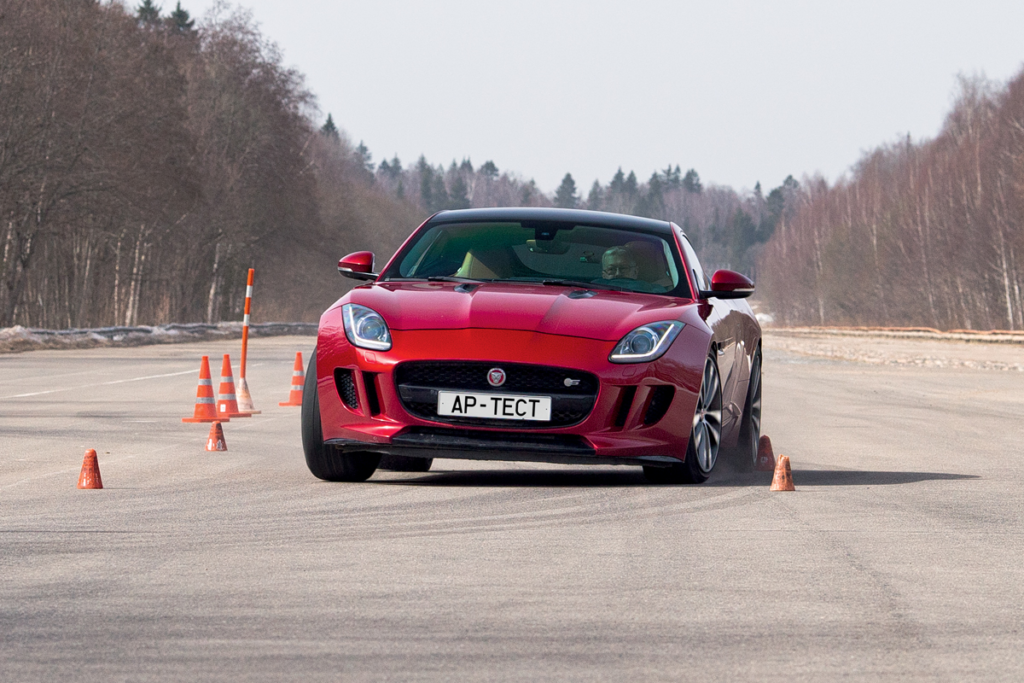
The Jaguar was less agile and, unlike the Neta, understeered rather than oversteered. At 79.5 km/h the understeer became quite pronounced.
The Neta could not impress in the emergency lane change combined with braking from 80 km/h. On the first attempt it slid as far as 38 metres. There were no obvious unbrakings, but the level of deceleration during the steering input was insufficient. Reduce the steering pace slightly — unlikely in a real emergency — and the Neta stops after 36.5 metres.
The Jaguar stops a metre and a half sooner, showing an old-school character: powerful deceleration on straight wheels, combined with brief unbrakings during the manoeuvre.

Trunk Space
Jaguar is technically not a coupe but a liftback: the lifting rear door allows for easy distribution of items in the trunk. Neta, with its narrow opening, is less convenient.
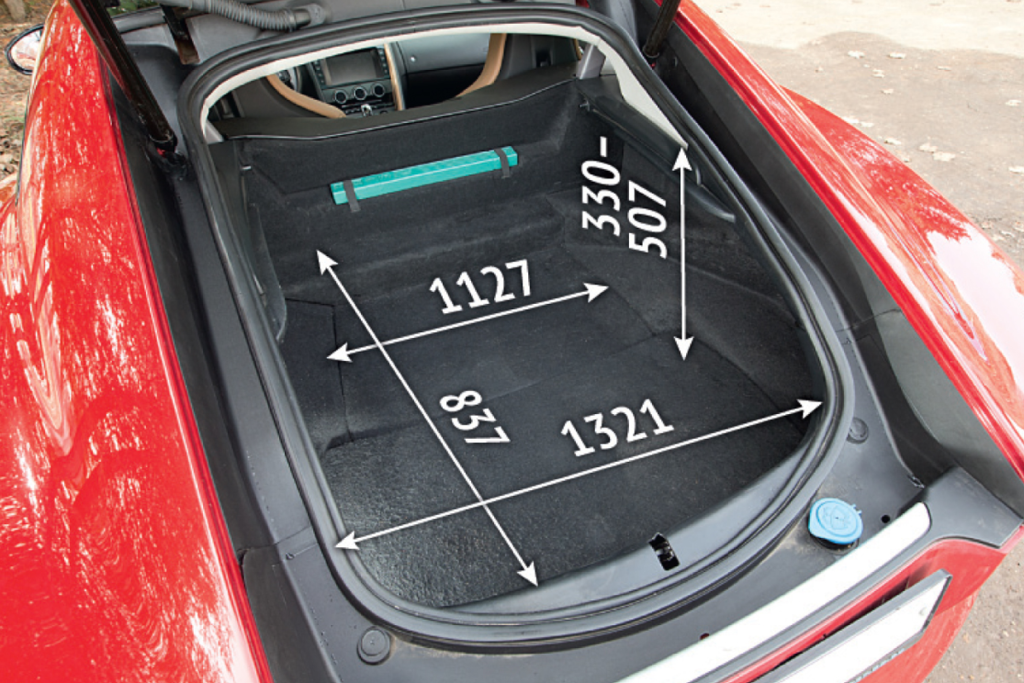
Jaguar F-Type S

Neta GT 580 AWD
Visibility
For a coupe, Neta offers excellent visibility, although the mirrors could be larger.

Jaguar F-Type S

Neta GT 580 AWD
Dimensions, weight and weight distribution along the axes

Manufacturers’ data are highlighted in blue/Autoreview measurements are highlighted in black. Dimensions are in millimeters.
*Actual vehicle weight without driver, with full fuel tank and full process fluids
**For right rear seat
**Interior width at shoulder level in the first/second row of seats.
Photo: Dmitry Pitersky
Expert group: Yaroslav Tsyplenkov
This is a translation. You can read the original article here: Нетто и брутто: новейшее купе Neta GT на фоне уходящего спорткара Jaguar F-Type

Published November 21, 2024 • 10m to read