
How do you get to know a person and form a bond when your meetings are fleeting and unscheduled? And what about a car? Divakov used to talk about the importance of the first hundred meters at the wheel. After that, he’d say, you begin to adapt and get used to it, but you need to grasp its essence while your impressions are still fresh.
A Few Days, Not a Hundred Metres
I want to get used to the current-generation BMW M3. I have never quite clicked with these cars, whether the sedan or the related M4 coupe. But now that this extremely tempting Touring has appeared, I am not going to settle for memorising the first hundred metres — I am going to live with it for a few days.
Territory That Used to Belong to Audi
Just look at these lines. On its first attempt, BMW has taken territory that belonged to Audi: ever since the Porsche-co-developed Audi RS2 Avant, the Four Rings have been firmly associated with the term “fast estate”. BMW did try to enter the segment once before — an E46-generation BMW M3 Touring that never reached production spent years in the company museum. Now it turns up as a guest star at photo shoots for the new G81.
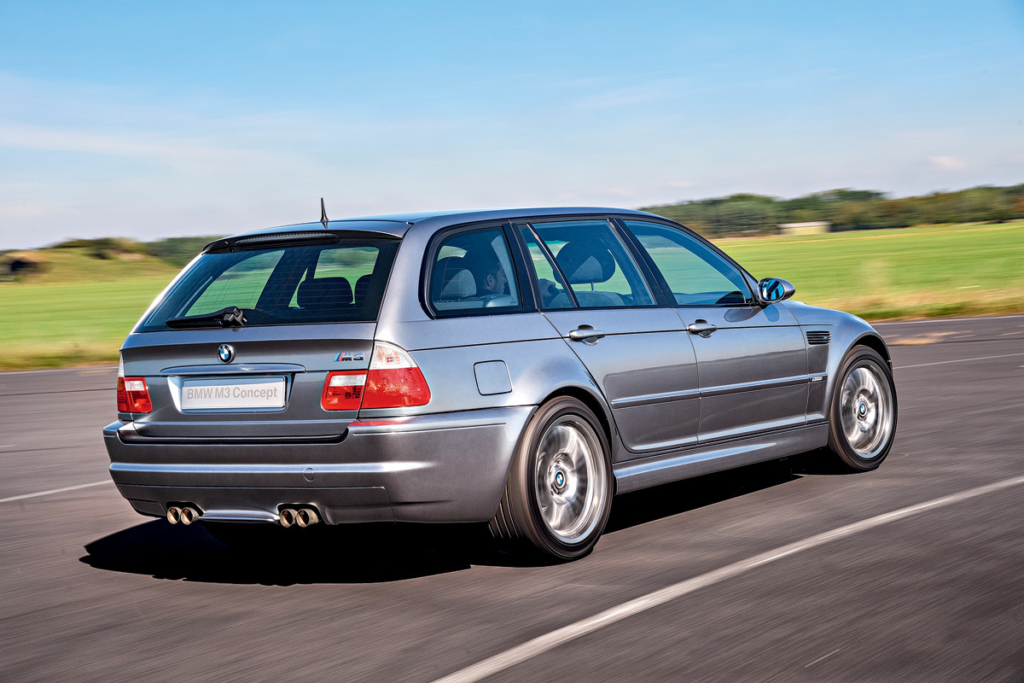
The first attempt to create an M3 estate was made in 2000, when a fully functional prototype of the BMW M3 Touring E46 series with a 3.2-liter inline-six (343 hp) was built. It remained a single copy.
Two Generations, Seen in Profile
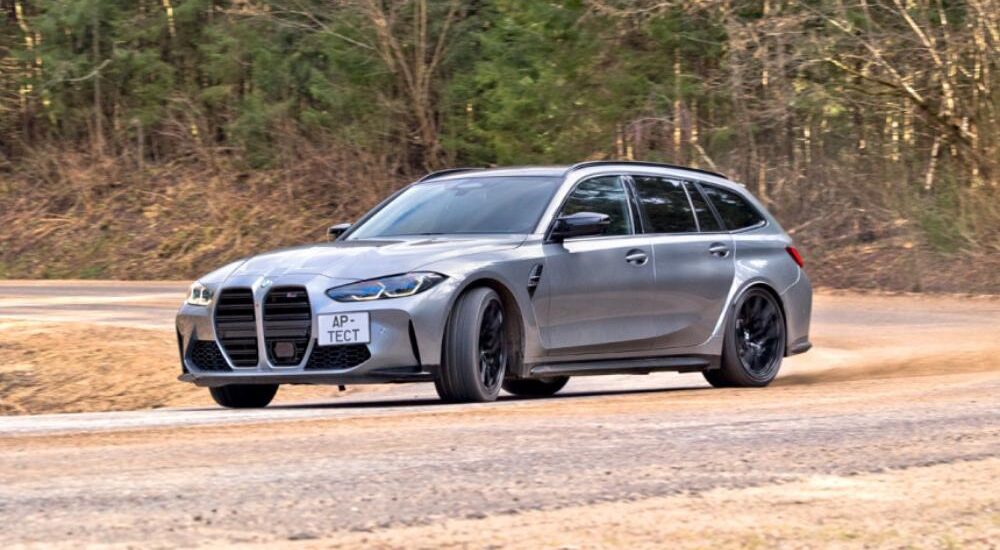
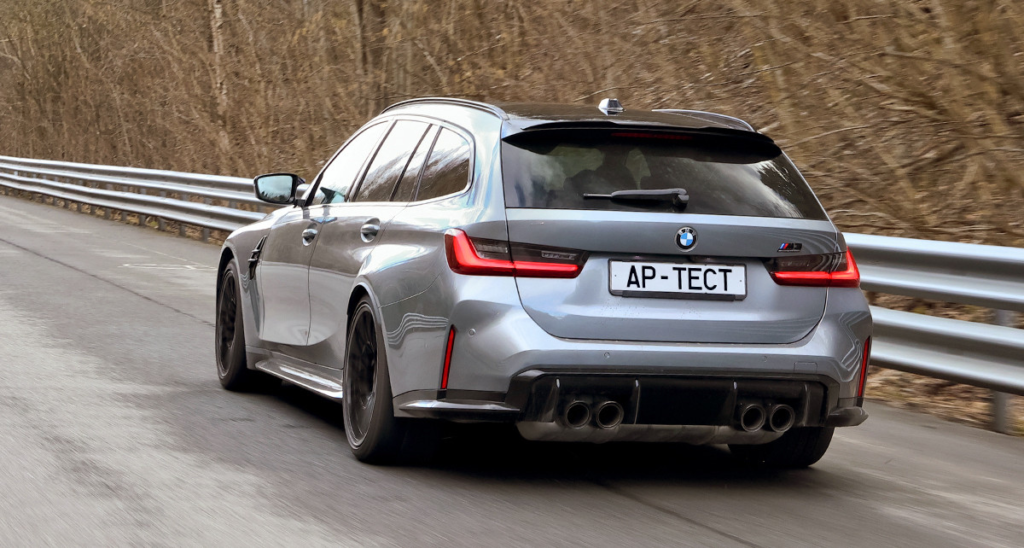
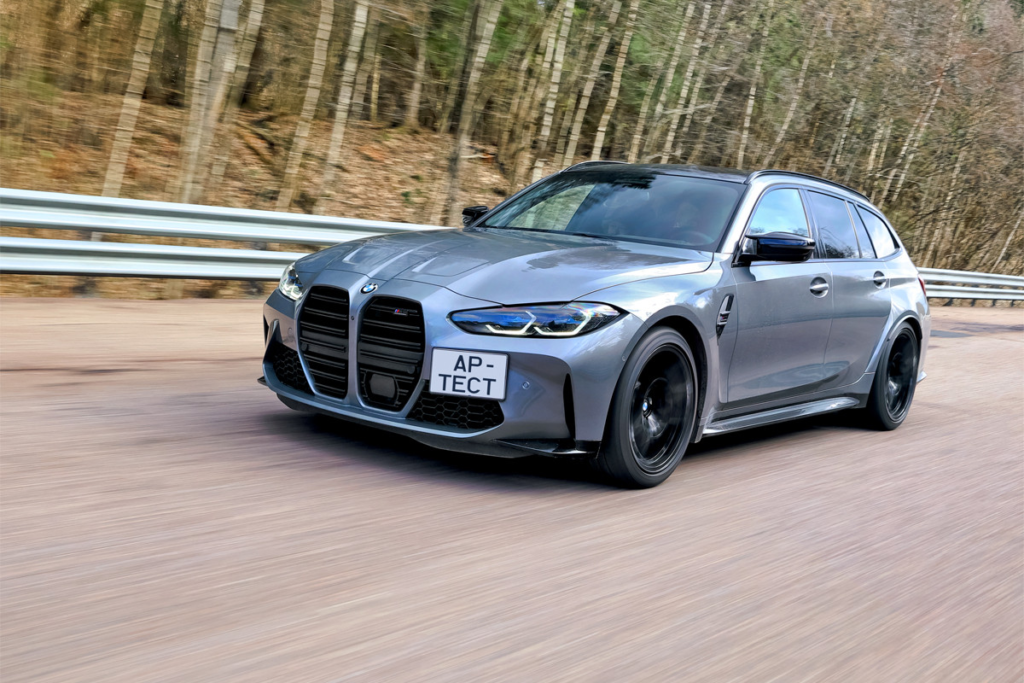
The lineage is obvious in profile: the rake of the rear pillars, the proportions. The older car looks lighter, thanks to a lower window line. And the evolution of buyers’ tastes is best illustrated by the bumpers. The 2000s M3 is restrained, intelligent power, with a small dark diffuser and a neat quad exhaust; on the new car everything is exaggerated and put on display, and I still have not adapted to its face. In this light graphite paint, with the offset licence plate, you have to admit it is quite acceptable. And if you disagree, go and look at the rear again.
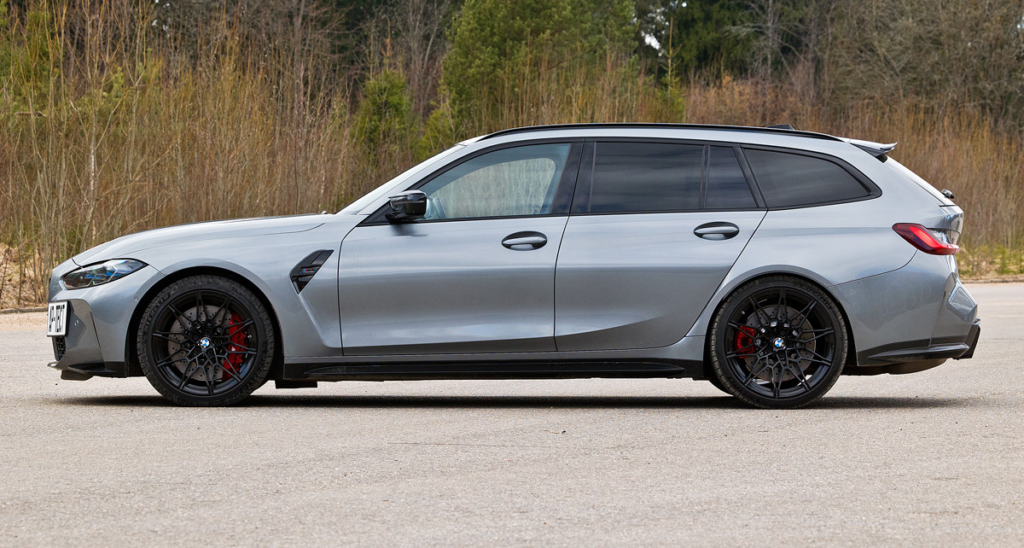
In Germany, the M3 station wagon starts at €107,000 – just €1,000 more than a similar all-wheel-drive sedan.
Two Monitors on a Dashboard
The 3 Series still has exterior door handles shaped for a natural grip, but inside it is hard to find any difference from a 5 Series, the updated 1 Series, or some Changan: two monitors placed on top of the dashboard, with no attempt to integrate them into the interior at all.
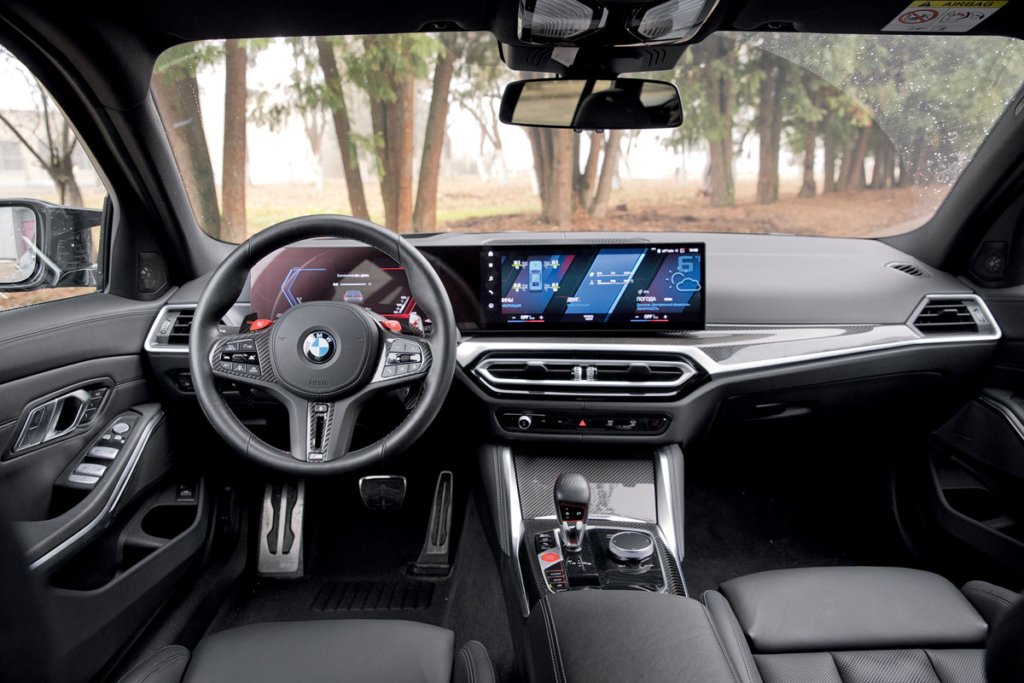
The screens covering two-thirds of the dashboard are practically useless when driving, which is why Track mode turns off the right display. Although it’s more appropriate to dim the instrument cluster—the head-up display provides all the information, and the right one can mirror a smartphone or quickly adjust the chassis.
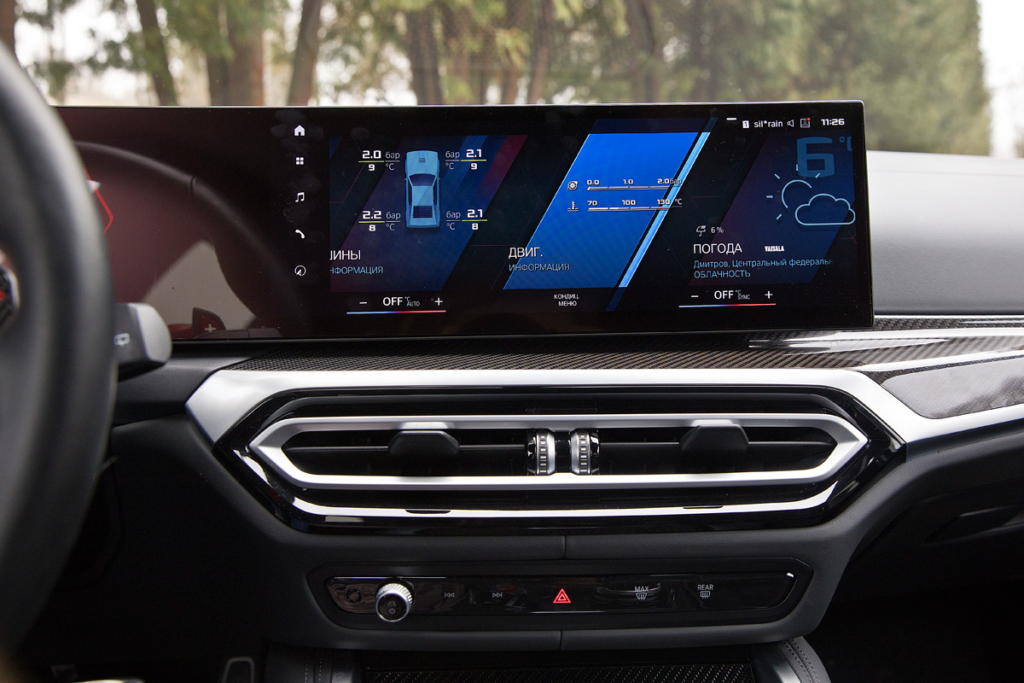
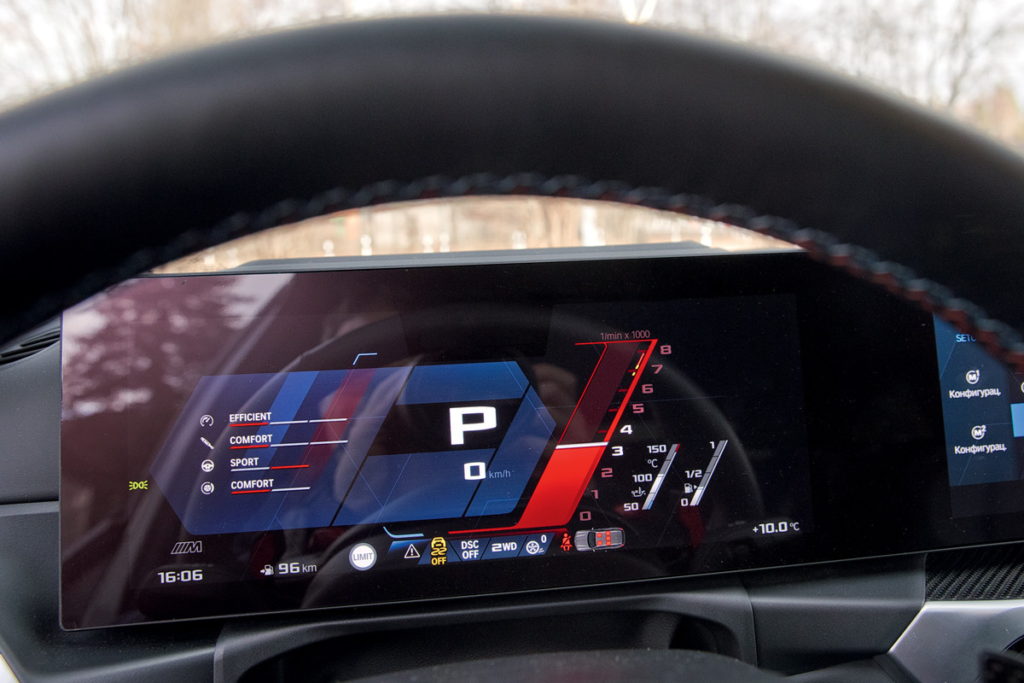
These virtual instruments will appeal most to CSKA fans. Unfortunately, the red and blue bars are difficult to read in various variations.
The Right Seats for This Car
Configuring this estate, its owner chose the standard sport seats over the rigid buckets with their towering bolsters — and was right to. Regular track days are not in this M3’s future, Competition badge or not, whereas daily drives through the warmer months certainly are. These seats make getting in and out easy and still hold you properly in a corner. But I am in no hurry yet: first, a calm run from a small regional town to Moscow.
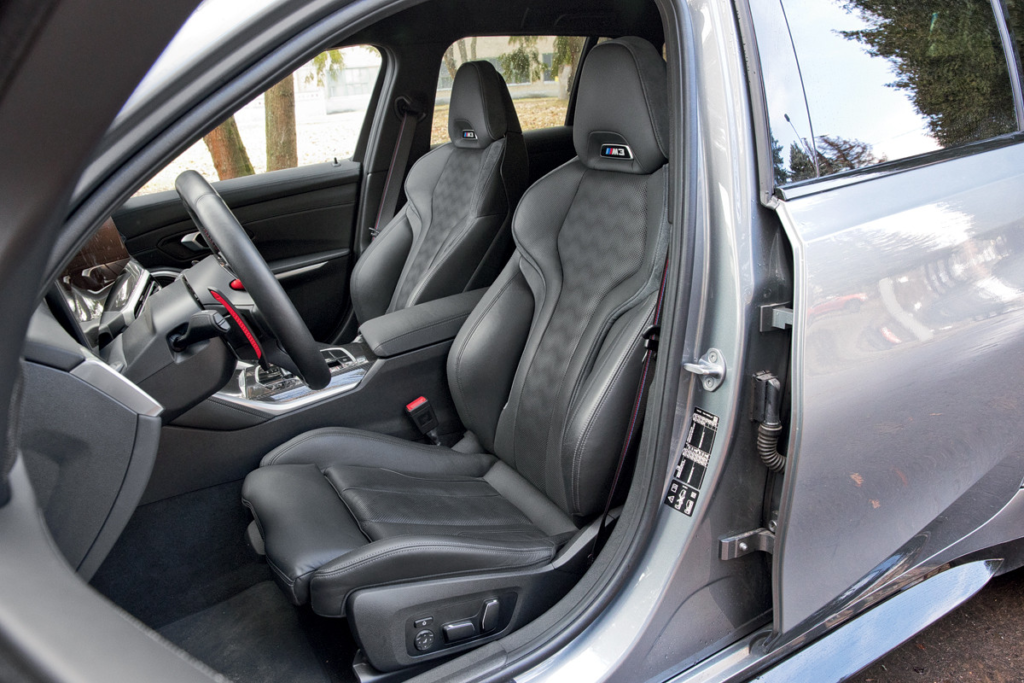
The firm seats with many adjustments are comfortable
That is not usually the best idea in the current M3 and M4, given the very stiff suspension, the wilful automatic and the strange calibration of the electro-hydraulic brake booster, whose logic resembles a Tank 500’s. But I had heard that the Touring carries the most civil calibrations in the family, and I badly wanted that to be true.
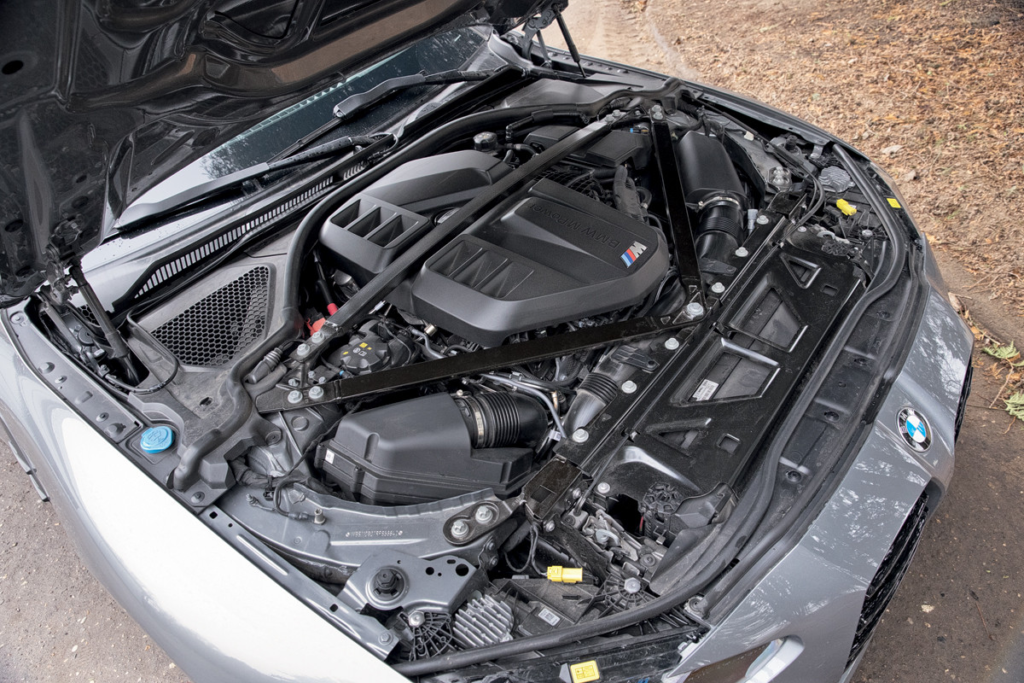
The S58 engine is undoubtedly one of the best in automotive history. It offers excellent performance, ample potential for refinement, and impressive reliability.
And They Call This Comfort
The cold S58 wakes up and raises a smile: even in warm-up mode it is not shy about announcing its 510 hp — and from spring 2024 power went up to 530 hp. While it burbles, I pull up the settings matrix on the right-hand screen and put everything into Comfort. And they call this comfort? You can still feel some damping at the front, but the rear axle goes over bumps as though it were not compressing the springs at all. In character this shaking is nothing like a body-on-frame SUV, of course — it is a different thing entirely. It is still not very comfortable.
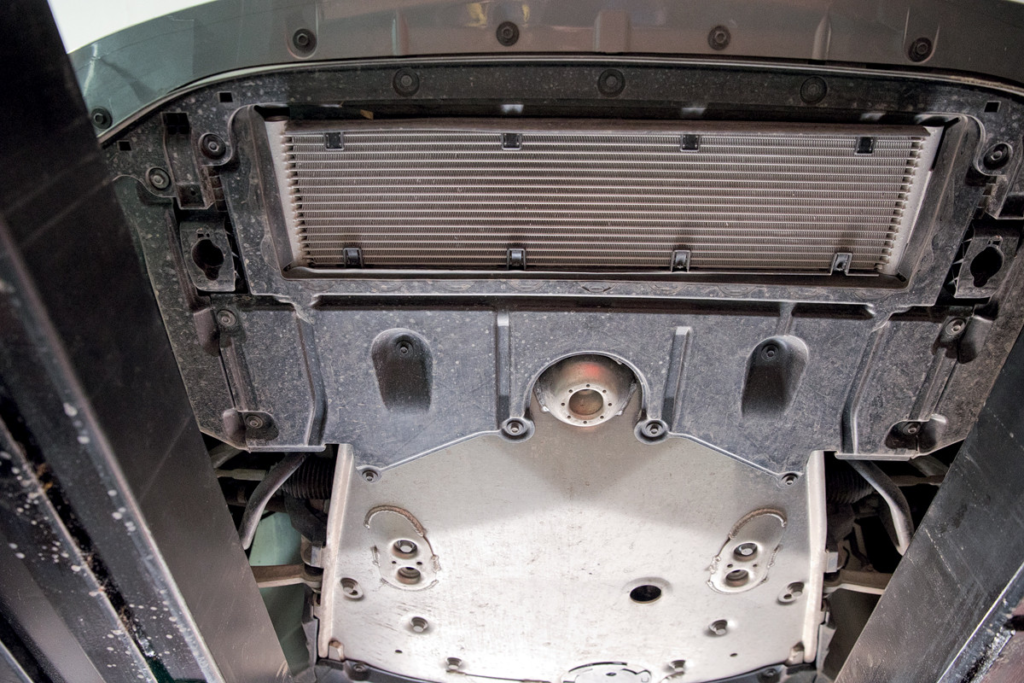
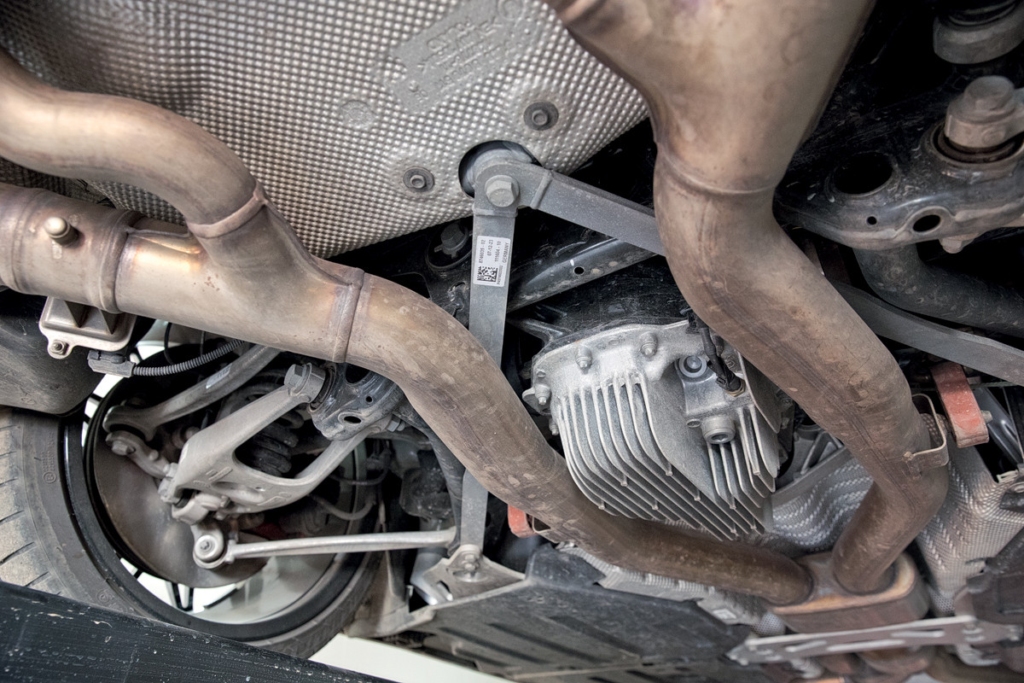
The underbody of any M-car is a complex of powerful guards and a web of reinforcements. Perhaps this is why the exposed oil cooler seems particularly vulnerable. The rear differential with locking mechanism boasts a surprisingly large finned area.
Tire Roar From 70 km/h
And the tire roar that starts at 70 km/h? The homologated Michelin Pilot Sport 4 S tires, star on the sidewall, make conversation with passengers difficult. Which is astonishing, because half an hour earlier I had been driving the same road in my own BMW 330i coupe in complete silence. I do not remember noise like this in the current coupe either. Perhaps the Touring’s long roof acts as an amplifier.
The Steering Tries Hard
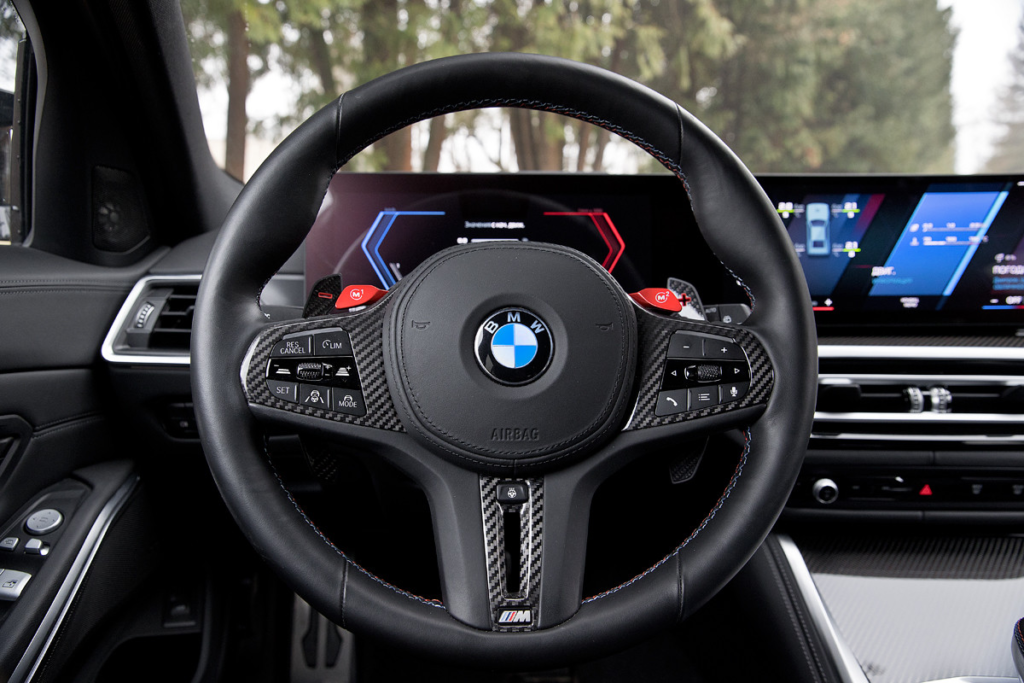
From the steering at civil speeds I was expecting nothing — expecting anything these days is naive — but the power steering tries hard, building the correct logic of reactive weight, and it still feels more natural than the systems in Audis. In Sport the wheel is even slightly lighter and cleaner than in Comfort, which is a rare thing.
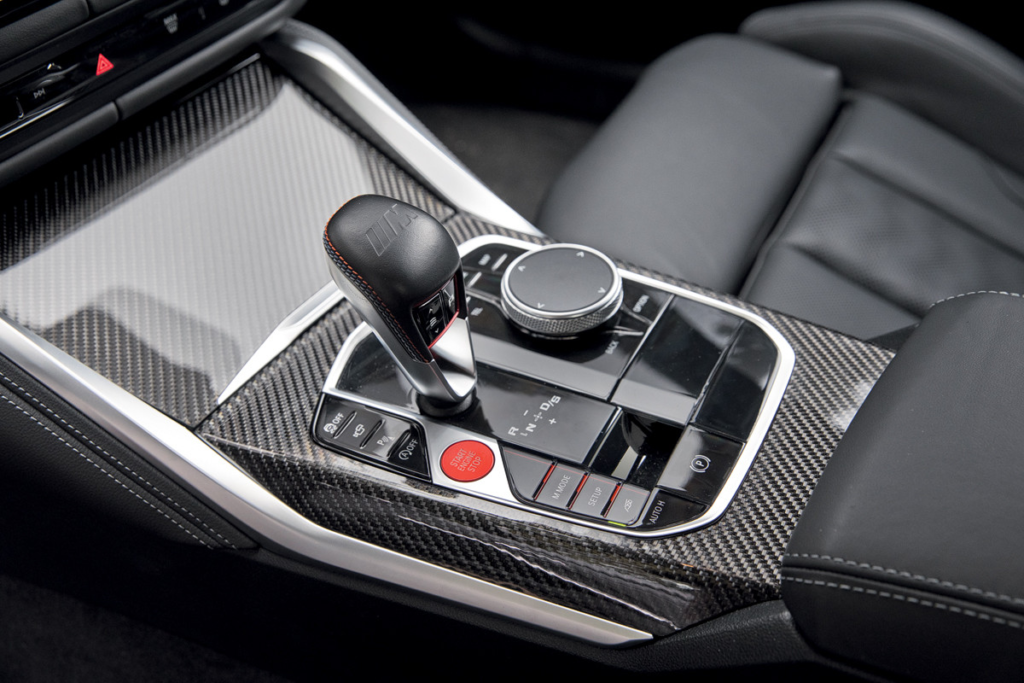
An analog island between the seats allows quick access to the driving settings menu.
Efficient, Sport, and the Missing Normal
Sometimes you want the sport engine mapping as well, because Efficient makes even this engine phlegmatic. You need to change lane with a burst of speed, and the pedal feels like rubber: you push, you press — and you wait. The delays in the S58 are not a fantasy. In Sport the M-car accelerates brilliantly, of course, but the transmission starts holding gears even on a lifted throttle, which costs comfort. An intermediate Normal mode would help.
The Brake Pedal Is the Real Complaint
If the complaints about the powertrain come largely from the car’s class and standing — the M3 is, after all, the ultimate — then the brake pedal calibration is objectively suboptimal. You get used to the heightened sensitivity quickly, but the fact that it will not let you stop smoothly is thoroughly irritating. At the very last moment, as speed drops to walking pace and you start easing off the pedal for a seamless halt, the car reads that as a wish to go, and locks up the torque converter. Exactly like the early DSG gearboxes, which also made a smooth stop impossible.
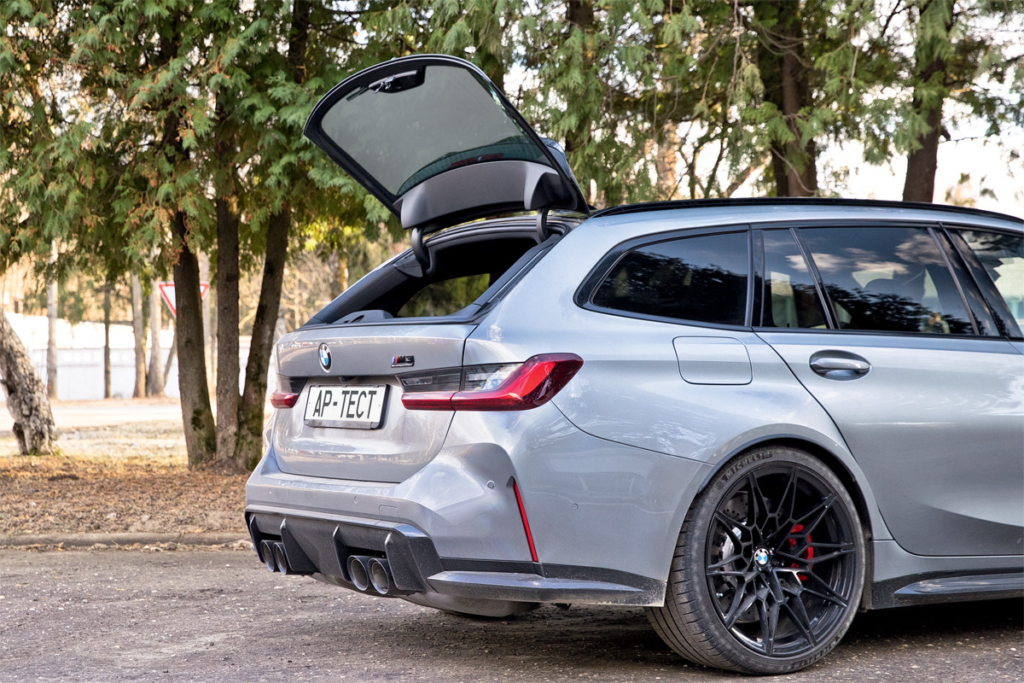
I do not rule out that some people never notice, since the culture of proper braking is fading. For me it matters in daily driving, and in this respect the M3 Touring is no better than the M4 coupe. Except that the trunk is far more useful, and the separately opening rear window — which the 5 Series no longer has — makes loading bags easier still.
The Next Day, at the Test Track
And then, the next day, I made it to the test track.
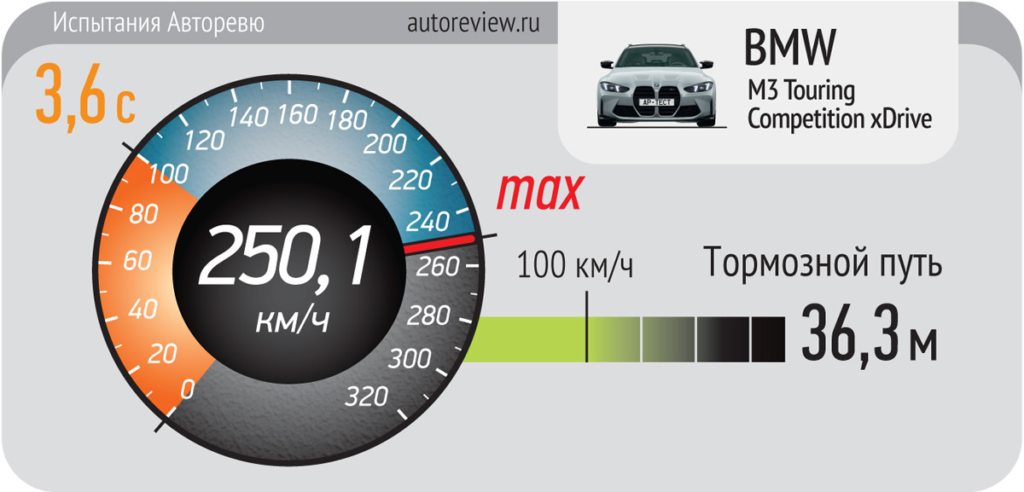
Oh yes. First attempt, and the M-car confirmed its official figures: 3.6 seconds to 100 km/h and 12.6 seconds to 200 km/h. Launch control requires the stability control to be fully disabled, and that does not go unnoticed — the M-car spins its wheels noticeably off the line, marking the asphalt and wagging its tail. Look how far it squats onto the rear wheels in the first instant.
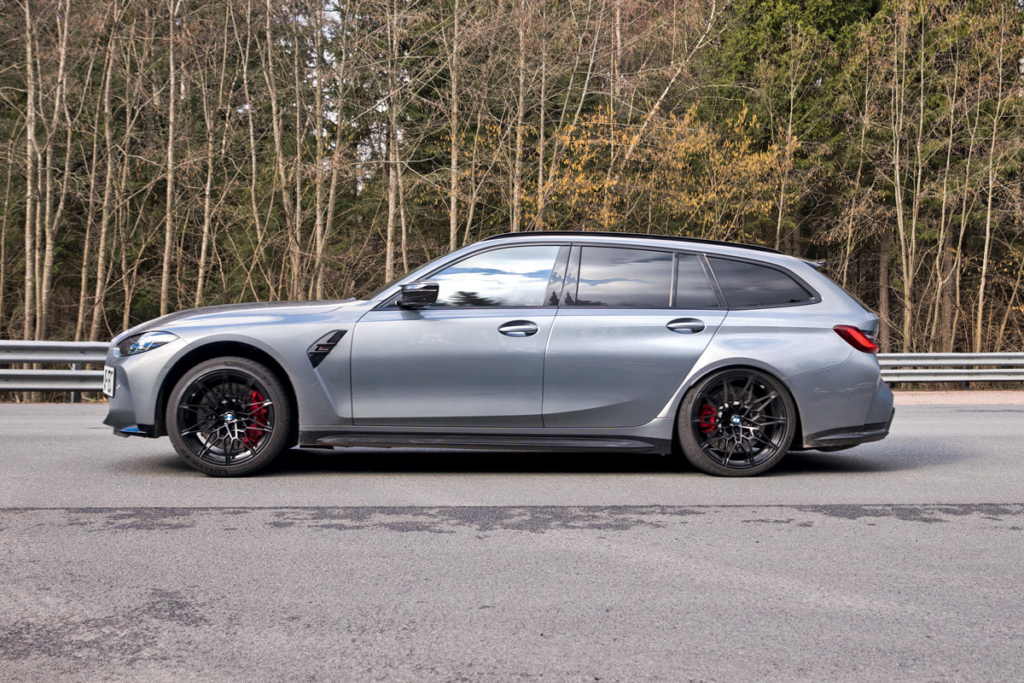
When starting off with two pedals, the M3 crouches like a hound. The resemblance is reinforced by the wagon’s distinctive roofline.
Twenty-One Seconds to the Limiter
The sprint comes with no memorable soundtrack; it is as though numbers were simply running on a slot machine screen, and after 21 seconds the M3 Touring hits an invisible wall — the limiter, exactly at 250 km/h. The BMW holds a straight line perfectly, and acoustic comfort at maximum speed is almost more pleasant than at seventy, because the aerodynamic noise is moderate and the tire roar has gone.
Here, finally, the M3 is in its element: the third hundred is its natural habitat. This is where it breathes fully, gulping air through its radiator package. The wheel gains weight and loses some of its sharpness, and then after 50 seconds this portal into its happy world closes along with the straight of the dyno road. Braking — and this is what such a sharp pedal is for: slowing from 250 to 100 feels close to perfect. Short travel, comprehensible effort, very high effectiveness.
An Excellent Specialist in a Narrow Field
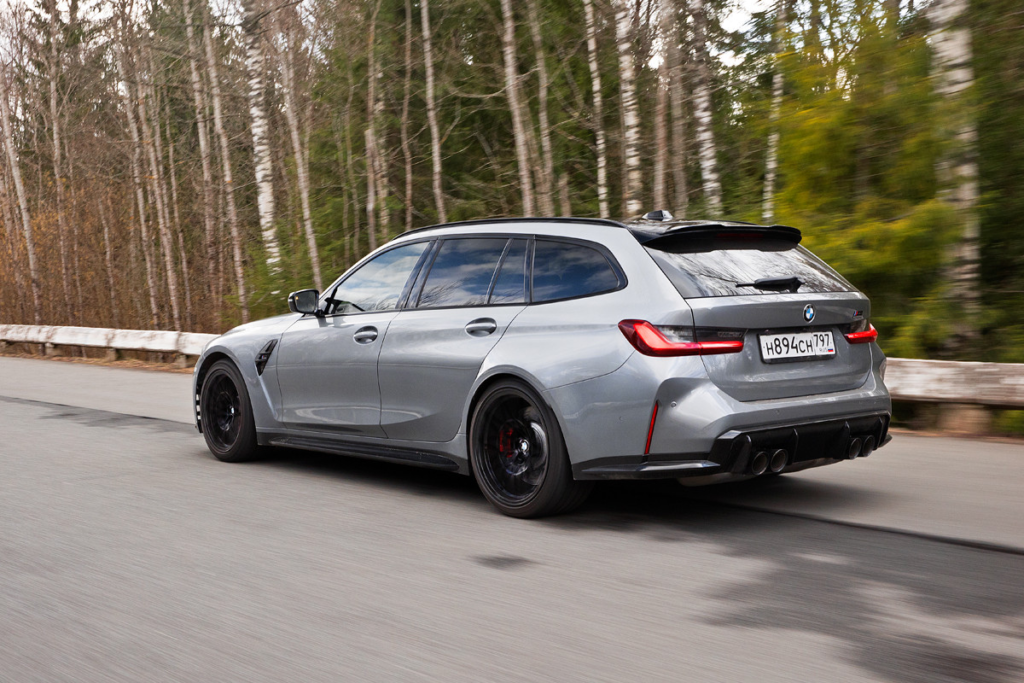
That minute of flight was the first bright episode in two days with the M-car. As the numbers on the screen come back to civil values, the intensity of the relationship drains away. Talking to it is like talking to an excellent specialist in a narrow field who falls silent the moment the subject changes. But the M3’s subject has never been only high-speed straights. It has always been corners.
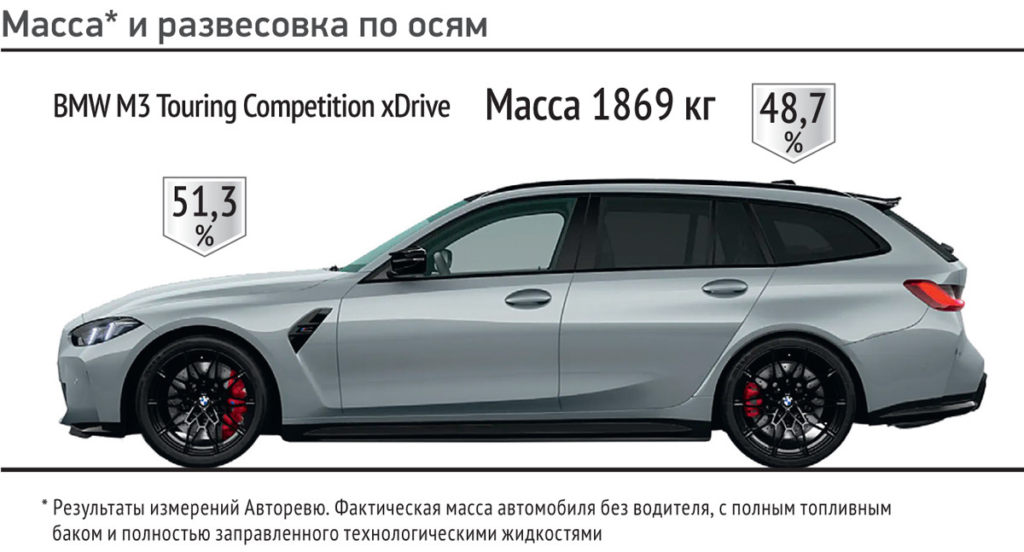
1869 kg, and Grip Enough Not to Care
The all-wheel-drive Touring is no lightweight: 1869 kg on our scales. But this chassis has so much mechanical grip, and the brakes are so indefatigable, that there is no need to feel self-conscious about the extra weight. Look at the tire sizes: the M3 used to run 275 mm at the rear, and that is now what it wears at the front. The wheels differ not only in width but in diameter, with 20-inch rims at the rear.
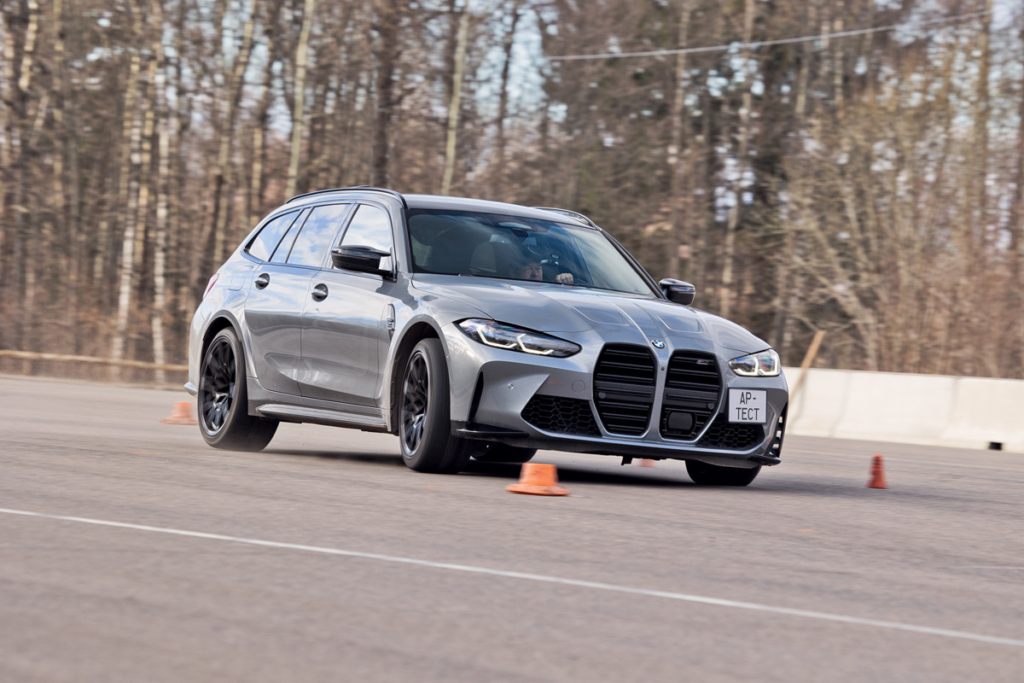
The BMW M3 is safe and quick on the turn-in, with a short understeer that’s easy to manage as speed increases. The M3 has an effective stability control system that prevents unnecessary slides—previously, even with the electronics engaged, oversteer would develop. The maximum turn-in speed of 83 km/h is limited by cold asphalt—the Michelin Pilot Sport 4 S tires were slippery.
Stable Even Over Broken Asphalt
This car is fantastically stable not only in a straight line but in corners, including bumpy ones. Give it an open road without speed cameras and let it have the patches and the seams. This is where the dampers show their quality: you see that brutal expansion joint on the overpass in the middle of a bend, and instead of a crash and a skip off line you get a couple of thumps through the tires. For a suspension with this little travel, the energy capacity is outstanding.
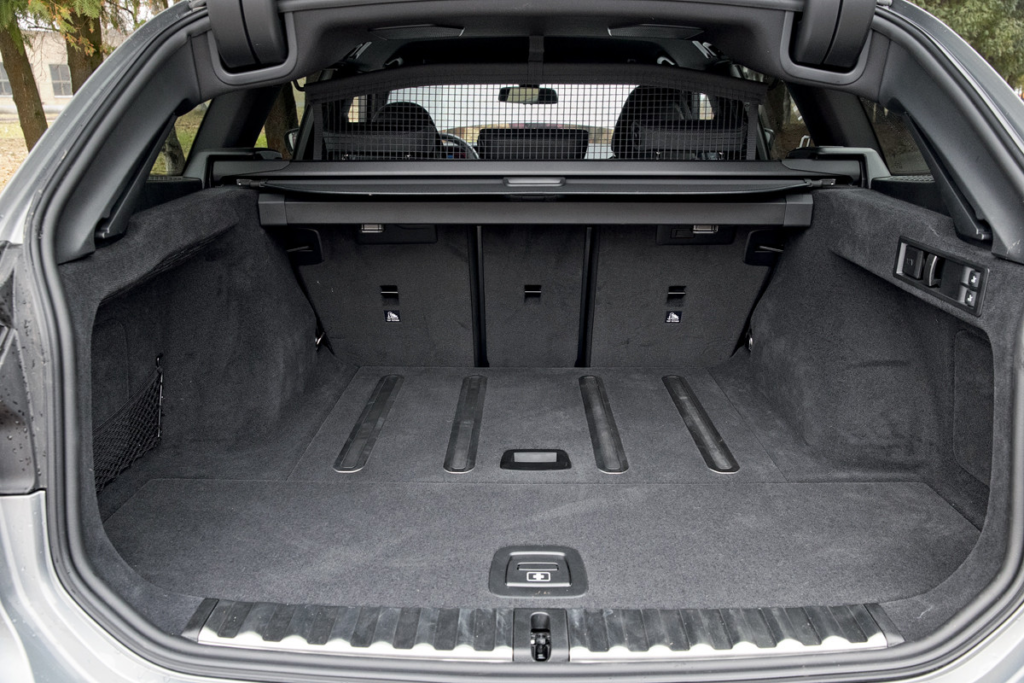
The trunk is beautifully finished, pleasingly shaped and convenient. The roller shade slides up when the window is opened separately.
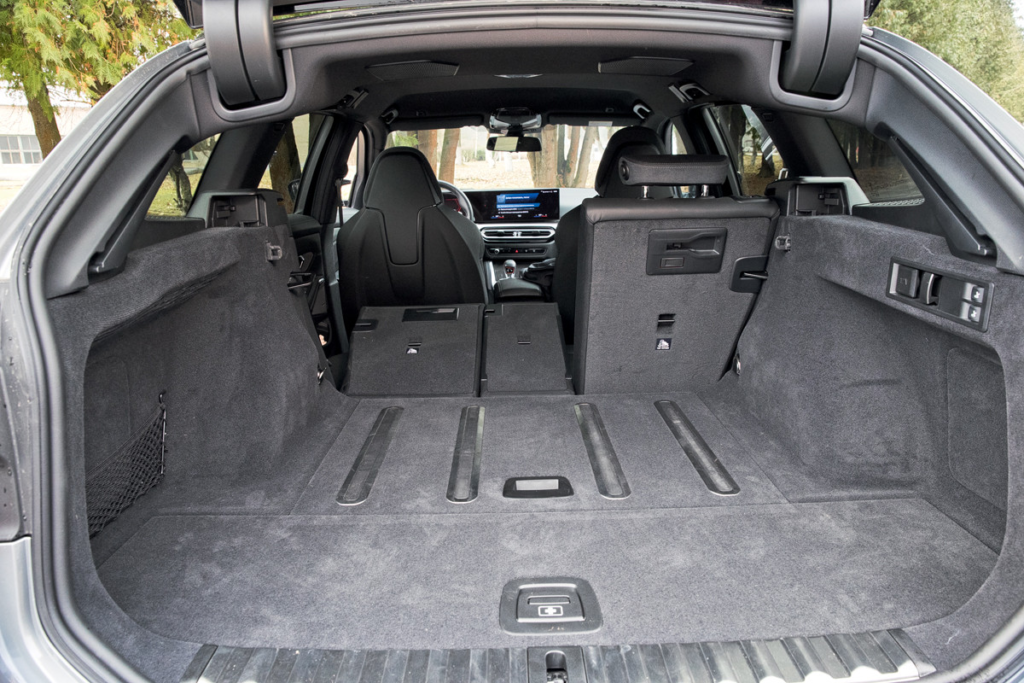
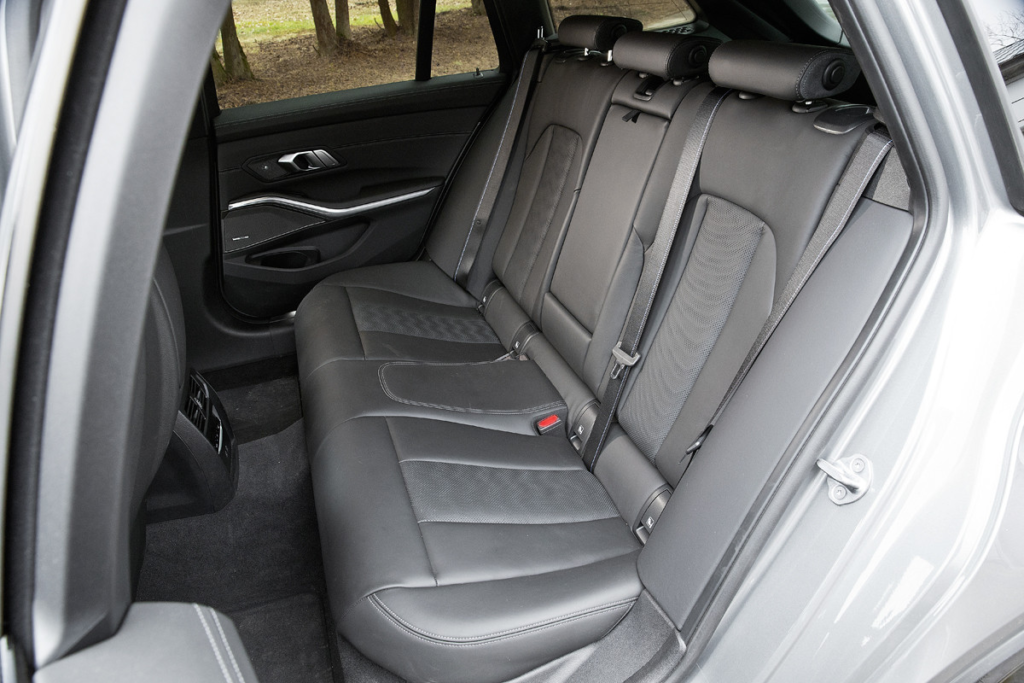
The rear seatback is divided into three sections.
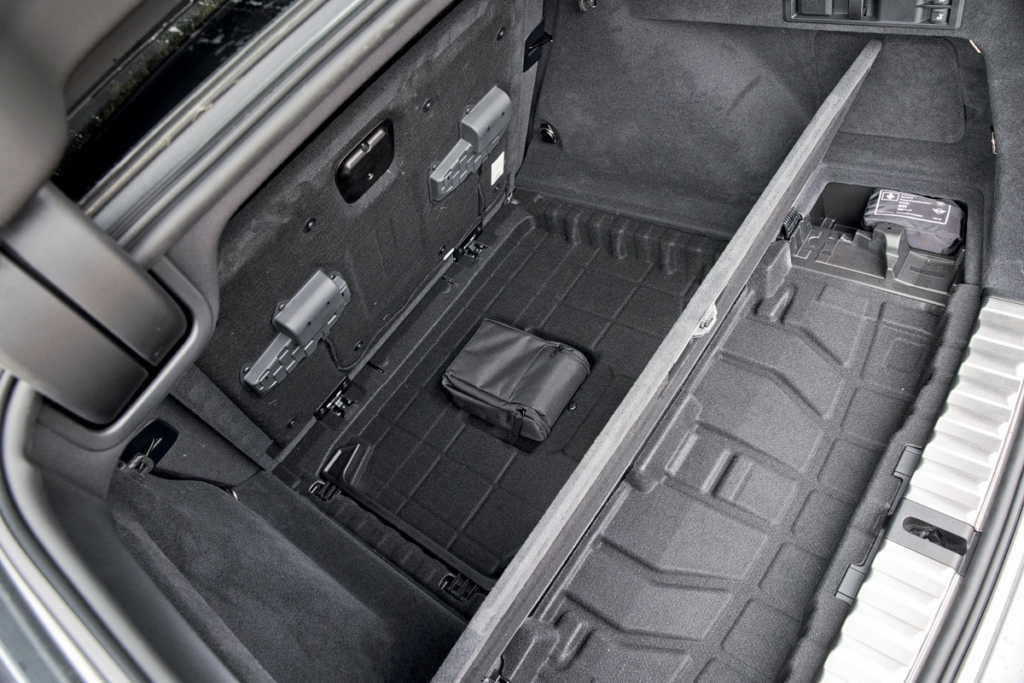
There’s space in the underfloor for the removed net and shade.
Drifting Is Not This Generation’s Language
Some will complain of a slight built-in understeer — unlike the coupe, the Touring is reluctant to answer a lifted throttle. If you want a power slide, press the accelerator more decisively. But the Touring only confirmed once again that big, dramatic drifts are alien to this generation of M3 in a way they were not to the last. A sudden breakaway at the rear and an over-sharp steering rack, which demands extremely precise input, make driving in a slide exhausting. And you have to exit smoothly too, because a quick closed throttle and regained grip, combined with quick steering, are the origin of a good many unpleasant videos online.
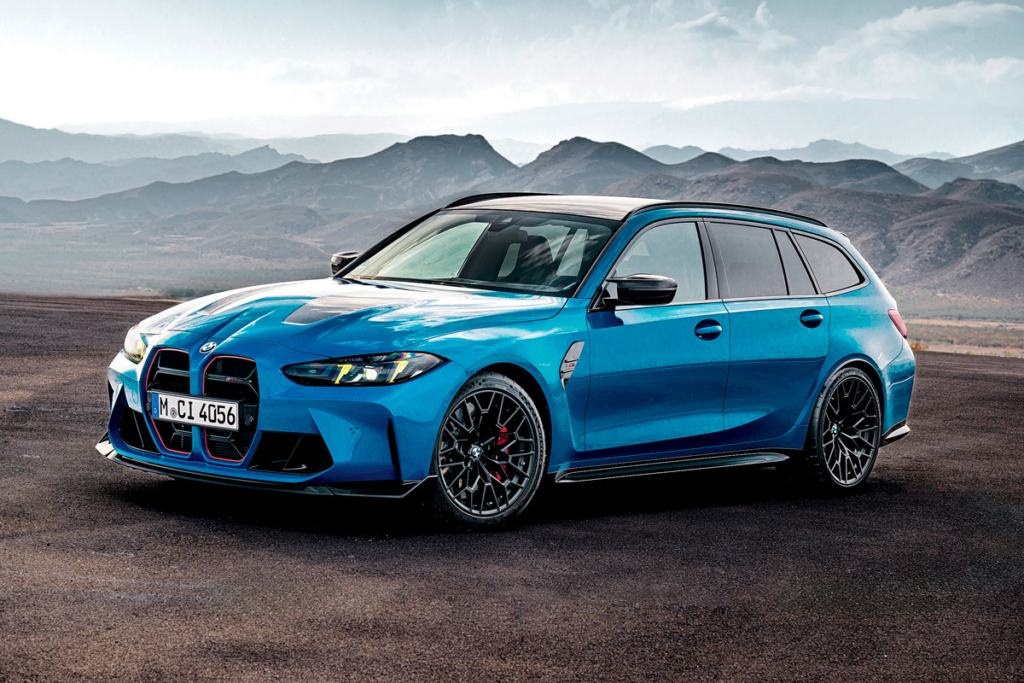
Until now, the BMW M3 Touring was only available in the Competition xDrive version, but this year the M3 CS Touring wagon was added. It features an engine boosted to 550 hp, a carbon fiber body kit, a stiffened chassis, and more advanced tuning.
A Teleportation Device
On a road without cameras or other cars, this M-car becomes a genuine teleportation device. Devilish engine pull, hellish grip, fiendishly sharp responses. Has BMW M sold the M3’s soul to get there? Because the most vivid emotion teleporting produces is the result, not the process. Crossing into triple-digit speeds makes the M3 memorable and omnipotent. Within the confines of a city it languishes, and it irritates its driver.
Maybe a proper union really does need a ring given at a circuit. A session at Moscow Raceway might bring us closer; the Touring goes just as well there as the sedan and the coupe. It is a pity it was never allowed to go its own way and stop being a supercar. Soften the suspension, calm the steering and the brakes, add some versatility beyond the trunk.
Compote, and Why From Dried Fruit
The BMW M3 Competition is commonly called a “compote”, but why does it feel as though it were made from dried fruit? Nutritious, sometimes sweet, and lacking any bright, vivid flavour. And the packaging was so promising. On our last evening I looked at the brackets of the M-car’s taillights, admired the rear end one more time, and drove off to hand it back — obeying every speed limit, and remembering that I never liked compote, even as a child.
Technical Specifications: BMW M3 Touring Competition xDrive
| Category | Specification |
|---|---|
| Vehicle | BMW M3 Touring Competition xDrive |
| Body Type | 5-door estate/wagon |
| Seating Capacity | 5 |
| Dimensions, mm Length Width Height Wheelbase Track (front/rear) | 4801 1903 1446 2857 1617 / 1605 |
| Ground Clearance, mm | 123 |
| Luggage Capacity, l | 500 — 1510* |
| Curb Weight, kg | 1865 |
| Gross Vehicle Weight, kg | 2370 |
| Engine | |
| Type | Petrol, direct injection, biturbo |
| Position | Front, longitudinal |
| Cylinders | 6, in-line |
| Displacement, cc | 2993 |
| Bore/Stroke, mm | 84.0 / 90.0 |
| Compression Ratio | 9.3:1 |
| Valves | 24 |
| Power Output | 510 hp / 375 kW @ 6,250 rpm |
| Torque Output | 650 Nm @ 2,750 – 5,500 rpm |
| Transmission | 8-speed automatic |
| Drivetrain | All-wheel drive (AWD) with multi-plate clutch for the front axle |
| Suspension (Front) | Independent, spring, MacPherson strut |
| Suspension (Rear) | Independent, spring, multi-link |
| Brakes | Ventilated disc brakes |
| Tires | 275/35 ZR19 (Front), 285/30 ZR20 (Rear) |
| Performance | |
| Top Speed, km/h | 250** |
| 0-100 km/h, sec | 3.6 |
| 0-200 km/h, sec | 12.9 |
| Fuel Economy | |
| Combined Cycle, l/100km | 10.4 |
| Fuel Tank | |
| Capacity, l | 59 |
| Recommended Fuel | Petrol (Gasoline) RON 95—98 |
- * With rear seats folded down.
- ** Electronically limited.
Photo: Vladimir Melnikov
This is a translation. You can read the original article here: Компот из сухофруктов: тест универсала BMW M3 Touring

Published September 24, 2025 • 11m to read