
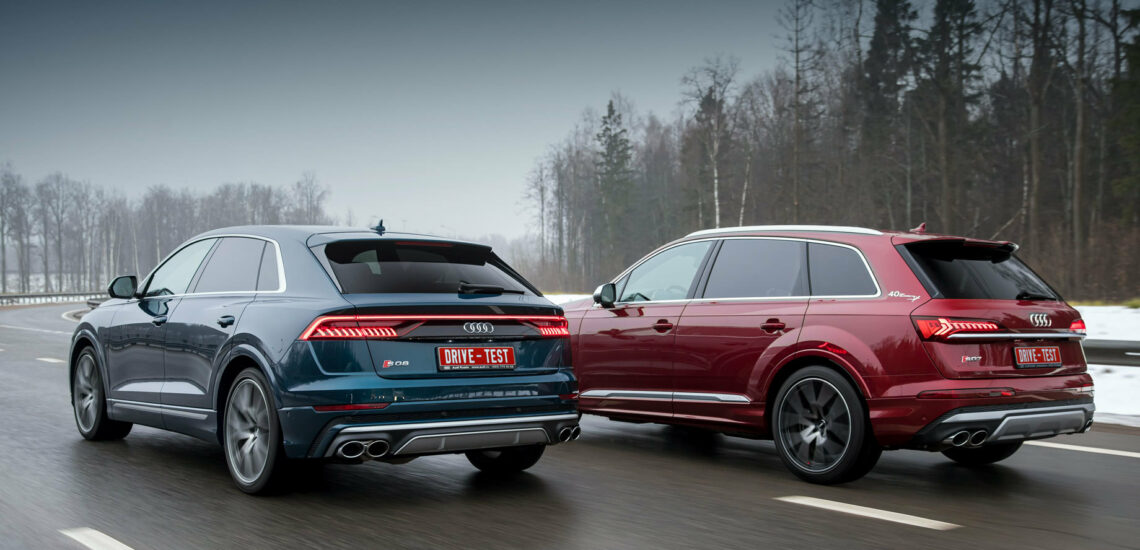

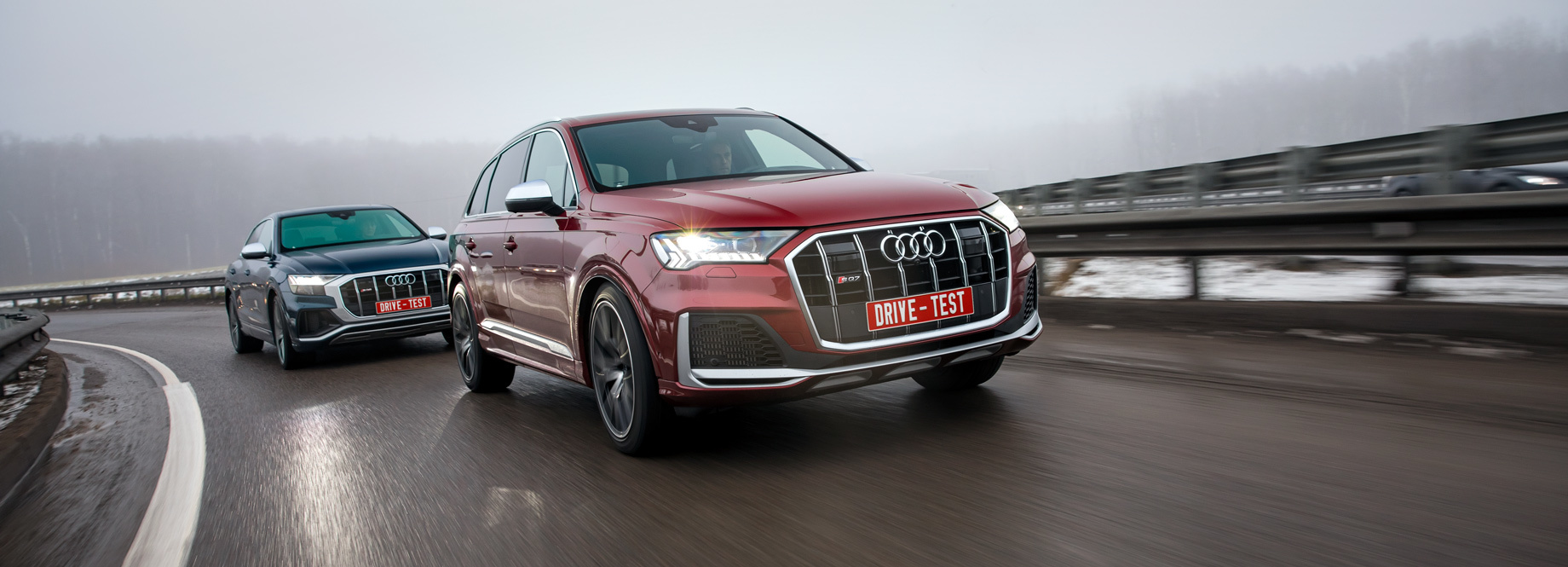
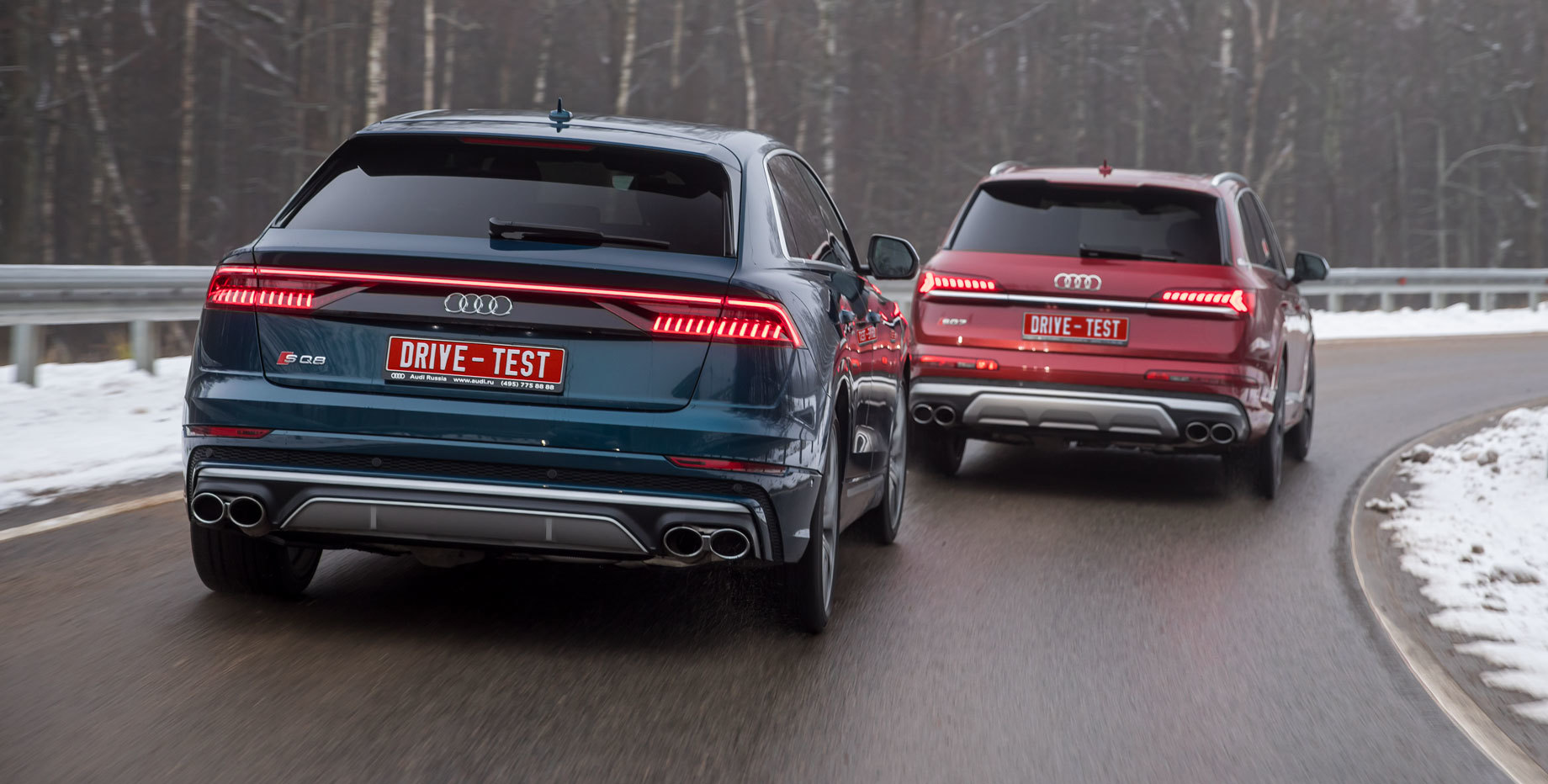
Following our comparison of the BMW X6 M50d and Mercedes GLE Coupe 400d, we expand the conversation about high-performance diesel SUVs by putting both the Audi SQ7 and SQ8 through their paces. Rather than testing the SQ8 alone, adding the SQ7 to the mix makes perfect sense — it was the first model to receive Audi’s unique V8 4.0 TDI engine in Europe. Which body style suits the super diesel better, and how different do these two siblings actually feel behind the wheel?
Interior Design and Cabin Quality: SQ7 vs SQ8
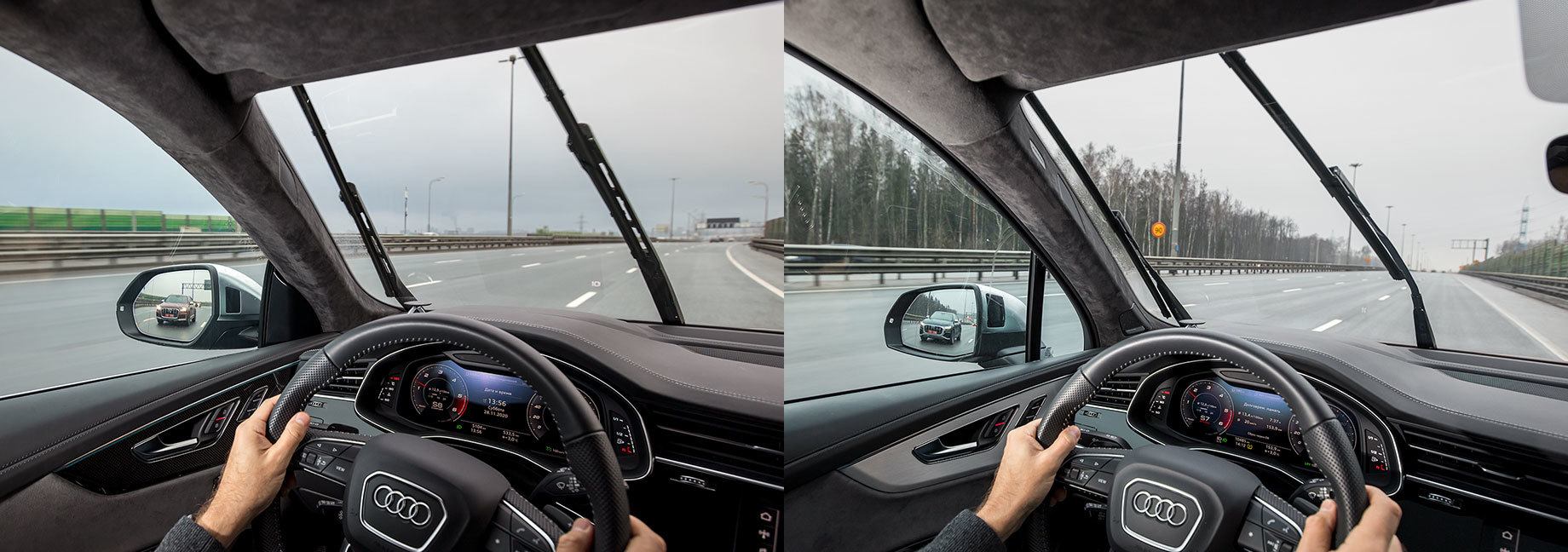
The restyled Q7 makes a strong first impression, especially in SQ7 trim. The updated grille and intricate lighting signature give it a premium road presence that was missing before. Inside, the digital instrument cluster integrates seamlessly into the refined cabin and, for anyone familiar with the e-tron, brings genuinely pleasant associations. The virtual controls are generously sized, and the touchscreen’s adjustable sensitivity helps minimise driver distraction. Ergonomically, the cockpit is close to flawless.
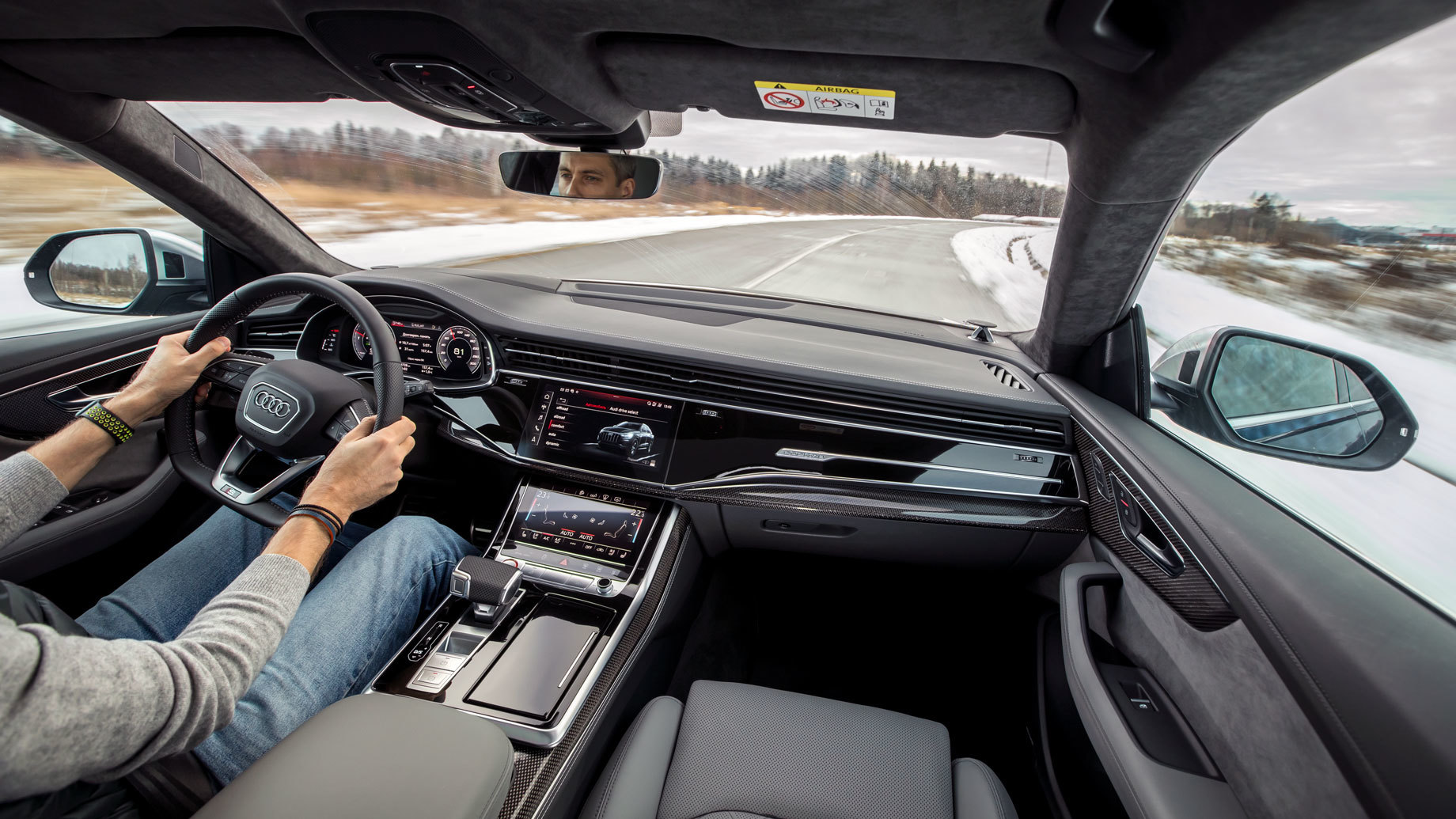
The SQ8 interior is largely the same, though visibility is slightly reduced by the sloping roofline. It is clear, however, that the SQ8 was developed with lessons learned from the SQ7. Notable refinements in the SQ8 include:
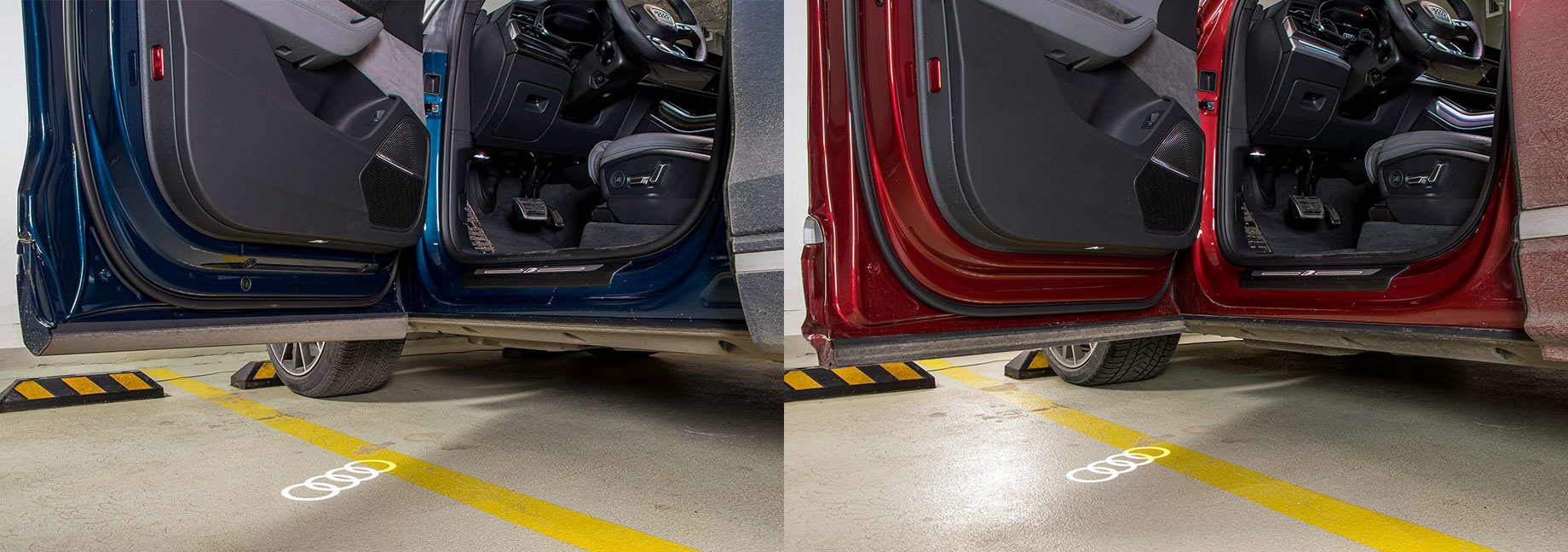
- Longer door handles with a flush-mounted keyless locking sensor, replacing the cheaper push-button notch of the SQ7
- Silent central locking — no rattling as found in the SQ7
- Electric sun blinds in the rear doors
- A cleaner rear bumper with a hidden underside
- Wiper-arm-mounted washer nozzles that deliver fluid directly to the blades, versus the SQ7’s three-jet spray system
- Plastic engine bay shields that conceal untidy seams near the washer fluid reservoir
The rear-seat side view is also more pleasant in the SQ8, and overall the attention to detail is a step up from the older sibling.
Engine Performance: How the V8 4.0 TDI Behaves in Real-World Driving
At city speeds, nothing hints at the ferocity lurking under the bonnet. Where the BMW X6 M50d announces itself with an expressive grumble even on a cold start, the Audi V8 4.0 TDI fires up as quietly as a regular three-litre six-cylinder. Worth noting:
- Half of the exhaust tips are purely decorative
- Electric resonators mounted under the bumper — entirely separate from the exhaust system — generate the sporty sound in Sport mode
- On the pre-facelift SQ7, the resonator outlets fed into the main pipe, while the real twin-barrel exhaust was visible at the rear
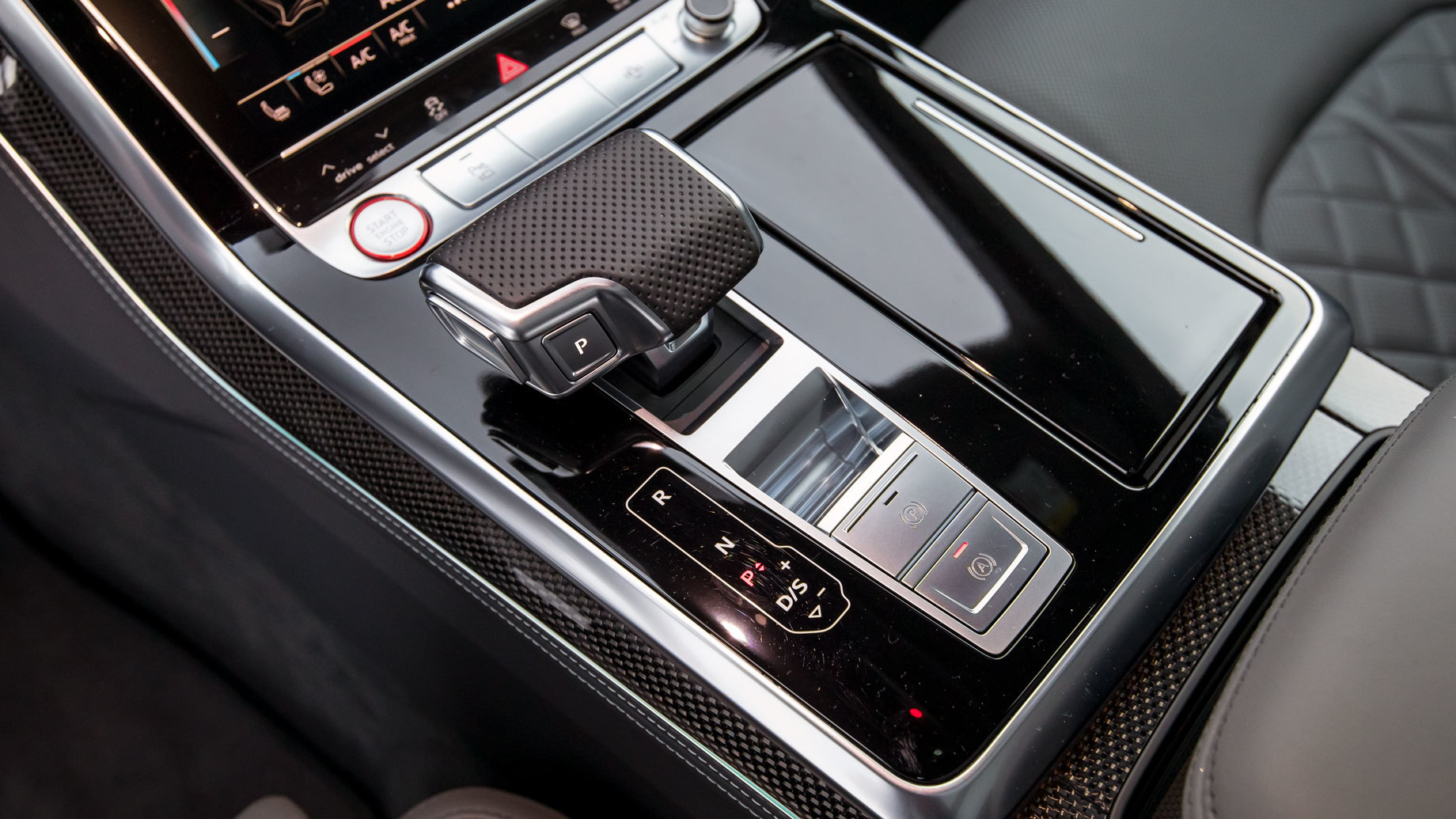
Like the BMW, the SQ8 can feel unsettled in slow-moving traffic. The digital tachometer reveals the automatic gearbox hunting between below 1,000 rpm and 1,200 rpm, and throttle response in these conditions is sluggish. The SQ7 similarly tries to stay in a single gear to limit emissions, avoiding downshifts unless the accelerator is pressed firmly. Dynamic mode sharpens gearbox behaviour, but initial delays in the first phase of acceleration remain in both cars.
Understanding the Biturbo System and Electric Compressor
Below approximately 2,000 rpm, the super diesel operates on a single exhaust valve per cylinder and one turbocharger — which is how most city driving unfolds. Having driven the SQ7 back-to-back with the six-cylinder 45 TDI on the same urban route, the 300 N·m torque difference and the £35,000+ price gap between equivalent configurations are remarkably hard to feel in everyday traffic.
The 4.0-litre engine officially produces peak torque of 900 N·m from 1,000 rpm, but in practice the SQ truly earns its price tag only above 2,000–2,500 rpm. That’s the point at which:
- The Audi Valvelift System cams shift to their performance positions on the camshafts
- Gas exchange opens across all 32 valves
- The second turbocharger spins up
- The automatic gearbox transitions to full biturbo operation with a barely perceptible jerk
From this point, the response is relentless. The engine pulls almost to the rev limiter, gear changes become logical and rapid, and a deep V8 roar fills the cabin. The problem is that these moments of full power are fleeting — most of the time you’re sitting in the turbo lag zone.
To combat this, Audi engineers fitted a 48-volt electric compressor — a first for the Audi lineup when introduced in 2016. At low revs, the electric supercharger runs in parallel with the primary turbocharger to fill the gap, then switches off when the second turbine takes over. In practice, however, combined boost is more of a technical showcase than a real-world game-changer at low loads. Acceleration still lacks the linearity you’d hope for.
Launch Control, Braking, and Straight-Line Performance
For maximum acceleration, launch control is available, holding the engine at 2,500 rpm before release. Both the SQ7 and SQ8 launch hard — they scramble for traction on cold tarmac but quickly find grip. This is where their advantage over diesel rivals is undeniable. Racelogic data shows that both fully fuelled Audis, carrying two passengers, reach 60 mph approximately half a second sooner than the BMW M50d.
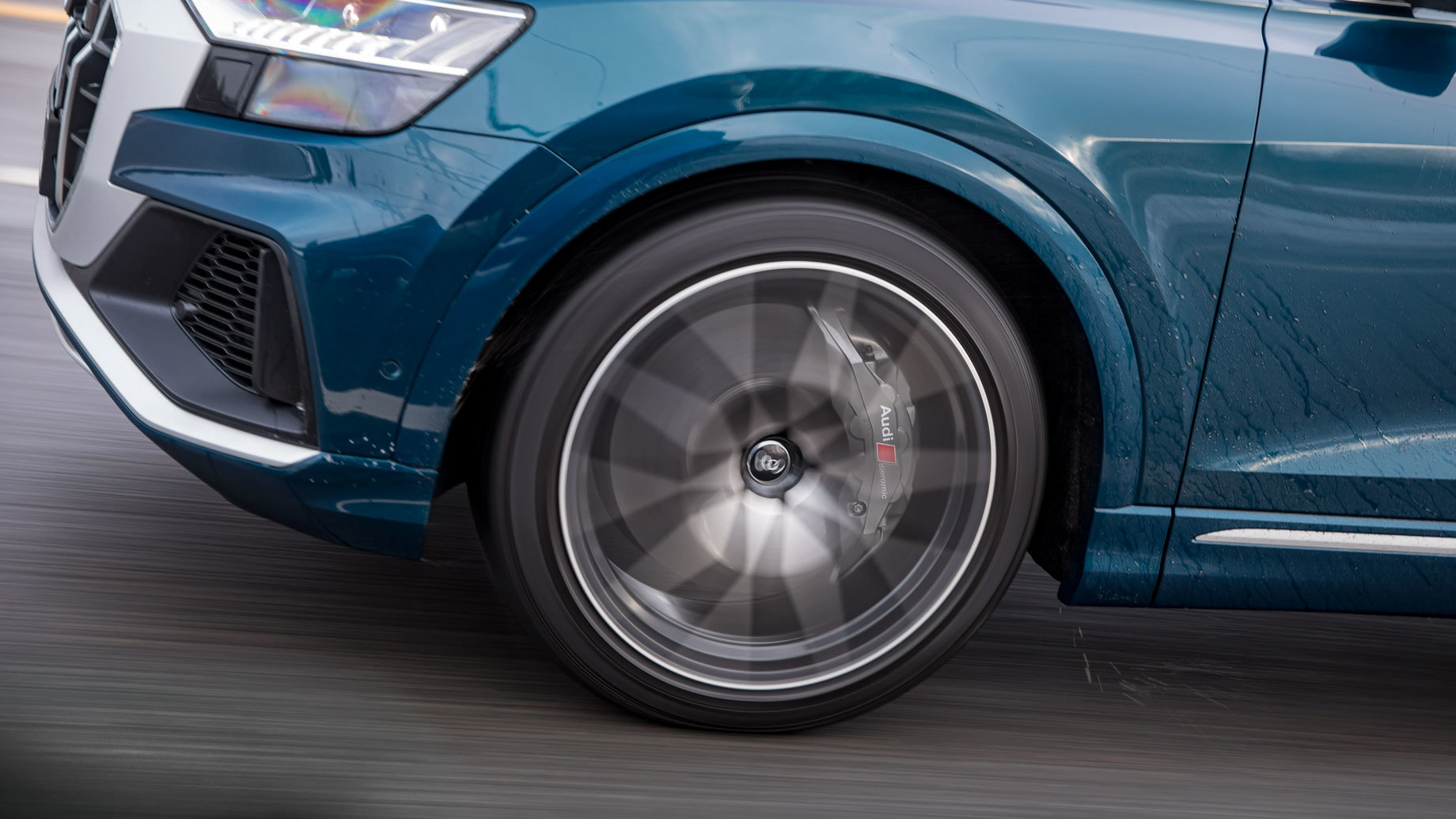
The braking system is close to ideal in most respects — there’s no dead travel in the pedal and braking force builds progressively as the car slows down. However, the optional carbon-ceramic brakes come with important caveats:
- Composite rotors and pads need warming up in cold weather before reaching full effectiveness
- In rain and slush, they require periodic light applications to dry off the rotor surface
- Gravel is their biggest enemy — stone chips can damage ceramic rotors irreparably
- Both test cars were fitted with ceramics, so the risk — and the £10,000+ bill — is doubled
Steering, Handling, and Chassis Dynamics
Both the SQ7 and SQ8 respond immediately to steering input. The rack is sharp, and the cars change direction quickly, with minimal body roll, following the intended line with a precision that feels almost automated. The unheated S-steering wheel requires 3.3 turns lock to lock, yet despite this, neither car ever feels like the large, heavy vehicle it actually is.
Key handling differences between the two models:
- SQ8: Heavier steering feel, particularly noticeable when holding a fast arc; the default Auto mode already feels sportier than necessary; air suspension is firmer at road joints; harder to judge front wheel traction at the limit; no real correction available once understeer sets in
- SQ7: Lighter, more communicative steering that doesn’t stiffen excessively even in Dynamic mode; more enjoyable to explore the handling limit; allows trajectory adjustment mid-corner with the steering wheel; the active differential rewards precision throttle work
The SQ8 is better enjoyed in Comfort mode, which delivers the most sensible suspension behaviour in urban conditions — micro-irregularities nearly disappear, sharp-edged bumps are smoothed, and the reduced stabiliser bar stiffness lessens sensitivity to road camber.
Both cars are equipped with a comprehensive mechatronics package including rear-wheel steering and an active sport differential with overdrive planetary gears on each driveshaft. The 48-volt active anti-roll system works without fault, though the rear steering and sport differential make their presence most clearly felt at parking speeds and when deliberately selecting a lower gear mid-corner, respectively.
Ride Quality, Wheels, and Tyre Choice
The standard wheel size for the SQ7 is a sensible 285/45 R20, but our test car wore 22-inch items. The SQ8, co-developed alongside the Lamborghini Urus, is designed for 23-inch wheels as standard, so 22-inch wheels with a 40% tyre profile feel at home on it — less so on the SQ7. Even so, ride quality concerns are shared across both sizes:
- Comfortable speed over road humps is limited to around 18 mph
- Sharp-edged potholes and expansion joints are felt through low-profile tyres
- The maximum permitted dimension for the SQ7 is 285/35 R22 — at this size, air suspension struggles to cope with peak loads from low-profile rubber
- Fitting SQ8 wheels to the SQ7 looks imposing but creates kinematics issues due to different offsets, and clearance disappears when Dynamic mode lowers the air suspension
Tyre choice matters enormously at this level. The Pirelli Scorpion Winter fitted to our test cars generated road noise that was out of keeping with the SUVs’ premium status — particularly on coarse asphalt — and double glazing alone was not enough to silence it.
SQ7 vs SQ8: Which One to Choose?
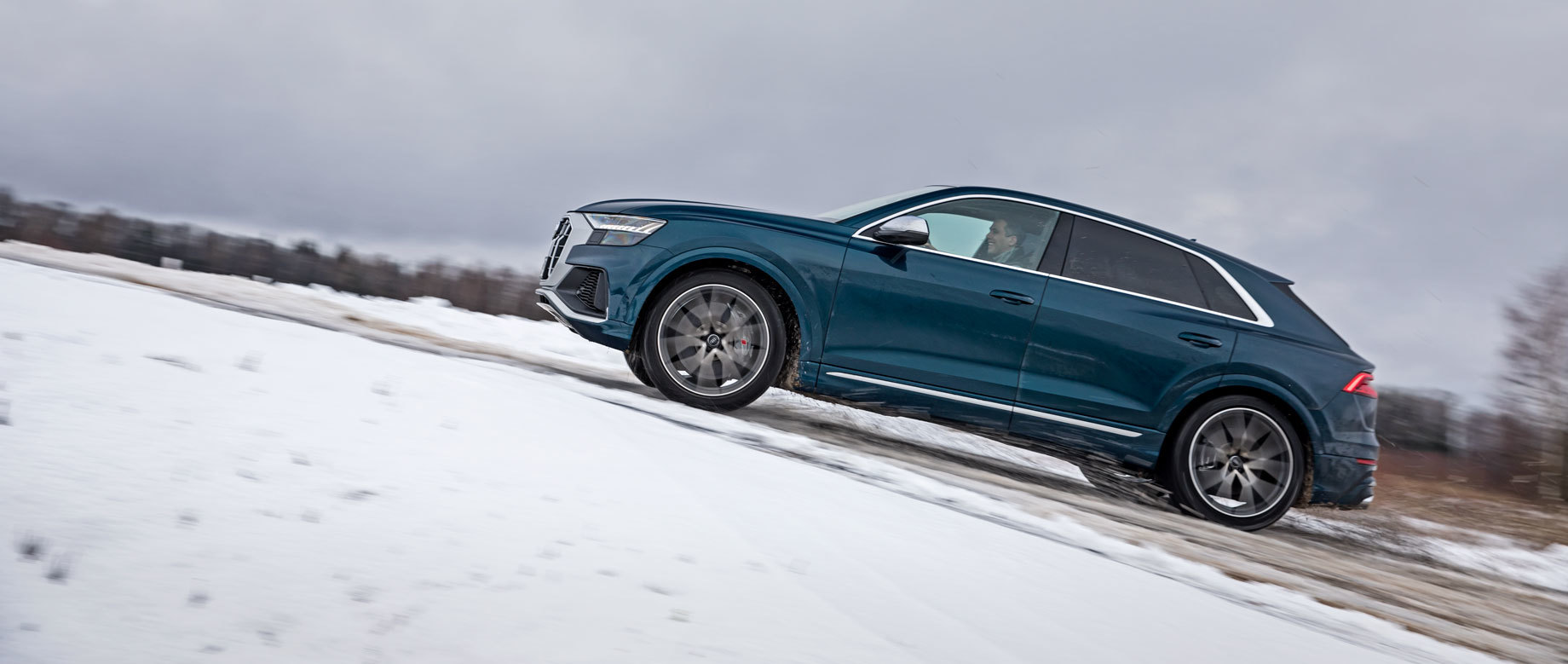
If forced to choose between the two, the SQ7 is the more compelling driver’s car for anyone who values function and feedback. The SQ8 is far from impractical — the boot is enormous and rear-seat comfort is excellent — but it feels like a design-led creation. Its heavy steering and tightly configured chassis settings carry a sense of constraint rather than freedom.
In summary:
- Choose the SQ7 if you want a more communicative chassis, lighter steering, and a car that rewards driver involvement without feeling artificially stiff
- Choose the SQ8 if exterior design and rear-seat refinement matter more, and you primarily drive in Comfort mode
- Both offer remarkable balance, consistent behaviour across all modes, and excellent composure at speed — neither hides surprises the way the Mercedes or BMW rivals do
- Both are ultimately long-distance cruisers; the high-torque V8 diesel suits towing and effortless motorway travel far more than track-day heroics
The End of an Era for V8 Super Diesels in Europe
This test may well represent one of the last chances to experience a European V8 super diesel in its natural habitat. Technical data for the SQ7 and SQ8 with the V8 TDI has quietly disappeared from Audi’s European press portal — archived, with only vague references remaining. The writing has been on the wall for some time:
- The SQ7 and SQ8 have been updated in key markets with Porsche’s 4.0-litre petrol V8, producing 507 hp and reducing the 0–60 mph time from 4.8 to 4.1 seconds (though torque drops to 700 N·m)
- The Volkswagen Touareg has moved exclusively to hybrid powertrains
- Eight-cylinder Range Rovers are heading toward discontinuation
Every car that carried a large diesel V8 made a lasting impression, and these Audis — disciplined, refined, and commercially restrained as they are — are no exception. There is something irreplaceable about a heavy SUV with a big diesel engine: a sense of effortless, unhurried authority that no petrol or hybrid equivalent quite replicates.
An era is drawing to a close.
This is a translation. You can read the original here: https://www.drive.ru/test-drive/audi/5fd0de1aec05c4333b000037.html

Published June 30, 2022 • 9m to read