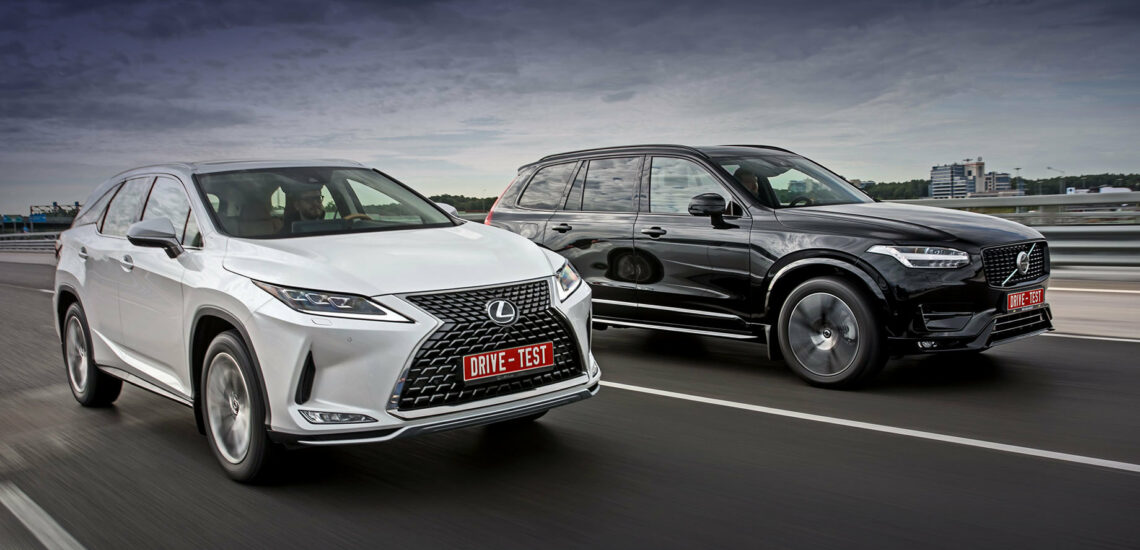

The Lexus RX is an undisputed leader in the premium mid-size crossover segment — its closest rival, the BMW X3, sells roughly a third fewer units. Yet among the nearly ten thousand RXs sold in 2019, only 162 were the elongated, three-row RX 350L. At 16 feet long with a fully-loaded standard spec, it competes in the large luxury crossover segment — and that’s exactly where it struggles. To find out why, we benchmarked it against the Volvo XC90, a seven-seat rival that’s similar in size, price, and ambition — though it adds something the Lexus can’t offer: a D5 diesel engine.
Exterior Design: Bold vs. Restrained
The Volvo XC90 looks conservative even with the R-Design body kit, while the Lexus turns heads with its signature angular styling. Both vehicles date back to 2015, but the Lexus has aged more gracefully. Its extended rear overhang — over 3.5 inches longer than the standard RX — barely disrupts the proportions. The Volvo, while elegant, loses points for less consistent panel gaps and body assembly quality compared to the Japanese rival.
Interior Comfort and Passenger Space
Often marketed as the ideal minivan alternative for family buyers, these two luxury seven-seaters take very different approaches to passenger comfort.
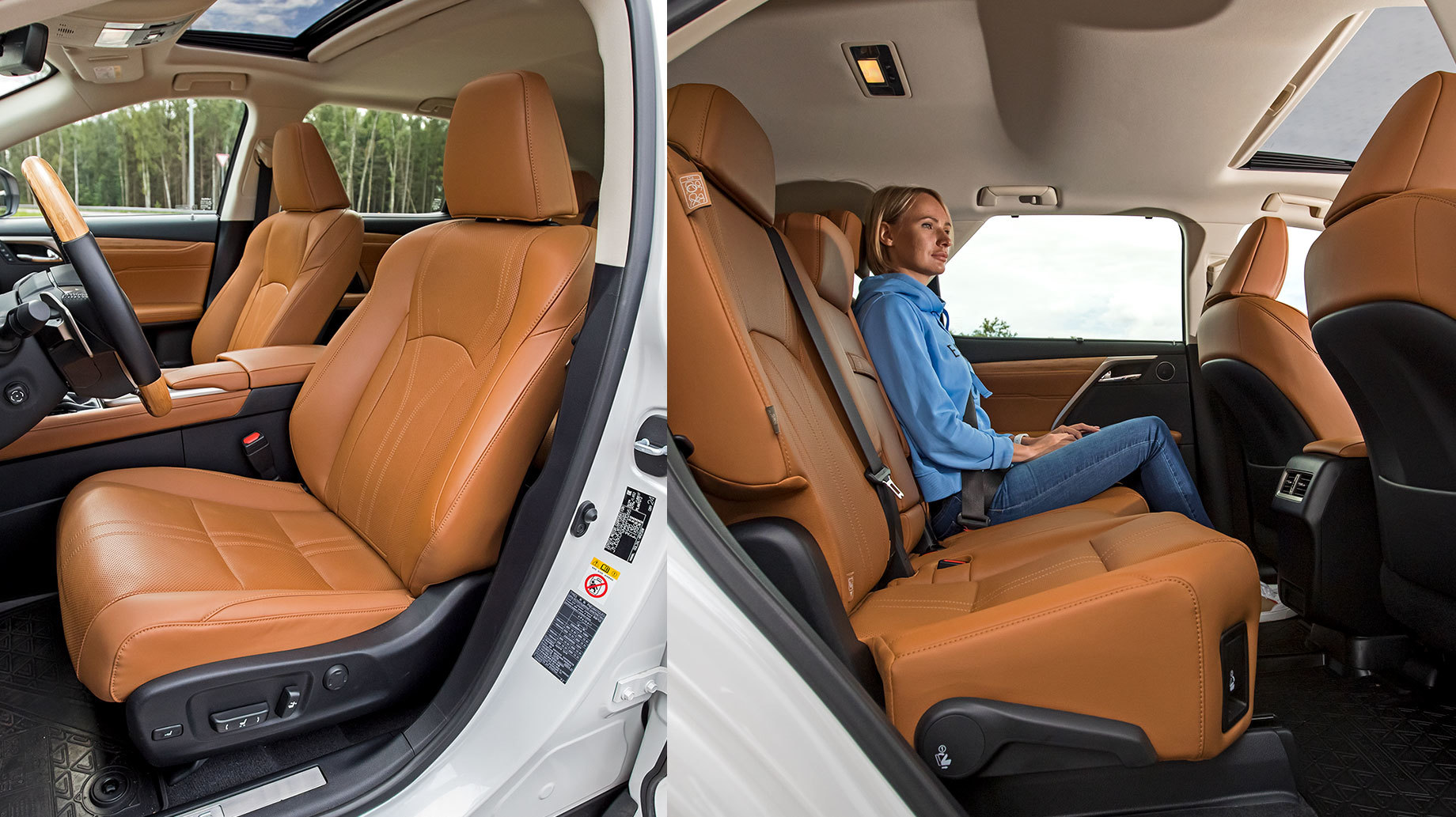
Both the first and second rows of the Lexus feature comfortable, sink-in seats. Sportiness is minimal, comfort is maximum. There are plenty of adjustments, but the rear bench is split and moves in a 60:40 ratio.
Second Row
- Volvo XC90: All three rear seats can be moved, adjusted, and folded independently. The inner Isofix bracket spacing reaches 21 inches — better suited for fitting a child seat between two passengers. However, a central tunnel limits middle-seat comfort.
- Lexus RX 350L: The second row lacks a tunnel and features a wide, welcoming soft bench, making it the more comfortable place to sit overall. Inner Isofix bracket spacing is 18.5 inches, slightly narrower. The 60:40 split rear bench slides but doesn’t fold individually.
Third Row
Getting to the third row requires manually folding the second-row seats in both vehicles. The Volvo’s mechanism is notably stiff — not everyone will manage it easily. In the Lexus, the third-row seats deploy via an electric drive, though after about 15 seconds of operation the two seats end up in slightly different positions — one lower and further back, the other higher and 4 inches closer to row two. It turns out both are intentional preset options, selectable by pressing the button again before deployment.
- Volvo XC90: Despite being 2 inches shorter overall, the XC90 offers meaningfully more third-row space. Seats provide hip support, the ceiling is high enough for average-height passengers, and a separate third climate zone is standard. Four-zone climate control is an optional upgrade.
- Lexus RX 350L: Third-row passengers sit low, with cramped headroom and tiny porthole-style windows. The second row must be pushed forward to create any legroom, leaving a 5’9″ person with their knees against the seat back. A separate climate zone and dedicated vents are appreciated, but the overall experience is tight.
Ride Quality and Driving Dynamics
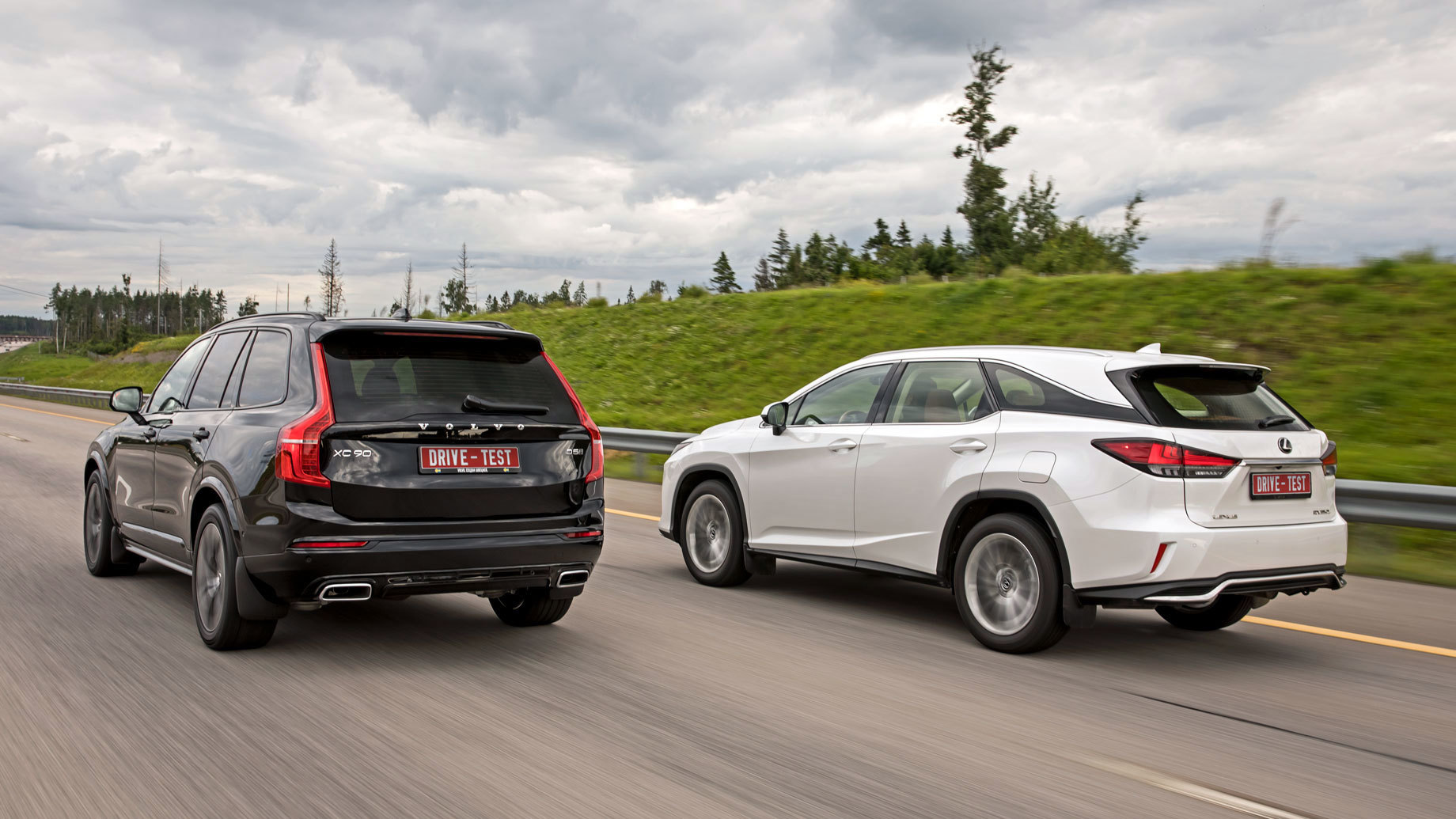
Despite appearances — the sporty-looking Lexus versus the sober Volvo — the driving character of each car is the opposite of what you’d expect.
- Lexus RX 350L rides on standard spring suspension with adaptive shock absorbers and 20-inch wheels measuring 9.25 inches wide. The result is an ultra-soft, wave-like ride that absorbs most small and medium bumps effortlessly. Switching to Sport or Sport+ modes makes little practical difference. Steering is light and vague. On speed bumps above 18–24 mph, the suspension bounces and floats — classic American-style comfort tuning. A genuinely lulling, relaxing car to be in.
- Volvo XC90 (R-Design with optional air suspension) rides noticeably firmer — closer to a German executive car. It tracks asphalt imperfections faithfully, and the wide 10.8-inch tires can be deflected by road ruts. The steering is accurate and the chassis rolls slightly but responds predictably. The R-Design package does not include chassis reconfiguration, so the stiff tune is fixed regardless of drive mode.
Engine Performance and Noise Levels
Both vehicles run the same Aisin eight-speed automatic transmission, but the engines and overall powertrain feel differ considerably.
- Lexus RX 350L (V6 petrol): Responds eagerly to throttle inputs, especially in the first half of pedal travel. The naturally aspirated engine emits a pleasant, characterful sound under load. However, the gearbox can stumble and kick down aggressively when a small amount of throttle is added. Brakes feel overly firm in standard modes.
- Volvo XC90 D5 (diesel): Throttle response is more delayed but very predictable. The diesel engine produces a constant, low-level rumble — audible at all times, not just under acceleration. Gearbox behaviour is smooth and consistent. Braking feels more natural and proportionate.
Noise levels are broadly comparable despite the different approaches: the Lexus uses noise-insulating glass only in the front, while the Volvo features optional acoustic glazing across all four doors. In both cases, cabin refinement at cruising speed is impressive.
Cabin Experience and Infotainment
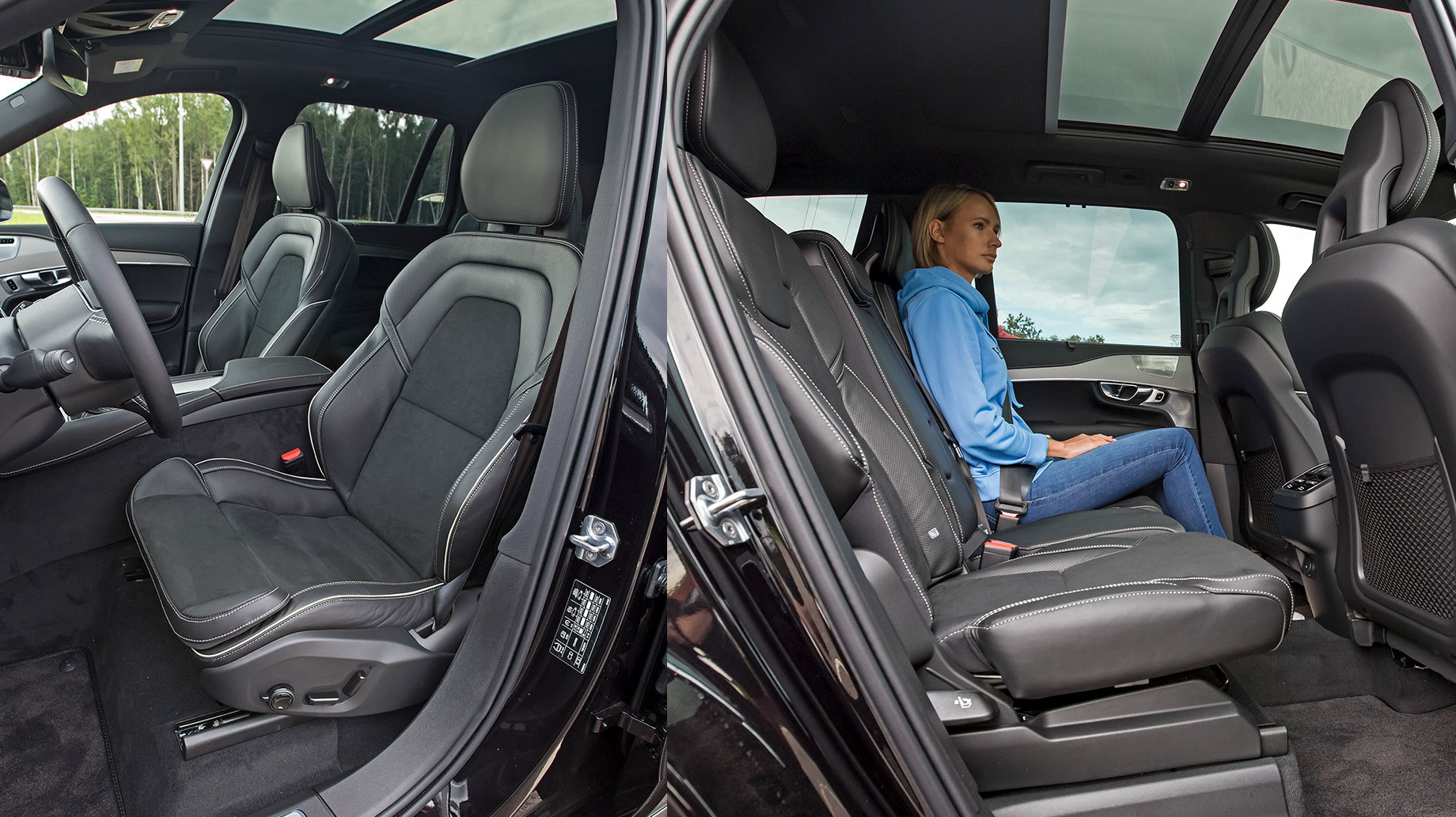
Volvo XC90 interior. Sport front seats with enhanced lateral support are included in the R-Design package. There’s no adjustable bolstering, and the bolsters are quite firm and can dent the sides on long journeys. The rear bench is contoured for three, but the middle seat feels like a stool, and the tunnel gets in the way.
Entering the Lexus is easy thanks to its small, door-covered sills — though taller drivers should watch their knees on the protruding front panel. Once inside, the seat envelops you in soft leather with pleasant wood trim surroundings. The steering wheel is soft to the touch, with only the gripped sections heated in winter. A column-mounted electrical steering adjustment — absent in the Volvo — is included in the base spec.
The Lexus infotainment, however, is a weak point: analogue instruments with no digital speedometer, and a touchpad-based multimedia system that is frustrating and unintuitive to use while driving. The constant, non-dismissible speed camera alerts compound the irritation.
The Volvo’s digital instrument cluster and portrait touchscreen feel a generation ahead. The trade-off is an almost complete lack of physical buttons — even heated seats and the surround-view camera require navigating menus. The Pilot Assist semi-autonomous driving system and a more capable adaptive cruise control give the XC90 a clear technology edge overall.
Off-Road Capability
- Lexus RX 350L: No dedicated off-road driving modes. The rear-wheel drive engagement button has limited practical effect, as the traction electronics make little effort to simulate differential locking. Ground clearance is a reasonable 7.8 inches, and ride smoothness helps on mild terrain — but that’s where the off-road story ends.
- Volvo XC90: A far more capable machine off the beaten track. In Comfort mode it sits 0.79 inches higher than the Lexus; in Off-Road mode, ground clearance rises to an impressive 10 inches. The shorter overhangs (the XC90’s wheelbase is 7.8 inches longer while the body is shorter overall) help with approach and departure angles. Effective traction control electronics allow the XC90 to push forward confidently even when two wheels are in the air.
Practicality: Boot Space and Small Details
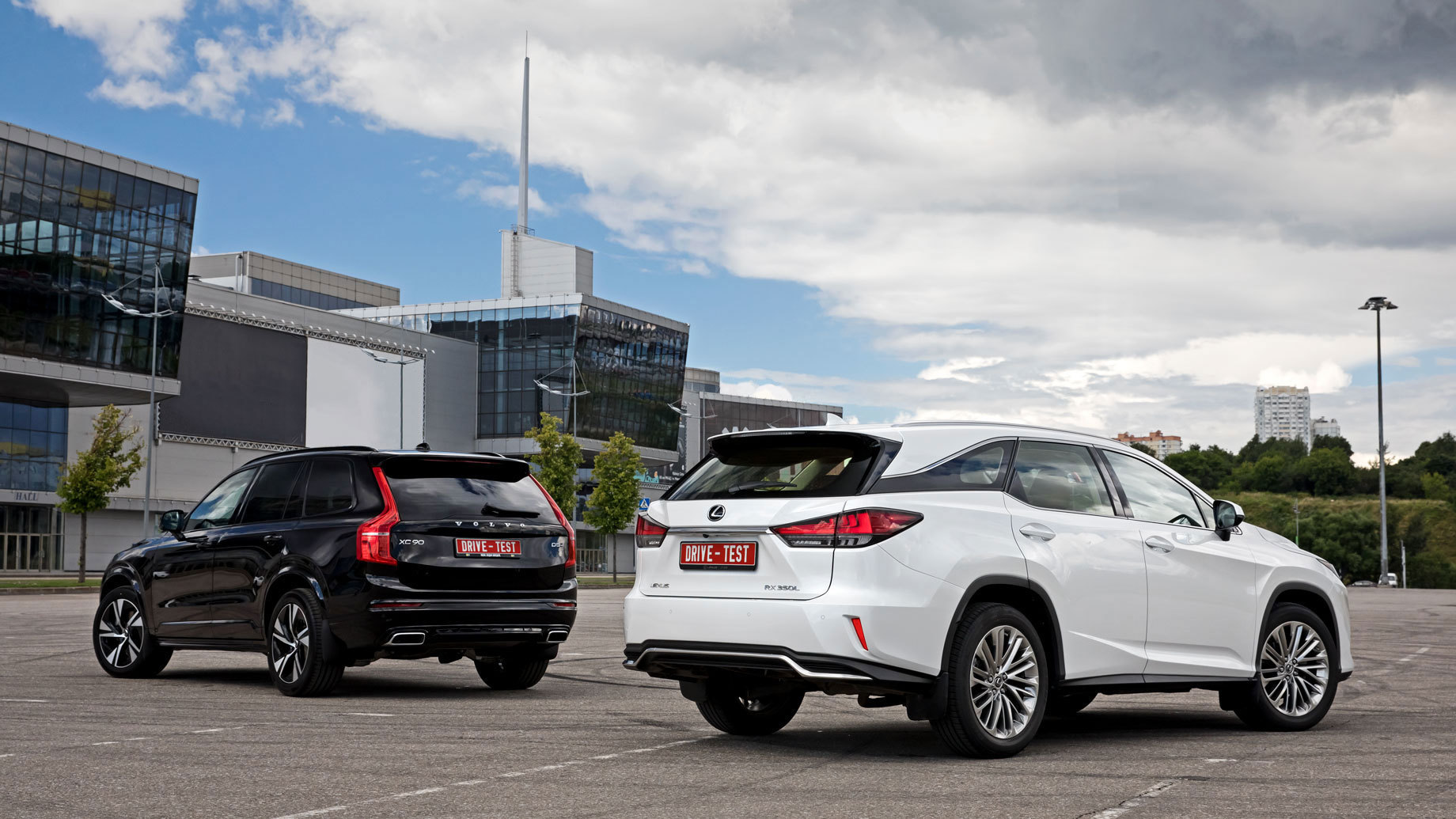
Boot space, lining quality, and seat-folding options are broadly comparable between the two. A few notable differences:
- The Lexus power tailgate opens slowly, noisily, and stops at a height that risks hitting anyone taller than 5’9″ on the head.
- The Volvo tailgate operates smoothly and stops at a more generous height.
- The Lexus stores its space-saver spare wheel under the floor, externally mounted — useful for freeing up under-boot storage space, but making wheel changes messier and more awkward.
- Maintenance intervals favour the Volvo significantly: service is required every 20,000 km versus every 10,000 km for the Lexus, despite both offering the same three-year/100,000 km warranty.
Verdict: Lexus RX 350L vs Volvo XC90
After spending time with both, the Lexus RX 350L emerges as the clear winner for sheer ride comfort and interior luxury. The feather-soft seats, hushed cabin, and effortless V6 make it genuinely relaxing to travel in — and for that, most buyers in this class can forgive a cramped third row and dated tech. The lack of traction in the market for the RX 350L seems unjust.
The Volvo XC90, meanwhile, is the more technically accomplished and versatile vehicle — better off-road, more spacious in the third row, and packed with driver assistance technology. But it’s not without flaws: the firm ride from an air suspension that should, in theory, deliver more magic; overly menu-dependent controls; and a slightly less premium feel underfoot.
Ultimately, these two seven-seat luxury SUVs serve different buyers:
- Choose the Lexus RX 350L if comfort, cabin tranquillity, and effortless daily driving are your priorities.
- Choose the Volvo XC90 if you want a more dynamic drive, better third-row space, modern tech, and genuine off-road ability — and don’t mind the firmer ride or the fuel savings of a diesel engine.
This is a translation. You can read the original here: https://www.drive.ru/test-drive/lexus/volvo/5f2bc0b7ec05c42f63000131.html

Published October 06, 2022 • 8m to read