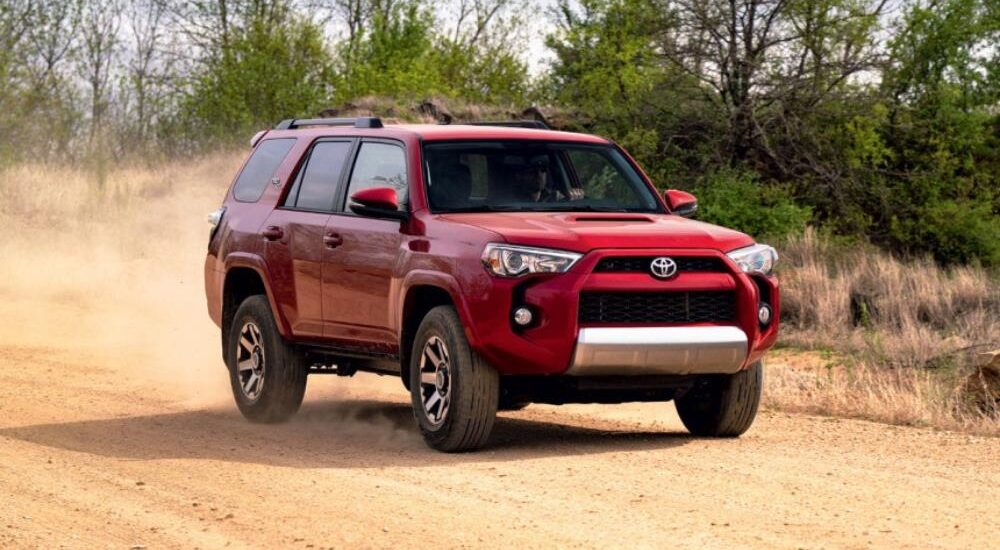

Are body-on-frame SUVs giving way to crossovers? They are — but the die-hards hold their ground. The Jeep Wrangler and Ford Bronco are not going anywhere, and neither is the Toyota 4Runner, which is breaking US sales records on a design that is thirteen years old. So is it simply outdated, or has it reached superstar status?
Forty Years and Five Generations
The first 4Runner arrived in 1984, based on the Hilux pickup. The changes were minimal at first — a fold-down tailgate and a plastic cap over the bed, essentially a shell. In 1989 the second generation brought a fully metal body. Move forward to 2009 and the fifth-generation N280 appeared. Its Hilux lineage has faded; it now shares its platform with the Land Cruiser Prado J150. And where the Hilux/Fortuner pair is aimed at developing markets and built in Thailand, the 4Runner is made exclusively in Japan and designed for American buyers.
Across those forty years the 4Runner has sold more than four million units. The first four generations were replaced every six or seven years; the fifth has already run twice as long as any of them.
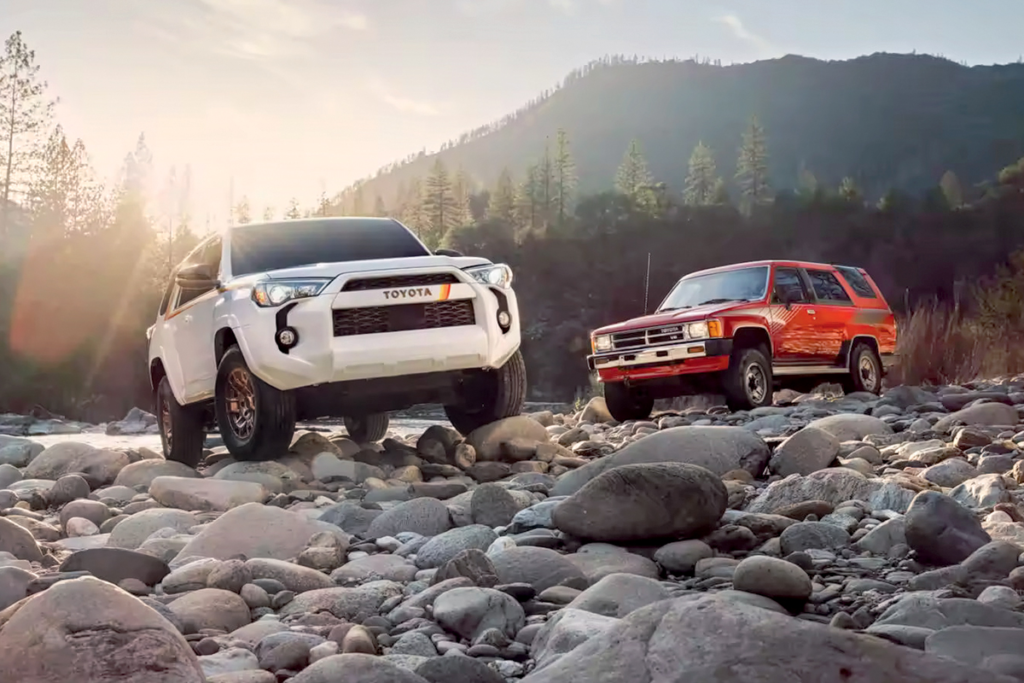
On the left is the 4Runner 40th Anniversary special edition, built in a run of 4,040 cars; on the right is the first-generation N60 SUV (1984-1989).
The Sales Keep Climbing
The model’s popularity is not in question — sales have risen steadily. In 2021 Toyota sold 145,000 4Runners in the United States, a record, and a huge increase on 2010.
Is It Rational to Buy One Today?
That is the real question about a vehicle this old. As a Florida resident, I went looking for the answer from a friend who had just bought a new 4Runner TRD Offroad Premium for $57,000.
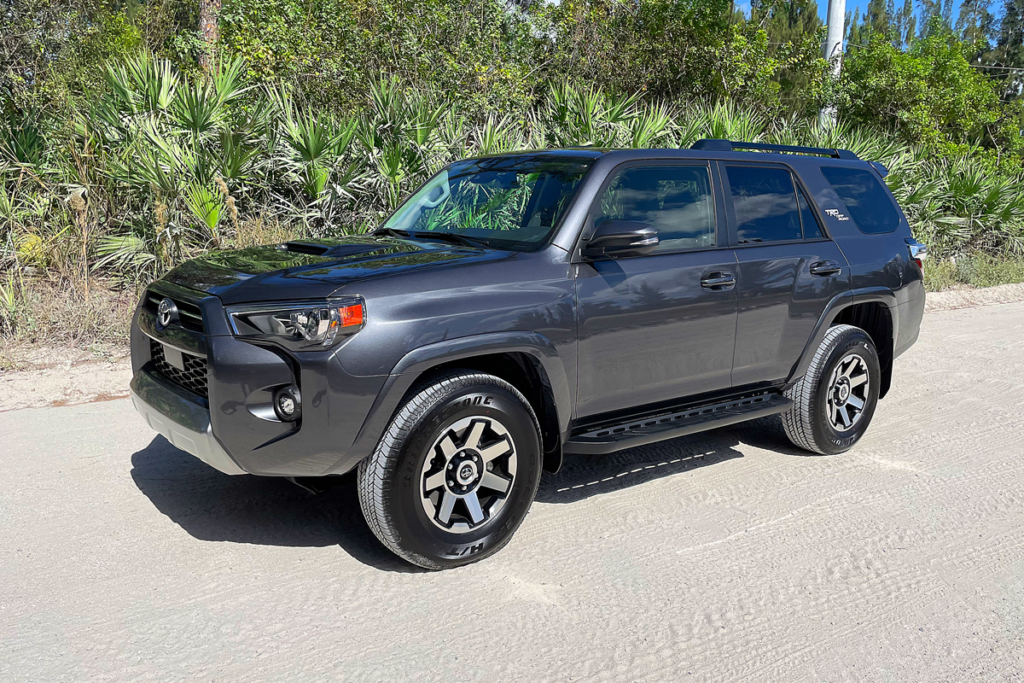
Alexander looked at the Toyota Tundra first, but its size and owner complaints about the twin-turbo engine put him off. He wanted a vehicle he could keep for a long time, so reliability came first. His passion for travel — off-road adventures included — meant it also had to be comfortable over long distances and genuinely capable off the tarmac.
Choosing a Trim: From City Polish to Wilderness Kit
The 4Runner varies enormously from one version to the next.
- SR5 — the base car, from $39,000. Simple and sturdy, with five or seven seats
- TRD Sport — aimed at on-road behaviour, with 20-inch wheels and X-REAS dampers
- Limited — the luxury one: painted mouldings, chrome detailing, a JBL audio system, memory seats in premium leather, and full-time all-wheel drive with a Torsen differential
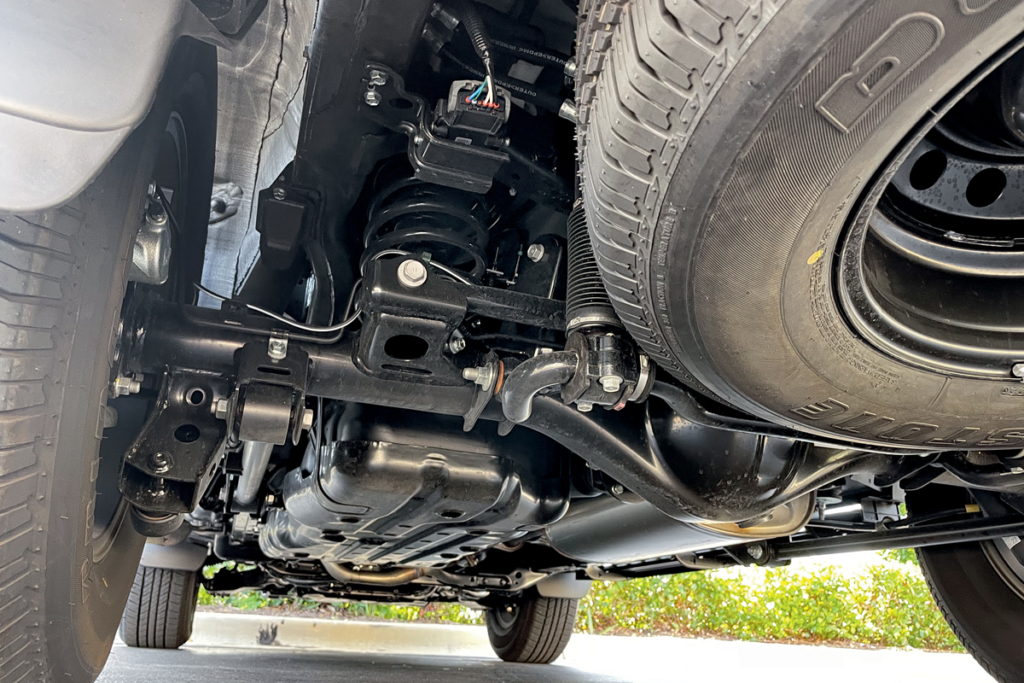
- TRD Pro — maximum off-road hardware: 243 mm of clearance, part-time four-wheel drive, a rear differential lock, Fox dampers, Terrain Select, Crawl Control, all-terrain tyres and roof rails
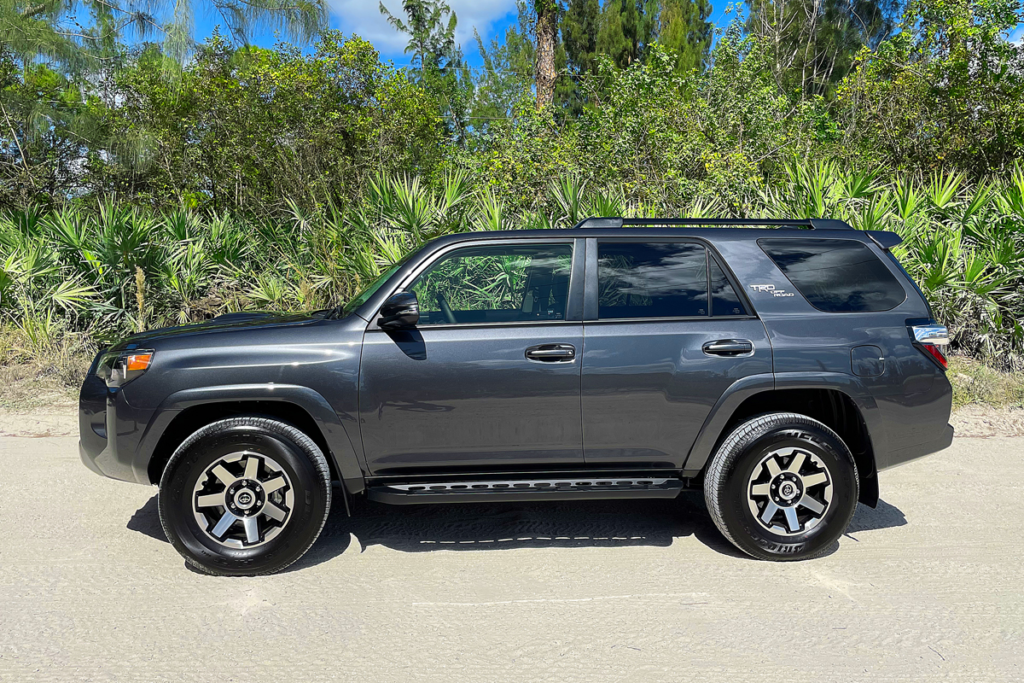
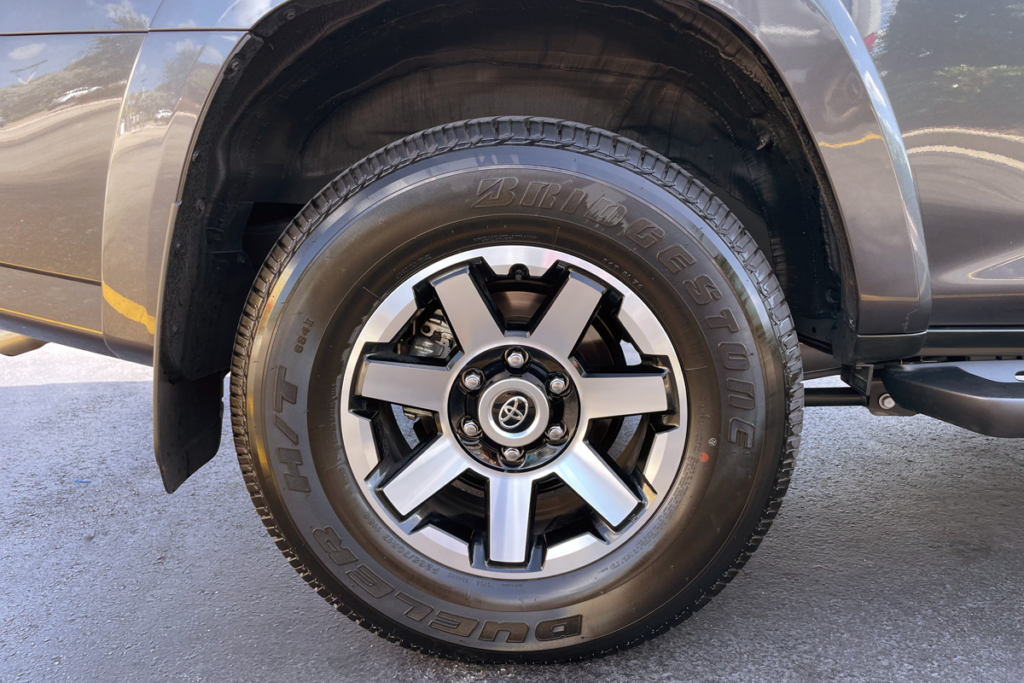
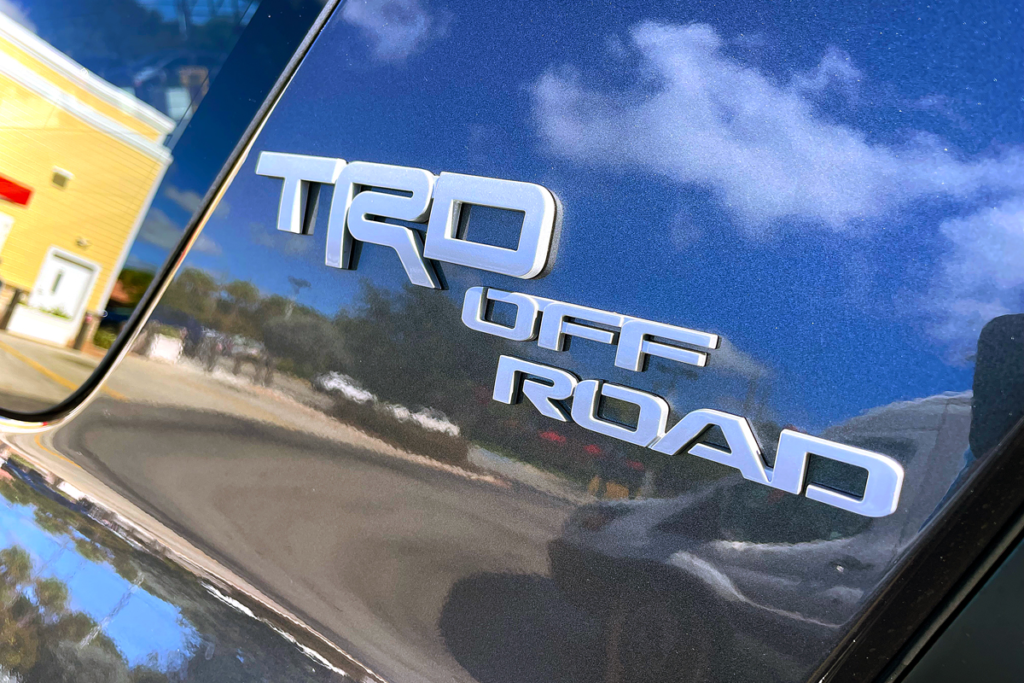
Alexander’s pick, the TRD Offroad Premium, sits in the middle: part-time four-wheel drive, road tyres, air conditioning and the KDSS stabiliser system.
He was also lucky enough to avoid the dealer mark-ups that currently run as high as ten thousand dollars, and did not have to wait at the dealership.
Inside: Old School, and Unapologetic About It
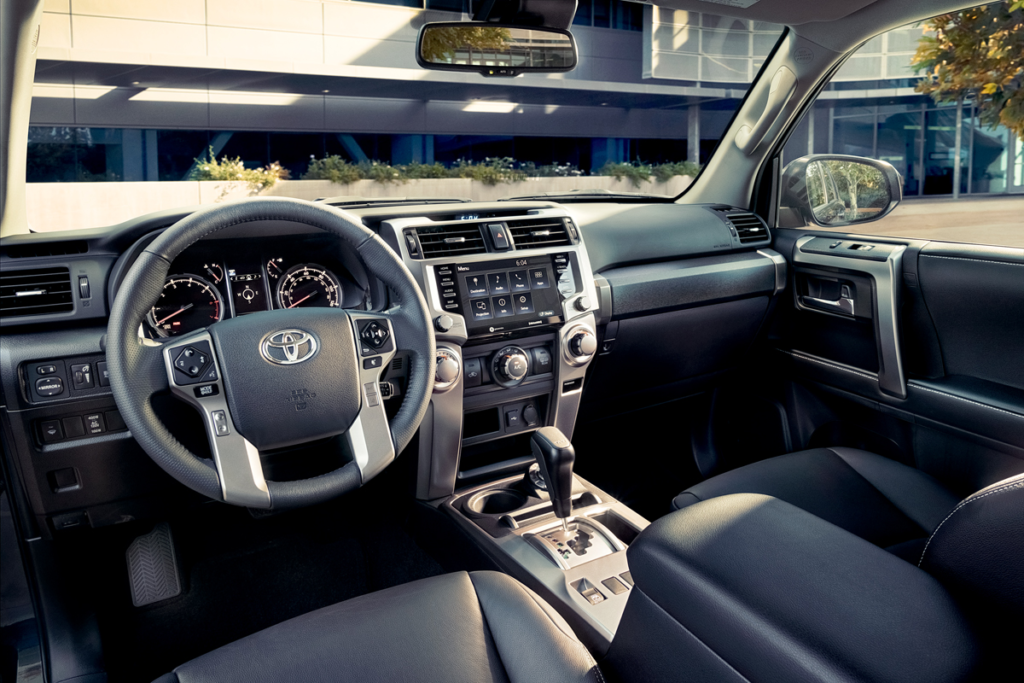
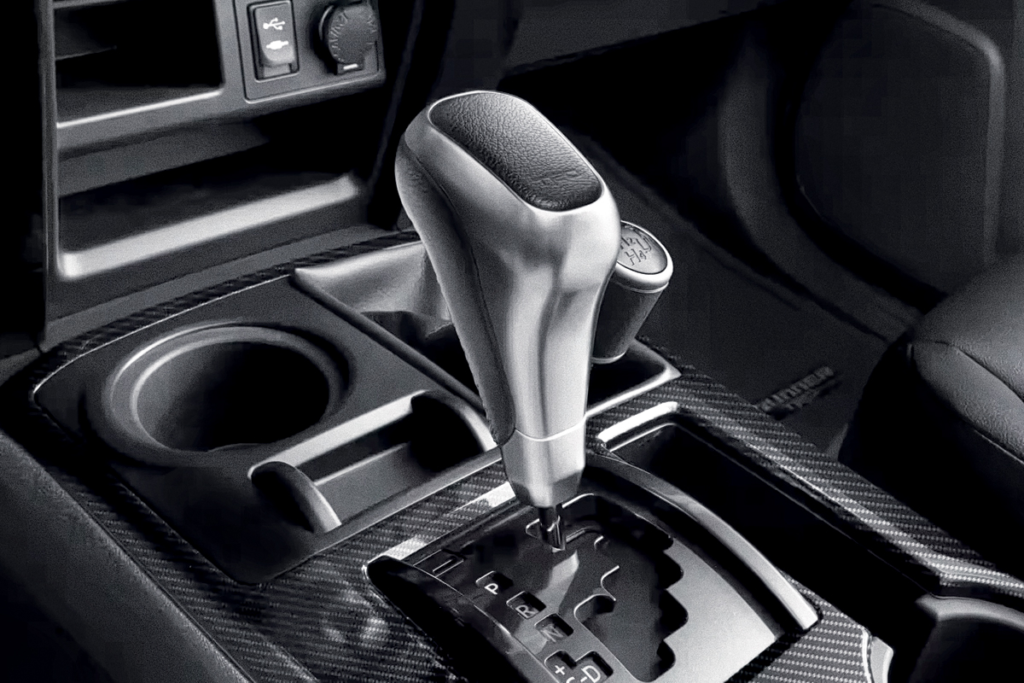
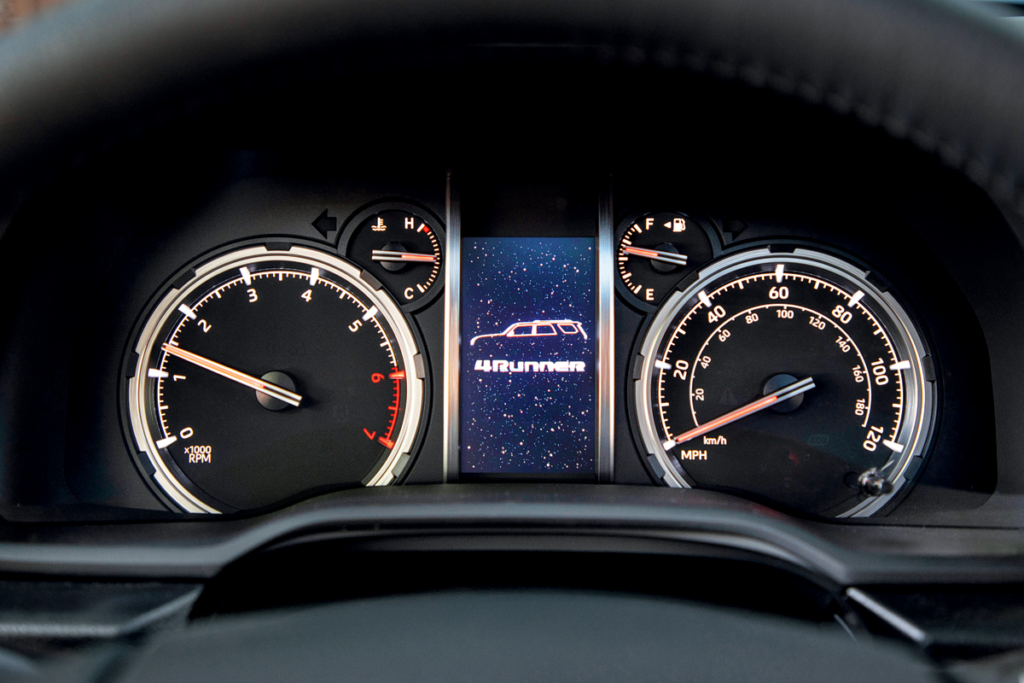
Climbing into a 4Runner feels like stepping into somewhere familiar. There is the distinctive steering wheel with two descending spokes, a zig-zag automatic shifter, and big buttons and knobs you can work while wearing gloves. It is unmistakably old-school — window switches on the door sill, grab handles on the roof for rough going. The charming touch is Toyota’s iconic dashboard clock, straight out of another era.
A decade of production has refined the interior materials, and for all their simplicity they do not feel cheap. The door panels are trimmed in synthetic leather; the dashboard is hard textured plastic with glossy dark grey inserts framing the new eight-inch multimedia system. The carbon-fibre finish on the transmission tunnel adds Toyota’s idea of a luxury flourish.
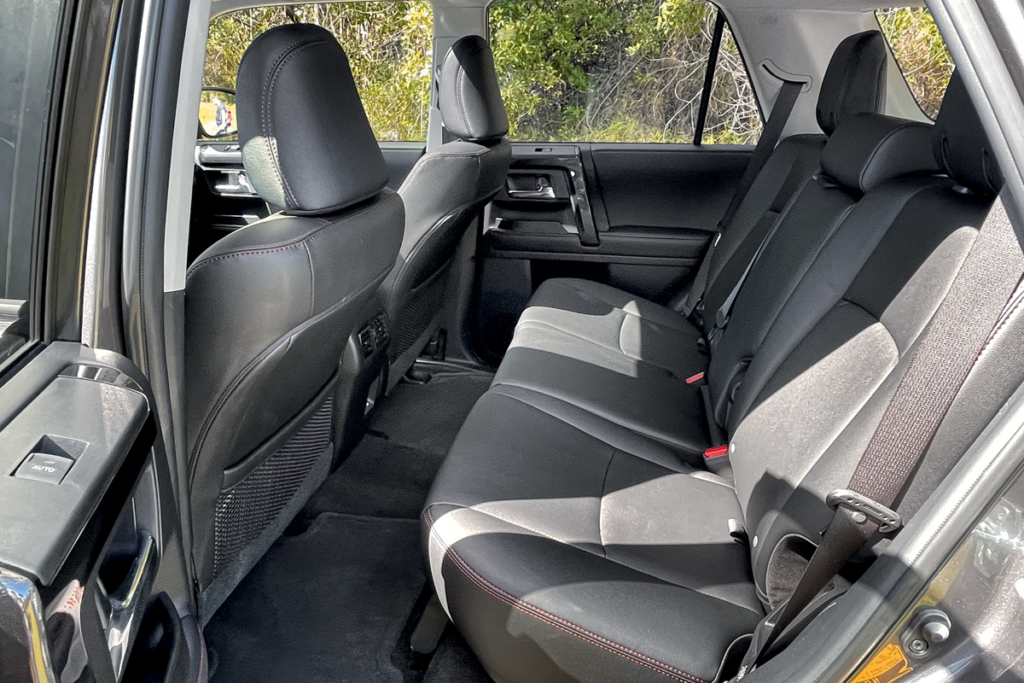
The second row is genuinely roomy: at 184 cm I can even stretch my legs a little, and knee room is about the width of a palm.
Driving the 4Runner Is a Pleasure
The sturdy 4.0-litre 1GR-FE V6 puts out 274 hp and 377 Nm. Toyota claims 0-100 km/h in 8.5 seconds — and it manages that through an antiquated five-speed automatic that does its job perfectly adequately, with enough shove and a refined sound. Alexander initially found the accelerator pedal soft and unresponsive, but a Sprint Booster wired into the throttle connector sharpened the response considerably.
What else could you ask for? Better fuel economy, perhaps. Even so, consumption is reasonable for the class, running between 12 and 15 litres per 100 km.
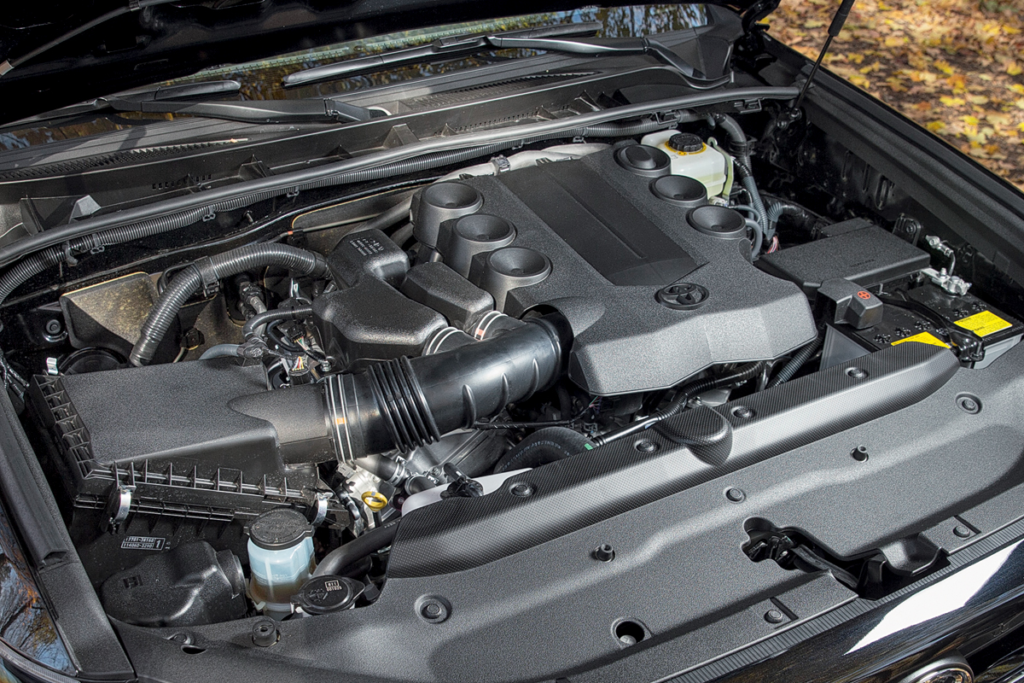
Early in the fifth generation’s life the 4Runner was offered with the 2.7-litre 2TR-FE four; now there is an unambiguous four-litre 1GR-FE V6 under the bonnet.
Ride and Handling: Definitely Not a Crossover
There is no mistaking the 4Runner for a crossover. The suspension is soft, the responses unhurried, feedback minimal, and it dives noticeably under braking. Yet the KDSS system keeps body roll in check, and the car holds a commendably straight line with very few steering corrections. Ride comfort is superior, and on the same dirt road where I tested the Ford Bronco it was markedly better.
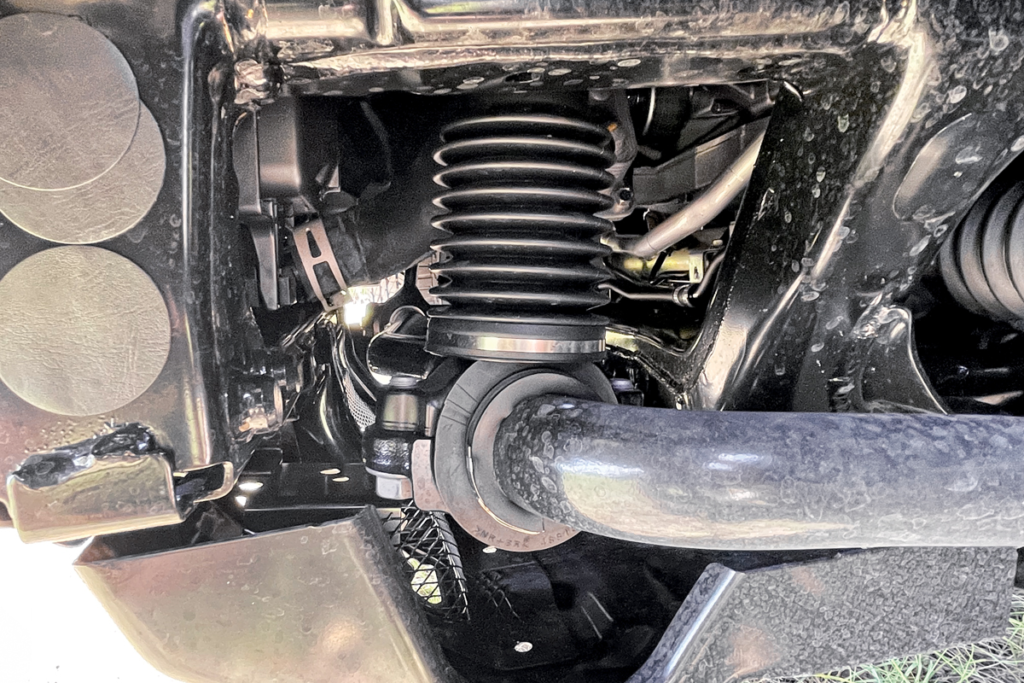
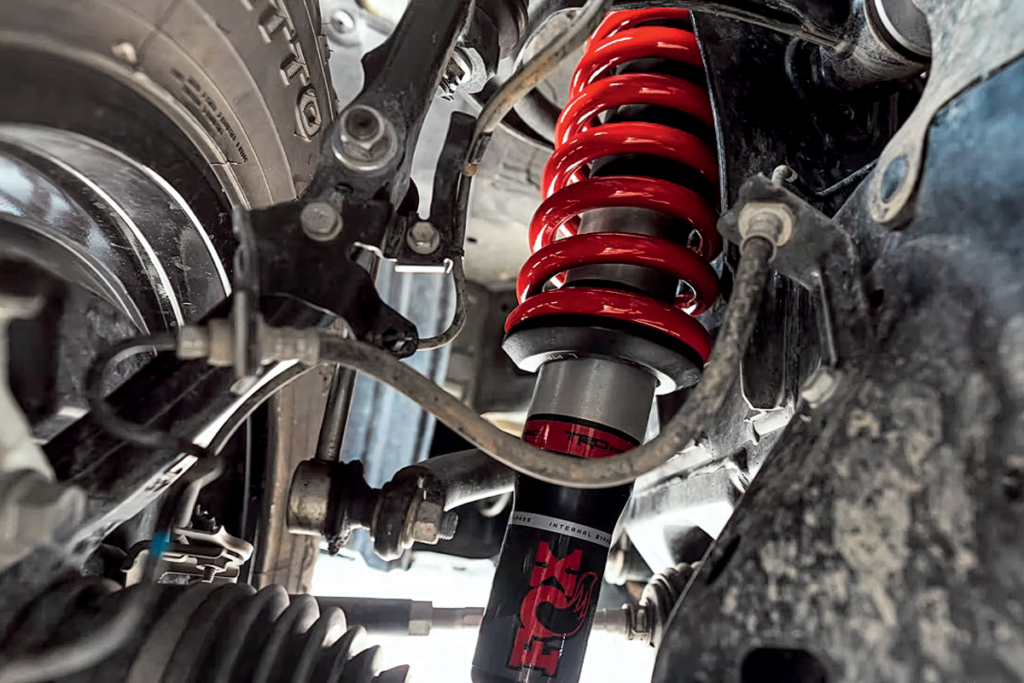
Worth singling out too: the acoustic comfort, which is ideal for long-distance travel.
The Boot — and That Rear Window
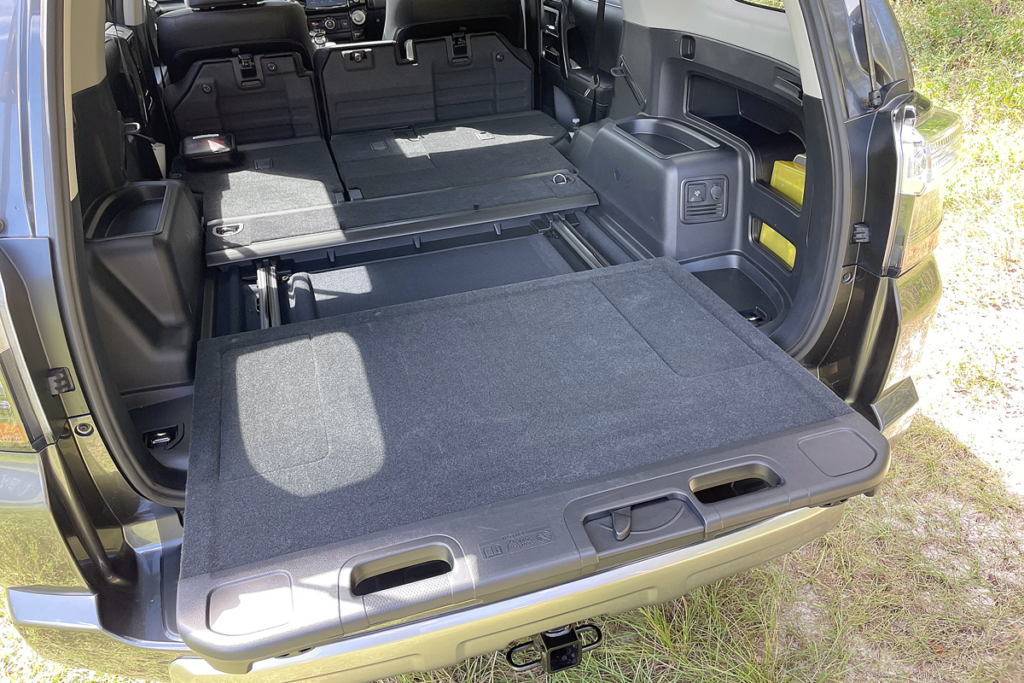
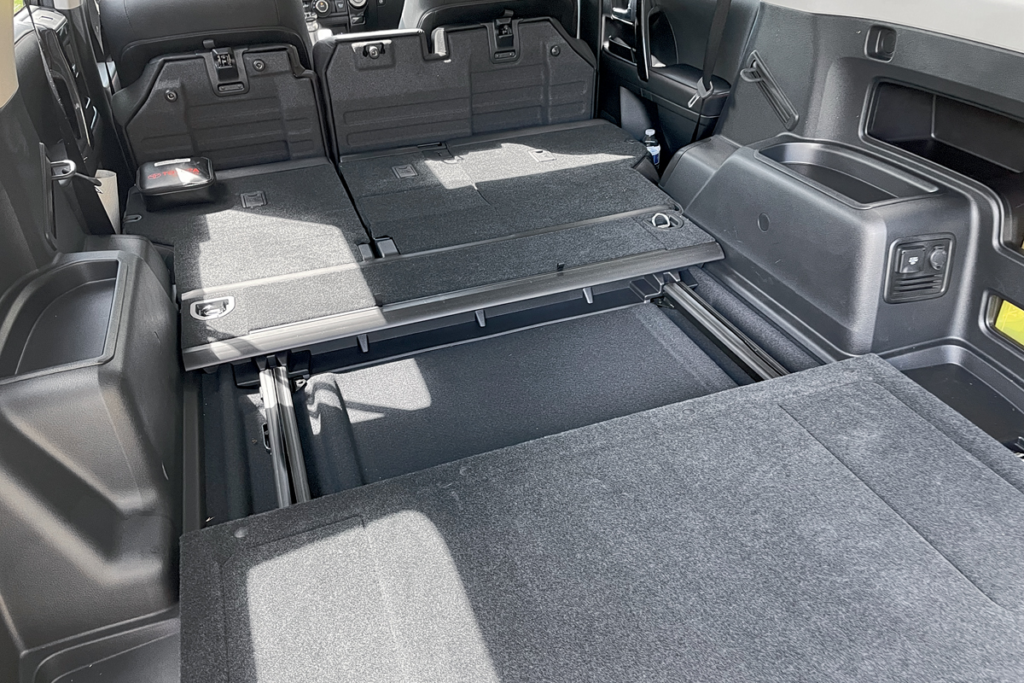
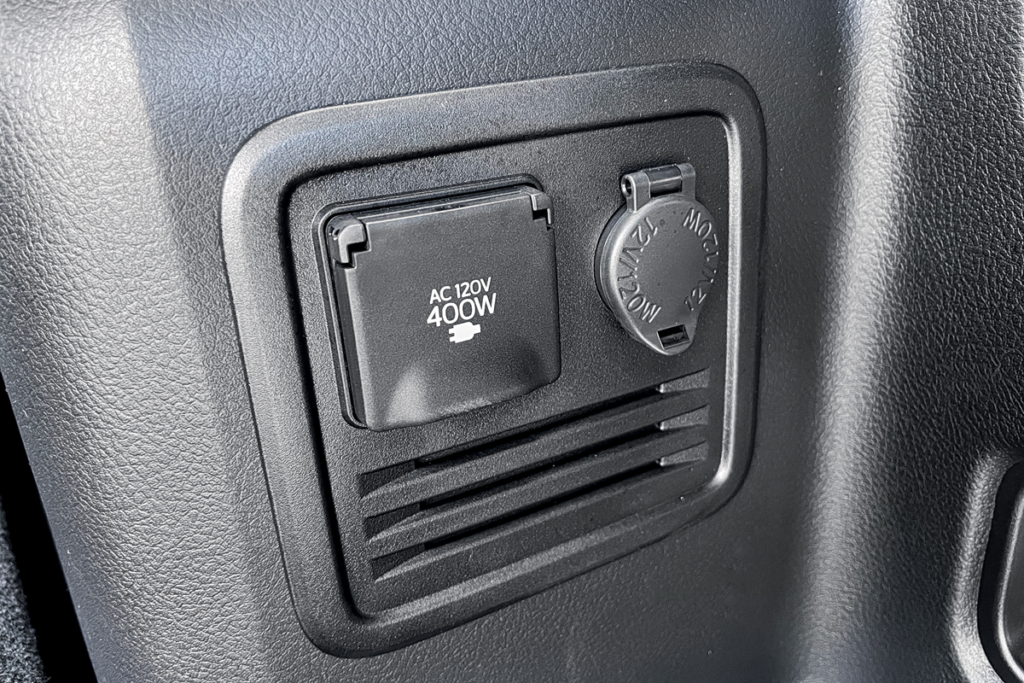
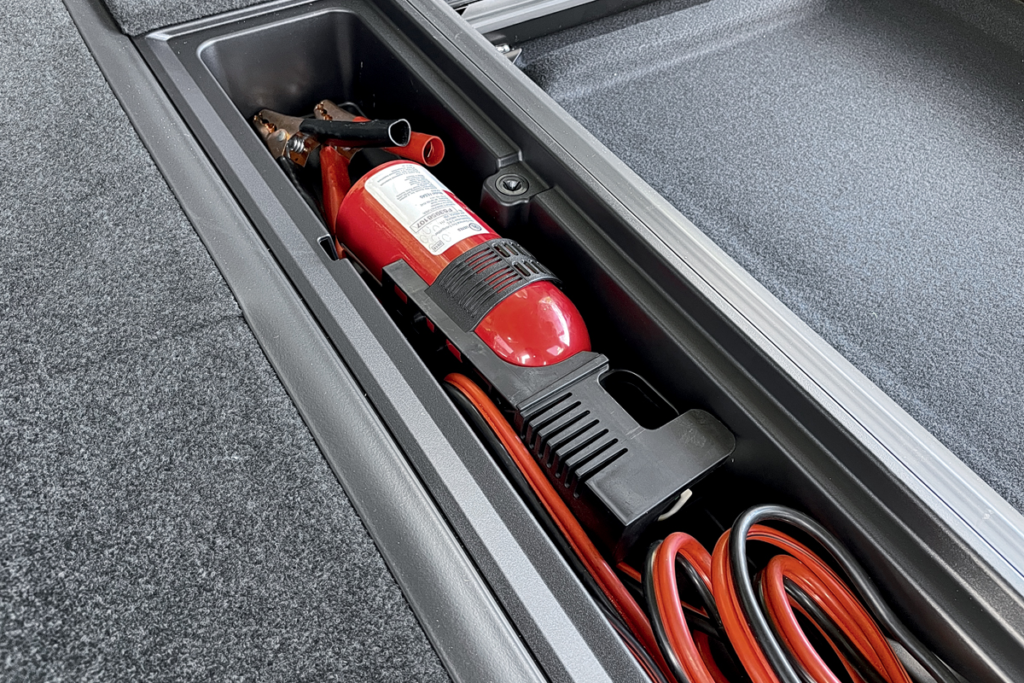
Every 4Runner has one feature all its own: a rear window that lowers, so you can load the boot easily and ventilate the cabin on the move, to the delight of any dog on board. The tailgate has no power assist, but the load area is generous at 1,336 litres to the roof. Inside there are two power sockets, including a 110-volt one that can be switched on from the cabin. An optional pull-out tray rated to 200 kg is the perfect picnic accessory. Fold the second row and you get a flat floor you can sleep on.
Off-Road: Where It Earns Its Keep
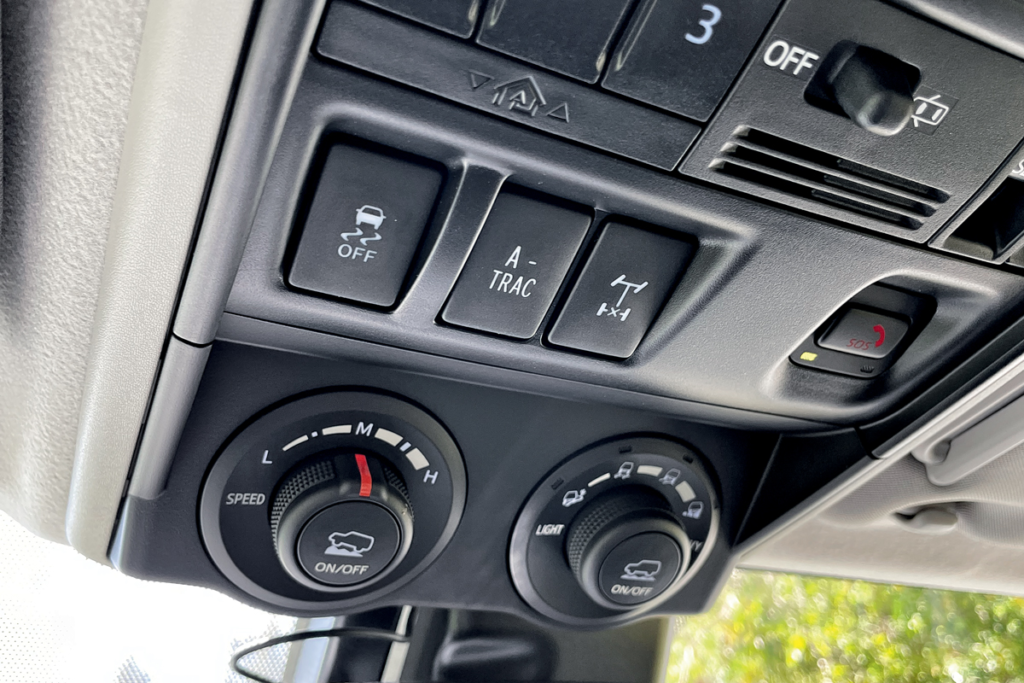
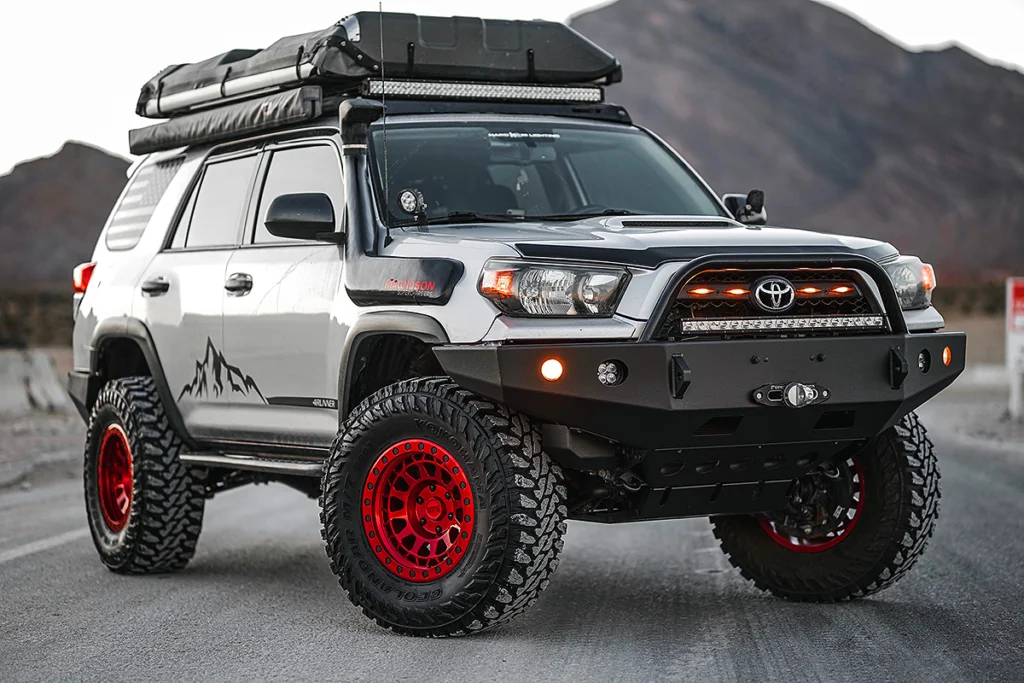
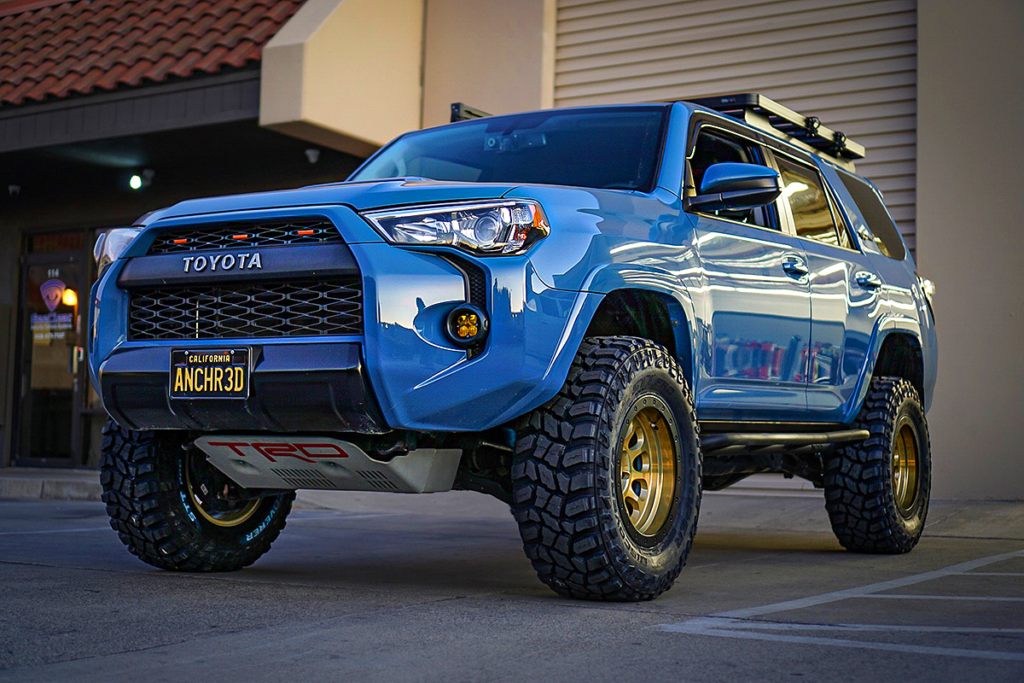
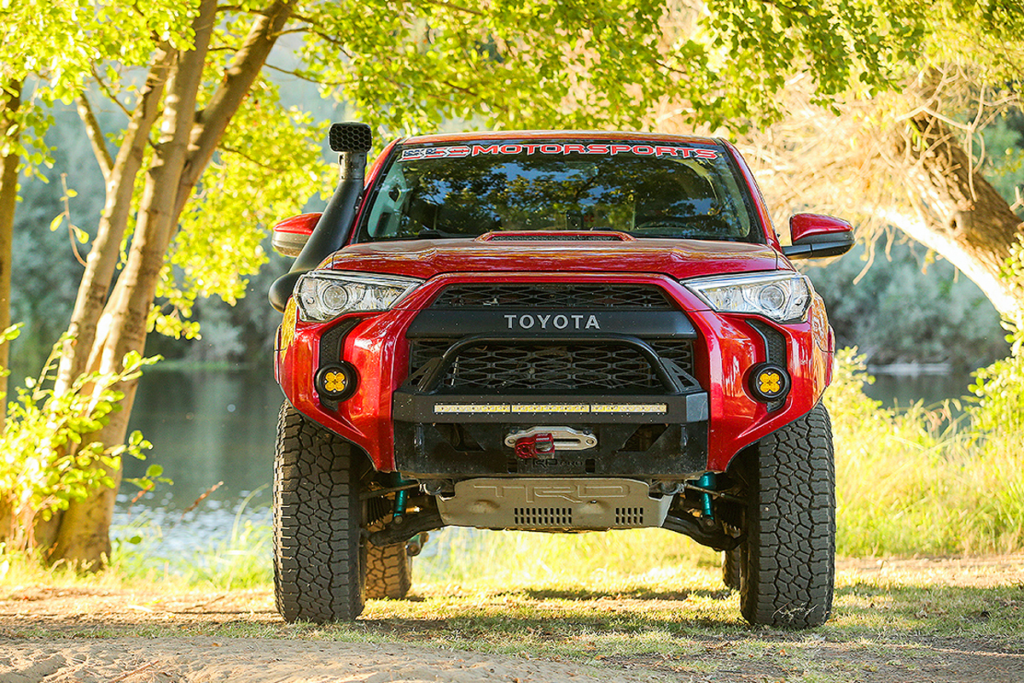
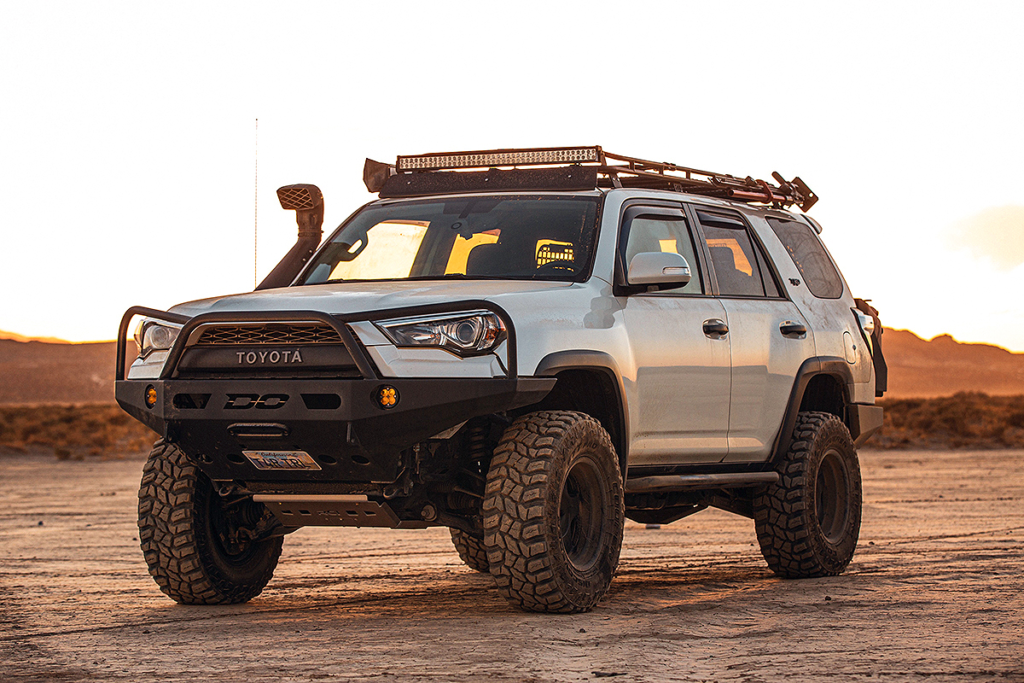
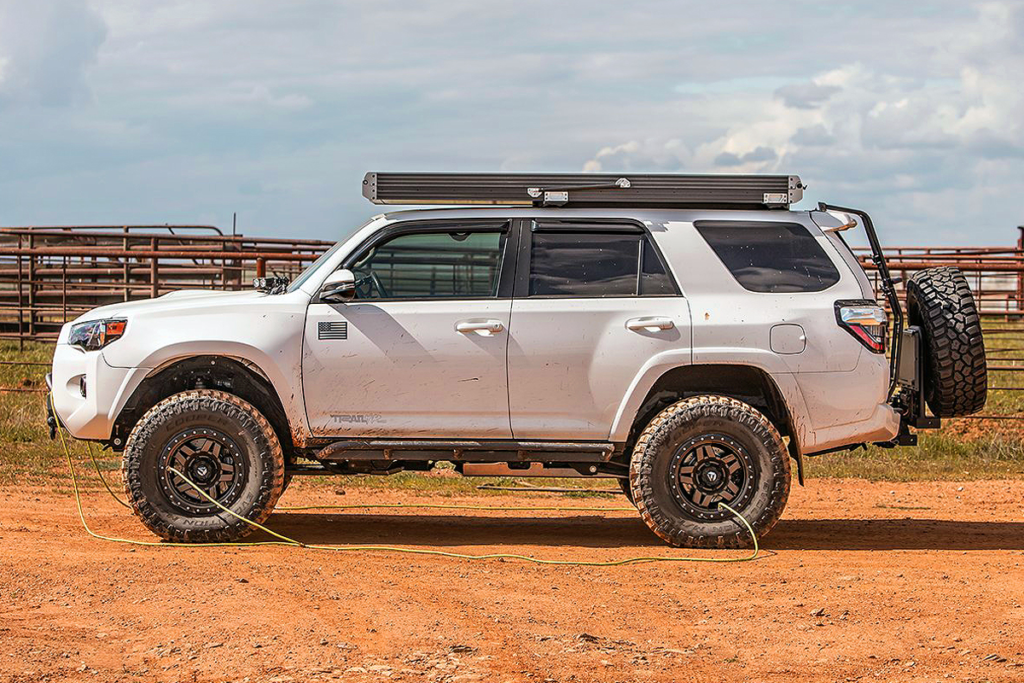
Off the tarmac the 4Runner excels. I have already mentioned the 24 cm of ground clearance. The front axle engagement and the low range are worked by lever, with a roof-mounted button for the rear differential lock. The A-Trac system brakes a wheel that is losing traction and redistributes torque to the opposite side. On top of that come Crawl Control and Terrain Select, with modes for Rock, Loose Rock, Mogul and Sand/Mud. For anyone who wants more, the accessory and aftermarket catalogue is enormous.
Reliability — and the Crash-Test Problem
An old trail workhorse, the 4Runner has been polished over thirteen years and sits consistently at the top of American reliability rankings such as J.D. Power and Consumer Reports. Its dated design does raise questions about passive safety, though. The Insurance Institute for Highway Safety (IIHS) rates it well in the standard tests, but in 2014 it failed the small-overlap frontal crash test.
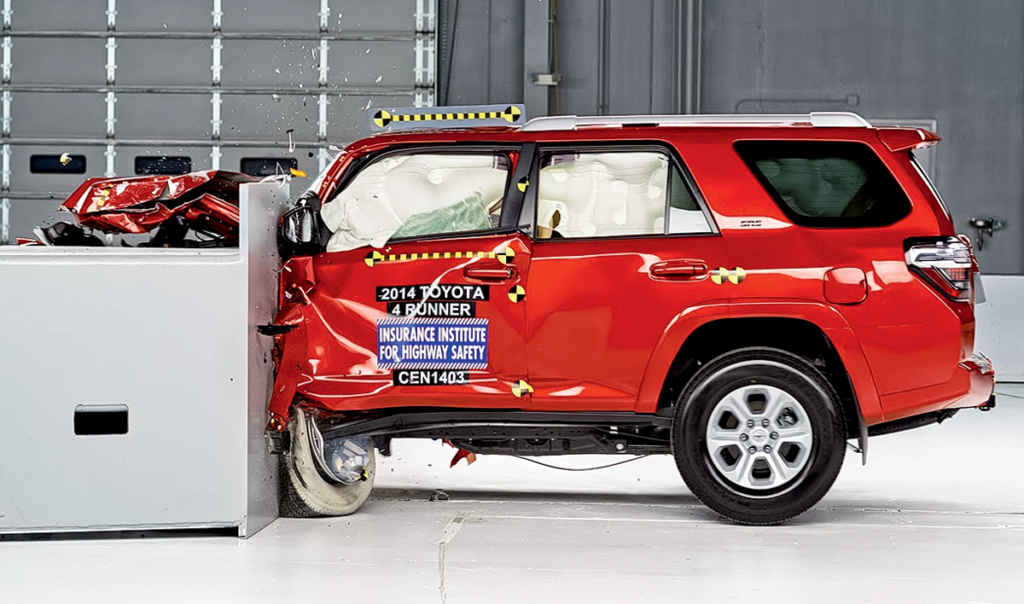
The 4Runner failed the 25 percent overlap crash test: problems with the structural integrity of the body and an overall rating of marginal, which can be read as “borderline”. The loads on the driver, however, came out generally acceptable.
Why Toyota Is in No Hurry
Toyota shows no urgency about replacing the model, and there are reasons. It is a region-specific car, and those are usually updated last. Enthusiasts genuinely value the old-school 4Runner’s charm, and a switch to a turbocharged four-cylinder hybrid could alienate a conservative following.
Remarkably, this antiquated body-on-frame SUV with its lone V6 outsells the more modern and more versatile Highlander. In an age where last year’s iPhone is obsolete, a one-year-old 4Runner with a few tens of thousands of miles can cost the same as a new one. And it makes an ideal apocalypse vehicle.
Toyota 4Runner TRD Offroad Premium: Key Specifications
- Generation: fifth, N280, on sale since 2009 — platform shared with the Land Cruiser Prado J150
- Engine: 4.0-litre 1GR-FE V6, 274 hp, 377 Nm
- Transmission: five-speed automatic, part-time four-wheel drive
- 0-100 km/h: 8.5 seconds
- Fuel consumption: 12-15 l/100 km
- Ground clearance: 24 cm (243 mm on the TRD Pro)
- Boot: 1,336 litres to the roof, optional 200 kg pull-out tray, 110 V socket
- Off-road kit: KDSS, A-Trac, Crawl Control, Terrain Select (Rock, Loose Rock, Mogul, Sand/Mud)
- Price as tested: $57,000 · range starts at $39,000 for the SR5
- Built: Japan, for the American market
Frequently Asked Questions
Why is the Toyota 4Runner still selling so well? Because it is a genuine body-on-frame SUV with a reputation for reliability, in a market where almost everything else has become a crossover. US sales hit a record 145,000 in 2021.
How old is the current 4Runner? The fifth-generation N280 went on sale in 2009 — a thirteen-year-old design at the time of this test, and twice the lifespan of any previous generation.
Which trim should you buy? SR5 for simplicity, TRD Sport for road manners, Limited for luxury and full-time AWD, TRD Pro for the most serious off-road hardware. The TRD Offroad Premium tested here sits in the middle.
How safe is it? It performs well in standard IIHS tests but failed the small-overlap frontal crash test in 2014, with a marginal overall rating and problems with body structural integrity.
What does it cost to run? Between 12 and 15 litres per 100 km — reasonable for the class, but nobody would call it economical.
Photo: Alexey Dmitriev | Toyota Company
This is a translation. You can read the original article here: Почему в Америке все чаще покупают устаревший внедорожник Toyota 4Runner? Разбираемся в рамках нашего теста

Published January 30, 2025 • 7m to read