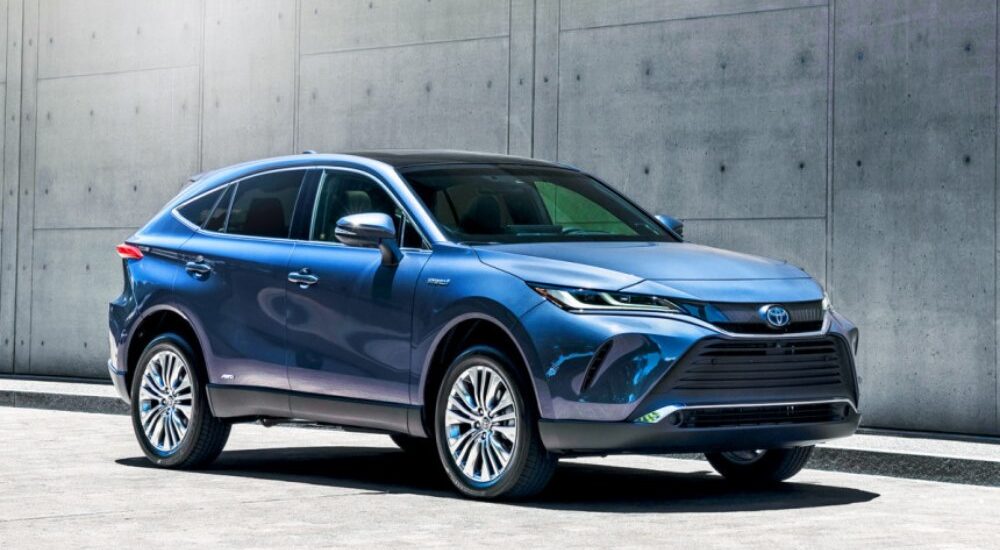

Why can’t the Toyota Venza gain traction in America? We took the current-generation Toyota Venza hybrid crossover for a test drive in Florida — and think we’ve figured out why it struggles to outsell its RAV4 sibling.
The Origin of the Toyota Venza Name
The name Venza comes from a fusion of “venture” (meaning “daring” or “boldness”) and “Monza,” the Italian region famous for its racing track.
Despite the bold branding, the nameplate has had a bumpy history in the US market. The first-generation Toyota Venza was based on the XV40-series Camry platform and launched in 2008, positioned by Toyota’s American division to bridge the gap between the RAV4 and Highlander crossovers. The result was something of a CatDog — not quite a station wagon, but not yet a true crossover either.
- First full year of sales: roughly 54,000 units
- Sales declined steadily in the following years
- A mild 2012 facelift gave it a temporary boost
- Toyota quietly discontinued the model three years later
With the Ford Edge and Honda Passport selling well, Toyota decided to revive the Venza in 2020 — but instead of developing a new car or building it in America, they simply rebadged the Japanese-market Toyota Harrier for US buyers.
Toyota Venza vs. Toyota Harrier and Lexus RX: What’s the Connection?
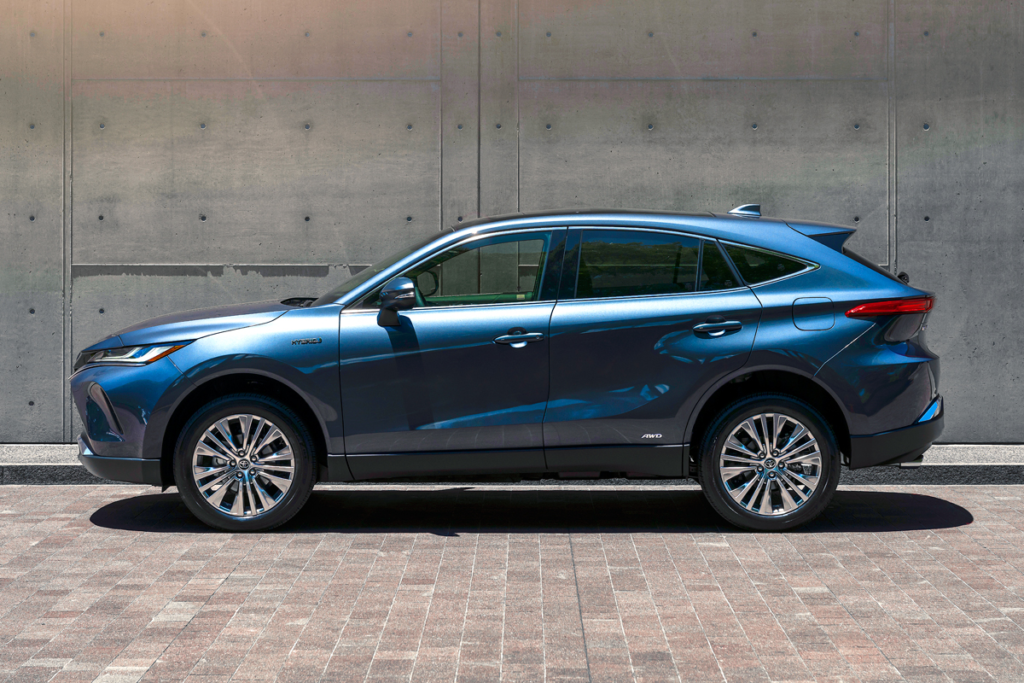
Interestingly, the Lexus RX was based on the first two generations of the Toyota Harrier. However, starting with the third generation, the Harrier became a standalone model, and today’s fourth-generation Harrier is a logical continuation of that shift. Although the new Venza carries the same name as the original, it shares no “metal” kinship with it.
- 60 mm shorter than the original Venza (now 4,740 mm)
- 50 mm taller than the original (now 1,660 mm)
- Wheelbase of 2,690 mm — identical to the RAV4’s, and shorter than the original Venza’s 2,775 mm
Exterior Design and Build Quality
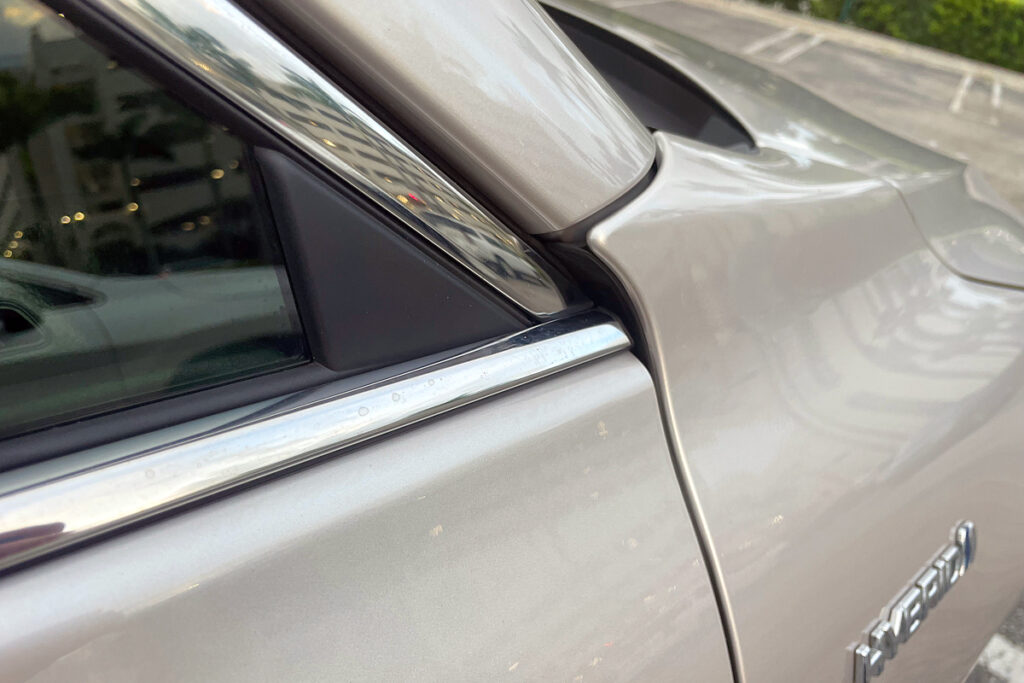
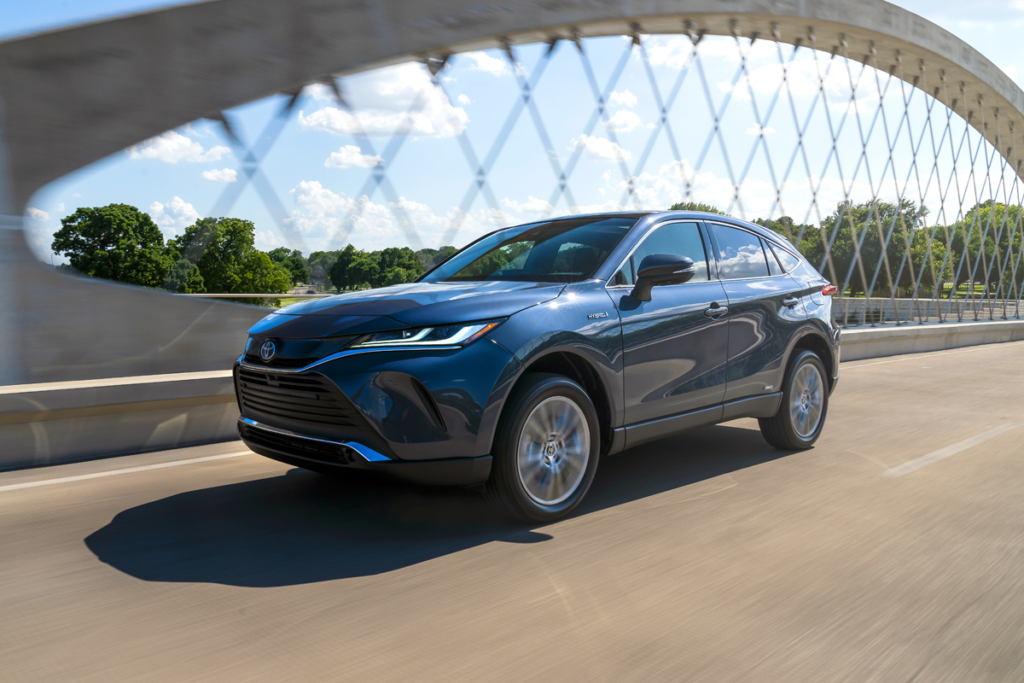
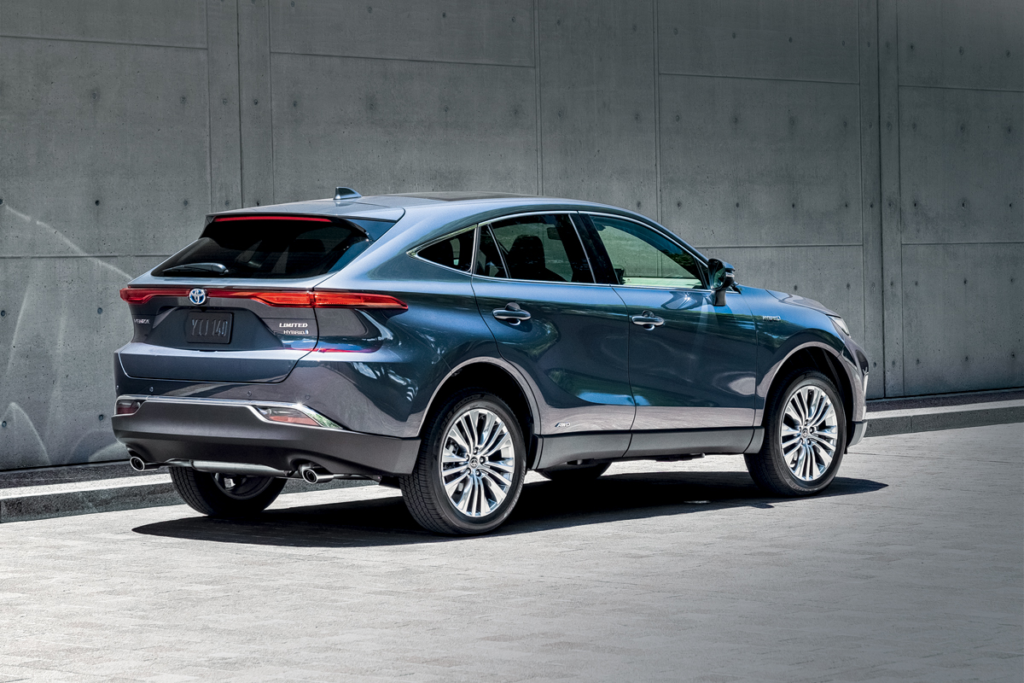
The Venza doesn’t aim to be a flagship model, but its styling is genuinely appealing — and the Toyota badge tends to overshadow a few assembly imperfections along the way.
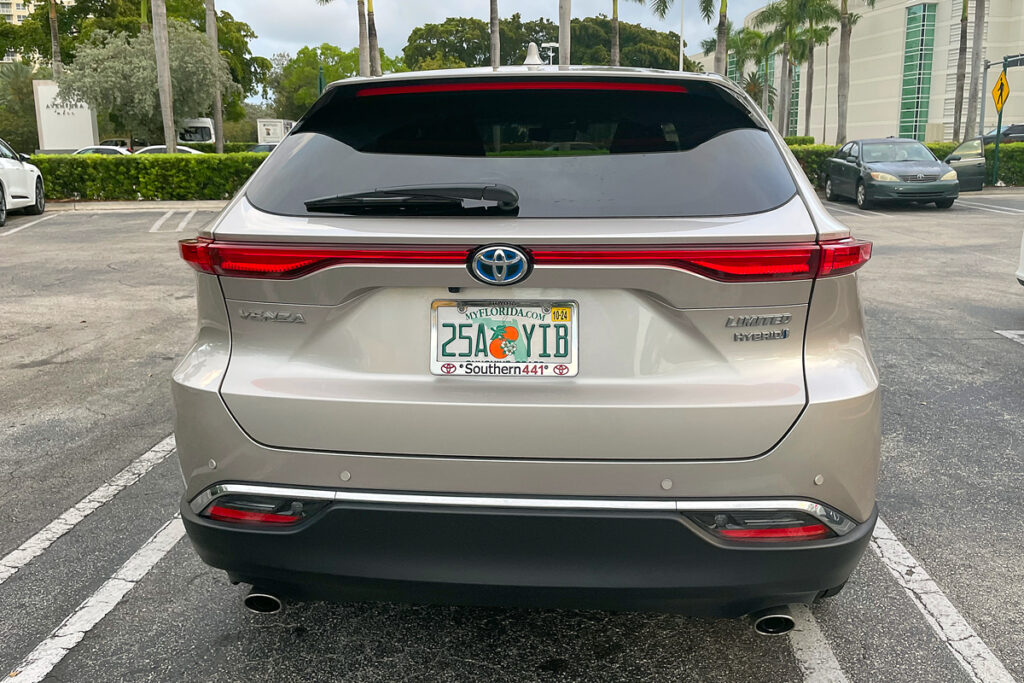
- Minor misalignment in the chrome window trim near the side mirrors
- A plastic front extension that shortens the hood visually, reminiscent of early VAZ-2108 designs
- Modern single-strip LED taillights — stylish, but the turn signals couldn’t fit inside them and instead sit lower, next to the fog lights, as a slim LED strip that isn’t the most practical layout
Interior Quality and Materials
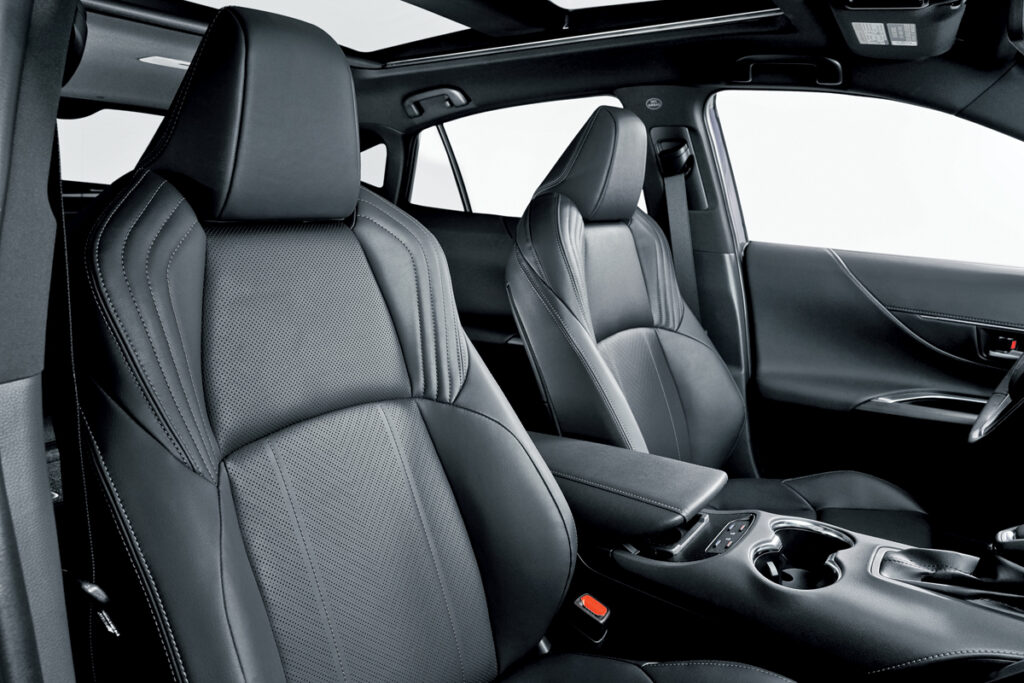
Inside, nearly everything above waist level is upholstered in synthetic leather stretched tightly over a rigid surface — a longstanding Toyota tradition. There is a soft-touch panel running the width of the dashboard, but it’s only about five centimeters deep; everything else is hard plastic, which slightly diminishes the perceived quality.
Picture a similar cabin in a Chinese-made car — it would likely draw heavy criticism. Toyota tends to get a pass on this, thanks to its reputation: “at least it’s reliable.”
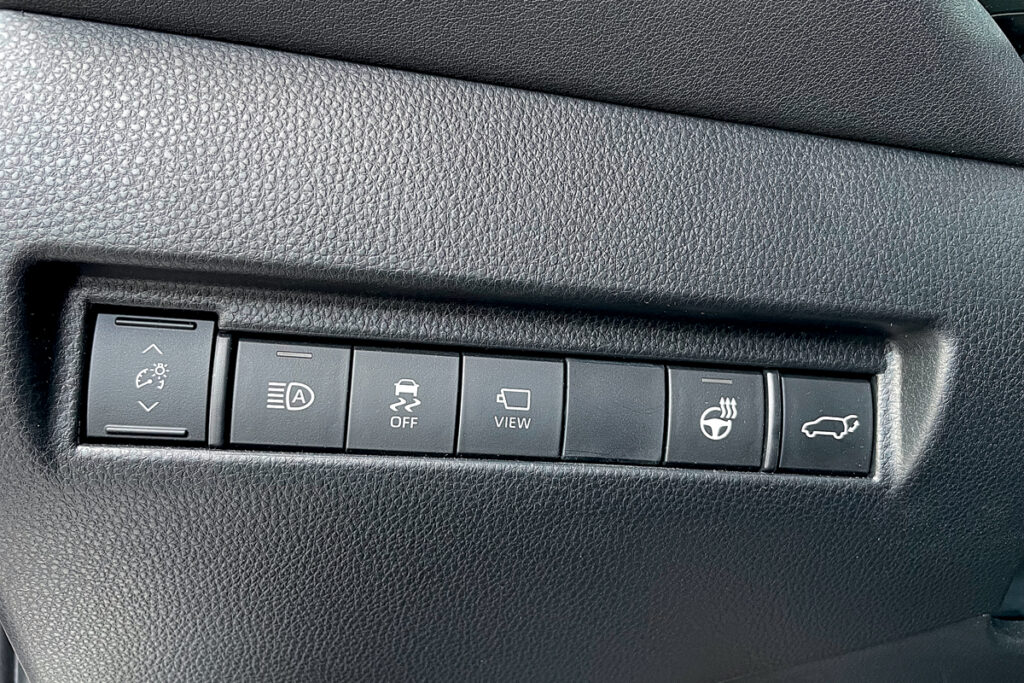
Backlight brightness
Automatic high beams
Traction control off
360° surround view monitor
Steering wheel heater
Power tailgate (electric trunk release)
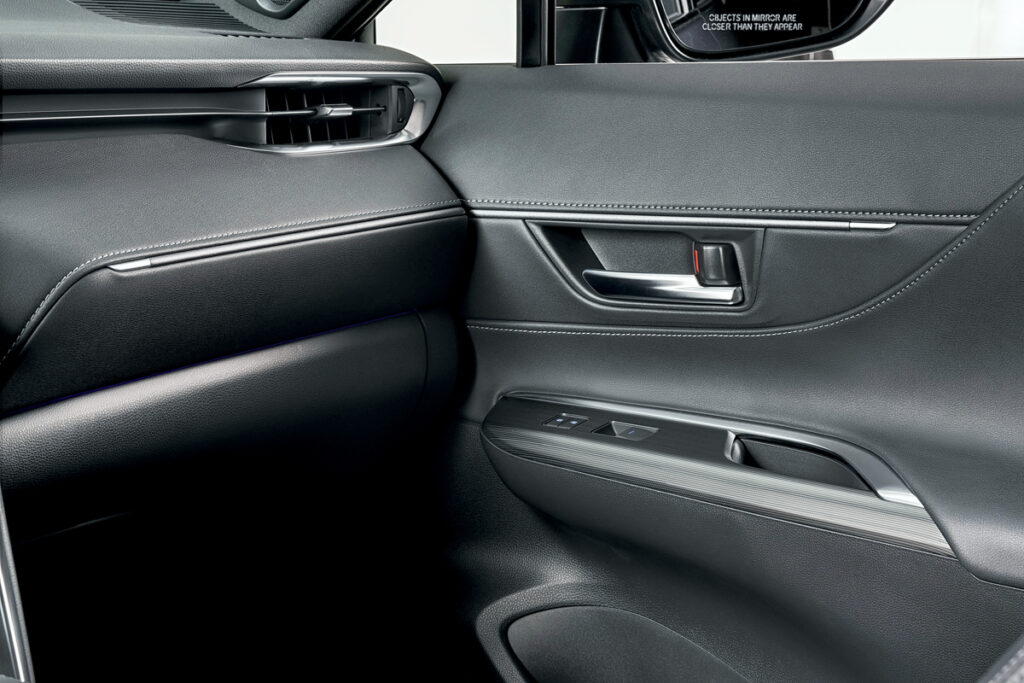
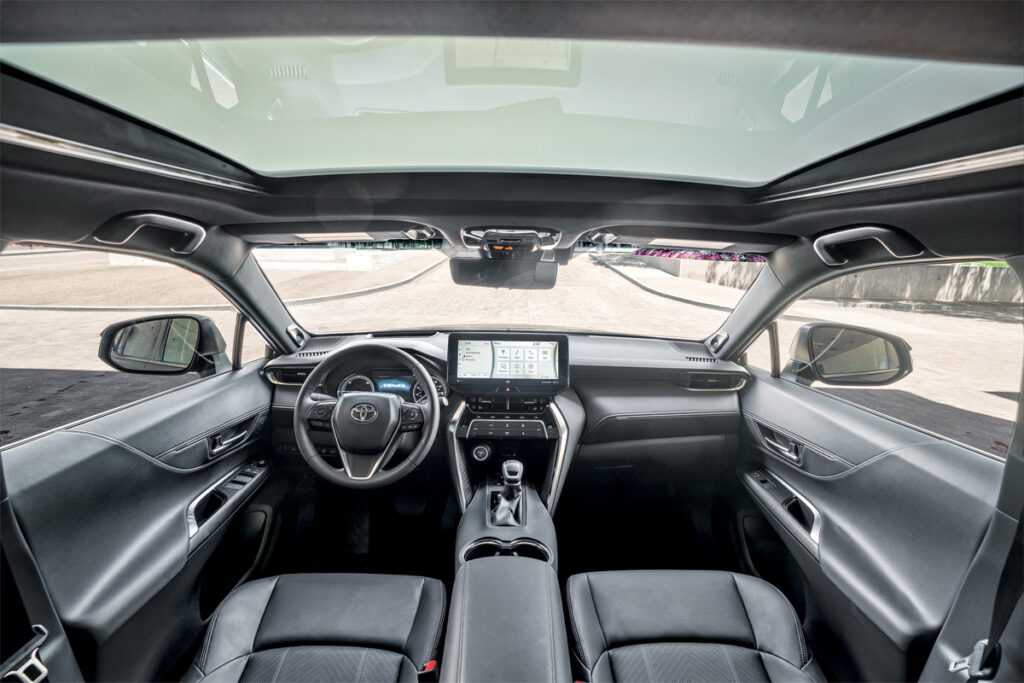
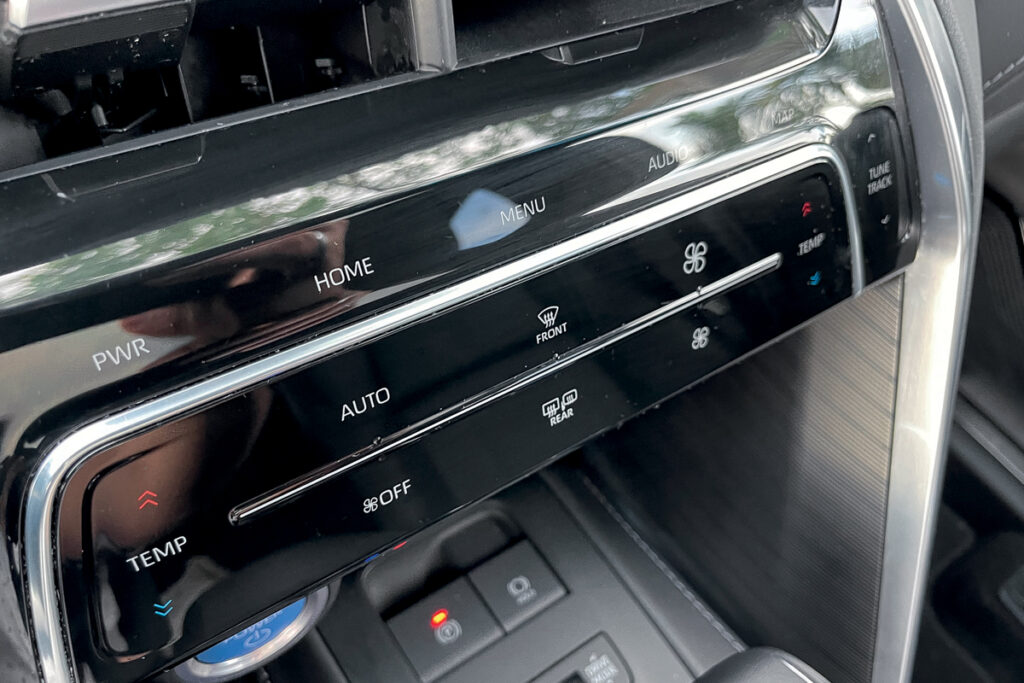
The touch-sensitive climate control panel is finished in glossy black plastic, and the optional heads-up display is easy to miss at first — its contrast is fairly weak, and the information shown on it isn’t exactly essential.
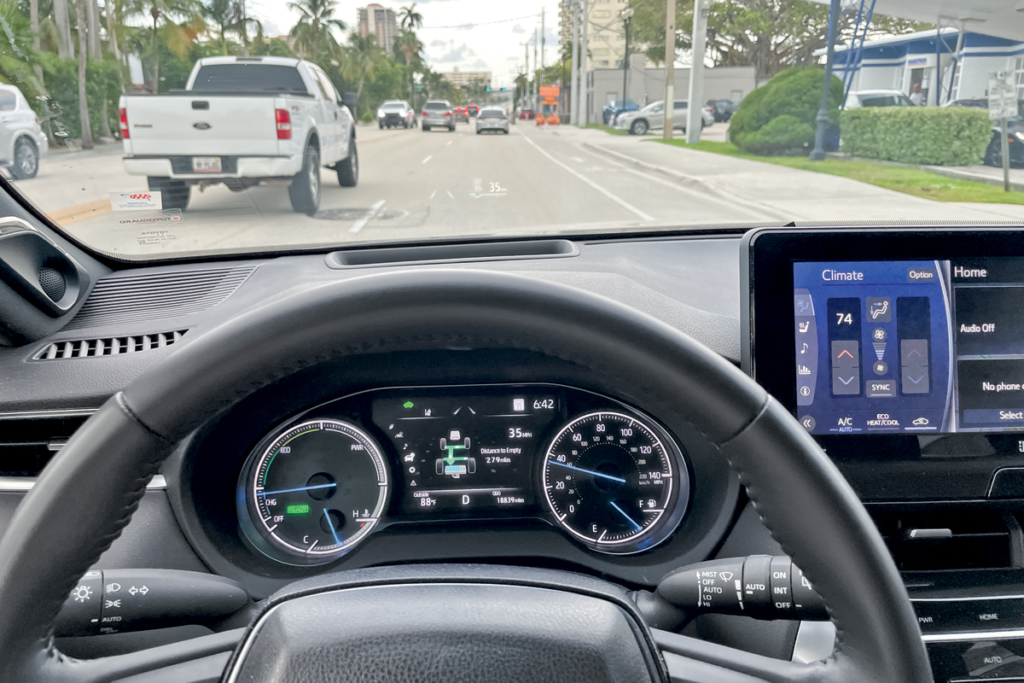
The optional ventilated seats are a welcome feature, especially with Florida summer heat already in full swing. One odd detail, though: the narrow buttons tucked next to the armrest release handle light up in yellow and green instead of the more conventional blue and red.
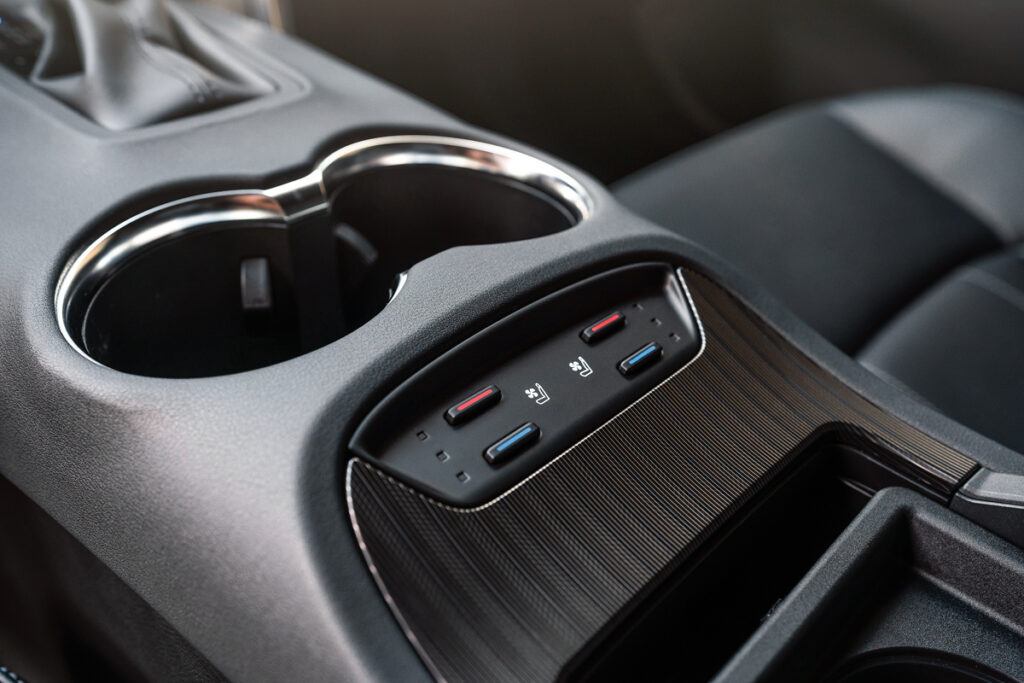
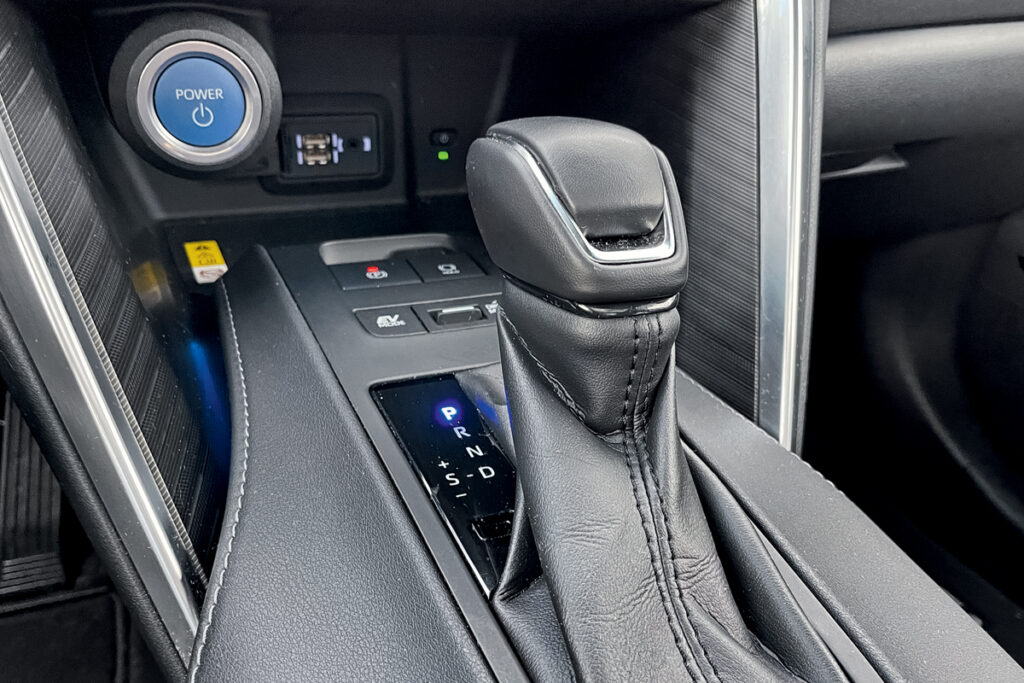
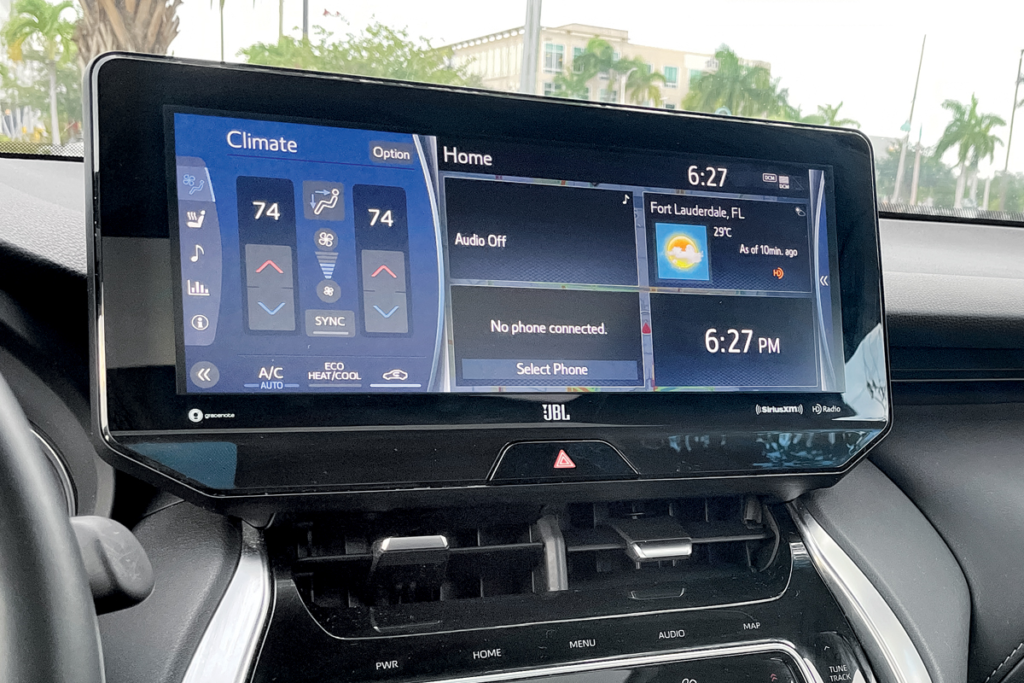
The engine start button sits modestly beneath the climate controls, peeking out from below the phone charging slot — you need a fully extended arm to reach it comfortably. Adjusting the temperature, whether through the climate control unit or the central touchscreen, requires a single tap per degree.
Infotainment System and Technology
Toyota’s infotainment resolution and graphics still lag behind most competitors. That said, it’s probably fair to apply the rule: “don’t compare yourself to others, compare yourself to your former self.” Progress is evident — responses are quick and delays are minimal, likely because the processor isn’t overtaxed. The screen can be divided into customizable zones, for example moving the navigation window closer to the driver, and tapping any zone enlarges it. Not bad, but still about three years behind the curve — also in keeping with a longstanding Toyota tradition.
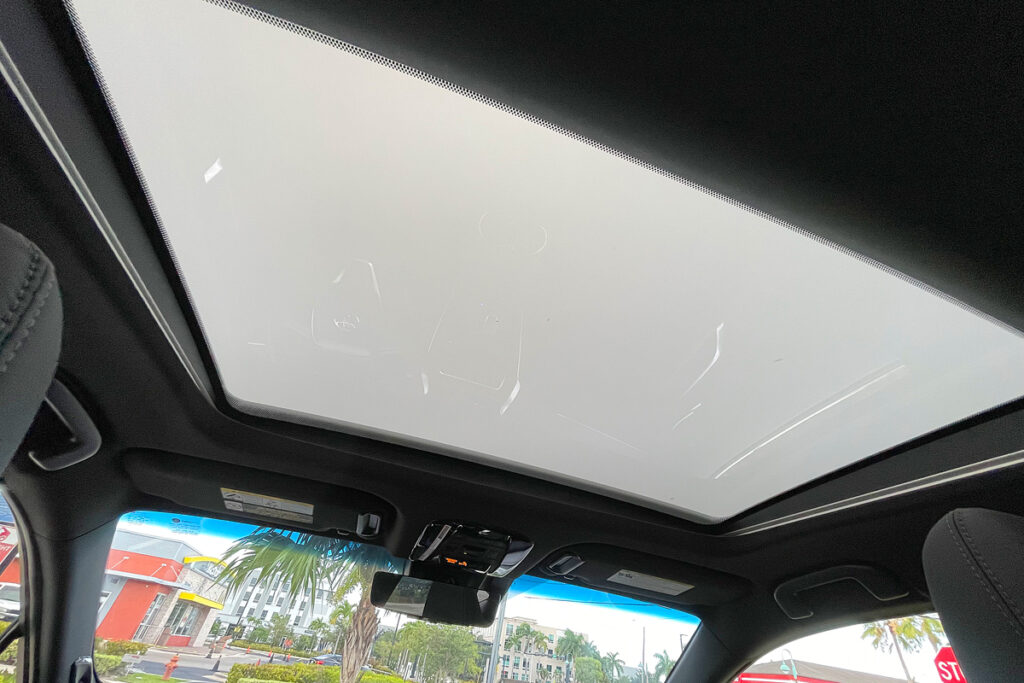
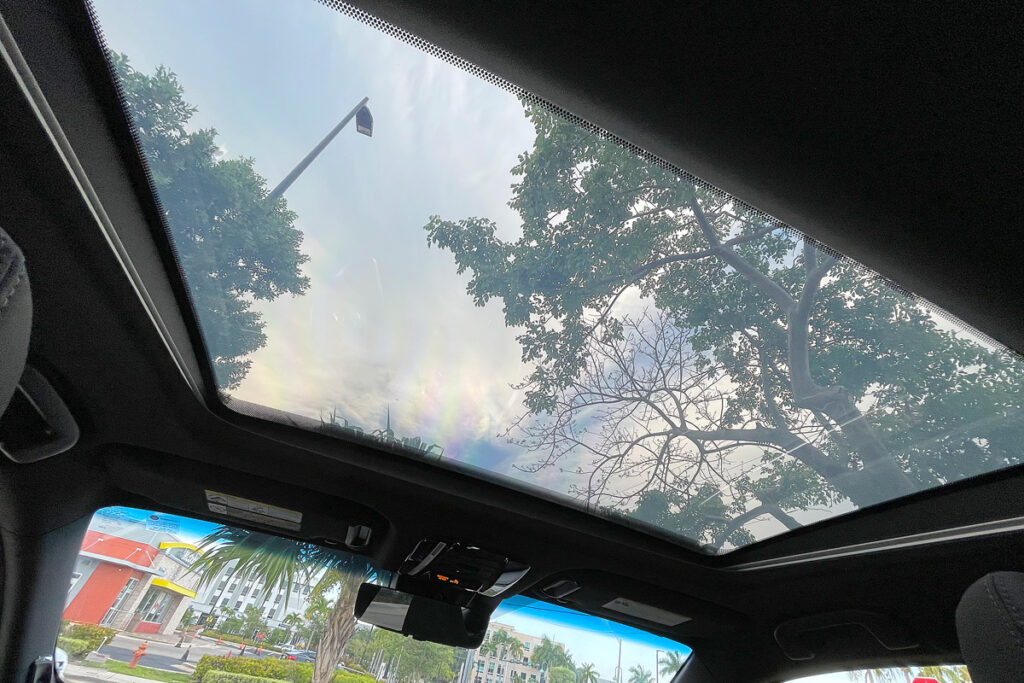
The Venza also offers a standout feature few rivals can match: an electrochromic panoramic roof. A single button press near the lighting unit turns the nearly transparent roof into a window that looks shrouded in thick fog. A sliding shade is also available.
Platform, Suspension, and Chassis
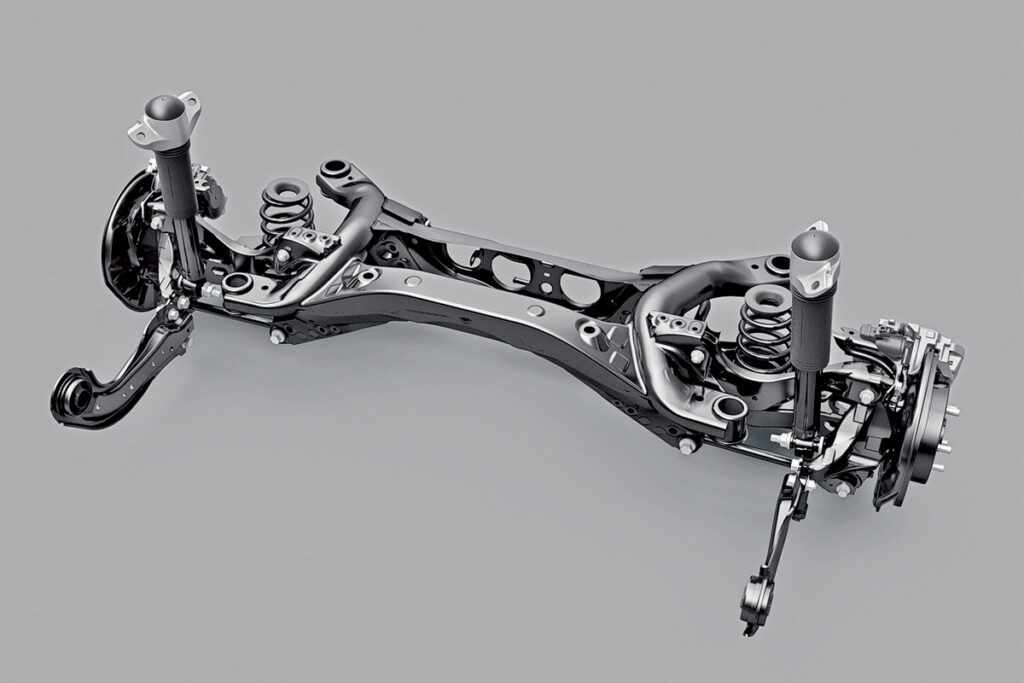
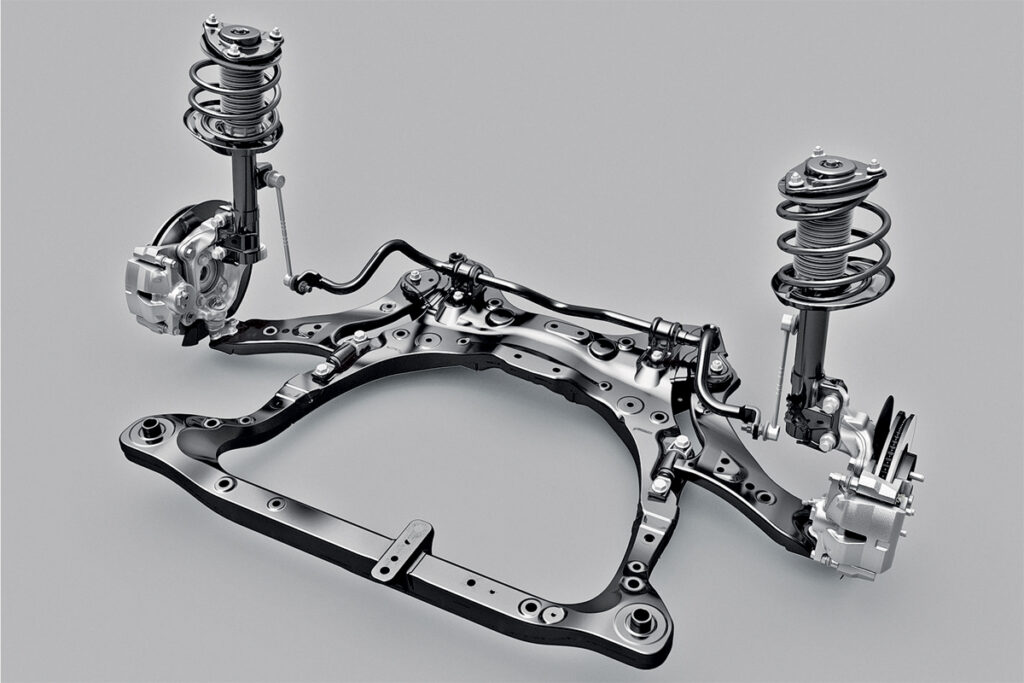
The Venza’s underpinnings are familiar territory: it’s built on Toyota’s modular GA-K platform (TNGA), which also underpins larger models like the current Camry and RAV4. Up front are McPherson struts; at the rear, a multi-link suspension.
Toyota Venza Hybrid Engine, Performance, and Fuel Economy
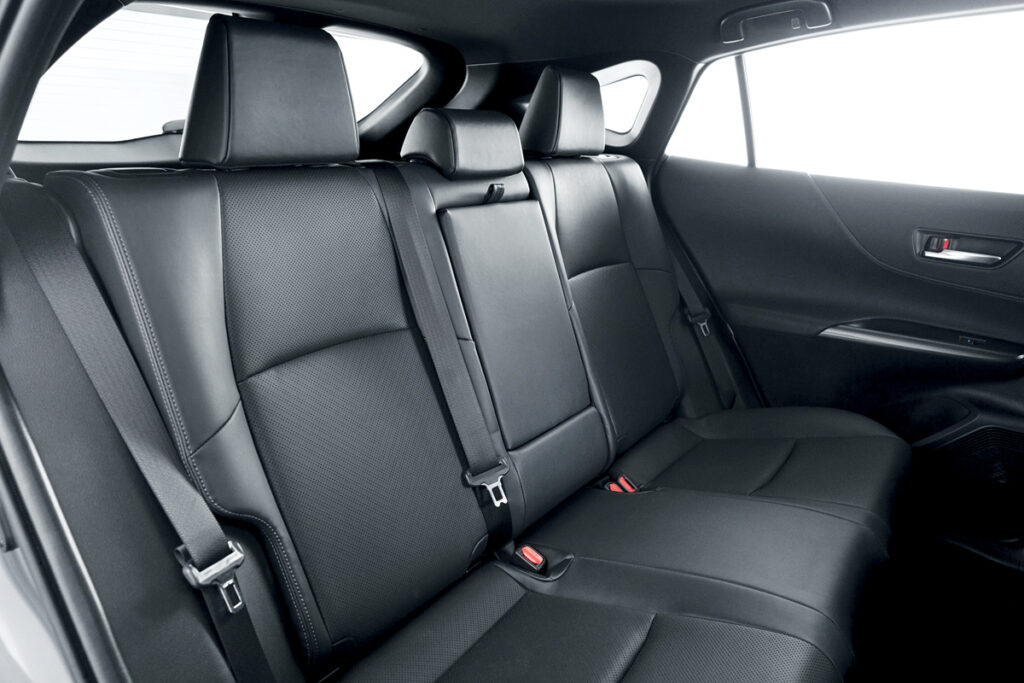
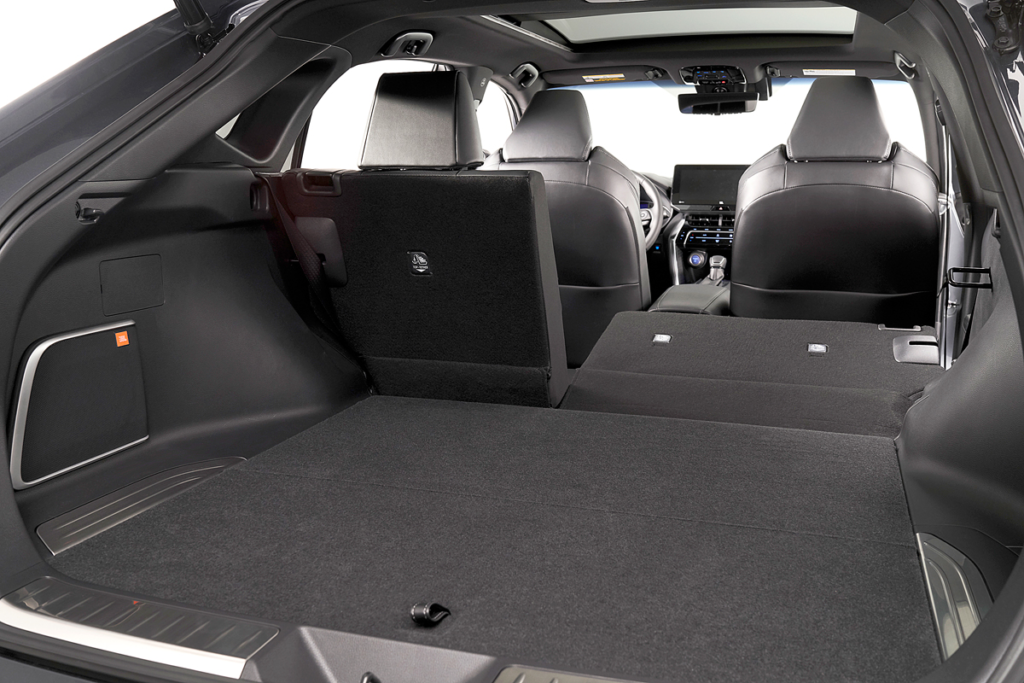
Toyota offers just one powertrain: an electromechanical CVT paired with a naturally aspirated 2.5-liter inline-four, plus a separate electric motor driving the rear axle. A 0.9 kWh nickel-metal hydride battery, located under the rear seat, functions purely as energy storage — the Venza is not a plug-in hybrid and can travel only three to four kilometers in pure electric mode.
- Combined output: 222 horsepower
- 0–60 mph: 7.6 seconds in Sport mode, per independent measurements
- Drive modes: Sport for occasional liveliness, Normal for relaxed cruising
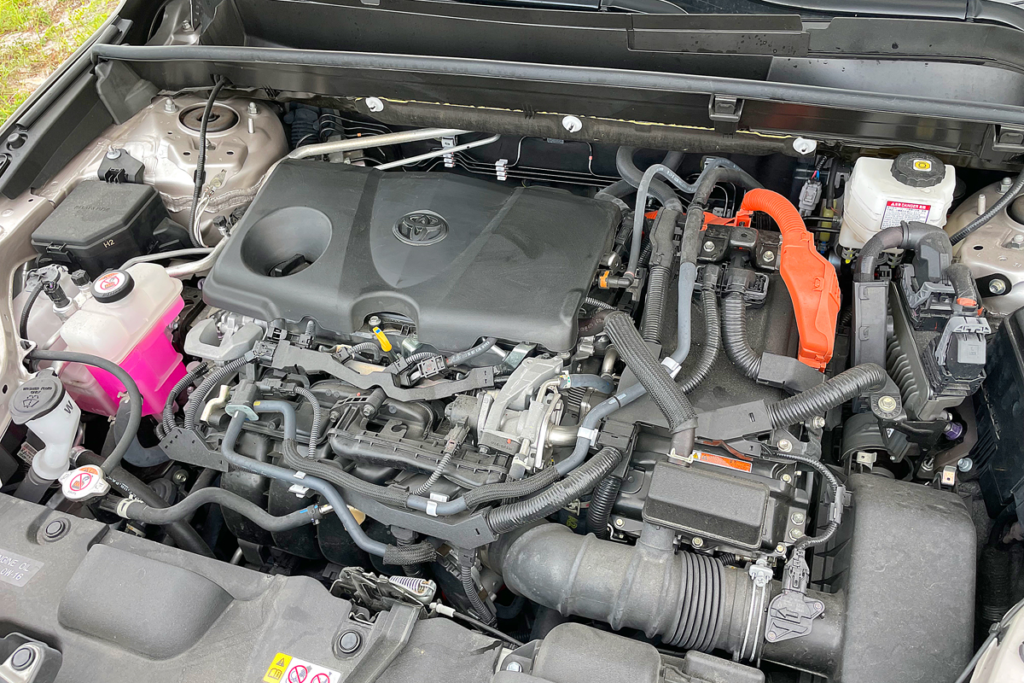
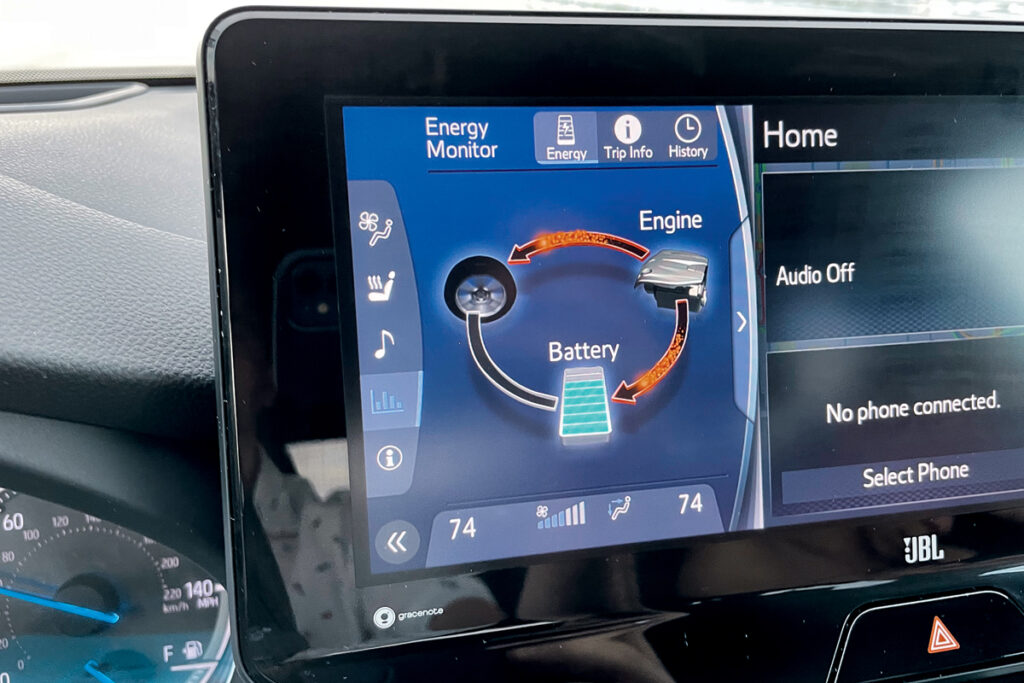
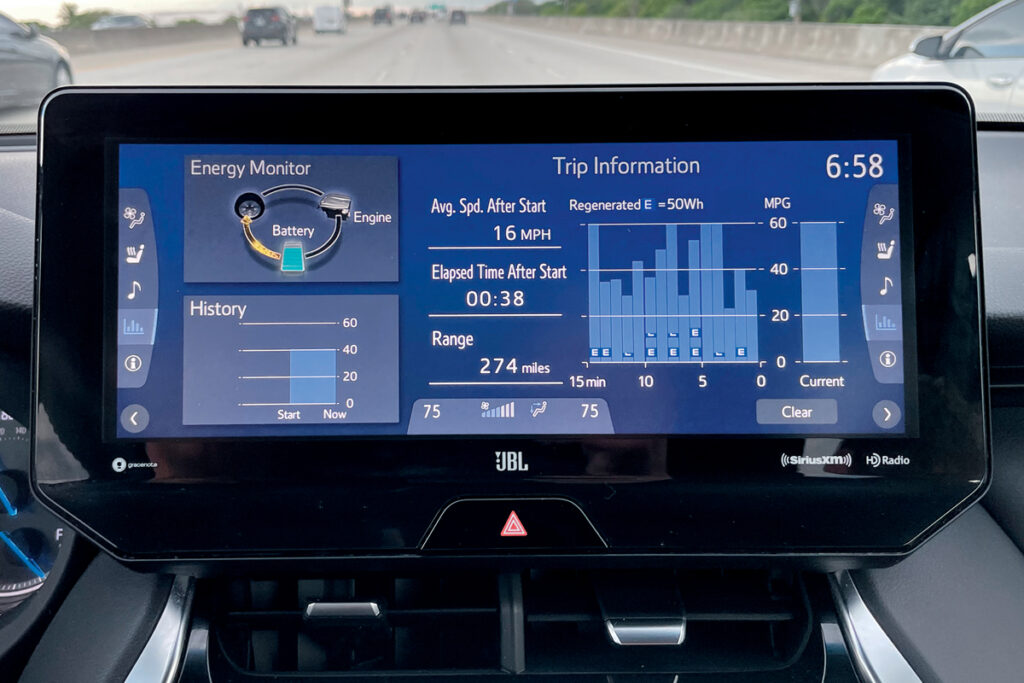
Among the newer features is Predictive Efficient Drive (PED), which analyzes your route and remembers where you frequently brake or stop, preemptively prompting you to ease off the gas for better fuel savings next time. It also optimizes regenerative braking, relying more on engine braking on descents. Even without leaning on this feature, a three-hour drive in moderate mode returned 40 mpg (5.9 L/100 km) — exactly half of what my Lexus RX 350 consumes.
An optional Active Cornering Assist (ACA) system is also available, designed to counteract understeer while braking through turns — though given the Venza’s relaxed character, it’s unlikely to be called into action often.
Ride Comfort and Noise Levels
Ride smoothness is one of the Venza’s strong points. That said, aerodynamic noise at the driver’s window was the first thing I noticed once on the highway — something I hadn’t encountered in a modern car in a long time. Otherwise, the cabin stays quiet, save for an occasional tram-like electric whine that sounds like it’s straight out of a horror movie.
Toyota Venza vs. RAV4: Why Sales Keep Falling
After returning the car, there wasn’t much left to remember it by. It’s no surprise that Venza sales fell from 62,000 units in 2021 to nearly half that just a year later. So what’s the “family curse” of the Venza lineup?
The most likely answer: the RAV4 is very similar in format, was already more popular, and is more affordable. The hybrid RAV4 starts between $31,225 and $39,530 in the US, while the Venza costs more than three thousand dollars extra — and it’s hard to pinpoint exactly what that premium buys you.
Photos by Aleksey Dmitriyev and Toyota
This is a translation. You can read the original here: https://autoreview.ru/articles/pervaya-vstrecha/kotopes

Published June 08, 2023 • 8m to read