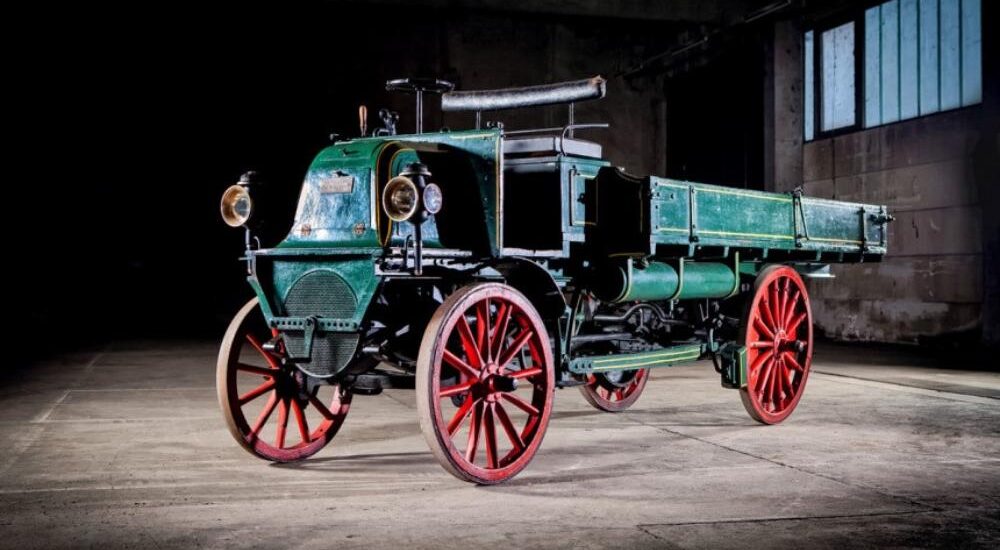

In German, Kardan-Lastwagen means “propeller-shaft truck.” This particular vehicle is one of the oldest preserved trucks in the world — a Daimler dating back to 1899!
What the Earliest Trucks Were Like
Its engine ran on petrol bought from a pharmacy, and its iron-clad wheels clattered loudly over cobblestones. Those were the defining traits of the earliest trucks. Daimler’s first truck — essentially a motorised cart with the engine at the rear — appeared in 1896. Within a few years, though, trucks had settled into the layout we still recognise: engine at the front, then the cab, still open at that date, then an open cargo bed.
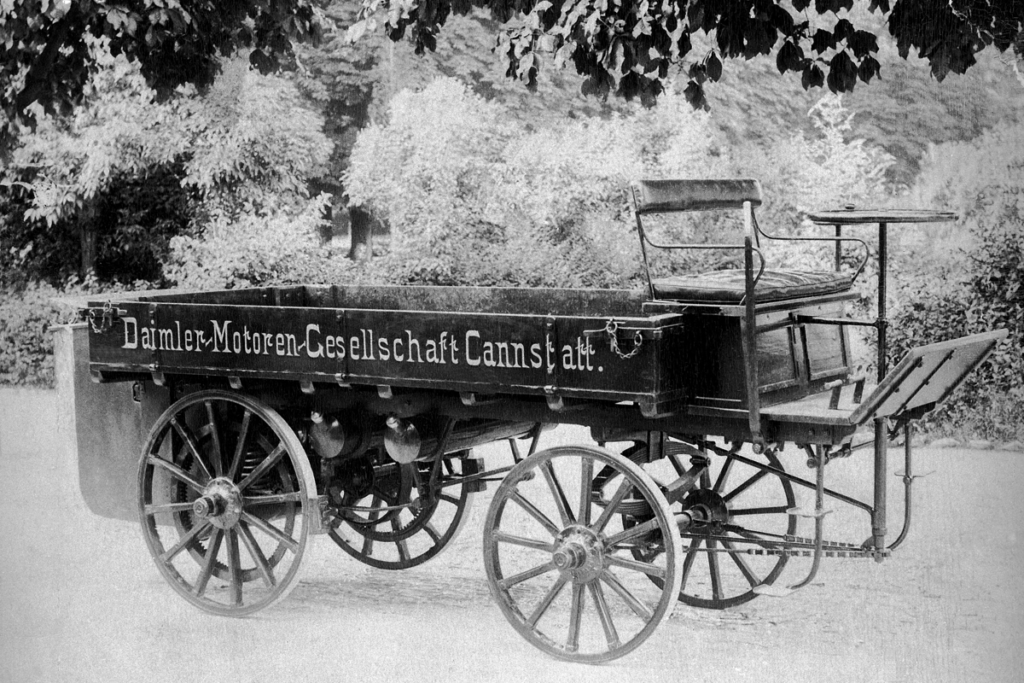
Daimler’s first truck, 1896
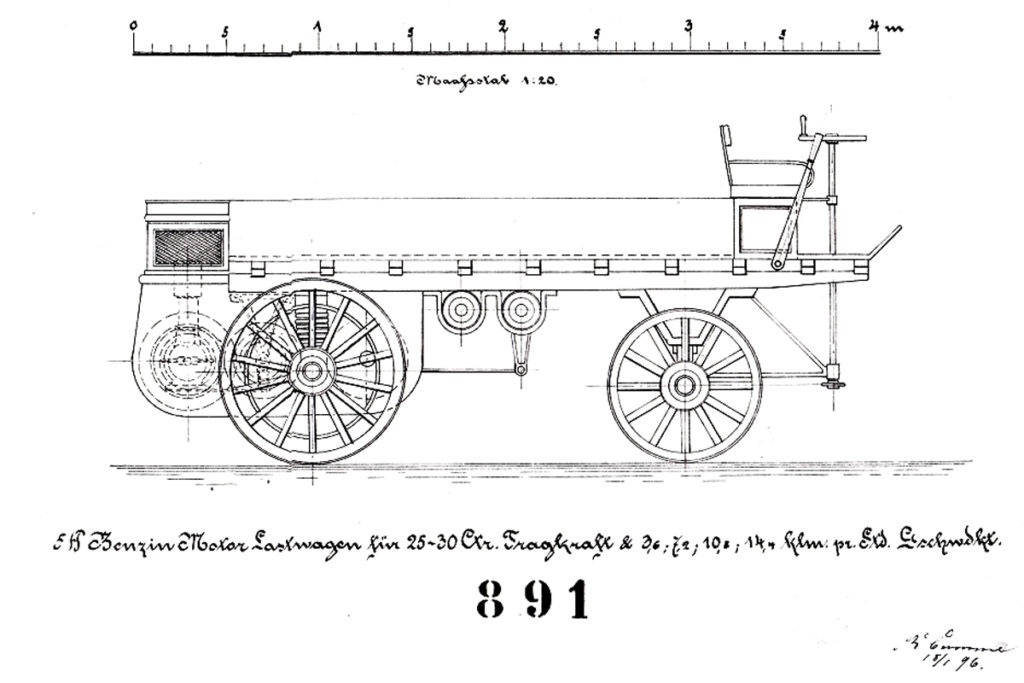
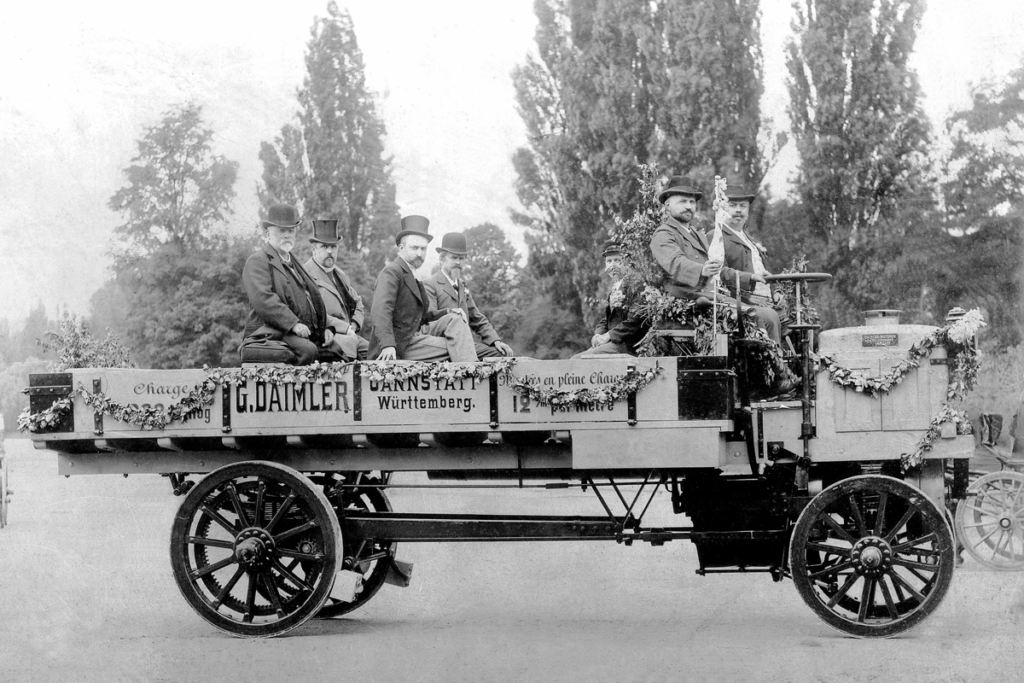
Daimler’s truck at the Paris exhibition, 1898
A Propeller Shaft Instead of Chains
The Daimler in these photographs belongs to the third series, and its drivetrain was unusual for the time: neither chain nor gear drive, but a propeller shaft — a cardan drive — with portal gear axles. The front wheels were steered by a mechanism closer to a modern one than to the chain-linked steering of earlier models.
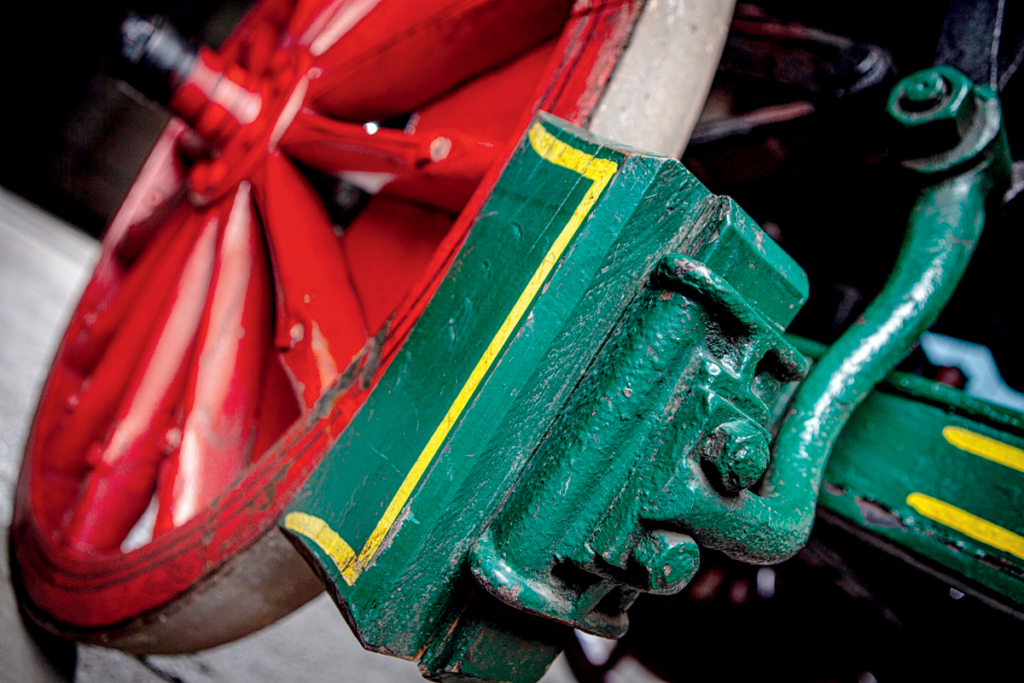
The brake pads were pressed against the rear wheels, which were covered with iron
There were brakes — mechanical, naturally — primitive external shoes pressing straight onto the rear wheels. The fuel tank had an unusual shape, a long cylinder slung under the chassis.
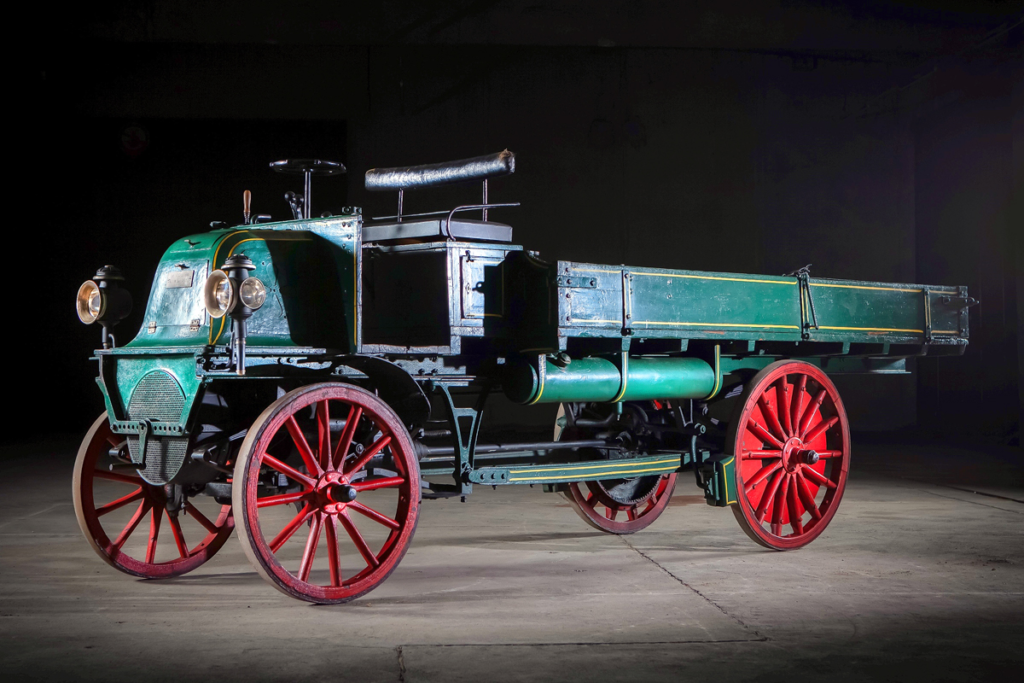
If you look at the truck, you can see the acetylene headlights, the crank handle in front of the drum radiator, and, of course, the cardan shaft. Under the body is a cylindrical fuel tank
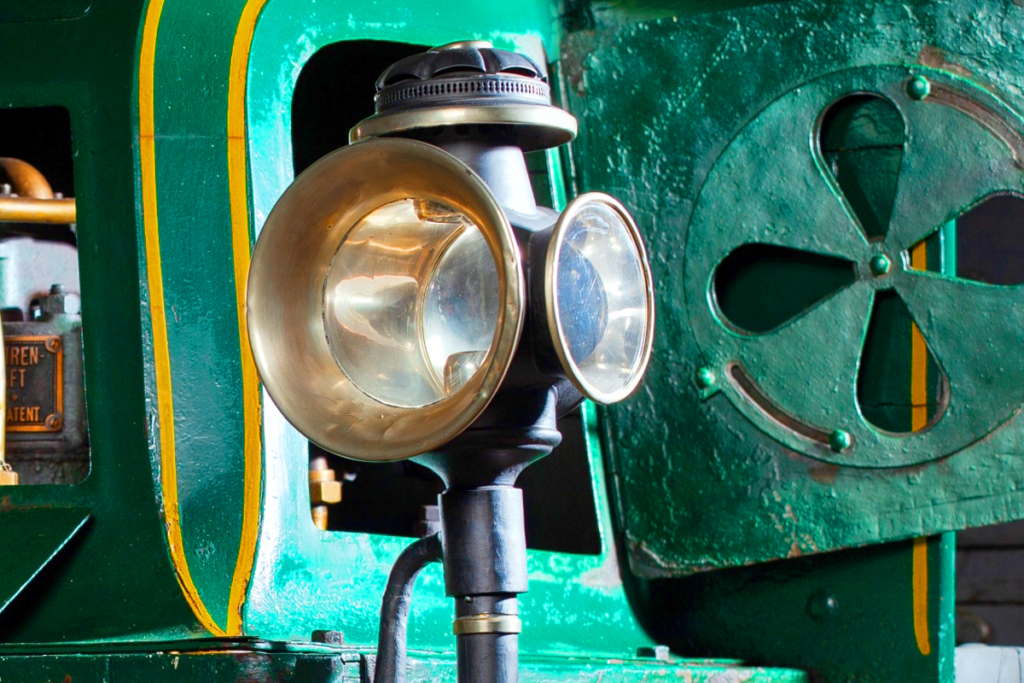
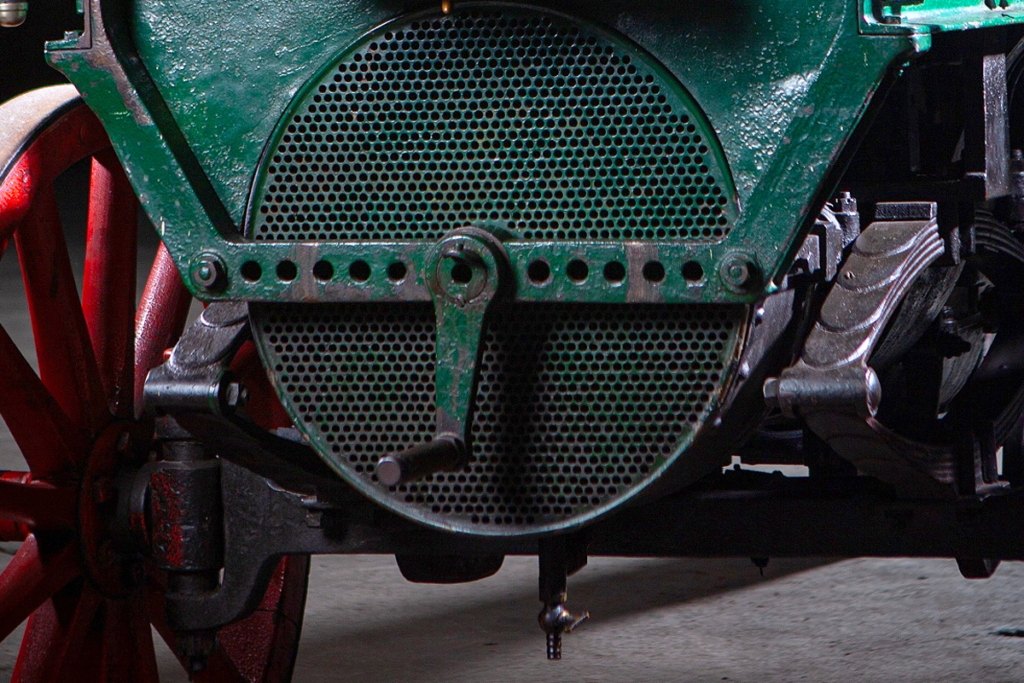
The engine had a tubular radiator, fashionable at the time and shaped like a large drum, and the then-novel “electric ignition” by spark plug rather than the more usual hot tube. In that older method, pipes inside the cylinders were heated with burning wood chips, which left the driver covered in soot and the road ahead lost in smoke.
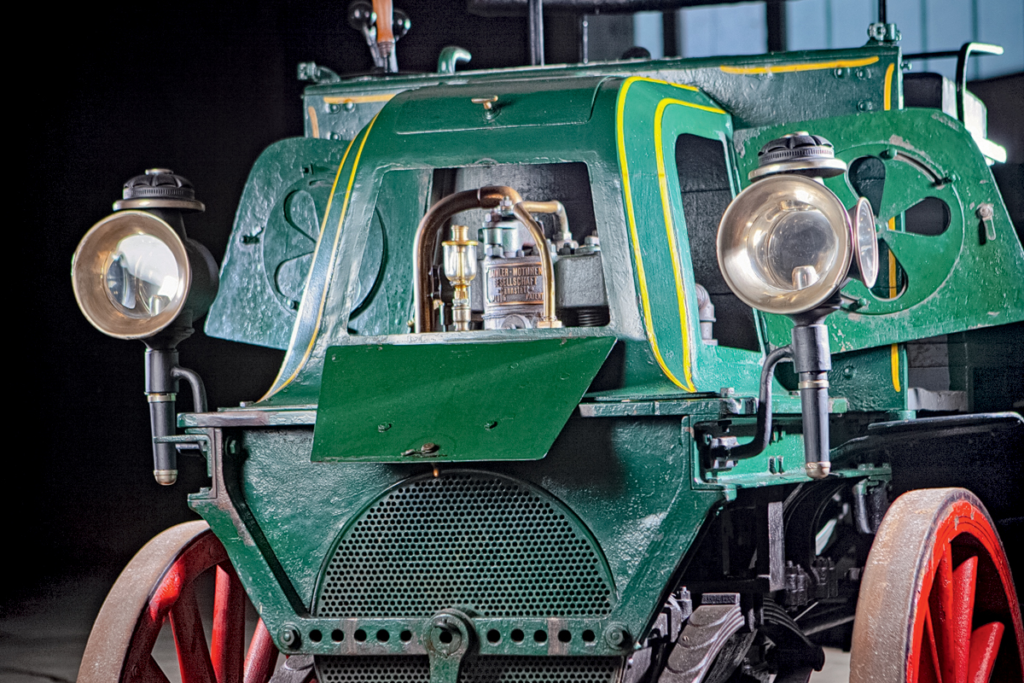
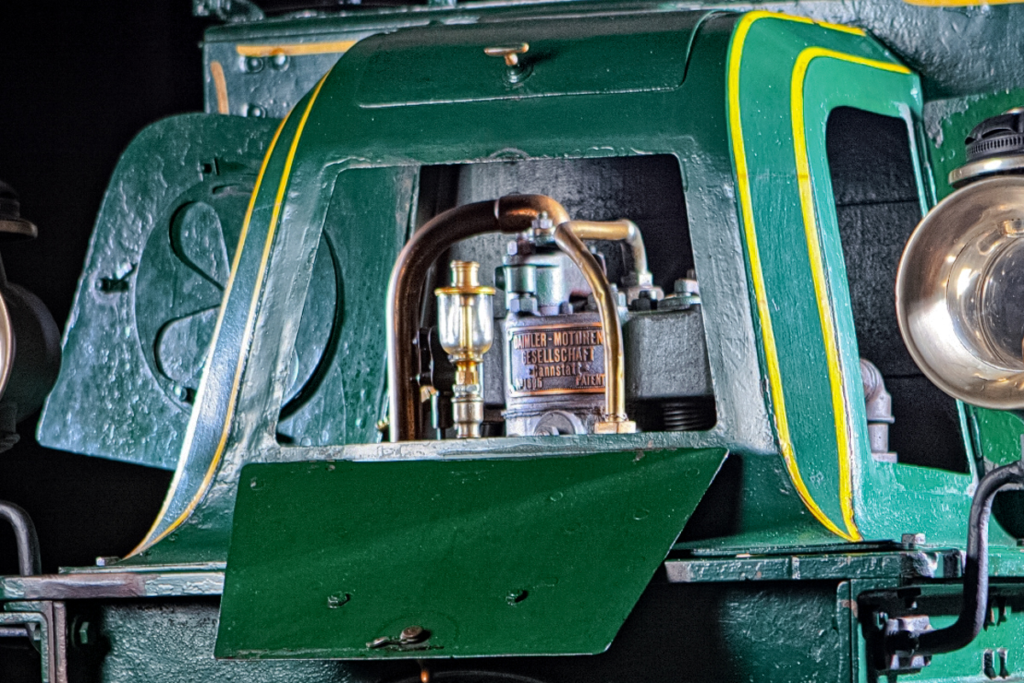
In the engine compartment is a patented Daimler petrol engine
Reading the Plate on the Nose
Which engine this particular truck was given is not recorded, but Daimler trucks of the period could have two or four cylinders and produced between 4 and 12 horsepower. That settled both the load capacity — up to 5 tonnes — and the price, which ran from 7,320 to 11,500 Deutsche Marks.
Some of this one’s specification can be read off a plate fixed to its nose:
- “W. Gew. 1660 Kg” and “L. Gew. 1000 Kg” likely refer to Wagengewicht (vehicle weight) and Lastgewicht (payload)
- “P.S. 5” with a small “4” likely denotes power output — 5.4 horsepower
- The meaning of “M. № 1695” remains unclear — it could stand for Model Number or Manufacturing Number. It is worth noting that Daimler had produced only around 200 vehicles, passenger cars and buses included, before 1900
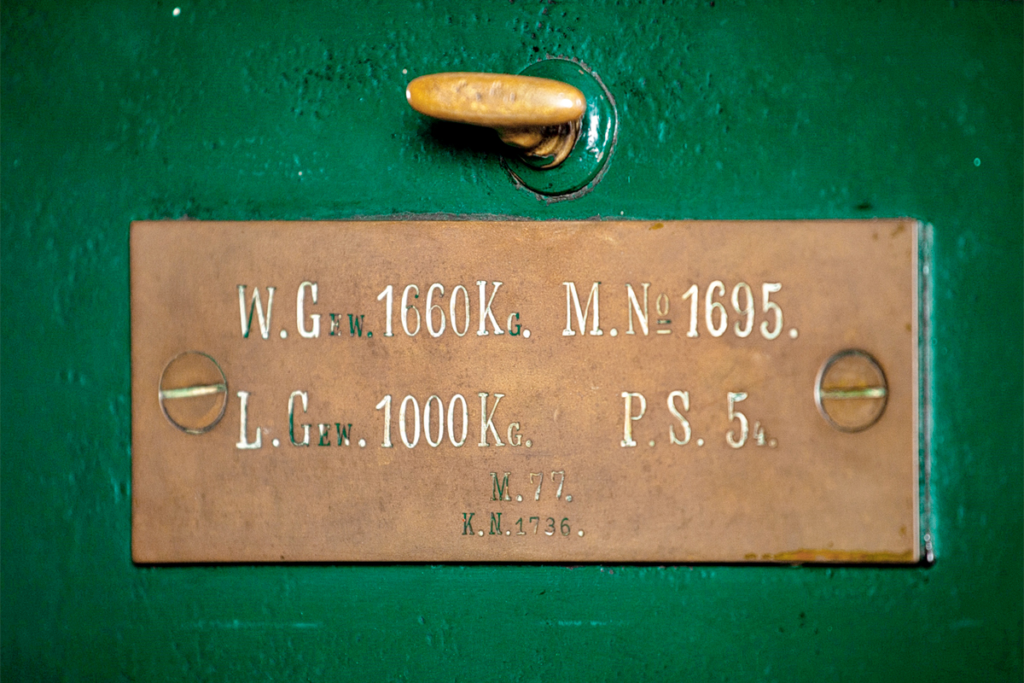
Sign on the hood
From the Stuttgart Waterworks to Dresden and Back
Factory records show the truck was delivered on March 11, 1899, to a public utility in Stuttgart — the local waterworks, in effect the municipal water and sewer department. A photograph from the time shows a massive toolbox mounted on the bed, with a vice, a pipe cutter (the pipes were metal) and a thread tap. It stayed in service until 1923, was replaced by a newer machine, and went back to Daimler to be kept in what became the company’s museum collection.
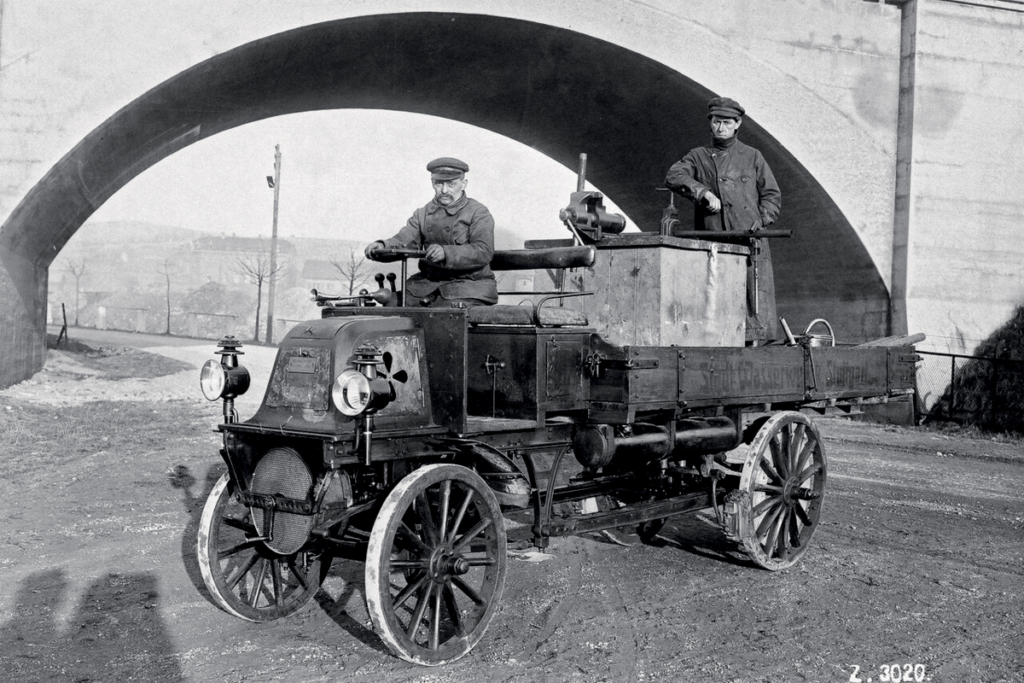
A truck during work at the Stuttgart water supply service
In 1944, with Allied bombing raids falling on Stuttgart, part of the collection was moved to Dresden, in what would become East Germany. There the truck stayed, in the Dresden Transport Museum, until 1991, despite repeated attempts by Daimler-Benz to get it back during the GDR era.
Only after German reunification were 16 historic vehicles returned to Daimler. Since then the truck has lived in Mercedes-Benz’s private heritage collection, and comes out for special occasions — among them the 125th anniversary of the first Daimler truck, marked in London in 2021, that first truck having been bought by a British customer.
For the anniversary the company sent a transporter with two veterans aboard: a replica of Daimler’s original 1896 truck, built in 1990 at a cost of 100,000 Deutsche Marks, and the Kardan-Lastwagen itself. The Mercedes-Benz Museum in Stuttgart, incidentally, holds another original Daimler truck of the era — an older one, built in 1898.
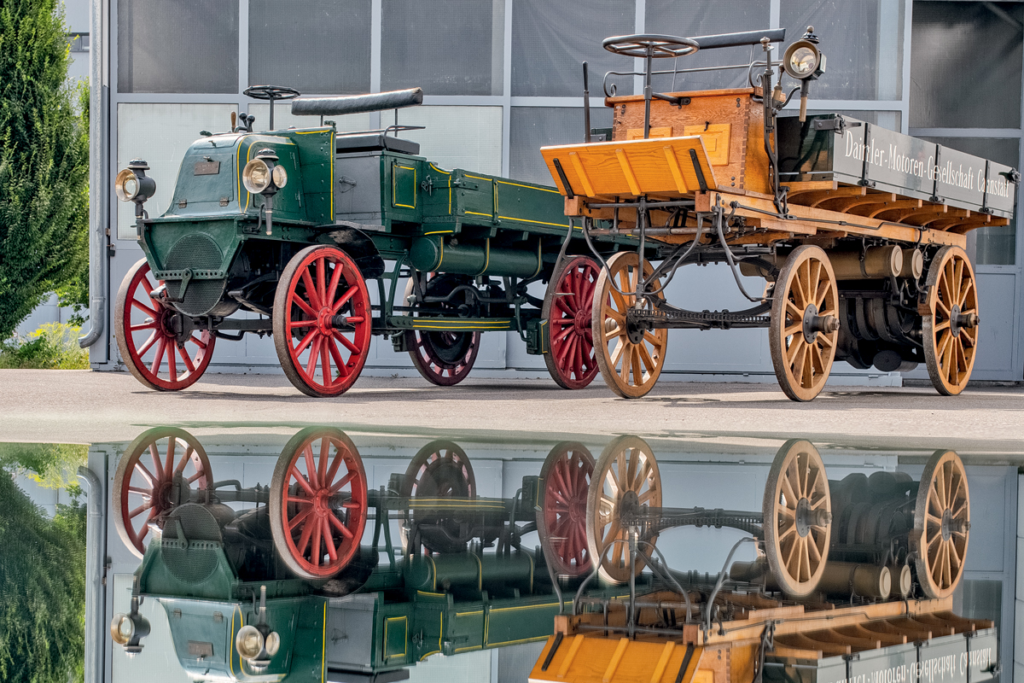
A Kardan-Lastwagen from 1899 next to a replica of Daimler’s first truck from 1896
The Oldest Truck in Russia
The oldest original truck still in existence in Russia is a pre-revolutionary German Magirus 3K1 built in 1912. It is kept at Mosfilm Studios and still runs. Since the 1970s or ’80s it has appeared in a long list of films. In 2023 it was restored: repairs were made, new windscreens fitted, the brass polished. It still wears its original rubber tyres. By some accounts it began life as a fire truck.
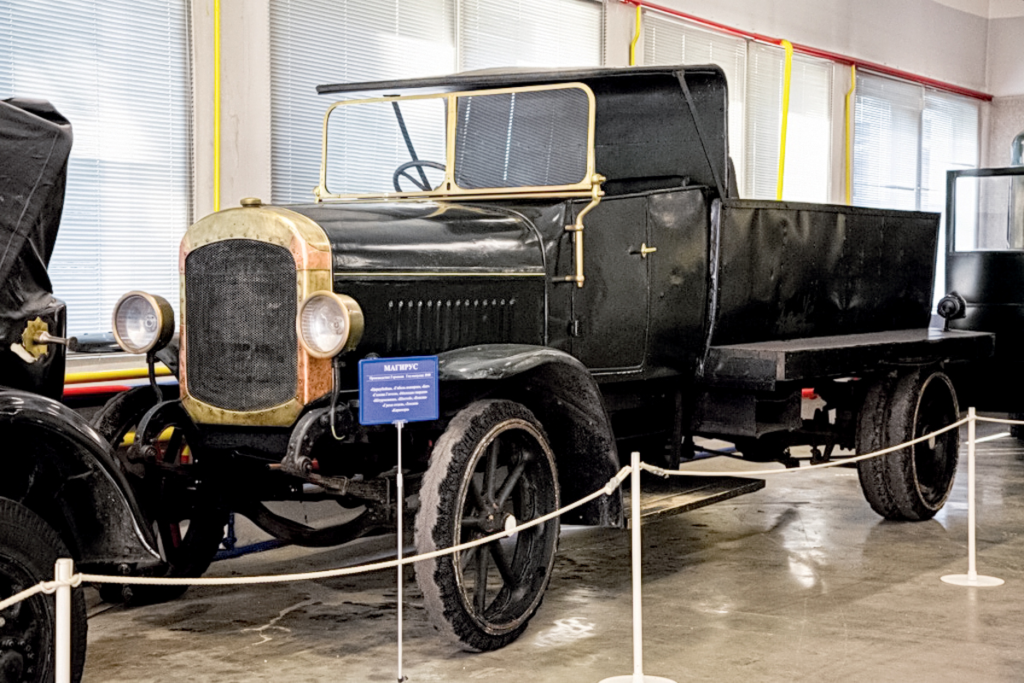
The oldest surviving truck in Russia is the 1912 Magirus 3K1 (photo: Mosfilm)
Kardan-Lastwagen: The Key Facts
- What it is: a Daimler truck of 1899, one of the oldest preserved trucks in the world
- The name: Kardan-Lastwagen — “propeller-shaft truck”, after the drive that made it unusual
- Drivetrain: cardan shaft and portal gear axles, instead of chains or gears
- Engine: two or four cylinders across the range, 4 to 12 horsepower; this one’s plate reads 5.4
- Ignition: spark plugs, when hot tube ignition was still the norm
- First owner: the Stuttgart waterworks, delivered March 11, 1899; in service until 1923
- Where it went: Dresden from 1944; among the 16 historic vehicles returned to Daimler in 1991
Frequently Asked Questions
What does Kardan-Lastwagen mean? “Propeller-shaft truck” in German. The name marks the thing that set it apart: a cardan drive rather than the chains or gears of its contemporaries.
How old is it, exactly? It was delivered on March 11, 1899. Daimler’s very first truck came in 1896, and the Mercedes-Benz Museum in Stuttgart holds an original from 1898.
Where did its petrol come from? The pharmacy. That is simply how fuel was sold when the earliest trucks were running.
Why was it in Dresden for so long? Part of the collection was evacuated there in 1944 during the bombing of Stuttgart. It remained in the Dresden Transport Museum through the GDR years and came back only after reunification, in 1991.
Can it be seen? It belongs to Mercedes-Benz’s private heritage collection and appears at special events, such as the 125th anniversary of the first Daimler truck in London in 2021.
Photo: Daimler Truck
This is a translation. You can read the original article here: Кардан-ластваген: рассказываем про один из самых ранних сохранившихся грузовиков Daimler

Published June 12, 2025 • 6m to read