
From 6 to 9 March 2020, the 29th Oldtimer Gallery took place in Moscow’s Sokolniki Park — the exhibition devoted to classic cars and technical antiques. Our correspondent Andrey Khrisanfov was there for all four days. This is his report.
The Parade Convertibles, From the ZIS-110B to the Aurus
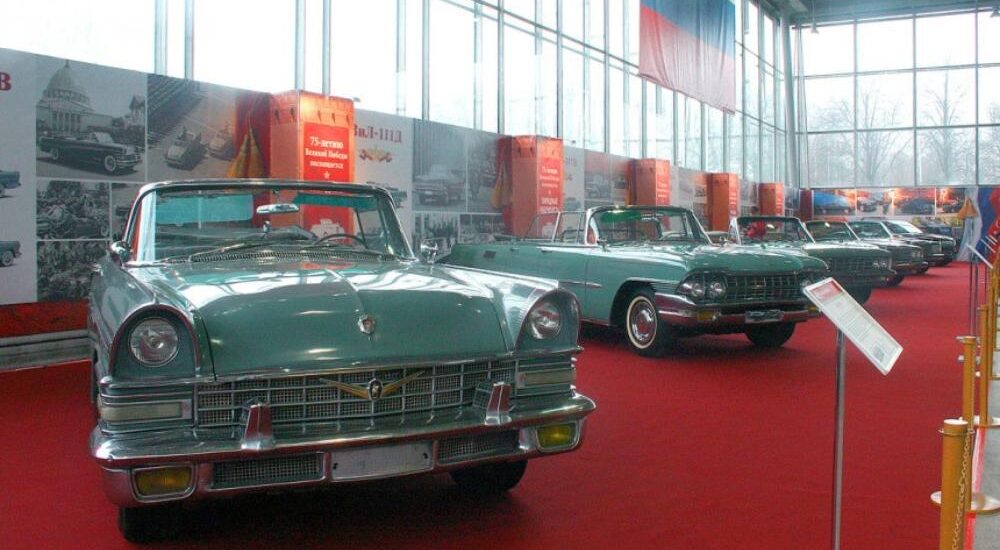
This year’s exhibition covered more than 10,000 square metres. The most prominent display was given over to the approaching 75th anniversary of Victory in World War II — though rather than the engines of war themselves, the subject was the ceremonial cars used in the Victory Day parades, from the very first parade phaeton, the ZIS-110B, to the newest government convertible on the Aurus platform.
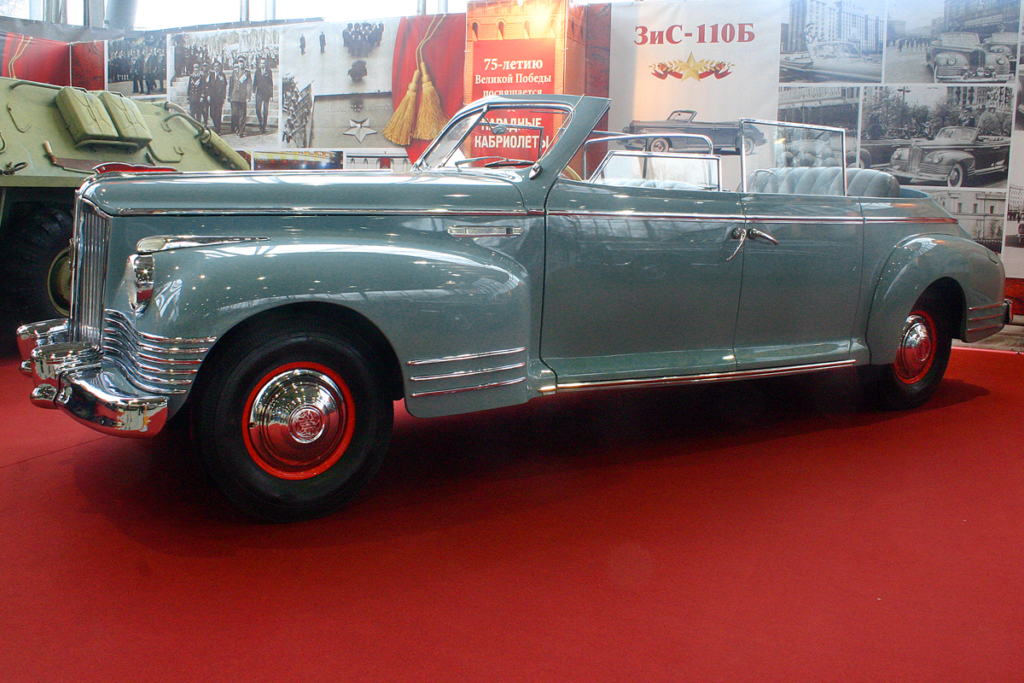
The ZIS-110B phaetons replaced the horses that the commander and the person accepting military parades traditionally rode onto Red Square on May 1, 1953. From 1947 to 1957, 270 of these cars were manufactured, of which 75 have survived to this day. This example was used for military parades not in Moscow, but in Baku, the capital of the then Azerbaijan SSR
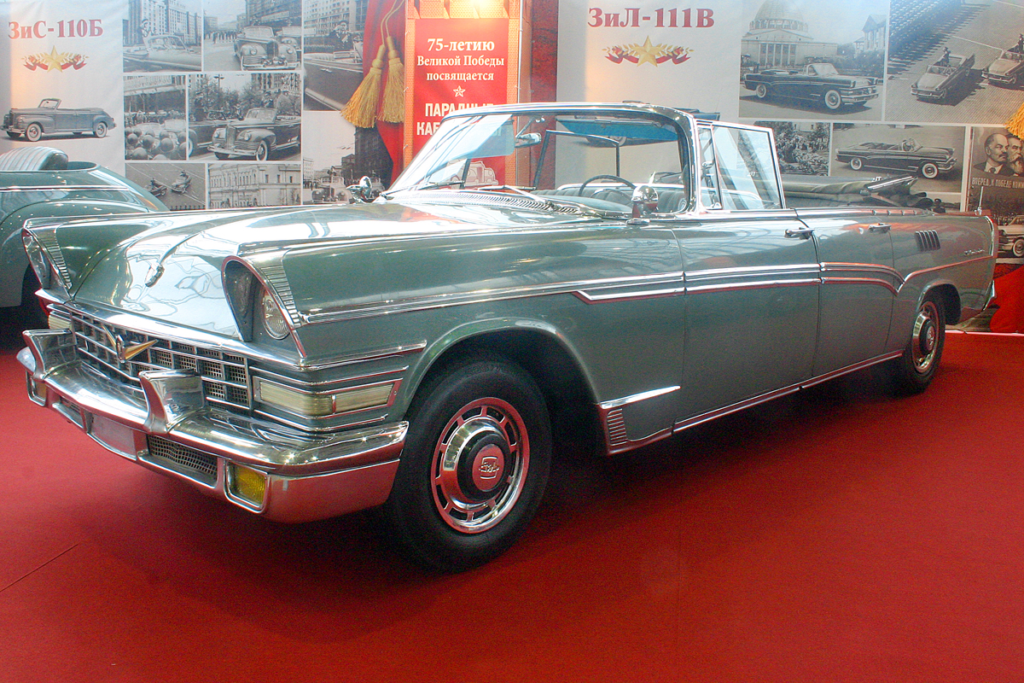
ZIL-111V. Only ten of these vehicles were produced from 1960 to 1963, and all of them have survived to this day. The vehicle with chassis number 41, shown here, carried the first cosmonaut of the planet, Yuri Gagarin, through the streets of Moscow in April 1961. These vehicles served parades on Red Square from 1961 to 1972.
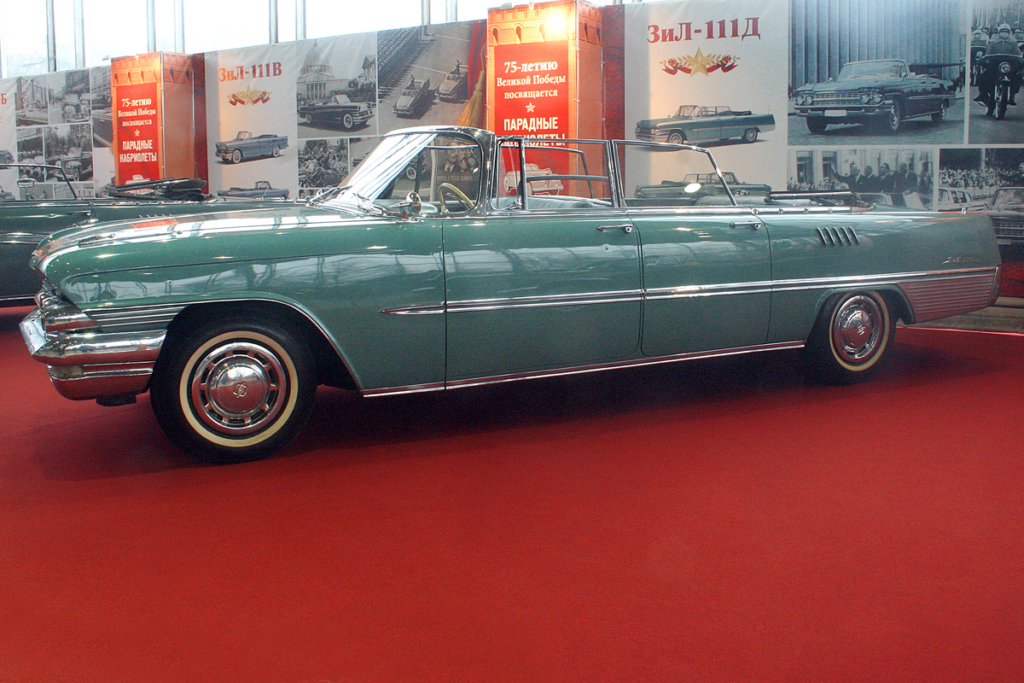
ZIL-111D was produced in 15 copies, but was never used on Red Square: the previous model, designed in the pompous and conservative style of the mid-fifties, was considered more elegant and better suited for special occasions. Cosmonauts were mainly greeted in such cars. 12 cars have been preserved, including two in North Korea and one in Cuba. The very first manufactured example, chassis number 82, is presented here.
The stately open cars stood in a line along the north-east wall of Pavilion No. 4, on Mitkovsky Drive. Behind them was a backdrop made for the occasion and hung with historical photographs — the same cars at work, on parade duty, years ago. A souvenir kiosk nearby sold inventive themed things, including very good gingerbread biscuits in the shape of the Aurus emblem.
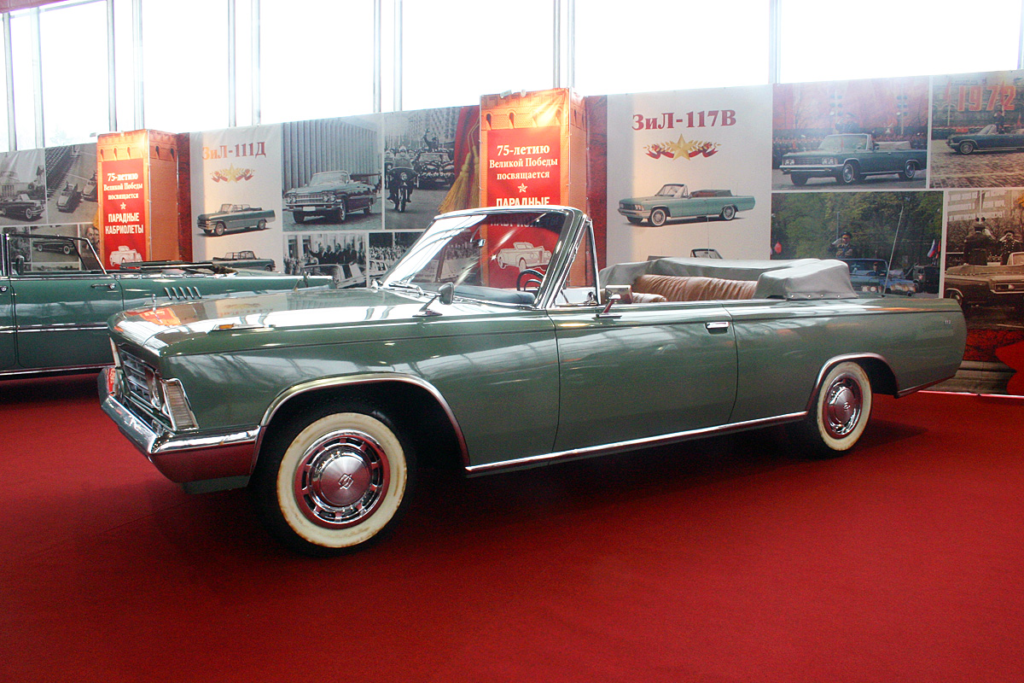
ZIL-117V, which replaced the old-fashioned 111V model in 1972 and was made in ten copies (nine have survived). The first ZIL ceremonial car with two doors instead of four. Such ceremonial vehicles were used on Red Square for holidays until 1980, after which they continued to perform similar functions in the Northern capital until 2009
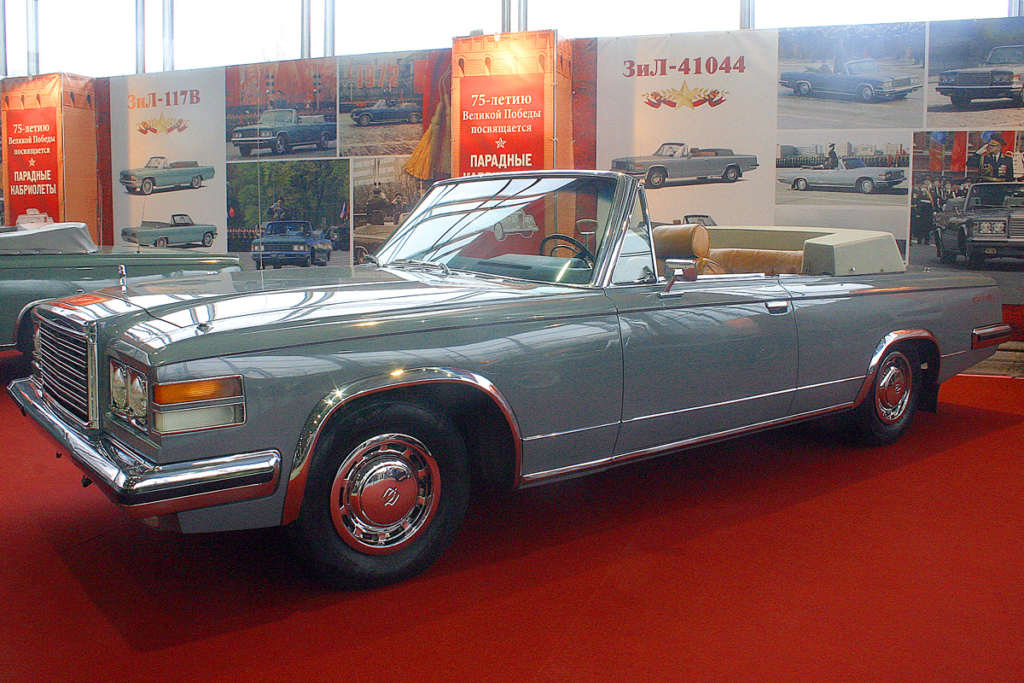
ZIL-41044. Only three such vehicles were made in 1981, all of them are intact and still participate in ceremonial events. They were used for parades on Red Square in 1981-2009.
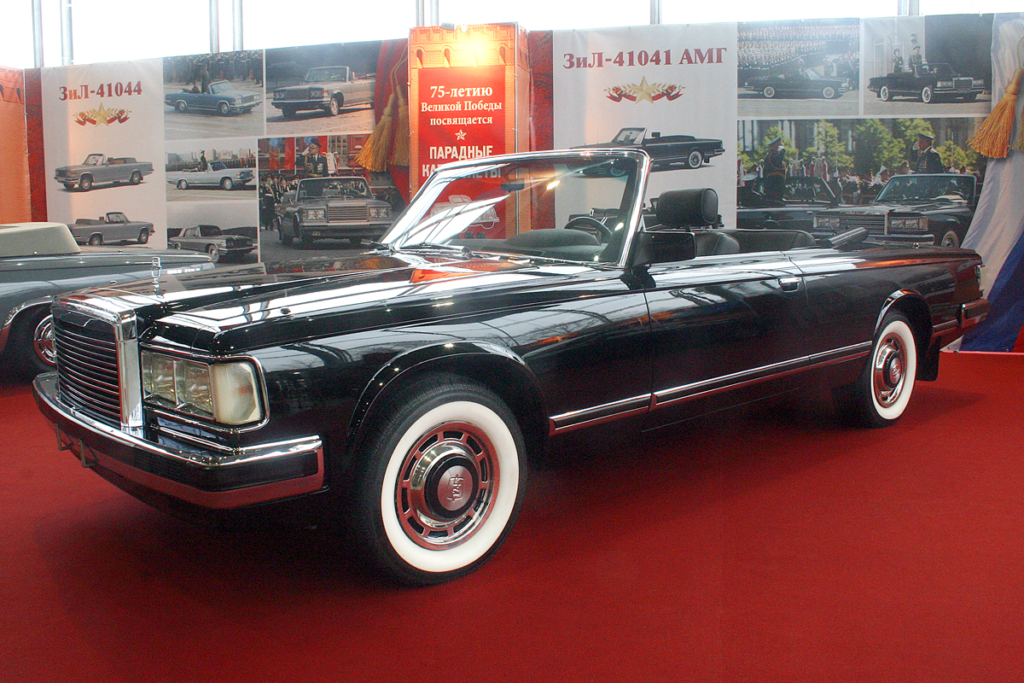
Strictly speaking, this is no longer a ZIL, but a GAZ SP45, manufactured in three copies in 2009 on an American GMC Sierra chassis at the request of then Defense Minister Serdyukov. A civilian, he insisted on painting the car black, since the previous gray-blue tone of the parade cars was matched to the color of the officers’ parade greatcoats and did not harmonize well with the official black suits. Three-seater convertibles – two main, one reserve – were used in Moscow parades from 2009 to 2019.
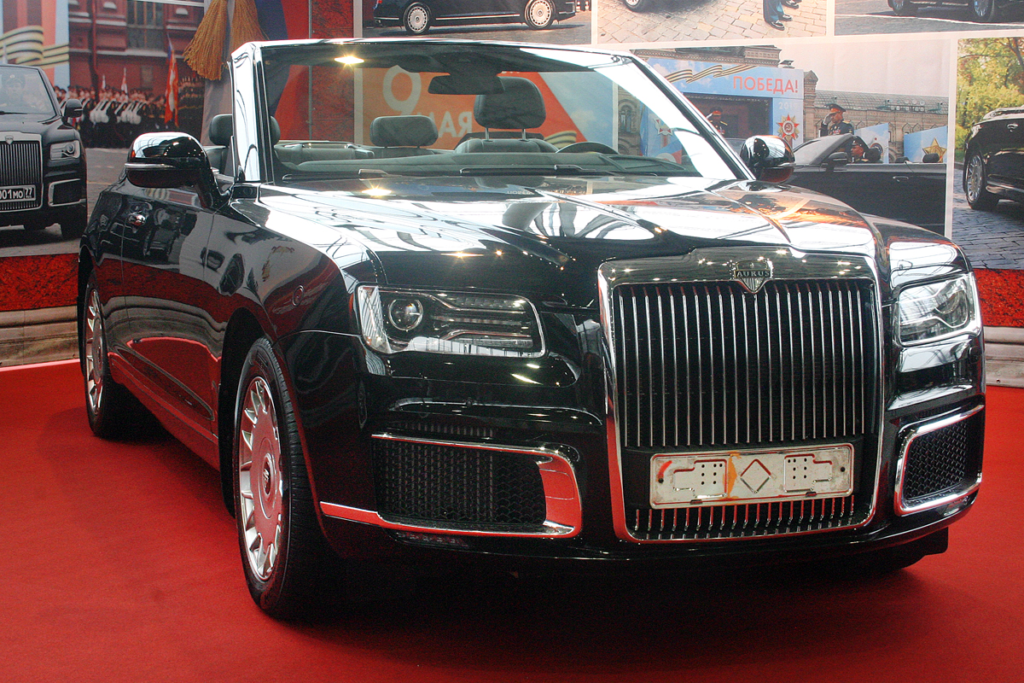
The latest Russian-made ceremonial convertible is built on a single modular platform, common with other cars of the family of government cars, for which a special brand Aurus was invented – “Russian gold” (Au is aurum, the chemical symbol for gold in the periodic table, and rus, of course, is an abbreviation for Russia). A 598-horsepower V8 with a working volume of 4.4 liters is used, allowing the car to reach speeds of up to 250 km / h
Military Hardware, and Children in the Driver’s Seat
Military hardware was present in the pavilion too, and in quantity. Most of it was postwar, though a few pieces were prewar — experimental prototypes rather than production machines. Children were allowed to climb aboard some of the combat vehicles, to their considerable delight, and a few even got into the driver-mechanic’s seat, with the engines safely off for the duration.
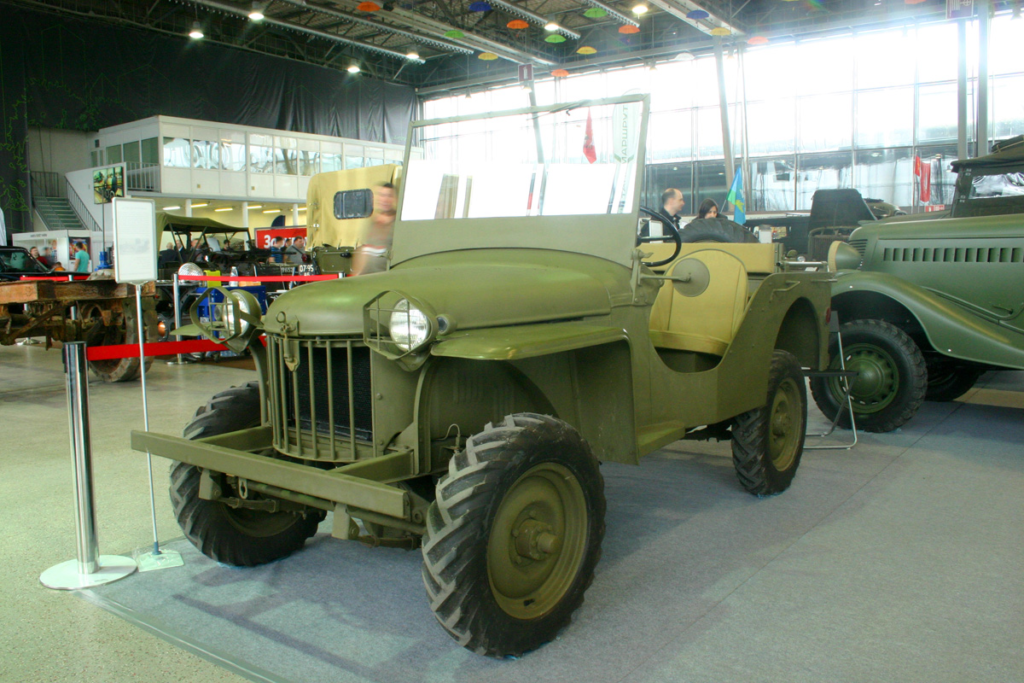
These two cars are unlikely to fall under the thunderous definition of “Victory motors”: they are experimental, they were prepared in the early forties by the American company Bantam during work on a “reconnaissance car” for the active army. One prototype was even made not only all-wheel drive, but also all-wheel drive
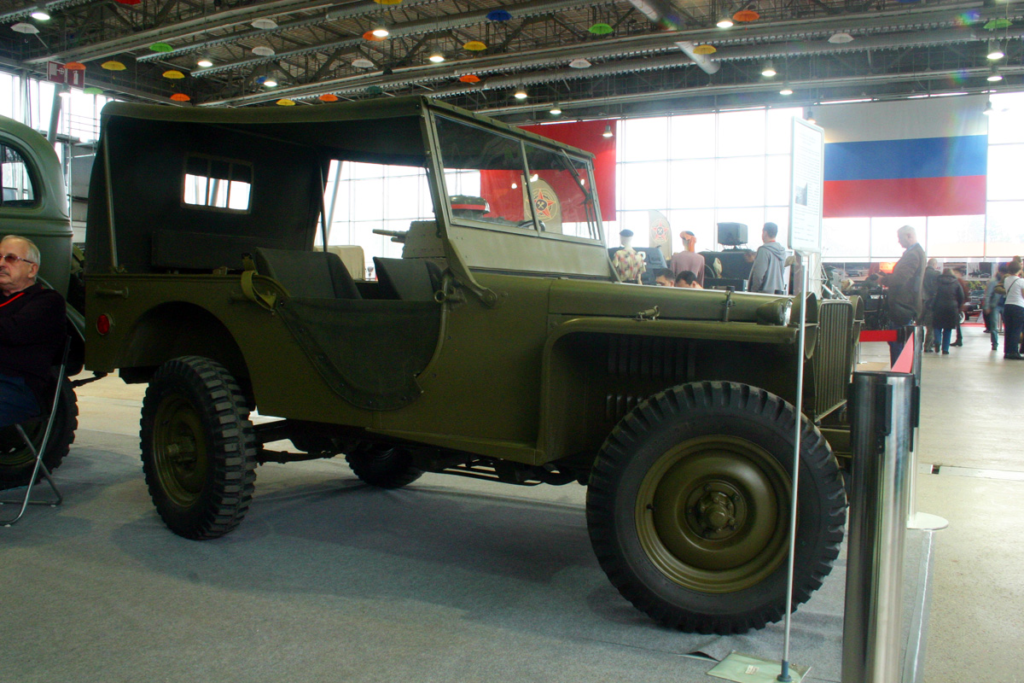
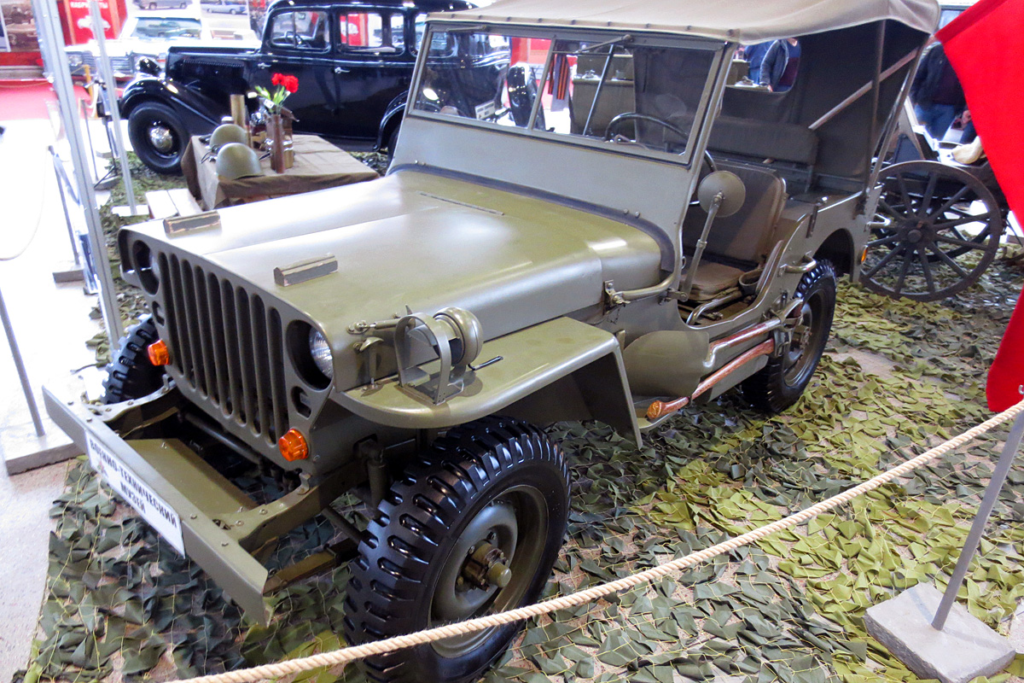
But this car is truly a “weapon of victory”, and a real one: the famous Willys, later known as Jeep, which was created taking into account the tests of the two previous cars, and became a serial workhorse in the troops
Russo-Balt, White, and the Soviet Ambulances
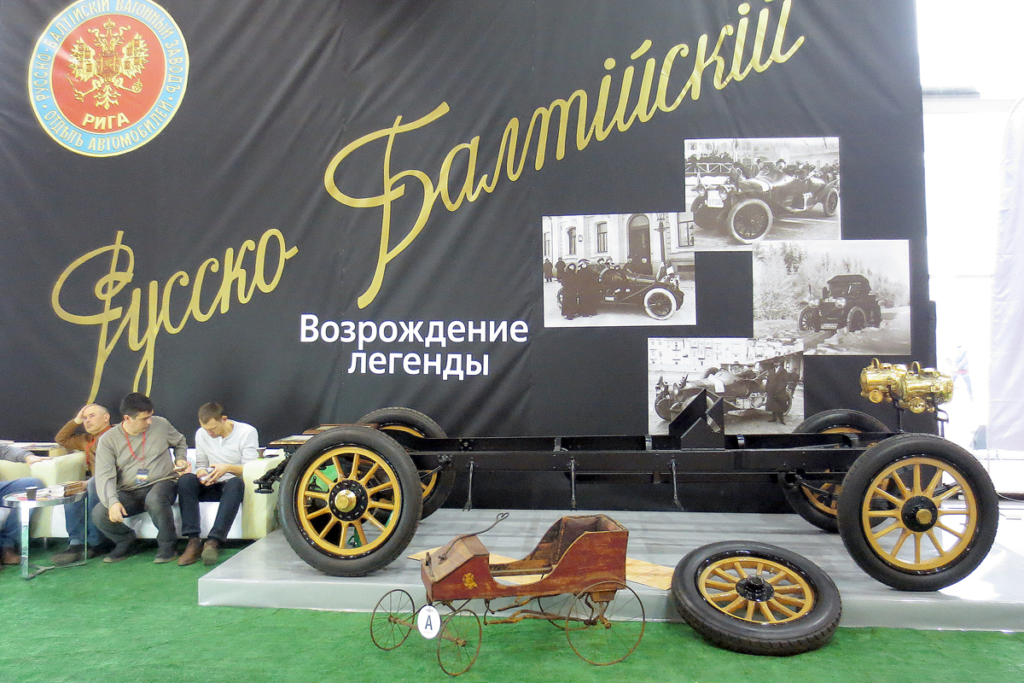
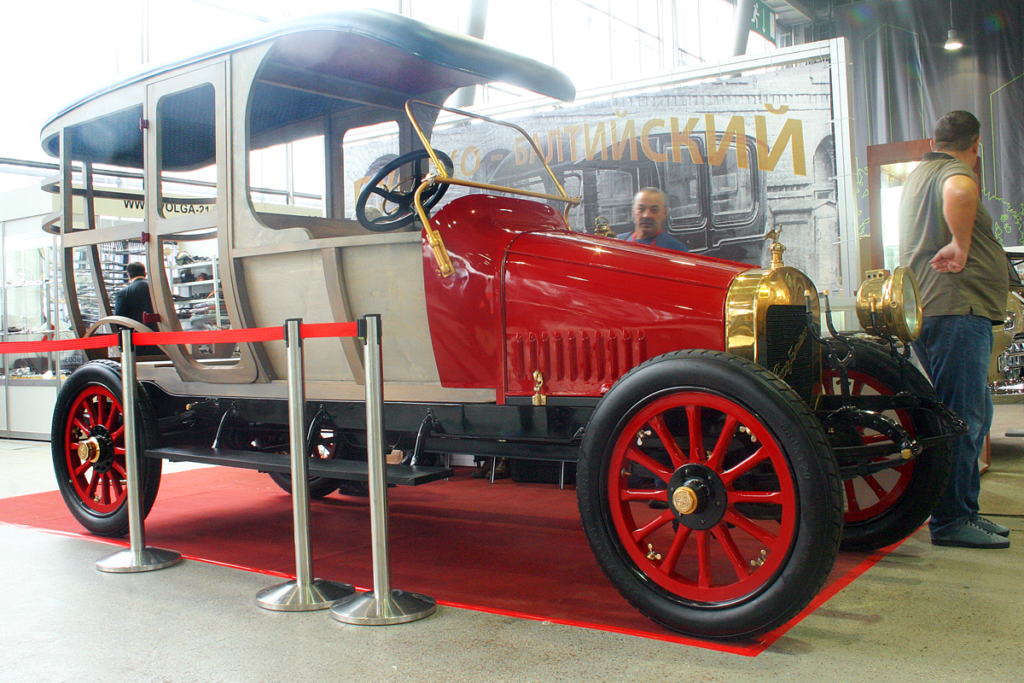
The reconstruction of Russo-Balt cars was presented at the exhibition by two exhibitors at once. Each had its own approach
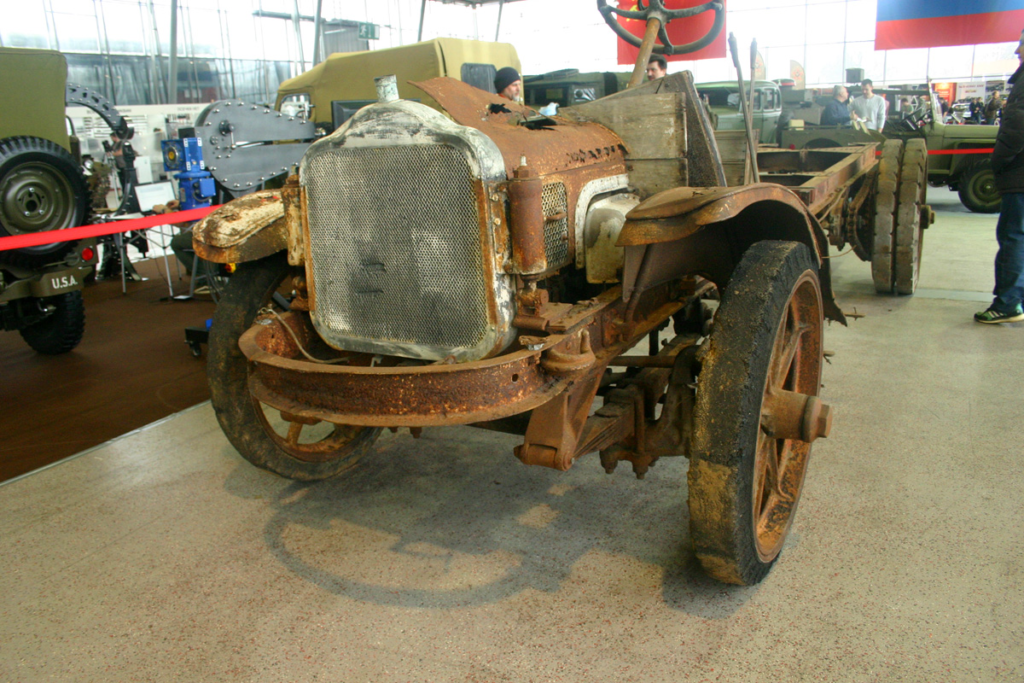
This rusty chassis belonged to a truck from the American company White during the First World War. The Moscow plant AMO, later known as ZIL, once started its activity with the restoration of such vehicles
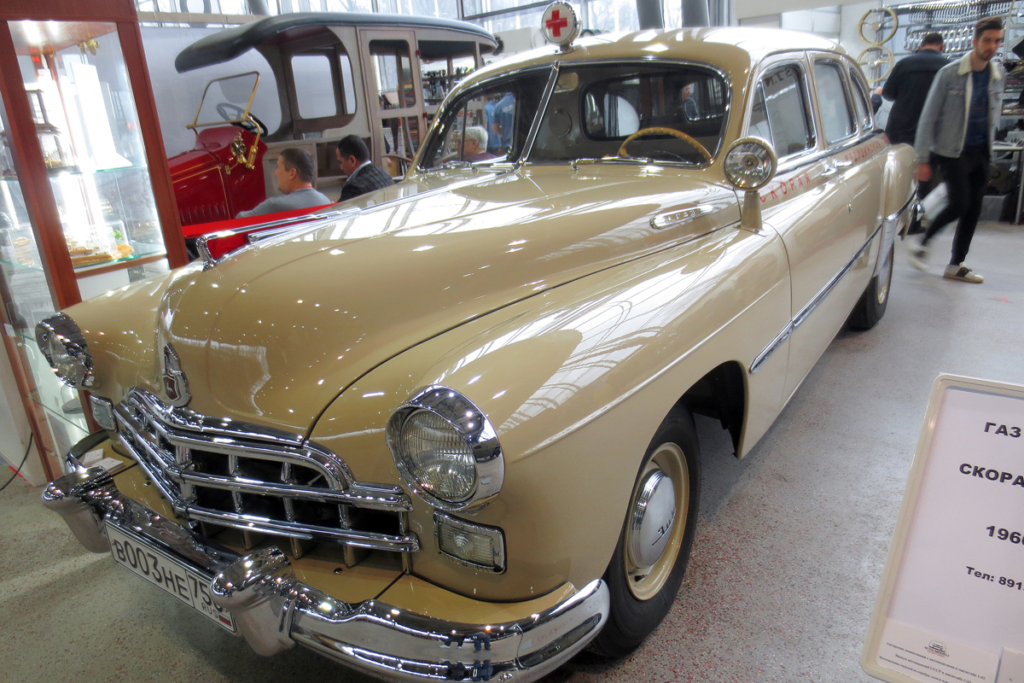
The ZIM (GAZ 12-B) ambulance is well known to many…
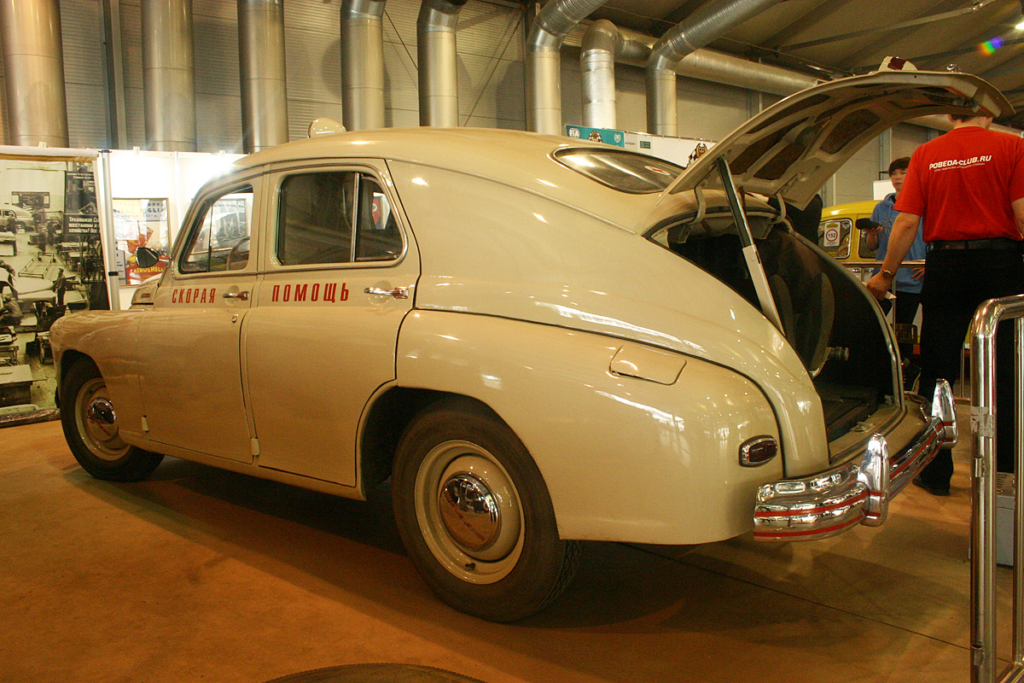
…But there was also a similar Pobeda M-20
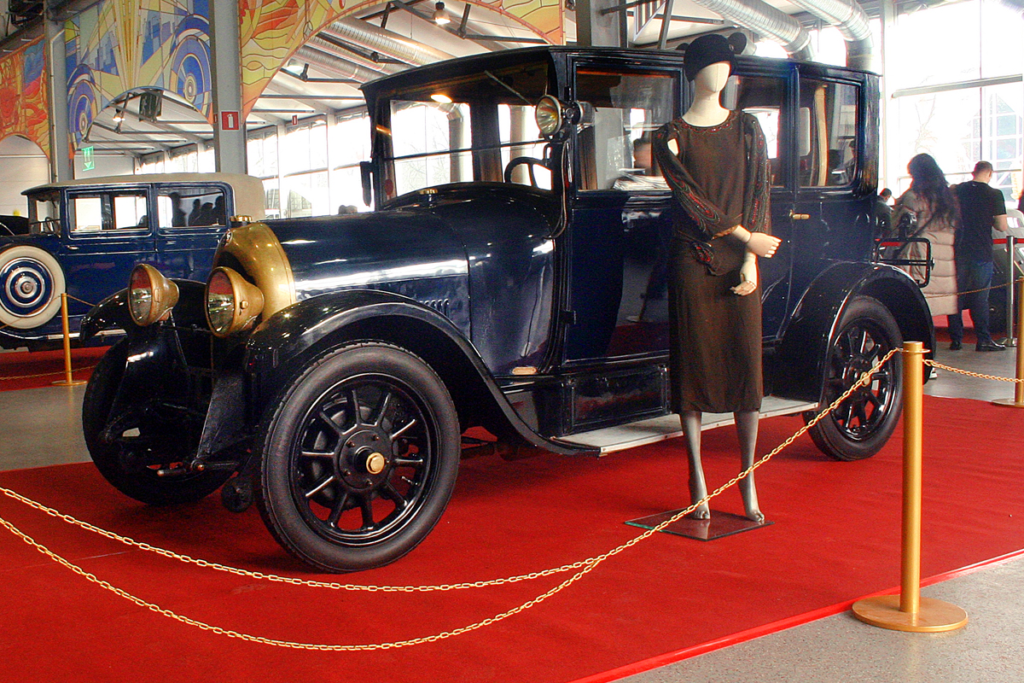
The sign in front of this exhibit reads: “… a dress from the early twenties made of dark green silk with beige trim and embroidery with red and black beads.” This is followed by a lengthy excursion from fashion historian Asya Alajalova into the era of the “roaring twenties” with a story about the preferences of the ladies of that time. The car is a French Lorraine-Dietrich Type A4 10/12 CV, manufactured in 1924, a closed Gloriosa model with a body by the Gruemmer studio. This is how a real Lorraine-Dietrich should look, it turns out – and not at all like in the memorable Mosfilm adaptation of “The Golden Calf” (1968)…
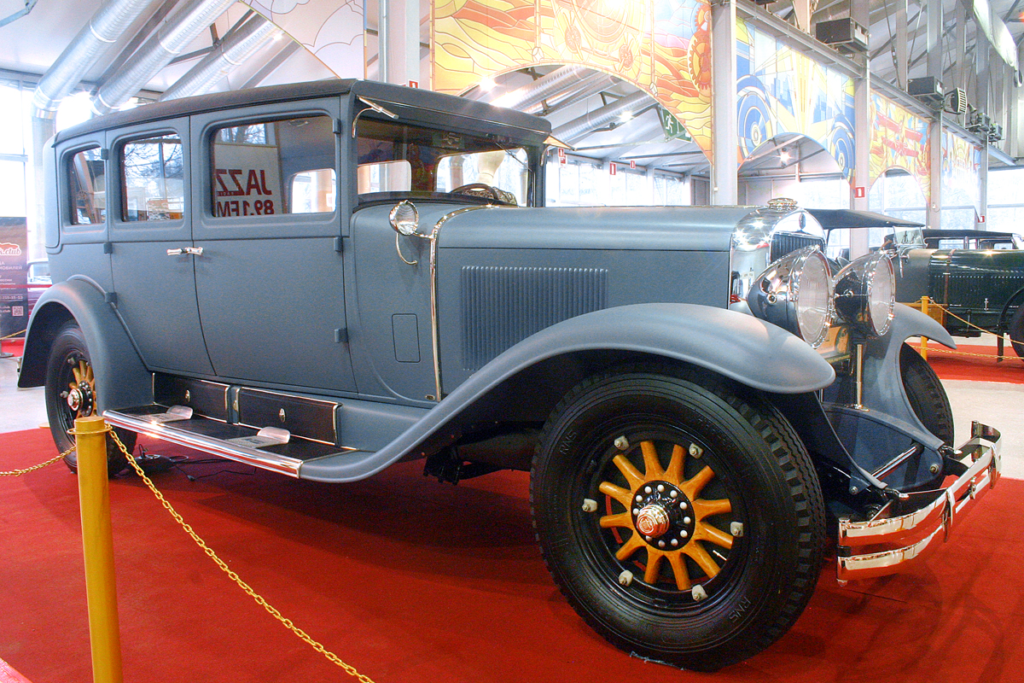
And this is approximately what the “closed gray Cadillac” of the overseas seekers of recipes for the Russian “taburetovka” from the same “Golden Calf” might have looked like, which the authors had “slightly tilted and stood at the edge of the road.” This is a six-window sedan from the Fleetwood studio on the chassis of the 1928 model 341-A
The Food Court, and the Only ATM on Site
The main floor of Pavilion No. 4 was shared with a food court, organised this year as a single area. In previous years the food vendors — everything from Tatar sausages to Syrian sweets — had been scattered through the halls; this time they were gathered in one place. A second snack area sat, as usual, in the passage joining Pavilion 4 to Pavilion 4.1, along with the cloakroom and the only ATM on site. That last turned out to matter, since a good many vendors could not take cards.
The Great Classics of the Twenties
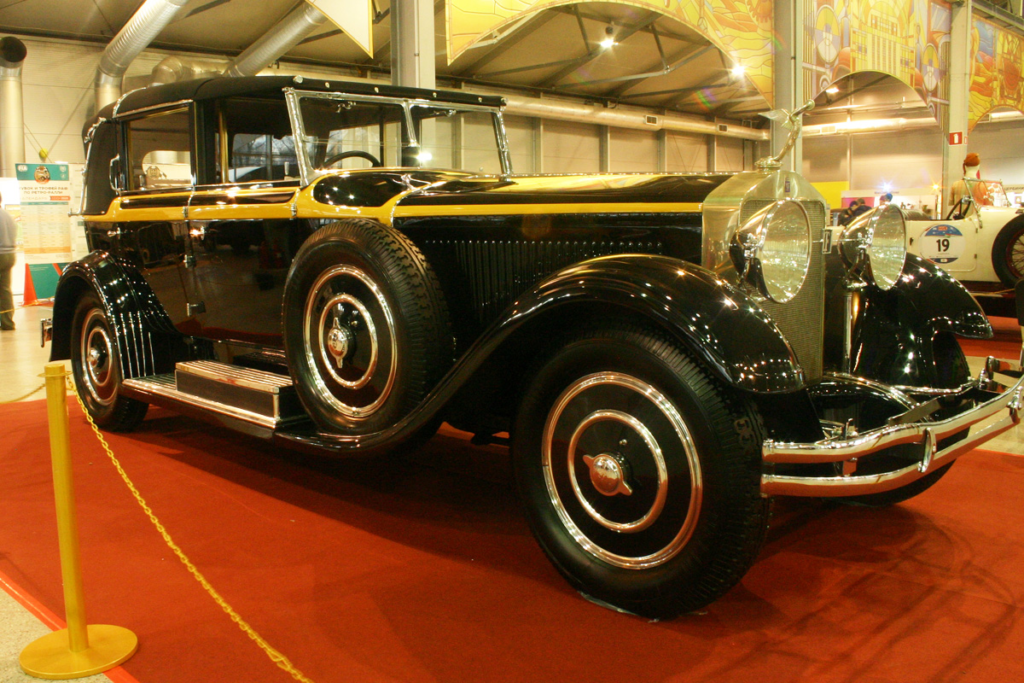
The remarkable Isotta Fraschini Tipo 8A S from 1928 with a landaulet de ville body from the prestigious Italian studio Carrozzeria Castagna is the world’s first car with an in-line eight-cylinder engine, the working volume of which exceeded seven liters. In all of Moscow, there are only three such models, and all with different bodies from different manufacturers
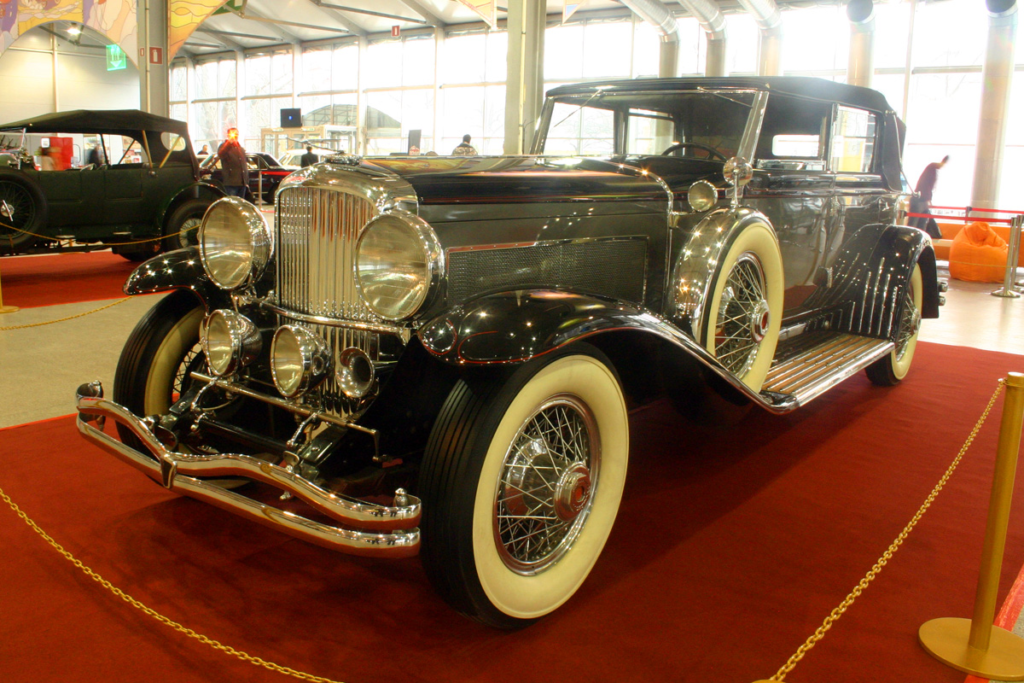
The incomparable Duesenberg Model J of the early model (1929) on an extended wheelbase with an opening body Convertible Berline from LeBaron. In this version, only three copies were produced
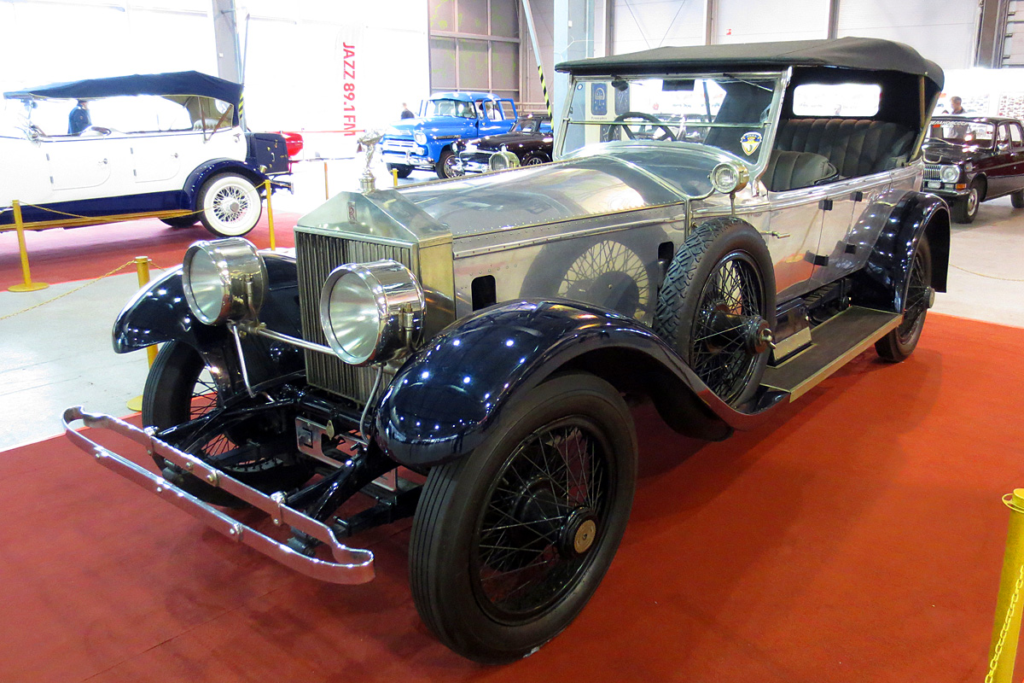
Rolls-Royce model New Phantom (later also called Phantom I) of American assembly, model 1926. Usually American Rolls-Royce cars, which were assembled in Springfield (Massachusetts), were equipped with bodies of the American company Brewster, but on this example, a completely different coachbuilder worked – Merrimac, again American. This model was called in the British manner Pall Mall Tourer. The steering wheel is still on the right, also in the English manner
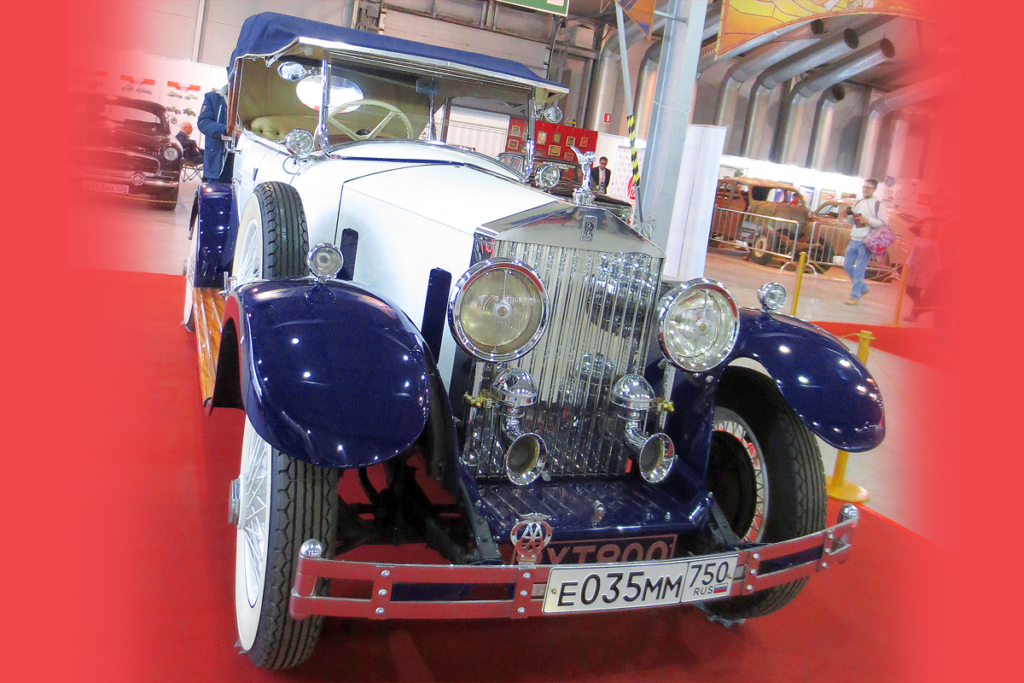
Rolls-Royce, straight from the era of the “roaring twenties” – this time of a purely English type: this is the “junior” model 20/25 HP of 1929 with a body by the famous Barker studio
Guests From Belarus
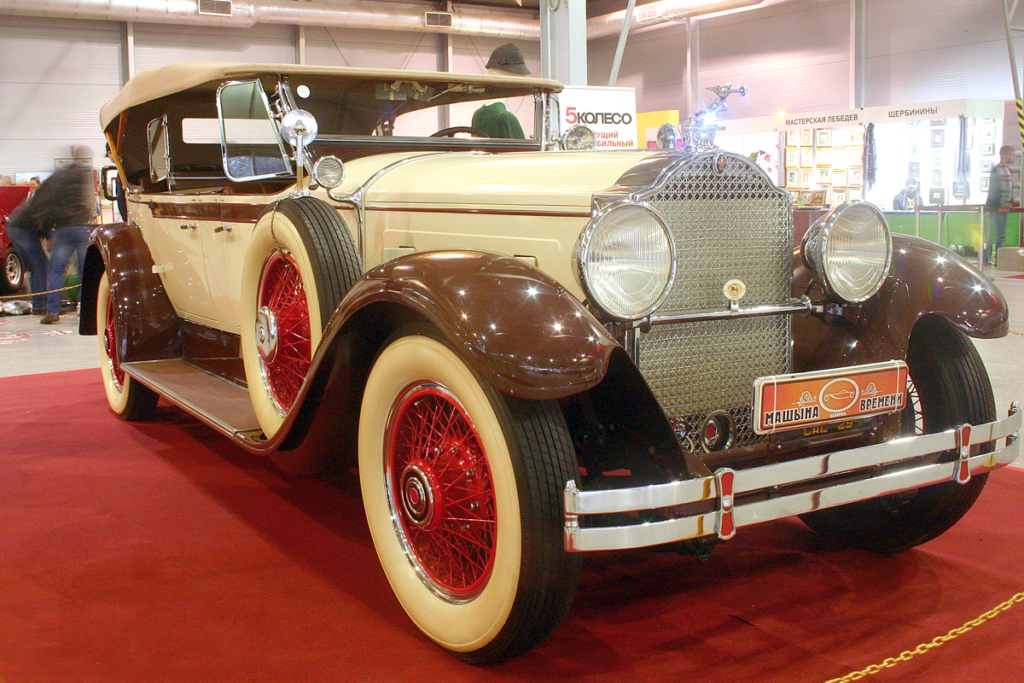
This wonderful Packard 640 Custom Eight (1929) double phaeton was presented at the exhibition by the Belarusians from the “Mashina Vremeni” museum. At one time, this example was used to pay the architect Bernard Maybeck for the project of the grand Packard showroom in San Francisco by the local dealer Earl S. Anthony – and he also added money
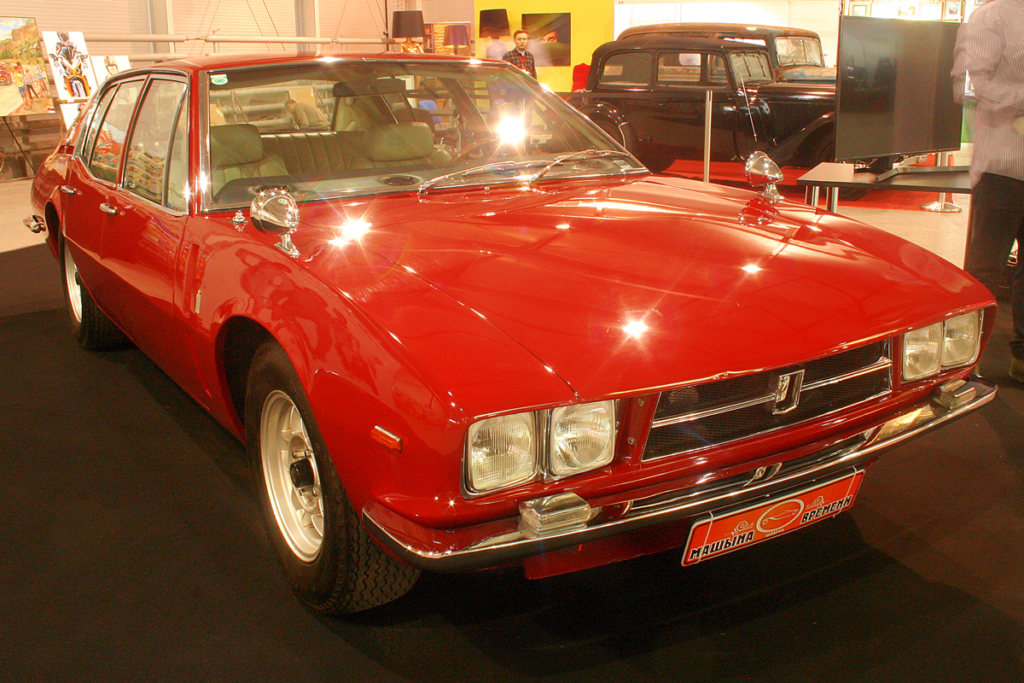
The second Belarusian exhibit is the Iso Rivolta Fidia with a Chevrolet Corvette engine and a Ghia body designed by Giorgetto Giugiaro himself. A great rarity: only 192 examples were built from 1967 to 1975
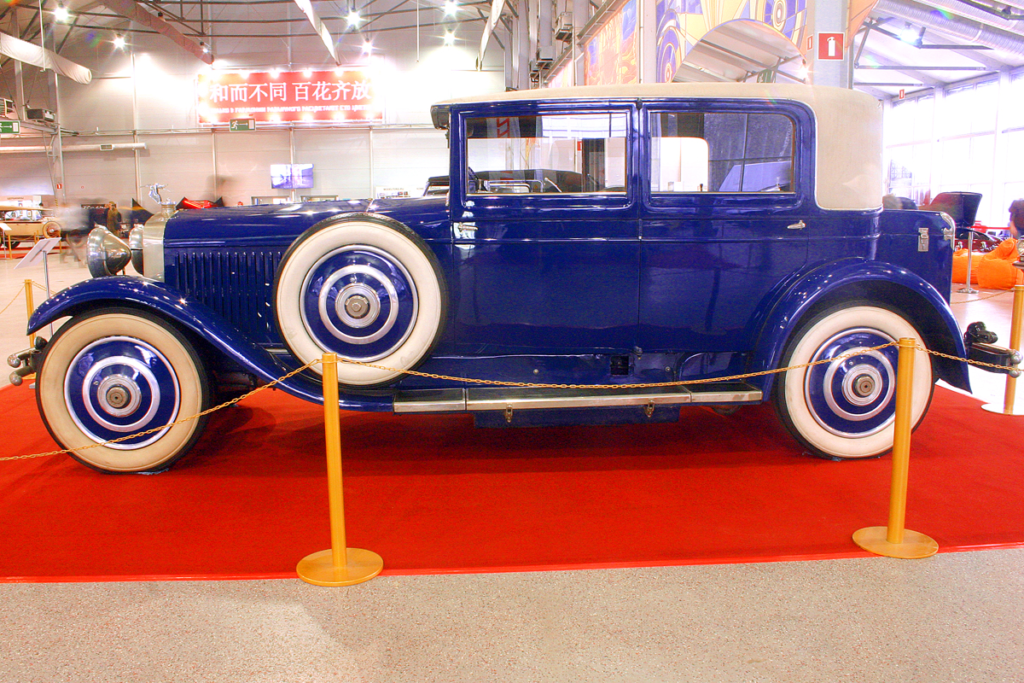
This Hispano-Suiza H6B (1928) with a body from the famous French studio Million-Guiet has appeared before the public more than once at previous Oldtimer galleries. But honestly, it hasn’t become any worse for it
Two Ways to Go Racing
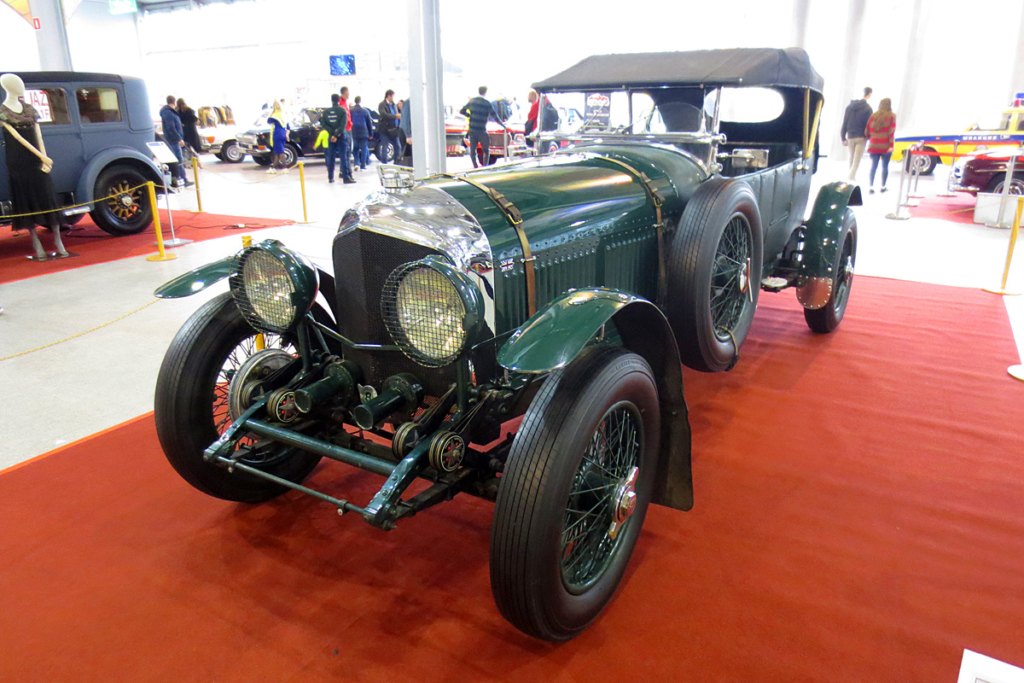
British motorsport at its finest: the 1929 Bentley Speed Six. Before its takeover by Rolls-Royce in the early 1930s, Bentley had already scored many big wins at Le Mans, and this particular model was responsible for a fair share of them. The exhibition featured a model with a lightweight sports body from the Vanden Plas workshop, which was simply called the Le Mans Style Tourer.
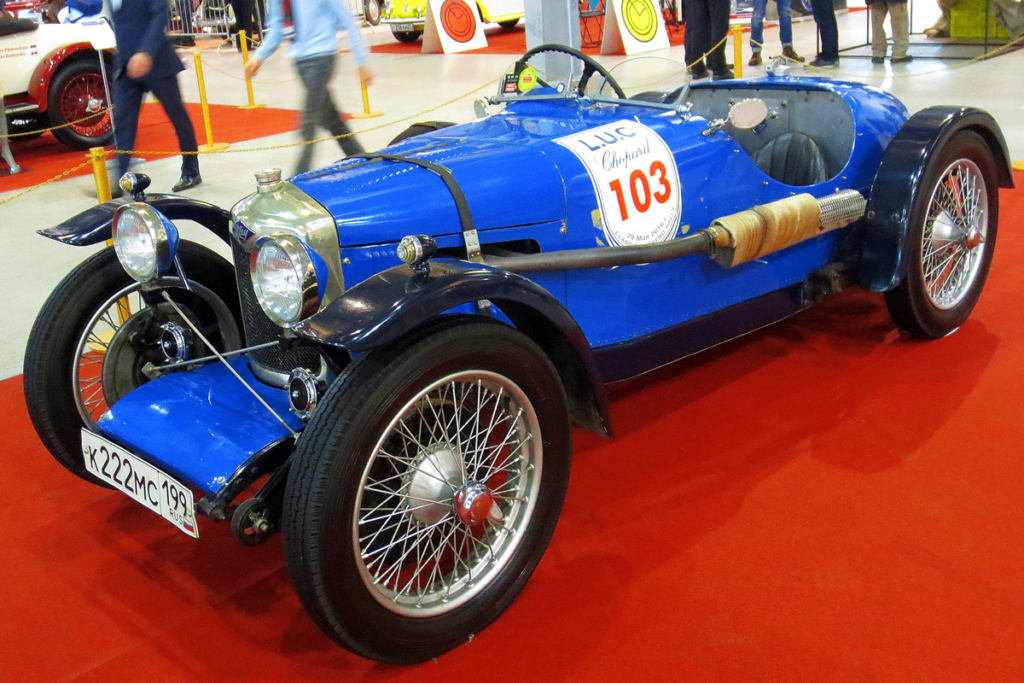
A fundamentally different British approach to motor racing is the Riley Nine Brooklands (1930). Only 1087 cm3 of working volume versus six and a half liters of the Bentley Speed Six and, accordingly, 29 hp of output versus 180 of the titan from Cricklewood, but the little car still managed to take first place in its class at Le Mans (and third place overall there). Another thing is that it achieved this only by 1933, when the Bentley brand had long since left motor racing.
Pavilion 4.1: Welcome to 100 Years Ago
Pavilion No. 4.1 was curated around the theme “Welcome to 100 Years Ago” and given over almost entirely to cars of the 1920s. The array of great classics from private collections was formidable, and the names alone were enough to quicken an enthusiast’s pulse:
- Hispano-Suiza
- Lorraine-Dietrich
- Isotta Fraschini
- Rolls-Royce
- Bentley
- Packard
The cars were spaced out to allow full 360-degree viewing, and the hall was decorated in the spirit of the Roaring Twenties and the Jazz Age. Several displays included mannequins in period dress, which helped. One corner of the pavilion offered a sober reminder of World War II: two captured German vehicles, an Adler Trumpf and an Austrian Steyr, alongside a gallery of reproductions by the artist Alexander Zakharov under the title Motors of Victory. Another exhibit was more poignant still — a three-wheeled invalidka from Serpukhov, a reminder that war and victory alike can end in a private tragedy.
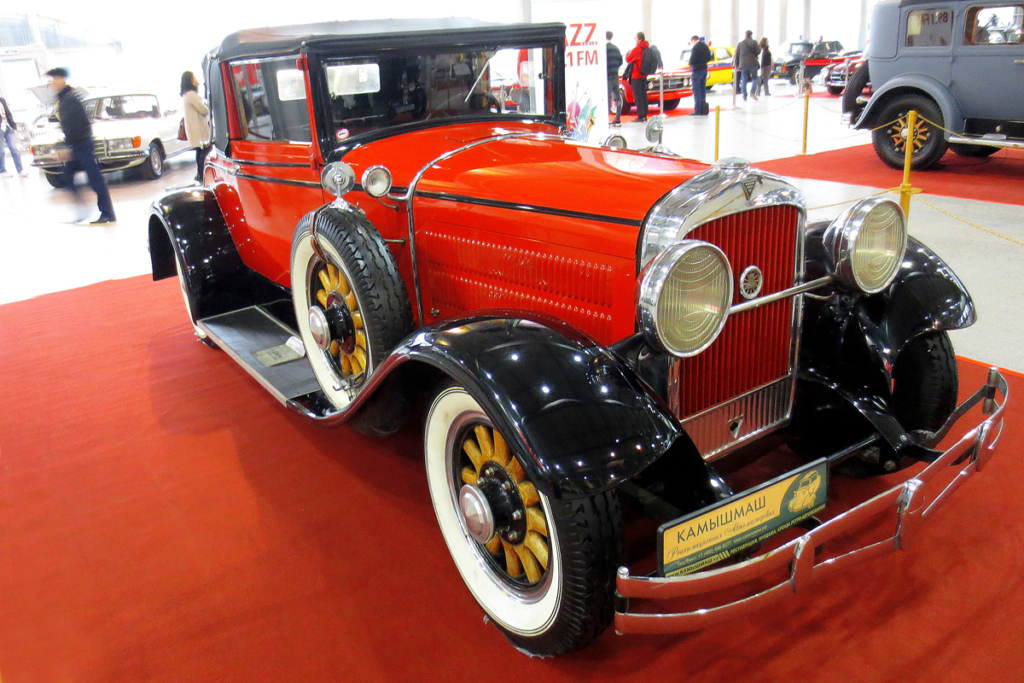
The 1929 Hudson Super Six coupe-cabriolet was presented at the exhibition by the Kamyshmash Reanimation Auto Repair Shop, a division of the Kamyshin Machine-Building Plant. The car is superbly restored
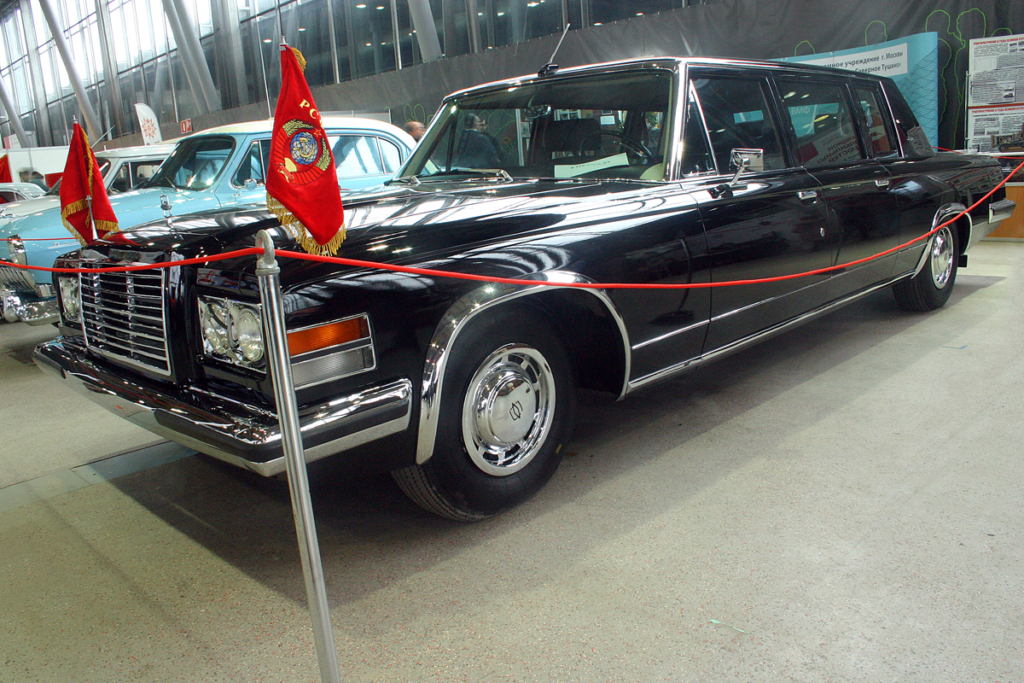
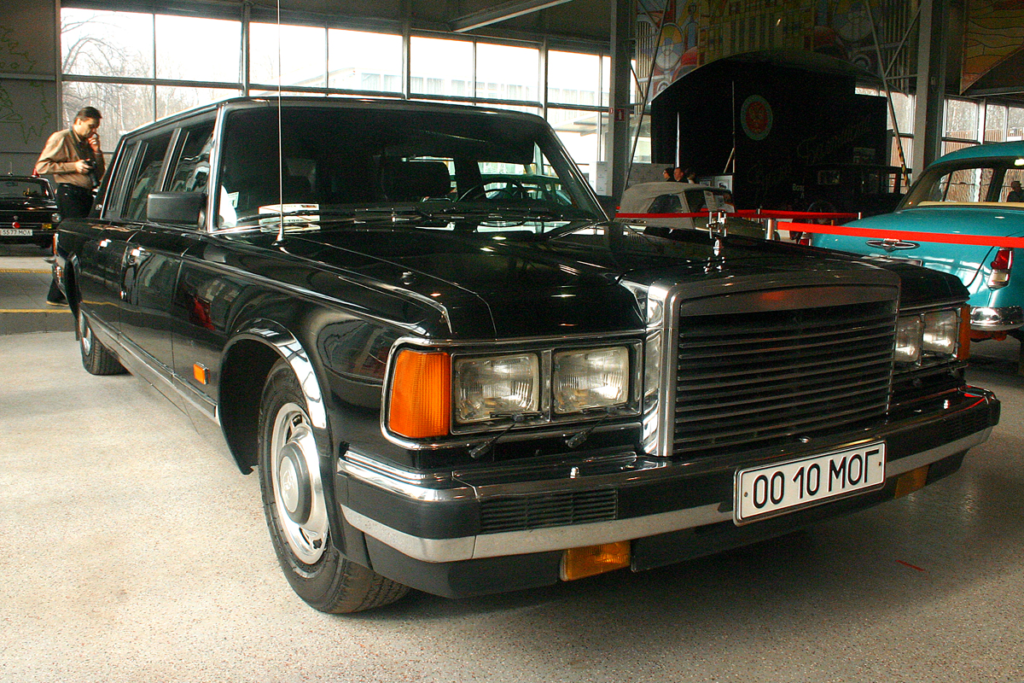
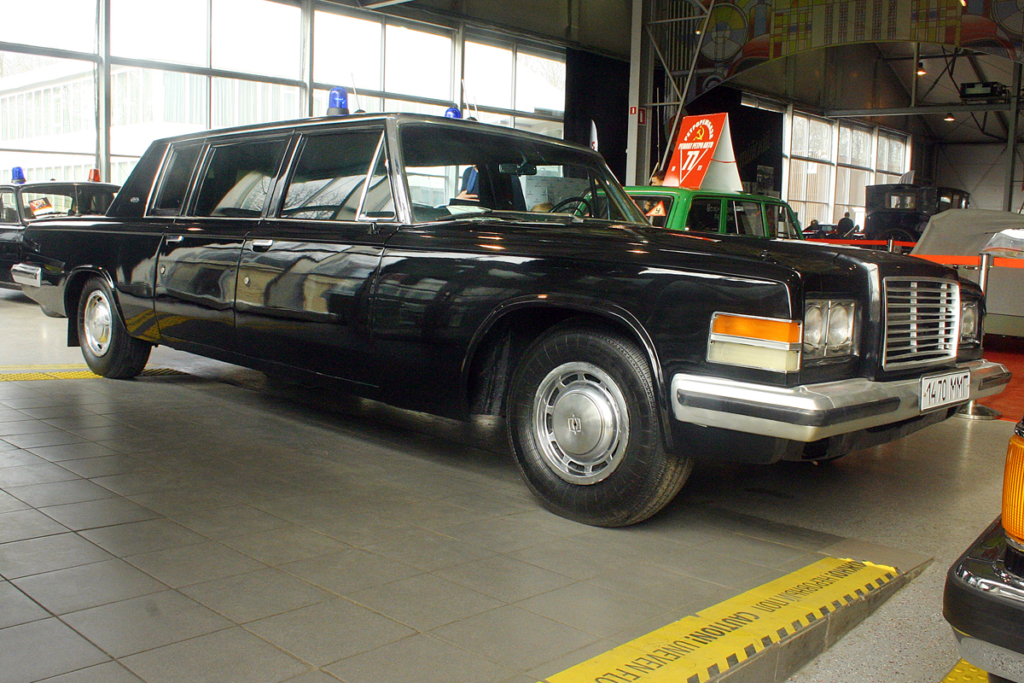
Government ZILs were present at the exhibition in incredible numbers — as many as five units, and that’s not counting the ceremonial models!
The Retro Bazaar
The traditional Retro Bazaar — spare parts for old cars and other nostalgia-inducing objects — had also been gathered into one space, along the wall dividing Pavilions 4 and 4.1. The range of goods was much as in previous years, if slightly thinner: some vendors based in countries with strained diplomatic relations chose not to come this time.
Pavilion 4.2 and the Egorov Auction
Next door to that flea market was the entrance to Pavilion No. 4.2, which held two rows of vehicles catalogued for the Egorov Auction House sale on 9 March. The standout lot was a two-tone red and white 1955 Chevrolet Bel Air.
Photo: Andrey Khrisanfov
This is a translation. You can read the original article here: Парадные кабриолеты и другие сокровища Олдтаймер-галереи в Сокольниках

Published June 05, 2025 • 9m to read