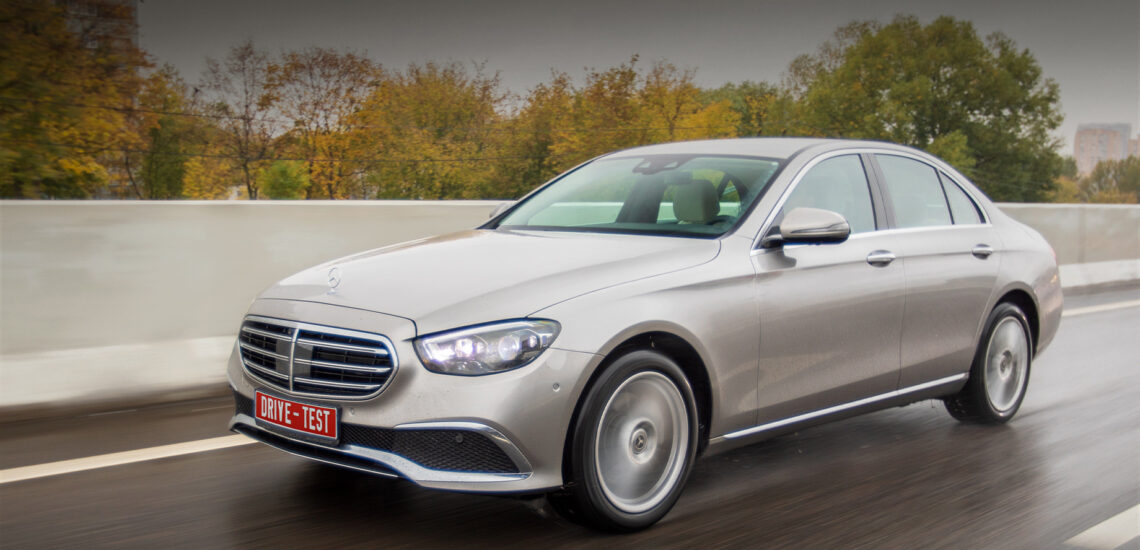

Again, there is a pre-production car in our test, as was the case with the GLE Coupe. I have no reason to reproach the Mercedes press office with malicious intent, but you will agree, it is difficult to imagine a more convenient tool for correcting the results of journalistic tests. The shortcomings we found can be easily attributed to the features of the experimental, in addition German, assembly.
A Short Test Cut Short: The Parking Brake Saga
The report you are reading was planned only as part of the test, but in the end it turned out to be the only and final chapter. At the end of the first day, the parking brake of the E jammed after washing. Has anyone encountered this? The representative office explains this by a software error. After drying out, the sedan went for diagnostics on its own, and didn’t return during the next two days at first allotted for expert evaluation and photography. Our first and only case, according to Mercedes, required software updates at an authorized service center.
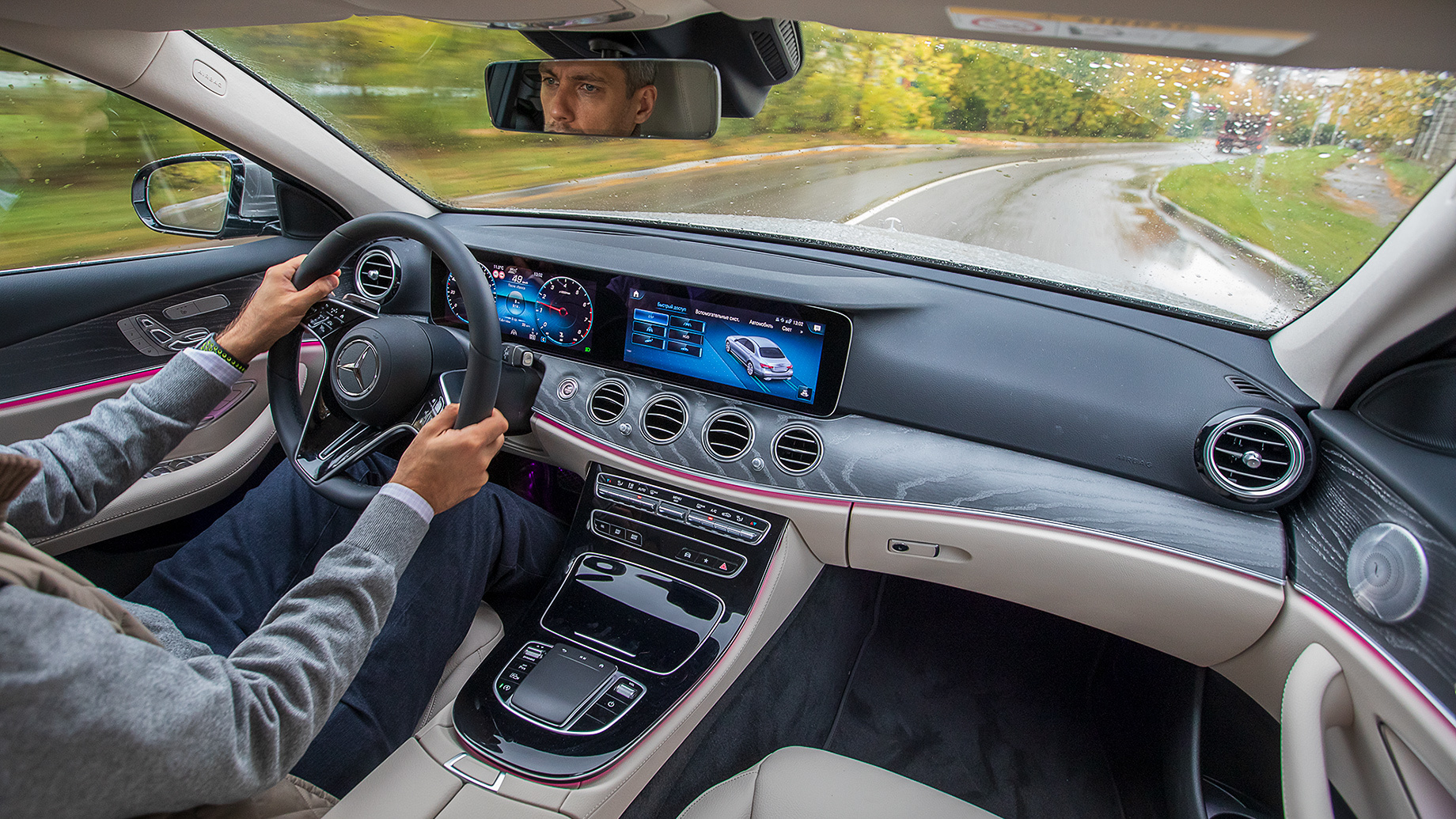
However, it’s even good that I’m limited to the blitz by chance. Not because it is enough a few hours for a flat driver’s seat to leave a memory of heaviness in the lower back. There is simply nothing much to kick about here: the volume of changes is small and is primarily facial at the consumer level. Instead of discussing restyling in a vacuum in detail, it’s better to wait for the updated BMW 5 and conduct a comparative test. So far, the E-Class has had no luck in confrontations.
Suspension and Trim Updates on the Facelifted E-Class
We arranged head-to-head comparisons twice, and each time a Mercedes turned out to be on the wrong suspension. Now the choice is simplified: all E models are equipped with single-tube amplitude-dependent shock absorbers, known under the marketing name Agility Control. Three types of springs are offered for them:
- Standard steel springs — fitted across the regular lineup
- Shortened springs — available only on the Intelligent Drive trim
- Gas springs — also exclusive to the Intelligent Drive trim, like our test car
Dealers call Sport, among “physicists,” and Business, which is popular as a taxi, the most popular four-cylinder E options. They have fixed prices for a reason: now nothing can be added to package configurations of either car. You choose only the body color. In my opinion, taxi drivers benefit the most from the restyling: even their E-Class received a digital dashboard. No one will miss the short analog scales in a ridiculous glossy frame.
Engine and Transmission: More Power, Familiar Feel
We didn’t manage to take measurements. Subjectively, the dynamics of the E200 haven’t improved radically with the move to the M264 modular turbo-four, which produces 197 hp instead of the previous 184. The peak torque increased by 20 N·m to 320 N·m, but moved higher in the rev range. The Mercedes is well prepared for the city, but it is still weak on the highway. And yet, the increase in torque is enough that I don’t feel much difference between this all-wheel-drive sedan and, for example, my wife’s lighter “two-hundred” E-Coupe with the same-displacement M274 engine.
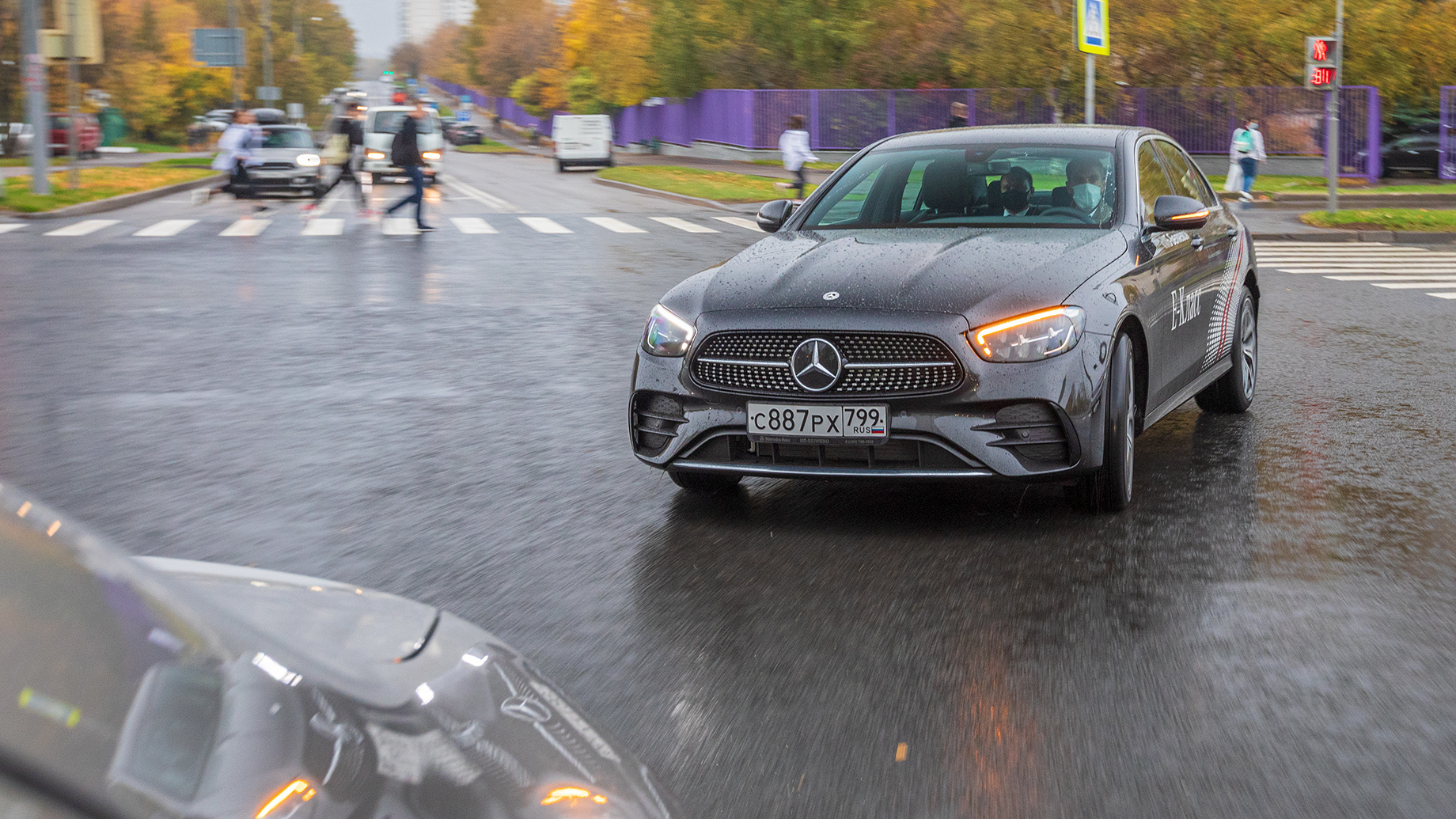
The similarity with the creaky hardtop has a negative side: convenient acceleration control also leaves much to be desired. A damped accelerator is half the trouble — it’s more of a brand feature. But the nine-speed automatic transmission, which gets along perfectly with torquey diesels, isn’t always polite with the younger gasoline engine. It allows jerks when shifting up, and makes you wait a long time during a kickdown. This tandem lacks the polish that the car’s status demands.
Driving Comfort: Brakes, Handling, and Road Noise
In urban driving conditions, neither the brakes nor the handling raise any questions: the E-Class slows down adequately and follows light, slightly overloaded steering input accurately, without unnecessary sharpness. The exception is bumps mid-turn, which can knock the E-Class off its line. I’ll dig into this in more detail if it comes to a full comparative test — but for now, my focus is on overall driving comfort.
The sedan is equipped with Run Flat tires by default. In our case, this is the Pirelli Cinturato P7 245/45 R18, an inch larger than the base wheels. These tires:
- Make the work of the shock absorbers noticeably harder over sharp bumps and joints
- Add a fair amount of road noise inside the cabin
- Contribute to a firmer overall ride compared to smaller wheel options
Sound Insulation and the Sport vs. Intelligent Drive Comparison
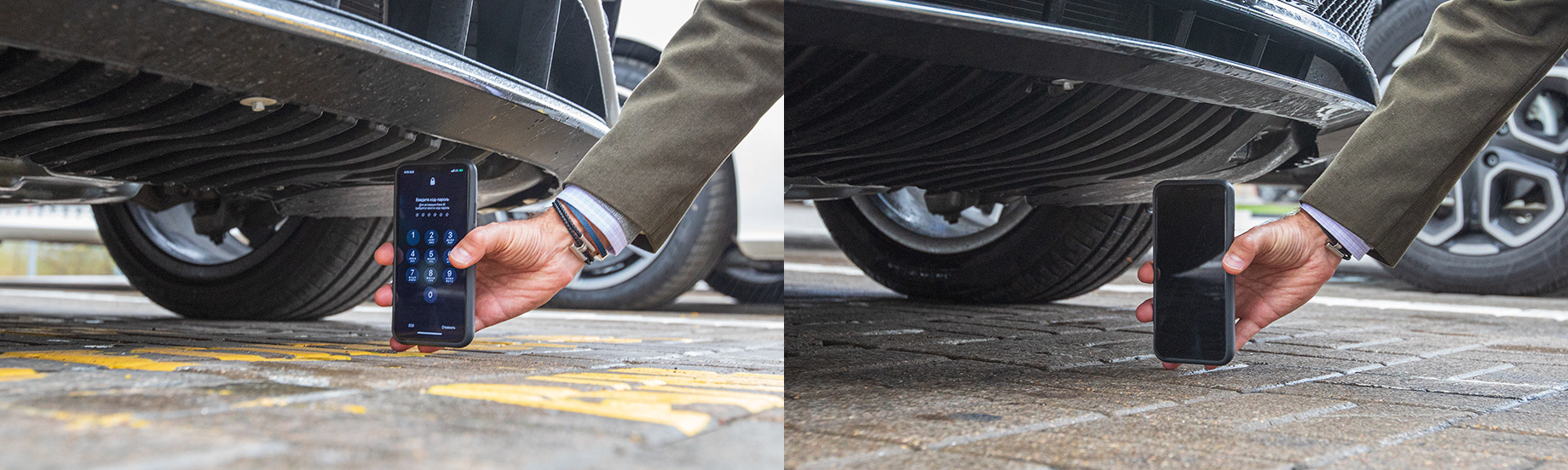
Poor sound insulation for a premium business sedan is also aggravated by fixed equipment packages. The option that includes laminated glass and additional sound-absorbing mats in the wheel arches is, again, available only on the Intelligent Drive trim. That said, I think replacing the standard tires would be the most effective way to boost acoustic comfort. Surprisingly, even the 19-inch wheels on the Sport version buzz a little less. To compare, I took our E200 to a dealer test drive, where I drove two Mercedes E-Class cars back to back on the same route — once behind the wheel, once as a passenger.
Contrary to expectations, the Sport version isn’t noticeably stiffer. Its microprofile feel is slightly more pronounced, but the car absorbs potholes in a more composed way. According to the factory code, both Intelligent Drive and Sport use the same suspension hardware. So I’d attribute the slight looseness in our test car — which had 680 miles on the odometer — to:
- Resonant frequencies of wheels with a higher sidewall
- Vibration transmission through the hard filler of the fully leather seats
Sport seats with combined upholstery filter out some of those repeated micro-vibrations, which likely explains the difference in perceived comfort.
Of course, both versions of the E200 are firm and carry a fair amount of road noise in absolute terms. It’s enough to spend a minute in a car-sharing BMW 520i to put any doubts about that to rest. That said, the E-Class W213 on steel springs won’t necessarily be more comfortable either. And if your love for AMG styling pushes you toward Sport among the gasoline E models, you shouldn’t worry too much: you barely lose any smoothness compared with the pricier Intelligent Drive setup.
What Owners Are Really Saying About the E-Class
Analyzing E-Class owner log books, I see that the typical Mercedes buyer isn’t blind, and stays loyal to the brand even despite their own ownership experience. People notice everything:
- The lack of overall comfort
- Underwhelming dynamics relative to the turbo engine’s thirst
- Compromised build quality in places
- The high cost of ownership and maintenance
Especially revealing are the posts about selling these cars, where the results of living together with the E-Class are traditionally summed up. Nevertheless, one Benz often simply replaces another — an E-Class owner tends to trade up to a more powerful E-Class, rather than switching brands entirely.
Why Does the E-Class Keep Winning, Despite the Flaws?
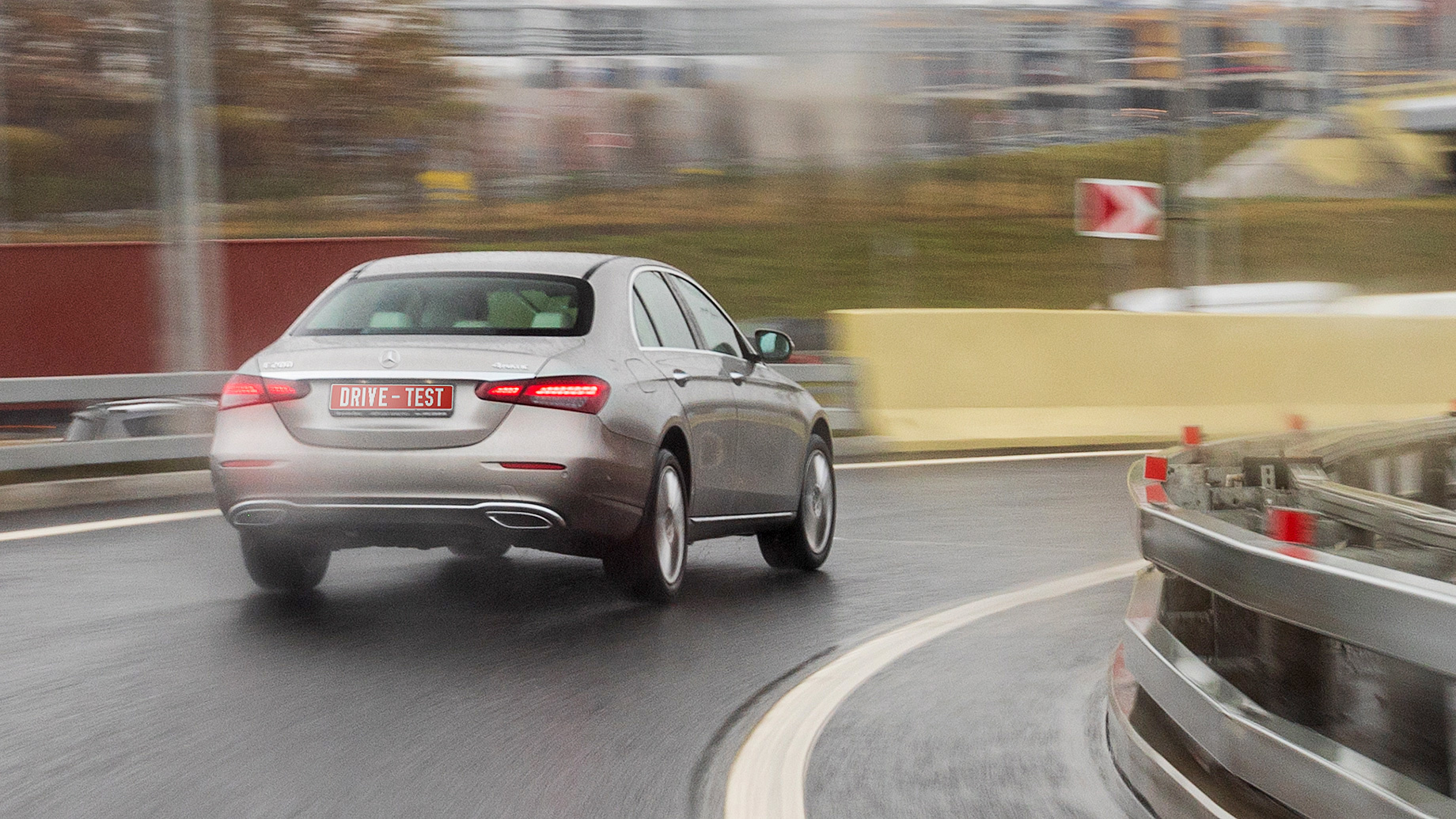
The mid-size luxury segment keeps stepping on the same rake, but apparently the strength of the three-pointed star brand is able to transform pain into pleasure. A clean break with Mercedes, with a move to a competitor, is more the exception than the rule. The brand’s charm hasn’t worked on me personally for a long time, but it clearly still has some magic left. You could explain the E-Class’s lead among sedans in the “Big Three” by simple shifts in momentum versus the 5 Series. But last year, the W213 was in that exact underdog position itself, trailing the BMW by fewer than 400 units, with a final tally of 6,906 sedans and wagons sold.
What, in your opinion, explains the E-Class’s strong sales results despite its fair share of weaknesses? Share your thoughts in the comments below.
This is a translation. You can read the original here: https://www.drive.ru/test-drive/mercedes/5f882fb2ec05c409390000f4.html

Published August 11, 2022 • 7m to read