
“Along the Chuysky Tract, there’s a road many drivers once traveled…” goes the old song. Now, the Silk Way Rally has thundered along it, stretching from Tomsk to Ulaanbaatar. I joined the GAZ Raid Sport team to experience this firsthand.
Mongolia, seen from the road
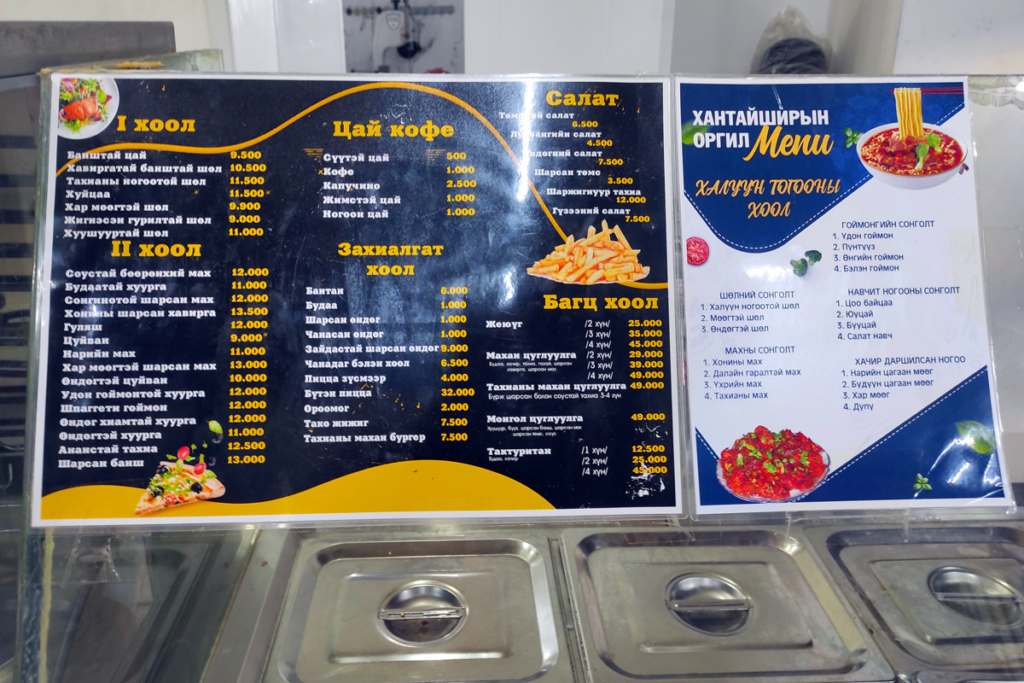
It’s written in Cyrillic, yet totally incomprehensible — it’s Mongolian! So the only things I could decipher on local menus were “salad,” “burger,” and “tsai coffee.” Tsai, please…
Surprisingly, automotive Mongolia proved disappointing: rarely have I seen such monotonous traffic. Passenger cars are mostly second-hand Japanese Toyota Priuses. Light trucks are Korean Hyundai Porters and Kia Bongos. Buses, too, are exclusively Korean: Hyundai Universe or its counterpart, Kia Granbird. Heavy trucks are either solitary Japanese units or Chinese Beibens sporting old Mercedes cabins — perhaps because Beiben’s manufacturing site is nearby, in China’s Inner Mongolia? Domestic vehicles mostly consist of the indestructible “Bukhanka.” At a local fire station I spotted not only a memorial ZIL-130 but also a rather fresh MAZ.
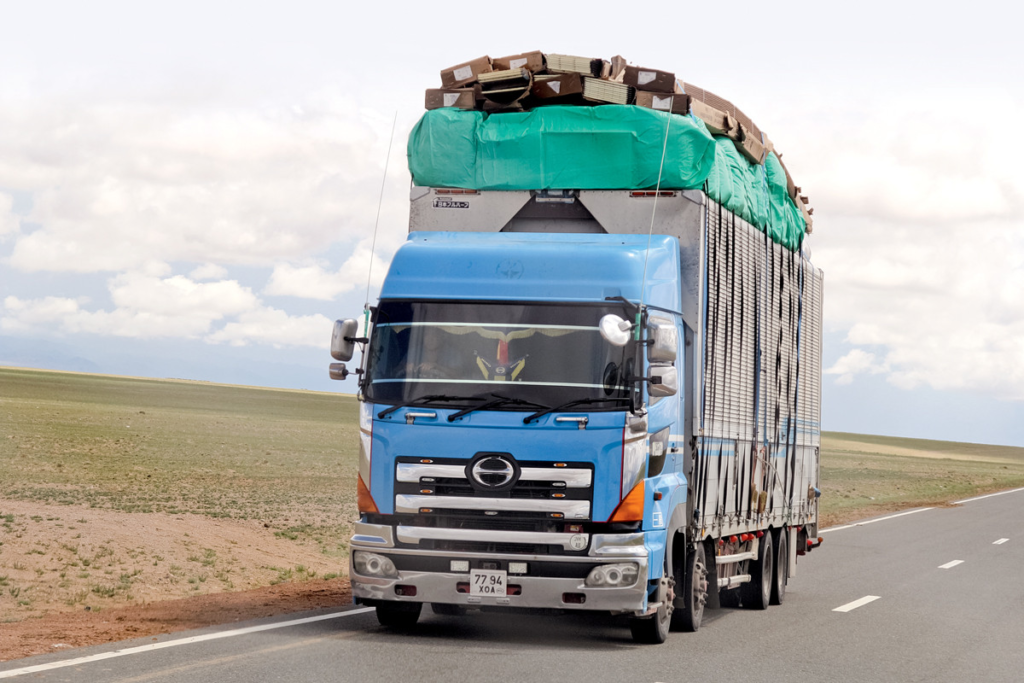
On Mongolian roads you can often see four-axle “Japanese” trucks, like this Hino, loaded with a hill
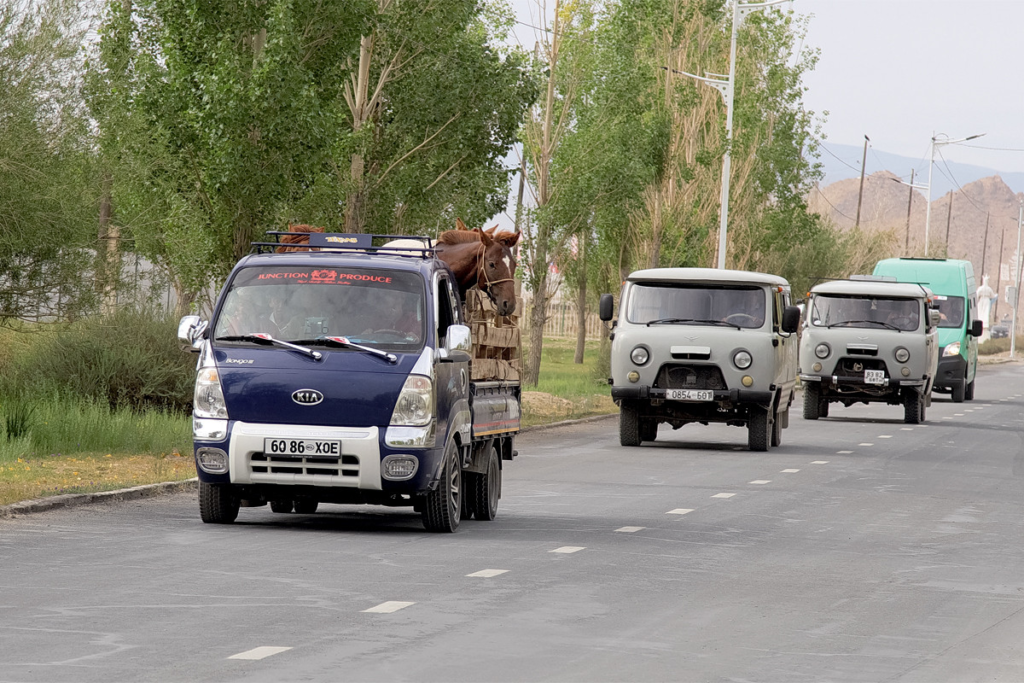
A common sight in Mongolia: Kia Bongo with horses in the back and “loaves”
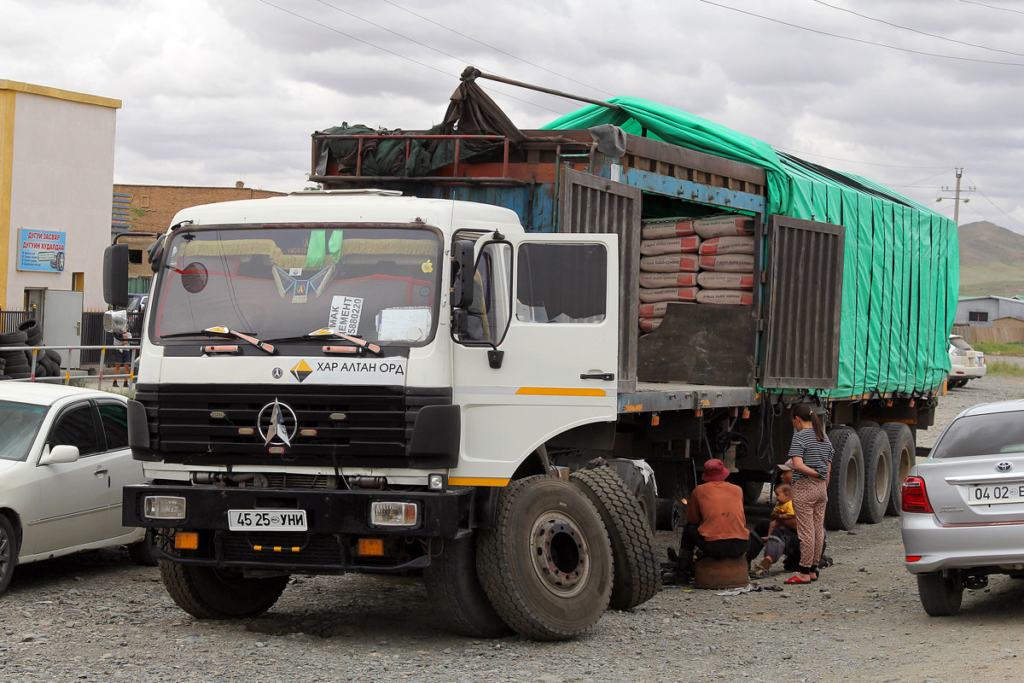
Beiben
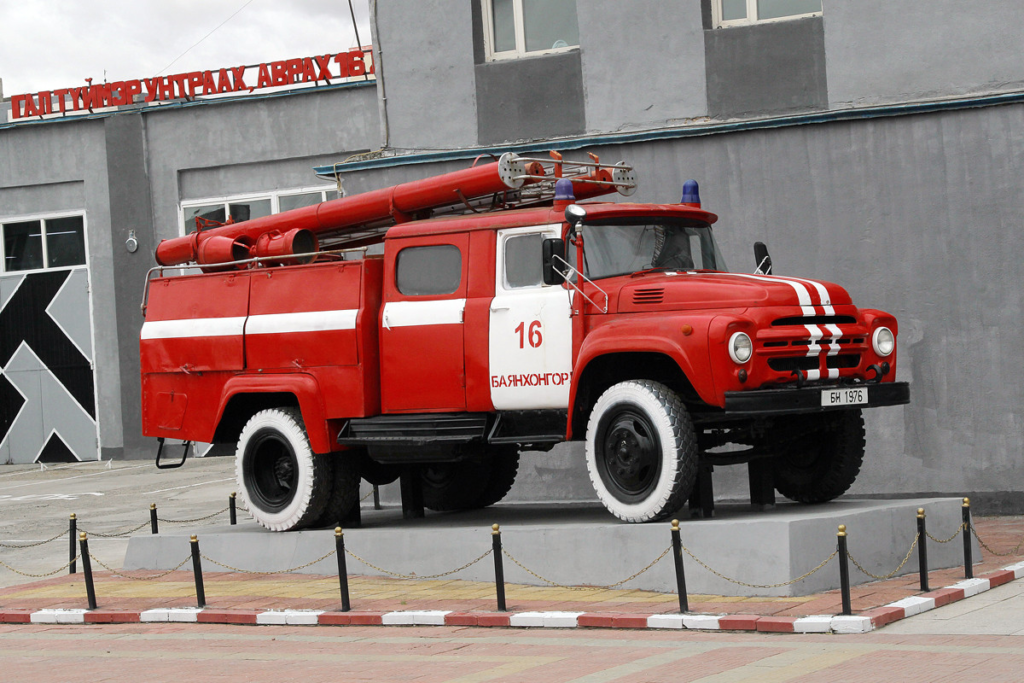
Fire truck ZIL-130 on a pedestal
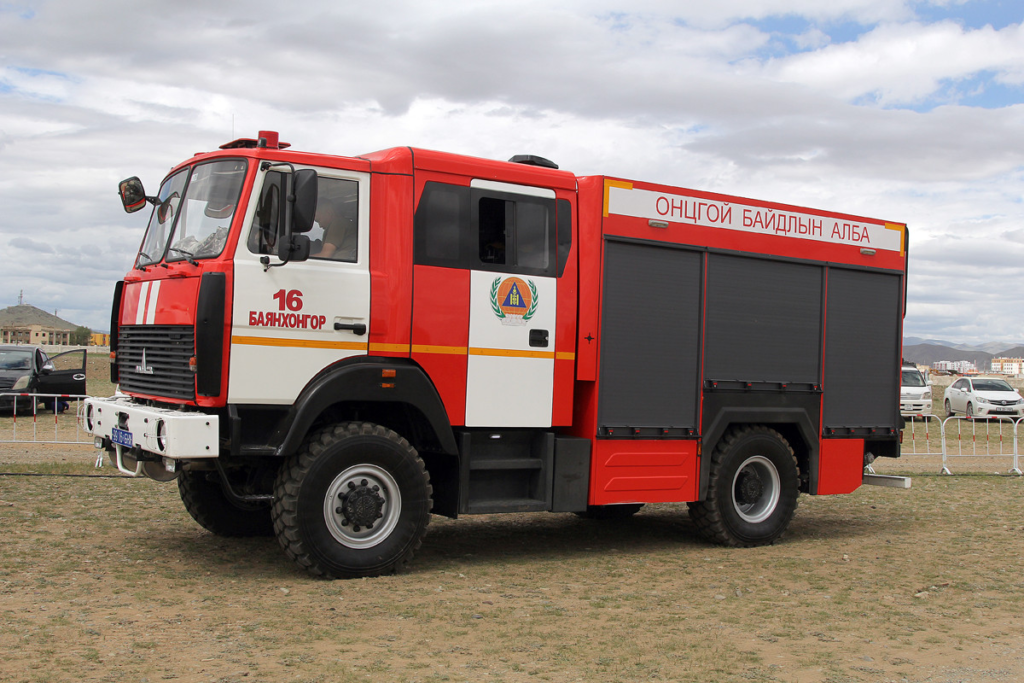
Quite new MAZ
MAZ: third, after a steering failure
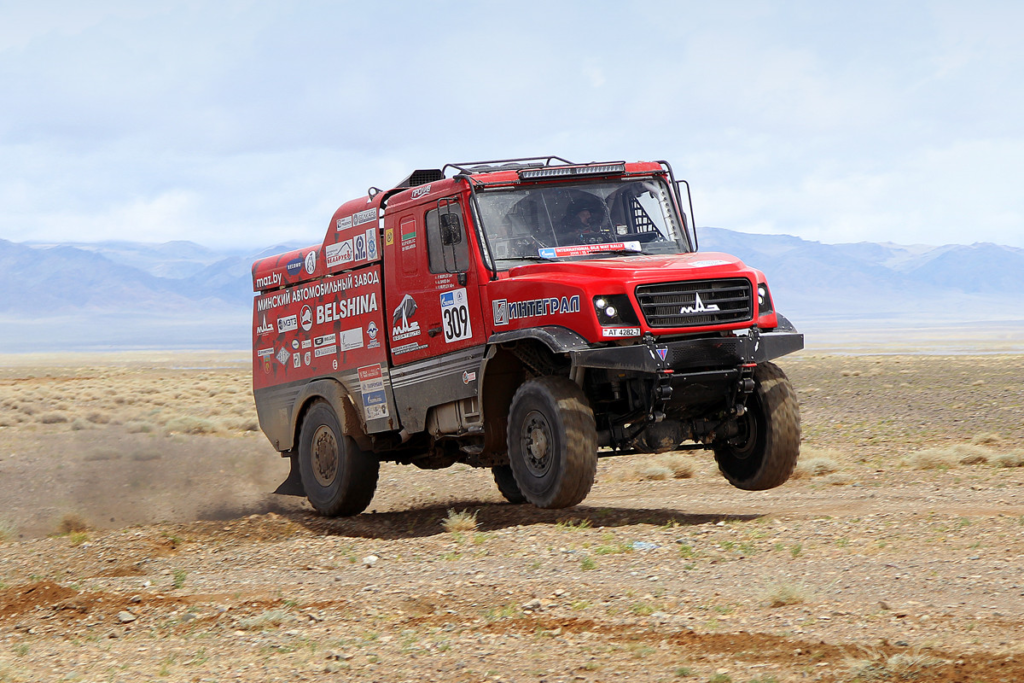
Incidentally, last year’s race winner was MAZ captain Sergei Vyazovich from Minsk. He aimed to repeat that success, risking everything: narrowly avoiding a head-on collision with a KAMAZ on a tight forest road, relentlessly defending his position…
The race was packed with emotions, and Vyazovich might have finished far better if not for a breakdown. He described the incident vividly: “In the dunes, steering suddenly disappeared—we found the seal blown and oil leaking out. Another crew offered us their steering gear, and three teams quickly swapped mechanisms between trucks, but this took over an hour. We’d never encountered such a critical issue before. The oil was literally blown out by an explosion!”
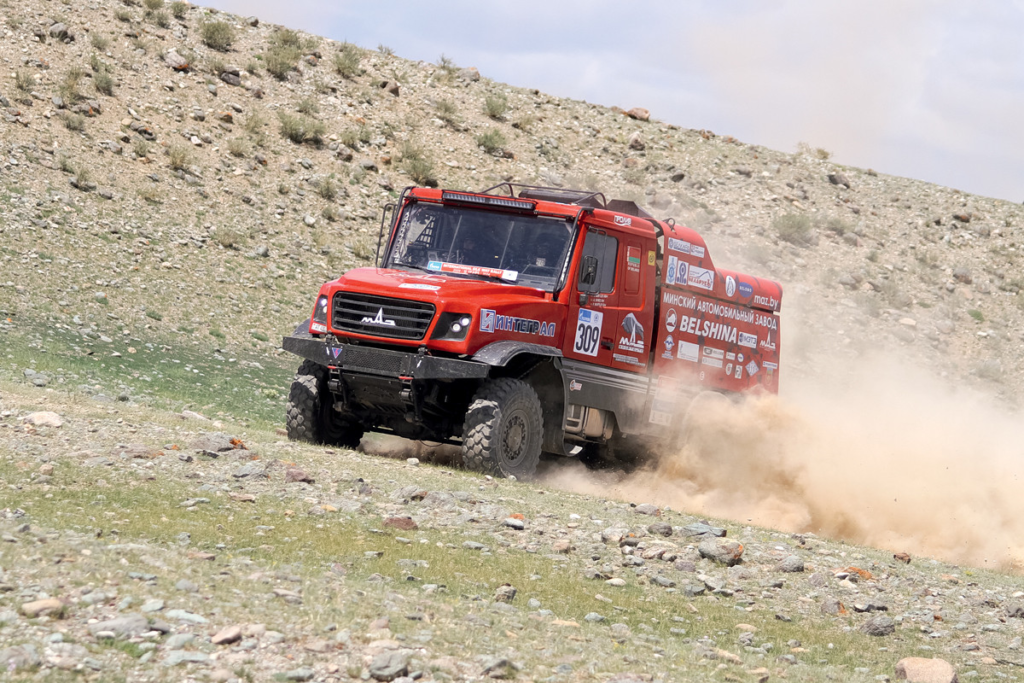
The MAZ team tried to repeat last year’s success, but they failed
KAMAZ-master takes the top two
Ultimately Vyazovich took third place, while the first two spots naturally went to KAMAZ-master: Dmitry Sotnikov won, with team captain Eduard Nikolaev second in a unique black bonneted truck. That truck has been competing for several years, but the project won’t continue. Why? Because its cabin comes from a Mercedes Zetros off-roader, dating back to the KAMAZ-Mercedes collaboration era.
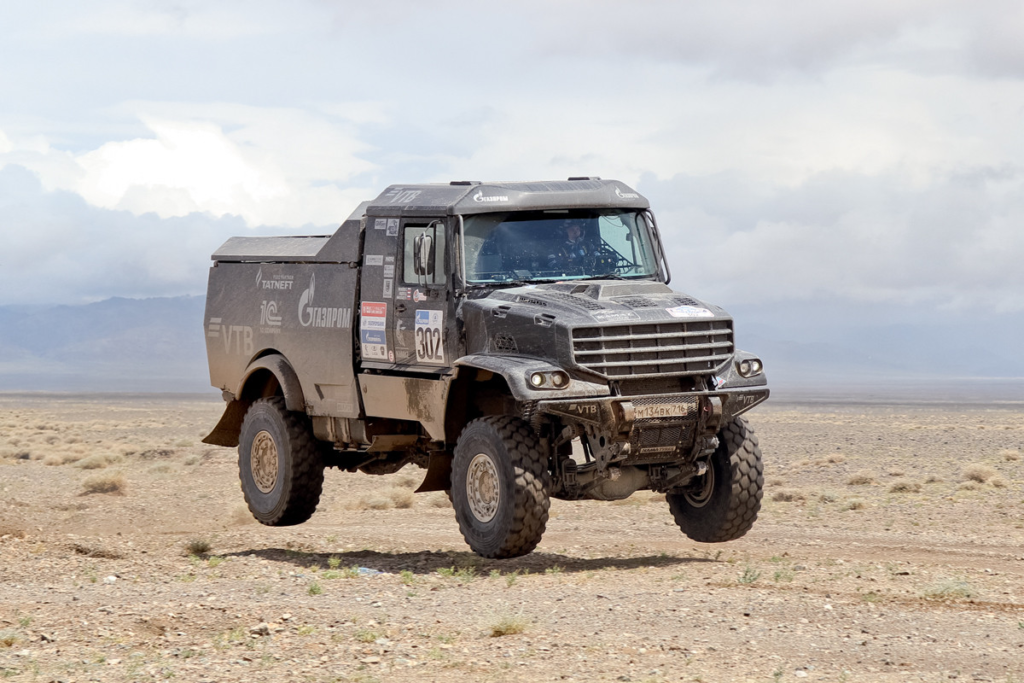
On the bonnet KAMAZ of Eduard Nikolaev there is a Mercedes Zetros cabin
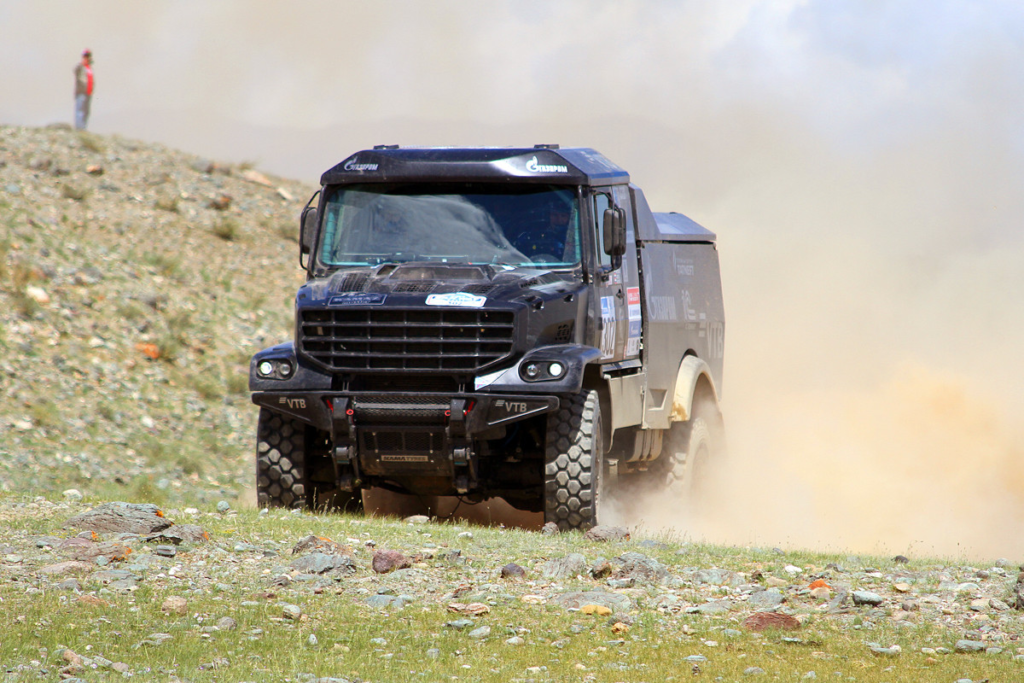
Almost the same trucks underneath
Clearly, KAMAZ enjoys better funding and refinement opportunities than MAZ. The design of both brands’ racing trucks seems to have peaked, however. Aside from layout differences — KAMAZ trucks, except the black one, are cab-over-engine — engines (Chinese Cummins for KAMAZ, American-Czech Gyrtech-Caterpillar for MAZ) and minor solutions, they’re remarkably similar: Allison automatic transmissions from the USA, Finnish Sisu axles, Dutch Reiger Racing shock absorbers, Turkish Tirsan driveshafts. Almost entirely imported components!
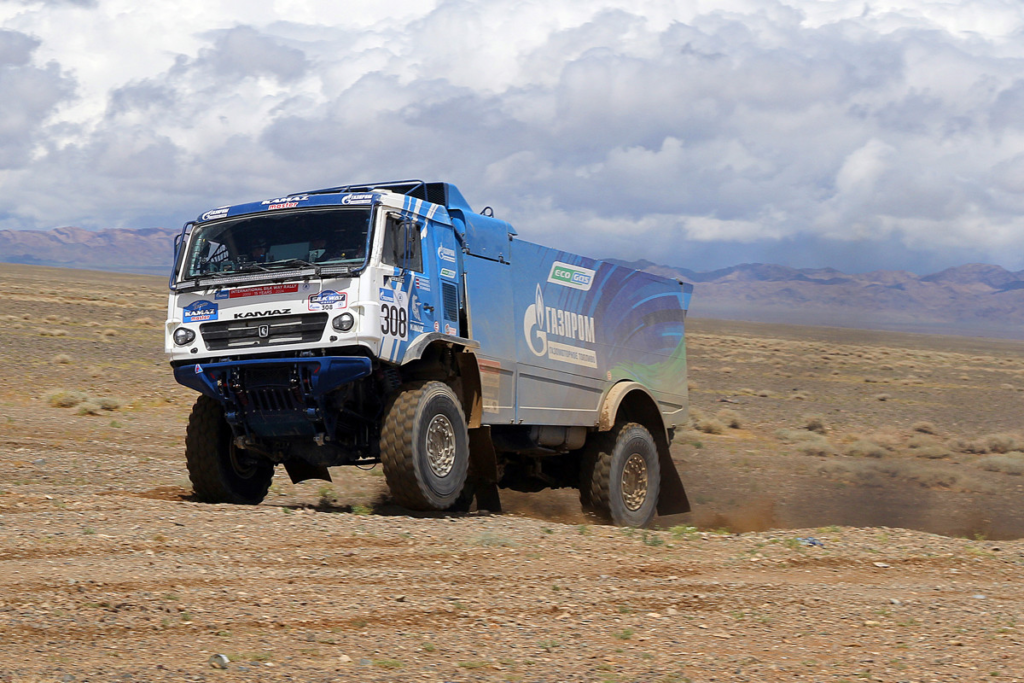
Racing KAMAZ K5
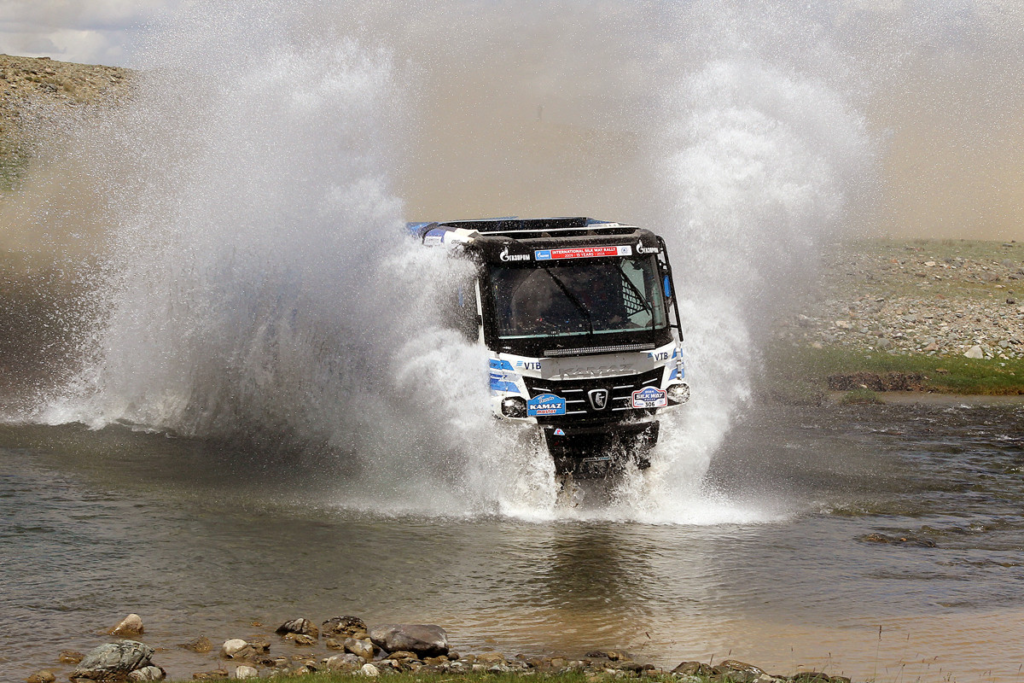
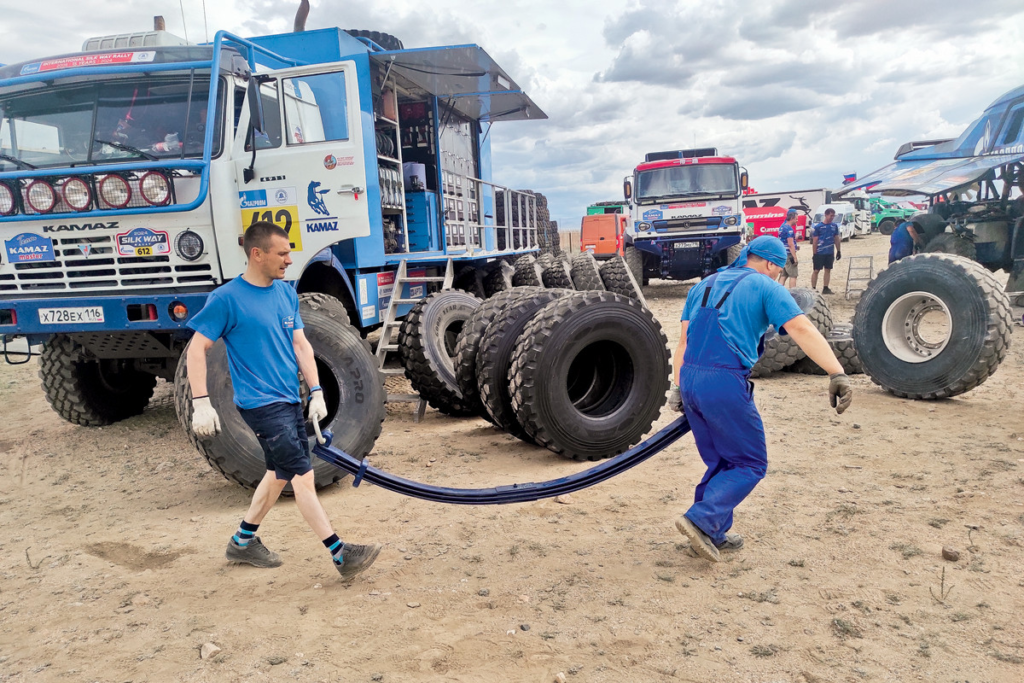
The mechanics had plenty of work: tires and suspension components are almost consumables!
Ural: both trucks out
Competing with these giants is Ural, which entered this race with two bonneted trucks, also equipped, reportedly, with imported parts: IVECO Cursor engines, Allison automatic gearboxes, Raba axles. Both vehicles withdrew prematurely. One hit a deep pit at full speed, injuring the driver’s spine; the other stopped just 28 kilometers from the finish line with a broken water pump. The team tried replacing the broken pulley with an electric screwdriver, but its battery didn’t last long…
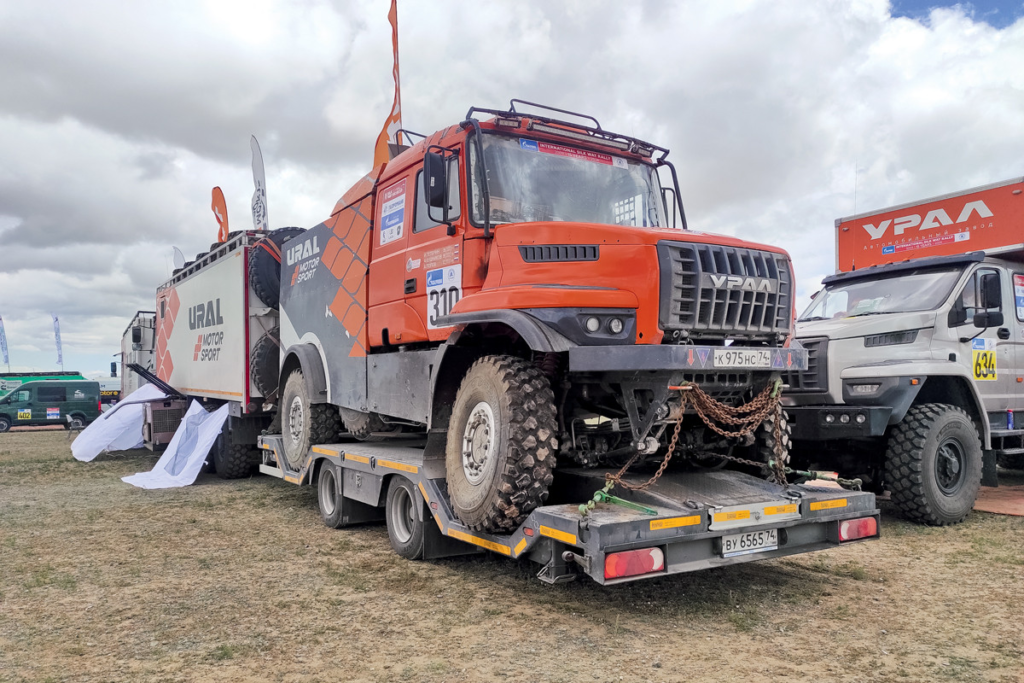
Both Ural racing cars retired: this one crashed into a deep hole at speed
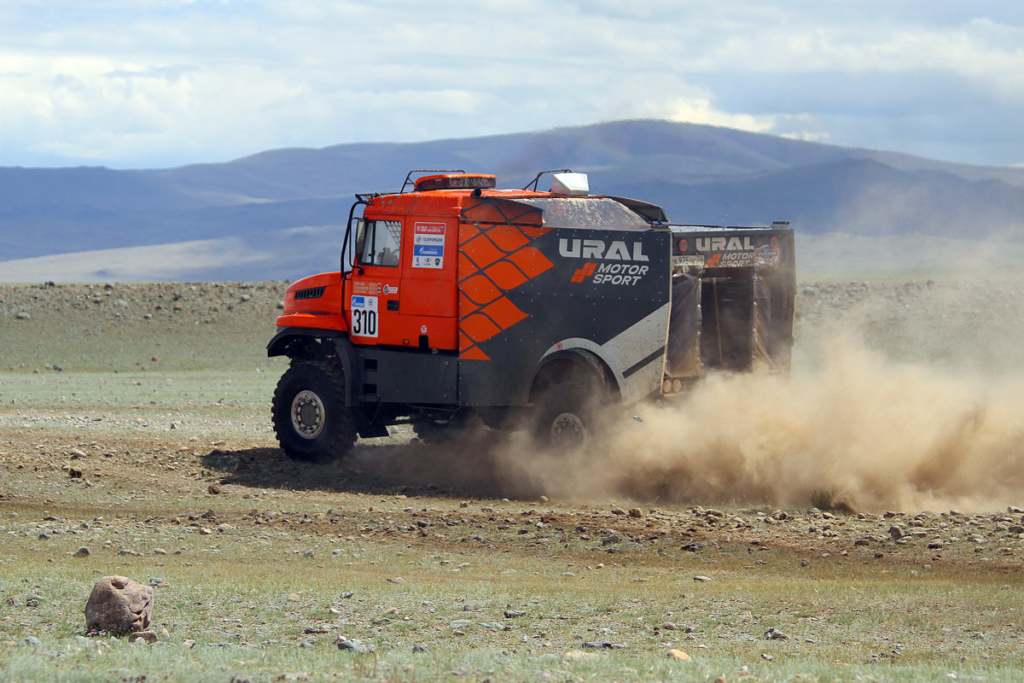
What the big trucks leave behind them
Interestingly, these monster trucks inadvertently complicate conditions for smaller vehicles: buggy drivers must follow behind, traversing roads churned into mud by the enormous truck tires. I personally saw how a shallow stream became a massive swamp after KAMAZ and MAZ passed through. Buggy driver Anastasia Nifontova rolled and withdrew precisely because of such damage.
The Gazelles win their class
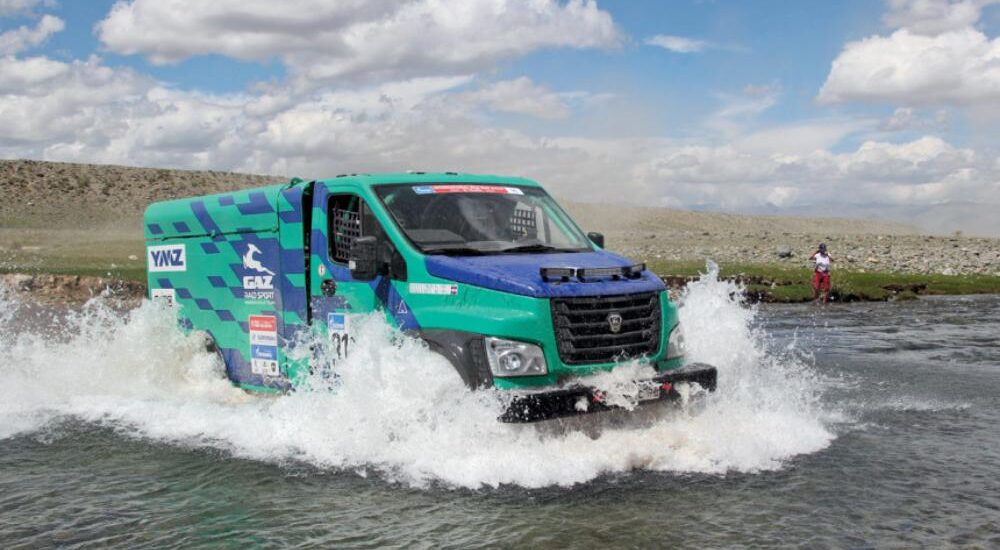
Meanwhile both racing Gazelles, competing not against large trucks but with prototypes based on Japanese off-road vehicles — with their familiar 2.8 ISF turbo diesel, Dymos gearbox and independent front suspension — not only finished but secured first and second places in their class.
Winner Alexander Semenov was thrilled: “I’ve pursued this victory for 19 years! Competing in rally raids since 2005, I’ve participated in eight or nine Silk Way rallies, twice as a driver. This race was tough—sand, water, rocks. We even flipped once. Climbing a dune, we snagged some grass, causing a triple roll-over. With shovels and a hi-jack, we righted the Gazelle—it amazingly started! Another time, crossing a river at high speed, water sealed us inside. Teammates dove in fully clothed to attach a rope and rescue us.”
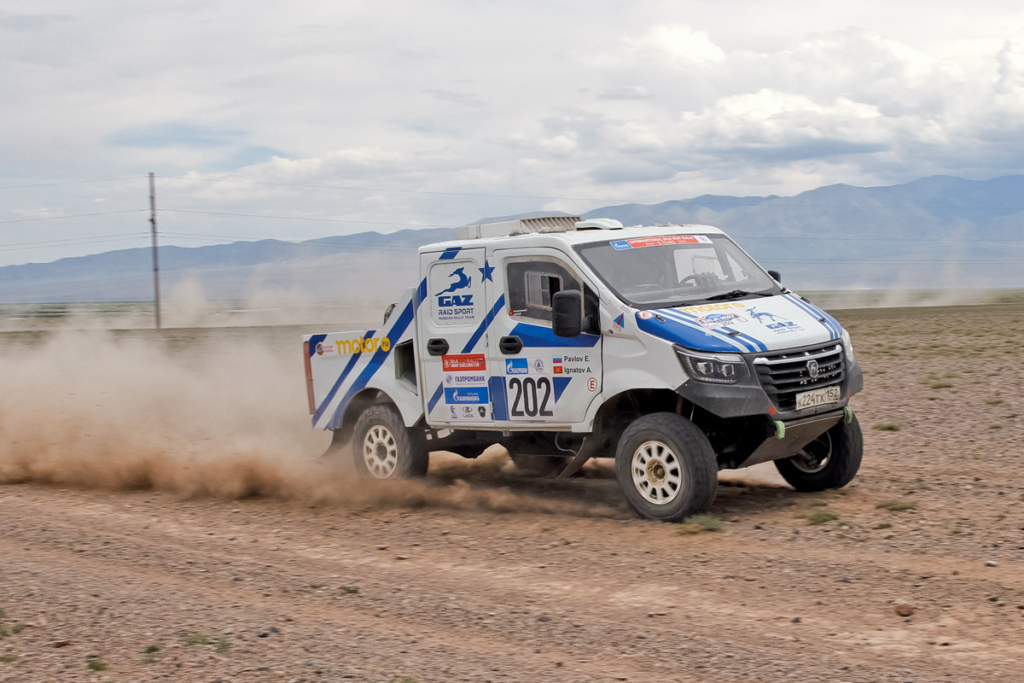
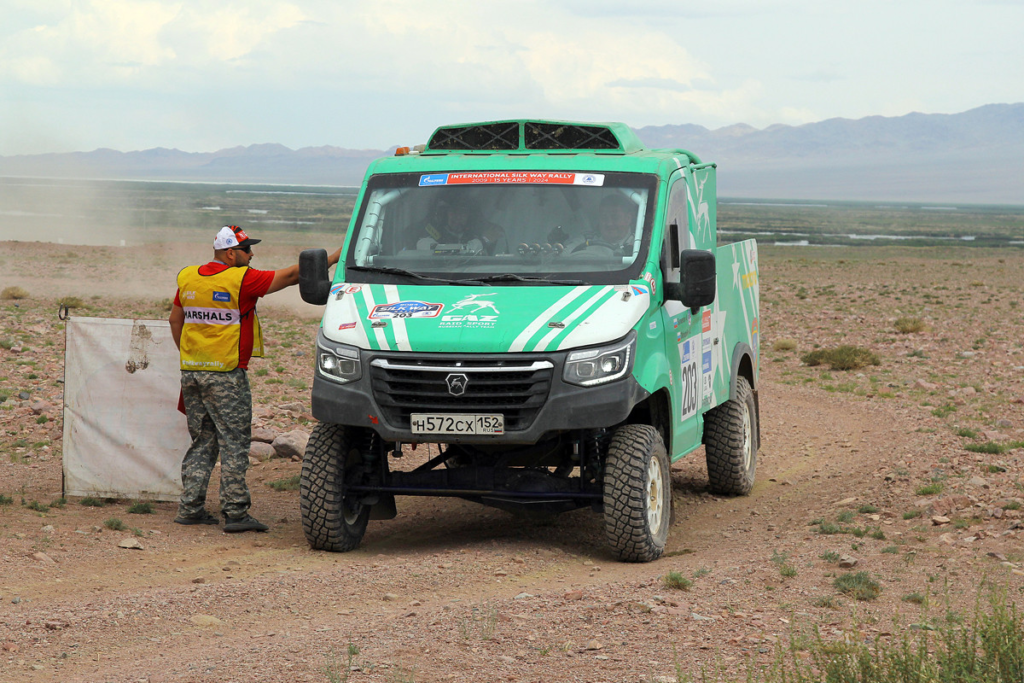
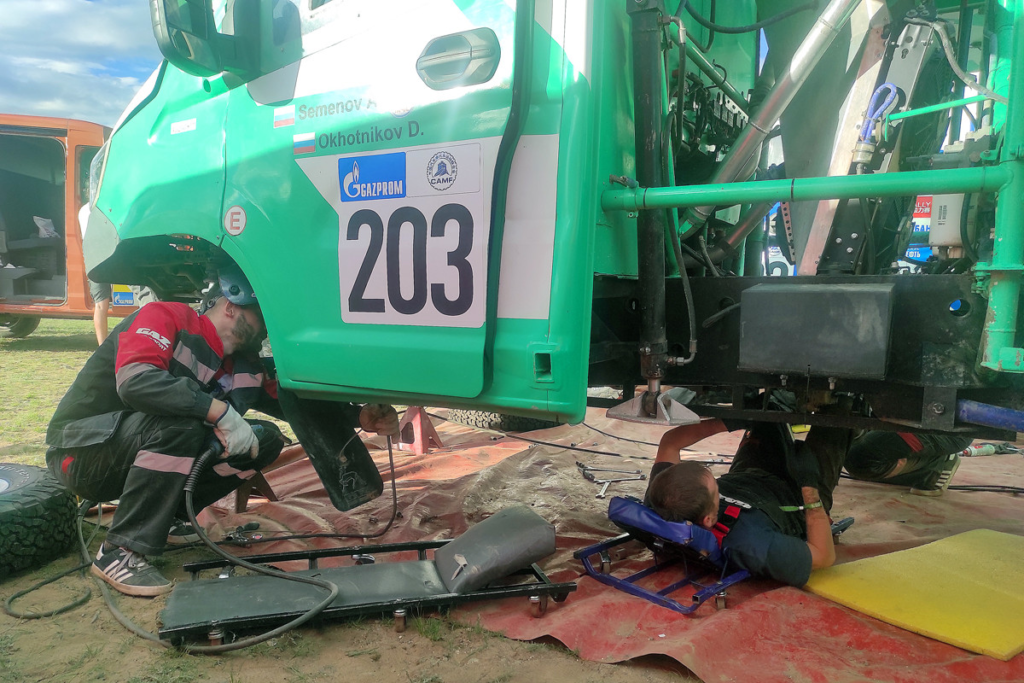
Racing Gazelles took first and second places in their class
Sadko Next, Sobol NN 4×4 and Valdai
Both Sadko Next race trucks successfully reached the finish as well, their designs closely matching production models. Some components remained entirely stock, like the frame and rear axle. Brakes and wheels came from standard GAZ parts; three additional leaf springs were fitted, and front ball joints reinforced. The YaMZ-534 engine was tuned to 310 hp and 1050 Nm of torque, borrowing the turbocharger and viscous fan from the larger YaMZ-536. The gearbox, although stock, was from Ural, with eight speeds, as the regular GAZ transmission wasn’t suitable for rally raids. Non-standard elements included the driveshafts and Öhlins racing shock absorbers. The Sadko trucks aimed not for victory but to showcase GAZ’s market presence.
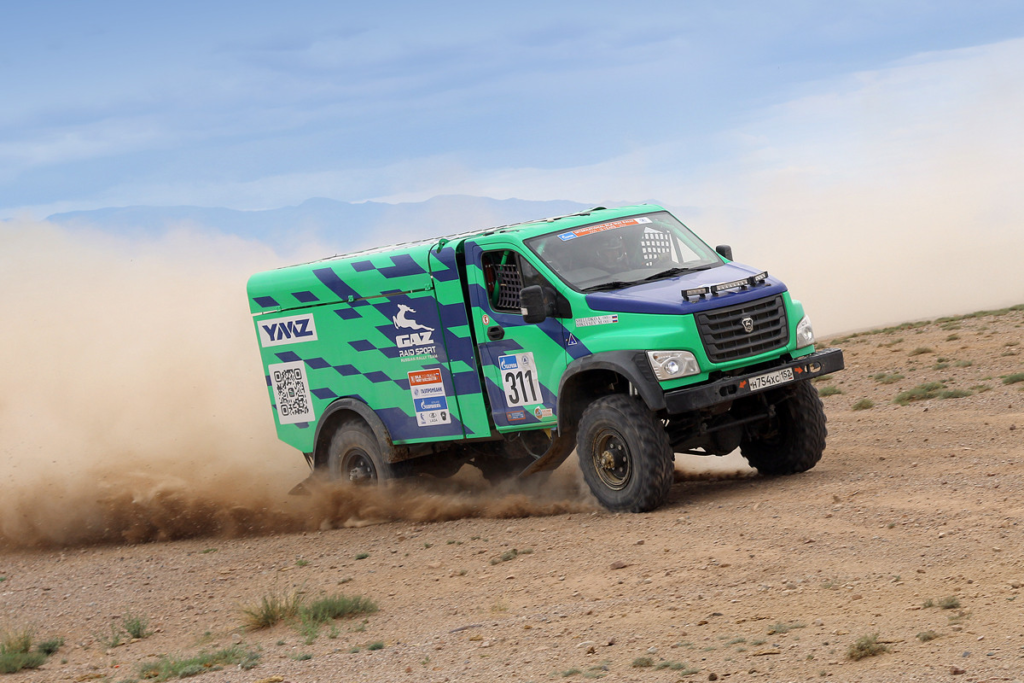
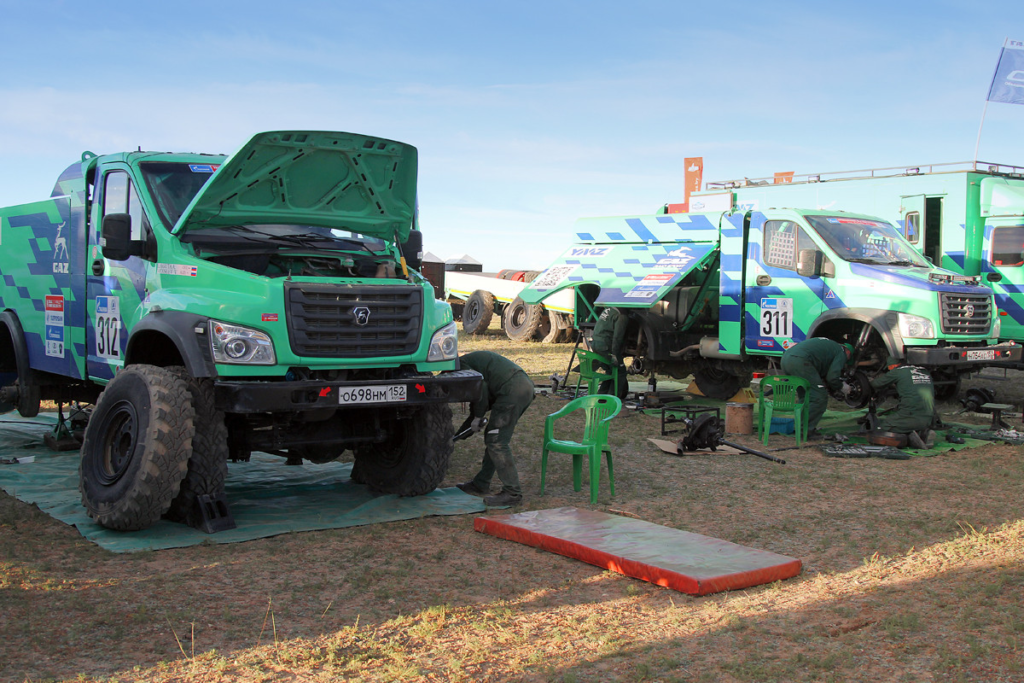
Sadko Next
Speaking of the market, two long-awaited Sobol NN 4×4 vehicles accompanied the team: one transporting the filming crew, the other the mechanics. Both were fresh from the factory, with sales expected soon. Currently, distributor STT’s online store only accepts pre-orders, and still sells the older gasoline-powered Sobol 4×4 model.
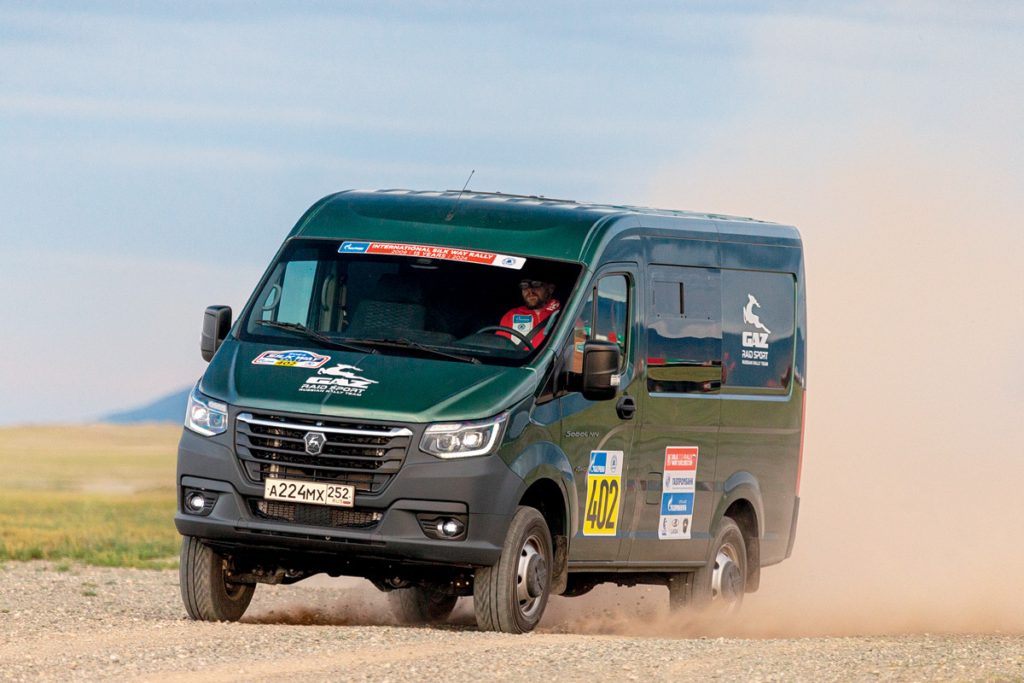
Sobol NN 4×4 passed rally raid test: two cars were driving in a caravan
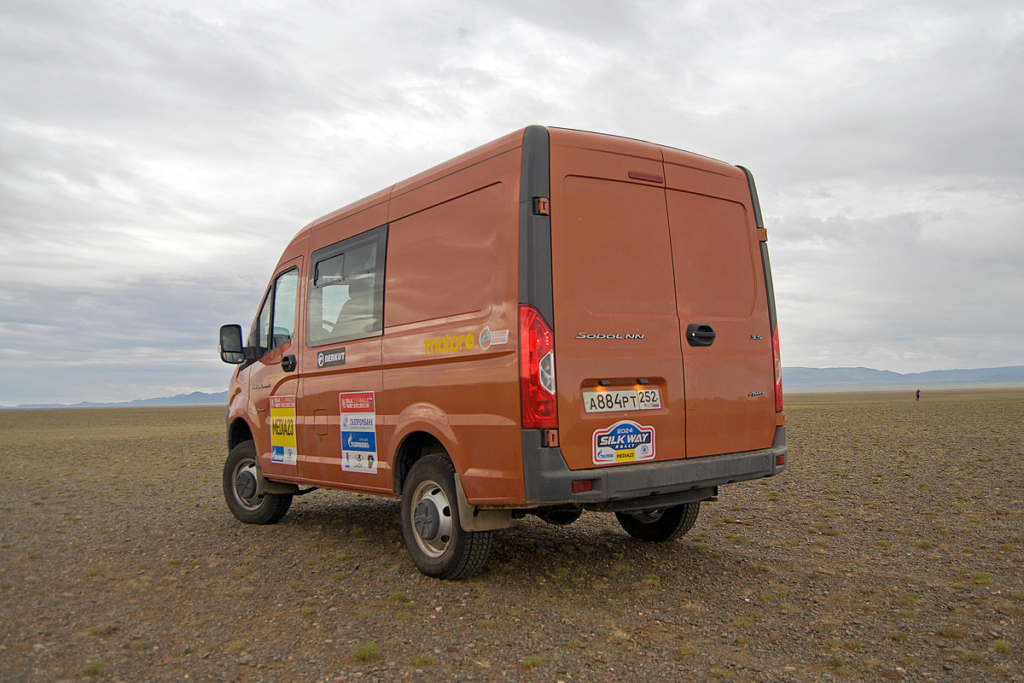
The Sobol NN 4×4 features a new diesel G-engine, formerly Foton 2.5, with manually selectable all-wheel drive and low-range gearing, independent front suspension, a standard rear differential lock and 21 cm of ground clearance. Pricing details are pending, but the rear-wheel-drive Sobol NN Combi starts at 3.3 million rubles.
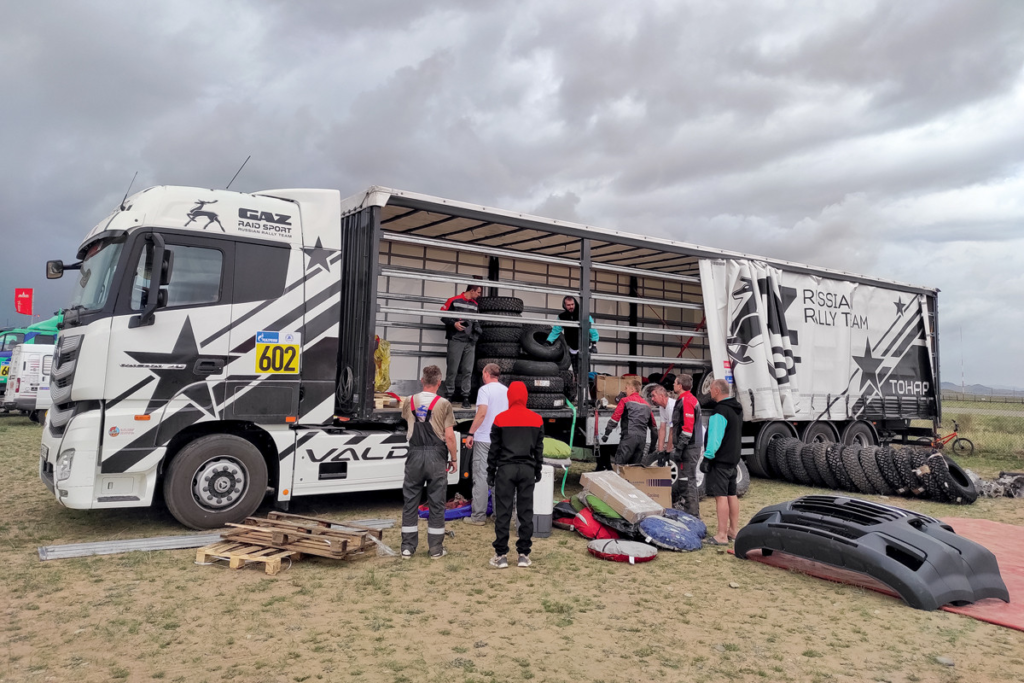
The newest Valdai 45 was carrying tires and spare parts for the GAZ team, and Gazelles on the way back
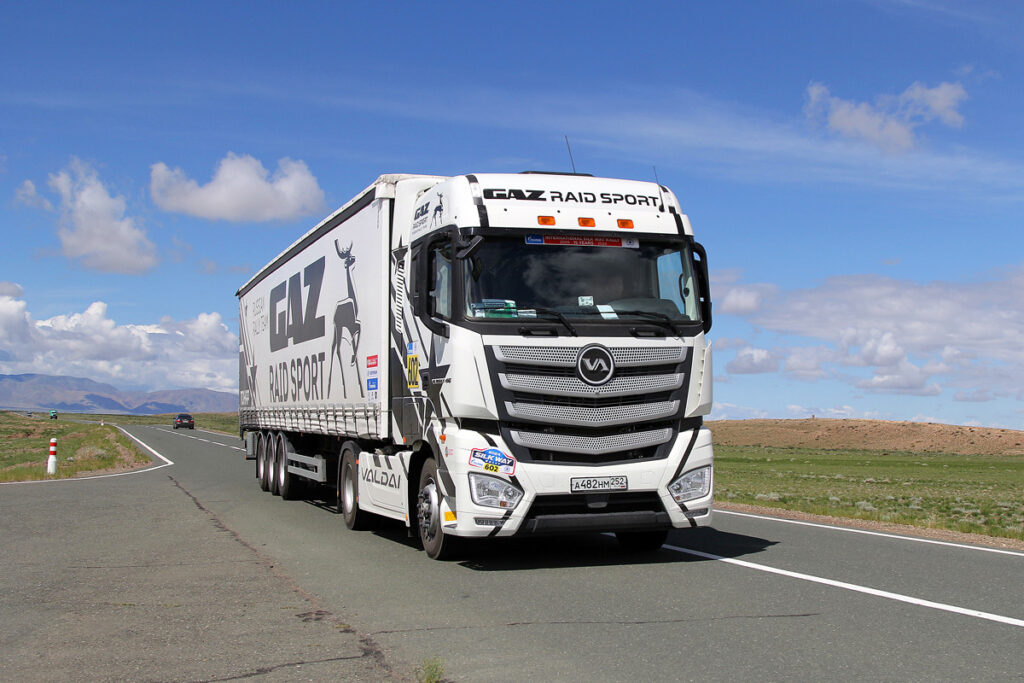
The race concluded, prizes awarded — but our story continues…
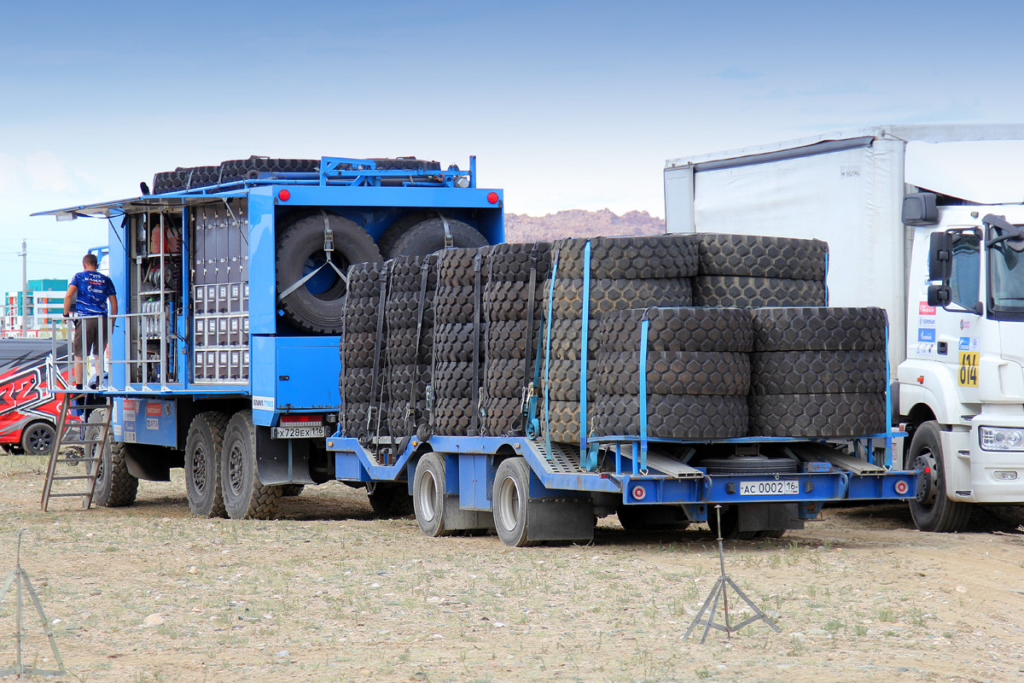
Photo: Maxim Chernyavsky
This is a translation. You can read the original article here: Болиды Чуйского тракта: наш грузовой репортаж с «Шелкового пути»
Published August 06, 2025 • 6m to read